

15 Balcony Butterfly Garden Ideas to Attract Pollinators to Your Small Space
You don’t need a sprawling backyard to welcome butterflies into your world — even a modest balcony can become a fluttering, colorful sanctuary with the right combination of plants, water sources, and shelter. Butterfly gardening on a small scale is as much about creating a functional habitat as it is about aesthetics: the right nectar plants, host plants for caterpillars, and a few thoughtful extras can turn a bare railing into a genuine pollinator stop.
Beyond the visual delight of watching butterflies drift between blooms, these gardens support local ecosystems that are increasingly squeezed by urban development. Here are 15 ideas to help you design a balcony butterfly garden that’s as functional for wildlife as it is beautiful for you.
1. Plant a Butterfly-Friendly Container Trio

Start with three container plants known to be butterfly magnets: lantana, zinnia, and verbena. These bloomers offer flat, easily accessible flower clusters that butterflies can land on comfortably, unlike deep, tubular blooms designed for hummingbirds. Arrange the containers together near your railing or sunniest corner, since butterflies favor warm, well-lit areas for feeding. This trio also blooms continuously through summer with minimal deadheading, giving you a reliable, low-maintenance nectar source all season. Rotate in seasonal annuals as blooms fade to keep a steady food supply available, since inconsistent nectar availability is one of the biggest reasons pollinators skip small gardens.
2. Include Host Plants for Caterpillars

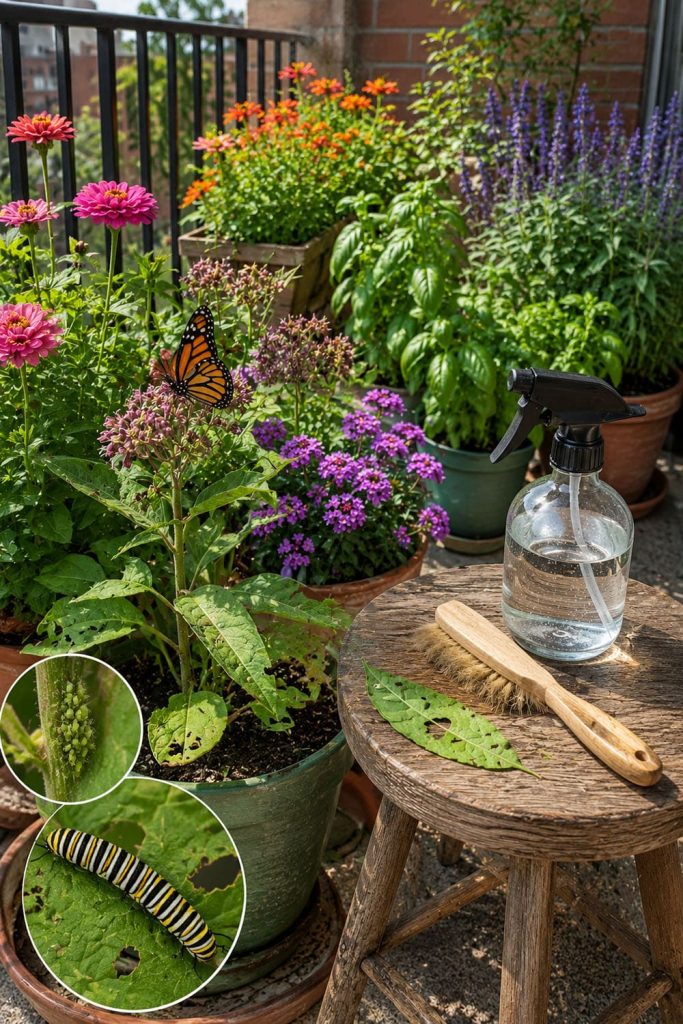
A true butterfly garden feeds more than adult butterflies — it also supports their larval stage with host plants where females lay eggs and caterpillars feed. Milkweed is essential for monarchs, while parsley, dill, and fennel attract swallowtails. Expect some visible leaf damage from caterpillars; this is a sign your garden is working, not a problem to fix. Dedicate at least one container specifically to host plants, positioned slightly apart from your nectar display so caterpillar activity doesn’t interfere with your seating area. Including host plants transforms your balcony from a simple feeding stop into a full breeding habitat.
3. Add a Shallow Butterfly Puddling Dish

Butterflies need more than nectar — they also seek out “puddling” spots, shallow pools of damp soil, sand, or mud that provide essential minerals and salts. Create one by filling a wide, shallow dish with coarse sand, adding a few flat stones for landing, and keeping it consistently moist. Place it near your nectar plants, in a sunny but sheltered spot away from strong wind. This small addition rounds out your garden’s functionality, since flowers alone won’t fully meet a butterfly’s needs. Refresh the water every few days, especially in hot weather, to keep the puddling dish inviting.
4. Choose a Sun-Drenched Layout
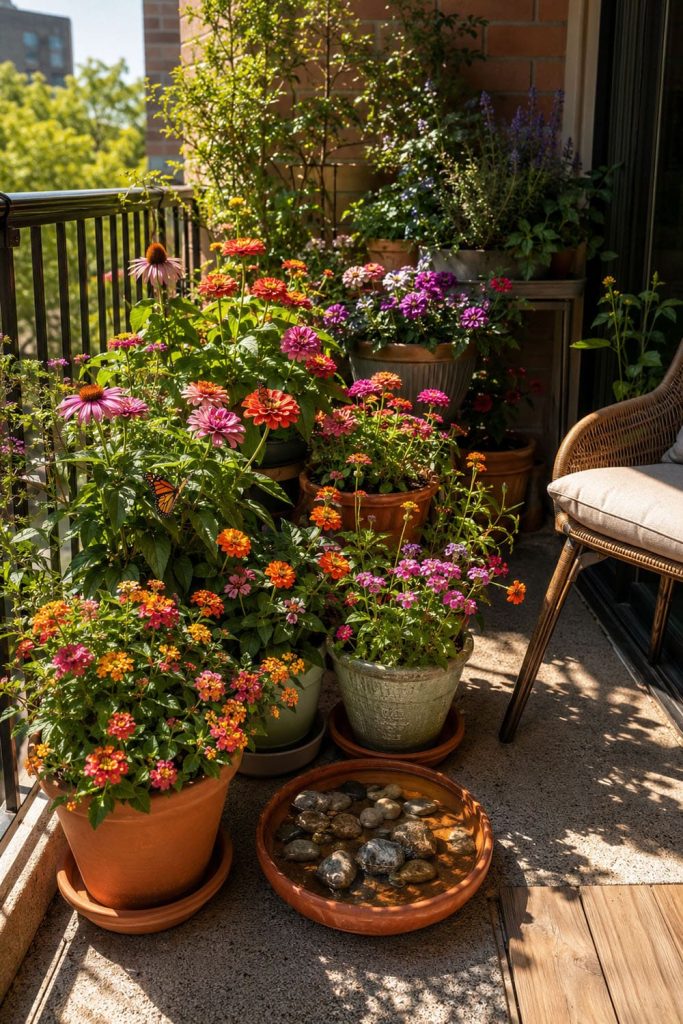
Butterflies are cold-blooded and rely on direct sunlight to warm their bodies before they can fly efficiently, so positioning your garden in the sunniest available spot on your balcony is critical. If your balcony gets partial shade, cluster plants and puddling dishes in whatever section receives the most consistent light throughout the day. South or west-facing balconies typically offer the best exposure. Avoid placing key features in deep shade even if it seems like a nice, cool spot for you, since butterflies will largely bypass shaded areas regardless of how attractive the plants are visually.
5. Layer Blooms by Height
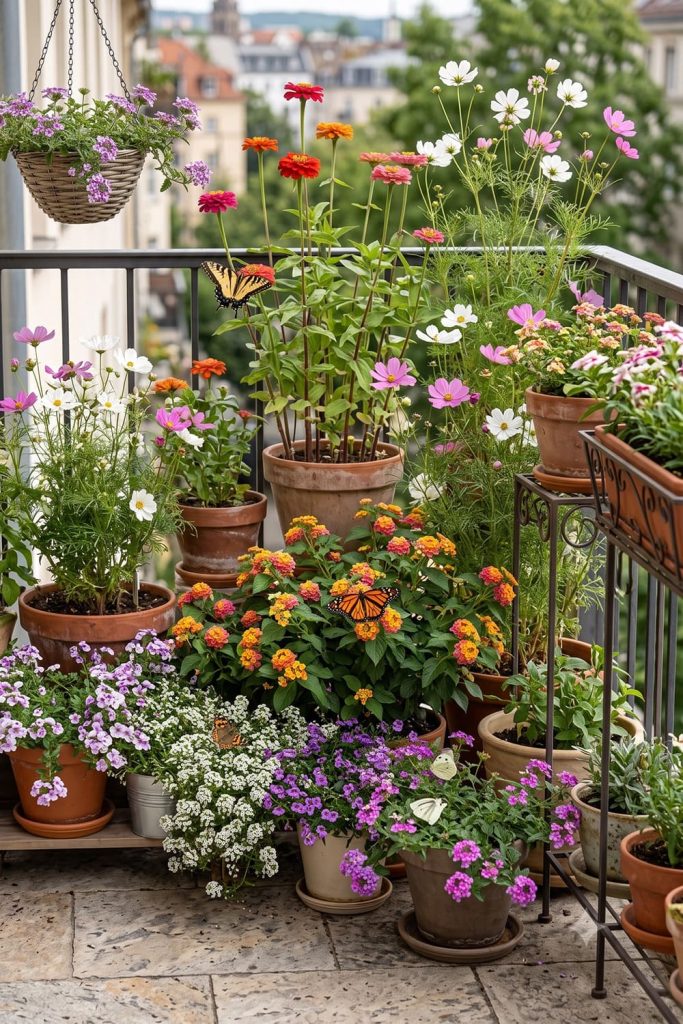
Arrange your container plants at varying heights — tall zinnias or cosmos at the back, mid-height lantana in the middle, and low-growing alyssum or verbena at the front — to create a layered garden that mimics natural meadow structure. This tiered approach maximizes visible bloom surface from every angle and gives butterflies multiple landing zones at different levels. Use plant stands, hanging baskets, and railing planters to achieve height variation even within a tight footprint. A layered garden also looks fuller and more established than a flat row of identical pots, enhancing the visual impact from both inside and outside your home.
6. Incorporate Purple Coneflower
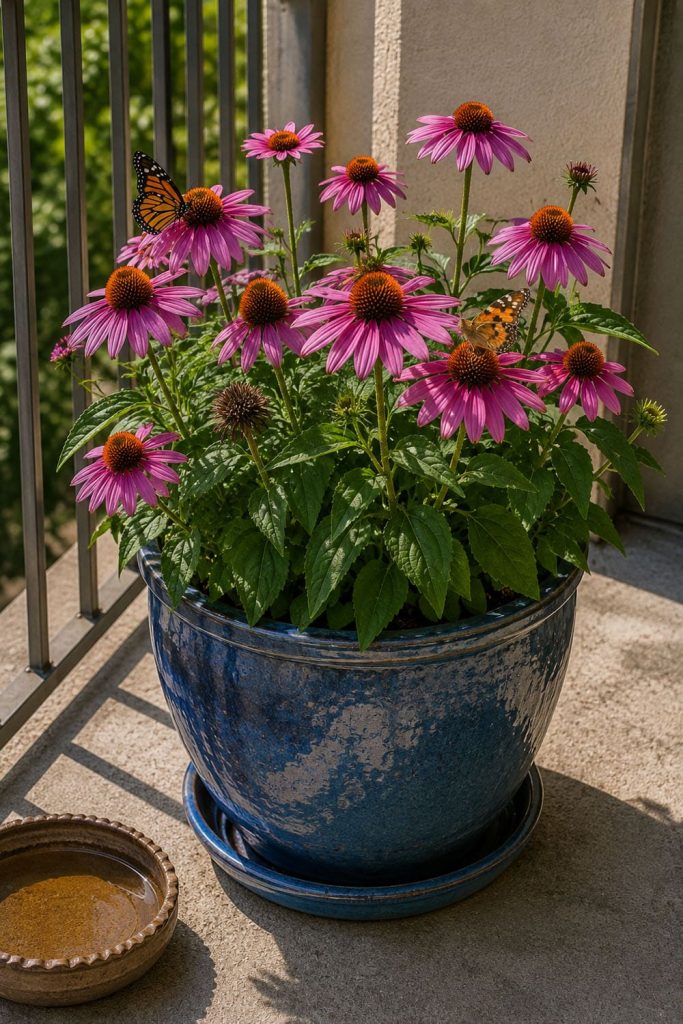
Purple coneflower (Echinacea) is a favorite among butterflies for its large, flat, spiky-centered blooms that provide an easy landing platform and abundant nectar. It’s also remarkably drought-tolerant and low-maintenance, making it ideal for balconies where consistent watering can be a challenge. The blooms last for weeks and, once spent, the seed heads can be left standing to attract seed-eating birds later in the season, extending the container’s wildlife value beyond just butterflies. Plant coneflower in a deep container with good drainage, and place it front and center where its bold color can draw pollinators from a distance.
7. Add Fragrant Herb Blooms

Many herbs, when allowed to flower rather than being constantly trimmed for the kitchen, produce small blooms that butterflies find irresistible — oregano, thyme, and mint all fall into this category. Let a portion of your herb containers bolt and flower instead of harvesting every leaf, sacrificing some culinary yield for pollinator value. These small blossoms are especially attractive to smaller butterfly species that struggle to access larger, more complex flowers. This idea works well for balcony gardeners who already grow herbs, since it requires no new plants, just a shift in how existing containers are maintained.
8. Install a Vertical Trellis of Flowering Vines
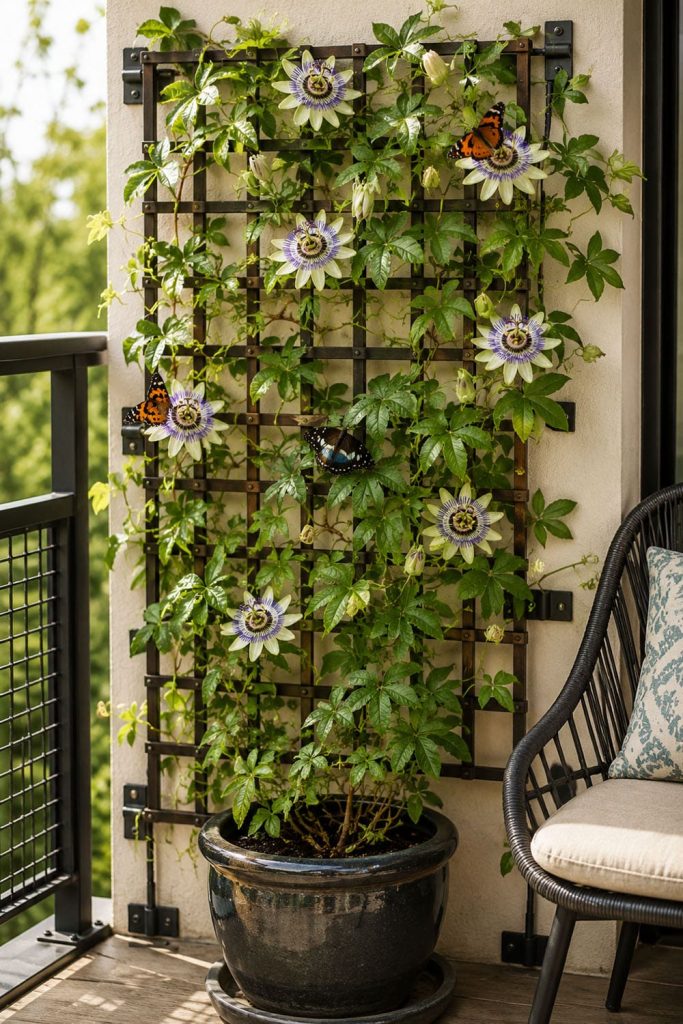
Flowering vines like passionflower or morning glory grown on a vertical trellis add butterfly-friendly blooms without consuming precious floor space, an important consideration on compact balconies. Passionflower is especially valuable since it also serves as a host plant for the Gulf Fritillary butterfly, combining nectar and larval support in one plant. Train the vine along a trellis mounted to the railing or wall, positioning it where it will receive maximum sun exposure. As the vine matures and fills in, it also provides light shade and privacy, adding functional value to your balcony beyond its pollinator appeal.
9. Use Red and Orange Accents Strategically
While butterflies are drawn to a range of colors, red, orange, and yellow blooms tend to be especially visible against green foliage and blue sky, helping your balcony garden catch the attention of passing pollinators from farther away. Marigolds, zinnias, and butterfly weed all offer this vibrant palette. Cluster warm-toned blooms toward the outer edge of your balcony or railing, where they’re most visible from a distance, and use cooler-toned plants like lavender or salvia further back. This color strategy essentially functions as a visual beacon, increasing the odds that nearby butterflies notice your garden in the first place.
10. Create Wind Shelter With Screening Plants
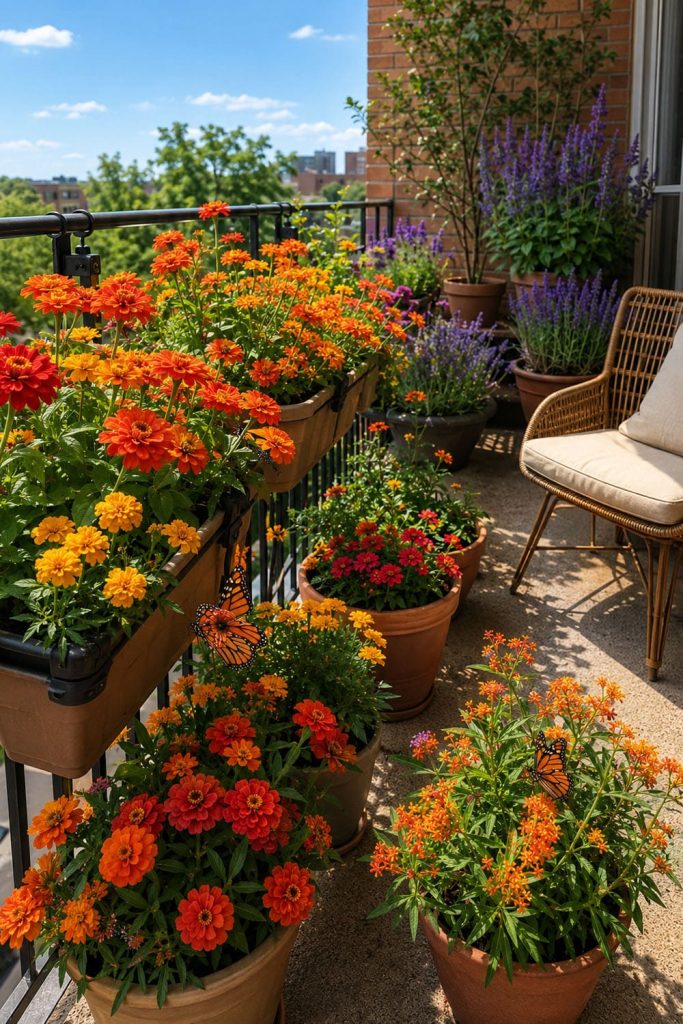
Butterflies are delicate fliers easily disrupted by strong wind, which is a common challenge on elevated balconies, especially in high-rise buildings. Position taller plants, bamboo screening, or a lattice panel along the windiest side of your balcony to create a calmer microclimate for feeding and resting. This is particularly important for smaller butterfly species, which struggle more in gusty conditions than larger ones. A wind-sheltered garden not only attracts more visitors but also keeps your plants themselves healthier, since constant wind exposure can damage delicate blooms and stress container soil moisture levels faster than in calmer conditions.
11. Add a Butterfly Feeder With Overripe Fruit

Beyond flowers, many butterfly species are drawn to the sugars in overripe or fermenting fruit, including bananas, oranges, and watermelon. Set out small slices on a raised dish or shallow tray, positioned away from ant activity if possible, and refresh every couple of days to prevent mold buildup. This feeding method is especially effective for attracting species like admirals and commas, which prefer fruit sugars over floral nectar. A fruit feeder is a simple, low-cost addition that broadens the range of butterfly species your balcony can attract beyond what flowering plants alone typically draw in.
12. Group Plants by Bloom Time for Season-Long Color

Selecting plants with staggered bloom periods ensures your balcony offers a consistent nectar source from spring through fall, rather than one dramatic burst followed by weeks of bare stems. Pair early bloomers like alyssum with midsummer stars like zinnia and lantana, then round out the season with fall-flowering asters. This kind of succession planning requires a bit of upfront research but pays off in sustained butterfly activity throughout the warm months. Keep a simple bloom calendar for your specific plant selections so you can identify and fill any seasonal gaps before they interrupt your garden’s pollinator appeal.
13. Use Hanging Baskets for Trailing Nectar Plants

Trailing varieties like verbena and calibrachoa work beautifully in hanging baskets, adding another layer of bloom above your railing-height and floor-level plants. This vertical use of space is especially valuable on narrow balconies where floor and railing space is already committed to host plants or seating. Position hanging baskets where they’ll catch maximum sunlight and won’t be shielded by overhangs or taller neighboring plants. The cascading growth habit of these varieties also softens the visual line of your balcony railing, adding both pollinator function and decorative appeal in a format that doesn’t compete for ground space.
14. Avoid Pesticides Entirely

Perhaps the single most important rule for a successful butterfly garden is skipping pesticides altogether, including so-called organic or natural sprays, since these can harm butterflies and caterpillars just as effectively as synthetic chemicals. If aphids or other pests appear, address them with a strong water spray or by manually removing affected leaves rather than reaching for any spray product. Accept a degree of imperfection in your plants’ appearance as part of hosting a genuine, functioning ecosystem. A pesticide-free approach is non-negotiable for anyone serious about attracting and supporting butterflies rather than simply displaying flowers.
15. Add Flat Stones for Basking
Butterflies frequently pause on flat, sun-warmed surfaces to bask and regulate their body temperature between feeding bouts, so including a few strategically placed stones among your containers gives them a resting spot beyond the plants themselves. Choose stones with a light, heat-absorbing surface and position them in full sun near your densest bloom cluster. This small, low-cost addition rounds out your garden’s habitat value, addressing a butterfly behavior that flowers alone don’t accommodate. Watching a butterfly settle on a sun-warmed stone, wings spread wide, is also one of the most rewarding close-up moments a balcony garden can offer.
How to Plan a Successful Balcony Butterfly Garden
Begin with your balcony’s sun exposure and wind conditions, since these two factors determine which plants and features will actually thrive and function as intended. Choose a mix of nectar plants for adults and host plants for caterpillars, since a garden focused only on one half of the butterfly life cycle offers incomplete support.
Layer plant heights, add at least one water or mineral source, and skip pesticides entirely to keep the space genuinely hospitable. Be patient — it can take a season or two for local butterfly populations to discover and regularly visit a new balcony garden, but consistent nectar and host plants will steadily increase your odds of frequent visitors.
Final Thoughts
A balcony butterfly garden proves that meaningful wildlife habitat doesn’t require acres of land, just a thoughtful selection of nectar plants, host plants, and small supporting features like puddling dishes and basking stones. From layered blooms to pesticide-free maintenance, each of these 15 ideas contributes to a small space that genuinely supports pollinators while rewarding you with color, fragrance, and the quiet joy of watching butterflies visit right outside your door.


