

15 Balcony Privacy Trellis Ideas for Small Apartments
A small apartment balcony can feel surprisingly exposed. Neighboring windows, nearby balconies, and busy streets can make it hard to relax, especially when there is little room for a traditional privacy screen. A trellis offers another option. It adds height without taking up much floor space and can become a useful support for plants, vines, or lightweight decorative panels.
The best balcony privacy trellis ideas for small apartments are flexible enough for rental living. Freestanding frames, planter trellises, folding designs, and removable setups can give you more privacy without turning the balcony into a permanent construction project. You can also use the trellis as part of the decor instead of making it look like a barrier.
Whether your balcony is long and narrow or barely wide enough for a chair, these ideas show how to use vertical space for more privacy while keeping the area open and comfortable.
1. Place a Freestanding Trellis Behind Your Lounge Chair
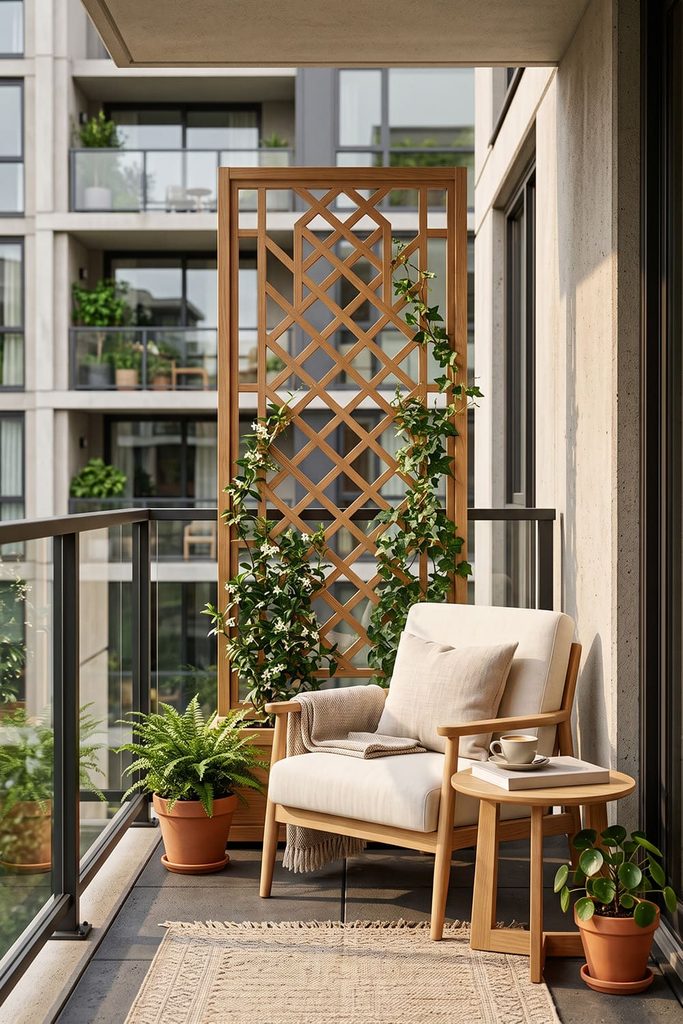
A freestanding trellis can create a private backdrop without requiring holes in the wall. Position it directly behind your main lounge chair so it blocks the line of sight from the neighboring balcony or window while leaving the rest of the space open.
Choose a narrow frame that does not consume valuable floor space. Wood, metal, or weather-resistant composite designs can work depending on your balcony conditions.
Add a few climbing plants or artificial outdoor vines to soften the structure. Keep the lower section relatively open so the balcony does not feel boxed in.
Make sure the trellis has a stable base. A tall, lightweight frame can catch strong wind, so stability should come before appearance, especially on exposed apartment balconies.
2. Combine a Trellis With a Long Planter Box
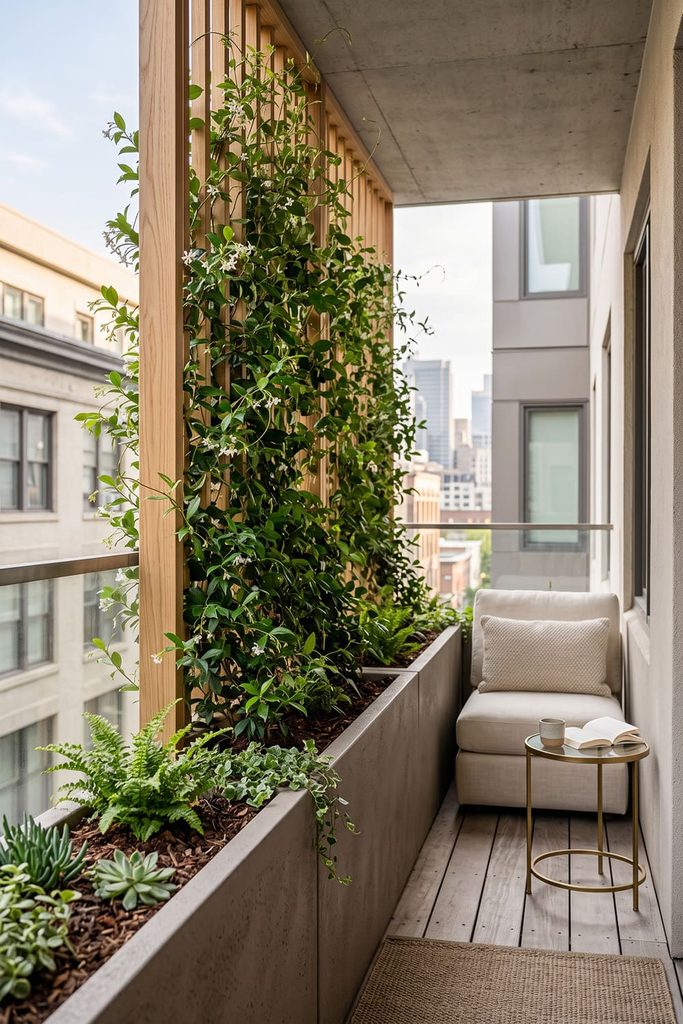
A planter box with an attached trellis gives you privacy and greenery in one compact arrangement. The planter provides a stable base while the vertical frame creates a screen above it.
Place the setup along the balcony edge where neighboring apartments have the clearest view. Choose a planter that is long and narrow enough to preserve your walking space.
Climbing plants can gradually cover the trellis, while smaller plants can fill the space in the soil below. If you do not want the upkeep of live vines, use suitable outdoor artificial greenery.
Before filling a large planter, consider its total weight and your building’s balcony rules. Keep drainage controlled so water does not damage the balcony surface or affect the space below.
3. Use a Folding Trellis for Flexible Apartment Privacy
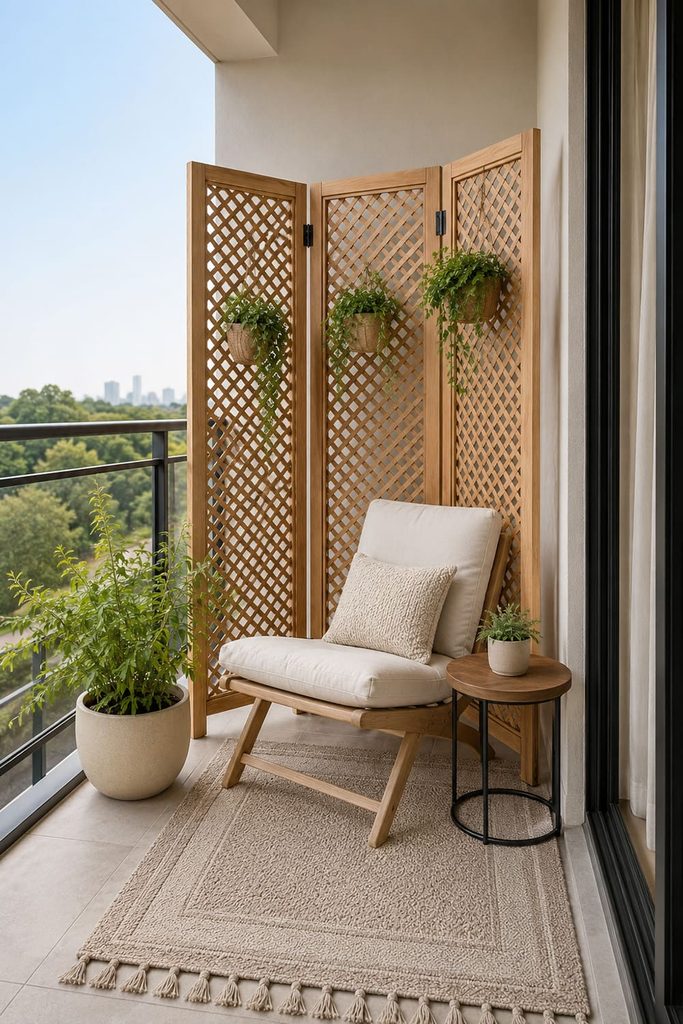
A folding trellis is useful when your privacy needs change throughout the day. Open it when you are sitting outside and fold it away when you want more sunlight or a clearer view.
Look for a design that stands on its own and can be moved without much effort. A narrow folding frame is easier to store when the balcony needs to be cleared.
You can leave the trellis plain for a clean look or add a few lightweight hanging pots. Avoid loading it with too many accessories because this can make the small space feel crowded.
If the balcony receives strong wind, position the folded sections carefully and use a stable base. The best part of this setup is its flexibility. Your privacy screen can move with your routine.
4. Grow Climbing Vines Across a Vertical Trellis

Climbing plants can turn a simple trellis into a living privacy screen. As the foliage grows, it fills open sections of the frame and creates a softer barrier than a solid panel.
Choose a climbing plant based on your available sunlight, local climate, container size, and care routine. Some vines need much more support and maintenance than others.
Use a large enough container to support healthy growth while keeping the arrangement proportionate to your balcony. Guide the stems gently across the trellis rather than allowing them to spread randomly.
This option takes patience because plants need time to fill the frame. If you want privacy immediately, combine young vines with a temporary outdoor fabric or suitable artificial foliage.
5. Create a Bamboo Trellis Privacy Wall

A bamboo trellis can bring a warm, natural look to a small apartment balcony. Its open structure blocks part of the view while still allowing light and air to pass through.
Use one narrow panel along the most exposed side instead of covering the entire balcony. This keeps the space feeling open and prevents the trellis from becoming visually heavy.
Pair bamboo with terracotta planters, neutral cushions, natural wood furniture, or leafy green plants. The warm material works especially well with relaxed outdoor decorating styles.
Choose bamboo intended for outdoor conditions and inspect it regularly for signs of weather damage. Secure the panel properly so it remains stable. For renters, a freestanding installation is generally more practical than permanently fixing the trellis to the building.
6. Add Hanging Planters to a Privacy Trellis
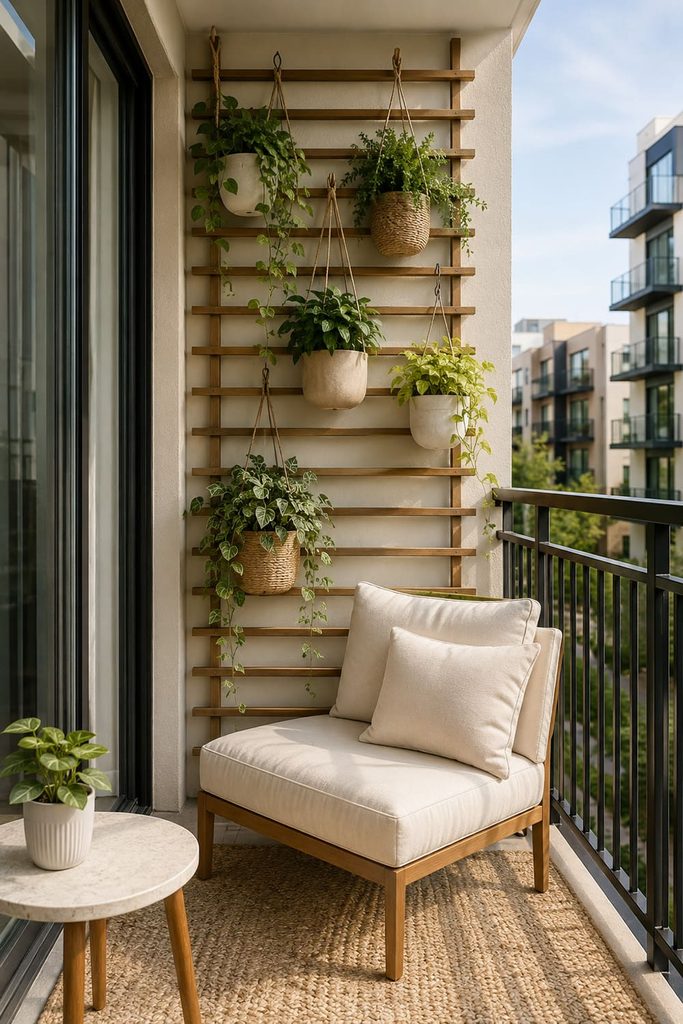
A trellis does not have to be covered completely with vines to provide privacy. Hanging planters can break up the open spaces while adding greenery at different heights.
Choose several lightweight planters and distribute them across the frame instead of placing them all in one section. Small trailing plants can soften the edges, while fuller plants can help interrupt direct views.
Keep the arrangement balanced. Too many hanging pots can make a narrow balcony feel cluttered and can also add unnecessary weight to the structure.
Use containers designed for secure hanging and check the trellis manufacturer’s weight recommendations. This approach works particularly well for renters who want a green privacy feature without waiting for climbing plants to grow across the entire frame.
7. Position a Trellis Between Two Balcony Zones

A trellis can separate different parts of a small balcony while providing privacy at the same time. Use it to divide a seating corner from a plant or dining area rather than placing it directly against the railing.
For example, position a narrow trellis beside a lounge chair and let it create a subtle boundary between the chair and the rest of the balcony. This can make the seating area feel more secluded.
Keep the frame open enough that you can still move around it comfortably. A small apartment balcony does not need a solid divider.
This idea is especially helpful when you share a balcony with another household member. The trellis creates a visual boundary without permanently dividing the outdoor space.
8. Use a Trellis With Removable Outdoor Fabric

If plant growth is too slow for your privacy needs, add a lightweight outdoor fabric panel to the trellis. The fabric can cover selected sections while the frame provides structure.
Choose a breathable outdoor material and attach it in a way that allows easy removal. Cream, beige, gray, or muted earth tones can blend with balcony furniture without making the screen visually dominant.
Do not cover the entire frame unless you specifically need a solid barrier. Leaving a few open sections lets daylight through and keeps the arrangement lighter.
Check the setup during windy weather and remove the fabric if necessary. A fabric-covered trellis can catch more wind than an open frame, so stability is important.
9. Build a Green Corner With a Trellis and Tall Plants

A trellis can anchor an entire privacy corner when combined with several tall container plants. Place the frame toward the back of the balcony, then arrange plants around its base.
Use different plant heights to create a layered screen. A taller plant can block the upper sightline while smaller pots fill gaps around the bottom.
This approach looks more like a small garden than a conventional privacy barrier. It also gives you the freedom to move individual pots when cleaning or changing the layout.
Choose plants according to your balcony’s light and weather conditions. If strong wind is common, use sturdy containers and avoid placing unstable pots on narrow ledges. Keep the main doorway and walking route clear so the privacy corner does not become an obstacle.
10. Choose a Slim Metal Trellis for a Modern Balcony

Not every trellis needs to look rustic. A slim metal frame can provide a cleaner appearance for a modern apartment balcony while using very little floor space.
Look for a simple vertical design with narrow lines rather than a bulky decorative frame. Dark metal can create a strong contrast against pale walls and green plants, while a lighter finish can blend more quietly into the background.
Use the trellis as a support for a few climbing plants or leave it mostly open for a minimalist look. You can also position a planter at its base to soften the hard material.
Choose a weather-appropriate finish and check the frame regularly for signs of rust or wear, particularly in damp or coastal conditions.
11. Use Two Narrow Trellises Instead of One Large Screen

One oversized privacy screen can make a small balcony feel closed off. Two narrow trellises give you more control and allow you to block specific sightlines without covering the entire edge.
Place one panel beside the main seating area and another near the opposite corner. Leave an open section between them so light and air can still move through the balcony.
You can keep both frames identical for a clean appearance or use matching styles with different plants. The open gap also makes it easier to reach furniture and clean the balcony.
This setup works especially well on long apartment balconies where privacy is needed at more than one point. Since each panel is separate, moving or storing them is easier than handling one large structure.
12. Create a Trellis Backdrop for a Balcony Dining Nook

A trellis can make a small dining area feel more private without taking away the entire view. Place a narrow frame behind a compact table and two chairs, then add greenery or a few lightweight hanging decorations.
The frame gives the dining area a clear visual boundary, making it feel like its own little zone. Keep the table small enough that chairs can still be pulled out comfortably.
If you use climbing plants, leave enough room between the foliage and the seating area for easy movement. Artificial outdoor vines can provide faster coverage if you want the finished look immediately.
A trellis backdrop can also hide an unattractive wall or railing. When your dining setup changes, the same frame can be moved to another part of the balcony.
13. Add Trailing Plants to Soften a Trellis Screen

Trailing plants can make a privacy trellis look less rigid and more natural. Place hanging pots along the upper or side sections of the frame and allow the foliage to fall gently downward.
This works particularly well when you already have a simple trellis but do not want a full wall of greenery. The leaves interrupt the view while leaving sections of the frame visible.
Choose plants that suit your balcony’s light and temperature. If the balcony receives strong sunlight, select varieties that can handle those conditions rather than choosing purely for appearance.
Keep the plants trimmed so they do not interfere with doors, walkways, or neighboring spaces. A few well-positioned trailing plants can soften a plain frame without requiring a large collection of pots.
14. Use a Trellis as a Privacy Screen for a Balcony Workspace
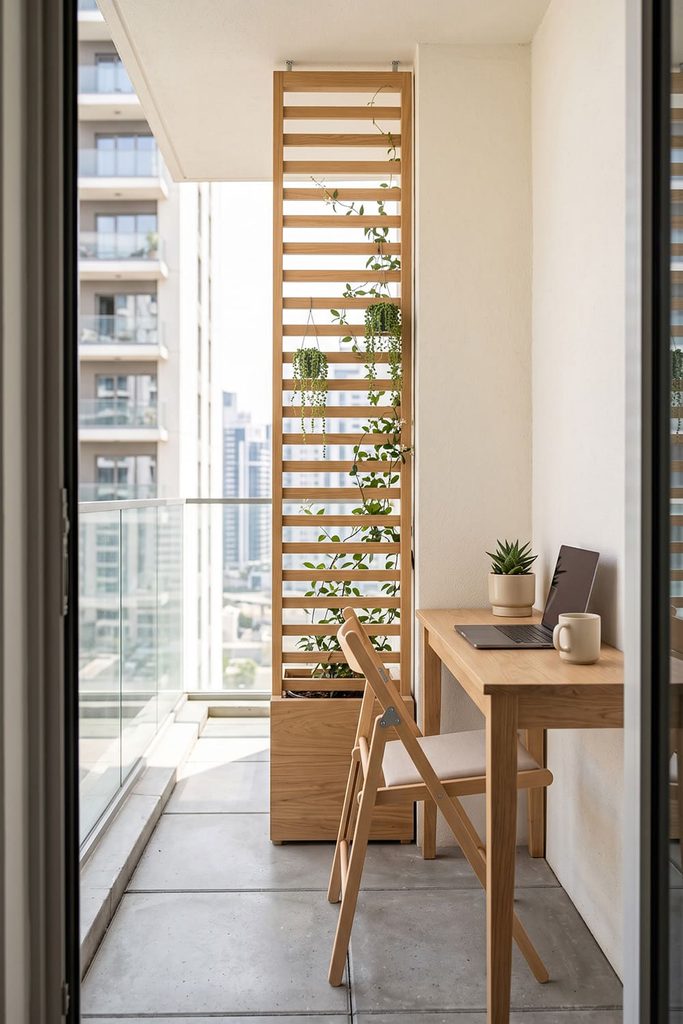
If you sometimes work outside, privacy can be especially useful. A trellis behind or beside a small balcony desk can create a visual boundary from nearby apartments while keeping your workspace open.
Place the desk against the least exposed wall or railing, then position the trellis on the side where people can see you most easily. A few plants can make the screen feel more natural.
Keep the workspace compact. A narrow desk, folding chair, and slim trellis are usually easier to manage than bulky outdoor office furniture.
Avoid allowing plants or fabric to block your screen, cables, or access to the door. The goal is a comfortable work corner that remains easy to pack away when the balcony needs another use.
15. Create a Layered Privacy Wall With Trellis, Plants, and Curtains
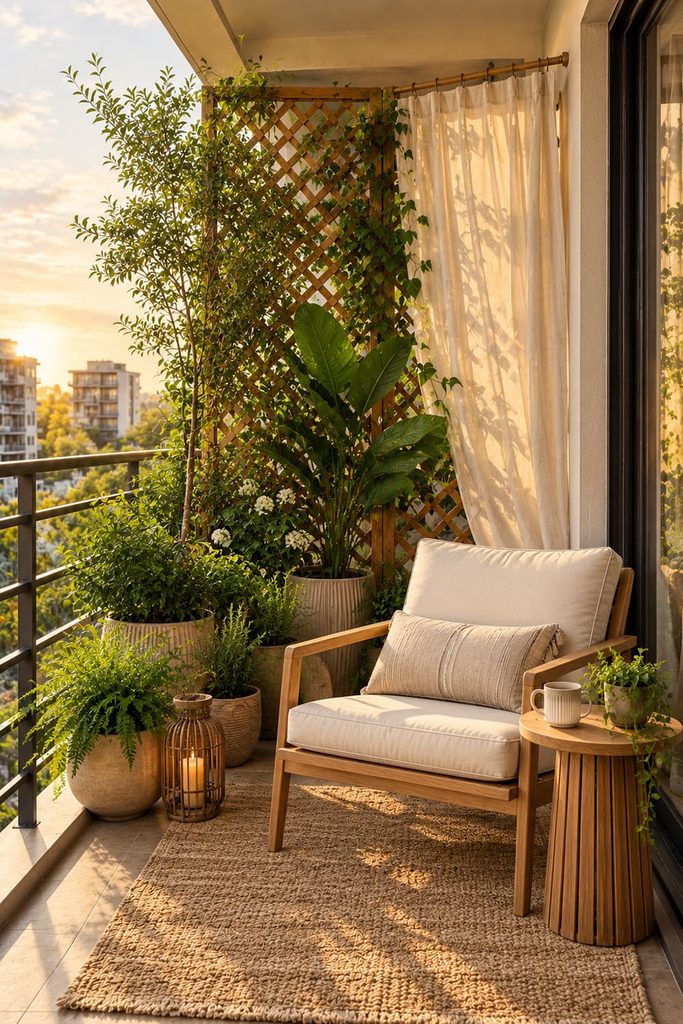
For a balcony that feels especially exposed, combine several lightweight elements rather than relying on one large screen. A trellis can provide the structure, plants can soften the view, and a removable curtain can add extra coverage when needed.
Place the trellis toward the exposed side and use plants around its base. Hang a lightweight outdoor curtain along part of the frame, leaving sections open for light and airflow.
Keep the colors coordinated so the layers do not make the small balcony look busy. Neutral fabric, natural wood, green foliage, and simple furniture are easy to combine.
This setup also gives you control. Open the curtain for more light, rely on the plants during the day, and use the full arrangement when you want greater privacy.
Conclusion
A trellis can be a smart solution when a small apartment balcony needs more privacy but cannot accommodate a bulky permanent screen. Freestanding frames, planter trellises, folding designs, climbing plants, bamboo, fabric, and hanging greenery can all help block unwanted views while keeping the balcony useful.
The most effective approach is to identify the exact direction the unwanted view comes from and place your trellis there. You do not need to cover the entire balcony. Leaving some areas open helps maintain light, airflow, and a sense of space.
Choose a design that can move with you, and always consider your lease, building rules, weather conditions, and the stability of anything placed outdoors.


