

15 Apartment Balcony Pots Ideas to Turn Your Small Space Into a Green Retreat
There’s something quietly magical about stepping out onto your balcony and being greeted by a burst of color and life, even if that balcony is barely big enough to fit a chair. In apartment living, where outdoor space is a luxury rather than a given, the right pots can transform a bare concrete slab into a personal sanctuary.
Whether you’re working with a narrow Juliet balcony or a slightly more generous terrace, the container you choose matters just as much as what you plant in it. From sculptural ceramic planters to space-saving vertical systems, here are 15 balcony pot ideas that balance style, practicality, and plant health for apartment dwellers who want their outdoor space to feel intentional.
This post contains affiliate links. If you buy through them, we may earn a small commission at no extra cost to you. See our Affiliate Disclosure.
1. Oversized Ceramic Statement Planters

A single large ceramic pot can do more for your balcony’s atmosphere than a dozen small ones scattered around. Choose one in a bold glazed finish, terracotta orange, or matte charcoal, and let it anchor a corner of the space. Fill it with a small ornamental tree, a dramatic palm, or a cluster of trailing greenery for instant visual weight. Oversized pots also retain moisture longer than small ones, meaning less frequent watering, a real advantage for busy renters. Because they’re heavy and stable, they also resist tipping in windy, high-rise conditions, making them both a design statement and a practical choice.
2. Tiered Vertical Planter Stands

When floor space is scarce, height becomes your best resource. A tiered plant stand lets you stack three or four pots vertically, instantly multiplying your growing area without crowding the walkway. Choose a slim wooden or black metal ladder-style stand for a modern look, or a rustic wire design for cottage charm. These stands work beautifully for layering different plant heights and textures, herbs on the bottom, trailing vines up top, creating a lush, layered garden effect. They’re also portable, so you can reposition them as sunlight patterns shift throughout the day or season.
3. Wall-Mounted Pocket Planters

Wall-mounted planters are one of the smartest solutions for tiny apartment balconies because they free up the entire floor for seating or movement. Fabric pocket planters, felt-lined and breathable, are especially popular for growing herbs, strawberries, or trailing succulents along a railing or exterior wall. Install a few in a staggered grid pattern for a living wall effect that feels more like art than gardening. They’re lightweight, affordable, and easy to swap out seasonally. Just make sure your building allows wall fixtures, and always check that mounting hardware is rated for outdoor exposure.
4. Self-Watering Pots for Low-Maintenance Greenery

For apartment dwellers who travel often or simply forget to water, self-watering pots are a genuine lifesaver. These containers include a built-in reservoir that wicks moisture up to the roots as needed, keeping soil consistently hydrated without daily attention. They’re ideal for thirstier plants like tomatoes, peppers, or leafy herbs that struggle in inconsistent watering conditions. Many modern designs look sleek enough to double as decor, with clean lines and neutral colors that suit minimalist balconies. Investing in even two or three of these can dramatically reduce the guesswork involved in balcony gardening.
5. Rustic Terracotta Pot Groupings
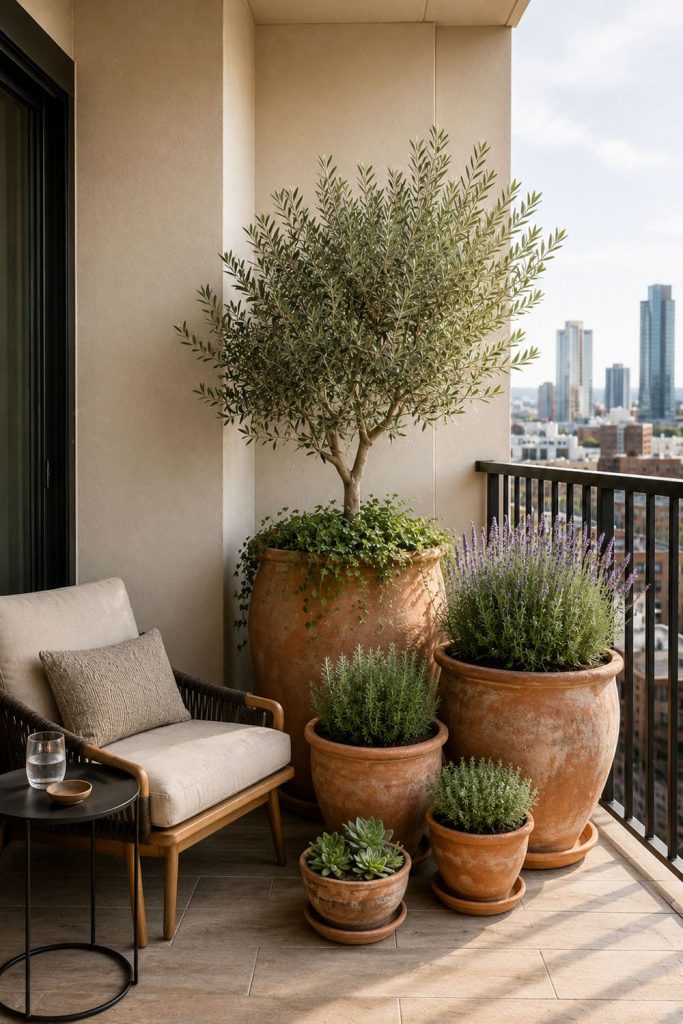
There’s a timeless warmth to classic terracotta that pairs beautifully with almost any balcony style, from boho to Mediterranean-inspired. Instead of using terracotta pots individually, group several different sizes together in a cluster to create an organic, layered look. The porous clay material allows roots to breathe, making it especially good for herbs, succulents, and drought-tolerant plants. Over time, terracotta develops a naturally weathered patina that only adds to its charm. Grouping pots also helps plants retain humidity around each other and makes efficient use of limited floor space on compact balconies.
6. Hanging Baskets for Overhead Greenery
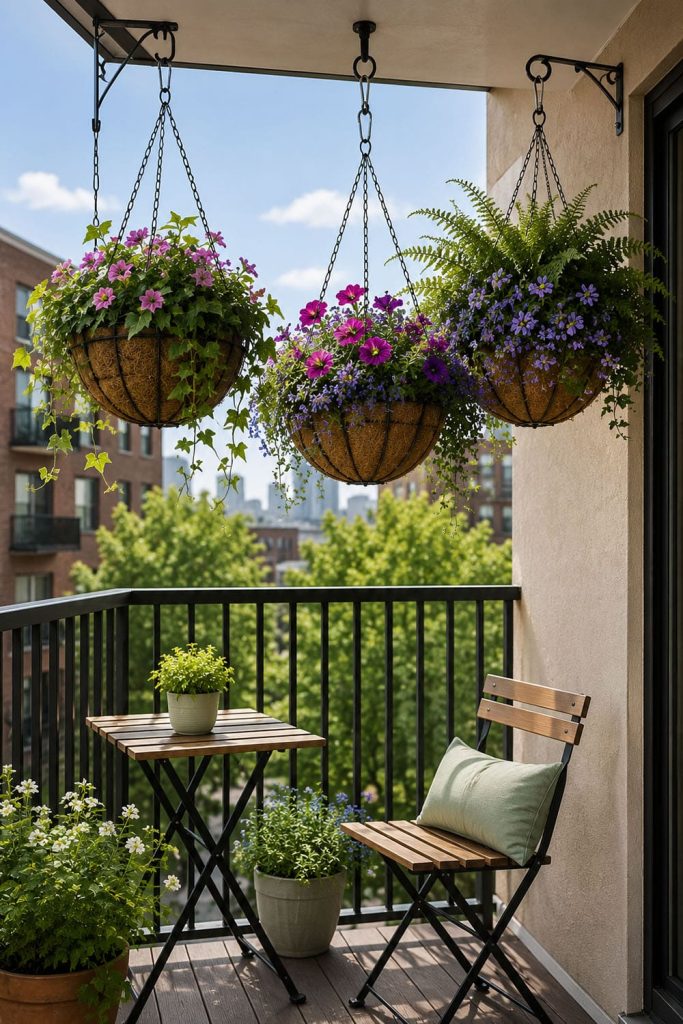
Hanging baskets bring life to the often-overlooked vertical space above eye level, making them perfect for balconies where every square foot of floor matters. Suspend them from a ceiling hook, railing bracket, or sturdy pergola beam, and fill them with cascading plants like ivy, petunias, or trailing lobelia. The overhead greenery creates a canopy effect that makes the whole balcony feel more enclosed and garden-like. Choose baskets with built-in drip trays to prevent water from dripping onto furniture or neighbors below, a small detail that saves a lot of awkward apartment conversations.
7. Railing Planter Boxes

Railing planter boxes clip directly onto your balcony railing, turning unused vertical real estate into a thriving mini garden without sacrificing any floor space. They’re especially useful for growing a continuous row of flowers, herbs, or small vegetables along the perimeter. Look for boxes made from weather-resistant materials like galvanized steel or UV-treated resin, and confirm the clips are secure and rated for your specific railing type. This setup works particularly well for renters since it’s non-permanent and easy to remove entirely when moving out, leaving no marks on the building structure.
8. Woven Rattan and Wicker Planters

Woven rattan or synthetic wicker planters bring a soft, natural texture that instantly warms up a balcony’s aesthetic, especially in boho or coastal-inspired spaces. The woven texture contrasts nicely against smooth concrete or metal railings, adding visual interest even before anything is planted. Synthetic versions are treated to withstand rain and sun exposure, making them far more durable than natural rattan for outdoor use. Use them for medium-sized plants like ferns, snake plants, or flowering annuals. Their lightweight construction also makes rearranging your balcony layout effortless whenever you want a seasonal refresh.
9. Concrete and Stone-Effect Pots

For a more architectural, modern look, concrete or stone-effect planters bring an industrial elegance that pairs beautifully with minimalist balcony furniture. Their weight makes them naturally wind-resistant, an important consideration for balconies several stories up. Choose geometric shapes like cubes or cylinders for a contemporary edge, and stick to a monochrome palette of greenery to let the pot’s texture take center stage. Concrete is porous, so a quality sealant helps prevent staining and cracking from repeated freeze-thaw cycles if you live somewhere with cold winters.
10. Colorful Glazed Pots for a Bold Pop

If your balcony leans neutral, gray tile, white walls, black railings, a few brightly glazed ceramic pots can inject instant personality. Cobalt blue, emerald green, or sunny yellow glazed pots work as functional art pieces even before you add plants. Use them sparingly, two or three as accents, rather than overwhelming the space, so each pot maintains its impact. Pair bold pots with simple, structural plants like snake plants or ZZ plants so the color of the container remains the visual star rather than competing with busy foliage.
11. Compact Herb Garden Pots

A dedicated herb garden pot setup turns your balcony into a functional extension of your kitchen. Look for tiered or multi-compartment planters specifically designed for basil, mint, thyme, and rosemary, positioned near the door for easy access while cooking. Because herbs generally need excellent drainage, choose pots with drainage holes and a saucer to catch excess water. Grouping herbs together also makes it easier to manage consistent watering and sunlight needs. This idea is particularly rewarding for apartment dwellers who want their balcony to serve a practical, everyday purpose rather than purely decorative one.
12. Lightweight Fiberglass Planters

Fiberglass planters offer the visual heft of stone or concrete without the actual weight, a major advantage for upper-floor balconies with weight restrictions. They come in a huge range of finishes, from matte charcoal to faux-wood textures, so you can mimic a premium look at a fraction of the cost and weight. Their durability against UV rays and temperature swings makes them a reliable long-term investment. Because they’re so light, fiberglass pots are also easy to move indoors during storms or winter months, protecting both the planter and whatever you’ve planted inside it.
13. Corner Planters for Awkward Spaces
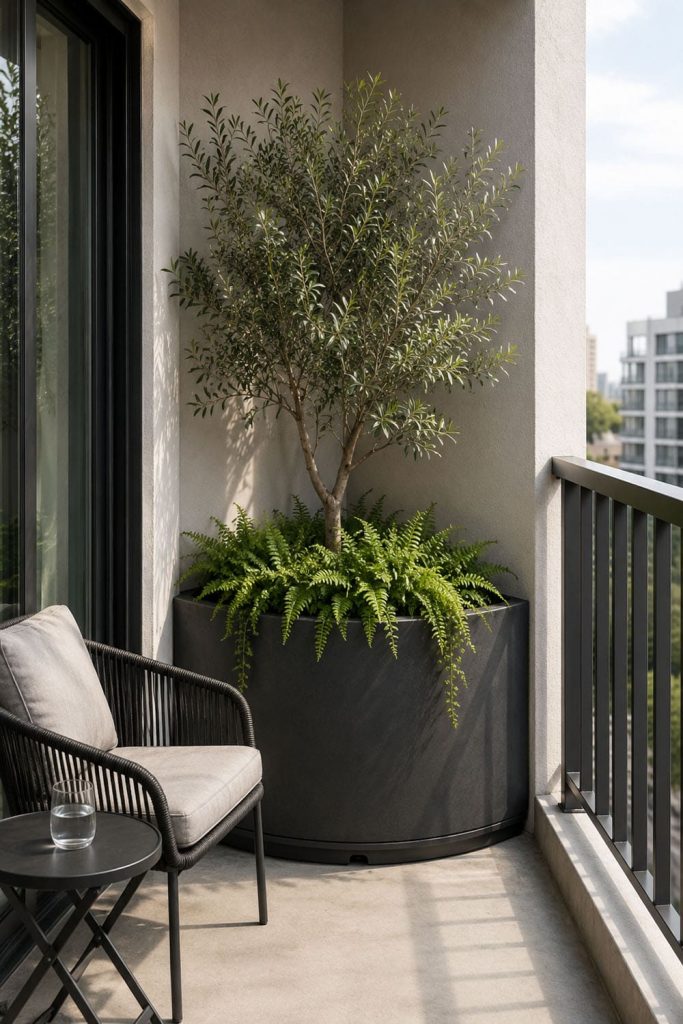
Every balcony has that one awkward corner that feels impossible to style, and a corner-shaped planter is often the perfect solution. These specially designed pots fit snugly into 90-degree angles, making use of space that would otherwise sit empty. Fill them with a small tree or a dense cluster of trailing plants to soften the sharp architectural line. Corner planters are especially useful on narrow balconies where every inch counts, and they can double as a subtle privacy screen when placed near a shared wall or neighboring unit.
14. Repurposed and Upcycled Containers

For a budget-friendly and personality-filled approach, consider repurposing everyday items into planters, think galvanized buckets, wooden crates, or even vintage tins. This upcycled look adds character and tells a story that mass-produced pots simply can’t replicate. Just be sure to drill drainage holes and use a plastic liner if the material isn’t naturally weatherproof. Grouping a variety of upcycled containers together creates an eclectic, curated feel that works especially well in boho or vintage-inspired balcony designs, and it’s a satisfying way to give old items a second life.
15. Modular Stackable Planter Systems
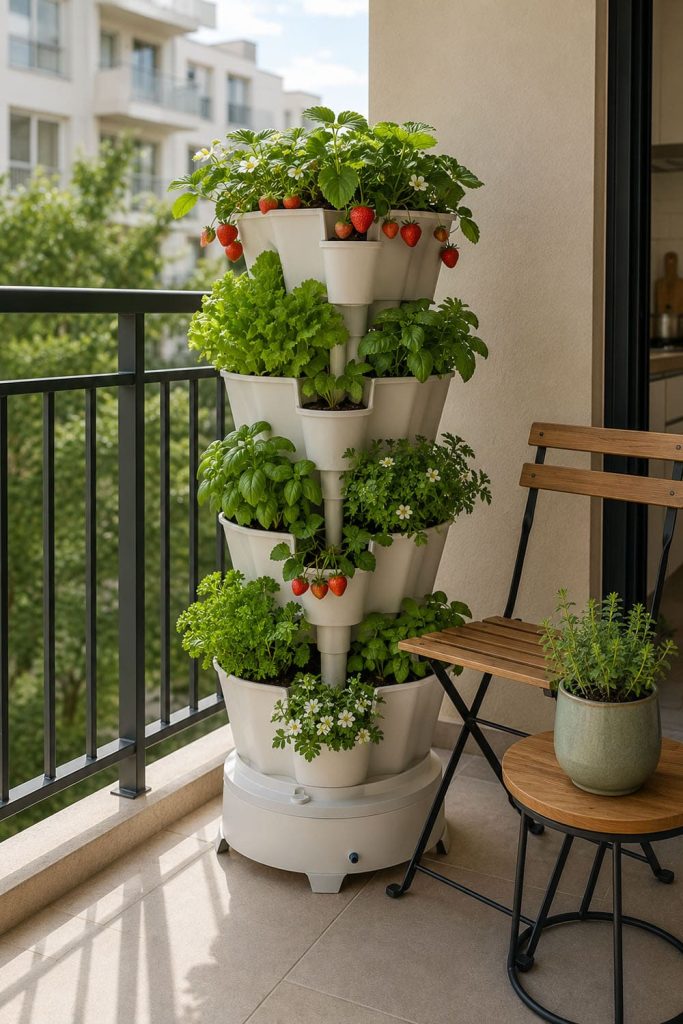
Modular stackable planters are designed specifically for small-space urban gardening, allowing you to build a customizable tower of plants that grows vertically rather than sprawling outward. Each tier typically rotates or angles slightly, ensuring every plant gets adequate sunlight despite being stacked closely together. These systems are especially popular for growing strawberries, lettuce, or a mix of herbs in a compact footprint. Because they’re modular, you can start small and add tiers as your confidence, and your balcony garden, grows, making this an ideal entry point for first-time balcony gardeners.
Balcony Pot Buying Guide: What to Consider Before You Shop
Choosing the right pots for your balcony goes beyond aesthetics. Start with weight: if you’re on a high floor or have a weight-restricted balcony, prioritize lightweight materials like fiberglass or resin over heavy stone or concrete. Drainage is non-negotiable, always choose pots with drainage holes and a saucer to protect flooring and prevent root rot.
Consider your balcony’s sun exposure, since south-facing spaces need heat-tolerant materials like glazed ceramic, while shaded balconies can accommodate more delicate terracotta. Wind exposure matters too; wider, heavier bases resist tipping better than tall, narrow pots. Finally, think about your lifestyle: if you travel often, self-watering options reduce maintenance, while renters should favor railing clips and freestanding pots over anything requiring permanent installation.
Final Thoughts
Your balcony doesn’t need to be large to feel like a genuine extension of your home. The right combination of pots, whether it’s a single oversized ceramic statement piece or a full vertical herb garden, can turn even the smallest outdoor nook into a space you actually want to spend time in. Start with one or two ideas that fit your style and space constraints, then build from there as you learn what thrives in your specific light and wind conditions. With thoughtful container choices, apartment balcony gardening becomes less about limitations and more about creative possibility.


