
15 Modern Balcony Railing Designs for a Sleek, Contemporary Look
Modern balcony design is all about clean lines, honest materials, and letting the architecture speak for itself — and the railing is often where that philosophy is put to the test. Unlike ornate or traditional styles, modern railings tend to favor simplicity, negative space, and a restrained material palette that complements rather than competes with the rest of the home.
Whether you’re renovating an apartment balcony, building a new contemporary home, or simply looking to refresh a dated railing, the right modern design can instantly sharpen your home’s exterior. Below are 15 modern balcony railing ideas, ranging from minimalist glass panels to bold geometric metalwork, to help you find a style that fits your space and aesthetic.
1. Slim Vertical Steel Bar Railings
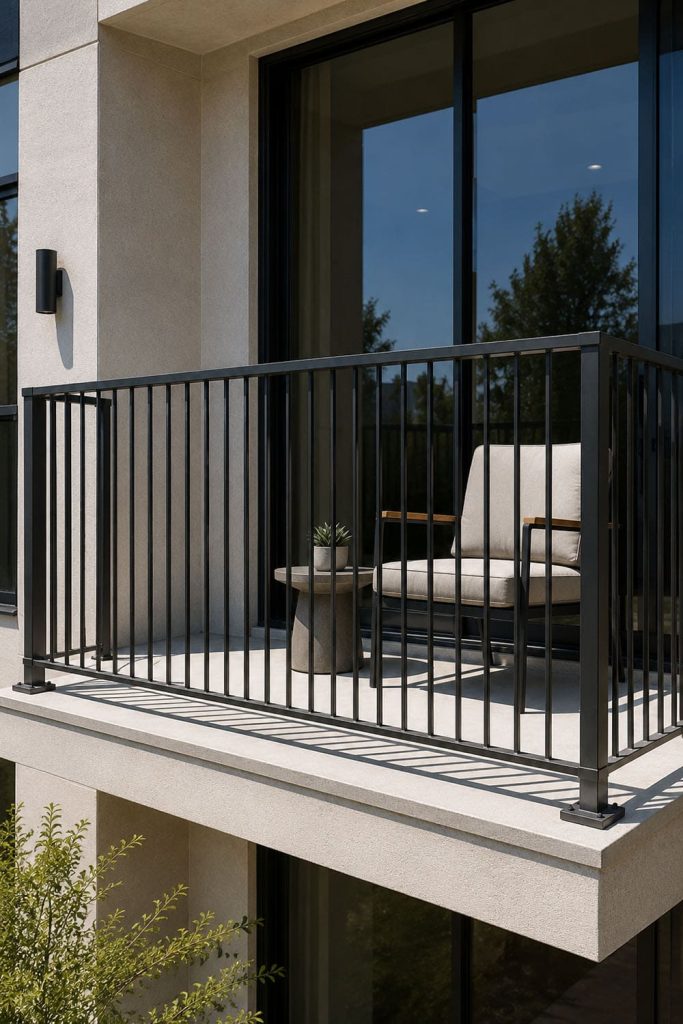
Thin, evenly spaced steel bars set in a clean vertical rhythm are one of the most recognizable hallmarks of modern railing design. The narrow profile keeps the balcony feeling open and airy while still providing solid, code-compliant protection. Powder-coated finishes in black, charcoal, or graphite are especially popular because they read as crisp and architectural against light stucco or concrete facades. This style is affordable relative to glass or custom metalwork, low-maintenance, and versatile enough to suit apartment buildings, townhomes, and single-family homes alike. It’s a dependable, timeless choice for anyone wanting understated modern polish.
2. Frosted Glass Panel Railings
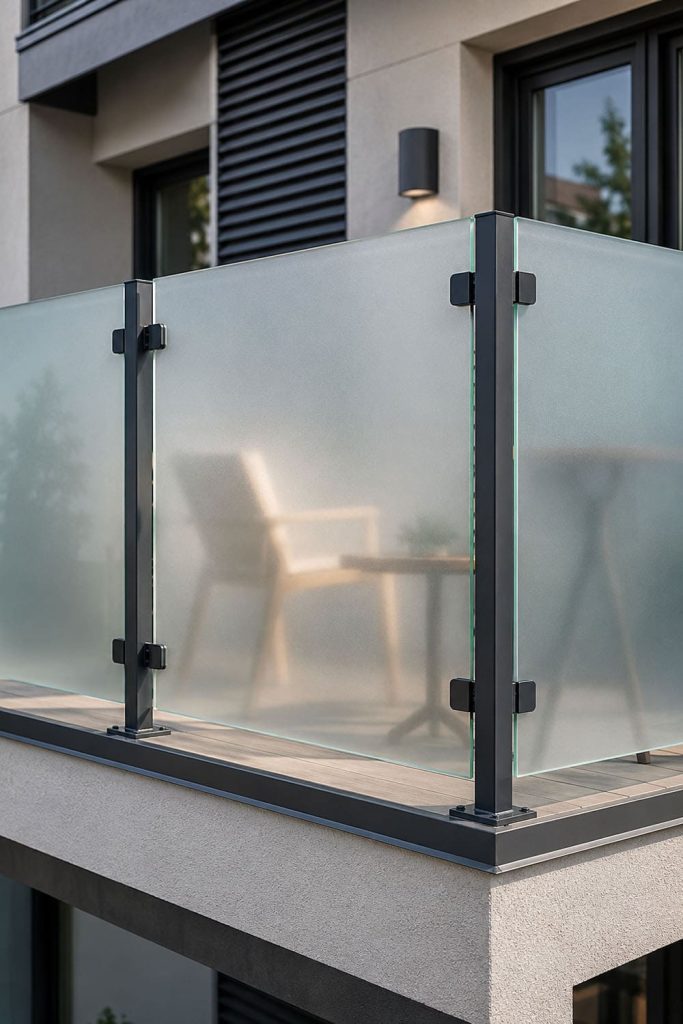
Frosted or acid-etched glass panels offer the clean, minimal look of standard glass railings while adding a layer of privacy that fully transparent glass can’t provide. Light still passes through beautifully, keeping the balcony bright, but the softened, translucent surface obscures direct sightlines from neighboring units or the street below. This makes frosted glass a smart choice for closely spaced apartment balconies and urban rowhouses. The frosted finish also tends to show fewer smudges and water spots than clear glass, making it a slightly more practical option for busy households.
3. Horizontal Cable Railings

Horizontal stainless steel cables strung between simple posts create one of the most quietly modern railing looks available. The thin cables practically disappear from a distance, preserving views while meeting safety requirements through closely spaced tensioned lines. This design is especially popular for homes with scenic surroundings — hillsides, waterfronts, or wooded lots — where an unobstructed sightline matters as much as the railing itself. Cable systems require occasional tension adjustments but otherwise demand very little upkeep, and their industrial-meets-nautical character pairs naturally with wood decking, concrete, and other contemporary exterior materials.
4. Geometric Metal Panel Railings

Instead of simple straight bars, geometric panel railings use repeating angular or grid-based patterns cut or welded into metal sheets. Squares, triangles, and interlocking lines create a bold, graphic look that feels distinctly architectural rather than decorative. This style works particularly well on contemporary and mid-century modern homes, where strong geometric shapes already define the building’s character. Because the patterns are typically laser-cut or CNC-fabricated, designs can be customized to match a homeowner’s exact aesthetic, offering a level of visual interest that plain bar railings can’t achieve.
5. All-Glass Frameless Railings

Frameless glass railings remain a defining feature of modern design because of how completely they disappear, letting the view and the architecture take full priority. Tempered safety glass panels are secured with discreet base-shoe or spigot mounting systems, eliminating visible posts or top rails almost entirely. This creates a seamless, floating-edge effect that feels sleek and expansive, especially on high-rise balconies and homes designed around a strong outdoor view. The main consideration is regular cleaning, since fingerprints and water spots are more visible on clear glass than on most other railing materials.
6. Black Aluminum Picket Railings
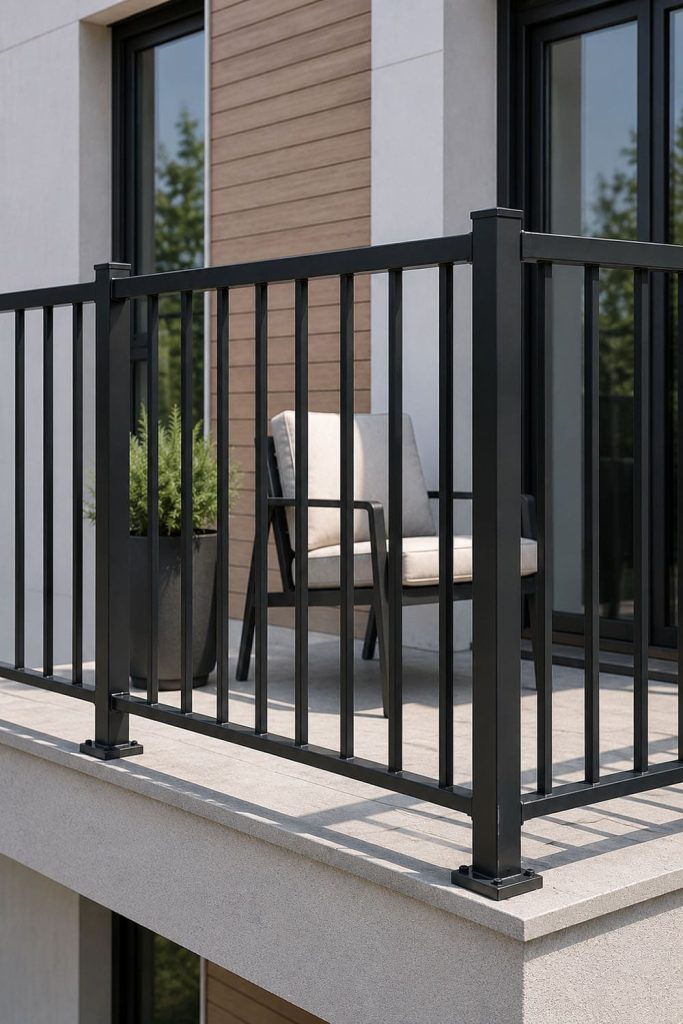
Matte black aluminum pickets, set at clean, even intervals, offer a budget-friendly way to achieve a strikingly modern silhouette. Aluminum resists rust far better than raw steel or iron, making it a practical choice for balconies exposed to rain, humidity, or coastal air, without sacrificing the sharp, graphic look that dark metal provides. This style pairs especially well with white, gray, or warm wood-toned exteriors, where the contrast makes the railing read as an intentional design feature rather than a purely functional barrier. It’s a reliable, low-maintenance option for nearly any modern home.
7. Mixed Wood and Metal Railings

Combining a wood top rail with slim metal balusters brings warmth to an otherwise cool, hard-edged modern palette. The wood offers a comfortable, tactile surface to rest a hand on, while the metal balusters keep the overall look light and contemporary rather than heavy or rustic. This pairing has become especially popular in modern farmhouse and Scandinavian-influenced homes, where a mix of natural and industrial materials is a defining design language. It’s also a practical combination, since the metal balusters require little upkeep while only the wood rail needs occasional resealing.
8. Perforated Metal Privacy Screens
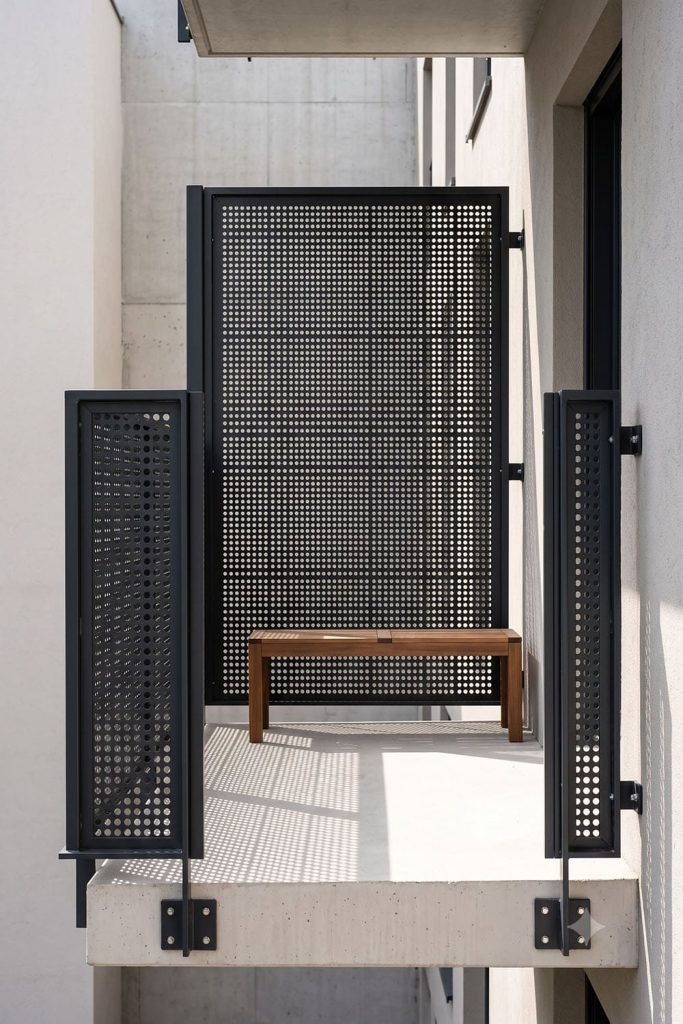
Perforated metal panels, punched with small round or geometric holes, function as both a railing and a privacy screen in one element. Light and air pass through freely while direct views are softened, making this a smart solution for tightly spaced urban balconies. The repeating pattern of the perforations also adds subtle visual texture without looking busy or ornamental, keeping the overall effect clean and modern. Powder-coated aluminum is the most common material choice, offering good weather resistance along with a crisp, contemporary finish that suits minimalist architecture particularly well.
9. Concrete and Glass Combination Railings
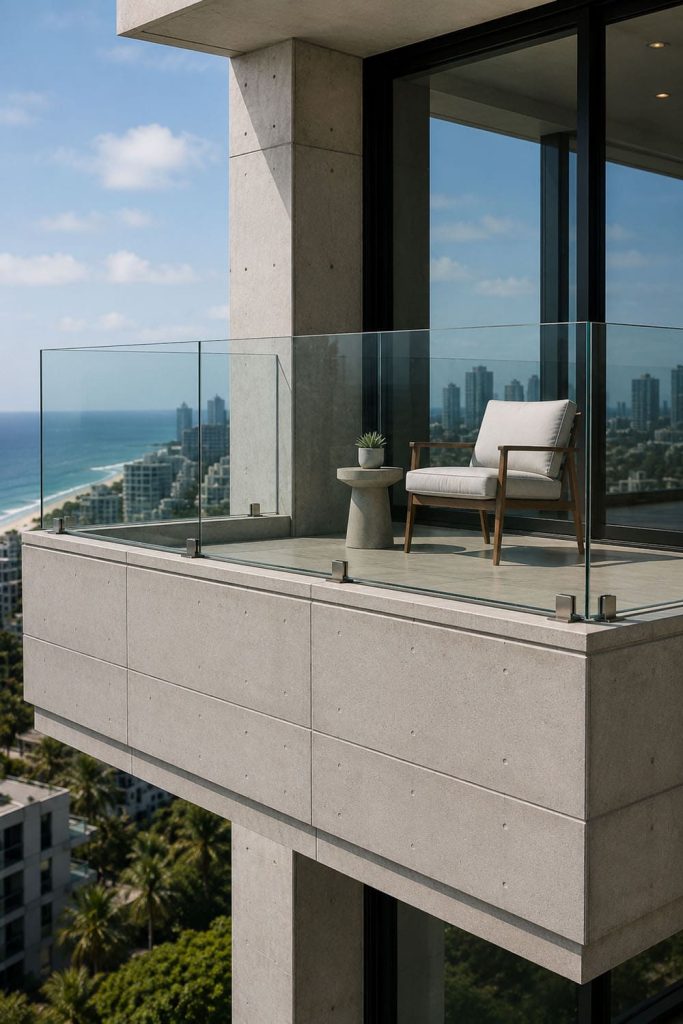
Pairing a low poured-concrete or precast knee wall with a glass panel on top creates a railing that feels solid, grounded, and thoroughly modern. The concrete base adds a sense of permanence and can double as a bench-height ledge, while the glass upper section keeps the design from feeling closed off or heavy. This combination is especially common in brutalist-influenced and contemporary concrete homes, where exposed concrete is already a defining material elsewhere on the facade. It’s also a highly durable option, since both materials hold up well to weather with minimal maintenance required.
10. Horizontal Flat Bar Railings

Horizontal flat steel bars, stacked evenly from base to top rail, create a strong linear look that reads as distinctly modern and slightly more substantial than thin round bars. The horizontal orientation also tends to visually widen a balcony, making it a smart choice for narrower spaces. This style is popular on contemporary townhomes and multi-unit residential buildings, where a consistent, repeatable railing design needs to look sharp across many units. Powder-coated black or bronze finishes are common choices, offering a clean, architectural appearance that ages well and requires minimal upkeep over time.
11. Minimalist Glass with Thin Metal Cap Rail

This design pairs frameless glass panels with an ultra-thin metal cap rail running along the top, adding just enough structure to feel intentional without interrupting the glass’s clean sightlines. The slim metal edge also provides a more comfortable, secure handhold than glass alone, addressing a common practical complaint with all-glass systems. It’s a popular middle-ground choice for homeowners who love the openness of glass but want a touch of visible structure for peace of mind. The cap rail can be finished in black, silver, or bronze to match other exterior metal accents.
12. Industrial Pipe Railings
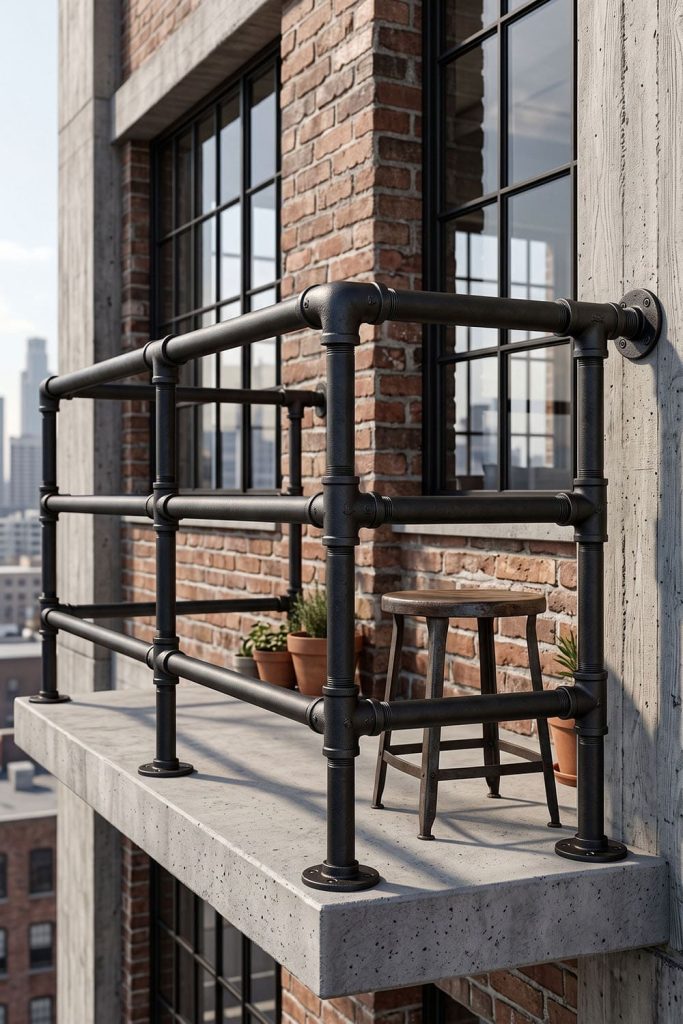
Exposed black iron or steel pipe, assembled into simple rectilinear frames, brings a raw, industrial edge to modern balcony design. Originally inspired by warehouse and loft architecture, pipe railings have become a popular choice for urban homes and modern renovations seeking an unpolished, utilitarian aesthetic. The thick, rounded pipe reads as sturdy and substantial, offering a different visual weight than slim steel bars or cable systems. This style pairs particularly well with exposed brick, black-framed windows, and other industrial-inspired exterior details, creating a cohesive, edgy modern look.
13. Two-Tone Powder-Coated Railings
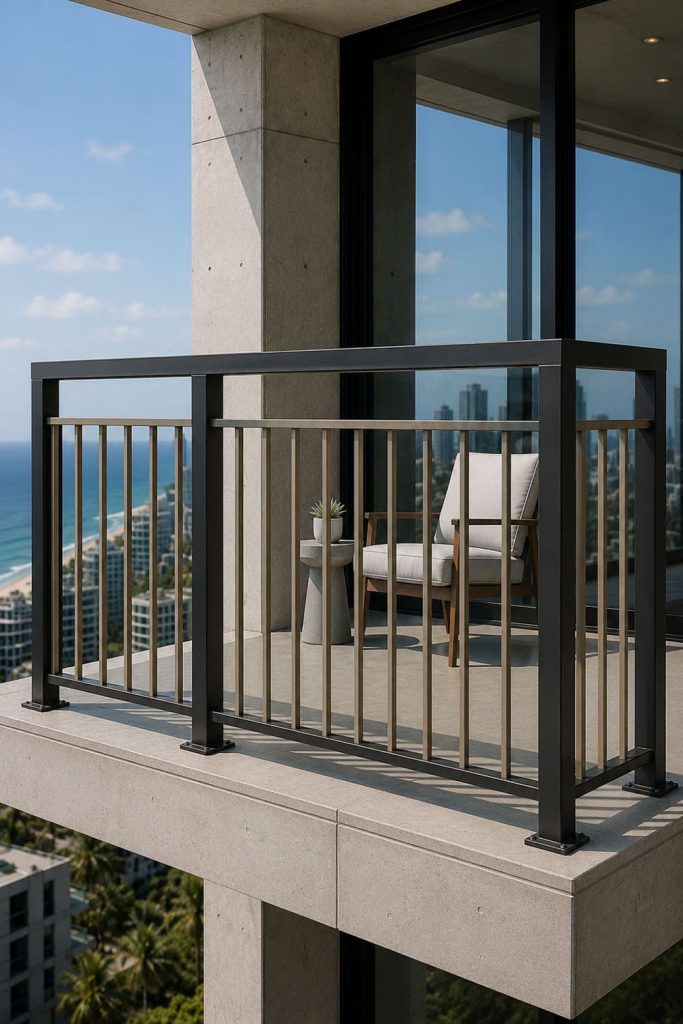
Rather than a single uniform color, two-tone railings pair a dark frame or top rail with lighter-colored infill bars, or vice versa, creating subtle visual contrast within the railing itself. This approach adds depth and interest to an otherwise simple bar or panel design without introducing any additional materials or textures. Powder-coating allows for durable, weather-resistant color combinations that won’t fade or chip easily. Two-tone railings are especially effective on homes with a bold or colorful exterior palette, where the railing can either echo or intentionally contrast the building’s existing color scheme.
14. Angled or Sloped Baluster Railings

Rather than standing perfectly vertical, angled baluster railings tilt the bars slightly, creating a subtle dynamic rhythm that catches the eye without looking chaotic. This design choice is often used to reinforce a home’s broader architectural angles, echoing sloped rooflines or angular window details elsewhere on the facade. It’s a more advanced fabrication style typically reserved for architect-designed contemporary homes, since the angled construction requires precise engineering to remain structurally sound and code-compliant. The result is a railing that feels genuinely custom and distinctly tied to the specific architecture surrounding it.
15. Cantilevered Steel Mesh Railings

Fine woven steel mesh, stretched taut within a slim structural frame, offers a modern alternative to solid panels or individual bars. The mesh provides a subtly textured, semi-transparent barrier that filters view and light without fully obstructing either, striking a balance between openness and enclosure. Because the mesh is lightweight relative to its coverage, it can be paired with minimal supporting framework, reinforcing the pared-back aesthetic modern design is known for. This style has become increasingly popular on rooftop terraces and contemporary multi-family buildings looking for a distinctive, low-maintenance railing solution.
Tips for Choosing a Modern Balcony Railing
Keep the material palette tight. Modern design typically relies on one or two primary materials at most — pick a dominant metal, glass, or wood tone and stay consistent across your balcony and other exterior details.
Prioritize clean sightlines. Whether you choose bars, cable, or glass, look for designs with minimal visual clutter; the fewer competing elements, the more modern the railing will read.
Check local building codes first. Most residential codes require railing heights between 36 and 42 inches and baluster spacing narrow enough to prevent a small child from passing through — confirm your local requirements before finalizing any design.
Match maintenance to your lifestyle. Frameless glass looks stunning but needs frequent cleaning; powder-coated aluminum and steel offer a similarly sharp look with far less upkeep.
Consider the view you’re framing. If your balcony overlooks something worth seeing, prioritize open designs like cable or glass; if privacy matters more, lean toward frosted glass, perforated metal, or mesh.
Final Thoughts
Modern balcony railing design succeeds when every element feels deliberate — no extra ornamentation, no wasted detail, just clean materials doing their job well. From the quiet transparency of frameless glass to the raw character of industrial pipe, each of these fifteen styles offers a different way to express contemporary design without sacrificing safety or function. Consider your home’s existing architecture, your climate, and how much maintenance you’re willing to take on, and you’ll find a modern railing design that feels like a natural extension of the space rather than an afterthought.


