

15 Minimalist Balcony Decor Ideas for a Calm, Clutter-Free Outdoor Escape
There’s something quietly luxurious about a balcony that asks for nothing more than a chair, a plant, and a good view. In a world of overstuffed feeds and overstyled spaces, minimalist balconies offer a rare kind of relief — a place where every object has earned its spot, and empty space is treated as a design feature rather than a gap to fill. Whether you’re working with a sprawling terrace or a narrow ledge barely wide enough for your morning coffee, minimalism scales beautifully because it isn’t about how much space you have — it’s about how intentionally you use it.
The best minimalist balconies share a few quiet rules: a restrained color palette, high-quality materials over abundant decor, furniture with clean silhouettes, and greenery chosen for form as much as foliage. Below are 15 ideas to help you turn your balcony into a serene, uncluttered retreat — each one practical enough to execute this weekend.
1. Stick to a Neutral, Tonal Color Palette
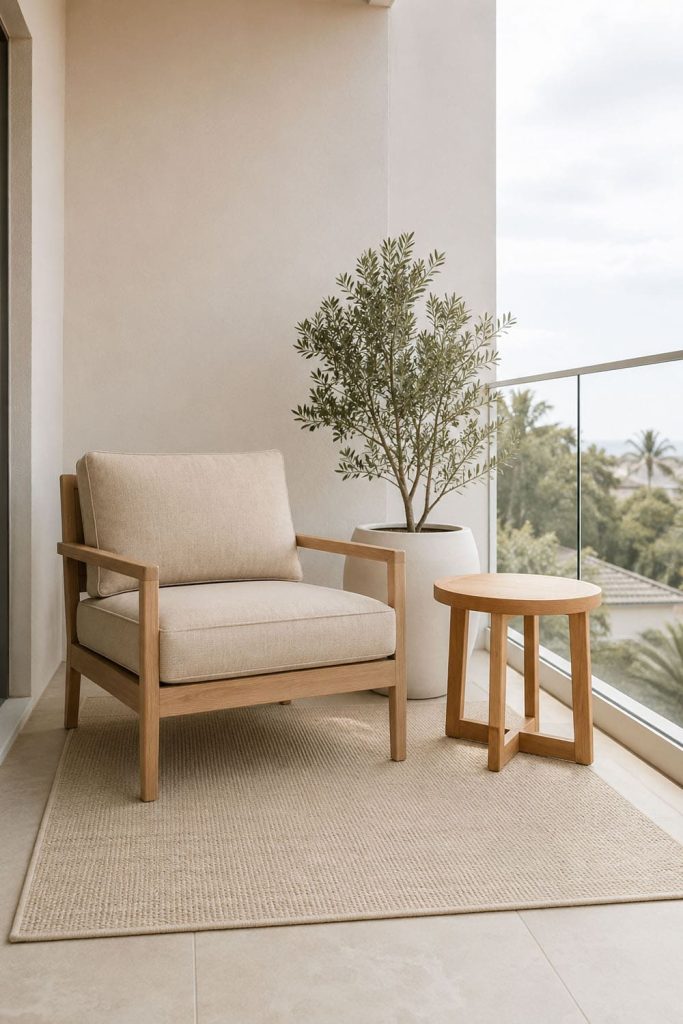
Minimalist balconies live and die by restraint, and color is where that discipline shows first. Choose two or three tones — think warm beige, soft white, and natural wood — and let every element, from cushions to planters, pull from that same family. This tonal consistency makes even a tiny balcony feel expansive, since the eye isn’t interrupted by competing hues. Avoid printed textiles or bright accent colors, which tend to read as clutter regardless of how few pieces you own. If you want visual interest, introduce it through texture and material variation instead of color, keeping the palette calm while the space still feels layered and considered.
2. Choose One Statement Piece of Furniture
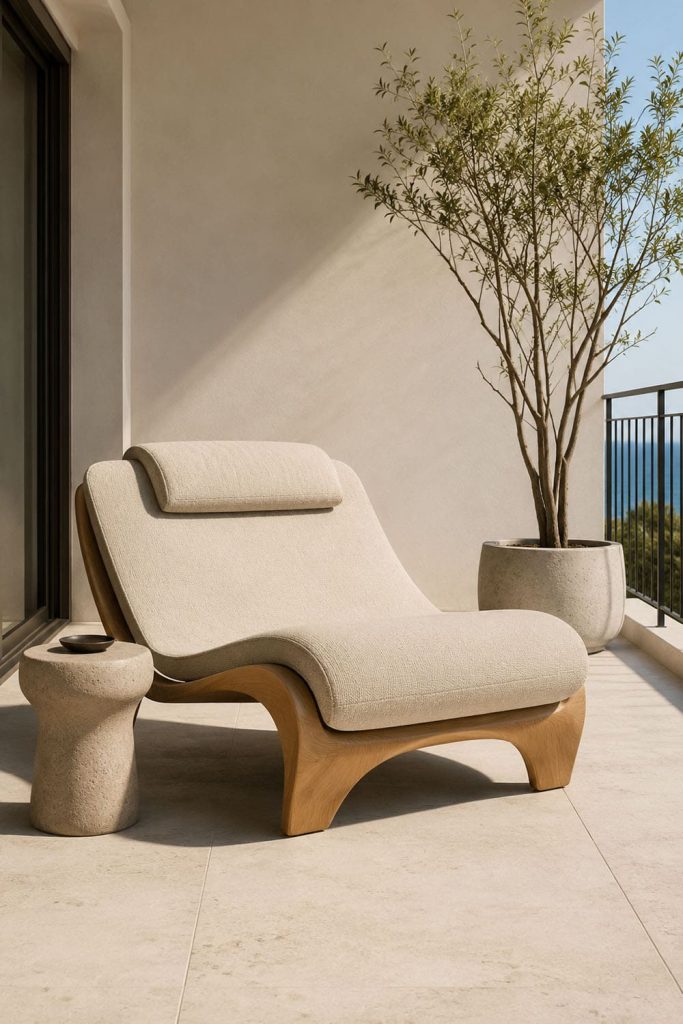
Rather than filling your balcony with multiple small items, invest in a single standout piece — a sculptural lounge chair, a low-profile daybed, or a beautifully finished bistro table — and let it anchor the entire space. This approach forces every other decision to support that one piece rather than compete with it. A single well-made chair paired with a small side table often looks more expensive and more intentional than five mismatched items crammed into the same footprint. When shopping, prioritize clean lines, a neutral upholstery tone, and materials like teak, rattan, or powder-coated metal that age gracefully outdoors.
3. Use Slim-Profile, Foldable Furniture

Space efficiency is central to minimalist design, and foldable furniture delivers it without sacrificing style. A slim-legged folding chair or a wall-mounted drop-leaf table can disappear entirely when not in use, keeping the floor open and the sightlines clean. This is especially useful on narrow apartment balconies where every inch of floor space matters. Look for foldable pieces in matte black metal or natural wood rather than plastic, since material quality is what separates a minimalist balcony from an empty one. The goal isn’t to hide that you have furniture — it’s to make sure it never feels like it’s in the way.
4. Anchor the Space with One Sculptural Plant
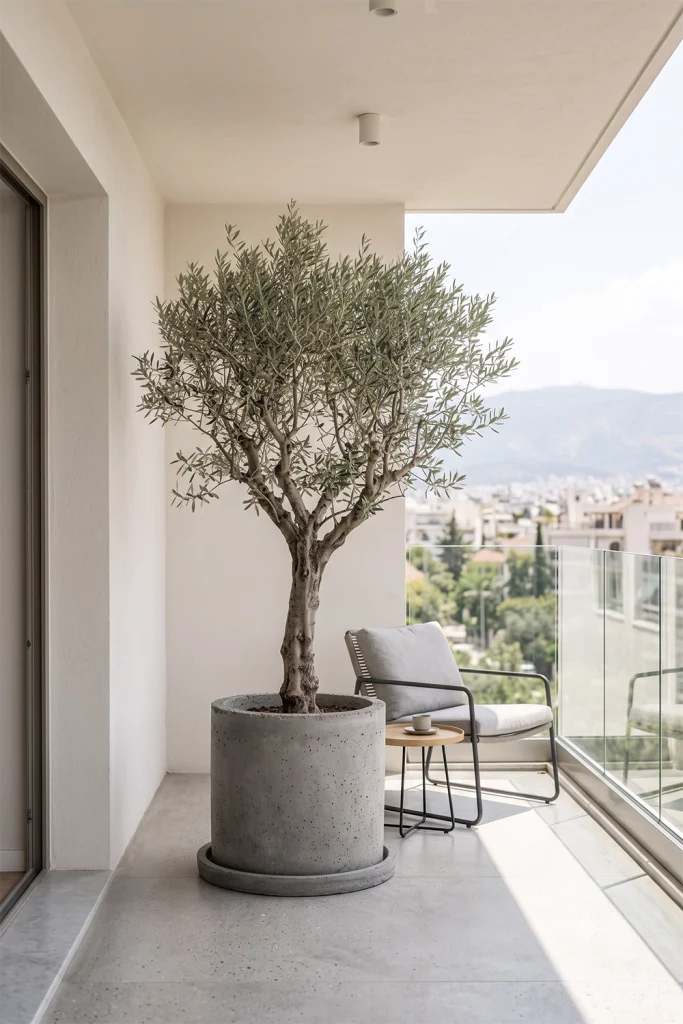
A single, well-chosen plant with strong architectural form — an olive tree, a fiddle-leaf fig, or a tall snake plant — does more for a minimalist balcony than a dozen scattered pots. The idea is to treat greenery like sculpture rather than decoration, giving it room to breathe and be seen. Place it in a simple ceramic or concrete planter that echoes your balcony’s palette, and resist the urge to surround it with smaller plants that dilute its impact. This approach also cuts down on maintenance, since you’re caring for one thoughtfully chosen specimen instead of managing an entire garden in a confined space.
5. Layer Textures Instead of Colors

When your palette is neutral, texture becomes your main design tool. Pair a smooth concrete side table with a woven jute rug, a linen cushion, and a matte ceramic planter to create depth without introducing new colors. This layering keeps the balcony visually rich while still reading as calm and uncluttered. Natural materials — wood, stone, linen, rattan — tend to work best because they weather beautifully and never fight for attention. The result is a space that feels tactile and considered up close, even though from a distance it reads as simple, quiet, and cohesive.
6. Install Recessed or Wall-Mounted Lighting

Freestanding lamps and bulky string-light setups can quickly clutter a small balcony, so minimalist designs favor lighting that disappears into the architecture. Slim wall-mounted sconces, recessed LED strips along the railing, or a single discreet lantern provide enough ambiance for evening use without adding visual noise. Warm white light works best for a calm atmosphere, while cooler tones can feel clinical outdoors. If you rent and can’t install fixtures, battery-powered LED strips with a warm color temperature are an easy, low-commitment alternative that still keeps the aesthetic clean and intentional after dark.
7. Keep the Railing Clear and Unobstructed
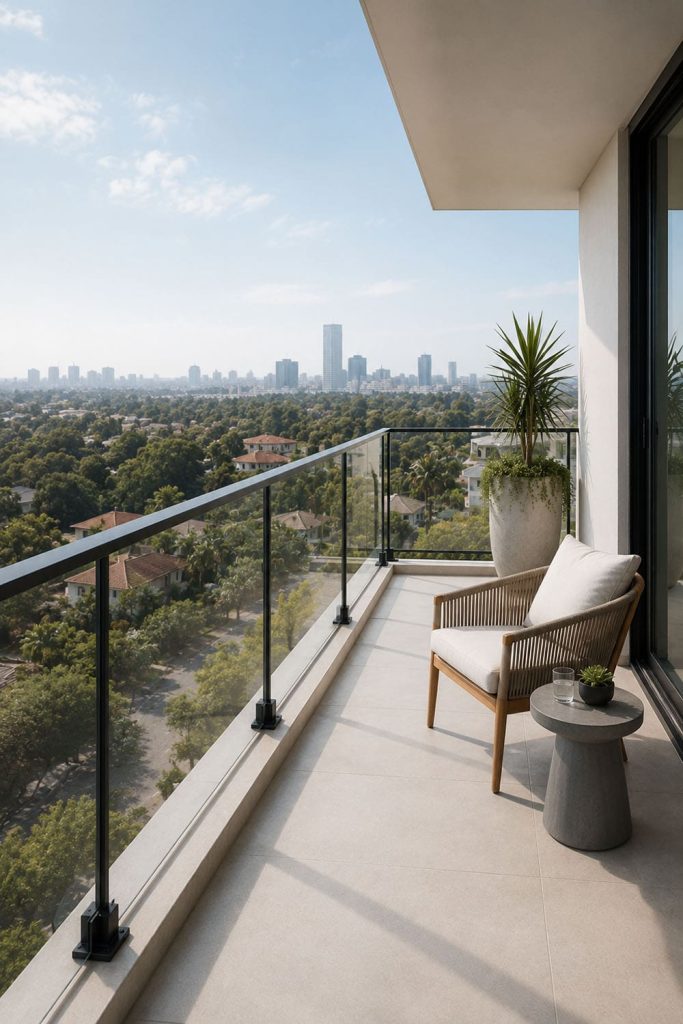
One of the fastest ways to undo a minimalist balcony is to hang planters, lights, and decor all along the railing at once. Instead, choose one railing treatment — either a single row of slim planter boxes or a discreet privacy screen — and leave the rest bare. An unobstructed railing preserves your view and keeps the eye moving outward rather than getting caught on decor. This is particularly important for high-rise balconies, where the surrounding skyline or greenery is often the real focal point the design should be framing, not competing with.
8. Add a Low-Profile Outdoor Rug
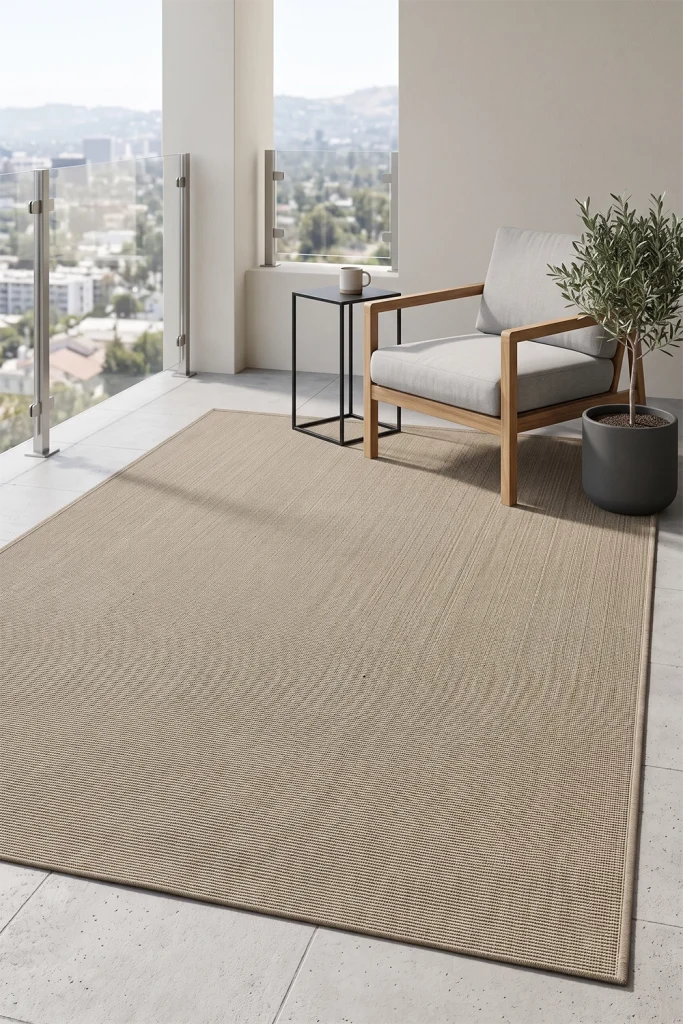
A single rug in a natural fiber or a muted solid tone can define your seating area without adding pattern or clutter. Choose something flat-woven rather than plush, since low-pile rugs read as more minimal and hold up better against wind and moisture. Sisal, jute, or a simple woven polypropylene in sand or charcoal all work well. Keep the rug slightly smaller than the balcony footprint so it visually “floats” within the space rather than covering it edge to edge, which helps preserve the open, breathable feeling that defines minimalist outdoor design.
9. Use Built-In or Hidden Storage
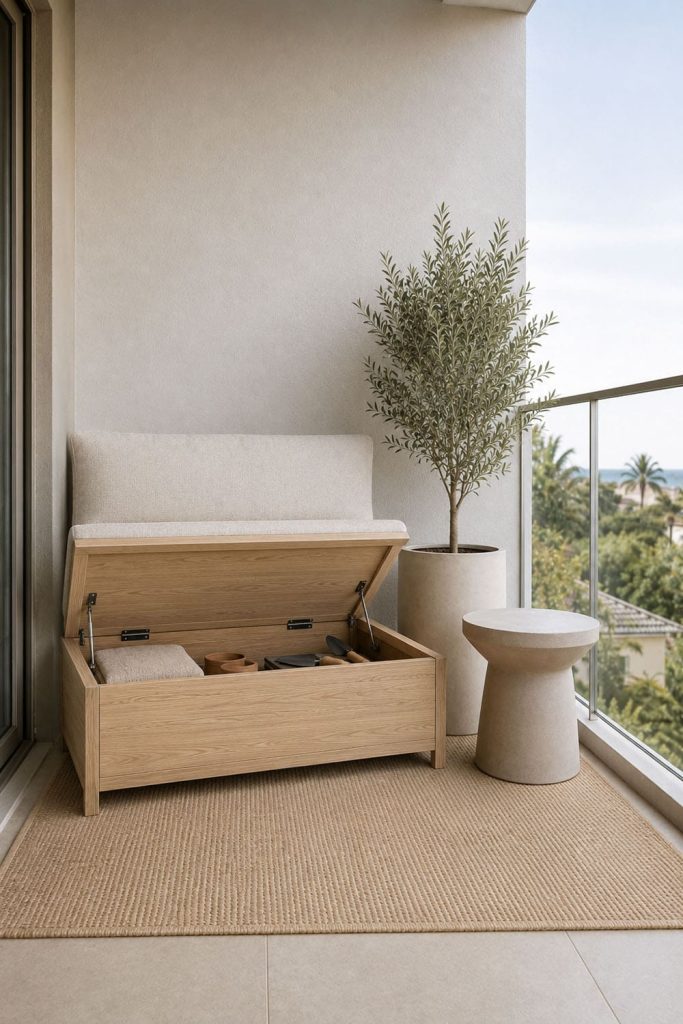
Clutter is the enemy of minimalism, so any item that isn’t part of your intentional decor — cushions, tools, extra pots — needs somewhere to disappear to. A built-in bench with a lift-up seat or a slim storage box tucked against the wall keeps everyday clutter out of sight without requiring extra floor space. This is especially valuable on small balconies, where even one misplaced item can make the whole space feel busy. Choose storage in the same material and tone as your furniture so it blends into the design rather than standing out as a utility piece.
10. Frame the View with Sheer or Minimal Screening
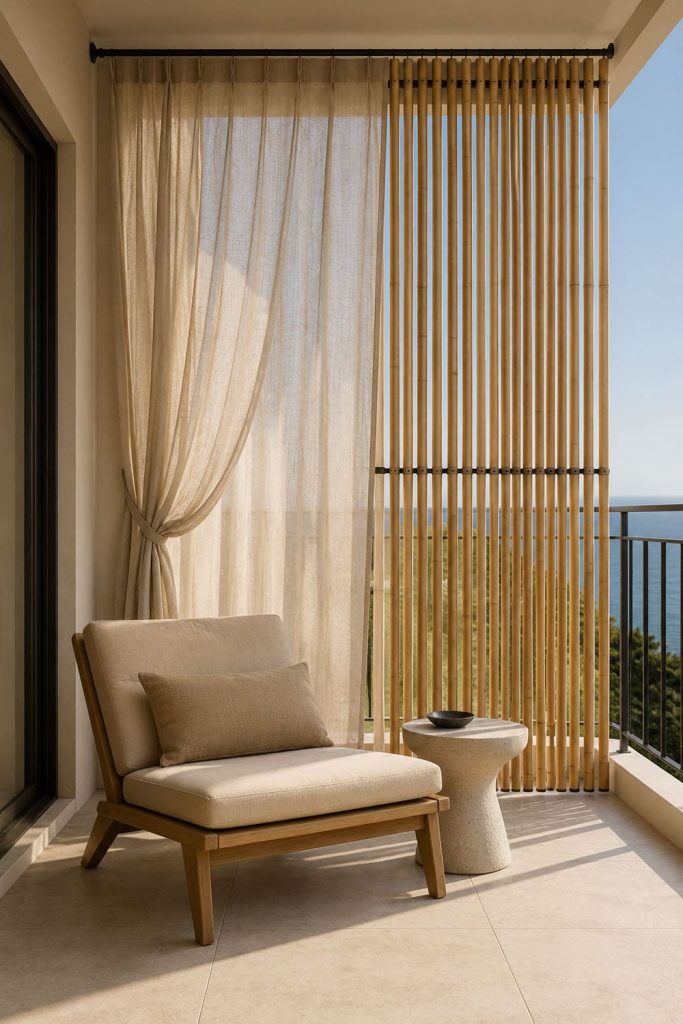
If privacy is a concern, avoid heavy curtains or patterned screens that visually crowd the space. A single sheer linen panel, a slim bamboo screen, or a minimalist slatted wood divider can soften sightlines from neighbors while still letting light through. The goal is filtering, not blocking — a minimalist balcony should still feel open and connected to the outdoors. Mount screening on one side only if privacy is only needed from one angle, which keeps the rest of the balcony fully open and prevents the space from feeling boxed in.
11. Choose a Single Sculptural Planter Over Several Small Ones

Rows of mismatched pots are one of the quickest ways to make a balcony feel cluttered rather than curated. Instead, invest in one or two larger planters with a strong, simple shape — a tall cylindrical concrete pot or a wide, low bowl planter — and let their form do the visual work. Grouping fewer, larger elements together almost always reads as more intentional than scattering many small ones. This also makes watering and maintenance easier, since you’re tending to fewer containers, which fits neatly into the low-effort ethos that minimalist outdoor design is built around.
12. Stick to a Single Flooring Material
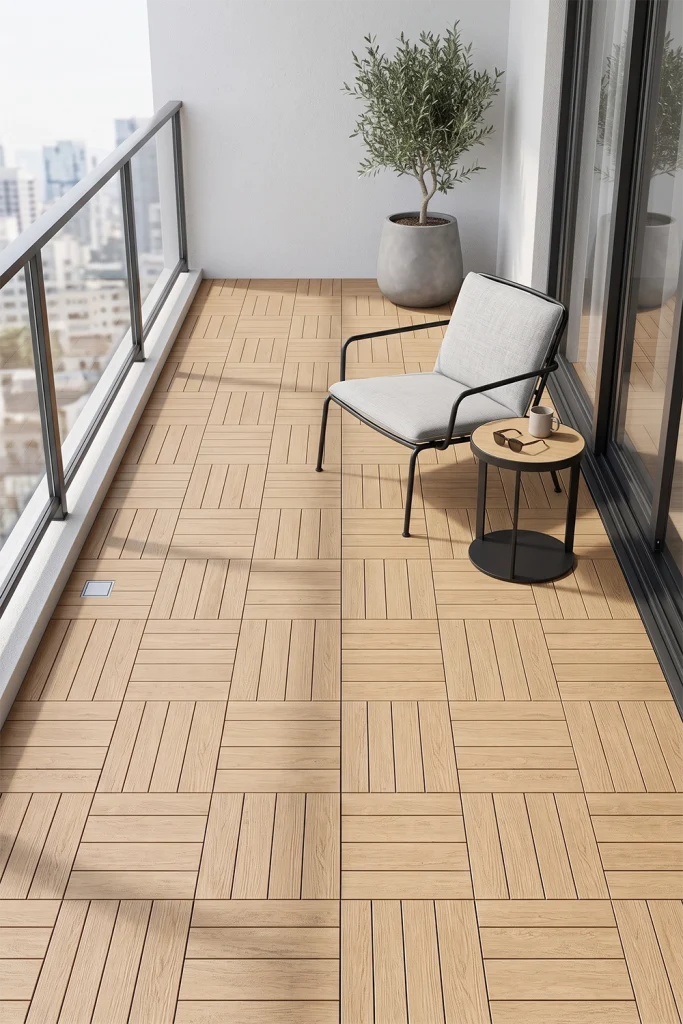
If your balcony’s existing flooring is dated concrete or tile, consider covering it in one consistent material — interlocking wood-look decking tiles or a poured resin finish — rather than mixing rugs, mats, and bare flooring in different zones. A unified floor surface visually enlarges the space and gives the whole balcony a finished, cohesive look. Light wood tones or warm gray composite decking both pair well with neutral minimalist palettes. This is one of the higher-effort updates on this list, but it delivers one of the biggest visual returns for a compact outdoor space.
13. Introduce Warmth Through Natural Wood Accents
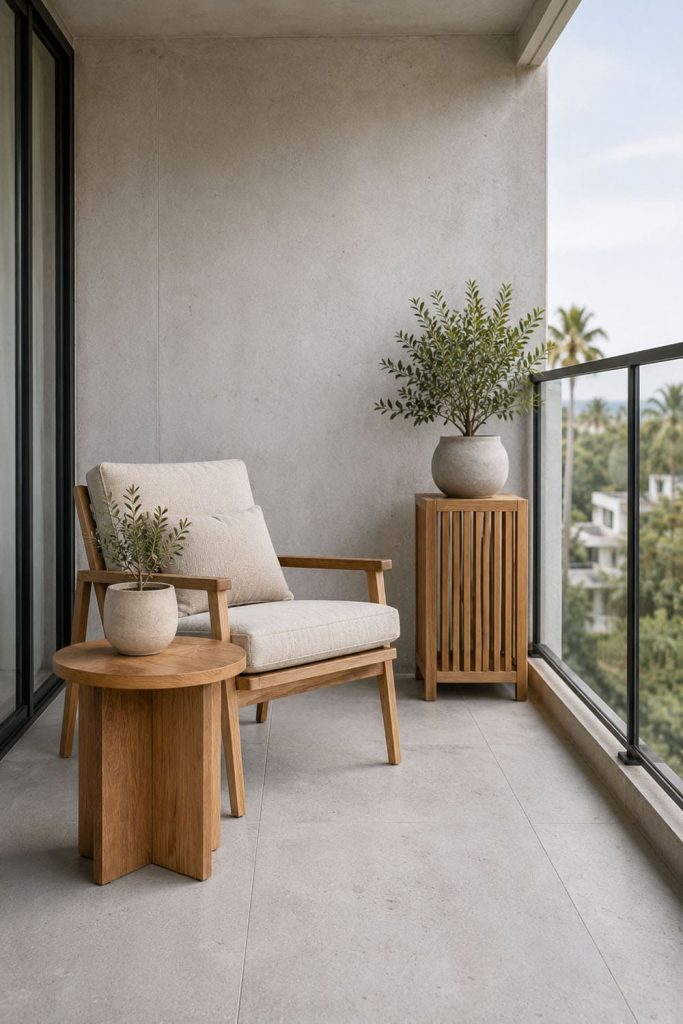
Minimalism can tip into feeling cold or sterile if every surface is glass, metal, or concrete. Counter this by introducing one or two natural wood elements — a teak side table, a wooden plant stand, or slatted wood wall cladding — to soften the palette. Wood adds warmth without requiring color or pattern, which keeps it fully compatible with a restrained minimalist scheme. Untreated or lightly oiled wood tends to weather into a soft silvery-gray over time, which many designers actually prefer for outdoor spaces, since it deepens the natural, lived-in quality of the material.
14. Keep Decorative Objects to a Strict Minimum
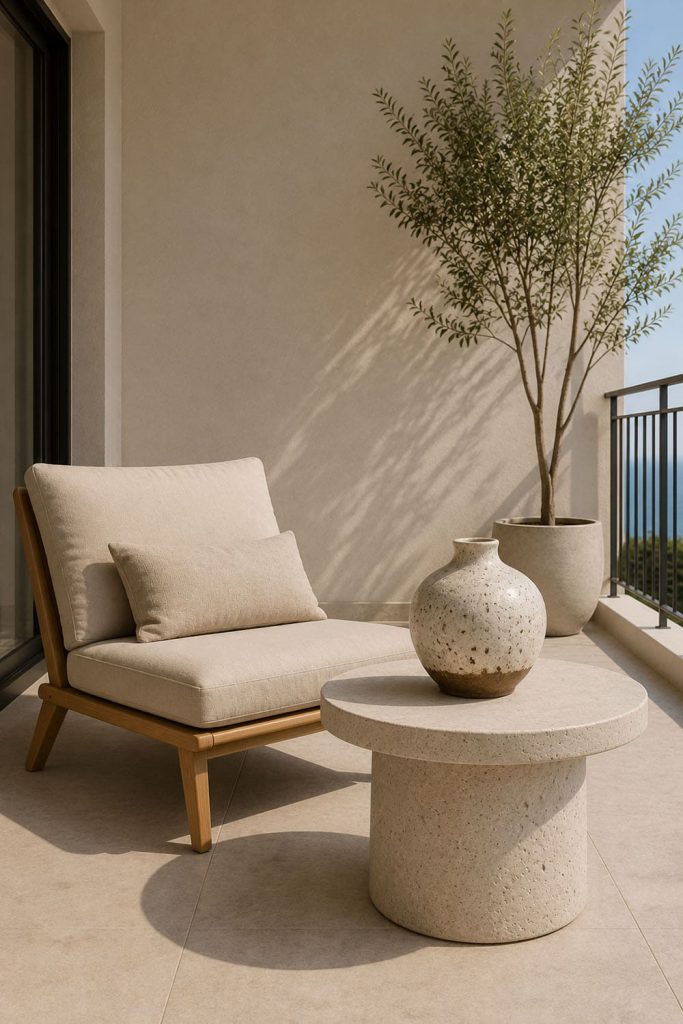
It’s tempting to add a candle, a small sculpture, a coaster set, and a stack of books to a side table, but minimalist styling asks you to choose just one. A single ceramic vase, one carved wood object, or a small stone bowl is enough to make a surface feel styled without tipping into clutter. The discipline here is less about what you display and more about what you leave out — every surface should have visible breathing room around its one chosen object, reinforcing the sense of calm that defines the whole space.
15. Let Negative Space Do the Work
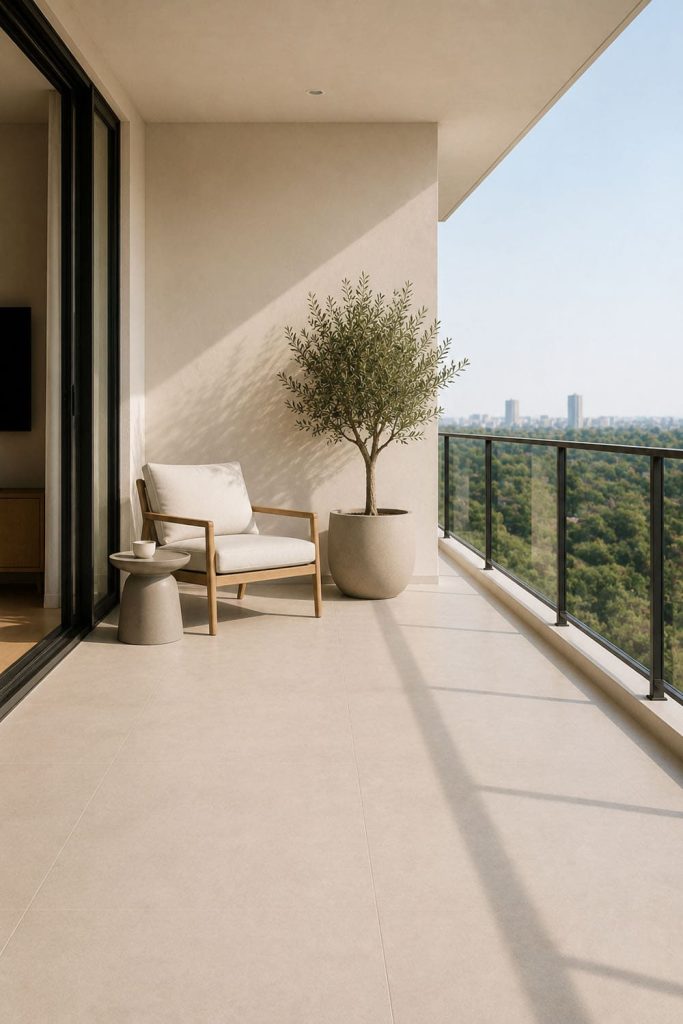
The most overlooked tool in minimalist balcony design is simply empty space itself. Resist the urge to fill every corner or cover every wall — a bare stretch of floor or an unadorned section of railing gives the eye somewhere to rest and makes the furnished areas feel more considered by contrast. This is especially important on small balconies, where the instinct is often to maximize every inch. Instead, treat open space as a deliberate design choice: it’s what separates a balcony that feels curated from one that simply has fewer things in it.
A Quick Buying and Planning Guide for Minimalist Balconies
Start with the palette, not the pieces. Before buying anything, settle on two or three tones — typically a neutral base (white, beige, or gray) plus one warm natural material like wood or rattan. Every purchase should be checked against this palette before it’s added to cart.
Prioritize material quality over quantity. A minimalist balcony has fewer items on display, which means each one is more visible and needs to hold up to scrutiny — and to weather. Favor teak, powder-coated aluminum, concrete, and natural fiber over plastic or synthetic alternatives wherever your budget allows.
Measure before you shop. Minimalist layouts rely on generous negative space, so it’s easy to overbuy furniture that’s technically functional but leaves no breathing room. Measure your balcony and mock up furniture placement with tape or paper templates before committing to dimensions.
Think in zones, not items. Rather than shopping for individual pieces, plan around one or two functional zones — a seating corner, a dining nook, or a plant display area — and furnish each with the minimum needed to serve its purpose well.
Invest where it’s seen most. If budget is limited, spend more on the single statement piece (a chair, a planter, a table) that will draw the eye, and save on lower-visibility items like storage boxes or hardware.
Plan for weather from day one. Outdoor minimalism only stays minimal if materials hold up. Check that fabrics are UV- and moisture-resistant, metals are rust-treated, and wood is suited to outdoor exposure before you commit to a piece.
Final Thoughts
A minimalist balcony isn’t about doing less for the sake of it — it’s about being deliberate enough that nothing on the space needs explaining. Every chair, plant, and surface earns its place, and the empty space in between is doing just as much design work as anything you’ve added. Start small: pick one idea from this list, whether it’s clearing your railing, choosing a single sculptural plant, or committing to a tighter color palette, and build outward from there. The most calming balconies are rarely the ones with the most decor — they’re the ones where every choice feels obvious in hindsight.


