

15 Pantry Organisation Ideas for Bulk Shoppers
Buying in bulk only saves money when you can actually find, reach and use what you bought. A pantry stuffed with oversized bags, stacked boxes and half-forgotten extras quickly stops feeling like a saving and starts feeling like a chore.
The good news is that bulk shopping and a calm, tidy pantry are not opposites — they just need a system designed for larger quantities rather than a standard weekly shop.
The ideas below are written specifically for bulk shoppers: households that bring home big sacks of staples, multipacks of tins and family-size boxes, then need them to stay fresh, visible and easy to restock from.
If you are also short on cupboard space in the kitchen itself, these kitchen storage ideas for homes with no pantry pair well with the systems here, because a bulk pantry works best when everyday cupboards stay light and uncluttered.
Work through the fifteen ideas in order or simply borrow the ones that solve your biggest frustration first — hidden duplicates, heavy bags on high shelves, or tins you cannot see.
Every suggestion keeps the same goal in mind: nothing gets buried, nothing gets bought twice by accident, and restocking after a big shop takes minutes rather than an afternoon of rearranging.
This post contains affiliate links. If you buy through them, we may earn a small commission at no extra cost to you. See our Affiliate Disclosure.
How to Organise a Pantry for Bulk Buys, Step by Step
Start by emptying the pantry completely and grouping everything on a table or countertop by type: baking staples together, tins together, snacks together, drinks, paper goods and cleaning back-ups in their own piles.
Check dates as you go, set aside anything out of date for disposal, and make a quick note of duplicates — most bulk shoppers discover at least one item they own three times over.
Measure your shelves, including the depth and the height between them, before you buy any containers or racks, because bulk packaging varies so much that guessing sizes almost always wastes space.
Next, assign each shelf a job before anything goes back in. Keep everyday items at eye level, heavy items low, back-stock together in one zone, and rarely used extras up high.
Decant what you use weekly, keep the remainder sealed in its original packaging behind or below it, and label as you go rather than promising to do it later.
If your kitchen also holds a drinks corner, keeping it separate from food storage helps too — a compact setup like these small kitchen coffee station ideas keeps mugs and pods out of the pantry entirely.
Finish with an inventory list on the door so the next shop starts from facts, not memory.
1. Decant Bulk Staples Into Large Airtight Containers
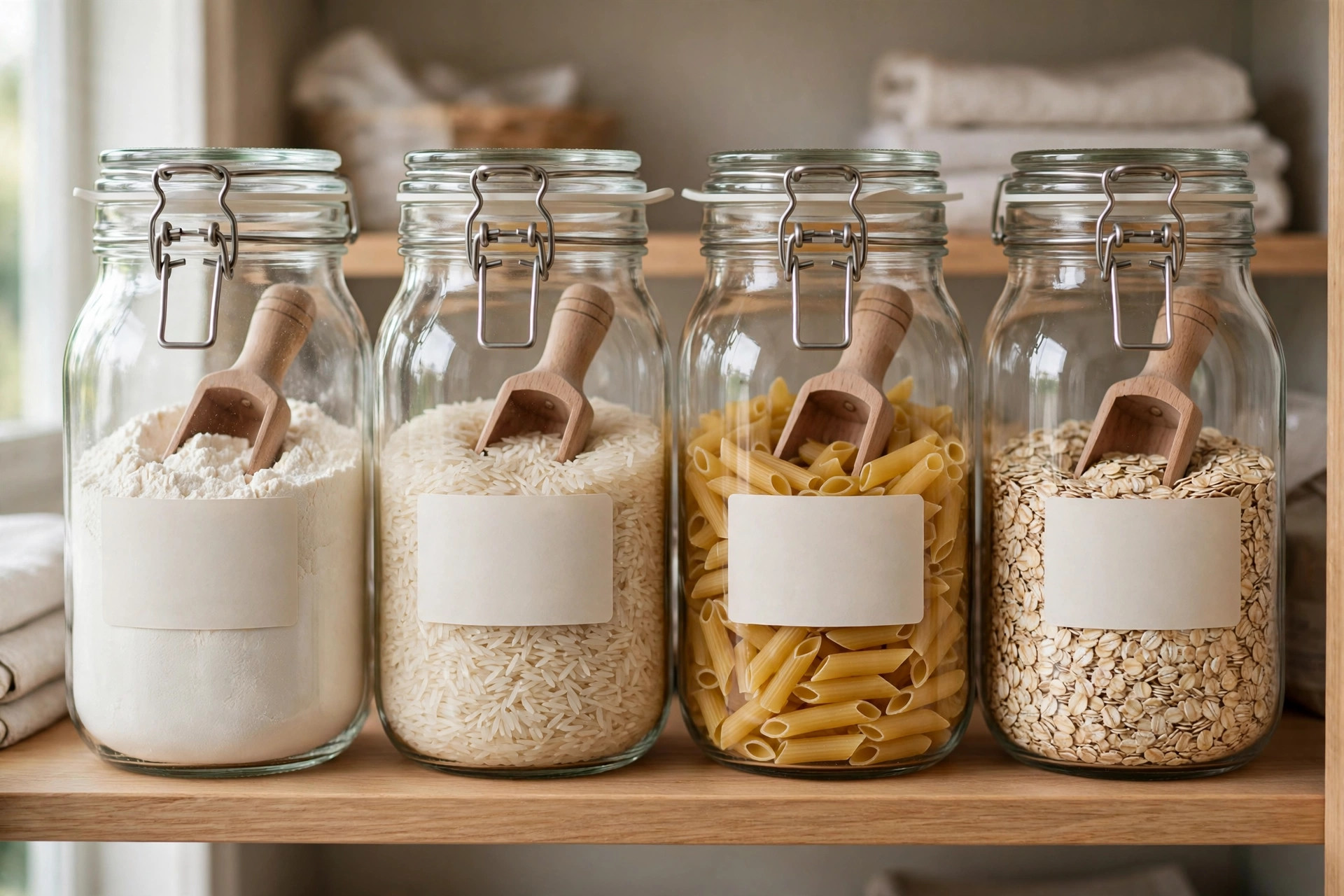
Flour, rice, pasta, oats and sugar are the backbone of most bulk shops, and they store far better decanted than left in floppy paper sacks. Transfer them into large, airtight containers with wide openings you can fit a scoop or measuring cup into easily.
Clear sides let you judge quantities at a glance, while a consistent container shape stacks and lines up without the wasted gaps that mixed packaging creates. Keep a scoop inside each container so measuring stays quick and hands stay out of the food.
2. Create a Dedicated Back-Stock Zone
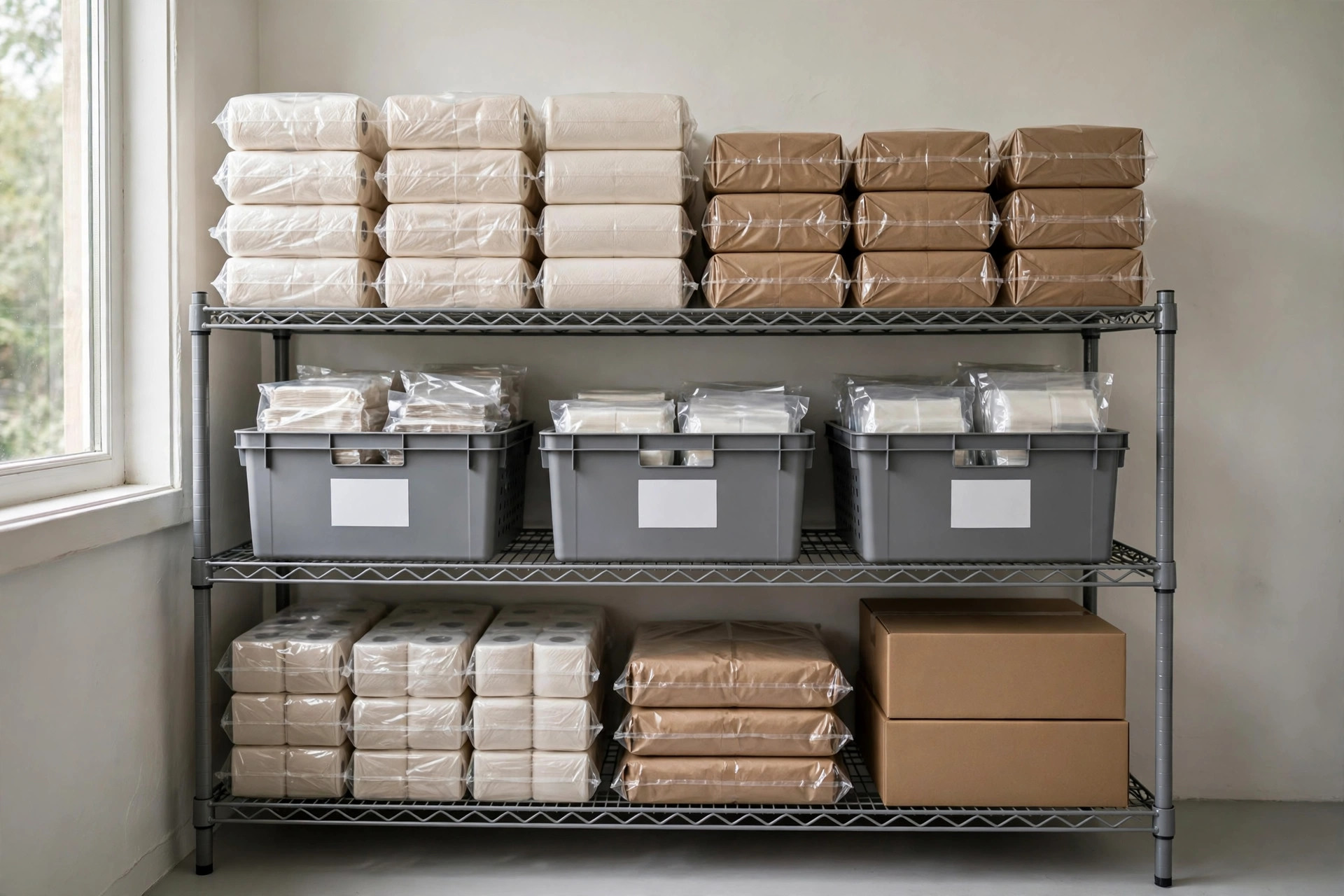
The single biggest improvement for bulk shoppers is separating what you are using from what is waiting. Give back-stock its own shelf, cupboard section or clearly marked bins — the unopened duplicates that refill your everyday containers.
When the working jar of pasta runs low, you check one place instead of hunting through the whole pantry. This one habit prevents both running out unexpectedly and buying a third packet of something you already own twice.
3. Put Heavy Items on Low, Sturdy Shelving

Bulk buying means real weight: sacks of rice, cases of drinks, large tins of oil and bags of pet food.
Store them on the lowest, sturdiest shelves, ideally no higher than knee height, so you lift them the shortest distance and never have to lower something heavy from above your head.
Check that low shelves are properly supported before loading them, and keep the heaviest containers directly above the floor supports where the shelf is strongest.
4. Use Tilt-Out Can Dispensers and Gravity Racks

Tinned food is a bulk staple that quickly becomes an unsearchable wall of identical lids.
A tilt-out dispenser or simple gravity rack solves this by letting cans roll forward as you take one, so the next tin is always at the front and older stock gets used first automatically.
Load new cans from the top or back, take from the front, and group by type — tomatoes, beans, soups and fruit each in their own row — so a glance tells you what needs restocking.
5. Add Door Racks for Overflow and Small Packets
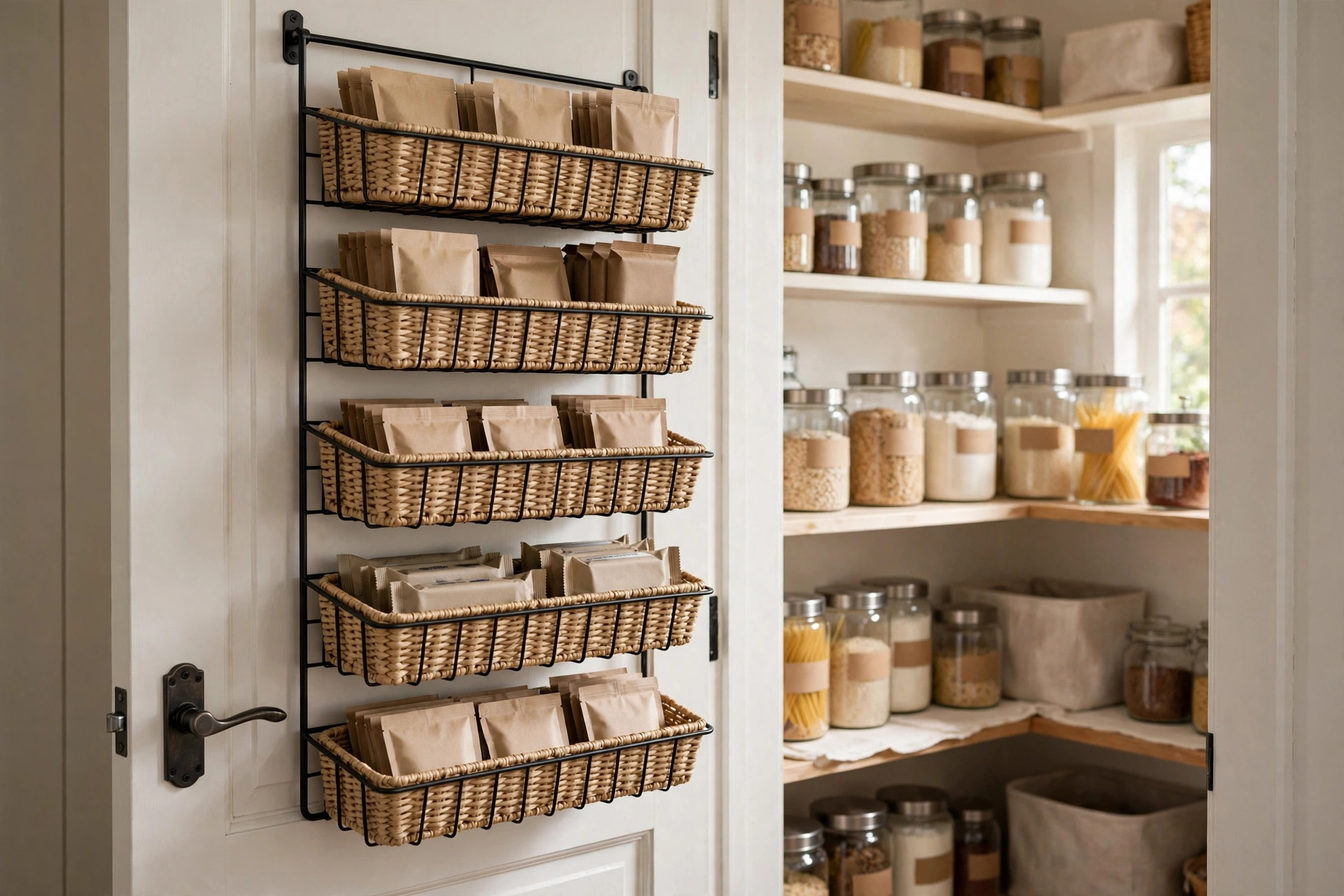
The inside of the pantry door is valuable storage that most households ignore. A sturdy over-door rack with shallow baskets holds the small, loseable items bulk shopping produces: sauce packets, stock cubes, spice refills, gravy sachets and snack bars.
Keeping these light, flat items on the door frees shelf space for genuinely bulky goods and stops small packets slipping down behind large containers, where they tend to stay until long past their best.
6. Label Everything With Contents and Dates
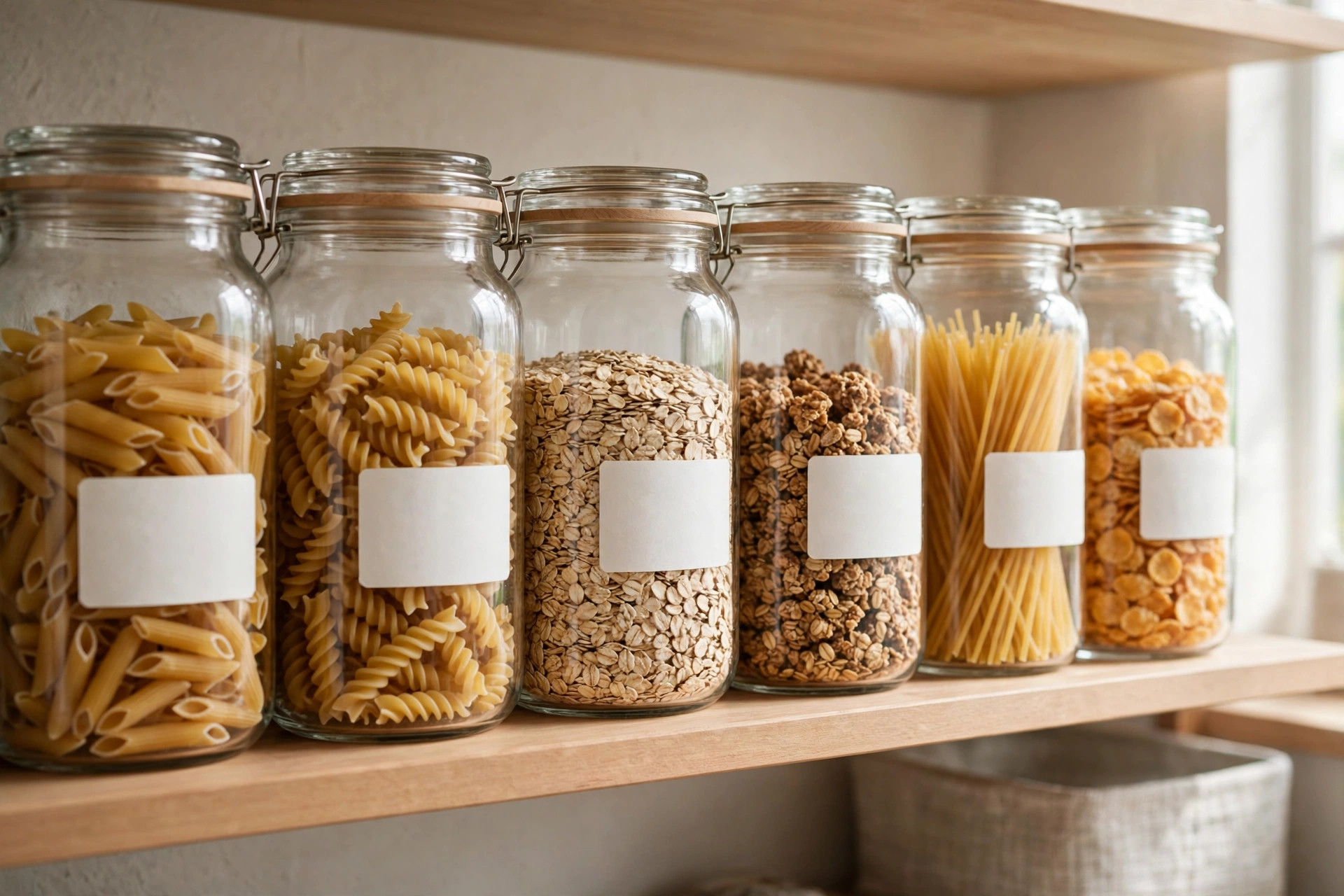
Once food leaves its original packaging, memory is not a labelling system. Label every decanted container with what it holds and the date it was opened or decanted, and add the use-by date from the original packet if there was one.
Plain, consistent labels in the same position on every container are easier to scan than a mix of handwriting styles. Removable labels or erasable tags work especially well for bulk shoppers, because containers get refilled and repurposed constantly.
7. Store Bulk Packs on the Floor in Wheeled Crates
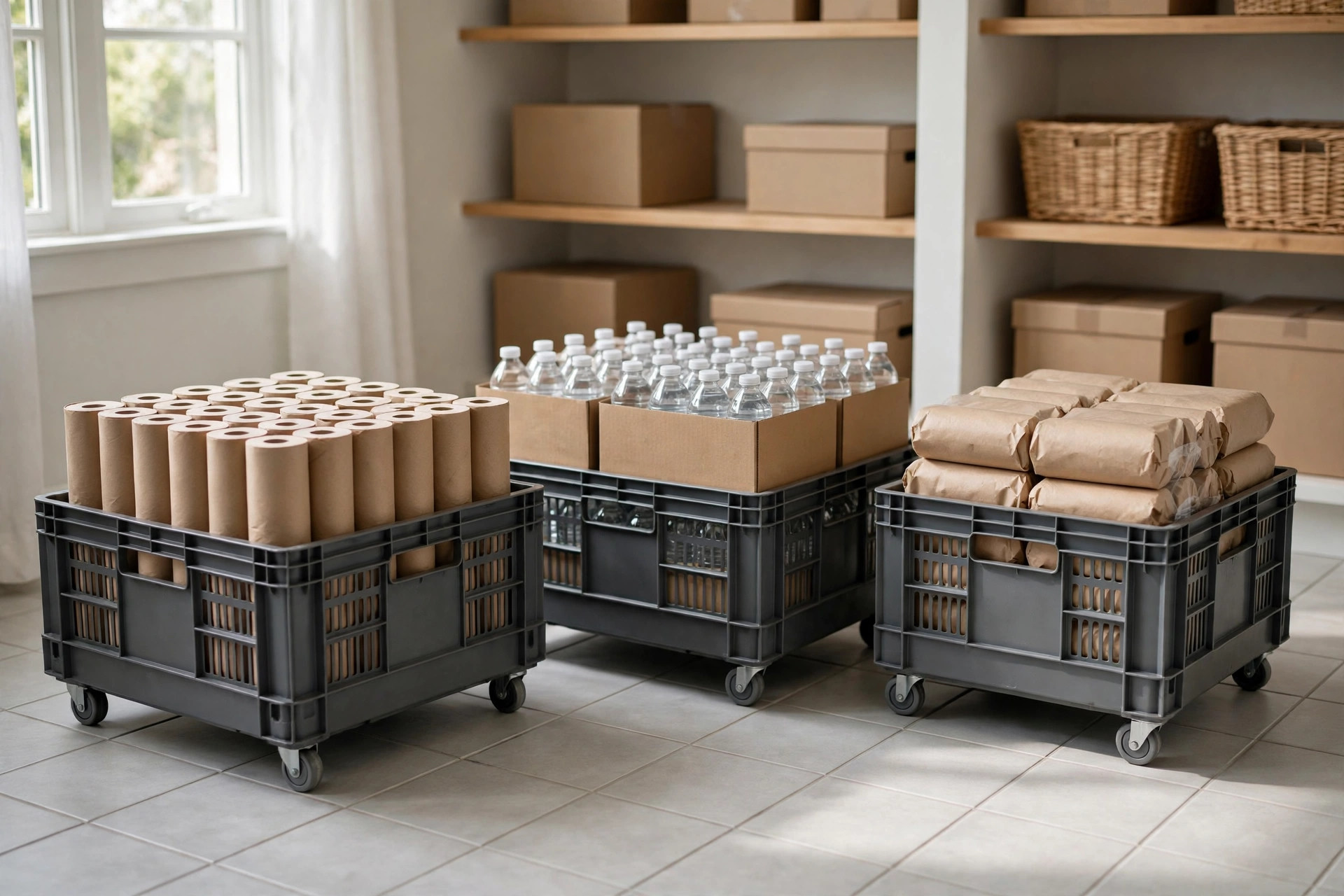
Not everything needs a shelf.
Oversized multipacks of kitchen roll, cases of water or soft drinks, and large bags of potatoes or onions often fit better on the pantry floor — but straight on the floor they become hard to move and harder to clean around.
Sturdy crates or low wheeled trolleys keep floor storage tidy, let you pull a whole case out in one movement for cleaning or restocking, and keep packaging off the ground and away from any damp.
8. Keep a Visible Inventory List by the Door
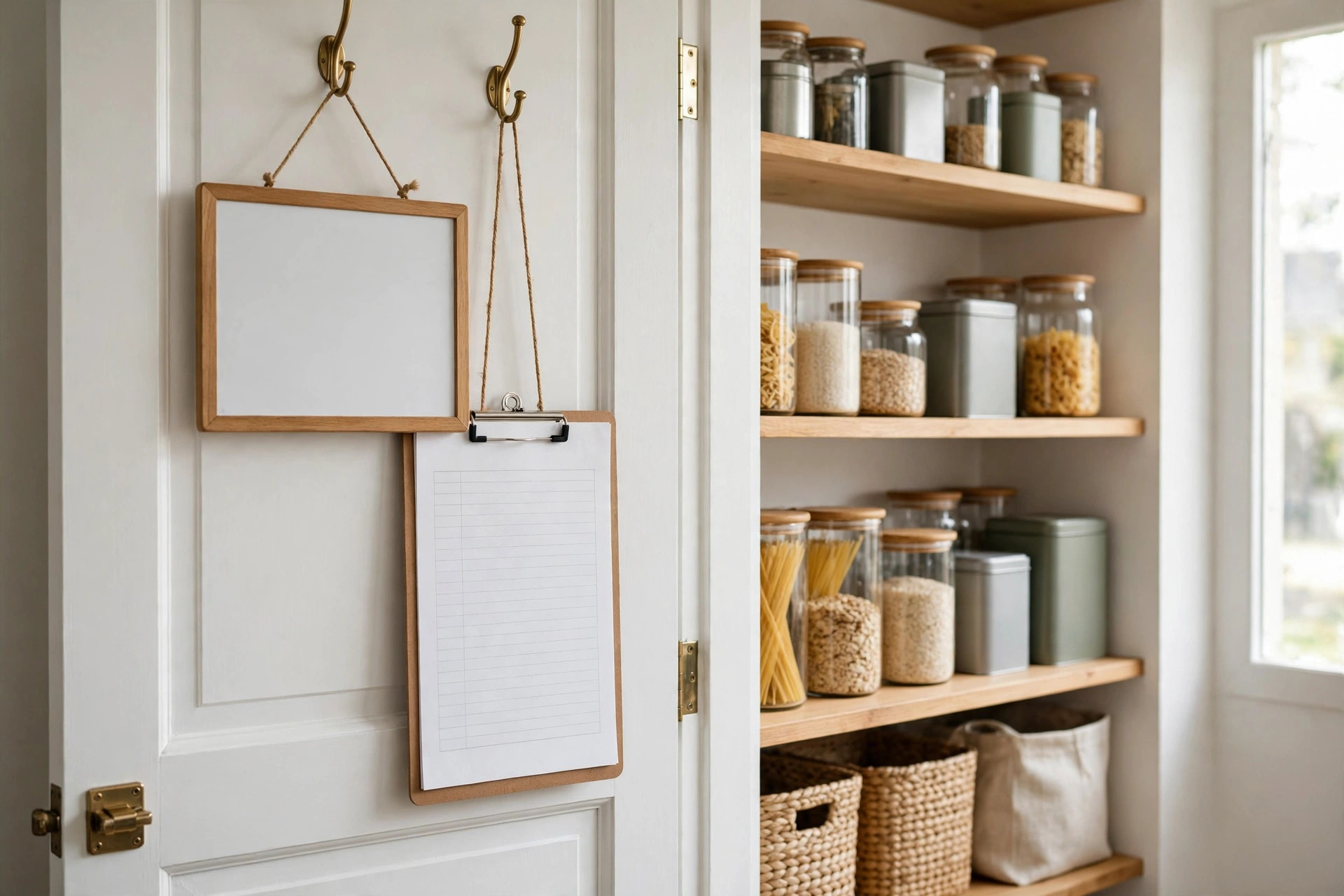
A simple inventory list fixed inside the pantry door — on a small whiteboard, clipboard or notebook — is the cheapest organisation tool on this list. Note what you hold in back-stock and cross items off as they move into use.
Before a big shop, photograph or copy the list so you buy against what you actually have. It takes seconds to update while you are putting shopping away, and it quietly ends duplicate buying altogether.
9. Group by Category, Not by Shopping Trip

It is tempting to unpack a bulk shop wherever things land, which scatters one category across three shelves within a month.
Instead, give each category a permanent home: baking in one section, breakfast foods in another, tins, snacks, drinks and household back-ups each in their own zone. New purchases always join their category, even if it means a brief shuffle.
When everyone in the household knows where things live, putting shopping away gets faster and finding ingredients stops being a search.
10. Use Clear Bins for Snacks and Lunchbox Supplies
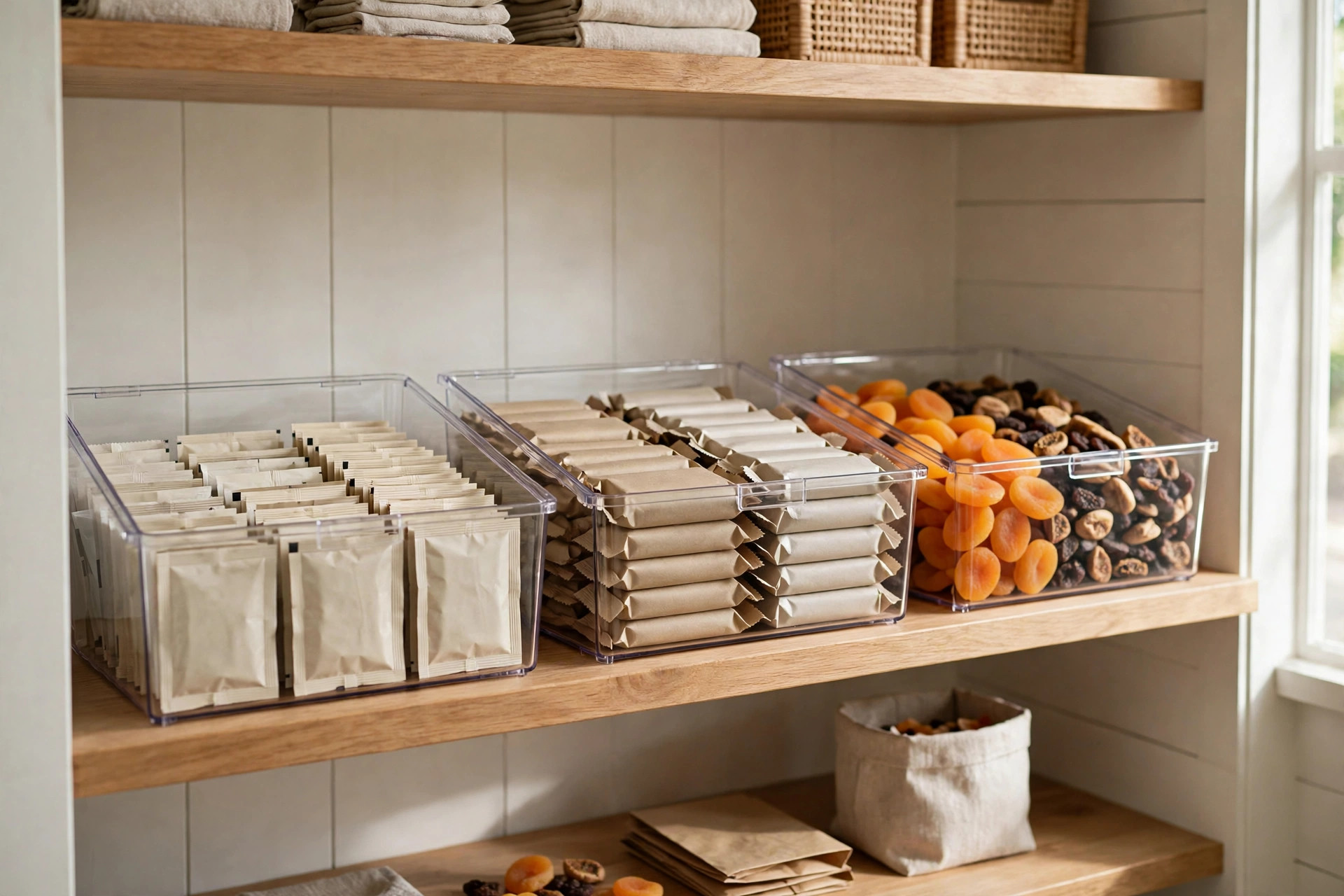
Multipacks of crisps, biscuits, cereal bars and dried fruit arrive in big boxes that dominate a shelf and hide their own contents.
Empty them into clear, open bins instead, one bin per type, so levels are obvious and smaller hands can help themselves without dismantling a display.
The same approach works beautifully for baking supplies — if you bake often, these kitchen baking station ideas show how to give flour, sugars and decorations a dedicated corner of their own.
11. Reserve Eye-Level Shelves for Everyday Essentials
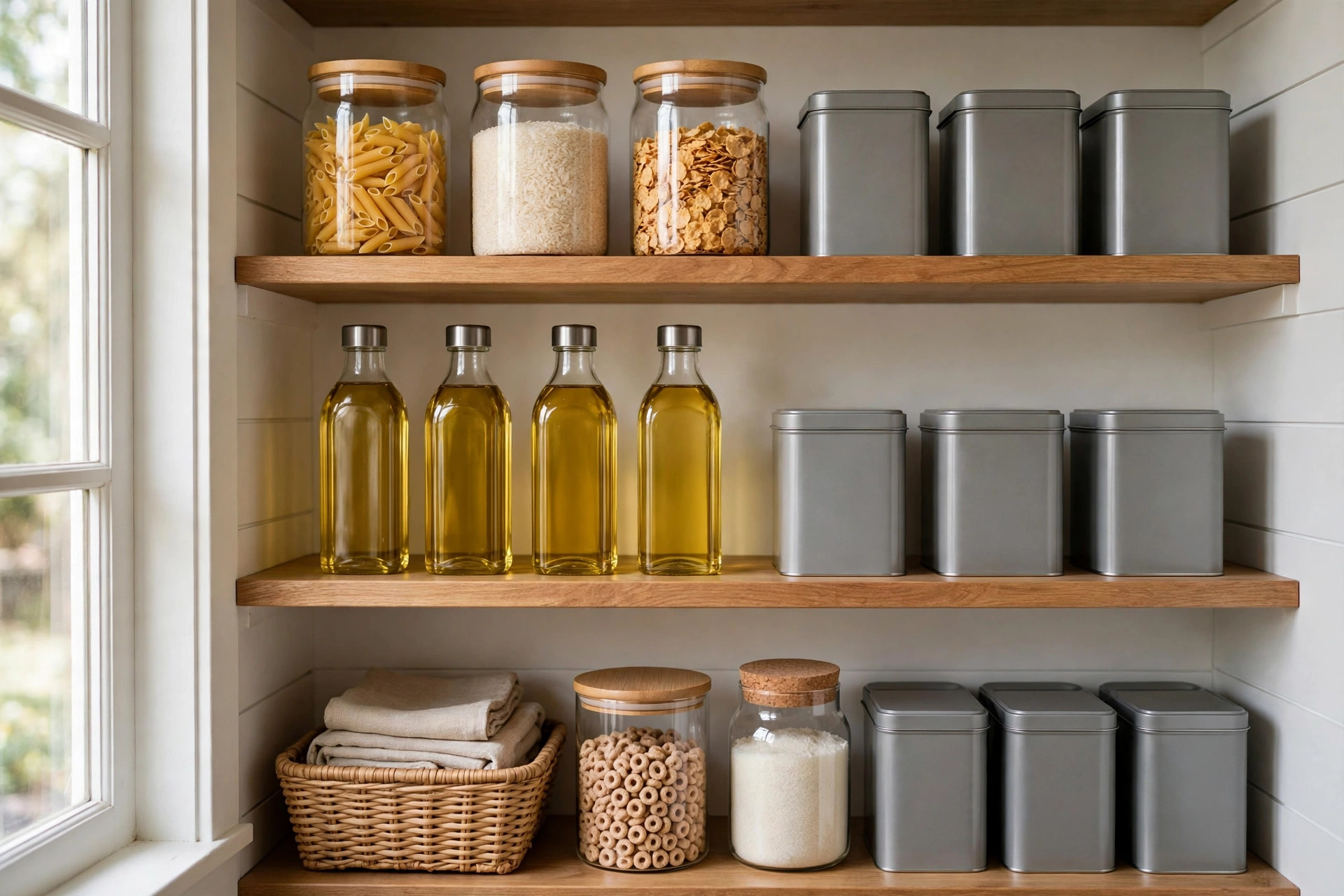
The shelves between waist and eye height are your pantry prime real estate, so spend them on what you reach for daily: the working containers of pasta, rice, cereals, oils and favourite tins. Seasonal items, party extras and slow-moving back-stock belong higher or lower.
This sounds obvious, yet most cluttered pantries have it backwards, with everyday staples squeezed behind things used twice a year. Swap the zones once and daily cooking immediately feels calmer.
12. Rotate Stock With a First-In, First-Out System
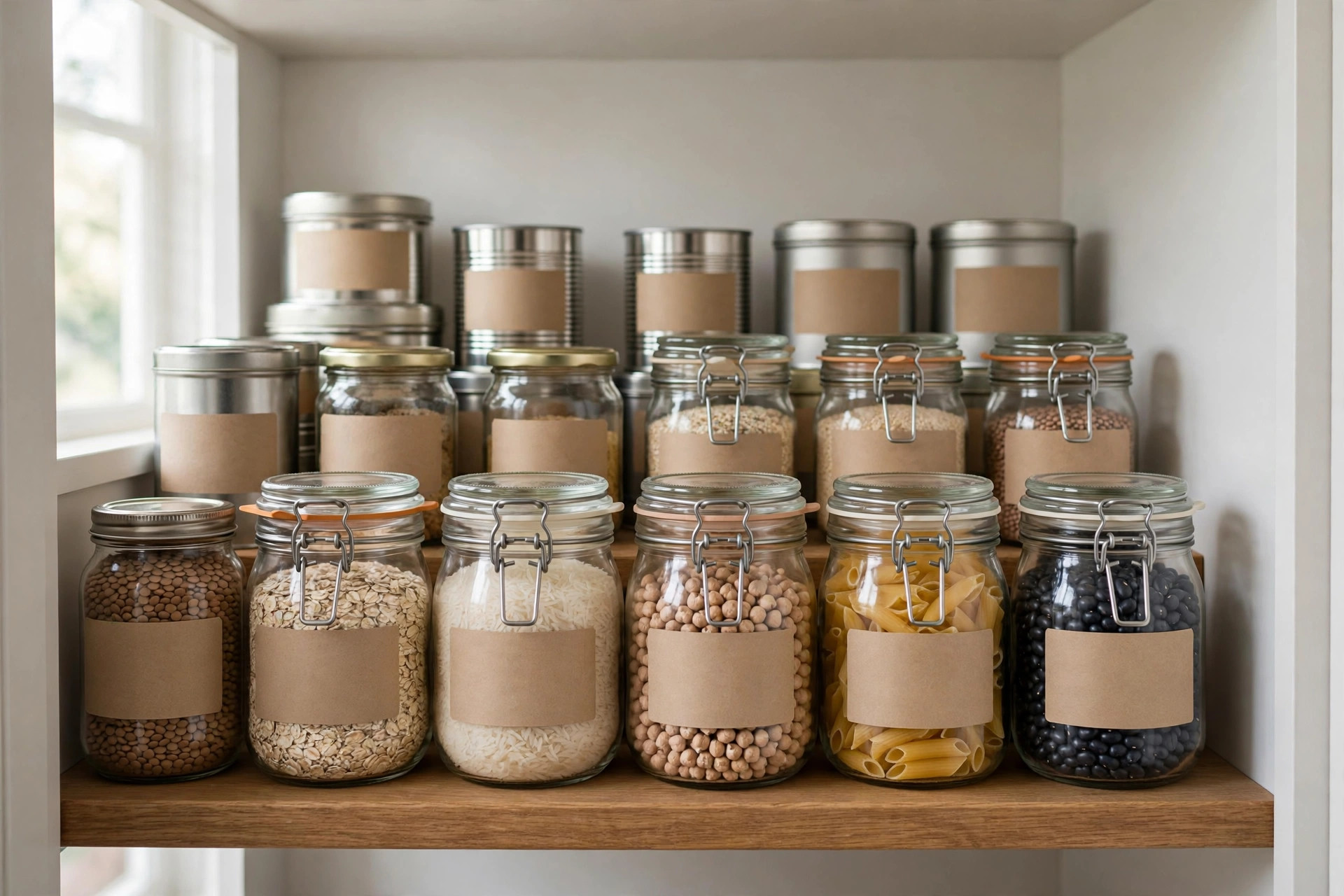
Bulk buying only works if older stock gets used before newer stock. Adopt the simple first-in, first-out rule used in professional kitchens: when you unpack, new items go behind, below or at the back of what is already stored, never in front of it.
Can racks help automatically, but the habit matters more than the equipment. A monthly five-minute check of dates, pulling anything close to its limit to the front, keeps waste low and surprises rare.
13. Make Space for Paper Goods and Cleaning Back-Ups
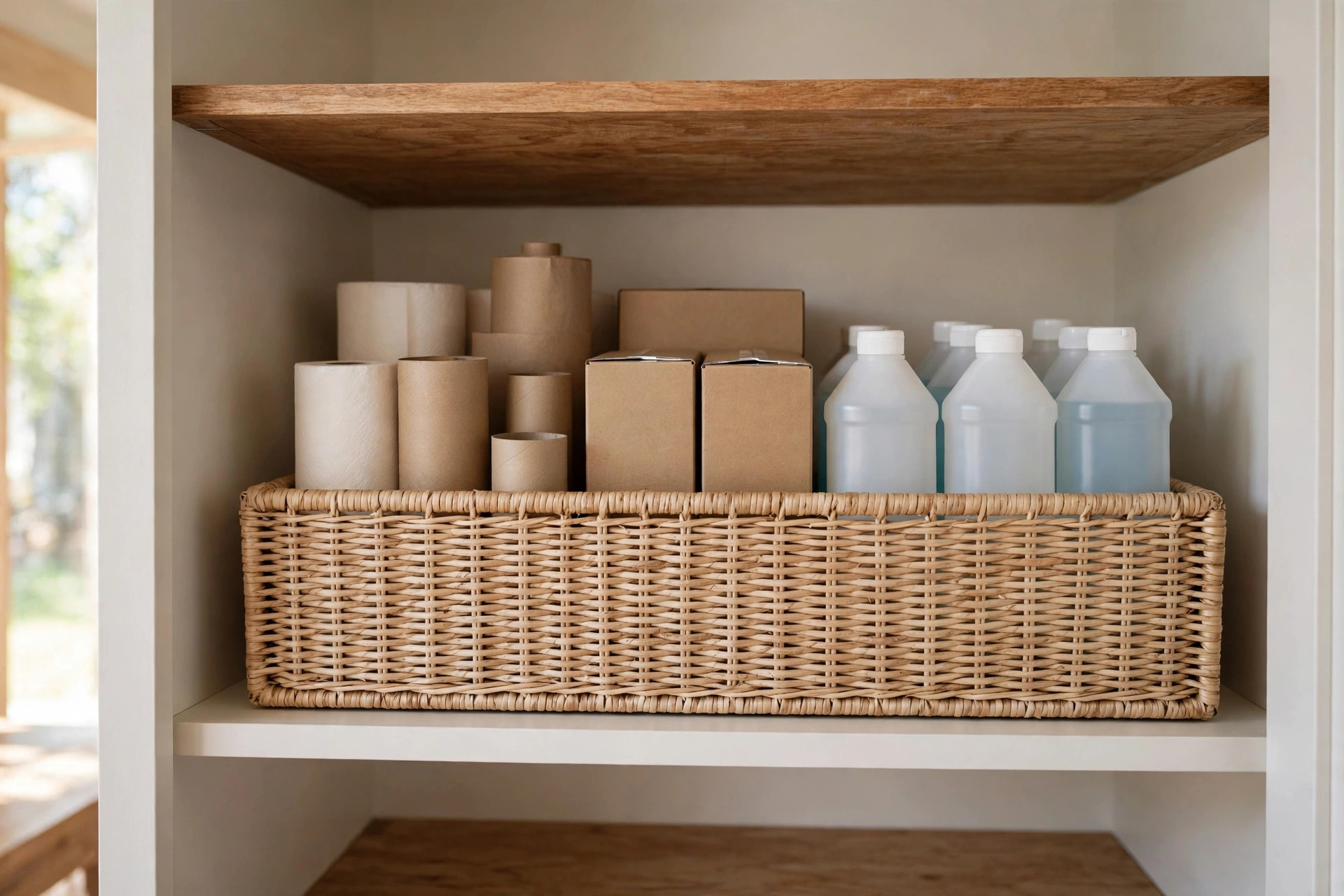
Bulk shops rarely stop at food. Kitchen roll, foil, baking paper, bin liners and cleaning refills need a planned home too, or they colonise the food shelves one roll at a time.
Give household back-ups the top shelf or a single deep bin, keeping them together and separate from anything edible.
Storing cleaning products away from food is also the safer arrangement, and grouping them means you can see at a glance when a refill genuinely needs replacing.
14. Add Shelf Risers and Turntables for Deep Shelves
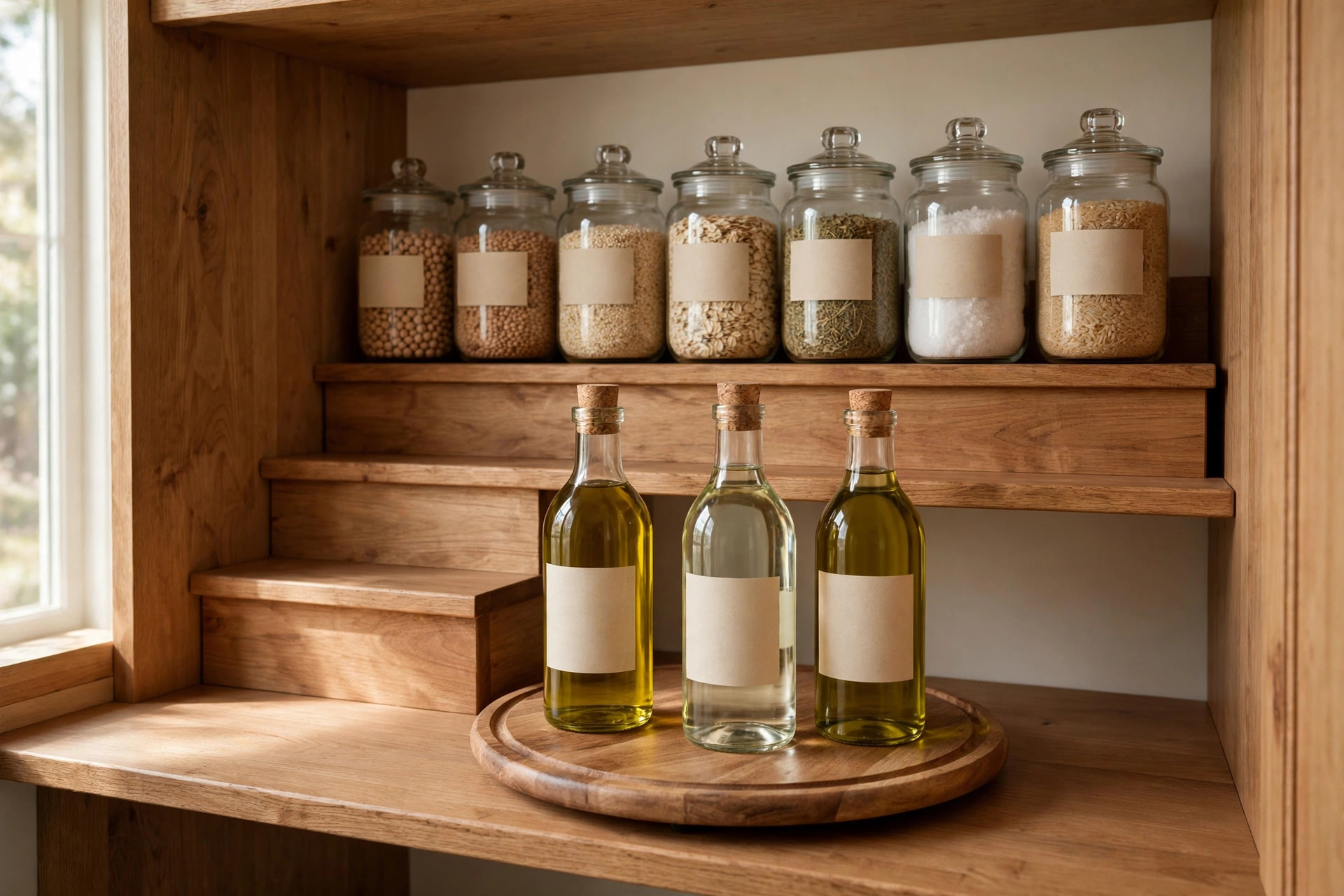
Deep pantry shelves swallow small jars whole.
A simple stepped riser lifts the back row of jars, sauces and tins so every label stays visible, while a turntable in a deep corner brings oils, vinegars and sauces to you with a spin instead of a stretch.
Measure before you buy, leave room to lift items clear of the shelf above, and avoid risers so tall that everyday jars become awkward to reach. Visibility, not capacity, is the real goal here.
15. Leave Breathing Room and a Restock Basket

The most organised bulk pantries are deliberately not filled to bursting. Leave roughly a hand’s width of spare space on each shelf so containers can be lifted out without dislodging their neighbours, and keep one empty basket or crate labelled for restocking.
When a working container empties, it goes in the basket as a physical reminder to refill it from back-stock. That small buffer of empty space is what keeps the whole system feeling calm after every big shop.
Common Mistakes to Avoid
1. Buying containers before measuring. Attractive jars that are too tall for your shelf spacing or too narrow for a scoop waste money and space. Measure shelf height, depth and the staples you actually buy, then choose containers to fit both.
2. Mixing back-stock in with everyday items. When unopened duplicates are scattered among working supplies, nobody knows what the household really holds. One clearly defined back-stock zone, checked before every shop, prevents duplicate buying and sudden shortages.
3. Forgetting to rotate and check dates. Bulk quantities quietly age at the back of deep shelves. Skipping rotation turns savings into waste, so date labels, first-in first-out restocking and a brief monthly check are essential, not optional extras.
Frequently Asked Questions
How do I store bulk food without attracting pests? Decant dry staples into airtight containers with well-fitting lids, keep packets off the floor in sealed crates, and wipe shelves before restocking.
Check new purchases before they join the pantry, store flours and grains promptly, and deal with any spillage straight away rather than leaving crumbs to accumulate in corners.
What should I decant, and what should stay in its packaging? Decant the staples you use every week — flour, rice, pasta, oats, sugar and cereals — because containers speed up daily cooking.
Keep back-stock sealed in its original packaging until it is needed, along with anything you use rarely, so it stays protected and clearly dated for as long as possible.
How much pantry space does bulk shopping really need? Less than most people fear, provided heavy items go low, back-stock is zoned and door and floor space are used well.
Start with the staples your household genuinely gets through quickly rather than every offer available, and let your inventory list — not the size of a promotion — decide what earns shelf space.
How often should I reorganise a bulk pantry? A full reorganisation once or twice a year is plenty if the daily system holds.
In between, do a five-minute monthly reset: check dates, pull older stock forward, update the inventory list and return anything that has wandered from its category. Small, regular resets prevent the need for another complete clear-out.
Final Thoughts
A bulk pantry does not need matching everything or a complete refit to work well. It needs clear zones, honest labels, heavy things stored low and a short list by the door that tells the truth about what you already own.
Start with decanting and back-stock zoning, add the inventory habit, and most pantries feel transformed after a single shop.
If you are refreshing the wider kitchen at the same time, these renter-friendly kitchen makeover ideas offer changes that need no drilling or permanent fixes.
For overflow beyond the kitchen, these garage laundry room ideas show how an adjoining utility space can absorb cleaning back-ups and bulk household supplies.
Buy in bulk, store with intention, and let the pantry quietly save you money instead of hiding it.


