

15 Small Kitchen Coffee Station Ideas for Apartment Dwellers
A good coffee station does not need a big kitchen. In an apartment, it needs one honest corner, everything within reach, and nothing on the counter that does not earn its place. When your machine, mugs and beans live together, mornings stop starting with a hunt through cupboards.
The best small kitchen coffee station ideas work with the space you already have. A stretch of counter, a rolling cart, a single shelf or even a deep drawer can hold a complete setup if you plan it tightly. If you are planning wider changes too, these renter-friendly kitchen makeover ideas pair well with a coffee corner, because both rely on reversible, no-drill thinking.
Below is a simple step-by-step setup guide first, then fifteen ideas you can copy one at a time. Pick the one that matches your layout, your lease and how you actually make coffee, and leave the rest.
This post contains affiliate links. If you buy through them, we may earn a small commission at no extra cost to you. See our Affiliate Disclosure.
How to Set Up a Coffee Station in a Small Kitchen, Step by Step
Start by choosing the spot, not the accessories. Look for a surface near a socket and close to the sink, with enough headroom to lift lids, fill a reservoir and pour safely. Measure the footprint and the height under cabinets before anything arrives, and be honest about what you use daily: machine or kettle first, then beans, filters and two favourite mugs. If storage is your main headache, these kitchen storage ideas for apartments with no pantry will help you free a shelf or drawer first.
Next, build in layers. Set the machine on a tray, board or washable mat so the station has a clear edge and spills stay contained. Add storage vertically — a shelf, rail or hooks above — and keep the surface in front of the machine empty for your mug and spoon. Group supplies in one jar, tin or basket so they move as a single unit when you clean. Live with it for a week, then adjust and only add pretty extras last.
1. Claim a Countertop Corner for an Espresso Station
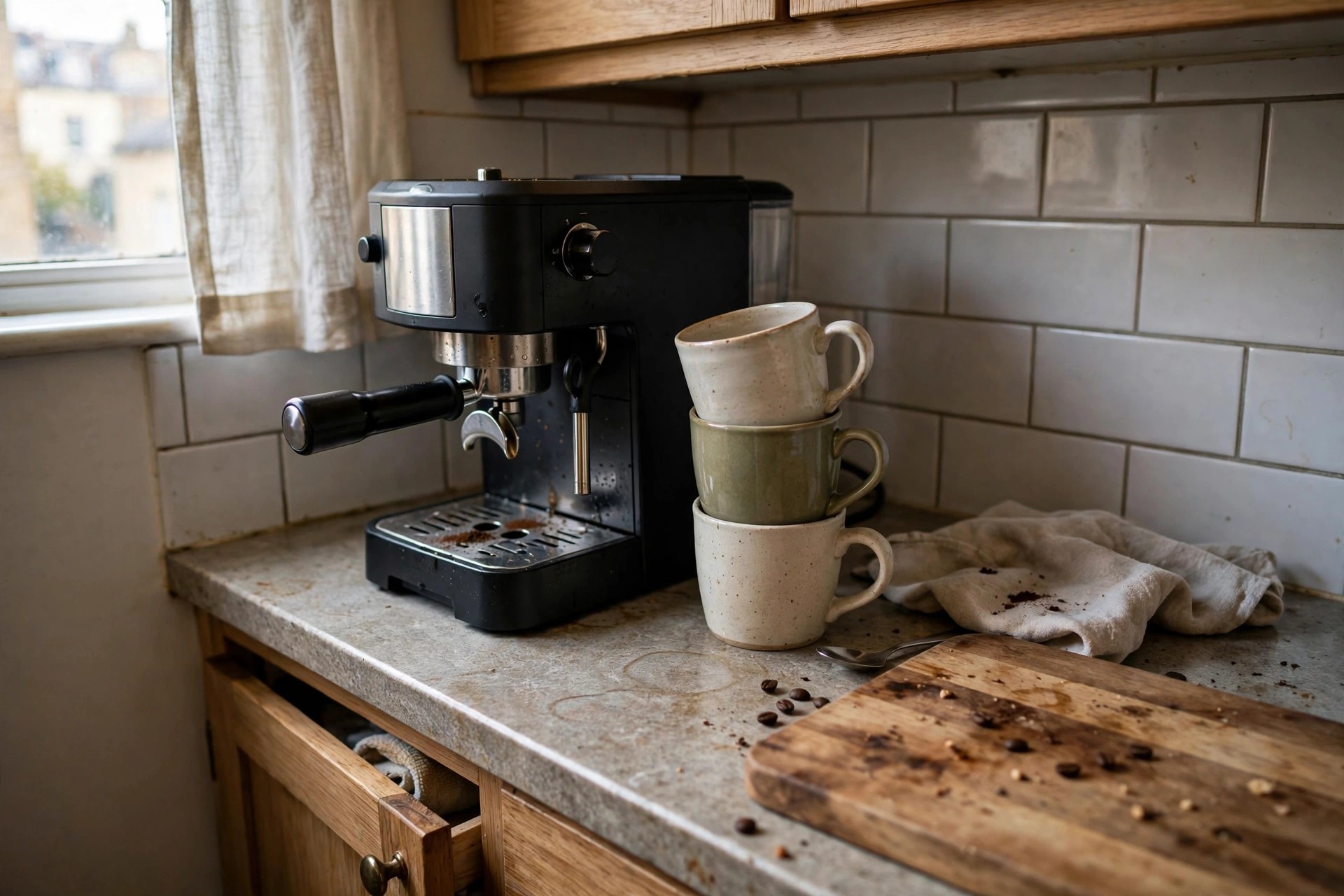
Corners are the most underused part of a small counter, and they suit an espresso machine perfectly because the deepest part of the worktop is rarely the most useful for chopping. Turn the machine slightly outward, stack two mugs beside it, and keep beans in a sealed jar behind. The rest of your counter stays free, yet the whole ritual happens in one turn.
Keep the corner disciplined: one board underneath defines the zone, and nothing unrelated migrates in. In a narrow layout like those in these small galley kitchen ideas, a corner station at the far end keeps coffee traffic out of the cooking path.
2. Roll In a Narrow Cart Station

A slim rolling cart gives you a coffee station without giving up a single cupboard. Put the machine or kettle on top, mugs and a milk jug in the middle, and beans, filters and spare cups below. When you need floor space, the whole station rolls beside the fridge or into a hallway nook.
Add a tray on top so nothing slides as it moves, and choose locking castors on uneven floors. Because nothing is fixed, this is one of the safest options for renters who want a proper station with zero marks on walls.
3. Float an Open-Shelf Station Above the Counter
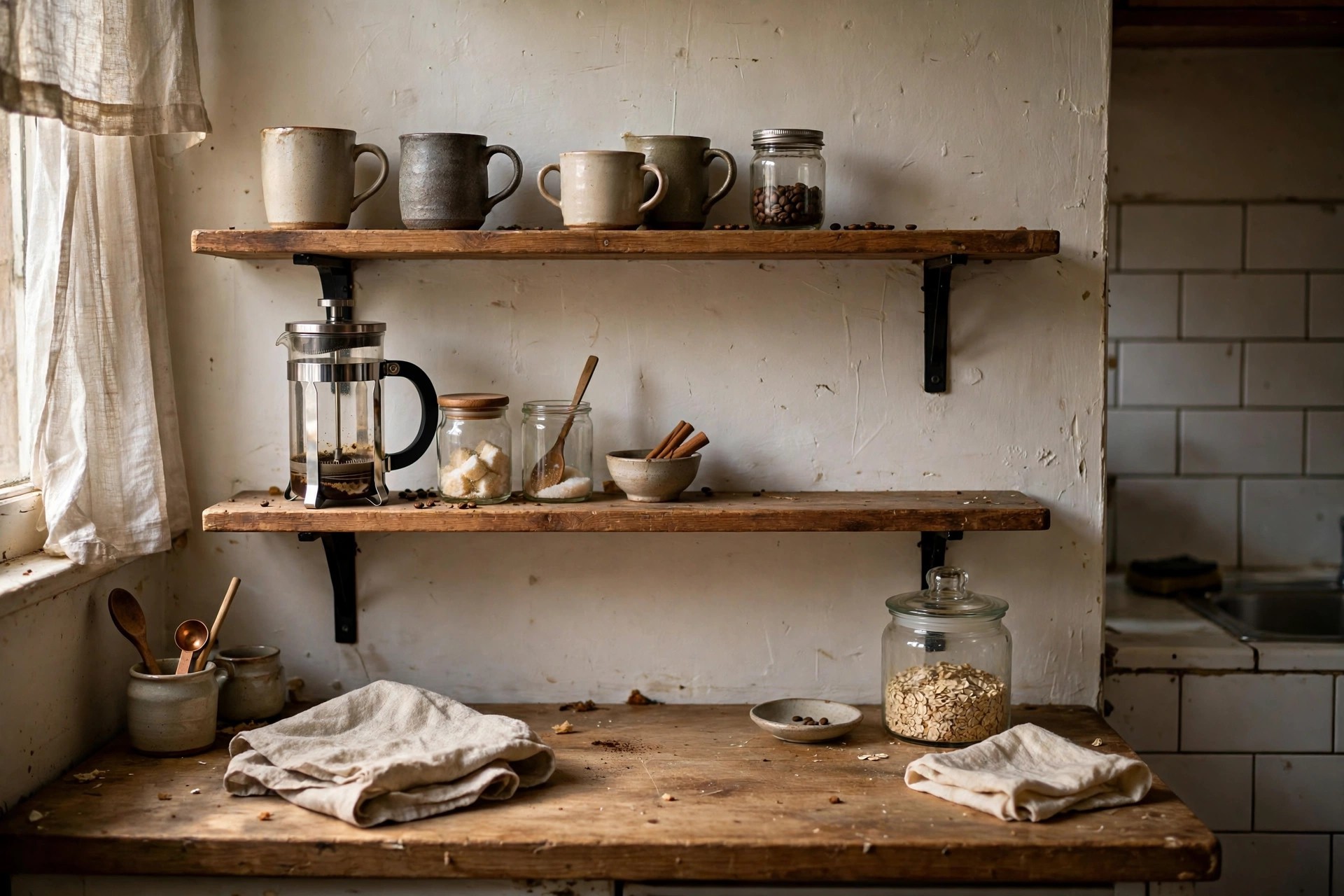
If the counter is full but the wall above it is empty, go up. One or two open shelves hold mugs, jars and a French press exactly where your hand expects them, and the counter below stays clear for making. Open shelves also make a tiny kitchen feel lighter than another closed cabinet would.
Keep the lowest shelf within easy reach and the palette tight — glass, ceramic and wood. Warm timber shelves echo these warm wood kitchen ideas and soften plain rental cabinetry. Dust is the trade-off, so store only pieces you use and wash often.
4. Convert a Cabinet Into a Hidden Station
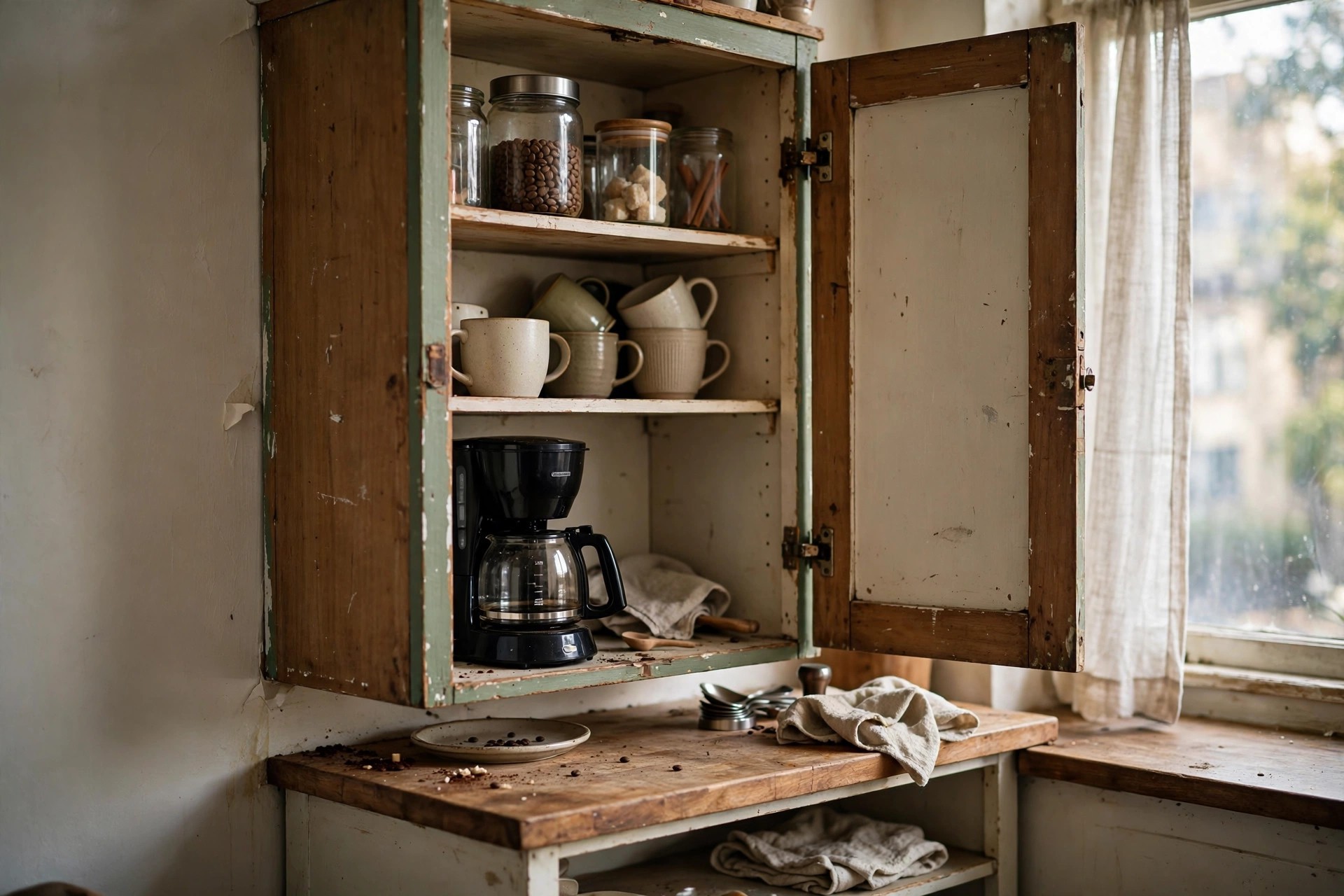
A deep cabinet can become a station that disappears behind a closed door. The machine sits inside, mugs stack on the shelf above, and the counter outside stays completely clear — a small luxury in a studio or shared flat.
Ventilation matters here. Leave the door open while brewing, never run a hot appliance in a sealed cupboard, and check clearances carefully. A shallow tray under the machine protects the cabinet base from drips, and a small battery light makes early mornings easier.
5. Set Up on a Bright Windowsill
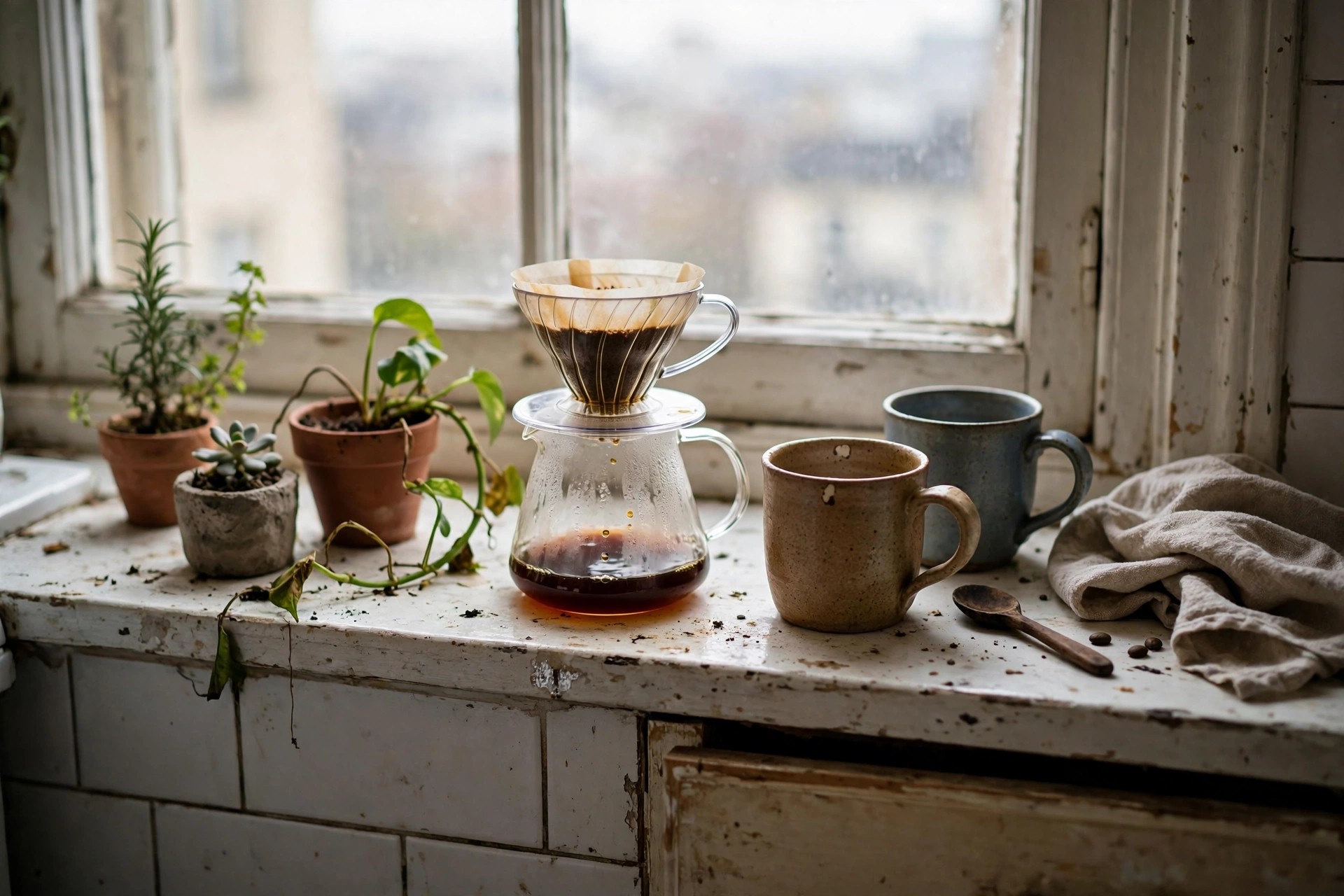
A deep windowsill is a natural home for a slow, simple setup: a pour-over dripper, a kettle brought over from the hob, and two mugs waiting in the morning light. No machine to house, no counter sacrificed, and the view becomes part of the ritual.
Only choose this spot if the sill is stable and level, safely away from curtains. Keep it to a few sturdy pieces that will not be knocked into the sink, and move plants aside if they crowd the pouring space.
6. Build a Tray-Based Station You Can Move Anywhere
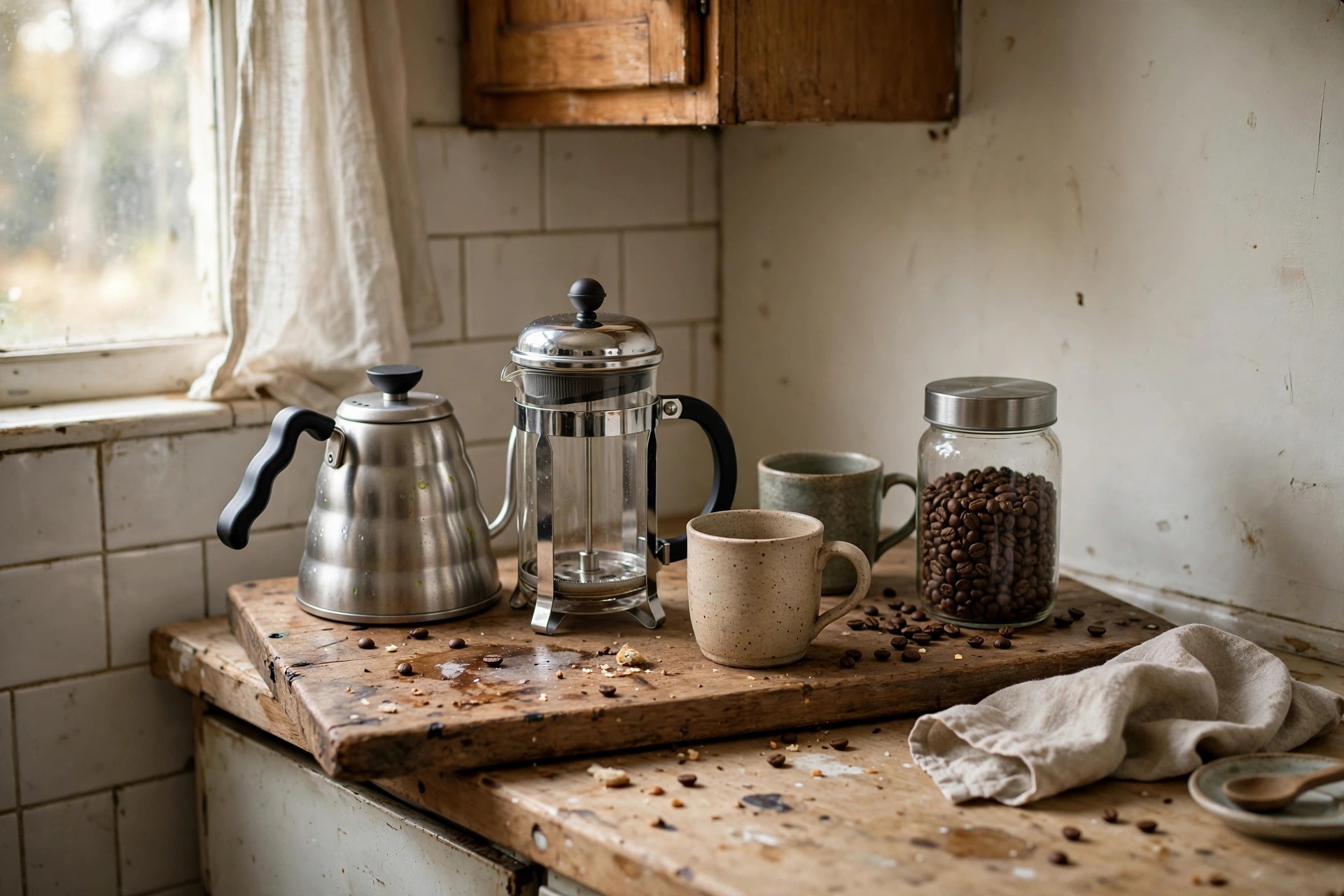
A large tray with handles turns any surface into a coffee station — and any kitchen back into a clear counter in seconds. Load it with a French press or moka pot, mugs, beans and a spoon, then carry it to a table or sideboard on slow mornings.
The tray is also a cleaning system: grounds and drips land on it, not the worktop, and it lifts straight to the sink. Choose wood or metal with a raised lip, and do not overload it until it becomes awkward to carry.
7. Tuck a Station Under the Cabinets

The space under wall cabinets is often tall enough for a compact machine, and using it keeps your main counter open for cooking. Slide the machine forward to brew, hang mugs from hooks under the cabinet, and keep beans in the cabinet above so everything stacks in one column.
Measure honestly, including the machine with its lid open. Styled with ceramic mugs and a wooden board, in the spirit of these village kitchen ideas, even a modern rental kitchen gains a little collected warmth.
8. Hang a Mug-Rail Wall Station
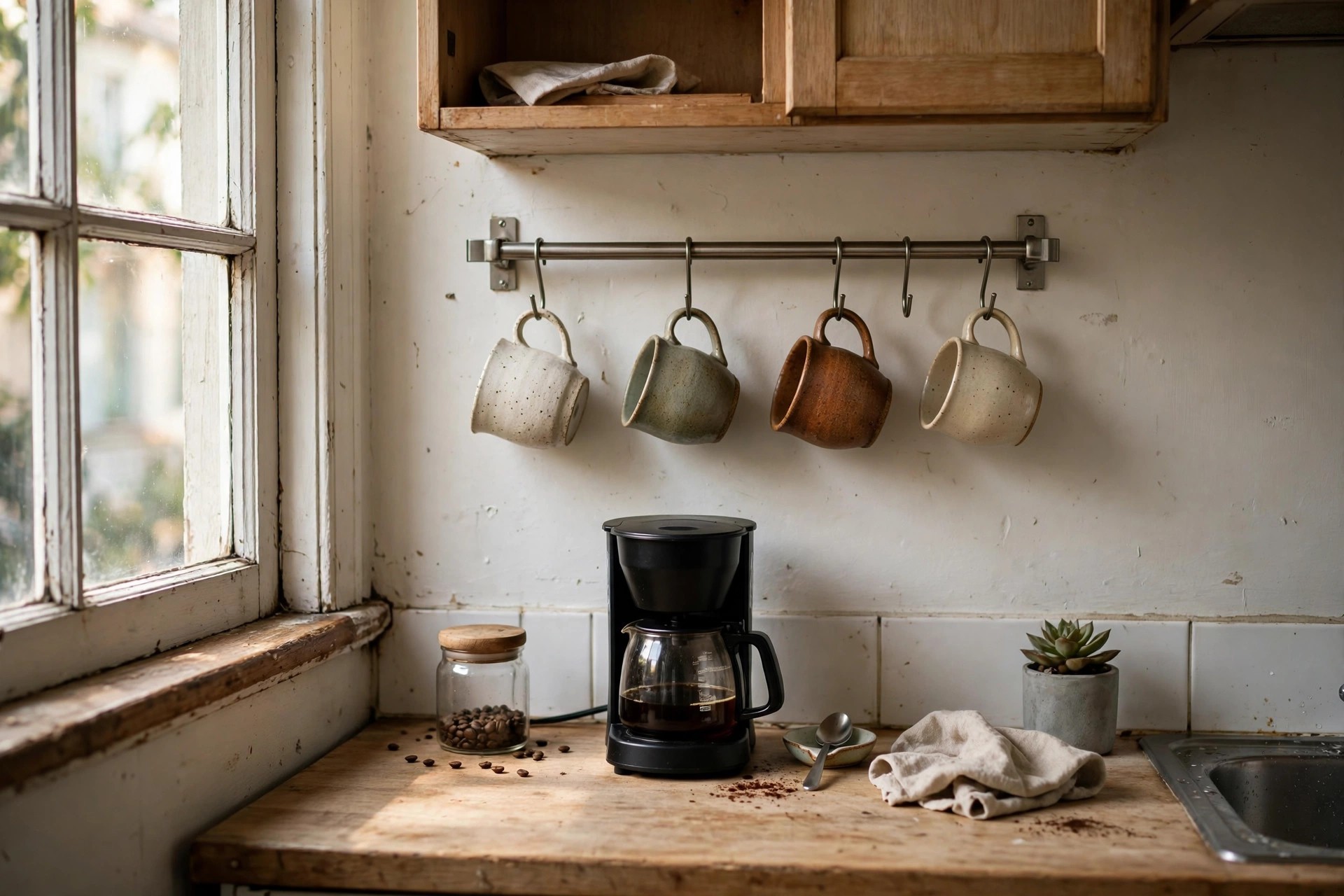
A single rail with hooks solves the mug problem and decorates the wall at the same time. Mount it above a small machine, hang your everyday mugs by their handles, and let the cups you love become the colour in a plain kitchen. The counter then only holds what makes the coffee.
Fix the rail into studs or use fixings rated for full ceramic mugs, spacing hooks so cups do not knock together. Renters can use a rail on a cabinet side instead. Keep one hook free — stations always grow by one favourite mug.
9. Combine Tea and Coffee in One Shared Station
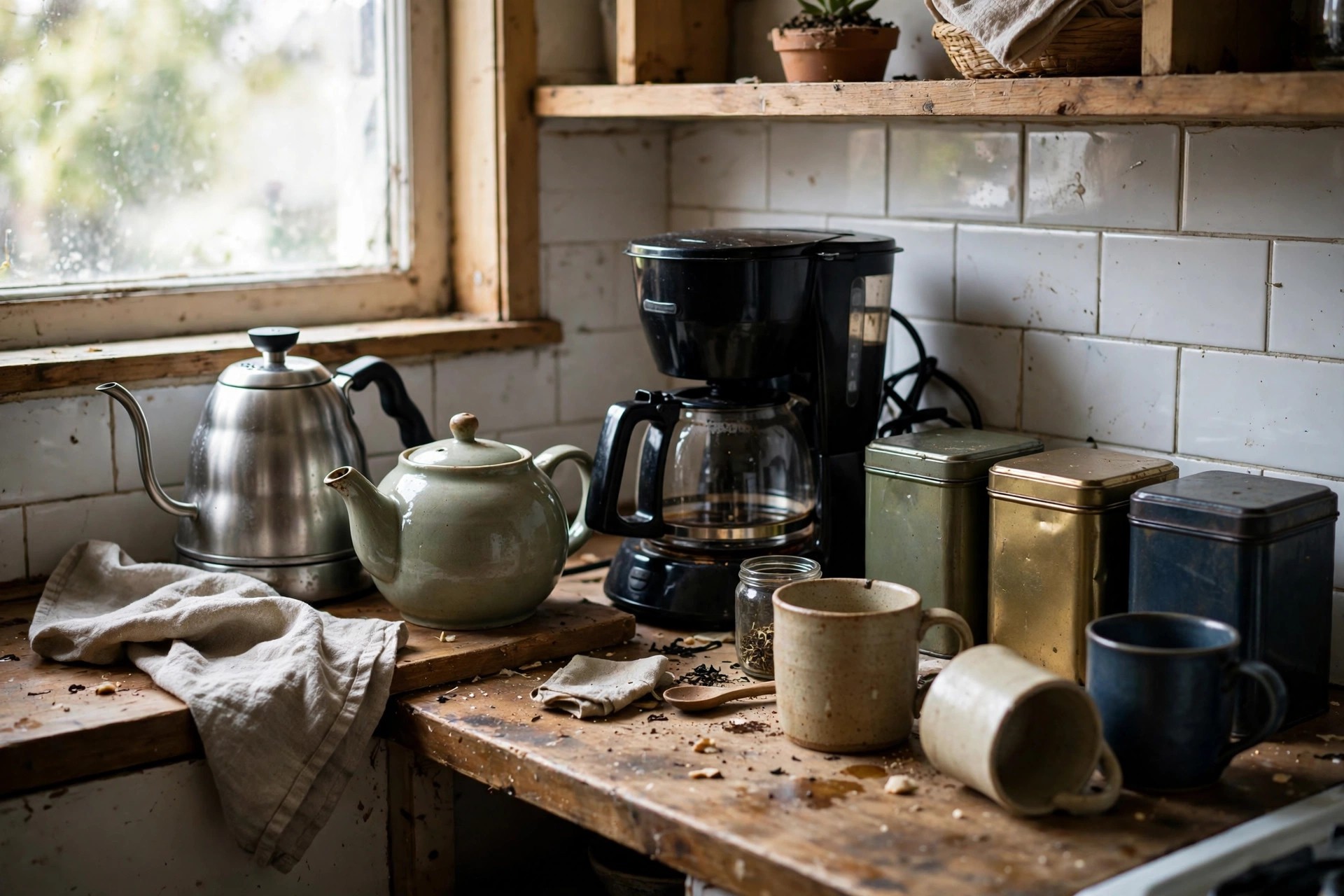
Where mornings split between tea and coffee, one shared station beats two half-finished ones. Give the kettle the central spot, the coffee maker to one side and the teapot to the other, with tea tins and coffee jars in a single row behind, clearly separated.
A shared tray underneath holds the arrangement together visually. Keep a spoon for each side and one small pot for used bags and grounds, emptied daily. Sharing one station also means sharing one quick cleaning routine.
10. Use the End of a Galley Kitchen Run
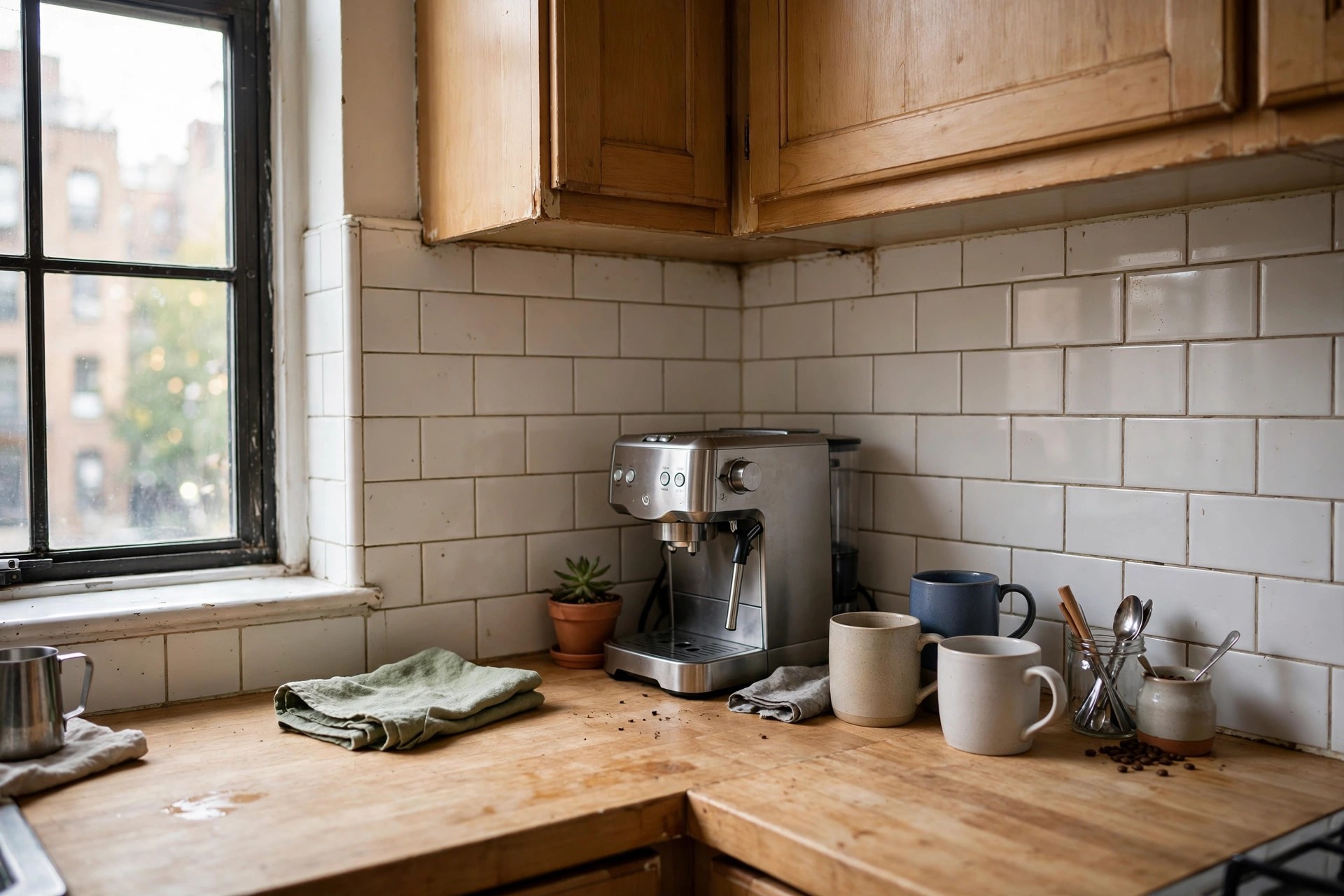
In a galley kitchen, the end of the run nearest the doorway is prime coffee territory: close to the rest of the home, out of the cook’s path, and easy for a second person to reach without squeezing past the oven. A compact machine, a wall mug and a small jar fit a surprisingly short stretch.
Think in depth rather than width. Choose machines deeper than they are wide, store supplies vertically, and keep the counter’s front edge clear so the galley still feels passable. A pale tray under the setup stops the far end feeling dark.
11. Move the Station Onto a Small Sideboard
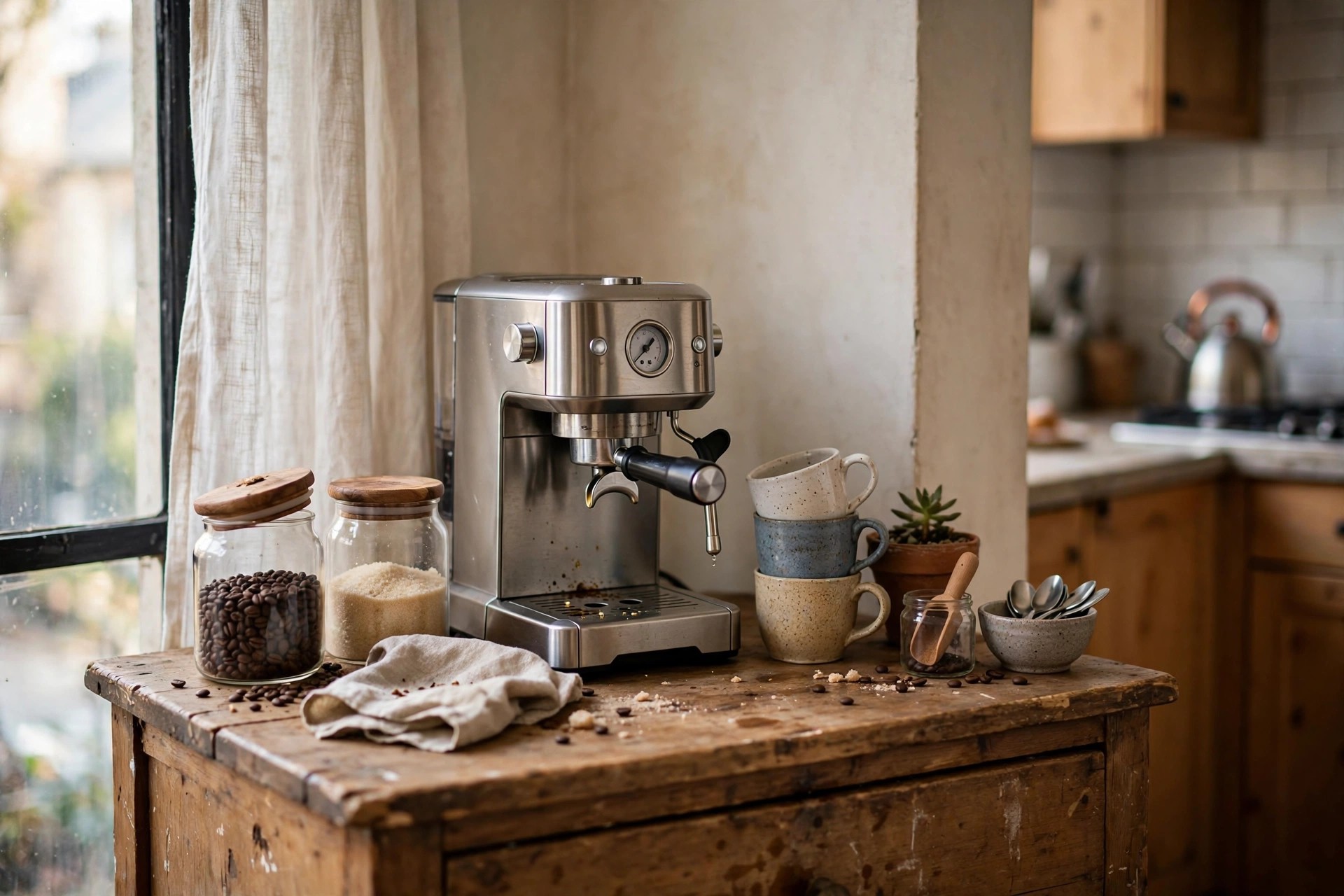
If the kitchen has no counter to spare, let the station leave the kitchen. A small sideboard or console in the dining corner can hold a full setup, with cups and supplies in its drawers below. Coffee becomes part of the living space, which suits open-plan apartments well.
You will need a socket nearby and a small jug to bring water from the sink rather than carrying the machine. A washable runner protects the top. Guests love this arrangement because they can help themselves without entering your cooking space.
12. Organise a Coffee Drawer Beneath the Machine
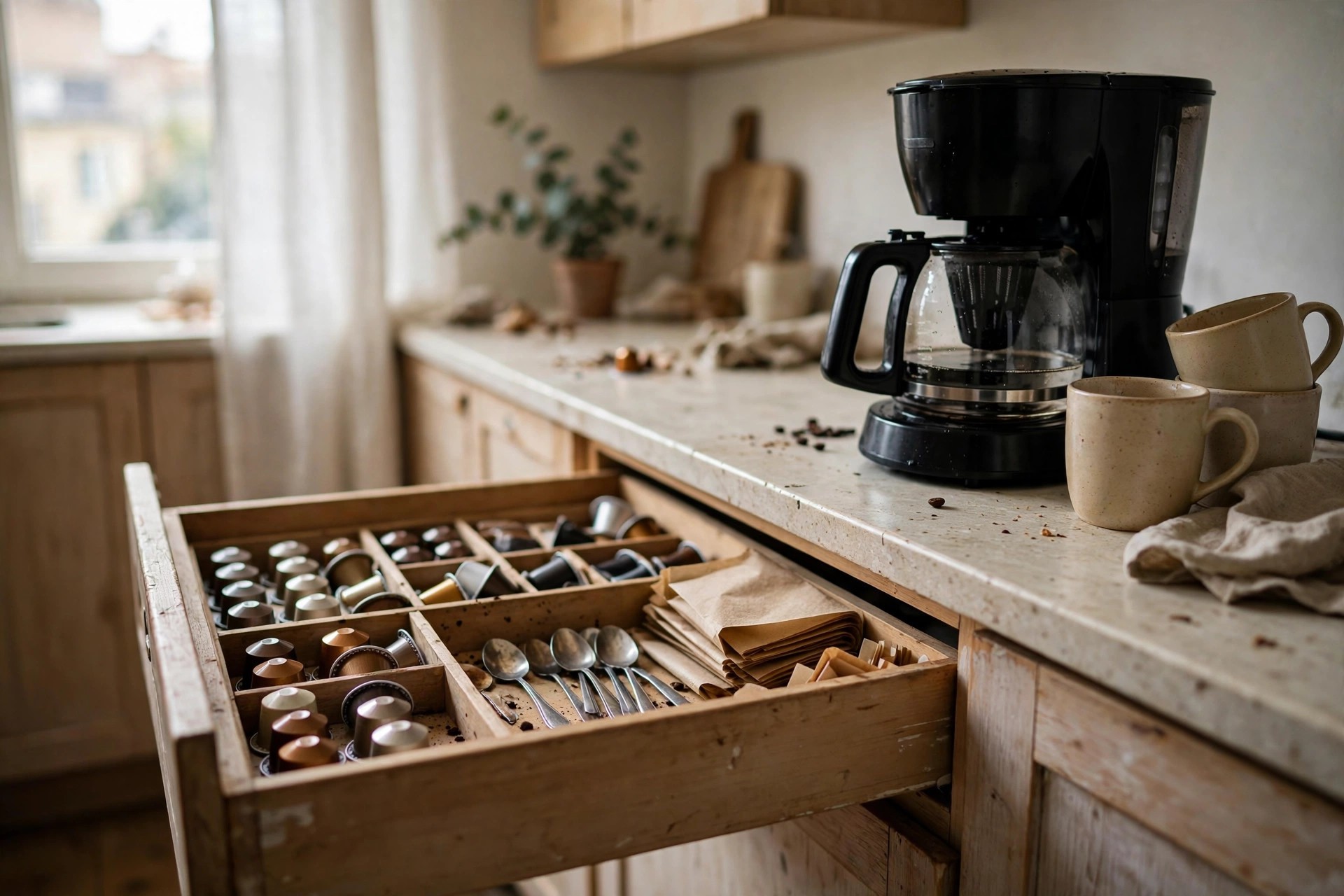
The drawer directly beneath your machine is the hardest-working storage in a small coffee station. Fit it with simple dividers for pods or filters, spoons and sugar, and the counter above stays almost bare. Everything appears with one pull and disappears just as fast.
Line the base with a washable liner, because grounds get everywhere eventually. Review the drawer monthly and evict anything you stopped using, or it quietly becomes the junk drawer with a coffee theme.
13. Add Plants for a Coffee Nook That Feels Alive
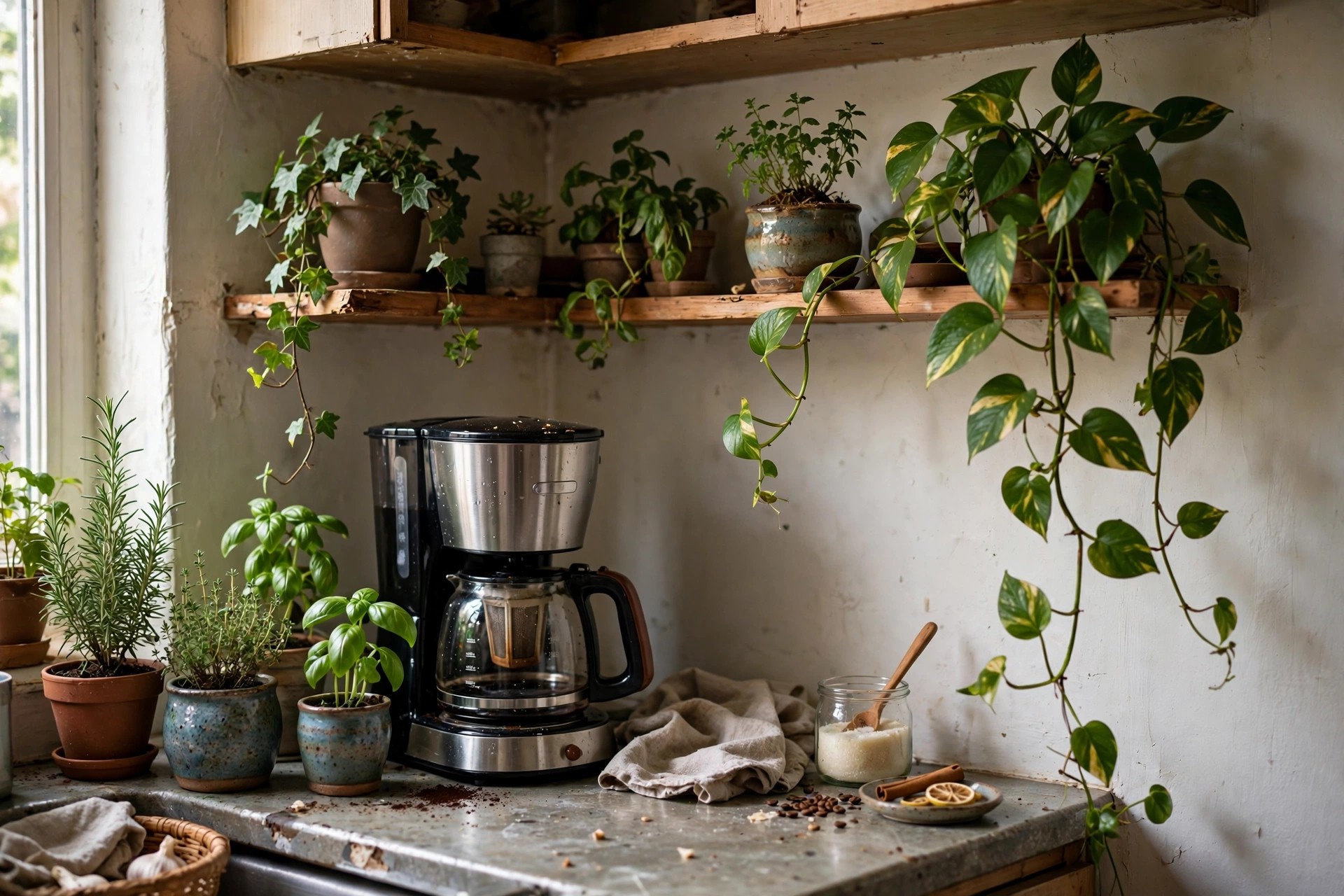
A plant or two changes a functional corner into a nook you want to stand in. A potted herb on the shelf, a trailing plant from the cabinet top, or basil on the windowsill adds softness that machines and jars cannot — kept close, but never where steam will punish it daily.
Choose plants that tolerate kitchen warmth and variable light, with saucers so watering never threatens your supplies. One or two pots is enough; the aim is a living edge, not a jungle to move before reaching the coffee.
14. Keep It Minimal With a Single-Serve Setup
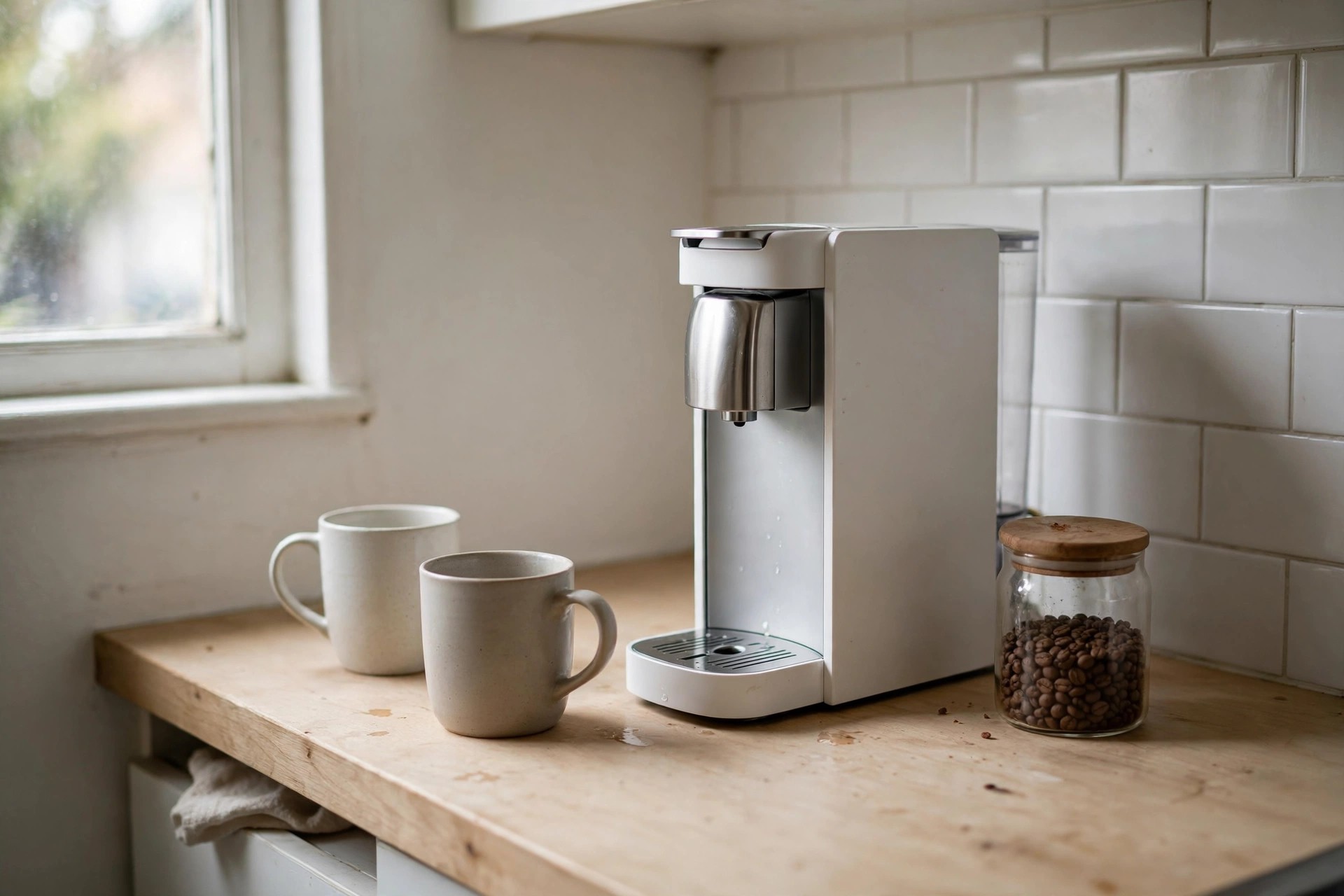
If you drink one kind of coffee once or twice a day, let your station admit it. A slim single-serve machine or simple pour-over cone, two mugs and one jar is a complete station with almost no footprint and almost nothing to tidy.
Resist accessories bought just in case. If a gadget has not been used in a month, it belongs in a cupboard, not the station. Minimal setups are easiest to keep clean, and cleanliness is what makes a small kitchen feel bigger.
15. Stack Wooden Crates for a Rustic Station
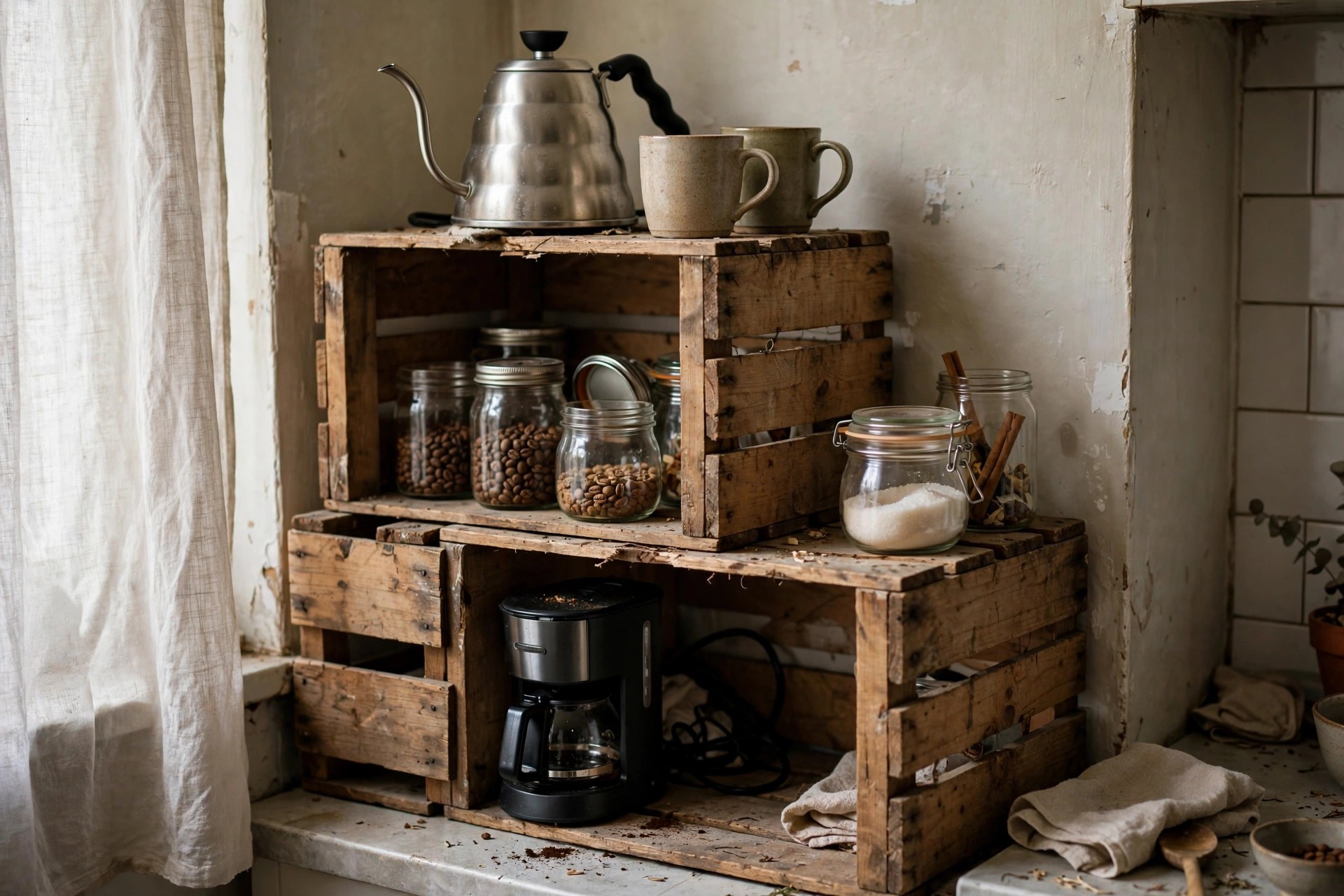
Stacked wooden crates make a station with built-in shelves and no permanent fixing at all. One crate on its side holds the machine or kettle, another stores jars and mugs, and the top becomes a small display surface. Sand rough edges and keep hot appliances on a stable, heat-safe board.
Crates suit renters and first apartments because they move house easily and become book or plant storage later. Anchor the stack against a wall, paint the wood to match your cabinets for calm, or leave it worn with linen and ceramic for softness.
Common Mistakes to Avoid
1. Buying the machine before measuring the space. Height under cabinets, lid clearance and reservoir access catch more people out than width ever does. Measure the exact spot, including how the machine opens, and choose the model that fits your kitchen rather than an imagined bigger one.
2. Letting the station spread across the whole counter. A coffee corner that slowly absorbs the toaster, mail and fruit bowl stops feeling like a treat and starts feeling like clutter. Give the station a tray or clear boundary, review it weekly, and return anything that has wandered in.
3. Storing beans and supplies in the wrong place. Beans above a steamy kettle, filters beside the sink and sugar in a hard-to-open jar all make mornings harder. Keep supplies sealed, dry and within one step of the machine, decanting only what you will use soon.
Frequently Asked Questions
How much counter space do I really need for a coffee station?
Less than most people expect. A single-serve machine, tray station or pour-over setup can live on one clear corner, as long as mugs and supplies are stored vertically or in the drawer below. With no counter at all, a rolling cart or small sideboard works just as well.
Can I set up a coffee station in a rented apartment without drilling?
Yes. Tray stations, rolling carts, stacked crates and sideboard setups need no fixings at all, and many rails can be fitted to cabinet sides instead of walls. Always check weight limits for any adhesive or over-door options your lease allows.
Where should I store coffee beans in a small kitchen?
In a sealed, opaque container in a cool, dry spot within reach of your machine — a drawer, cabinet or crate shelf beside the station is ideal. Avoid warmth, steam and sunny windowsills, and buy in quantities you will use while the beans are at their best.
How do I keep a small coffee station tidy every day?
Build tidying into the ritual: grounds out and surfaces wiped while the coffee brews, mugs rinsed after use, and everything returned to its tray, drawer or shelf before you leave the kitchen. A bounded station with only daily items on display takes under a minute to reset.
Final Thoughts
The best coffee station for an apartment is not the biggest or most elaborate one — it is the one that fits your counter, your lease and your actual morning. Start with a single idea, set it up properly with a tray, good storage and room to pour, and live with it before adding anything else.
Once the basics work, the small pleasures follow: a favourite mug on its hook, beans in a jar you like looking at, and a corner of a small kitchen that feels entirely yours. Not more stuff, but a better first five minutes of the day.


