

15 Small Closet Organisation Ideas for Couples Sharing One Closet
Sharing one small closet as a couple sounds simple until the first busy morning. One person’s shirts slide into the other’s dresses, shoes end up in a tangled row, and the shelf you both reach for becomes a pile of jumpers that belongs to neither of you. The closet is not really too small — it is holding two wardrobes, two routines and two ideas of tidy in a space never planned for two.
Small closet organization ideas work best when they are built around fairness as much as storage. When each person has a clear zone, a fair share of hanging space and a place for small things that usually wander, getting dressed stops feeling like a negotiation. You do not need a walk-in wardrobe — most changes in this list are about dividing, labelling and using the height and depth you already have.
Below are fifteen practical ways to organise one small closet for two people, from planning the split to rails, shelves, baskets, doors and daily habits. If your storage struggles go beyond the closet, our guide to bedroom storage ideas when you have no closet is a helpful companion for overflow pieces.
This post contains affiliate links. If you buy through them, we may earn a small commission at no extra cost to you. See our Affiliate Disclosure.
How to Organise One Small Closet for Two People, Step by Step
Start by emptying the closet completely, even if you can only do it in two halves on a bed. Sort everything into keep, relocate and let-go piles for each person separately, because mixing the sorting is how one partner’s favourites quietly disappear. While it is empty, measure the width, depth and height, and look at the dead zones: the floor under short hanging clothes, the high shelf nobody reaches, and the narrow strips at each end of the rail. That is where most extra capacity hides.
Next, agree the split before anything goes back in. Half-and-half suits couples with similar wardrobes, while a person with more long dresses or suits may fairly need more hanging length and less shelf space. Mark the boundary, then rebuild zone by zone: hanging first, then shelves, then shoes. The same planned approach works across a compact room — see how dream bedroom ideas for small bedrooms balance two people’s needs, and how a fold-down desk for a small bedroom keeps work items out of your shared wardrobe space.
1. Split the Closet Into Two Clear Zones
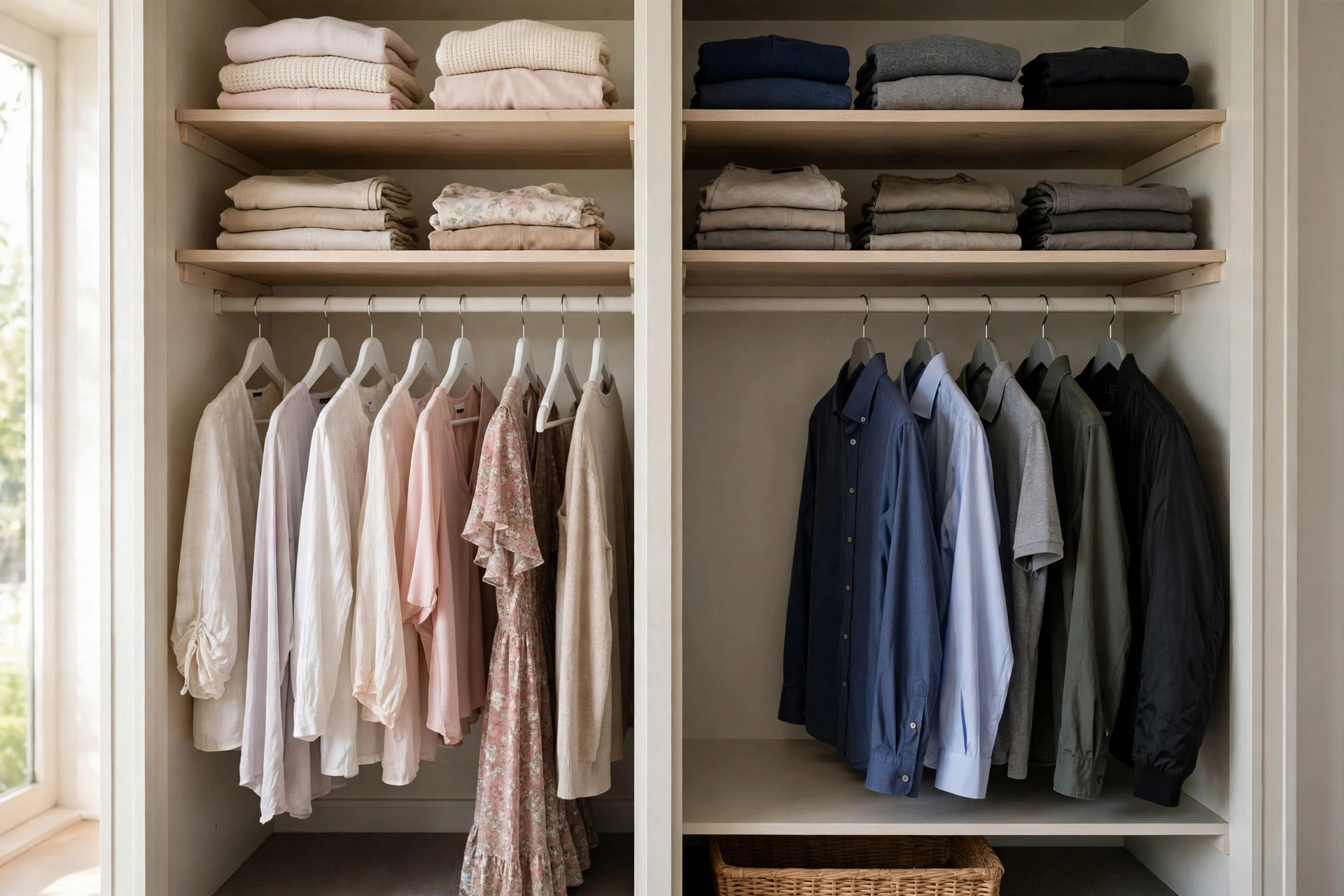
Give each person a dedicated side — left and right, or top and bottom if the closet is tall and narrow — and treat that boundary as permanent. A clear split ends the slow creep where one rail of shirts gradually takes over the whole closet, and it makes putting laundry away faster because every item has an obvious home.
Mark the divide so you can both see it: a central basket tower, a different hanger colour for each person, or a small gap left empty on the rail. Shared items, like spare hangers or the steamer, can live in the middle.
2. Add Double Hanging Rails on Each Side

Most small closets waste the space below shirts and blouses. Adding a second, lower rail doubles the hanging capacity for short items such as shirts, trousers, skirts and jackets. If each side gets its own double rail, both partners gain space without taking any from the other.
Keep one short section of full-length hanging on each side for dresses and coats. A tension rail works well in a rented home because it avoids drilling, while a fixed rail suits a closet you own. Leave a little breathing room between garments so clothes stay crease-free.
3. Switch to Slimline Matching Hangers

Bulky wooden and padded hangers eat precious centimetres in a shared closet. Slimline hangers with a soft, non-slip finish hold clothes securely while taking up far less rail space, so both wardrobes fit side by side without being compressed into a solid block.
Matching hangers at the same height also make the closet feel calmer. Choose one colour per person as a visual clue for whose side is whose, and keep spare hangers in the centre rather than letting empties scatter along both rails.
4. Give Each Person Their Own Top Shelf
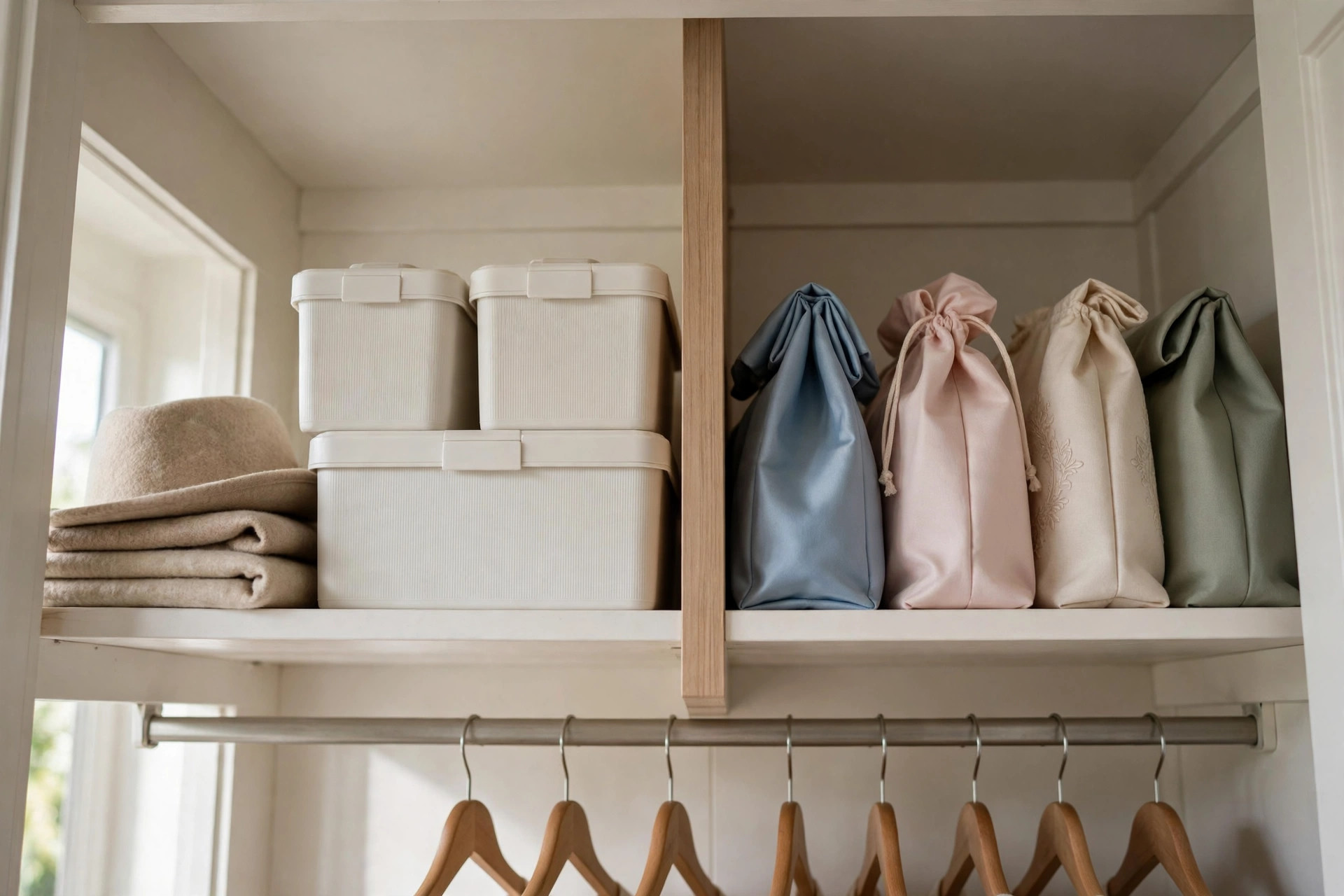
The high shelf above the rail is prime space for things you use less often, but it turns into shared chaos fastest. Dividing it into two separate halves — one set of boxes for each person — keeps hats, occasion bags and accessories from merging into a single unlabelled jumble.
Store lighter items there and keep a small folding step nearby for safe access. Boxes with lids keep dust off and look tidy even when the contents are mixed.
5. Use Shelf Dividers to Stop Clothes Creeping

Folded jumpers, jeans and T-shirts lean, slide and blend into one pile — especially when two people pull from the same shelf in a hurry. Upright shelf dividers hold each stack in its own bay, so one person’s knitwear stays put when the other grabs a jumper.
Dividers also make fairness visible. Count out equal bays each, or allocate by need. When a stack outgrows its bay, that is a gentle signal to edit rather than expand sideways into your partner’s section.
6. Add His-and-Hers Baskets for Folded Basics
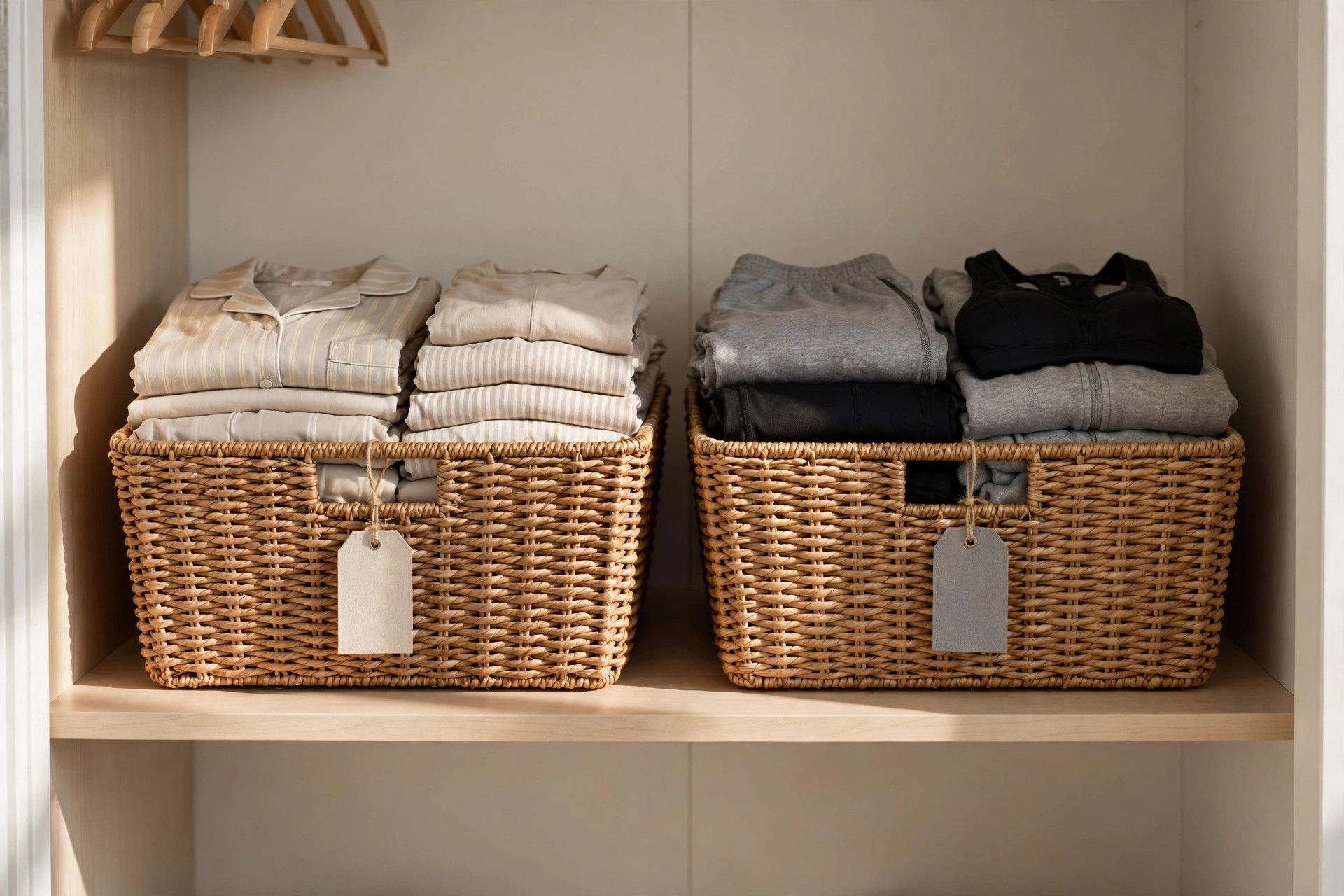
Not everything needs precise folding. Basics such as gym clothes, pyjamas and loungewear are happiest in open baskets, one assigned to each person. Baskets corral soft items that otherwise spill across shelves, and laundry day becomes simple — carry one basket to the bed, fold, and slide it straight back.
Choose baskets that match in size, and use colour or a small tag to tell them apart. If a basket overflows every week, the fix is usually a small wardrobe edit rather than a bigger basket.
7. Claim the Back of the Door for Storage
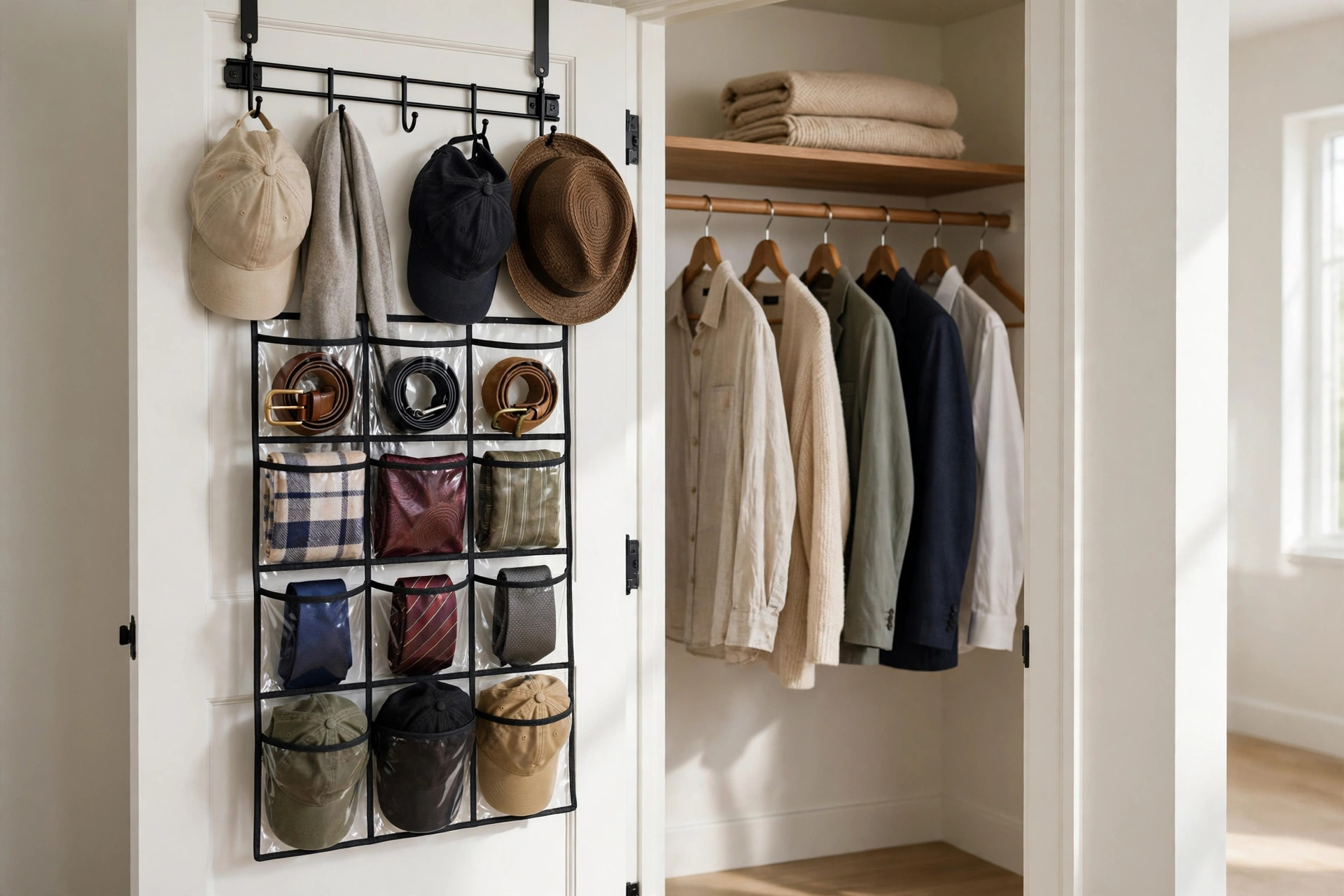
The inside of the closet door is often completely unused. Over-door hooks, a slim hanging organiser with clear pockets, or a shallow rack can hold belts, scarves, ties, caps and small bags for both of you, freeing shelf space for clothes that genuinely need it.
Divide door storage fairly too — top pockets for one person, lower ones for the other. Keep only light, flat items here so the door still closes smoothly. In a rented home, over-door options that need no screws are safest.
8. Use Vertical Shoe Storage Instead of One Long Row

Shoes are where shared closets most often descend into a heap. A single row along the floor rarely fits two people’s everyday pairs, so think vertically: a narrow tiered rack, stackable shoe slots, or a hanging shoe organiser on an end wall can hold far more in the same footprint.
Agree a fair number of pairs to keep inside for each person, and move bulky boots or rarely worn shoes to under-bed storage. With only in-rotation shoes inside, both of you can see your options at a glance.
9. Fit a Slim Central Chest of Drawers
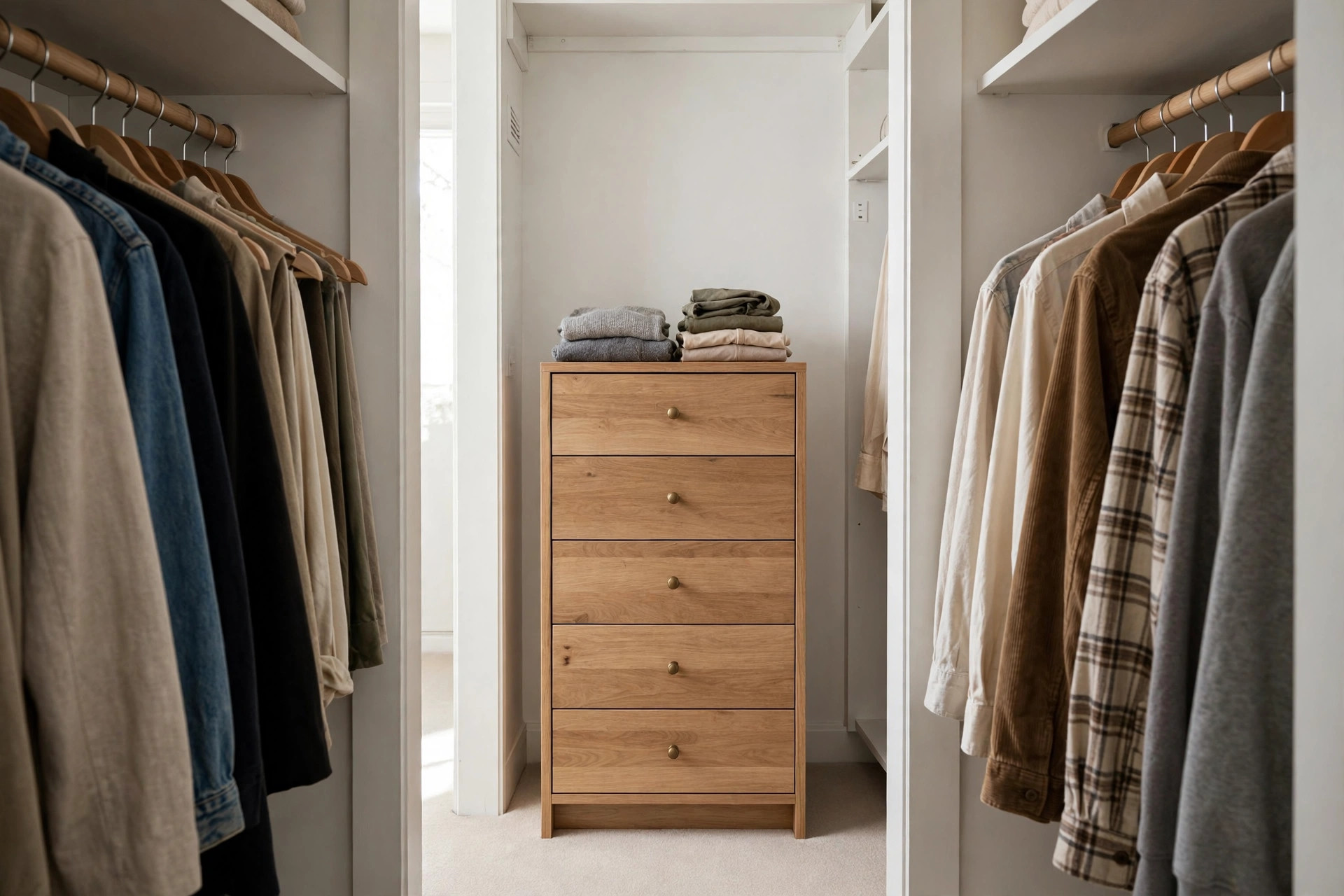
If your closet has a little floor space in the middle, a narrow chest of drawers can act as both storage and divider. Drawers are ideal for underwear, socks, watches and jewellery — the small items that otherwise scatter across shelves — and a central unit reinforces the two-zone split on either side.
Split the drawers half-and-half, with one shared drawer for clothing care bits. Measure carefully so hanging clothes are not crowded. This is a favourite trick in dream bedroom ideas for couples because it makes one small closet feel like two personal dressing areas.
10. Rotate Seasonal Clothes Into Storage Boxes

A small shared closet cannot hold four seasons for two people at once. Twice a year, pack away the out-of-season wardrobe — heavy knits in summer, shorts and sundresses in winter — into lidded boxes stored under the bed or in another cupboard.
Do the rotation together so both wardrobes shrink by a similar amount. Label each box with the owner and season, and wash everything before packing. The daily closet will feel noticeably roomier, and the swap becomes a natural moment to let go of anything unworn.
11. Add Hooks and a Rail for Tomorrow’s Outfits

Mornings run more smoothly when tomorrow’s outfits are not buried in the rail. Sturdy hooks on the closet’s end wall, or a short pull-out valet rail, gives each of you a spot to hang the next day’s clothes the night before — and a place to air a worn-once jacket instead of draping it over a chair.
Keep this zone small: one outfit per person. If the hooks hold a week’s worth of maybes, they stop helping. The habit also protects the main rails from being yanked through in a half-awake rush.
12. Use Clear Boxes and Labels on Shared Shelves

Some shelves will always be shared — spare bedding, shared accessories, or overflow you both own. Clear boxes let you see contents without pulling everything down, and simple labels stop the drift where a box for scarves quietly fills with gloves and cables.
Label personal boxes with the owner’s name as well as the contents, and agree that a full box means something leaves before something new goes in. The same habit helps elsewhere; see our senior-friendly bedroom ideas for elderly parents, where clear storage and easy reach matter just as much.
13. Keep One Small Donation and Laundry Basket Inside

A shared closet stays organised when leaving is as easy as storing. Keep one small basket inside the door for items to donate, so the moment either of you realises something no longer fits or suits you, it leaves the rail immediately instead of drifting back into rotation.
Pair it with a slim basket for dry-cleaning or hand-wash items. When the donation basket is full, it goes out — no second-guessing. This quiet system keeps both wardrobes at the size the closet can actually serve.
14. Add Soft Battery Lighting to Both Sides

Many small closets have no built-in light, so back corners become shadowy dead space where dark clothes vanish. Battery-powered strip lights or small motion-sensor lights under the top shelf make both zones equally visible, with no wiring needed.
Place a light over each person’s side rather than one in the middle, so neither of you dresses in the other’s shadow. Warm-toned light makes navy and black easier to tell apart, and rechargeable options avoid constant replacement batteries.
15. Set a Weekly Ten-Minute Reset You Both Do

No system survives a busy week without a small, regular reset. Choose a fixed ten minutes — Sunday evening works well — and tidy your own zone at the same time: rehang anything draped, refold leaning stacks, return shoes to the rack, and move anything that migrated across the boundary back home.
Doing it together keeps it fair and quick, and stops resentment building when one side stays neat while the other expands. Set a timer and stop when it rings. A mostly organised closet every week beats a heroic deep-tidy twice a year.
Common Mistakes to Avoid
Taking space instead of agreeing the split. The most common mistake is letting the divide happen by drift, where whoever unpacks first claims the best rail and shelf. Agree your zones before clothes go back in, rebalance once after a month, and treat the boundary as settled.
Storing everything you own inside the closet. Occasion wear, spare bedding, suitcases and out-of-season clothes all compete with the outfits you actually wear. A small shared closet should hold the current, everyday wardrobe for two — everything else needs a home elsewhere.
Buying organisers before editing and measuring. Baskets and racks bought on hope often fit neither the shelf nor the wardrobe. Empty, edit and measure first, then buy only the helpers that solve problems you can actually see.
Frequently Asked Questions
How should couples divide a small closet fairly? Start with half the hanging length, shelf space and drawers each, then trade according to need — more rail for the person with longer garments, more shelves for the person with more folded clothes. Fair means balanced overall, not identical in every category.
What if one person has far more clothes than the other? Keep the closet split fair and store the extra wardrobe elsewhere — under-bed boxes, a hallway cupboard or seasonal storage — rather than letting it absorb the shared space. A frank edit together usually closes much of the gap before any extra storage is needed.
How can we organise a small closet in a rented home? Favour tension rails, over-door organisers, freestanding drawer units and battery lights, all of which add storage without drilling or permanent changes. Check your tenancy agreement for anything adhesive or weight-bearing on doors, and keep original fittings safe to refit when you leave.
How often should we reorganise a shared closet? A ten-minute reset weekly, a seasonal rotation twice a year, and a fuller review whenever the closet starts feeling tight again. Small, regular attention prevents the kind of complete clear-out that makes reorganising feel like a dreaded event.
Final Thoughts
A small closet shared by two people will never feel like a boutique dressing room, and it does not need to. It needs a fair split you both agreed to, storage that uses its height, depth and door, and habits small enough to survive real life. Start with the zones and double rails, add baskets and dividers where your own piles form, and let the weekly reset do the quiet maintenance.
Within a couple of weeks, getting dressed gets faster, laundry gets easier to put away, and the doors close on a space that finally belongs to both of you equally. Pick two or three ideas to try this weekend, and build from there.


