

15 Bedroom Storage Ideas When You Have No Closet at All
A bedroom with no closet sounds like a temporary problem until you have lived with one for a month: clothes migrate to a chair, shoes colonise the floor, and every morning starts with a small archaeological dig. But a built-in wardrobe is only one way to store a wardrobe. With the right mix of rails, freestanding furniture and boxes that earn their floor space, bedroom storage ideas for a room with no closet can work just as hard.
This is a familiar puzzle in older houses, attic conversions and rented flats, and most of the solutions below are renter-safe or fully portable. The same thinking that organises studio apartment bedroom ideas applies here: every piece has to store, divide or double up, and nothing gets to be purely decorative.
Below are fifteen ideas you can mix and match, from a single rail to the rotation system that keeps it under control. Measure your walls and your under-bed clearance first, because the best no-closet setup is simply the one that fits your room and the clothes you actually own.
This post contains affiliate links. If you buy through them, we may earn a small commission at no extra cost to you. See our Affiliate Disclosure.
1. Make an Open Clothing Rail Your Main Wardrobe

A sturdy freestanding rail, 150 to 180 centimetres long, can hold a full adult wardrobe on one level — roughly what a standard double wardrobe offers. Choose a single rail set at about 160 centimetres if you hang dresses and coats, or two stacked rails at around 100 centimetres each for shirts, blouses and folded-over trousers. Keep 55 to 60 centimetres of clear depth in front of it so hangers, about 44 centimetres wide, swing without grazing the wall. Matching wooden hangers and breathing room between garments keep it looking like a boutique display, not a jumble sale.
2. Turn an Alcove Into a Curtain-Fronted Wardrobe
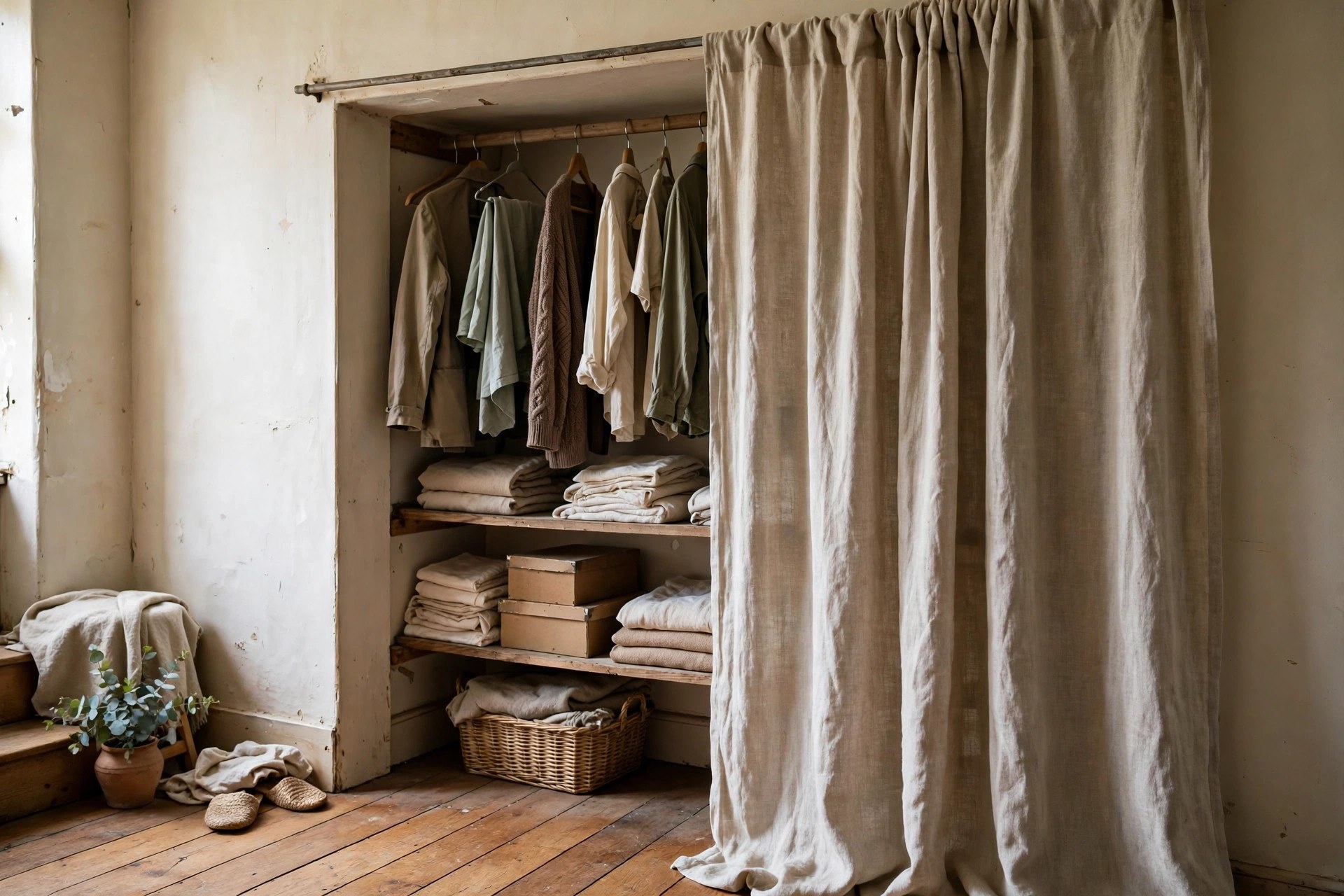
Chimney-breast alcoves are wasted gold in a closet-less room. An alcove 100 to 150 centimetres wide and at least 60 centimetres deep takes a tension rod or ceiling-mounted track across its opening, with a linen or cotton curtain hung in front — no doors, no joinery, and no drilling if you use a tension rod. Inside, fit one hanging rail at about 150 centimetres, a shelf above it for boxes, and leave the floor for shoes. Let the curtain hem finish a centimetre above the floor so it sweeps cleanly, and choose a fabric close to the wall colour.
3. Choose a Freestanding Armoire With Real Hanging Depth

An armoire is the closest thing to a real closet you can buy in one piece, but only if the inside is deep enough. Check the internal depth before anything else: you want 55 to 60 centimetres, because hangers are about 44 centimetres wide and garments need clearance on both sides to close without crushing. A width of 100 to 120 centimetres suits most rooms, ideally split between a hanging side and a shelved side. The soft, painted finishes in these beige wardrobe bedroom designs show how a big piece can feel calm rather than bulky. Level it, and add an anti-tip strap.
4. Claim the Space Under the Bed With Low Boxes
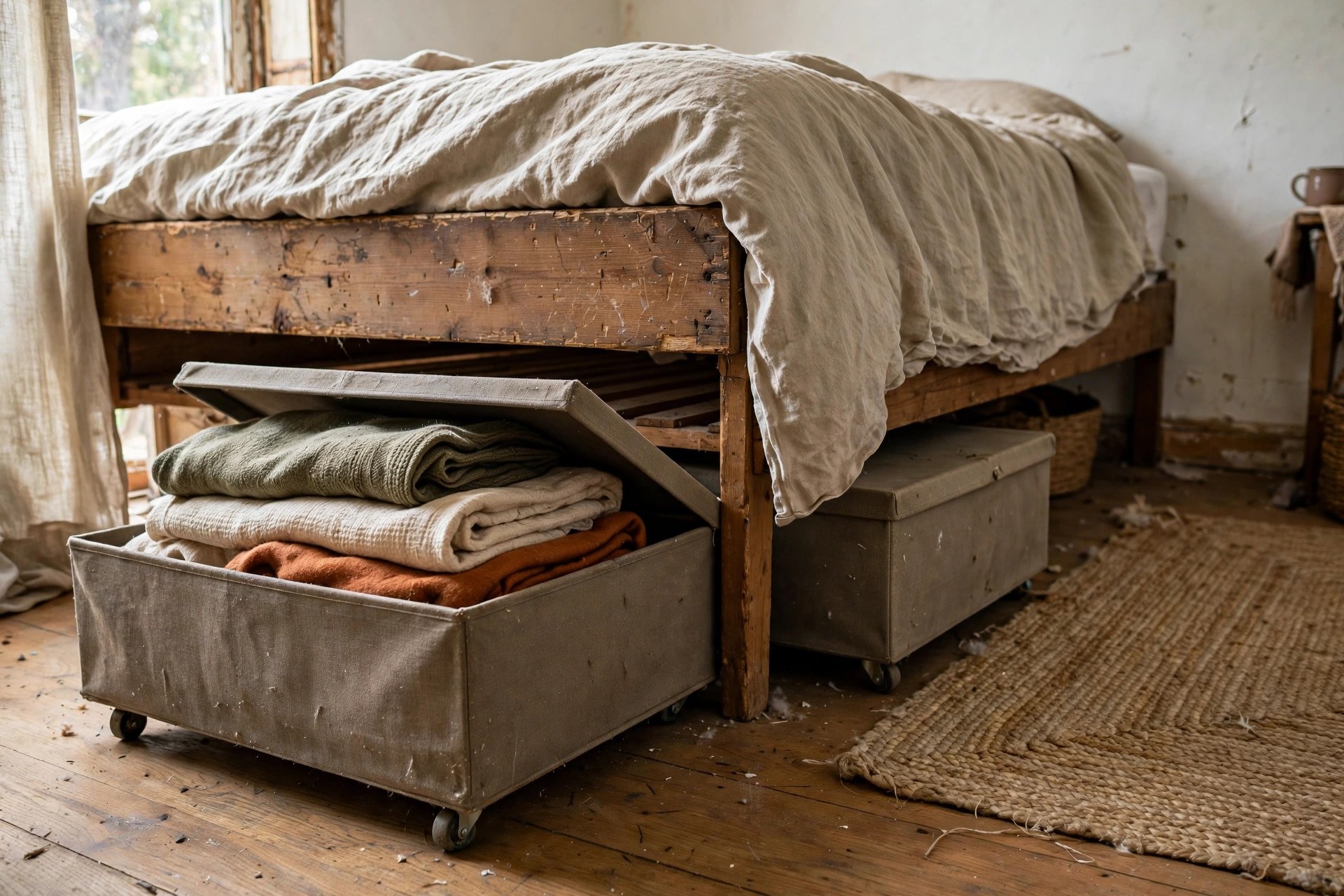
The footprint of a double bed hides some two square metres of storage closet-less bedrooms desperately need. Measure the clearance first — many frames give you 15 to 20 centimetres — then buy lidded boxes that actually fit that height, with handles or wheels on the short end so they pull out like drawers. Reserve them for out-of-season clothes, spare bedding and things you reach for monthly, not daily. Vacuum bags flatten duvets and knitwear hard, and a label on the outward end saves dragging every box out to find one jumper.
5. Pick a Storage Bed Frame With Drawers or a Lift-Up Base
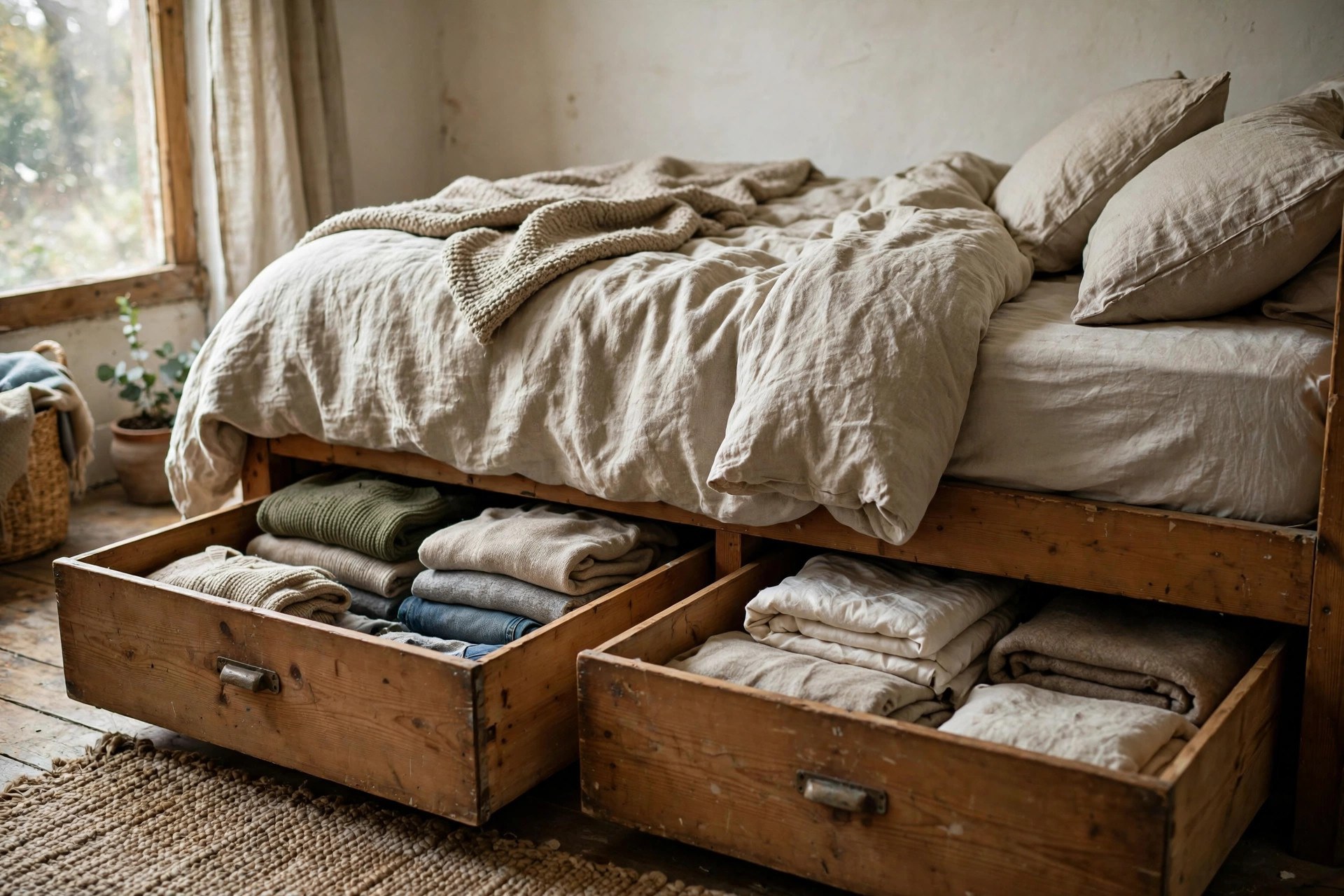
If you are replacing the bed anyway, a storage frame turns your biggest piece of furniture into your biggest cupboard. Drawer bases typically give you two to four drawers with around 15 centimetres of internal depth — ideal for T-shirts, gym kit and bedding — but each drawer needs about 60 centimetres of clear floor beside the bed to open fully. Where the room is too tight for that, a lift-up ottoman base is smarter: the platform rises on struts to reach storage from above. Measure door swings and landing space before ordering; the footprint matches a normal bed, but the access does not.
6. Add a Peg Rail or Hooks for the Daily Rotation
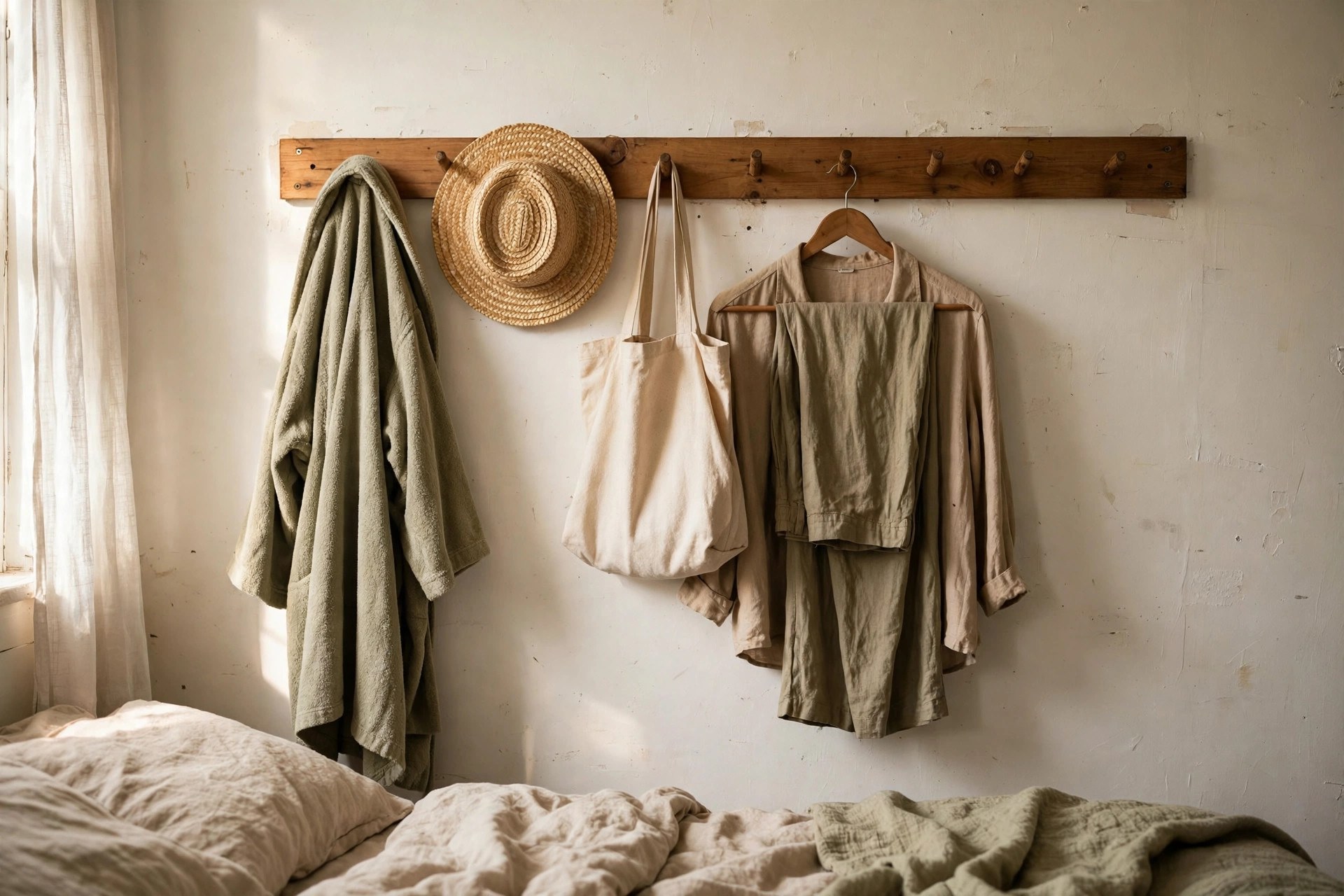
Not everything needs a permanent home — the clothes you wear on rotation need a landing strip. A Shaker-style peg rail fixed at 150 to 160 centimetres high, with pegs spaced 15 to 20 centimetres apart, holds tomorrow’s outfit, a robe, hats and the bags you grab daily. Fix it into studs or use proper wall anchors, because a loaded peg carries several kilos. The discipline is in the limit: five to seven items maximum. Kept that lean, a peg rail reads as a styled display and stops the dreaded clothes chair forming; overloaded, it becomes the very clutter it was meant to prevent.
7. Line a Wall With Low Shelving and Labelled Baskets

A run of low shelving, 80 to 100 centimetres high and about 30 centimetres deep, suits folded clothes far better than deep cupboards: folded piles sit happily at 25 to 30 centimetres wide, and nothing gets lost at the back. Fill the shelves with baskets roughly 30 by 20 by 15 centimetres — one for underwear, one for gym clothes, one for scarves and belts — each with a simple label facing out. Because the unit is low, its top surface earns its keep as a dressing-table stand-in for a mirror and a tray of everyday jewellery.
8. Go Vertical With Shoe Storage Behind the Door

Shoes eat floor space in wide, shallow drifts; stacked vertically, a dozen pairs take up almost none. An over-door organiser with clear or canvas pockets holds eight to twelve pairs flat against the back of the door — check first that your door has about two centimetres of clearance at the top so the hooks do not jam the frame. Alternatively, a slim tilt-out shoe cabinet only 17 to 20 centimetres deep can sit behind the door itself. Keep the pairs you wear daily at the bottom, occasion shoes at the top, and give muddy pairs a tray rather than a pocket.
9. Use a Ladder Shelf for Folded Knits and Linens
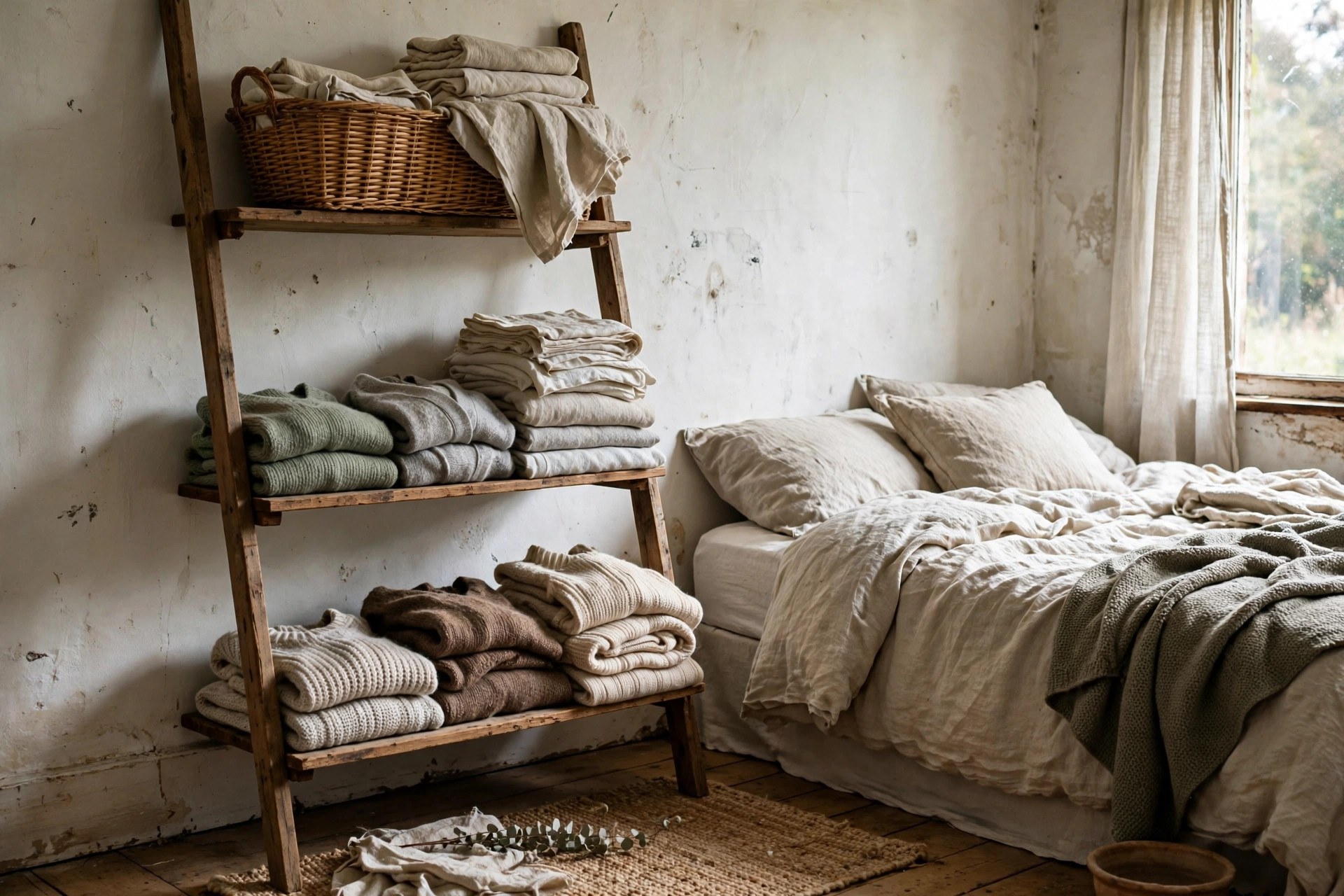
A leaning ladder shelf brings storage to walls you cannot drill and corners nothing else fits. The shelves graduate from about 35 to 40 centimetres deep at the bottom to 20 to 25 centimetres at the top, which suits folded knitwear below — stacks of three or four, so nothing topples — and lighter linens, towels and baskets above. Because it leans rather than fixes, it is genuinely renter-friendly and moves rooms when you do. Add felt pads where it meets the wall and keep the heaviest items lowest for stability.
10. Hide Busy Shelves Behind a Simple Curtain

Open storage only looks restful when everything on it matches — and real life rarely does. A plain curtain hung inside the top of a shelving unit, on a slim tension rod or a length of curtain wire, hides the visual noise of mixed boxes, spare toiletries and guest clutter in one move. Choose a washable cotton or linen in the wall colour so the unit fades into the room, and hem it to just brush the shelf below. It pulls aside one-handed — far kinder daily than lids or doors — and works like the alcove curtain trick.
11. Stack Trunks and Vintage Suitcases Beside the Bed

A flat-topped trunk, 45 to 55 centimetres high, is a bedside table that happens to swallow blankets, winter jumpers or a whole bedding set inside. Vintage suitcases stack neatly two or three high in a corner and suit the odd categories — hats, gloves, sentimental clothes — that never sit well on shelves. Line them with tissue or a cotton bag so fabrics do not catch on old fittings, and put felt pads underneath to protect the floor. This is storage with character: the pieces look collected rather than bought for the job, and every one carries out easily on moving day.
12. Fit a Slim Tallboy Into the Dead Corner

Every bedroom has a dead strip — beside a window, next to the door — that standard furniture ignores. A slim tallboy, about 40 centimetres wide and 40 deep but 120 to 140 high, is built for exactly those gaps, trading width for height with five or six shallow drawers. Shallow drawers are perfect for the small categories that otherwise drift: underwear, socks, belts, chargers. It is a trick borrowed from the way dream bedroom ideas for small bedrooms squeeze function out of every corner. Keep 30 centimetres of swing space in front so drawers clear the bed.
13. Put Shallow Shelves Above the Bed

The wall above the bed is the largest unused surface in most bedrooms, and shallow shelves make it work. Keep them 15 to 20 centimetres deep — enough for paperbacks, a glasses case, a small basket of chargers and a water carafe — and fix the lowest shelf at least 55 to 60 centimetres above the mattress so you can sit up without meeting it. Keep everything up there light and firmly contained — nothing heavy or glass above pillows. For styling the same stretch of wall, these above-bed decor ideas when you have no headboard add the decorative layer. Fixings go into studs, always.
14. Add a Rolling Rack You Can Move With the Seasons

A wheeled garment rack, 90 to 110 centimetres wide, is the flexible friend of the no-closet bedroom: it parks in a corner or hallway, then rolls out for sorting, packing or a guest’s clothes. Choose one with locking castors so it stays put once placed, and a lower shelf that takes a shoe box or a folded storage bag. During the changeover it becomes your sorting station — current season on, off-season off — which makes rotation faster and far less likely to end in a pile on the bed.
15. Run a Simple Seasonal Rotation With Labelled Boxes
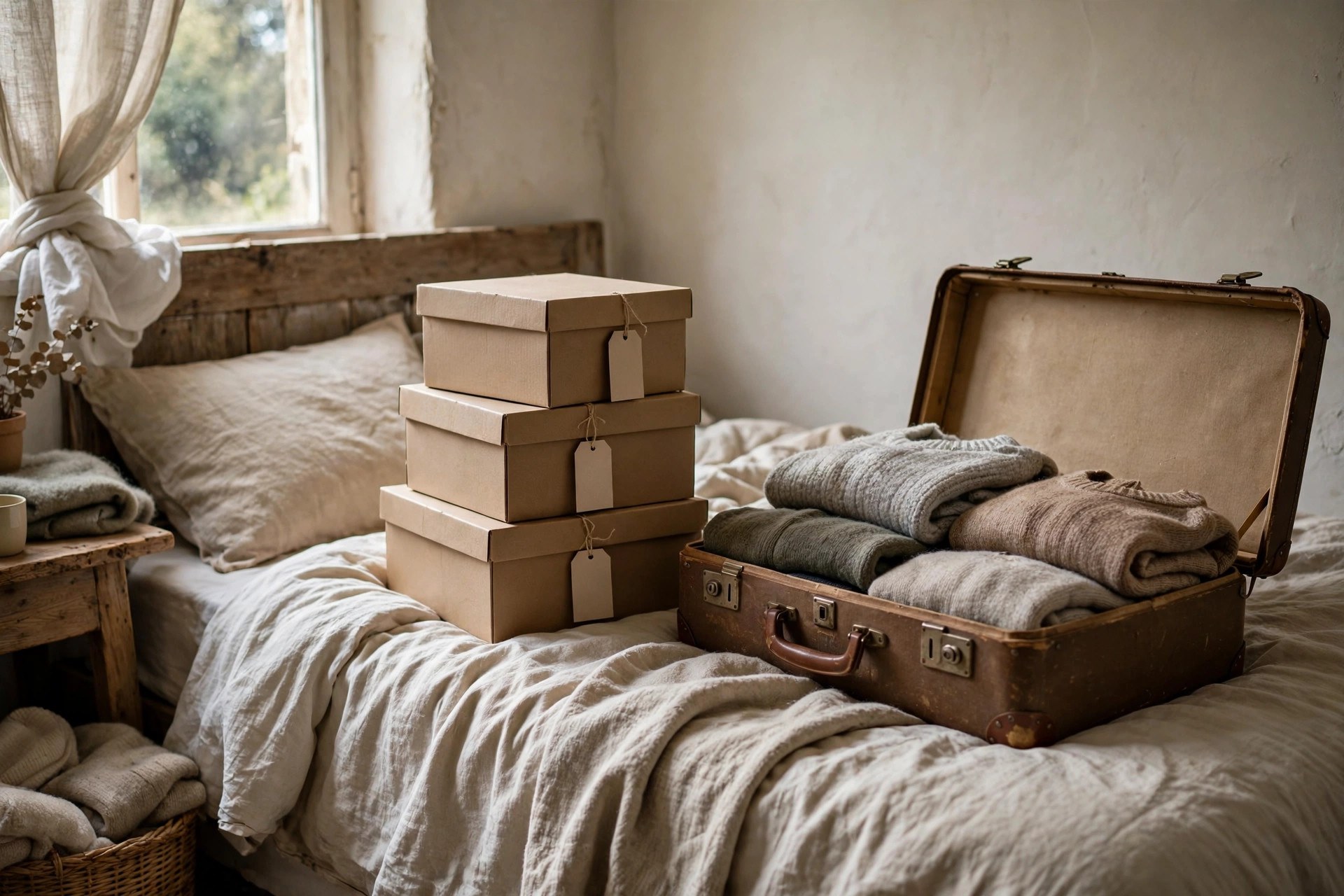
The system that ties all of this together is rotation. Twice a year, the current season lives on your rail, armoire and shelves, while the off-season goes into two or three labelled boxes of about 40 to 50 litres each, stored under the bed or on top of the armoire. Label each box on two faces — category and season — and add the year so you notice what goes unworn rotation after rotation. A gentle one-in, one-out rule after each swap keeps total clothing volume matched to your storage.
How to Plan Storage for a Bedroom With No Closet, Step by Step
Start with a tape measure, not a shopping list. Note every wall run, alcove width and depth, under-bed clearance, and which way doors swing. Then count your wardrobe by category: metres of hanging clothes (allow roughly 2 to 3 centimetres of rail per shirt and 5 centimetres per coat), piles of folded knitwear, pairs of shoes, and bulky bedding. That count tells you the split you need — most people land around half hanging, a third folded, the rest boxed.
Next, assign zones by frequency. Daily clothes belong within arm’s reach of where you dress: the rail, armoire and top drawers. Weekly items go on shelves and in baskets. Seasonal and occasional pieces get boxed under the bed or up high. Buy the biggest piece first — armoire or rail — then fill gaps with the tallboy, ladder shelf and boxes. Leave 10 to 15 per cent of every zone empty — full storage stops working. Once the clothes are housed, you may even win back a corner for pleasure instead of storage, like one of these reading nook ideas tucked beside the window.
Common Mistakes to Avoid
1. Buying storage before measuring and counting. A rail 20 centimetres too long for the wall, or boxes 3 centimetres too tall for the bed frame, are the classic no-closet failures. Measure first — the right pieces choose themselves.
2. Making everything open storage. Rails and open shelves look wonderful in photographs and dusty chaos in real bedrooms. Aim for a mix: open display for the clothes you wear constantly, closed armoires, drawers, lids and curtains for everything else.
3. Jamming in oversized pieces that block the room. An armoire whose doors cannot open fully, drawers that clip the bed, a rail that swallows the only window light — storage that fights the room always loses. Keep walkways clear and check every swing before you commit.
Frequently Asked Questions
How much hanging space do I actually need without a closet?
A rail of 150 to 180 centimetres covers most single wardrobes if you rotate seasonally — roughly 2 to 3 centimetres per shirt and 5 centimetres per coat or dress. If it strains, the fix is a proper seasonal swap, not a second rail.
How do I stop an open rail from looking messy?
Use one style of hanger throughout, hang in a loose colour order, and leave small gaps between groups. Keep the rail about eighty per cent full; if it bulges, move the least-worn pieces into a labelled box rather than cramming them in.
What is the best first buy for a bedroom with no closet?
It depends on floor space and tenancy. A freestanding armoire gives you proper closed storage and suits owners and long lets; an open rail costs less, assembles in minutes and moves with you, which suits renters. Either beats starting with boxes.
Where do out-of-season clothes go in a small bedroom?
Into labelled boxes under the bed or on top of the armoire. Vacuum bags shrink bulky bedding and knitwear down hard, and a label on two faces of each box means winter jumpers are findable in one trip.
Final Thoughts
A missing closet is a constraint, not a verdict. One dependable home for hanging clothes, one for folded, one for the out-of-season overflow — that is the whole formula behind every idea above. Build it piece by piece, and the bedroom stops feeling like a storage unit with a bed in it and starts feeling like a room that simply works.


