

How to Repeat Office Outfits All Month Without Anyone Noticing: 15 Tricks That Work
Nobody at work owns thirty different outfits, and nobody needs to. The women who always look fresh are usually repeating pieces well, not buying more.
Repeats get noticed when the whole look is the same, in the same order, with the same shoes and hair. Change the frame around a piece and the eye reads it as new.
This list shows how to repeat office outfits without anyone noticing, using small, planned changes you can do in minutes each morning.
Work through the tricks in order for one month and you will see how far a small wardrobe can stretch without feeling dull.
This post contains affiliate links. If you buy through them, we may earn a small commission at no extra cost to you. See our Affiliate Disclosure.
1. Space each repeat at least two work days apart

The simplest trick is time. Wear a full outfit on Monday, then wait until Thursday or the next week before that exact pairing shows up again.
People recall recent looks far more than older ones. Two busy days of other outfits in between is often enough to reset what the eye expects.
Bottoms can repeat sooner than tops, because tops sit near the face and stick in the memory. Give a bold top a longer rest than plain trousers.
Keep a rough rhythm in your head: heavy meeting days, desk days, and quieter days. Spread your best pieces across those days instead of using them all at once.
Keep a note of your last wear date in the photo log from trick 15 once you start it. Even a rough note beats guessing.
2. Swap the top layer and the whole read changes
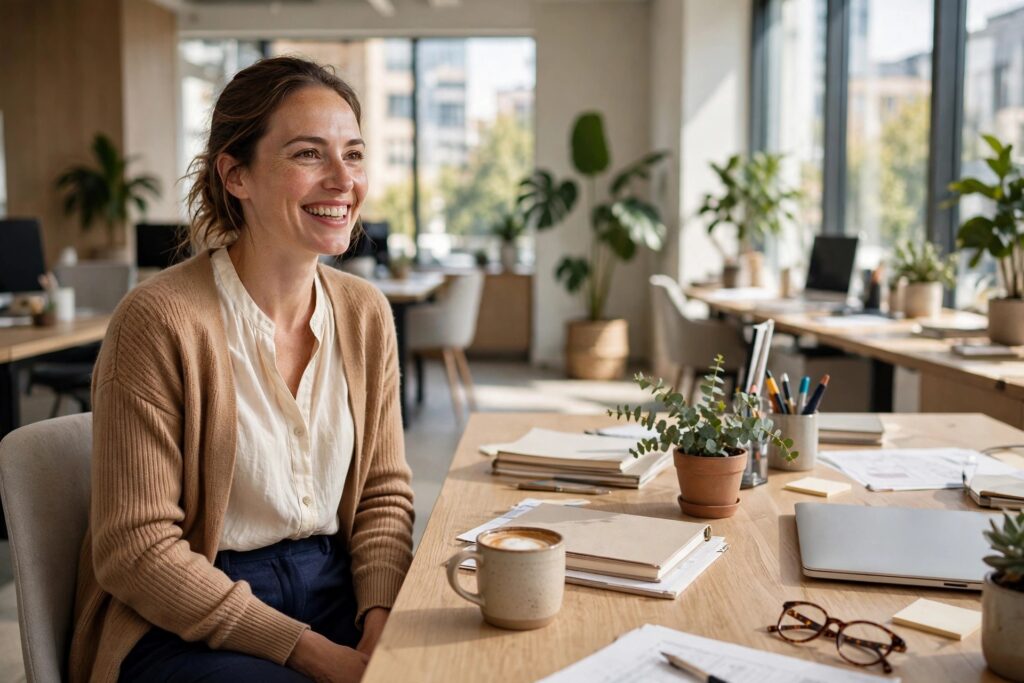
Wear the same navy trousers and cream blouse on Tuesday with a blazer. The next time, wear the same base with a soft cardigan and no blazer.
The layer is the largest block the eye sees after the top itself. A structured layer reads formal, a soft layer reads calm and approachable.
Keep two or three layers in core colors near the front of your closet. Rotating only the layer can give one base outfit three clear looks.
On cold days, add a coat in a different color for the walk in. Even a layer seen for ten minutes changes how the outfit is recalled.
3. Change the shoes and the outfit ends differently
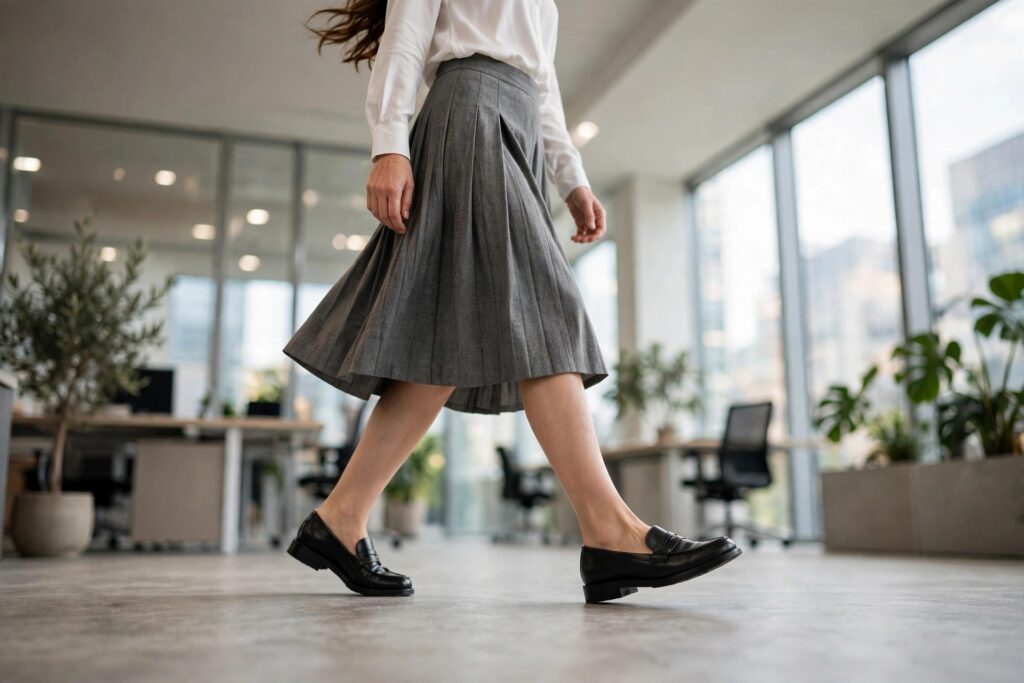
Shoes close the outfit, and people do look down. Pair a repeat skirt with loafers one week and with low block heels the next time it appears.
The change alters your height, your walk, and the sound you make crossing the office. Those small shifts add up to a fresh read of the same clothes.
Keep a second pair at work if you can. A quick shoe swap at lunch can also freshen a look for an afternoon meeting.
See office outfits with trousers for women for more ways one bottom changes with different shoes and tops.
Fit the shoe to the day as well. Heels for a short meeting day, flats for a day of stairs, files, and long corridors.
4. Rotate the color order instead of the pieces

Take the same three pieces and lead with a different color each time. One week the navy blazer leads, the next week a burgundy top leads under a gray layer.
The eye reads the largest and brightest color first. When the lead color moves, the same set of clothes feels like a new mix.
This works best when your core colors all pair well. A tight color plan, like the one used in most capsule wardrobes, gives you this freedom for free.
Try laying the same pieces out in two orders on your bed. Photograph both orders, and you will see the shift at once.
5. Change the tuck and the shape shifts with it
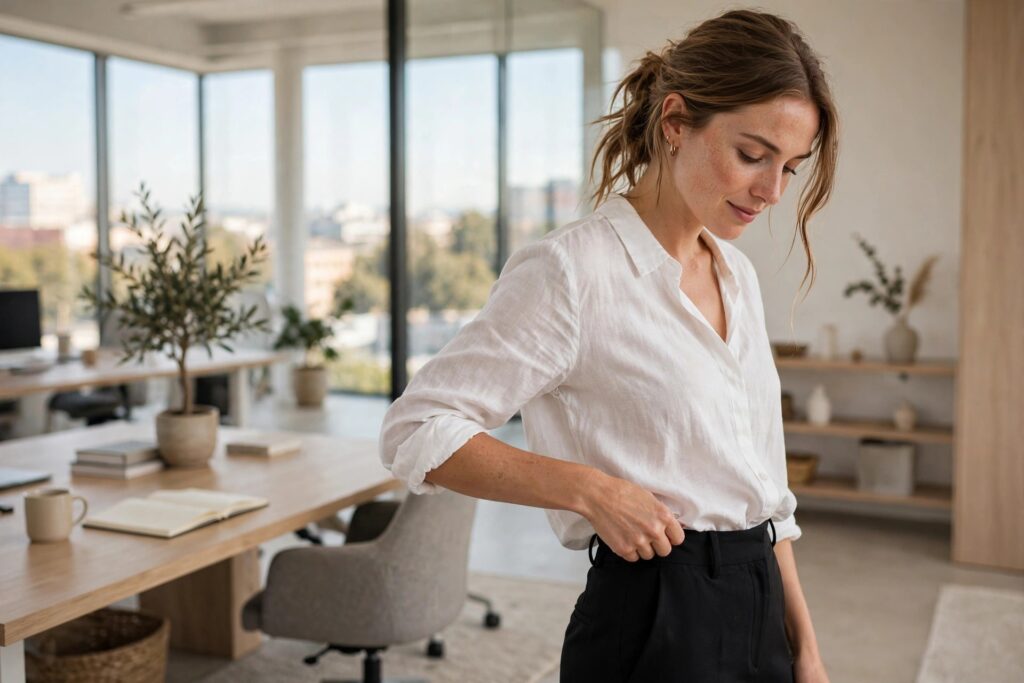
A full tuck gives a neat waist and a formal line. A half tuck looks relaxed. Wearing a top loose over trousers gives a longer, softer shape.
Use all three on the same top across a month. Each tuck changes where the eye lands and how formal the outfit feels at a glance.
Only use the loose version with tops that end at a clean length. A top that stops mid hip can look untidy if the hem is uneven.
Check the tuck in a mirror after you sit down once. Tucks shift during the day, and a quick fix in the morning saves fuss later.
6. Swap jewelry size, not just jewelry pieces

One week wear small studs and a fine chain with a repeat blouse. Next time wear larger hoops and no necklace, and let the ears carry the detail.
Changing scale works better than changing one small piece for another small piece. The face is where people look when they talk to you, so detail there counts.
Keep jewelry simple and office calm. One clear change near the face is enough; stacks of bangles and loud pieces can distract in meetings.
A watch counts here too. Swapping a metal watch for a plain leather strap changes the feel of rolled sleeves and bare wrists.
7. Change your bag and the color story moves

Many women carry the same bag daily, which is fine, but a second bag in a different color gives repeat outfits a new edge at once.
A black tote with a navy suit reads formal. A tan tote with the same suit reads warmer and softer, even though the clothes did not change.
If a second bag is not an option, change how you carry the first one. Shoulder, hand, and crossbody wear each give a slightly different line.
Clean the bag you use most. Scuffs and clutter at the top of a bag draw the eye more than a repeated blouse ever will.
8. Add a belt one time and skip it the next

A belt cuts an outfit in two and adds a clear focal point. Wear a repeat dress belted one week, then plain with a layer the next week.
With trousers, a belt changes the waist line and adds a metal or leather note that people notice without quite knowing why the look feels new.
Keep two belts, one dark and one tan. That small pair covers almost every core color and gives you this trick all month long.
Make sure the belt fits the loops or sits flat on a dress. A belt that twists or rides up will draw the wrong kind of attention.
9. Roll, push, or leave sleeves down on purpose
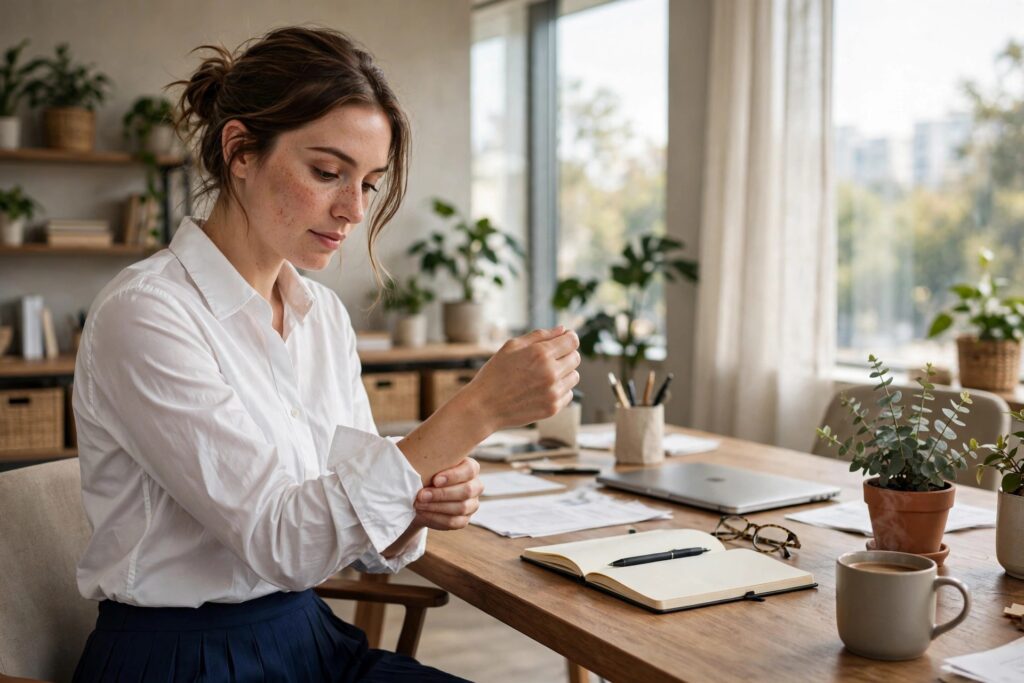
Sleeve styling is a quiet but strong signal. A blazer worn with sleeves down reads formal, with sleeves pushed up it reads busy and hands on.
Do the same with shirts. A neat cuff roll to the forearm changes a white shirt from boardroom stiff to working day relaxed in seconds.
Keep rolls even on both arms and at the same height. Uneven rolls look like an accident, while even rolls look like a choice.
This trick costs nothing and works on shirts, blazers, and fine knits. It is a good one to save for your most repeated pieces.
Roll the sleeves neatly to the same point on both arms. A cuff that sits at the elbow reads planned; one mid forearm can read rushed.
10. Change your hair and the face frame changes
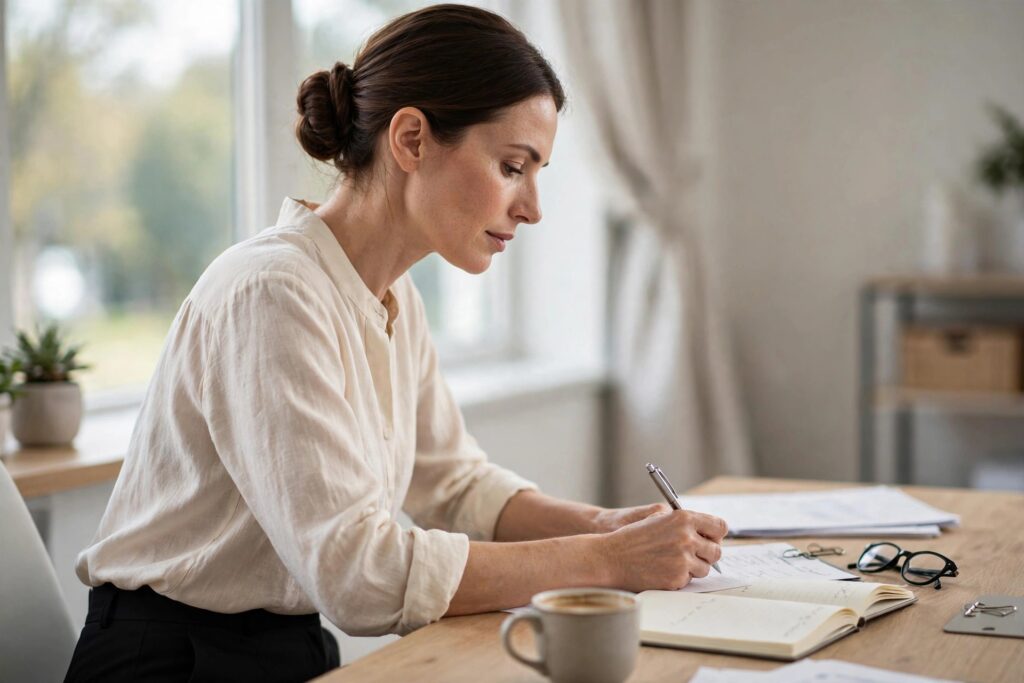
Wear your hair down with a repeat outfit one week. The next time that outfit appears, wear your hair in a low bun or a neat pony.
People recall faces and hair more than skirts and trousers. A new hair shape can make a familiar top feel like a new look to most colleagues.
Keep work hair simple and tidy. The goal is a clear change in shape, not a complex style that takes half an hour each morning.
A plain clip or band in a different finish, gold one week and black the next, adds a further small shift with no extra effort.
11. Shift the makeup focus from lips to eyes, or back

You do not need a full new makeup look. Wear a stronger lip color with a repeat outfit once, then keep lips plain and add more liner next time.
This small shift changes the color people see most near your top, which is the part of a repeat outfit they are most likely to recall.
Keep the rest of your makeup calm either way. One focus point at a time looks neat at work and photographs well on video calls.
For more polished day to day pairings, modern workwear outfit ideas for women shows how small styling shifts refresh simple bases.
12. Move a scarf or neckline detail in and out

A light scarf tied at the neck changes a plain top more than almost any other small item. Use it once, then skip it for the next two wears.
Tie it a different way each time you use it: loose at the front, knotted to one side, or looped under a blazer collar for a neat finish.
If scarves are not your style, use a top with a bow, a collar, or a small neck detail in the same way, as the one changing note.
Keep the scarf color inside your core plan. A wild color that matches nothing else will be the one thing everyone recalls about the outfit.
13. Give the same top a new bottom partner
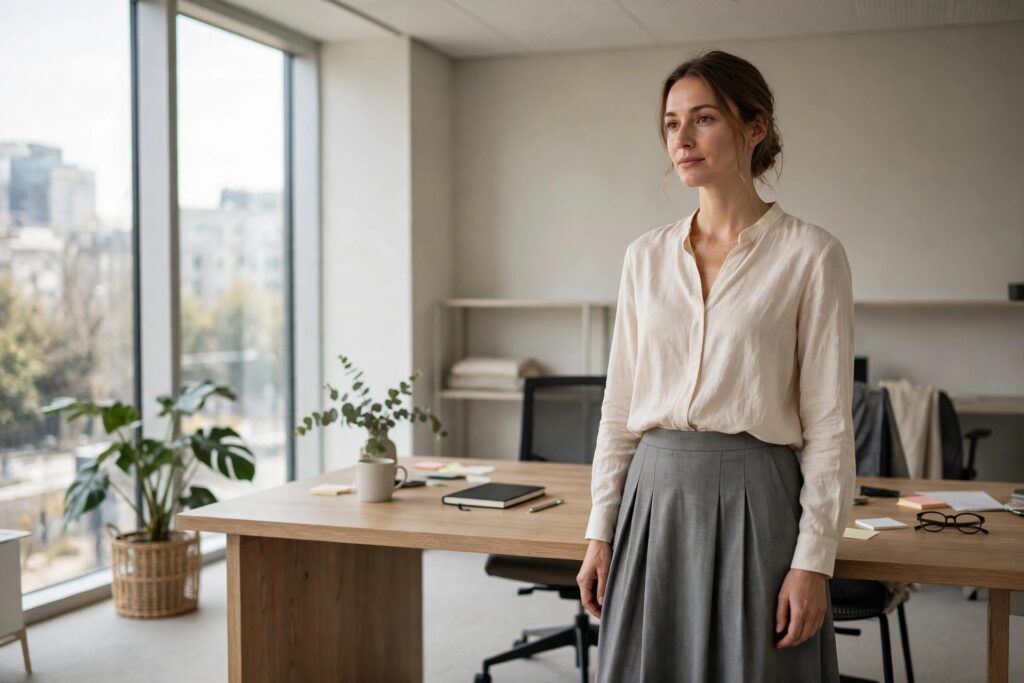
The fastest way to hide a repeat is to split old pairs. Wear your cream blouse with black trousers one week and with a gray skirt the next.
Old fixed pairs are what colleagues learn. Break the pair and their memory of the outfit breaks with it, even though each piece has been seen before.
Test new pairs at home first. Check colors in daylight and make sure lengths work, so the new pair looks planned, not random.
This is also the trick that makes how to dress for casual Friday easier, since familiar pieces can be remixed for a softer day.
14. Save bottom repeats for desk and screen days

On days spent at your desk or on video calls, the bottom half gets seen far less. Those are the safest days to repeat trousers or a skirt.
Save fresh full outfits for in person meetings, presentations, and days when you will walk the office and meet many people face to face.
This is not about hiding. It is about planning your repeats where they matter least, so your wardrobe works harder with less stress.
Rotate tops more often than bottoms as a rule. Tops sit in view all day, while good plain bottoms can work three times a week.
Plan bottom use on Sunday night if you can. Two minutes with your diary stops most clashes before the week even starts.
15. Keep a simple photo log of what you wore
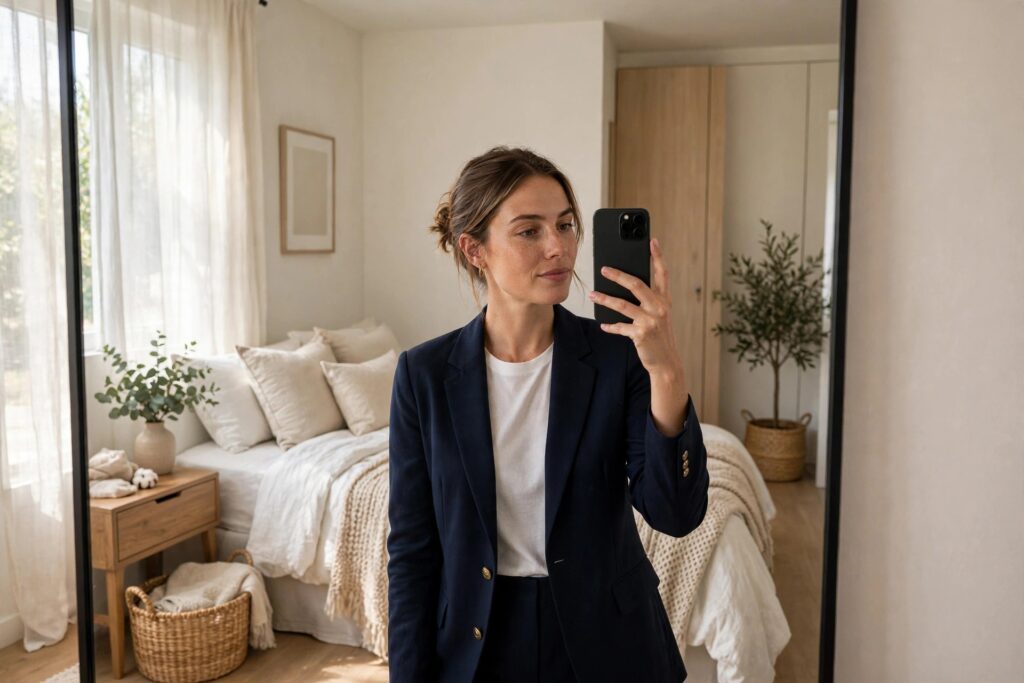
Take one quick mirror photo each morning for a month. That folder on your phone becomes a clear record of what you wore and when.
Before you repeat an outfit, scroll back. You can see at once how long it has rested and what shoes, layer, and hair you used last time.
The log also shows you new pairs you have not tried. Two photos side by side often reveal a mix you had not thought of.
Once the habit is set, planning a week takes five minutes. That planning is what makes repeats look fresh, as our office outfits that go from desk to dinner guide also shows.
Repeating outfits is normal, smart, and kind to your budget. The trick is never to repeat the full picture: change the layer, the shoes, the tuck, or the timing.
Use two or three of these tricks on each repeat and you will master how to repeat office outfits without anyone noticing, all month long.
Save this to your work outfits board for later, so the tricks are handy when you plan next week.


