

15 Work Outfits for Women Over 50 Who Are Teachers
Getting dressed for school is different from dressing for a traditional desk job. Teachers spend the day moving between classrooms, standing at the board, walking through hallways, sitting with students, reaching for supplies, attending meetings, and sometimes dealing with unexpected messes. An outfit can look beautiful in the morning and still become uncomfortable by lunchtime if the fabric is restrictive or the shoes are difficult to walk in.
For women over 50, workwear can combine maturity, personal style, comfort, and a polished appearance without relying on overly formal suits. The most useful teacher outfits are built around pieces that move easily, wash well, layer comfortably, and still look intentional when you walk into a staff meeting or speak with parents.
A good teaching wardrobe does not have to be complicated. Straight-leg trousers, soft blouses, midi skirts, knit tops, cardigans, dresses, lightweight jackets, and comfortable shoes can be mixed in dozens of ways. The following 15 work outfits for women over 50 who are teachers offer practical combinations for different seasons, school environments, and teaching schedules.
This post contains affiliate links. If you buy through them, we may earn a small commission at no extra cost to you. See our Affiliate Disclosure.
1. Straight-Leg Trousers With a Printed Blouse
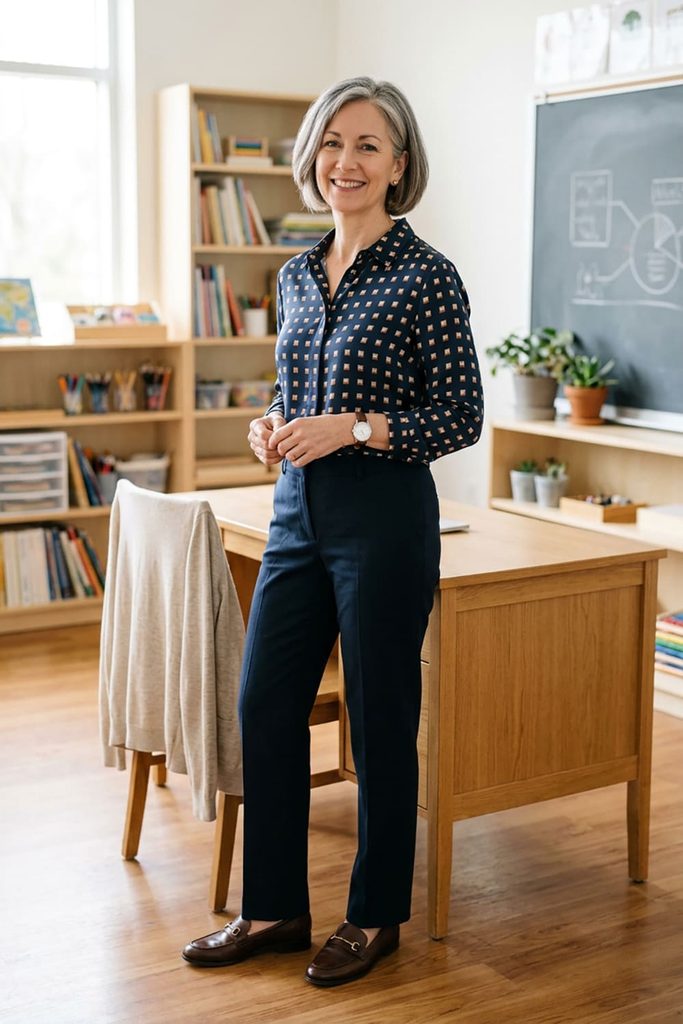
Straight-leg trousers and a printed blouse create an easy foundation for a professional teaching outfit. Choose trousers in navy, charcoal, brown, or black and pair them with a blouse featuring a subtle floral, geometric, or abstract pattern.
A print gives the outfit personality without requiring many accessories. Look for a blouse that allows comfortable movement through the shoulders and arms, especially if you spend much of the day writing on a board or working with students.
Complete the outfit with loafers, ballet flats, or another supportive flat shoe. A simple watch and small earrings are enough to finish the look.
This outfit works particularly well for regular teaching days because it feels polished without being overly formal. If the classroom is cold, add a lightweight cardigan in a color pulled from the blouse.
2. Navy Ankle Trousers With a Soft Cardigan
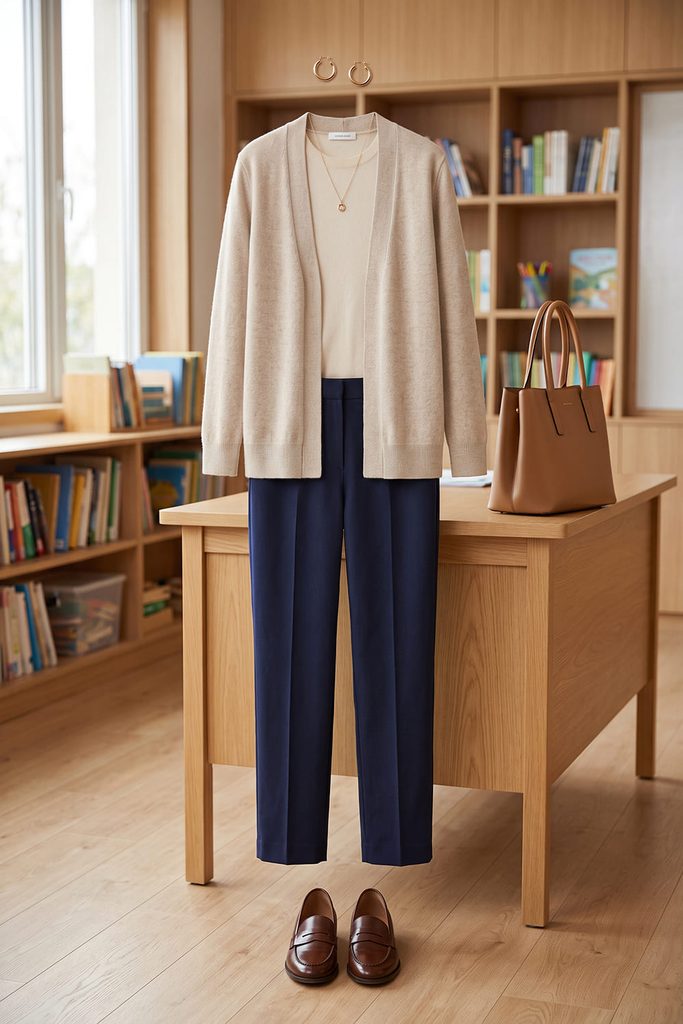
Navy trousers are one of the most versatile pieces a teacher can own. They coordinate with cream, white, light blue, burgundy, gray, green, and many other colors.
For a comfortable classroom outfit, wear them with a simple blouse or fine-knit top and layer a cardigan over it. Choose an ankle or slightly cropped trouser length if it fits your personal style and school environment. This length can make walking around the classroom easier while keeping the outfit neat.
The cardigan can add warmth without the structure of a traditional jacket. Look for one with a clean shape rather than an extremely oversized silhouette.
Finish with comfortable loafers or low-profile flats. For a staff meeting, add a simple necklace or structured handbag to make the outfit look slightly more formal.
3. Midi Dress With a Lightweight Blazer
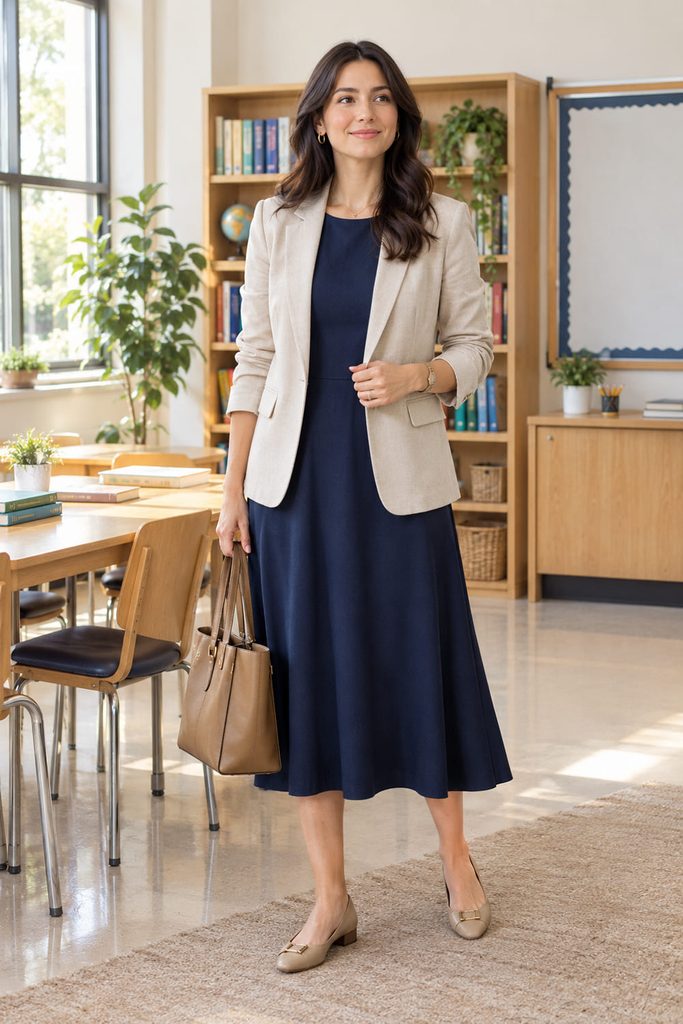
A midi dress is an excellent choice for teachers because it creates a complete outfit with very little coordination. Choose a dress with comfortable sleeves, a modest neckline, and enough room to sit, stand, bend, and walk comfortably.
A simple navy, burgundy, forest green, deep blue, or neutral dress can be worn repeatedly with different accessories. Add a lightweight blazer when you have parent conferences, professional development sessions, or meetings with administrators.
The blazer gives the dress a more structured appearance without requiring a full suit. Choose one made from a fabric that allows movement rather than a stiff jacket that restricts the shoulders.
Comfortable flats or low block heels work well. If your school allows polished sneakers, a clean, minimal pair can also make the outfit more practical for particularly active days.
4. Wide-Leg Trousers With a Fitted Knit Top
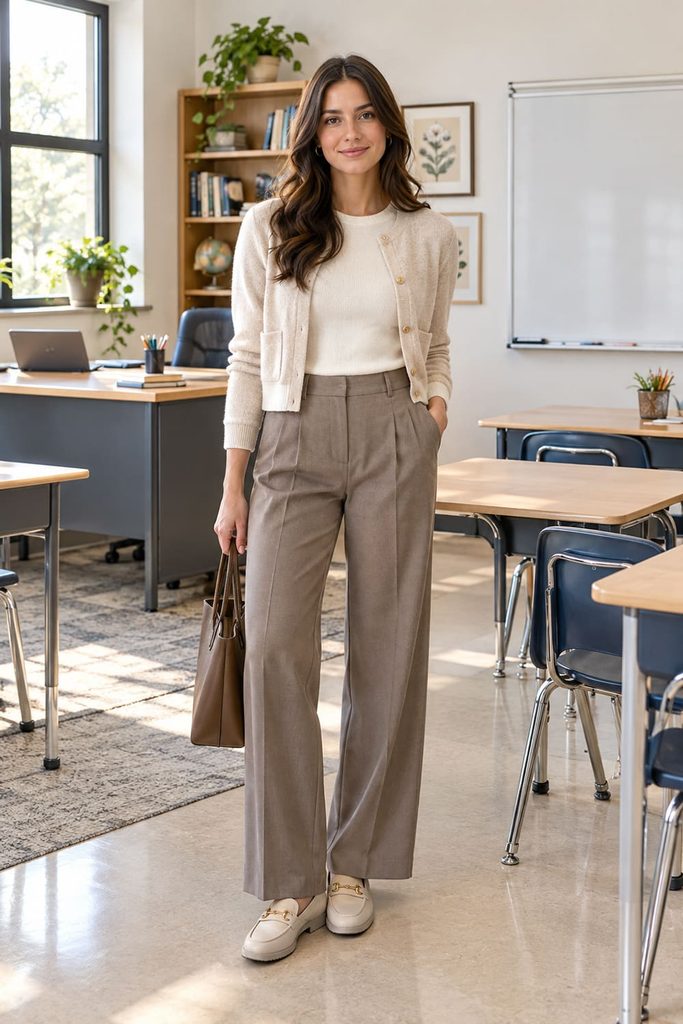
Wide-leg trousers can provide plenty of movement while creating a polished silhouette. The key is balancing the volume of the trousers with a relatively streamlined top.
Try navy, charcoal, taupe, or black wide-leg trousers with a fine-knit top in cream, soft blue, burgundy, or another complementary shade. The top does not need to be tight. It simply needs enough shape to prevent the entire outfit from becoming oversized.
A short cardigan or structured jacket can be added when extra warmth is needed. Choose shoes with a comfortable sole and a height that works with the trouser hem. Before wearing wide-leg trousers to school, make sure the hem does not drag on the floor or interfere with walking.
This combination feels modern while remaining practical and appropriate for a classroom.
5. A-Line Midi Skirt With a Button-Up Shirt
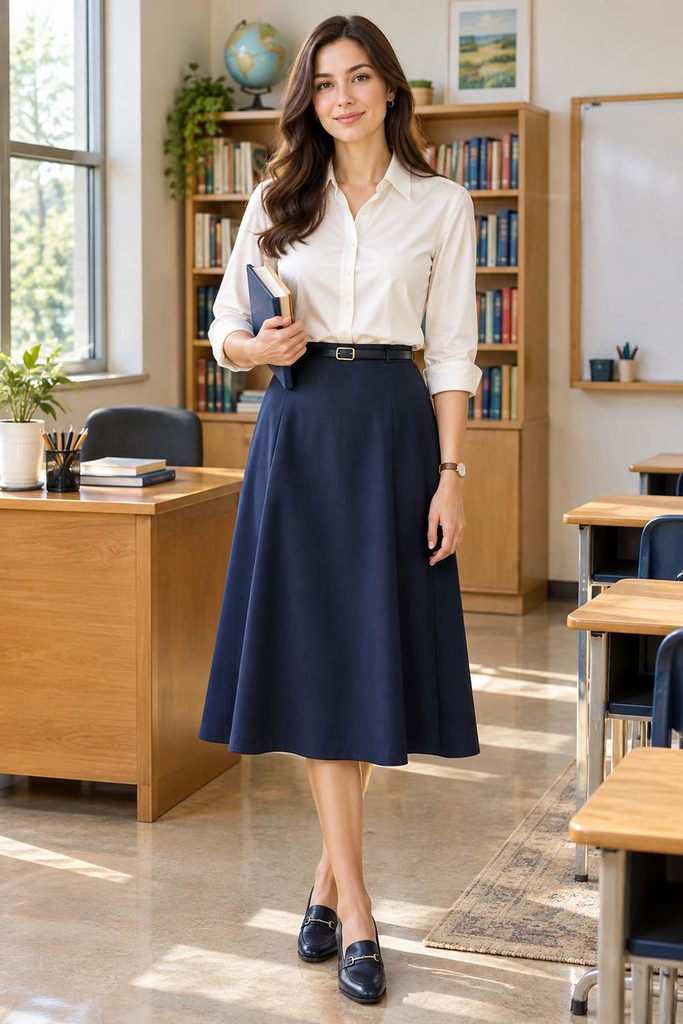
An A-line midi skirt offers a comfortable alternative to trousers. The shape provides room through the legs while maintaining a professional appearance.
Pair a solid-colored skirt with a crisp button-up shirt. You can tuck the shirt in completely or use a relaxed half-tuck depending on your workplace dress code and the proportions of the outfit.
Try combinations such as navy with white, olive with cream, charcoal with pale blue, or brown with ivory. A simple belt can define the waist without making the outfit feel restrictive.
For footwear, choose supportive flats, loafers, or a low block heel. This outfit works particularly well for teachers who prefer skirts but still need clothing that allows them to move comfortably around the classroom.
A lightweight cardigan can be added during cooler months.
6. Dark Straight-Leg Jeans With a Structured Cardigan
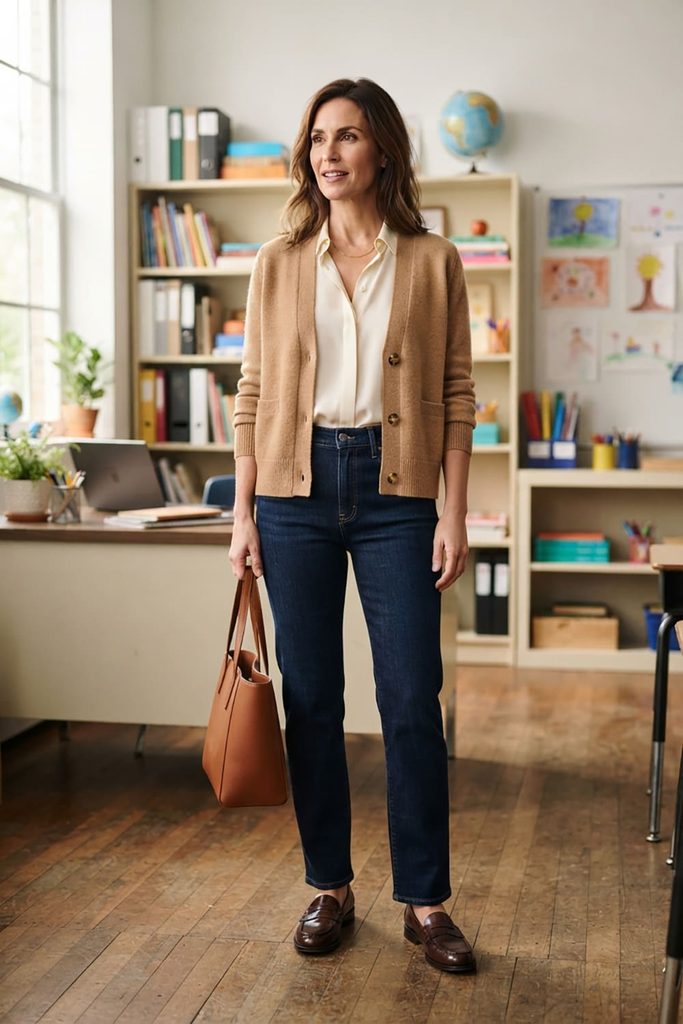
If your school allows jeans, a dark pair can become one of the most useful pieces in your casual teaching wardrobe. Choose a clean, full-length straight-leg style without excessive fading, distressing, or decorative details.
Pair the jeans with a simple blouse or fine-knit top and a structured cardigan. A cardigan in camel, gray, navy, cream, or burgundy can immediately make the jeans look more intentional.
Avoid combining the jeans with too many casual elements at once. If the denim is relaxed, keep the top and shoes polished.
Loafers, refined flats, or clean low-profile sneakers can complete the outfit depending on your school’s dress expectations. This is particularly useful for activity-heavy days, classroom preparation days, or schools with a relaxed dress code.
7. Tailored Trousers With a Sleeveless Vest
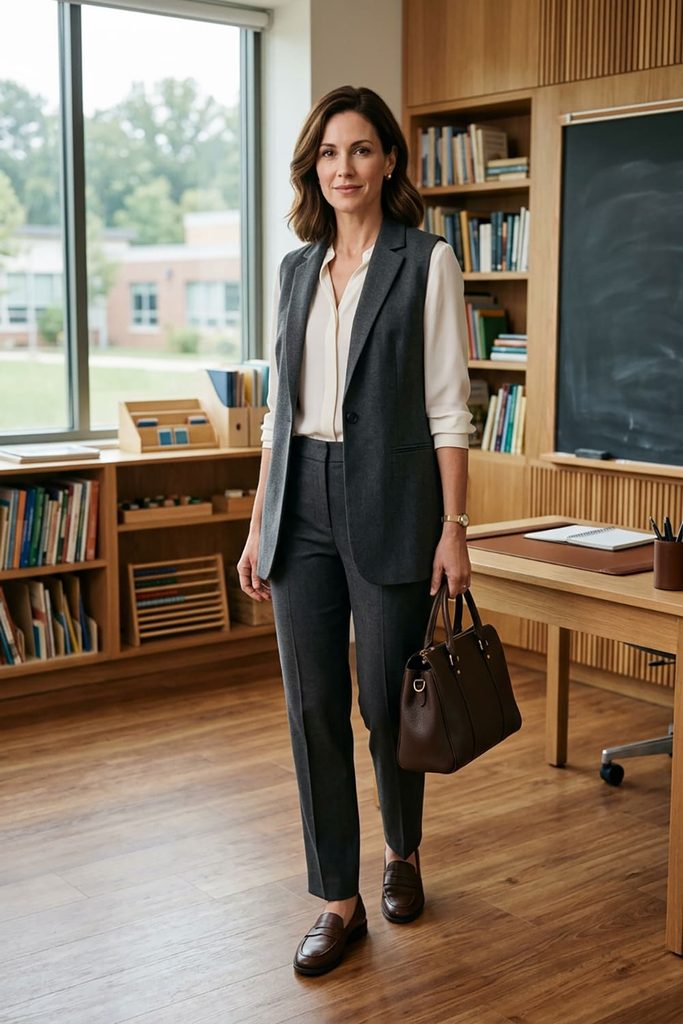
A tailored vest can give a simple teacher outfit a sophisticated appearance without the weight of a traditional blazer. Wear a longer vest over a lightweight blouse or knit top and pair it with straight-leg or gently wide trousers.
Keep the colors coordinated. A charcoal vest with black trousers and a cream top creates a clean neutral combination. For something softer, try a camel vest with beige trousers and an ivory top.
The longer vertical line created by the vest can also make a simple outfit look more structured without requiring complicated accessories.
Choose a vest with comfortable arm openings so you can move freely. Teachers use their arms constantly throughout the day, so restricted shoulder movement can quickly become irritating. Complete the outfit with loafers or supportive flats.
8. Knit Midi Skirt With a Blouse and Cardigan
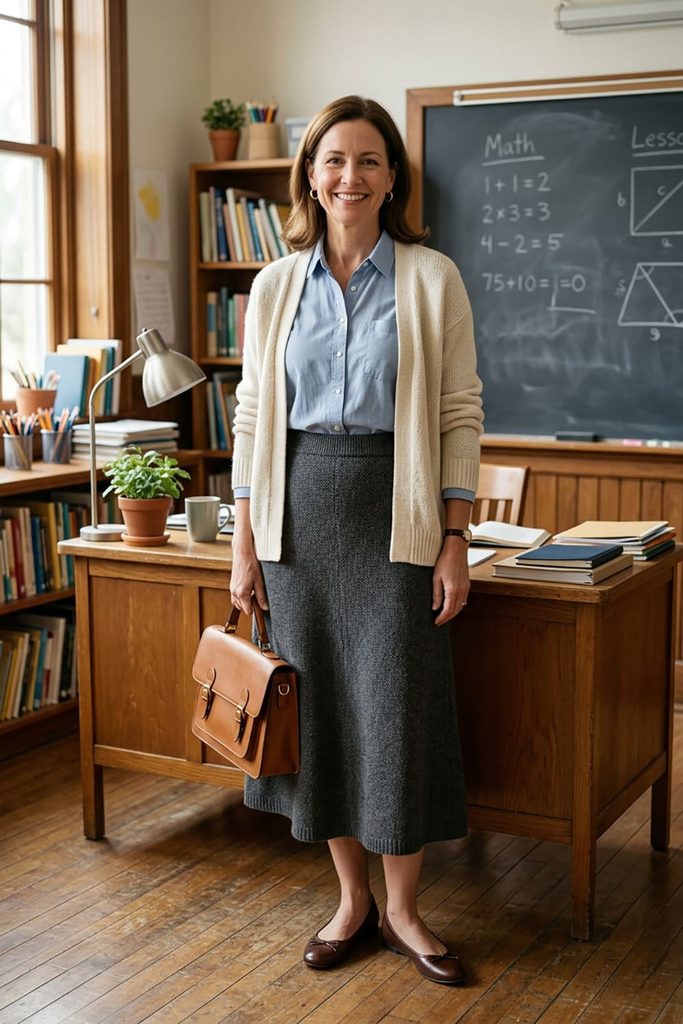
A knit midi skirt can be a comfortable option when you want something softer than traditional tailored clothing. Choose a substantial fabric that maintains its shape and is not overly thin or clingy.
Pair the skirt with a simple blouse and cardigan. The cardigan can be worn open or buttoned depending on the temperature and desired silhouette.
Neutral colors make this combination easy to repeat. A charcoal skirt can work with cream, blue, burgundy, green, or patterned tops. A navy skirt can be paired with white, tan, pale pink, or soft gray. Comfortable flats keep the outfit classroom-friendly.
This combination can be particularly useful during transitional seasons when temperatures change throughout the school day. You can remove the cardigan when the classroom becomes warm and put it back on later.
9. Monochromatic Gray Outfit
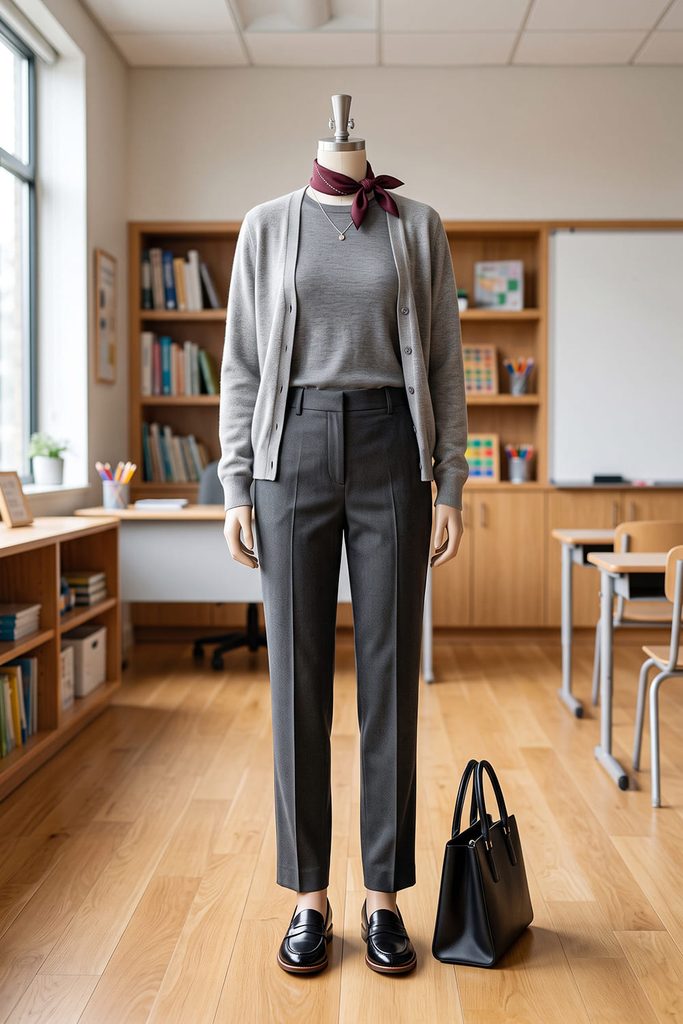
A monochromatic outfit can make getting dressed surprisingly simple. Choose several shades within the same color family rather than trying to find perfectly matching pieces.
For example, pair charcoal trousers with a medium-gray knit top and a lighter gray cardigan. The slightly different shades create depth while keeping the outfit cohesive.
Add black loafers and a structured handbag for contrast. Silver-toned jewelry can complement the cool palette, while a burgundy scarf can introduce a small amount of color.
This outfit works especially well for teachers who prefer understated clothing. It also provides an excellent foundation for accessories because the neutral color scheme does not compete with scarves, jewelry, glasses, or other personal details. For warmer weather, replace the cardigan with a lightweight open-front jacket.
10. Printed Midi Dress With Comfortable Flats
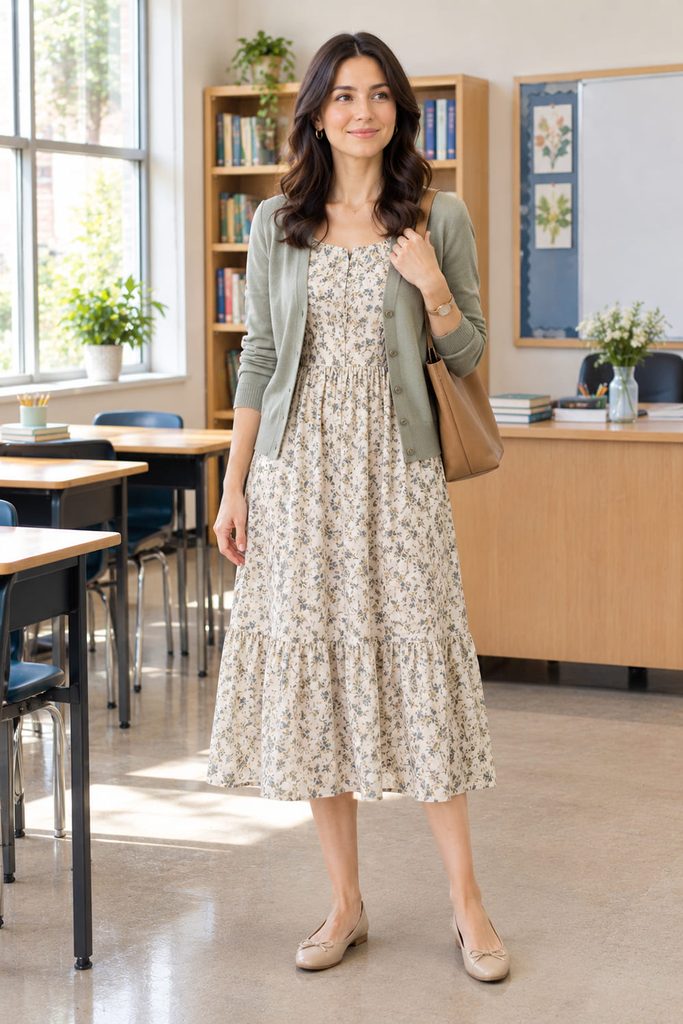
A printed midi dress can add color and personality to a teacher’s wardrobe without requiring multiple coordinating pieces.
Look for interesting prints without being overwhelmingly busy. Small botanical designs, subtle geometric patterns, abstract shapes, or restrained color combinations can work well in a classroom.
The dress should allow comfortable movement. Check that you can sit, reach, bend, and walk without constantly adjusting the fabric. Pair it with simple flats or loafers. A cardigan can be added when necessary, especially if your classroom tends to be cool.
For teachers over 50, the goal is not to dress according to a particular age category. Choose colors and patterns that you genuinely enjoy while keeping the silhouette appropriate for your school environment. This outfit can also work for staff lunches, presentations, and school events.
11. Ponte Trousers With a Longline Blouse
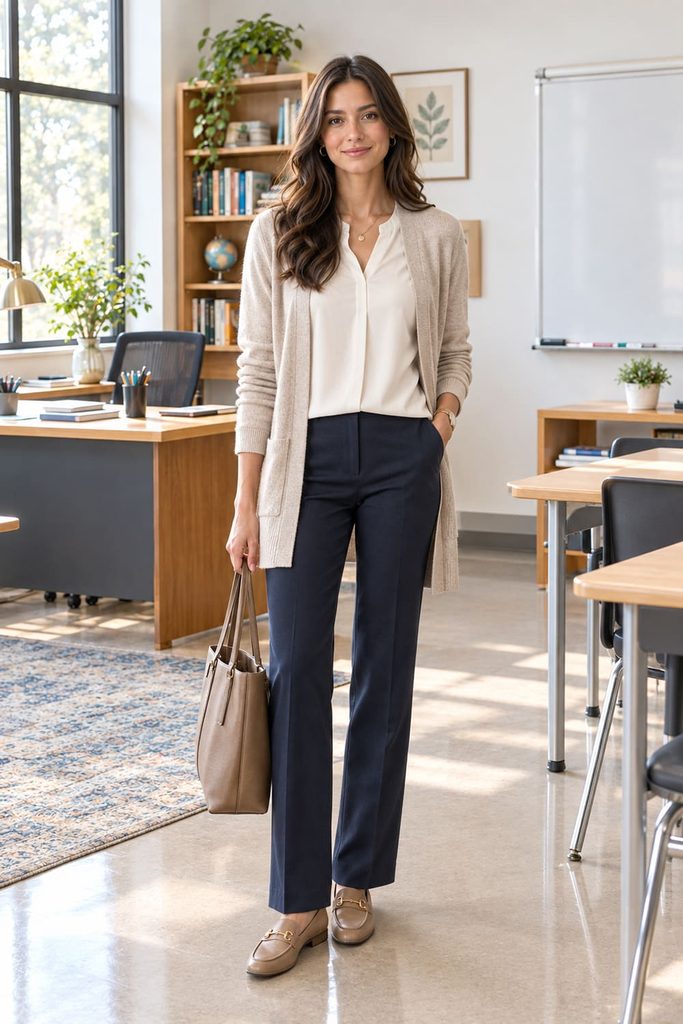
A structured stretch trouser can be particularly useful for teachers who spend much of the day moving. A heavier knit trouser can provide a neat appearance while offering more flexibility than rigid woven pants.
Pair the trousers with a longline blouse that falls around the upper thigh or hip. The blouse should skim rather than cling and should allow unrestricted movement through the shoulders. A simple long cardigan can be added for additional layering.
Choose black, navy, charcoal, or dark brown trousers and introduce color through the blouse. Deep green, burgundy, blue, muted pink, or warm cream can all work well. Complete the outfit with comfortable loafers or flats.
This formula is practical for busy teaching days because it combines a tailored appearance with clothing that can accommodate constant movement.
12. Blouse With a Pleated Midi Skirt
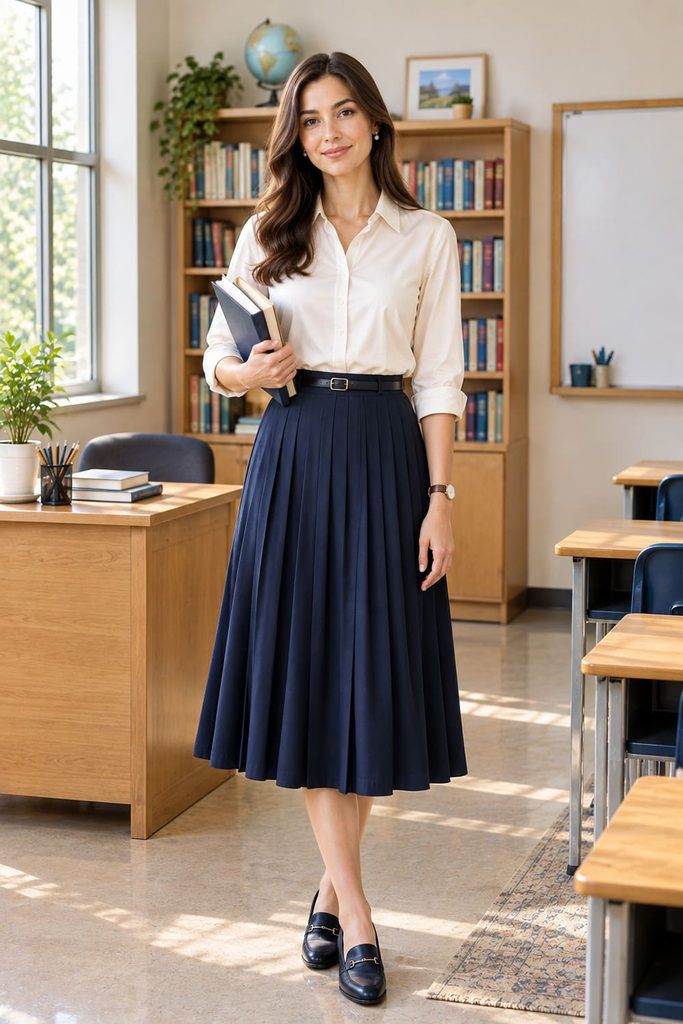
A pleated midi skirt can bring movement and softness into a professional teacher wardrobe. Pair it with a simple blouse that can be tucked into the skirt without creating excessive bulk.
The skirt does not need to be extremely wide. A moderate pleat provides movement while maintaining a clean appearance.
Try a dark skirt with a lighter blouse for a classic combination. Alternatively, pair a neutral skirt with a richer colored blouse for more visual interest. A slim belt can define the waist if desired, while simple earrings and a watch provide enough finishing detail.
Choose practical footwear because the skirt itself already supplies visual movement. Loafers, ballet flats, or low heels can work well. This outfit is suitable for classroom teaching, assemblies, staff meetings, and days when you want something a little more feminine without sacrificing practicality.
13. Soft Turtleneck With Tailored Trousers
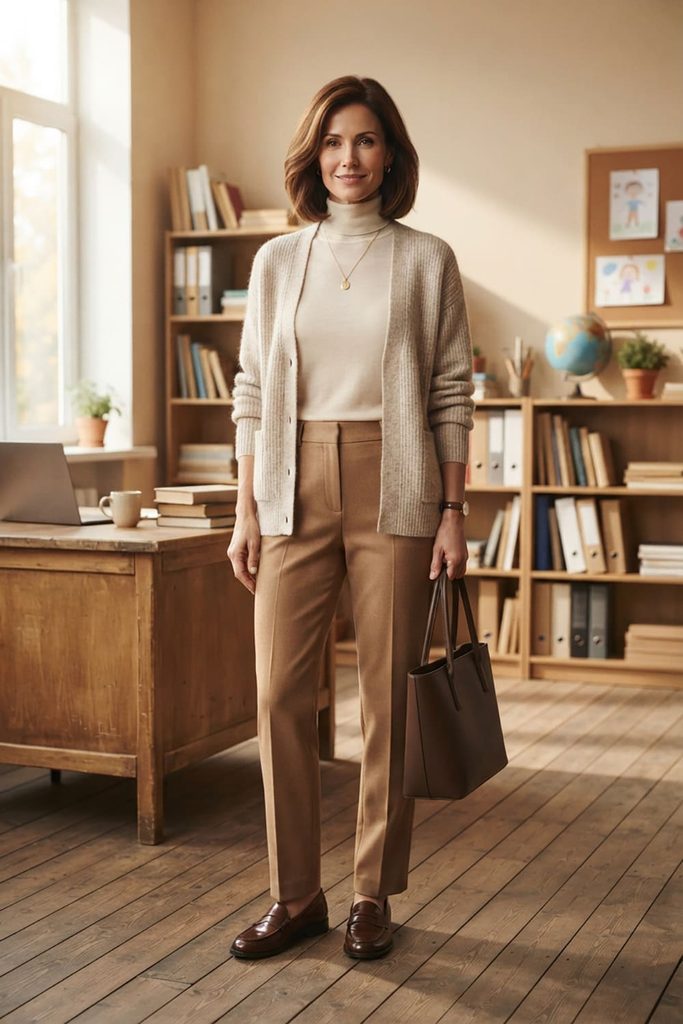
During cooler weather, a fine-knit turtleneck can replace a traditional blouse. Pair it with tailored trousers and add a cardigan or blazer if additional warmth is required.
A black turtleneck with gray trousers creates a sophisticated neutral combination. For something warmer, try a cream turtleneck with camel or brown trousers.
The important detail is choosing a lightweight knit that does not become uncomfortable during a long day indoors. Very bulky sweaters can make it difficult to move your arms freely and may become uncomfortable in heated classrooms.
Add loafers, ankle boots, or another comfortable shoe appropriate to your school’s dress code. This outfit is especially useful for teachers who prefer simple clothing and want to spend less time coordinating pieces in the morning.
14. Casual Blazer With Dark Trousers and a Simple Top

A casual blazer can instantly make a basic teacher outfit look more polished. Start with dark straight-leg trousers and a simple top, then add the blazer as the structured layer.
The top could be a fine-knit crew neck, a simple shell, or a high-quality cotton-blend shirt. Avoid overly casual graphics or slogans unless your school specifically allows them. A blazer in navy, camel, gray, burgundy, or dark green can become a repeat piece throughout the week.
The advantage of this outfit is flexibility. You can remove the blazer when working with students or when the classroom becomes warm and put it back on for meetings.
Choose a blazer with some flexibility through the shoulders and sleeves. Teachers need more arm movement than someone who spends the entire day seated at a desk. Finish with loafers or supportive flats.
15. Coordinated Neutral Outfit With a Colorful Scarf
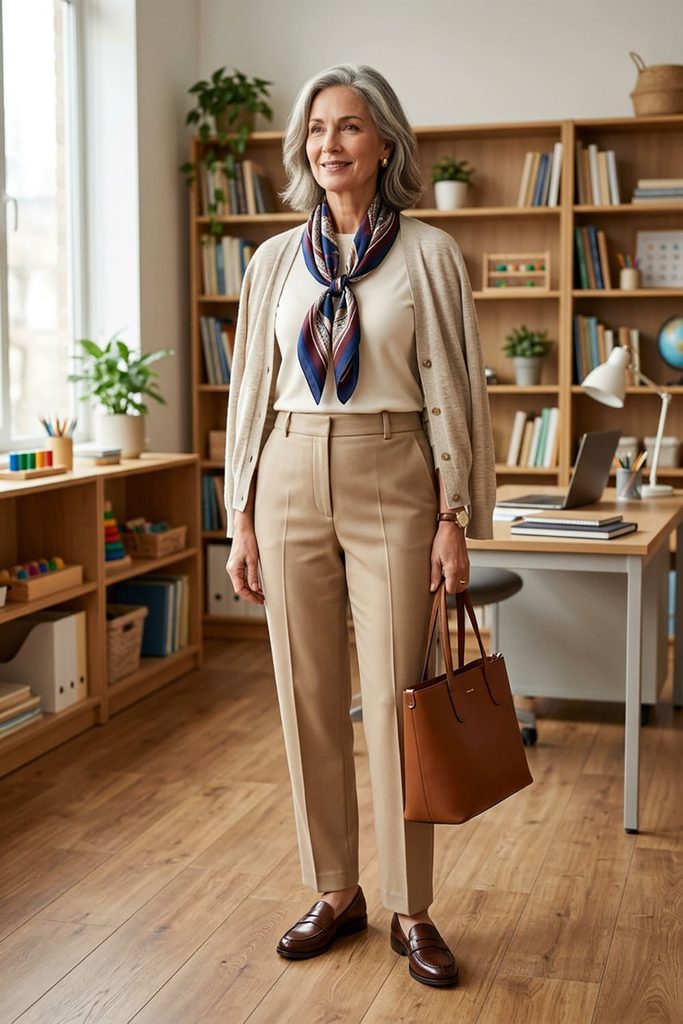
For a simple outfit that still feels personal, begin with neutral trousers and a matching or complementary neutral top. Add a colorful scarf as the main accessory.
For example, try beige trousers with an ivory top and a scarf featuring blue and burgundy tones. Another option is charcoal trousers with a gray top and a scarf featuring deep green, plum, or muted red.
The scarf provides visual interest without requiring a complicated outfit. It can also be removed easily if the classroom becomes warm. Keep the remaining accessories understated. A watch, small earrings, and a practical handbag are enough.
This is an especially useful approach for teachers who prefer classic clothing but want to incorporate more color into their wardrobe. You can create several completely different looks simply by changing the scarf.
How to Choose Teacher Clothes That Work All Day
Teachers need to think about clothing differently from someone who spends most of the workday behind a desk. Classroom clothing has to accommodate standing, walking, reaching, sitting, bending, and frequent changes in temperature.
Comfort does not mean sacrificing polish. The strongest outfits usually combine one structured element with one softer element. For example, a tailored trouser can be paired with a soft knit, while a relaxed blouse can be balanced with a structured jacket.
Fabric also matters. Pieces that can be washed and worn repeatedly are generally more practical for everyday teaching than delicate clothing that requires extensive care.
Before buying a new work piece, consider these questions:
- Can I comfortably sit in it?
- Can I raise my arms without the garment pulling?
- Can I walk quickly in these shoes?
- Does the fabric crease excessively?
- Can it be washed easily?
- Does it work with at least three pieces already in my wardrobe?
- Is the neckline comfortable when I spend hours moving around?
- Can I layer it if the classroom temperature changes?
These simple checks can prevent many uncomfortable purchases.
Comfortable Shoes Are Part of the Outfit
Teachers often spend substantial portions of the school day standing or walking, so footwear deserves as much attention as the clothing itself. Current teacher-style guidance frequently emphasizes practical shoes such as loafers, supportive flats, low heels, and comfortable boots.
The right shoe depends on your school environment and personal comfort. A supportive loafer can work with trousers, skirts, and dresses. A simple flat can provide a softer appearance. A low block heel can add height without requiring the same balance as a higher heel.
Keep the overall shoe style clean and professional. If your school permits sneakers, choose a simple pair that coordinates with the rest of the outfit rather than athletic shoes designed primarily for exercise.
It is also useful to have more than one pair available. Rotating shoes can make a long workweek more comfortable and give you different options for trousers, skirts, and dresses.
Easy Layers for Unpredictable Classrooms
School buildings can vary dramatically in temperature. A teacher may walk into a chilly classroom in the morning and find it much warmer later in the day. This makes removable layers especially useful.
Cardigans are an obvious option, but lightweight jackets, sleeveless vests, soft blazers, and open-front sweaters can also work. Choose layers that are easy to remove and carry without becoming bulky.
A simple layering formula might be:
- Lightweight blouse
- Straight-leg trousers
- Open cardigan
- Comfortable loafers
Another could be:
- Fine-knit top
- Midi dress
- Lightweight blazer
- Flats
The idea is to create outfits that can adapt without looking incomplete after a layer is removed.
Building a Teacher Wardrobe With Fewer Pieces
You do not need a huge closet to create different work outfits. A small group of coordinating pieces can produce a surprisingly large number of combinations.
Start with two or three neutral trousers. Add two skirts or dresses, three to five tops, two cardigans, one blazer, and a few pairs of comfortable shoes.
Then introduce color strategically.
For example, navy trousers can work with cream, white, burgundy, blue, green, and patterned tops. A charcoal cardigan can work over several dresses and multiple blouse combinations. A neutral blazer can make jeans, trousers, and skirts look more polished.
The goal is not to create a different visual identity every day. Repeating useful pieces is completely practical. Changing the top, shoes, jacket, or accessories can make the same base garment feel different.
Dressing for Parent Conferences
Parent conferences may call for slightly more structure than a normal classroom day. This does not necessarily mean wearing a full suit.
A midi dress with a blazer is one option. Tailored trousers with a blouse and jacket are another. A skirt with a polished knit top can also work. Choose clothing that looks neat from a seated position because much of the conversation may happen across a desk or conference table.
Keep accessories relatively simple and make sure your shoes remain comfortable. A conference day can involve several consecutive meetings, so footwear that becomes painful after an hour can quickly become a problem.
Dressing for Casual School Days
If your school has casual days, the goal should still be intentional dressing rather than simply wearing the most relaxed clothing available.
Dark straight-leg jeans can work well with a polished blouse and cardigan. Clean trousers with a knit top can provide another comfortable option.
Avoid combining too many extremely casual pieces at once. For example, very relaxed jeans, an oversized sweatshirt, and athletic shoes may look more appropriate for a weekend than a professional classroom.
Instead, combine one casual piece with more polished elements. Dark jeans plus a structured cardigan and loafers can look considerably more professional while remaining comfortable.
Color Ideas for a Mature Teacher Wardrobe
There is no reason to limit your wardrobe to black, gray, and navy. Color can make teacher outfits more interesting while remaining professional.
Some useful combinations include:
- Navy and soft pink
- Charcoal and burgundy
- Camel and cream
- Olive and ivory
- Brown and pale blue
- Gray and plum
- Navy and emerald
- Beige and deep red
- Cream and muted teal
If you prefer neutral clothing, introduce color through scarves, blouses, shoes, cardigans, or jewelry.
The strongest color choices are usually the ones you genuinely enjoy wearing. Your clothing should feel like an extension of your personal style rather than a costume created around your age.
Practical Accessories for Teachers
Accessories should support the outfit rather than interfere with your work.
A medium-sized structured handbag can carry personal essentials, while a separate work tote can hold teaching materials if necessary. A simple watch can be useful and adds a polished detail without requiring much thought.
Scarves can introduce color and are particularly useful during cooler months. Small earrings and simple necklaces can complete an outfit without becoming distracting while you work with students.
Avoid accessories that frequently catch on classroom furniture, swing excessively while you move, or become uncomfortable during long days. Practicality should remain part of the style decision.
Conclusion
The best work outfits for women over 50 who are teachers should accommodate the reality of teaching rather than simply imitate traditional office clothing. A classroom is an active environment, so clothing needs to allow movement while still looking professional and intentional.
Straight-leg trousers, wide-leg pants, midi skirts, comfortable dresses, cardigans, blazers, knit tops, and practical shoes can form the foundation of a versatile teacher wardrobe. From a printed blouse and trousers to a simple midi dress with a blazer, there are plenty of ways to create outfits that feel polished without becoming uncomfortable.
Age does not need to dictate a narrow set of clothing choices. Choose silhouettes that suit your body, colors you enjoy, fabrics that fit your daily routine, and shoes that allow you to move through the school day comfortably.
A well-planned teaching wardrobe should make mornings easier, survive busy classroom hours, and still feel like you when the final bell rings.


