15 Work Outfits for Women Over 50 in Corporate Office Jobs
Corporate dressing can be polished without becoming predictable. For women over 50, a strong work wardrobe can combine tailored pieces, comfortable fabrics, refined colors, and silhouettes that feel current while still being appropriate for meetings, presentations, and everyday office responsibilities.
Recent workwear coverage continues to emphasize tailored trousers, blazers, refined knitwear, loafers, and classic shirts as versatile foundations for professional wardrobes. The key is not to fill your closet with complicated pieces. A small selection of well-fitting trousers, jackets, blouses, skirts, and dresses can create many different combinations.
Corporate offices also tend to reward consistency, so choosing a few dependable outfit formulas makes getting dressed easier. These 15 work outfits for women over 50 are designed around professional settings, with ideas ranging from traditional tailoring to softer combinations that still look polished.
1. Navy Blazer With Straight-Leg Trousers
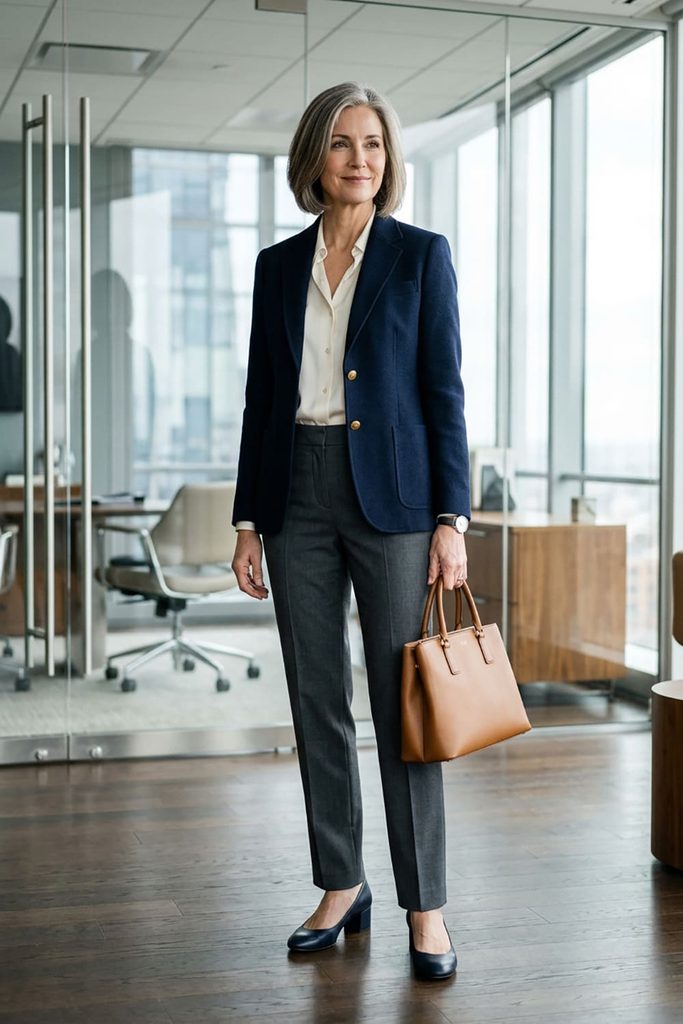
A navy blazer is an especially useful foundation for a corporate wardrobe because it works with many colors without feeling as severe as an all-black outfit. Pair it with charcoal, beige, gray, or cream straight-leg trousers and a simple ivory blouse. Choose a blazer that follows the natural shoulder line without pulling across the bust or waist.
Low block heels, loafers, or pointed flats can complete the outfit. A structured handbag and simple watch keep the look professional without adding unnecessary detail. This combination works particularly well for ordinary office days, internal meetings, and presentations where you want a traditional corporate appearance with a softer color palette.
2. Charcoal Suit With a Soft Blue Blouse
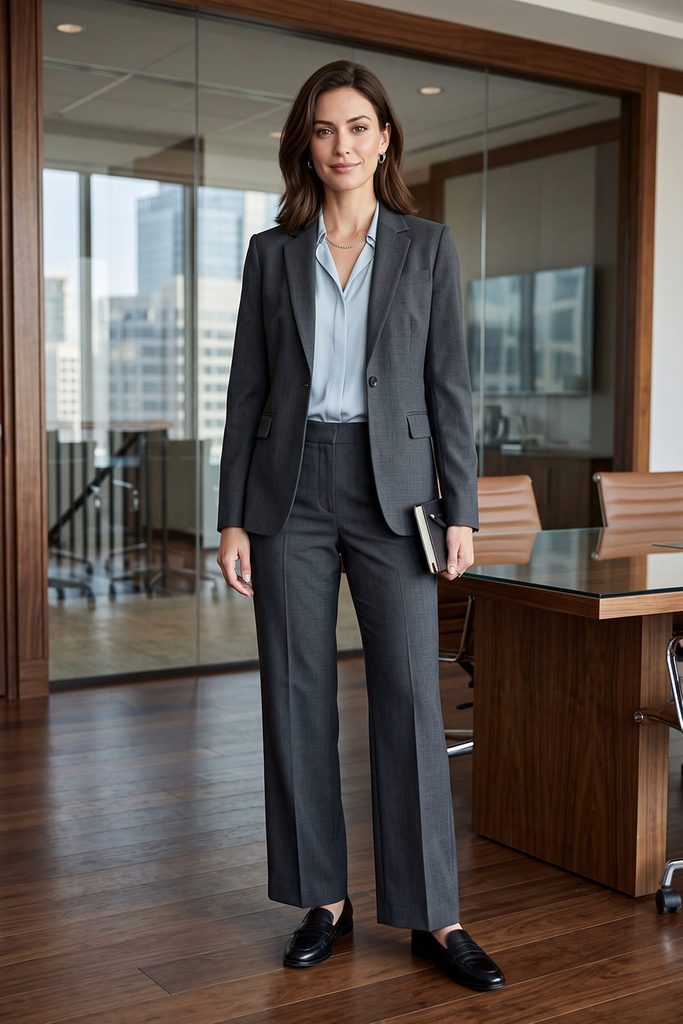
A charcoal two-piece suit can look exceptionally polished without feeling overly formal. Instead of wearing a white shirt underneath, introduce a pale blue blouse to soften the contrast. Keep the trousers straight or gently wide through the leg and make sure the hem falls cleanly over the shoes.
A simple silver necklace or small earrings can add subtle interest around the face. For footwear, choose a low heel or sleek loafer in black or charcoal. This outfit is particularly useful for important meetings, interviews, presentations, and days when a coordinated suit feels appropriate.
3. Cream Blazer With Black Trousers
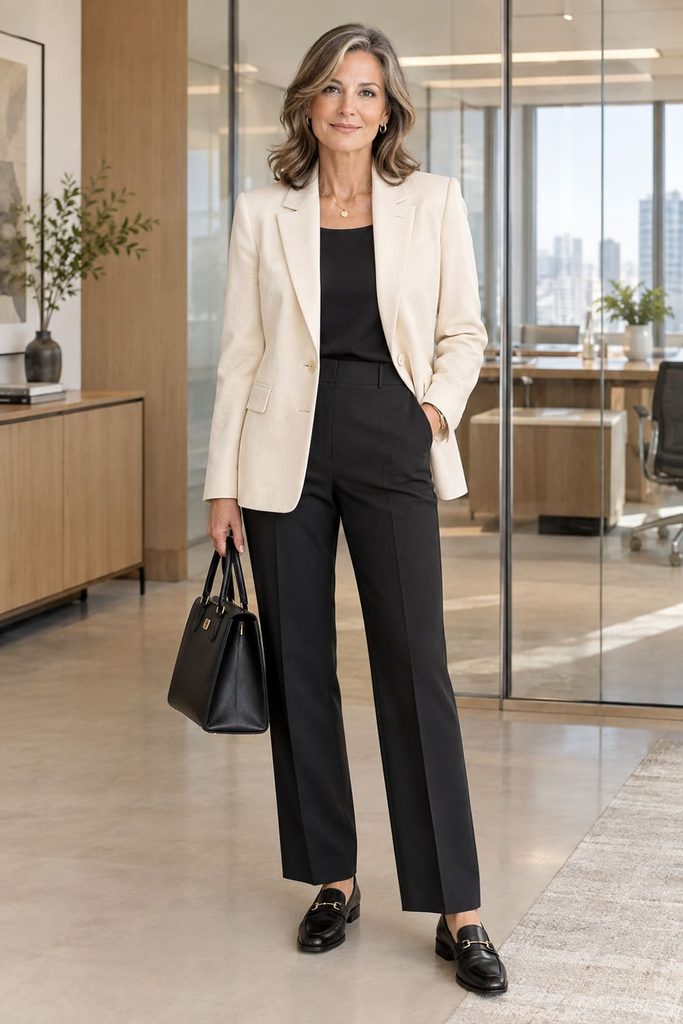
A cream or warm ivory blazer creates a lighter alternative to traditional dark corporate tailoring. Wear it with well-fitted black trousers and a black or muted beige shell underneath. The contrast gives the outfit a clear structure while keeping the overall appearance refined. Look for trousers with enough room through the hip and thigh to allow comfortable movement throughout the day.
Black loafers or low heels keep the lower half visually simple. This combination can work especially well in offices that expect professional clothing but allow some personal style. During cooler months, replace the shell with a fine-gauge black knit top.
4. Tailored Black Trousers With a Jewel-Tone Blouse

A rich burgundy, emerald, sapphire, or deep plum blouse can bring color into a corporate wardrobe without becoming distracting. Pair the blouse with classic black tailored trousers and understated shoes. Choose a fabric that hangs smoothly rather than one that is overly shiny or clingy.
If the blouse has an interesting neckline, keep the jewelry minimal so the outfit remains balanced. A black structured bag ties the look together. This formula is useful when you want something more expressive than a neutral suit while maintaining the level of polish expected in a corporate environment.
5. Midi Dress With a Tailored Blazer
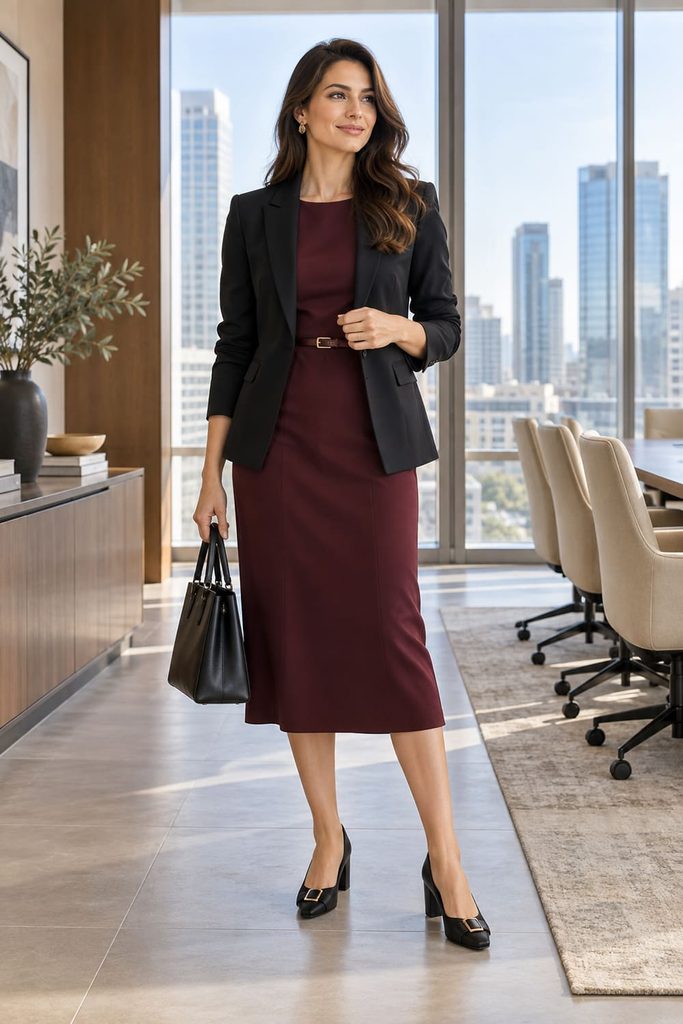
A structured midi dress can simplify office dressing because the main outfit is already coordinated. Choose a relatively simple silhouette in navy, charcoal, burgundy, dark green, or another sophisticated shade. Add a tailored blazer that either matches the dress or provides subtle contrast. The hem should allow comfortable movement when walking or sitting.
Low block heels or polished flats are practical choices for a full workday. This combination works especially well for presentations, client meetings, conferences, and office events. A simple belt can also define the waist if the dress has a looser shape.
6. Wide-Leg Trousers With a Fine-Gauge Knit
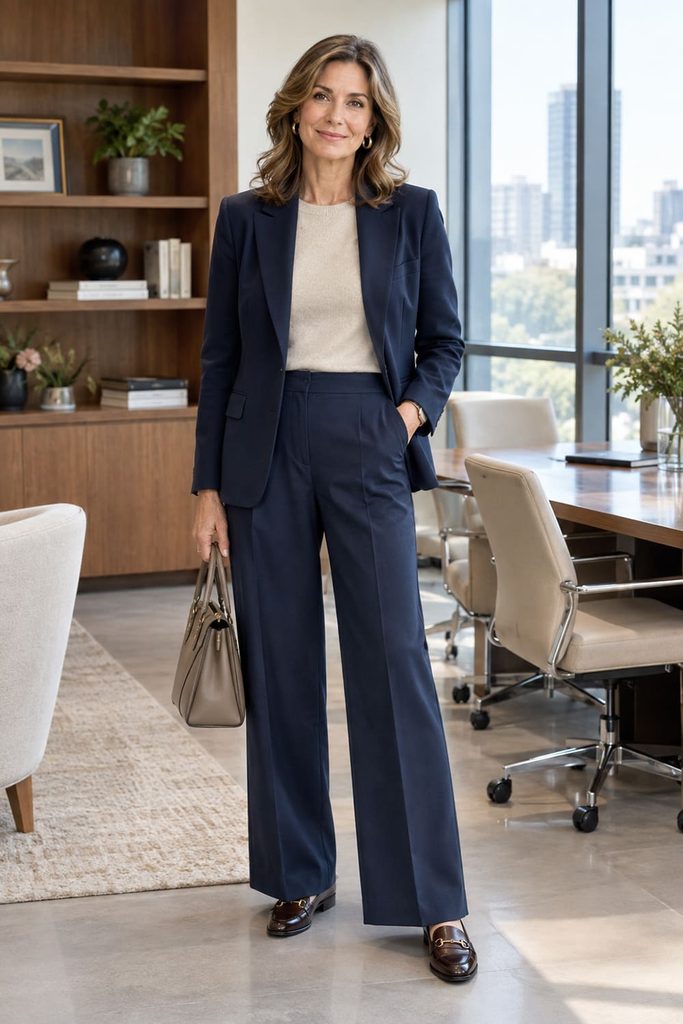
Wide-leg trousers can provide a modern alternative to traditional narrow corporate pants. Pair them with a lightweight fine-gauge knit top that sits relatively close to the body without being tight. This creates a balanced proportion between the fuller trouser leg and the upper half.
Add a structured blazer when a more formal appearance is required. Neutral trousers in navy, charcoal, taupe, or black make the outfit particularly easy to coordinate. Loafers or low heels work well depending on the trouser length. Make sure the hem is altered to suit the shoes you actually wear to the office.
7. Pencil Skirt With a Refined Blouse
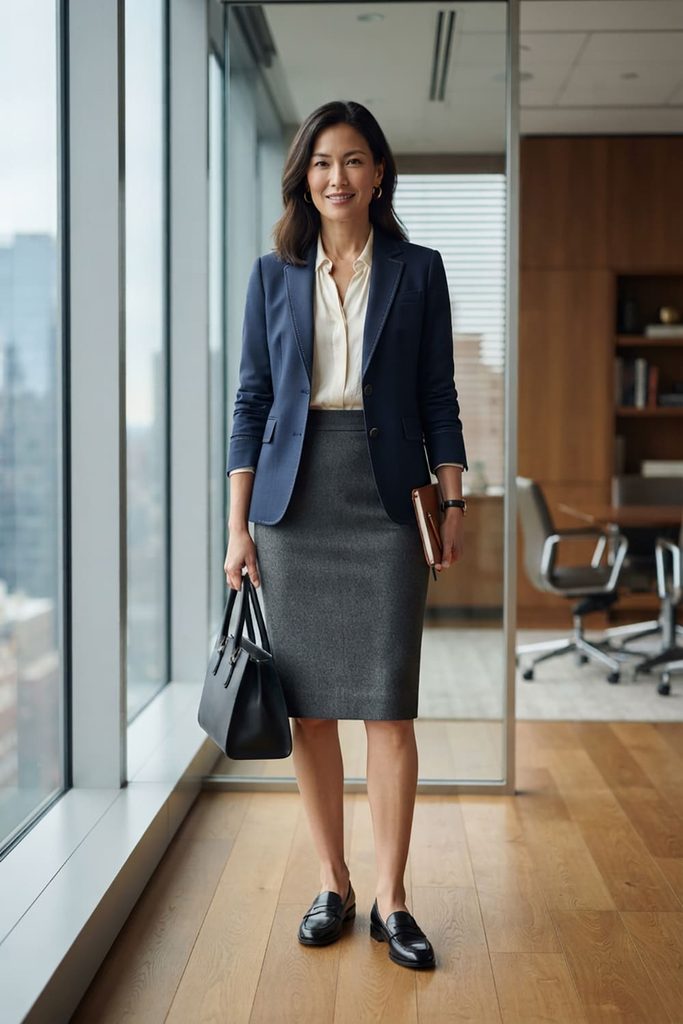
A knee-length or midi pencil skirt can still have a place in a corporate wardrobe when the proportions are comfortable, and the fabric allows movement. Pair a charcoal, navy, or black skirt with an ivory, pale blue, or muted patterned blouse. A blazer can be added for formal meetings.
Rather than choosing an extremely tight skirt, look for one that follows the shape without restricting walking or sitting. Closed-toe flats, loafers, or modest heels complete the outfit. This combination has a traditional corporate feel while allowing the blouse and accessories to introduce a little personality.
8. Monochrome Gray Office Outfit

Using several shades of gray can create a sophisticated monochrome outfit without relying on a traditional matching suit. Try medium-gray trousers with a lighter gray blouse and a charcoal blazer. Varying the shades gives the outfit depth while keeping the overall appearance cohesive. Black shoes and a black handbag provide a simple contrast.
Silver jewelry works naturally with the palette, while a burgundy or deep blue accessory can introduce a restrained accent. This is an excellent formula for women who prefer understated clothing but still want their outfit to look carefully coordinated.
9. Camel Blazer With Navy Trousers
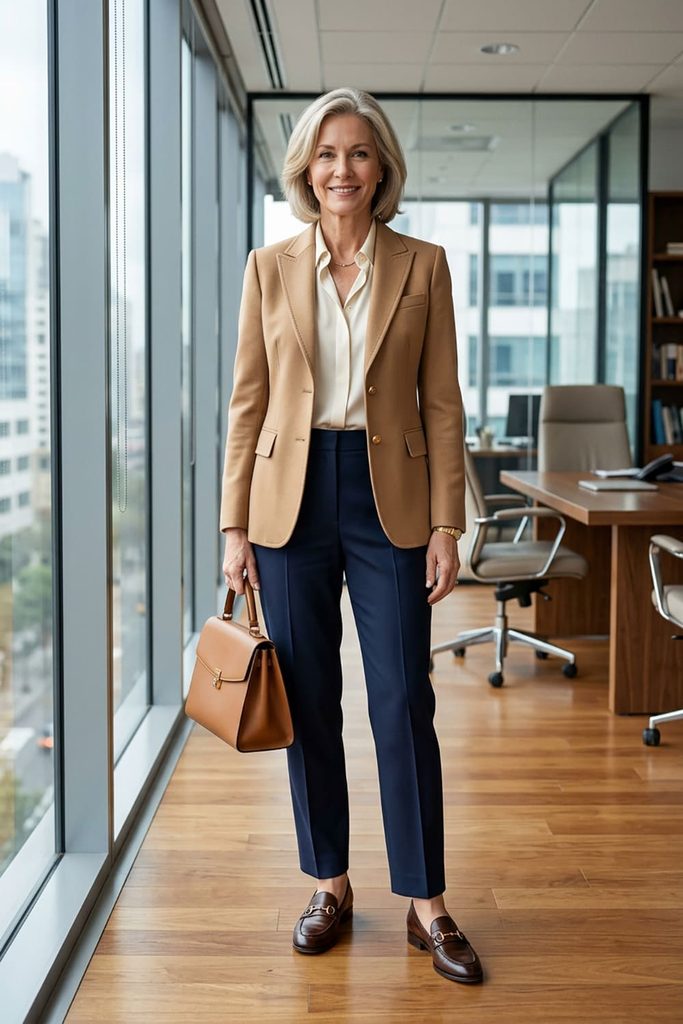
Camel and navy make a useful alternative to the standard black-and-white combination. Wear a camel blazer over a cream or pale blue blouse and pair it with navy tailored trousers. The warm jacket softens the darker trousers while maintaining a professional appearance.
Choose a blazer with clean tailoring and enough room for comfortable movement. Brown loafers or low heels can complement the warmer color of the jacket, while black accessories create a sharper contrast. This outfit works well for regular corporate days when a full matching suit would feel unnecessarily formal.
10. Navy Midi Dress With a Belted Waist
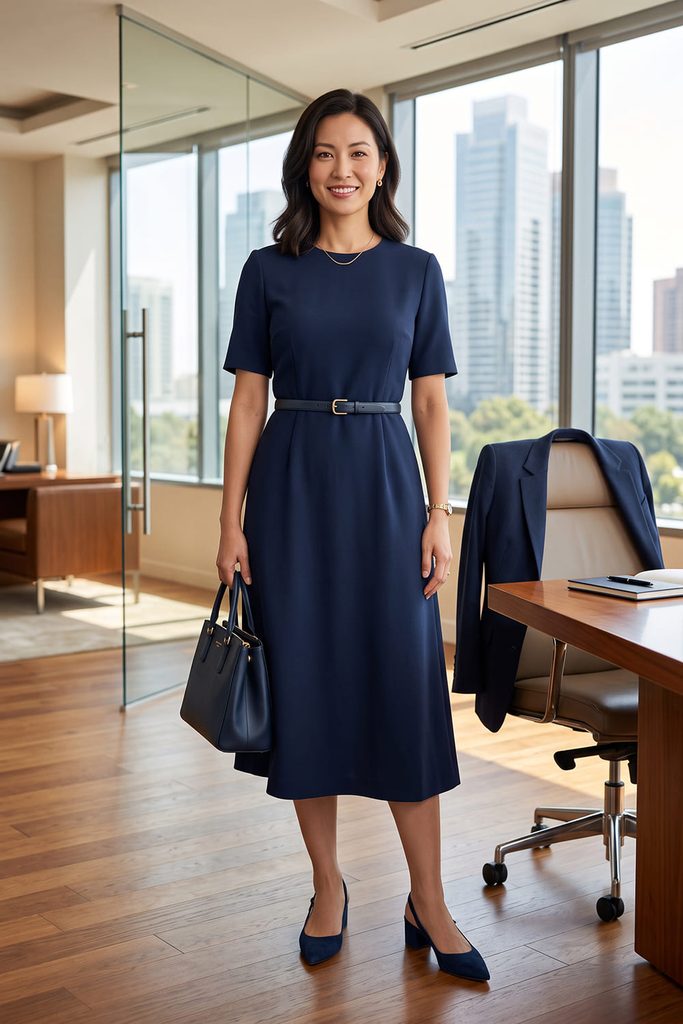
A navy midi dress can serve as one of the easiest one-piece outfits in a corporate wardrobe. Look for a clean neckline, sleeves appropriate for the office, and a waist that is gently defined rather than tightly fitted. A slim belt can add structure if the dress has a straight or relaxed cut.
Pair it with low heels, pointed flats, or polished loafers. For colder offices, add a matching or tonal blazer. Keep jewelry simple and choose a structured handbag. The result is professional enough for meetings while remaining practical for a long working day.
11. White Button-Down Shirt With Dark Trousers

A crisp white button-down shirt remains a useful foundation for corporate dressing. To keep the combination from looking too basic, choose trousers with a distinctive but professional silhouette, such as a softly wide leg or a clean straight cut. Tuck the shirt neatly and add a slim belt if appropriate.
A navy, charcoal, or camel blazer can be worn over it when additional structure is needed. Loafers or low heels complete the outfit. A watch, small earrings, or a simple necklace provides enough detail without competing with the clean lines of the shirt.
12. Burgundy Blazer With Neutral Trousers
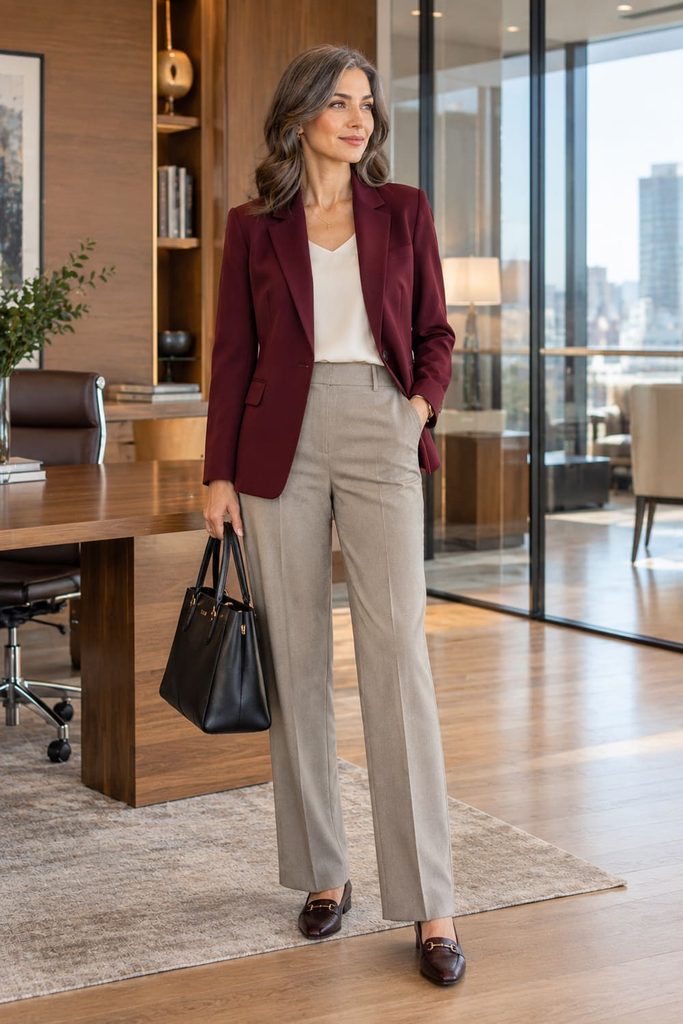
A deep burgundy blazer can become a sophisticated statement piece while remaining suitable for a corporate environment. Pair it with cream, beige, gray, or charcoal trousers and a simple neutral blouse. Keep the rest of the outfit restrained so the blazer remains the main source of color.
Choose a structured but comfortable jacket rather than one covered with decorative details. Black, brown, or burgundy shoes can work depending on the trousers. This combination is particularly useful during autumn and winter, but the idea can also work year-round when the blazer is made from a lighter fabric.
13. Coordinated Knit Top and Trousers With a Blazer

For a long office day, a polished knit top can provide more comfort than a traditional woven blouse. Choose a fine-gauge knit in cream, navy, gray, or another neutral shade and pair it with tailored trousers. Add a structured blazer to give the outfit a distinctly corporate finish.
The important detail is fit: the knit should skim the body rather than cling, while the trousers should maintain a clean crease or smooth drape. Refined loafers or low heels keep the outfit practical. This formula works especially well when you have several meetings but still need to remain comfortable at your desk.
14. Blazer With a Pleated Midi Skirt
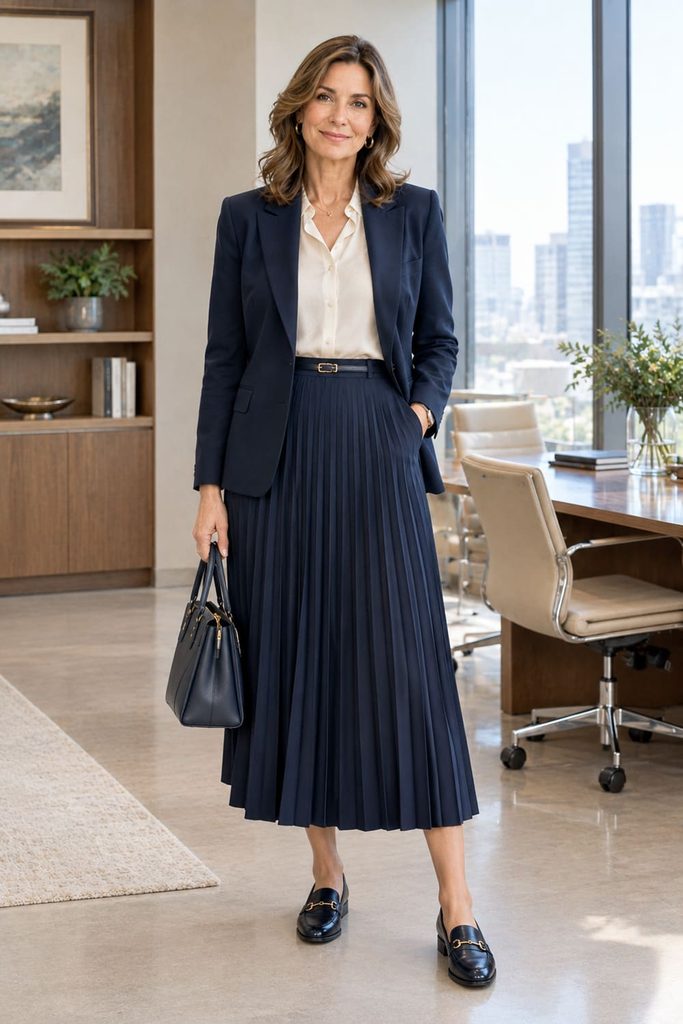
A pleated midi skirt can bring movement and softness into a corporate wardrobe while remaining polished. Pair a solid-colored skirt with a tucked blouse and a structured blazer. Keep the blouse relatively simple so the pleats remain the main visual detail. A narrow belt can help define the waist if the proportions need more structure.
Choose shoes with a refined shape, such as loafers, low block heels, or pointed flats. For a more traditional corporate environment, use navy, charcoal, cream, or black. A subtle deep green or burgundy skirt can work when the office allows more color.
15. Tonal Beige Suit With an Ivory Blouse
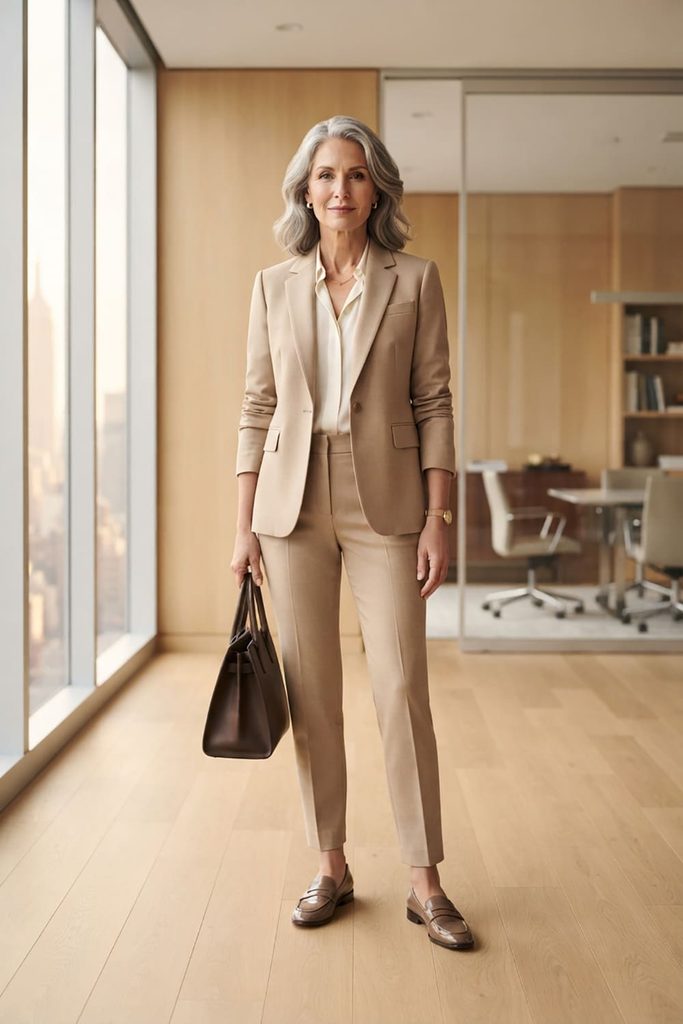
A tonal beige suit offers a softer alternative to black, navy, and gray tailoring. Combine beige trousers with a matching or slightly darker blazer and wear an ivory blouse underneath. The different neutral shades create enough contrast without breaking the clean appearance of the outfit.
Keep the accessories simple and choose shoes in beige, brown, black, or another color already present in the outfit. A structured handbag gives the look additional definition. This combination works particularly well when you want corporate tailoring that feels lighter and less conventional than a dark suit.
How to Make Corporate Outfits Look Polished After 50
Fit matters more than having a large wardrobe. Trousers should sit comfortably at the waist and fall cleanly from the hip, while jackets should allow normal arm movement without pulling across the shoulders. Recent workwear guidance also emphasizes tailoring and versatile pieces rather than relying on highly complicated outfits.
A few practical choices can make a noticeable difference:
- Keep a small collection of neutral trousers that coordinate with several jackets.
- Choose blazers with enough room to move comfortably.
- Have trouser hems adjusted to the shoes you actually wear.
- Use color through blouses, scarves, or jackets rather than relying on loud patterns.
- Keep accessories refined when the clothing already has strong tailoring.
- Choose shoes you can comfortably wear throughout the workday.
- Keep a lightweight blazer available for offices with strong air conditioning.
- Use structured bags for a more organized corporate appearance.
Building a Corporate Capsule Wardrobe
You do not need fifteen completely different wardrobes to create fifteen office outfits. A few well-chosen pieces can be combined repeatedly.
A practical starting collection could include two tailored trousers, one wide-leg trouser, two blazers, one coordinated suit, two or three blouses, one fine-gauge knit, one midi dress, one skirt, and two pairs of professional shoes. Changing the blouse, jacket, and accessories can make the same trousers look noticeably different.
The goal is to create outfits that fit your workplace, feel comfortable throughout the day, and reflect your own preferences. Corporate clothing can be structured and professional without requiring uncomfortable shoes, overly restrictive tailoring, or a closet full of formal suits.
Conclusion
The best corporate wardrobe is one that makes getting dressed easier while giving you plenty of room for personal style. Tailored trousers, well-fitting blazers, refined dresses, polished skirts, quality knitwear, and restrained accessories can create a wide range of professional combinations.
For women over 50, there is no need to abandon color or modern silhouettes. A balanced mix of classic tailoring and contemporary proportions can create work outfits that feel sophisticated, comfortable, and appropriate for a corporate environment.


