

15 Bedroom Wall Art Ideas for Dark Academia Lovers
A dark academia bedroom should feel like a quiet place where you could spend an entire evening reading, writing, studying, or simply listening to the rain. The wall art plays an important role because it can introduce history, literature, nature, architecture, and mystery without requiring a complete bedroom makeover.
The look generally works well with deep brown, forest green, burgundy, charcoal, muted cream, antique-looking gold, and other subdued tones. Scholarly subjects such as old maps, botanical studies, classical architecture, astronomy, books, and still-life compositions naturally fit this direction.
You also do not need every wall to be covered. One carefully planned arrangement above the bed, beside a reading chair, or over a dresser can establish the character of the room. The following 15 bedroom wall art ideas focus on different ways to create that atmosphere while keeping the bedroom personal and livable.
1. Create a Vintage Botanical Study Wall

Botanical artwork is an easy starting point for a dark academia bedroom because it combines natural history with an old-fashioned scholarly feeling. Choose several illustrations showing leaves, flowers, branches, or unusual plants, then place them in dark wood, black, or aged-looking frames.
Instead of making every print identical, vary the sizes slightly while keeping the overall color palette consistent. Aged cream backgrounds, muted greens, brown details, and faded gold accents work particularly well.
Arrange the artwork above a dark wooden dresser or along one side of the bed. Leave enough breathing room between each frame so the collection feels intentional rather than crowded.
For an especially collected appearance, combine botanical drawings with one small specimen-style illustration such as a seed pod or delicate branch.
2. Hang an Antique-Style World Map
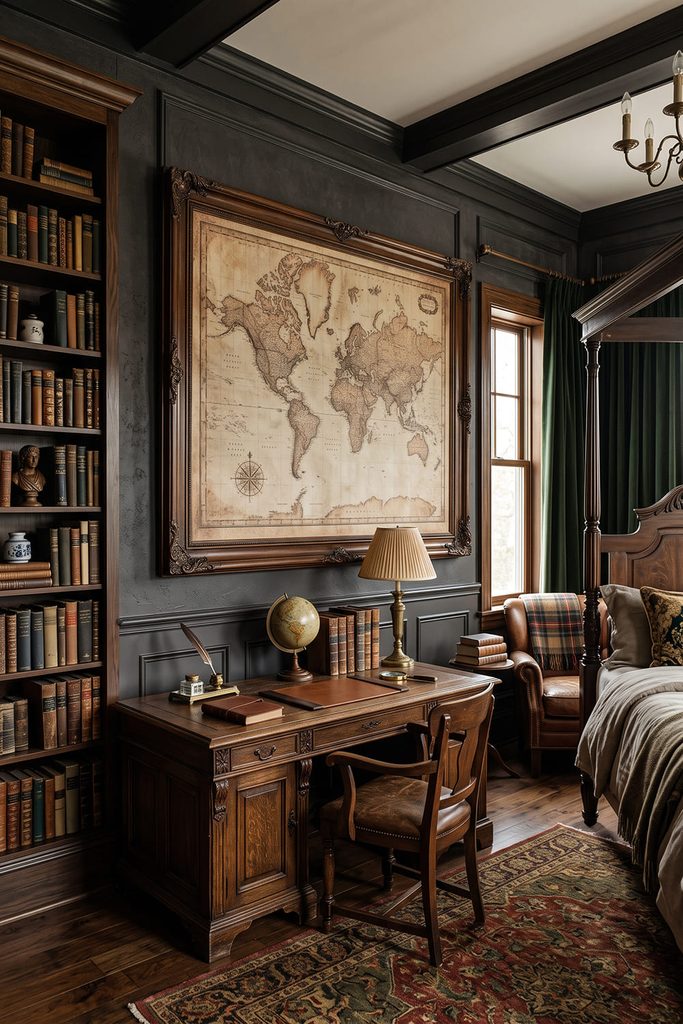
A large map can become the main focal point of a dark academia bedroom without requiring dozens of small pieces. Look for an antique-inspired map with muted parchment tones, faded brown details, and fine geographical markings.
Place it above the bed, across from the bed, or above a writing desk. A dark wooden frame will connect the map with other warm materials in the room.
A map also gives you flexibility. You can choose one showing the world, an old regional map, or a detailed map of a place that has personal meaning.
To make the artwork feel integrated rather than decorative, surround it with a wooden bookcase, a writing desk, stacked books, or a warm reading lamp. The goal is to make the map look like something that belongs in a private study rather than a generic travel poster.
3. Use Classical Architecture Prints
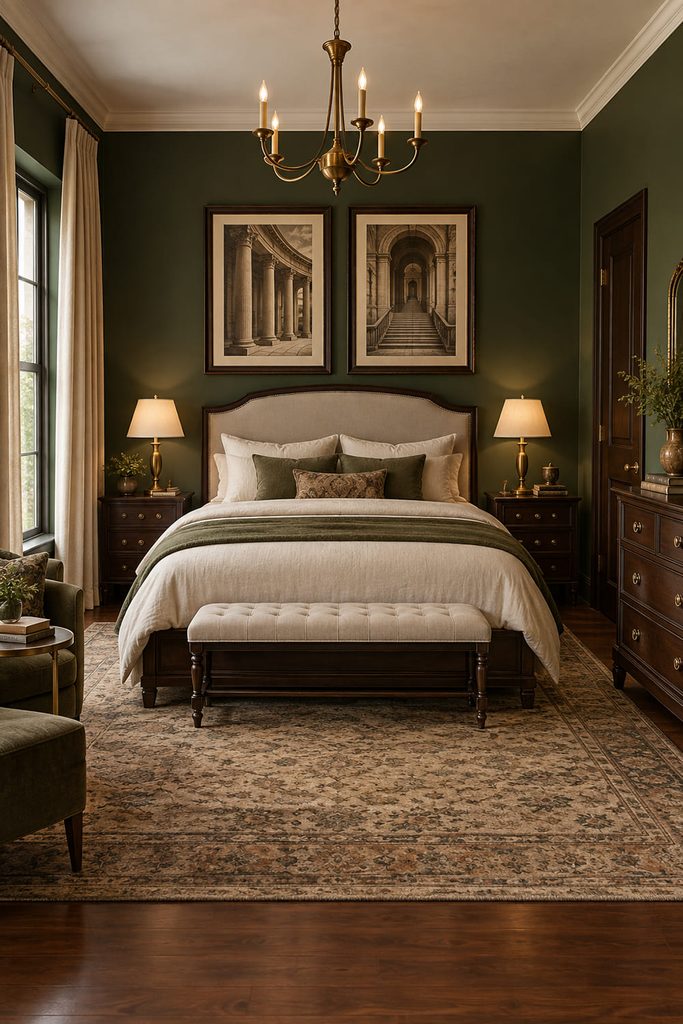
Columns, arches, old staircases, stone courtyards, dramatic doorways, and historic-looking buildings can give a bedroom a strong scholarly character.
Instead of choosing colorful architectural photography, consider monochrome, sepia, charcoal, or muted brown artwork. These tones work especially well against deep green, cream, brown, or charcoal walls.
You could create a symmetrical pair above the bed, using two related architectural scenes. Another option is a three-piece arrangement showing different details from the same architectural style.
Keep the frames relatively substantial, especially if the wall is large. Thin modern frames can work in a minimalist room, but darker, heavier frames often reinforce the traditional character associated with this decorating direction.
4. Build a Literary Gallery Wall

For someone who genuinely loves reading, a literary gallery wall can make the bedroom feel personal rather than simply styled.
Instead of using random book-themed pictures, combine different pieces connected by the same mood. You might use an old-looking illustration of a library, a handwritten-style literary passage, a small stack-of-books illustration, a reading chair sketch, and a quiet architectural print.
Keep the artwork in a limited palette of brown, black, cream, dark green, and muted burgundy. The arrangement does not have to be perfectly symmetrical. A slightly collected layout can make the wall feel as though individual pieces have been gathered over time.
Place the gallery beside a bed or reading chair where you can actually see the artwork while reading.
5. Display Classical Sculpture Artwork

You do not need an actual sculpture to introduce classical influence into the bedroom. A detailed drawing or monochrome photograph of a classical sculpture can work beautifully as wall art.
Choose one large image rather than filling the wall with several unrelated figures. A dramatic black-and-white piece can sit above a dark wooden headboard and immediately create a strong focal point.
For a softer approach, select an artwork with plenty of cream or warm gray space around the figure. This prevents the wall from becoming visually heavy.
A classical figure also pairs naturally with other scholarly details such as books, dark wood furniture, brass accents, and warm lighting. The artwork should remain sophisticated and relatively restrained rather than feeling theatrical.
6. Create an Astronomy and Celestial Gallery
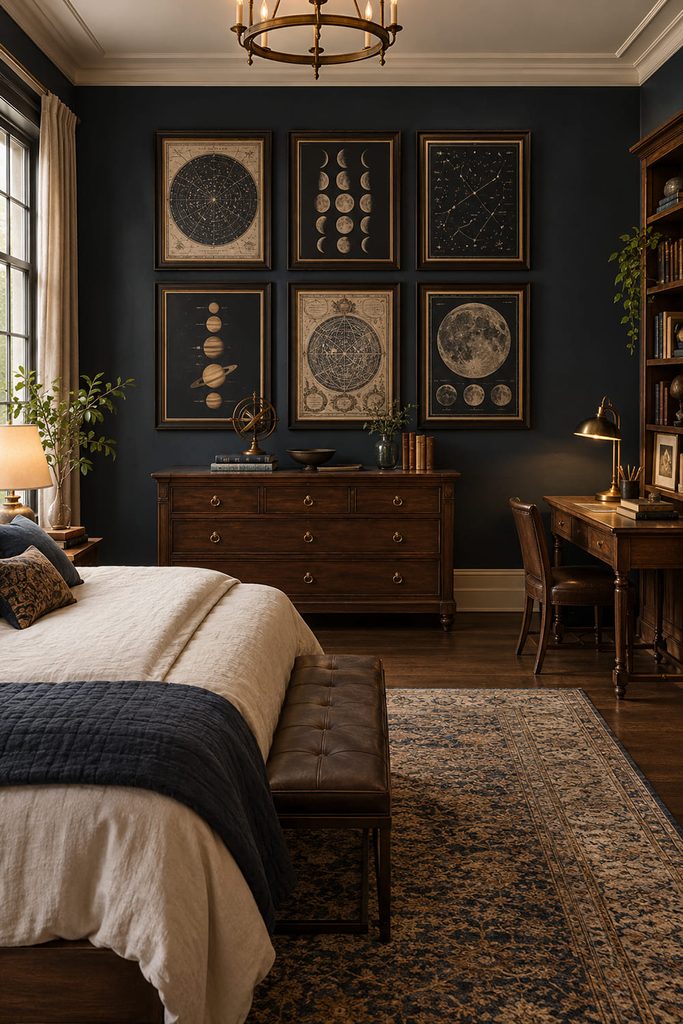
Dark academia does not have to focus entirely on books and historical subjects. Astronomy can introduce mystery and intellectual curiosity while giving the bedroom a completely different visual direction.
Create a gallery using old-style star charts, moon illustrations, constellation diagrams, planetary sketches, and celestial maps. Choose artwork with aged-paper backgrounds rather than bright modern colors.
You can arrange four or six similarly sized prints in a structured grid above a dresser or desk. For a more dramatic result, place one large celestial chart in the center and surround it with smaller moon and constellation drawings.
Dark navy, charcoal, faded cream, bronze, and muted gold are especially useful colors for this approach.
7. Hang a Moody Landscape Painting
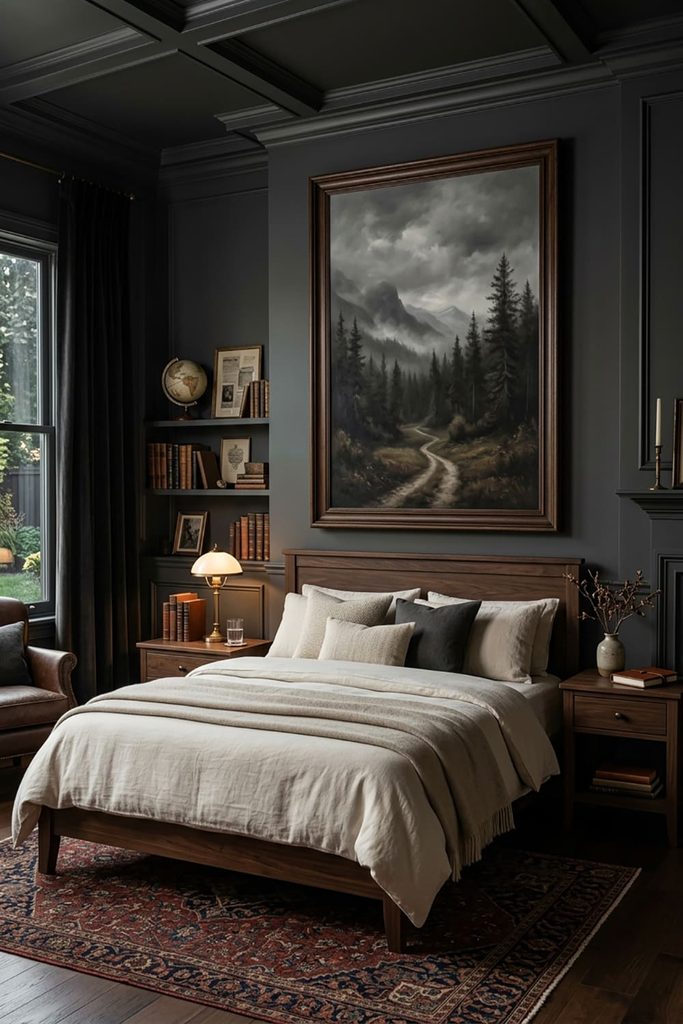
A landscape can make the bedroom feel quieter and more atmospheric without being obviously academic.
Look for a painting showing misty mountains, a dark forest, an old path, a cloudy coastline, or a quiet countryside scene. Muted colors are generally more appropriate than bright greens and blues.
A large landscape above the bed can serve as the room’s primary artwork. Choose a dark wooden frame to connect the piece with walnut, mahogany, or espresso furniture.
If your bedroom already has many books, patterns, and accessories, a single landscape can actually be more effective than another busy gallery wall. The artwork should create the feeling of looking into another place, giving the room a calm visual escape.
8. Try Vintage Anatomy Illustrations
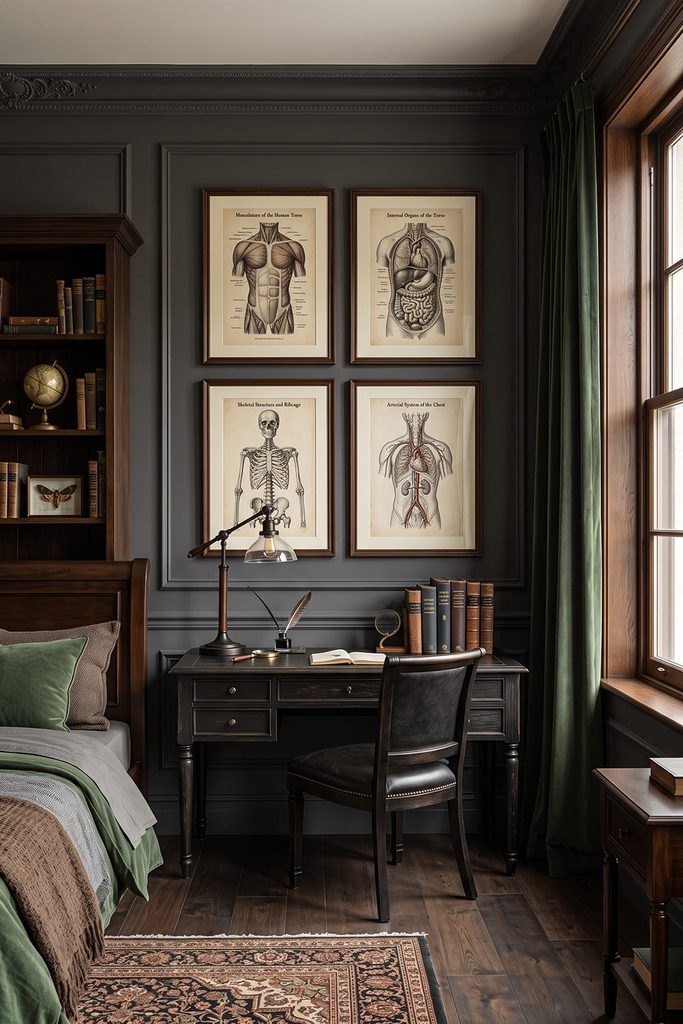
Anatomical drawings can bring an unusual scientific element to a dark academia bedroom. They work particularly well for people who enjoy medicine, science, history, or detailed illustration.
You do not need to cover an entire wall. Three or four carefully selected illustrations can create a strong collection. Choose artwork with restrained colors, preferably black, brown, cream, muted red, or faded green. Place each piece inside a dark frame with a simple mat.
A neat grid can make the collection feel like part of a historical study. If you prefer a more relaxed appearance, combine different frame sizes while keeping their colors related. Position the arrangement above a desk, beside a bookshelf, or on a wall opposite the bed.
9. Make a Still-Life Wall With Books and Objects
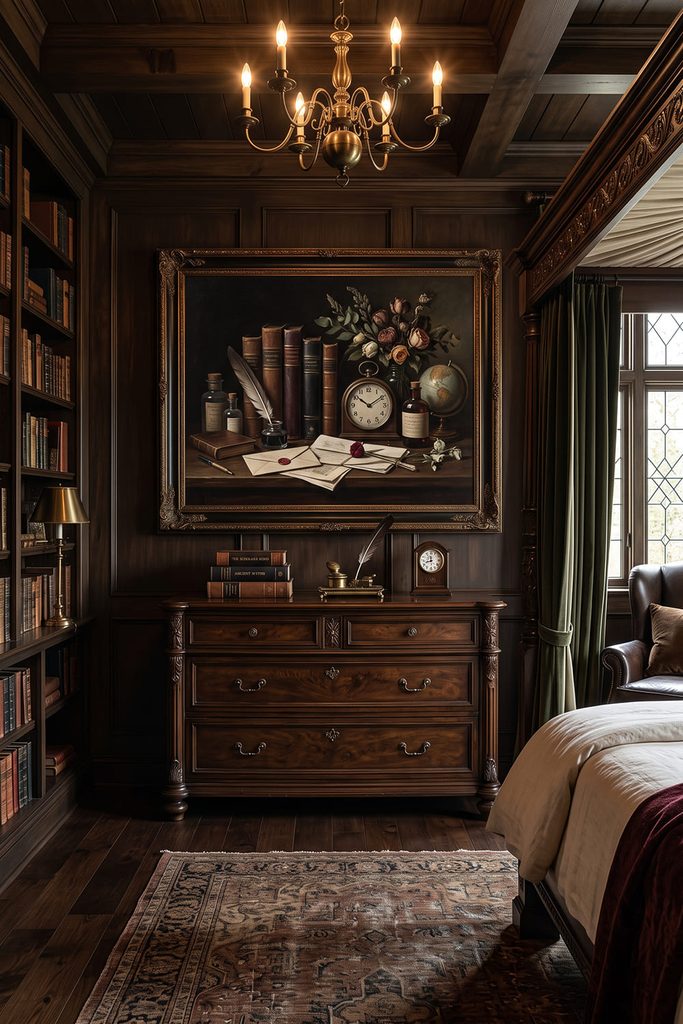
A dark academia bedroom can benefit from artwork showing ordinary scholarly objects rather than obvious decorative symbols.
Look for still-life compositions featuring books, candles, writing instruments, glass bottles, fruit, flowers, letters, clocks, or other old-fashioned objects. Choose one large painting for a quiet focal point or three smaller still-life prints for a gallery arrangement.
The most effective pieces usually have strong shadows and subdued colors. Deep brown, black, cream, burgundy, olive, and muted gold can all work together.
Place the artwork above a nightstand, desk, or dresser where real objects underneath can echo the composition. For example, a framed still life showing books can sit above a small stack of your own favorite books. That connection makes the artwork feel like part of the room instead of a separate decoration.
10. Use Vintage Bird or Natural-History Illustrations
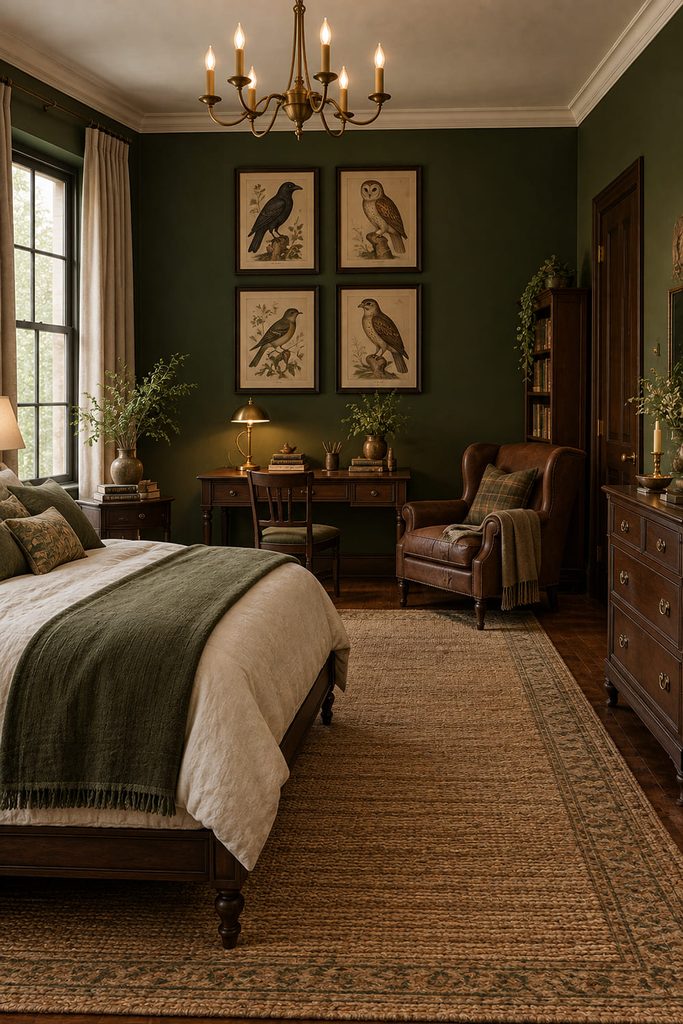
Bird illustrations can give a bedroom a scholarly natural-history feeling while adding more visual variety than traditional botanical prints.
Choose detailed illustrations of ravens, owls, songbirds, birds of prey, or other species. Avoid overly colorful modern illustrations if you want a traditional dark academia appearance.
A set of four small prints can work well above a desk or reading chair. Another option is one oversized bird illustration placed above a dark wooden dresser. Aged cream paper and dark ink create a particularly convincing combination.
You can also combine bird illustrations with botanical artwork. Keep the frames similar so the two subjects look like parts of the same collection. This approach works especially well when you want the bedroom to feel scholarly without relying heavily on books or architecture.
11. Create a Dark Floral Painting Arrangement
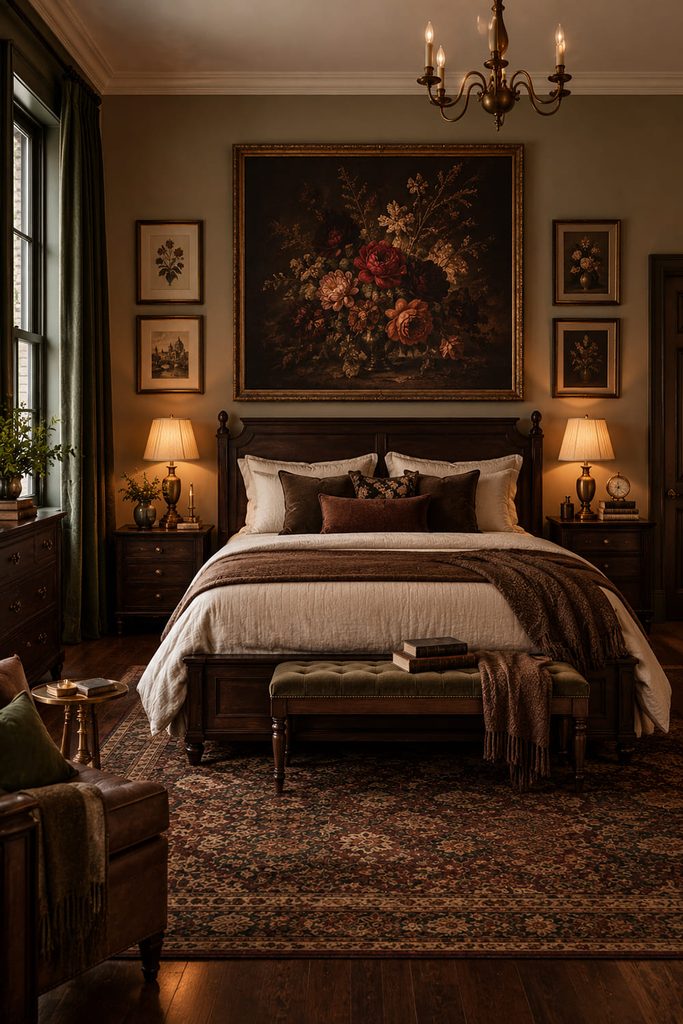
Flowers do not have to make a bedroom feel bright or traditionally feminine. Dark floral artwork can bring depth and romance to a scholarly bedroom.
Look for paintings or prints featuring deep burgundy flowers, dark red roses, muted foliage, dried branches, or flowers against a shadowy background.
One large floral artwork above the bed can create a dramatic focal point. For a quieter arrangement, use two complementary paintings with similar colors. Choose aged gold, dark brown, or black frames rather than bright white ones.
The surrounding bedroom can remain fairly simple. A dark wooden bed, cream bedding, brown textiles, and warm lamps will allow the artwork to carry most of the visual interest. This is a good option for someone who wants dark academia influences without making the room feel overly masculine or heavily historical.
12. Hang a Large Sepia Photography Print

Sepia photography can introduce an old-world feeling without requiring elaborate artwork. Choose an image of an old building, empty corridor, library-like interior, stone staircase, forest path, bridge, or historic street. The subject matters less than the atmosphere.
A large vertical print can work particularly well beside a wardrobe or tall bookcase. A horizontal photograph can sit above the bed or dresser. Use a wide dark frame if the wall is spacious. In a smaller bedroom, a thinner frame may prevent the artwork from becoming too visually heavy.
Keep the surrounding decor restrained. A single strong photograph often looks better when it has enough empty wall around it.
13. Build a Museum-Inspired Gallery Wall

If you love collecting different subjects, create a gallery wall that feels like a small private museum. Combine several categories instead of repeating one type of artwork. For example, use a small architectural print, botanical study, astronomy chart, landscape, old map, and classical sketch.
The key is to connect them through color and framing. Dark brown, black, antique gold, muted green, and cream can tie very different subjects together. You can also vary the frame designs slightly to create the feeling that each piece was collected at a different time.
Start with your largest artwork in the center, then add smaller pieces around it. Lay everything on the floor before hanging it so you can adjust the arrangement. This approach works especially well above a large dresser or on a broad empty bedroom wall.
14. Use a Dramatic Raven or Crow Artwork

For a more mysterious version of dark academia, a large raven or crow illustration can become the bedroom’s signature piece. Choose a detailed black-and-white drawing, charcoal illustration, or muted painting rather than a cartoon-like image.
The artwork can be especially striking against a warm cream wall because the dark subject becomes the focal point. Against a forest-green or charcoal wall, it creates a much moodier effect.
Place the artwork above a dark wooden desk, reading chair, or dresser. You can keep everything else simple so the image remains the main feature. If you want a gallery arrangement, pair the bird with a moon illustration, old botanical drawing, or small architectural print.
This idea gives the bedroom a mysterious literary quality without requiring an entire wall of decorations.
15. Create a Personal Scholar’s Wall
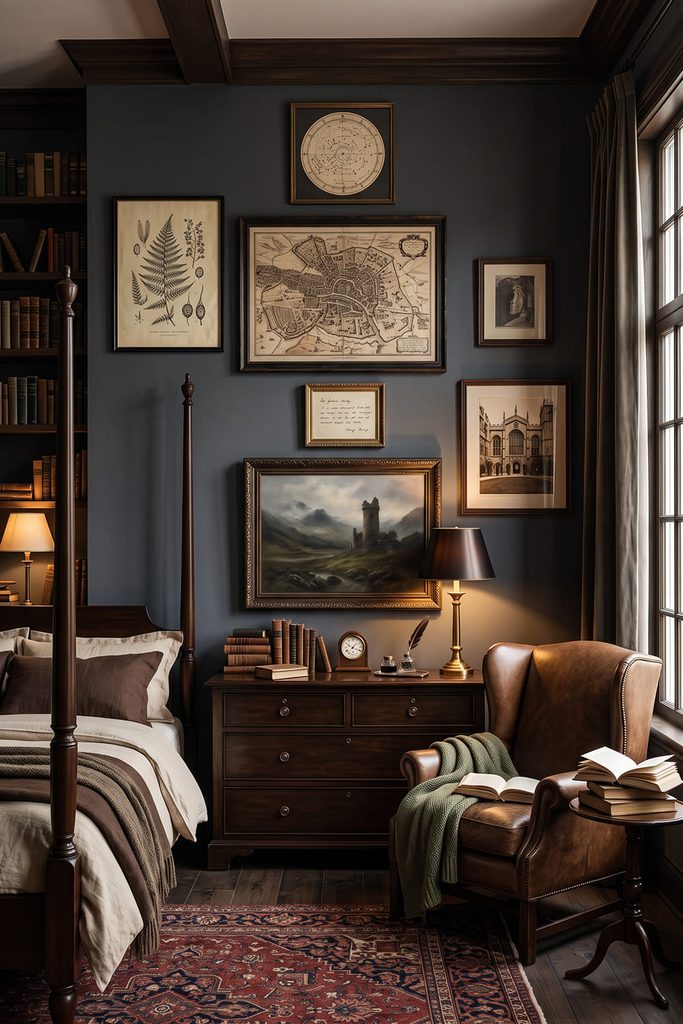
The most interesting dark academia bedroom is often the one that feels like it belongs to a real person.
Instead of buying artwork simply because it looks old, build a wall around things you genuinely enjoy. Include a favorite landscape, a meaningful map, a botanical drawing, a photograph of an interesting building, a small astronomy chart, handwritten notes, or artwork connected to your hobbies.
Use frames in related dark tones but allow the pieces to differ. You could also include a small framed piece of your own writing, a favorite poem excerpt, or a meaningful handwritten note if you want something more personal.
Keep the arrangement slightly irregular and layered rather than making everything look like a showroom set. This approach gives the bedroom the strongest sense of character because the artwork tells a story about the person living there.
How to Choose Wall Art for a Dark Academia Bedroom
Start with the subject rather than the frame. Think about what genuinely interests you. Literature, history, architecture, nature, astronomy, science, travel, art, and classical subjects all provide plenty of directions.
Once you have chosen the subject, establish a limited color palette. Dark academia interiors commonly use warm browns, forest greens, burgundy, charcoal, aged cream, and warm metallic accents.
You do not need every artwork to contain every color. Instead, let the collection share two or three recurring tones. Frame choice also matters. Dark wood, black, muted bronze, and aged-looking gold can help different artwork styles feel connected.
How Much Wall Art Should You Use?
A bedroom does not need artwork on every available wall.
If you have a large statement piece above the bed, leave some surrounding wall space open. This gives the artwork more visual importance.
For a gallery wall, begin with five to seven pieces and see how the arrangement feels before adding more. A collection can always grow later.
If the bedroom already contains a large bookcase, patterned bedding, dark furniture, and several decorative objects, a simpler wall arrangement may actually look more sophisticated.
Dark academia works particularly well when the room feels collected rather than overloaded.
How to Make Dark Academia Wall Art Feel Modern
The easiest way is to mix traditional subjects with clean contemporary furniture.
For example, place an antique-style botanical collection above a simple modern nightstand. Pair a classical architectural print with streamlined bedding. Hang an old map above a clean-lined wooden desk.
This balance prevents the bedroom from feeling like a historical replica.
You can also use fewer decorative objects and let the artwork carry the theme. One beautiful landscape, a small botanical collection, or a carefully planned gallery wall can communicate the style without covering every surface.
Best Wall Colors for the Artwork
Cream and warm beige create an easier backdrop if you want the artwork to stand out.
Forest green, deep brown, charcoal, and muted navy can create a much more immersive atmosphere. Darker walls also work particularly well with warm wood frames and aged-paper artwork.
If your bedroom is small or receives limited daylight, you do not necessarily need to make every surface dark. A lighter wall with dark furniture and carefully chosen artwork can still create the same scholarly direction.
The important thing is consistency between the wall, artwork, furniture, and lighting.
How to Arrange Art Above the Bed
A large horizontal artwork is one of the simplest choices for above the bed.
You can also use two complementary vertical pieces, a three-piece arrangement, or a compact gallery wall.
Keep the artwork visually connected to the width of the bed. A very small picture floating above a large headboard can look accidental, while an oversized arrangement can overwhelm the sleeping area.
If the bedroom already has a tall headboard, large artwork, or dramatic wallpaper, choose a simpler composition.
The goal is to create a clear focal point rather than compete with every other element in the room.
Final Thoughts
Dark academia wall art works best when it feels connected to curiosity, history, creativity, and personal interests rather than simply following a decorating formula.
A botanical study can make the bedroom feel like a natural-history collection. An antique map can introduce travel and exploration. Classical architecture can add depth, while astronomy, anatomy, literature, landscapes, and personal collections can take the room in completely different directions.
Choose one main subject first, establish a restrained palette, and then add supporting artwork gradually. Dark wood frames, aged cream backgrounds, deep greens, burgundy, brown, and warm lighting can help tie everything together.
Most importantly, leave enough room for the bedroom to feel comfortable. A dark academia room should look like a place where someone actually reads, thinks, writes, rests, and keeps meaningful things, not a room decorated entirely around a trend.


