

15 Bedroom Wall Art Ideas for Siblings Sharing One Bedroom
Sharing a bedroom can be a special part of growing up, but decorating the walls becomes a little more complicated when two siblings have different personalities, favorite colors, and interests. One child might love animals while the other prefers sports, books, space, or colorful artwork. The challenge is creating a room that feels connected without making either sibling feel like their side has disappeared.
Wall art can solve that problem without requiring a complete room makeover. Instead of trying to make every piece match perfectly, use a common color palette, similar frames, or a repeated layout to connect different interests. Each sibling can then have a small section that feels personal.
The best arrangements also make use of the areas naturally created by two beds, desks, or storage units. A shared wall can tell one story, while individual sections can give each child a sense of ownership. These 15 bedroom wall art ideas for siblings sharing one bedroom offer practical ways to create a balanced, personal, and visually connected room.
1. Give Each Sibling a Personalized Name Display

A simple name display above each child’s bed is one of the easiest ways to establish individual space.
Use similarly sized signs or framed letters, but allow the designs to reflect each sibling’s personality. One could feature animals while the other uses stars, flowers, vehicles, or geometric details.
Keep the lettering style and frame color similar so the two pieces still look like part of one bedroom. If the beds are positioned side by side, place one name above each sleeping area at approximately the same height.
You can also add a small illustration beneath each name. This creates a miniature personal wall without requiring a large gallery. The idea works particularly well when siblings have different tastes but parents still want the room to feel coordinated.
2. Create Two Matching Mini Gallery Walls
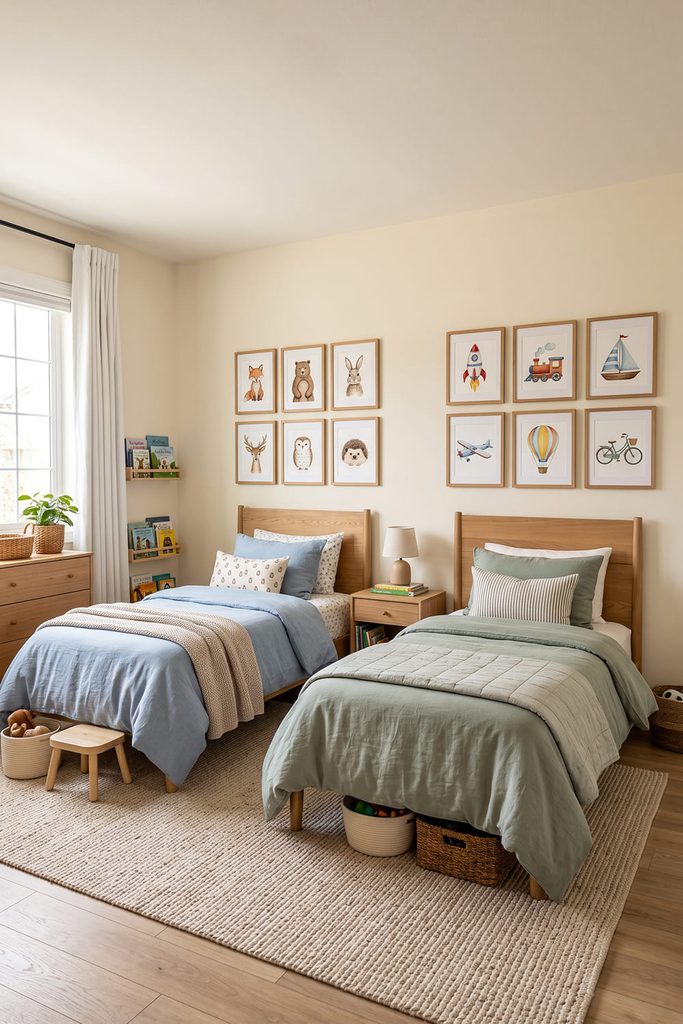
Instead of making one large gallery wall for both children, divide the artwork into two smaller collections. Place one gallery above each sibling’s bed or personal area. The collections can contain different subjects while using the same frame colors and approximately the same number of pieces.
For example, one child could have animal illustrations while the other has transportation or space artwork. The important part is visual balance. If one side contains six large pieces and the other has two tiny prints, the room can feel uneven.
Use a similar arrangement on both sides, even when the artwork itself is different. This gives each sibling personal expression while maintaining a shared design.
3. Make a Shared Adventure Map Wall
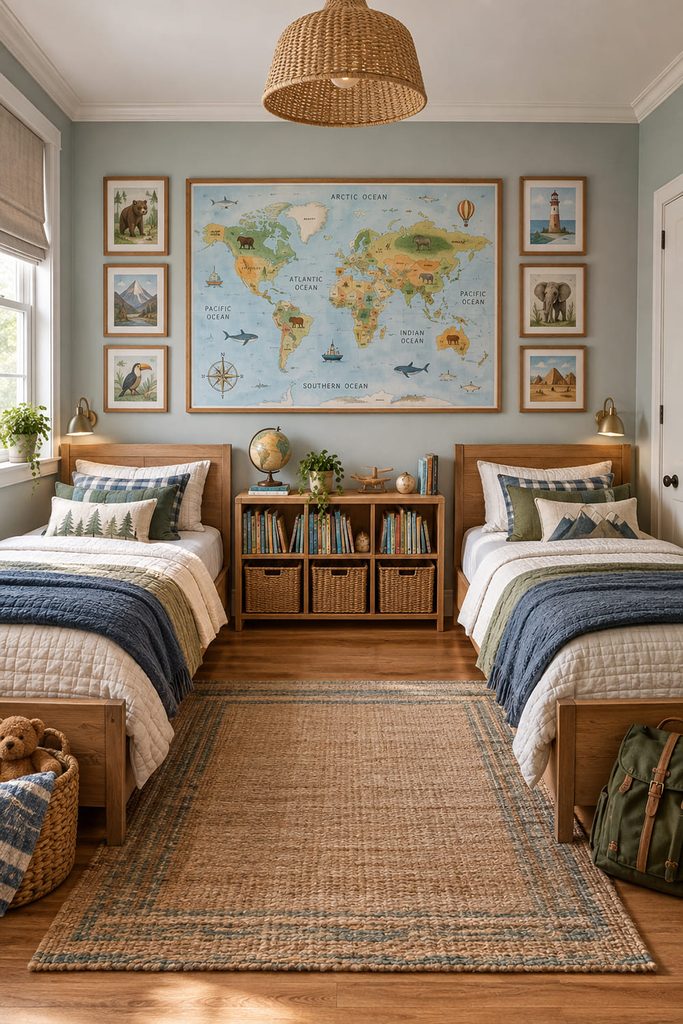
A large illustrated map can become artwork that belongs to both siblings.
Choose a colorful but relatively calm world map, illustrated map, or geographic artwork and position it on the main shared wall. You can then add small framed pictures around it representing places, animals, landmarks, or landscapes.
The map provides a neutral subject that does not belong exclusively to either child. It can also grow with them. As the siblings learn about different countries, plan family trips, or become interested in particular places, small pieces can be added around the central artwork.
For a cohesive look, use matching frames in natural wood, white, or another color already present in the bedroom.
4. Divide One Wall Into Two Color Zones
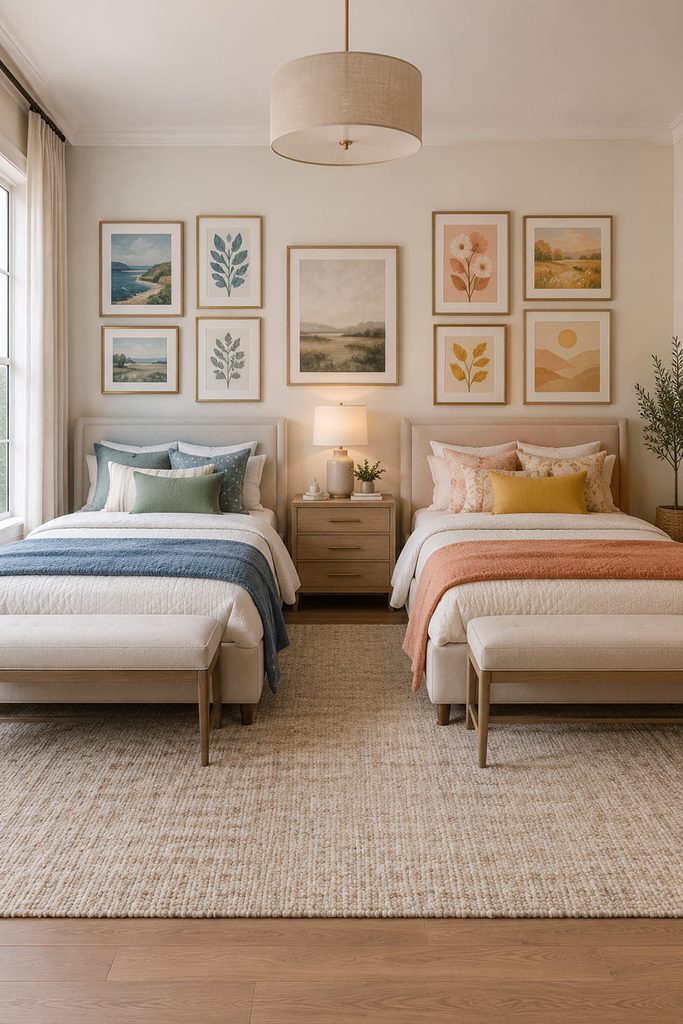
You can create individual visual areas without physically dividing the room. Use artwork in one color family on one side and another related palette on the other. For example, one sibling’s wall art might use muted blue, green, and cream, while the other uses peach, yellow, and warm beige.
Keep the frame style consistent so the difference feels intentional. A shared neutral artwork can sit between the two sections and visually connect them.
This works especially well for siblings who have very different favorite colors. Instead of forcing them to agree on one palette, give each child a controlled portion of the wall while maintaining common framing and spacing.
5. Display Each Sibling’s Favorite Hobby
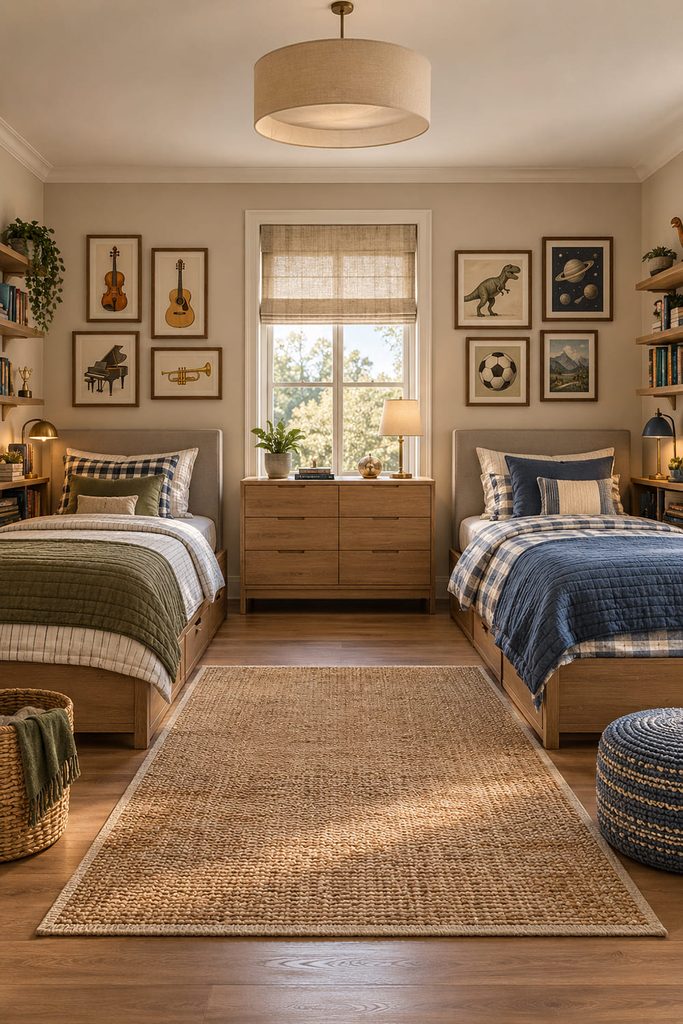
Give each child a small wall area dedicated to something they genuinely enjoy. One sibling might have artwork showing musical instruments, while the other has drawings related to soccer, dinosaurs, books, painting, or outer space.
The pieces do not have to match perfectly. Instead, connect them through similar frame shapes or a shared background color. This approach makes the bedroom feel personal because the wall art reflects the children who actually live there.
Keep the hobby displays relatively compact. A few meaningful pieces usually look more intentional than covering an entire wall with unrelated posters. This is also a useful arrangement as children grow because individual artwork can be replaced without redesigning the whole bedroom.
6. Hang One Large Shared Nature Scene
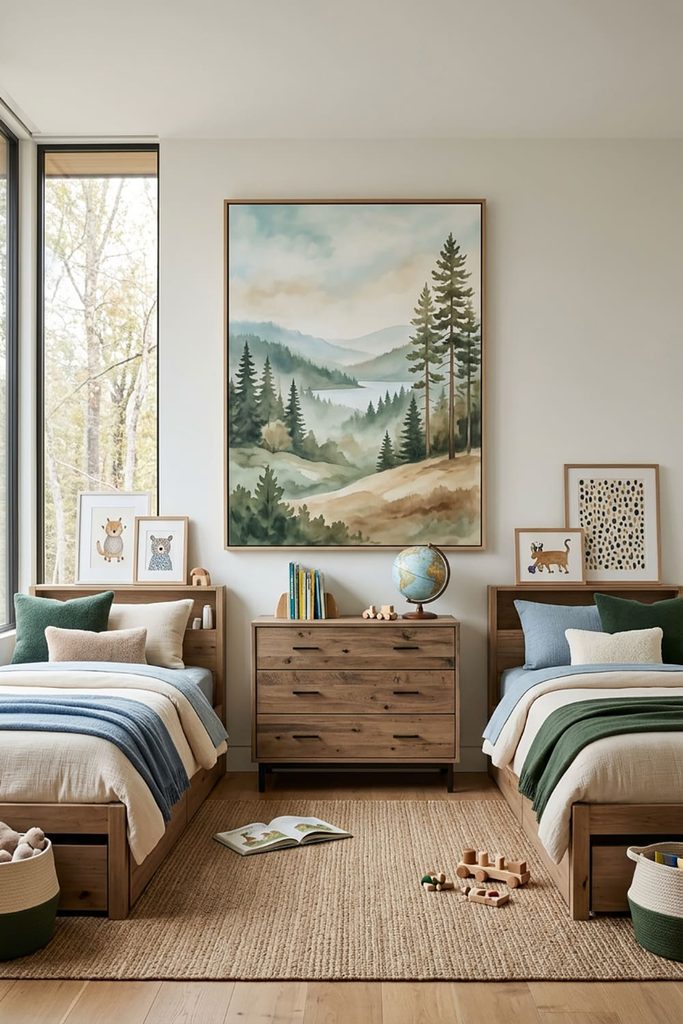
When siblings have very different preferences, a large piece of neutral artwork can provide common ground. A forest landscape, mountain scene, ocean view, woodland illustration, or peaceful countryside image can work as the central piece.
Place it on the wall between the beds, above a shared dresser, or on the largest empty wall. Choose artwork containing several colors already used in the room. Soft green, blue, beige, brown, and cream can work across many children’s bedrooms.
Then allow smaller personal artwork to appear near each sibling’s own area. The large shared piece becomes the visual anchor while the smaller pieces provide individual identity.
7. Create a Two-Sided Animal Gallery

If both siblings love animals but have different favorites, create one gallery with two distinct sections. For example, one side could feature woodland animals while the other focuses on ocean creatures. Alternatively, one child might choose cats and dogs while the other prefers dinosaurs or wild animals.
Use the same frame style throughout the entire gallery. You can place a small divider between the two collections or simply transition gradually from one subject to the other.
This arrangement is particularly useful for younger children because animal illustrations add color and personality without making the room feel overly formal. As their interests change, individual prints can be replaced while the overall structure remains intact.
8. Use a Shared Alphabet Artwork Wall
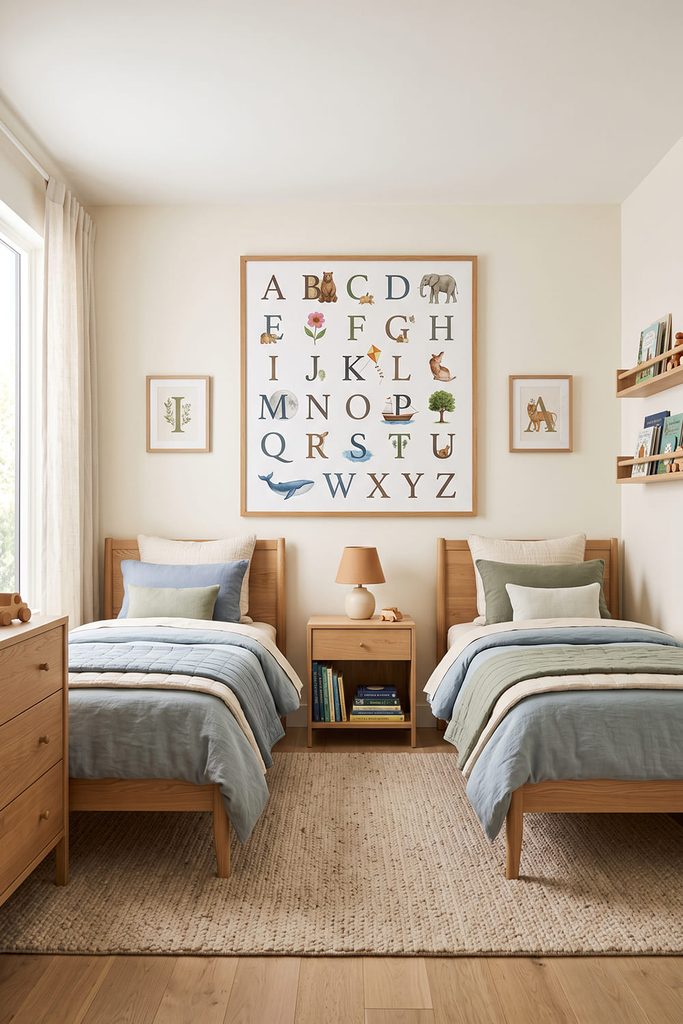
A large alphabet artwork can work as both decoration and a learning element for younger siblings. Instead of using a plain alphabet poster, choose artwork where each letter is paired with an illustration. Animals, plants, objects, or nature subjects can make the piece visually interesting.
Hang the alphabet centrally so it belongs equally to both children. You can then place each sibling’s name or a small personal artwork collection on either side. This approach works particularly well when the siblings are close in age and share similar developmental interests.
For an older room, replace the alphabet with a large illustrated dictionary-style artwork, world map, or educational subject that suits both children’s interests.
9. Build a Shared Storybook Wall

Create a wall inspired by the stories the siblings enjoy together. Use framed illustrations, whimsical landscapes, castles, forests, animals, or other imagery connected to their favorite types of stories.
You do not need to reproduce pages from copyrighted books. Original-style illustrations based on broad story themes can create the same feeling. Arrange three to five pieces above a shared reading area or between the beds.
Add a small reading lamp and bookshelf nearby if space allows. The wall can become a shared part of the bedroom rather than another boundary between the siblings. It gives them something visually common while still leaving room for individual artwork elsewhere.
10. Create a Matching Star and Moon Display

Celestial artwork is especially useful when siblings share a room because it can feel personal without being strongly associated with one gender or one particular hobby. Place matching moon, star, planet, or constellation prints above each bed.
The designs can be similar but not identical. One sibling could have a moon illustration while the other has a constellation chart. Use the same frame size and position to create symmetry.
Dark blue, cream, muted gold, gray, and soft beige can create a calm color scheme. For a playful children’s room, choose colorful illustrated planets. For older siblings, use more sophisticated astronomical charts or minimalist celestial artwork.
11. Turn a Long Wall Into a Shared Memory Gallery

A memory wall allows both siblings to contribute personal photographs, drawings, certificates, vacation memories, and small pieces of artwork. Use a consistent frame style to keep the collection organized.
Rather than placing everything randomly, divide the wall into two loose sections while allowing the collections to meet in the middle.
One sibling’s side might include school memories and hobbies, while the other includes favorite activities and family moments. Leave several empty spaces so new memories can be added later.
This type of wall can become more meaningful over time because it changes with the children rather than remaining a fixed decoration.
12. Combine Different Artwork With Identical Frames

Sometimes siblings want completely different artwork. Instead of trying to make the artwork itself match, make the frames match. Choose one frame style and use it throughout the room.
One child might choose a colorful dinosaur print, while the other chooses a botanical illustration. One might prefer abstract shapes, while the other wants a photograph of a mountain.
Identical frames create a visual connection between these very different subjects. This is one of the most flexible approaches because the artwork can change as each sibling gets older. The consistent framing keeps the room organized even when individual interests change dramatically.
13. Create a Shared Transportation Wall
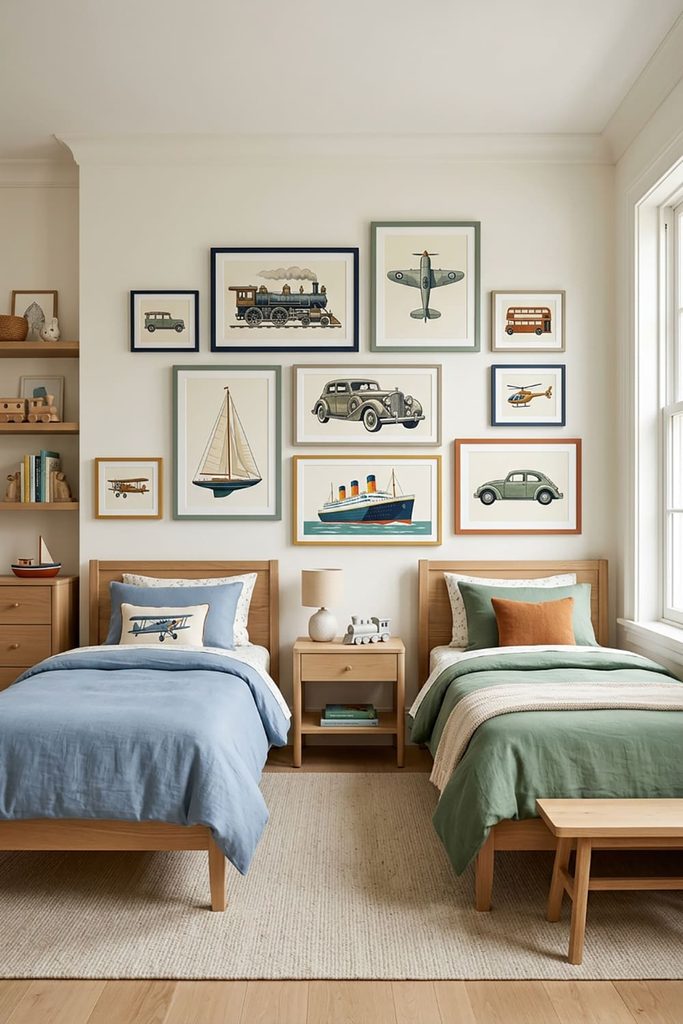
For siblings who enjoy cars, trains, airplanes, boats, or other forms of transportation, a themed wall can become a shared interest zone. Choose several illustrations showing different vehicles rather than repeating the same image.
A vintage-style train illustration could sit beside an airplane drawing, a detailed car sketch, or a colorful ship illustration. Use a combination of horizontal and vertical pieces to create movement across the wall.
Keep the colors coordinated with the bedding and furniture. If one sibling eventually loses interest in the theme, their individual section can be replaced without removing the entire collection.
14. Make a Creative Drawing Display Wall
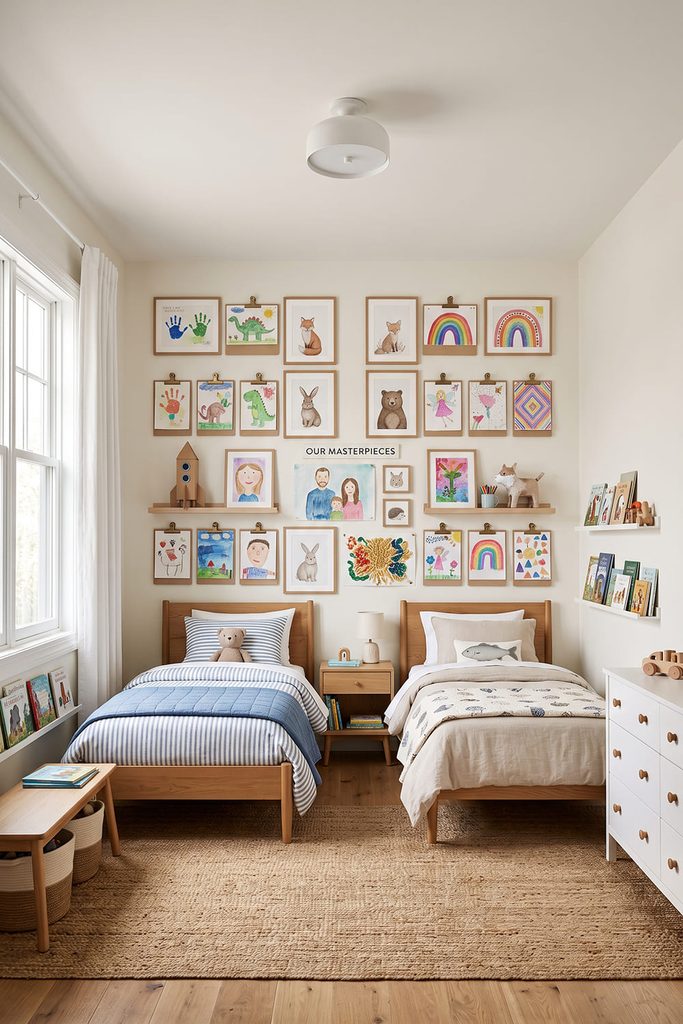
Instead of buying all the wall art, let the siblings create some of it themselves. Install a simple display area where each child can showcase drawings, paintings, crafts, or school artwork.
You can use matching frames, clip-style displays, or shallow ledges designed for artwork. Give each sibling a defined section while leaving the center or bottom area shared.
This approach gives children genuine ownership over the room. Their artwork can change regularly, keeping the wall fresh without requiring new decorative purchases. It also allows younger children’s colorful drawings to coexist with more polished artwork as they grow.
15. Create a Balanced Wall With One Shared Centerpiece

For siblings who have very different tastes, simplicity may work better than a complicated gallery wall.
Choose one large piece of artwork that both children can enjoy. It could be a peaceful landscape, colorful abstract composition, large animal illustration, map, nature scene, or imaginative artwork.
Place the centerpiece between the two beds or on the main wall. Then give each sibling just one or two smaller personal pieces near their own side. This creates a clear visual hierarchy. The large artwork belongs to the room as a whole, while the smaller pieces communicate individuality.
It is particularly effective in smaller bedrooms where too many individual decorations could make the walls feel crowded.
How to Give Each Sibling Personal Space Through Wall Art
The easiest way to create individuality is to give each child a defined visual area.
This does not necessarily require a physical room divider. A name sign, small gallery, hobby artwork, or favorite-color section can create a clear sense of ownership.
Try to give both siblings approximately the same amount of visual space. Even if the artwork is different, similar proportions help the room feel balanced.
If one child is significantly older, their artwork may naturally be more mature. In that situation, matching frames or a shared color palette can connect the two styles without making either child use artwork that feels too young or too old.
How to Make Different Artwork Look Coordinated
You do not need identical artwork to create a cohesive bedroom.
Choose one or two elements that repeat throughout the room. Matching frames are one option. Another is using a common color such as cream, green, blue, brown, or muted yellow.
You can also repeat the same layout. For example, both siblings could have three small prints arranged vertically above their beds even though the subjects are completely different. Similar spacing, frame size, and placement can be just as effective as matching artwork.
Wall Art Ideas for Different Age Gaps
A small age gap makes it easier to create a shared theme because both children may enjoy similar subjects.
With a larger age difference, avoid making the older sibling’s area look like an extension of the younger child’s nursery. Use neutral artwork in shared areas and let each child personalize their own section.
Maps, landscapes, photography, botanical artwork, astronomy, and simple geometric designs can bridge different ages particularly well.
The younger sibling can add colorful personal artwork while the older sibling gets more sophisticated pieces.
How to Keep a Shared Bedroom From Looking Cluttered
Sharing a room already means more beds, clothes, toys, books, and personal belongings. Wall art should add character without competing with everything else.
Start with the largest empty wall and decide what role it should play. If it already contains a large piece of furniture, use a smaller arrangement.
Limit the number of colors and avoid putting artwork on every available surface.
A little empty wall space can make the room feel calmer and allows the artwork to stand out.
For children’s rooms, also keep hanging artwork securely mounted and away from areas where it could be knocked down during play.
Final Thoughts
A shared bedroom does not have to look like two separate decorating projects squeezed into one room. The most successful wall art arrangements give siblings both connection and individuality.
A pair of personalized name displays can define each sleeping area. Matching gallery walls can create balance while allowing different interests. A shared map, nature scene, storybook-inspired wall, or celestial collection can give both children something in common.
As the siblings grow, their interests will change, so flexible arrangements are particularly useful. Matching frames, consistent spacing, and a shared color palette make it easy to replace individual artwork without redesigning the entire bedroom.
The goal is not to make everything identical. It is to create a room where both siblings can look at the walls and recognize something that feels like theirs.


