

15 Small Kitchen Ideas for Families Who Cook Every Day
It is 6:40 in the morning. One parent is flipping pancakes, a lunchbox sits open on the counter, and a small voice is asking where the blue cup went. The clock is not kind, and the kitchen is twelve feet wide.
Families who cook daily need stations, not decoration. These small kitchen ideas for families who cook every day focus on flow: where bags land, where breakfast happens, and where the big pot lives. Every idea here earns its space on a normal Tuesday.
None of this needs a renovation or a bigger room. It needs decisions about traffic: who stands where, what lives within reach, and what leaves the counter for good. Nothing here is about styling for photos.
If your kitchen also works without a pantry, pair these ideas with our guide to kitchen storage ideas for apartments with no pantry. Then start with the station your family uses first each morning.
This post contains affiliate links. If you buy through them, we may earn a small commission at no extra cost to you. See our Affiliate Disclosure.
Give Bags and Lunchboxes a Landing Zone by the Door

School bags, work totes and lunchboxes all enter through the same door, and they all land on the nearest counter. That counter is usually your only prep space. A landing zone breaks the habit at the door instead of fighting it at the stove.
Fit a narrow console, a wall rail with hooks, or one sturdy basket shelf just inside the kitchen.
Give each child a hook at their height and one shared basket for lunchboxes and water bottles. Hooks at kid height mean bags get hung up without help.
Keep a small bowl for keys and a tray for permission slips and mail. When everything has a hook or a basket, the counters stay clear for actual cooking.
Build One Breakfast Station Kids Can Run Themselves

When cereal, bowls, the toaster and the honey all live in one short run of counter and cabinet, older kids can make their own breakfast. That one change removes the busiest ten minutes from the cook’s morning.
Group the station near the table, away from the stove.
Put everyday bowls and cups in the cabinet directly above, and keep a small tray under the toaster for crumbs you can tip into the bin in seconds. A step stool folded flat beside the fridge helps younger kids reach safely.
Refill canisters once a week, not daily. A five-minute Sunday refill keeps weekday mornings calm, and nothing runs out mid-pour on a school day. It also shows you what is running low before the grocery run.
Hand Over One Low Drawer for Kids’ Cups and Plates

Pick the drawer farthest from the stove and empty it completely.
Line it with a washable mat, then add your children’s everyday cups, plates, bowls and cutlery in low stacks they can lift with two hands. A drawer beats a low cabinet because kids can see everything at once.
Keep the rule simple: kid dishes live here, nowhere else.
Children can set the table and empty their dishwasher basket straight into the drawer, which puts them inside the routine instead of under your feet. Label the drawer with a picture if your youngest cannot read yet.
Choose light, sturdy pieces that survive drops. One dropped plate a month is a fair trade for a child who can get their own drink of water.
Store the Big Pots Low, Close to the Stove

The stockpot, the Dutch oven and the slow cooker are the hardest-working tools in a family kitchen. They are also the heaviest, and in many small kitchens they sit in the highest, deepest cabinet in the room.
Move them to the lowest cabinet nearest the stove, with lids stored upright in a simple rack.
Heavy cookware you can slide out at knee height gets used. Heavy cookware above your head gets avoided. A folded towel under the slow cooker stops it sliding when the door opens.
Families who bake daily face the same squeeze with mixers and trays, and our guide to small kitchen ideas for bakers covers that equipment shuffle in full. The rule matches: daily tools live low, close and easy to grab.
Run Two Bins: One for Trash, One for Peelings and Recycling

Tiny rule: the cook should never cross the kitchen carrying a dripping handful of peelings. Put a small bin or a deep bowl right at the prep spot for scraps, and empty it into the main bin as you go.
If a pull-out double bin fits your cabinet, it earns the space in a family kitchen.
Recycling for milk jugs, cans and cereal boxes piles up fast, and a second bin keeps it off the counter. A bin with a lid also keeps toddlers and dogs out of the scraps.
Line both bins, and keep spare liners in the bottom of the bin itself. In a house cooking three meals a day, a torn bag costs more time than the ten seconds a liner takes.
Set Up Two Work Zones So Two Cooks Fit

The sink run holds a big board, a colander and the scraps bowl. Across from it, the stove run holds the pan, a spoon rest and the oil. Two cooks, two zones, and nobody does the sideways shuffle.
Agree on one passing lane and keep it empty.
In most small kitchens the lane runs between the sink and the stove, so floor bins, stools and the dog’s bowl need a new home along a wall. A clear lane also means a child can pass through without squeezing past a hot oven.
Put shared tools, like tongs and the knife block, on the boundary between zones. Both cooks can reach them without entering the other’s space during the dinner rush.
Stand Trays and Boards Upright Instead of Stacking Them

A stacked pile of sheet pans, boards and cooling racks means lifting four things to reach the one you need.
The same cupboard, fitted with simple vertical dividers, hands you the exact tray in one pull. At 6 p.m. with pasta boiling over, that difference matters.
Tension rods, a file organizer, or a purpose-built rack all work. Measure your biggest pan first, then set the dividers so wide items get wide slots and thin boards share.
This cabinet works hardest beside the oven, where trays cycle in and out all evening. Keep the muffin tin and pizza pan here too, even if they only bake weekly. Upright storage also stops boards warping under a heavy stack.
Keep Lunch-Packing Gear in One Place by the Fridge

The nightly mistake is hunting for a matching lid while lunches wait half-packed. Lids, boxes, wraps and bottles scattered across three cabinets turn a five-minute job into fifteen, every single school night.
Give lunch gear one drawer or one handled bin near the fridge.
Containers nest in a row, lids stand in a small rack, and water bottles line up where little hands can grab them during packing. Keep a folded stack of napkins and a marker for names in the same spot.
Pack straight from the fridge to the counter above the drawer. When the station sits this close, two lunches take minutes, and the leftovers from dinner go directly into tomorrow’s boxes.
Add a Rolling Cart That Parks Out of the Way

In our experience, the hardest-working extra surface in a family kitchen is the one that can move. A slim rolling cart loads up with produce during prep, then parks against a wall or in a hallway corner when dinner is done.
Choose a cart with at least one solid shelf that can hold a board.
Use the top for chopping overflow, the middle for onions, potatoes and fruit, and the bottom for the recycling bag or the dog food bin. A cart also works as a serving station when grandparents visit.
Lock the wheels or park the cart on a small mat. A cart that drifts while a child leans on it is a spill waiting to happen.
Bridge the Sink With a Board for Extra Counter
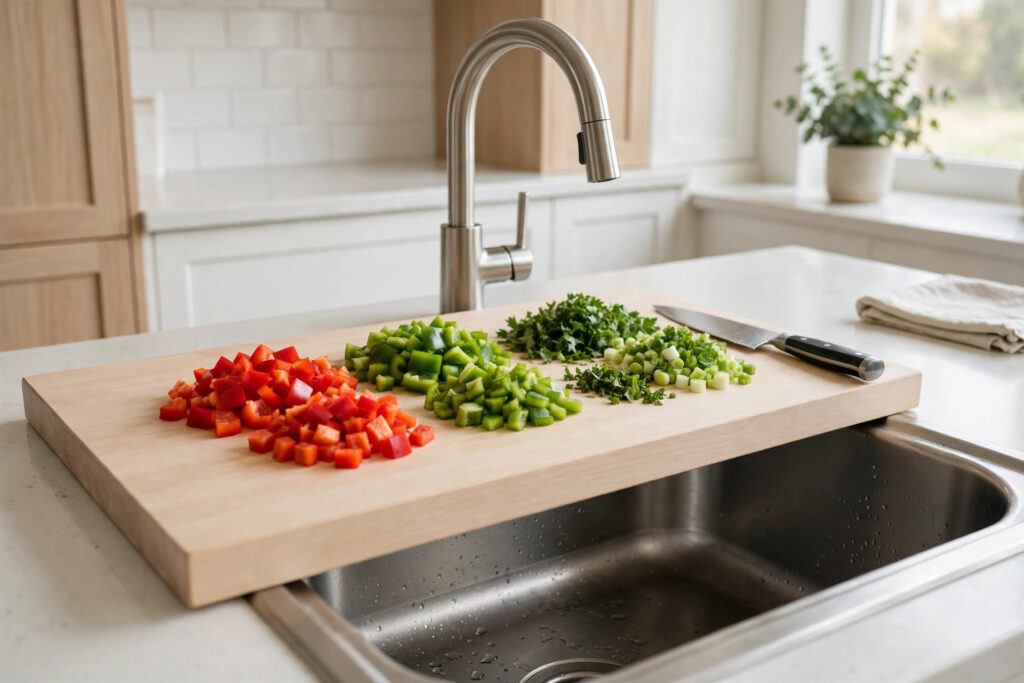
The old warning says the sink is dead space in a small kitchen. A wide, sturdy board across one half of it proves otherwise, giving you a solid prep surface directly over the spot where vegetables get washed anyway.
Look for a board with a lip or non-slip feet so it cannot skate.
Chop on it, stack washed greens on it, then lift it away when the pot needs filling or the sink needs scrubbing. It also hides a sink full of soaking pans when guests arrive early.
Rinse the board and stand it to dry behind the faucet. One board that fits well beats three small boards fighting for the same narrow counter strip. Measure your sink before you buy, including the faucet height.
Decant the Bulk Buys Into Stackable Bins
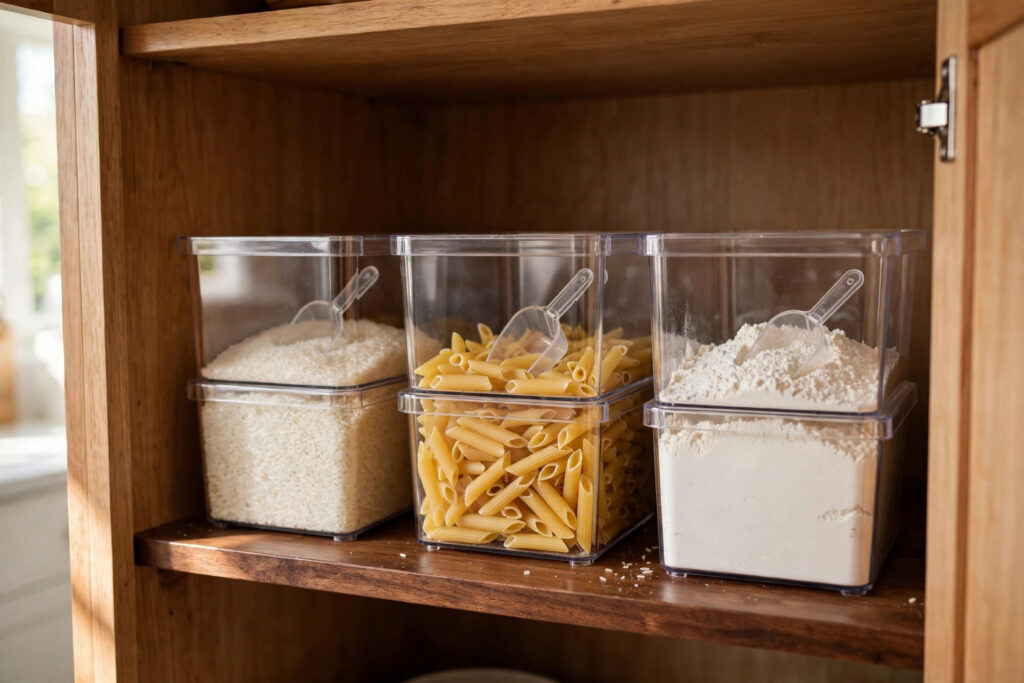
Family cooking runs on bulk: the big bag of rice, the double pasta pack, the flour that never fits its bag again. Half-open sacks slump in the cabinet, spill quietly, and hide what you already own. Then the duplicates start, and money leaks.
Move staples into clear, stackable bins with scoops, and group them by meal: breakfast, baking, weeknight dinners.
Our full system for pantry organization ideas for bulk shoppers shows the bin layouts that work in deep cabinets. Square bins waste less space than round jars in a straight cabinet.
Label the front, not the lid, so the label shows when bins stack. A quick glance then writes your grocery list for you: low bin, add it to the list.
Give Snacks a Drawer Away From the Cooking Zone

Choose a drawer on the dining side of the kitchen, away from the stove and the cook’s lane.
Fill it with the after-school lineup: bars, crackers, fruit cups, and small bags of nuts for older kids. Tell the kids the drawer’s hours if grazing before dinner is a battle.
Portion snacks into small boxes or a divided tray so the drawer restocks in one trip. Kids help themselves without opening every cabinet, and the cook keeps working while homework happens at the table.
Keep drinks simple: a shelf of cups near the sink and a rule that snacks happen at the table. The floor stays cleaner, and crumbs stay in one room. A small trash bowl on the table catches wrappers.
Fit a Storage Bench Where Kids Eat and Wait

A bench against the wall seats three children in the space two chairs need, and nobody tips a chair backward at breakfast.
Add lift-up storage inside and the bench swallows table linens, board games and the good placemats. Kids also climb up and down without dragging chair legs across the floor.
Wipeable cushions matter more than pretty ones here. Our guide to small kitchen banquette seating ideas covers bench depths and easy-clean fabrics that suit family tables in tight corners.
Leave one end of the bench open for the youngest child’s booster or high chair. A fixed bench with one flexible end grows with the family instead of fighting it. Scoot the table toward the bench and the walkway stays wide.
Choose Finishes That Forgive a Busy Kitchen
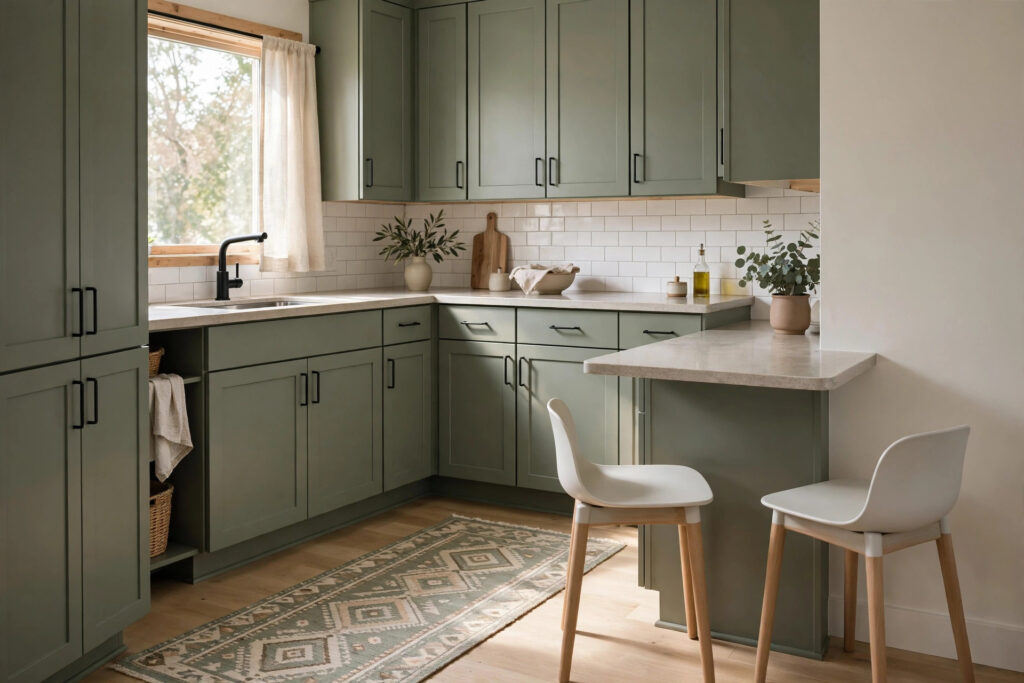
Sauce freckles the backsplash, jam lands on the runner, and small hands open cabinets straight after snack time. A family kitchen shows its day honestly, so the smart move is finishes that clean up fast and hide the in-between.
A washable low-pile runner in a mid-tone pattern hides crumbs between vacuums. Satin or matte cabinet paint shows fewer fingerprints than gloss, and simple bar handles wipe clean faster than ornate knobs. Mid-tone floors and counters hide the most between deep cleans.
Keep a folded cloth on the oven handle and one spare by the sink. Most daily mess stays small when the cloth is closer than the mess. Choose stools and chairs with smooth seats that wipe in one pass.
End the Day With a Ten-Minute Kitchen Reset

Tiny rule: the kitchen closes like a café. Counters cleared, dishes running, lunches lined up by the fridge, and tomorrow’s breakfast bowls stacked inside the station where small hands will find them at dawn. Chairs pushed in, floor swept where the cooking happened.
Set a timer and split the jobs: one person wipes and loads, one packs lunches and checks the snack drawer, kids return their drawer dishes and hang up tomorrow’s bags at the landing zone. The timer keeps it a sprint, not a second shift.
Ten minutes at night buys a calm first hour in the morning. In a small kitchen, the reset is what makes three meals a day feel manageable instead of relentless.
These small kitchen ideas for families who cook every day come down to stations, not square footage. Heavy tools stored low, lunches packed from one drawer, and a ten-minute reset keep three meals a day running in very little room.
Start with the landing zone and the breakfast station this week. When the festive season tests the room, our guide to small kitchen ideas for holiday cooking builds on the same stations for bigger meals and more hands.
Save this to your small kitchen board for later, and send it to any parent cooking three meals a day in a room the size of a closet.


