

15 Balcony Herb Garden Ideas for Apartment Dwellers Who Love to Cook
There is a particular pleasure in cooking dinner and stepping outside, scissors in hand, to cut exactly what the pan needs. A balcony herb garden gives apartment cooks that moment without a garden, an allotment or even much floor space — just a railing, a sunny corner and a handful of pots chosen with your actual cooking in mind.
The trap most beginners fall into is buying herbs the way they buy houseplants: whatever looks pretty at the garden centre. A cook’s herb garden works the other way round. Start from the meals you make every week, grow the handful of herbs those meals call for, and give them the sunniest, easiest-to-water spots you have.
The fifteen ideas below follow the way a real balcony fills up: railings first, then vertical space, then comforts. If you are starting from a completely bare space, our wider small balcony garden ideas cover the layout basics — this guide is about the herbs themselves, and keeping them alive, harvestable and close to the kitchen door.
Start With Sun, Water and the Herbs You Actually Cook With
Before you buy a single pot, spend a day noticing your balcony. Most classic cooking herbs — basil, rosemary, thyme, oregano, sage — come from dry Mediterranean hillsides and want as much direct sun as you can give them. Watch where the sun actually lands, not where you hope it does, and put your sun-lovers there. Parsley, mint and coriander tolerate more shade and cope better with a balcony that loses the sun by mid-afternoon. Match the herb to the light you have, and half your wilting problems disappear before they start.
Water is the second decision. Balcony pots dry out far faster than garden soil, so group your pots where a watering can reaches easily — a garden you have to wrestle to water is a garden that gets skipped. Renters should keep it all freestanding and removable, the same principle as these renter-friendly bathroom ideas with no drilling. Finally, be honest about your cooking: five herbs you use weekly will always beat fifteen you admire. Our round-up of small balcony plant ideas is a useful companion if you want flowers or climbers around the edges.
1. Railing Planters for the Herbs You Reach for Weekly
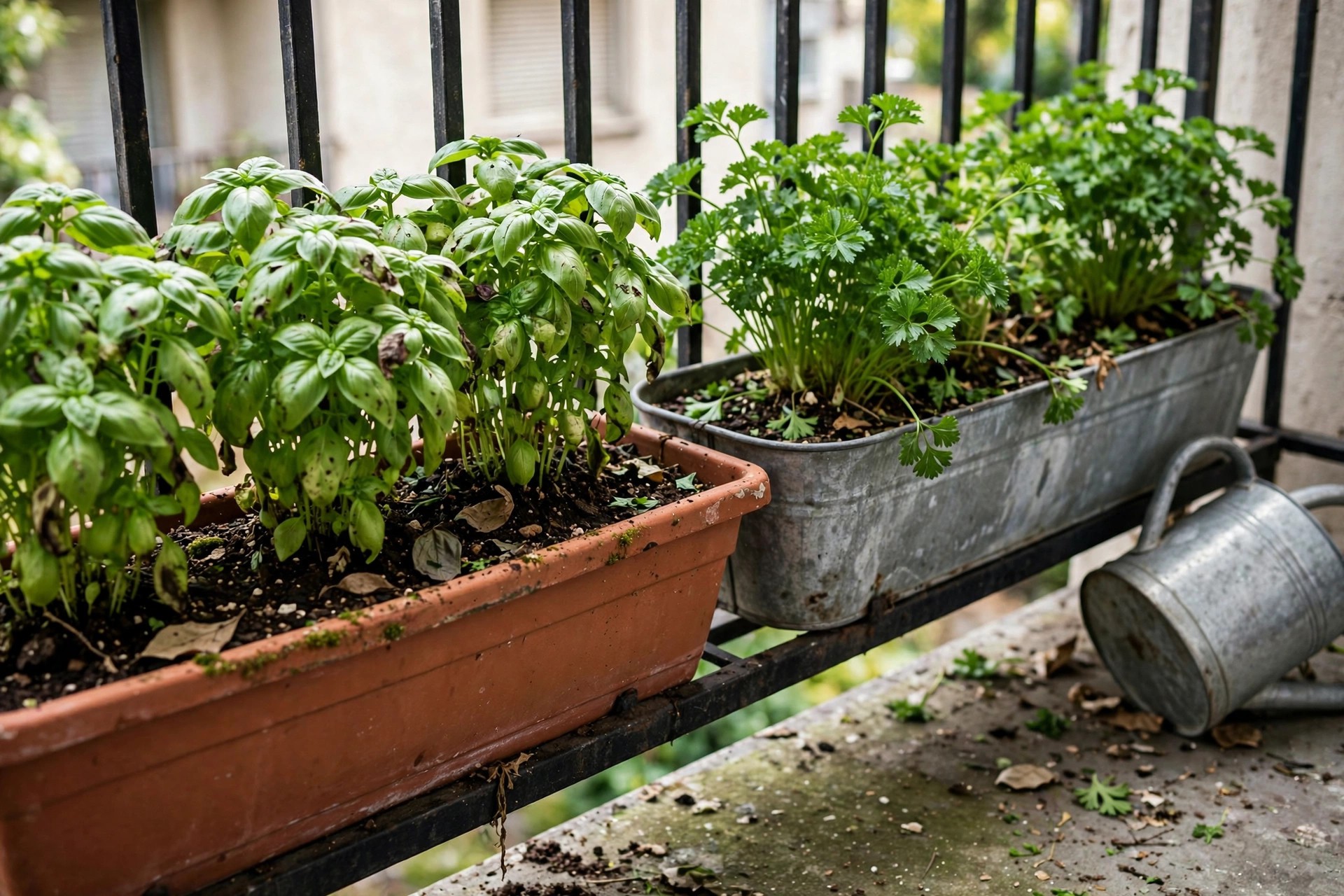
Your most-used herbs deserve the shortest journey from pot to pan, and railing planters put them at hand height, right where you stand. Hang long planters along the rail for basil, parsley and chives — the herbs most cooks reach for several times a week — and harvest little and often, pinching from the top so the plants bush out instead of bolting upward. Check the fixings suit your railing shape, and if your lease forbids anything hanging outward, face the planters inward instead.
2. A Ladder Shelf Stacked With Terracotta Pots
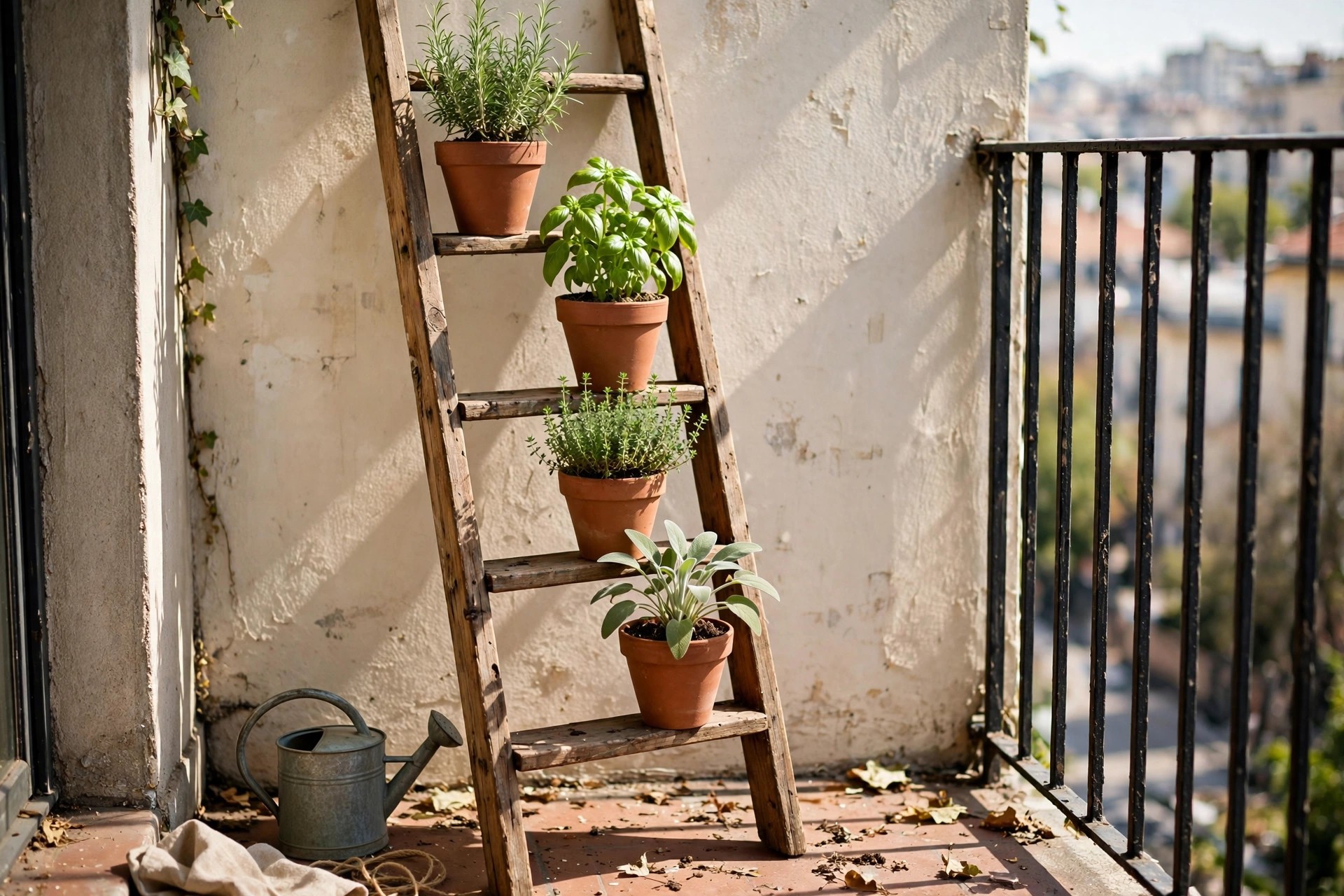
A leaning ladder shelf turns one square of floor into three or four shelves of growing space, and terracotta pots suit it beautifully. Terracotta breathes, which Mediterranean herbs appreciate, and its weight keeps small pots steady. Arrange by thirst and height: taller rosemary and sage on the lower shelves where they will not shade the rest, smaller thyme and oregano near the top. Leave breathing room between pots so air can move — crowded, damp foliage is where mildew starts. Lean the shelf against the sunniest wall.
3. Mint in Its Own Pot Before It Takes Over
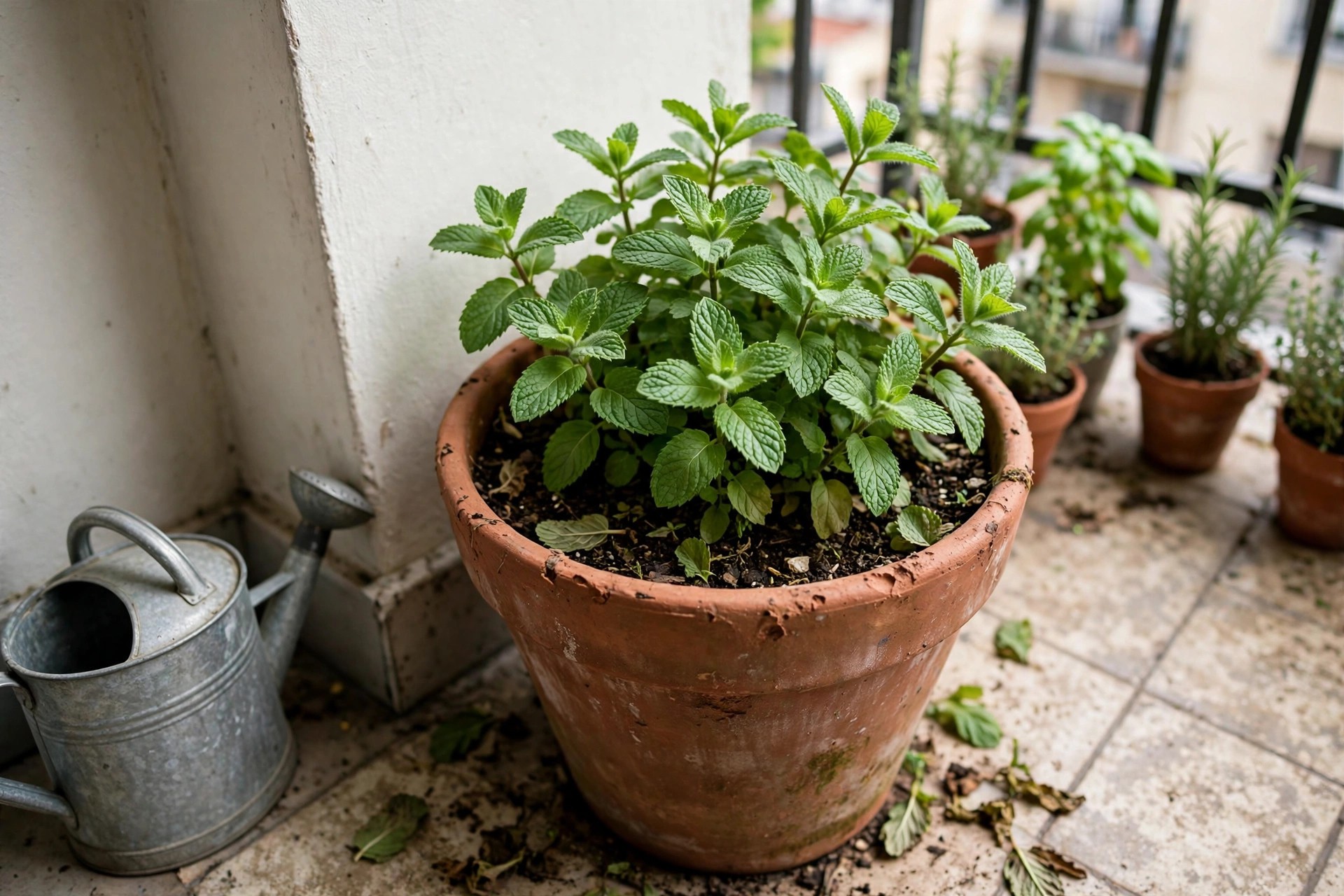
Mint is the herb every cook wants and the one that punishes generosity. Its roots spread aggressively, and in a shared planter it will quietly crowd out slower neighbours until the whole trough tastes of mint. The fix is simple and absolute: mint always gets its own pot, no exceptions, however much spare soil the big planter seems to have. The good news is that mint is forgiving in a pot — it likes more moisture than most herbs, tolerates a shadier corner, and bounces back after a hard cut.
4. Hanging Baskets for Trailing Thyme and Oregano
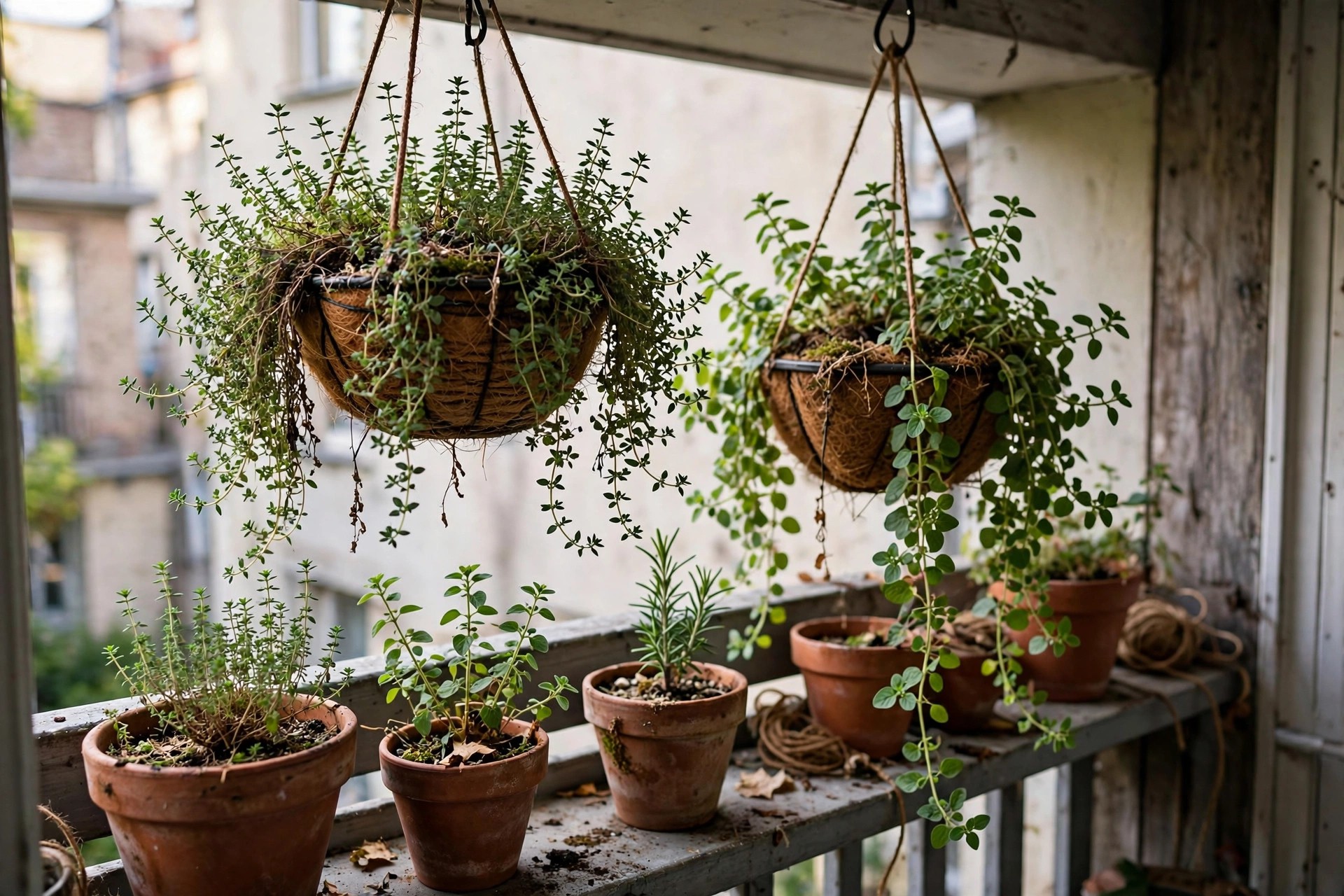
Some herbs naturally spill, and hanging baskets let them do it where they steal no shelf space at all. Creeping thyme and Greek oregano trail gracefully over a basket edge, flower modestly, and scent the air every time you brush past. Hang baskets from a sturdy bracket or the balcony above’s structure only where fixings are permitted, and always where you can reach them with a watering can without stretching — baskets dry out faster than any other container, hanging in moving air. Line them with coir to slow the drying, and check the soil daily in hot weather.
5. A Slim Potting Bench That Doubles as Storage
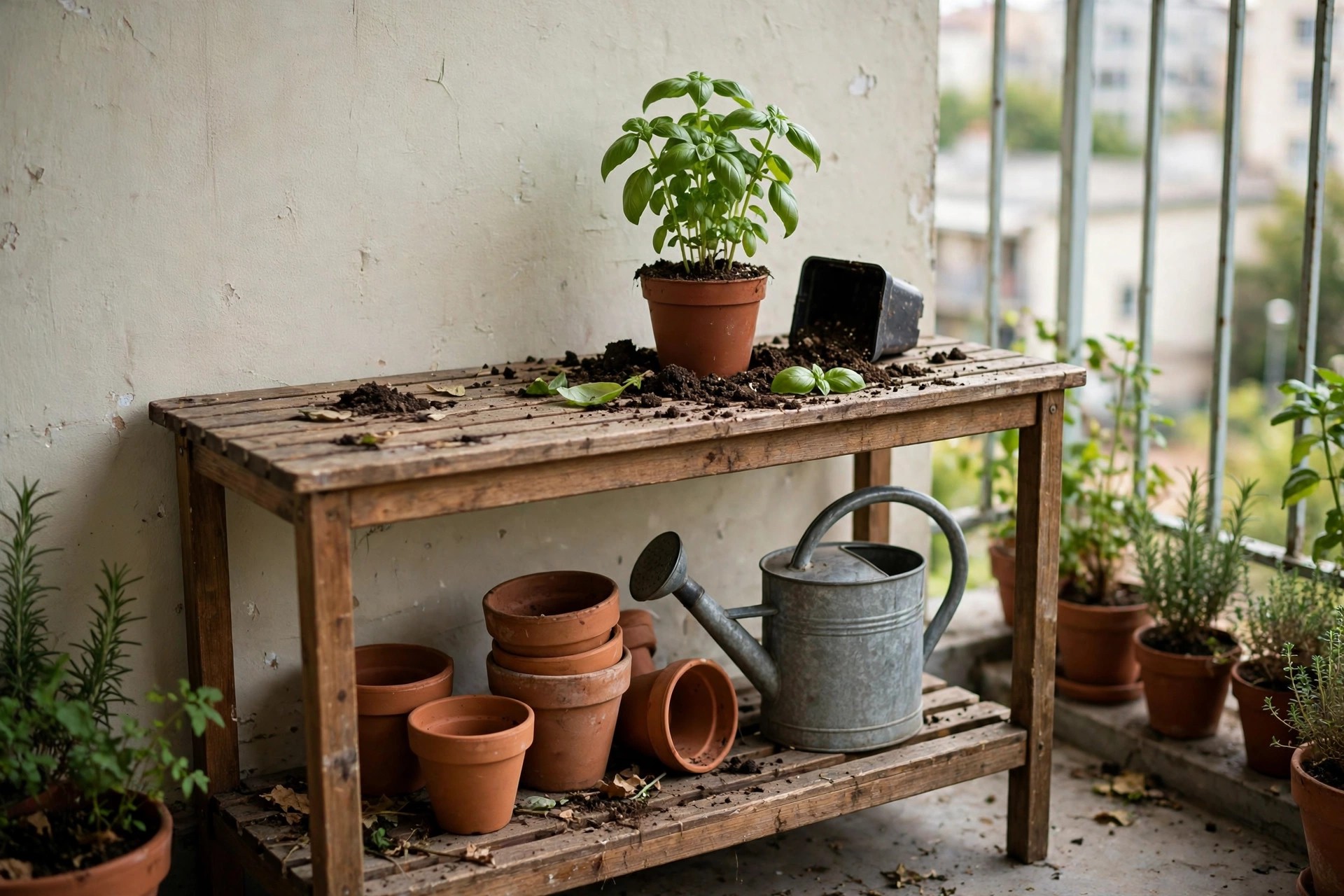
Every herb garden generates clutter — half-empty compost bags, spare pots, secateurs, feed — and on a small balcony that clutter quickly eats the growing space. A slim potting bench pushed against the wall solves it: a work surface at standing height for potting and trimming, with shelves or a lidded box below for everything else. Choose the narrowest bench that still fits a seed tray, and keep the top clear enough to actually use. It is furniture and tool store in one modest footprint.
6. A Tiered Stand in the Sunniest Square Metre
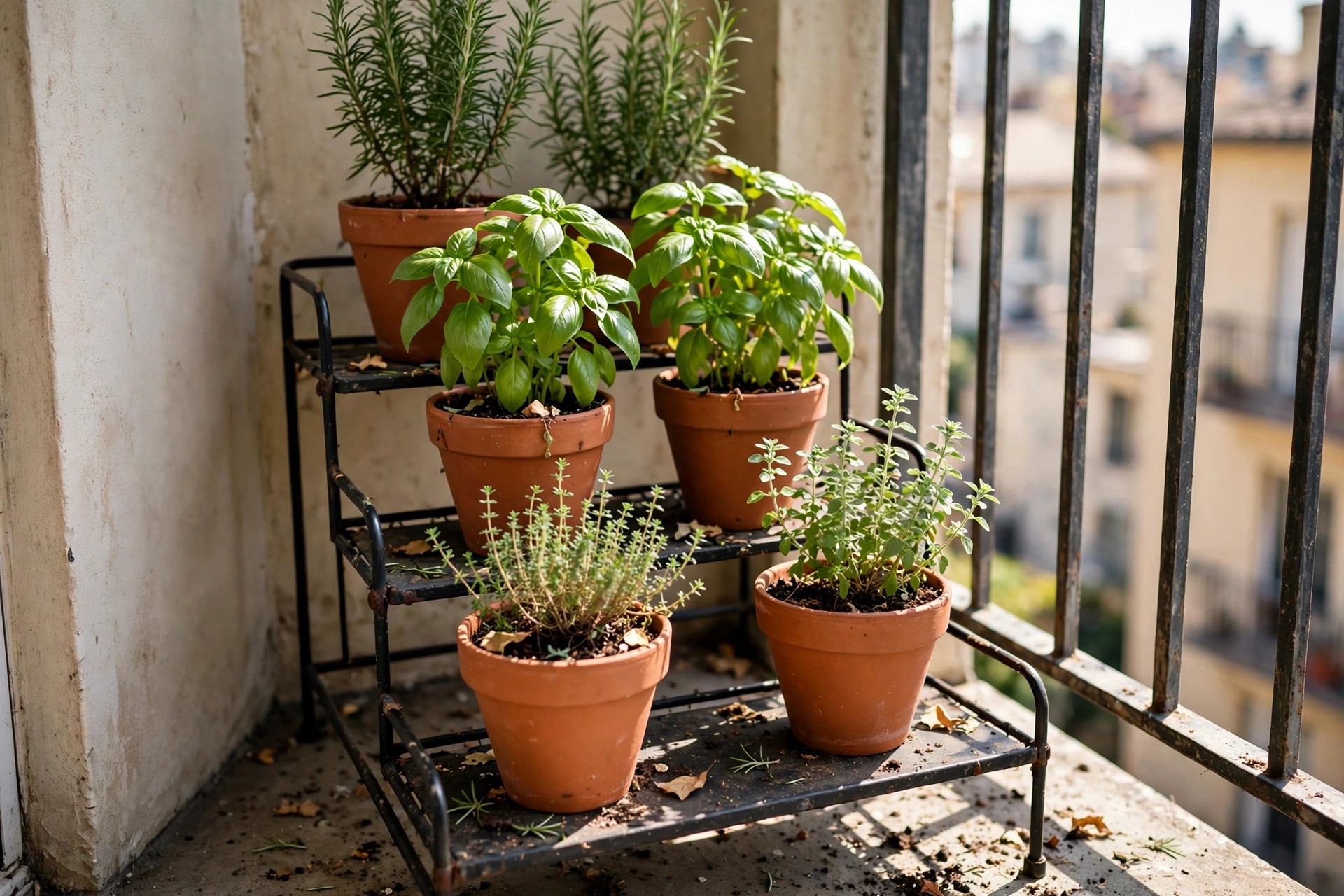
Every balcony has one spot that catches the sun longest, and that square metre is prime real estate. A tiered stand — like stadium seating for pots — lets you stack several herbs into it without the back row shading the front. Put the stand in that brightest corner and arrange by height: low thyme and oregano on the front step, basil and parsley in the middle, a tall rosemary or a bay at the back. Rotate the stand weekly, or the shadier pots will lean toward the light and grow lopsided.
7. Inside-Railing Boxes for Windy, High-Up Balconies
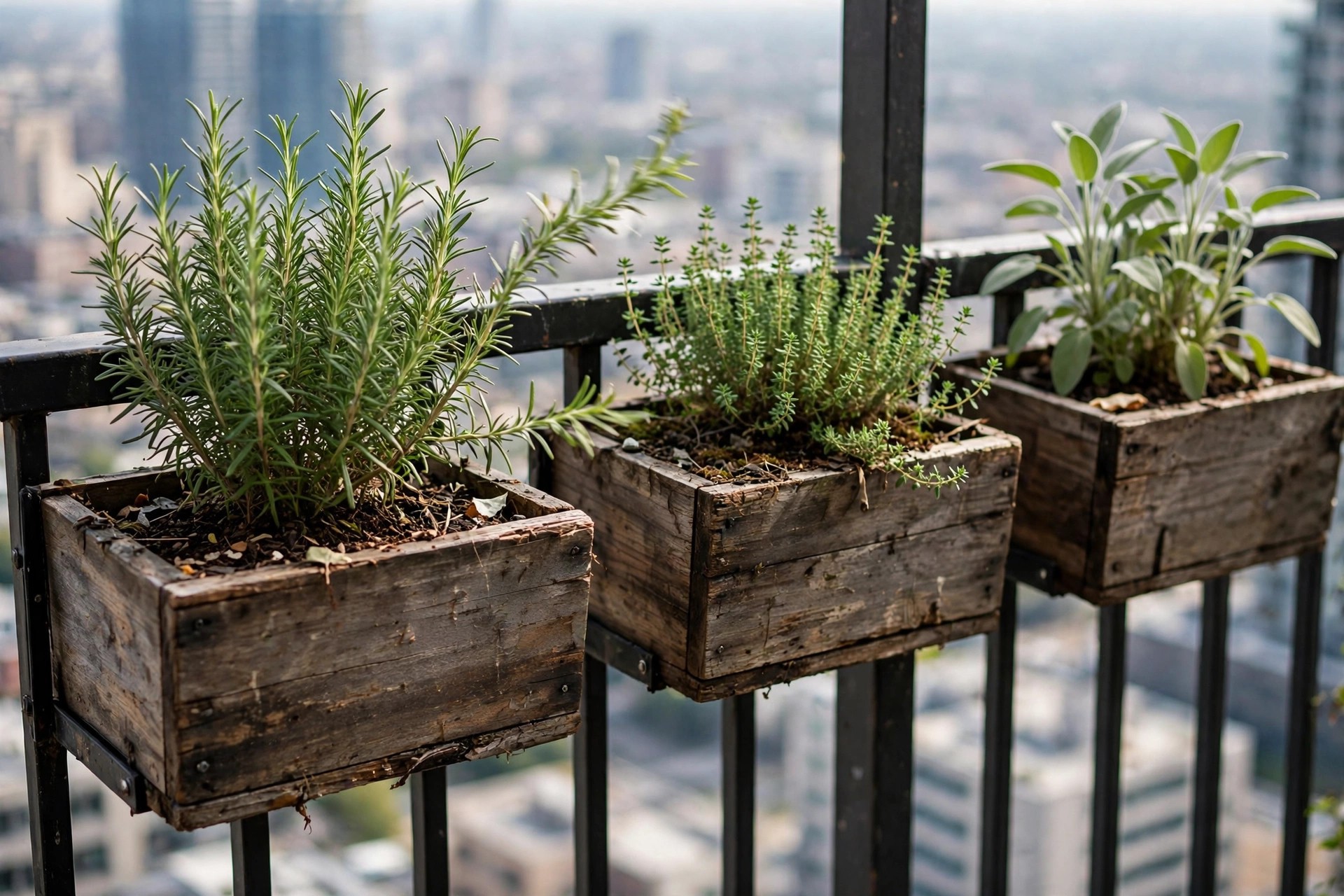
The higher the balcony, the stronger the wind — and wind is a herb killer in three ways: it dries soil fast, it batters soft leaves, and it can work a badly fixed planter loose. Boxes mounted on the inside of the railing answer all three. The plants sit sheltered behind the rail rather than exposed beyond it, nothing can fall outward, and the whole arrangement reads as part of the balcony instead of clinging to it. Choose deep boxes so roots have enough soil to buffer the drying, and put wind-tolerant rosemary, thyme and sage on the breeziest side.
8. A Stackable Planter Tower for Small Footprints
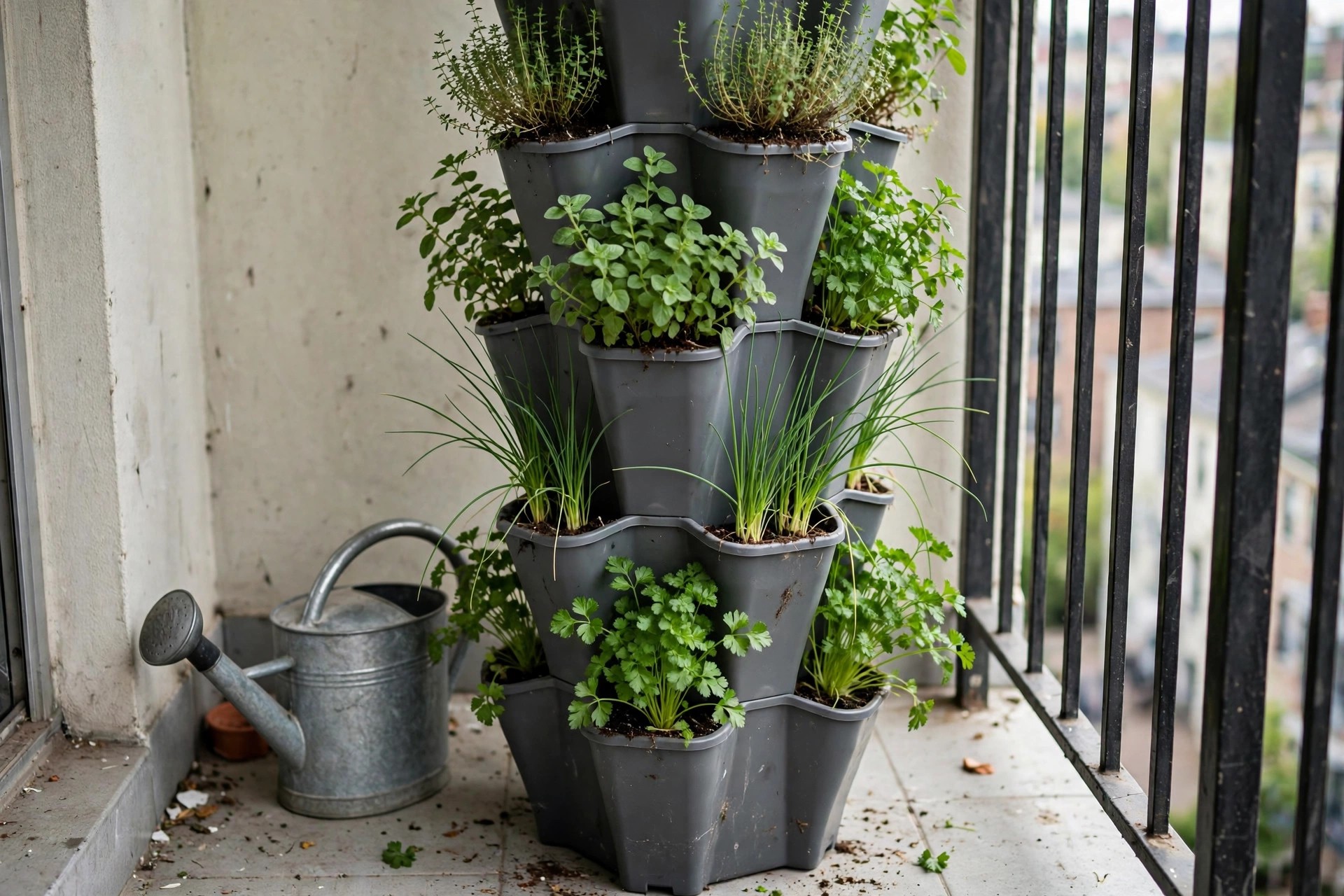
When the floor is truly tiny, grow upward in a single column. Stackable planter towers layer pockets of soil into a tower the footprint of one large pot, and each pocket suits a small, shallow-rooted herb — thyme, oregano, chives, parsley, a strawberry or two if you are feeling ambitious. Plant the thirstiest herbs in the lower pockets, where water collects as it drains down, and the drought-tolerant ones at the top. Towers dry unevenly, so water slowly from the top and check the bottom pockets before assuming the whole tower is damp.
9. Chalkboard Labels So Every Pot Earns Its Place
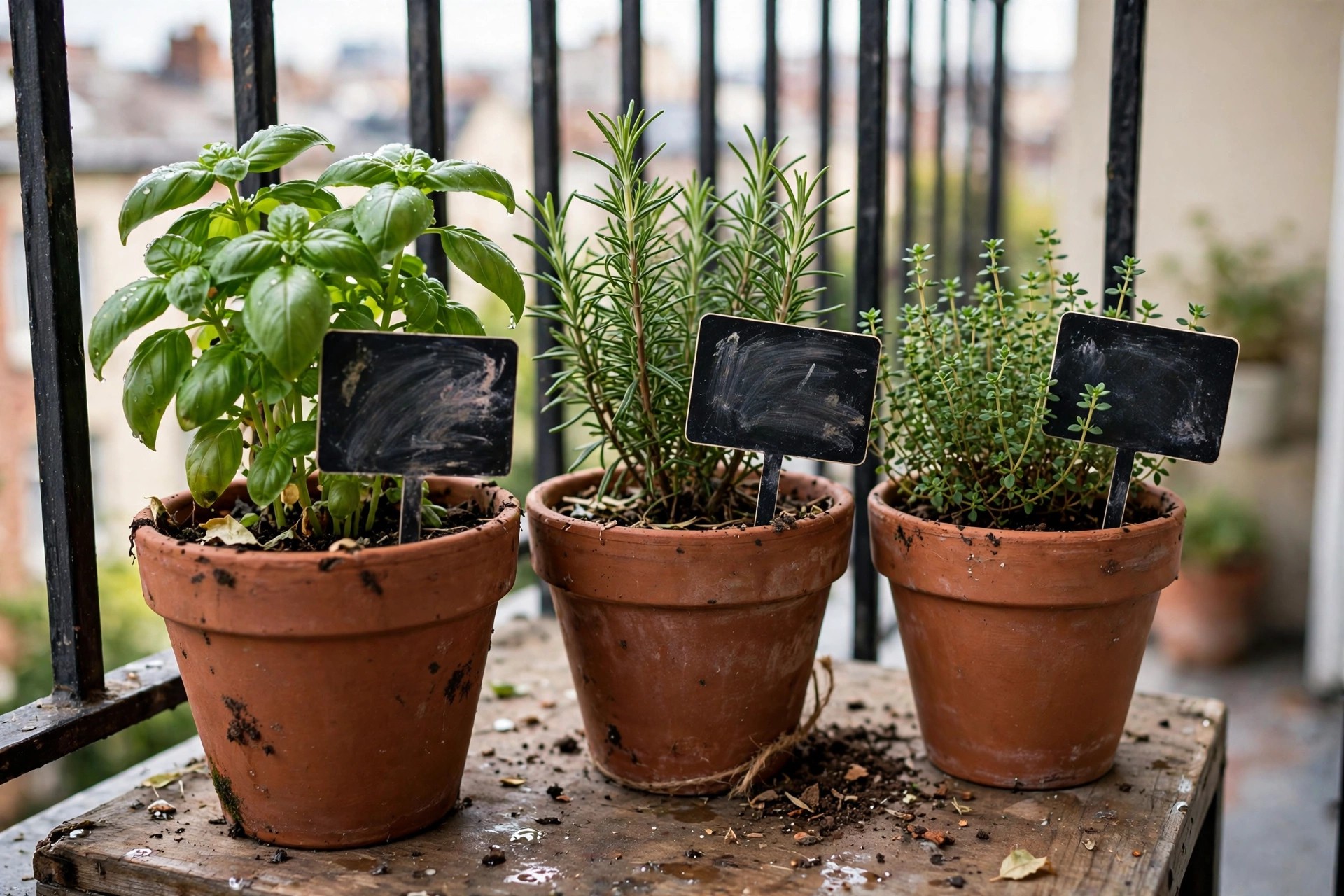
Young herbs all look alike — flat-leaf parsley and coriander are famously easy to confuse until you taste them — and labels end the guesswork. Small chalkboard labels on stakes or clipped to pot rims can be rewritten as plants change, which suits a cook’s garden where pots rotate with the seasons and the menu. Labelling has a quieter benefit too: it forces a census. The pot of something you planted in spring and never once used becomes obvious, and its sunny spot can go to an herb you will actually cut. Label the variety as well as the herb; mint flavours vary enormously.
10. Drip Trays and a Watering Routine the Neighbours Below Will Thank You For
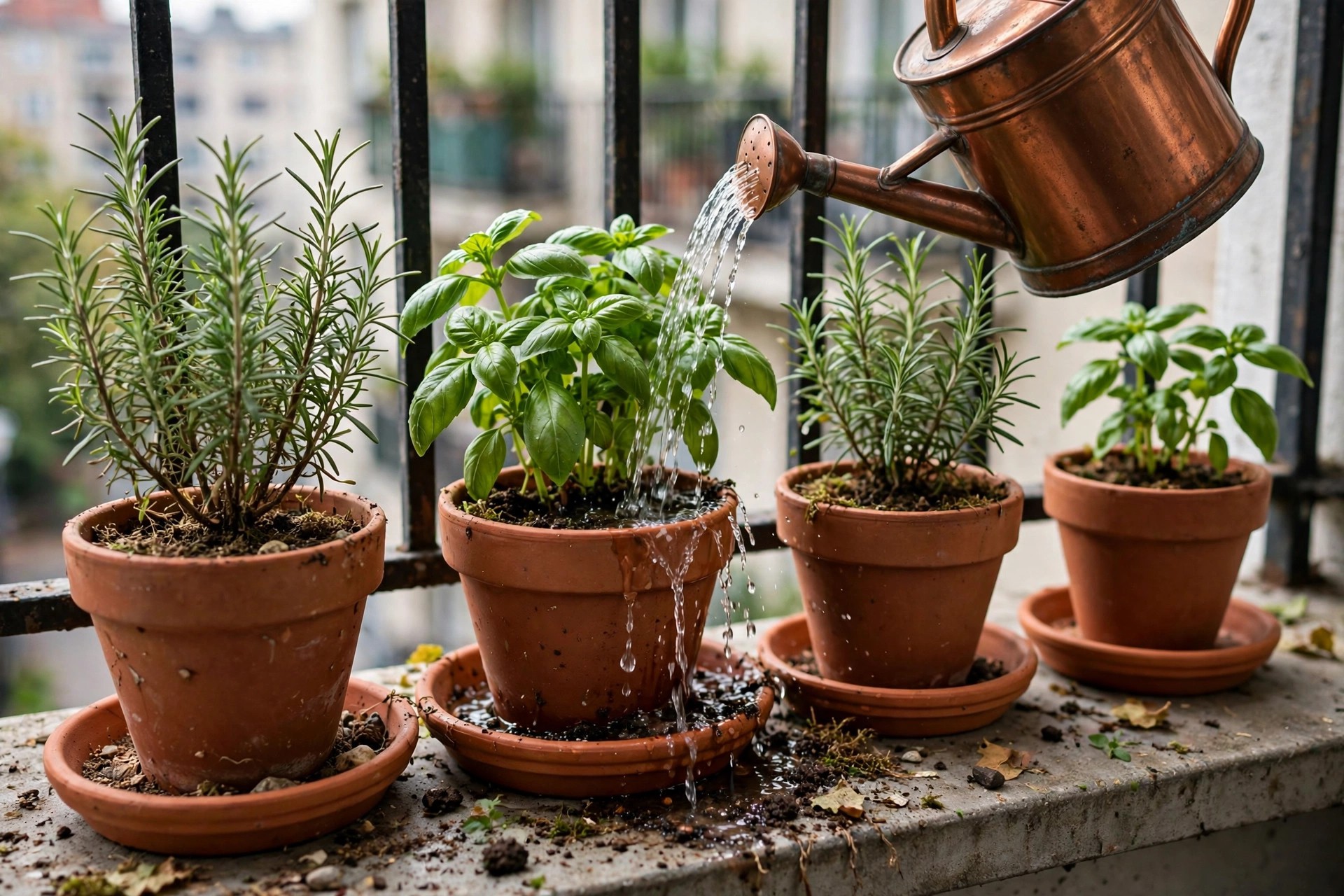
Balcony gardening has one social rule: your water should never become the downstairs neighbour’s shower. Sit every pot in a drip tray or saucer deep enough to catch the excess from a thorough watering, and empty trays that stay full — roots sitting in stagnant water rot quickly. Water in the morning where you can, slowly, at the soil rather than over the leaves, and stop when the tray just begins to fill. In hot spells a saucer of water under thirsty basil is a kindness; for everything else, catch and tip away.
11. Lavender and Scented Herbs Where You Sit in the Evening
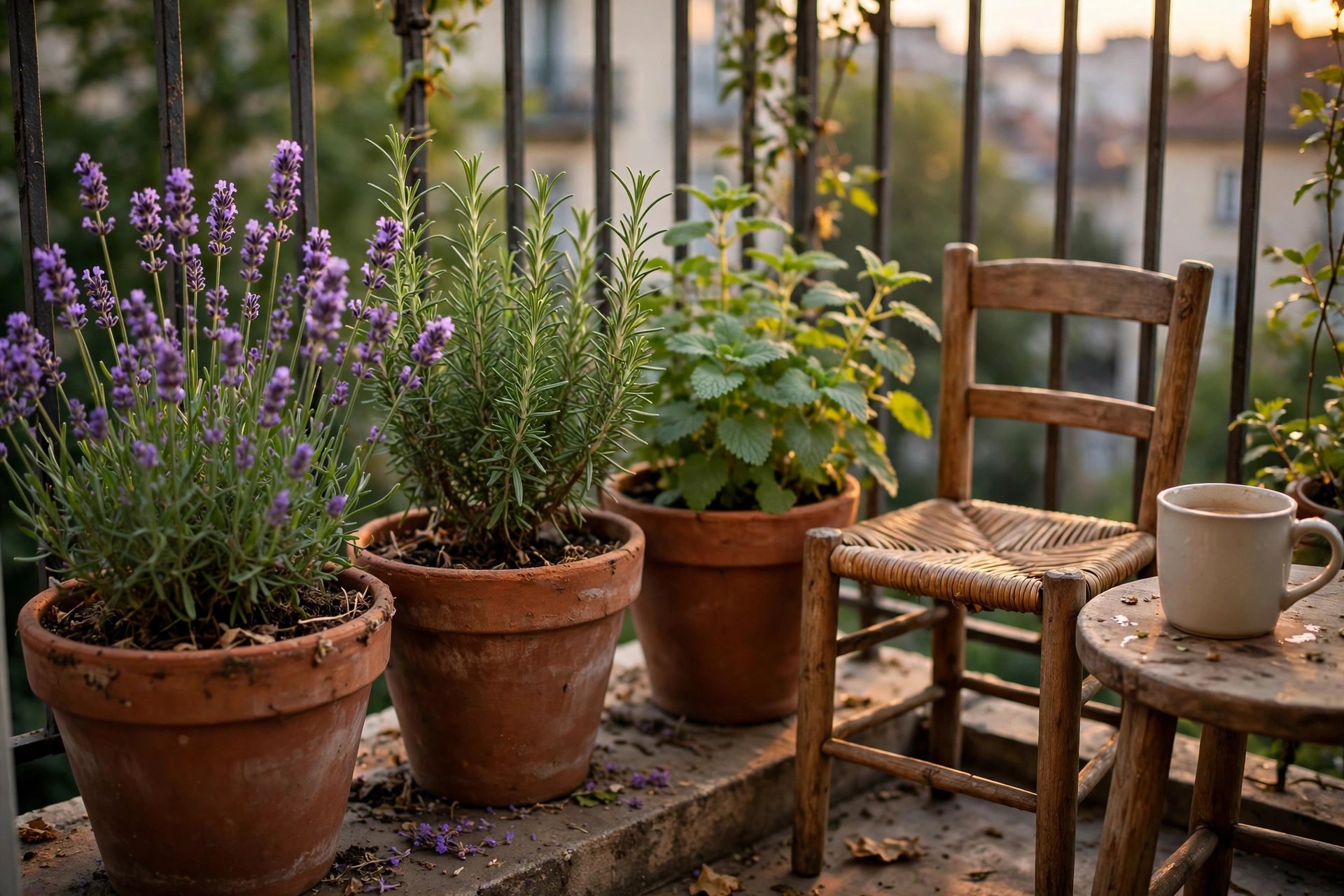
Reserve the pots nearest your chair for scent rather than supper. Lavender, lemon balm, scented geraniums and a bushy rosemary release their fragrance when brushed or warmed by the last of the sun, which is exactly when you are sitting among them with a drink. None of this is wasted on a cook, either — lavender flowers dry beautifully for baking, and lemon balm makes a fine evening tea. Position scented pots at hand height beside the seat, where fingers will brush the leaves.
12. A Bistro Chair Among the Pots — the Garden as a Room
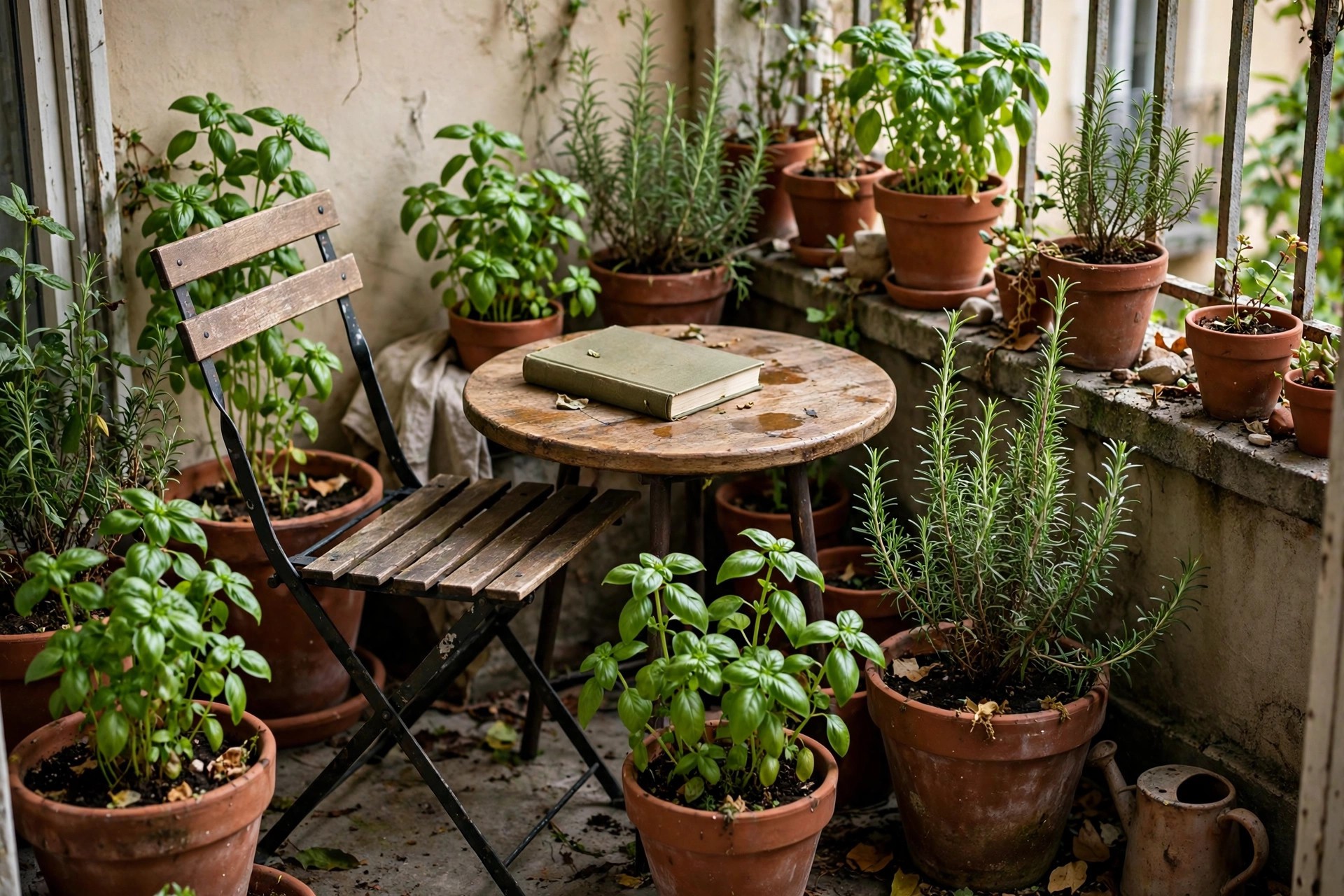
If there is no room to sit in it, a balcony garden becomes a chore you visit with a watering can. Defend one seat fiercely: a folding bistro chair and the smallest café table, tucked among the pots, turn the herb garden into the apartment’s extra room. Morning coffee among the basil is also how you notice problems early — a plant you sit next to daily shows its thirst long before a neglected corner does. Keep the chair foldable for potting days.
13. Solar Stake Lights for Evening Harvests
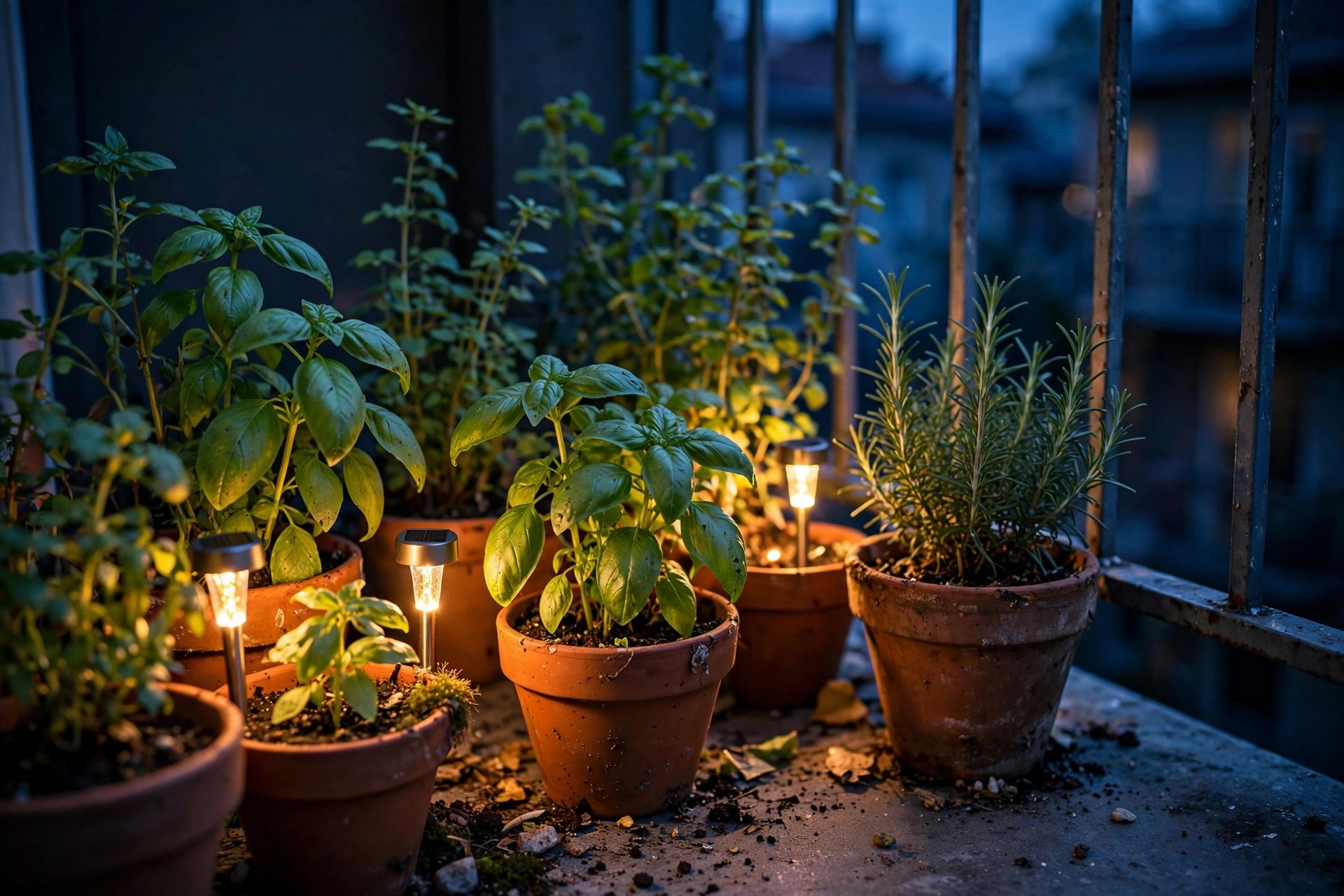
Half the year’s cooking happens after dark, and the herb run — out the door, scissors in hand, in the rain — is no time to be guessing which pot is the parsley. Small solar stake lights pushed into the largest pots charge all day on the balcony and switch themselves on at dusk, marking the paths and pools of scent you actually use. They ask for no wiring and no drilling, which keeps them renter-safe. Choose warm-white stakes and keep them low, lighting the pots rather than the sky.
14. A Self-Watering Trough for Thirsty Basil
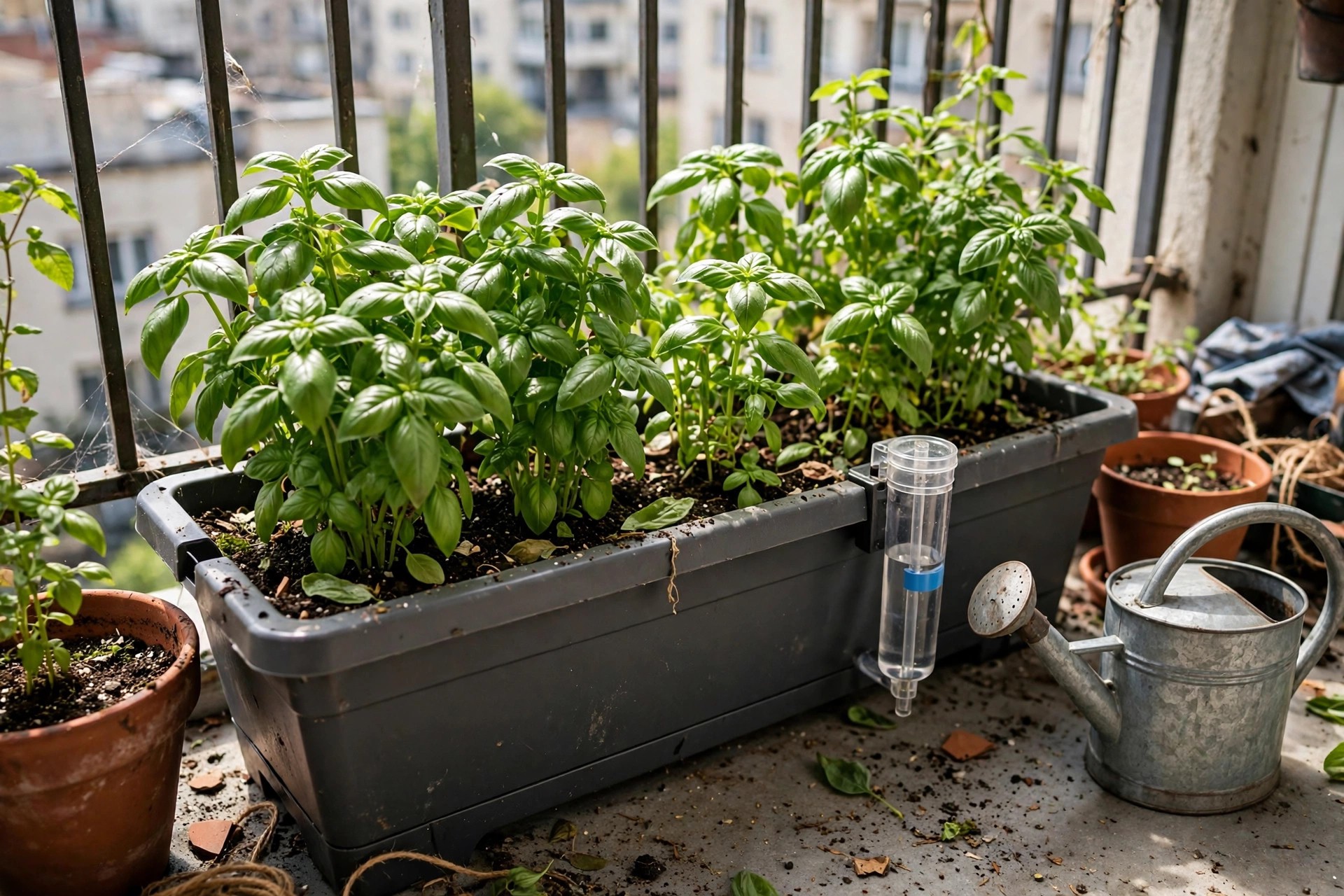
Basil is the herb apartment cooks most want and most often kill, and the usual cause is not neglect but irregular watering — bone dry by Friday, flooded on Saturday. A self-watering trough, with a reservoir below and a wick or false floor drawing moisture up, smooths out that swing and keeps basil evenly damp, which is all it ever asked for. Use the trough for basil alone or pair it with parsley, another herb that sulks when dry. Top the reservoir up when you water everything else, and still check the surface soil now and then.
15. A Windowsill Tray Ready to Overwinter Your Favourites
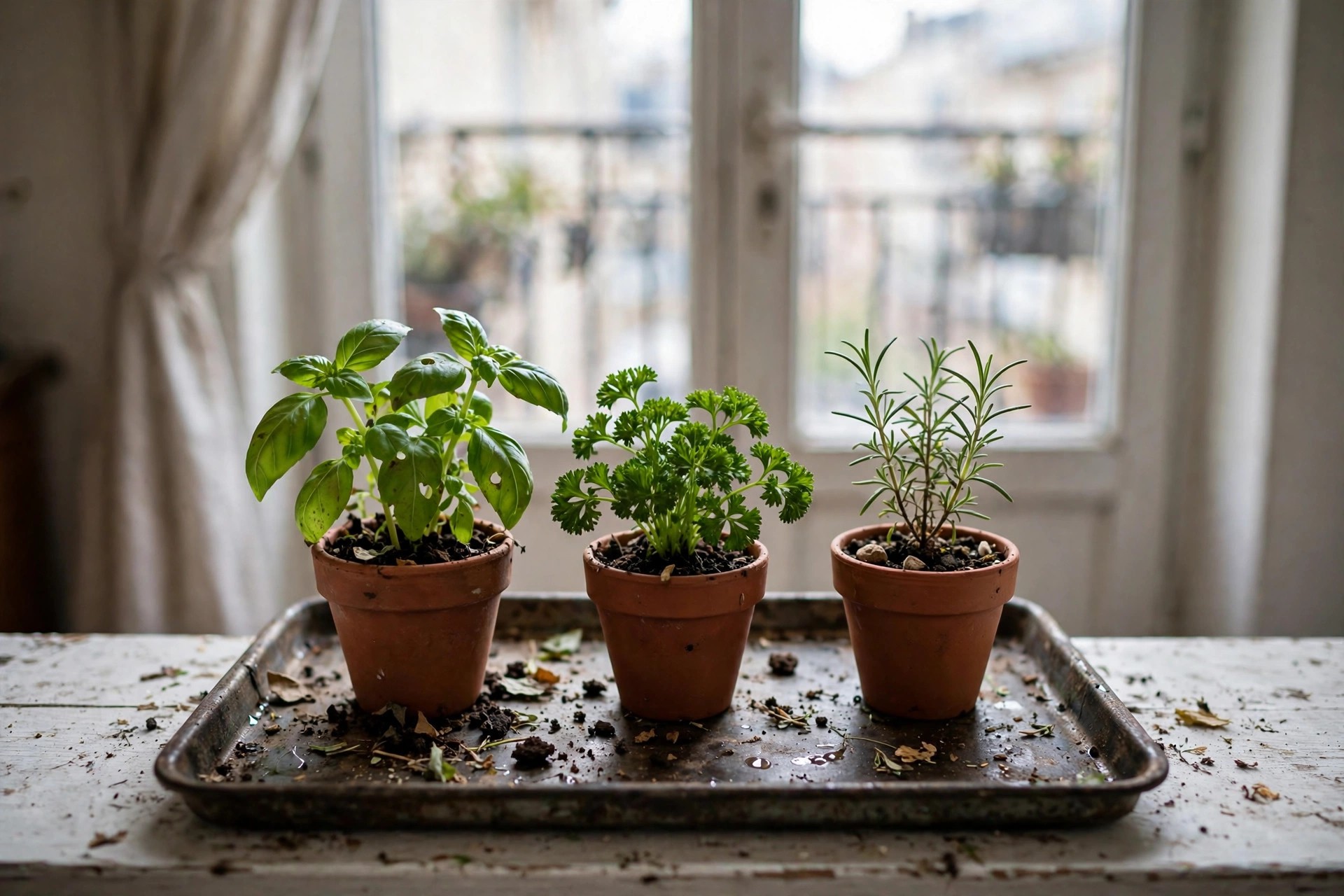
Balcony herbs divide into the tough and the tender, and the tender ones — basil above all, plus any young plants you raised late — will not survive a cold winter outside. Plan their retreat before the first frost: a simple tray that fits your brightest indoor windowsill, sized for your three or four favourite pots. Check the leaves for hitchhiking aphids before they come through the door, and expect slower growth indoors — you are keeping them alive, not cropping heavily. Come spring, harden them off over a week of daytime trips outside before they move back for good.
Common Mistakes to Avoid
1. Planting mint in a shared trough. It feels thrifty and it ends badly. Mint spreads by runners and crowds out everything sharing its soil, so the mixed trough of dreams becomes a mint box with a few struggling survivors. Mint always gets a pot of its own.
2. Using pots with no drainage holes. On a balcony this fails twice: roots sit in water and quietly rot, and the overflow finds its own way out — usually over the edge, onto the balcony below. Drill the pot, or use it as a sleeve with a drained pot inside, always over a tray.
3. Buying a dozen herbs you never cook with. A balcony filled with novelties starves the regulars of sun and space. Start with the five herbs your weekly cooking actually uses, grow them well, and let new arrivals earn their place the way a new recipe does — by getting cooked, repeatedly.
Frequently Asked Questions
Which herbs grow best on a small balcony?
Start with the Mediterranean core — rosemary, thyme, oregano and sage are tough, sun-loving and happy in pots — then add basil in the warmest spot, flat-leaf parsley, chives and mint in its own pot. Between them they cover most everyday cooking.
How often do balcony herbs need watering?
There is no fixed schedule, because pot size, sun and wind matter more than the calendar. Check with a fingertip: if the top couple of centimetres of soil are dry, water thoroughly. In summer that often means daily for small pots and hanging baskets; in spring and autumn, every few days.
Can I grow herbs on a shady balcony?
Yes, a useful selection — just not the sun-worshippers. Mint, parsley, chives, coriander and lemon balm all tolerate partial shade. Basil, rosemary and lavender grow leggy and flavourless without real sun, so on a genuinely shady balcony, skip them and lean into the shade-tolerant list instead.
How do I stop pots dripping onto the balcony below?
Three habits cover it: every pot stands in a drip tray deep enough for a full watering’s excess, you water slowly at soil level and stop when the tray starts to fill, and you empty trays rather than letting pots sit in standing water. Self-watering planters help too, since their reservoirs catch what would otherwise escape.
Final Thoughts
A balcony herb garden succeeds on a short list, honestly chosen: the herbs your cooking already loves, in the sunniest square metre you have, watered before they have to ask. Everything in these fifteen ideas exists to protect that simple arrangement — to fit it on a railing, up a wall, around a chair — and if you are reshaping the whole space, our small apartment balcony ideas show how seating, storage and planting fit together. The think-in-zones approach in these entryway ideas for dog owners is a good model, too — muddy paws there, tender basil here. Start with five pots this weekend, and let dinner decide what earns the sixth.


