

15 Neutral Bedroom Ideas for a Calming Nursery Corner
One calm palette really can serve two sleepers at once: you, and the baby sleeping a few steps from your bed. The trick is to stop treating the corner as a second room with its own colors.
These neutral bedroom ideas for a calming nursery corner keep your adult beige, cream, and warm white tones in charge. The corner borrows from the room it sits in, so nothing jars at 2 a.m. or in bright morning light.
For the setup itself, our nursery nook ideas in a parents bedroom guide covers the practical side. This list stays on palette only: tone, texture, contrast, and light.
A small corner also helps you here. With so little space to fill, three or four tones cover it fully, and each tone you repeat from the adult side earns its place twice over.
Work through the fifteen choices below in order, or start with the one your room gets wrong today. Each one is a small color call, not a shopping trip.
This post contains affiliate links. If you buy through them, we may earn a small commission at no extra cost to you. See our Affiliate Disclosure.
1. Carry Your Room Palette Straight Into the Corner
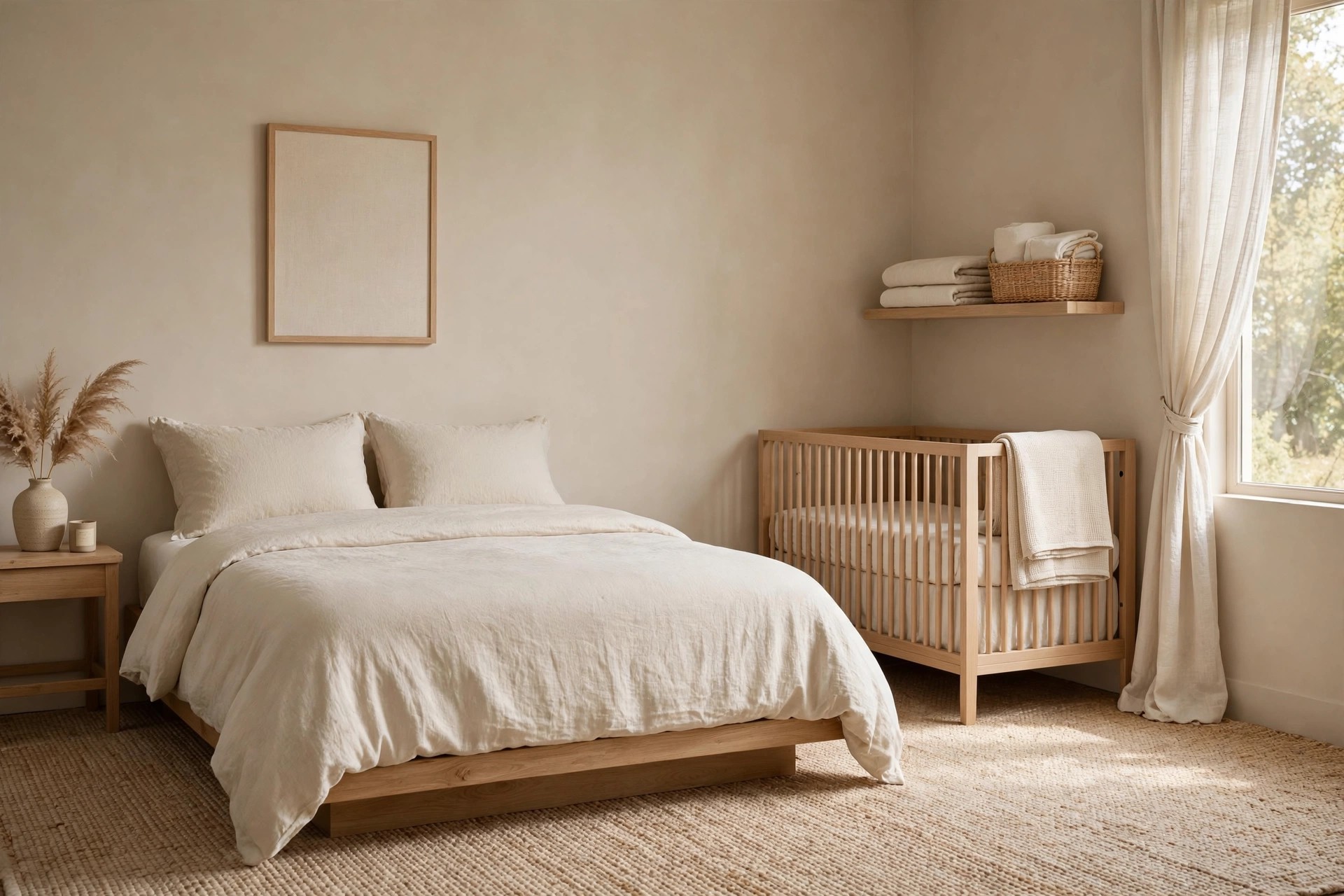
The most common slip is giving the corner a fresh palette of its own. A new color family in one small patch makes the whole bedroom feel split in two, even when each color is soft.
Pull the corner tones from what you already own. If your bedding is cream, your walls are warm beige, and your rug is oatmeal, the corner uses those same three tones and no others.
Hold a pillowcase or a fold of your duvet beside any corner textile before you buy it. In daylight, the match should look like family, not like a close guess from across the shop.
This one rule does most of the calming work. A shared palette reads as one quiet room, and one quiet room is the whole point of the corner.
2. Keep Contrast to One Step, Never a Jump

Use this simple test: every tone in the corner should sit one step lighter or one step darker than a tone already in the room. One step soothes. Three steps shout, even in beige.
Stark white beside deep taupe is a jump. So is a near black frame or a bold black and white print hung over the corner, however small the piece looks in the shop.
Soft contrast still gives the eye a place to rest. A sand cushion on a cream chair, or a stone gray blanket on warm white bedding, marks the corner without raising the room volume.
Stand in the doorway and squint. If one item in the corner pulls your eye first every time, its contrast is too strong for the palette around it.
3. Pick Warm White Over Bright White for Corner Textiles
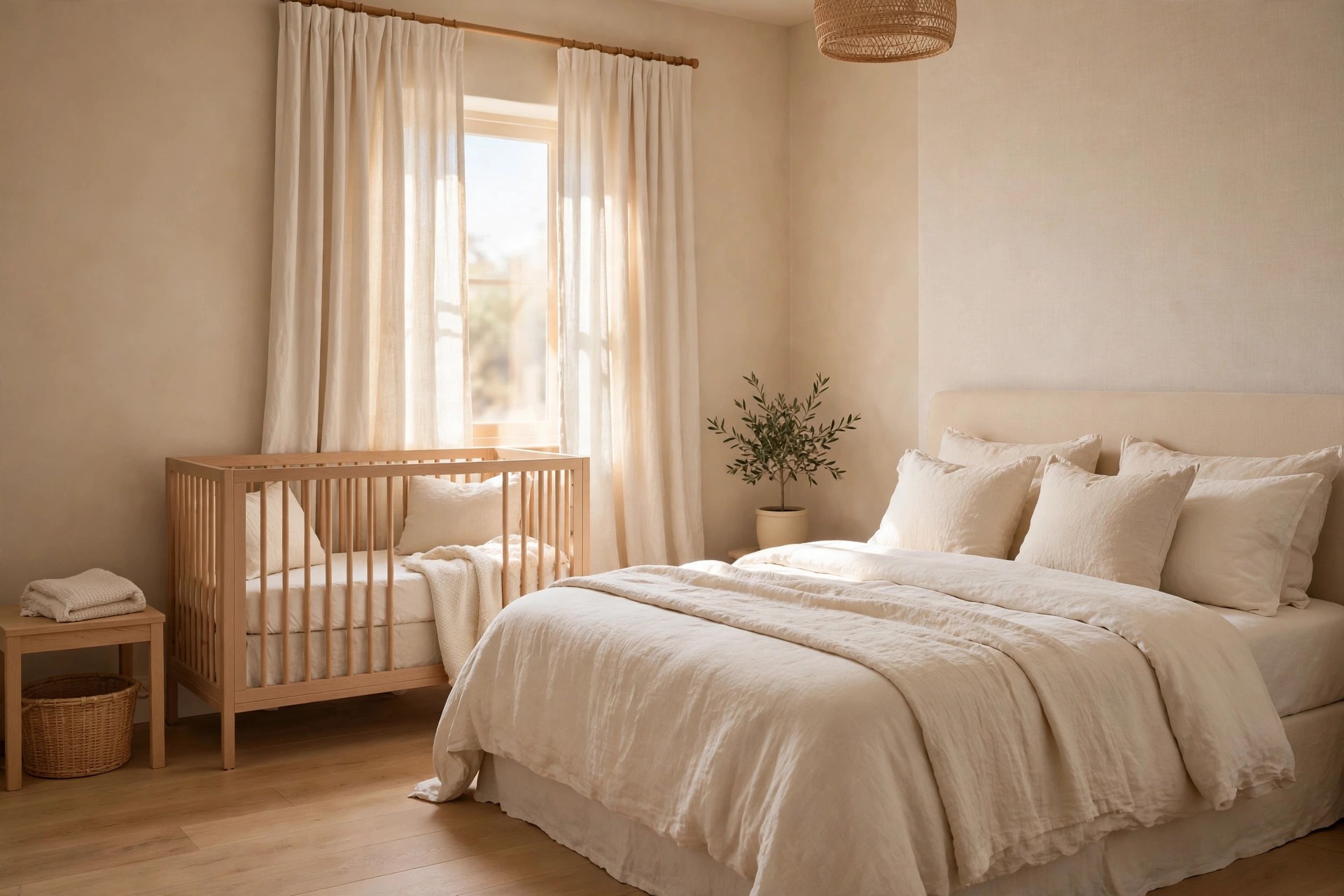
Bright white and warm white look alike on a screen and very different on a bed. Beside cream and beige, bright white reads blue gray and a little cold, like a sheet that missed the wash.
Warm white carries a drop of yellow or cream in its base. It sits beside beige without a hard edge, so blankets, curtains, and cushions in the corner blend with the adult bedding nearby.
Test the two whites side by side on your own bed at noon. The bright one will look cleaner for a second, then colder for the rest of the day.
Our all-cream bedroom ideas show this warm white logic across a whole room. In a shared room, it keeps the smallest corner from glowing like a laundry pile.
4. Build Interest With Texture, Not Extra Color
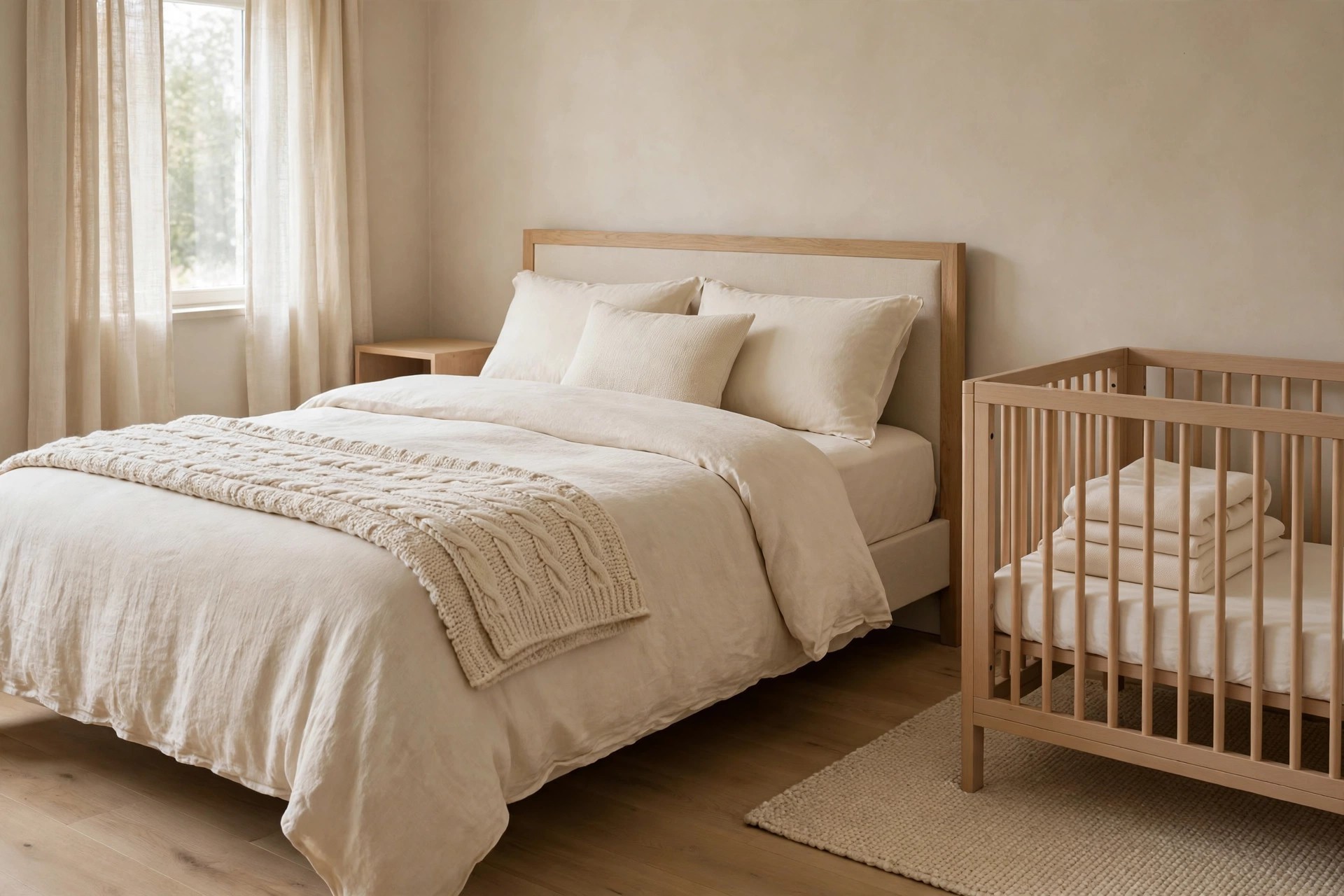
Look close at a calm corner and you will see the interest is in the surfaces, not the shades. Washed linen, a loose knit, smooth cotton, and a woven mat can all share one cream tone and still read as four layers.
Texture catches light in small ways. A knit throws a soft shadow, linen shows a fine grain, and a woven piece adds a quiet pattern of light and shade across the corner.
Keep the mix to three textures in the corner itself. More than that starts to feel busy at close range, and this corner is always seen at close range.
Run your hand across the layers before you judge them. If they feel varied but the colors stay level, the corner will hold attention without asking for it.
5. Anchor the Corner With One Slightly Deeper Beige
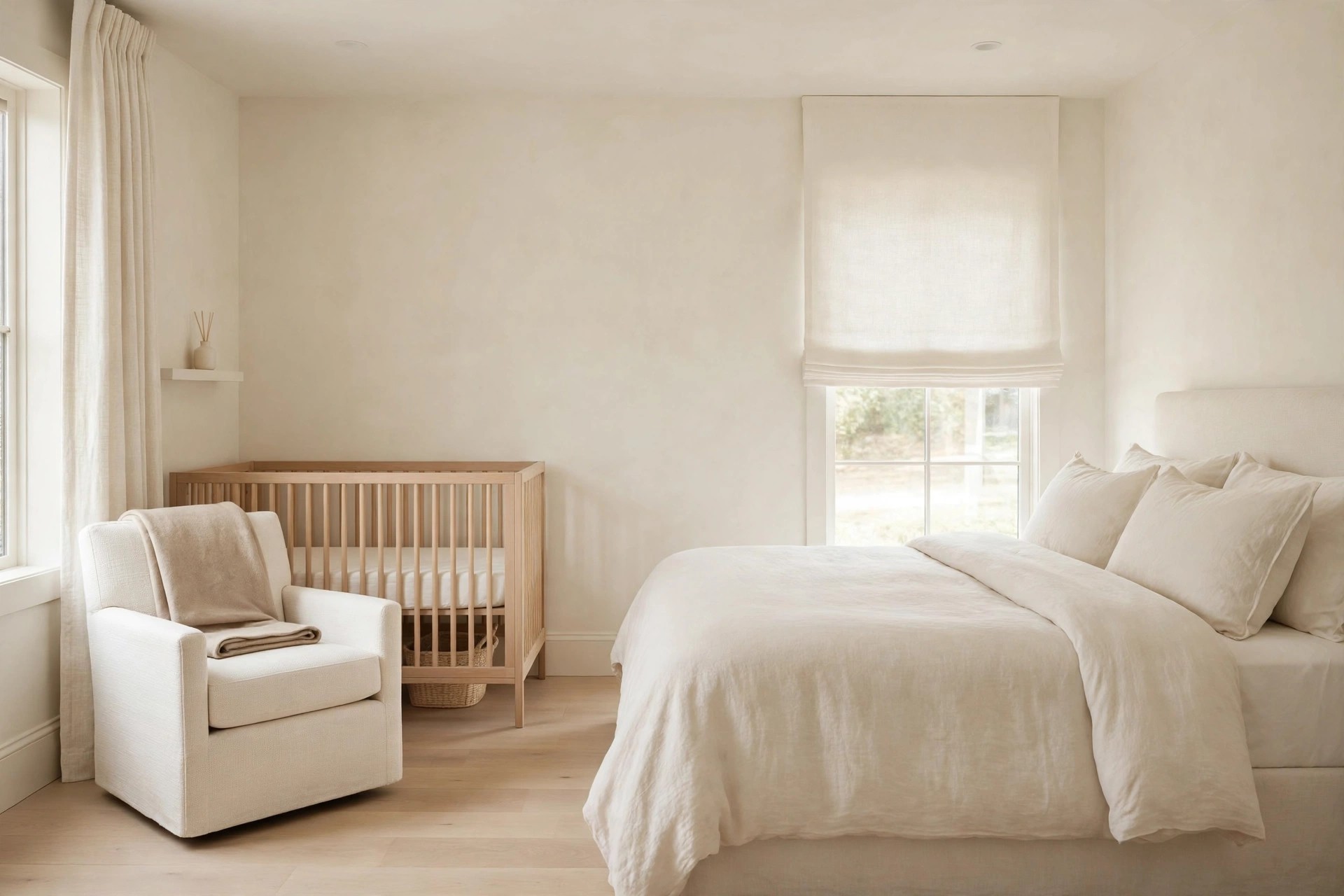
A corner in the exact wall tone can vanish, which sounds calm but often reads unfinished. One deeper beige, used once, gives the corner a quiet edge and tells the eye where it starts.
Choose a tone about two shades deeper than your wall or bedding base. Use it on a single surface: a cushion, a folded throw, or a small rug under the corner.
Stop at one. A second deep piece in the same small space starts a new, darker scheme, and the corner begins to pull away from the room again.
The warm beige bedroom ideas on this site use the same anchor trick at room scale. Here it works in miniature, one deep note inside a pale frame.
6. Match the Corner Wood Tone to Your Own Furniture
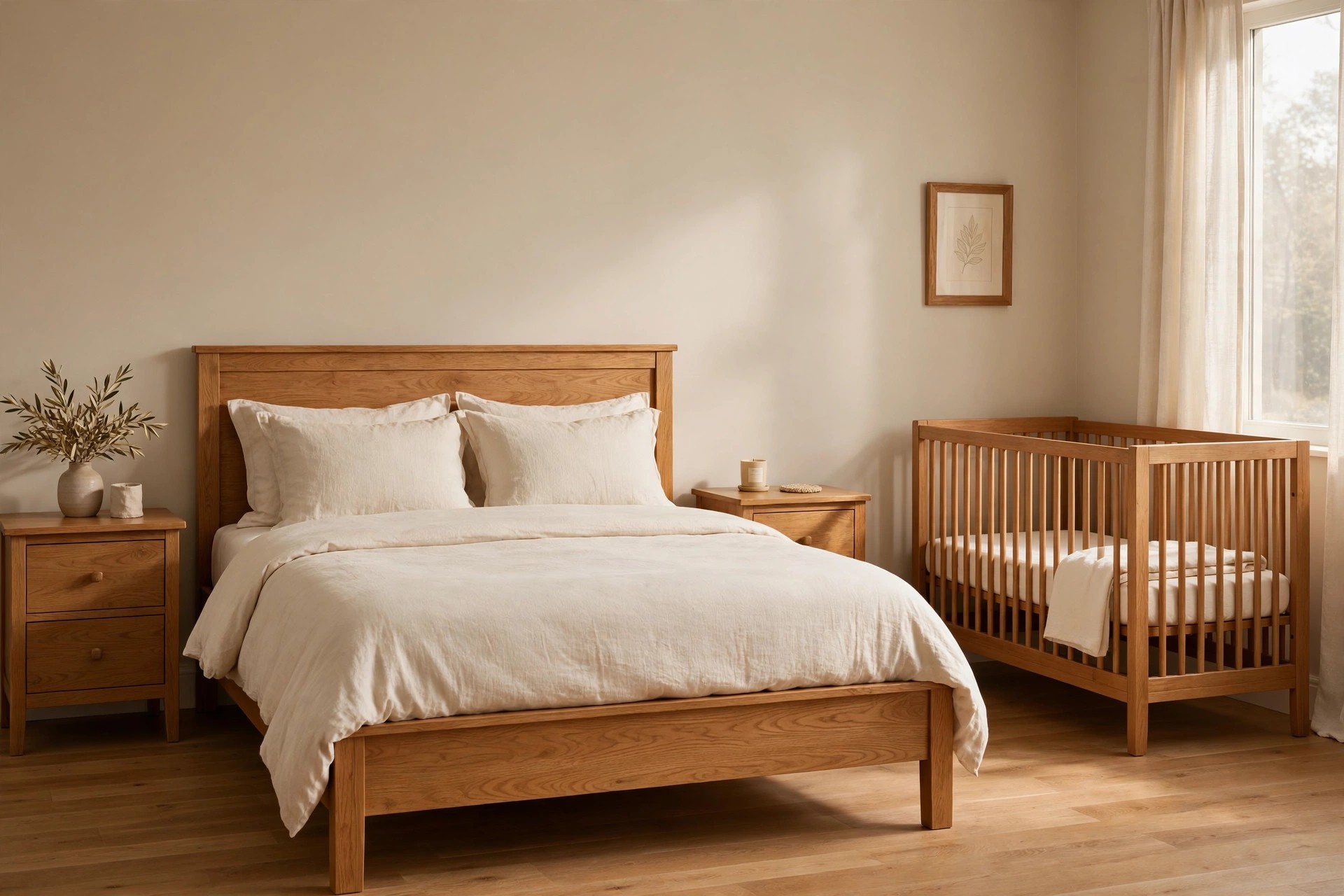
In our room, the corner looked wrong for a week before the reason clicked. Every textile matched, but the pale ash wood near the corner fought the warm oak of our bed frame across the room.
Wood is a color in a neutral room. Honey oak, warm walnut, and pale ash each pull the palette a different way, and two clashing woods read louder than two clashing fabrics.
Bring one wood tone from the adult side into the corner and repeat it once. A frame, a small tray, or a basket rim in the same family ties the two zones together.
Check the match in morning light, not lamplight. Warm bulbs forgive wood clashes that daylight shows at once.
7. Skip Busy Prints and Keep Pattern Tonal and Small
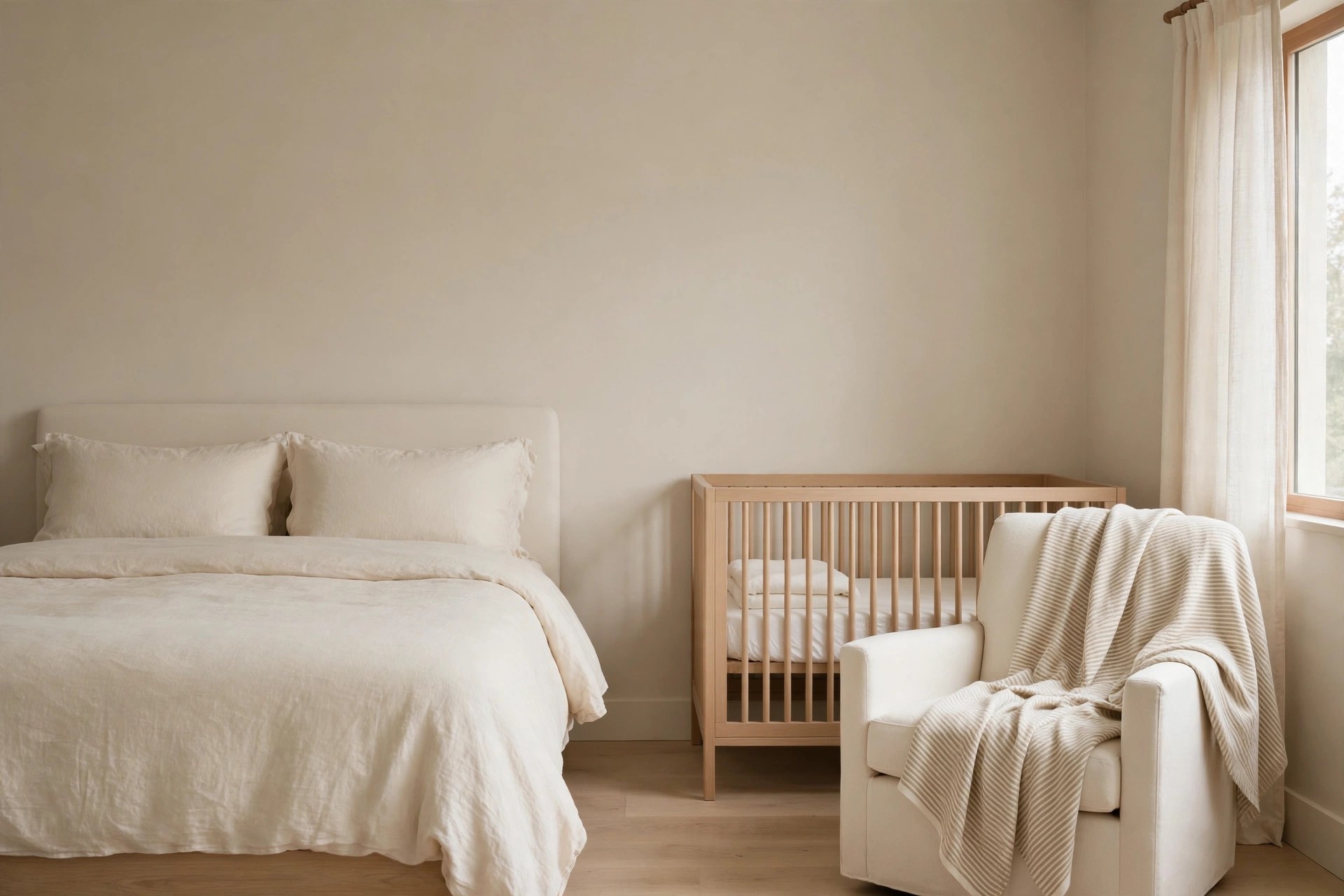
One loud print can undo a soft palette in seconds. Large checks, bold stripes, and bright cartoon style prints raise the energy of the whole corner, even when the colors behind them are neutral.
Pattern itself is not the problem. A fine stripe in cream and sand, a tiny check in two beiges, or a soft woven diamond in one tone adds depth while the palette stays low.
Keep the scale small and the gap between the two pattern tones narrow. If you can spot the print from the bedroom door, it is probably too strong for this corner.
Limit the corner to one patterned piece. The rest stay plain, so the pattern reads as texture rather than as a theme.
8. Share One Warm Light Across the Whole Room
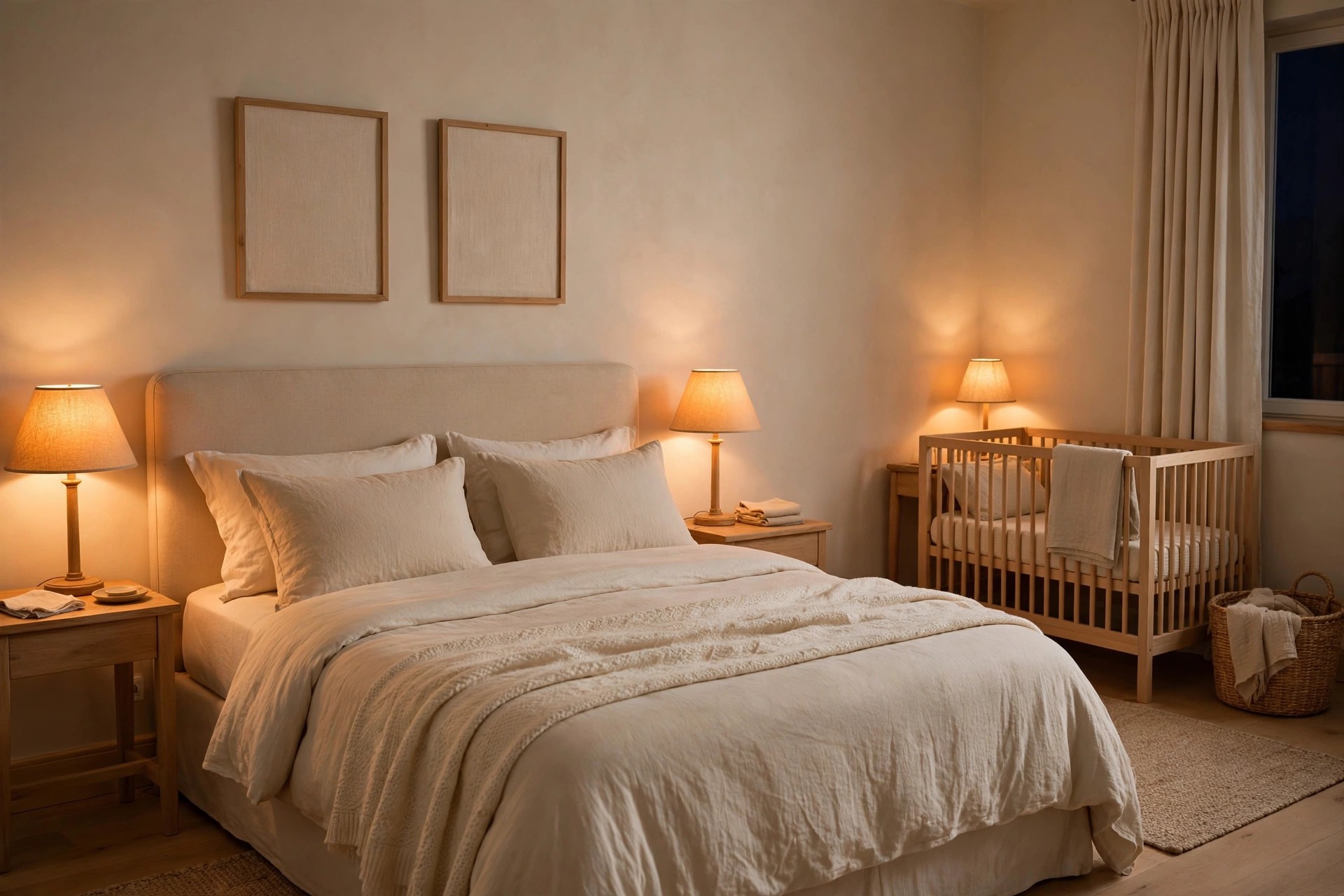
Think of the room at ten at night, lamps on, house quiet. If the corner sits under a cool white bulb while your side glows warm, the palette splits in two, however well the fabrics matched at noon.
Use the same warm bulb tone in every lamp in the room, corner included. Warm light deepens beige and cream in the same kind way on both sides of the room.
Keep the corner light low and shaded rather than bright and bare. A soft shade spreads the glow across the textiles, so tones melt together instead of showing hard edges.
Our warm neutral bedroom ideas for better sleep cover the bedtime light routine in full. Shared warmth is what lets one room hold two sleepers in one mood.
9. Retire the Pink and Blue Rule, Keep Tones Muted
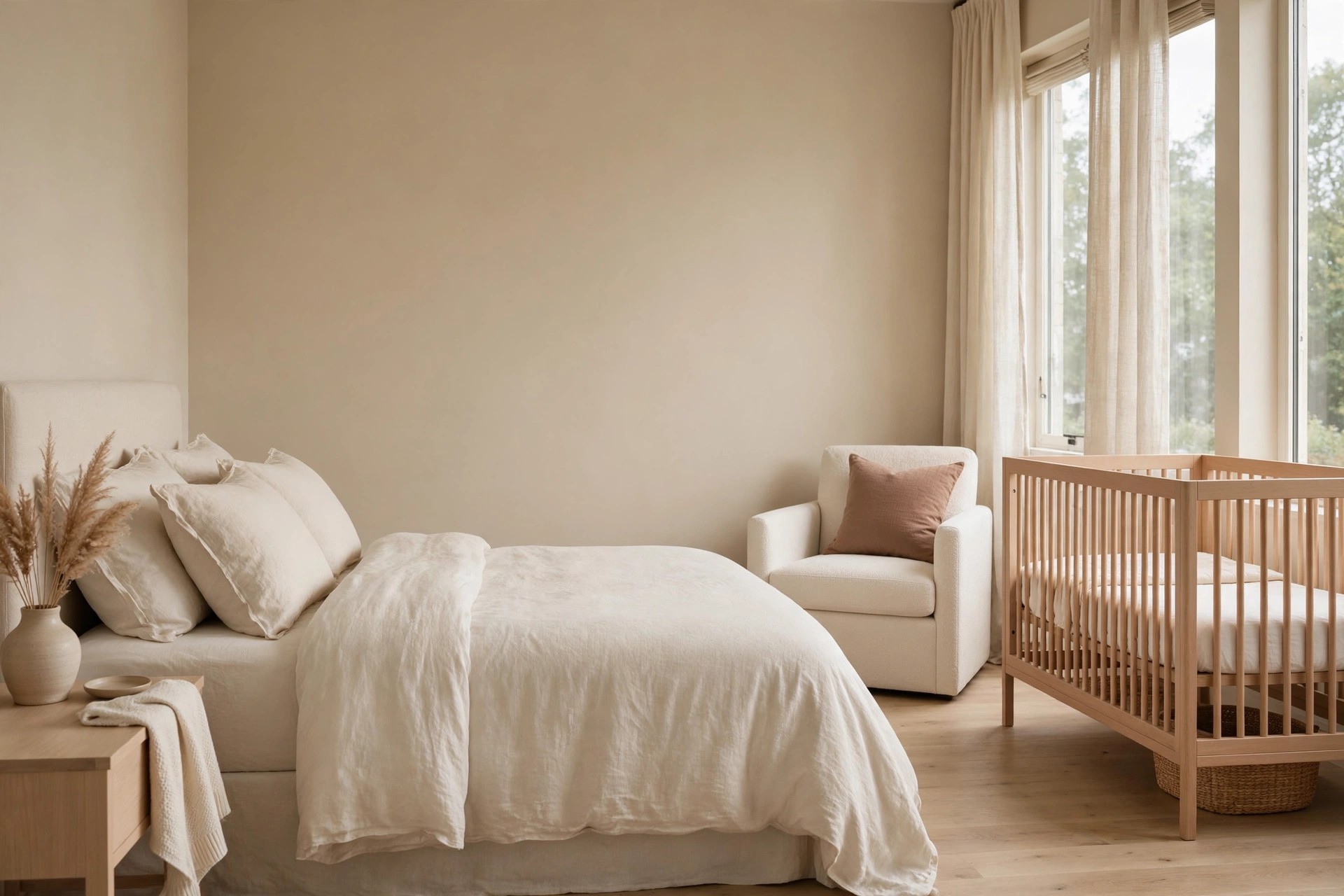
The old rule says a baby corner needs pink or blue to look like a baby corner. It does not. Color coding is for cards and wrapping paper, not for the room you also sleep in.
Soft color can stay, as long as it arrives muted. A dusty clay cushion, a faded sage blanket, or a pale stone blue throw, each used once, sits inside a neutral palette without waking it up.
The test is saturation, not the color name. If the shade looks dusty, chalky, or grayed at the edges, it will likely rest well beside beige and cream.
Bright, clear versions of the same colors belong elsewhere. In this corner, muted always wins, and the room stays yours as well as the baby’s.
10. Let Curtains Soften the Corner Light in Warm White
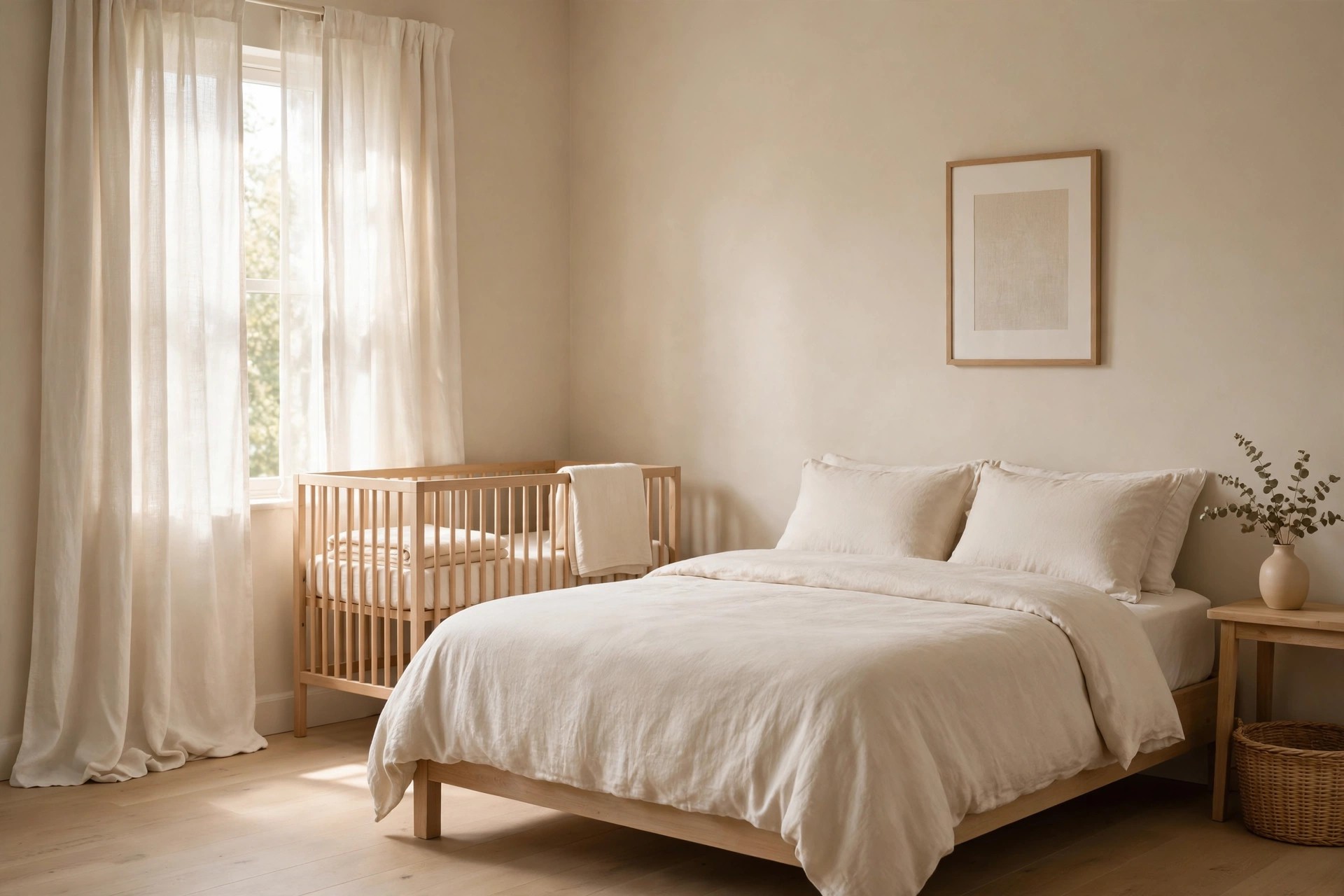
Daylight does quiet work in a shared room when the window dressing stays in the palette. Warm white or cream curtains take the hard edge off morning sun before it reaches the corner.
Choose a fabric with some body, like a soft linen look weave, in the same warm white family as your bedding. The light that passes through it lands warm on every surface nearby.
Match the curtain tone to the room, not to the corner alone. One window dressing serves both zones, and a split tone at the window would split the room all day.
Check the corner at the brightest hour. If the textiles still read cream rather than bleached white, the curtains are doing their softening job well.
11. Bridge Bed and Corner With One Rug in a Middle Tone
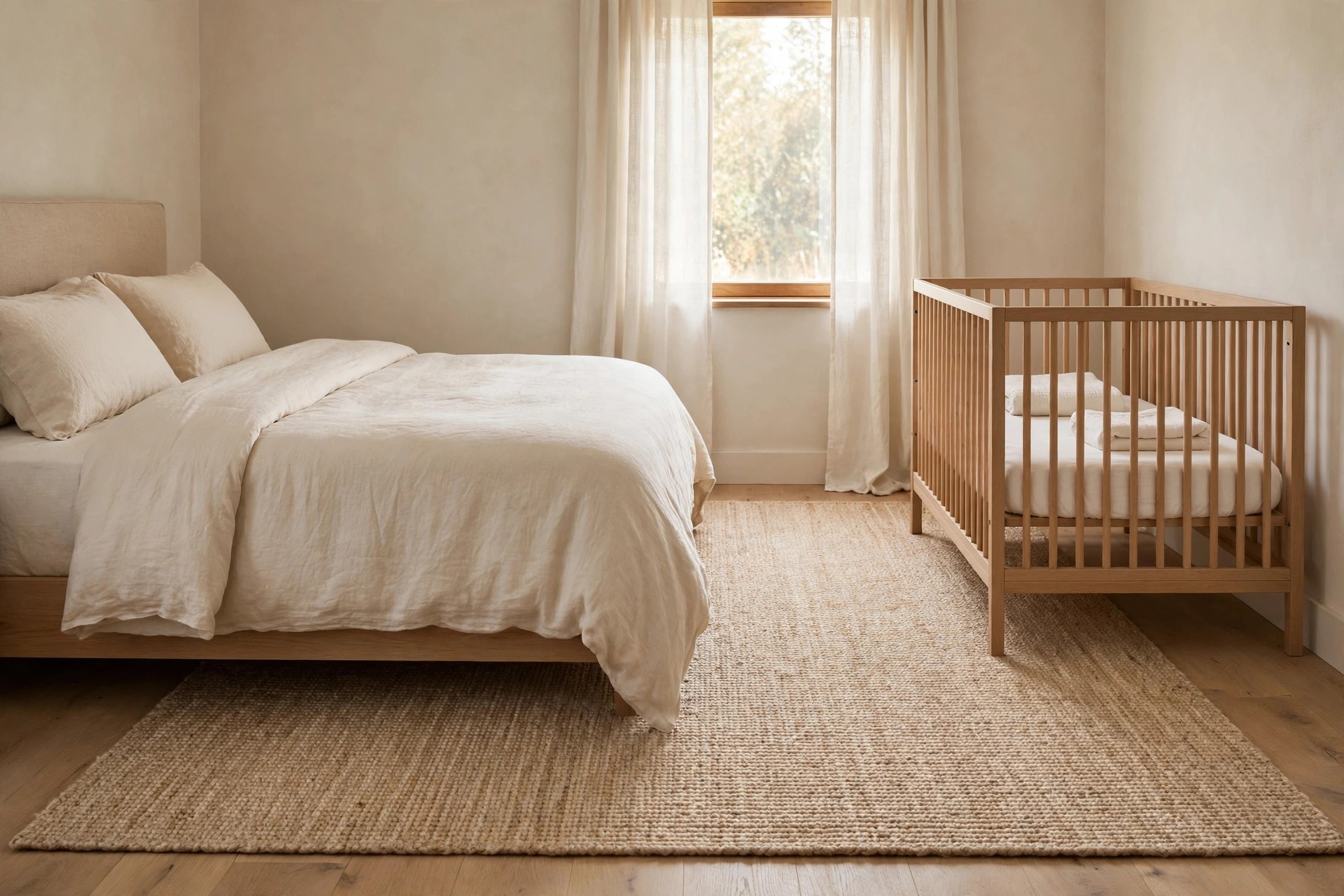
A rug can work like a bridge between two zones. Set one in a middle beige, halfway between your bedding cream and your floor tone, and the corner stops feeling like an island.
Compare the two ways a rug can fail here. One that matches the floor disappears and bridges nothing, while one far darker than both zones draws a hard border around the corner.
The middle tone shares something with each side. Your eye crosses it without a bump, so bed and corner read as one room with two restful parts.
Our cream and beige bedroom ideas show middle tones linking whole rooms. The same bridge, shrunk to one rug, links a corner just as well.
12. Test Every Corner Tone Twice: Noon and Lamplight

Test tones in the corner itself, in two lights, before you commit. Drape the fabric or hold the swatch where it will live, then look at noon and again after dark under your lamps.
Neutrals shift more than people expect. A beige that reads warm at noon can turn gray by lamplight, and a cream can tip yellow once warm bulbs take over the room.
Note which light flatters your room most of the day. A north facing bedroom lives in cool light, so pick tones that hold their warmth at noon first.
Two checks take ten minutes and save the slow regret of a corner that only looks right at breakfast. Trust the worse of the two views.
13. Soften Bright White Trim Near the Corner
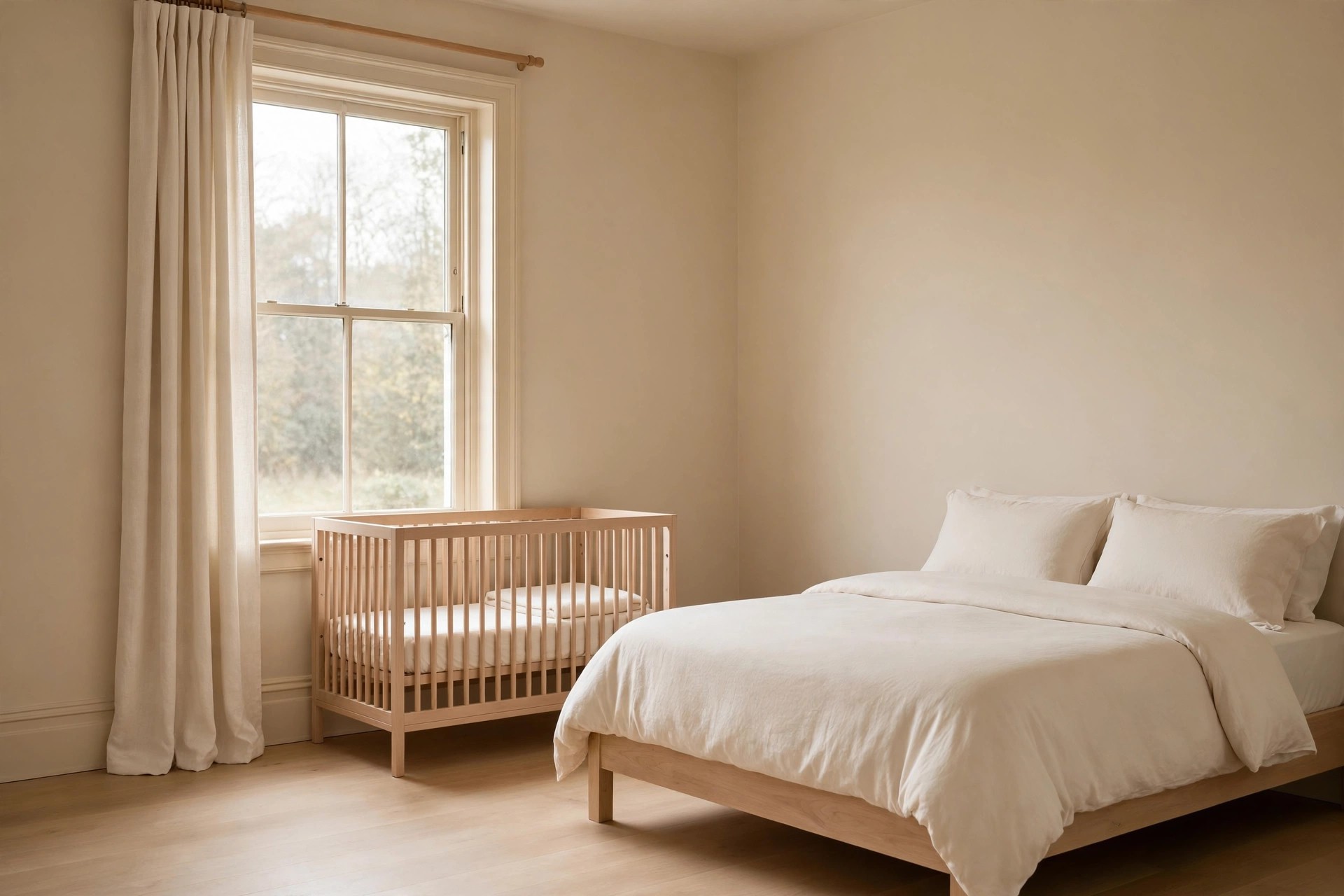
Many bedrooms carry one loud neutral nobody chose: bright white trim. Beside a pale corner, stark skirting and window frames draw a hard outline that the soft palette never asked for.
You may not need paint to fix it. A cream curtain edge, a warm white cushion, or a beige throw placed near the trim lowers the contrast your eye lands on first.
If you do paint, a warm white on the trim near the corner blends the frame into the walls. Keep the shift small, since trim two shades off the wall still reads clean.
Look at the corner from your pillow. If the frame lines stop jumping forward, the trim has settled back into the palette where it belongs.
14. Choose Matte, Low Sheen Finishes Around the Corner
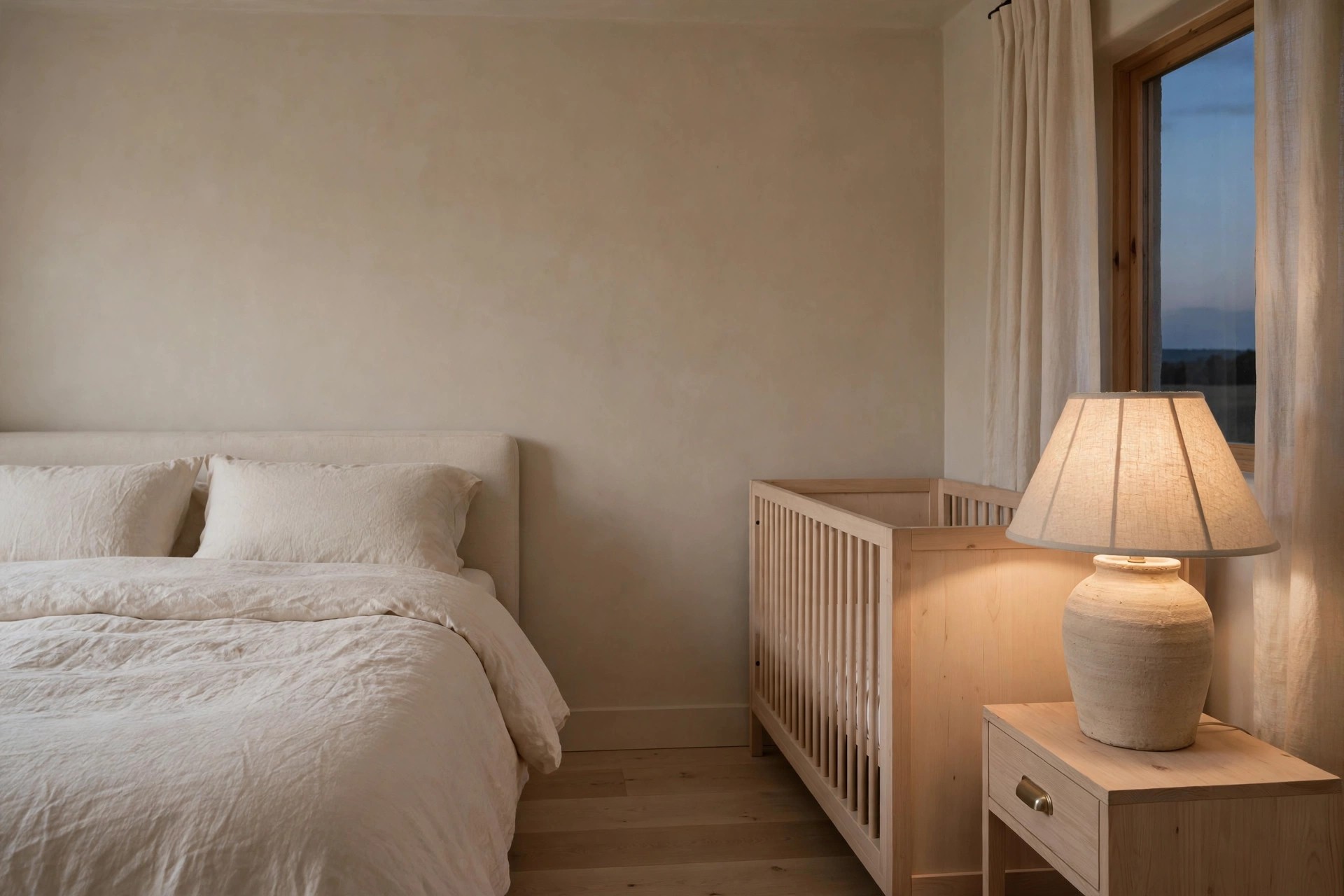
Shiny surfaces undo calm faster than bright colors do. Gloss throws lamplight back in hard spots, and each bright spot pulls the eye and lifts the room energy at night.
Pick matte or low sheen finishes for the pieces around the corner. Flat paint, brushed metal, raw wood, and unglazed ceramic all take light softly and give it back in a low, even way.
Check what you already own before buying anything. One glossy frame or a shiny tray moved to another room can quiet the corner more than a new purchase would.
Walk past at night with only the lamps on. If no surface flashes at you from the corner, the sheen level is right for sleep.
15. Cap the Corner at Four Tones and Edit the Rest Out
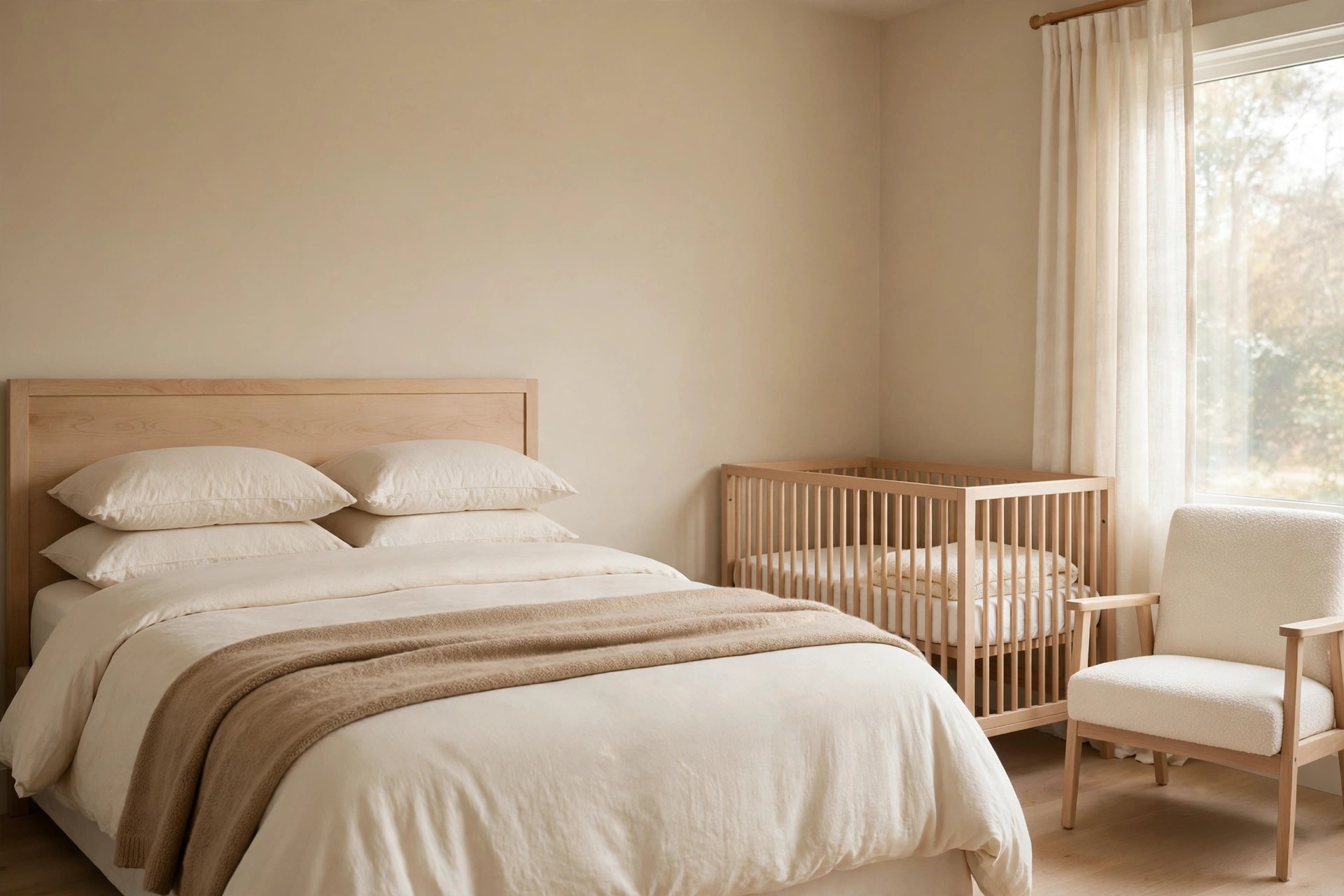
End with this cap: four tones at most in the corner view. Count them out loud, wall, bedding, one deeper beige, and one muted accent if you use one. That count is the palette.
Stray items break the count quietly. A red blanket from the sofa, a bright gift bag, or a lone gray cushion adds a fifth or sixth tone, and the corner starts to look stored rather than styled.
Move strays out of the corner zone and into closed storage elsewhere in the room. The palette you chose can only calm the room if it is the palette on show.
Recheck the count once a week in the early months. Corners collect things, and a two minute edit keeps the calm you built on day one.
Your bedroom does not need two palettes to hold two sleepers. Carry your cream, beige, and warm white tones into the corner, keep contrast soft, and let texture and warm light do the quiet work.
Start with the palette match and the four tone cap, then fix light and sheen. These neutral bedroom ideas for a calming nursery corner ask for edits, not a remodel.
Save this to your beige bedroom board for later, and test your first tone at noon and lamplight before you buy a thing.


