

15 All-Cream Bedroom Ideas That Do Not Look Washed Out
An all cream bedroom can look like a blank page when every piece lands on the exact same pale note.
That flat look is not a color problem. It is a depth problem, and these all cream bedroom ideas that do not look washed out fix depth first.
Cream needs three things to hold its shape: clear tone steps, strong texture contrast, and warm light at night.
Add one small grounding note, used with care, and the room reads soft and calm instead of pale and empty.
Every idea here stays inside one color: cream. No second scheme sneaks in, and no full redo is needed to start.
Work through the list in order, test each change in your own light, and stop once the room reads warm from the doorway.
This post contains affiliate links. If you buy through them, we may earn a small commission at no extra cost to you. See our Affiliate Disclosure.
1. Build a Ladder of Three Cream Tones, Not One Flat Cream

One cream repeated on walls, bedding, and rug is the fastest route to a washed out room. The eye finds no step up or down, so the whole space fades into one pale blur.
Build a small ladder instead: a light cream for walls, a mid cream for bedding, and a deeper cream for the throw and cushions.
Keep each step close, but clear enough to see from the doorway. If you want a two tone route instead, that ground sits in these white cream bedroom ideas, not here.
Lay fabric scraps on the bed in daylight before you buy. Three tones that sit apart on the bed will hold apart on the walls too.
2. Test Every Cream in Your Own Light, Morning and Night

Store light lies. A cream that looks rich under shop lights can turn thin and gray beside a north facing window at home.
Paint a large board and move it around the room for two full days. Check it at breakfast, at noon, and again under your lamps after dark.
Rooms with weak daylight need this test most. Our guide to beige bedroom ideas for small rooms with low light uses the same board test for tight, dim spaces.
Take a phone photo at each hour. The photo holds the true tone still, long after your eye has learned to forgive a weak shade.
Write the best hour on the back of the board. That small note ends the guesswork when you stand in the paint aisle later.
3. Give Walls a Soft Limewash or Matte Finish, Not Flat Paint
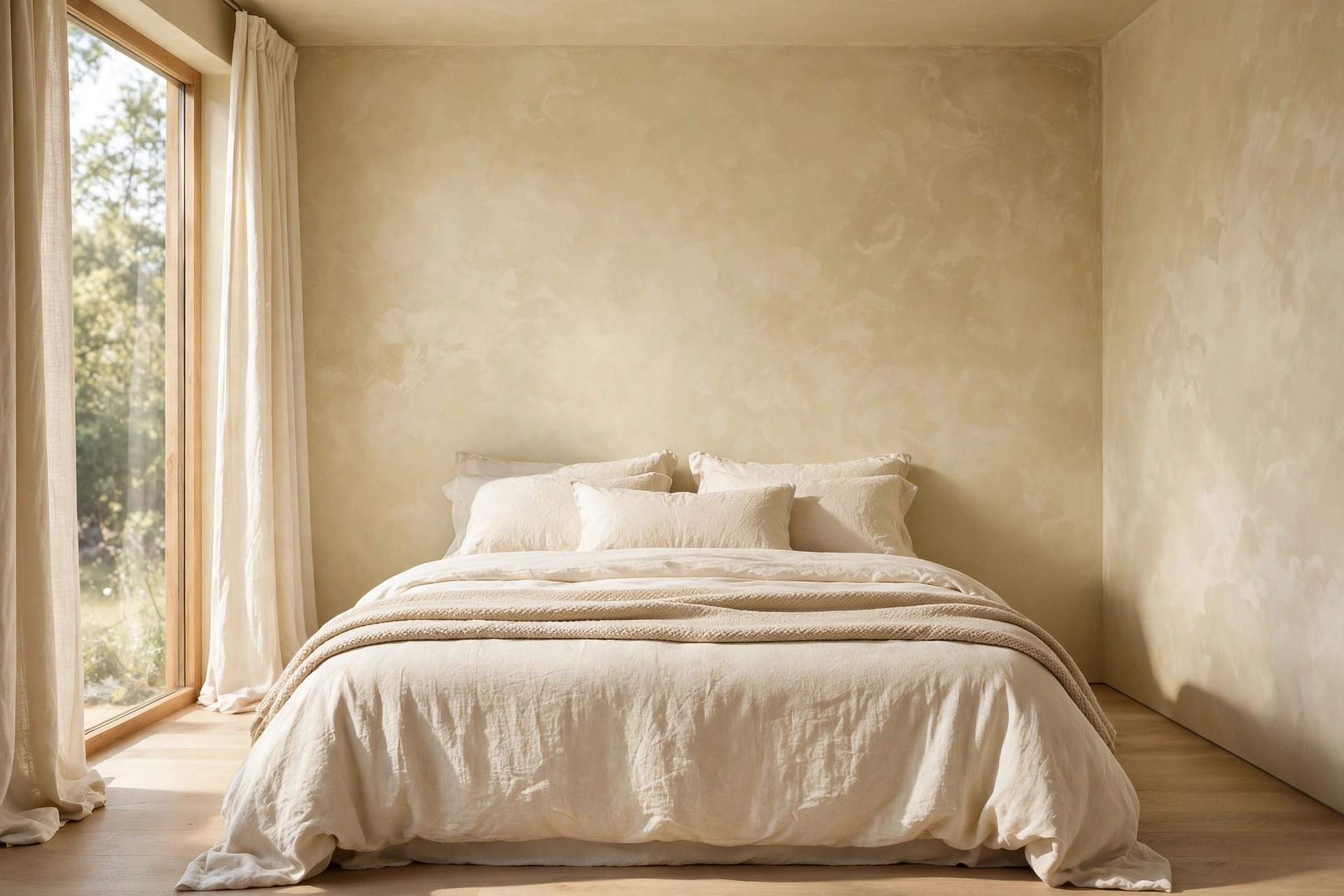
Flat paint in one cream can read like a blank sheet, with no shadow or movement for the eye to hold on to.
A limewash or soft matte plaster finish adds faint clouds of tone across the wall. Light shifts over it all day, so the cream gains depth without any new color.
Keep the finish subtle, not blotchy. Test one wall behind the bed first, since that wall sets the tone for every fabric placed in front of it.
Stand back at dusk and check the corners. A good finish deepens a little at the edges, and that gentle shading keeps cream from feeling thin.
Renters can fake the finish with matte paint and a dry brush pass. The soft movement still reads clearly from the door.
4. Layer the Bed With Three Textures in the Same Cream

When color stays quiet, touch has to do the talking. A bed dressed in one smooth fabric looks flat, even when the cream itself is warm and rich.
Mix three textures in the same tone family: washed linen sheets, a smooth cotton duvet, and a waffle or quilted coverlet folded at the foot.
Each layer catches light in its own way, so the bed shows soft ridges and shadows. For softer layering notes, see these soft beige bedroom ideas and borrow the layer order.
Run your hand across the bed before you judge it. If each layer feels the same, swap one out, because sameness is what flattens cream.
Photograph the bed at noon. Layers that read in a photo read from the doorway too.
5. Fold a Chunky Knit Throw in the Deepest Cream at the Foot

A tiny rule helps here: the throw should be the deepest cream on the bed, a clear step darker than the duvet below it.
That one deeper note gives the pale layers above it something to lean on. The bed gains a base, and the lighter creams stop floating.
Choose a chunky knit or a heavy woven weave, not a thin flat blanket. Thick loops cast tiny shadows, and those shadows read as depth from across the room.
Drape it loose over one corner rather than folded in a tight band. A relaxed drape looks lived in and keeps the knit texture easy to see.
In summer, swap the knit for a heavy woven cotton in that same deep tone. The step down stays, the heat does not.
6. Choose a Nubby Boucle or Woven Headboard in Warm Cream

The headboard is the largest block behind your pillows, so its surface matters as much as its color. Smooth cream fabric there can vanish against a cream wall.
A boucle or coarse woven headboard breaks that merge. Its nubby loops catch lamplight in small points, so the bed has a clear start against the wall.
Keep the shape plain and the tone warm. A tall back also earns its keep when you read in bed on cold nights with a cup of tea.
Check the fabric sample against the wall paint at night. Under warm lamps the two creams should still read as two, not melt into one.
Brush boucle with a soft hand once a week. Dust dulls its loops fast, and clean loops keep catching the lamplight.
7. Lay a Tone-on-Tone Patterned Rug Under the Bed

A solid pale rug can turn into a pale sea on the floor. Your feet land on it each morning, yet your eye slides straight over it.
Pick a rug with a cream base and a faded pattern worked in deeper cream and soft oat. The pattern stays inside the one color family, so nothing new enters the room.
That quiet pattern does hard daily work too. It hides lint, footprints, and the faint trail from door to bed far better than a plain pale pile can.
Size the rug wide, so warm pattern sits under your feet on both sides of the bed. Cold floor at the edges breaks the calm at once.
Vacuum along the pattern lines, not across them. The design stays clear longer.
8. Ground the Room With One Warm Wood Piece, Used Once

Here is the sparing fix: one warm wood piece, placed once, can anchor a whole cream room without turning it into a second scheme.
Choose a walnut nightstand, an oak bench, or a wood tray on the dresser. The grain gives the eye one firm note among all that soft fabric and paint.
Stop at one main piece, with maybe one small repeat. More wood than that shifts the room toward a cream and wood look, which is a different room entirely.
Set the piece where you see it from the door. One grounded note at that first view tells your eye the pale tones around it are chosen, not faded.
Wipe it weekly with a plain soft cloth. Clean grain reads warmer than shine.
9. Add One Small Dark Note, No Bigger Than a Book

Tiny rule, big result: one dark note, no bigger than a book, can sharpen every cream around it in seconds.
Try a deep brown frame, a dark lamp base, or a leather bound book on the nightstand. Kept small, it works as a fix, not as a second color scheme.
The dark edge gives pale tones a border to sit against. Without any edge at all, cream bedding against cream walls can blur into one soft smudge.
If the note shouts from the doorway, it is too big or too black. Swap down in size first, and keep the rest of the room cream.
Keep the dark note beside the bed, where your eye lands at night. Small and close beats large and loud in a pale room.
10. Light the Room Warm at Night With Linen Shades

Cream lives or dies by its night light. Cool bulbs add a blue cast after dark, and warm walls, rugs, and bedding all turn thin and gray at once.
Use warm bulbs in both bedside lamps, and test one side first. The wall should look a touch more golden and the wood grain richer within a minute.
Linen shades spread that warm light wide instead of pooling it in one harsh spot. Readers who need clear, kind light will find more in these cream bedroom ideas for women over 50.
Turn off the ceiling light for the last hour of the day. Low warm lamps deepen every cream tone and settle the room for sleep.
Match both lamp heights. Even warm pools keep one bedside from turning gray.
11. Add Panel Molding Painted the Same Cream as the Walls

Shadow can do work that color cannot. Panel molding, painted the exact cream of the wall, adds thin shadow lines that give a flat wall real depth.
The color never changes, so the room stays fully cream. What changes is the light: each raised edge holds a soft shadow that shifts from morning to night.
Place panels behind the bed for the strongest effect, or run them around the whole room if the walls feel bare on every side.
Keep the trim and ceiling in that same cream too. One tone across every edge holds the calm, while the molding lines supply the contrast.
Measure twice before you cut or drill a single strip. Even spacing is what keeps the shadow lines calm, not busy.
12. Hang Cream Linen Curtains With Lining and Full Folds

Thin, flat curtains let harsh light flood a cream room, and strong sun bleaches pale tones to near white by midday.
Choose cream linen curtains with a soft lining and enough width for full folds. The folds stack light and shadow in soft stripes beside the window all day.
Hang them high and wide, and let the hems rest just at the floor. That long fall of folded cream frames the bed wall without adding any new color.
Check them on a bright noon visit to the room. If the light still feels raw, the lining is too thin, not the cream itself.
On winter afternoons, draw them an hour before dark. The lined folds hold the warm tone of the room into the evening.
13. Mix Matte and Soft Sheen Finishes Across the Room

Two rooms can share the same cream and look fully apart. The gap is often finish: one room is all matte, and matte on matte reads dull.
Set most surfaces matte, then add two or three soft sheen notes: a satin cushion, a glazed ceramic lamp, or a smooth cotton sateen sheet.
Sheen catches a small highlight that matte paint never can. Those tiny bright points keep pale tones awake without gloss, glare, or a showroom shine.
Count your sheen pieces on one hand. Past that point the room starts to sparkle in spots, and the calm cream mood slips away.
Test each sheen piece at night, not at noon. Lamplight is where a soft highlight earns its place in the room.
14. Hang Textured Cream Art With Deep Cream Mats

Bare cream walls above the bed can feel like the room was never quite finished. Art in cream tones closes that gap without breaking the single color rule.
Look for woven wall pieces, raised plaster style prints, or soft line work in cream and oat. Texture and line give the eye a place to rest and return to.
Use a deep cream mat and a warm wood frame on the largest piece. That slightly deeper mat outlines the art, so it holds its own against a pale wall.
Hang one large piece before you plan a set. Many cream rooms need only that one calm focal point above the pillows to feel complete.
Step to the doorway once it hangs. If it holds there, it holds.
15. Repeat Your Deepest Cream Three Times, Then Stop

Here is a closing check that pulls the whole room together: find your deepest cream, then make sure it shows up three times, and no more.
It might sit in the throw, one cushion, and the rug pattern. Three repeats read as a plan, while one lone deep note can look like a mistake.
This rule also guards the palette. If a new buy leans beige as a clear second color, that pairing lives in these cream and beige bedroom ideas instead.
Finish with the doorway test on a gray morning. If the room still reads warm, layered, and clear, the cream is holding, and you can stop.
Keep your three tones listed on your phone. The list stops impulse buys from breaking the ladder at the store.
Cream holds its depth when tone, texture, and light each do a share of the work.
Start with the tone ladder and the board test, since they set how every later choice will read. Then add texture on the bed, one grounded note, and warm lamps.
These all cream bedroom ideas that do not look washed out ask for patience, not a big spend. One tested change a week keeps costs low and results clear.
Save this to your cream bedroom board for later, and pick one fix to test this weekend.


