

How to Fit a Desk in a Tiny Teen Bedroom: 15 Space Moves
A tiny bedroom does not need more floor. It needs the right wall, the right depth and about an hour of honest measuring.
This list shows how to fit a desk in a tiny teen bedroom with fifteen space moves, from measuring the door swing to the daily habit that keeps the top clear.
Every move works in a real small room: rented, shared-corner or box room. Pick the two or three that match your walls and start there.
For the bigger picture first, these dream bedroom ideas for teens show how small rooms hold sleep, storage and study together.
This post contains affiliate links. If you buy through them, we may earn a small commission at no extra cost to you. See our Affiliate Disclosure.
1. Measure the Wall, the Door Swing and the Outlet First

Guessing is how desks end up returned. Ten minutes with a tape measure tells you the exact width, depth and height you can use.
Measure the wall run first. Then open the door fully and mark its swing on the floor with tape. A desk inside that arc gets hit daily.
Note the outlet positions. A desk that lands its cable run near a socket avoids trailing leads across the walking route.
Write the three numbers on one sticky note: wall width, clear depth, outlet spot. Shop with that note and half the wrong desks rule themselves out.
Check the radiator too. A desk hard against one runs hot in winter and warps the worktop edge over a single season.
2. Give the Desk the Shortest Wall in the Room

The shortest wall is usually the one nobody plans for. It is often exactly desk-sized, and it leaves the long walls free for bed and storage.
A desk spanning the full short wall wastes no corners. The ends meet the side walls, so nothing collects down the sides in dusty gaps.
This spot often sits near the door. Homework things land there on the way in instead of spreading across the bed.
Sit a chair in the space before buying. If knees and chair back clear the bed edge with room to spare, the wall has passed its test.
Short walls also suit a shelf above. The whole study zone stays in one compact block, and the rest of the room can breathe.
3. Turn the Corner Into the Study Spot

Corners swallow space in most layouts. An L-shaped top, or two slim tops meeting, claims the corner for work instead of dust.
The corner gives elbow room on both sides. Books open to the left, laptop center, drink safely at the back corner away from papers.
Wall space doubles too. One wall takes a shelf, the other a pinboard, and the desk top itself stays clear for actual work.
Keep the chair light. Corner desks need the chair pulled out at an angle, and a heavy chair makes that small move annoying twice a day.
A corner lamp on the far side lights both runs of the desk. One lamp doing two jobs keeps the surface free of a second base.
4. Fit a Fold-Down Desk That Vanishes After Homework

A wall-mounted fold-down top is the strongest move in a truly tiny room. Open for study, it is a full desk. Closed, the floor is back.
Mount it at standard desk height and check the fixings suit your wall type. The hinges carry the whole load, so this is a measure-twice job.
Inside the closed panel, a shallow shelf or elastic straps can hold a notebook and pens. The study kit folds away with the top.
The chair still needs a home. A folding chair on a hook beside the desk keeps the whole setup in one wall bay.
This is also the kindest option for rooms that double as guest space. Study mode and guest mode swap in under five minutes.
5. Choose a Slim-Depth Desk and Skip the Drawers

Depth is where tiny rooms are won. A top around sixteen to twenty inches deep holds a laptop and an open book, and little else gets lost on it.
Deep desks invite sprawl and eat the walkway. Slim tops keep knees clear of the bed and leave the floor route open at night.
Skip drawer units underneath. Drawers add width where legs need to go, and most teen desk drawers become mixed junk storage within a term.
Storage belongs on the wall instead. The same logic drives the best teen bedroom storage ideas for the clothes-on-the-floor problem: everything reachable, nothing buried.
Test depth with a strip of tape on your current table. Live with the tape line for two days of homework before you commit to a size.
6. Put the Desk Under a Loft Bed

Raising the bed frees its whole footprint. Under a loft, a desk gets a defined bay with a wall at its back and light fitted above it.
Measure headroom sitting down, not standing. Your teen should sit upright in the chair with clearance to spare, or study sessions end early with a sore neck.
Fit a lamp under the loft frame. The bed above blocks ceiling light, and a fixed lamp aimed at the desk fixes the gloom properly.
Keep the floor under the desk empty. The moment boxes move in, legroom shrinks and the desk starts feeling like a cupboard.
Lofts suit older teens who like a den feel. The desk below becomes a small room within the room, which many teens guard happily.
7. Turn an Unused Closet Into a Desk Nook
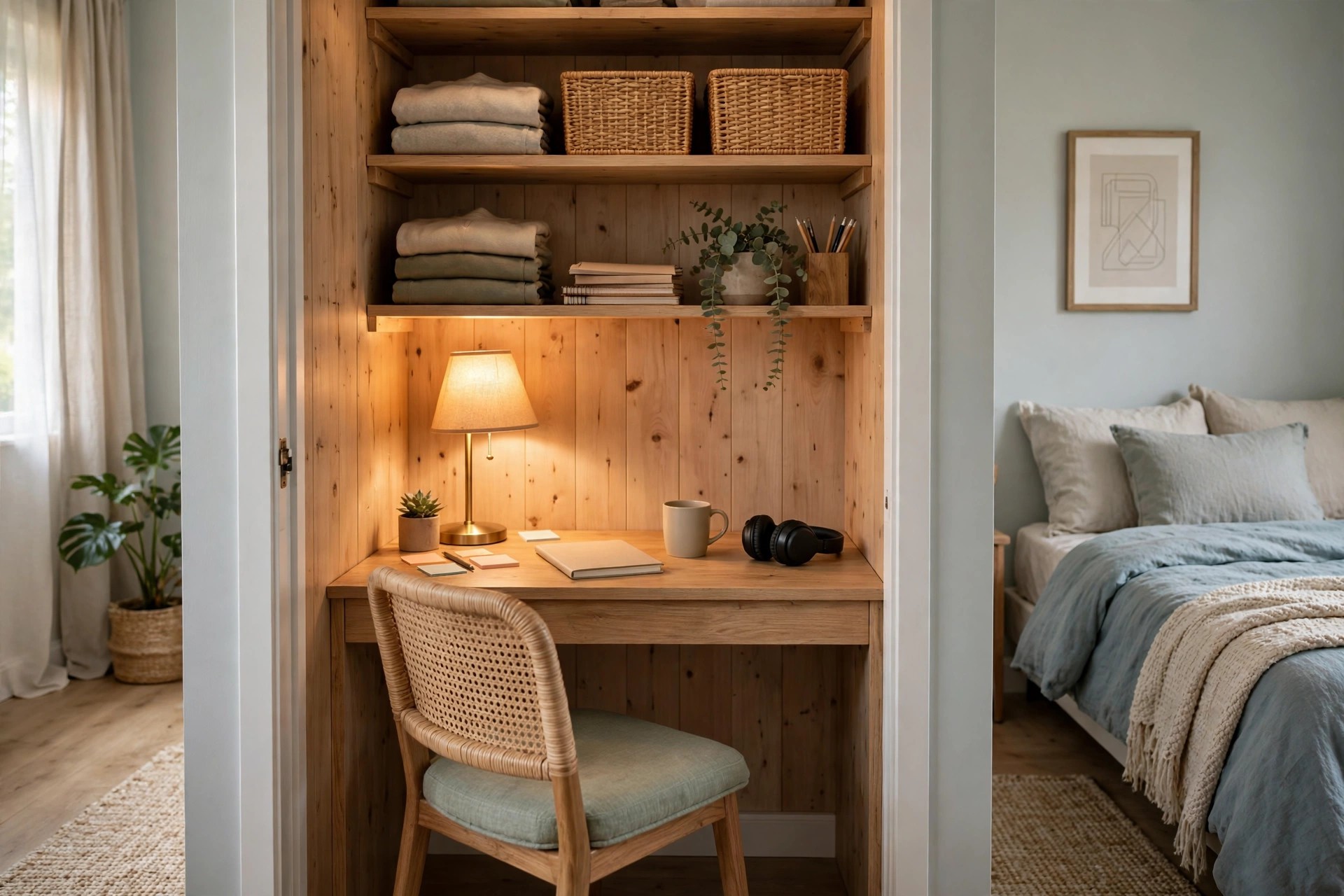
A closet that mostly holds outgrown clothes is a desk waiting to happen. Doors off, rail out, and the recess takes a top at desk height.
The nook gives natural sides for shelves. Books, files and a lamp all fit inside the frame, leaving the room itself visually calm.
Paint the inside a shade lighter than the room or add a lamp. Closet recesses run dark, and study light matters more than style here.
Keep the door if it still closes. A closable nook hides homework in progress when friends visit, which some teens count as the whole point.
If the closet is the only clothes storage, split it instead. Half rail for clothes, half desk, with the desk at the end nearest the light.
8. Use the Wall Under the Window
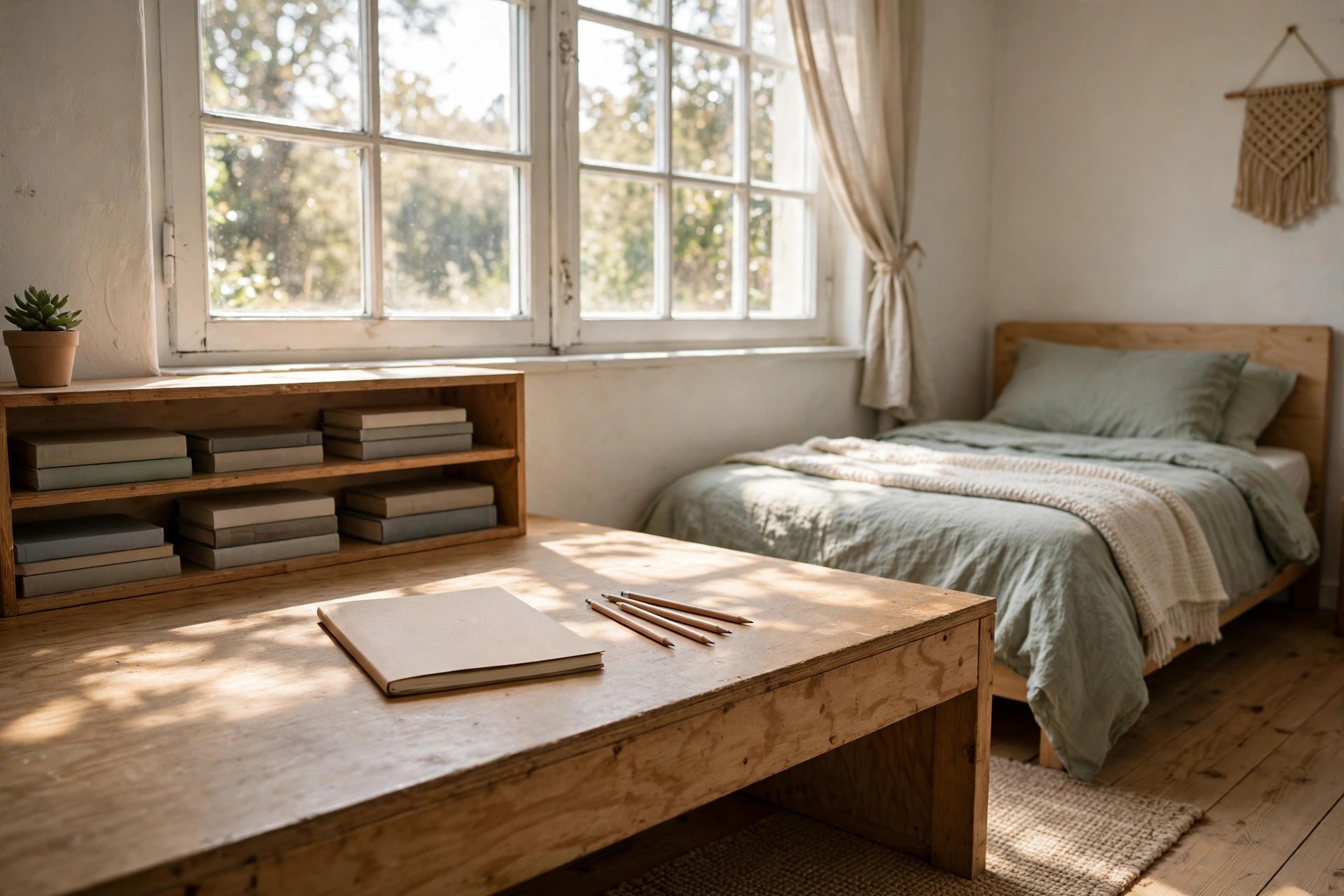
The stretch under a window is dead space in most small rooms. A low desk there sits below sill height and turns the patch into the brightest seat in the house.
Daylight on the page cuts eye strain during long homework sessions. Face the chair into the room or along the wall if screen glare fights back.
Keep the top shallow so curtains still hang or blinds still drop. A desk that blocks the window furniture becomes a daily irritation.
Radiators often live under windows. Leave a gap behind the desk for heat to rise, and never drape cables over the radiator itself.
A plant and the view do quiet work here. This seat becomes the one your teen chooses for reading, not just for set homework.
9. Let the Desk Double as the Bedside Table
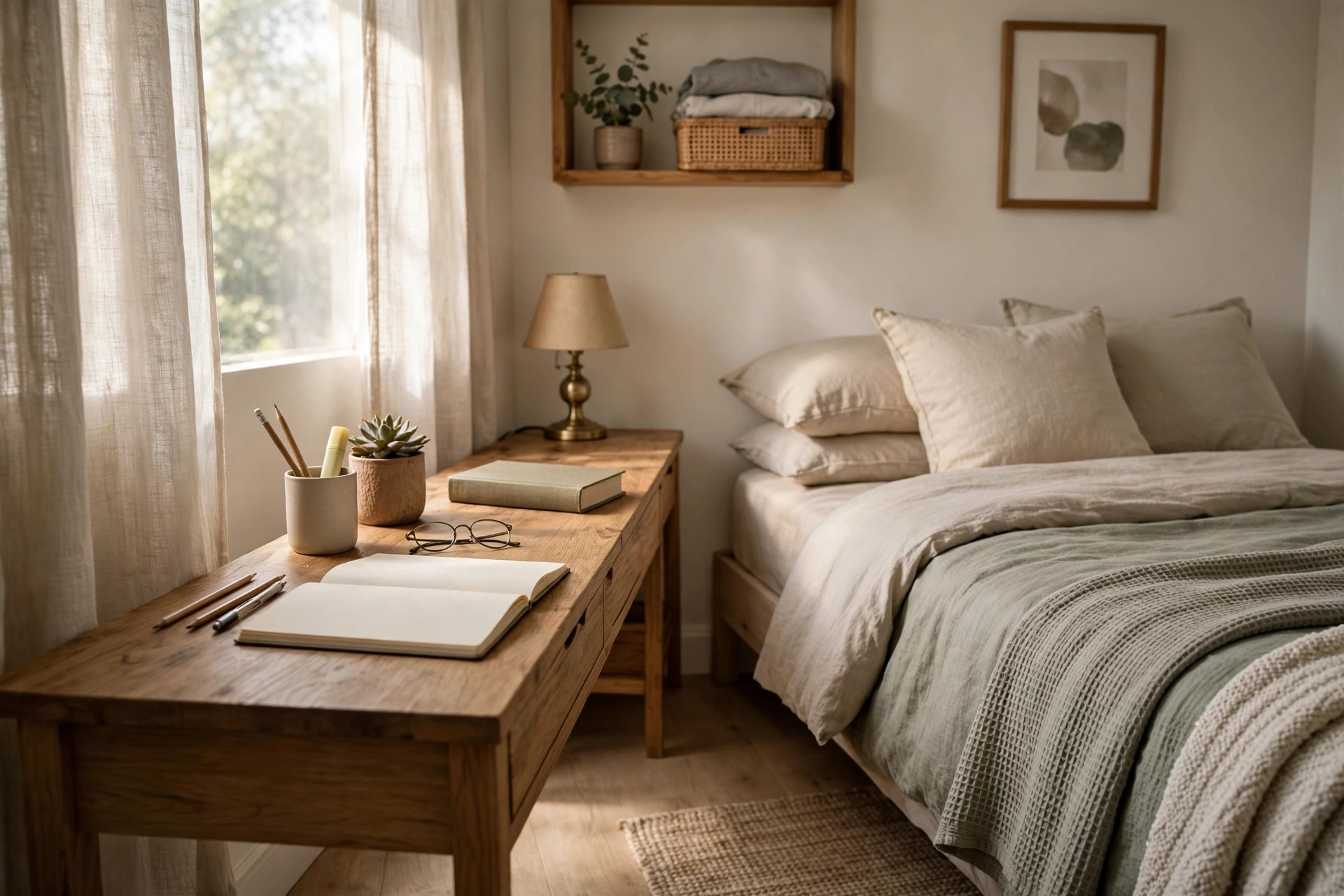
In the smallest rooms, one surface can do two shifts. A narrow desk beside the bed works as a nightstand at night and a study top by day.
Position it along the bed’s long side. The lamp serves both jobs, and a book slides from desk to pillow in one move.
Keep a small tray as the border between the two lives. Night things stay on the tray; study things clear back to it each evening.
This layout frees the wall opposite for storage. Rooms feel bigger when furniture spreads around the edges instead of clustering in the middle.
It is a layout many teen girls bedroom decor ideas use in box rooms, paired with a mirror above to bounce the light.
10. Mount a Floating Shelf as the Desk Top
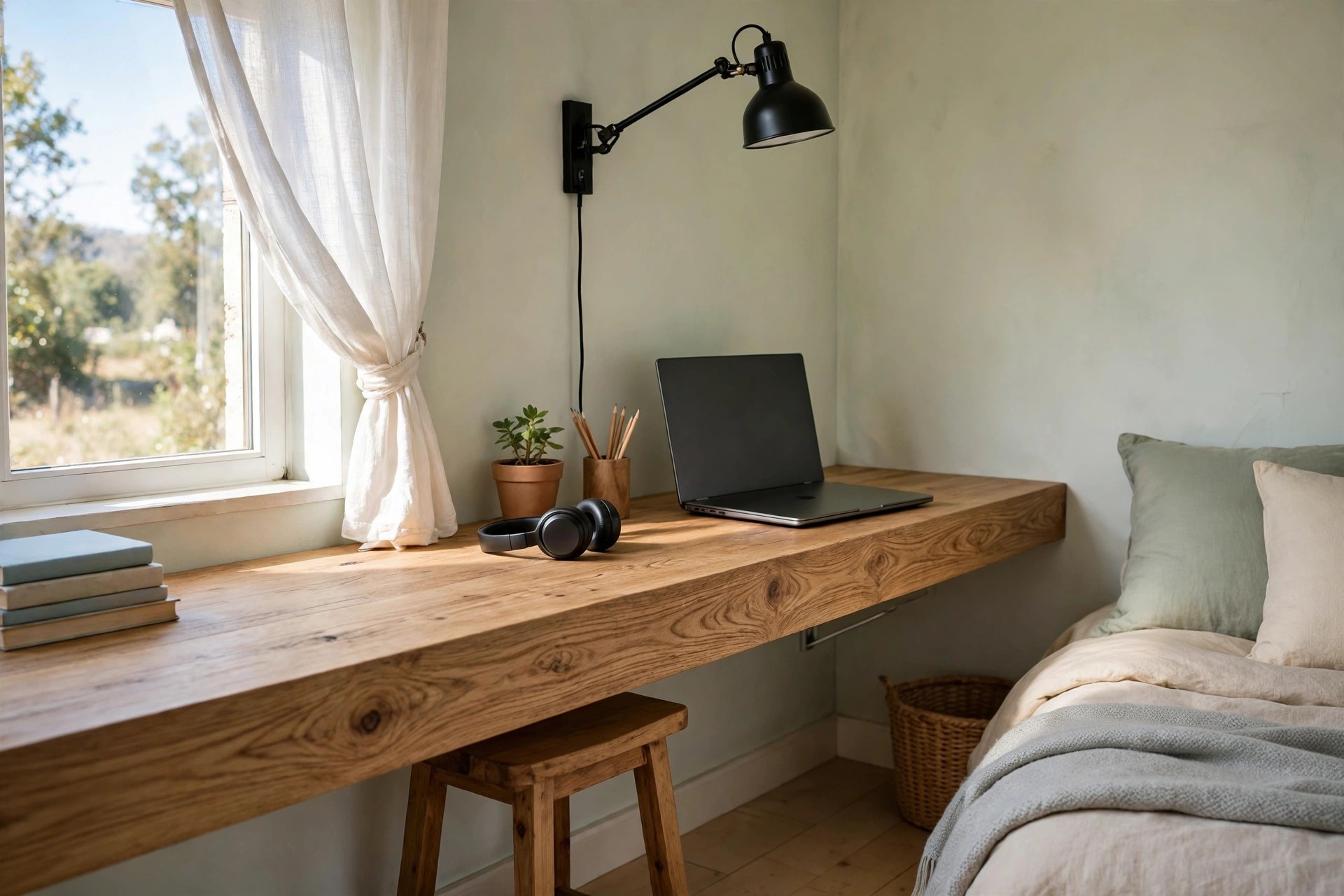
A thick shelf at desk height, fixed on strong brackets, is a desk with no legs at all. The floor below stays fully open and easy to clean.
Choose a depth that fits the tape test from earlier and round the front corners if the walkway passes close. Hips find sharp corners in the dark.
Two brackets minimum, three for longer runs. Fix into studs or use proper wall anchors rated for the load, because teens lean on desk edges.
A floating top pairs well with a stool that slides fully beneath it. At night the study spot almost disappears from the room.
Cable discipline matters here. One clip run down the wall to the socket keeps the clean floating look honest instead of trailing.
11. Roll In a Cart and Tray for Flexible Study Days

Some tiny rooms cannot spare a fixed desk at all. A rolling cart for supplies plus a sturdy tray table gives a study spot that sets up anywhere.
The cart parks in a closet gap or beside the wardrobe. Books, pens and charger live on its shelves, always packed and ready to move.
The tray works on the bed for short tasks and beside a chair for longer ones. Homework follows the best light in the room that day.
This setup suits shared rooms too. Study gear rolls away completely when the room needs to be a bedroom again.
Set one rule to protect it: the cart gets unpacked and repacked each session. Two minutes of order keeps the flexible system from becoming a mobile mess.
12. Move Storage Up the Wall Above the Desk

Whatever desk you fit, its top stays small. The wall above it is not small, and it should carry everything that is not today’s work.
Fit one or two shelves at reachable height. Daily books on the lower shelf, reference and files higher, so the grab zone stays simple.
A pegboard or rail with hooks takes pens, headphones and scissors off the surface. Every item hung is an item not buried under papers.
Leave the stretch directly in front of the chair empty wall. Eyes rest better facing a calm patch than facing clutter at nose height.
This vertical habit pairs with the floor habits in a back-to-school bedroom reset for teens when term starts again.
13. Pick a Stool That Tucks Fully Under
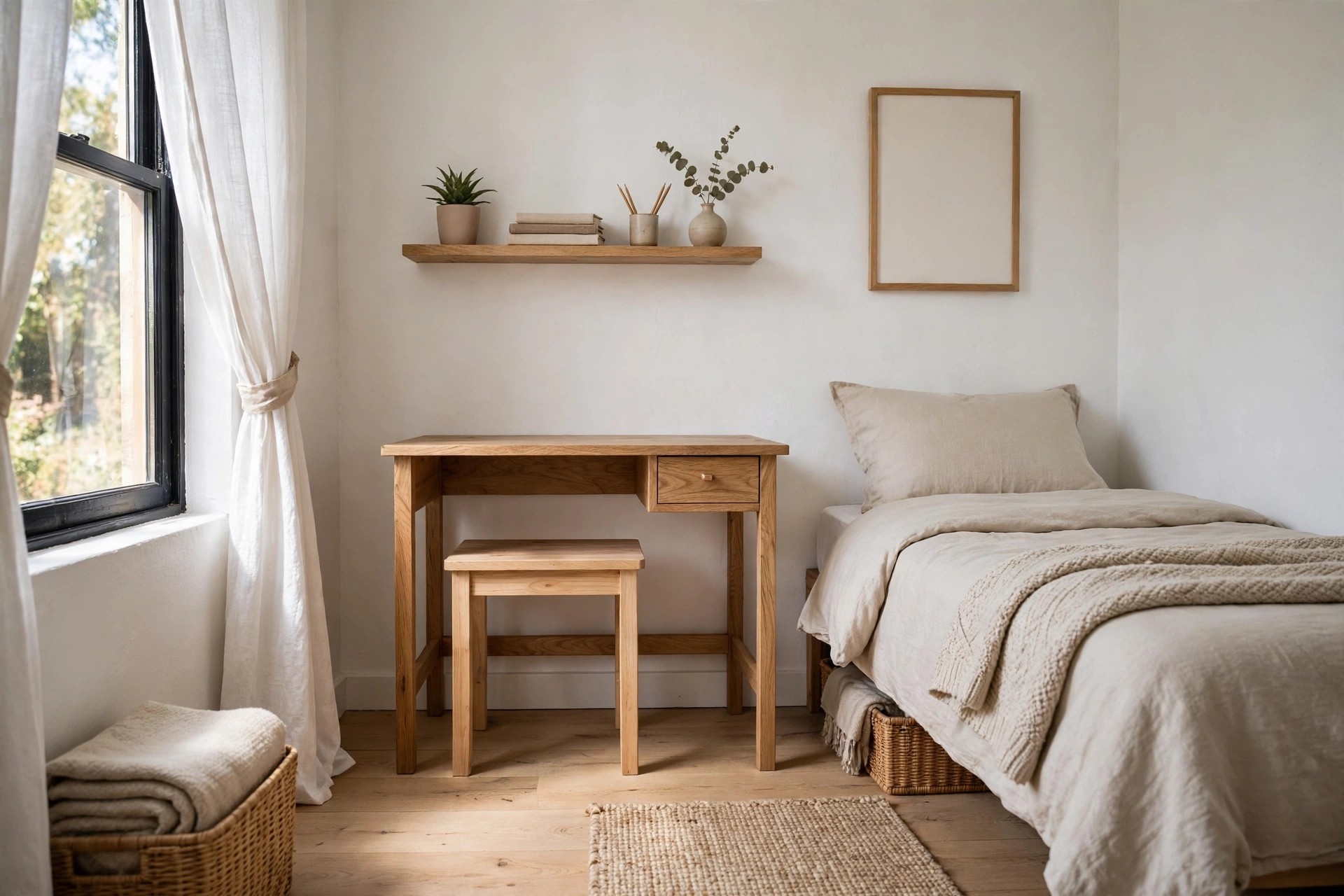
The chair is half the footprint problem. A backless stool or a slim chair that slides completely under the top returns the floor when study ends.
Test the tuck with the desk you chose. The seat should vanish below the top with the walking route fully clear past it.
Comfort still counts. A padded stool top or a cushion makes an hour of homework fine, while a hard perch shortens every session.
Armrests are the usual reason chairs will not tuck. Skip them in tiny rooms; the desk edge gives elbows enough support for homework lengths.
In the evening the tucked stool is invisible. The room reads as a bedroom again, which is the whole point of space moves like these.
14. Clamp the Lamp On and Clip Every Cable
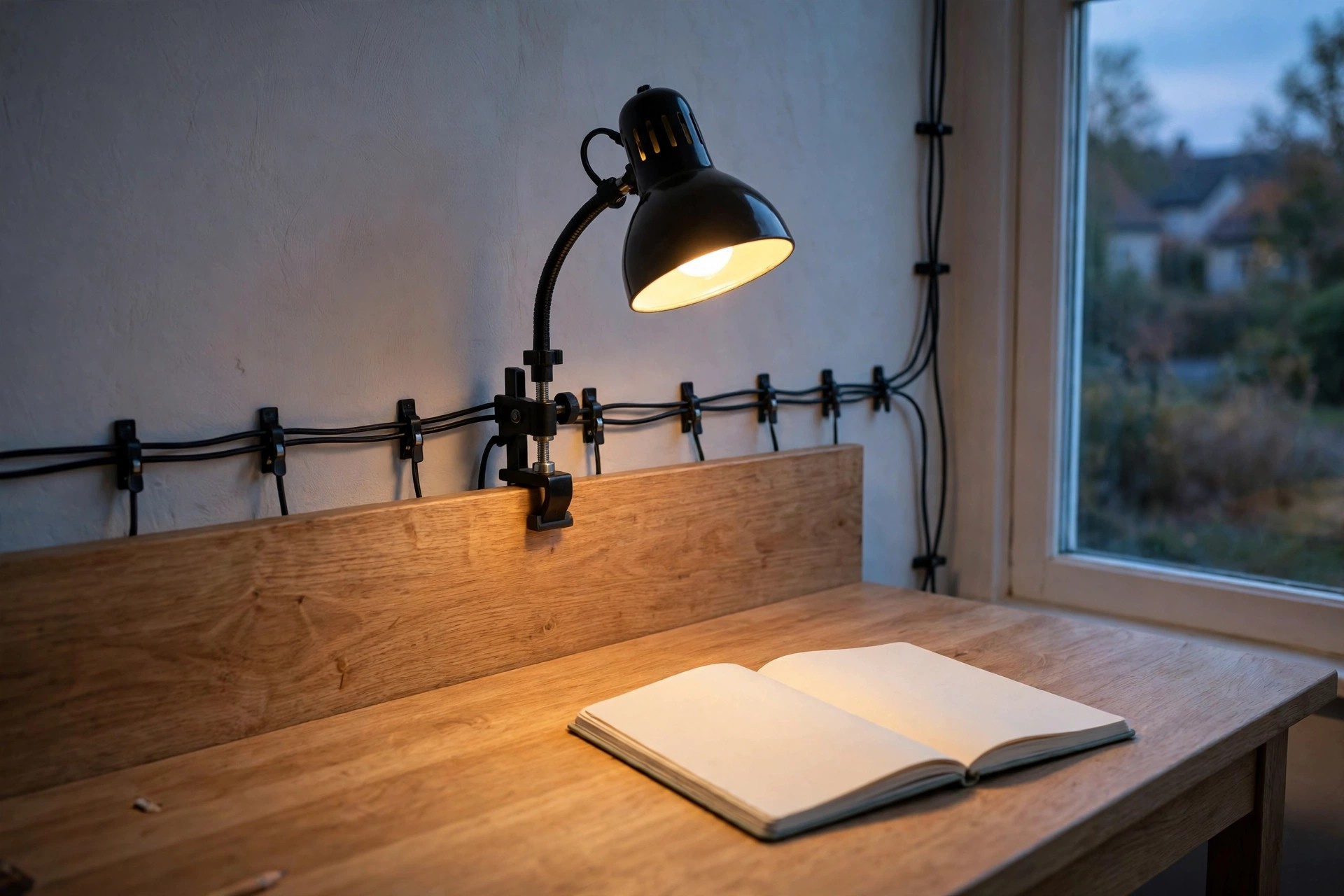
Desk lamps with heavy bases eat the exact corner a book needs. A clamp lamp fixes to the back edge and gives that corner back.
Aim the light from the side opposite the writing hand. Shadows from the hand itself are a small thing that tires eyes over a long essay.
Run every cable down one back leg or along the wall in clips. One tidy line to the socket, nothing crossing the knee space.
Chargers live at the desk permanently. A charger that travels to the bed each night is a charger that is missing at homework time.
Finish with a cable check lying on the bed. If you can see a dangling wire from pillow height, one more clip fixes the view.
15. End Each Day With One Tray and a Clear Top

A fitted desk only stays useful if it resets daily. The simplest system is one tray: everything still in play goes on it, the rest of the top wipes clear.
The tray moves as one unit. Homework in progress survives the night intact, while the desk itself looks calm by bedtime.
Books return to the shelf above, pens to their pot, charger coiled by the lamp. Ninety seconds, done while a song plays.
A clear top in the morning changes the start of the day. Sitting down to work takes no tidying first, so work actually starts.
Protect this habit for the first two weeks and it runs itself after that. Small rooms reward small rituals more than big furniture.
Knowing how to fit a desk in a tiny teen bedroom comes down to three things: honest measurements, a slim top on the right wall, and storage that climbs instead of spreading.
Measure your shortest wall tonight and start there. If this list helped, save it to Pinterest so it is handy on shopping day.


