

15 Small Living Room Ideas for Apartments With Open Kitchens
An open kitchen can make a small apartment feel roomy in the morning and messy by dinner. You see the sink from the sofa. You hear the pan from the chair. You smell last night’s cooking on the cushions.
That is the honest trade of this layout. You gain light and flow, and you lose the wall that used to hide the work. These small living room ideas for apartments with open kitchens work with that trade, not against it.
Each idea below gives the living side a clear job, a clear edge, and a clear view. You do not need a wall, a big budget, or a full redo.
You need small moves that tell your eye where cooking ends and resting begins. For a wider look at small apartment living rooms, see these small living room ideas for apartments.
Start with one idea that fixes your biggest daily annoyance. Then add a second only when the first one feels normal.
This post contains affiliate links. If you buy through them, we may earn a small commission at no extra cost to you. See our Affiliate Disclosure.
1. Turn the Sofa Back to the Kitchen
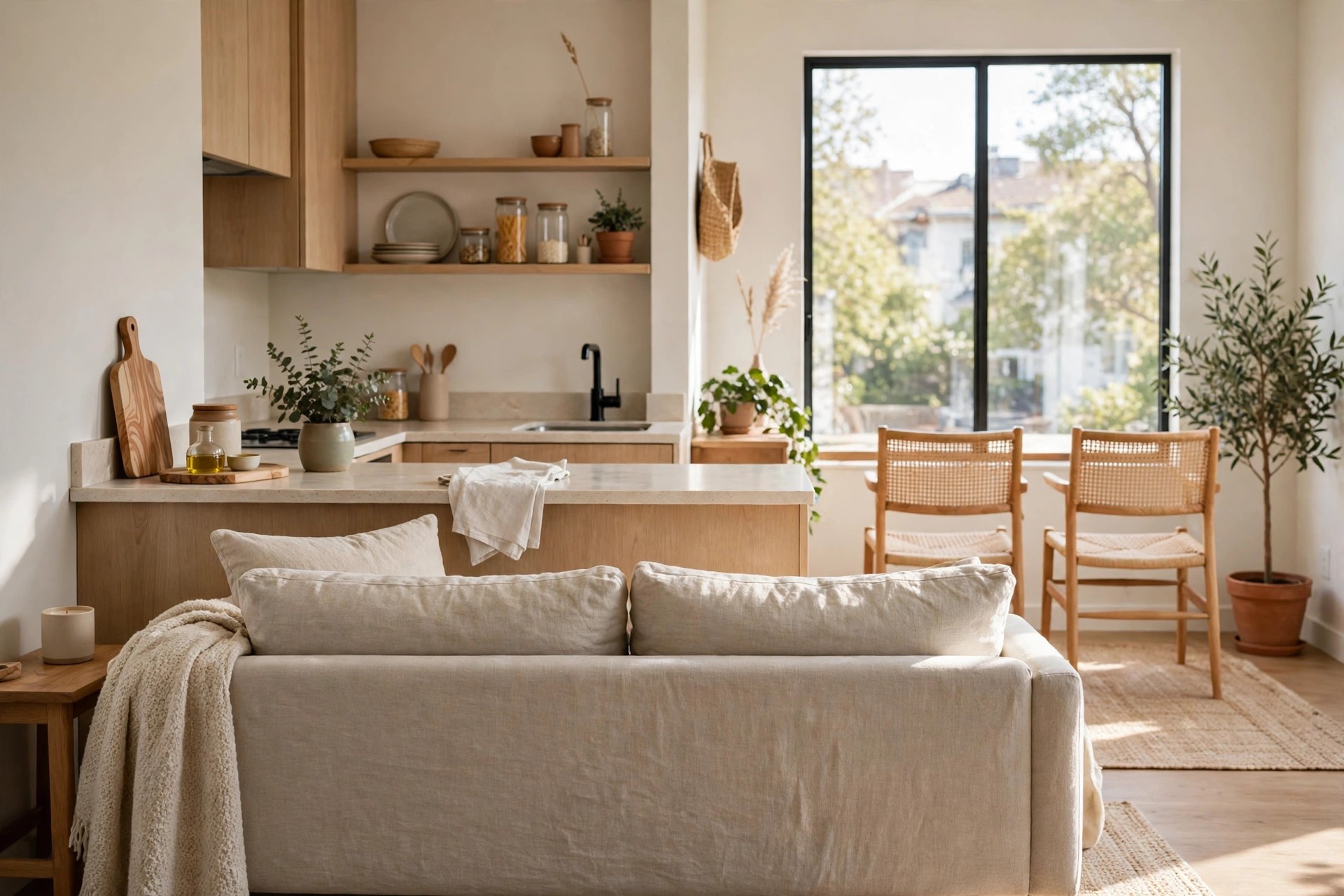
Put the back of the sofa toward the kitchen and face the seats toward the window or the TV wall. The sofa then works like a low wall. It marks the living zone without blocking light or talk.
Keep the sofa low and slim. A tall back will cut the room in half and hide the kitchen light. A low back still gives you a clear edge, and you can see over it to chat while you cook.
Leave a walkway behind the sofa if you can. Even a narrow path stops the room from feeling trapped. A slim console or a row of books on the sofa back can soften the hard line and hold a lamp.
2. Use a Low Open Shelf as a Soft Divider
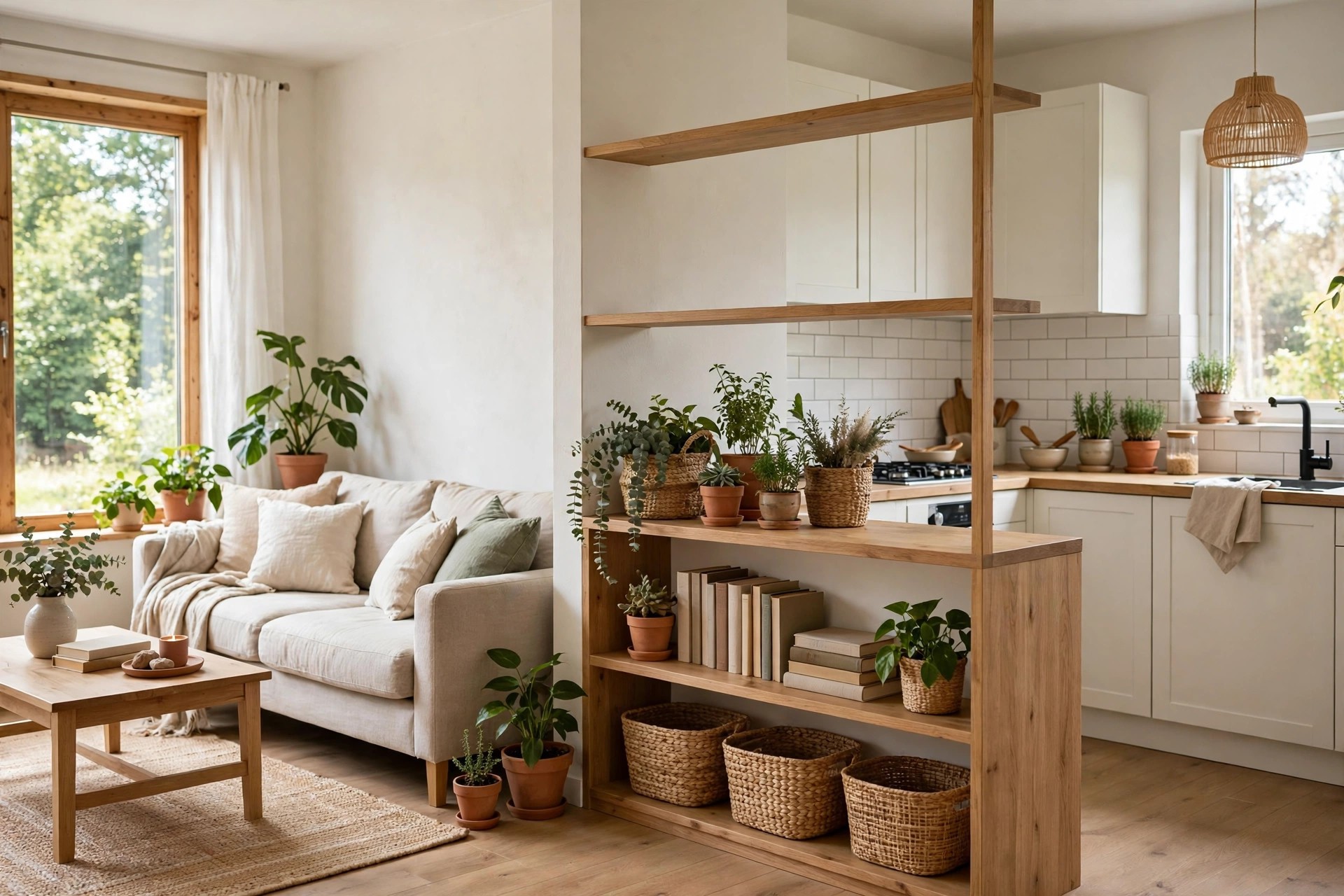
A low shelf unit set with its back to the kitchen makes a divider you can see through. Books, plants, and baskets fill the lower shelves. The top stays clear so light still moves across the room.
Keep the shelf no higher than the sofa back. That height keeps the open feel and stops the unit from looking like a wall you built by mistake. Anchor it to the wall if your lease allows it, for safety with kids and pets.
Face the neat side toward the living room. Put plainer storage bins on the kitchen side. That way, the view from your seat stays calm, even when the kitchen side holds daily clutter and chargers.
3. Let One Rug Mark the Living Zone
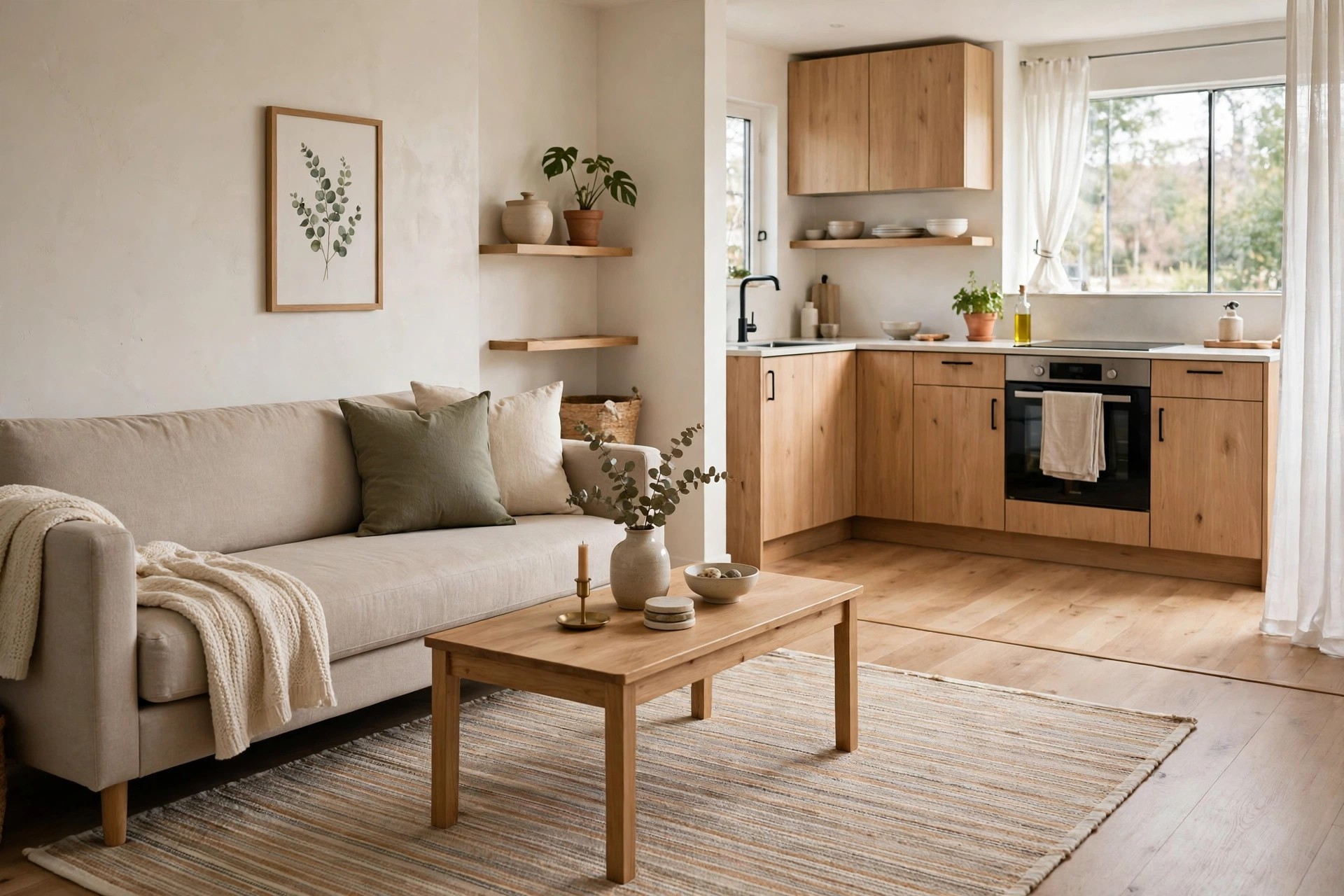
A rug under the front legs of the sofa and chairs tells your feet where the living room starts. The kitchen floor stays bare and easy to wipe. That change in texture does the job of a wall.
Pick a low pile rug in a flat weave. Thick pile near a kitchen traps crumbs and spills. A rug pad under it stops the rug from sliding on a wood floor when you stand up fast.
Keep the rug size honest. It should hold the sofa and the coffee table, not stretch into the cooking path.
If you also eat in this space, these living room dining room combo ideas for small apartments can help you place a table without crowding the rug edge.
4. Repeat One Color Across Both Zones
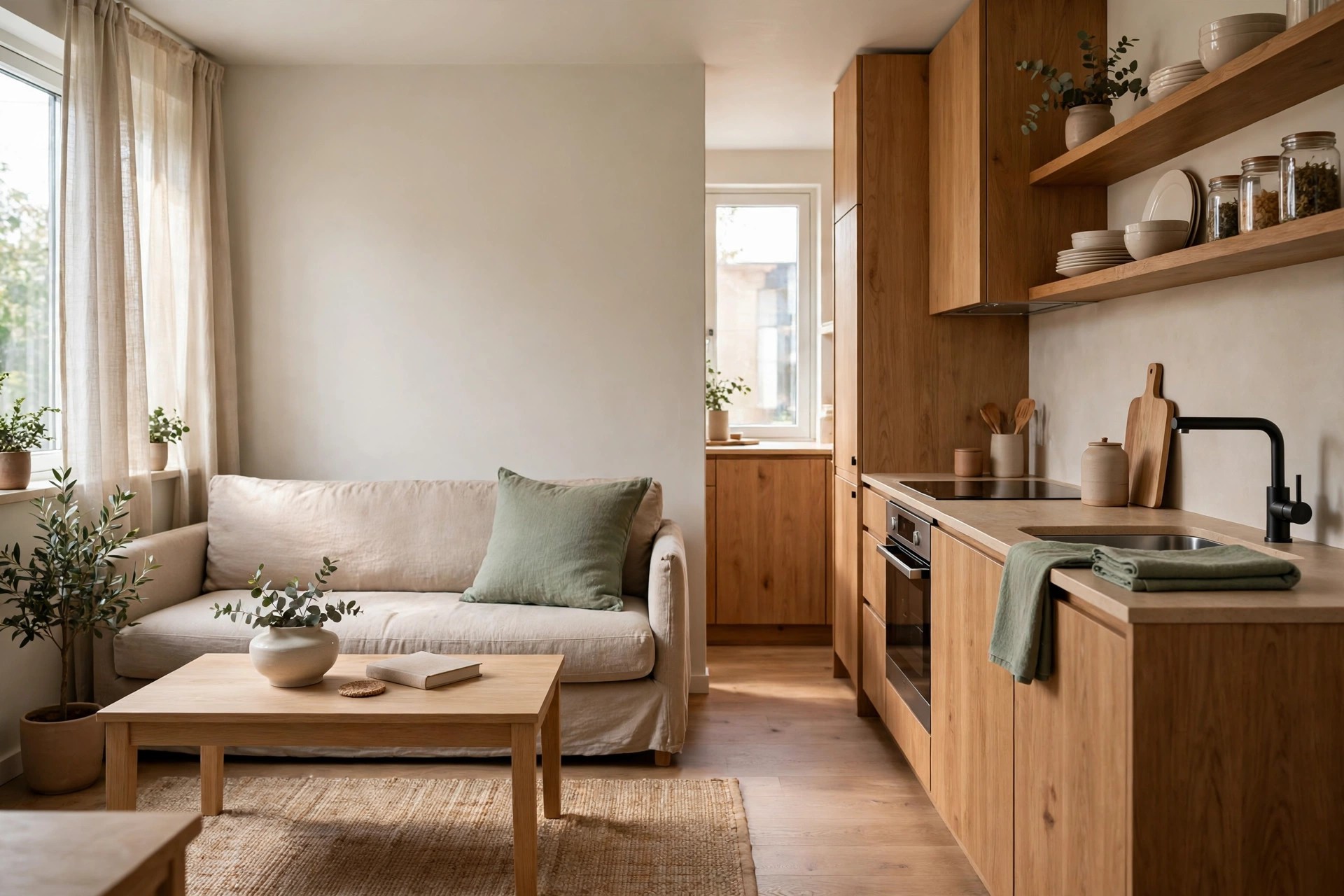
When two zones share no wall, color has to do the linking work. Pick one warm wood tone, one soft neutral, and one accent color. Repeat them in both zones in small doses.
A wood cutting board, a wood frame, and a wood tray can carry the same tone from counter to coffee table. A sage cushion can echo a sage tea towel. The repeat makes the open space feel planned, calm, and joined up, not random.
Do not paint each zone a different strong color. Strong color on both sides will fight for attention. Keep the big surfaces calm and let the accent show up in small, moveable pieces you can swap each season.
5. Roll a Cart to the Boundary Line
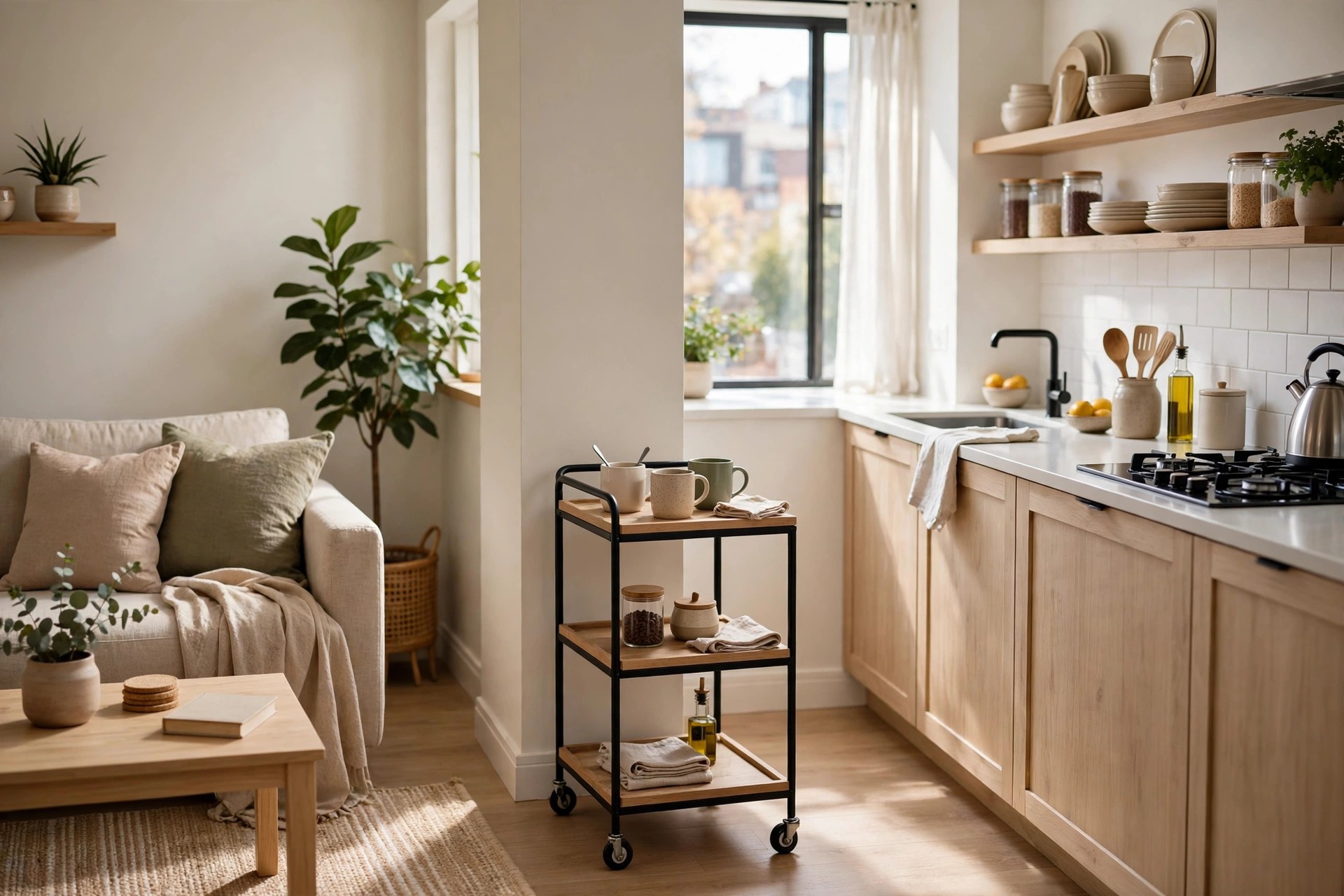
A rolling cart parked at the edge of the kitchen gives you a movable boundary. Use it for coffee gear in the morning and for drinks or snacks when friends visit. Then roll it back when you need floor space.
Pick a cart with a brake on at least two wheels. A cart that drifts into the walkway will annoy you within a week. Keep the top clear enough to set down one tray or two mugs.
Stock the cart for one job at a time. A cart that holds coffee, cleaning sprays, books, and chargers soon becomes a second junk drawer. One clear job keeps it useful, light, and easy to move each day.
6. Give Each Zone Its Own Light
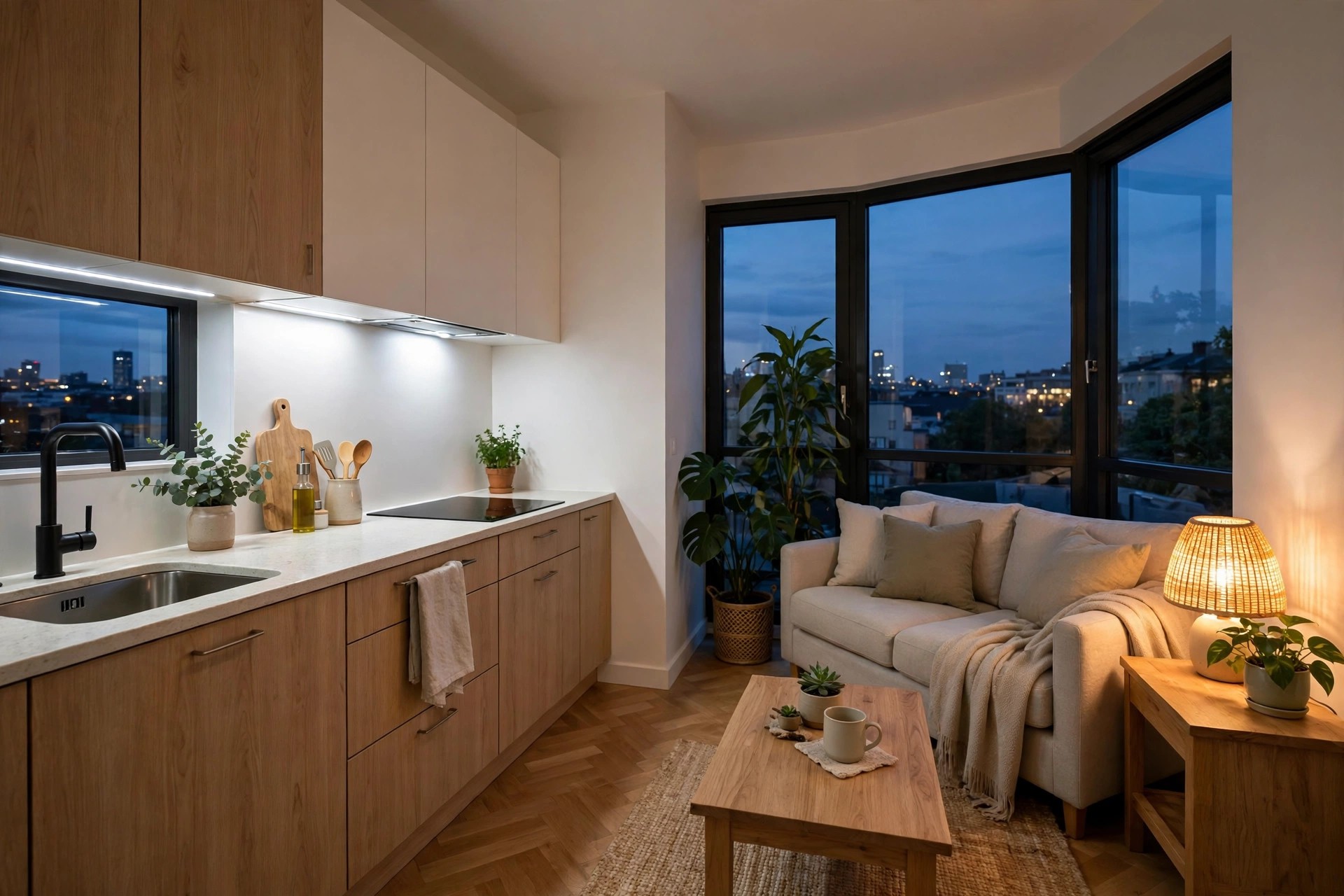
Light can zone a room faster than furniture. Keep kitchen task light bright and direct for cooking. Give the living side a warm lamp at sofa height for reading and rest.
When the kitchen light stays on alone at night, the whole flat feels like a kitchen. Switch it off after cooking and let one or two lamps carry the evening. The mood shift is instant, free, and easy to repeat nightly.
Use bulbs in the same warm range for the living lamps. Mixed cool and warm light in a small open space can look patchy. A dimmer plug or a low watt lamp helps on nights when you want less glare and more rest.
7. Hide Kitchen Clutter From the Sofa View
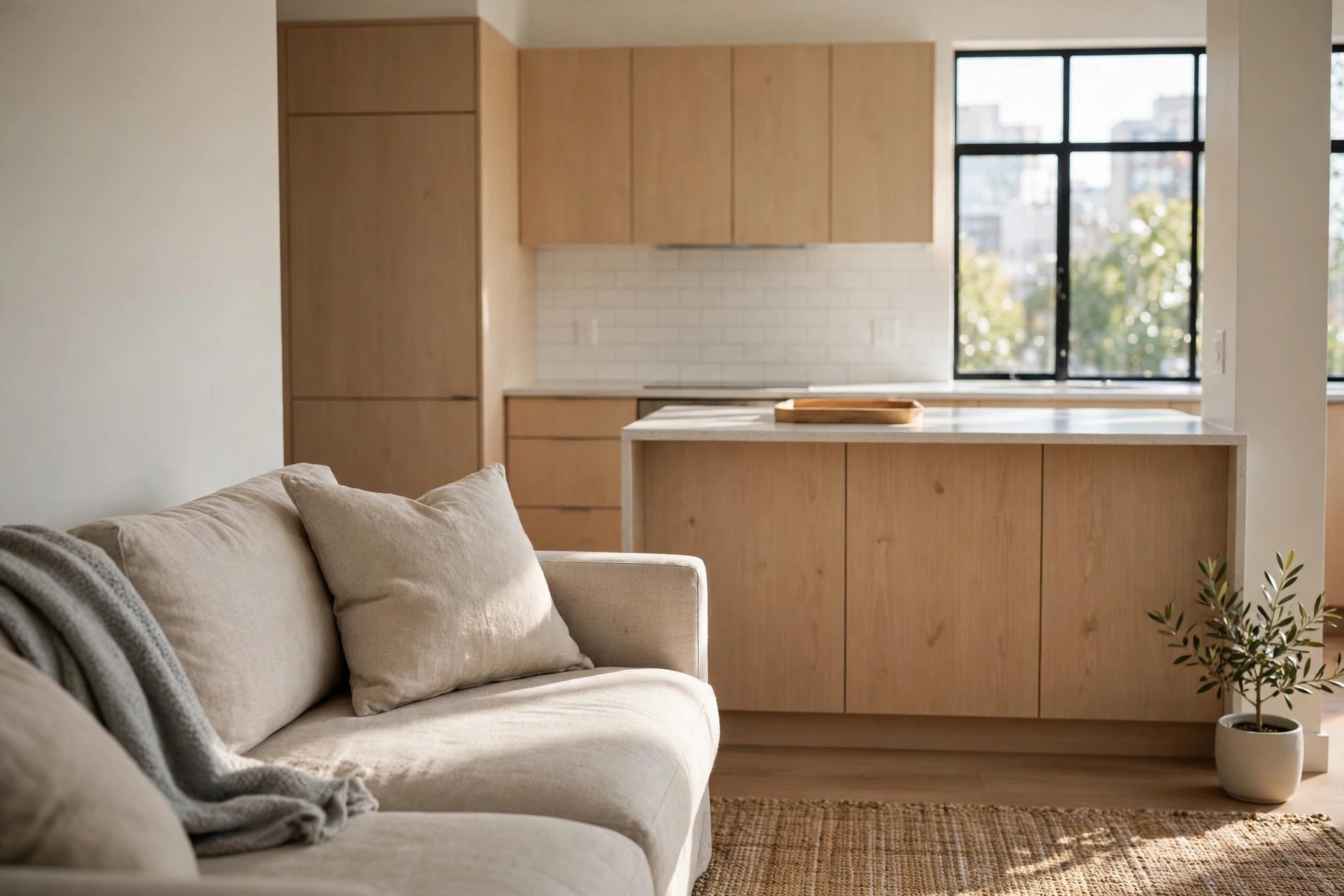
Sit on your sofa and note exactly what you see in the kitchen. That view is the one to fix first. Often it is a dish rack, an open bin, or a row of small appliances.
Move the dish rack to the far side of the sink, away from the sofa sightline. Put daily tools in one closed cupboard or one lidded box. A tray can corral oils and spices into one tidy group.
Keep counters clear except for one or two items you use each day. A clear counter reads as calm from the sofa, even if the cupboards behind it are full.
For sofa and TV fit, these small living room layout ideas with a TV and a sofa that fit help you set the seats first.
8. Build a Smell Routine, Not Just a Fan
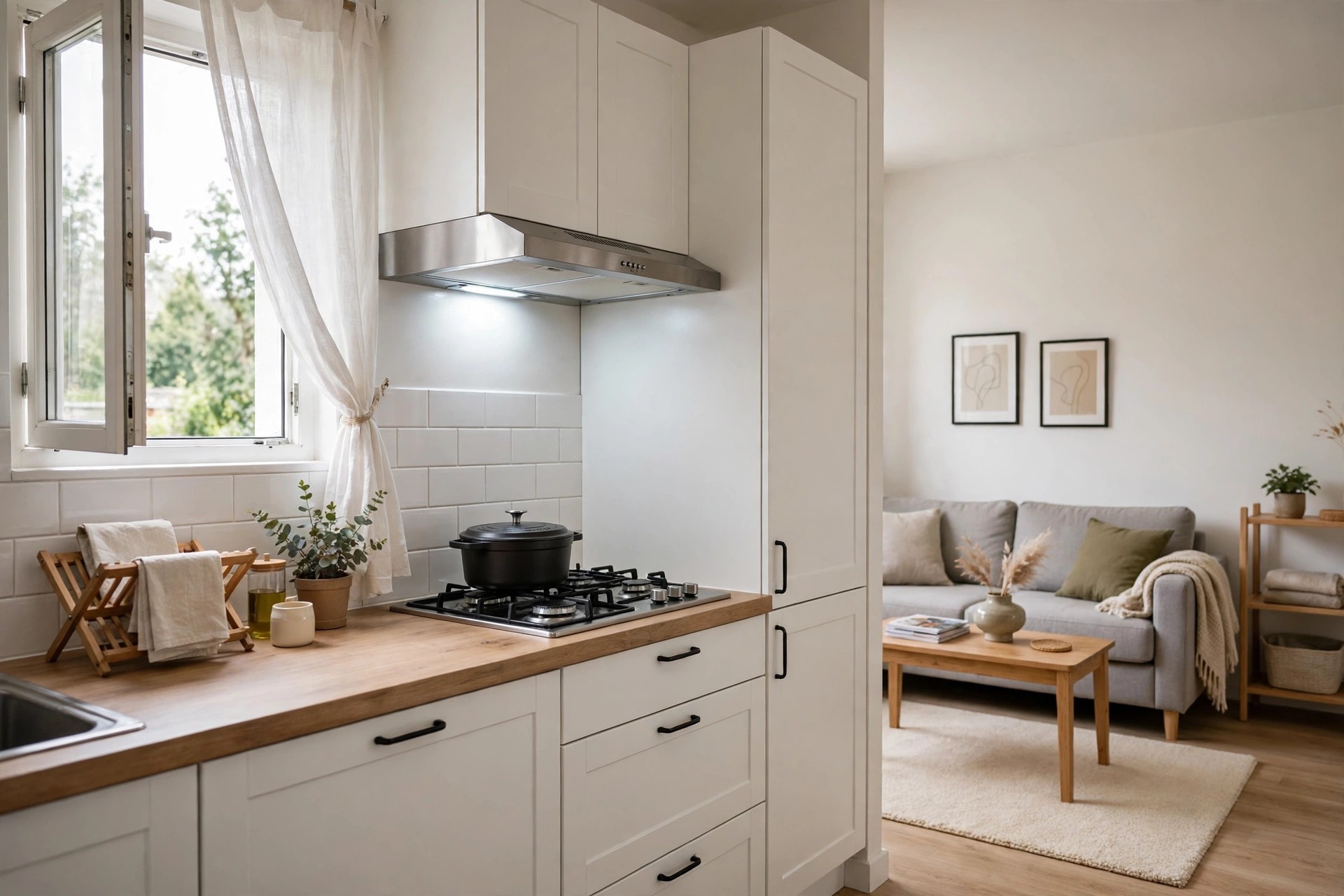
Cooking smells travel fast when no wall stops them. A fan helps, but a short routine helps more. Run the fan before you start cooking, not after the smell has already spread.
Put lids on pans when you can, and open a window on the far side of the flat for a cross breeze. Close the bedroom door before strong cooking starts so soft bedding and curtains do not hold the smell.
Pick washable cushion covers and a washable throw for the sofa. When a smell does linger, you can wash the cover instead of living with it for days. Air the room for a few minutes after you eat, even in cold weather.
9. Angle the Seats Away From the Sink
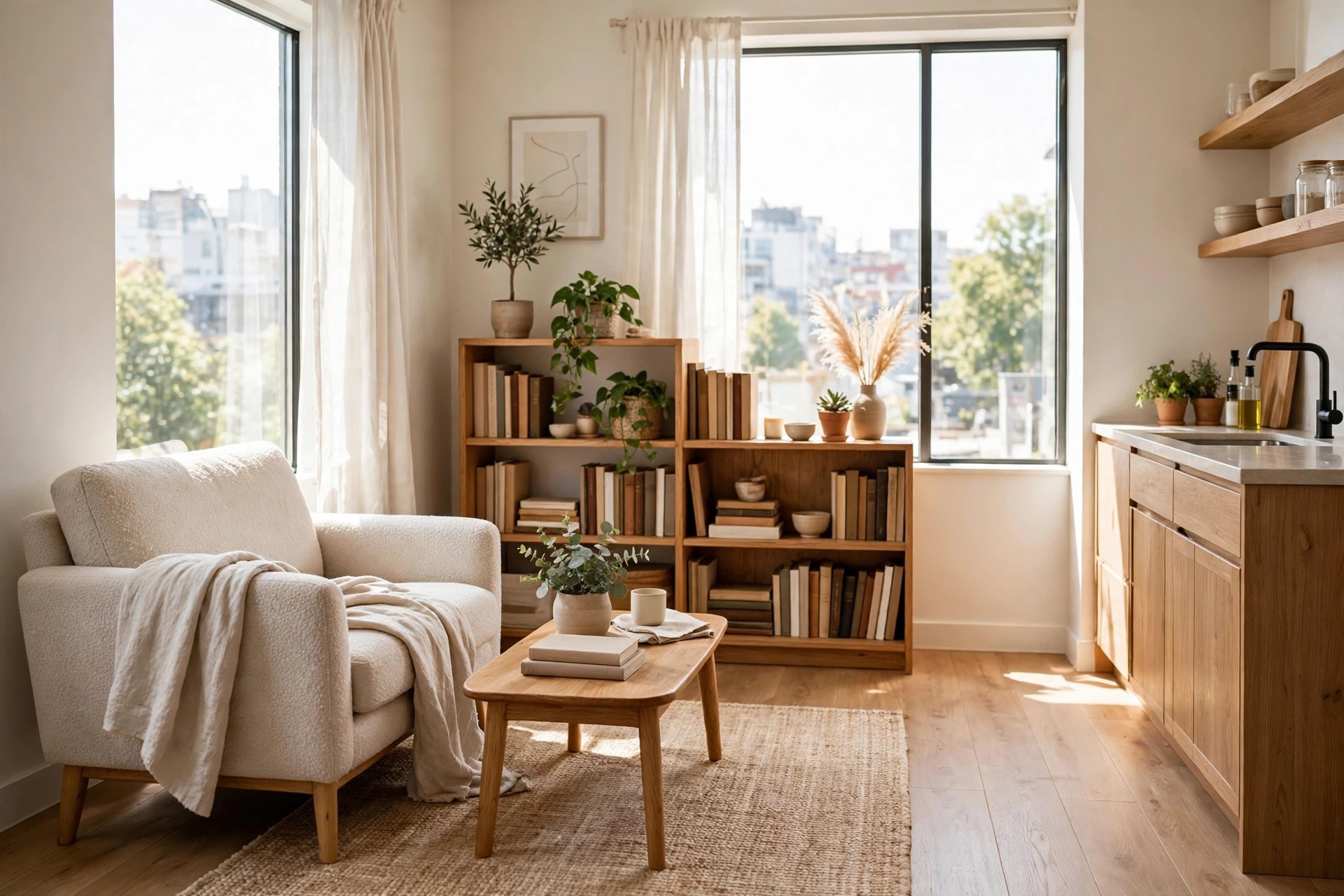
You do not have to face the kitchen just because it is open. Angle the main chair a little toward the window or the bookshelf. A small shift changes what your eyes rest on.
Keep the TV or the main art on the wall opposite the seats. That gives your eyes a clear place to land each time you sit down. The kitchen then sits at the edge of your view, not at the center of it.
Test the angle at night, when kitchen light can glare off a screen or a glass door. A chair moved by a few inches can cut that glare and save your eyes. Small moves matter most in a room this size.
10. Place a Small Round Table Between Zones
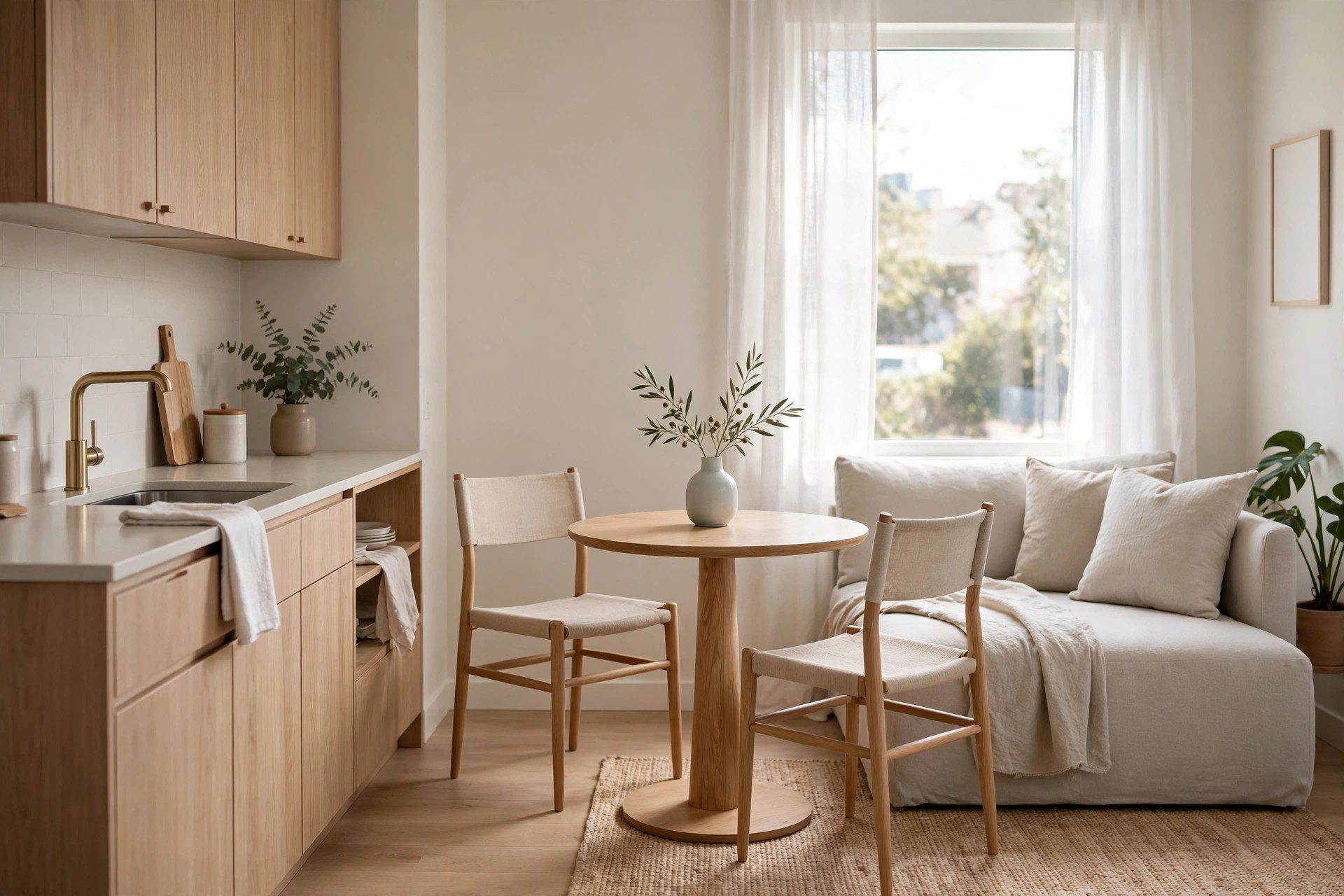
A small round table between the kitchen and the sofa works as a buffer and a landing spot. It holds a coffee in the morning, a board game at night, and a bag when you walk in.
Round beats square here because it has no sharp corners in a tight walkway. Pick a pedestal base so chairs tuck in close and feet do not trip on legs. Two light chairs are easier to move than four heavy ones.
Keep the table top mostly clear. One small vase or one candle is enough. A table that stays clear can switch jobs all day, from work spot to dinner spot to game spot, without a full tidy first.
11. Push Storage Up the Kitchen Wall
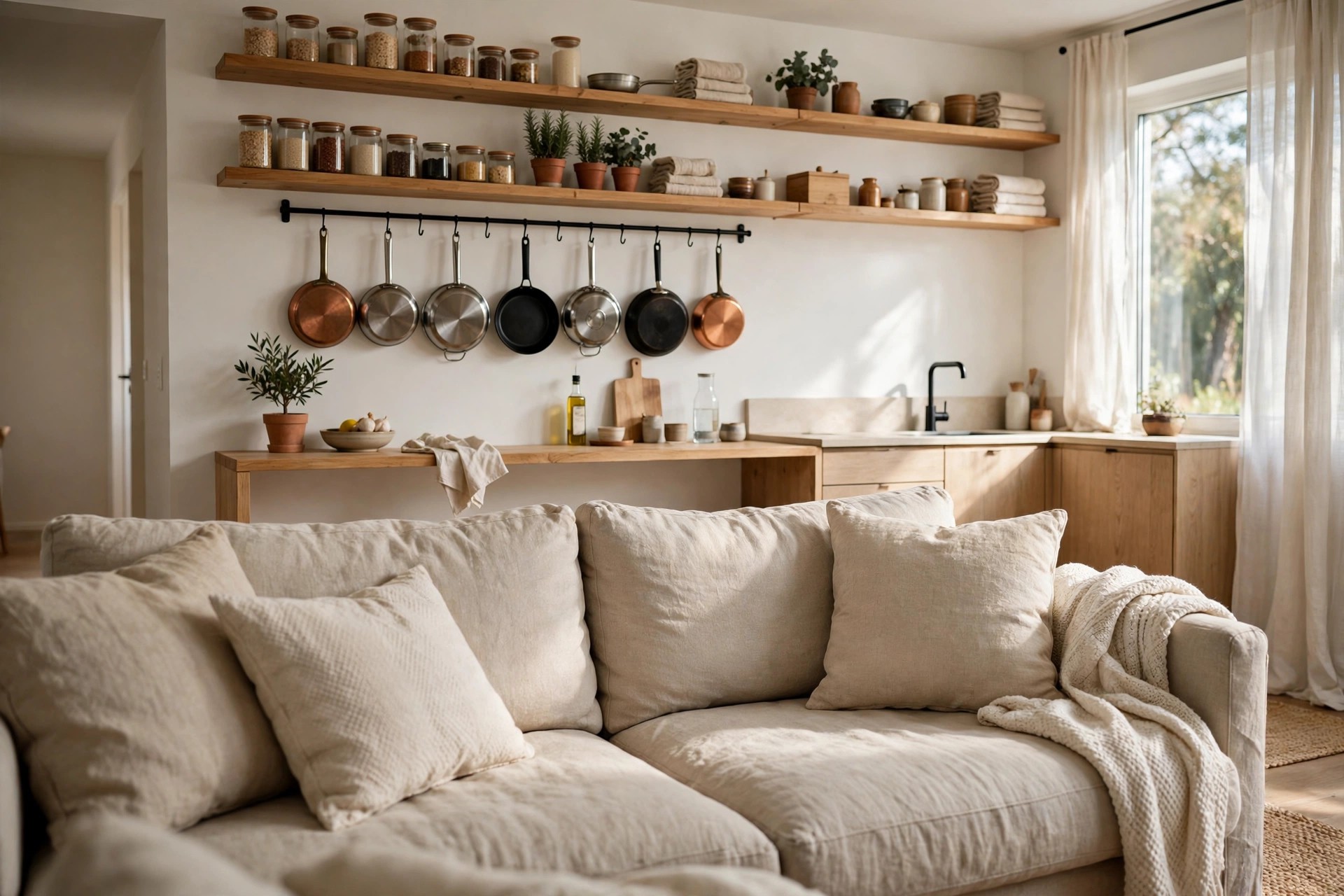
When kitchen storage stays low, it spills into the living room. Use the kitchen wall up high for items you use each week. That frees floor space and keeps the living side clear.
Hang a rail for pans or cups only if you will keep it neat. A crowded rail seen from the sofa looks like clutter. One row of matching hooks reads calmer than a mix of loose tools and odd mugs.
Keep heavy items low and light items high. Store the rarely used pot on the top shelf and the daily pan where you can reach it without a step stool. Safe reach matters more than a neat photo, each day.
12. Soften Cooking Noise With Soft Layers
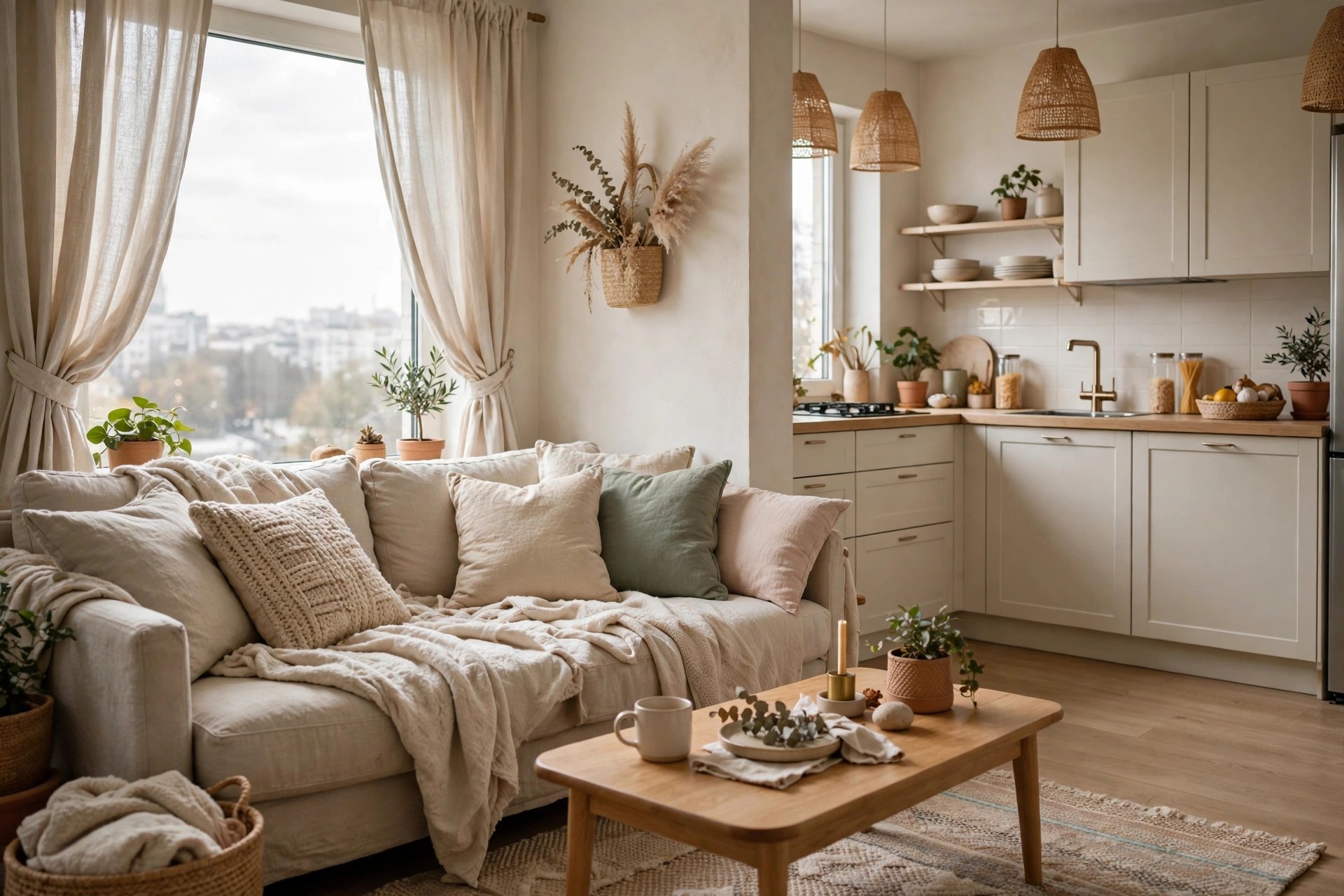
Hard floors and bare walls bounce kitchen noise straight to the sofa. Soft layers calm that echo. A rug, curtains, and fabric cushions each absorb a little sound.
Add a curtain at the living room window even if you do not need it for privacy. The fabric breaks up the hard wall and softens clatter from pans and plates. Choose a washable fabric for care, and wash it when cooking smells settle in.
Put felt pads under chair legs and the coffee table. Scraping chairs on a hard floor sounds loud in an open flat, late at night most of all. Pads cut that noise and protect the floor at the same time.
13. Make a Coffee Corner at the Edge
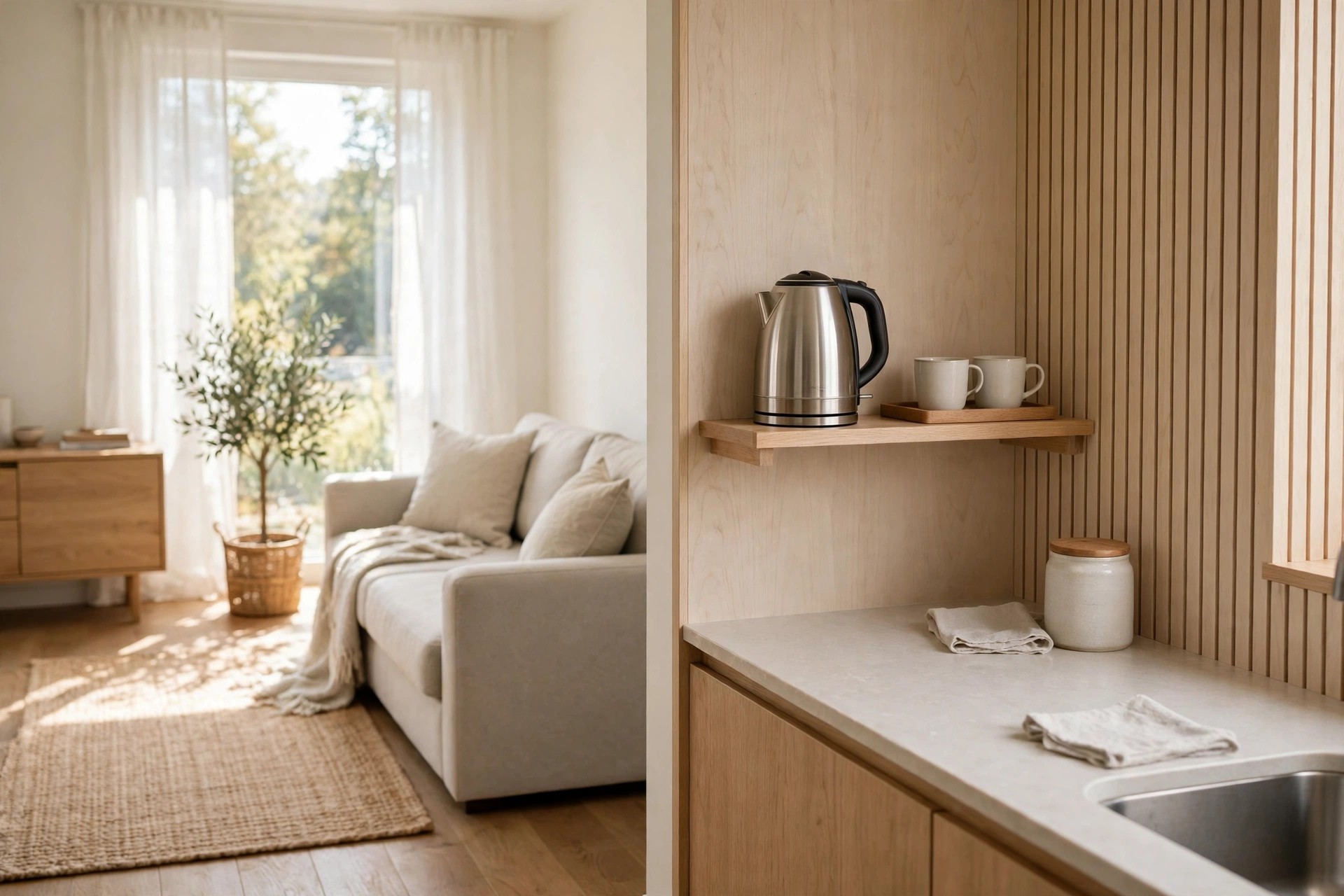
A coffee corner at the kitchen edge gives the boundary a pleasant job. One small shelf, a kettle, and two mugs are enough. You stop in that spot each morning, then move to the sofa to sit.
Keep the corner to one tray or one shelf. If it spreads across the counter, it stops being a corner and starts being clutter. A small sign is not needed; the tray marks the spot.
Use mugs and jars you like to look at, since you will see them from the sofa. Plain, calm pieces read better than a mix of bright prints. When the corner looks good, the whole open space feels more cared for each morning.
14. Use One Bench for Sitting and Storage
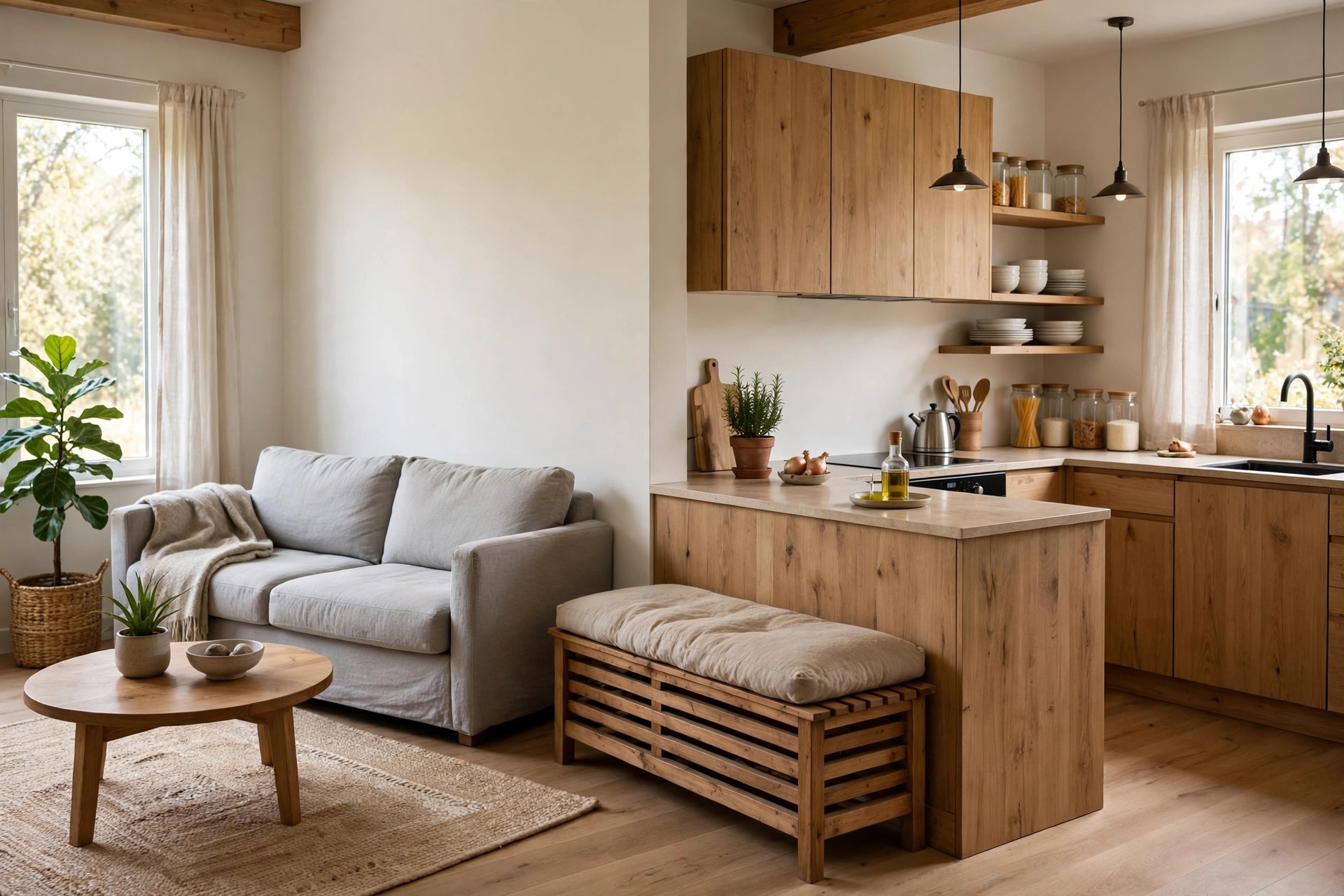
A storage bench near the boundary does two jobs in one small footprint. It gives you an extra seat for a guest and a place to hide throws, games, or bags. One piece replaces two.
Pick a bench with a lid that lifts with one hand. A bench that needs two hands and a clear floor to open will stay shut. Keep inside it only items you grab often, not deep storage.
Place the bench where it does not block the kitchen path. A bench that forces you to step around it each day will soon become a dumping spot. The right spot is close to the seats, but never in the way.
15. Switch the Room to Evening Mode
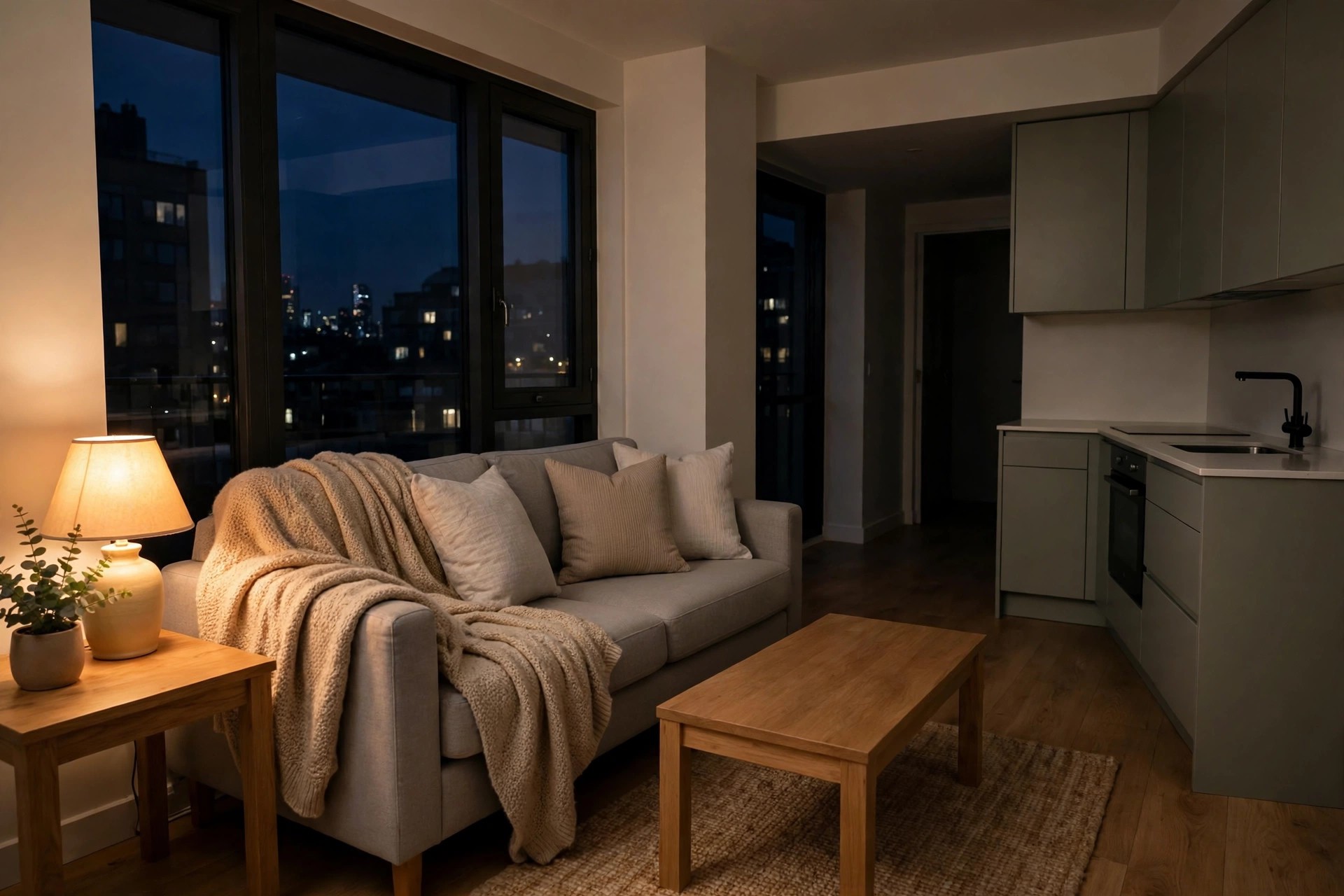
Open kitchens blur the line between cooking time and rest time. A small evening routine can redraw it. Switch off the bright kitchen light, close the dishwasher, and clear the counter of prep tools.
Turn on one warm lamp and lay out a throw on the sofa. Those two cues tell your brain that cooking is done. The room feels like a living room again, even though no furniture moved at all.
This habit matters most in a single open space, where one room must do many jobs. If you live in one room in full, these tiny living room ideas for studio apartments share more zoning moves for sleep, work, and rest in the same space.
An open kitchen works best when the living room has its own edge, its own light, and its own calm view. You do not need walls to get that.
A sofa turned the right way, a rug in the right spot, and a short evening routine can change how the whole flat feels.
Pick the idea that fixes your worst daily friction first, whether that is smell, noise, clutter, or a view you hate. Live with it for a week before you add more.
These small living room ideas for apartments with open kitchens are meant to be tried one at a time, not all at once.
Save this to your small living room board for later, and note which move helped most. That note will guide your next small change, and it keeps the room growing in the direction you actually live in.


