

15 Beige and Olive Living Room Ideas for an Earthy Scheme
Beige alone can feel flat, and olive alone can feel heavy, so the trick is letting each color do a clear job.
These beige and olive living room ideas for an earthy scheme show that balance in simple steps, from one strong wall to a single chair.
Beige keeps the light in the room. Olive adds depth on the walls, the seating, or the soft layers near the floor.
If you want a wider beige starting point first, our beige living room ideas cover the general tour, while this list stays on the olive pairing.
Start with the move that fits your room, test the color in daylight and lamplight, then repeat it twice so it looks planned.
You do not need new furniture for most of these ideas. Paint, curtains, cushions, and one good rug do most of the work here.
Most rooms in this pairing work on a simple split, about two thirds beige and one third olive, with wood in between.
This post contains affiliate links. If you buy through them, we may earn a small commission at no extra cost to you. See our Affiliate Disclosure.
1. Put Olive on One Wall Behind a Beige Sofa

Start with the wall the sofa already faces or sits against. One olive wall gives the room a clear back, and the beige sofa stays bright in front of it.
Keep the other walls warm beige or soft cream. That split stops the green from closing in, which matters most in a room with one small window.
Test the paint on a large board first. Olive can turn grey on a dull day and rich gold green in sun, so check it at noon and at night.
Leave a hand width of beige wall visible at each side of the olive wall. That thin border keeps the green block neat and stops it feeling like a full room repaint.
2. Let an Olive Sofa Carry the Color
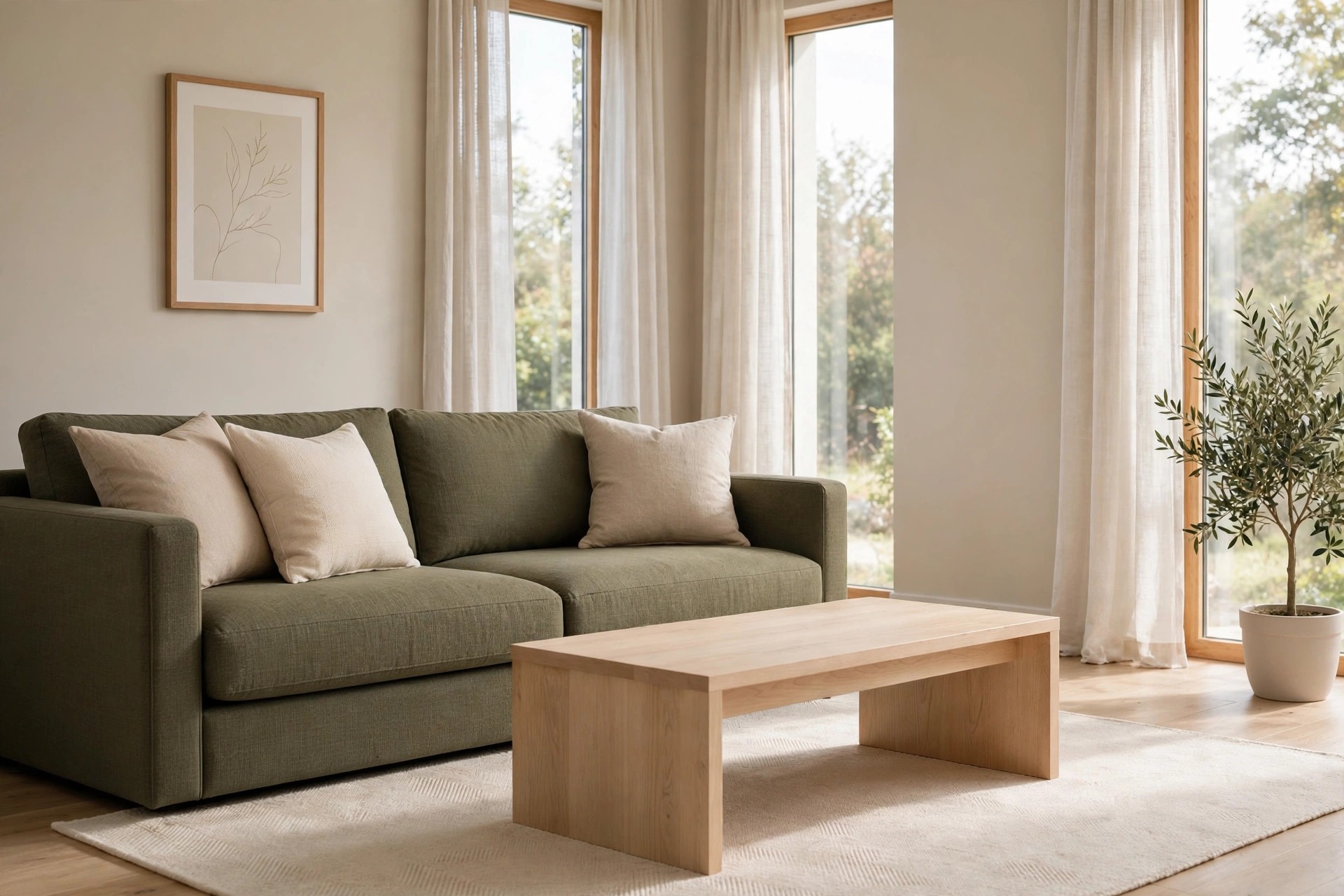
An olive sofa does the hard work in one piece. Set it on beige walls, a pale rug, and light wood, and you need very little green elsewhere.
Dress it with beige and cream cushions only. A mix of linen and a flat weave keeps the dark seat from looking solid and heavy in the center.
Watch the side that gets the most sun. Green fabric can fade faster there, so rotate the cushions each month and keep a plain beige throw over that arm.
Add a pale floor lamp behind one end of the sofa. The light lifts the dark seat at night and keeps the beige cushions clear against the green back.
3. Hang Floor Length Olive Linen Curtains on Beige Walls

Color at the window frames the whole room without paint. Long olive linen curtains on beige walls add height, and the soft folds break up a plain wall.
Hang the rod high and wide so the fabric sits beside the glass, not over it. You keep the daylight, and the room still reads green from the door.
Choose a muted olive, not a bright leaf green. In linen the color softens in sun, and it sits calmly next to beige seating and pale wood floors.
Pull the curtains fully open in the day and closed for one evening test. Olive linen looks deeper when folded, so judge the color in both states before you order more.
4. Pair Natural Wood and Stone in the Center
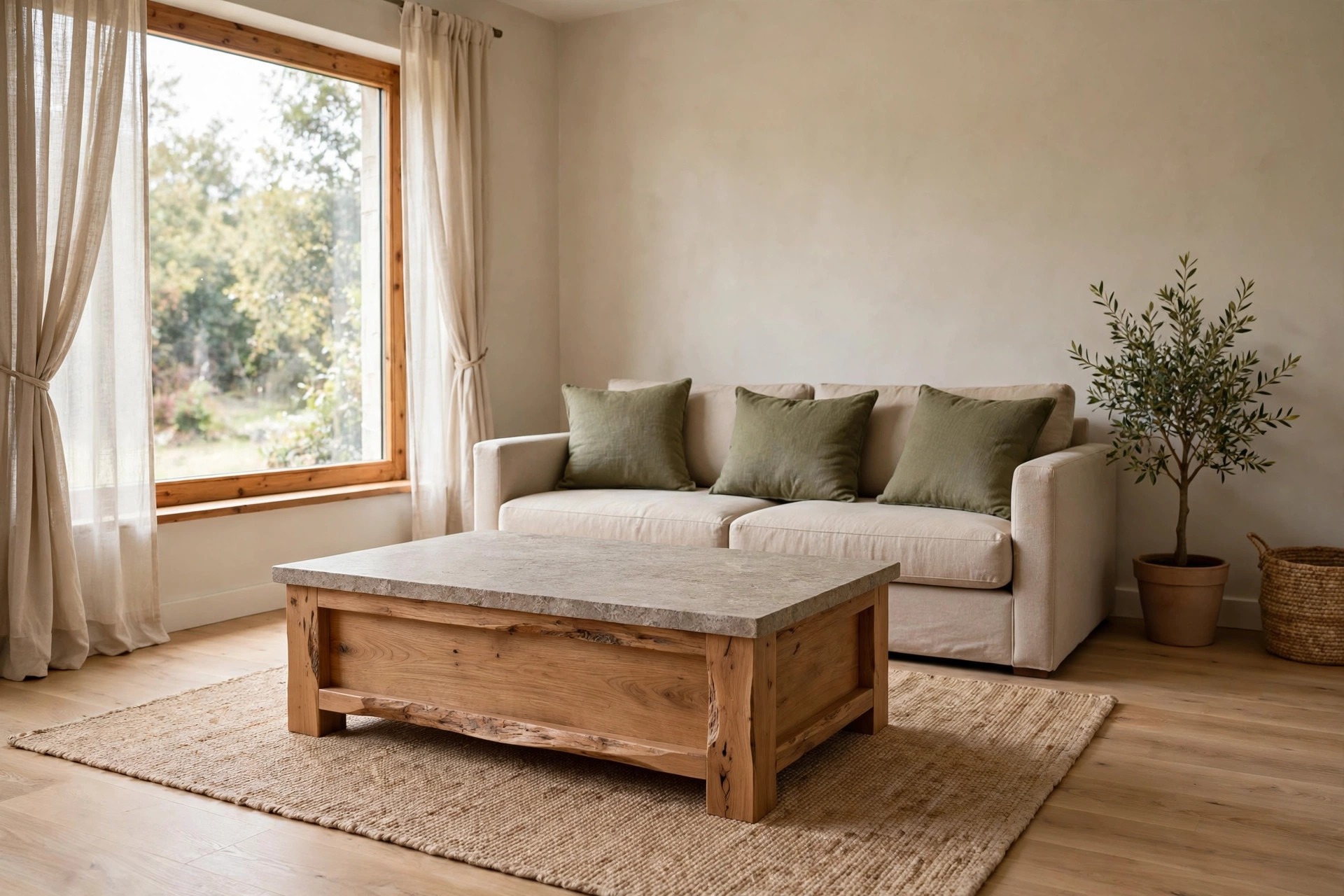
A wood coffee table with a stone top, tray, or base brings two natural textures together in the middle of the seating. That mix is what makes the scheme feel earthy.
Keep the wood warm and mid toned, not orange and not grey. Warm wood links beige fabric and olive paint, while cool grey wood can make both look cold.
For more ways to style a hard natural feature, see our beige living room ideas with stone fireplace styling for the next step.
Set a beige cushion at each end of the table grouping on the rug. The pale bookends keep the hard center soft and tie it back to the seating around it.
5. Layer Linen, Wool, and Cotton in Beige and Olive

Two flat colors need texture or the room looks plain. Mix a beige linen sofa, an olive wool throw, and cotton cushions with a visible weave on top.
Use three textures at most in one view. More than that turns busy, and the calm link between the two colors gets lost under pattern and fringe.
Fold the olive throw over one corner only. A neat fold shows the color in a clean block, and it is easy to shake out and refold each night.
Keep the throw fabrics washable where hands rest most. Linen and cotton covers come off fast, and a clean throw in a flat color always looks better than a faded patterned one.
6. Group Real Plants Apart From Olive Paint
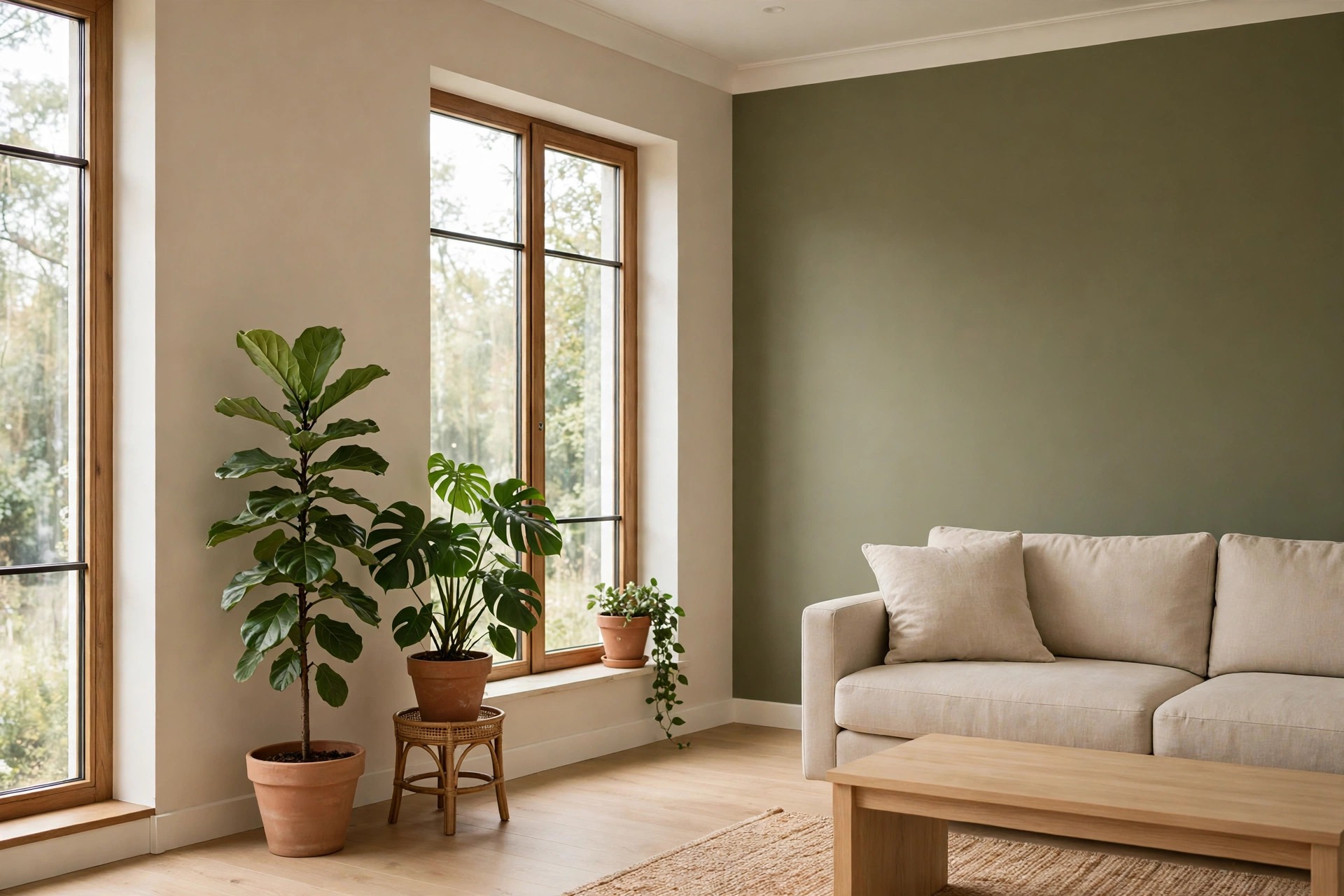
Plant green and olive paint are close, but they are not the same. Put plants on the beige side of the room so each green keeps its own place.
Group three plants at mixed heights near the window: one tall, one on a stand, one small on a table. The odd number and the steps look natural, not lined up.
If you love the leaf side of this scheme, our beige living room ideas with botanical prints and plants go deeper on prints and pots.
Use clay, stone, or woven pots in beige and tan tones. Shiny white pots can look stark next to olive paint, while matte natural pots sit quietly with real leaves.
7. Ground Beige Seating With a Jute or Wool Rug
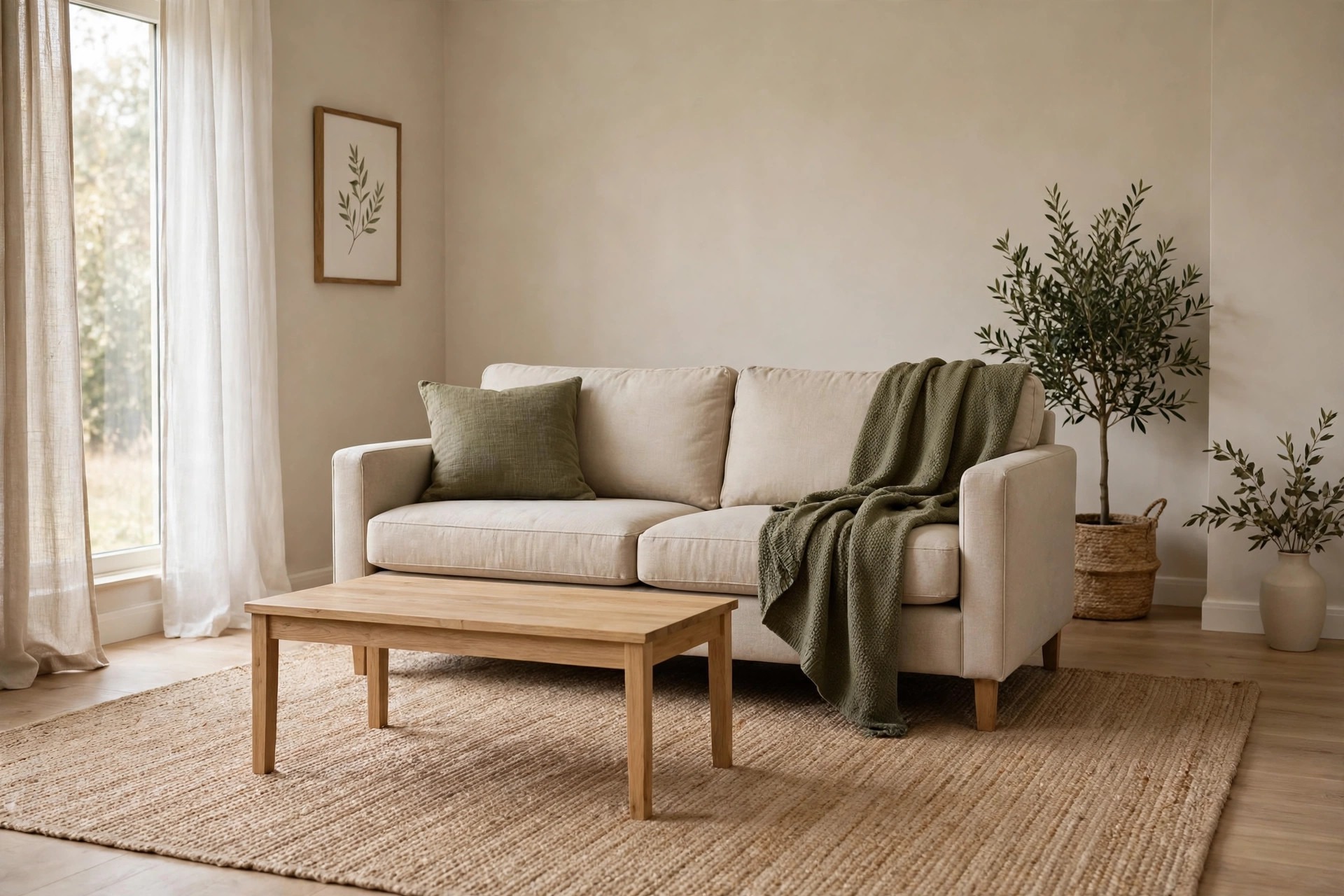
A beige sofa on a beige carpet can float. A jute or warm wool rug with a clear edge gives the seating a base and adds a dry, natural tone.
Size the rug so the front legs of the sofa and chairs sit on it. That one rule ties the group together, even when the pieces do not match.
For sizing help with a pale sofa, our guide to living room rugs with a beige couch shows clear layouts. Add one olive cushion to repeat the wall or curtain color.
A woven rug will show crumbs more on the dark olive edge than in the center. Keep the olive to cushions and throws here, and give the rug a quick shake outside weekly.
8. Add One Olive Armchair as a Reading Corner
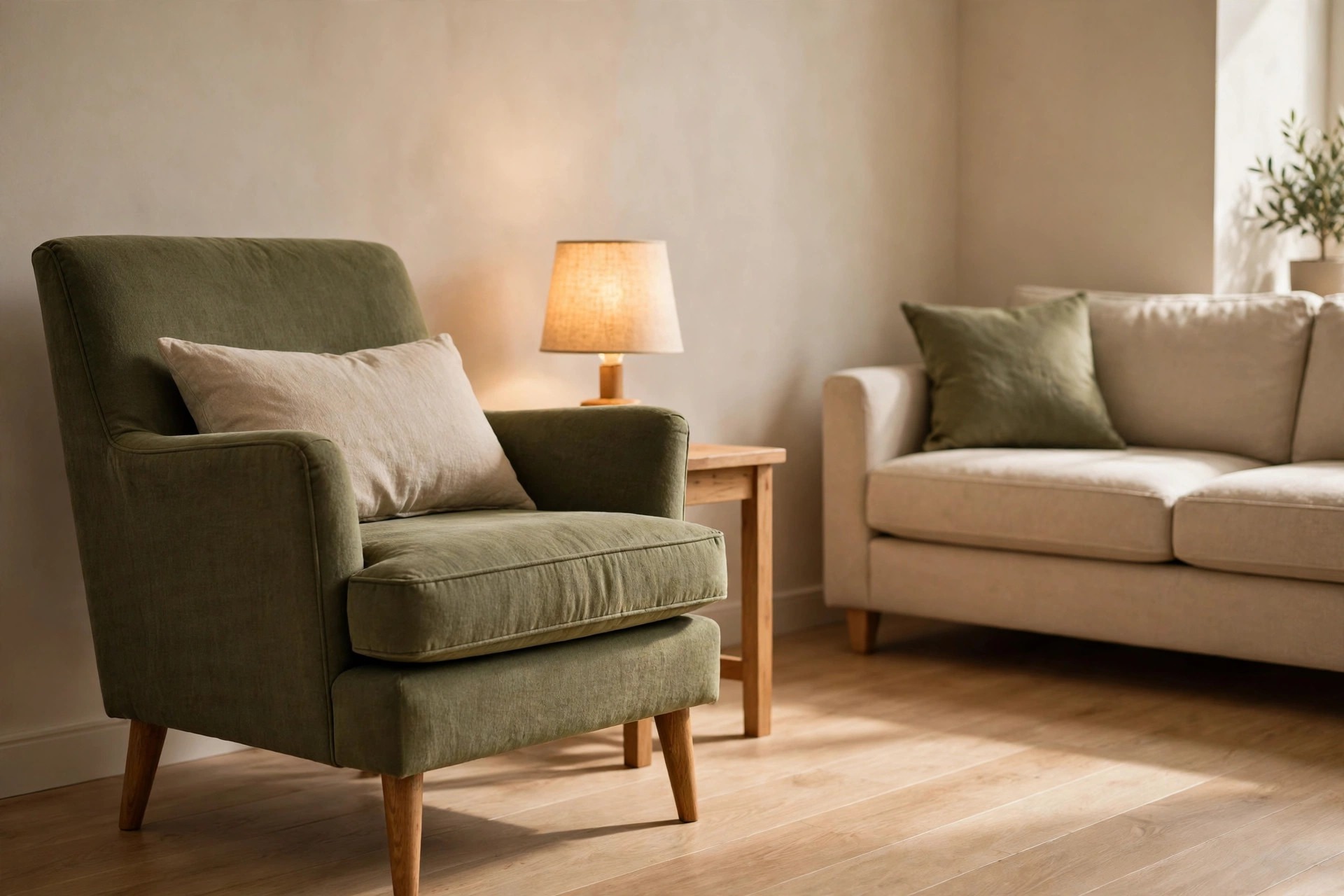
One olive armchair in a corner gives you the color without a second sofa. Angle it toward the room, add a small wood side table, and the corner has a job.
Put a warm lamp right beside it. Olive fabric looks rich under warm light and dull under cool white light, so the bulb choice matters as much as the chair.
Keep a beige cushion on the chair and an olive cushion on the sofa. That small swap links the corner to the main seating without matching sets.
Add a small footstool in beige fabric in front of the chair. It gives the corner a finished shape and gives guests a clear place to rest a book or a cup.
9. Use Olive Velvet Cushions on a Beige Linen Sofa
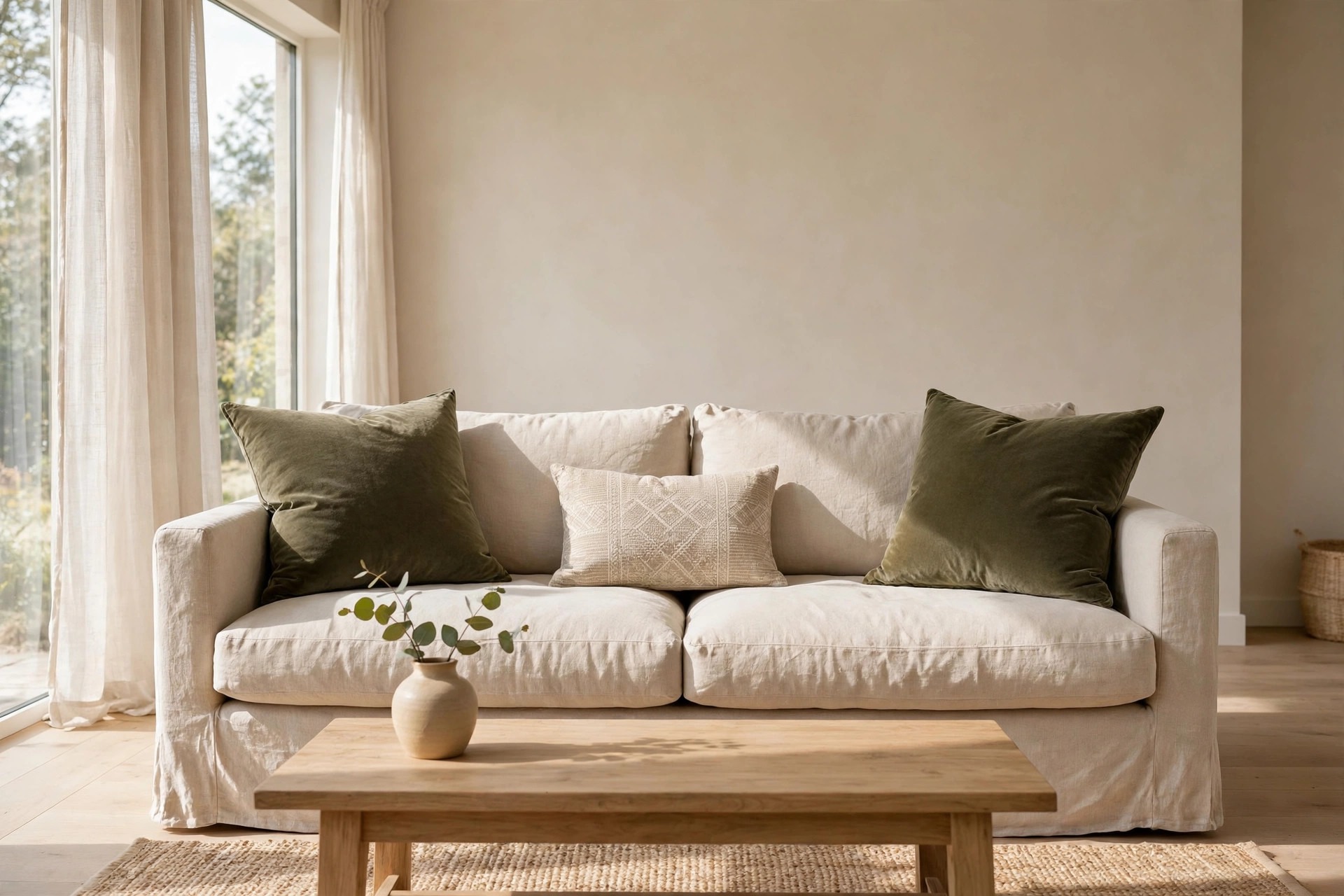
This is the lowest risk move in the list. Olive velvet cushions on a beige linen sofa give strong color, soft shine, and an easy change if you tire of it.
Use two large olive cushions, then one smaller beige patterned one in front. The dark pair frames the center cushion, and the seat still feels light at the ends.
Velvet shows marks where hands and heads rest. Brush the pile one way at night, and turn the cushions weekly so the wear and light stay even.
Plump the velvet cushions from the back corners each morning. Thirty seconds of shaping stops the soft pile from looking flat where people lean during the evening.
10. Paint Built-In Shelves Olive and Style Them in Beige
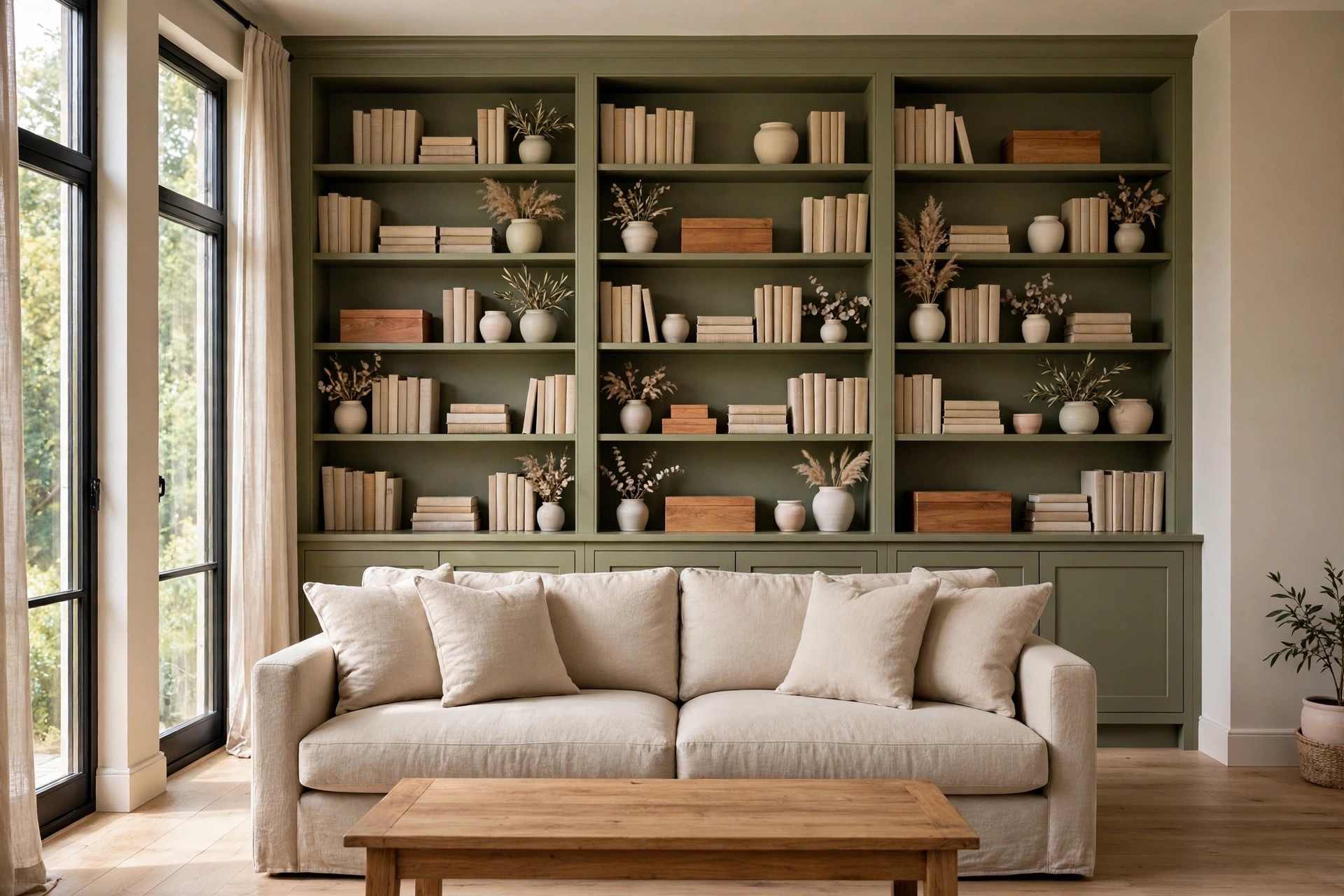
Olive shelves turn storage into the color feature. Paint the full unit, back and sides too, then style it with beige books, pale pots, and warm wood boxes.
Leave one shelf in three mostly empty. Dark shelves look full fast, and clear space lets the pale pieces stand out against the green paint.
Group books by tone, not by size. Cream and tan covers on olive shelves look calm, while bright mixed spines can fight the whole earthy scheme at once.
Put taller pale pieces at the back of each shelf and low pieces in front. That step keeps the dark shelf back visible and stops small items getting lost in shadow.
11. Hang Large Leaf Art in Olive Tones Over Beige Seating
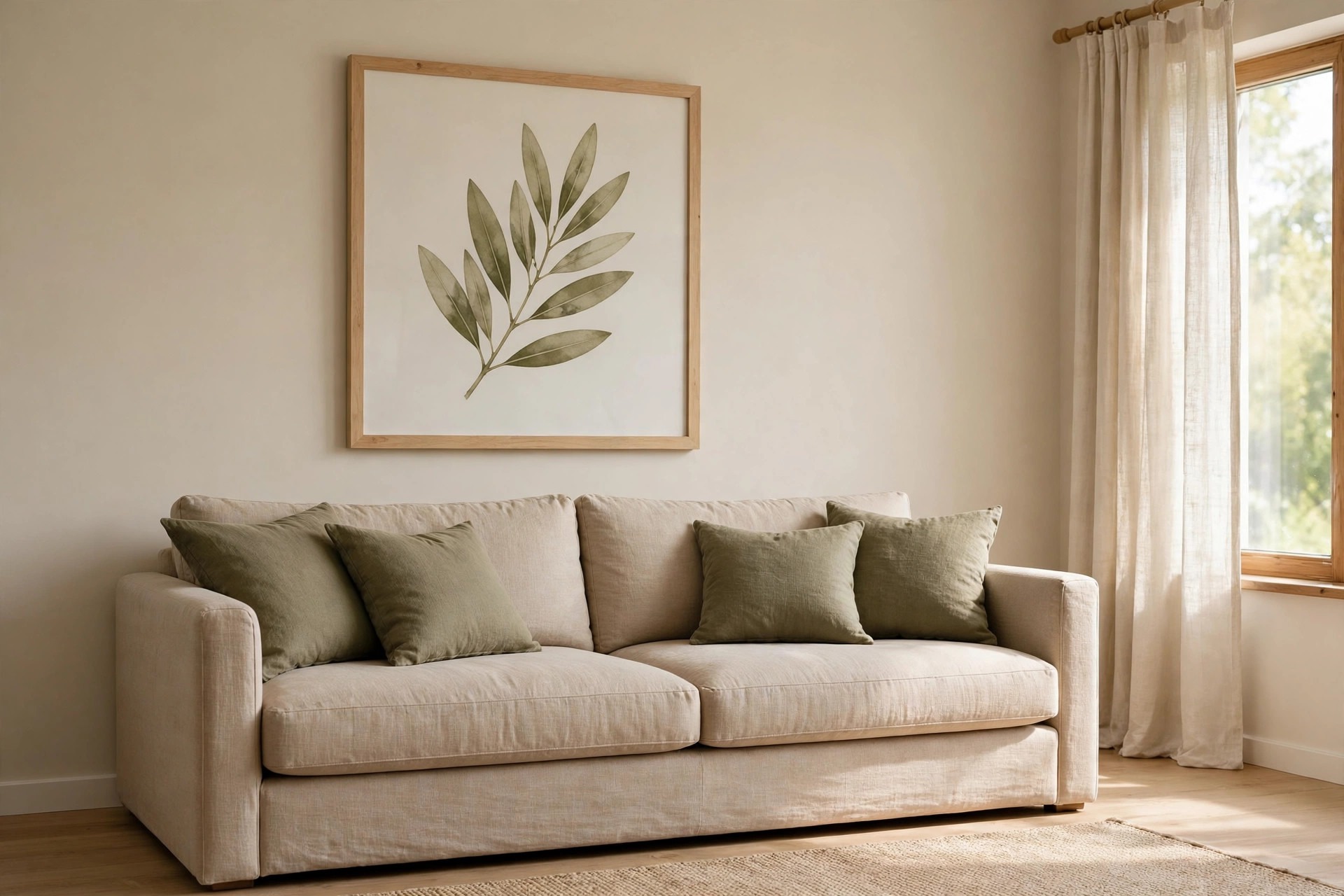
One large print with soft leaf shapes brings olive to the wall without paint or paper. Hang it low over a beige sofa so the art and seating read as one block.
Pick a light wood or thin black frame. A heavy gold frame can pull the look formal, while pale wood keeps the room natural and relaxed.
Keep the print matte, not glossy. Glass shine can hide the soft green tones in daylight, and a matte finish sits better next to linen and wool nearby.
Step back to the doorway before you fix the height for good. Art that looks level over a sofa can look high from far away, where most people first see it.
12. Balance Warm Wood Floors With a Pale Rug and Olive Accents

Warm wood floors already give the room a strong base tone. Cover the center with a pale beige rug, then add olive only above that line in cushions and art.
This order stops the floor, rug, and sofa from blending into one brown block. Each layer stays clear: dark warm floor, light rug, mid tone seating, deeper green accents.
The same warm floor logic suits the lived in feel in our cozy rustic living room ideas, though here the finish stays cleaner and more simple.
If the floor has a strong red tone, choose a cooler beige for the rug. Warm beige on red wood can turn pink in sun, so test a sample at midday first.
13. Set a Low Olive Cabinet Under the Window

A low olive cabinet under the window adds color at floor level and hides remotes, games, and chargers. Beige walls above it keep the low line from feeling dark.
Style the top with just three things: a stack of pale books, a small plant, and a wood bowl. Clear space around them lets the green cabinet show.
Leave the window sill empty. Curtains, sill decor, and cabinet decor in one view get crowded, and the room starts to lose the calm the colors should give.
Keep the cabinet doors clear of extra handles in bright metal. Simple wood or black knobs keep the green front calm and stop small shiny spots drawing the eye first.
14. Warm the Light So Olive Stays Soft at Night
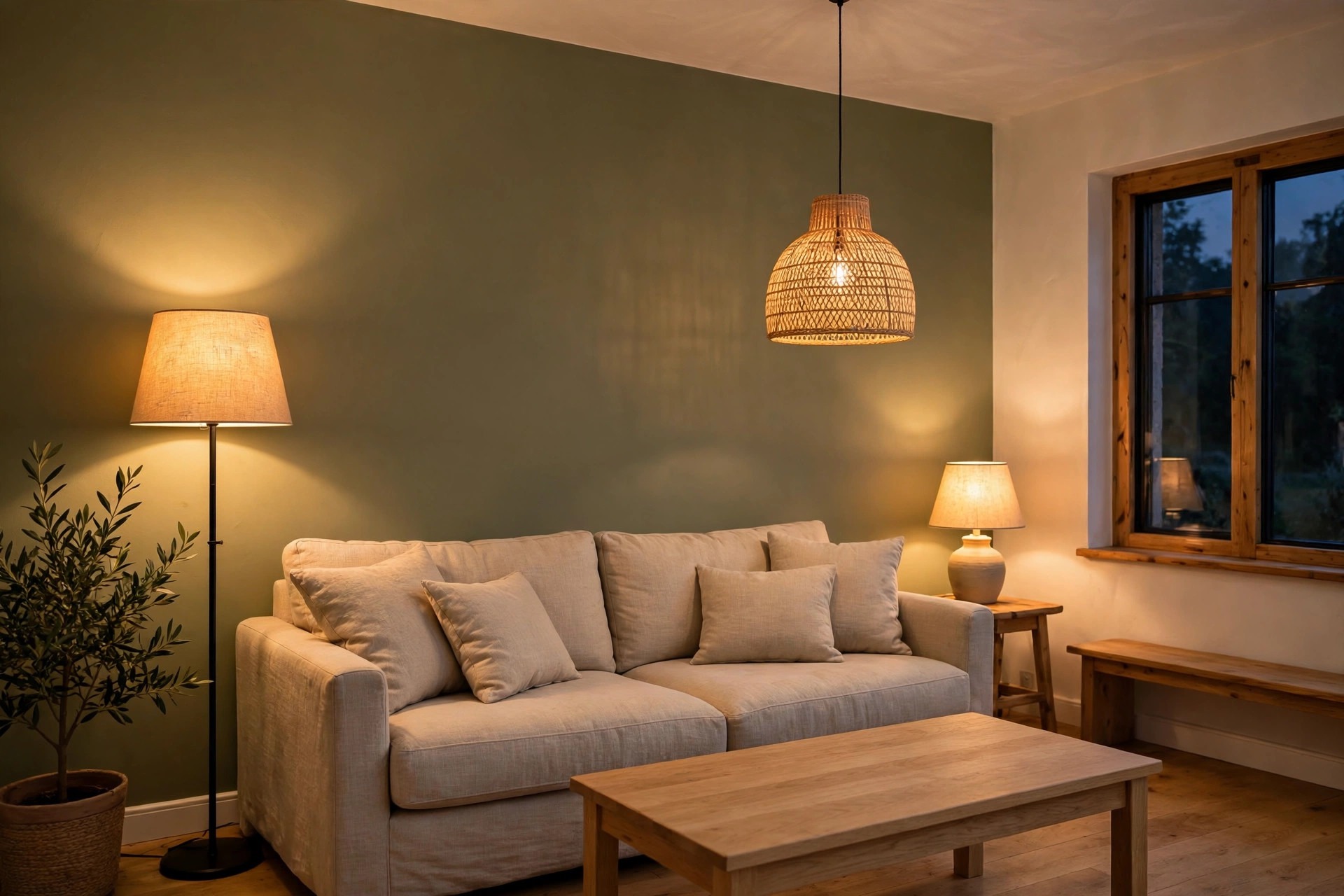
Olive is a warm green in daylight, but cool bulbs can turn it blue grey at night. Use warm bulbs in table lamps, floor lamps, and wall lights across the room.
Use at least three light points at mixed heights. One ceiling light flattens beige fabric and makes olive walls look muddy in the corners of the room.
Test this before you paint more green. Spend one evening with warm lamps only, and you may find the color you have is already the right depth.
Put one lamp on a timer for the early evening. The room then greets you in warm light, and the olive walls hold their soft tone from the moment you walk in.
15. Mix a Small Olive Pattern Into Plain Beige Layers
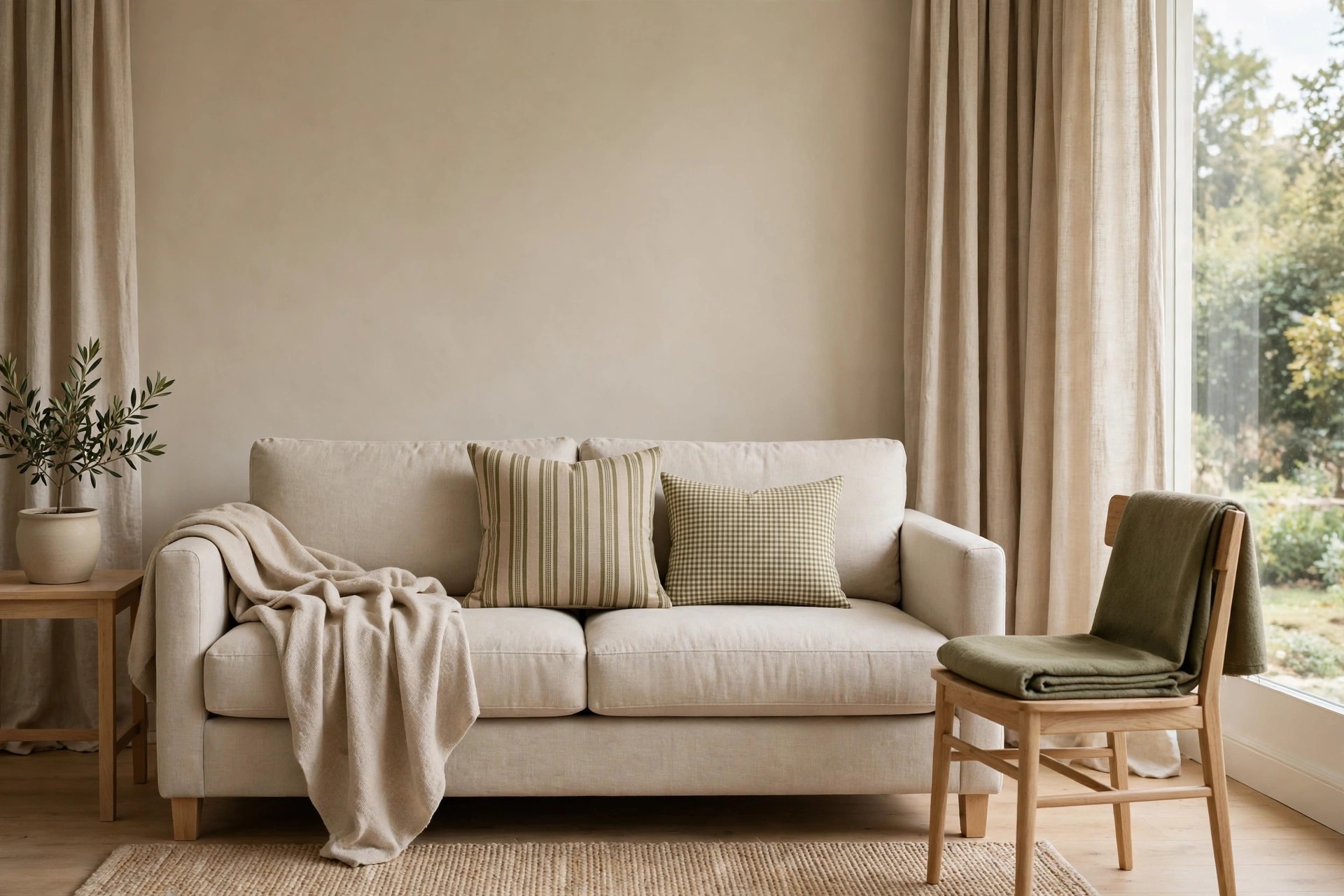
End with pattern, but keep it small. A thin olive stripe, tiny check, or small leaf print on two cushions adds life to plain beige throws and curtains.
Use the pattern in one place only. Patterned cushions, a patterned rug, and patterned curtains together break the calm base and make the green feel busy.
Repeat the solid olive once nearby, in a throw or a plant pot. The solid block calms the pattern, and the pair looks planned from across the room.
Check the patterned fabric next to your plain beige throw in daylight. A stripe that looks olive indoors can read brown in sun, and that shift changes the whole cushion mix.
Pick one strong olive move first, a wall, a sofa, shelves, or a chair, then support it with two smaller repeats in fabric or art.
Keep beige as the light base, wood and stone as the natural link, and warm light on every night you test the room.
That balance is what makes beige and olive living room ideas for an earthy scheme last beyond one season. Save this to your beige living room board for later.


