

15 Small Bathroom Ideas for a Basement Bath Refresh
A basement bath can feel dark at noon. The ceiling sits low, the light is thin, and the walls seem to soak up every bit of glow in the room.
This guide shares small bathroom ideas for a basement bath refresh that work on the surface only. You keep the sink, tub, and layout where they are, and change color, light, and finish instead.
Each idea suits a small room with little or no window light. The focus stays on pale tones, soft shine, and fabrics and finishes that handle damp air well.
You can do most of these ideas in a weekend with paint, fabric, and simple swaps. None of them ask you to move a fixture or open a wall.
For wall color help first, our guide to bathroom paint colors for bathrooms with no windows shows shades that stay bright under bulbs. Pick one, then work through the ideas below in any order.
This post contains affiliate links. If you buy through them, we may earn a small commission at no extra cost to you. See our Affiliate Disclosure.
1. Paint the Walls a Warm White With a Soft Sheen

Start with the walls, since they take up the most space in a small basement bath. A warm white with a satin or soft sheen finish bounces bulb light back into the room.
Flat paint can look chalky under basement light and marks fast near the sink. A soft sheen wipes clean with a damp cloth, which helps in a room where steam lingers after showers.
Carry the same white across all four walls to keep the room calm. Save stronger color for towels or a small print, where you can swap it out in minutes later.
Test two whites on the wall by the mirror first. Basement bulbs can turn a cool white grey, while a warm white stays soft and clean at night.
2. Layer the Light With Warm Bulbs and Frosted Shades

One bare ceiling bulb leaves dark corners and hard shadows on faces. A layered look feels much kinder. Keep the ceiling light for the whole room, then add softer light at the mirror.
Choose warm white bulbs in every fixture so skin tones look natural. Mixed bulb tones, one warm and one blue white, make paint and tile look patchy and a bit off.
Frosted shades or opal glass covers soften glare on glossy tile. The room reads bright but calm, not harsh, which matters most in a small space with no daylight at all.
Our small bathroom lighting ideas cover fixture shapes and placement in more detail. Use them for the layout, then keep your bulb tone warm and matched here.
3. Hang One Large Mirror Above the Sink

A large mirror is the fastest way to spread light in a bath with no window. It picks up the ceiling and vanity light and throws it back across the room twice over.
Pick one wide mirror rather than two small ones. A single sheet of glass looks calm and makes the vanity wall feel wider. A thin frame in pale wood or soft metal works well.
Hang it close to the splash zone but with a small gap above the taps. Wipe the lower edge often, since spots show fast when the mirror sits near daily splashes.
If you need storage behind the glass too, bathroom mirror ideas with hidden storage show how that can work. Here, keep the face of the mirror clear and broad.
4. Swap a Dark Shower Curtain for a Clear or Pale One

A dark or heavy shower curtain cuts a small bath in half. It blocks light from the shower area and makes the tub zone feel like a cave behind a wall of fabric.
A clear liner with a pale outer curtain in white, cream, or soft sage lets light pass through. The eye can see to the back wall, so the whole room reads longer.
Wash the liner often and let it dry fully spread out after showers. In a basement, a bunched wet curtain can hold a stale smell in just a few days.
Hang the rod a bit higher if you can do so with a simple swap. A taller curtain line draws the eye up and helps the low ceiling feel less low.
5. Lay a Light Wood Look Floor That Suits Damp Air
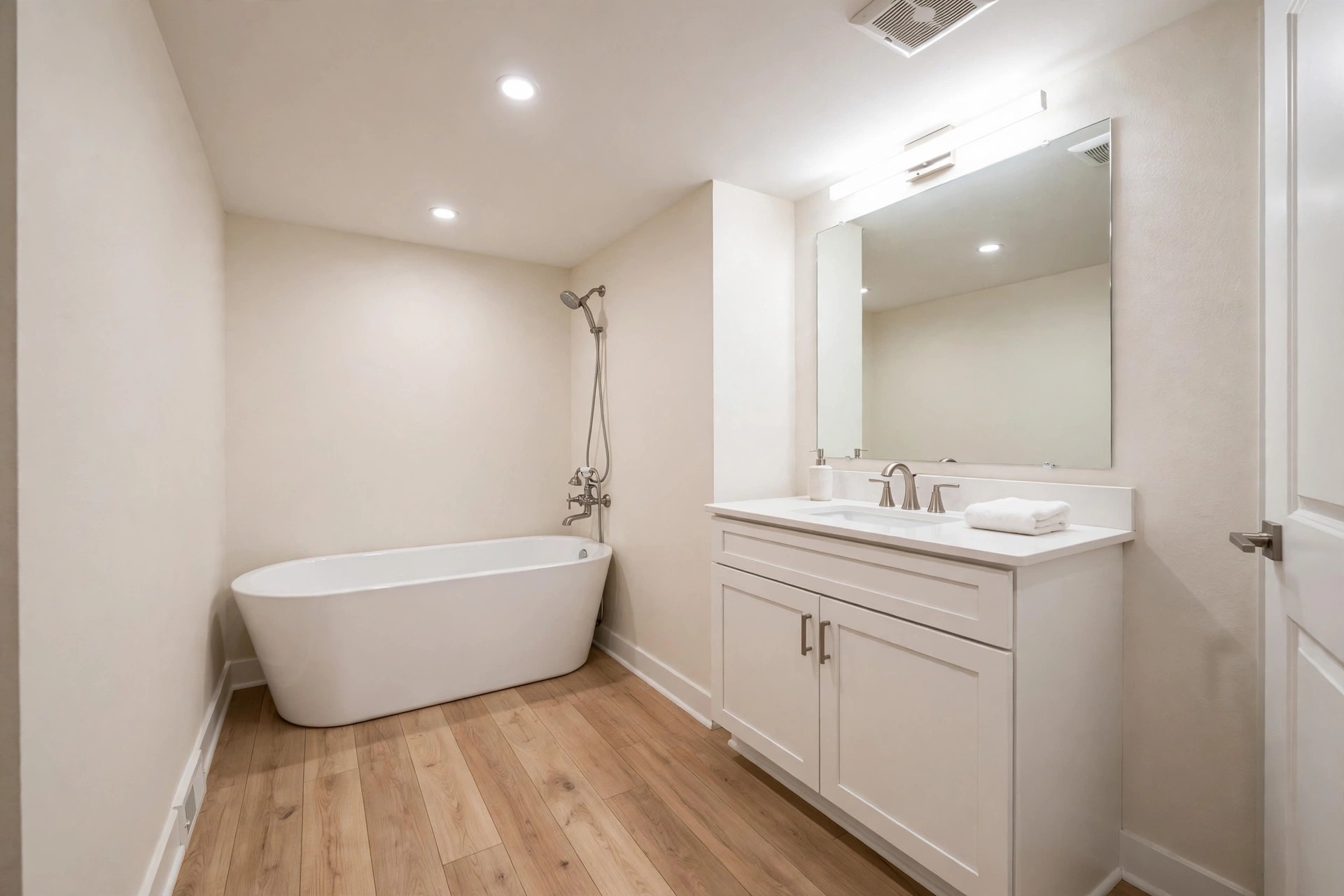
Dark floors pull a basement bath down. A light wood look in a waterproof vinyl plank or tile style lifts the base of the room and warms the white walls above it.
Choose a finish made for wet rooms, with a sealed surface that wipes dry fast. Real wood can swell in damp air, so the wood look in a hard finish is the safer pick.
Run the planks along the long wall of the room. Long lines help a short, boxy bath feel a bit longer, and the pale tone shows less dust than a dark floor does.
Keep a soft mat by the tub to catch drips. A dry floor edge also stops the hem of the shower curtain from sitting in a puddle all day.
6. Paint the Vanity a Pale Tone and Swap the Knobs

A tired vanity in dark wood can dominate a small basement bath. Paint it a pale tone, such as soft sage, pale grey, or warm cream, and the whole sink wall lightens.
Use a smooth finish that wipes clean, since the front near the sink gets splashed daily. Let each coat dry fully in the cool basement air, which can take longer than upstairs.
Swap the knobs for simple shapes in brushed metal or matte black. New knobs cost little effort and make the painted doors look planned, not just covered over.
Keep the top of the vanity clear except for soap and one small tray. In a tiny room, a clear sink top reads as more space than any paint can give.
7. Use Glossy Light Tile on the Shower Walls

Glossy tile throws light around a shower in a way matte tile cannot. In a basement bath with no window, that shine does real work every time the light is on.
Pick large, pale tiles in white or soft cream for the shower walls. Large tiles mean fewer grout lines, so the shower feels calmer and is faster to wipe down after use.
Carry the same tile from the tub edge to the ceiling if the shower is being retiled as a finish swap. A full height run makes the low shower feel taller.
For pattern and size help, see our small bathroom tile ideas guide. Borrow the sizes you like, then keep the color pale and the finish glossy here.
8. Add Floating Shelves Above the Toilet

The wall above the toilet is often blank in a basement bath, yet it is prime space in a small room. Two floating shelves there hold towels where guests can reach them.
Choose shelves in a sealed finish that suits damp air, in pale wood or white. Keep the load light: folded towels, a small box for spare rolls, and one tiny plant.
Style each shelf with groups of three at most. Too many small bottles make the wall feel busy and collect dust in a room that already needs frequent wiping.
Leave the lower shelf for daily use and the upper shelf for spare towels. That split stops the daily grab from messing up the whole display each morning.
9. Hang a Bright Framed Print Where a Window Would Sit
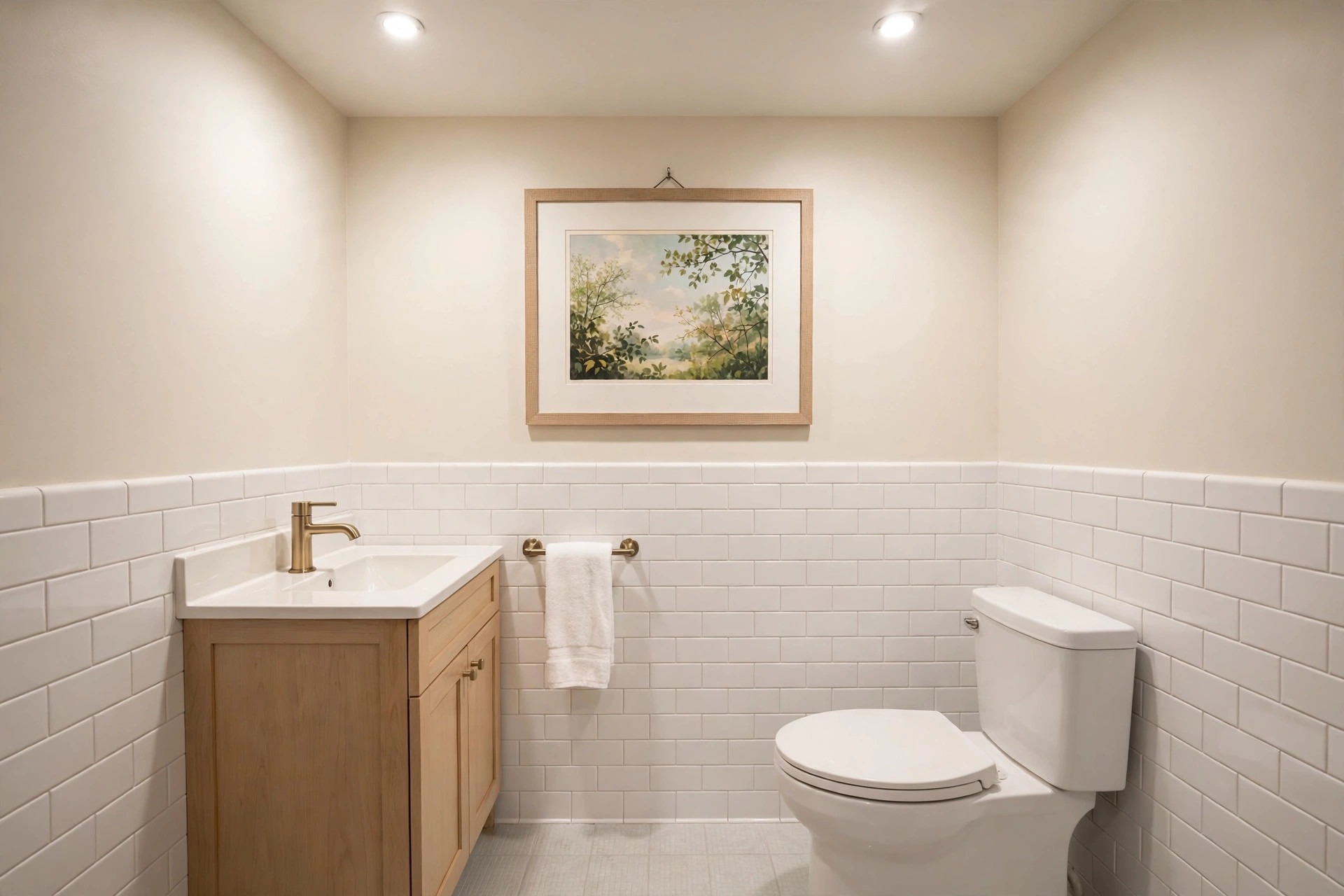
A bath with no window still needs a focal point that feels like daylight. A bright framed print with a wide white mat can play that role on the main blank wall.
Pick a scene with pale sky, soft green leaves, or a light shore view. The colors hint at the outdoors, which helps a basement room feel less shut in and flat.
Use a frame with a sealed back or a simple plastic face in a steamy room. Paper prints can curl in damp air, so keep the print small and the frame tight.
Hang it at eye level across from the mirror if you can. The mirror will catch the pale print and double the bright spot in the room.
10. Keep Towels White and the Bath Mat Pale

Textiles are the cheapest light trick in a basement bath. White towels and a pale bath mat lift the room at once and make tile and paint look cleaner beside them.
Keep the set to one pale family, white, cream, or very soft stone. Mixed bright towels can look fun upstairs, but in low basement light they can read as clutter fast.
Dry towels fully between uses on a wide rail or hooks with space between them. A towel that stays damp on a low hook will smell stale and look grey in days.
Rotate two sets if you can. One set in use and one set dry and folded on the shelf keeps the room ready for guests with no rush.
11. Bring in Sealed Wood Tones in Small Spots

All white can feel cold in a basement, where the air already runs cool. Small wood tones warm the room, as long as the finish is sealed for damp air.
Try a teak look stool by the tub, a wood tray on the vanity, or a pale wood frame on the mirror. One or two spots are enough in a small room.
Keep wood off the wettest zones. A stool that sits in shower spray will mark fast, while the same stool beside the tub stays dry and holds a folded towel well.
Wipe wood pieces dry after bath nights. That small habit keeps the finish clear and stops water rings from building up on trays and stool tops.
12. Paint the Ceiling Bright White to Lift the Height

Basement ceilings often sit low and carry a grey or cream tint from old paint. A bright white ceiling makes the height feel a bit higher and cleans up the light.
Use a finish made for bath rooms, with a soft sheen that copes with steam. Flat ceiling paint can spot above a shower in a small room with slow drying air.
Paint the ceiling before the walls if you do both. Driplines are easier to cover on fresh wall paint, and the white top edge gives you a clean line to cut in.
Keep ceiling decor at zero. No dark beams, no bold light shades up high. A plain bright ceiling is what lets a low basement bath feel open.
13. Choose Quick Dry Fabrics and Lidded Storage

Damp air is the quiet problem in most basement baths. Fabrics that dry slow and open baskets of supplies can hold moisture and make the room feel stale by evening.
Pick quick dry towels, a shower curtain that sheds water, and a bath mat with a thin, fast dry back. Thin fabrics dry fully between uses, even in cool air.
Store spare rolls, cleaners, and cotton goods in lidded boxes or a closed cabinet. Lids keep damp air off paper goods, which can soften and swell in a basement.
Leave the door open after showers when you can, or run the room air for a while. Dry surfaces are what keep a fresh finish looking fresh.
14. Keep the Floor Clear With Hooks and a Slim Rail

Floor clutter shrinks a small bath fast. A laundry heap, a spare stool, and bottles by the tub leave almost no clear floor, and clear floor is what reads as space.
Move daily items up onto hooks and a slim rail on the wall by the sink. Robes, hand towels, and a hair towel each get a hook, spaced so fabrics can dry.
This is the same space logic behind small bathroom ideas with a sliding door solution, where swing space is saved. Here, saved floor space does the same job.
Keep one clear path from door to sink with nothing stored on it. Guests read a clear path as a bigger room, even before they notice the finishes.
15. Finish With One Faux Plant for Fresh Green Color

A bath with no window still benefits from a green shape. Real plants can struggle in low light and cool air, so one good faux plant is a calm, safe finish.
Choose soft, matte leaves in a natural green, not shiny plastic tones. A small trailing plant on the floating shelf or a short stem in a pale pot by the sink works well.
Keep it to one plant in a tiny room. Too much faux green looks crowded and collects dust, which shows fast under bright bath light on dark leaves.
Dust the leaves when you wipe the shelves. Clean leaves keep the green looking fresh, and that one fresh spot lifts the white and wood tones around it.
Start with paint, light, and textiles, since those three change a basement bath the most for the least work. Then add the mirror, shelves, and floor finish as time allows.
Small bathroom ideas for a basement bath refresh work best when each change helps the light travel further. Pale tones, soft shine, and dry, tidy surfaces do that job together.
Save this to your bathroom ideas board for later, and try the towel and curtain swap this weekend. A brighter basement bath often starts with those two small changes.


