

15 Thanksgiving Centerpiece Ideas From a Natural Autumn Harvest
A centerpiece that blocks faces across the table can spoil a good meal, even when it looks pretty in a photo taken from one end.
Guests lean, shift plates, and move the whole display aside, which means the centerpiece failed at its one real job: to look warm while staying out of the way.
This list covers thanksgiving centerpiece ideas natural autumn harvest, one idea at a time, with every piece kept low, natural, and easy to lift off the table.
Start with the table length and the number of seats, then pick a center line that leaves room for serving dishes, glasses, and elbows.
Measure the center line with a tape if the table is new to you, since a tray that looks right by eye can still crowd the end seats.
For a base that protects the table and still looks dressed up, see our best washable table runners for everyday dining. Each idea below names what to place, how low to keep it, and what to check before guests sit down.
This post contains affiliate links. If you buy through them, we may earn a small commission at no extra cost to you. See our Affiliate Disclosure.
1. Build on a Low Wooden Tray
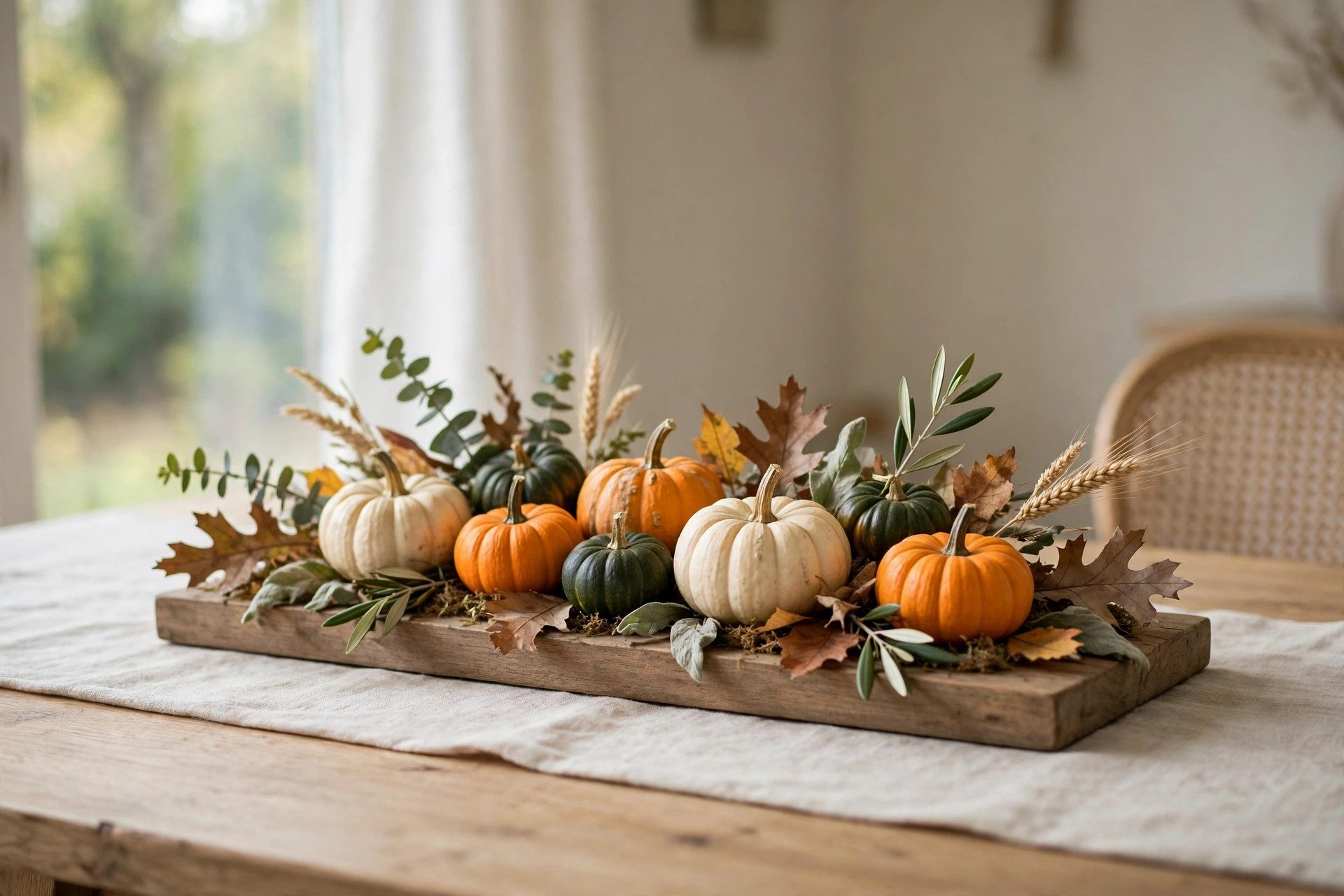
Loose centerpieces spread across a table and creep into place settings, which leaves guests with no room for a plate, a glass, or a serving dish.
Set one low wooden tray down the middle of the table, and build the whole display inside its edges. The tray holds the group together and lifts it off in one move when food arrives.
Keep the tray shorter than the table by at least a seat width at each end, and check that it does not rock on the runner. A tray that fits the table is the simplest centerpiece rule of all.
Keep a spare cloth under the tray, so a spill can be lifted with the tray instead of soaking into the runner below.
2. Set a Pumpkin Vase With Fall Stems
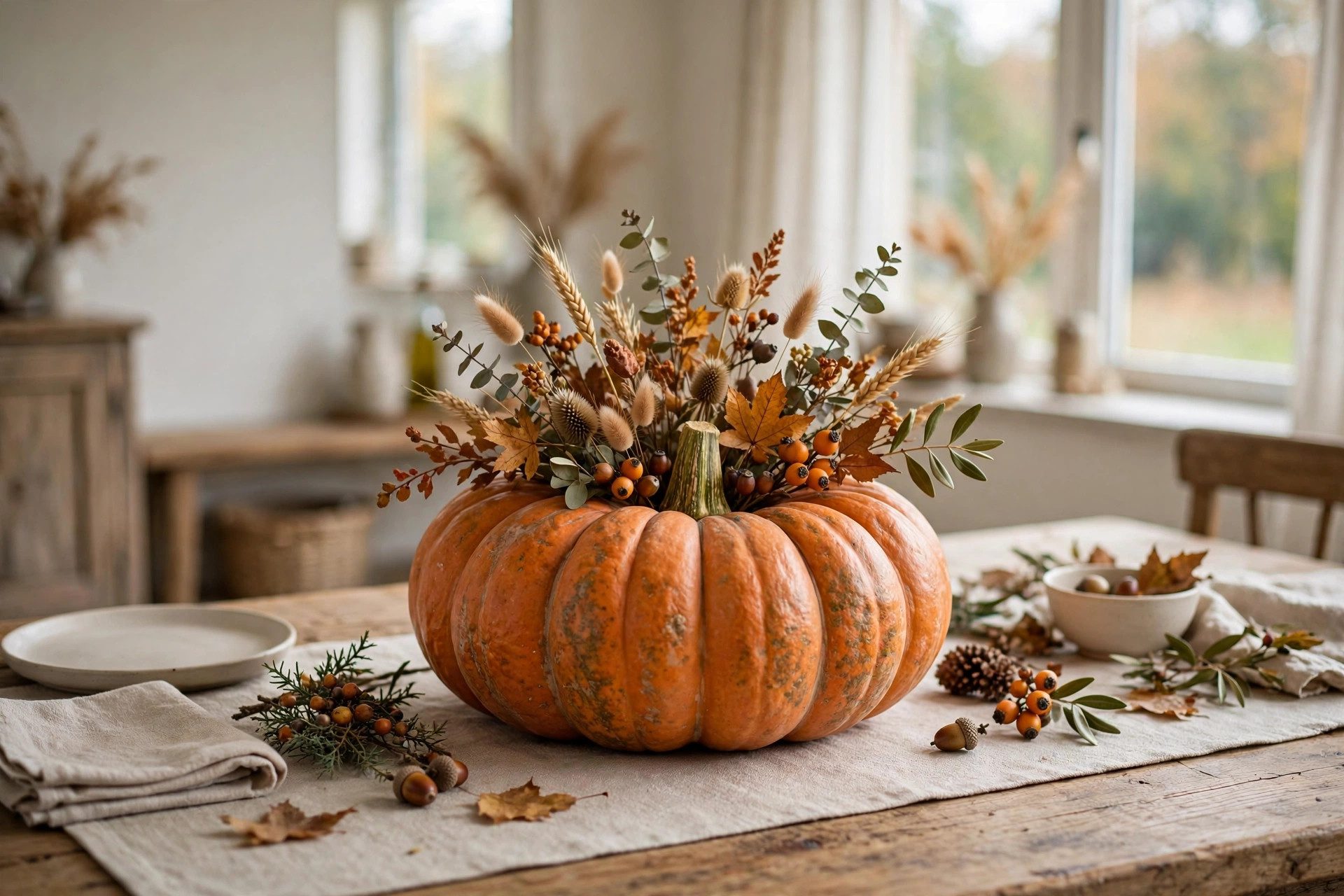
A tall flower arrangement can block the view across the table, which turns a shared meal into two separate conversations at each end.
Use a wide, low pumpkin as a vase, with a small jar inside to hold water, and fill it with short fall stems in warm tones. Keep the stems below eye level when seated, so faces stay visible.
Place the vase at the center of the tray, and trim one stem at a time until the shape looks full from both sides. A low, wide vase reads as harvest, not as a tall bouquet.
Check the vase for leaks the night before, so water never reaches the runner.
3. Fill a Bowl With Harvest Fruit
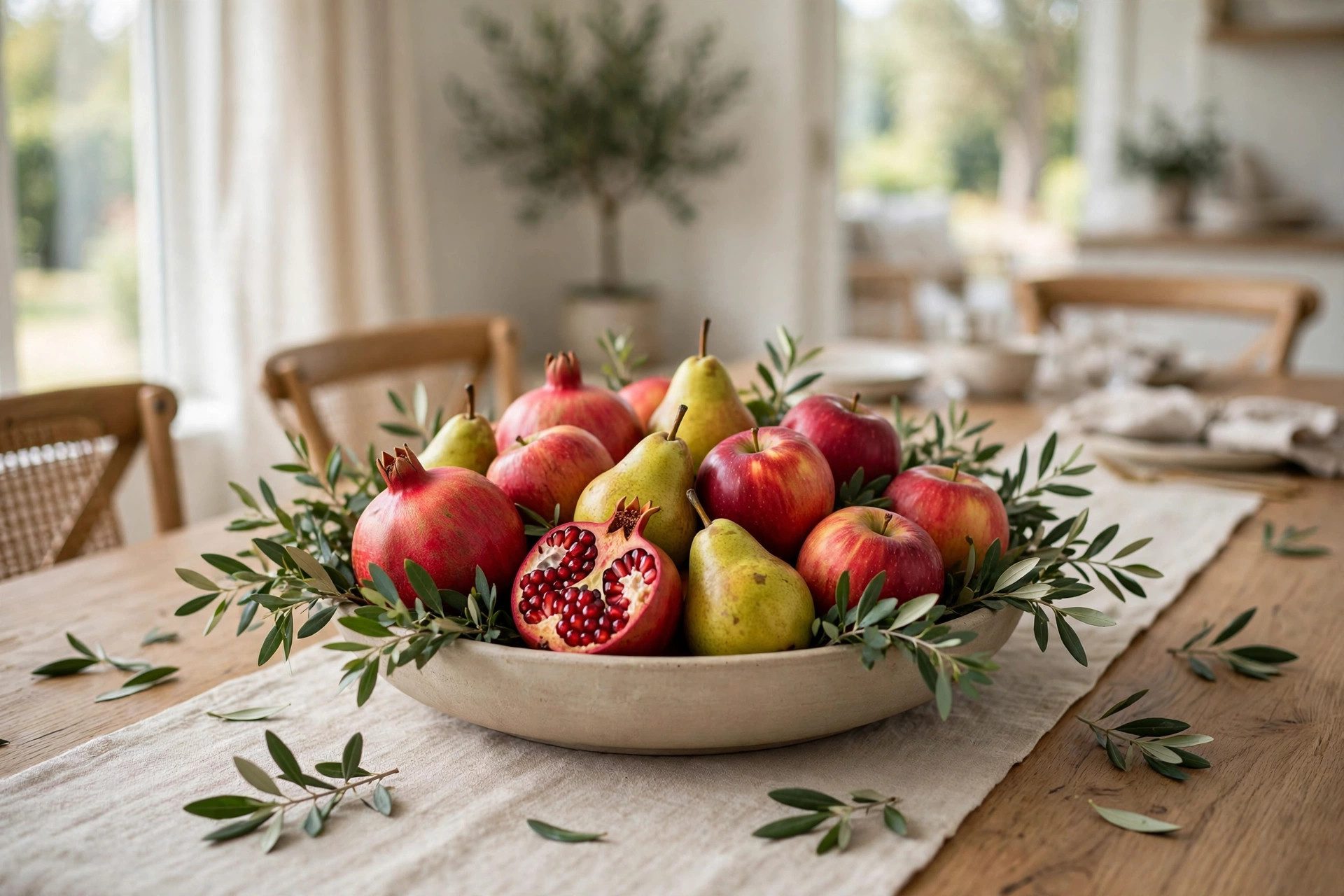
A centerpiece made only of leaves can look thin by dinner, once the room fills with food color and warm light from every side.
Fill a shallow bowl with pomegranates, pears, and apples in mixed tones, and tuck a few leaves around the rim. The fruit adds weight, shine, and color that leaves alone cannot give.
Keep the bowl low and wide, and choose fruit with firm skins that will hold up all evening. Guests will notice the bowl first, which is why it earns the center spot.
Turn the bowl once before guests arrive, so the best colored fruit faces the doorway where guests first see the table.
4. Bundle Dried Wheat Into a Standing Sheaf
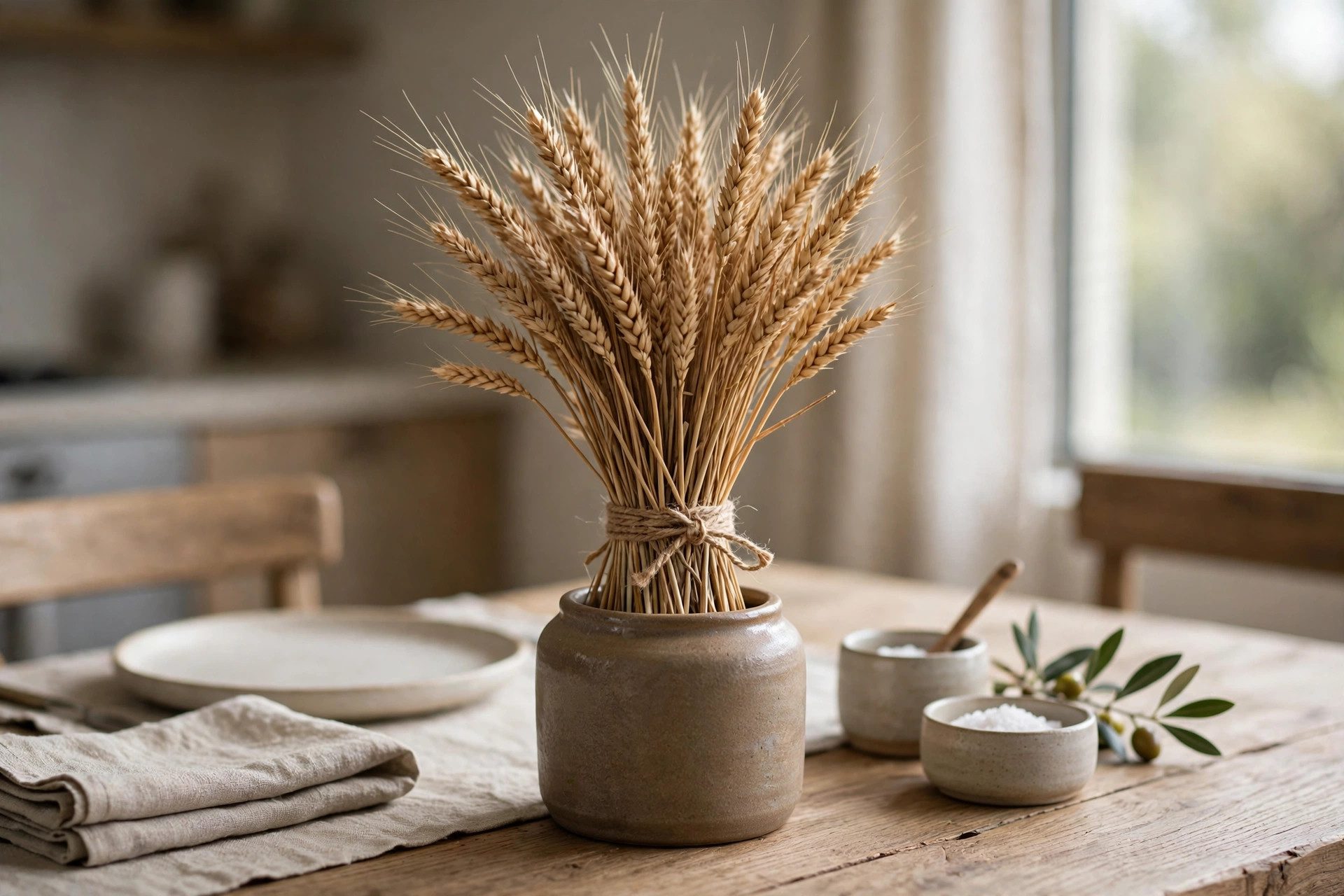
A flat centerpiece can vanish under serving dishes, because nothing rises above the plates to mark the middle of the table.
Bundle dried wheat stems with twine, and stand the sheaf in a short, heavy vase at the center of the table. The height is narrow, so it marks the middle without blocking faces.
Check the sheaf from each seat, and trim any stem that leans into a place setting or a glass. One sheaf is enough, since two tall pieces can crowd a small table fast.
5. Line Up Three Low Lanterns
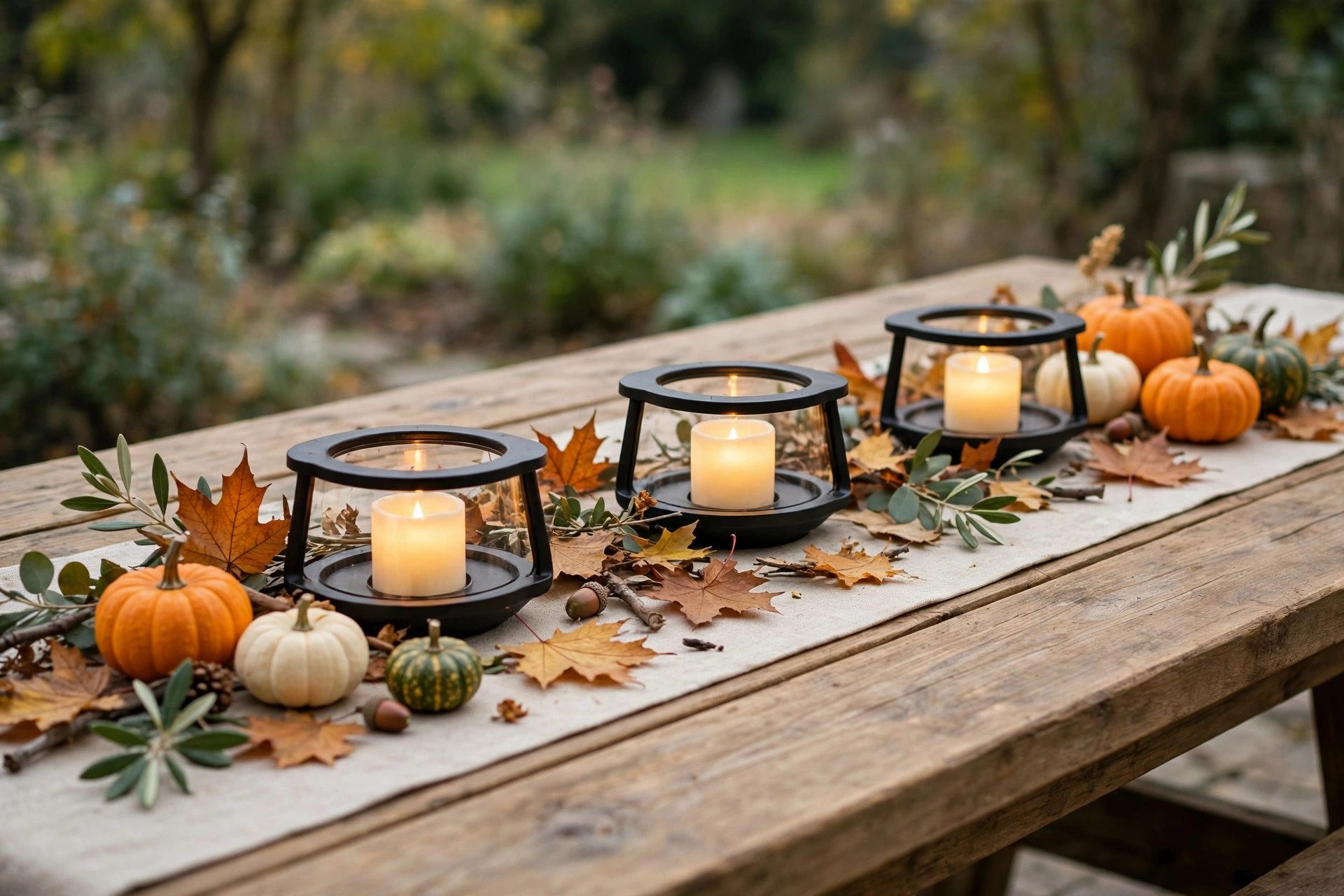
One bright candle can glare in one spot, while the rest of the table stays dim, which makes the whole setting feel uneven at night.
Line up three low lanterns down the center of the table, with flameless candles inside for a steady glow. For candle styles that suit a low table line, see our best flameless taper candles for windows and dining tables.
Space the lanterns evenly, and keep them clear of the runner edges so no one knocks one over while passing a dish. Three small glows beat one large flame for a long table.
6. Run a Eucalyptus Garland Down the Middle
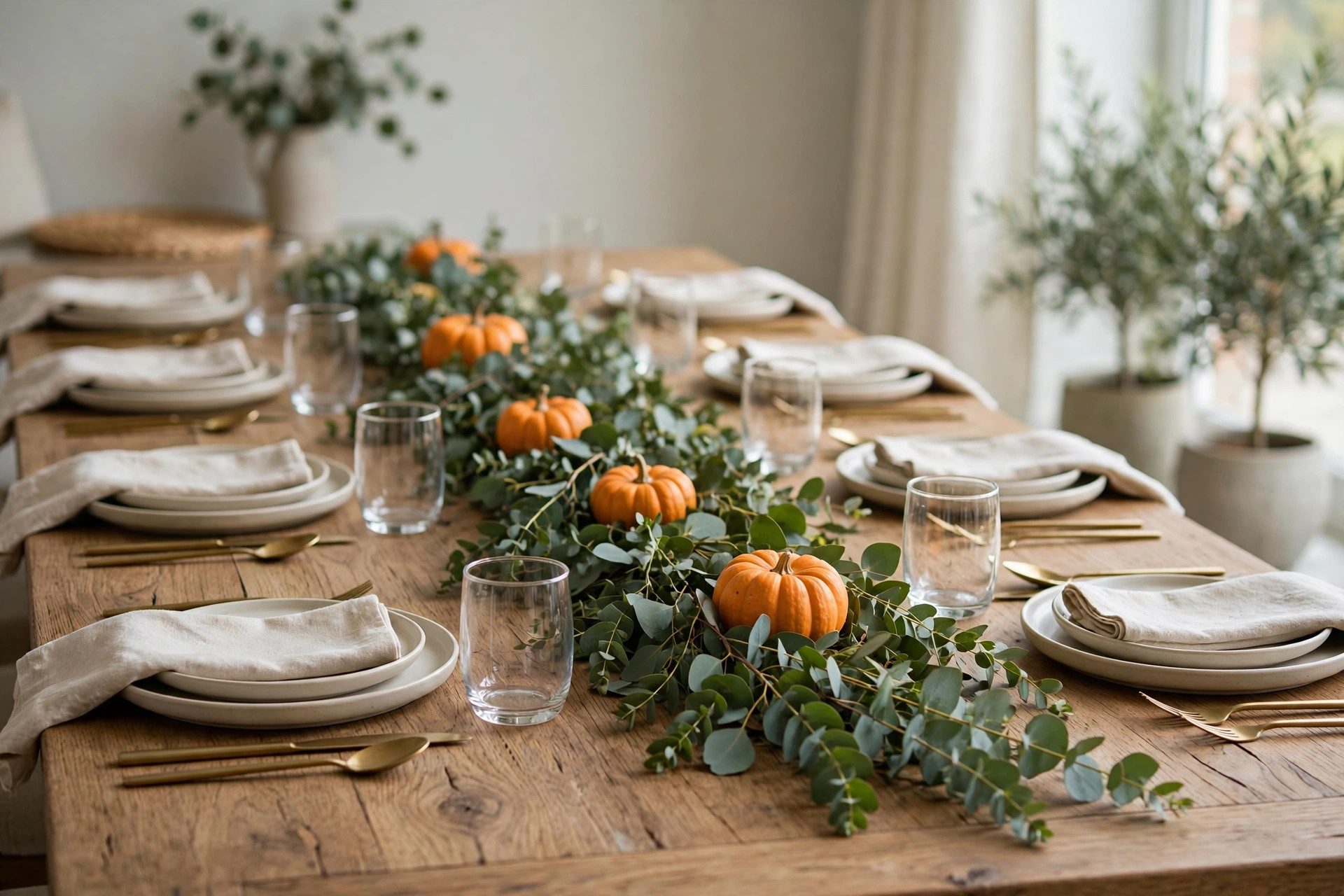
A bare table middle can look empty between courses, when serving dishes leave and nothing soft remains to hold the table together.
Run a loose eucalyptus garland down the center of the table, with the stems lying flat and the leaves facing up. Tuck a few mini pumpkins into the garland at even gaps for color.
Keep the garland narrow, so plates still fit on both sides, and lift it off in one piece when the table needs clearing. A flat garland gives the table a spine without a tall block.
If the garland sheds leaves, shake it outside before you lay it down, so loose leaves do not land in glasses during dinner.
7. Use a Wood Slice as a Candle Base
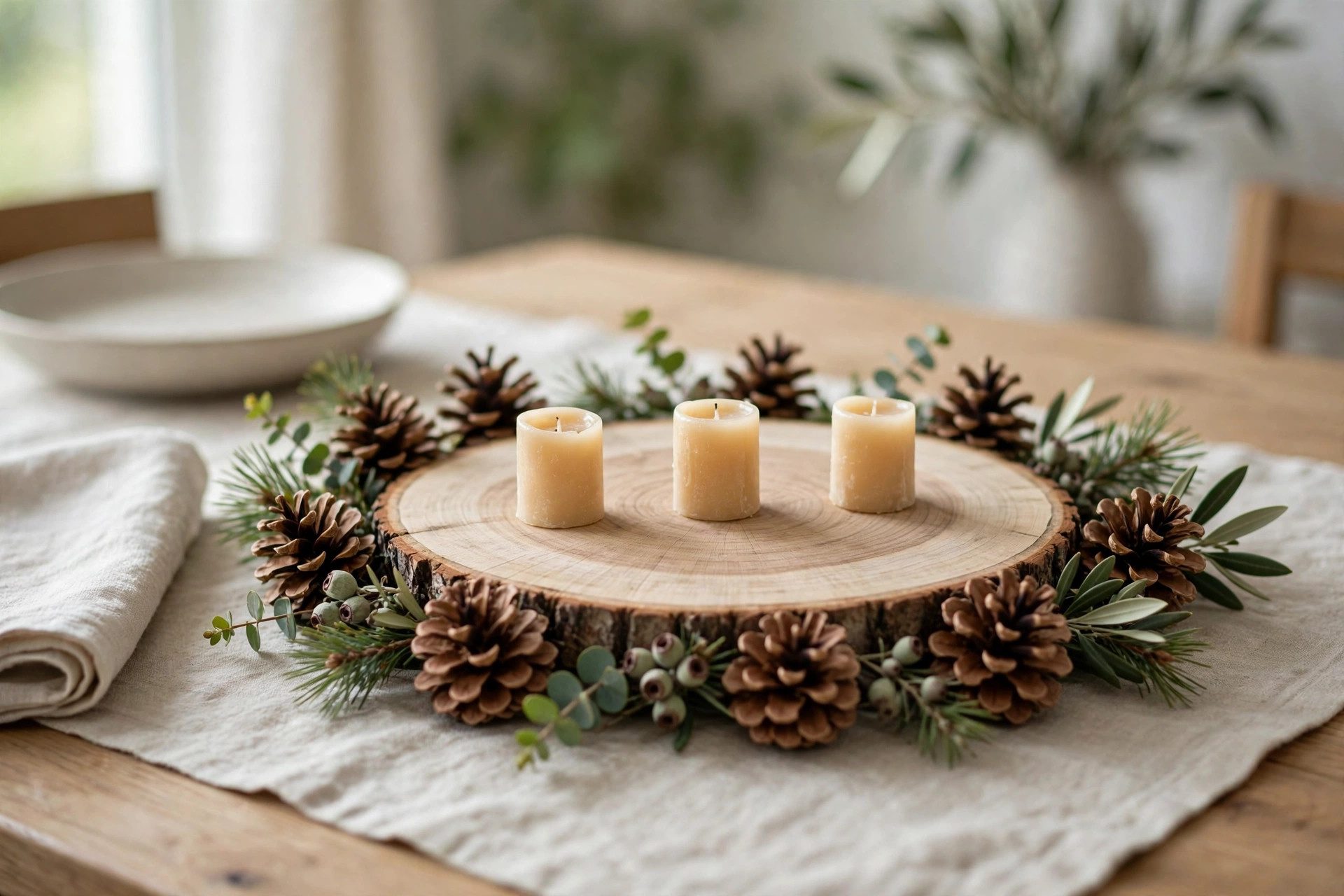
Candles set straight on a runner can wobble, drip, or scorch the cloth, which turns a pretty glow into a stain you notice all evening.
Set a flat wood slice at the center of the table, and place three short candles on top, with pinecones tucked around the edges. The slice protects the cloth and gives the candles a clear base.
Check that the slice sits flat and does not rock, and keep the candles clear of any leaf that could fall onto them. A natural base makes a small candle group look planned, not placed in a hurry.
8. Scatter Pinecones and Acorns in a Shallow Bowl
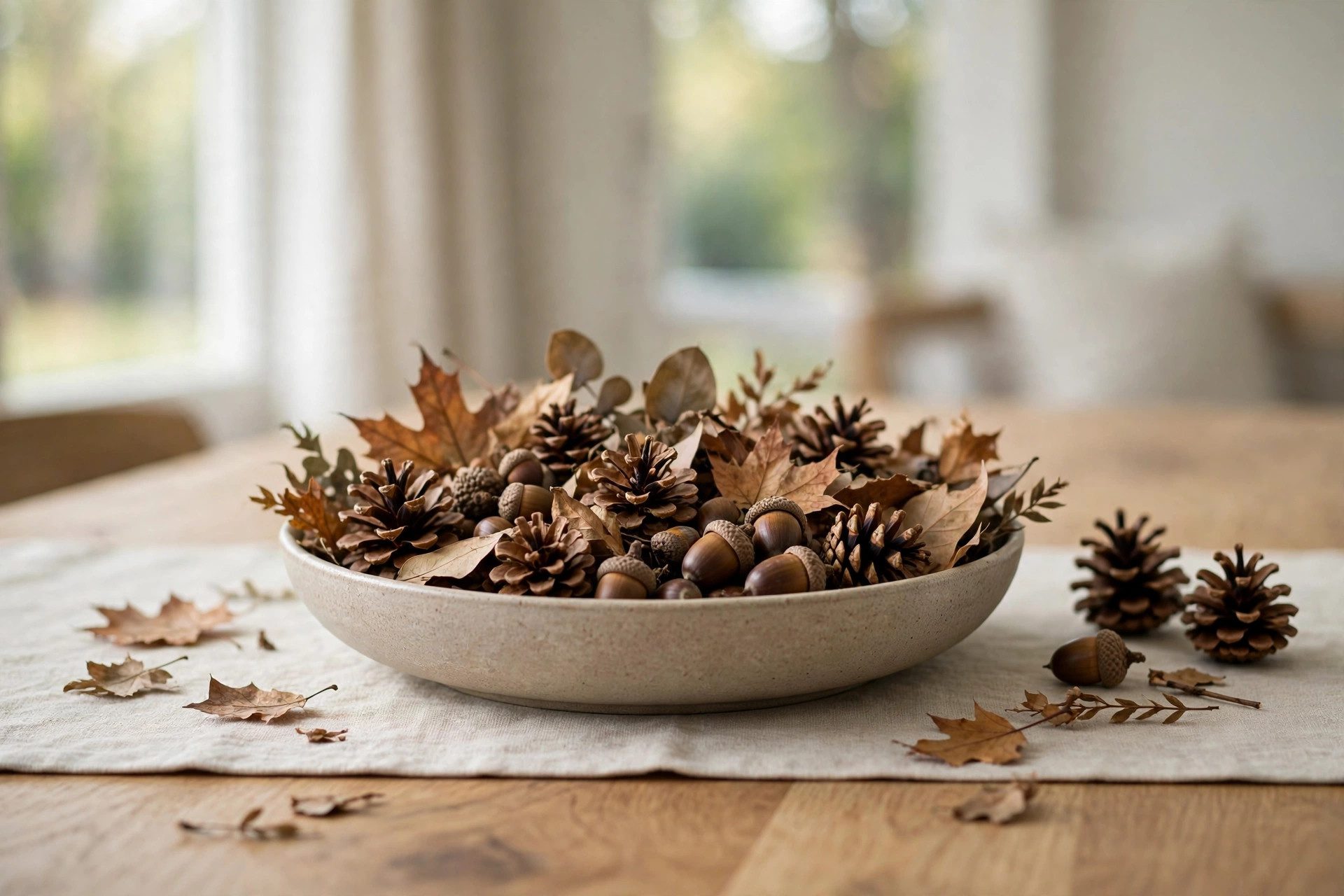
Small natural pieces scattered loose on a table end up in plates, glasses, and laps, which makes the table feel messy before the meal starts.
Fill a shallow bowl with pinecones, acorns, and a few dried leaves, and set it beside the main centerpiece, not in front of a seat. The bowl holds the small pieces where guests can see them up close.
Keep the bowl low and wide, and remove any piece with a sharp edge that could scratch the table. One bowl of small finds adds texture, while loose scatter adds work.
9. Lay Dried Orange Slices With Leaves
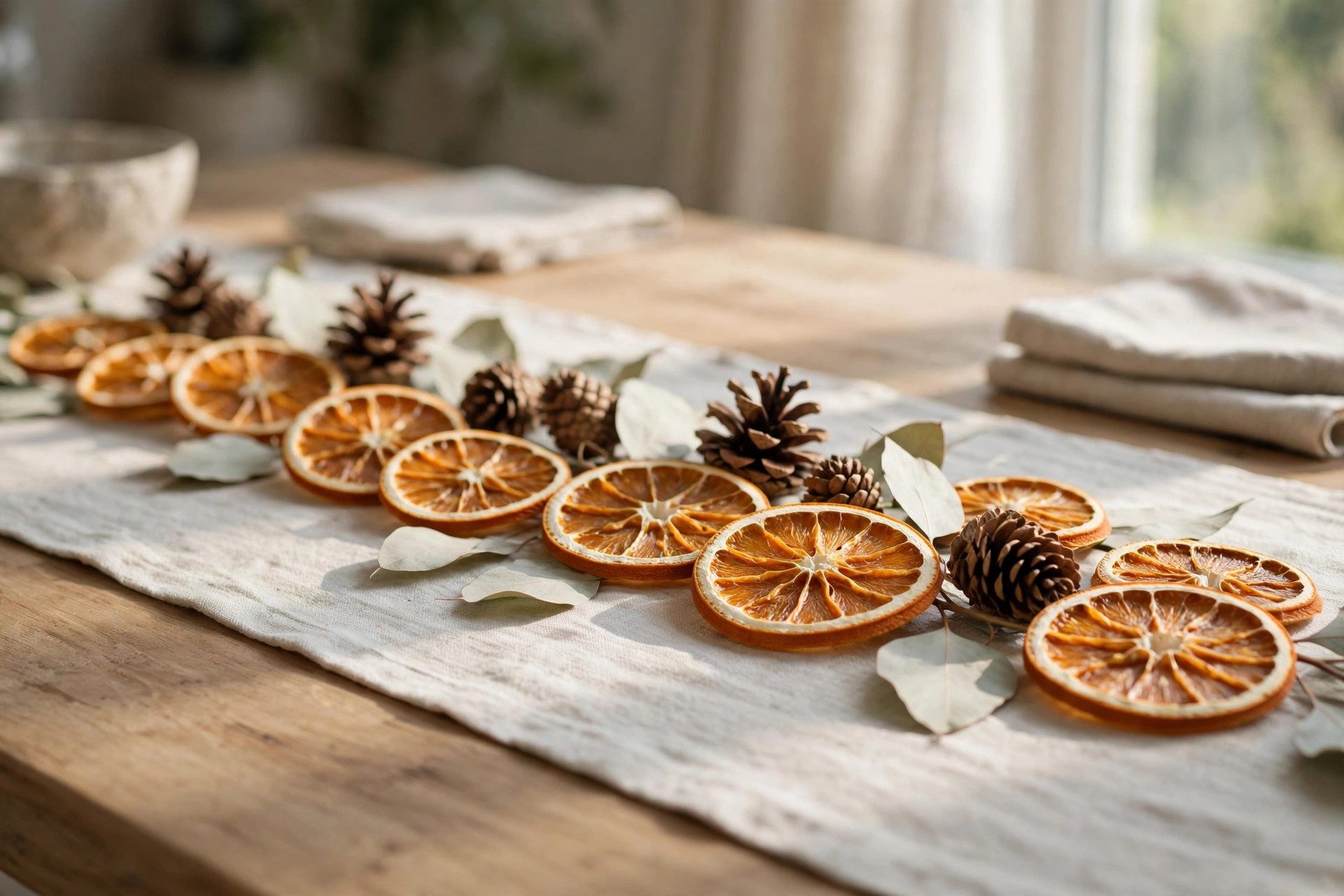
A centerpiece in only orange and brown can look heavy, because the same warm tones repeat with no light note to break them up.
Lay dried orange slices in a loose line along the runner, with pale leaves and a few pinecones between them. The same care for each guest place carries to the full setting, as in our Thanksgiving table setting ideas in warm neutral autumn.
Keep the slices flat, so they do not catch on sleeves or serving dishes, and replace any slice that looks faded. A light, flat line gives the table a fresh note without a new color.
10. Fill a Horn Basket With Gourds and Fruit
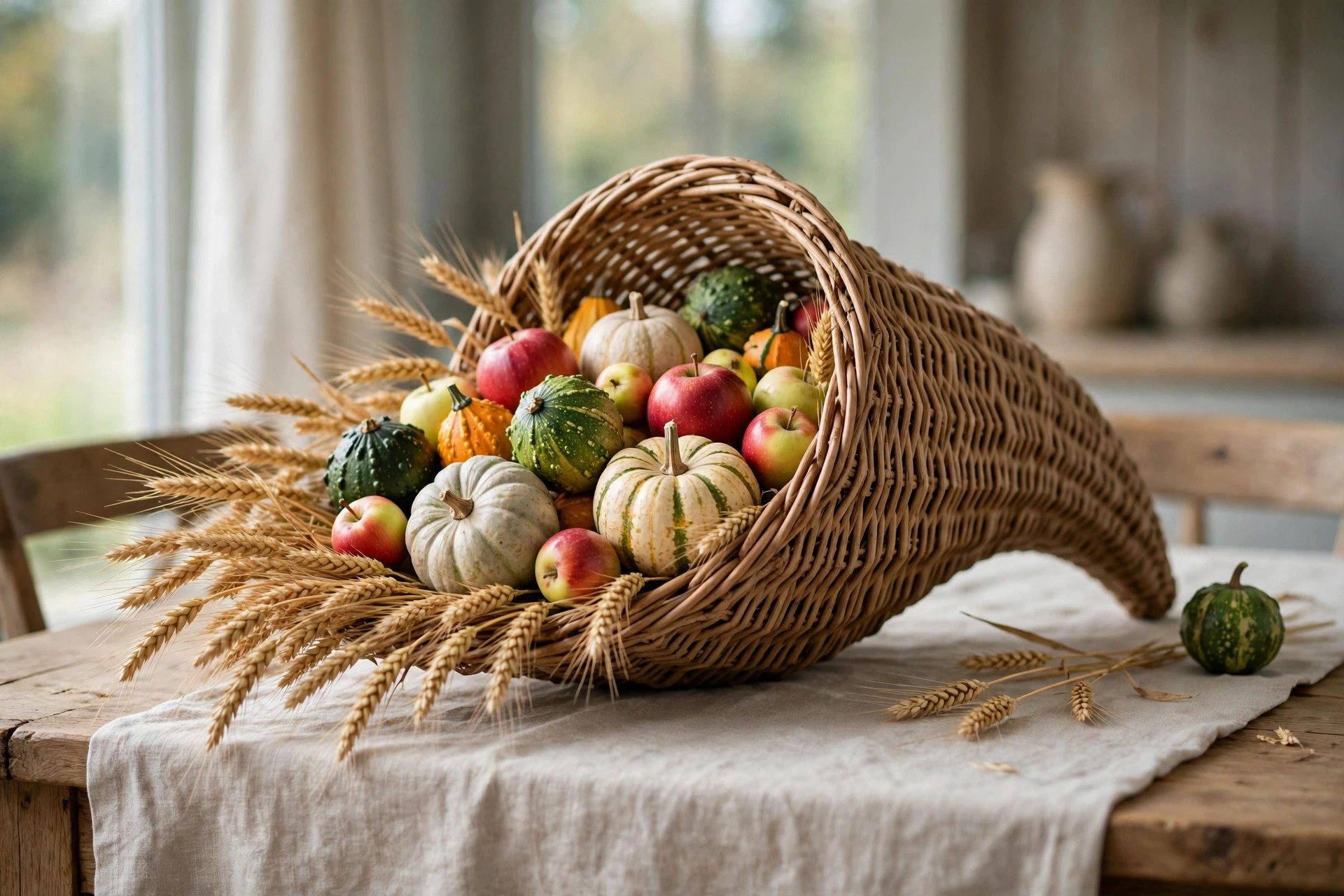
A centerpiece with no clear shape can read as a pile, even when each piece on its own looks like harvest.
Fill a horn shaped basket with small gourds, apples, and wheat stems, with the opening facing the middle of the table. The horn shape gives the display a clear direction and a classic harvest feel.
Set the basket on a tray to catch any loose leaf, and keep the tallest stem below eye level. A shaped basket turns a loose group into a centerpiece guests can name.
Keep the basket handle low or tucked inside, so it does not catch on a sleeve when someone reaches for a serving dish.
11. Group Three Mason Jars With Short Stems
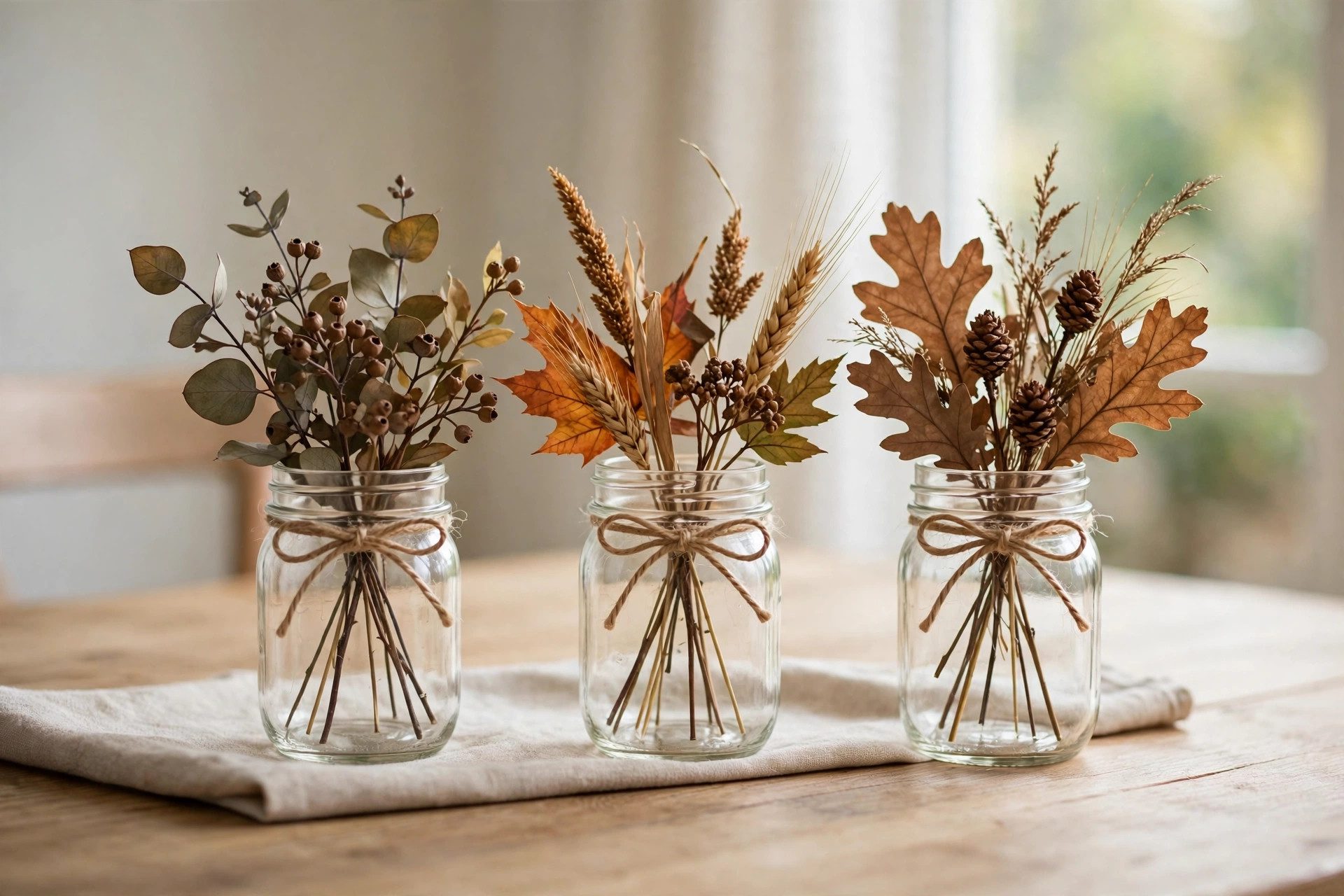
One large vase can dominate a small table, leaving no room for a second dish or a water pitcher near the middle.
Group three small mason jars in a row, each holding two or three short stems in different warm tones. The small jars split the display, so the table still feels open between them.
Keep the jars at the same height, and tie each one with a short length of twine for a simple finish. Three small jars give the table rhythm, while one large vase gives it a block.
12. Keep White Pumpkins With Soft Greenery
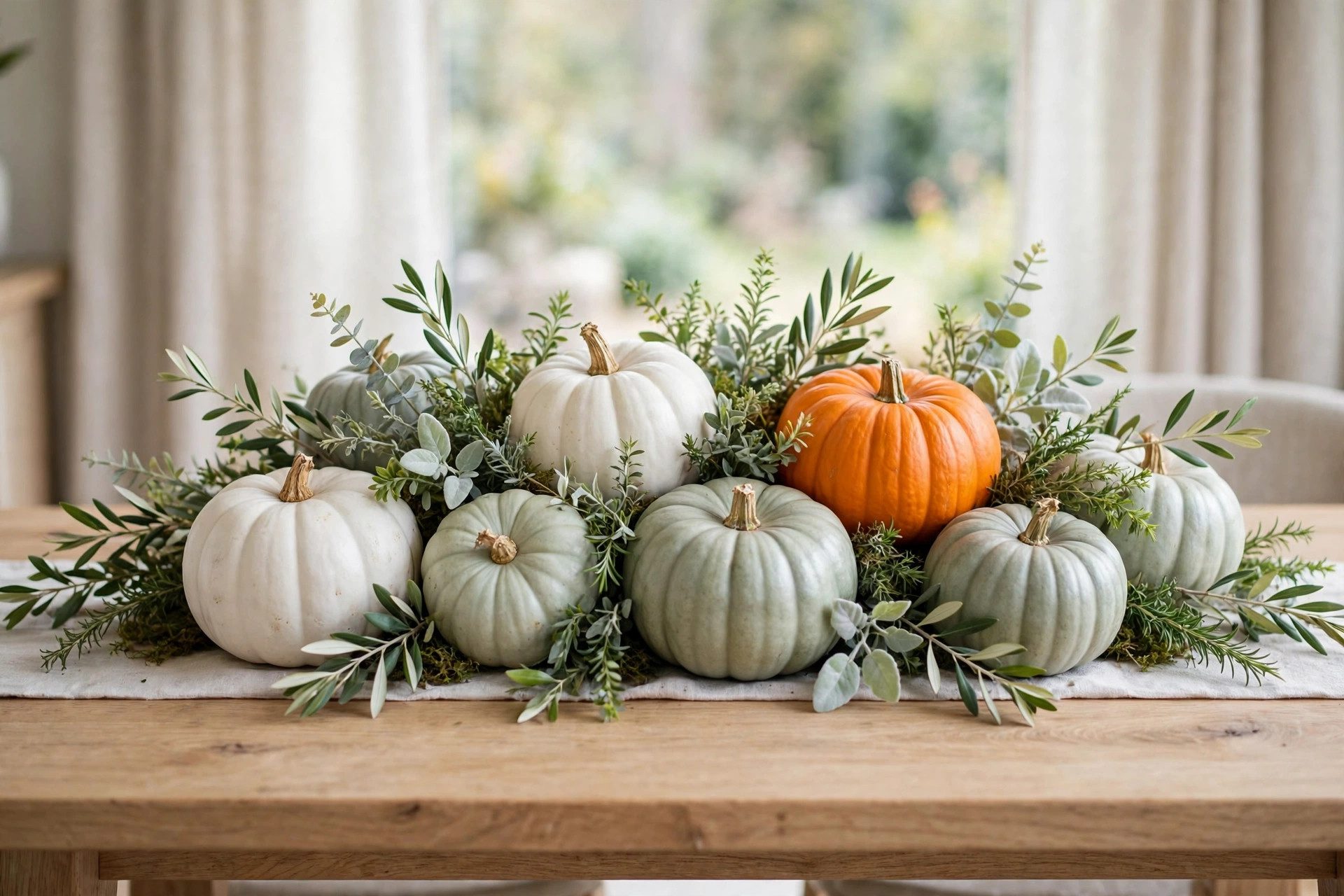
A table in only bright orange can feel loud in a small room, especially under warm light that deepens every orange tone.
Group white and pale sage pumpkins with soft greenery, and add only one orange pumpkin for warmth. After dinner, the same calm pieces move well to a serving table, as in our Thanksgiving buffet ideas for small home hosting.
Keep the group low and tight, so it reads as one pale cluster, not as scattered pieces. A quiet palette lets the food and the faces carry the color.
13. Set a Low Line of Taper Candles
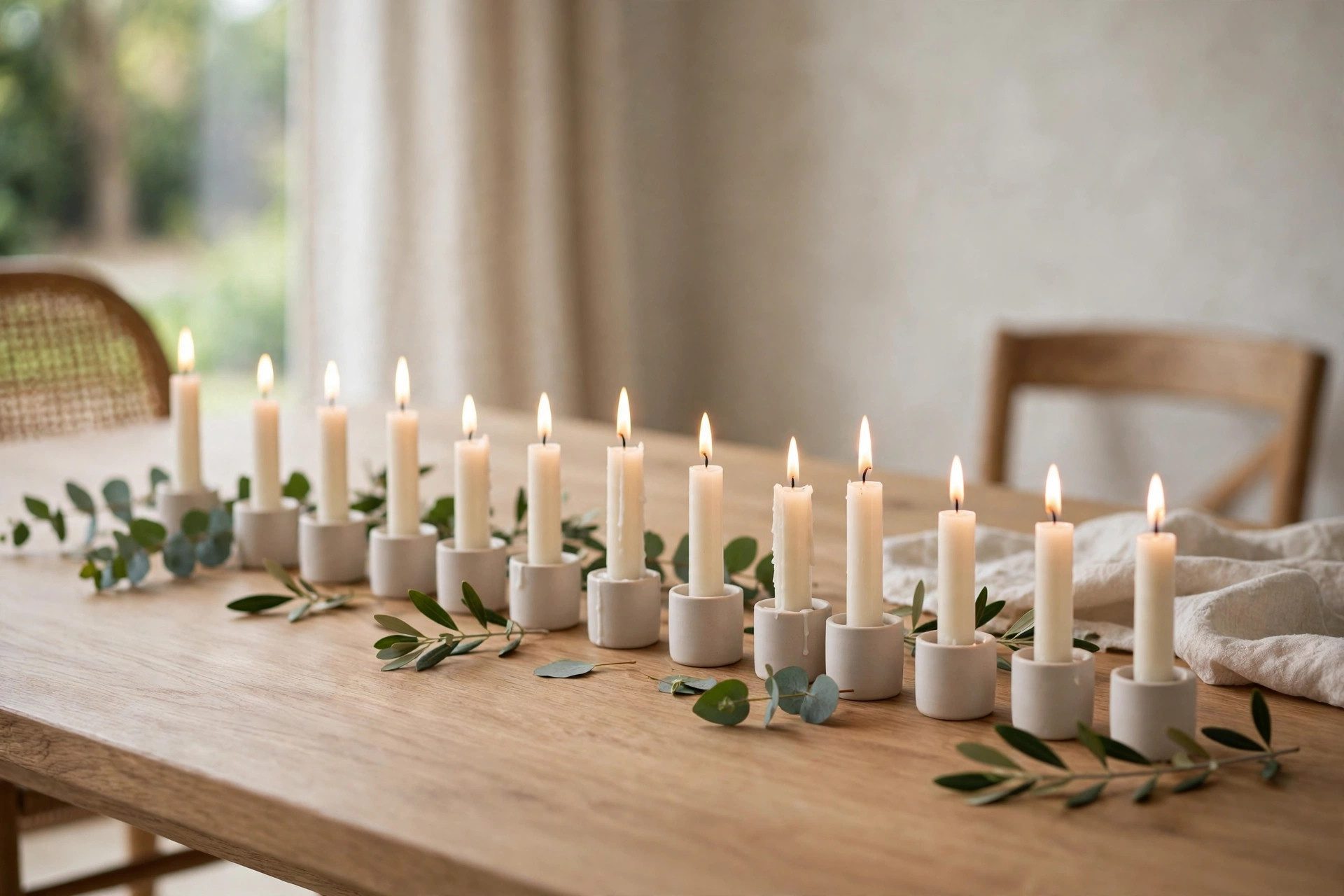
Candles at mixed heights can look busy on a table that already holds a garland, a bowl, and serving dishes.
Set a low line of short taper candles in plain holders down the center, with even gaps between them. Keep the flames low and clear of any garland, leaf, or paper place card.
Light the candles just before guests sit down, and check the line from each end of the table for an even glow. A simple low line gives the table warmth without a second theme.
Place a small dish near the candles for spent matches, so no one has to search for a safe spot to set one down.
14. Layer Leaves Under the Runner Line
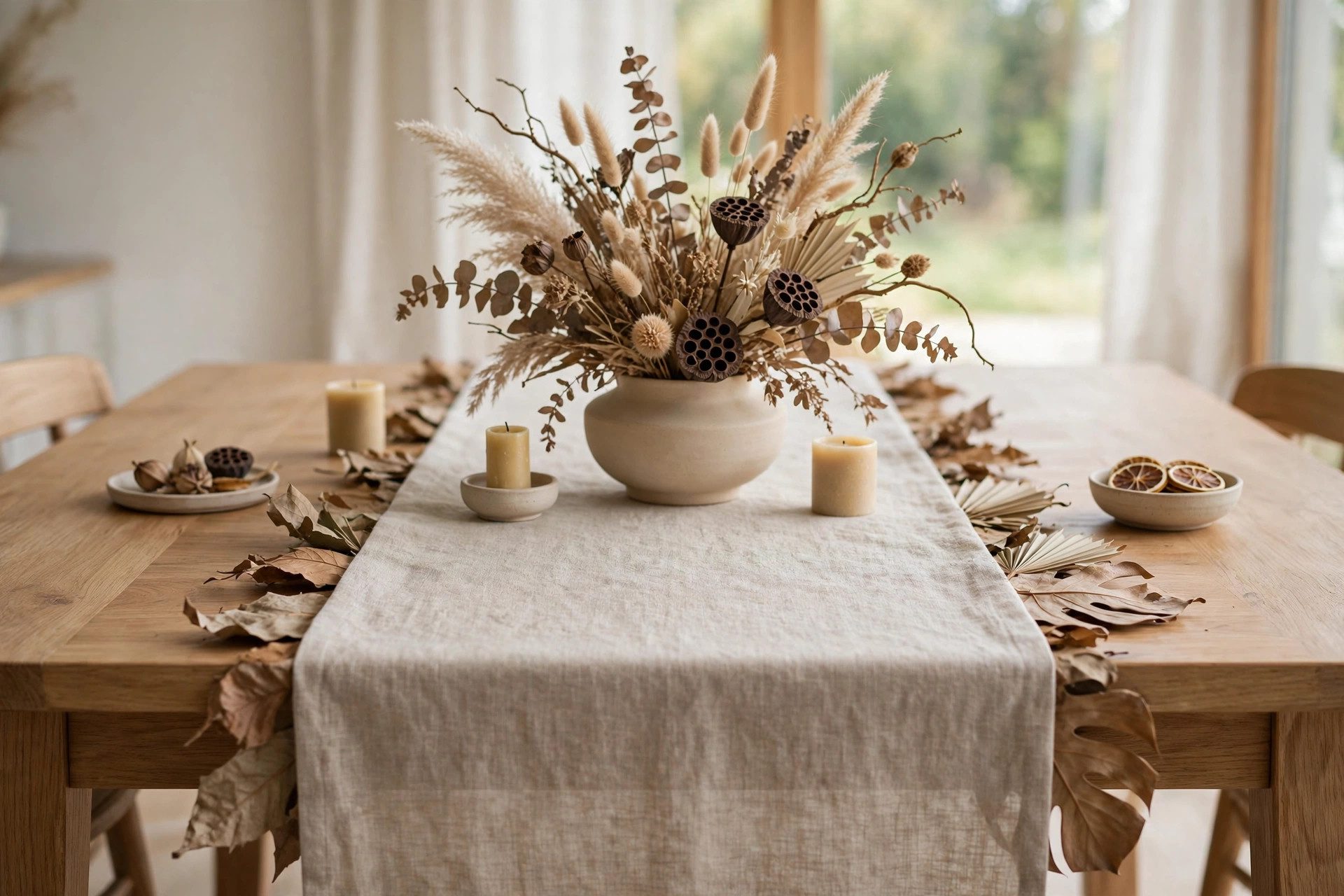
A runner alone can look like a plain stripe, with no link between the cloth and the natural pieces sitting on top of it.
Tuck large dried leaves under the runner edges, so the leaf tips peek out along both sides, and add a few small leaves on top near the center. For a room that keeps the same rustic warmth, see our farmhouse dining room decor ideas.
Keep the leaves flat and clear of plates, and remove any leaf that curls up into a glass. Leaves at the runner edge tie the cloth to the harvest pieces above it.
15. Do a Seated Sightline Check Before Dinner
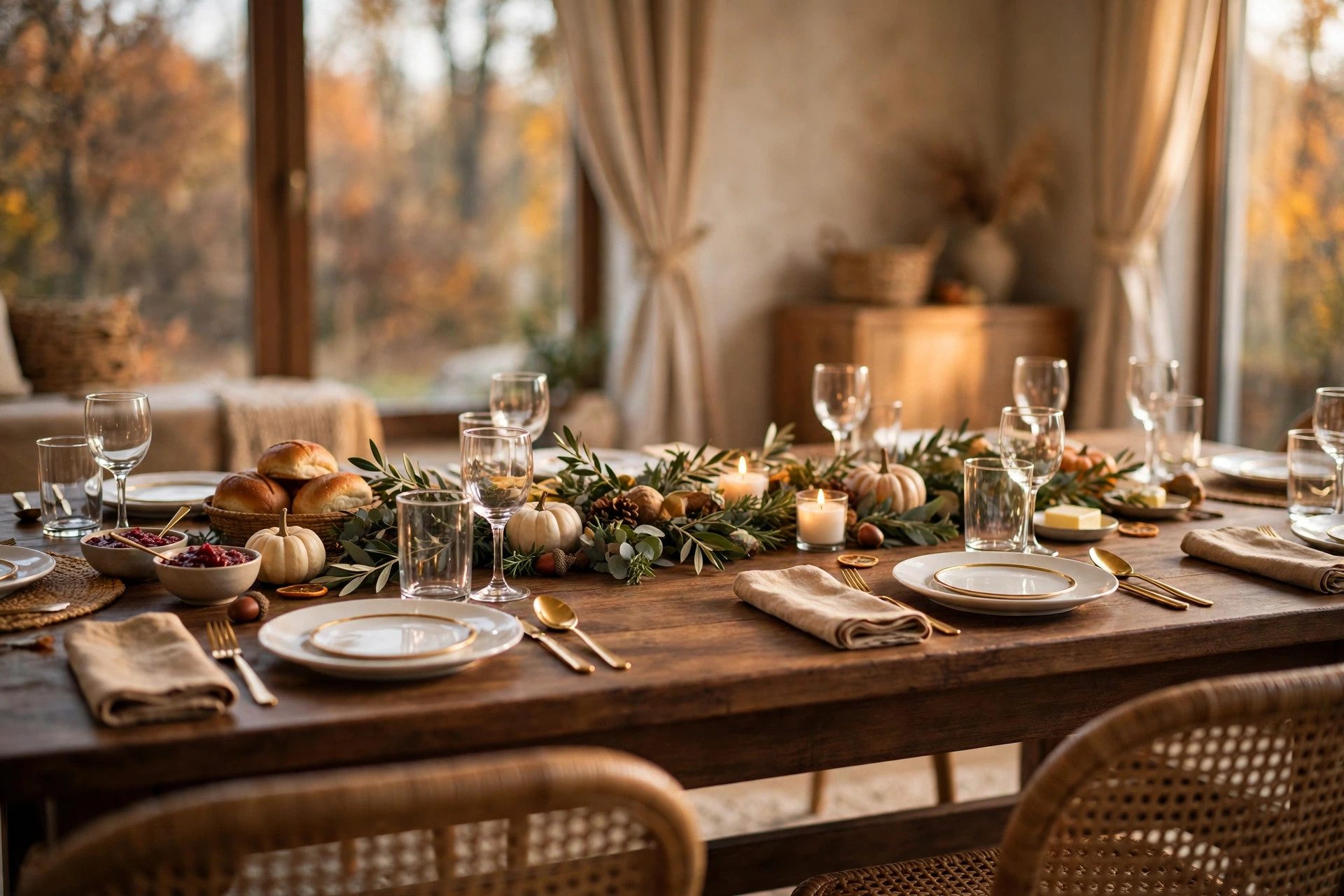
A centerpiece that looks fine while standing can fail once guests sit down, when eye level drops and a tall piece blocks the face across the table.
Sit in each chair, look across the table, and note any piece that hides a face, a glass, or a serving dish. Lower it, move it to the end, or lift it off the table entirely.
Repeat the check after the serving dishes arrive, since a full table changes what fits in the middle. A centerpiece that passes the seated check is one guests will enjoy, not work around.
Keep a small empty tray nearby, so any piece that fails the check has a neat place to wait until after dinner.
A centerpiece that works well does three things at once: it stays low enough for conversation, it holds natural harvest color, and it lifts off the table in one move.
Pick three ideas from this list for this year, build the tray or runner first, then add fruit, leaves, and light one layer at a time, checking from a seated chair after each layer.
Save this list to your Thanksgiving Decor Ideas board, and reuse it next year as a checklist, swapping only the fruit and leaves that faded or no longer fit your table.
Start with the tray, keep it low, and let the harvest speak in small, natural pieces.


