

15 Beige Walls Bedroom Ideas for a Warm, Restful Retreat
Beige has quietly become one of the most popular bedroom wall colors, and it’s easy to see why. It’s warm without being overpowering, flexible enough to pair with almost any furniture style, and far more nuanced than its reputation as a “safe” or boring choice suggests. The right shade of beige can make a small room feel cozy, a large room feel grounded, and a plain room feel instantly more expensive — all without the commitment of a bold accent color.
The trick is knowing which beige to choose and how to layer it so the room doesn’t fall flat. Below are 15 beige wall bedroom ideas covering different shades, textures, and styling approaches, followed by a short guide to help you pick the right tone for your space.
This post contains affiliate links. If you buy through them, we may earn a small commission at no extra cost to you. See our Affiliate Disclosure.
1. Warm Sand Beige for an Earthy, Grounded Look

A warm, slightly golden sand beige creates an immediately cozy, grounded atmosphere, especially in bedrooms with plenty of natural light. This tone leans more yellow than pink or gray, so it reads as inviting rather than clinical. Pair it with wood furniture in oak or walnut tones and simple linen bedding to let the wall color do most of the work. This shade is particularly forgiving in rooms with mixed metal finishes or older wood trim, since its warmth blends easily with existing undertones instead of clashing with them.
2. Light Beige Walls with White Trim for a Fresh, Airy Feel
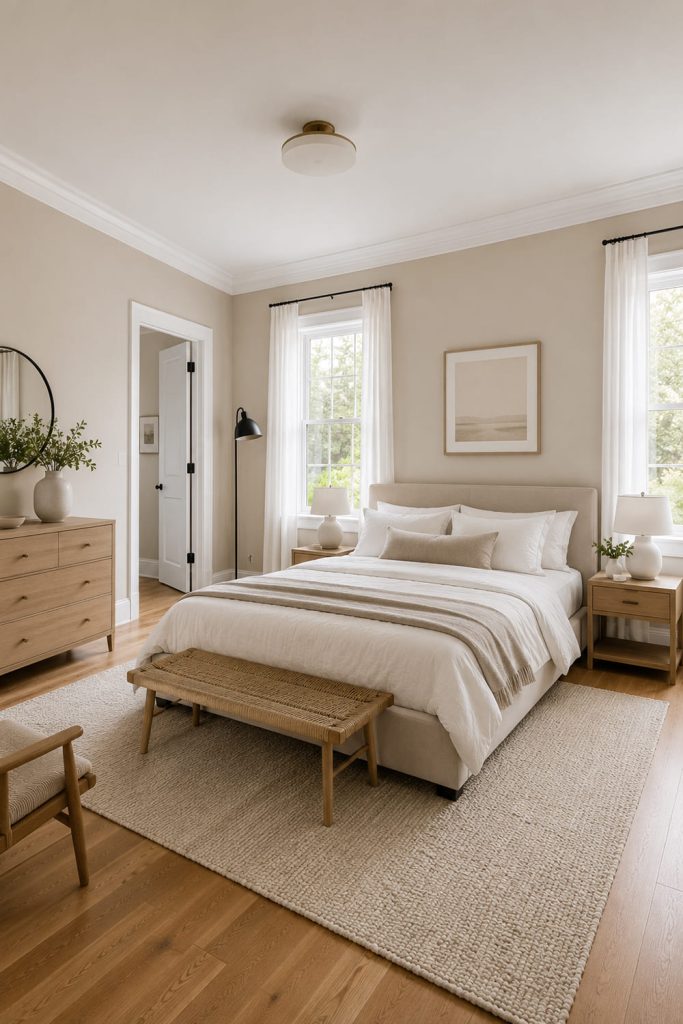
For a brighter, more Scandinavian-inspired take, pair light beige walls with crisp white trim, baseboards, and ceiling. The contrast keeps the room feeling fresh and clean rather than heavy, while the beige still adds more warmth than an all-white palette would. This combination works especially well in smaller bedrooms or rooms with limited natural light, since the lighter tones help the space feel more open. Add texture through a woven rug or linen curtains so the room doesn’t feel too stark against the crisp trim.
3. Deep Taupe-Beige Walls for a Cozy, Moody Retreat

If you want beige with more depth, taupe-beige walls create a cozy, enveloping feeling that works beautifully in primary bedrooms. This richer tone sits between beige and gray-brown, giving the room a more sophisticated, slightly moodier atmosphere without going as dark as true charcoal or navy. Balance the depth with lighter bedding and a few brighter accent pieces so the room still feels restful rather than closing in. Warm, low lighting in the evening enhances this tone beautifully, making it a favorite for bedrooms used mainly for winding down.
4. Beige Walls with Textured Plaster Finish

A limewash or textured plaster finish turns a flat beige wall into something with visible depth and movement. The subtle variation in tone as light hits the wall throughout the day gives the room an organic, handcrafted quality that flat paint can’t replicate. This finish pairs especially well with minimalist or Mediterranean-inspired bedrooms, where the wall itself becomes a quiet focal point rather than a backdrop. It’s a slightly higher investment than standard paint, but the textured effect reads as custom and high-end.
5. Beige Wall Paneling
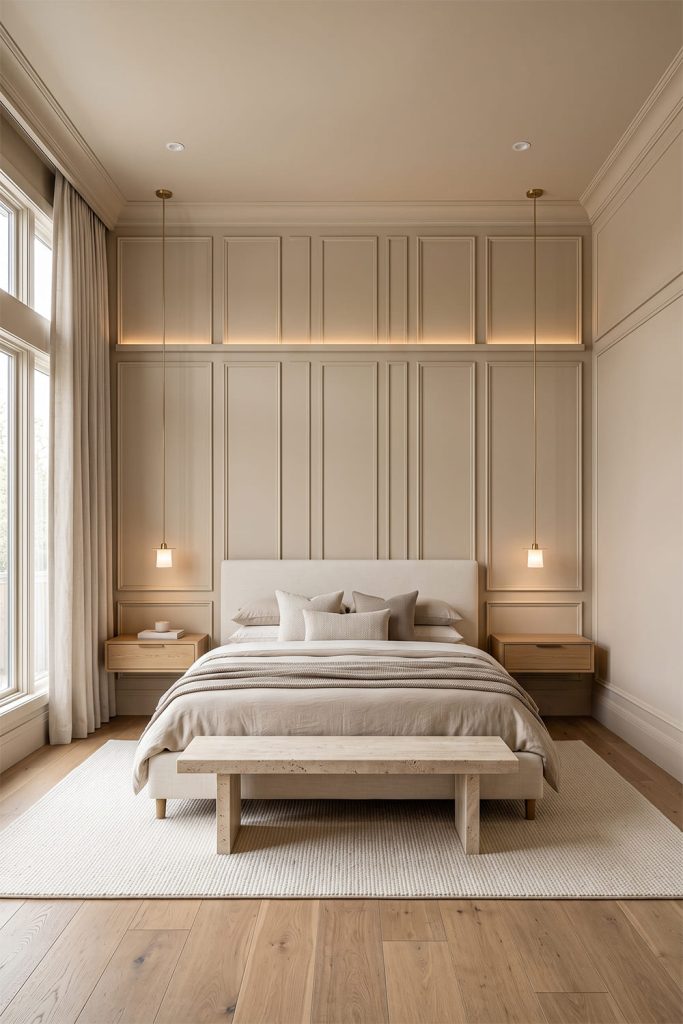
Painted MDF or wood paneling in a beige tone adds structure and dimension to an otherwise flat wall, particularly behind the headboard. Vertical slat paneling, board-and-batten, or classic raised panels all work well, and because the panels are painted the same beige as the rest of the room, the look stays cohesive rather than busy. This idea is popular in bedrooms that want a custom, architectural feel without introducing a second color. It also offers a practical benefit — paneling can hide minor wall imperfections and provide a bit of noise insulation.
6. Two-Tone Beige Walls

Painting the lower half of the wall in a slightly deeper beige than the upper half — divided by a chair rail or simple painted line — creates gentle contrast without introducing a new color altogether. This tonal layering adds visual interest and can make ceilings feel taller when the darker tone stays below eye level. It’s a subtle technique, but one that designers use often to add depth to bedrooms that might otherwise feel one-dimensional. Keep the color difference soft; the goal is nuance, not a bold color-blocked effect.
7. Beige Walls Paired with Black Accents

Black window frames, a black bed frame, or black-framed art against beige walls creates a striking, modern contrast that keeps the room from feeling too soft or one-note. The black grounds the space and adds a graphic, tailored edge, while the beige keeps the overall mood warm rather than stark. This pairing works particularly well in contemporary or industrial-leaning bedrooms. Keep black accents to two or three elements maximum so the beige remains the dominant, calming presence in the room.
8. Beige Walls with a Wood Accent Wall

Instead of a single flat color, combine painted beige walls with one wall finished in natural wood — slatted panels, reclaimed boards, or a simple wood headboard wall. The two warm tones play off each other naturally, since most wood finishes share undertones with beige paint. This idea brings texture and a biophilic, nature-inspired feel into the bedroom without requiring bold color choices. It’s especially effective in bedrooms with large windows, where natural light highlights the grain and texture of the wood against the smoother painted walls.
9. Beige Walls with a Bold Ceiling Color

Painting the ceiling in a deeper or contrasting shade — navy, terracotta, or even a rich forest green — while keeping the walls a soft beige creates an unexpected, designer-approved twist known as the “fifth wall” effect. The beige walls keep the room feeling calm at eye level, while the ceiling color adds drama and makes the room feel more considered. This approach works well in bedrooms with good ceiling height, where the color won’t feel like it’s closing the room in. It’s a lower-commitment way to experiment with bold color without repainting the whole room.
10. Beige Walls with Layered Neutral Bedding
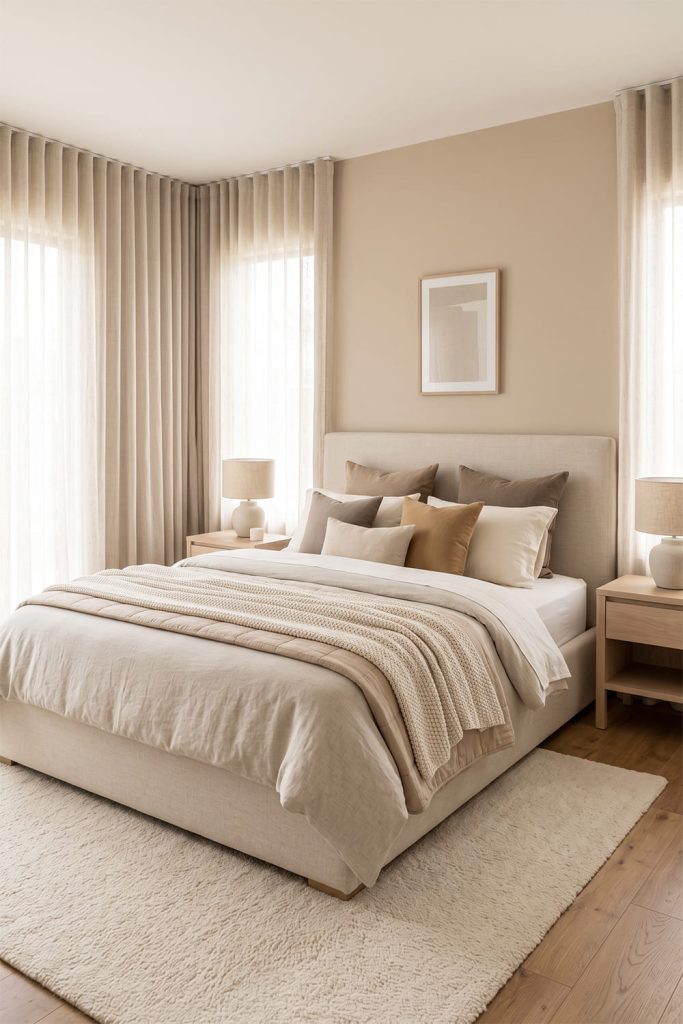
Sometimes the wall color is only half the story — how you layer bedding against it matters just as much. Combine a beige wall with ivory sheets, an oatmeal-toned duvet, a chunky cream knit throw, and one or two pillows in a slightly deeper beige or camel shade. The subtle tonal shifts between wall and bedding create depth without introducing any new colors, resulting in a soothing, cohesive palette that feels intentional rather than accidental. This approach is ideal for anyone who wants a serene, hotel-like bedroom with minimal visual noise.
11. Beige Walls with a Statement Headboard Wall

Rather than treating all four walls identically, paint the headboard wall in a slightly richer or warmer beige than the rest of the room. The subtle shift draws the eye to the bed as the room’s natural focal point while keeping the overall palette cohesive. This works particularly well when combined with an upholstered or wood headboard in a complementary tone, since the wall color effectively frames the bed like a piece of art. It’s a simple, low-cost way to add intention to a beige bedroom without extra decor.
12. Beige Walls in a Small Bedroom

In compact bedrooms, a light, warm beige on all four walls (and even the ceiling) can make the space feel larger and more unified than stark white, which sometimes reads as cold and clinical in small rooms. Keep furniture low-profile and choose bedding in similar tonal ranges so nothing visually interrupts the walls. Mirrors and warm lighting enhance the effect further, bouncing light around the room. This approach is especially popular in studio apartments and guest rooms, where a seamless, enveloping neutral makes the most of limited square footage.
13. Beige Walls with Botanical or Linear Wallpaper Accent
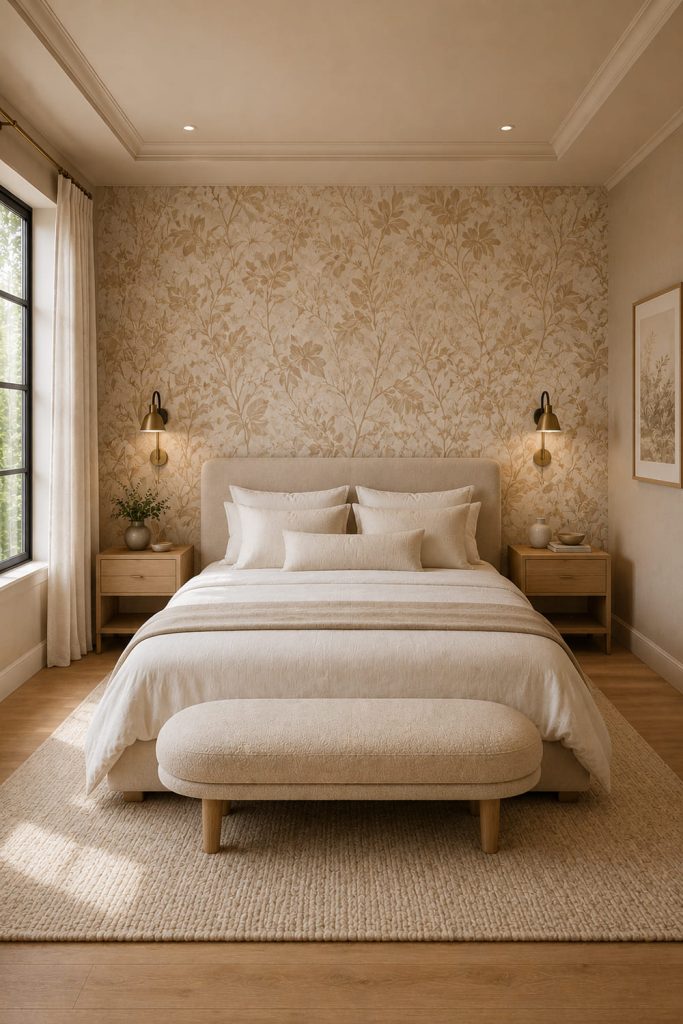
For a bedroom that wants a bit more personality, apply a botanical, striped, or fine linear-pattern wallpaper to a single wall while keeping the remaining walls a solid beige. Choosing a wallpaper pattern in tonal beige and cream keeps the look cohesive rather than busy, while still adding pattern and visual interest. This idea suits bedrooms that want a decorative moment without fully committing to a patterned room. It also works well behind a headboard, where furniture will eventually cover the lower portion of the pattern.
14. Beige Walls with Warm Wood Flooring
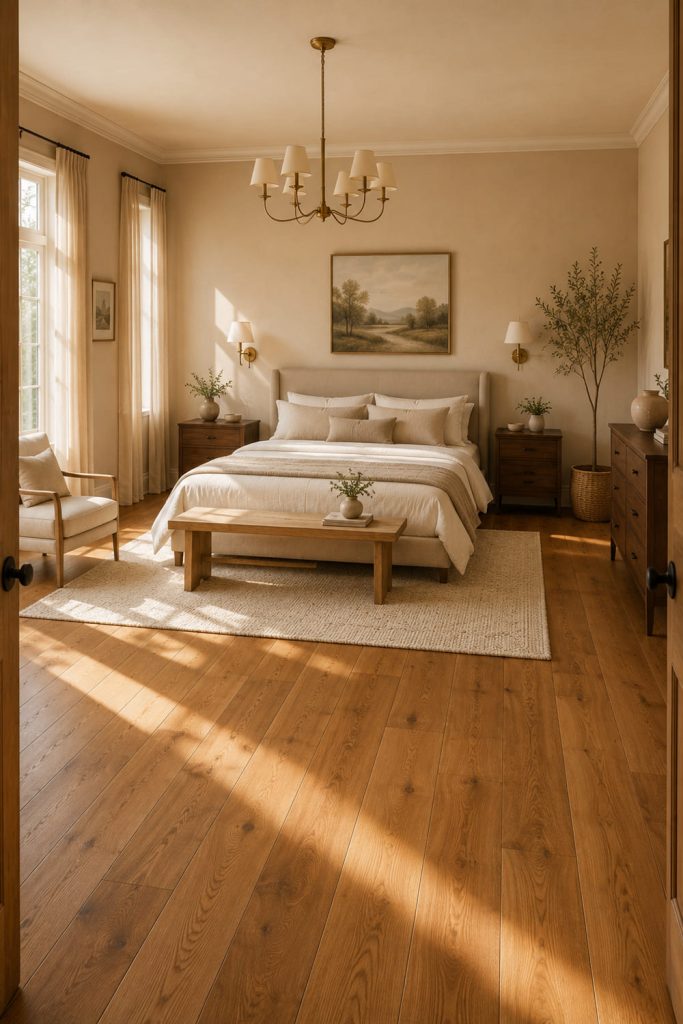
The relationship between wall color and flooring matters as much as any single decor choice. Pairing beige walls with warm-toned wood flooring — honey oak, walnut, or reclaimed wood — creates a continuous, cohesive warmth that runs through the entire room. Avoid cooler gray-toned flooring with warm beige walls, as the contrast can feel slightly disjointed. If your existing floor is a cooler tone, a warm-toned area rug can help bridge the gap and keep the room feeling unified from floor to ceiling.
15. Beige Walls with a Rotating Accent Color

One of the biggest advantages of beige walls is how easily they adapt to seasonal or evolving style changes. Use beige as the fixed, neutral backdrop, then rotate accent colors through pillows, throws, and small decor pieces — sage green in spring, terracotta in fall, or dusty blue for a cooler refresh. This approach means you never have to repaint to update the room’s mood. It’s a practical, budget-friendly idea for renters or anyone who likes to refresh their space seasonally without a major overhaul.
How to Choose the Right Beige for Your Bedroom
Test swatches in your actual lighting. Beige can shift dramatically between warm and cool depending on natural light, bulb temperature, and the time of day. Always test a sample patch and view it morning, afternoon, and evening before committing.
Check the undertone. Some beiges lean pink, some lean yellow, and some lean gray. Hold your swatch next to existing flooring, trim, or furniture to make sure the undertones don’t clash.
Consider room size and light. Lighter beige opens up small or dim rooms, while deeper, richer beige tones add coziness to larger rooms or those with plenty of natural light to balance the depth.
Don’t skip the trim and ceiling. Crisp white trim adds contrast and freshness; painting the trim and ceiling the same beige creates a softer, more enveloping effect. Both are valid — the choice depends on the mood you want.
Add texture, not just color. Flat paint alone can feel one-dimensional. Textured plaster, paneling, wallpaper, or simply layered textiles all help beige walls feel considered rather than default.
Final Thoughts
Beige walls offer something few other colors can: a neutral base that’s warm, adaptable, and genuinely restful to wake up to every day. Whether you keep things simple with a single warm tone or add depth through paneling, contrast, or texture, beige gives you room to build a bedroom that feels personal — and it’s flexible enough to grow and change with you over time.


