

15 Beige Bathroom Ideas With Blue Patterned Floor Tiles
The floor is the first thing bare feet meet in the morning, and a plain beige floor can leave a warm bathroom feeling flat.
Blue pattern changes that in one move. These beige bathroom ideas with blue patterned floor tiles keep the walls, tub, and vanity calm while the floor carries the color and detail.
You will find help with pattern size, grout color, rugs that sit over pattern, and small blue echoes above the floor. Each idea stays on the floor first.
Start by standing at the door and looking down. The best floors read clearly from the doorway and still feel soft up close at the sink.
A quick test helps too. Lay a few sample tiles beside your beige paint or cabinet color in morning and evening light before you commit.
If you like the wider color pairing first, see our beige and blue bathroom ideas for the full palette, then come back here for the floor in detail.
This post contains affiliate links. If you buy through them, we may earn a small commission at no extra cost to you. See our Affiliate Disclosure.
1. Choose a Small Repeat for Blue Patterned Floor Tiles
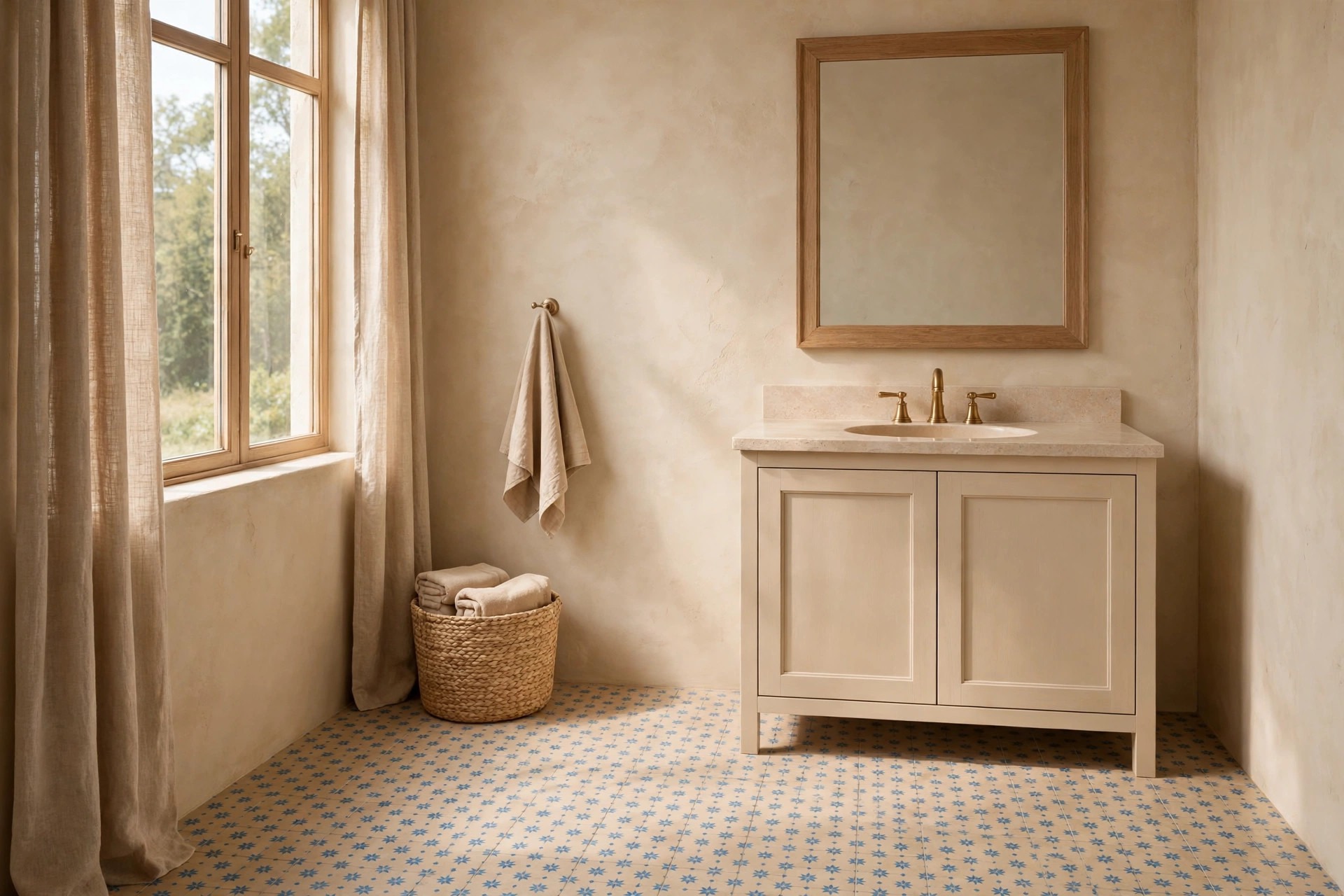
A busy floor is the top worry with pattern, and a small repeat solves it. Tiny stars, dots, or small diamonds in blue read as texture from the door.
Up close at the sink, the small shapes stay neat and calm. The beige between the blue marks does most of the work, so the floor never shouts.
Small repeats also hide daily life well. A drip beside the sink or a faint wet footprint blends into the pattern while you finish getting ready.
Test one sample row beside the tub edge. If the pattern still feels calm from the doorway, the small scale is right for your room.
Keep a few spare tiles from the same batch in a drawer. A chipped tile years later is far easier to match from a saved spare.
2. Go Large With the Pattern in a Longer Room

A long floor can swallow a tiny pattern and look speckled. Large motifs, bold diamonds or big soft medallions, give a longer beige room a clear rhythm instead.
Fewer, bigger shapes mean fewer grout lines across the room. The eye travels from one motif to the next and the floor feels wider and calmer.
Our notes on small bathroom tile ideas cover tile size and layout in more depth. Use them for fit, then keep the large blue motif as your one bold choice.
Keep the large pattern whole at the doorway if you can. A motif cut in half at the entry can look like a mistake every morning.
Lay the full pattern out dry on the floor before fixing it. One slow layout check saves a motif landing wrong right at the sink.
3. Soften the Blue With Pale Beige Grout

Grout color decides how loud the pattern feels. Pale beige grout blends the tiles into one soft field, so the blue reads gentle instead of crisp.
Hold a grout stick beside your tile sample in daylight. The right pale tone sits close to the beige in the tile, not close to white.
This soft line suits a main bathroom used by sleepy people at night. The floor guides bare feet without a hard grid under low light.
Pale grout shows splashes sooner near the sink. A quick wipe after brushing keeps the lines even, and the pattern stays soft for years.
Judge grout color only once a test strip has dried fully. Wet grout always looks darker, and a dry check stops a soft floor turning harsh.
4. Sharpen Each Tile With a Deeper Grout Line

From the doorway, a deeper grout line draws a clean grid around each blue tile. The pattern looks drawn on purpose, crisp and graphic.
Choose a warm grey or soft taupe line, not stark black. Black can turn a gentle blue pattern cold and make the beige walls look yellow beside it.
Deeper lines also forgive uneven spacing in older floors. Small gaps read as part of the grid, and guests notice the motif before any flaw.
Check the line beside the toilet base and tub foot. Those tight spots show grout color most, so test there before the whole floor is done.
A deeper line also suits a busy family floor. Splashes and spots show less against a darker joint in the morning rush at the sink.
5. Keep the Walls Plain Warm Beige So the Floor Leads

One rule keeps this pairing calm: the floor leads, and the walls stay quiet. Plain warm beige walls give the blue pattern room to be the single feature.
Skip a second pattern on the walls or shower. Plain tile or plain paint above the floor lets the eye rest and makes the room feel larger.
For the wider base on its own, our guide to beige bathroom ideas covers warm neutral walls and fixtures. Borrow the calm base only, then let your floor add the blue.
Hold your wall color beside the floor sample at noon. Warm beige should look soft next to the blue, never pink or grey.
Paint the ceiling a soft white rather than beige. One lighter plane lifts the room and stops the warm walls from feeling heavy overhead.
6. Carry the Pattern Under the Shower Glass

Morning light through shower glass shows the floor at its best. Running the same blue pattern under the glass and into the shower base joins both zones.
The joint floor makes a small room feel longer, since no hard line stops the eye at the screen. Wet feet meet the same tile in and out.
If your layout turns a corner into the shower, our guide to small bathroom ideas with a corner shower layout can help with the turn. Keep the pattern direction the same through the corner.
Use a smaller cut of the same tile inside the shower if the slope needs it. Matching color matters more than matching size there.
Keep shower fittings plain and pale in finish. A calm fitting lets the joined floor pattern stay the clear feature through the glass.
7. Frame the Pattern With a Plain Beige Border

A common slip is running a bold pattern hard into every wall. The corners crowd, cut motifs clash, and the floor feels restless at the edges.
A plain beige border, one tile wide, fixes the edge. The blue pattern sits inside the frame like a rug, neat at the tub and vanity feet.
The border also saves tricky cuts. Awkward slivers land in the plain border row, where they read as a clean line instead of broken pattern pieces.
Step back and check the frame from the hall. A border that stays even on all sides makes the whole floor look planned and tidy.
Measure the border on the longest wall first. Set the short wall borders to the same width, so the frame stays even all around.
8. Lay a Narrow Runner That Leaves the Pattern Showing

A runner gives cold feet a soft path and still lets the floor do its job. Choose a narrow washable runner in cream or pale beige.
Lay it from the door to the sink, off center, so a strip of blue pattern shows on both sides. Covered center, visible edges, calm balance.
A full bath mat over the middle hides the best part of the floor. The narrow runner also dries faster after a shower than a thick mat does.
Shake the runner out twice a week. Grit under a runner can scratch tile glaze, and a quick shake keeps both the rug and floor clean.
Choose a flat weave runner with a firm back. Thick pile bunches at the vanity base and can catch sleepy feet in the dark.
9. Set a Freestanding Tub Right on the Pattern

A white or warm beige freestanding tub sitting on blue pattern is the clearest view in this whole scheme. The plain tub shape rests, the floor glows below.
Center the tub on a full motif if the layout allows it. A whole diamond or medallion under the tub reads like a mat made of tile.
Placement matters as much as the tub shape, and our notes on long bathroom ideas with a freestanding tub placement cover spacing well. Leave a clear patterned margin on all sides.
Keep a folded beige towel over the tub rim. It softens the hard edge and gives wet hands a dry spot within reach.
Leave room to walk right around the tub on the tile. A clear ring of pattern around the tub makes weekly cleaning simple.
10. Pair a Quiet Beige Vanity With a Plain White Top
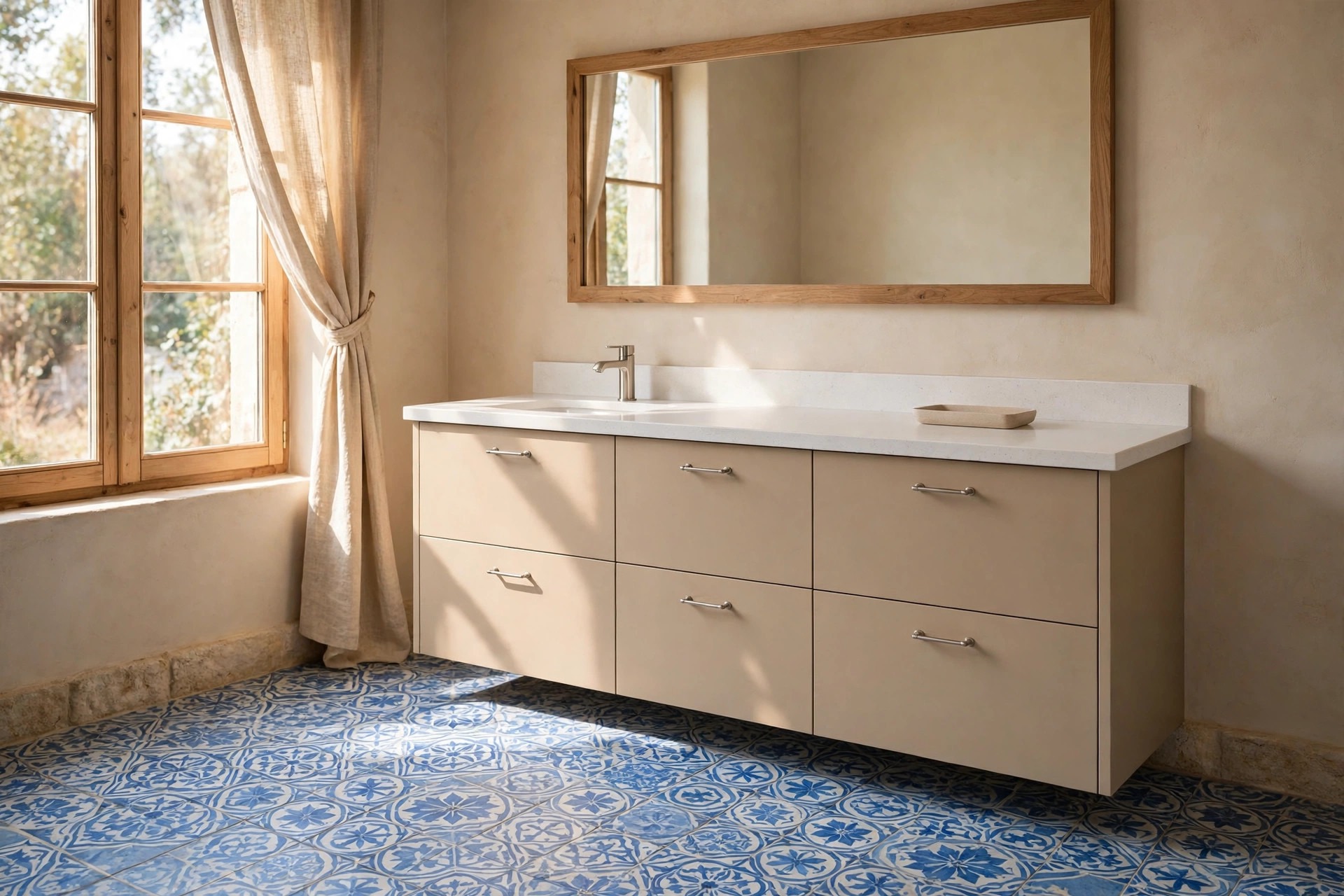
Start at the sink and work down. A beige vanity in a flat, plain finish keeps the middle of the room calm above a busy floor.
Top it with plain white or soft cream stone with no strong veins. Busy counter veining and busy floor pattern pull the eye in two directions.
Choose simple handles in a warm metal or matte black. Ornate handles add a third pattern at hand height, and the room starts to feel crowded.
The shelf edge under the sink catches drips each morning. A plain top wipes clean fast, so the floor stays the only detailed surface.
Keep bottles and jars together in one plain tray on the top. A single tray stops clutter adding visual noise above the patterned floor.
11. Echo the Blue Once, and Only Once, Above the Floor

One small blue echo ties the floor to the rest of the room. A stack of blue towels, a single blue jar, or one blue hand towel is enough.
More than one echo starts a second scheme. Blue towels, blue rug, blue curtain, and blue soap together fight the floor and dull its effect.
Place the echo at sink height, where the eye lands after the floor. The two blues then talk across the room in a calm, clear line.
Swap the echo with the wash load. When the blue towels are in the laundry, use beige ones and let the floor stand alone for a day.
Swap the echo shade with the seasons if you like change. A deeper blue towel in winter and a paler one in summer both suit the floor.
12. Match Your Beige to the Tile Background, Not the Blue

A common myth says every beige in the room must match one beige chip. Real patterned tiles carry a soft, varied background, and close tones blend fine.
Match your wall and vanity beige to the pale background inside the tile. That ground color covers most of the floor, so harmony there matters most.
Bring the tile sample to the paint counter, not a photo. Phone screens shift blue and beige, and a wrong undertone shows up once walls are done.
Test a painted patch low on the wall, right above the floor line. That low spot shows the true pairing in real light all day.
Save the tile box label with your paint notes in one folder. Future touch-ups stay simple when both color names live in one place.
13. Use Warm Light So the Blue Stays Soft
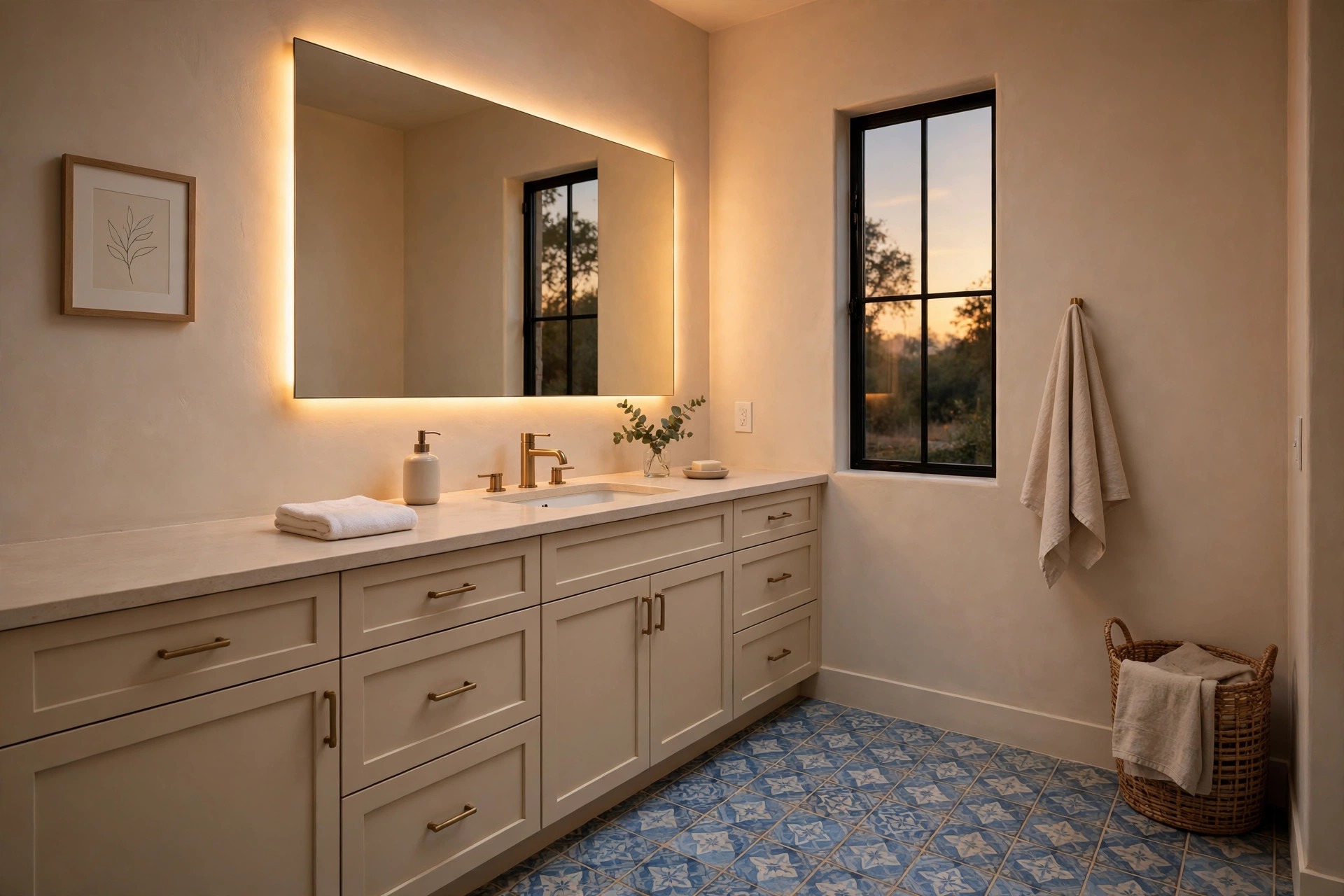
Cold white light can turn a soft blue floor grey and make beige walls look dull. The pattern loses its charm most at night under harsh bulbs.
Warm bulbs over the mirror and ceiling keep the blue true and the beige golden. The floor then looks as good at night as at noon.
Test bulbs with the mirror in use. Steam after a shower fogs the glass fast, and warm light keeps skin tones kind while the mirror clears.
Keep one bulb tone through the whole room. Mixed bulb colors split the floor into two shades and spoil the pattern in the corner.
Add a dimmer if your mornings start early. Low warm light at dawn keeps the blue gentle while your eyes adjust to the day.
14. Finish the Edges With Beige Skirting and a Wood Threshold
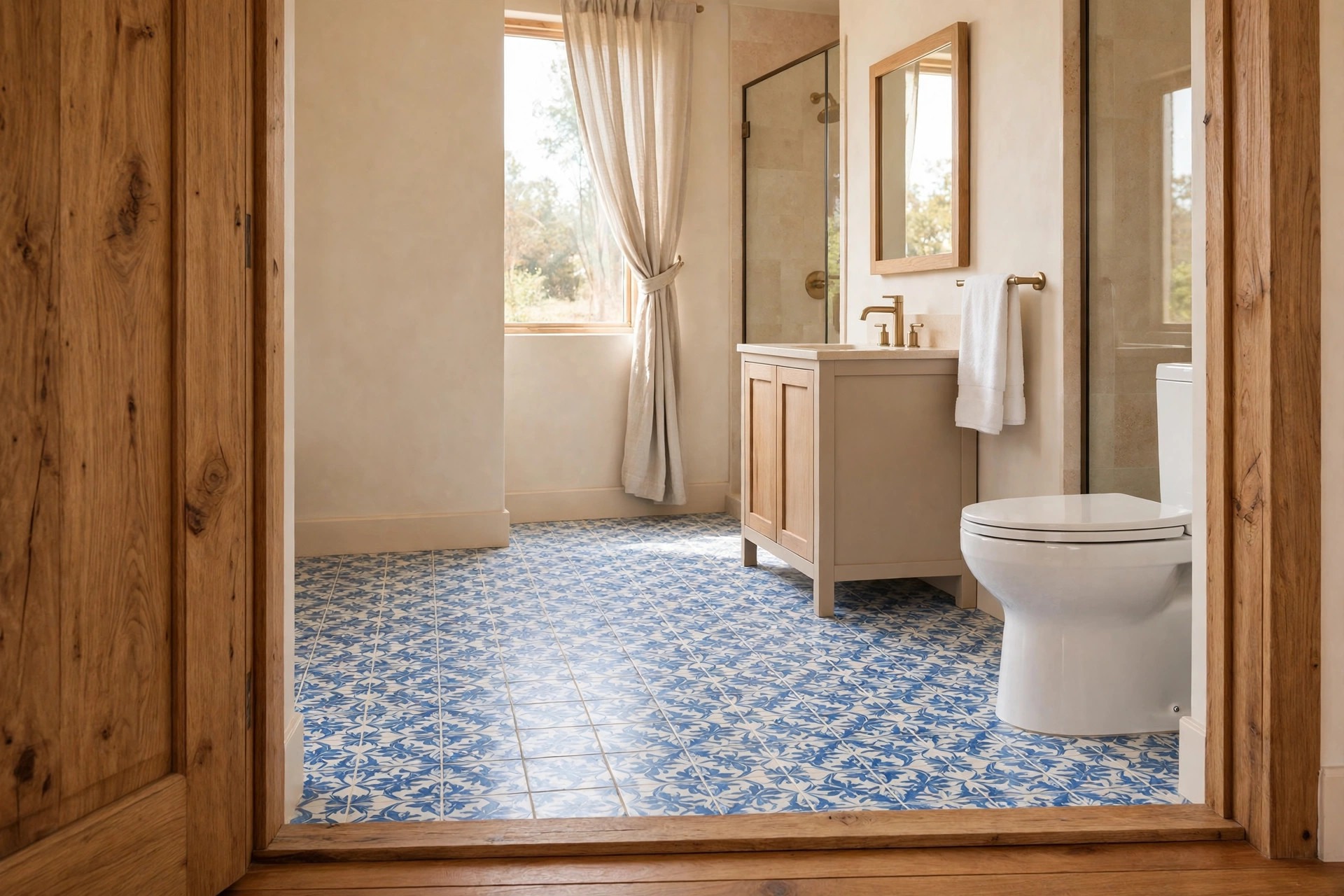
The edge of the floor is where the eye checks the finish. Plain beige skirting where the pattern meets the wall gives the blue a clean stop line.
At the door, a warm wood threshold bridges the bathroom tile and the hall floor. The wood tone warms the blue and suits the beige walls.
Skip white skirting if your beige runs warm. Stark white boards can look like a mistake line and draw the eye away from the pattern center.
Run a fingertip along the skirting after cleaning day. Dust shows fast on that low ledge, and a quick wipe keeps the frame crisp.
Wipe the threshold first after a bath. That joint takes the most splashes, and a quick dry keeps the wood tone warm and clean.
15. Keep the Pattern Clear With a Simple Weekly Care Habit

Pattern hides dust well, and that is the trap. Weeks can pass while grit builds in the grout lines and the blue slowly loses its punch.
Set one weekly habit: sweep, then mop with warm water and a soft mop. Work along the grout lines near the sink and tub first.
Dry the floor with an old beige towel after the mop. Standing water spots cloud the glaze, and a dry pass brings the motif back at once.
Keep a small mat outside the tub for wet feet. Less water tracked across the room means the pattern stays clear between weekly cleans.
Keep a small hand brush by the sink for quick grout touch-ups. Ten seconds on one dull line keeps the whole pattern looking fresh.
Start with the floor choice itself: pattern size first, then grout color. Those two calls set the mood for beige bathroom ideas with blue patterned floor tiles more than any fixture can.
Keep the walls, vanity, and tub quiet in warm beige and plain finishes. Add one runner and one small blue echo only after the floor feels right.
Save this to your bathroom ideas board for later, and test a sample tile at your own doorway this week. A floor you love looking down at makes every morning start calmer.


