
Best Vintage Style Glass Christmas Ornaments for a Traditional Tree
A traditional tree has a glow that plastic rarely copies. Thin glass, silvered coatings, and hand painted detail give vintage style ornaments their depth, especially under warm lights in the evening.
This guide covers the glass types that build the look, from jewel tone bauble sets to figural pieces. Each idea names the form, how it is made, and the handling care that keeps fragile glass sound.
The style belongs in rooms with the same respect for older pieces, and our vintage living room ideas show how the palette carries beyond the tree.
Judge any new piece in your hand before it goes on the tree. Sound vintage style glass feels light but firm, with a neat neck, a seated cap, and paint that sits smooth under a fingertip.
Glass asks for a calmer hand than plastic, at hanging, cleaning, and packing. The closing ideas cover storage and care, since most vintage style losses happen in the box rather than on the branch.
This post contains affiliate links. If you buy through them, we may earn a small commission at no extra cost to you. See our Affiliate Disclosure.
1. Classic Glass Bauble Sets in Jewel Tones
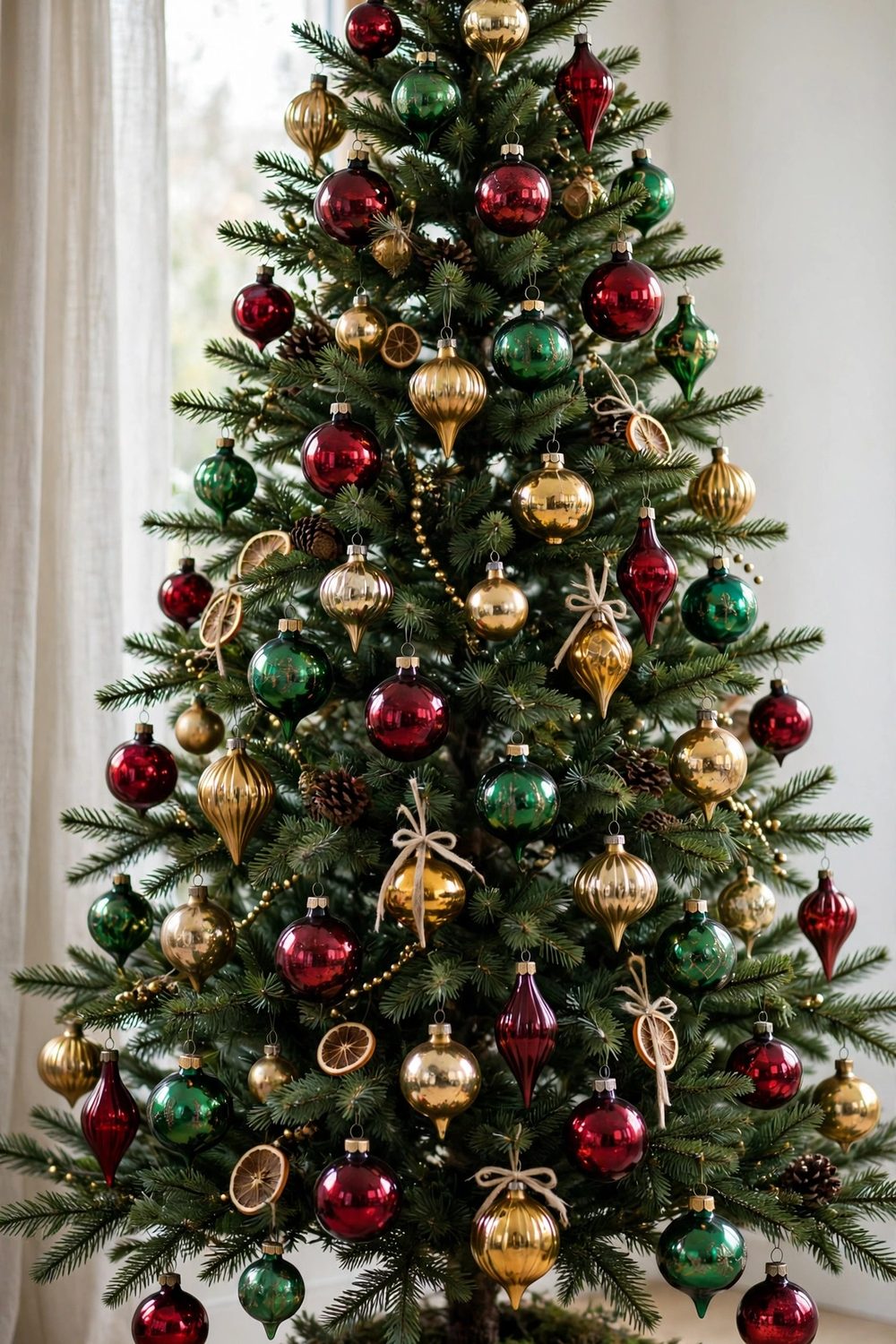
Jewel tone glass baubles cover this tree in deep red, green, and gold. The colors and the clear glass shine copy the traditional trees of the middle of the last century.
Vintage style bauble sets are mouth blown or molded glass with a thin metallic coating inside. Sizes usually run from about two to three and a half inches, a little smaller than modern plastic sets.
Glass this thin chips at the neck if pieces knock together on the branch. Leave a finger width of space around each bauble and hang them on firm mid weight branches.
Group the jewel tones in a loose rotation rather than in color blocks. A rotation keeps the traditional mix that makes this style read as vintage rather than matched.
2. Mercury Glass Ornaments With a Mottled Finish
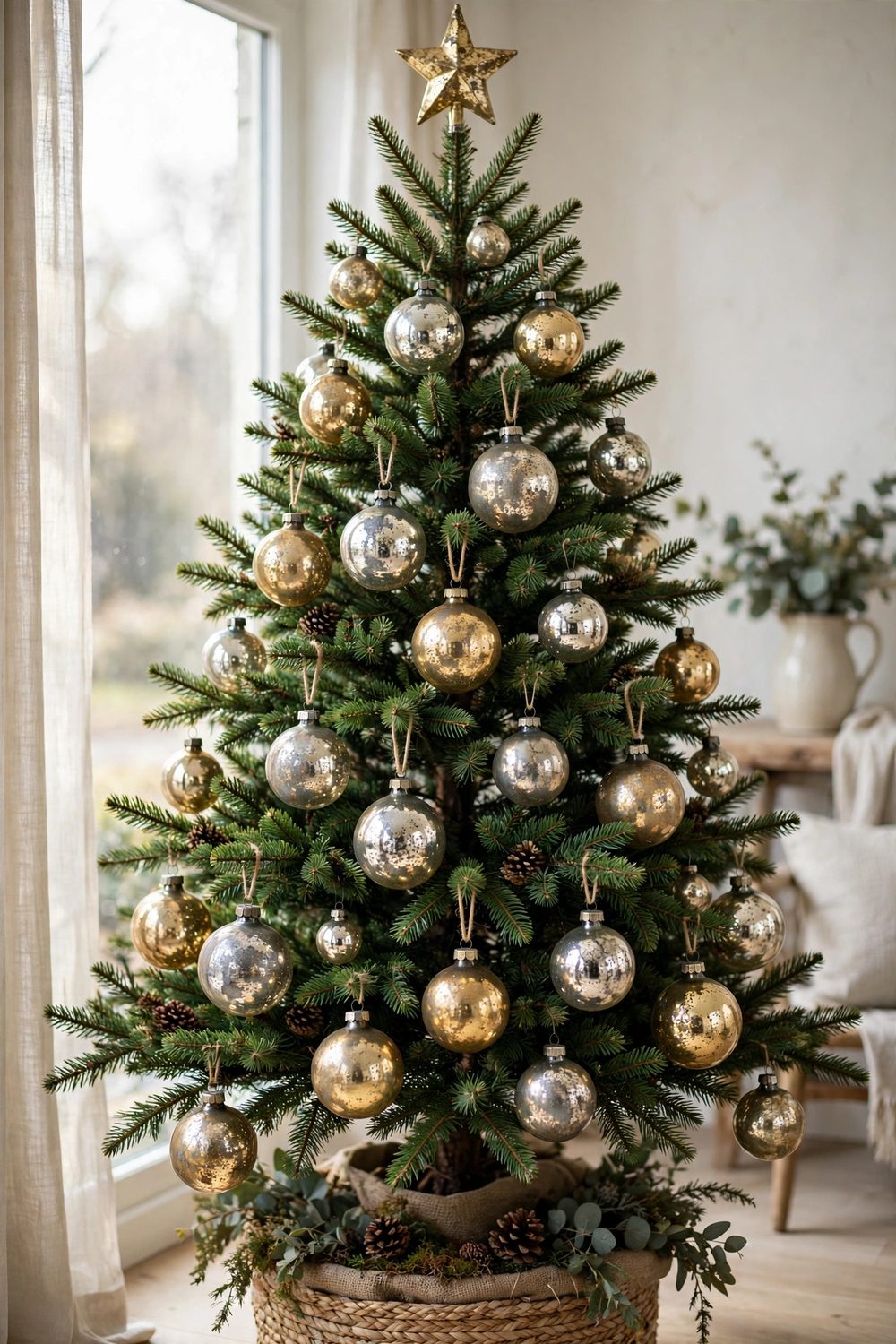
Mercury glass ornaments hang here with their soft mottled shine. The speckled surface copies antique silvered glass and flatters candlelight and warm tree lights alike.
Modern mercury glass is a double walled or coated glass with a distressed metallic layer. It is decorative glass, made to look aged, and the mottling varies from piece to piece by design.
Keep mercury glass away from damp storage, since moisture spots the coating over time. Wrap each piece in plain tissue rather than printed paper, which can transfer ink to the finish.
Mix mercury pieces with plain shiny baubles so the mottled finish stands out. A tree of all mercury glass reads flat, while a third of the set gives the antique note clearly.
3. Glass Finial Ornaments in Traditional Shapes
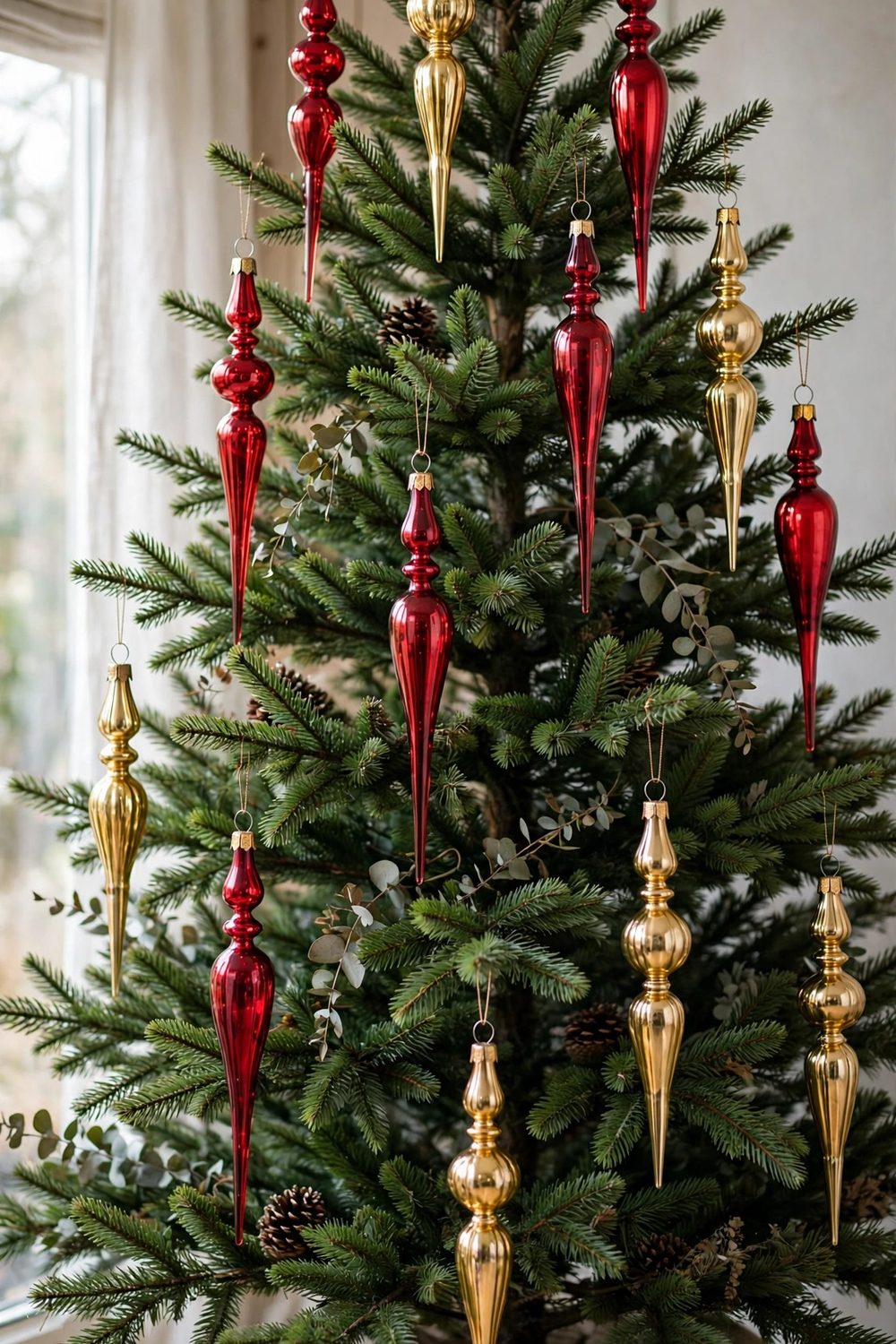
Long glass finials hang from the middle branches of this tree, in the teardrop and onion shapes that defined older traditional sets. Their length breaks up the rows of round baubles.
Finials are molded or blown glass, often four to eight inches long, with painted bands and glitter lines in period styles. Longer finials suit trees above six feet and can crowd a small tree.
Hang finials where they can swing clear of the branch below. A finial resting on needles below it will chip at the tip over a long season of small movements.
Space finials evenly around the tree rather than only at the front. Their shapes show in profile from the side, which is how guests often see them first.
4. Indented Reflector Ornaments From Retro Molds
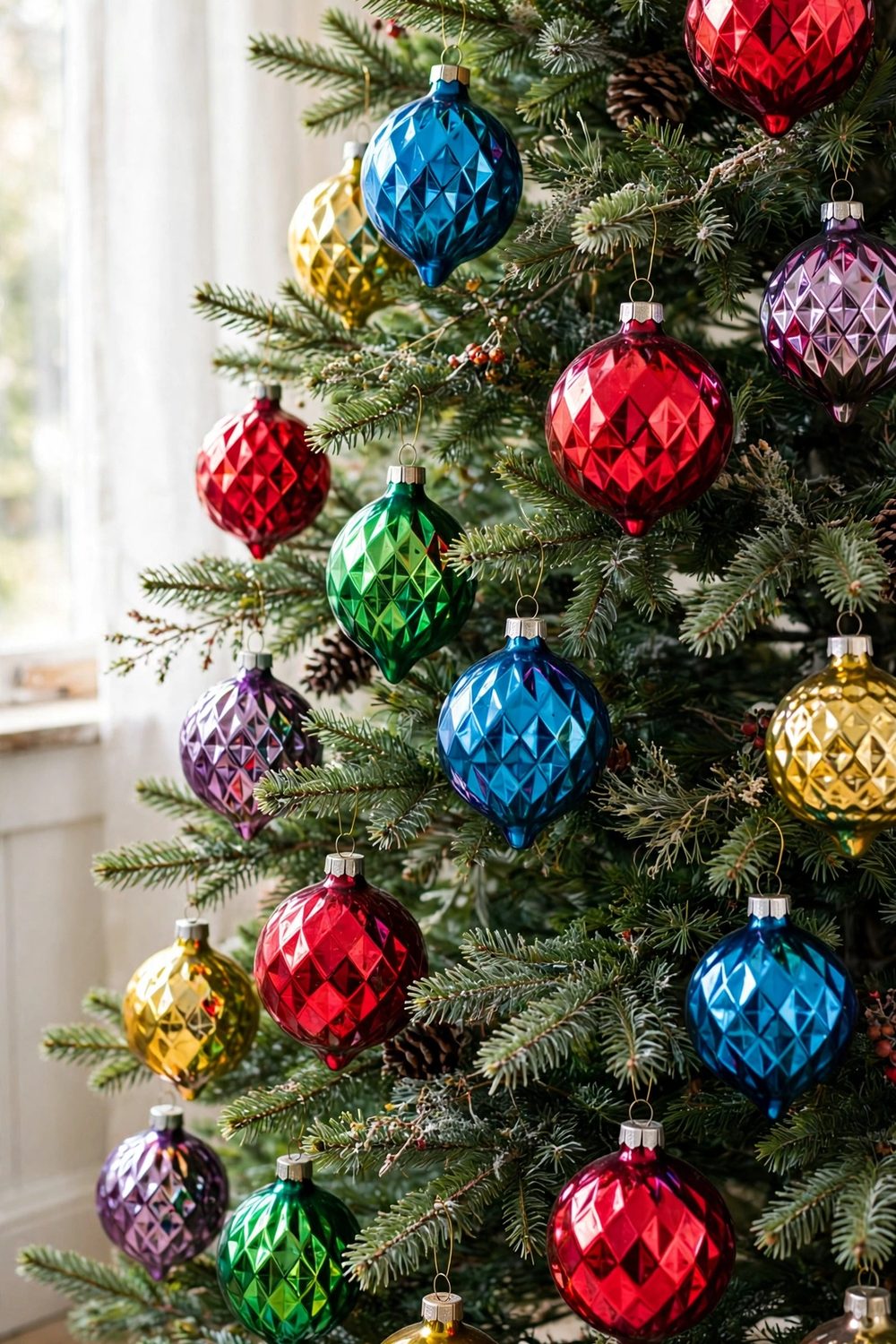
Indented reflector ornaments flash bright color across this tree. The deep dimple in each ball catches light from the bulbs and throws it back in a star like burst.
Reflectors are thin glass with a pressed indent, painted in bright period colors with silvered centers. Original mid century pieces are fragile collectors items, and new retro mold versions give the look with sounder glass.
Hang reflectors near light bulbs, facing outward, since the effect depends on the angle. A reflector turned sideways loses most of its flash.
Treat reflectors as the accent layer, at about one in six ornaments. More than that and the tree starts to sparkle in patches rather than glow as a whole.
5. Hand Painted Glass Baubles With Period Motifs

Hand painted baubles carry small winter scenes, holly sprigs, and church windows across this tree. The brushwork varies a little from piece to piece, which is part of the vintage charm.
Painted glass ornaments start as plain blown balls, with enamel or lacquer paint applied by hand or by fine stencil. Paint sits on the surface, so it can rub if pieces are packed without wrapping.
Hang painted pieces at eye level on the front and sides, where the detail earns its place. Deep inner branches are better spent on plain baubles that only need to fill color.
Store painted baubles in divided trays with the painted face upward and tissue between layers. One season of careless packing can wear a whole set of scenes away.
6. Glass Icicles and Beaded Garland Pairings
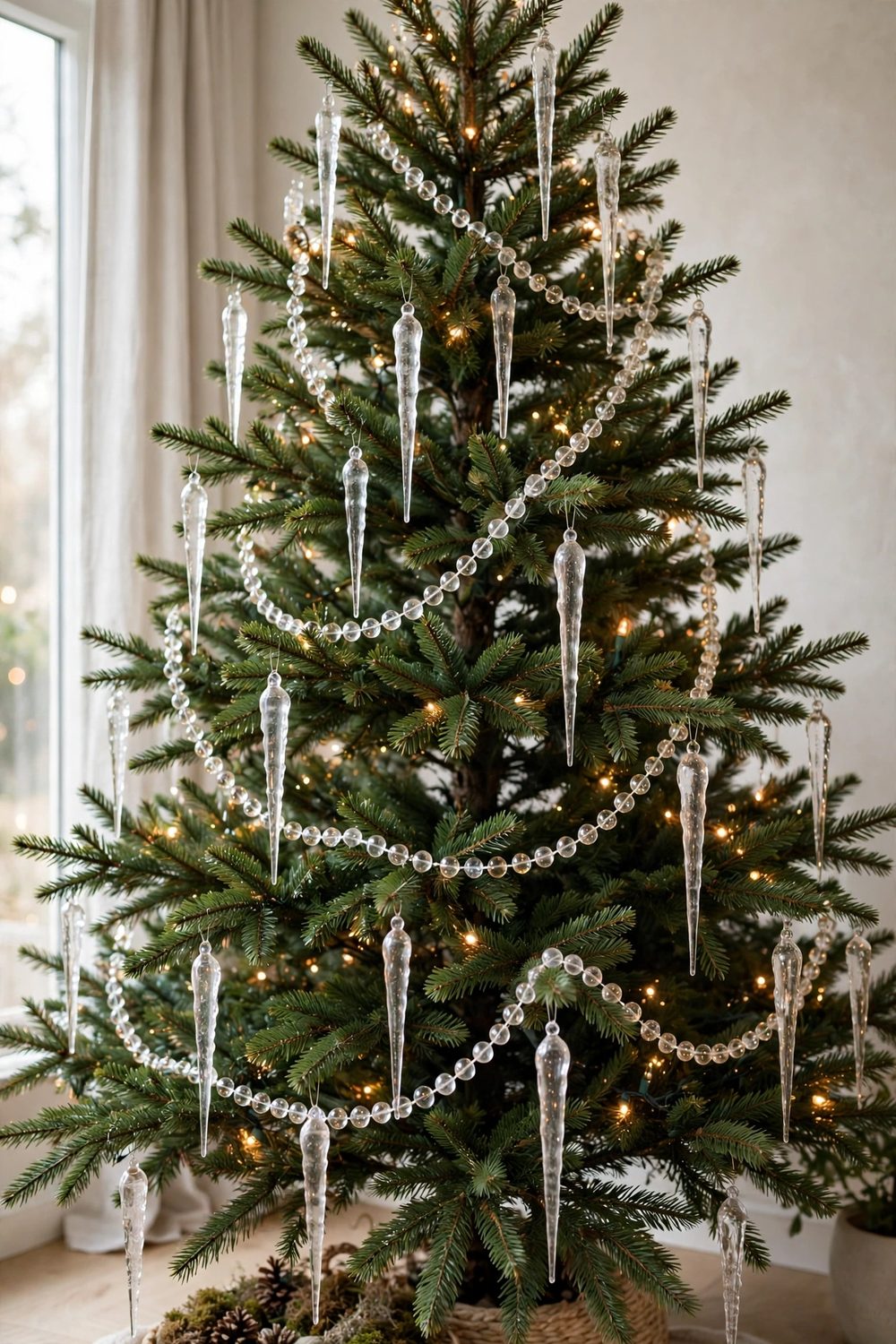
Glass icicles and a fine glass bead garland give this tree its period sparkle. Together they copy the light, bright dressing style that came before tinsel heavy trees.
Glass icicles are twisted or molded rods, usually four to seven inches long, and bead garlands are small glass balls strung on cord. Both pair well with the base in our christmas tree skirt ideas in velvet or plaid.
Glass beads weigh more than plastic, so drape the garland on firm branches and keep the swags shallow near the top. Save the deepest swags for the strong lower branches.
Icicles belong at branch tips where they hang straight. Count them in pairs per layer so the vertical lines stay even around the tree.
7. Figural Glass Ornaments in Classic Forms
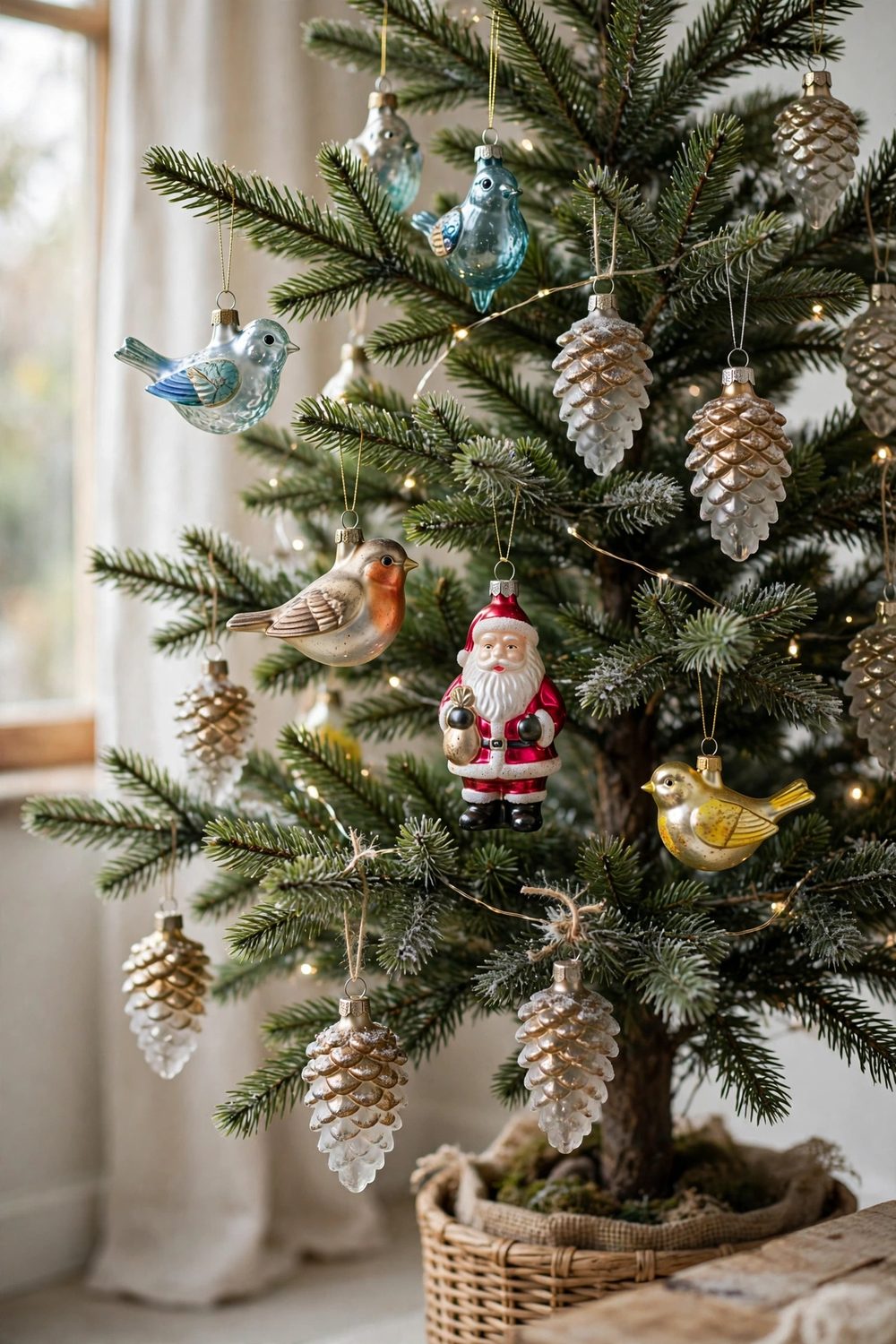
Glass birds, small Santas, and pinecones perch across this tree in the figural style of older German and European sets. Each shape adds a small story between the plain baubles.
Figural ornaments are molded glass, painted in detail, and often clipped or hung by a small cap. Clip on birds sit upright on the branch, which keeps their painted faces toward the room.
Figural pieces are the most fragile layer on the tree, with thin tails, hats, and limbs. Hang them high, away from passing traffic, and pack them in their own small boxes.
A few figurals go a long way. Six to ten on a full tree reads as a collected set, while dozens can crowd out the calm traditional base.
8. Striped and Glitter Banded Retro Baubles
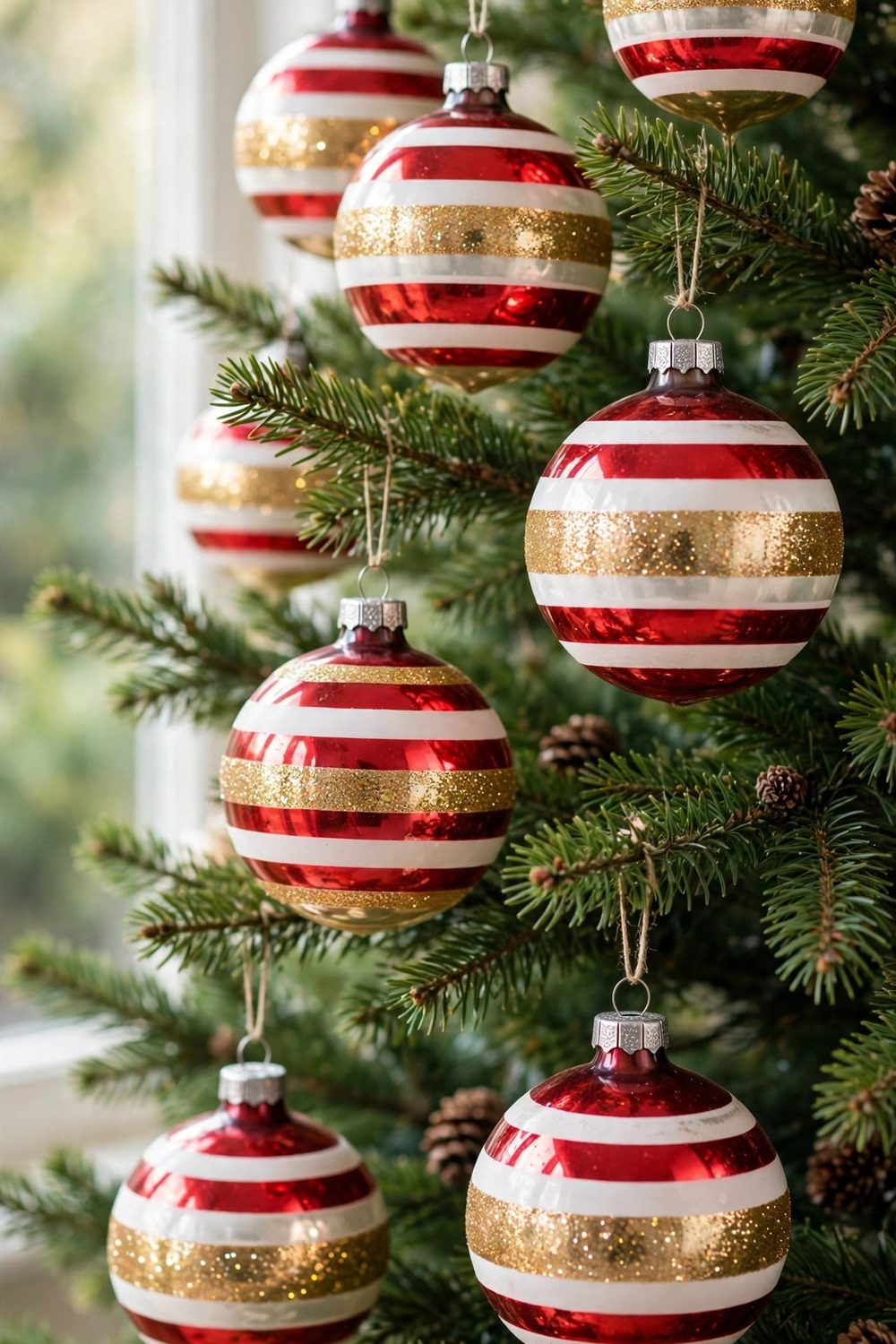
Striped baubles with glitter bands bring the playful side of the vintage style to this tree. Red and white candy stripes and gold bands copy the cheerful sets of the post war years.
These baubles are coated glass with painted stripes and applied glitter lines. Glitter sheds a little with handling, so hang them once and avoid moving them around the tree afterward.
Keep striped pieces in the same color family across the tree so the pattern reads as a theme. Mixing many stripe colors at once turns the vintage note into noise.
Brush loose glitter off your hands before handling plain glass. A glittered palm leaves prints on clear finishes that are hard to remove without washing the piece.
9. Silvered Glass Stars and Snowflakes
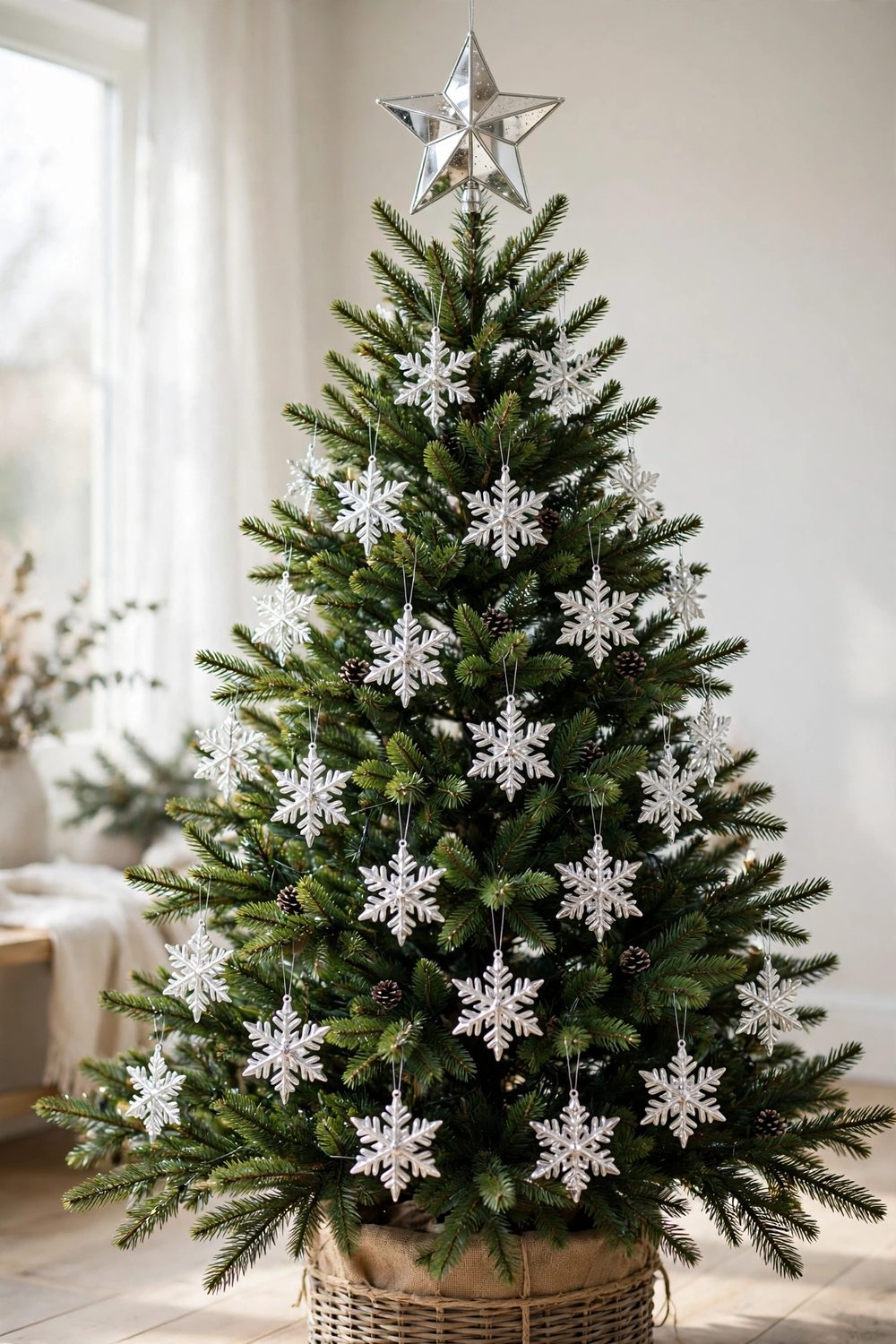
Silvered glass stars and snowflakes open across this tree with a cool, bright shine. Against the warm jewel baubles, the silver pieces read like frost on the branches.
Star and snowflake ornaments are molded glass with a silver metallic coating, sometimes dusted with fine glitter. Points and tips are thin, so these pieces chip first in a crowded storage box.
Hang them where they catch light against dark green, at tips and outer branches. Our christmas mantel ideas show silvered pieces used the same way across a hearth.
Store stars flat in a shallow tray rather than nested in a deep bin. Weight from above is what snaps the fine points during the off season.
10. Glass Bells and Lantern Shapes
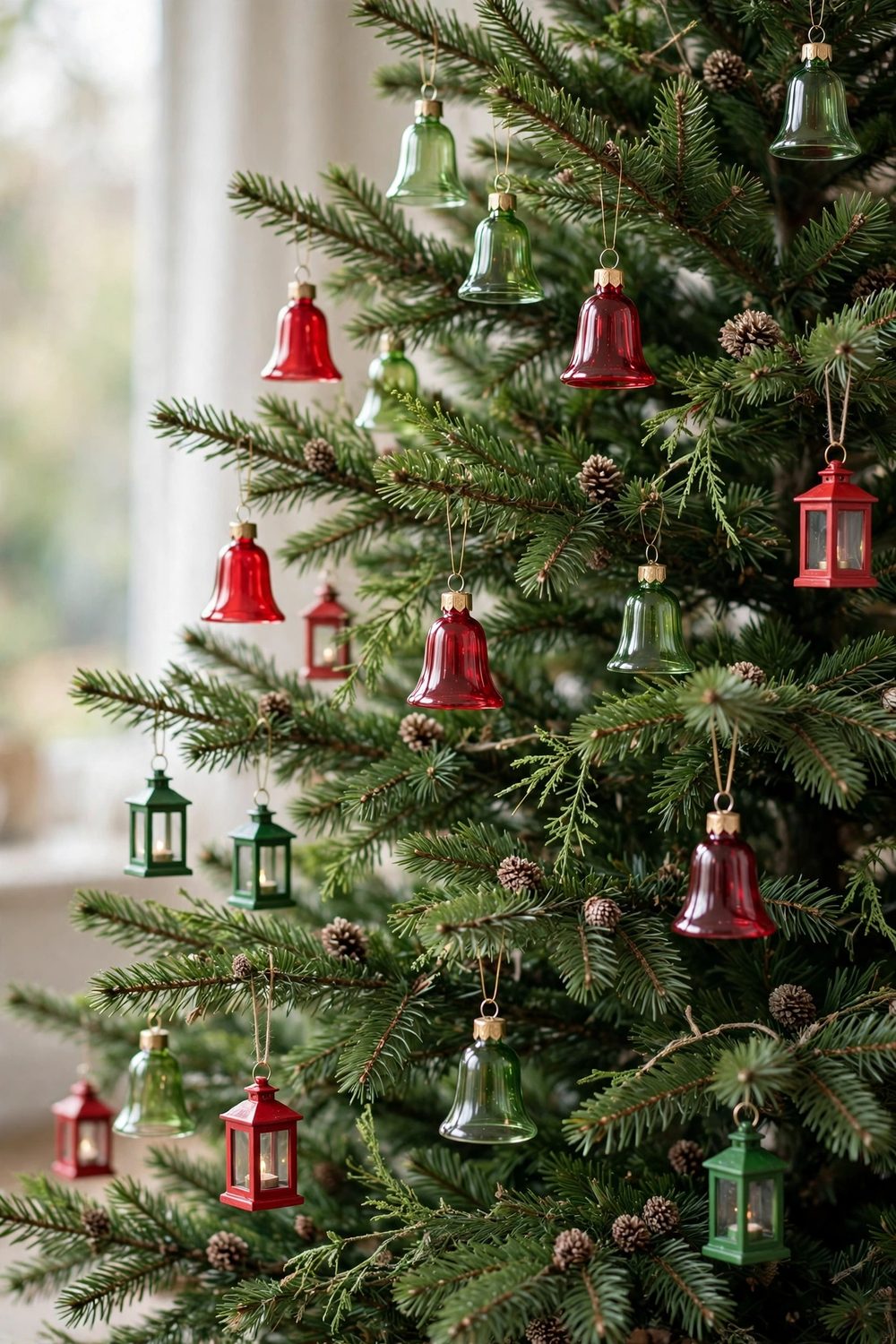
Small glass bells and lanterns hang in the gaps of this tree, their hollow shapes glowing when a bulb sits behind them. They copy the novelty ornaments that filled traditional sets.
Bells and lanterns are molded glass, often with a tiny metal clapper or a painted inner detail. The open bases make them light, which suits the upper branches well.
Place lantern shapes with a bulb directly behind the branch for the glow effect. A lantern in a dark pocket of the tree loses the very quality it was bought for.
Check clappers and caps at packing time, since the small parts loosen first. A drop of care in January saves a favorite piece for the next December.
11. Antique Gold and Bronze Glass Finishes
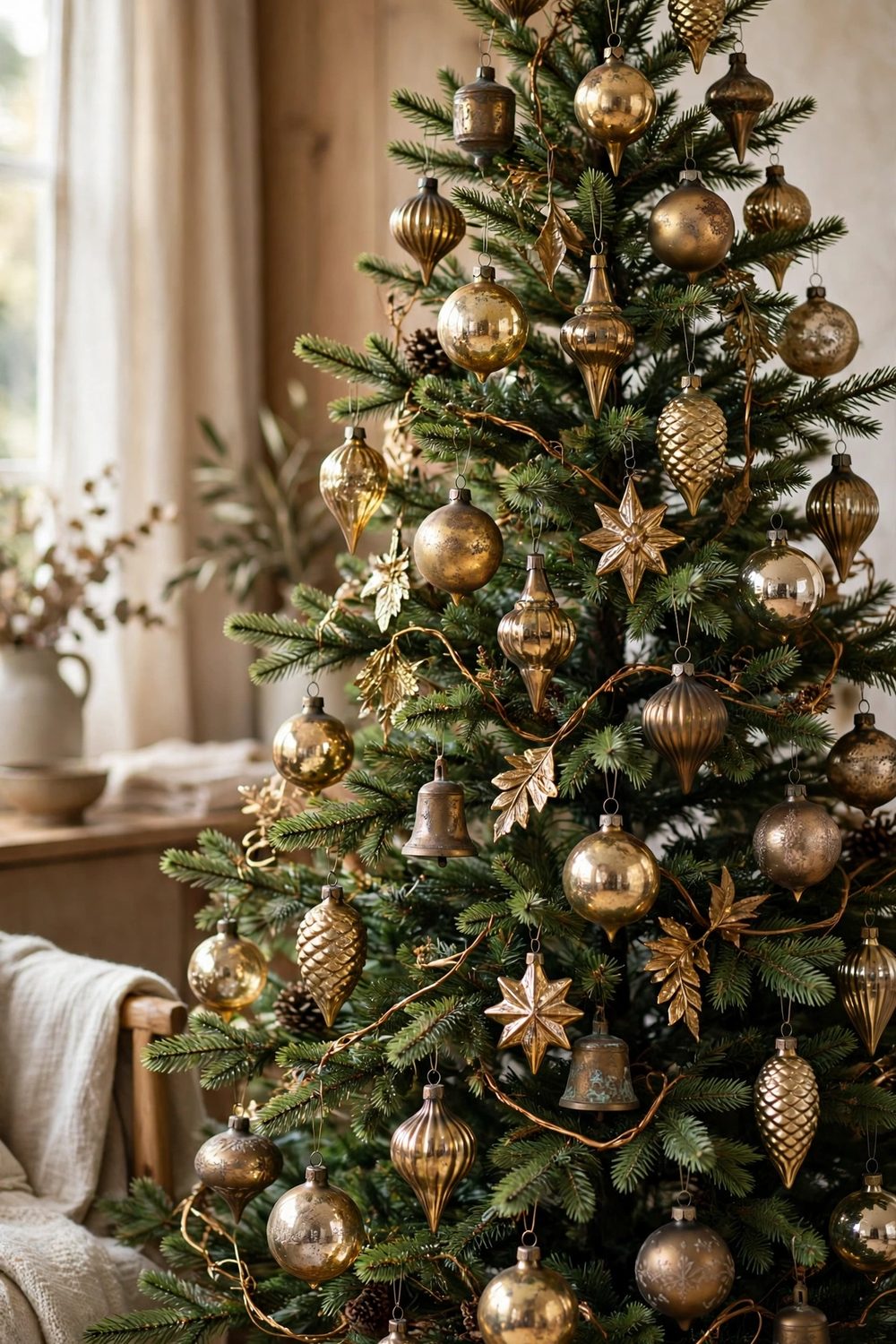
Antique gold and bronze glass gives this tree a deeper, older glow than bright modern gold. The muted metal tones suit dark wood furniture and candlelit rooms.
These finishes are coated glass with a darkened or smoked metallic layer. They vary between makers, so buy the full count from one line where you can, to keep the tone even.
Pair antique metal tones with deep red and forest green rather than pastels. The whole scheme should sit in the same warm, low register to read as genuinely traditional.
Wipe these finishes with a dry cloth only. Polishes brighten the coating and strip away the aged tone that defines the style.
12. Real Vintage Pieces Mixed With New Retro Sets
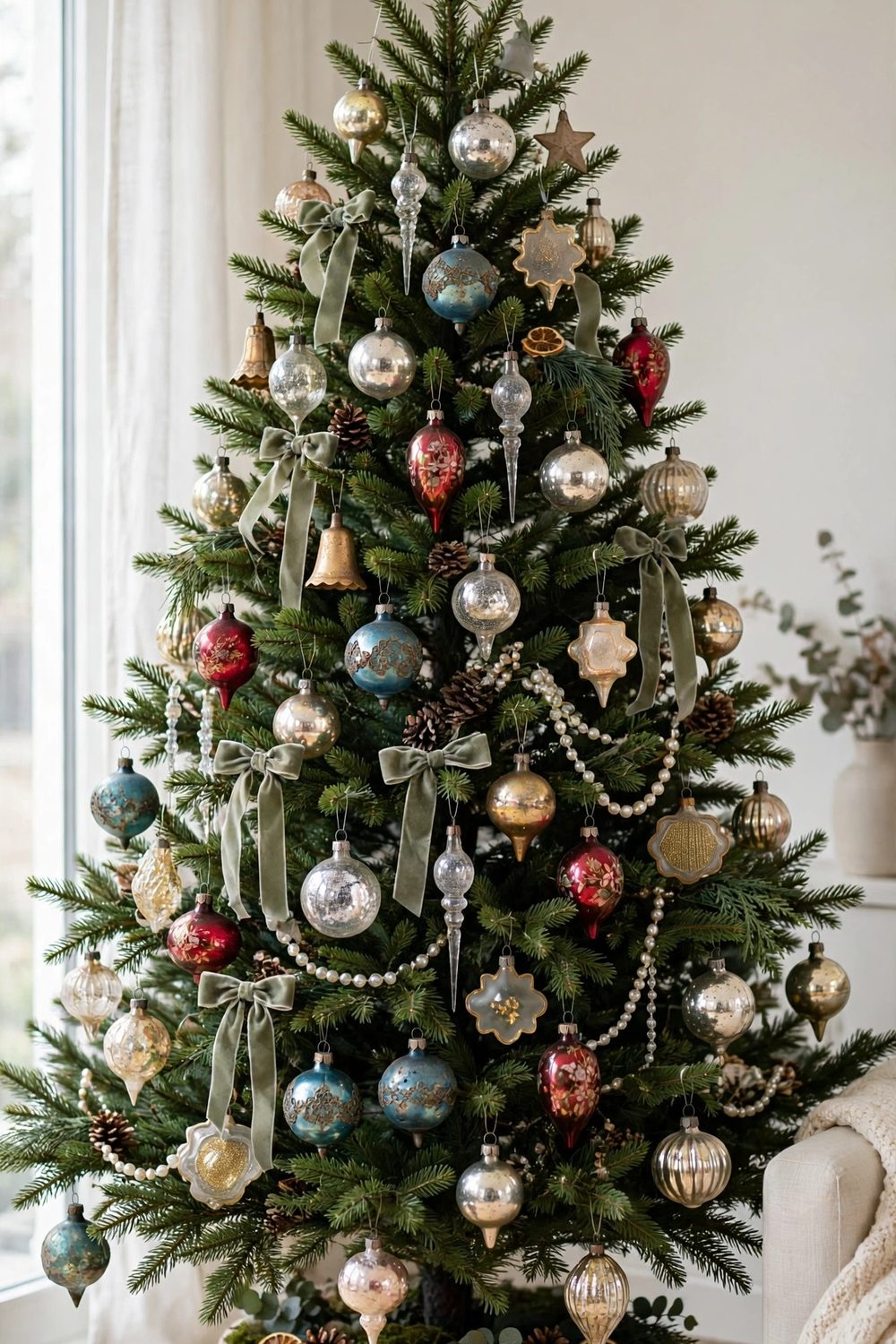
This tree mixes a few genuine older ornaments with new vintage style pieces, and the blend is hard to spot from the sofa. That mix is how most real traditional trees are built.
True vintage glass is thinner, lighter, and often has a darker cap and a slightly uneven coating. Keep family pieces on the safest branches and store them in the divided trays from our best ornament storage boxes guide.
Let the new retro sets do the heavy work of filling the tree. The old pieces then only need to appear at the front, where they are seen and safest.
Note which pieces are genuine in the storage box lid. Future hands will handle the box more kindly when they know what is inside.
13. Hooks and Hanging for Fragile Glass
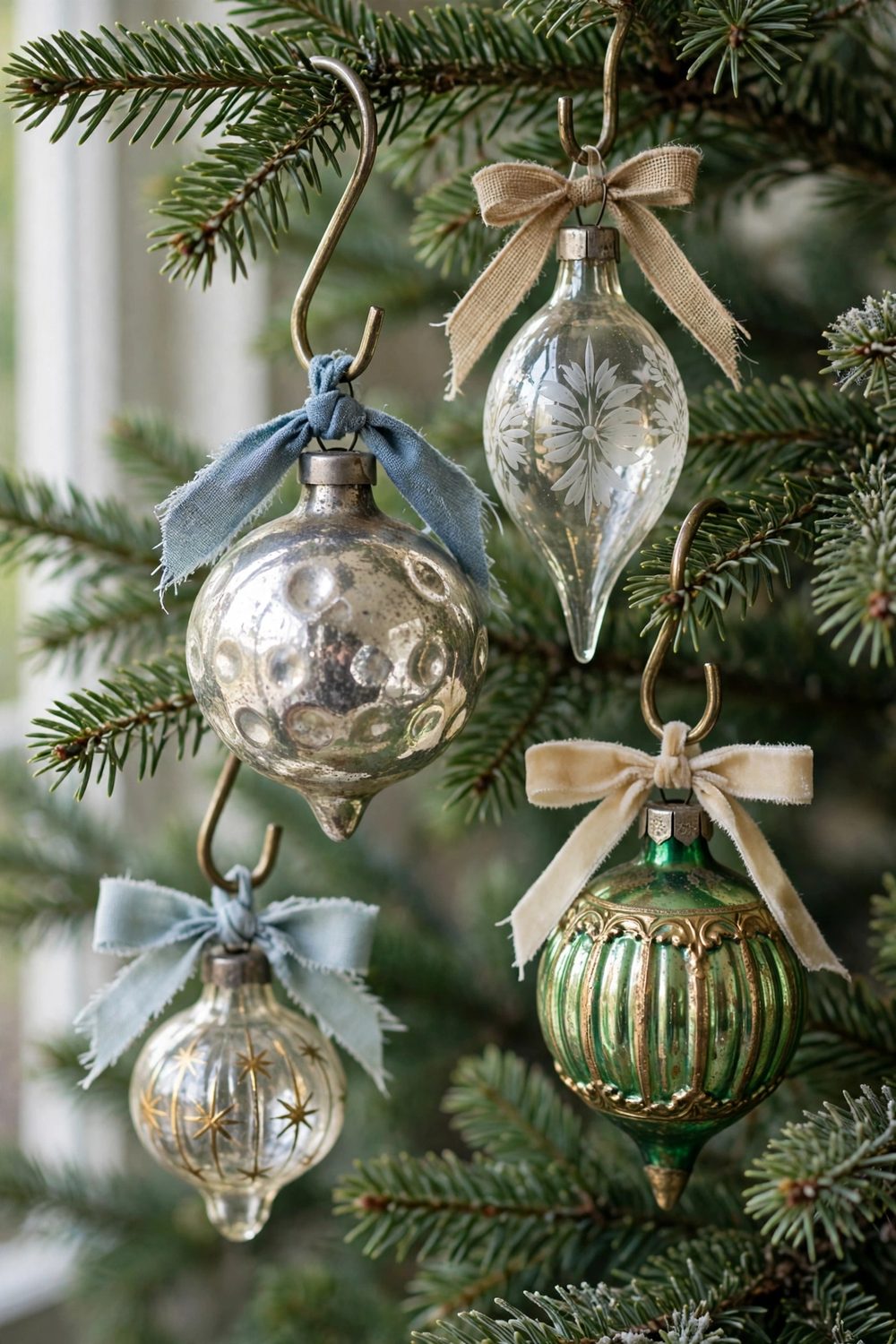
This close view shows fragile glass hung on firm hooks with a few ribbon ties on the heaviest pieces. Vintage style glass rewards careful hardware more than any other ornament type.
Thin glass needs a hook that holds its bend and a cap that sits deep. Our best christmas ornament hooks and hangers guide covers gauges that suit glass weights without springing open.
Give each glass piece a gentle downward tug after hanging. A cap that shifts under a light pull will work loose over weeks of tiny tree movements.
Keep glass off the lowest branches in homes with pets or small children. The top two thirds of the tree give the vintage look with far less risk.
14. Care Cleaning and Repair Basics for Glass
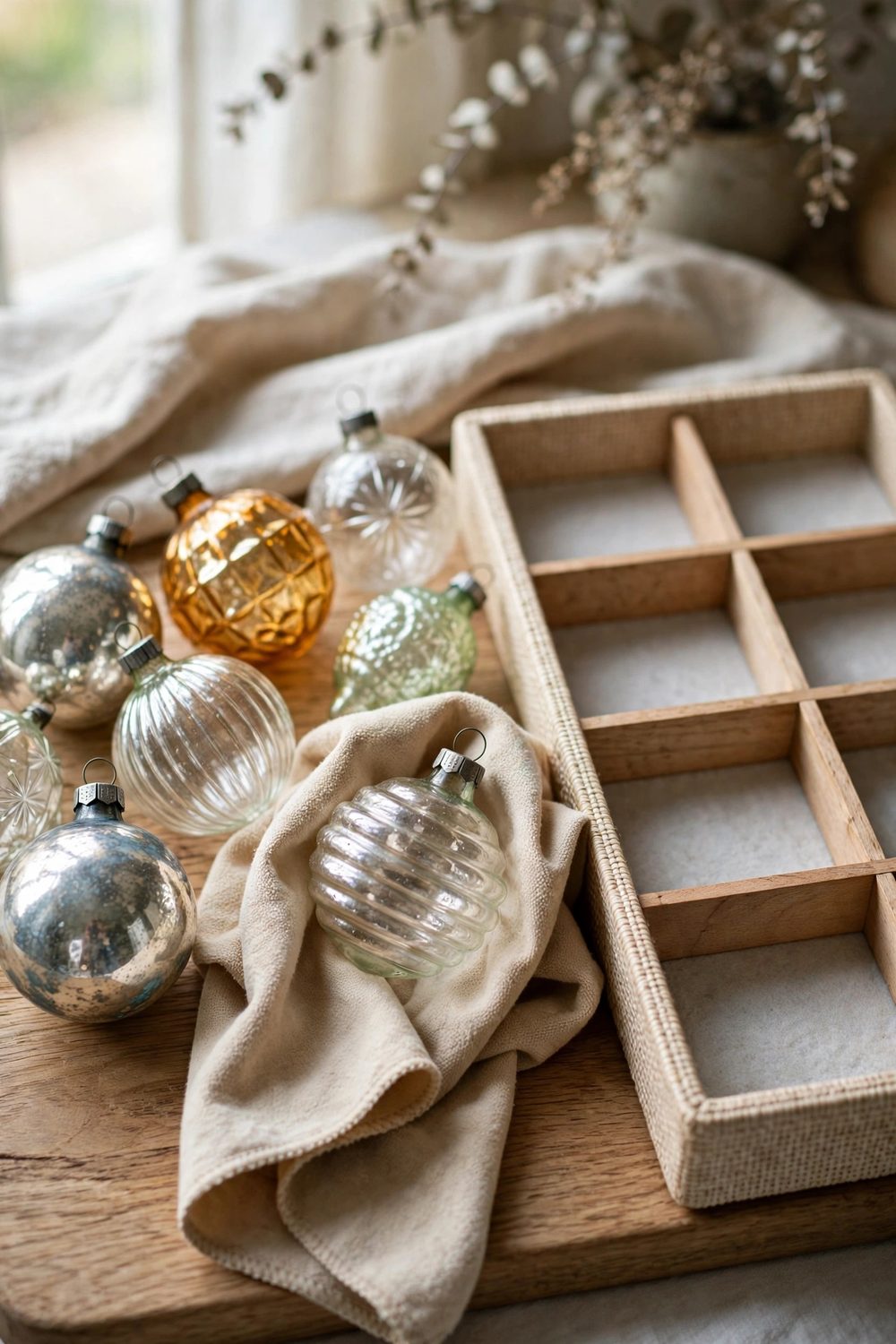
A soft dry cloth is the main cleaning tool for vintage style glass, as this scene shows. Most marks are dust and fingerprints, and both lift without water or sprays.
Never soak painted or mercury glass, since water creeps under coatings and lifts them. A slightly damp cloth suits plain glass only, dried at once with a second cloth.
Small chips at the neck can be covered by the cap and are not a reason to retire a piece. Cracked bodies are different, and those pieces should leave the tree for safety.
Keep a small kit with spare caps, hooks, and tissue in the storage box. Most vintage style losses happen at hanging and packing, not while the tree stands.
15. A Traditional Formula That Honors the Style
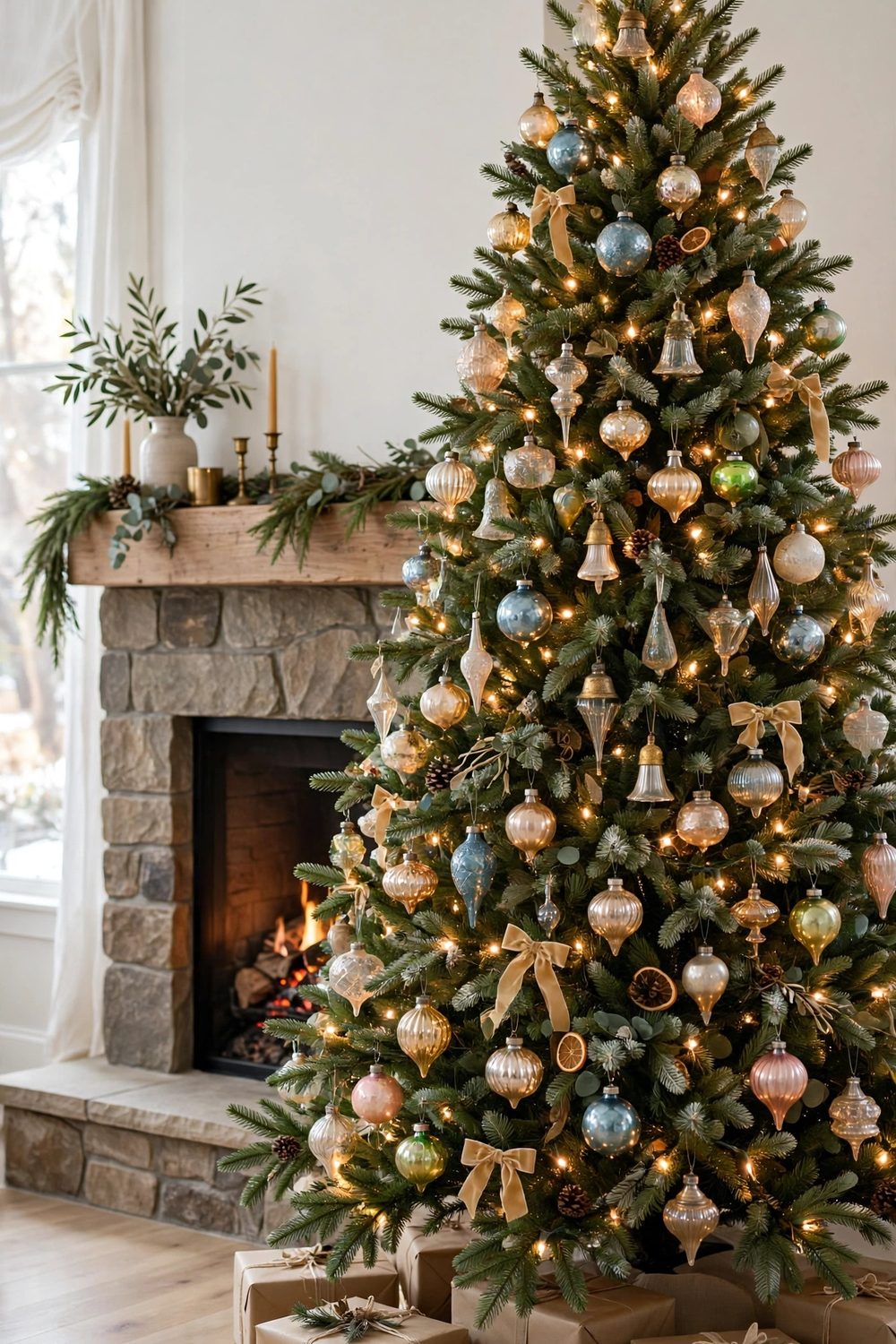
This finished tree follows the traditional order, with jewel baubles as the base, finials and reflectors as the accent, and figural pieces saved for the front.
A steady vintage ratio is about sixty percent plain glass baubles, twenty five percent shaped pieces like finials and reflectors, and fifteen percent figural and painted feature ornaments.
Photograph the tree before packing and store by type, with the fragile figurals in their own tray. Next year the same order rebuilds the same tree with very little guesswork.
Add new pieces one type at a time, in keeping with the palette. A traditional tree grows slowly, and that slow growth is exactly what makes it feel inherited.
Vintage style glass rewards the small extra care it asks for. Space the pieces, hang them on firm hardware, and let thin glass do what it does best under warm light.
Store each type apart, wrap the painted faces, and add to the set slowly, one form or color at a time. Keep a short note in the box lid listing the oldest and most fragile pieces.
In a few seasons the tree will look less bought and more inherited, which is the heart of the style, and the set will still be sound enough to hand on.


