
How to Dress for Your Body Type: 15 Simple Rules That Always Work
You own clothes you like, yet some mornings nothing looks quite right on you. The fix is rarely a new wardrobe. It is a short set of proportion rules you can use with what you already own.
This guide shares how to dress for your body type simple rules that always work, one clear rule at a time. Each rule names the shape it helps most, so you can spot your own notes fast.
Keep a phone note open while you read. Jot down the three rules that match your closet, then try them this week with real outfits, real shoes, and your normal day.
This post contains affiliate links. If you buy through them, we may earn a small commission at no extra cost to you. See our Affiliate Disclosure.
1. Start With Balance, Not With Coverage, for Every Shape

Balance means the eye moves across the whole outfit instead of stopping in one place. If your top half carries more width, give the bottom half a little shape or color.
If your hips carry more width, give the top half a clear neckline or a brighter tone. Try a pear shaped reader example: a navy A line skirt with a cream boat neck top and tan flats.
The light top and darker skirt share the attention. Stand back from a full length mirror and squint. If one half shouts and the other whispers, swap one piece and check again.
2. Let Fit Skim, Never Squeeze or Swamp, for Every Shape

Clothes that skim show your shape without pulling at buttons or seams. Test a top by raising both arms and sitting down in it. If the hem rides up or the front pulls, size up and keep the clean line.
A rectangle shaped reader tried a fitted knit dress in a larger size with a thin belt. The dress followed her line instead of clinging, and the belt marked her waist. Keep one safety pin in your bag for gaping buttons on busy days.
Good fit reads as calm and put together, even in jeans and a plain tee.
Keep a small tape in your drawer and note your best fitting waistband width. That one number speeds up every future shop and stops guesswork at the rack.
3. Mark a Waist Point, Even a Soft One, for Hourglass and Rectangle Shapes

A waist point gives the outfit a middle, and the middle gives the rest shape. Hourglass readers can use a wrap top or a belt over a knit dress.
Rectangle readers can use a front tuck into high rise trousers plus a belt in a warm brown tone. The belt does not need to be tight. It just needs to sit where your natural waist bends when you lean to one side.
Try it with a soft striped tee, straight leg pants, and white sneakers. Check the side view too. A soft mark beats a hard squeeze every time.
4. Give Apple Shapes a Clean Line Through the Middle

Apple readers carry fullness through the middle, with slimmer legs that deserve the spotlight. Choose tops that fall from the bust in a clean line, like a V neck tunic in deep teal worn over straight leg black pants.
Leave the tunic untucked and let it end below the hip bone. Add long earrings or a pendant that ends above the bust line. The long line keeps the eye moving up and down.
At the office, this same idea works in our guide to office outfits for apple shaped women, with blazers left open over a simple shell top.
5. Add Gentle Width at the Shoulder for Pear Shapes

Pear readers balance fuller hips with a touch more presence up top. A boat neck, a soft puff sleeve, or a light scarf near the face all add that width.
Try a white boat neck top with a dark A line midi skirt and nude flats for lunch out. The pale top draws the eye up, and the skirt skims the hip without clinging.
Keep prints and bright color on the top half for a week and notice the change in photos. Your favorite dark bottoms stay in the rotation. They just get a brighter partner.
On cold days, a light padded jacket left open keeps the same balance. The open front shows the bright top, and the jacket adds no extra width at the shoulder.
6. Soften the Shoulder Line for Inverted Triangle Shapes

Inverted triangle readers carry width across the shoulders, with narrower hips below. Soften the top with V necks, scoop necks, and fabrics that drape rather than stand stiff.
Then give the bottom half some shape with an A line skirt or wide leg pants in a lighter tone. A soft gray V neck sweater with cream wide leg trousers and loafers is a calm, balanced mix.
Skip shoulder pads and stiff puff sleeves for this shape. Let the skirt or pant do the talking. A hip length bag carried low also adds a nice note of weight near the hips.
7. Use One Long Color Column When You Want Length, for Every Shape

One color from top to bottom, or two close tones, makes a long line that reads taller. Try a navy knit top with navy trousers and dark shoes for a workday.
Add interest with texture instead of contrast: a ribbed knit, a woven bag, a matte belt. Rectangle and apple readers use this rule a lot on busy days. Break the column only at the face, with earrings or a scarf in a soft print.
If head to toe black feels flat, try deep plum, forest green, or charcoal. Close tones count as one column too.
8. Put Print Where You Want the Eye to Land, for Every Shape

Print pulls focus, so place it on the part you want noticed first. Pear readers can wear a floral blouse with plain dark trousers. Inverted triangle readers can wear a printed skirt with a plain soft top.
Keep the print scale in step with your frame: medium prints suit most readers, tiny prints can get lost, and very large prints can swamp a small frame. Try one printed piece per outfit for a week. Take a quick phone photo each day.
By Friday you will see a clear pattern in what feels right and what feels like too much.
If two prints compete in one outfit, keep the larger print on the area you chose and make the second print tiny and quiet, like a dotted scarf.
9. Choose Necklines by the Line They Draw, for Every Shape
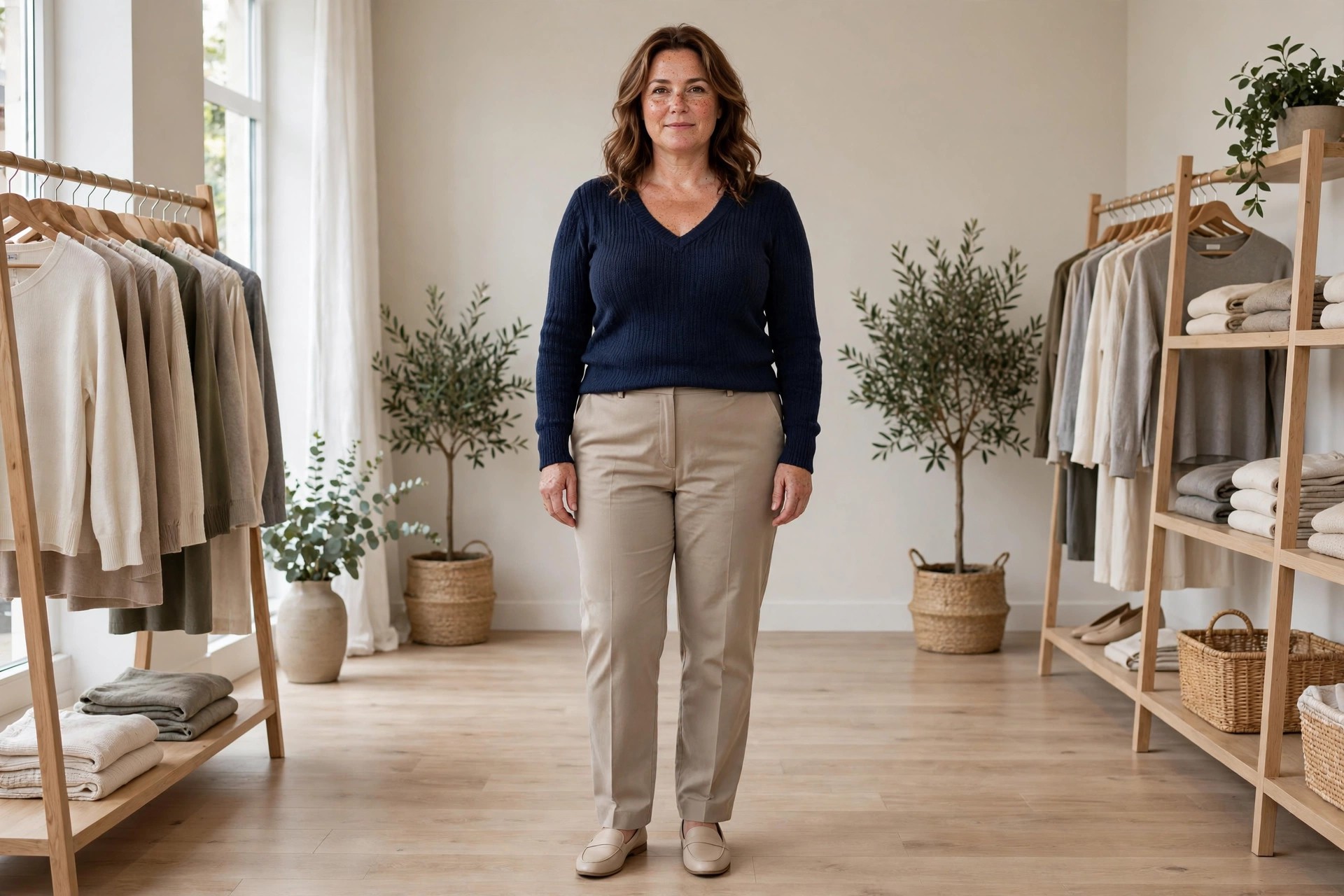
A neckline is a line drawing on your top half. V necks and scoop necks draw the eye down and suit fuller busts and broader shoulders. Boat necks draw the eye across and suit narrower shoulders.
Square necks frame the face and work well for hourglass and pear readers. Test necklines in the same color top if you can, so only the line changes.
A reader with a fuller bust swapped a high crew neck for a soft V in the same navy knit. The second top looked lighter at once, with no other change to the outfit.
10. Build Outfits in Thirds, Not Halves, for Every Shape

An outfit split in half at the waist can look cut off. Aim for one third on top and two thirds below, or the reverse. A front tuck into high rise jeans gives you the one third top.
A longer tunic over slim pants gives you the two thirds top. Use your phone camera grid to check the split. This rule helps at any height, and it is kind at the midsection because the eye reads length, not a hard line.
Try it with a cream sweater, dark straight jeans, and ankle boots on a cool day.
11. Keep One Structured Piece in Every Outfit, for Every Shape

Soft clothes feel good, but one structured piece keeps the outfit crisp. That piece can be a blazer, a denim jacket, a woven belt, or a firm shoe like a loafer.
Hourglass readers wear this well at work, as shown in our guide to office outfits for hourglass women with a shaped blazer over a wrap top. On weekends, swap the blazer for a structured tote or a clean sneaker.
If everything in the outfit is soft and loose, add the firm shoe first. It is the smallest change with the clearest payoff in the mirror.
A denim jacket counts as your structured piece in spring. Roll the sleeves once, leave it open, and let the tee and trousers below stay soft and simple.
12. Match Fabric Weight to the Job It Does, for Every Shape

Fabric that stands away from the body adds width. Fabric that drapes follows the body and reads lighter. Use drape on the fuller half and a bit more body on the quieter half.
An apple reader might pick a fluid blouse with straight cotton trousers. A rectangle reader might pick a crisp shirt with soft wide leg pants to build a waist story. Rub fabric between your fingers in the shop.
If it crackles and holds a fold, it will hold shape on you too. If it falls in a soft heap, it will skim.
13. Let Shoes Finish the Line, for Every Shape

Shoes set the last note of the outfit line. A shoe in a tone close to your pants lengthens the leg line. A pointed toe adds length at any heel height. Nude flats near your skin tone keep a skirt outfit light.
Ankle straps cut the leg line, so use them when the hem is shorter or the pants are cropped. Keep one pair of clean white sneakers, one loafer, and one low heel in rotation. Most outfits in this guide work with those three.
Wipe shoes down on Sunday night. Clean shoes lift the whole outfit on Monday.
14. Use Layers to Draw a New Outline, for Every Shape
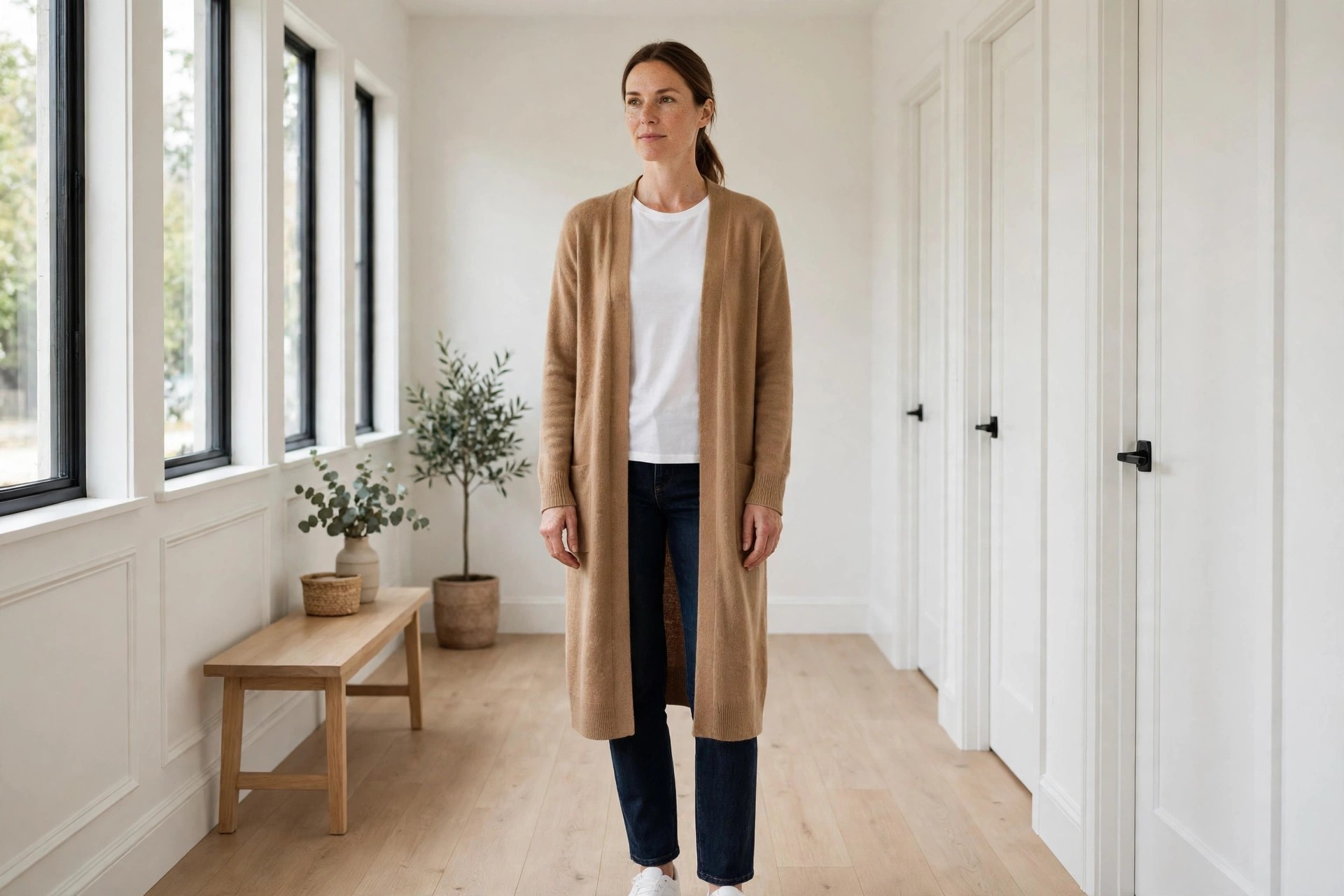
An open layer draws two long lines down the front of the body. A long cardigan, an open blazer, or an unbuttoned shirt over a tee all do this work. The lines frame the middle and give apple and rectangle readers a clearer outline.
Keep the layer at hip length or longer for the strongest line. Button only the middle button of a blazer if you want a soft waist mark.
At your desk, this is the same trick used in smart office looks: the open jacket gives shape while the outfit below stays simple and easy to wear all day.
In winter, a long wool coat worn open gives the same two line effect over knits. Belt the dress or top under it if you want the waist mark to show.
15. End With the Two Minute Mirror Check, for Every Shape

Before you leave, stand two steps back from a mirror in good light. Check the front, then turn for the side view. Ask three things: does one half shout, does the waist have a soft mark, and do the shoes finish the line.
Fix one thing only, the loudest one. Then go. Dressing well is a habit of small checks, not a talent.
Our companion guide on how to find your body shape and the fixes in how to choose jeans for your body type will sharpen these rules even more.
Pick three rules from this list and wear them on repeat for a week. Note which outfits felt easy at the school gate, at work, and at dinner.
If you still need your shape name first, work through the measurement checks next, then come back here. Save this guide to your body type outfits board for later, and share it with a friend who keeps buying the same top in five colors.


