

How to Layer for Winter Without Looking Bulky: 15 Rules
You step outside warm enough, catch your reflection in a shop window, and barely know your own shape.
That puffy look rarely comes from cold weather itself. It comes from thick pieces stacked in the wrong order, all fighting for the same space.
This guide teaches the method behind how to layer for winter without looking bulky, one rule at a time, in the order you actually get dressed.
The same method flexes with the seasons, much like the layer choices in dressing for unpredictable spring weather with smart layers.
Work through the rules once with clothes you own. By the third cold morning, the order will feel automatic and your coat will close with room to spare.
None of these rules asks you to shop first. They ask you to reorder what hangs in your closet already, and to give each layer one clear job.
Read the rules in order the first time. After that, the three or four that fix your own weak spot are the ones to keep by the mirror.
This post contains affiliate links. If you buy through them, we may earn a small commission at no extra cost to you. See our Affiliate Disclosure.
1. Start With a Thin, Fitted Base Layer

Warmth starts at the skin, not at the coat. A thin thermal top or a fine long sleeve tee holds heat close to your body without adding width.
Choose a fit that follows your arms and ribs without pulling. If the base bunches at your elbow when you bend your arm, it is too loose for this job.
Cotton tees feel fine at home but hold cold air once you step out. A thermal knit or a wool blend base stays warm and flat under everything else.
Keep two base tops in rotation through winter. One in a dark neutral and one in cream will sit quietly under every knit and shirt you own.
Lay it flat on the bed the night before on deep winter weeks, so the first layer is a decision already made.
2. Tuck the Base Layer In and Smooth It Flat

A loose base layer rides up, folds at the waist, and prints a lumpy line through your sweater. Tucking it into your pants or skirt ends all three problems.
Smooth the fabric down with flat hands after you tuck. Ten seconds here saves the pulling and fixing you would do at every mirror all day.
If a full tuck feels stiff, tuck the base only at the front and sides. The back can sit flat against your waistband without a hard fold.
This small step also keeps cold air off your lower back when you sit, reach, or bend into a car seat on a frosty morning.
A base with a little stretch keeps its shape wash after wash, which is why it stays the quiet hero of the stack.
3. Add One Fine Knit, Never Two Chunky Ones

Here is the rule that saves most winter outfits. One fine knit holds real warmth. Two chunky knits stacked together hold mostly air, width, and regret.
Pick your single knit by the day ahead. A slim crew neck works under coats with low collars. A fine turtleneck carries a plain coat on very cold days.
Chunky knits still have a place in your closet. Wear one as the only warm layer, open over a base, with no coat fighting it for room.
A small, well chosen set of layers beats a stuffed closet, the same logic behind building a fall capsule wardrobe for women step by step.
On laundry day, a clean spare base keeps the whole system running instead of breaking it for one morning.
4. Let Only One Layer Be Relaxed

Count the easy, loose pieces in your outfit. If the answer is more than one, the mirror will show width that your body does not actually have.
Keep the base fitted and the knit close. Save the relaxed fit for the coat alone, where a little room reads as polish instead of padding.
The same check works in reverse. If your coat is slim and straight, a slightly softer knit can sit under it without trouble.
When in doubt, stand sideways before you leave. One soft line is fine. Two soft lines stacked on the torso are what create the bundled look.
Take a quick photo of a stack that works. On the coldest, darkest mornings, your phone remembers the order for you.
5. Show Your Waist With a Belt or a Front Tuck

Layers hide your waist by default, so you have to mark it on purpose. A belt over a coat or long cardigan does the marking in one move.
No belt handy? Tuck the front of your knit into your waistband and let the back hang free. The front view gains a waist, the back stays easy.
Place the belt at your natural waist, not at your hips. Sitting it too low cuts your legs short and lets the layers above it balloon.
Try this once with a coat you thought was too plain. The belt gives it a shape, and suddenly the coat earns its place in the rotation.
Belt the coat only, not the knit under it. One belt, one line, and the layers below stay smooth.
6. Give Every Neckline Its Own Shape

Necklines crowd fast in winter. A turtleneck under a crew knit under a high coat collar stacks three rings around your face and shortens your neck.
Give each layer a different job at the neck. A scoop base, a V neck knit, and an open coat collar each sit at their own height.
A shirt collar can be the one detail that shows. Let it sit flat above a crew knit and skip the scarf that day, or wear the scarf and hide the collar.
Coverage can stay modest and still follow this rule, as these winter modest outfits with full coverage show with calm, layered necklines.
If you wear a scarf most days, choose the lower neckline and let the scarf be the warm ring at your neck.
7. Stagger Your Hems So Nothing Ends Together

When your base, knit, and coat all stop at the same hip point, the eye sees one thick band and reads the whole outfit as wide.
Stagger the endings instead. Let the base stop at the waist, the knit at the hip, and the coat at the knee or mid thigh.
Even two inches of difference between hems helps. The layers read as steps, and steps read as length, which is what keeps the look lean.
Check the back view too. A knit that peeks below a short jacket looks fine on purpose when the peek is even all the way around.
A long coat makes staggering easiest, since its hem can lead while the shorter layers settle above it.
8. Choose a Coat With Room in the Shoulders

A coat can be warm and still ruin the stack if its shoulders are cut tight. Your knit sleeves get squeezed, and every move feels like a small wrestle.
Test coats over your thickest planned knit, not over a tee. Raise both arms, cross them, and sit down before you judge the fit.
Clean shoulders matter more than a nipped waist. A straight coat with easy shoulders and a belt you add yourself beats a shaped coat that strains.
If a loved coat runs tight, wear it on milder days with the base and one fine knit only. Save the full stack for your roomier coat.
Try the arm raise in the shop, not at home with the tags off. Shops forgive returns, mornings do not.
9. Warm Your Legs Under Your Pants, Not Over Them

Cold legs tempt people into thick pants, thick socks, and boots piled on top. The slimmer answer hides underneath, where nobody sees the warmth at all.
Thin thermal leggings or warm tights slip under straight trousers and jeans. Your leg line stays clean while the hidden layer does the heating.
This is the same trick used in these winter jeans outfits that stay warm without the bulk, and it works just as well under work trousers.
Choose trousers with a little ease through the thigh on the coldest days. Skin tight jeans over leggings print every seam and feel stiff by noon.
Fleece lined tights are the dress version of this rule, warming bare legs under a knit dress without a thick layer showing.
10. Use a Scarf as a Removable Top Layer

A scarf is the hardest working layer in winter because it warms the gap every coat leaves open, your neck and chest, and it comes off in seconds.
Wear it flat under the coat for the commute, then loop it loose over the coat indoors when the room runs cool. One piece, two jobs, no extra bulk.
Keep the scarf fabric fine enough to fold into your bag. A huge blanket scarf looks cozy but spends the day as one more thing to carry.
Match the scarf to your coat family, not your knit. Camel with navy, gray with black, and cream with almost anything will repeat all season.
Keep the scarf in your coat pocket between wears. It stays with the outfit it belongs to and never gets left behind.
11. Keep Sleeves Slim Where They Stack
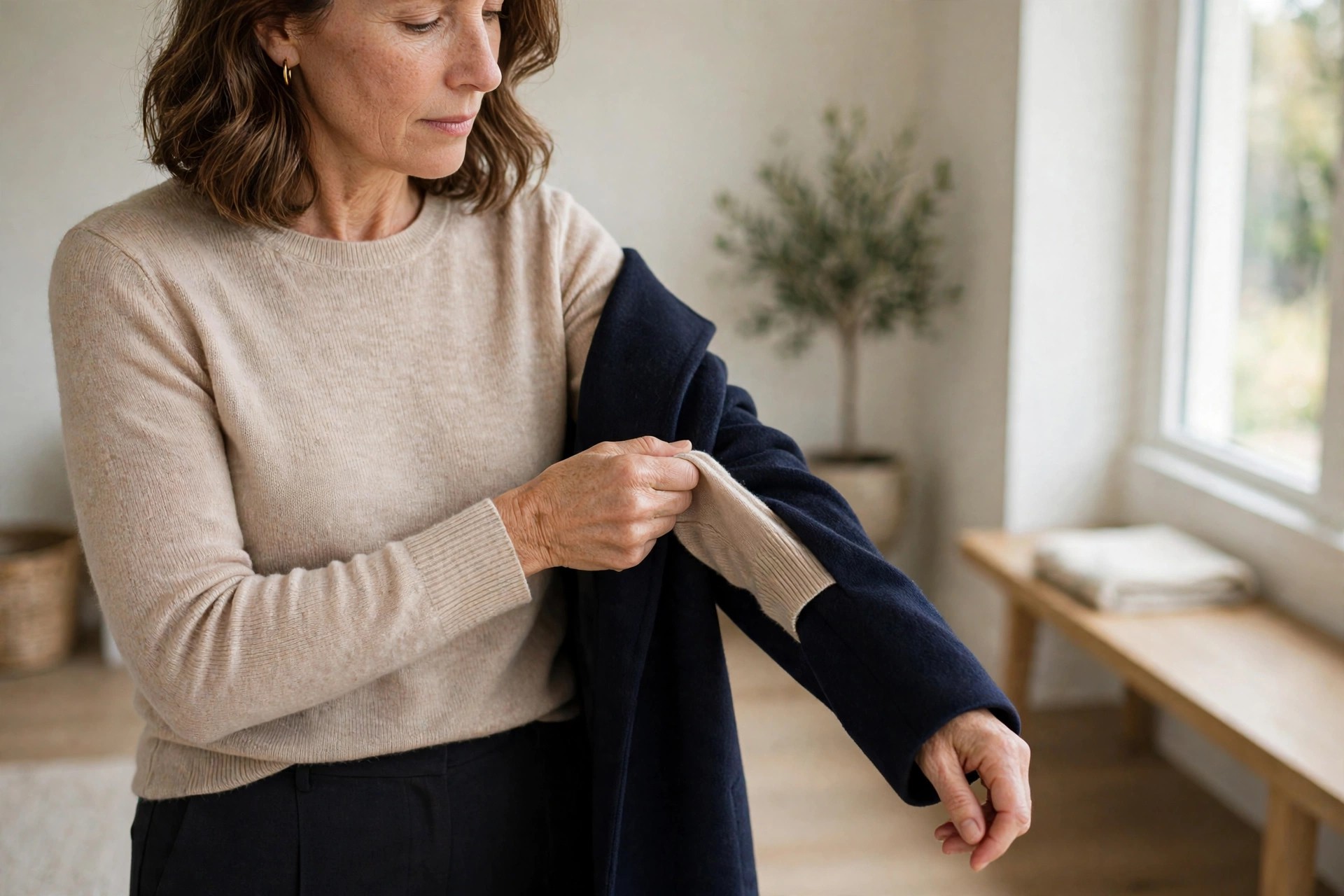
Sleeve bulk hides in plain sight. A wide knit sleeve stuffed into a coat sleeve twists, rides up, and makes your arms look twice their size.
Choose knits with a close sleeve for coat days. Save wide sleeve sweaters for days at home or for wearing alone under a roomy vest.
Before the coat goes on, pull each base sleeve down to your wrist and hold the cuff as the knit slides over it. The layers stay in order.
A bracelet length coat sleeve over a slim knit cuff is a tidy finish. It shows a small, neat edge of layer instead of a stuffed cuff.
Three quarter sleeves on the knit also help here, ending before the coat cuff crowds them.
12. Stay in One Color Family From Neck to Toe
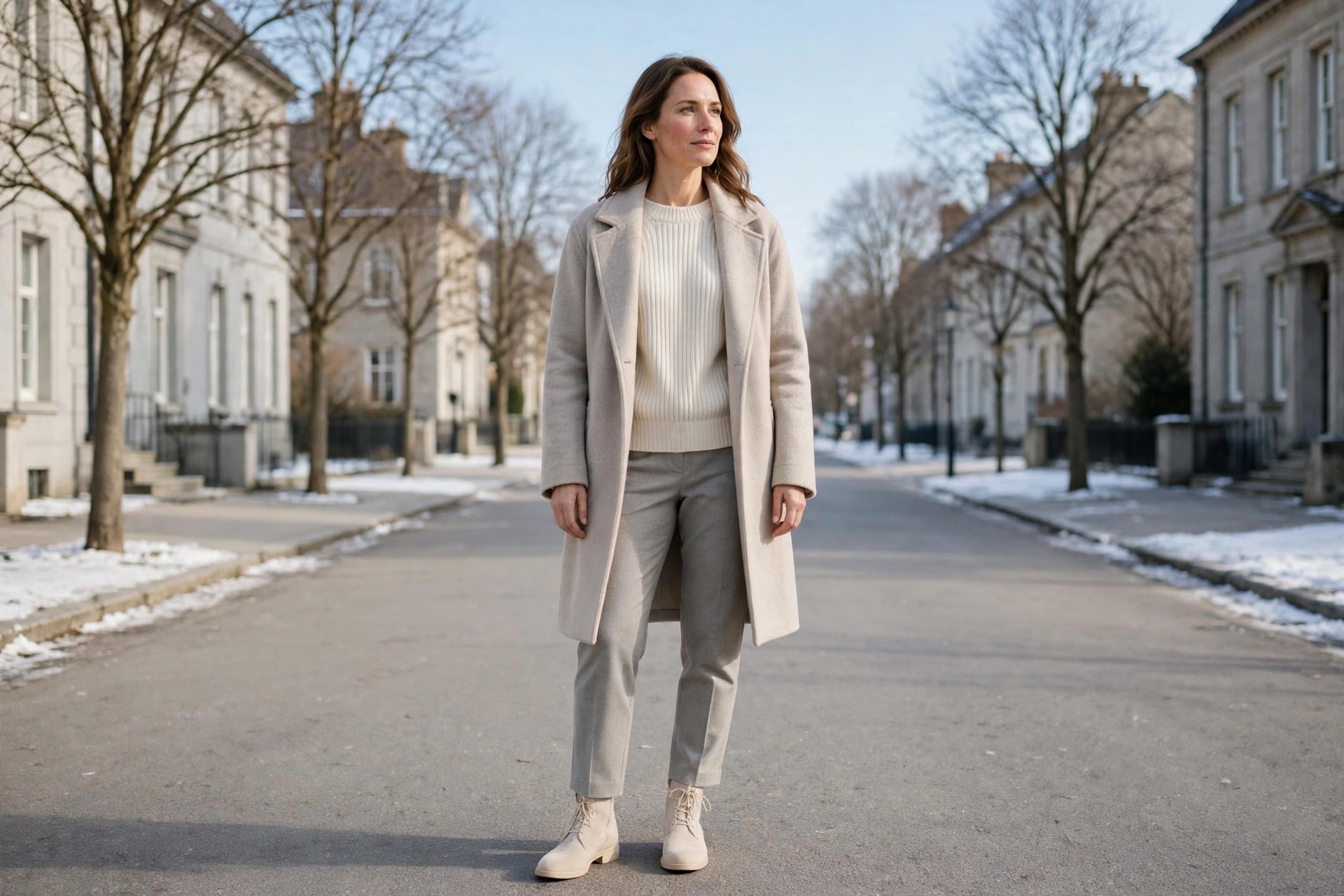
Strong color breaks chop an outfit into blocks, and each block looks wider on its own. One color family lets the eye travel down in a single line.
Tonal does not mean one flat color. Navy knit, dark denim, and a midnight coat are three shades that still read as one calm column.
Use texture to keep a tonal outfit interesting. A ribbed knit, smooth coat, and matte boot give the eye plenty to enjoy without a color fight.
This trick carries straight into milder days too, like the layered looks in these fall casual outfits for women built on cozy knits and boots.
Cream, stone, and soft gray count as one family too, and they brighten a gray January week without breaking the line.
13. Add Warmth at the Edges First

Before you add a fourth torso layer, check your edges. Cold hands, ears, and ankles make your whole body feel underdressed, even in a good coat.
A knit hat, real gloves, and warm socks close the gaps where heat escapes. They add almost no width and they come off the moment you step inside.
Boots that cover the ankle finish the job. A bare strip of skin between cropped pants and shoes can chill you faster than a thin knit ever will.
Keep a spare pair of gloves in your coat pocket. The pair you forget on the coldest morning of the year is always the pair left at home.
Warm socks in a bright color are a small joy on a dark morning, and nobody sees them inside your boots anyway.
14. Do the Sit, Reach, and Drive Check

A layered outfit can pass the mirror test and fail real life. Run three moves before you leave: sit down, reach up, and mime turning a steering wheel.
Sitting shows if waistbands stack into a hard roll. Reaching shows if sleeves bind. The wheel turn shows if the coat pulls across your back.
Fix the failing layer, not the whole outfit. A thinner knit, a longer base, or a coat worn open often solves the one tight spot.
This check takes one minute at the door. It saves the all day fidgeting that makes even a warm outfit feel wrong by lunch.
Do the check in the shoes you will actually wear. Boots change your balance and how the coat hangs as you move.
15. Peel One Layer Indoors and Stay Finished
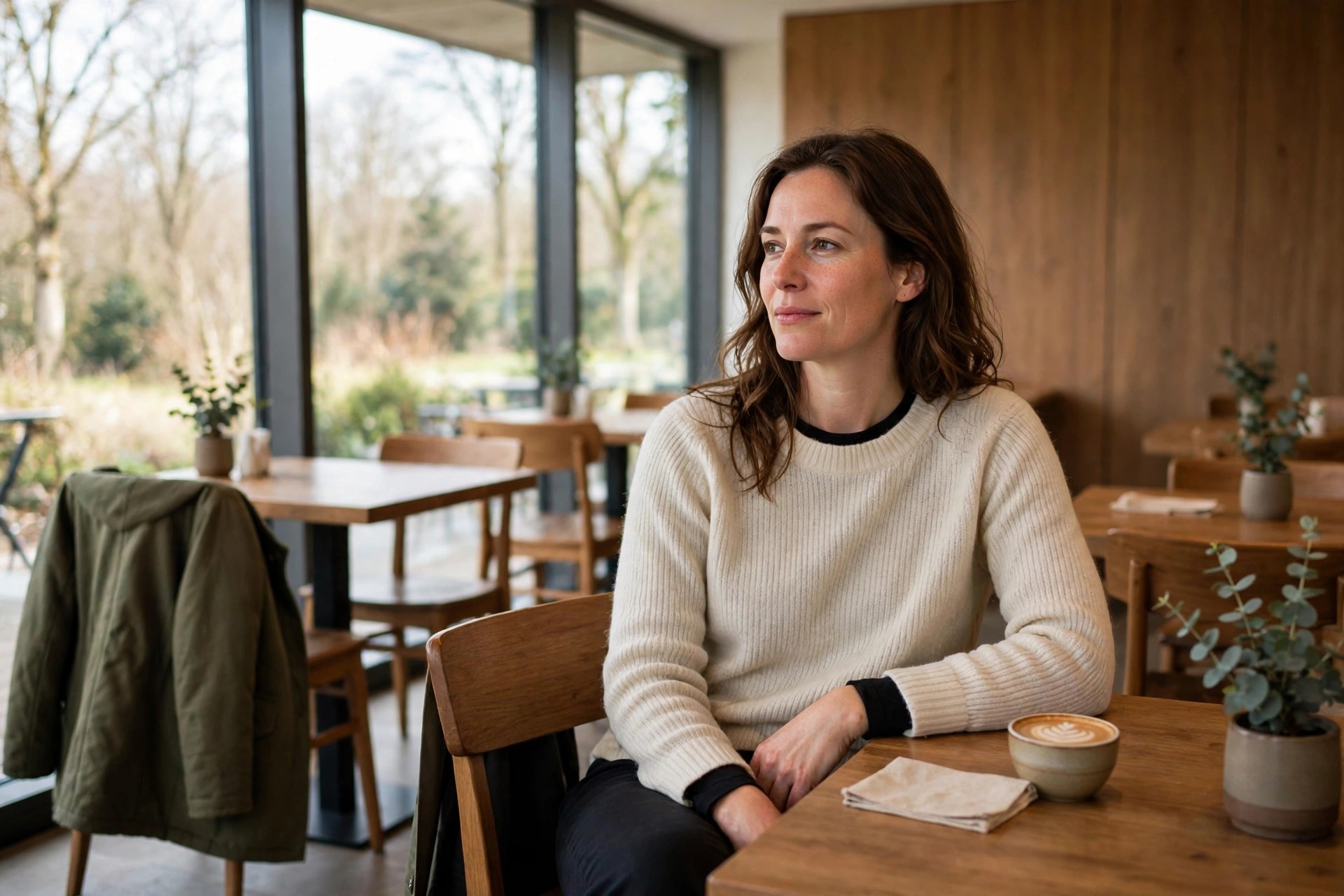
The last rule covers the hours inside. Heated rooms undo winter dressing when the coat comes off and the outfit under it looks like sleepwear.
Plan the peel from the start. Your base plus knit should look like a complete outfit at the office, the cafe, or a friend’s kitchen table.
Hang the coat, keep the knit, and you still have a waist, a neckline, and a hem that were chosen on purpose this morning.
End the day by laying tomorrow’s base and knit over a chair. The method sticks when the next cold morning starts with the stack already built.
A tidy base and knit also mean one less decision at a coat check or a friend’s front door.
Thin at the skin, one fine knit, one relaxed coat, and warmth at the edges. That order is the whole method, and it works with the clothes already in your closet.
Pick the two rules that fix your own mornings first, and let the rest join them over the next cold week. Small changes in order beat a whole new coat.
Once you know how to layer for winter without looking bulky, cold mornings stop being a choice between warm and neat. Save this list to your winter outfits board for the next frosty week.


