

15 Outfit Ideas from a Closet Cleanout Wardrobe that Finally Works
A closet cleanout only works when the pieces left behind can make real outfits. The goal is not an empty rail, it is a rail where every piece has a job to do.
The trick is to sort first and style second, since you cannot build outfits from a pile you have never really seen. Pull it all out, look at it all plainly, and then decide.
For the wider room first, see 15 Everyday Outfit Formulas for Women in Their 40s Who Live in Jeans Every Day.
Start with the keepers, then hang them by type and color, since a tidy rail shows you the outfits hiding in plain sight. Matching hangers and a clear shelf help a great deal.
Keep a small rail for the week ahead, with five outfits ready to grab, so busy mornings never undo the cleanout. A little planning keeps the closet working for you.
The fifteen ideas below turn a closet cleanout into a wardrobe that finally works, with sorting, storage, and ready outfits for every single morning.
1. Pull Everything Out Before You Decide Anything
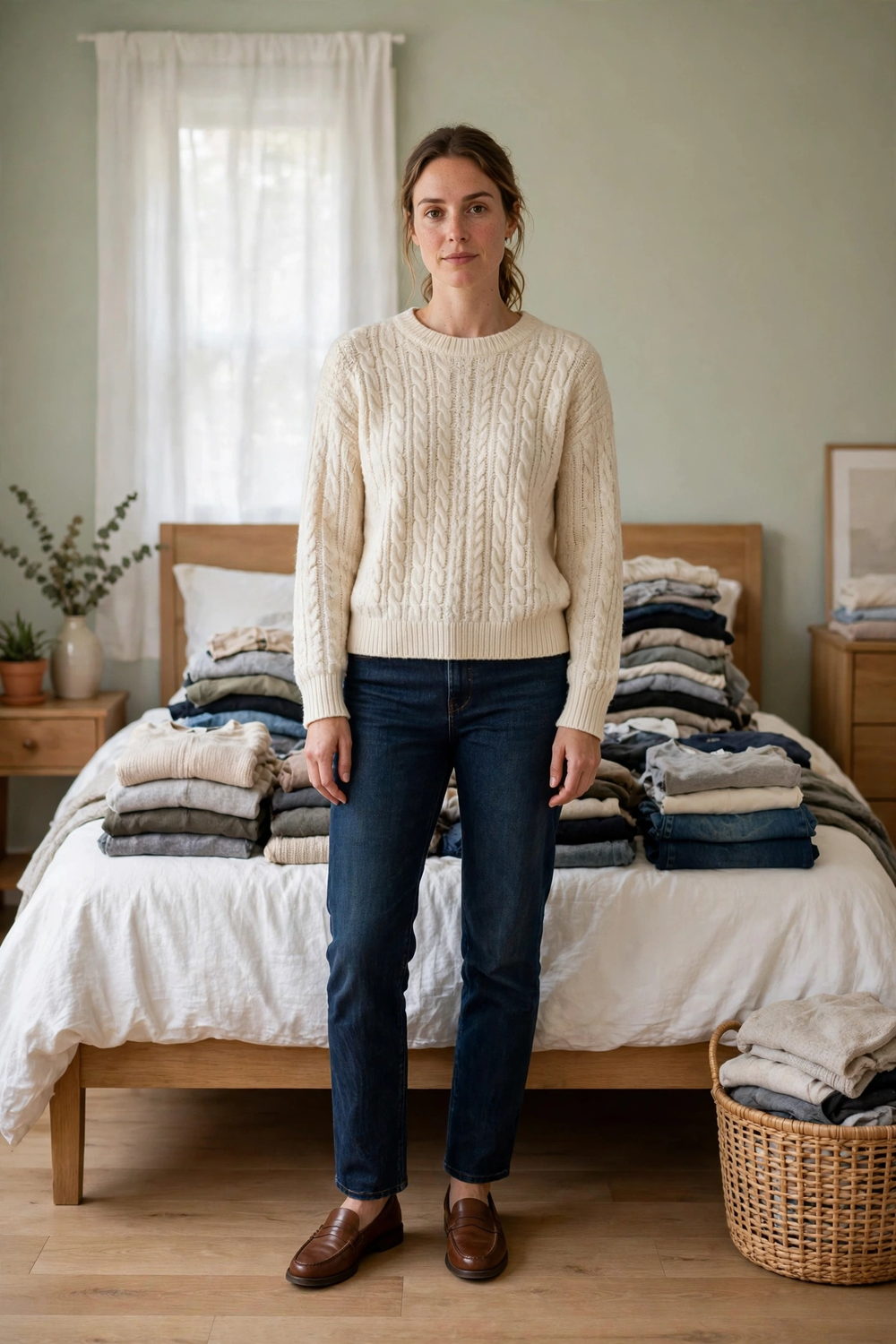
A woman stands in a tidy bedroom with a full bed of clothes behind her, wearing a cream sweater with dark jeans and loafers, the full outfit visible from head to shoes.
Start with pieces that already fit well, since fit does more for a look than any new purchase can do on its own.
Keep the colors close together so the outfit reads as one clear idea instead of several competing parts.
Check the full look in a mirror before you leave, from shoes to hair, and fix the one thing that pulls your eye first.
A small bag keeps the line clean, while a large tote can weigh down a light outfit and hide the waist.
Choose shoes you can walk in for hours, because comfort shows in how you stand and move through the day.
2. Sort Into Keep, Mend, Donate, and Let Go
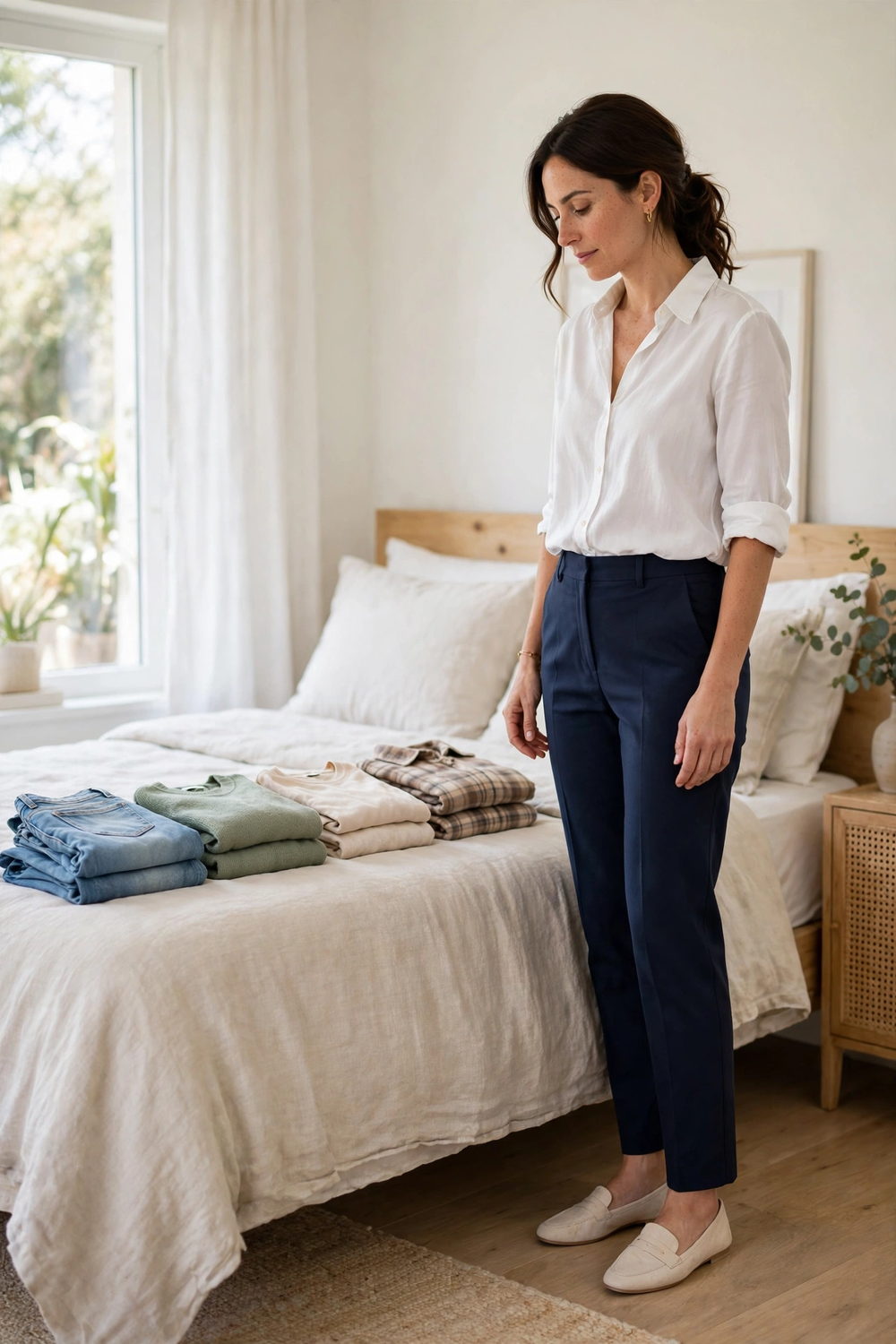
A woman stands in a bright bedroom with four neat piles of clothes on the bed, wearing a white shirt with navy trousers and flats, the outfit clear from head to shoes.
Choose shoes you can walk in for hours, because comfort shows in how you stand and move through the day.
One quiet piece of jewelry is enough here, so let the outfit itself carry the interest of the look.
Try the outfit on with the coat or jacket you plan to wear, since the outer layer changes the shape a lot.
Keep the hem length in mind with the shoe height, so the trouser or skirt falls where it was meant to fall.
Soft natural light shows the true colors of fabric, so check the look near a window before you head out.
3. Try On the Maybes in Daylight
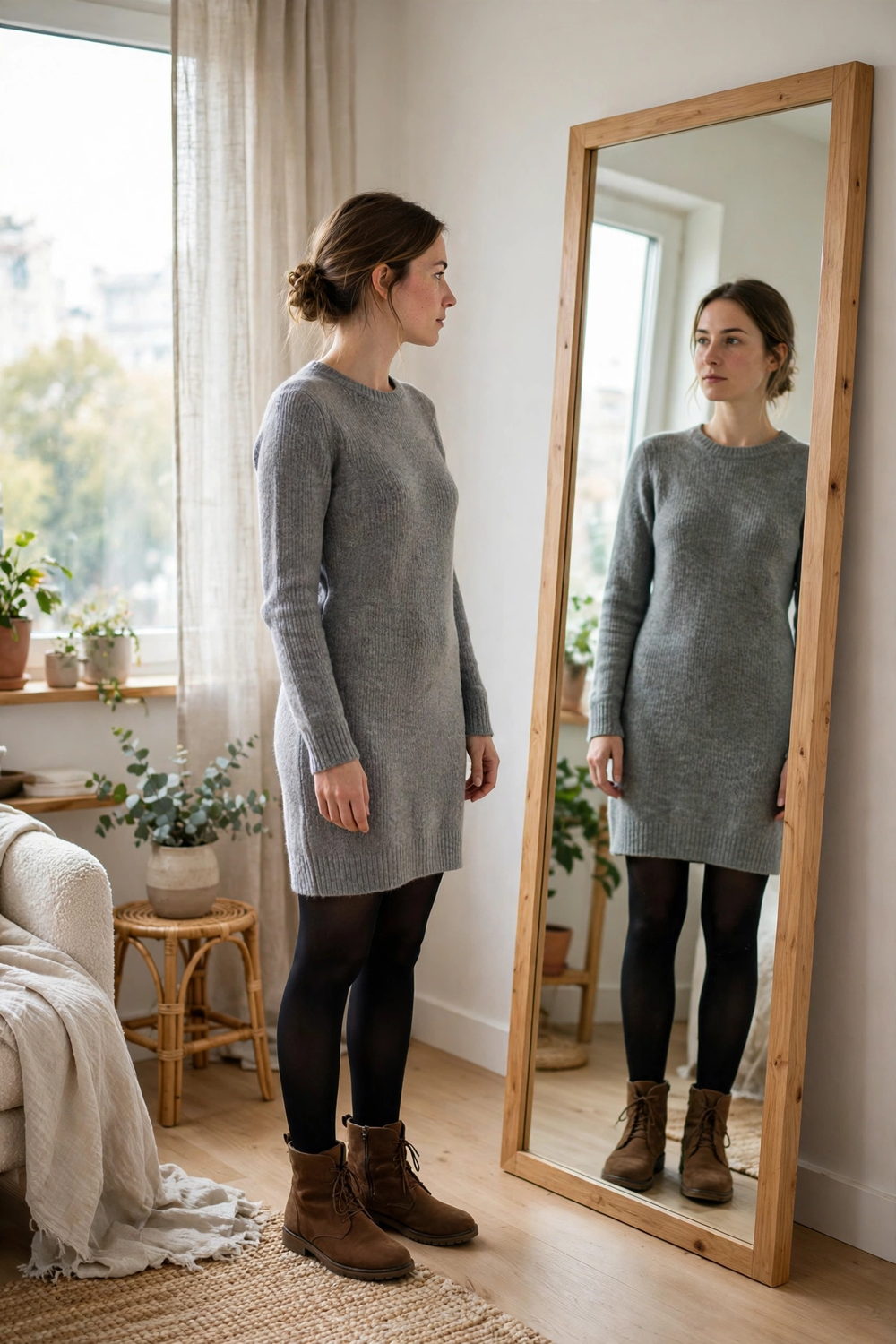
A woman stands before a full length mirror in a grey sweater dress with tights and ankle boots, the complete outfit shown from head to shoes in daylight.
Soft natural light shows the true colors of fabric, so check the look near a window before you head out.
If a piece feels tight or pulls when you sit, swap it for a size that lets you move without thinking about it.
A belt can mark the waist without adding bulk, and a thin belt often works better than a wide one here.
Repeat the same base pieces in new combinations through the week, and each small change will feel fresh again.
Start with pieces that already fit well, since fit does more for a look than any new purchase can do on its own.
4. Hang What You Keep on Matching Hangers
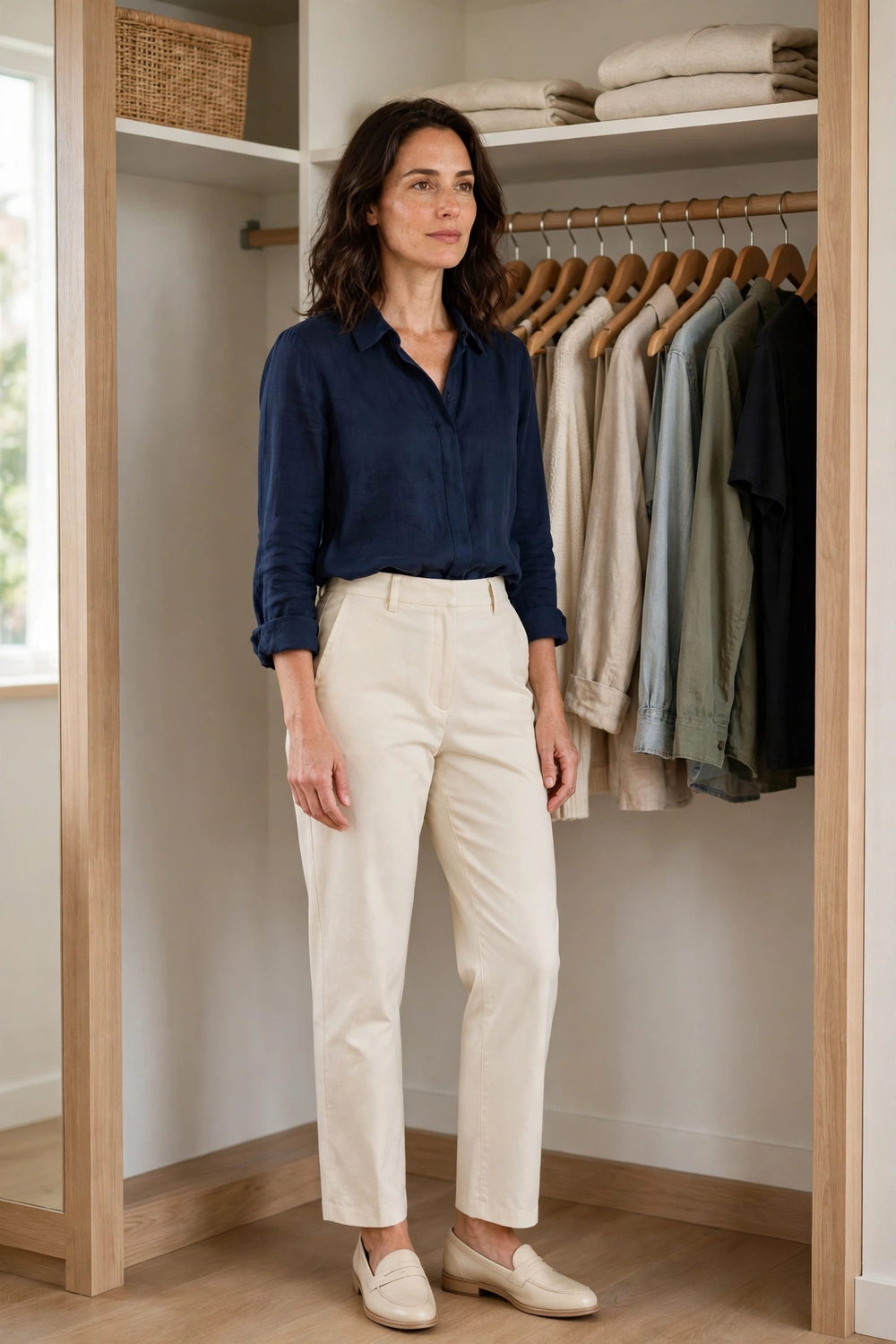
A woman stands before a tidy closet rail in a navy blouse with cream trousers and loafers, with matching hangers holding a neat row of clothes behind her.
Start with pieces that already fit well, since fit does more for a look than any new purchase can do on its own.
Keep the colors close together so the outfit reads as one clear idea instead of several competing parts.
Check the full look in a mirror before you leave, from shoes to hair, and fix the one thing that pulls your eye first.
A small bag keeps the line clean, while a large tote can weigh down a light outfit and hide the waist. For more ideas in this area, see 15 Travel Capsule Outfits for a Two Week Trip for Plus Size Women.
Choose shoes you can walk in for hours, because comfort shows in how you stand and move through the day.
5. Fold Knits So They Keep Their Shape
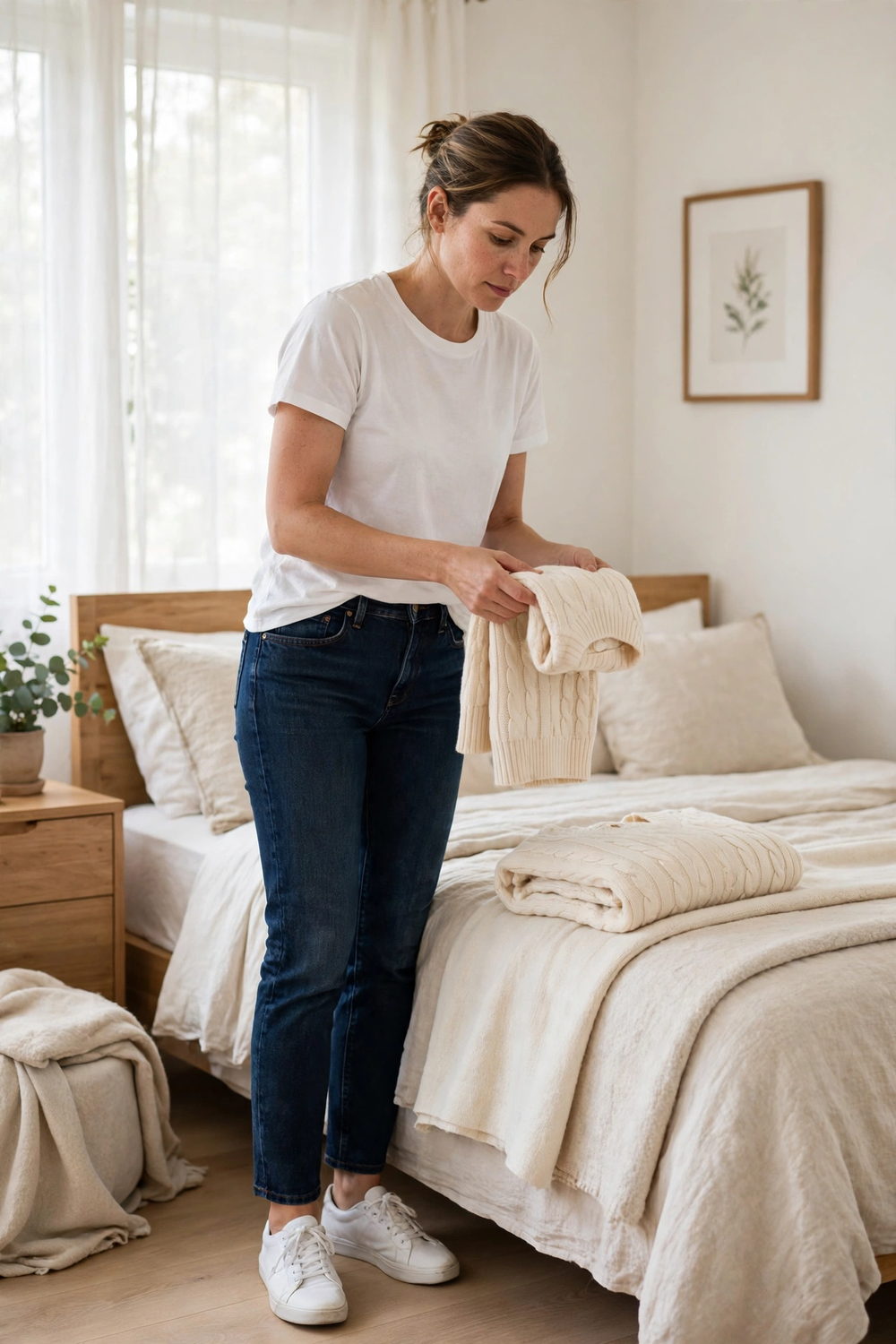
A woman stands in a bright bedroom folding a cream knit sweater on a bed, wearing a white tee with dark jeans and sneakers, the outfit visible from head to shoes.
Choose shoes you can walk in for hours, because comfort shows in how you stand and move through the day.
One quiet piece of jewelry is enough here, so let the outfit itself carry the interest of the look.
Try the outfit on with the coat or jacket you plan to wear, since the outer layer changes the shape a lot.
Keep the hem length in mind with the shoe height, so the trouser or skirt falls where it was meant to fall.
Soft natural light shows the true colors of fabric, so check the look near a window before you head out.
6. Store Out of Season Pieces Up High
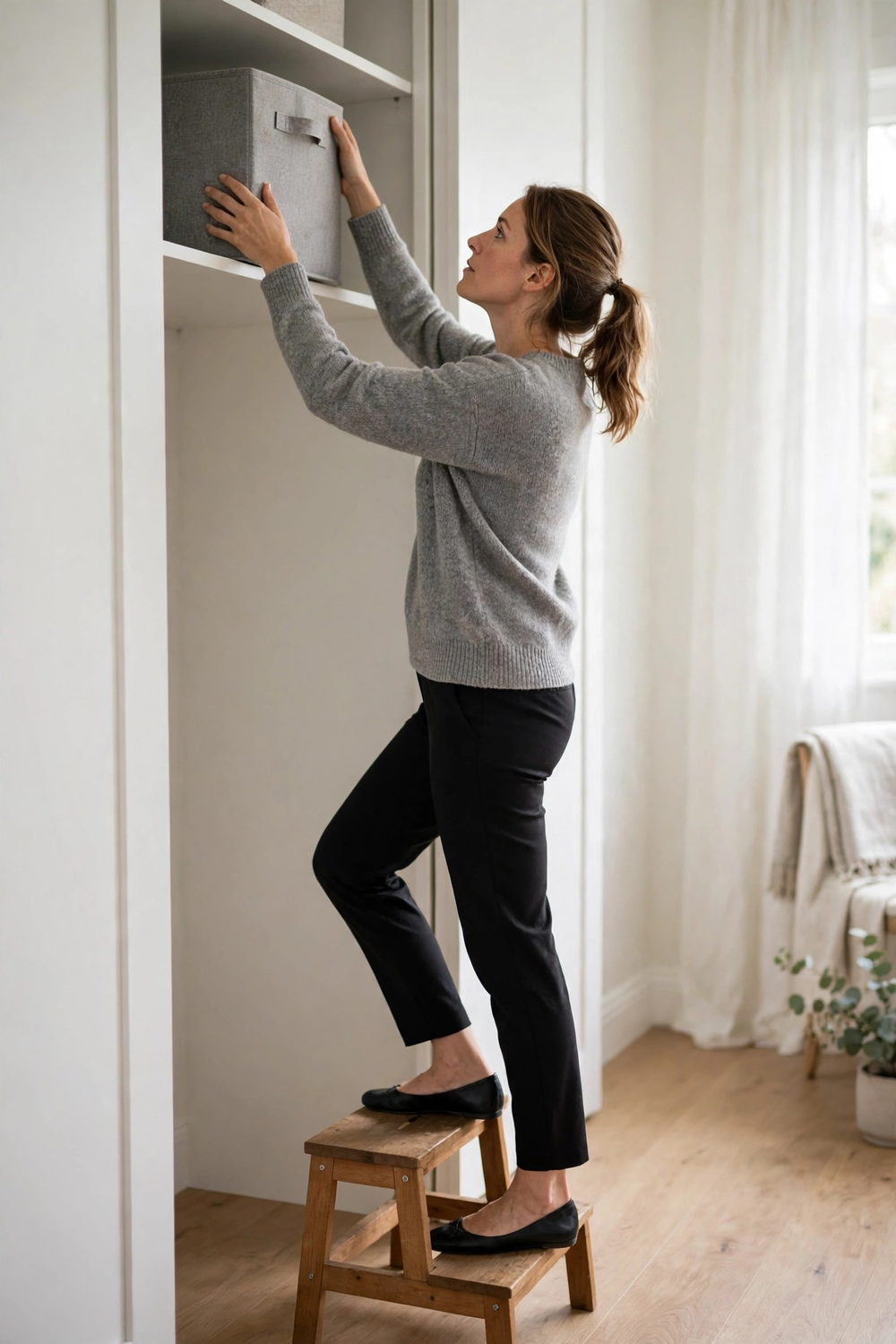
A woman stands on a small step stool placing a fabric storage bin on a high closet shelf, wearing a grey sweater with black trousers and flats.
Soft natural light shows the true colors of fabric, so check the look near a window before you head out.
If a piece feels tight or pulls when you sit, swap it for a size that lets you move without thinking about it.
A belt can mark the waist without adding bulk, and a thin belt often works better than a wide one here.
Repeat the same base pieces in new combinations through the week, and each small change will feel fresh again.
Start with pieces that already fit well, since fit does more for a look than any new purchase can do on its own.
7. A Rail for the Week Ahead
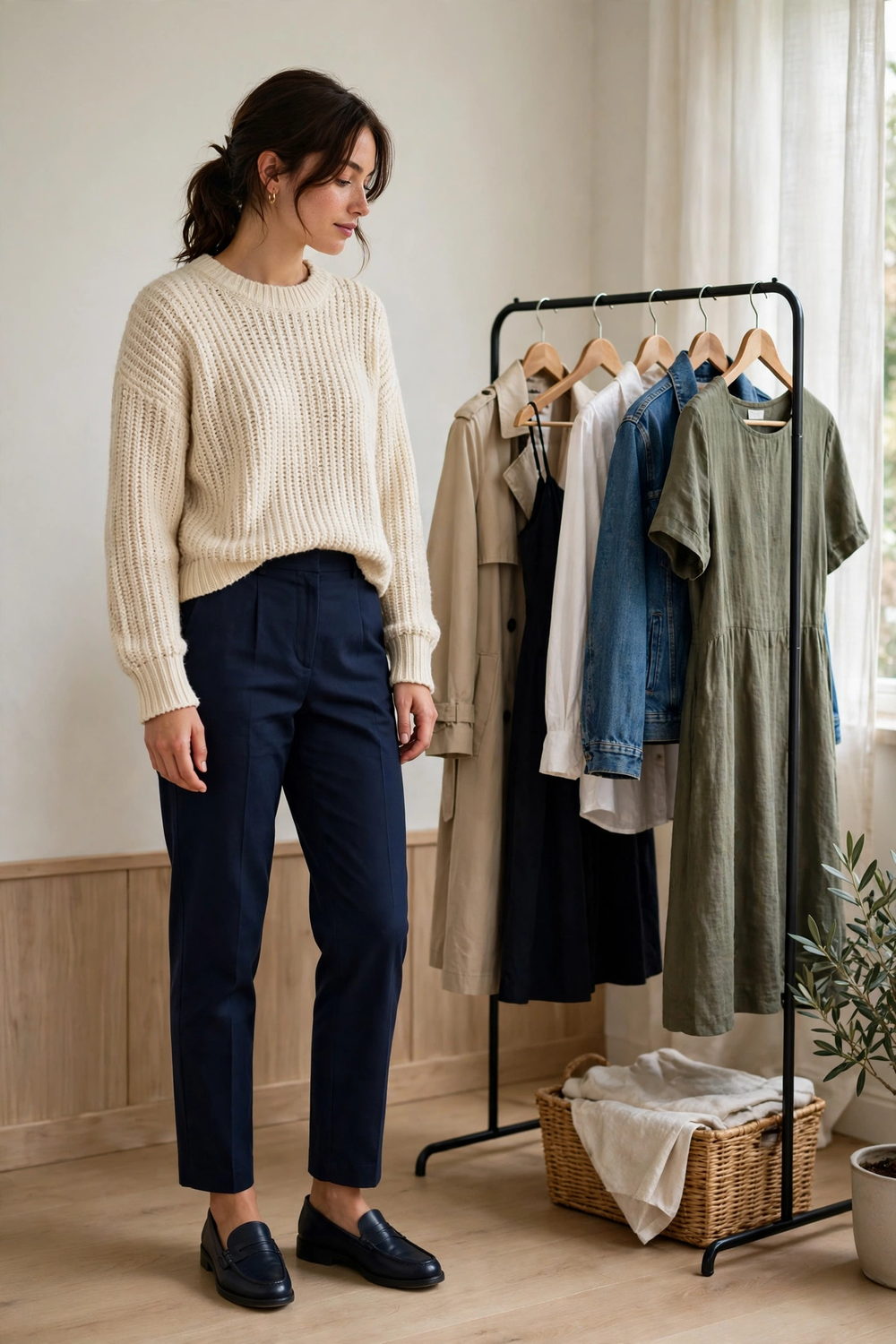
A woman stands before a small clothing rail holding five ready outfits, wearing a cream knit with navy trousers and loafers, the full outfit clear from head to shoes.
Start with pieces that already fit well, since fit does more for a look than any new purchase can do on its own.
Keep the colors close together so the outfit reads as one clear idea instead of several competing parts.
Check the full look in a mirror before you leave, from shoes to hair, and fix the one thing that pulls your eye first.
A small bag keeps the line clean, while a large tote can weigh down a light outfit and hide the waist. For more ideas in this area, see 15 Outfit Tricks for Women with No Waist Definition in Winter Layers.
Choose shoes you can walk in for hours, because comfort shows in how you stand and move through the day.
8. One Shelf for Bags and Belts
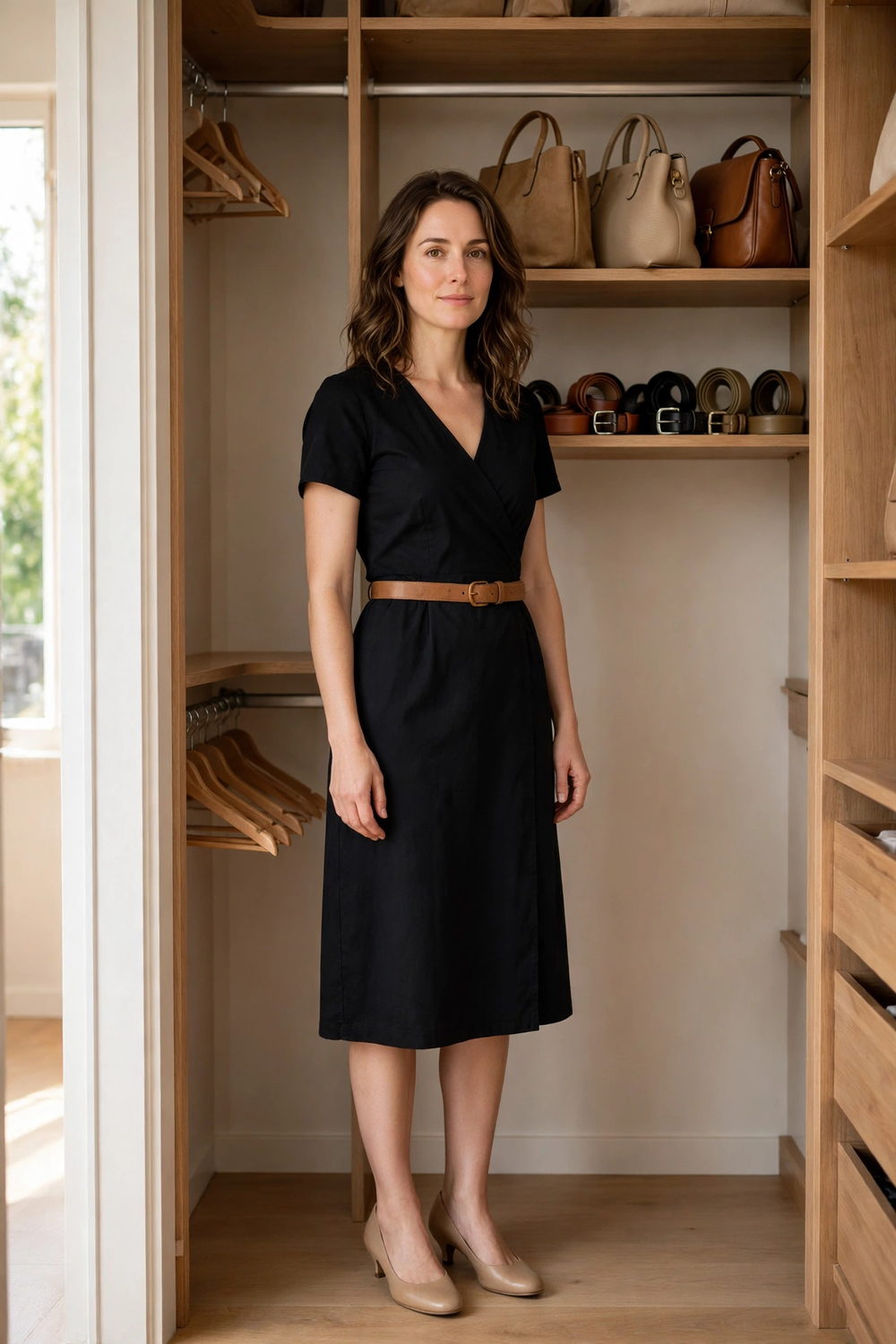
A woman stands in a tidy closet in a black dress with a tan belt and low heels, with bags and belts arranged neatly on a shelf behind her.
Choose shoes you can walk in for hours, because comfort shows in how you stand and move through the day.
One quiet piece of jewelry is enough here, so let the outfit itself carry the interest of the look.
Try the outfit on with the coat or jacket you plan to wear, since the outer layer changes the shape a lot.
Keep the hem length in mind with the shoe height, so the trouser or skirt falls where it was meant to fall.
Soft natural light shows the true colors of fabric, so check the look near a window before you head out.
9. Shoes in Pairs, Easy to See and Reach
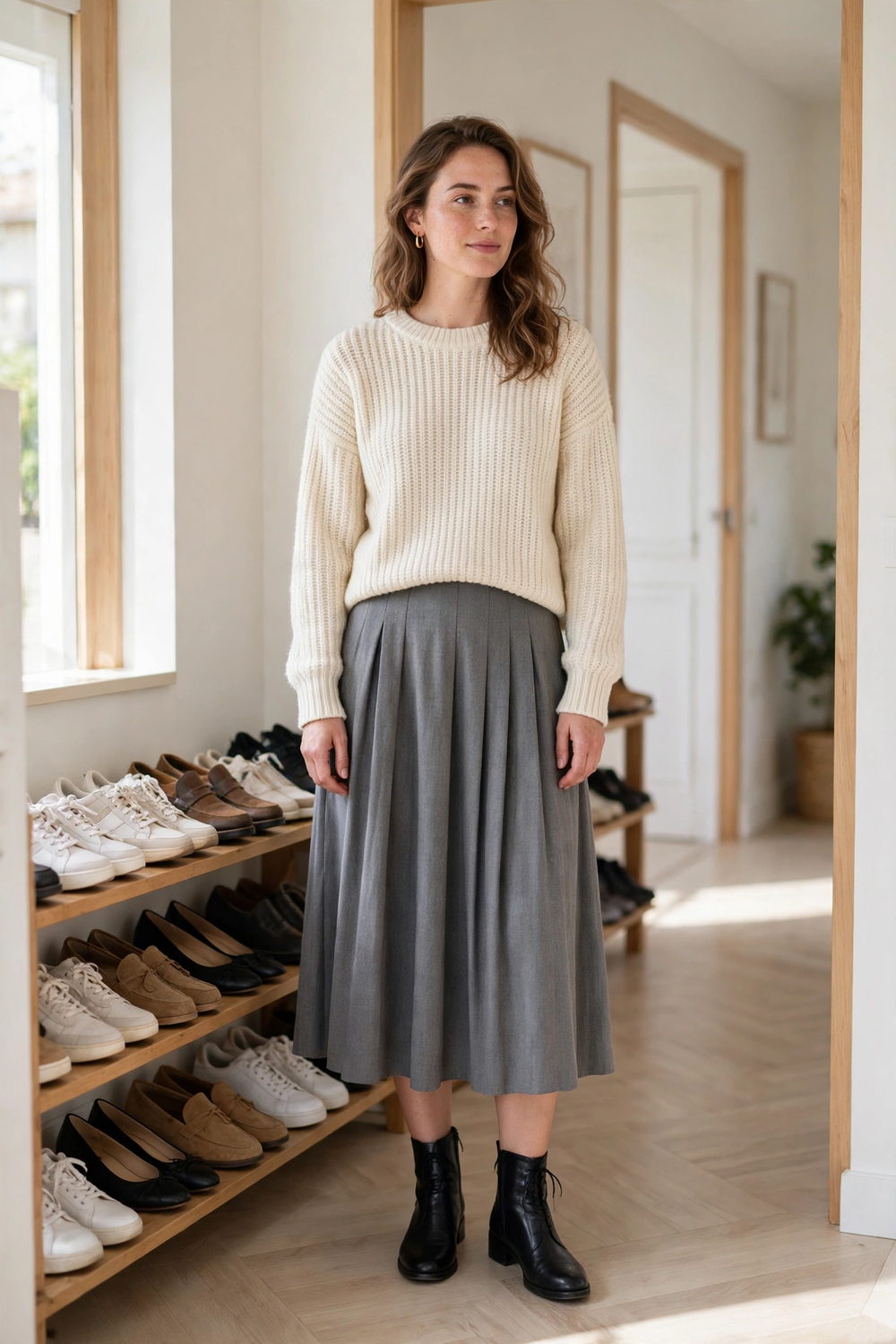
A woman stands in a bright hallway in ankle boots with a grey midi skirt and cream knit, with pairs of shoes lined up neatly on a rack behind her.
Soft natural light shows the true colors of fabric, so check the look near a window before you head out.
If a piece feels tight or pulls when you sit, swap it for a size that lets you move without thinking about it.
A belt can mark the waist without adding bulk, and a thin belt often works better than a wide one here.
Repeat the same base pieces in new combinations through the week, and each small change will feel fresh again.
Start with pieces that already fit well, since fit does more for a look than any new purchase can do on its own.
10. A Small Box for Scarves and Jewelry
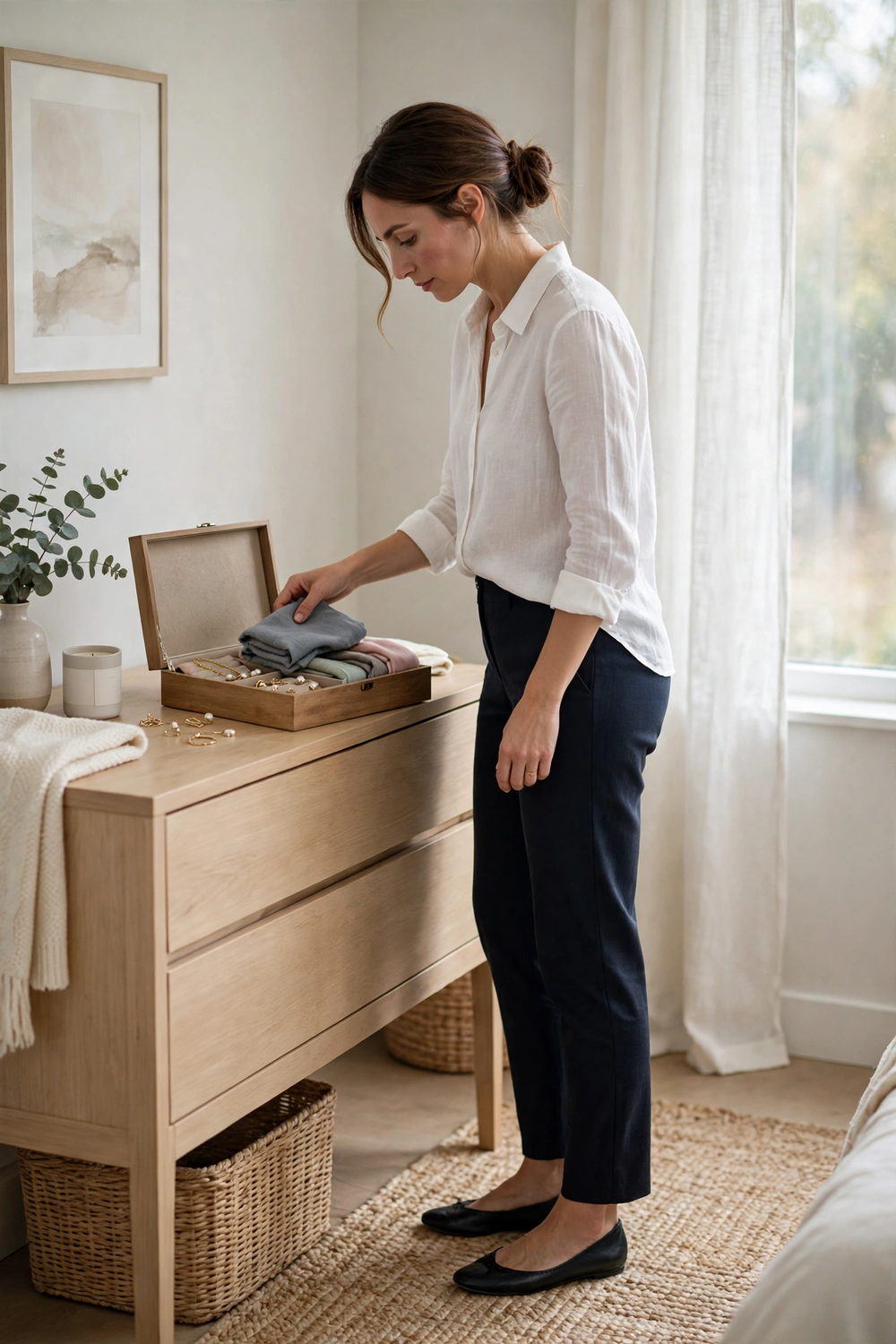
A woman stands at a dresser in a white blouse with dark trousers and flats, placing a folded scarf into a small open box of jewelry and scarves.
Start with pieces that already fit well, since fit does more for a look than any new purchase can do on its own.
Keep the colors close together so the outfit reads as one clear idea instead of several competing parts.
Check the full look in a mirror before you leave, from shoes to hair, and fix the one thing that pulls your eye first.
A small bag keeps the line clean, while a large tote can weigh down a light outfit and hide the waist. For more ideas in this area, see 15 Casual Weekend Outfits that Keep the Waist Defined for Hourglass Women.
Choose shoes you can walk in for hours, because comfort shows in how you stand and move through the day.
11. Label the Bins You Store Away
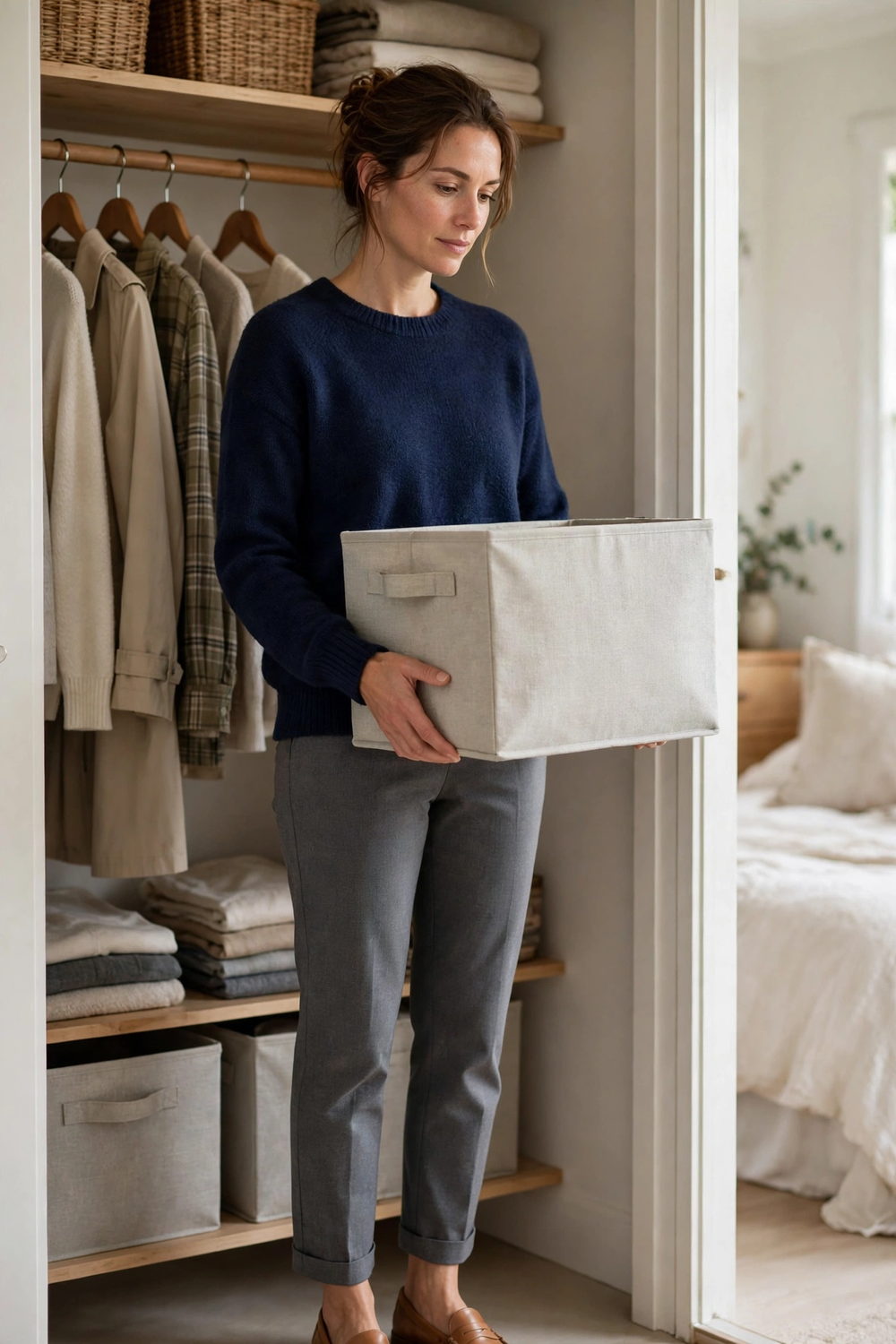
A woman stands in a closet holding a labeled fabric storage bin, wearing a navy sweater with grey trousers and loafers, the outfit visible from head to shoes.
Choose shoes you can walk in for hours, because comfort shows in how you stand and move through the day.
One quiet piece of jewelry is enough here, so let the outfit itself carry the interest of the look.
Try the outfit on with the coat or jacket you plan to wear, since the outer layer changes the shape a lot.
Keep the hem length in mind with the shoe height, so the trouser or skirt falls where it was meant to fall.
Soft natural light shows the true colors of fabric, so check the look near a window before you head out.
12. The Ten Outfits You Wear Most, Ready to Grab
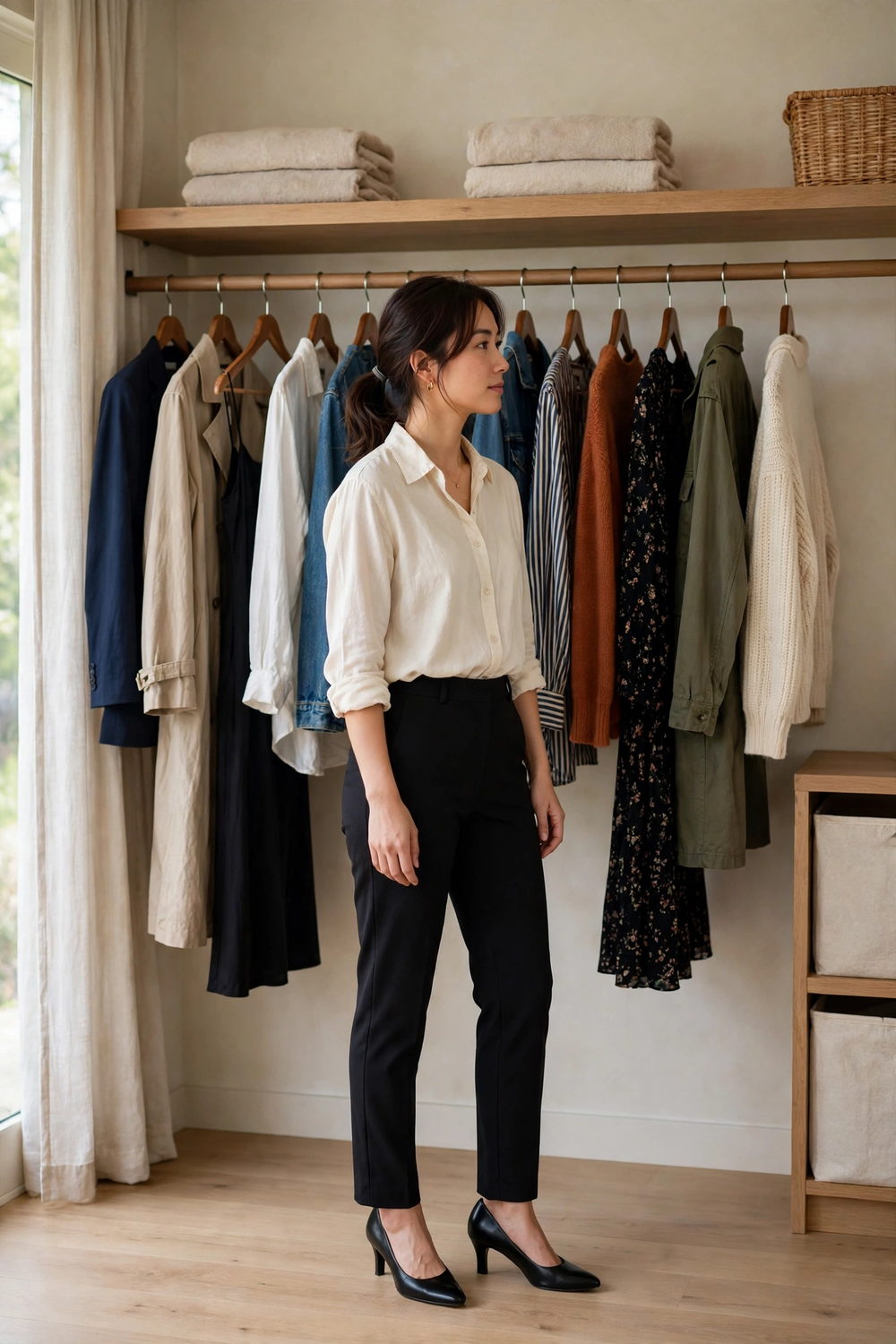
A woman stands before a closet rail in a cream shirt with black trousers and heels, with ten favorite outfits hanging in a neat row behind her.
Soft natural light shows the true colors of fabric, so check the look near a window before you head out.
If a piece feels tight or pulls when you sit, swap it for a size that lets you move without thinking about it.
A belt can mark the waist without adding bulk, and a thin belt often works better than a wide one here.
Repeat the same base pieces in new combinations through the week, and each small change will feel fresh again.
Start with pieces that already fit well, since fit does more for a look than any new purchase can do on its own.
13. A Photo List of What You Own
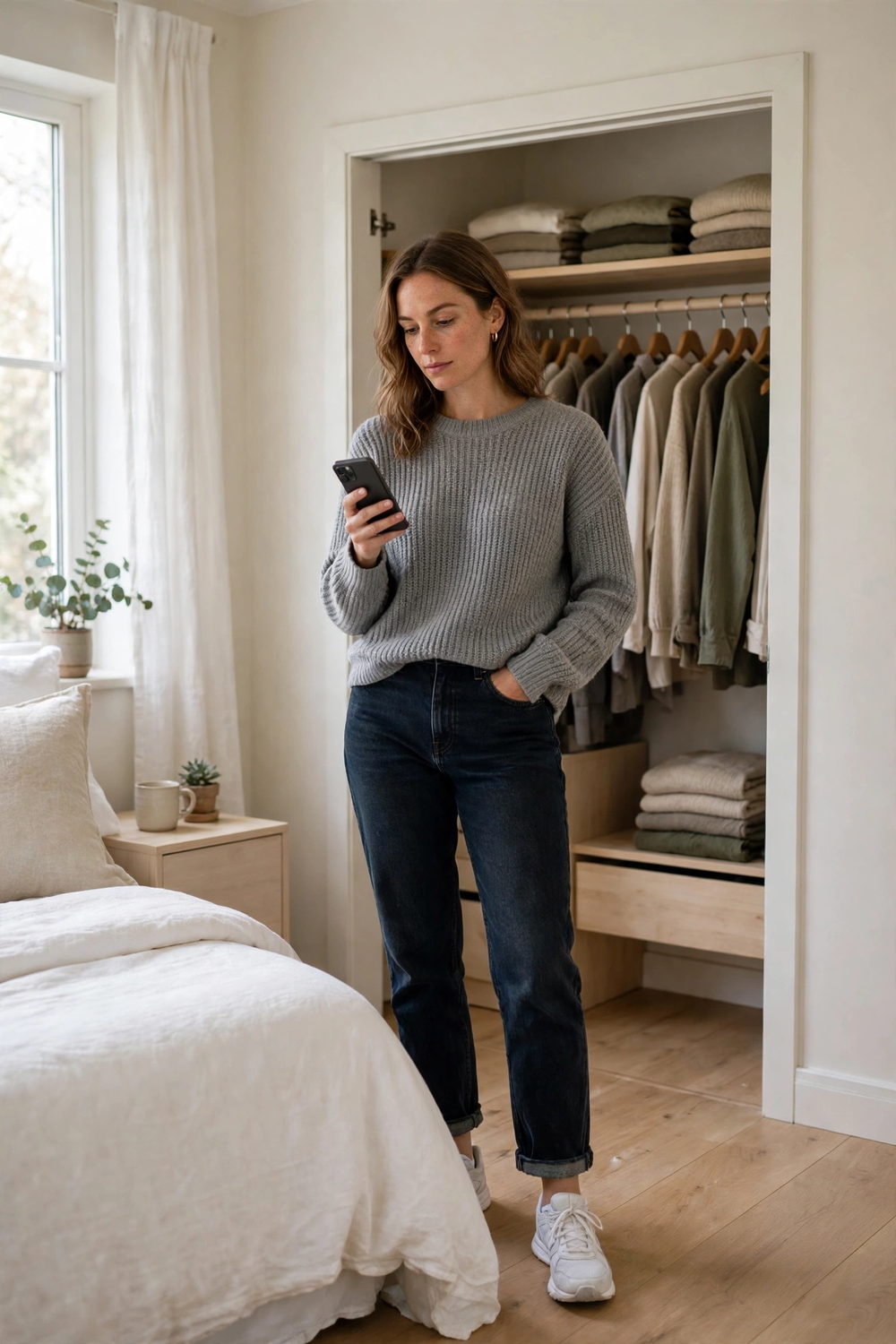
A woman stands in a bright bedroom holding a phone, wearing a grey knit with dark jeans and sneakers, with a tidy closet open behind her.
Start with pieces that already fit well, since fit does more for a look than any new purchase can do on its own.
Keep the colors close together so the outfit reads as one clear idea instead of several competing parts.
Check the full look in a mirror before you leave, from shoes to hair, and fix the one thing that pulls your eye first.
A small bag keeps the line clean, while a large tote can weigh down a light outfit and hide the waist. For more ideas in this area, see 15 Everyday Outfit Formulas for Women in Their 40s Who Hate Feeling Overdressed.
Choose shoes you can walk in for hours, because comfort shows in how you stand and move through the day.
14. What to Buy Next, Written Down First
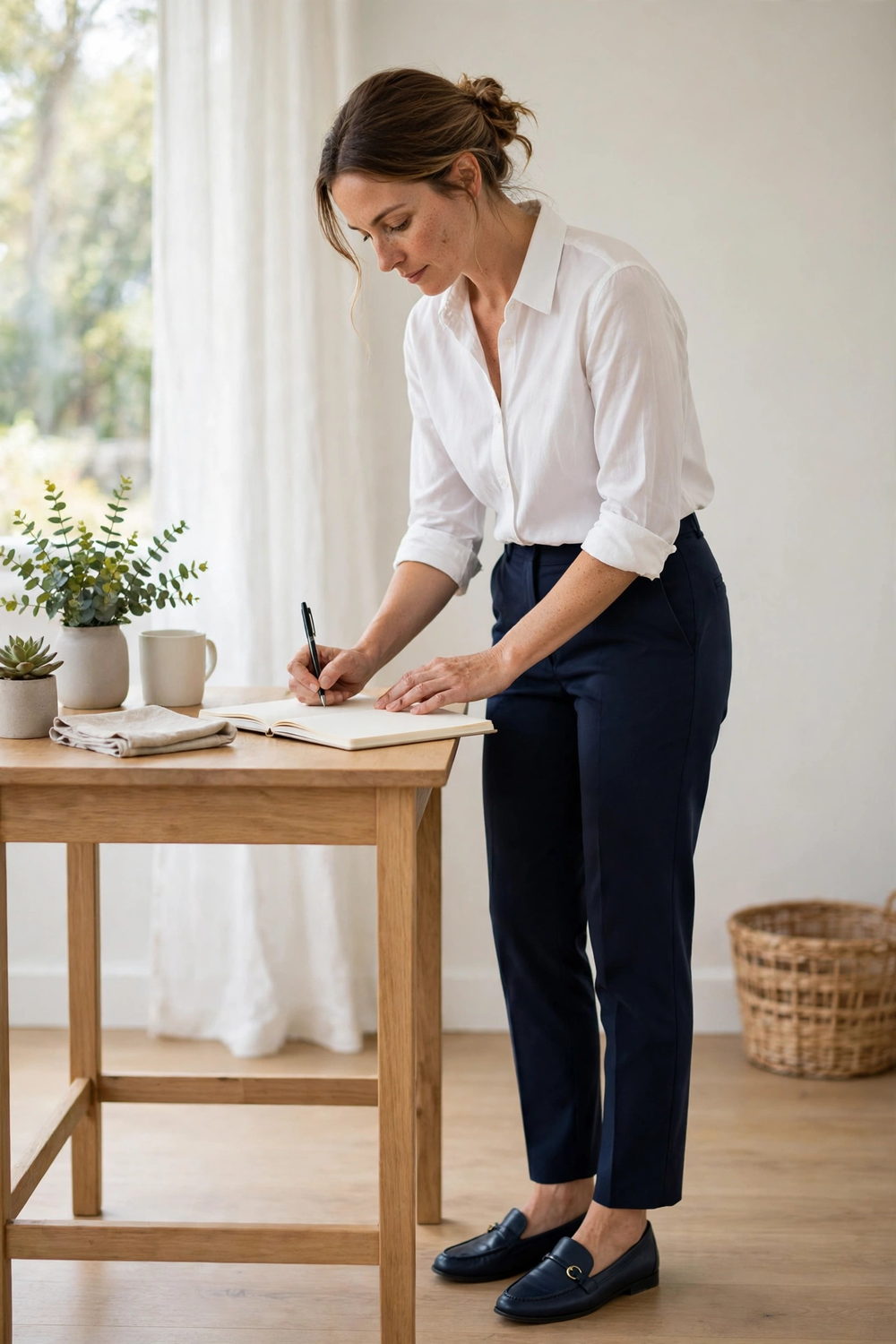
A woman stands at a small desk writing a short shopping list in a notebook, wearing a white shirt with navy trousers and loafers, the outfit clear from head to shoes.
Choose shoes you can walk in for hours, because comfort shows in how you stand and move through the day.
One quiet piece of jewelry is enough here, so let the outfit itself carry the interest of the look.
Try the outfit on with the coat or jacket you plan to wear, since the outer layer changes the shape a lot.
Keep the hem length in mind with the shoe height, so the trouser or skirt falls where it was meant to fall.
Soft natural light shows the true colors of fabric, so check the look near a window before you head out.
15. A Closet That Works Every Morning
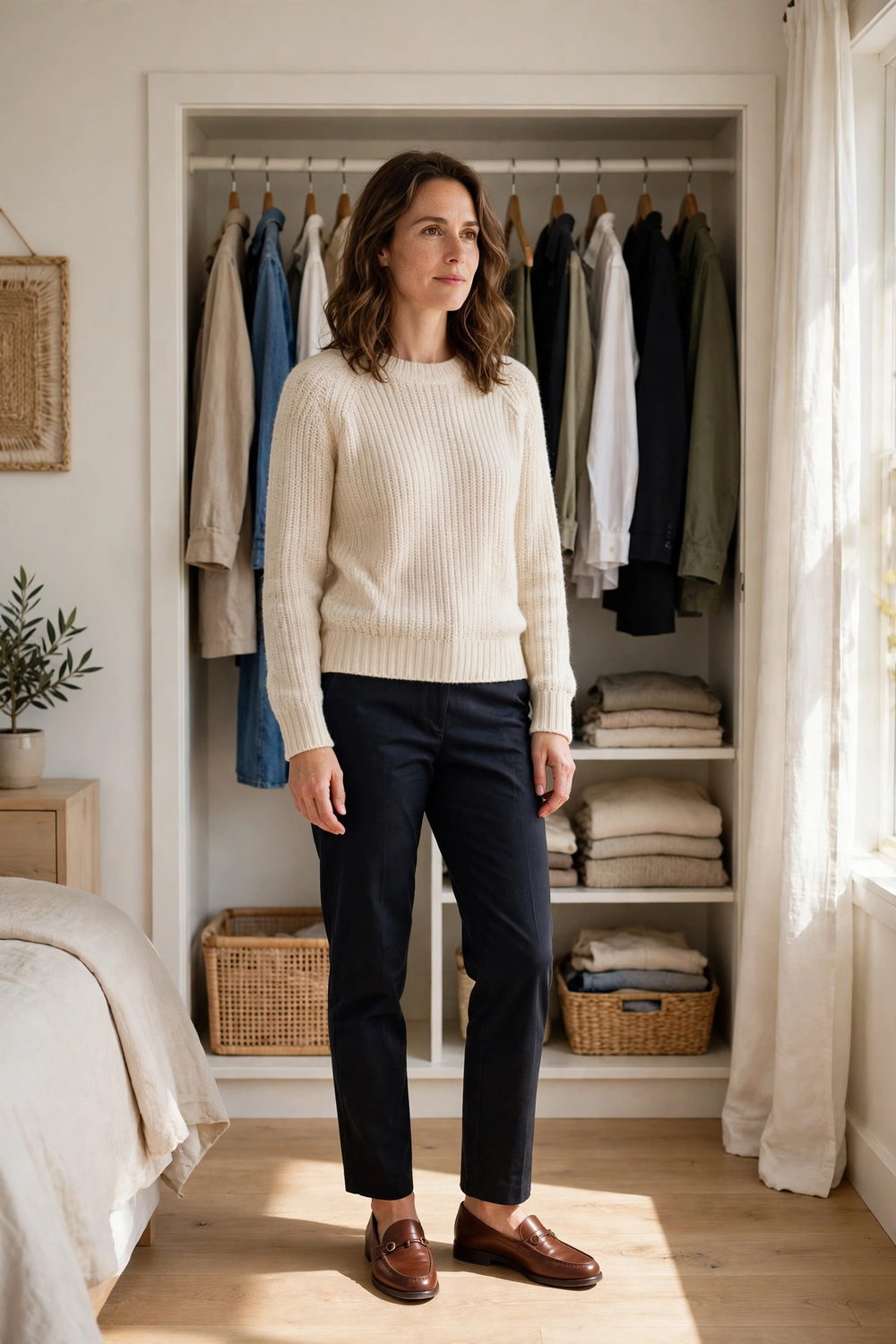
A woman stands in a sunny bedroom in a cream knit with dark trousers and loafers, with a tidy open closet full of neat outfits behind her.
Soft natural light shows the true colors of fabric, so check the look near a window before you head out.
If a piece feels tight or pulls when you sit, swap it for a size that lets you move without thinking about it.
A belt can mark the waist without adding bulk, and a thin belt often works better than a wide one here.
Repeat the same base pieces in new combinations through the week, and each small change will feel fresh again.
Start with pieces that already fit well, since fit does more for a look than any new purchase can do on its own.
A cleanout works when the rail holds only pieces that fit, feel good, and mix with each other, so start with the sort and let the outfits follow.
Keep the week ahead ready on a small rail, since five planned outfits save more time than any new purchase.
Store the rest neatly and label the bins, so out of season pieces stay safe and easy to find.
When the closet works every morning, getting dressed stops being a chore and starts being a pleasure.


