

15 Small Patio Ideas for Suburban Family Homes
A small patio can feel too tight once bikes, a grill, and four chairs all land on it.
Many suburban yards leave only a slab by the back door, and the rest of the lawn stays out of reach. That slab can still work hard for a family if each part has a clear job.
These small patio ideas for suburban family homes focus on real family life. Think weeknight dinners, homework outside, muddy shoes, and a place to sit after the kids go to bed.
You do not need a bigger yard to get more use from the one you have.
Start with one change, not all fifteen at once. Pick the spot that annoys you most, fix that first, and let the rest follow as your budget and weekends allow.
Look for the spot your family already uses most, even if it looks plain today. That habit tells you where the table, shade, and storage should go first.
1. Give Dinner One Fixed Corner
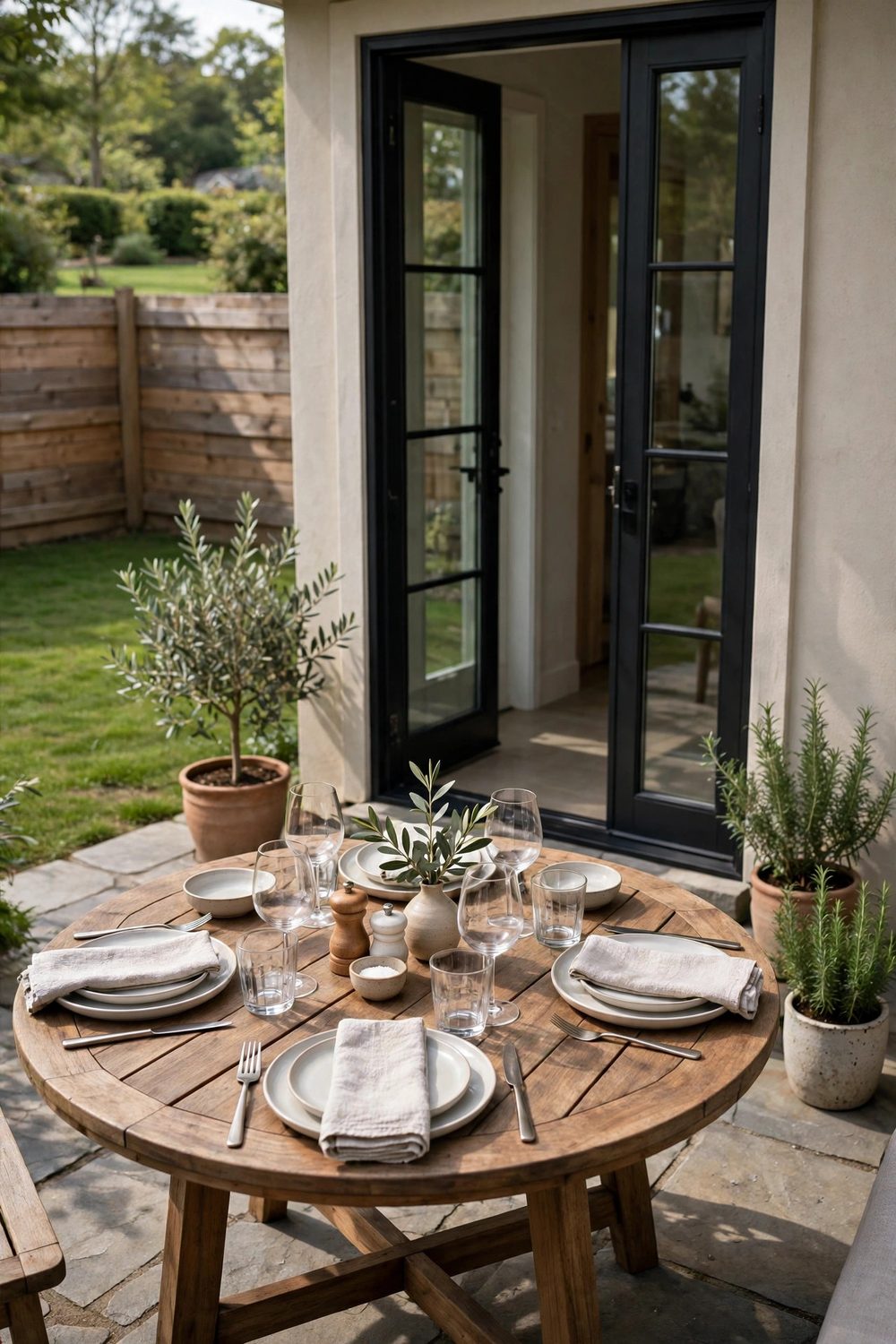
Pick the driest, flattest corner for meals and keep it for meals only. A round table often fits better than a long one here, since chairs can tuck in close.
Leave a clear path from the back door to the table so no one has to climb over legs.
Measure before you buy anything, and count the chairs you use on a normal night.
Four chairs may fit fine, while six will crowd the walkway and push plates too close to the edge. A bench on one side can seat kids without adding bulky chair backs.
Keep a small tray by the door for salt, napkins, and cups. That one habit stops the nightly hunt for missing items and keeps dinner outside a calm choice, not a chore.
2. Use A Bench Along The Fence
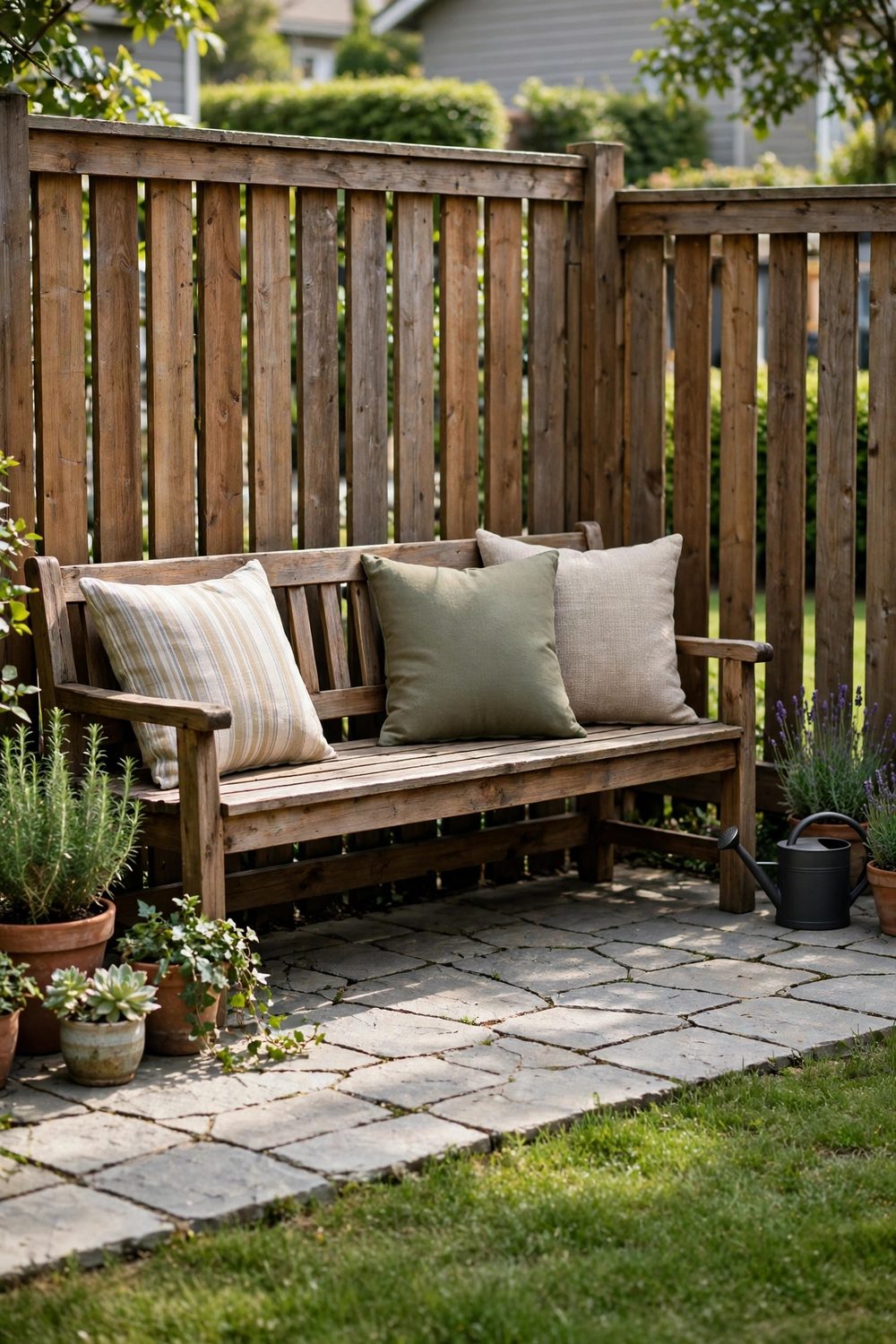
A bench along the fence seats more people than loose chairs and leaves the middle of the patio open.
Kids can slide along it, and no one has to drag a chair across the slab. For more seating ideas, see our guide to small balcony seating ideas.
Choose a bench with a flat top so it can hold a board game or a tray of drinks. If the bench has a lid, use it for balls, chalk, and outdoor toys. Keep heavier items low so kids can lift the lid with ease.
Leave a small gap behind the bench for leaves and rain to pass through. That gap also stops damp spots from forming against the fence boards over time.
3. Mark A Play Zone With An Outdoor Rug
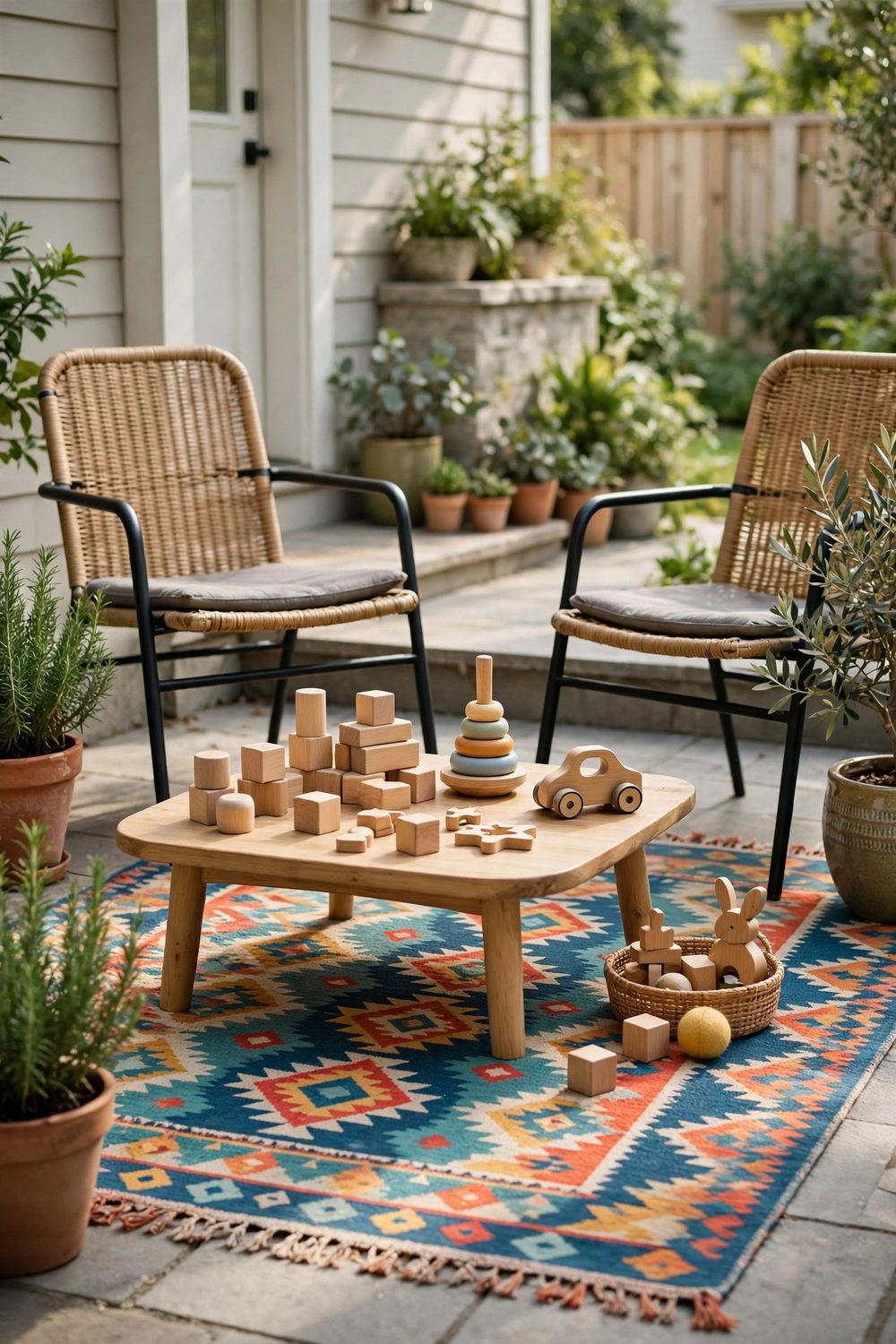
An outdoor rug can show kids where play belongs and where the table stays clear. Put the rug in the spot with the best light, then let blocks, dolls, and puzzles live on it during the day.
At night, fold the toys into a bin and the same rug becomes a lounge spot.
Pick a rug you can hose down and shake out, since juice spills and muddy feet are part of family life.
A rug pad made for outdoor use helps stop sliding on smooth concrete or stone. Check the corners each week, since curled edges trip small feet fast.
Keep the rug a little smaller than you think you need. A rug that leaves a border of bare patio around it looks tidier and makes sweeping much quicker.
4. Add Shade Right Over The Table
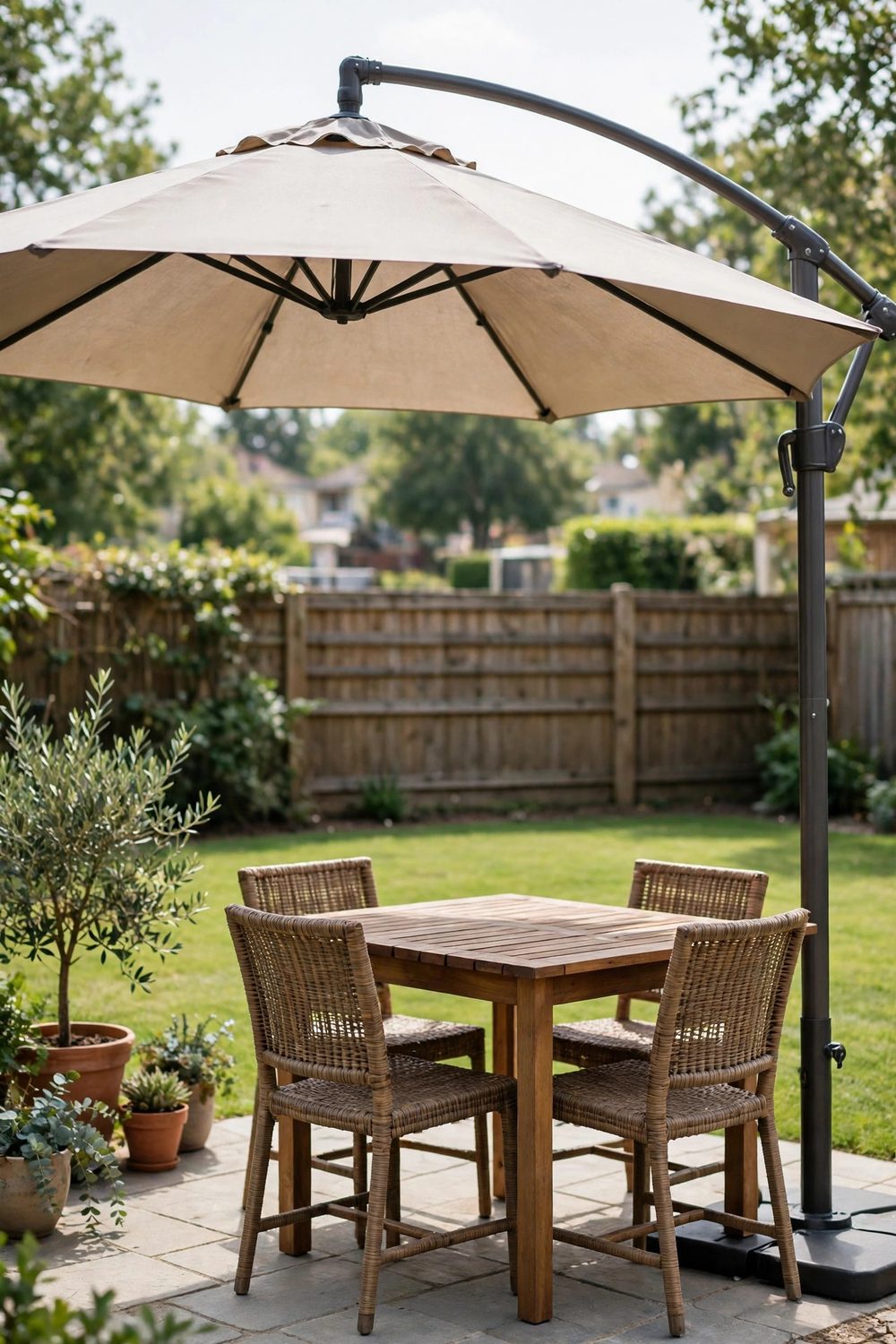
Shade over the table matters more than shade over the whole patio.
A tilt umbrella or a shade sail above the dining corner lets the family eat outside on hot days without moving chairs into a patch of sun. Test the shade at lunch time, when the sun sits highest.
Check where the umbrella base will sit, since a heavy base in a walkway becomes a shin hazard.
A table with a center hole solves this, but a free-standing base near the fence may work better on a very small slab. Store the canopy when storms are forecast.
Pair the shade with a light-colored table top if you can. Dark tops soak up heat and make plates, cups, and little hands warm by midday.
5. Build A Small Evening Fire Circle
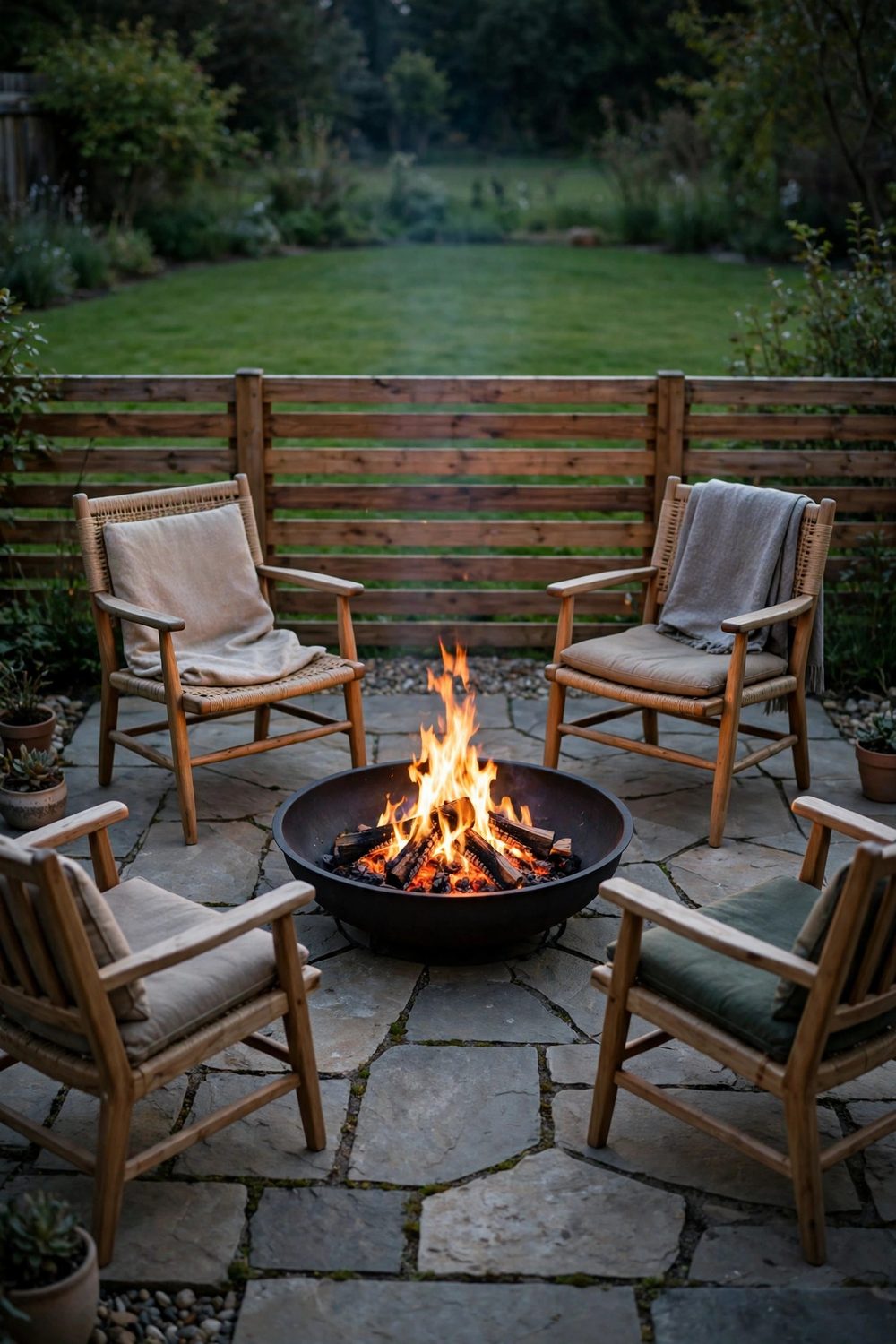
A small fire bowl can turn a plain patio into the place everyone gathers after dinner.
Keep it low and in the center of an open patch, with chairs pulled in just far enough to feel warm. Set a clear rule that kids stay behind the chair line.
Store marshmallow sticks, a lighter, and a small bucket of sand in one bin near the door. That way the fire setup takes five minutes, not half an hour of searching the garage. Let the bowl cool fully before you cover it or move it.
Skip the fire bowl if your patio sits close to a wooden fence or low roof. A safer swap is a cluster of large lanterns, which gives the same glow without heat near dry wood.
6. Make A Kid Corner That Packs Away
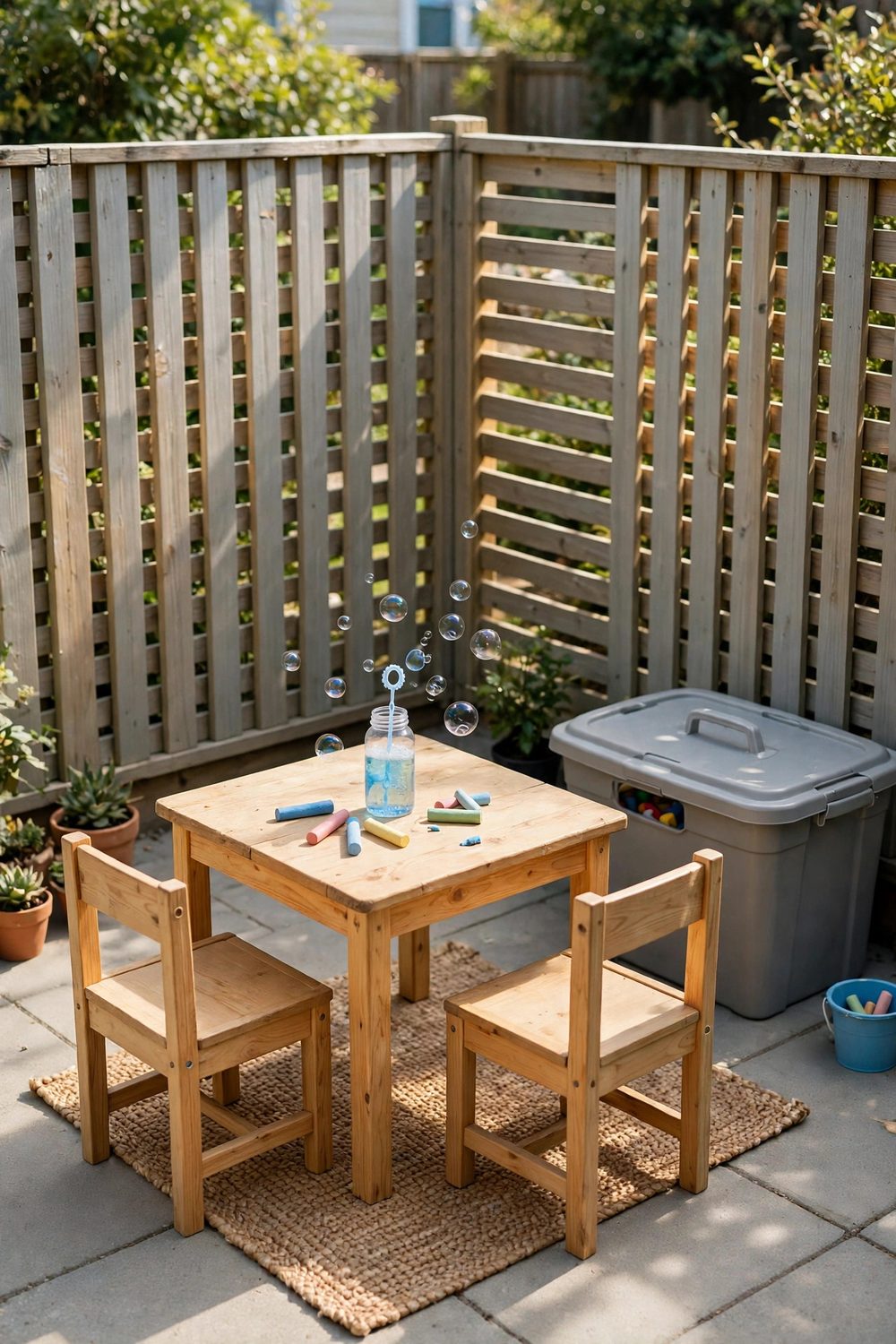
Kids need a corner they can claim, and parents need that corner to vanish at dinner time.
A low table, two small chairs, and one bin for chalk, bubbles, and cups can do both jobs. Put the corner near the lawn edge so mess spreads onto grass, not the dining rug.
Use a bin with a lid that a child can open alone. If the bin is too heavy or the lid sticks, toys will end up scattered across the patio instead.
Label the bin with a picture for younger kids who cannot yet read the word for each toy type.
At the end of play, make cleanup part of the game. A five-minute tidy before dinner keeps the patio ready for adults and stops toys from staying out in overnight rain.
7. Put The Grill Near The Back Door
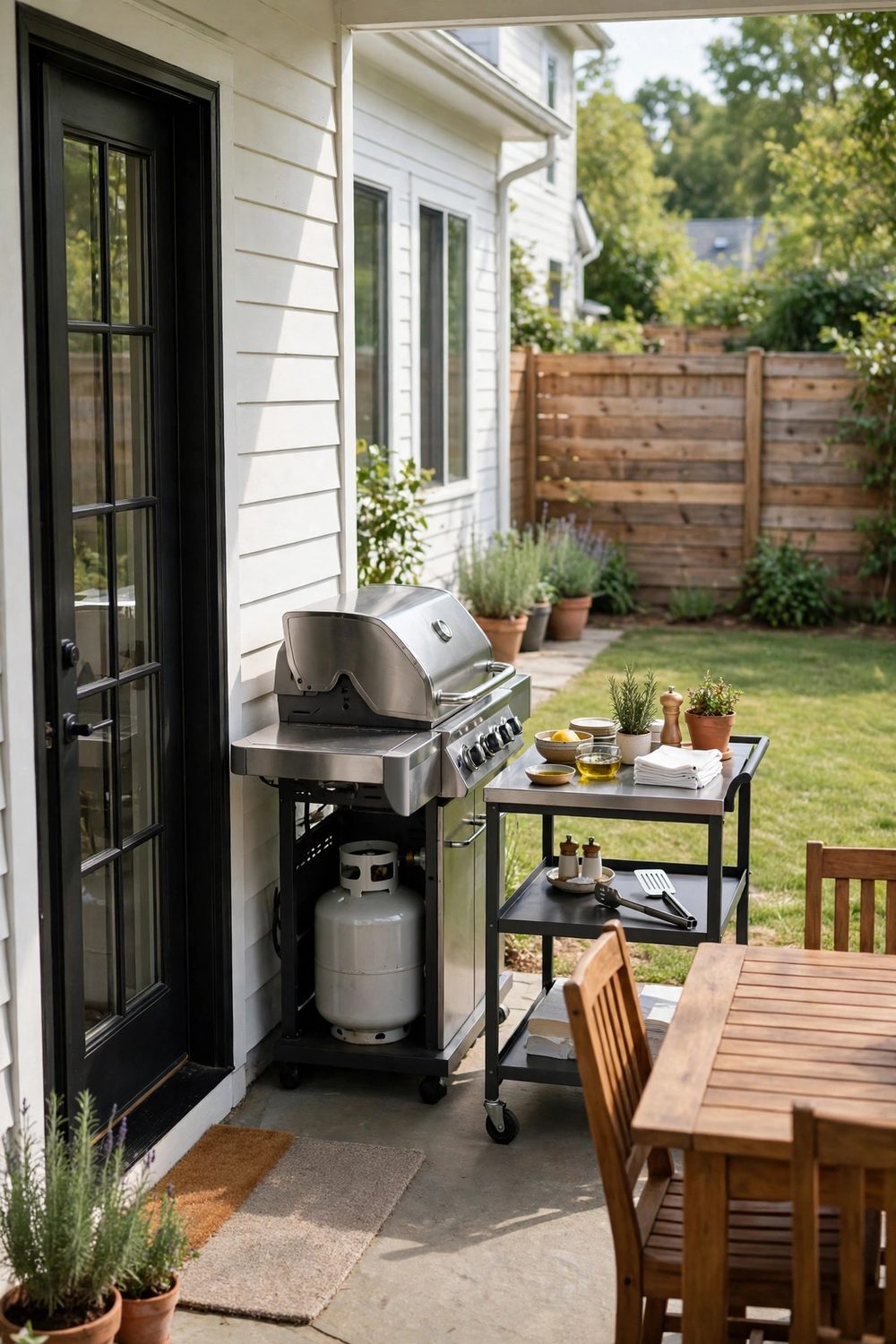
Grill placement decides how often you will use it. A grill near the back door means short trips with raw food, plates, and tongs, and fewer drops on the lawn. Leave space on both sides so the cook can step back without bumping a chair.
Add a small side table or cart for plates, sauces, and a tray for cooked food.
Without that surface, food ends up balanced on chair seats or on the ground. Keep the cart stocked with tongs and a brush so grilling stays a quick weeknight option.
Point the grill away from seating and from the house door, so smoke drifts out over the yard. Check local rules for grill distance from fences and walls before you set the final spot.
8. Screen The Neighbors Without A Tall Wall
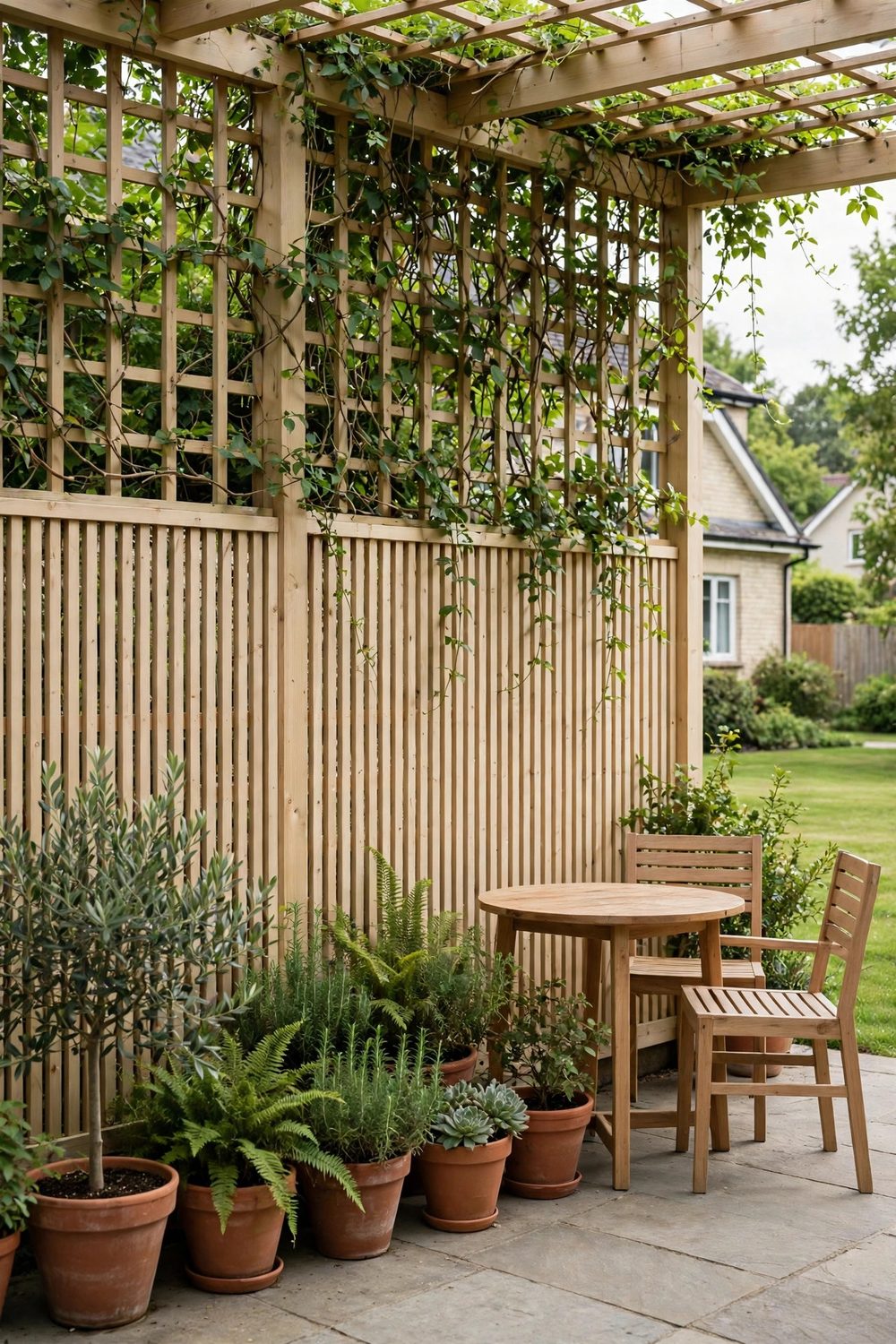
You do not need a tall wall to feel less watched on a small patio. A mid-height screen, a row of pots, or a trellis with vines can break the sight line. See our small balcony ideas with privacy screens that look good.
Screen only the side that faces the nearest windows, not every edge. Full screening on all sides can make a small patio feel boxed in and cut off the breeze. One screened side plus plants on the rest often feels more open and calm.
Test the screen height from a seated position, since that is how you will use the patio most. A screen that looks right while standing may still leave you in full view when you sit down to eat.
9. Hang String Lights Along The Fence
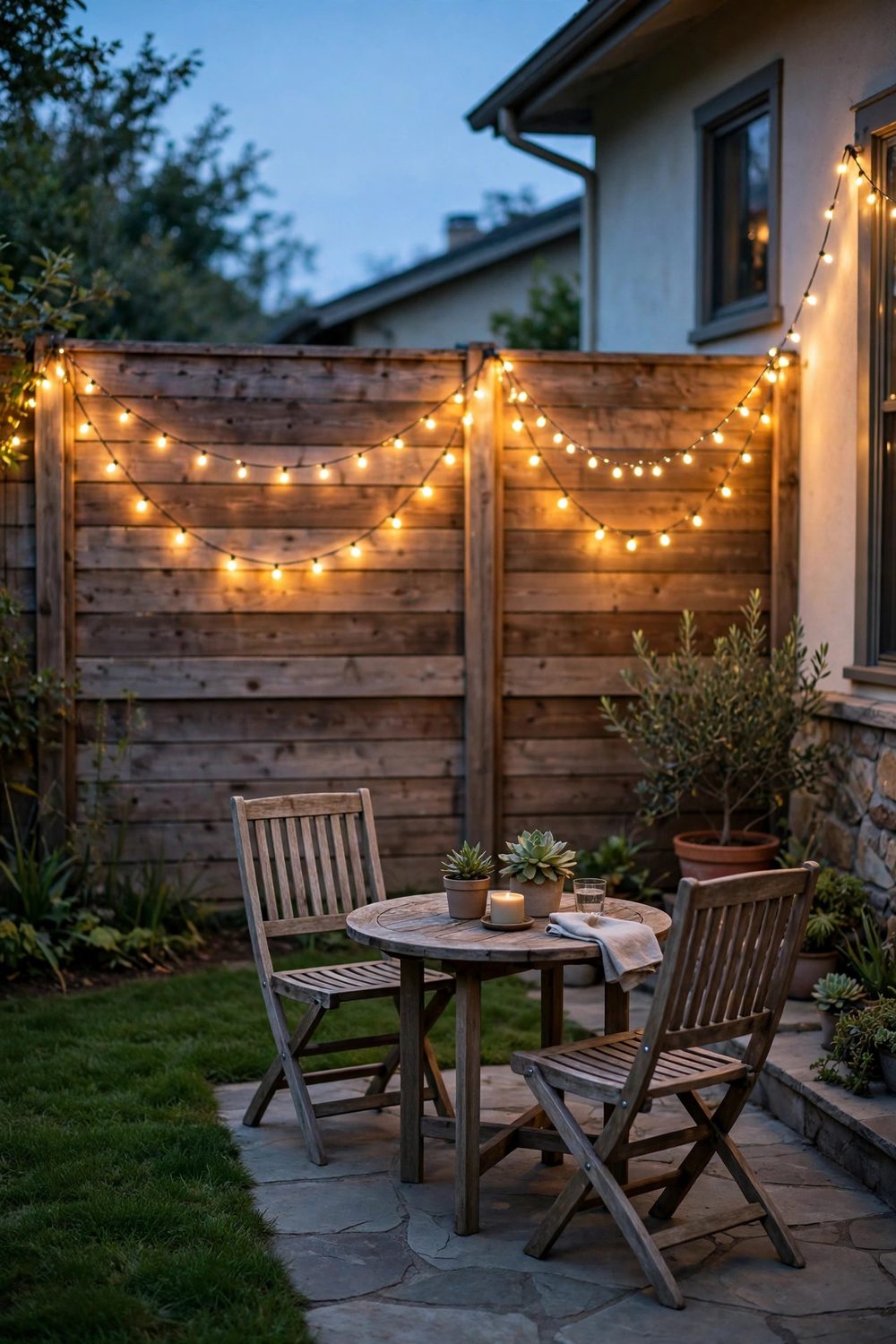
String lights change a patio after dark more than any other small change.
Run them along the fence or from the house to a sturdy post, and keep the drop low enough to reach for bulb checks. Warm white bulbs suit family patios better than bright white ones.
Measure the run before you buy, and count the plugs you have outside. Many patios have only one outdoor outlet, so a short extension made for outdoor use may be needed. For more lighting plans, see small balcony lighting ideas for small outdoor spaces.
Hang the lights so they clear heads and grill smoke. Lights strung too low catch on tall guests, umbrellas, and the grill lid, and they will not last long in that spot.
10. Hide Clutter In A Storage Bench
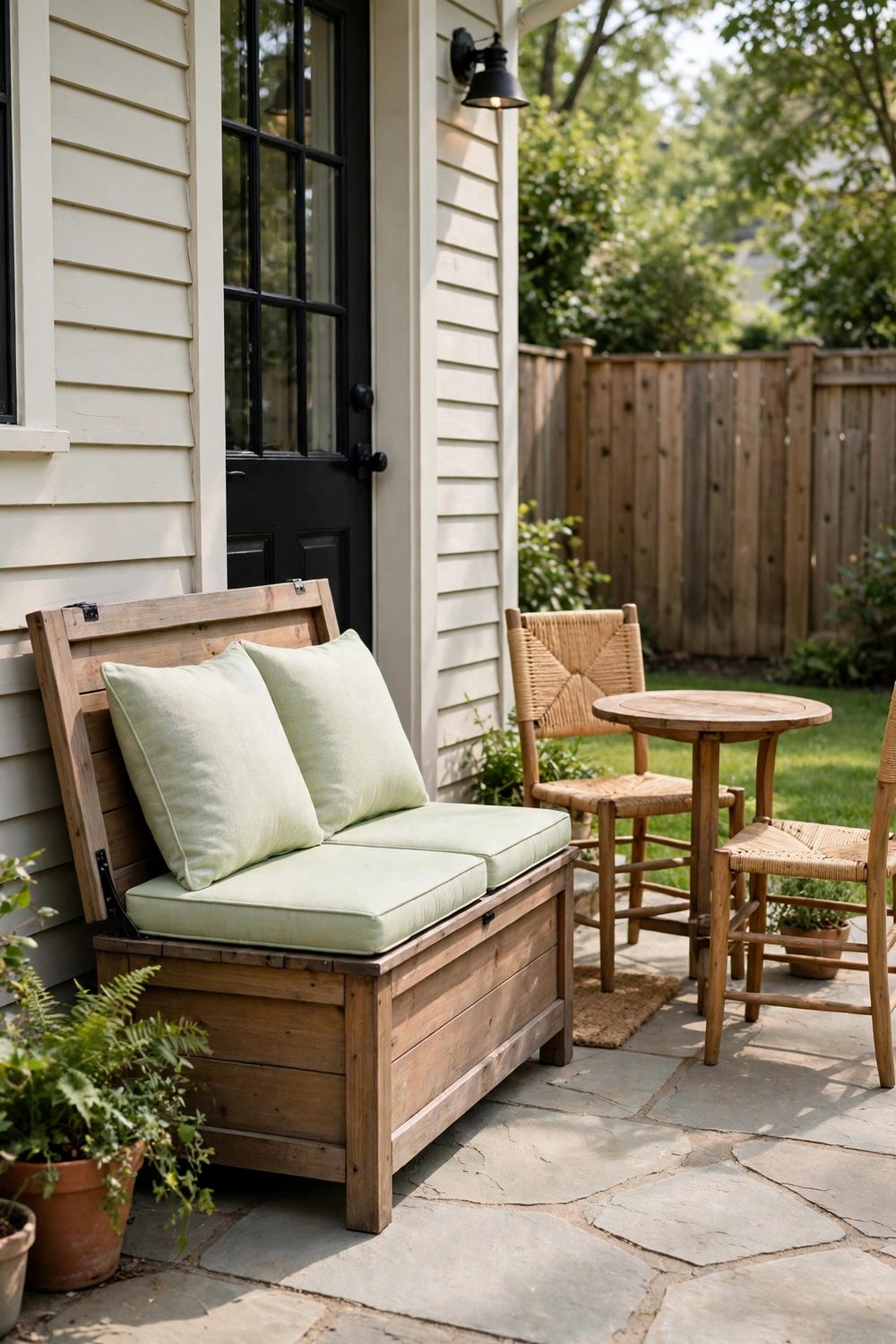
Most small patios fail on storage, not on style. A storage bench near the door can hold cushions, pool toys, and garden tools in one place, and it doubles as extra seating when guests drop by.
Pick a bench that one adult can open with one hand.
Sort the bench by use, not by size. Put daily items like cushions on top, and seasonal items like holiday lights at the bottom. That order stops the daily dig through winter gear just to find a seat pad.
Line the bench with a dry cloth and check it after heavy rain. Even a small leak can leave cushions damp, and damp cushions are the first thing families stop using.
11. Line The Edges With Pots, Not The Middle
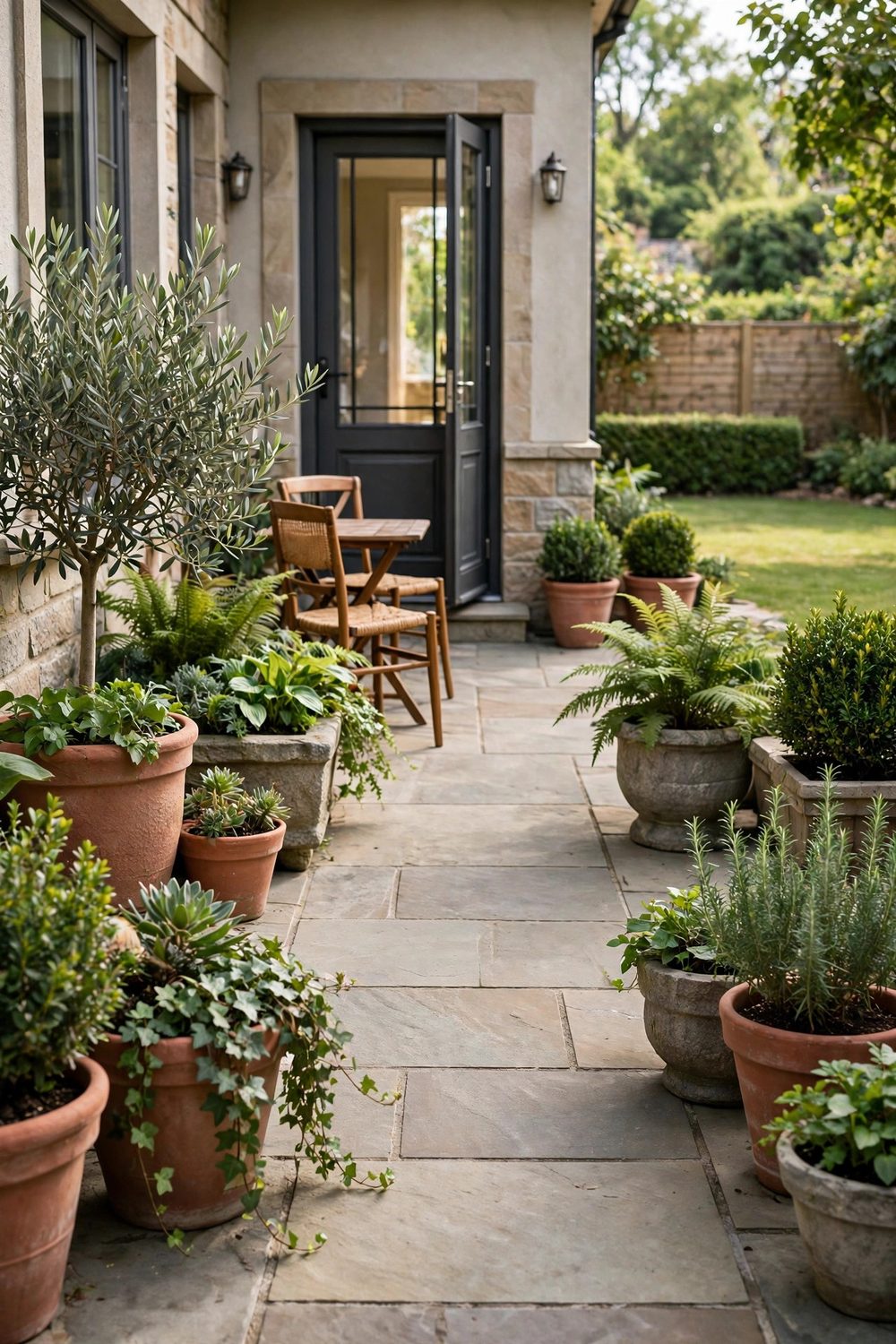
Pots in the middle of a patio shrink the space fast. Pots along the edges do the opposite, since they frame the slab and leave the center free for chairs, play, and the grill path.
Use large pots rather than many small ones, which tend to scatter.
Group pots in threes at corners and by the door, with one tall plant and two lower ones in each group. That shape looks planned without blocking sight lines or walkways. Choose pots with drainage holes and trays, so water does not stain the patio.
Water on a set schedule, and put the watering can by the back door. Pots dry out faster than garden beds, and a can in sight is easier to grab than one buried in the garage.
12. Set Up A Quiet Reading Nook
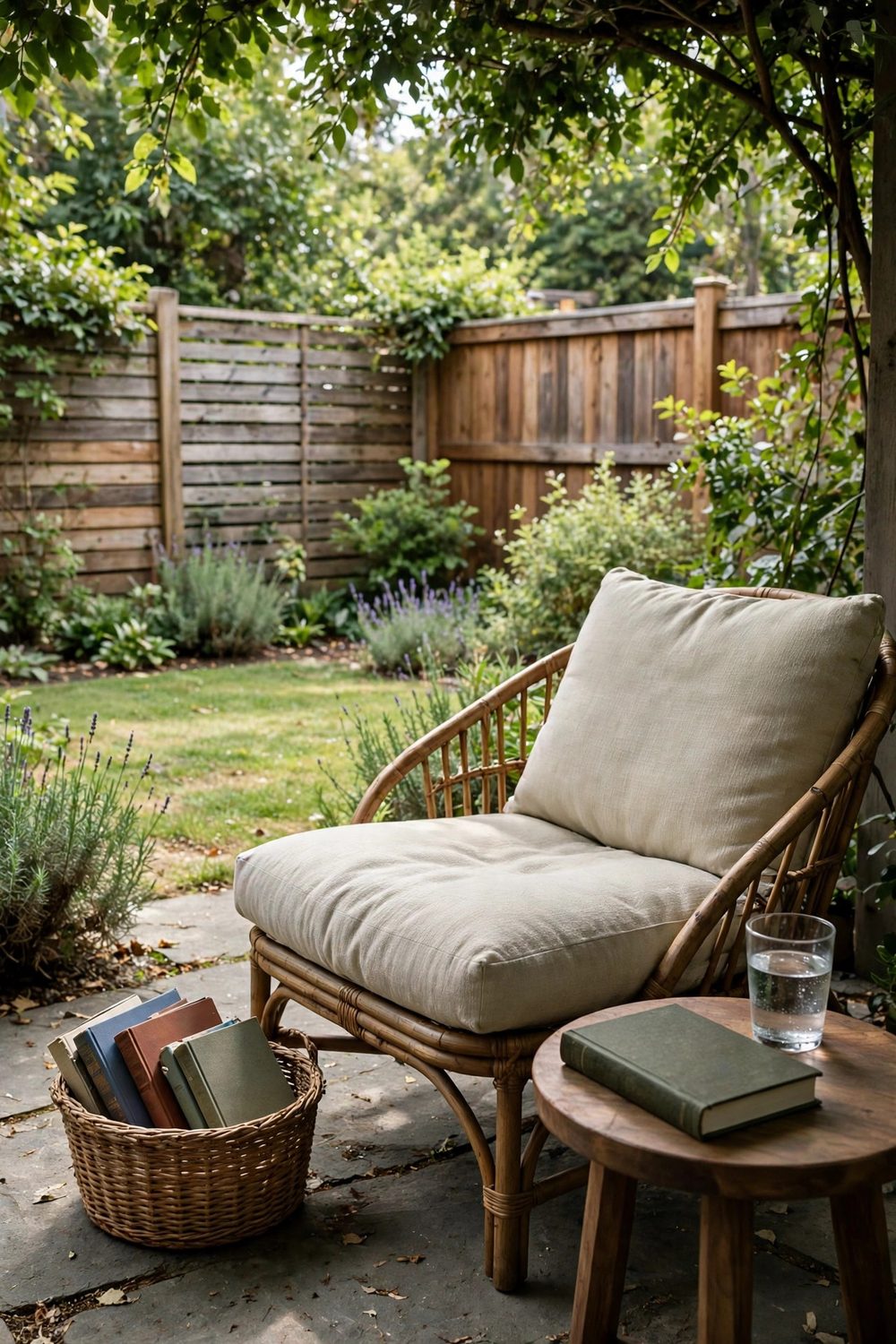
Every family patio needs one quiet seat, even if the rest of the space is loud.
A single lounge chair in a shaded corner, with a small side table for a book and a drink, gives adults and older kids a place to rest. Face the chair toward the garden, not toward the house door.
Keep a small basket for books and magazines by the chair, so reading outside does not need a trip back indoors. A light throw kept in the storage bench makes cool evenings workable without adding a heater or a bulky blanket box.
If the nook sits near the play zone, use a rug or a pot to mark its edge. That small border tells kids the chair is a calm spot, not another climbing frame.
13. Lay A Path From Patio To Lawn
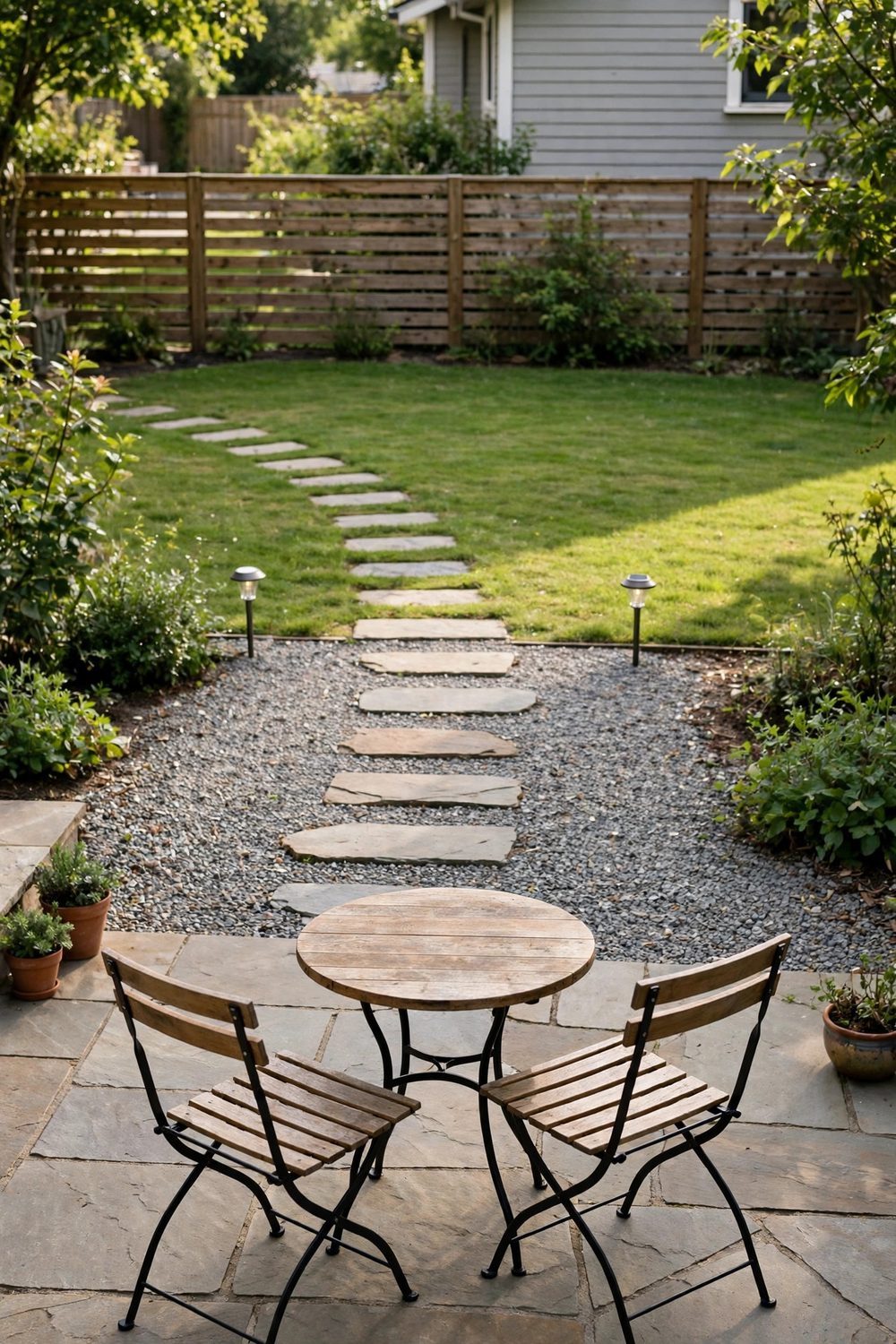
A short path from the patio to the lawn stops muddy shortcuts across bare soil.
Flat stepping stones or a narrow gravel strip can link the slab to the play area, the garden beds, and the back gate. Keep the path wide enough for a wheelbarrow or a stroller.
Set the stones level with the lawn so a mower can pass over them without a bump.
Stones that stick up catch toes and mower blades, and they shift after the first heavy rain. Fill gaps with gravel or low ground cover that can take foot traffic.
Light the path with two or three small solar lights at ankle height. That low light marks the route at night without flooding the whole yard with glare.
14. Plan A Low Cost Refresh Each Spring
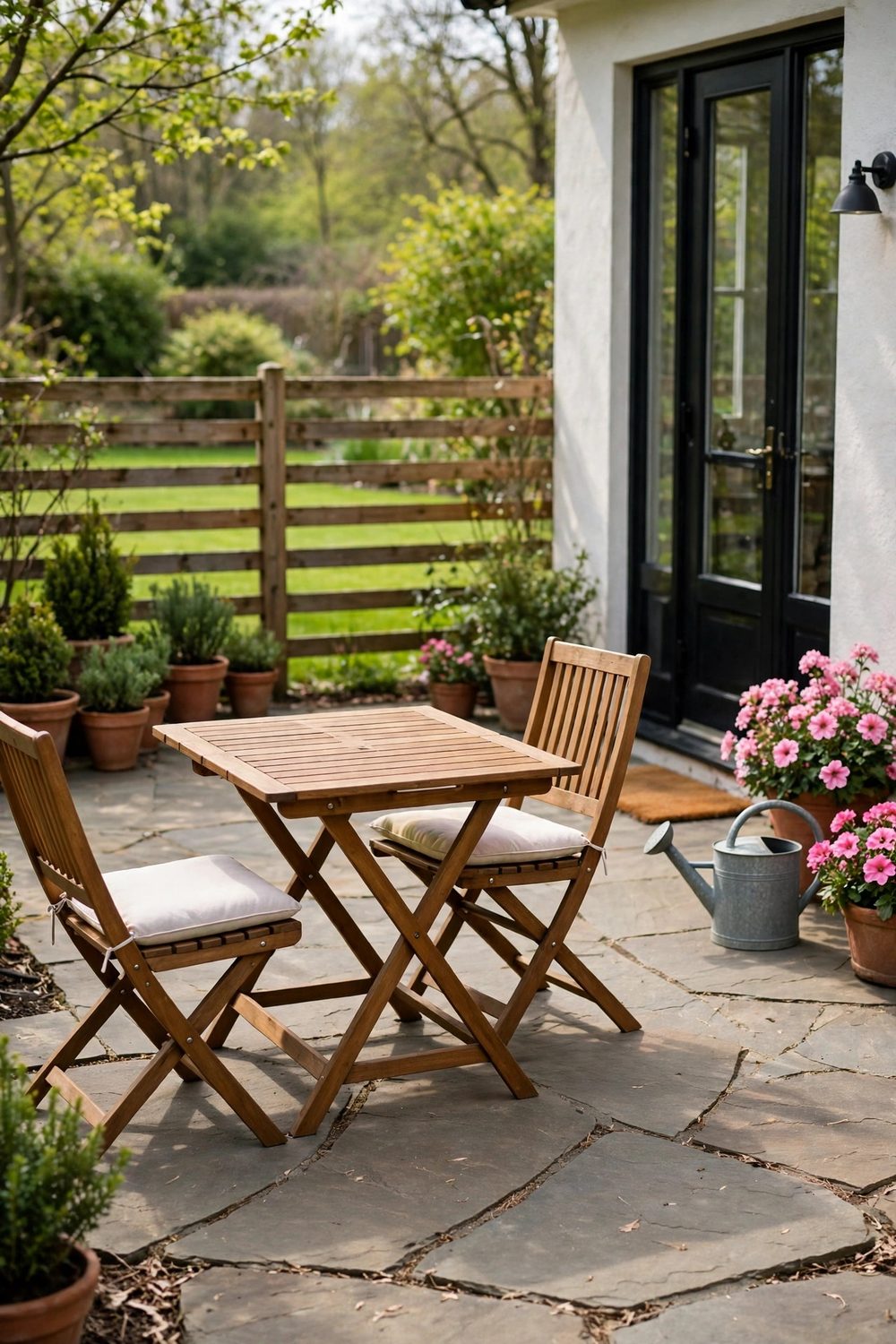
A patio does not need a full rebuild to feel fresh each year. A spring refresh can mean new cushion covers, a swept slab, trimmed pots, and one new plant by the door.
That small list costs less than new furniture and still changes how the space feels.
Write the refresh list on paper and stick to it. Families often buy a new chair set when all they needed was clean cushions and a working light string.
For budget-first refresh plans, see our balcony makeover ideas under 200 dollars renter friendly for low cost steps you can adapt to a patio.
Do the refresh in one weekend, not across a whole month. A short, finished job feels better than a half-done patio that stays in pieces while life gets busy.
15. Keep One Layout All Year, Swap The Details
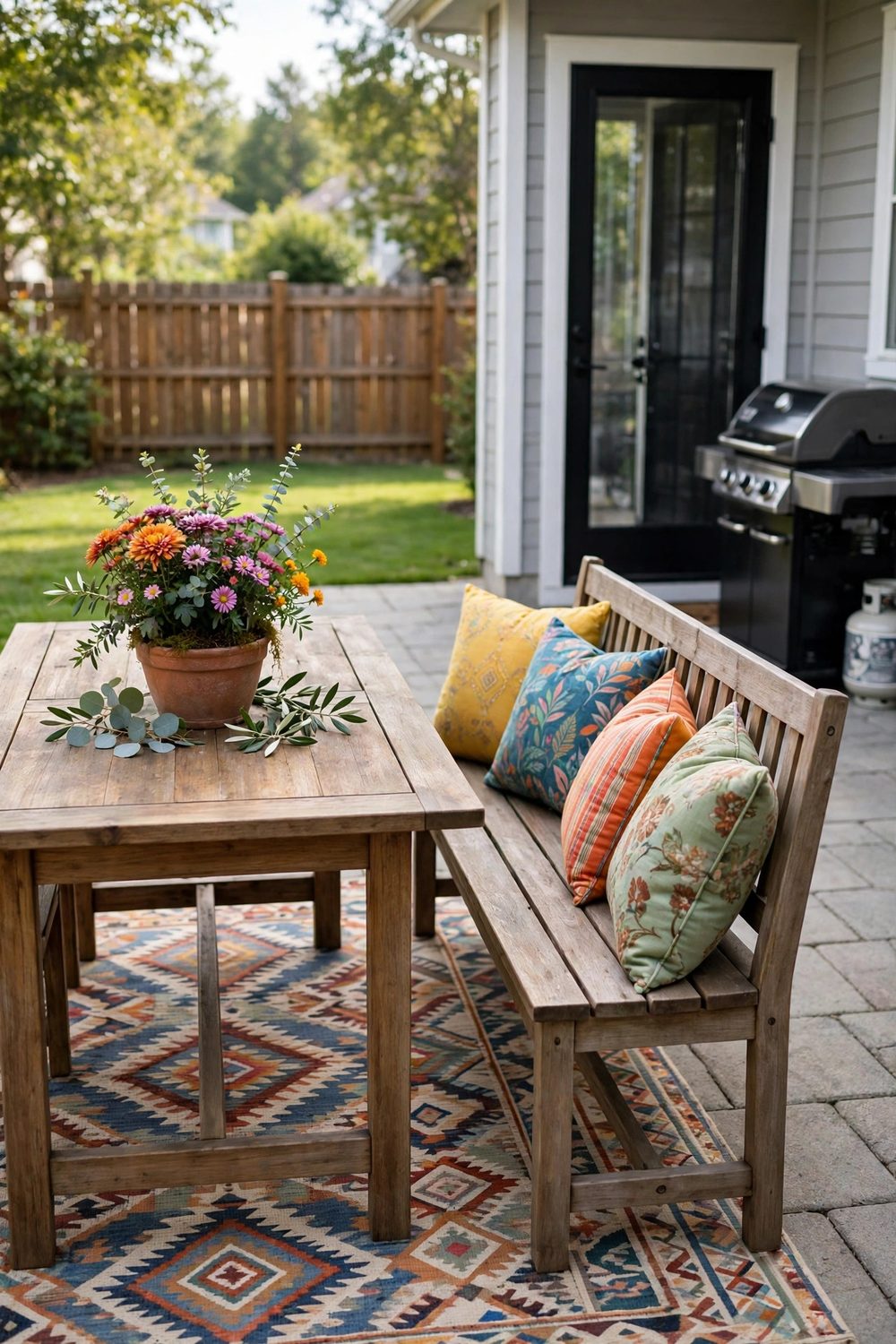
Moving furniture wears out a small patio fast. Keep the table, bench, and grill in the same spots all year, and swap only the details. Change cushion covers, the rug, and the pots when the season shifts.
Store the covers in the storage bench. That one box stops the search for the right set and keeps cushions clean and dry.
For furniture that must last through rain and sun, read our guide to small balcony furniture ideas before you buy replacements.
Walk the patio each month and note what no longer gets used. A chair no one sits in or a pot no one waters can leave, and the space you gain is worth more than the item.
Small patios work best when the plan fits the family, not the other way round. A fixed dinner corner, a pack-away play zone, and shade over the table can give a small slab a full week of use.
Start with the idea that solves your biggest daily annoyance, and add the next one only when the first feels natural.
Save this to your balcony board for later, and pick one idea to try this weekend. A single bench, a rug, or a string of lights can be enough to bring the family outside more often.


