

15 First Apartment Ideas for a Studio With a Bed and a Sofa
One room, one bed, one sofa, and a daily fight over which one the room belongs to. That is the studio problem in a single line.
The fix is not more furniture, it is clear zones. These studio apartment ideas with a bed and sofa give each piece its own ground, light, and view.
Every idea works with the two pieces you already own. Rugs, lamp placement, and the way the sofa faces do the zoning work that walls do elsewhere.
Read the list as a layout order. Window choice first, then placement, then the small layers that keep bed and sofa from blurring into one big bedroom.
Start by standing in the doorway and naming the two zones out loud.
That small act makes every later choice simpler, because each item you move or buy has to answer to one zone, the bed zone or the sofa zone. Give the plan a full day before judging it.
This post contains affiliate links. If you buy through them, we may earn a small commission at no extra cost to you. See our Affiliate Disclosure.
1. Decide Which Piece Gets the Window, and Why
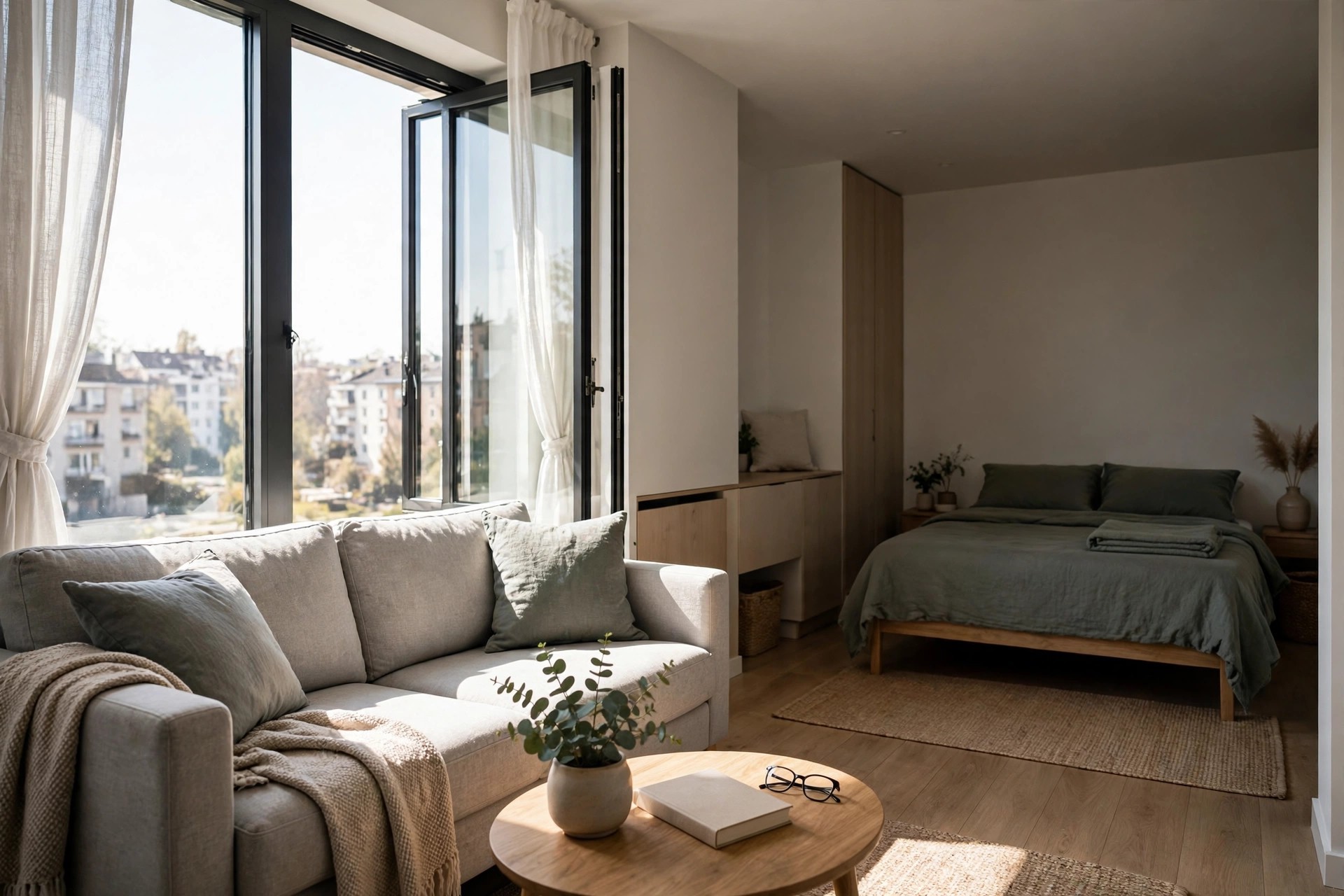
Only one piece can own the window wall, and the choice shapes the whole room. Give the window to the piece you sit on during the day for most studios.
Daylight suits the sofa zone: reading, working, and guests all use it. The bed can sit in the dimmer end, where low light helps sleep at night.
If street light or early sun is strong, swap the plan. A bed flooded with light at dawn will lose to a sofa in the bright spot every time.
Write the choice down before you move anything heavy. Window logic settles half the later layout debates in one line.
2. Put the Bed in the Corner Farthest From the Door

Guests should meet the sofa first, not your pillow. The corner farthest from the door gives the bed the most privacy a single room can offer.
That corner also tends to be the quietest. Hall noise, the entry buzzer, and kitchen sounds all fade with distance in a small flat plan.
Leave a slim gap on the open side of the bed for making it. A bed jammed wall to wall gets made less often, and the whole room shows it.
Our tiny living room ideas for studio apartments one room living map the far corner bed plan for very small footprints.
3. Float the Sofa With Its Back Toward the Bed
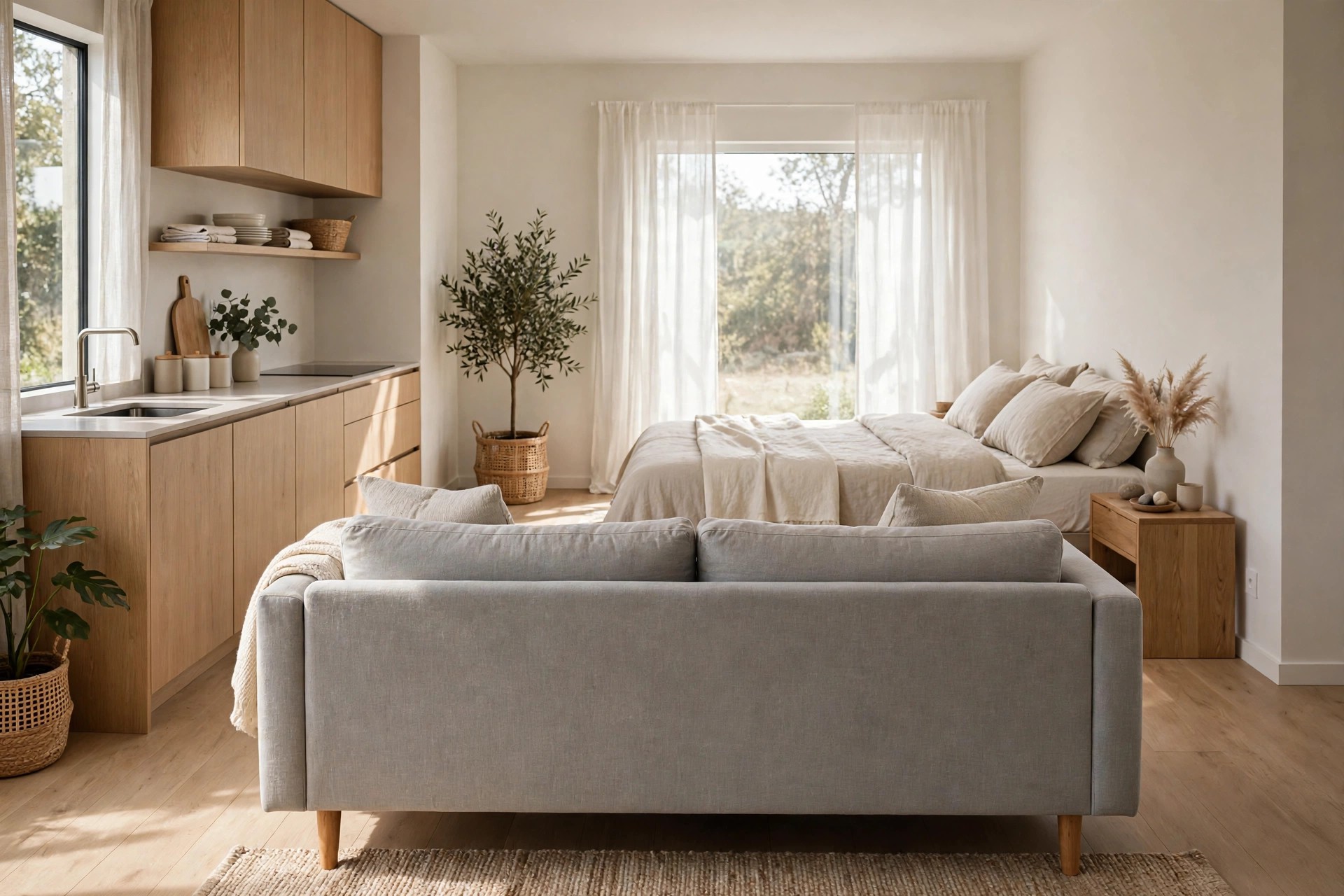
The sofa back is the cheapest room divider you will ever own. Float the sofa off the wall with its back to the bed, and two zones appear at once.
Sitting guests face the living side, not the sleeping side. You face away from the unmade bed during the day, which quiets a surprising amount of stress.
Keep a clear walkway behind or beside the floated sofa. A floated piece that blocks the path to the bathroom will be shoved back within a week.
Add a narrow console or low shelf behind the sofa only if depth allows. Crowding the divider line defeats the calm it creates.
4. Give the Sofa Zone a Rug and Leave the Bed Zone Bare
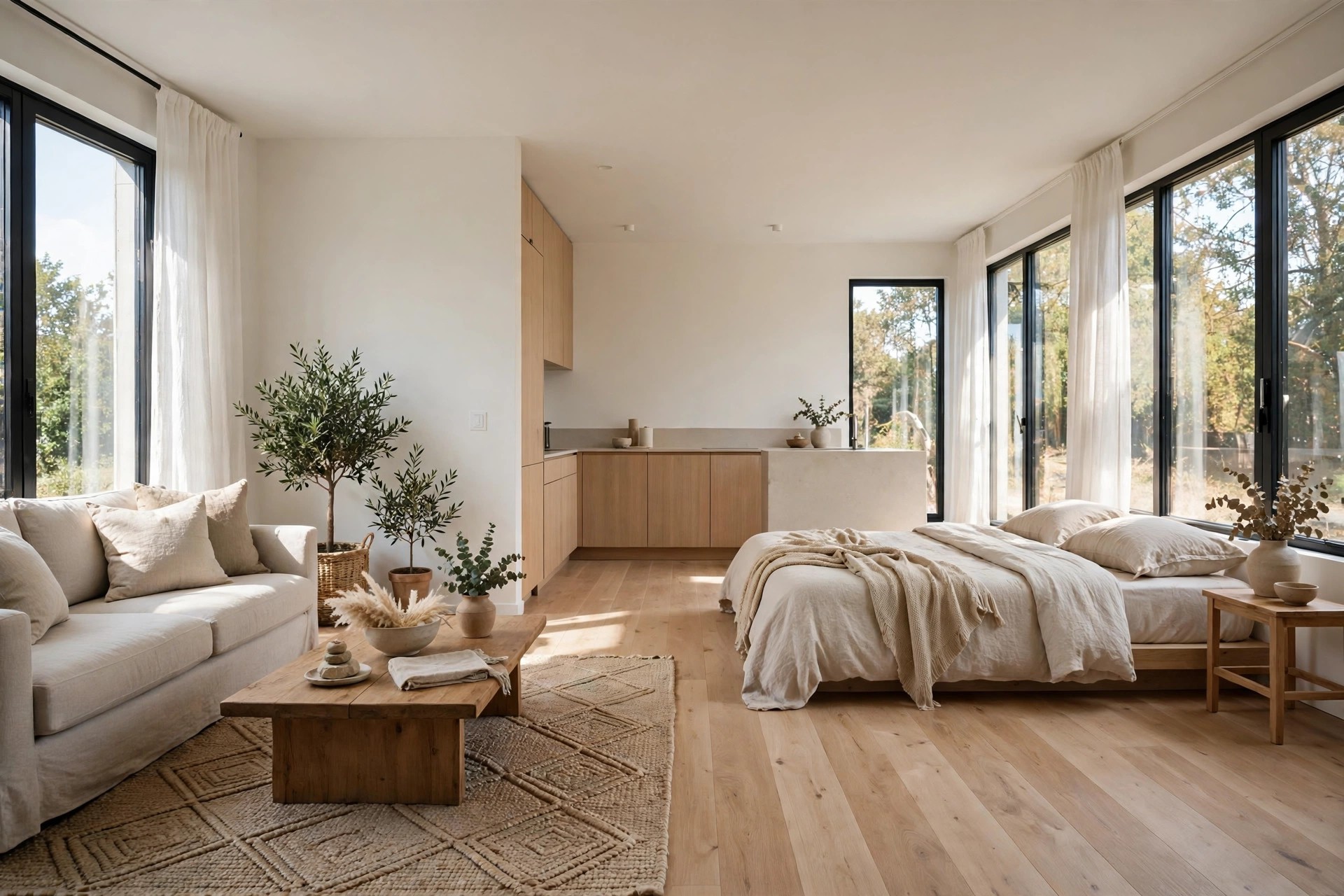
One rug under the sofa and coffee table marks the living ground. Bare floor or a small runner at the bed keeps the sleep zone visually separate.
Two big rugs in one room fight each other. One defined rug plus plain floor reads as two calm zones instead of two competing patterns.
Size the rug so the sofa front legs sit on it. That anchor keeps the living zone from drifting toward the bed when pieces get moved for cleaning.
Pick a rug color drawn from the sofa or its cushions. The bed zone can stay paler, which helps it feel restful and apart.
5. Set a Low Open Shelf Between the Two Zones

If the room allows one divider, make it a low open shelf. It splits the view at sitting height while light and air still pass over the top.
Load the shelf from both sides: books and a plant for the sofa side, spare bedding and a reading lamp base for the bed side.
Keep the top of the shelf below the window sill line if you can. A low divider keeps the one window serving both zones through the day.
Leave a few cubes empty. Full cubes read as a wall of clutter from the door, while gaps keep the shelf feeling light.
Check the shelf at night with only the bed lamp on. Gaps that look airy by day can look messy in low light if cubes are overfilled.
6. Keep Both Pieces Low So the Sight Lines Stay Open
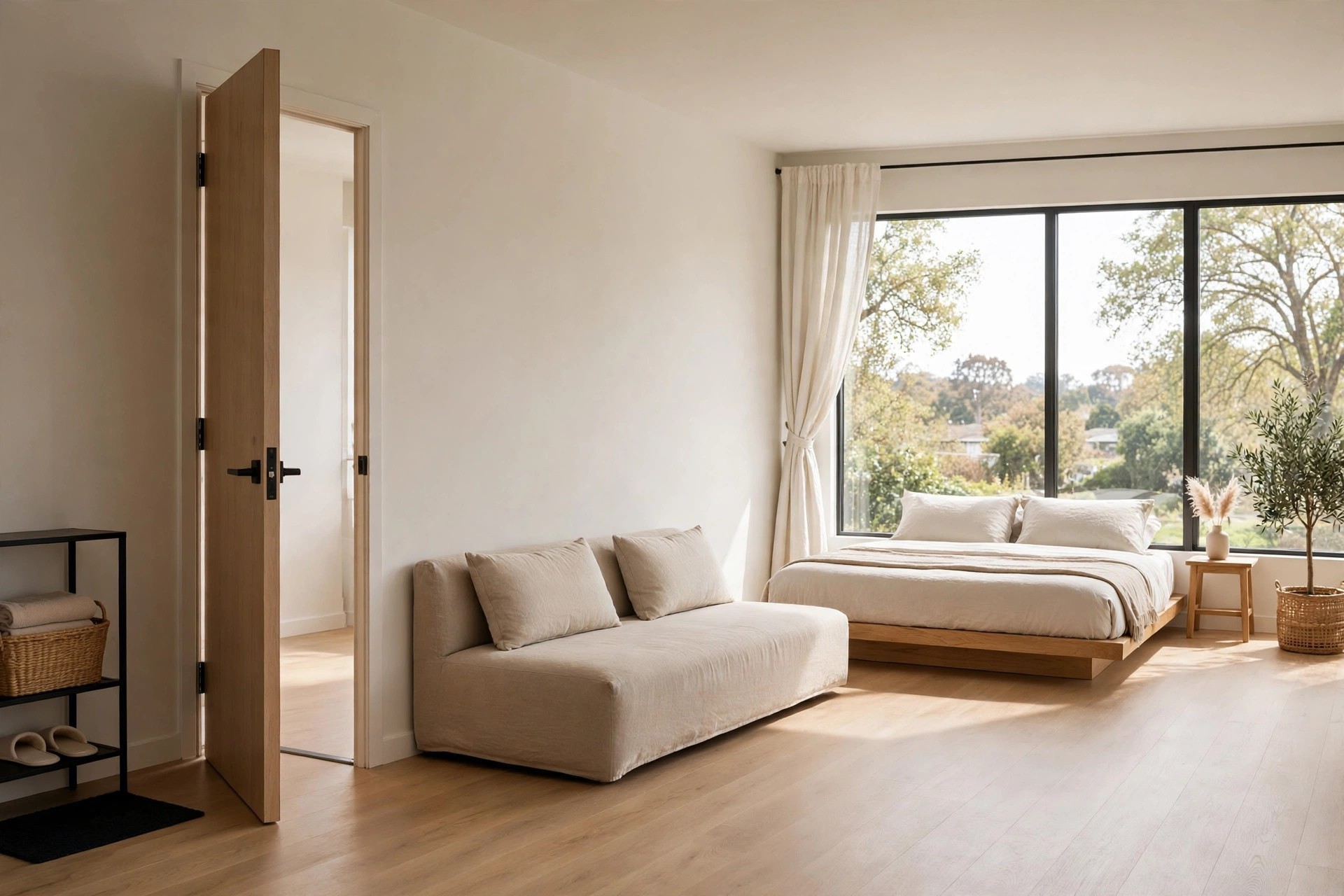
Tall headboards and high sofa backs chop a studio into boxes. Low profiles let your eye travel from door to window, and the room reads larger at a glance.
If your bed frame is tall, soften it with plain bedding in a pale tone. Pale bulk reads lighter than the same shape in a dark color.
For sleep zone color help, our neutral bedroom ideas for a studio apartment sleep zone keep the bed end calm without new furniture.
Test sight lines from the door and from the kitchen counter. Those two views are the room you and your guests actually live with.
7. Make the Bed Fully Every Morning, No Exceptions

In a studio, the bed is half the furniture and most of the view. A made bed turns the room from bedroom back into living room each morning.
Keep the routine tiny: pull the duvet smooth, stand two pillows, fold one throw at the foot. Two minutes is enough when the layers stay simple.
Choose bedding that looks fine slightly rumpled. Linen look cotton or a soft check hides a fast morning make better than crisp white hotel layers.
Once the bed reads as a neat block, the sofa zone feels like a real room again. That daily reset is the studio habit that matters most.
8. Hang a Curtain on a Tension Rod for Night Privacy
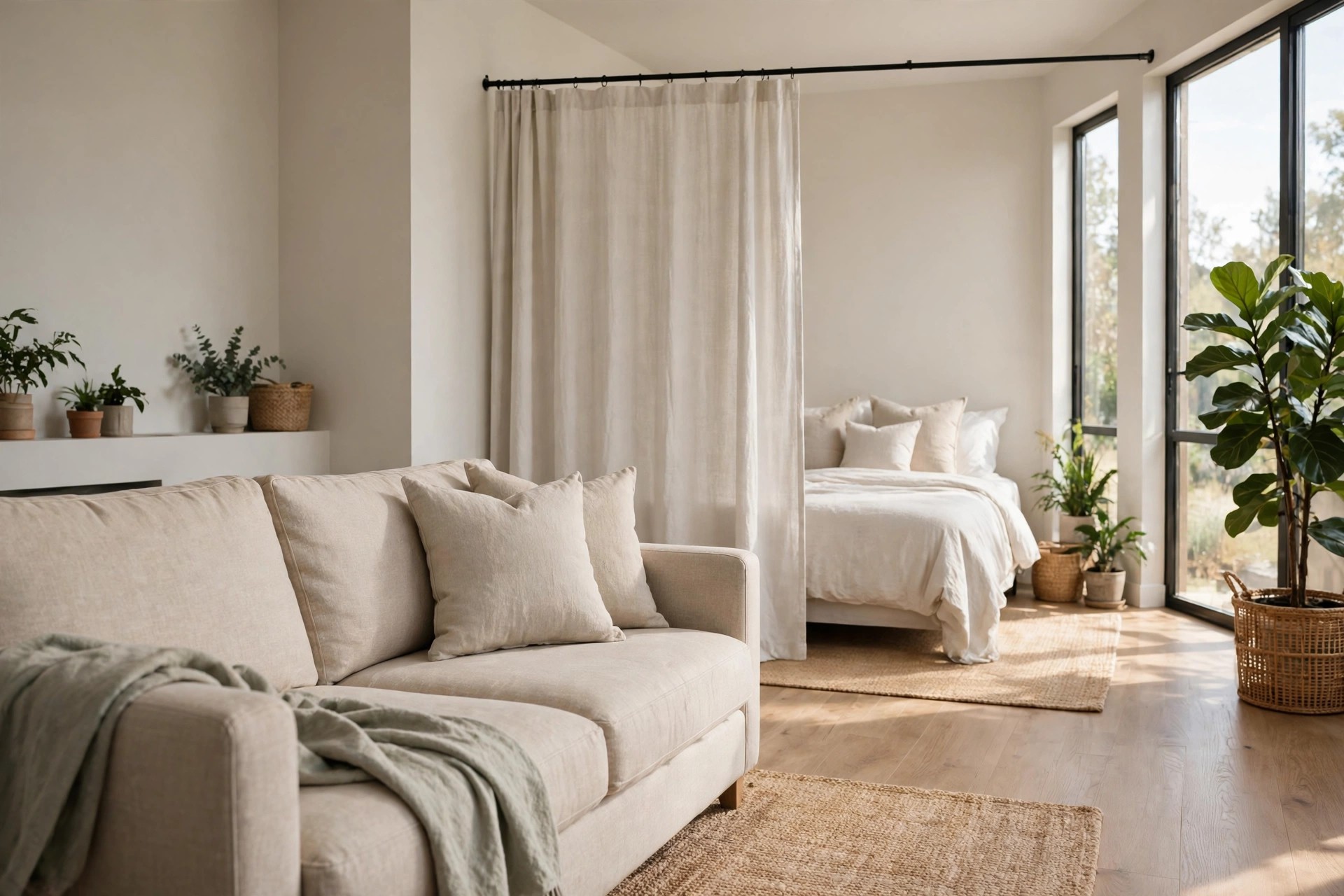
A plain curtain across the bed corner gives the sleep zone a door that renters can install. A tension rod or ceiling hooks hold it without wall damage.
Close it at night and when guests stay late. One layer of fabric changes the feel of the bed corner more than its size suggests.
Choose a curtain in the room main color, hung as high as the rod allows. A pale panel keeps light moving while still hiding the bed.
Open it fully each morning. A curtain left half closed all day shrinks the room and gathers dust along its lower edge.
9. Use Two Lamps, One Owned by Each Zone

One shared lamp forces both zones into the same mood. A lamp for the sofa and a small lamp for the bed let each zone switch off on its own schedule.
At night, bed lamp only means the living end goes dark and sleepy. Sofa lamp only means the bed sits in shadow while you watch a film.
Keep both bulbs the same warm tone. Matching light keeps the room feeling like one home even when only half of it is lit.
For graduates setting up a first studio on a tight cycle, our first apartment ideas for graduates order these same buys by pay day.
10. Choose One Small Table That Can Serve Both Pieces

A light side table on casters or with easy legs can work double shifts. By day it holds a mug beside the sofa, by night a book beside the bed.
One moving table beats two fixed ones in a tight studio. Floor stays open, cleaning gets faster, and the room flexes for guests or work.
Pick a top that fits a book, a glass, and a phone, no more. Bigger tops collect clutter in direct proportion to their size.
Give the table a parking spot when not in use, near the shelf or the sofa end. A homeless table drifts into walkways nightly.
11. Store Under Both Pieces Instead of Adding Furniture
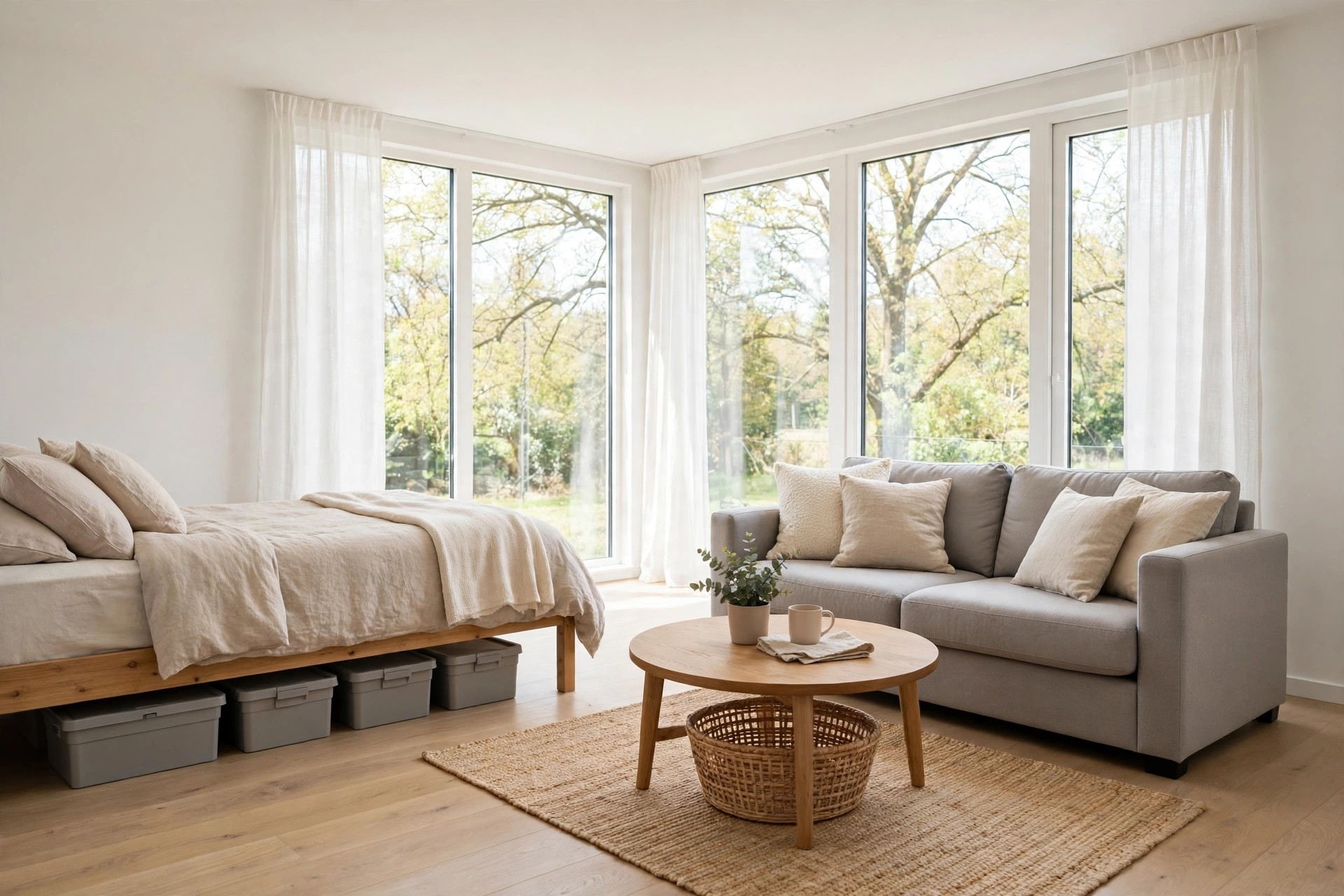
Every extra cabinet steals floor from the bed or the sofa. Low boxes under the bed and a basket under the coffee table hold the overflow instead.
Under bed space suits spare bedding and off season clothes. The sofa side basket suits throws, chargers, and the remote family that breeds weekly.
Measure clearance under both pieces before buying boxes. Studio furniture often sits low, and a box that will not slide is a box on show.
Label boxes by zone, bed or sofa, on the short end. Clear labels keep guests and tired brains from mixing the two systems.
Keep spare blankets inside the sofa side basket, not on the bed. Guest bedding stored at the living end keeps the sleep zone feeling private.
12. Let the Sofa Carry the Strongest Color in the Room

Color can mark zones faster than furniture can. Let the sofa or its cushions carry the strongest color, and keep the bed in paler, quieter tones.
Your eye then reads bright as living and pale as sleep without a sign. Guests settle on the colorful end without being told where to sit.
Repeat the sofa color once at the far end, in a cushion on the bed or a print frame. One repeat ties the room together across the divide.
Our small living room ideas for apartments show strong sofa colors balanced against pale bedding in one room plans.
13. Keep the Path From Door to Window Completely Clear
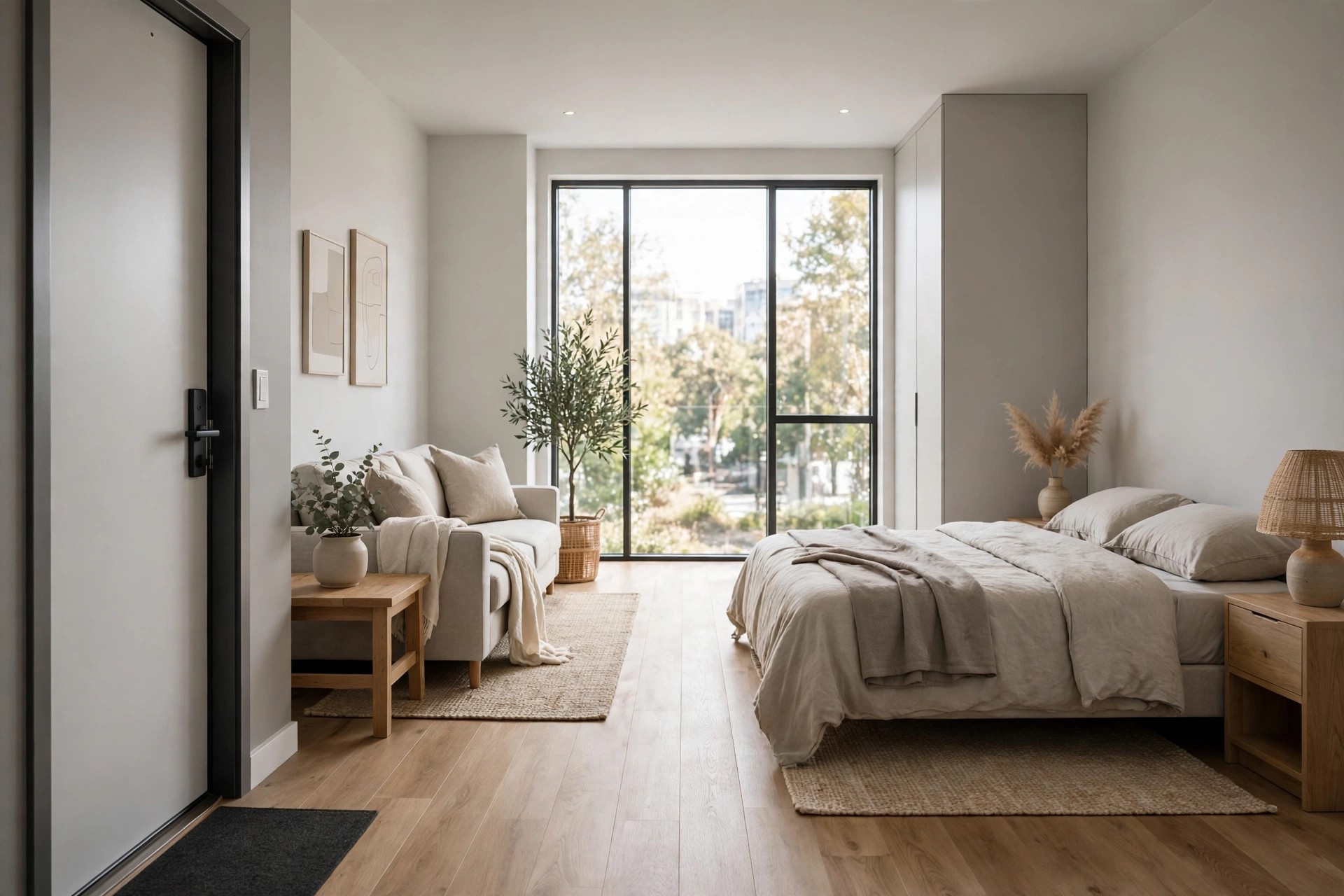
A clear straight path is the studio version of a hallway. Keep the line from door to window free of tables, baskets, and shoe piles at all times.
That path lets you cross the room at night without a shin audit. It also lets daylight and air move, which keeps the far corner from feeling stale.
Tape the path on the floor when you first arrange the room. If a piece crosses the tape, it moves, however much you like it there.
Recheck the path after guests leave and after laundry day. Studios drift, and the path is always the first casualty.
14. Use One Shared Palette So the Room Still Reads as One Home
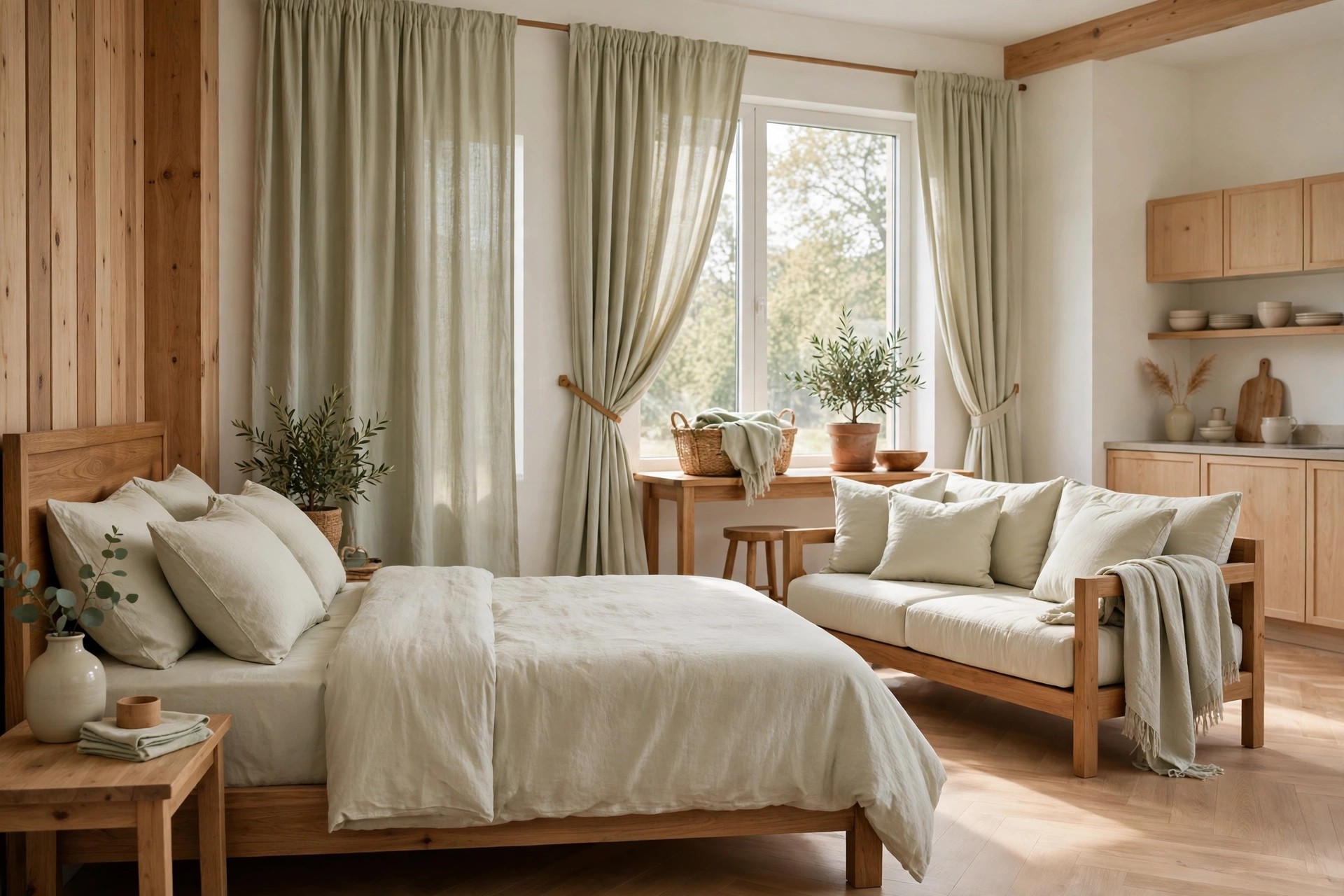
Zones should differ in mood, not in language. One palette of three or four colors, used in both zones, keeps the studio feeling like a single home.
Bedding, cushions, curtain, and rug should all draw from that palette. The bed can lean pale and the sofa deeper, but the colors stay related.
For whole room plans on a set total, our first apartment ideas under 1000 dollars split one palette across bed and sofa zones.
When a new item arrives in an off palette color, test it at the doorway first. If it shouts from there, it belongs in a drawer, not a zone.
Photograph the room from the door each evening of that week. A short photo run shows drift, piles, and pinch points your eyes stop seeing.
15. Live With the Layout a Week Before Buying Any Divider
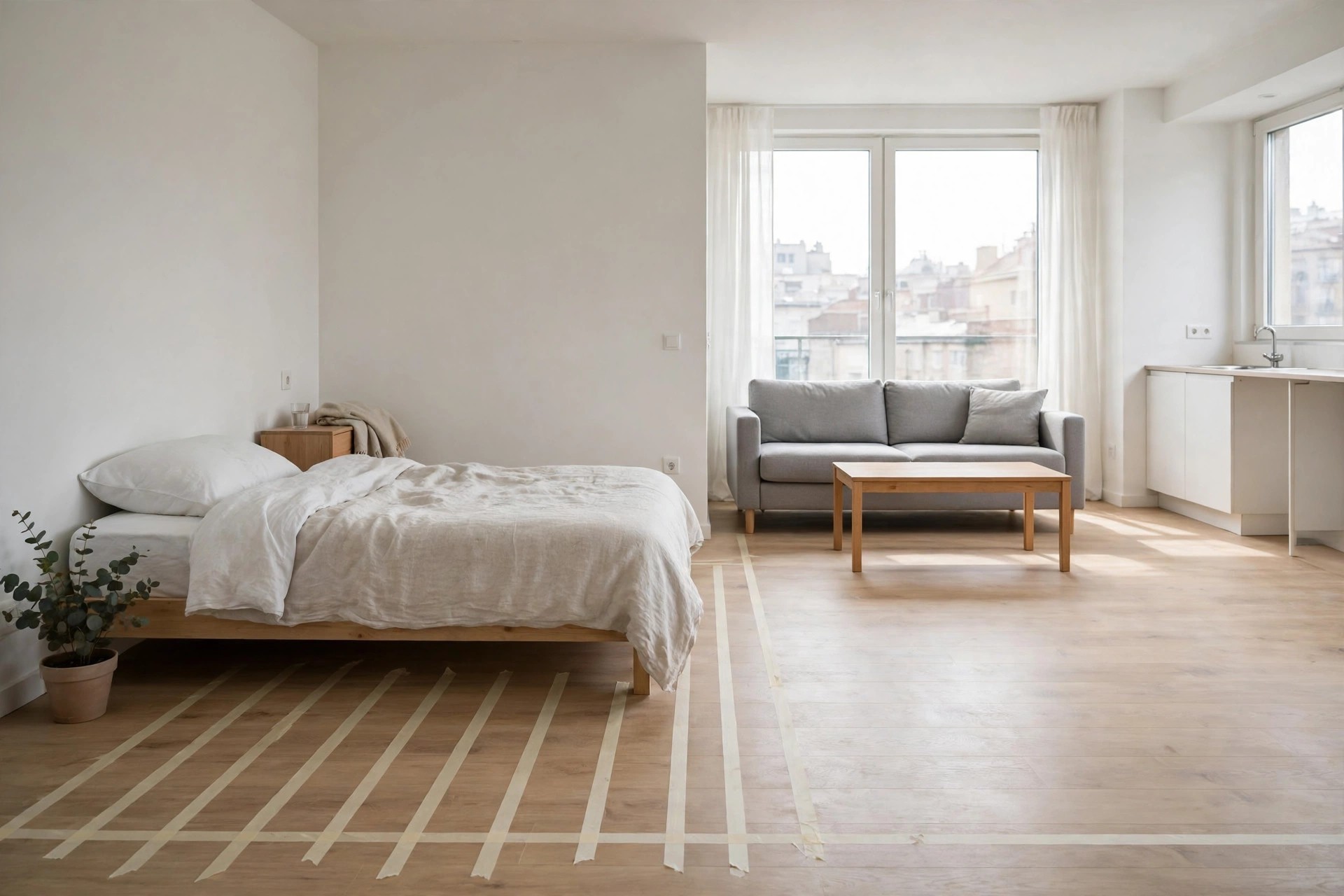
Dividers are the buy most studios regret when rushed. Live with the taped, basic layout for a full week of workdays, guests, and laundry before spending.
Notice where you actually bump, cross, and pile. The real pinch point is often beside the kitchen counter, not between bed and sofa at all.
Move the sofa six inches and test again. Small shifts solve more studio problems than new furniture, and they cost an afternoon, not a paycheck.
After a week, the right divider, rug size, and lamp spots name themselves. Buying then is calm, and the room keeps what you choose.
A studio works when bed and sofa stop competing for the same ground. Window choice, a floated sofa back, one rug, and two lamps settle most of that fight.
These studio apartment ideas with a bed and sofa ask for placement first and spending last, which suits a first home on a real budget.
Save this layout order to your first apartment ideas board, and tape your door to window path before you move a single heavy piece.
Tape, test, and only then spend, and the single room will start to feel like two calm places.


