

15 Thanksgiving Place Setting Ideas for a Dining Room With Bench Seating
A bench changes a dining table. It seats three where two chairs fit, it slides away when the meal ends, and it asks one thing of the host: settings that work for people who slide in instead of sitting down.
These thanksgiving place setting ideas for a dining room with bench seating keep every plate, glass, and napkin in reach of a guest who cannot pull a chair closer. Spacing, order, and a few small courtesies do the whole job.
Set the bench side first, before the chairs go in. The bench fixes its guests in a row, so once you learn to set for the row, the chair side becomes the easy half of the table.
None of this needs new furniture or a bigger room. It needs a tape measure, a charger at every place, and the habit of thinking about how a guest actually gets into the seat you are setting.
This post contains affiliate links. If you buy through them, we may earn a small commission at no extra cost to you. See our Affiliate Disclosure.
1. Even Spacing Measured Along the Bench
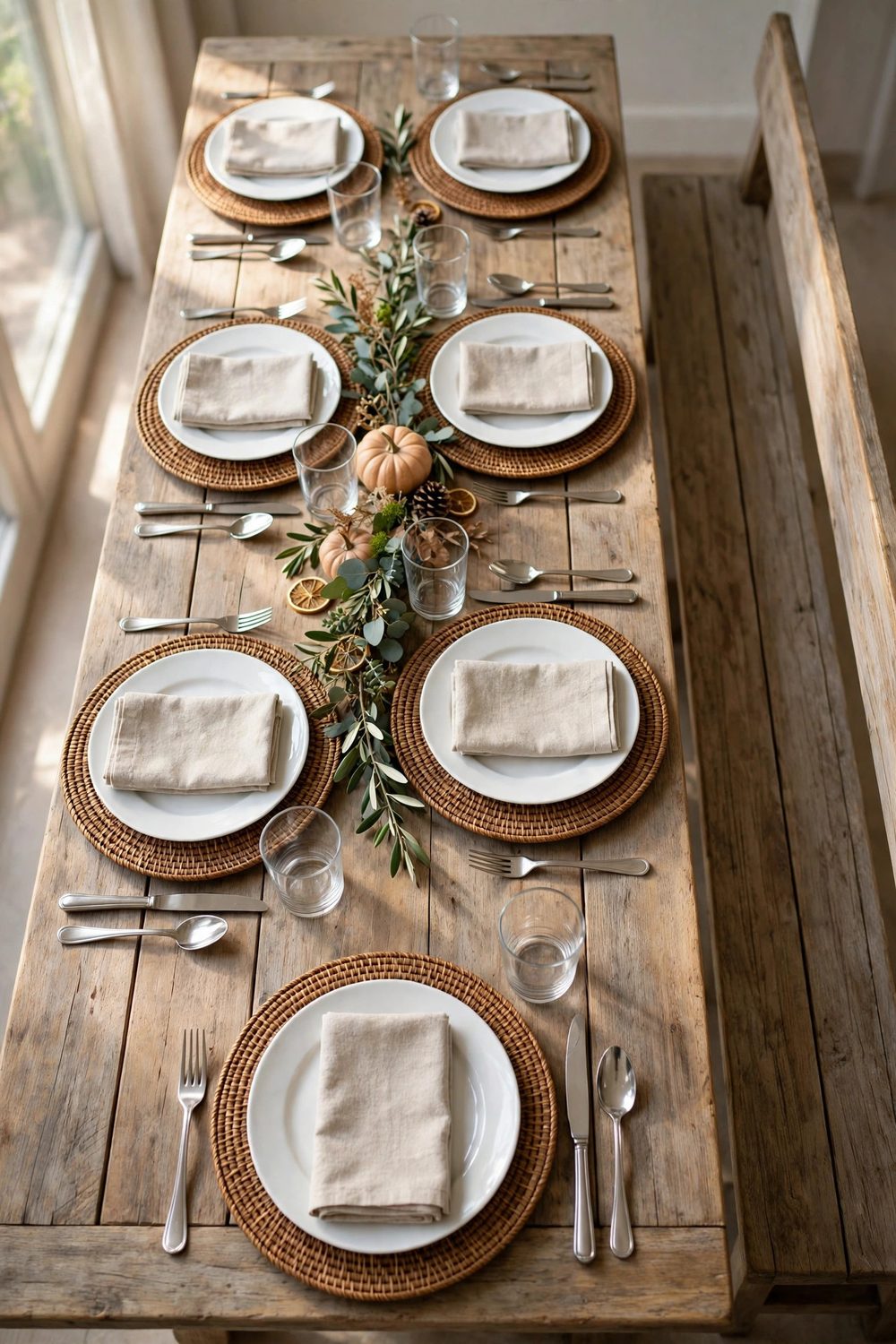
A bench hides its seat divisions, so the settings have to draw them. Measure the bench length, divide it by the number of guests on that side, and set each plate at the center of its share.
Even shares stop the slow squeeze that ruins bench seating by the second course. The guest in the middle keeps elbow room, and the guests at the ends stop drifting off the edge of the bench.
Mark each center point with the charger first, then build the rest of the setting around it. Chargers are wide and easy to nudge straight, and a straight row of chargers calms the whole table.
2. A Seat Pad at Every Setting to Mark Each Place
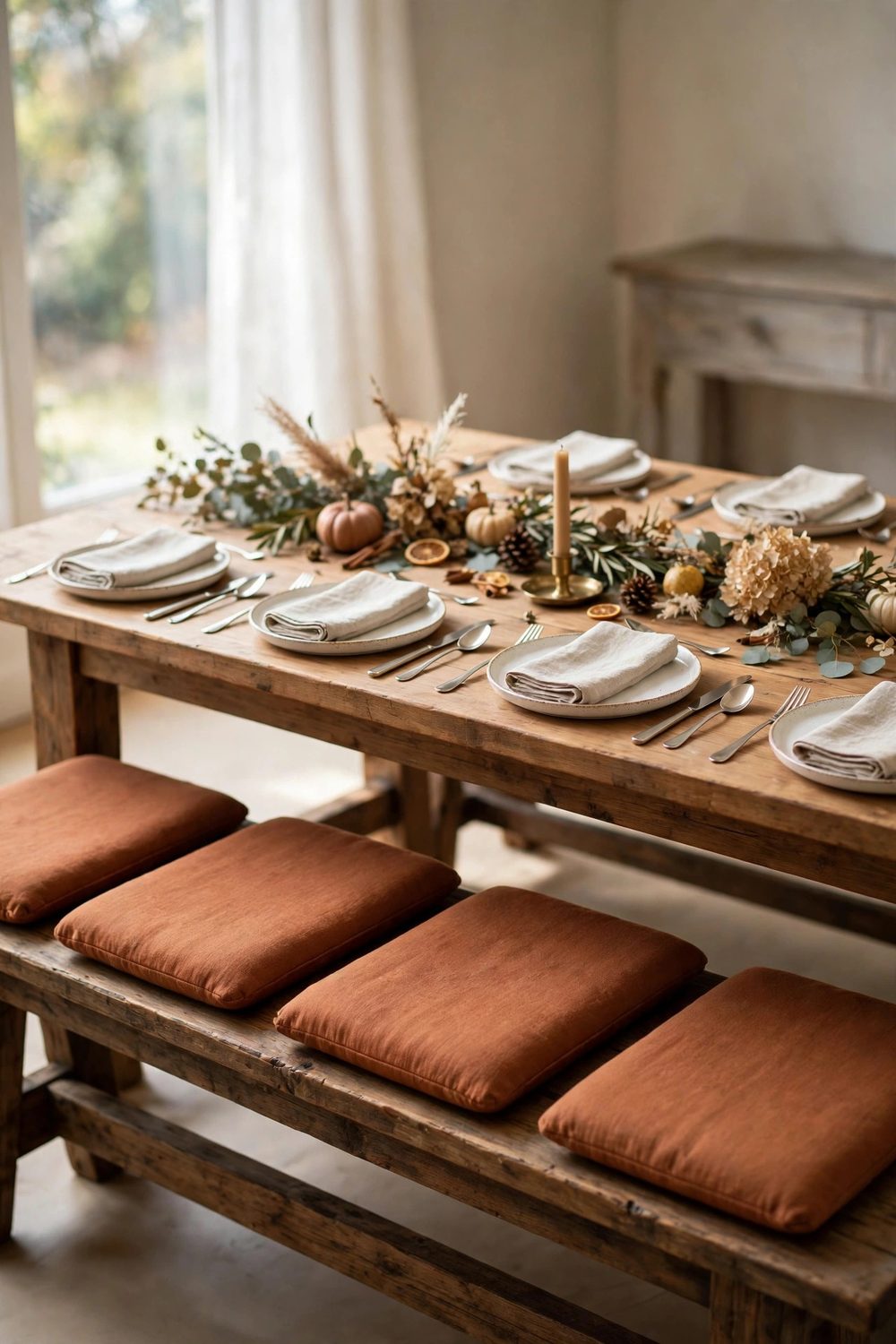
One flat seat pad per setting turns a plain bench into a row of clear places. Guests read the pads as their seats the moment they walk in, and the shuffle of who sits where simply ends.
Pads also make a long dinner kinder. Bare wood gets hard by the pie course, and a thin pad in a warm plaid or plain rust keeps the bench side at the table as long as the chair side.
Washable covers matter here. Gravy finds the bench side first, since plates pass along it, and a pad you can wash the next morning is a pad you will still own next Thanksgiving.
3. Charger Plates to Anchor the Bench-Side Settings
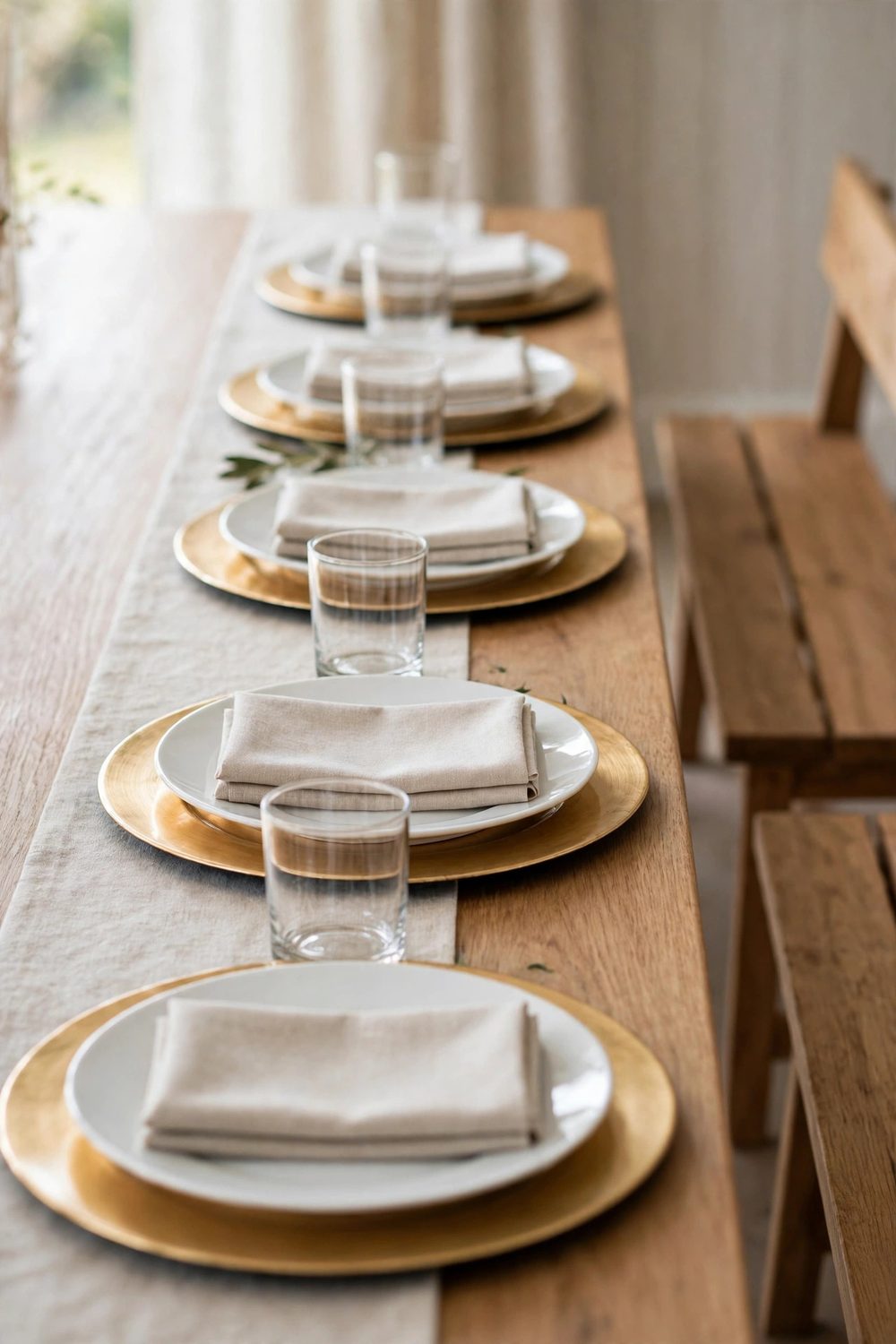
Bench guests cannot scoot a plate closer, so the setting must start in the right spot. A charger at each place fixes that spot: wide, flat, and heavy enough to stay where the sliding and passing begins.
Set the dinner plate on the charger when you serve, and lift both away together between courses. The charger line stays unbroken down the bench, and the table never shows the gaps that make a row look scattered.
Choose chargers with a low rim. A high rim catches on sleeves as bench guests reach, and the whole point of the anchor is that nothing on that side of the table moves by accident.
4. One Runner Down the Middle to Mirror Both Sides
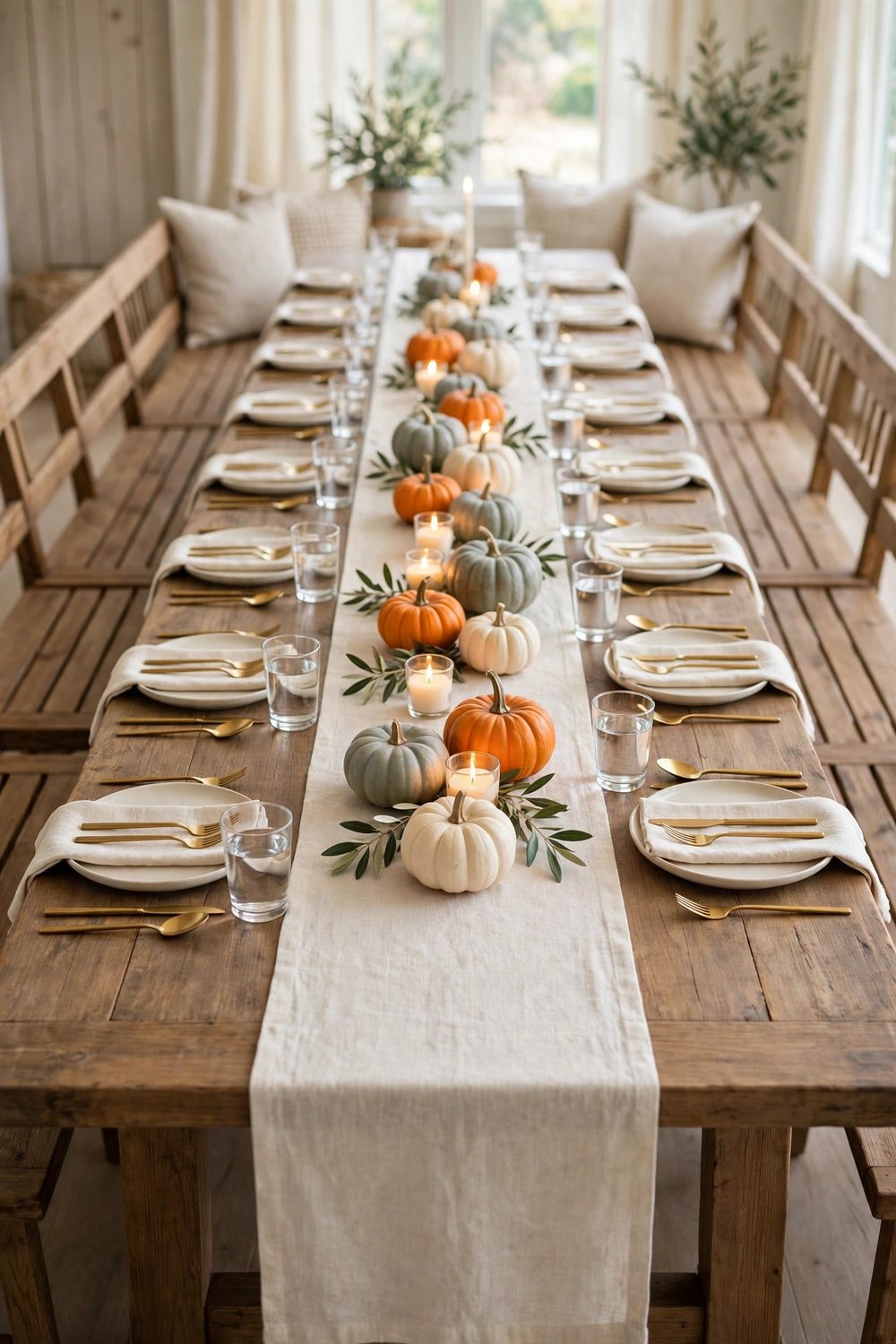
A single runner down the center of the table ties the bench side to the chair side. Both rows of settings face the same cloth line, so the table reads as one table instead of two different events.
Keep the runner narrow on a bench table. Bench guests sit a touch closer to the table edge, and a wide runner pushes their plates toward them and steals the room their arms need.
The folds at each bench setting can echo the runner too: these napkin folding ideas for a formal family dinner table include flat folds that sit neatly in a tight row.
5. A Low Centerpiece the Bench Side Can See Over
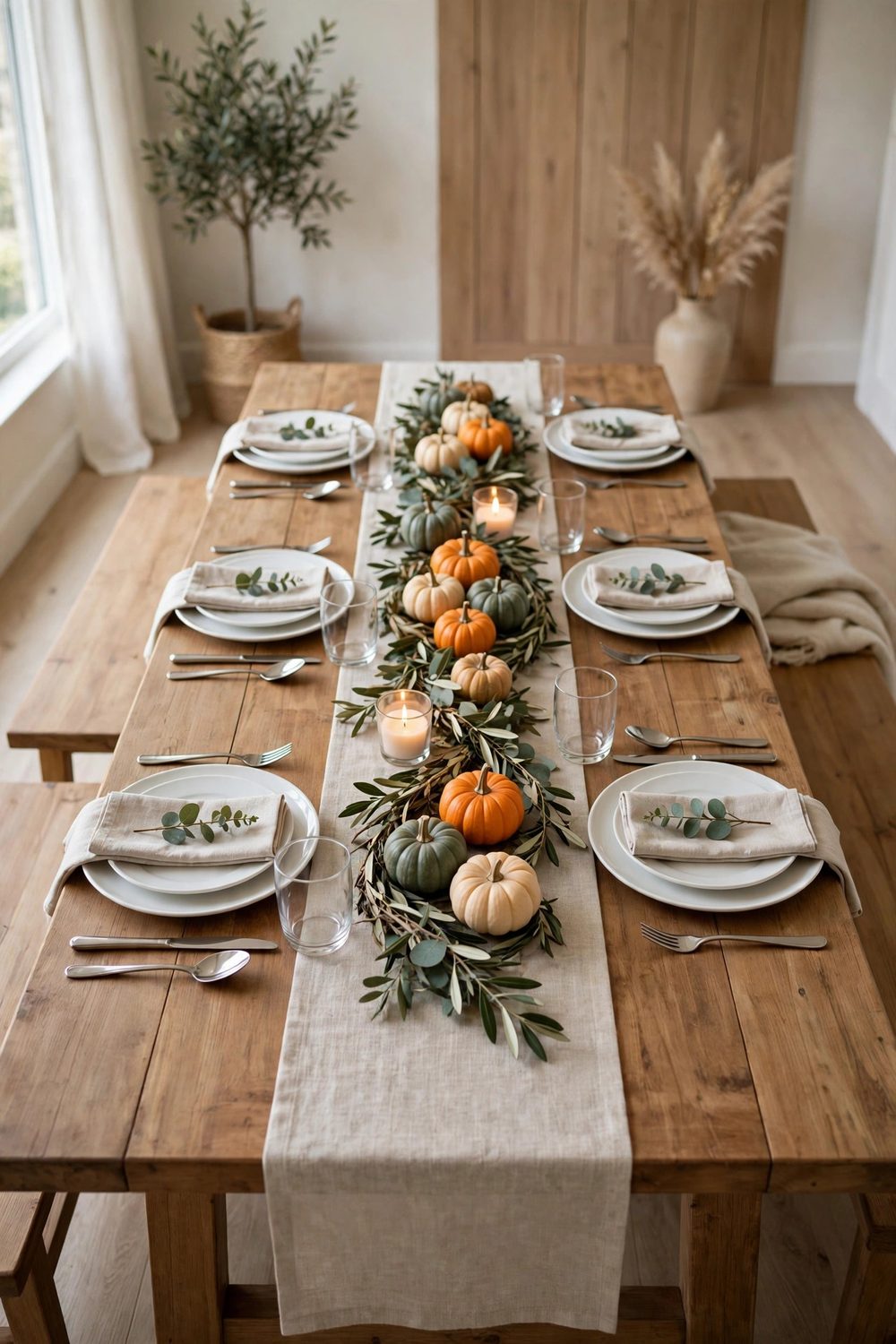
Bench guests sit a little lower than chair guests, so a tall centerpiece cuts the bench row off from the talk. Keep the middle low: a flat garland, a row of small pumpkins, and short candles in glass.
A low center also keeps serving simple. Bowls pass over it without a lift, and nobody on the bench has to stand to see who is asking for the gravy at the far end.
Test the height from the bench itself before guests arrive. Sit where the middle guest will sit, look across, and trim anything that blocks a face. Two minutes of testing saves a silent bench row.
6. Napkins on the Plate, Never on the Bench
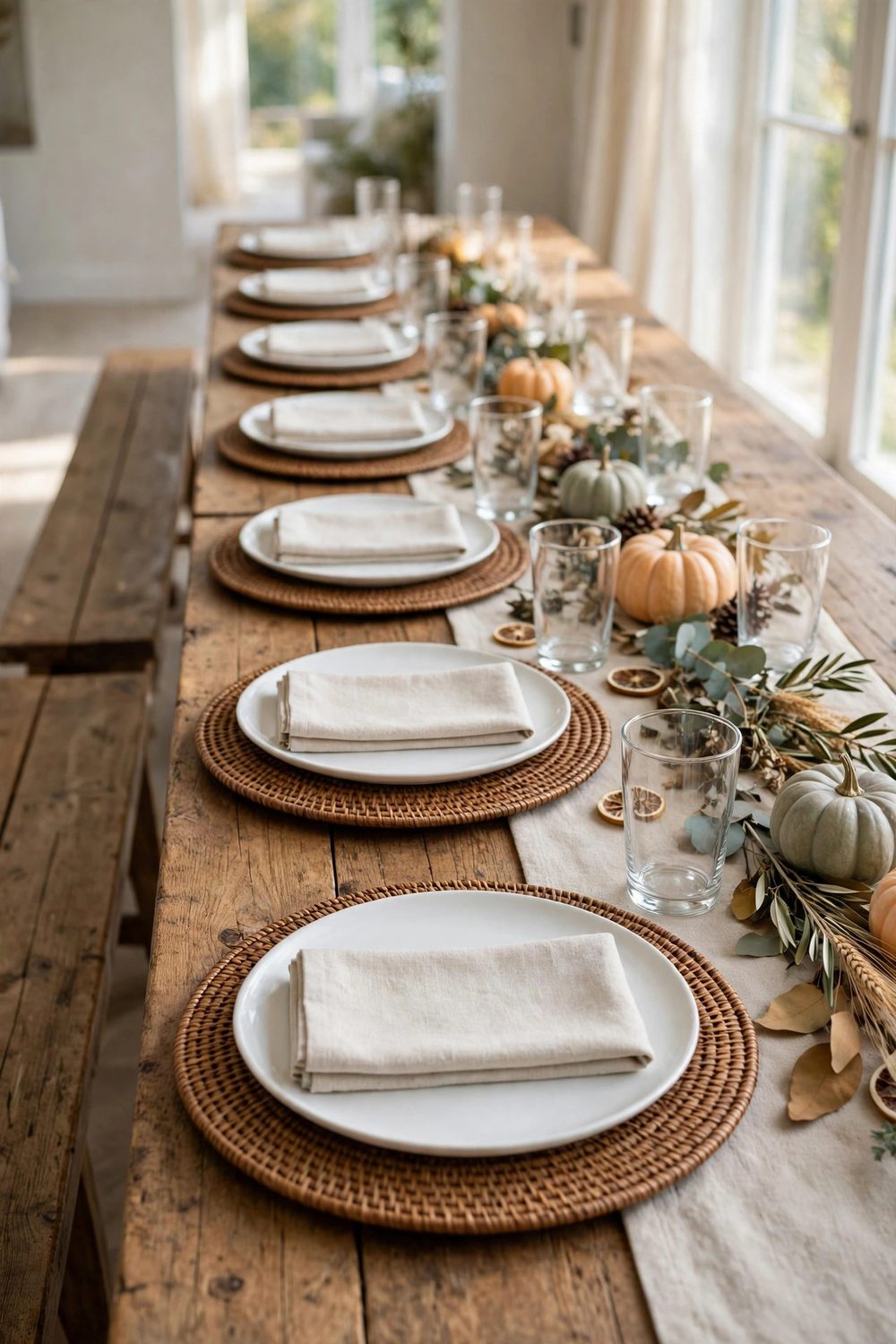
A napkin left on the bench gets sat on. It happens at every bench table where settings are laid early, and the guest finds a warm, creased napkin under one leg when they slide in.
Put the napkin on the plate instead, folded flat or standing in a simple fold. On the plate it stays clean, it marks the setting from across the room, and it is in the guest’s hand the moment they sit.
If you set the table hours ahead, the plate is also the dust-free spot. A napkin riding the bench collects everything a busy dining room shakes loose during a day of cooking.
7. Glasses Set Inward, Away From the Bench Edge
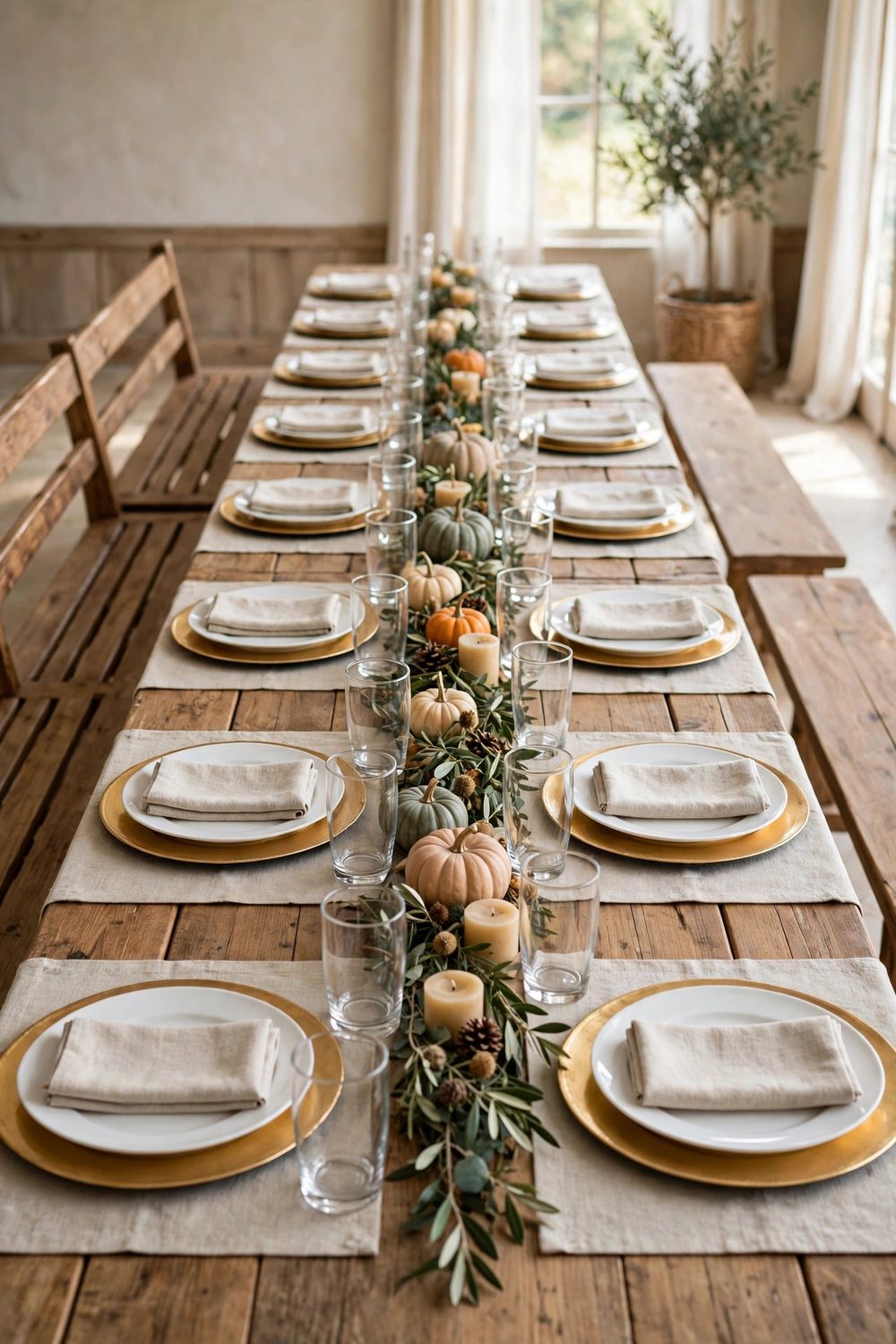
Bench guests climb in and out over the side, and a glass at the outer edge of their setting sits right in the climb path. Set glasses a hand’s width inward, toward the center of the table.
Inward glasses also pour better. The water pitcher travels down the middle of the table at a bench dinner, and a glass near the middle fills without a long reach across a neighbor’s plate.
Keep the rule the same at every bench setting. Guests learn the pattern at their own seat and stop hunting for glasses by touch once the candles are lit and the room gets dim.
8. Plain Place Cards to Settle the Bench Order
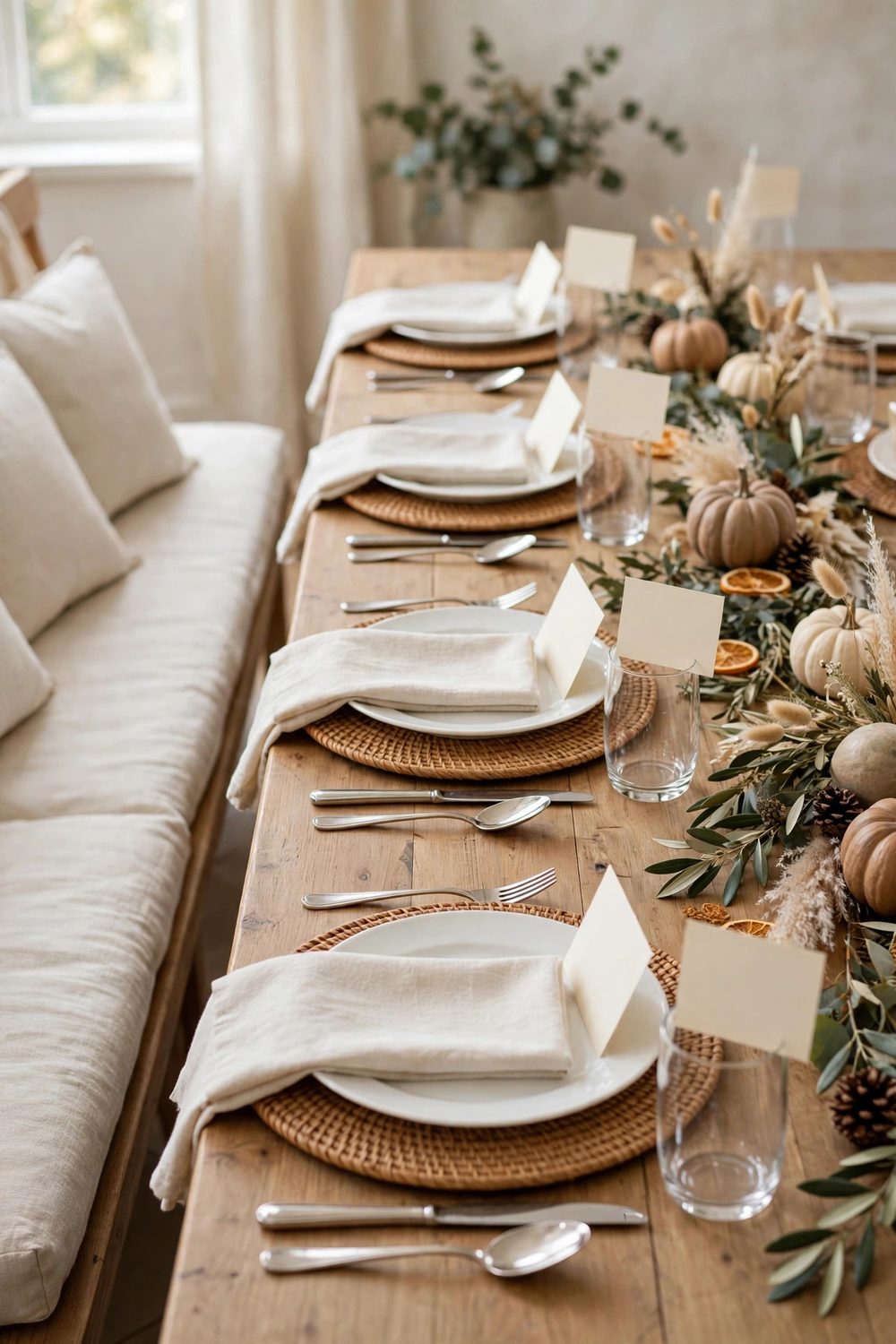
A bench has an order of entry: the guest at the far end must slide in first, or climb over everyone. Plain place cards at each bench setting settle that order before anyone holds a plate.
Seat the guests who stay put longest at the far end of the bench: the grandparents, the pie lovers, the talkers. Save the near end for the host’s helper, who will be up and down all meal.
Keep the cards plain and small, tucked at the top of each charger. The card is a tool here, not a decoration, and a small card does the job without crowding a tight setting.
9. Flatware Lined Up Tight on the Bench Side
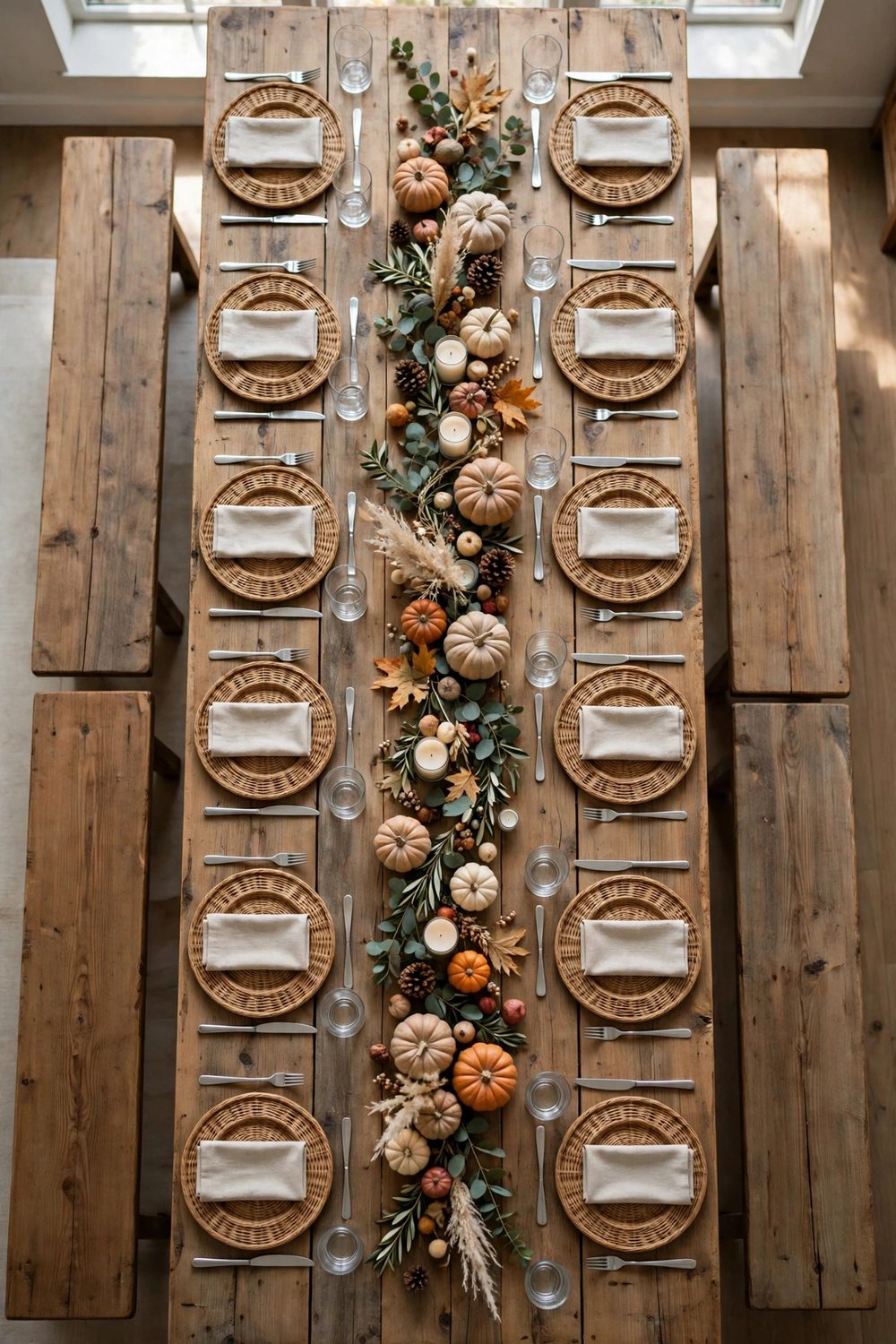
Bench settings run closer together, so loose flatware tangles with the next place. Line the fork, knife, and spoon up tight and straight at each setting, handles even, in the order guests will use them.
A tight line also helps in dim light. Candlelit dinners ask guests to find flatware by feel, and a straight row in the same place at every seat means nobody fishes around a neighbor’s setting.
Set the flatware after the chargers and plates, in one pass down the bench. One pass keeps the spacing honest, and you can sight down the row and fix any handle that drifts.
10. A Washable Bench Cushion in One Long Piece
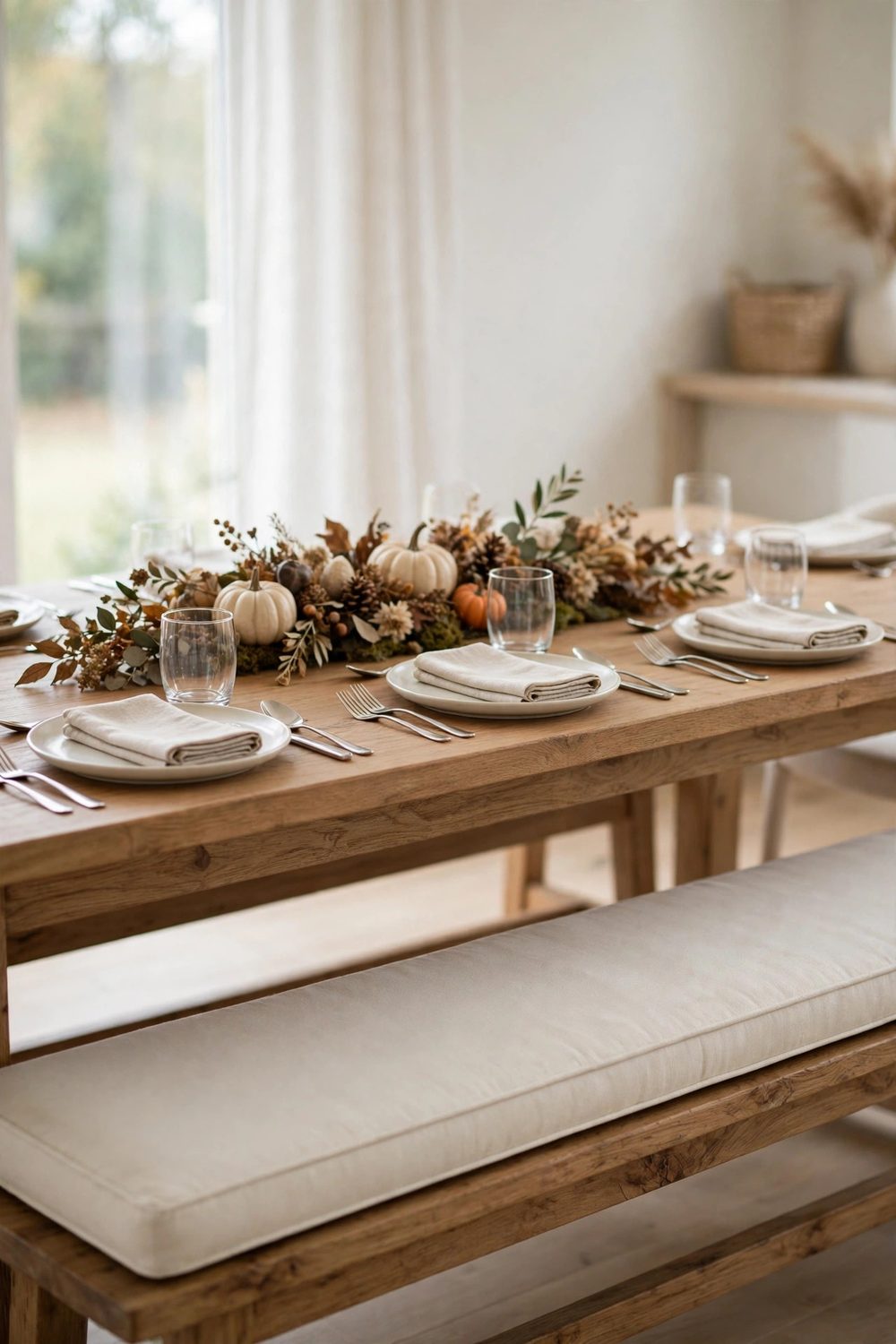
Separate pads mark places well, but one long washable cushion suits a bench the family uses all year. It softens the whole seat, and for Thanksgiving you mark the places with the settings themselves.
Choose a cushion with a cover that comes off in one pull. Bench cushions catch the day: drips from passing bowls, crumbs from the bread basket, and at least one full glass of cider over a long meal.
Air the cushion on the porch the next morning. Ten minutes of cold air freshens the fabric, and the bench goes back to daily use with no trace of the feast left on it.
The same serving flow works for the drinks end of the room in these drink station ideas for a dining room with bench seating.
11. Serving Bowls Only in the Middle Third
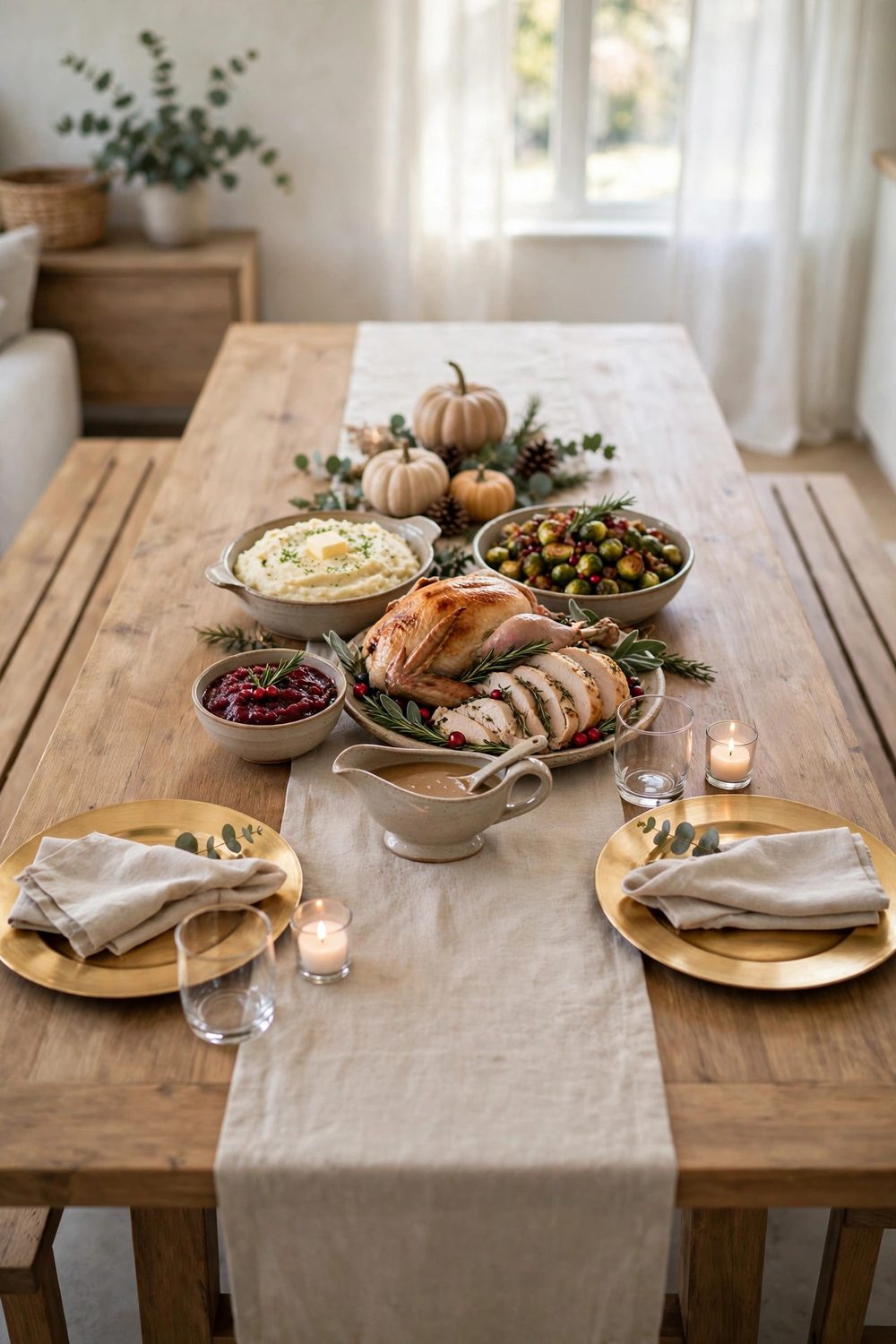
On a bench table, serving bowls belong in the middle third of the table and nowhere else. Bowls at the ends force bench guests to twist and reach, and twisting on a shared seat moves three people at once.
A middle-third rule keeps every bowl within one easy reach of both sides. The bench row passes bowls hand to hand along the row, which turns out to be faster than passing across a wide table.
Leave the two ends of the table clear for the water pitcher and the bread. Ends are where bench guests set a glass down mid-pass, and a clear end is a kindness nobody notices until it is missing.
12. Candles in Hurricanes, Set Back From the Slide Path
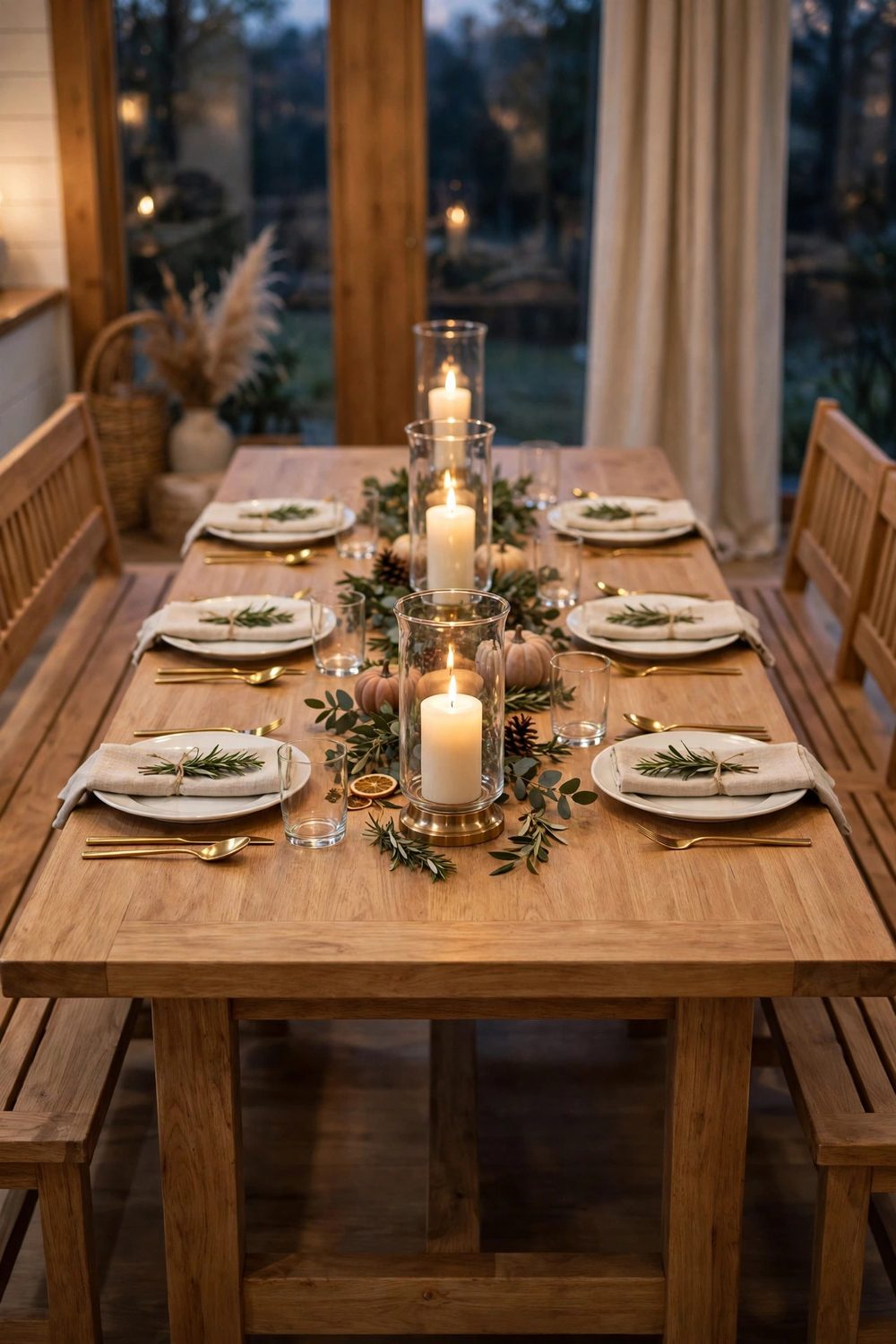
Bench guests slide along their side of the table, and sleeves travel with them. Candles in tall glass hurricanes, set in the middle of the table, give the glow without putting a flame in the slide path.
Hurricanes also steady the light. A bench shifting under three guests sends a small tremor through the table, and open tapers gutter and drip wax onto the cloth with every shift.
Light the candles after the bench side is seated. Reaching across seated guests with a lit match is the one move a bench dinner never needs, and the glow lands better once the room settles.
13. Matching Settings on Both Sides of the Table
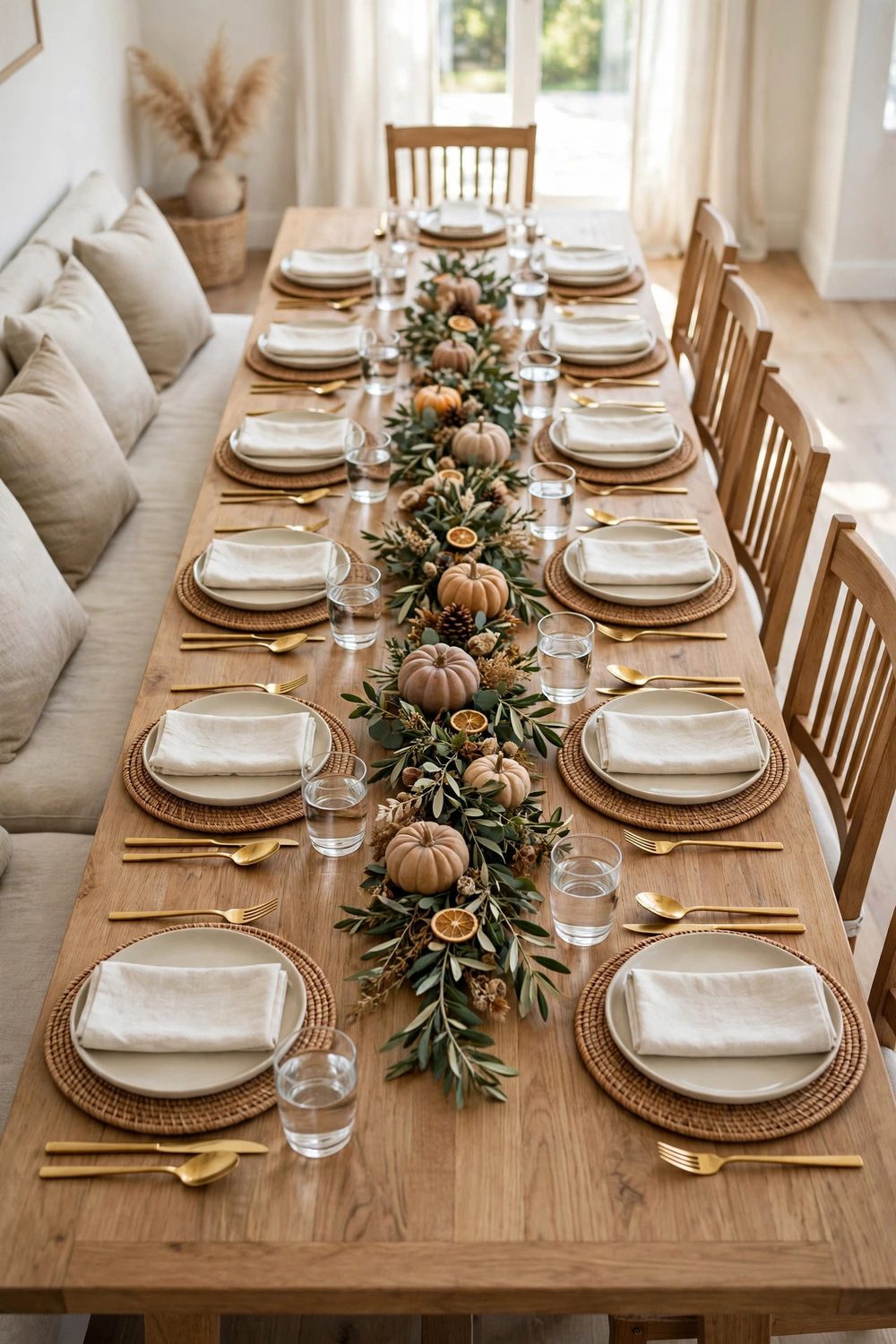
It is tempting to give the chair side the good plates and the bench side the everyday set. Guests notice. Matching settings on both sides tell the bench row they are at the same dinner, and they are.
Match the plates, the glasses, and the napkin fold, even if the bench itself is plainer than the chairs. The eye reads the settings as the table’s promise, and a kept promise shows in every photo of the meal.
If you are short of a full matching set, mix by course instead of by side. Everyone gets the same plate for dinner, and everyone gets the same bowl for dessert.
These table setting ideas in warm neutral autumn tones show how one palette holds a mixed set together.
14. A Warm Throw Over the Bench Back
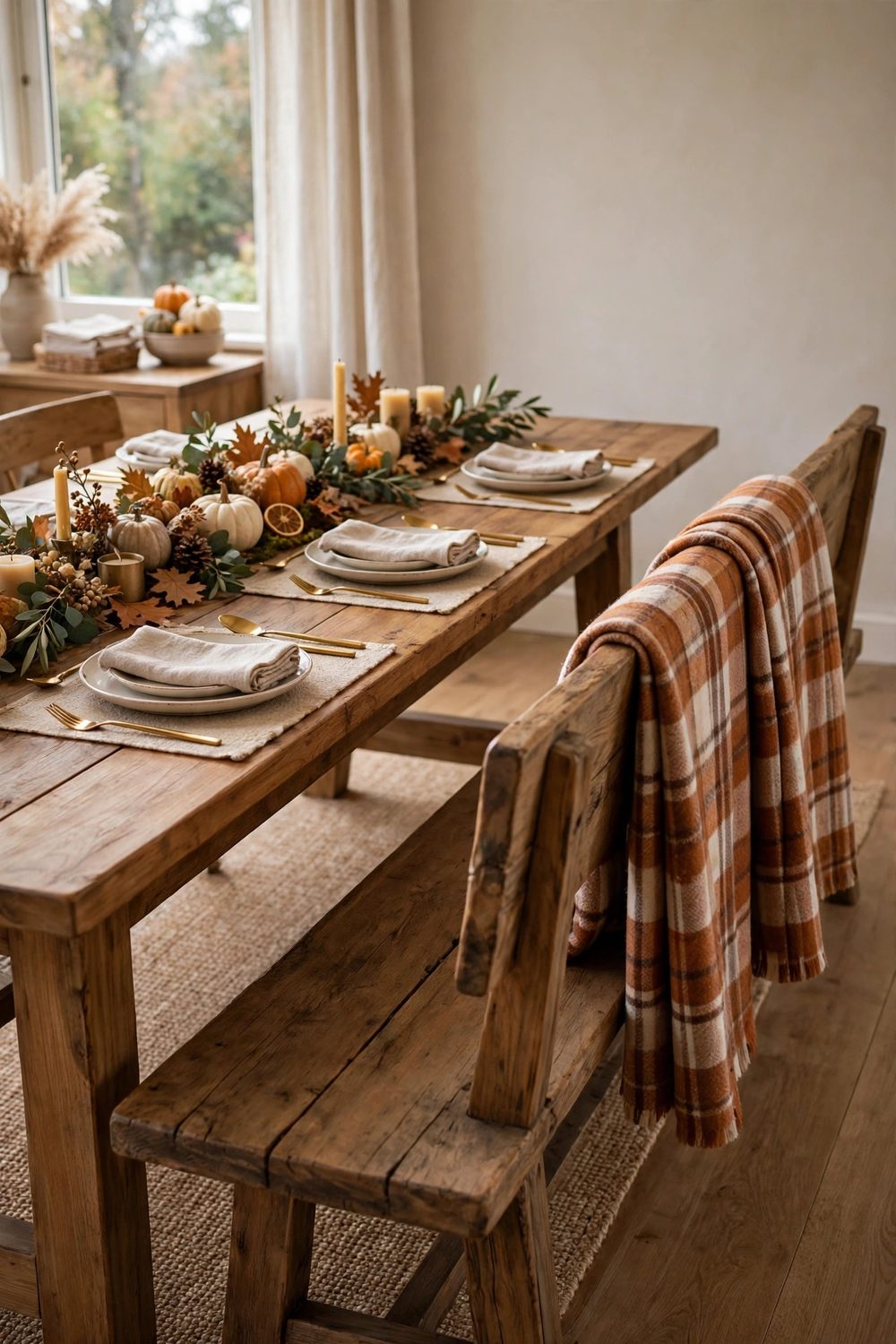
If your bench has a low back or sits against a cold wall, drape one warm throw along it before guests sit down. The throw softens the wall side, adds the fall color the room needs, and warms three backs at once.
Fold the throw lengthwise so it hangs in a neat band, not a slump. A band reads as part of the setting, while a slumped blanket reads as laundry that wandered into the dining room.
After dinner, the throw moves with the bench guests to the porch or the sofa. One piece of cloth serving two rooms in one evening is the kind of planning a small house runs on.
For the rest of the spread, these dining ideas for a round table family gathering handle the tables where no bench will fit.
15. The Bench Pushes Under the Table After Dinner
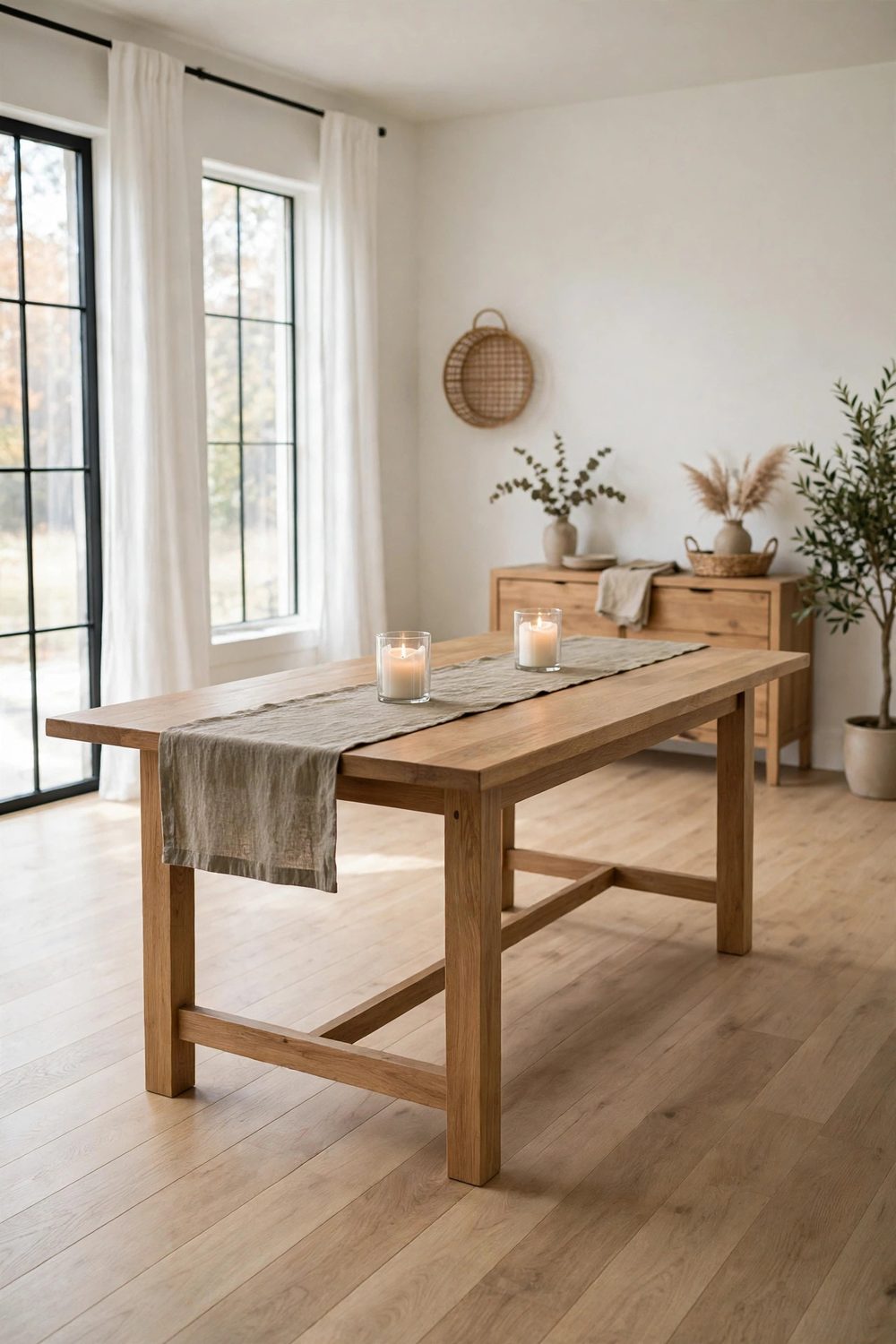
The best bench trick happens after pie. The settings clear, the bench slides fully under the table, and the dining room gains a wide lane of floor for coffee, kids, and the slow talk that ends the day.
Set with that moment in mind: nothing stored under the bench, no baskets parked beneath it. A bench that cannot slide home leaves the room as crowded after dinner as it was during it.
Do the slide while the coffee brews and the room is in motion anyway. When guests drift back with full cups, the room feels new, and the day ends in space instead of squeeze.
A low centerpiece from these centerpiece ideas from a natural autumn harvest carries over to the coffee hour without a single change.
A bench table works when the settings respect the slide: even spacing, plates that stay put, glasses set inward, and an order of entry nobody has to guess. Set the bench side first and the rest of the table follows without a fight.
Save this guide to your Thanksgiving Decor Ideas board on Pinterest, and your bench will seat its share of the family in comfort this year, with room to spare for one more cousin at the end of the row.


