

15 Thanksgiving Table Decor Ideas for a Small Dining Room
A small dining room does not need a smaller Thanksgiving. It needs a table plan that puts plates, glasses, and people first, and treats decoration as the guest that fits around them.
The usual mistake is to start with a big centerpiece and then squeeze dinner around it. On a small table, that order fails fast. Glasses get knocked, serving bowls have nowhere to land, and guests end up passing dishes over flowers they cannot see past.
Flip the order. Set the table for the meal first, then add color and warmth in the gaps that remain. This guide to thanksgiving table decor ideas for a small dining room follows that order from the first idea to the last.
Pick the ideas that fit your table shape and your guest count. A round table and a narrow rectangular table need different moves.
The best small tables borrow ideas from hosting in tight rooms, as in these first Thanksgiving hosting ideas in a small apartment.
This post contains affiliate links. If you buy through them, we may earn a small commission at no extra cost to you. See our Affiliate Disclosure.
1. A Low Centerpiece You Can See Over
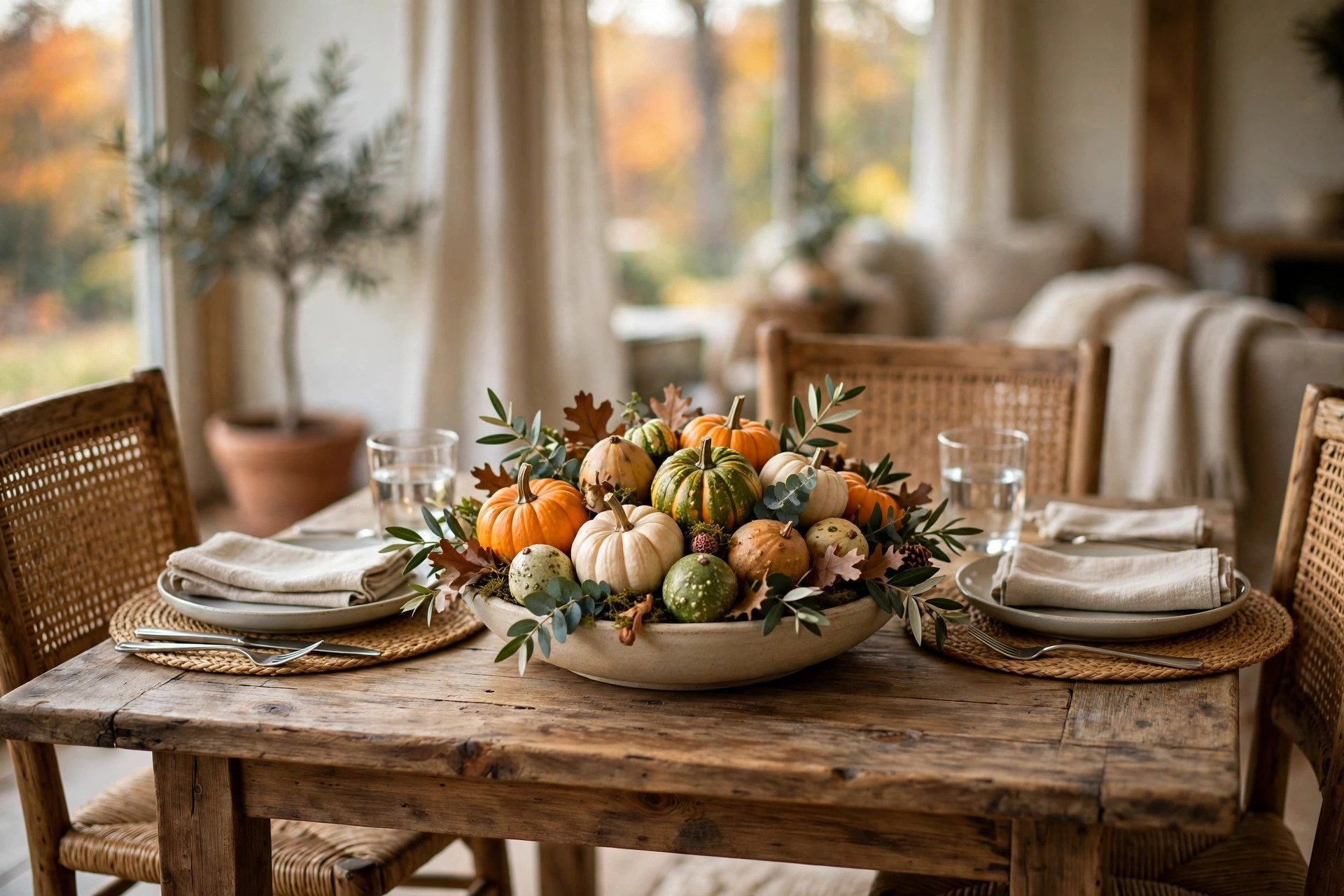
Build the centerpiece low, below the eye line of a seated guest. A shallow bowl of small pumpkins, a short row of gourds, or a low tray of leaves all sit under the sight line and keep conversation easy across the table.
Test the height with real chairs before guests arrive. Sit down, look across, and check that you can see the face opposite you without leaning to one side or the other.
Keep the centerpiece narrow too, no wider than a third of the table width. That leaves a clear lane on each side for plates, glasses, and hands reaching for food.
2. Move the Serving Dishes Off the Table
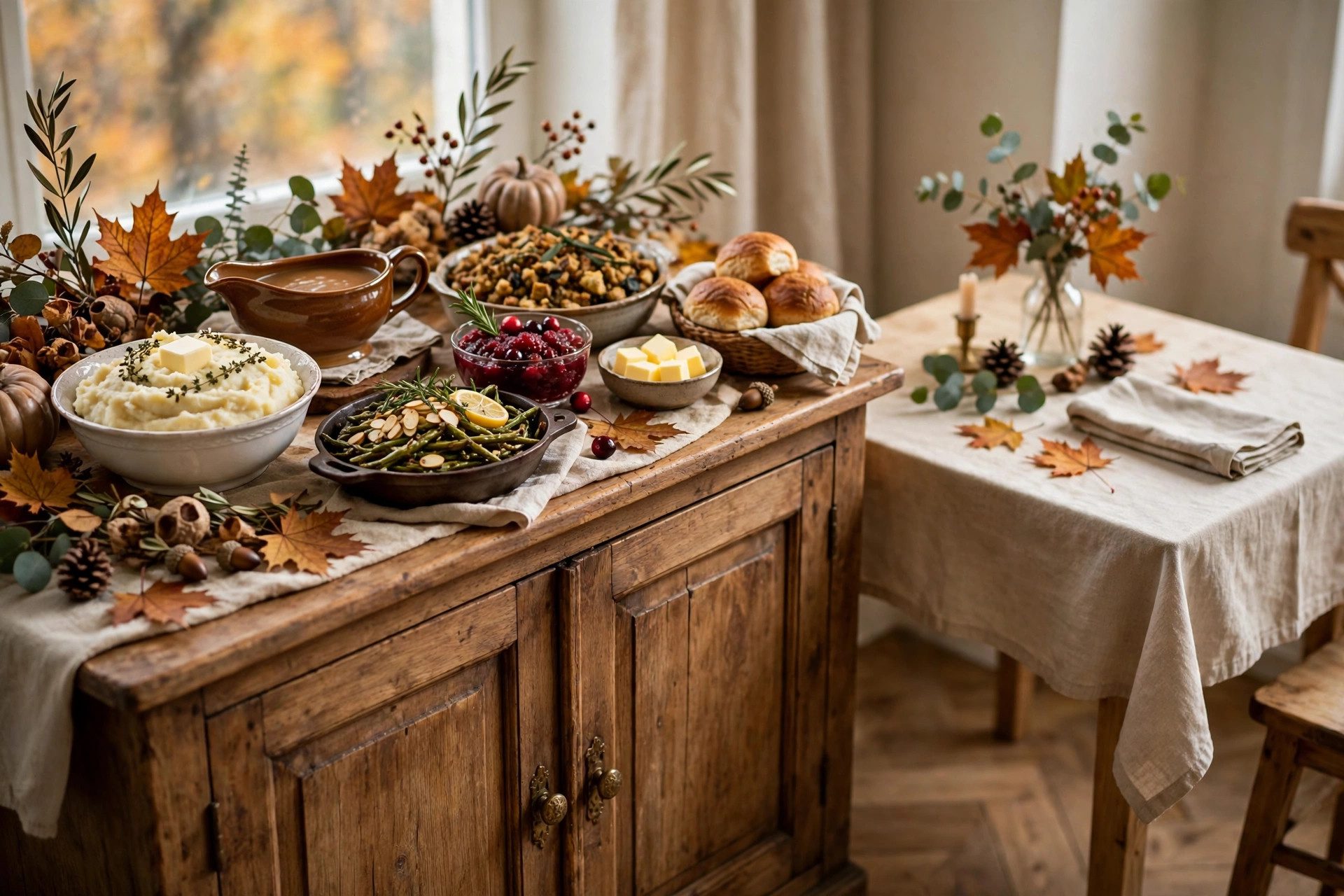
Serve from a sideboard, a kitchen counter, or a console pulled near the dining room. When the food lives off the table, the table only has to hold plates, glasses, and decor, and everyone breathes easier.
Set the serving spot up before you set the table, so you know exactly how much room you have freed. A serving plan made after the table is set usually means moving hot dishes twice.
Label nothing fancy at the serving spot, but group dishes in the order guests will take them. A clear order keeps the line moving and stops a queue forming in a narrow room.
3. One Runner, Not Three Layers
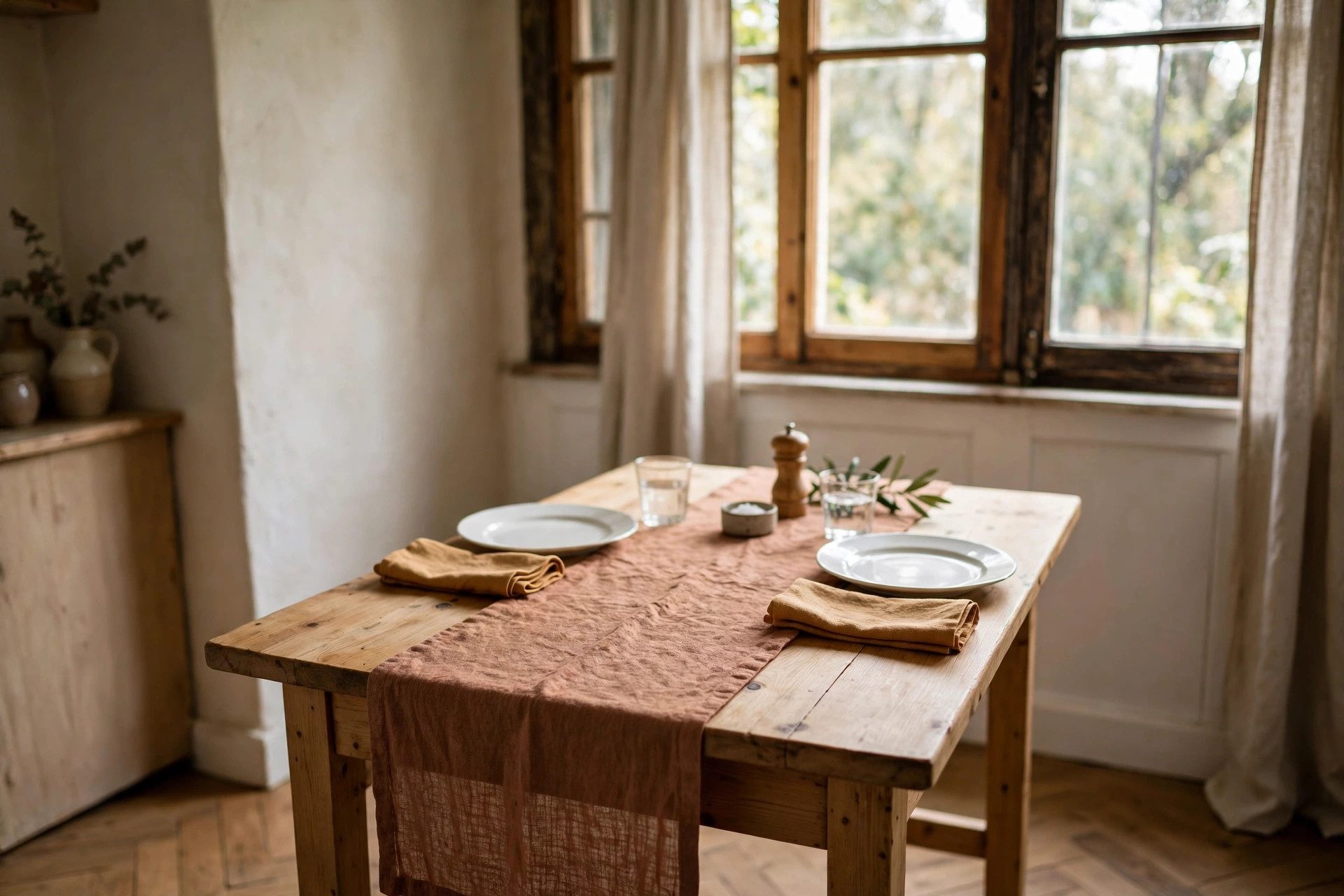
Lay one runner down the center of the table and stop there. A runner adds autumn color and a finished line without the bulk of a full cloth plus a runner plus placemats stacked on top of each other.
Pick a runner in one warm color, such as rust, olive, or cream. One color lets mismatched plates and glasses look planned, because the runner ties them together instead of competing with them.
Let the runner hang evenly at both ends, or tuck both ends under if the table is very short. A runner that drags on a chair seat will be pulled and wrinkled all evening.
4. Napkins That Carry the Autumn Color
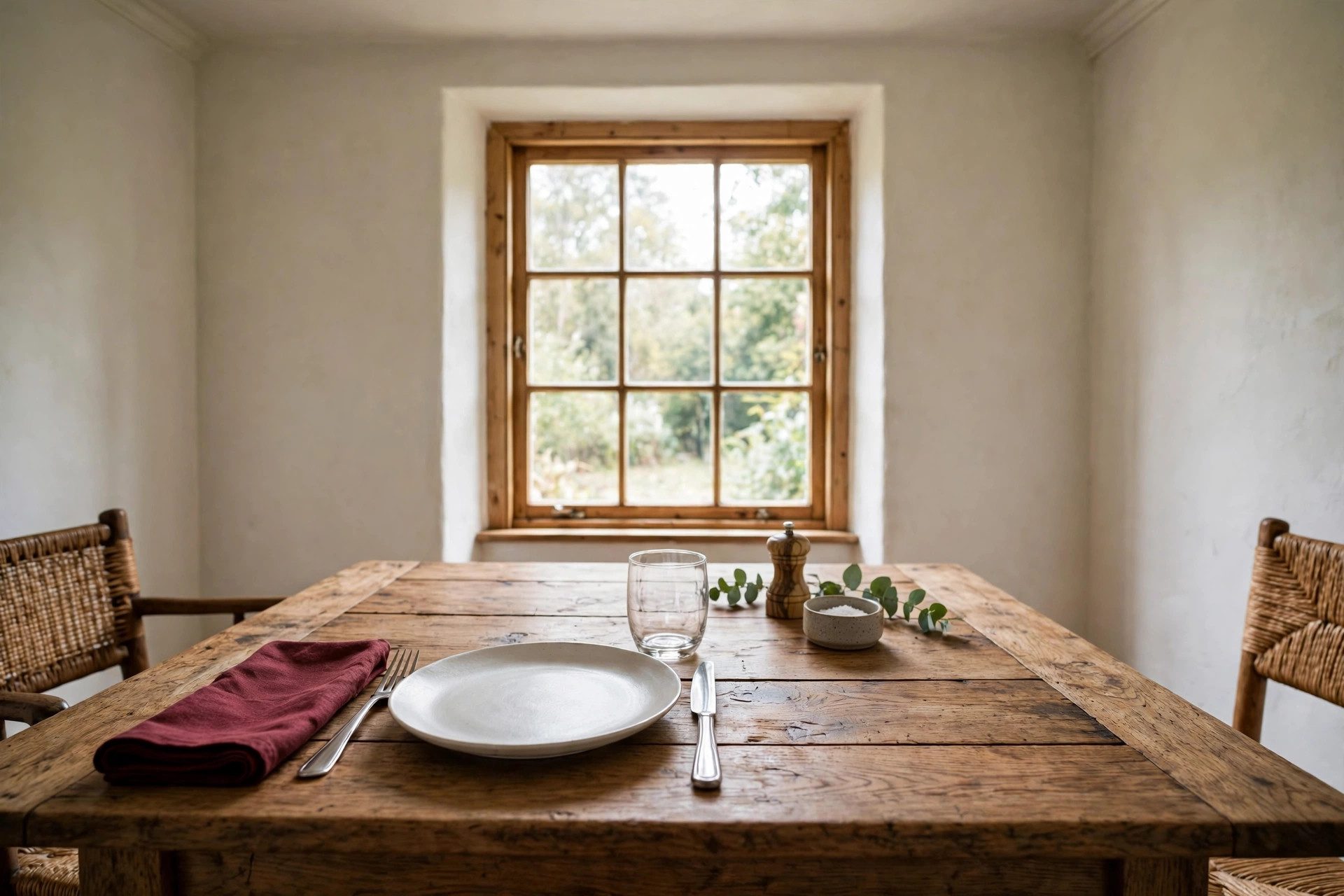
Put most of the color at each place setting, in the napkins. Cloth napkins in burgundy, terracotta, or mustard give a small table plenty of personality while leaving its center open for food and talk.
Fold each napkin simply, in a rectangle or a loose roll, and lay it beside or on the plate. A fancy fold looks pretty for ten minutes, then it is unfolded and forgotten, so keep the fold easy.
Repeat the napkin color once more in the room, such as in a candle or a small vase, and nowhere else. One repeat is enough to make the table feel planned from the doorway.
5. Mini Pumpkins as Place Markers
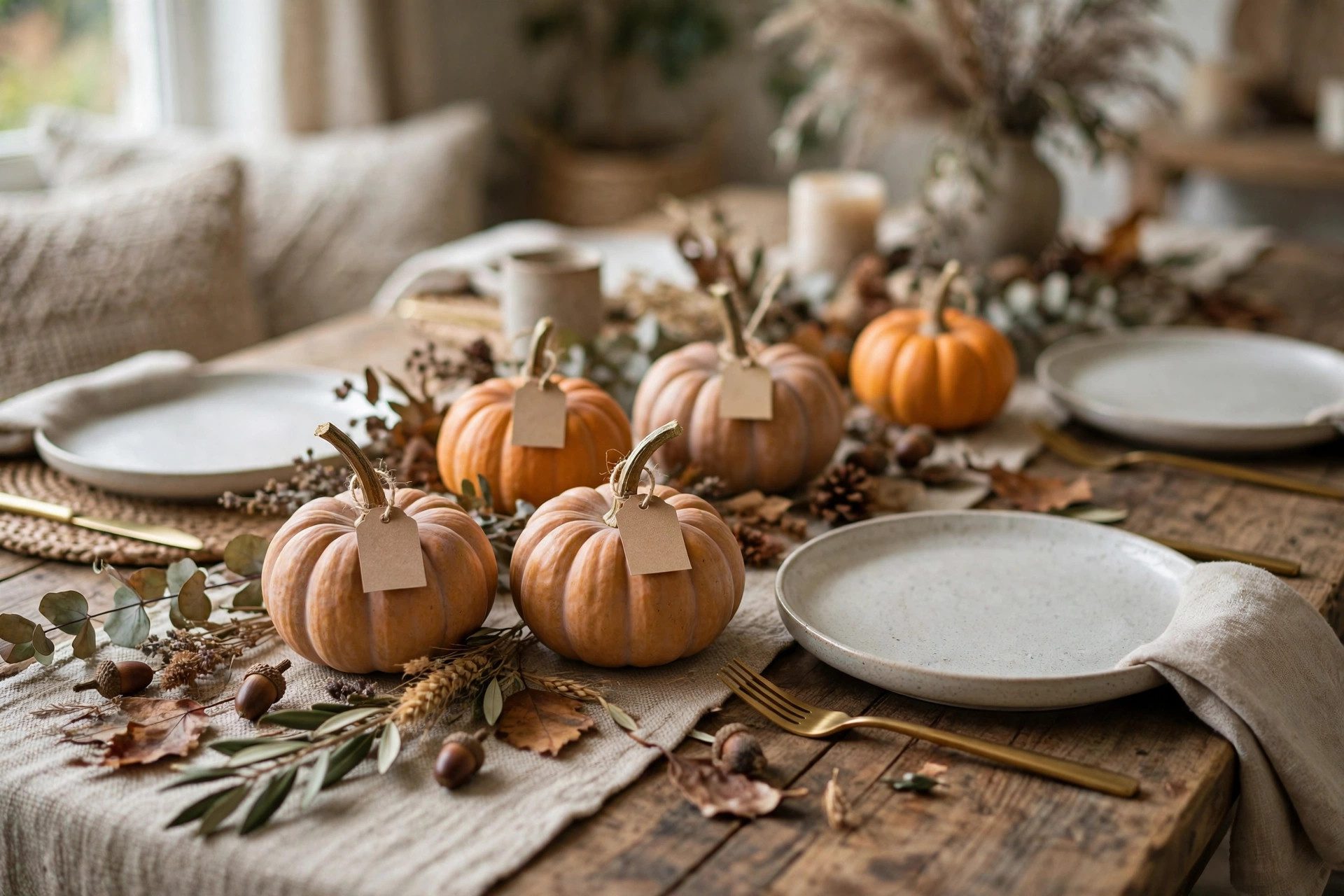
Set one mini pumpkin at each place, with a small paper tag tied to its stem. The pumpkin marks the seat, adds autumn color, and doubles as a small favor guests can take home.
Write names clearly on the tags, in large print, so guests find seats without asking. A place marker that cannot be read at a glance slows down seating in a crowded room.
Keep the pumpkins small, about the size of a tennis ball or less. A large pumpkin at each place eats the room meant for a glass and a bread plate.
6. One Candle Cluster on a Tray
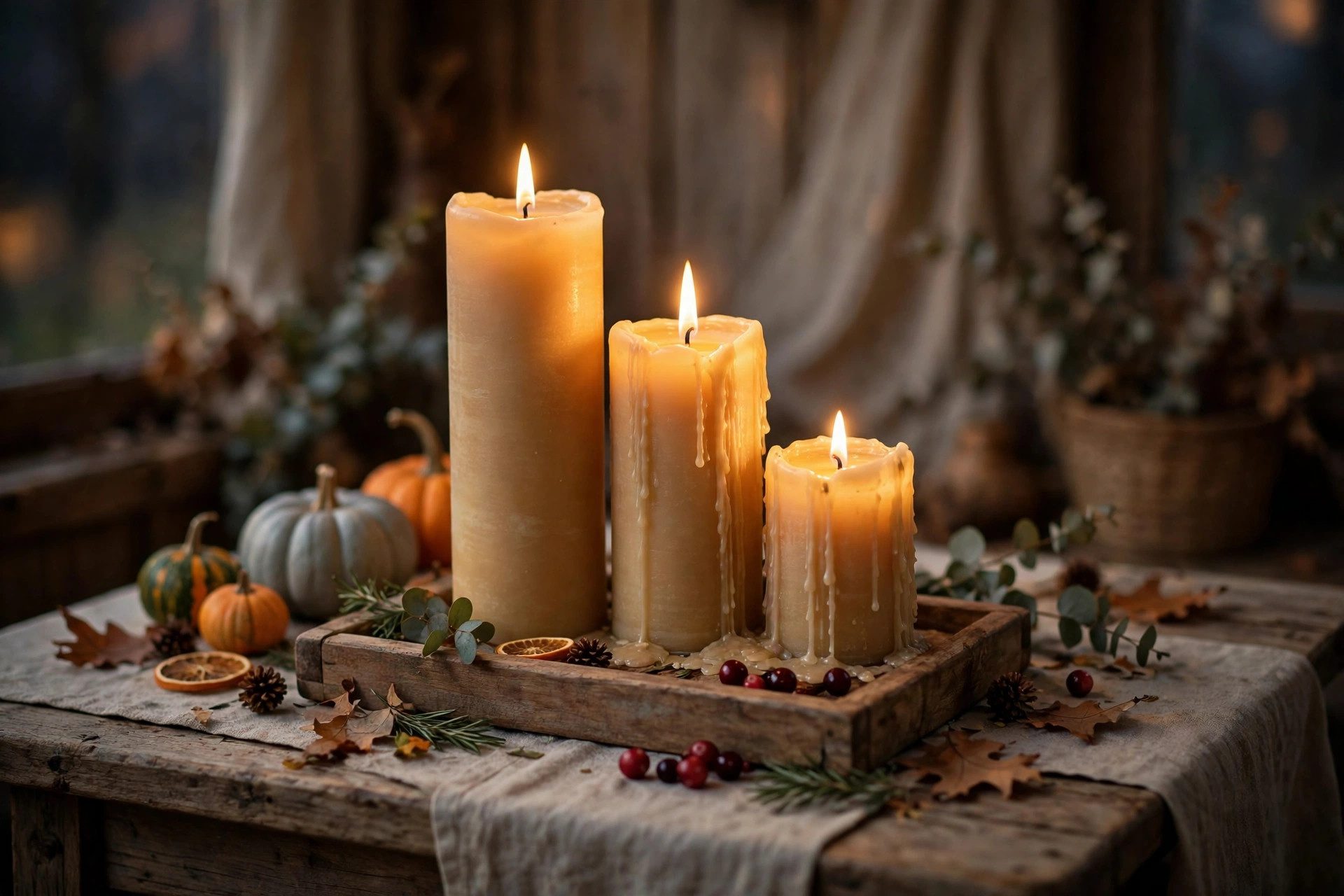
Group three candles of different heights on one tray at the center of the table. One cluster gives you all the glow with a fraction of the footprint of candles scattered down the whole table.
Use unscented candles so the scent does not compete with dinner. Food should be the strongest smell in the room, and scented candles can dull appetites and clash with gravy and herbs.
Keep flames well away from the runner, napkins, and any paper tags. A tray with a rim also catches drips and stops a candle from sliding when the table is bumped.
7. A Tray Centerpiece You Can Lift Away
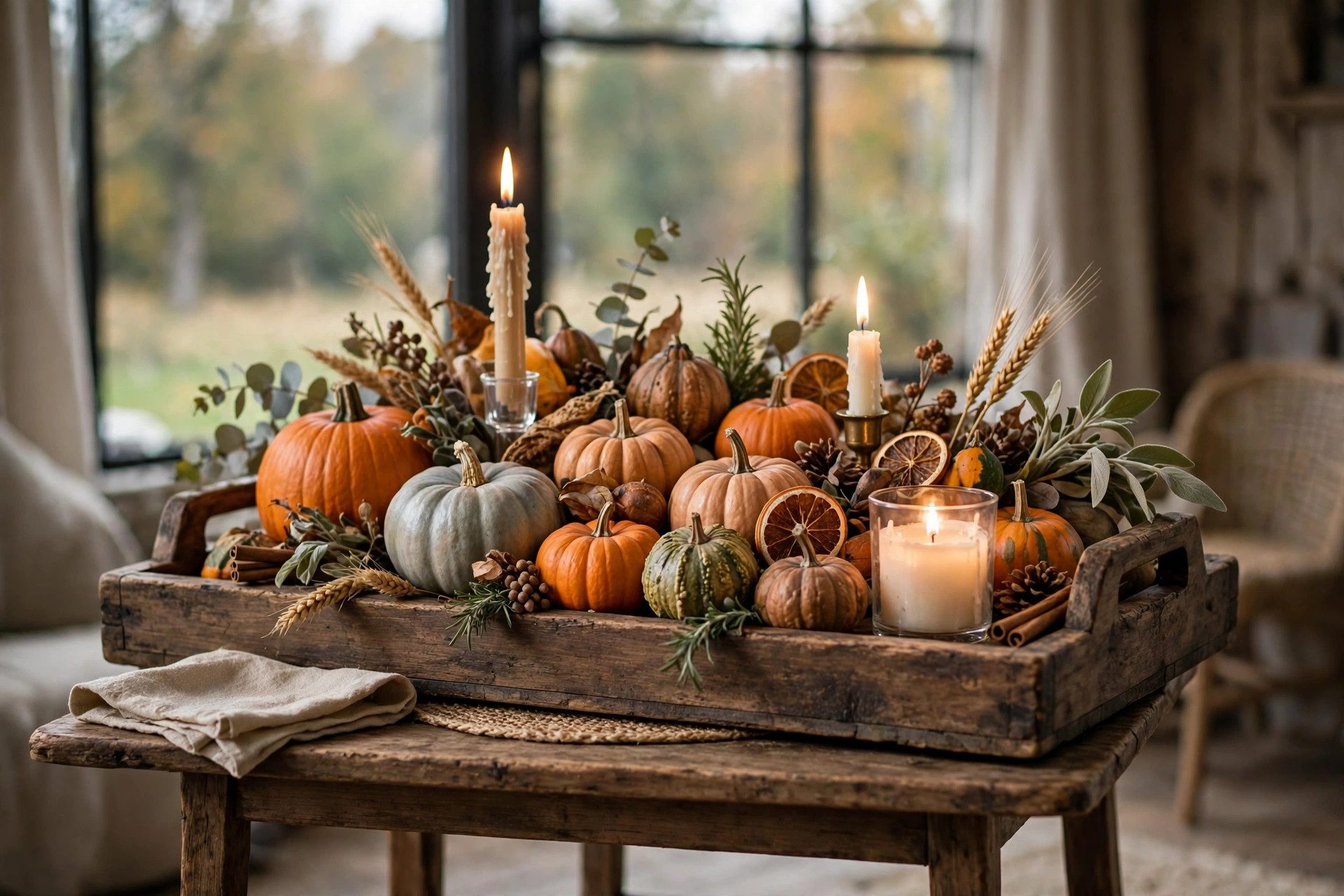
Build the centerpiece on a sturdy tray, so you can lift the whole display away in one motion when the main dishes arrive. A tray centerpiece is the smartest move for a table that must change jobs mid-meal.
Choose a tray with handles or a solid rim you can grip with both hands. A flat board looks neat but is hard to lift once it holds pumpkins, candles, and leaves.
Plan where the tray will land before dinner starts, such as a sideboard or a windowsill. A lift-away centerpiece with nowhere to go ends up on a chair, which helps no one.
8. Borrowed Seating That Tucks In
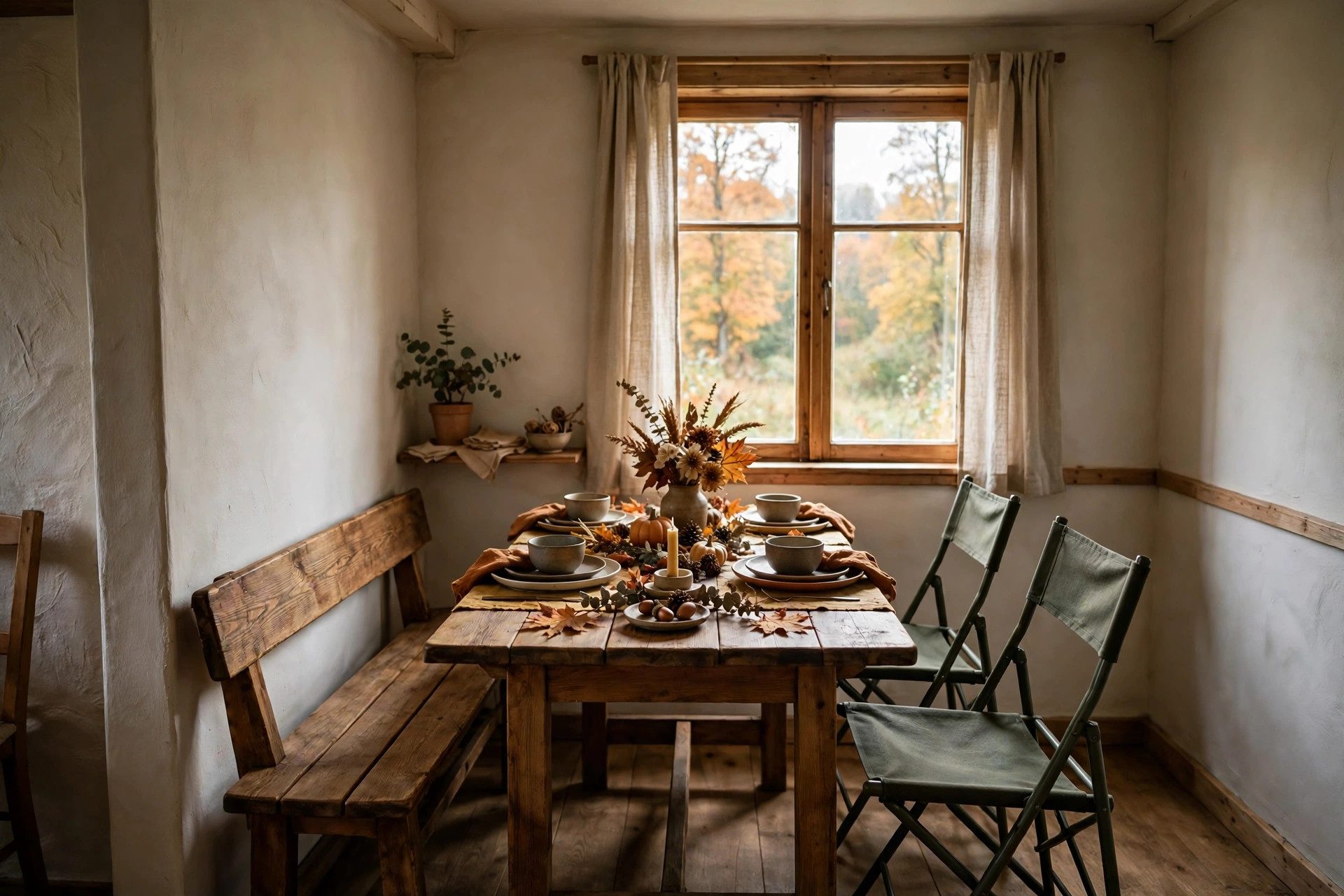
Borrow benches, stools, or folding chairs that tuck in tighter than a full set of dining chairs. A bench along one side can seat three people in the space of two chairs, and stools slide fully under the table after dinner.
Test every borrowed seat at the table before the day, with plates and glasses in place. A seat that fits an empty table may not fit once elbows, plates, and serving bowls join it.
Keep one spare seat stacked near the door, not in the dining room. A spare chair in the room blocks the walkway, while one near the door is easy to fetch if an extra guest arrives.
9. Placemats Instead of a Full Cloth
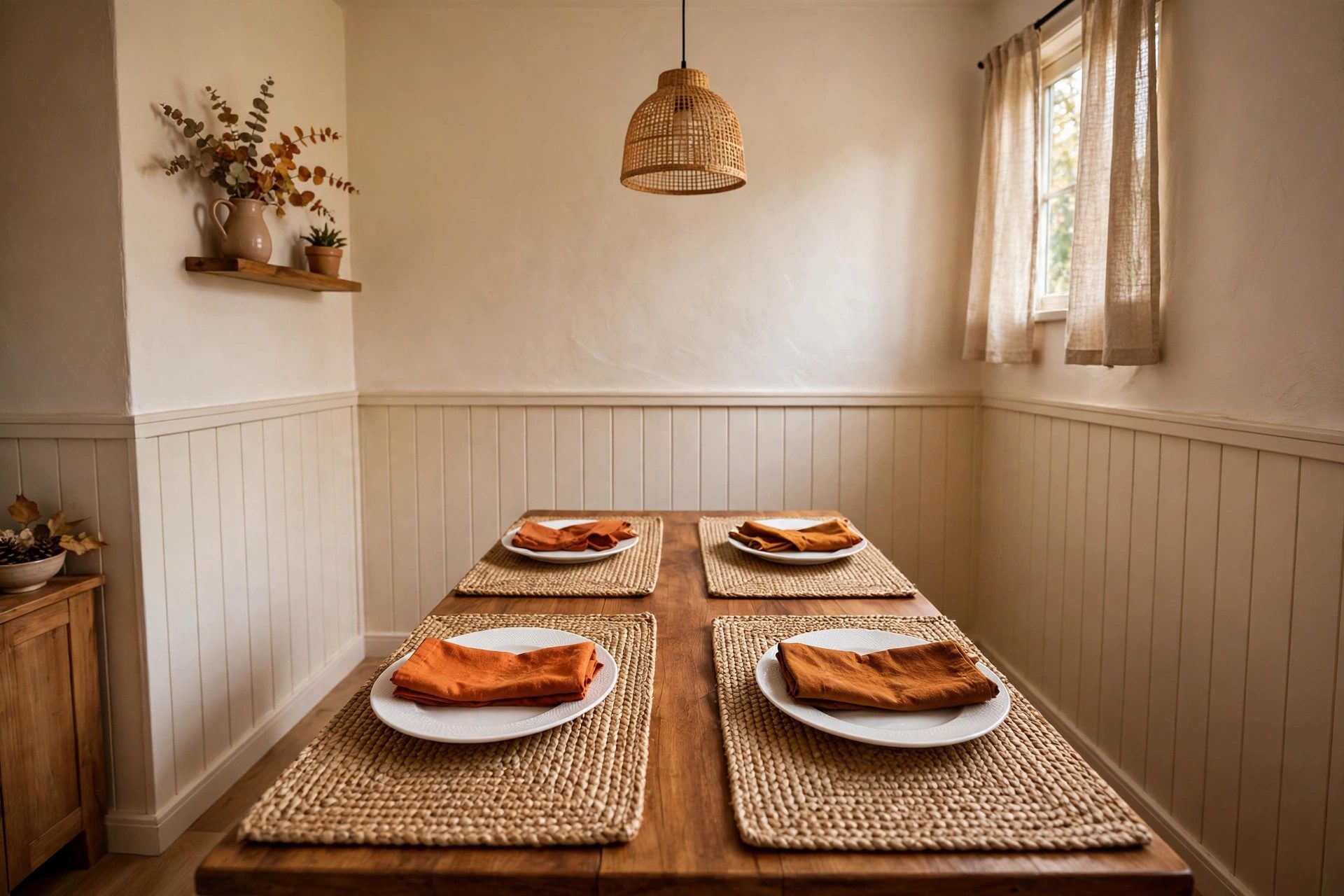
Use placemats to define each seat instead of a full tablecloth. Placemats mark the space each guest gets, protect the table, and leave the wood or table surface visible between settings, which keeps a small table feeling open.
Pick placemats in a woven texture or a plain warm color that matches the runner. Texture adds warmth without a pattern that fights the napkins and the centerpiece.
Space the placemats evenly, with a finger width between each one, so settings do not crowd each other. Even spacing also tells you at a glance whether one more seat will truly fit.
10. A Sideboard as the Second Table
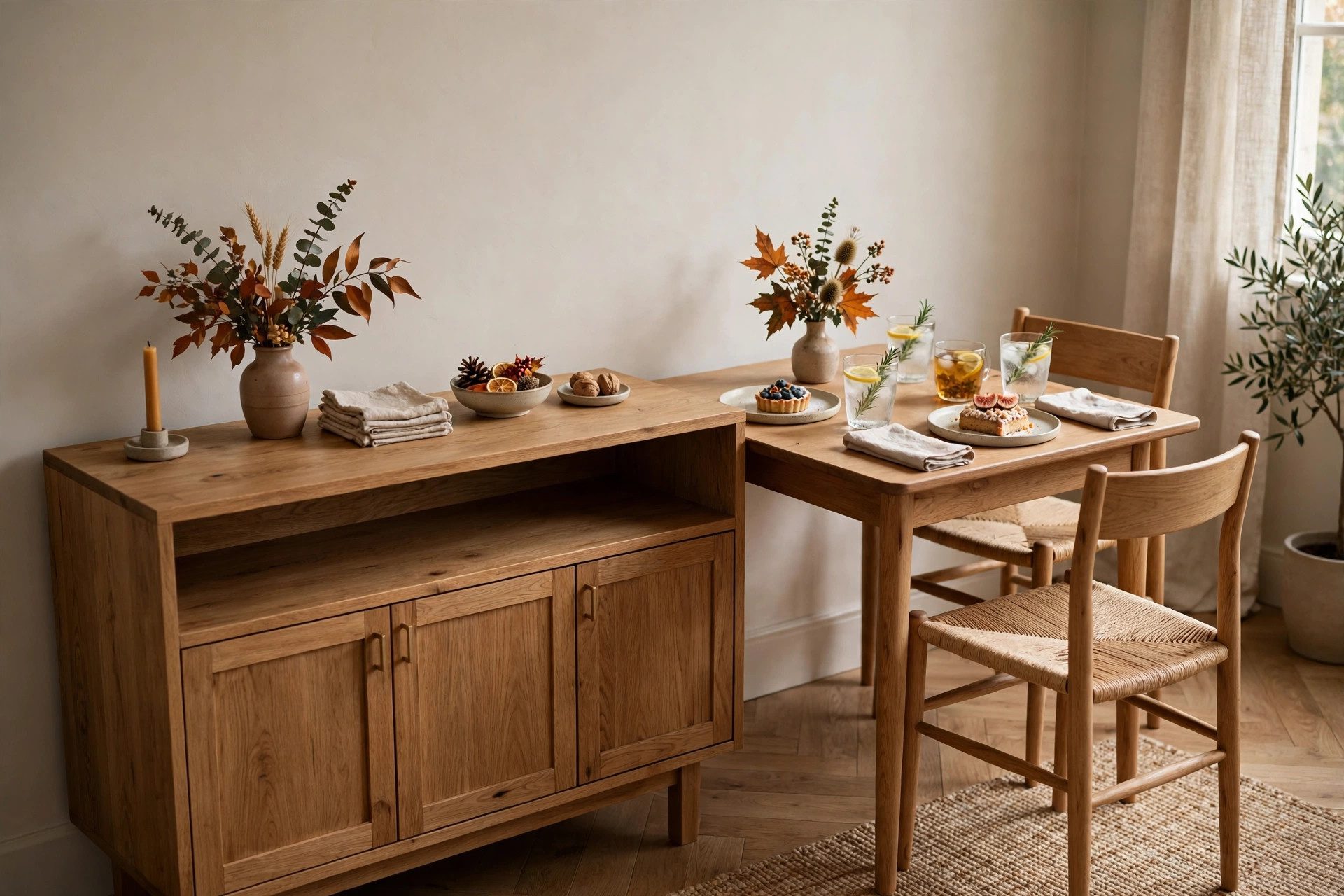
Treat a nearby sideboard, console, or shelf as the second table for drinks, desserts, and extra plates. A second surface takes pressure off the dining table and gives guests a natural place to stand with a drink before sitting down.
Style the sideboard simply, with one autumn arrangement and the items guests need most. A sideboard crowded with decor cannot hold a dessert tray, so keep its top mostly clear.
This second-table habit is one reason small dining rooms work so well in apartments, a point also covered in these apartment dining room ideas. The room feels larger when work is shared across two surfaces instead of piled on one.
11. Name Cards That Double as Decor
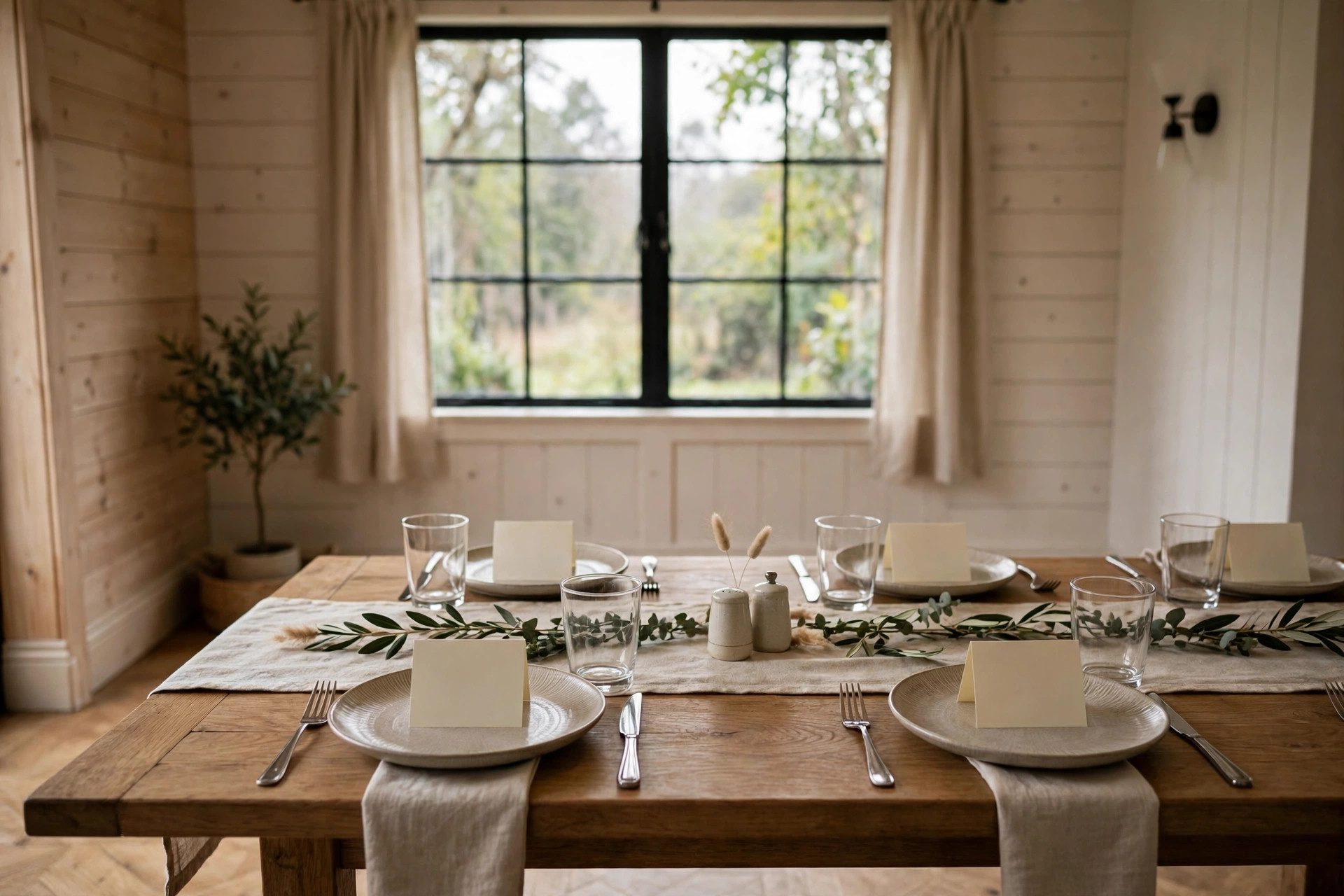
Write simple name cards on folded card and lean each one against a glass or a small pumpkin. Name cards settle seating fast, stop the awkward hover at the table, and add a neat paper detail without taking extra space.
Use plain card in cream or kraft, with dark ink, so names read in candlelight. Pale ink on white card disappears in low light, and then the cards fail at their one job.
Keep the cards small, about the size of a playing card when folded. A large card blocks the view across the table, which defeats the low-centerpiece plan from idea one.
12. A Small Vase of Dried Stems
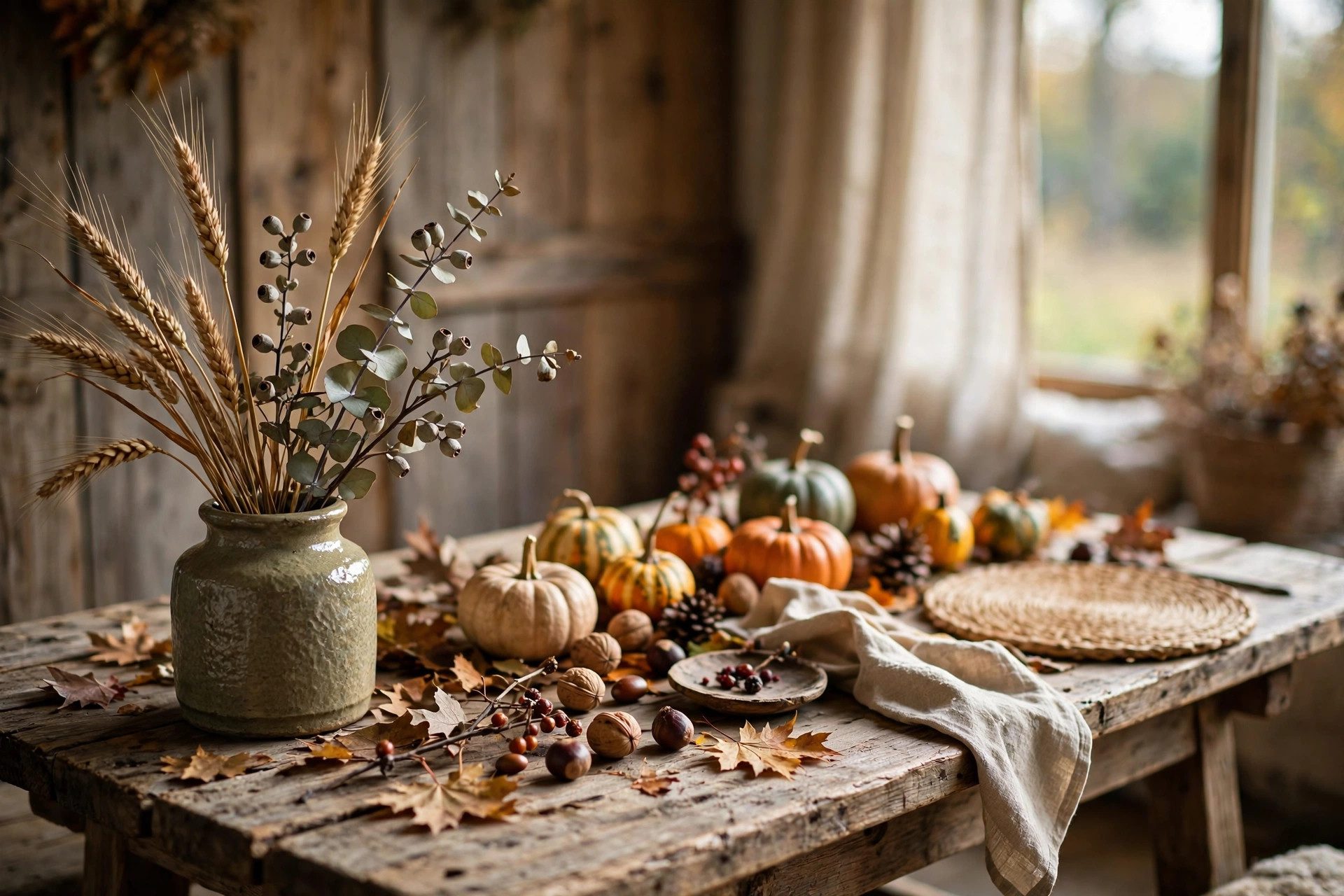
Put a few dried stems, such as wheat, eucalyptus, or dried leaves, in a short vase at one end of the table. Dried stems add height without the width of a flower arrangement, and they last the whole season without water or wilting.
Keep the vase short and heavy so it cannot tip when someone reaches across the table. A tall, light vase is a spill waiting to happen in a tight dining room.
Use three to five stems only, in one color family. A thick bunch looks like a bouquet shop display, while a few stems look like a calm, chosen detail.
If the wall behind the table feels bare, hang a small group of family photos above the sideboard instead of adding more table decor, in the spirit of Christmas gallery wall ideas with family photos for winter.
13. Keep One End Clear for Serving
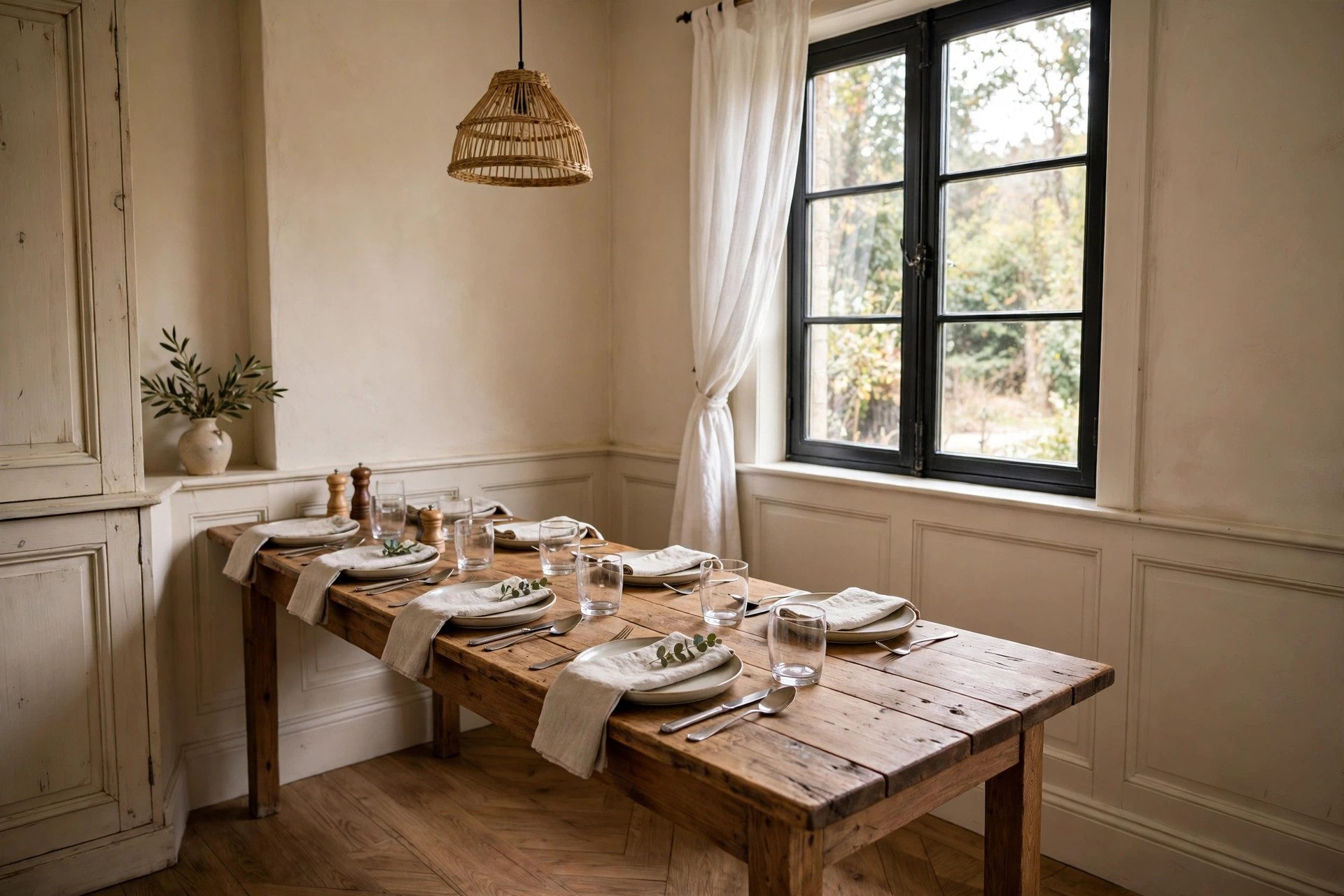
Leave one end of the table clear of decor, plates, and glasses, as the serving end. That clear end is where hot dishes land first, where carving happens, and where a guest can set down a heavy bowl without hunting for space.
Mark the serving end with nothing at all, just empty table. An empty end is easy to spot, and it stays useful all evening, from the first dish to the last dessert plate.
Tell the cook which end is the serving end before dinner, so dishes arrive there by habit. A plan only works when the person carrying the hot food knows it too.
14. Warm Light From the Side, Not Overhead Glare
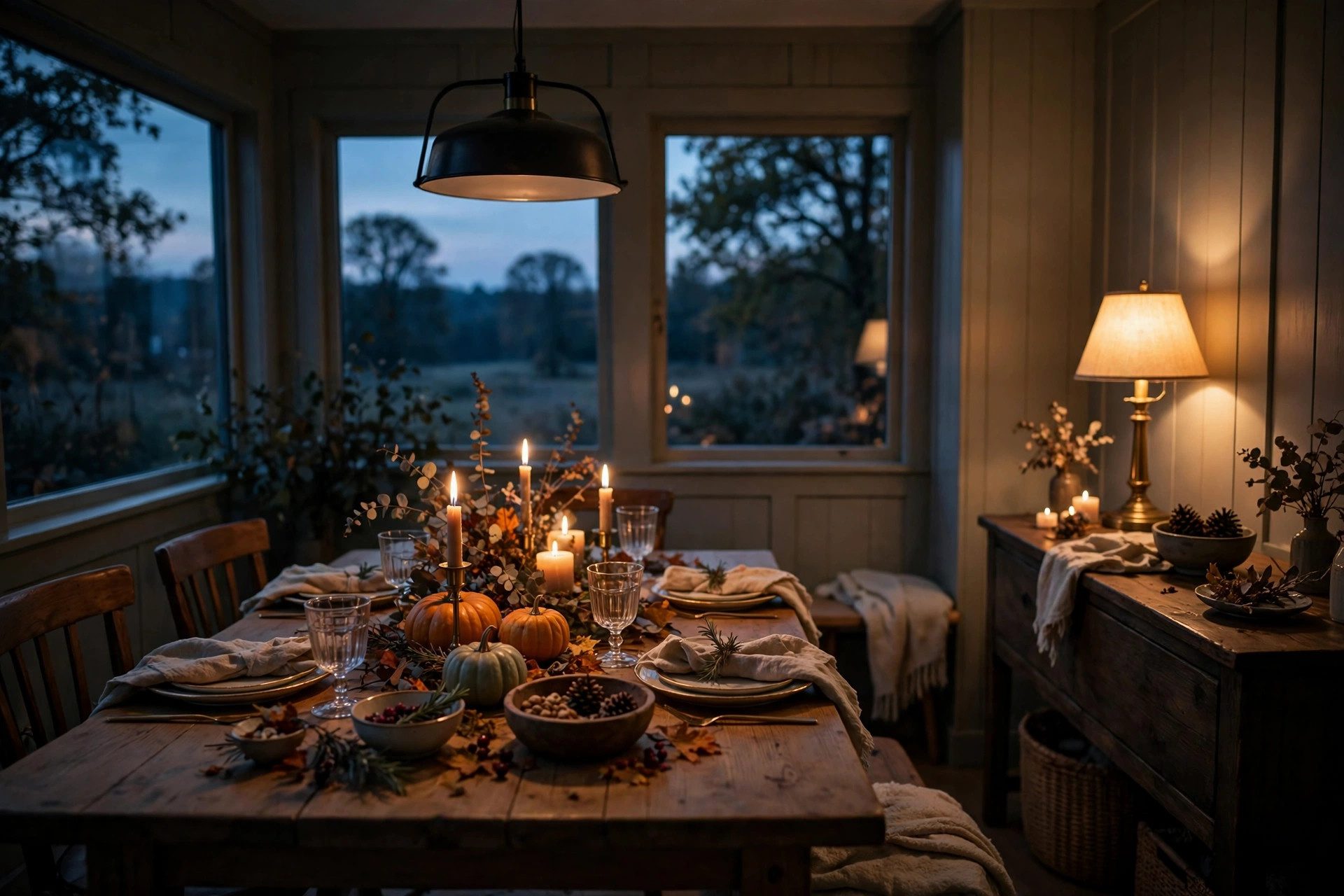
Dim the overhead light and let candles and a side lamp carry the evening. Harsh overhead light flattens faces and food, while warm side light makes a small room feel soft and generous.
Place the side lamp on the sideboard or a nearby shelf, not on the dining table. A lamp on the table eats the space you saved with a low centerpiece and a lift-away tray.
Check the light level with the candles lit and the overhead dimmed, before guests arrive. That is the light dinner will actually happen in, and it should flatter both the table and the people around it.
15. A Five-Minute Reset Before Guests Sit
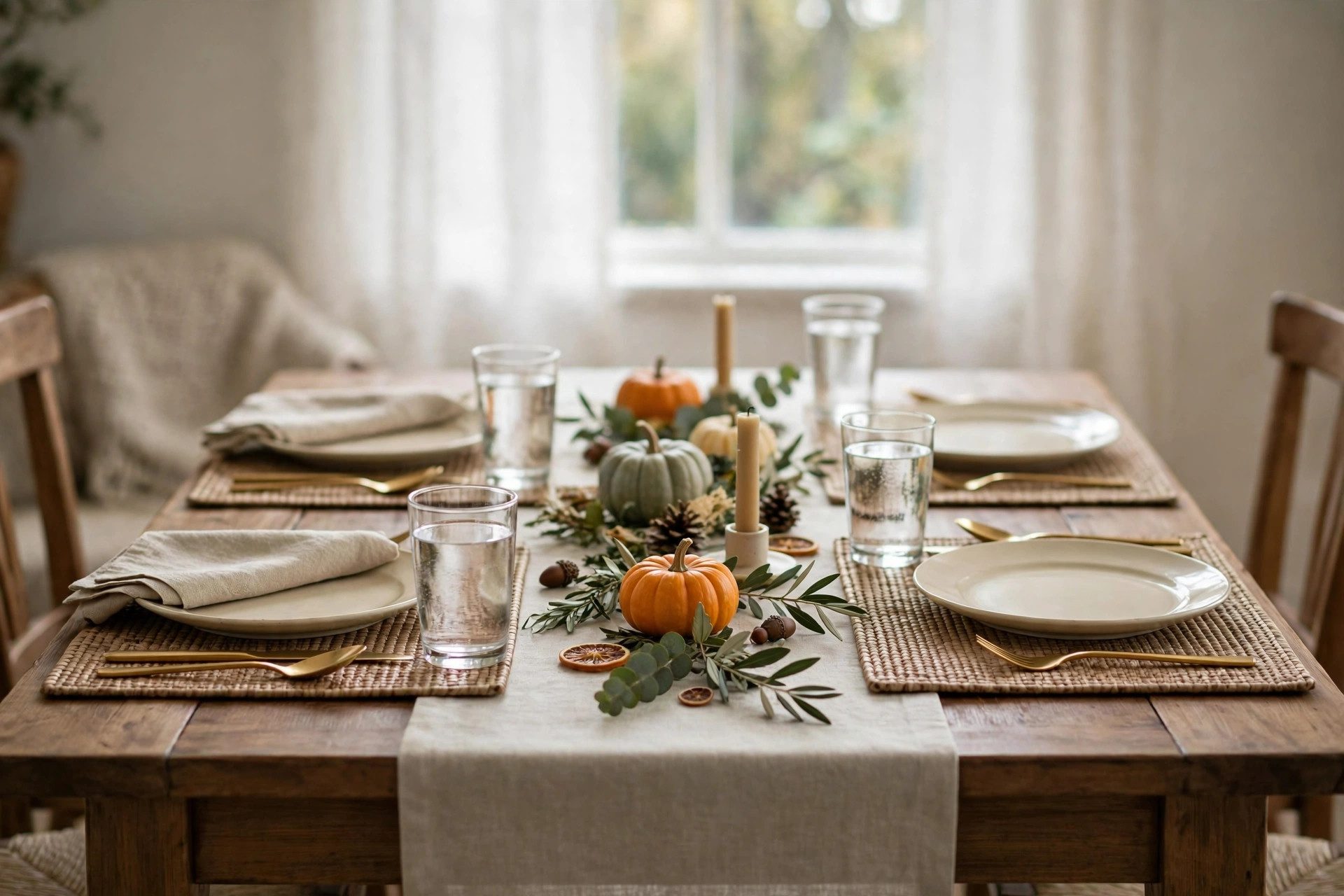
Do a five-minute reset just before guests sit down: straighten the runner, align the placemats, refill the water glasses, and clear the serving end. A short reset catches the drift that happens while cooking, when dishes and tools migrate onto the table.
Walk around the table once, at chair height, and look for anything that blocks a seat or a view. Fix only what you see from that angle, since that is the angle guests will see.
This reset pairs well with the same small-space care behind small kitchen dining room combo ideas and with the kitchen prep ideas in Christmas kitchen decor ideas for small counter spaces. Small rooms stay calm when each surface keeps one clear job.
Start with the low centerpiece, the serving spot off the table, and one runner. Those three moves free more room than any new decoration, and the rest of the list builds on that freed space.
When every guest can see across the table, reach the food, and sit without squeezing, the table is ready. Save this guide to your Thanksgiving Decor Ideas board so the small-room plan is waiting when hosting week arrives.
A calm table also makes cleanup easier, since every piece already has a home and the serving spot is clear for stacking plates.


