

15 Modern Minimalist Dream Bedroom Ideas for a Calm, Stylish Retreat
A dream bedroom does not need to be filled with furniture, decorations, or elaborate details. Sometimes the most inviting bedroom is the one that feels calm the moment you walk through the door. Modern minimalist design achieves that feeling by giving every important element enough space to breathe. Clean furniture, soft colors, natural materials, comfortable bedding, and thoughtful lighting can create a bedroom that feels both sophisticated and genuinely relaxing.
Minimalism also does not mean making the room completely empty. A successful minimalist bedroom still needs warmth, texture, personality, and practical storage. Current design guidance emphasizes choosing fewer, better-considered pieces while using natural materials, warm neutrals, concealed storage, and layered lighting to prevent the room from feeling cold or unfinished.
If you want a bedroom that looks polished but remains comfortable enough for everyday life, these 15 modern minimalist dream bedroom ideas can help you create that balance.
This post contains affiliate links. If you buy through them, we may earn a small commission at no extra cost to you. See our Affiliate Disclosure.
1. Start With a Low-Profile Platform Bed
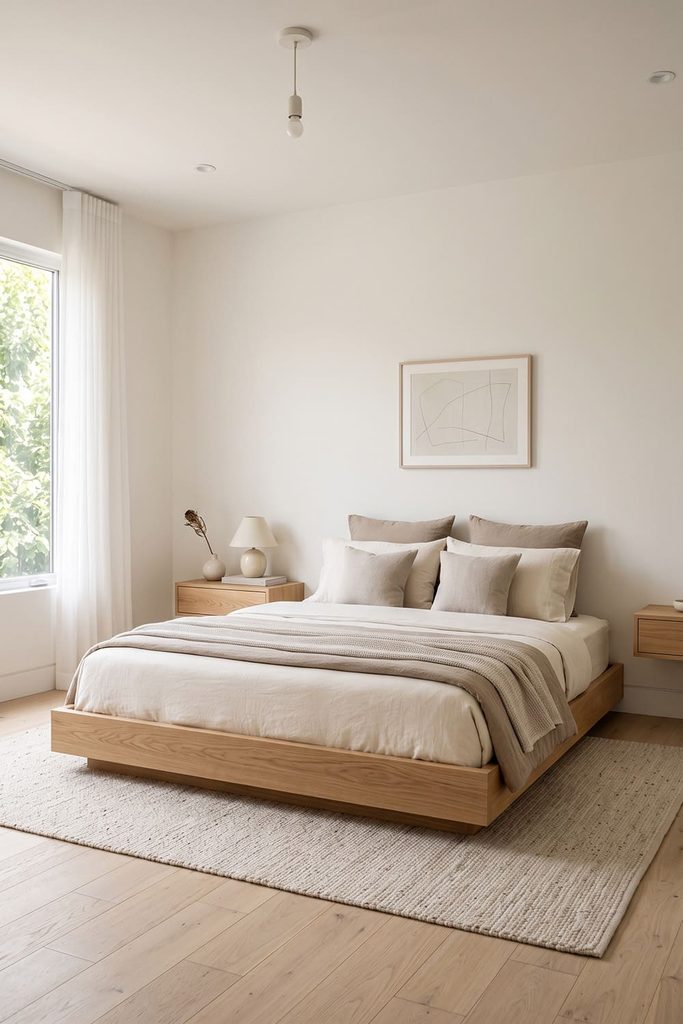
A low-profile platform bed can immediately give the bedroom a cleaner, more contemporary appearance. Choose a simple frame in natural oak, walnut, matte black, or upholstered neutral fabric. Avoid elaborate headboards or excessive decorative details if you want the bed to remain visually streamlined.
Pair it with simple bedding in white, cream, beige, or soft gray. Keep the number of pillows under control so the bed retains its clean silhouette.
The lower profile can also make the surrounding walls feel taller and help preserve visual space, especially in a smaller bedroom. Recent minimalist bedroom guidance specifically recommends streamlined, lower furniture to make rooms feel more open.
2. Use Warm White Instead of Stark White

White is a natural choice for minimalist bedrooms, but an extremely cool white can sometimes make the room feel sterile. Try warm white, ivory, soft cream, or a subtle off-white instead.
Use the same family of tones across the walls, bedding, curtains, and larger furniture pieces. Then introduce small variations through texture rather than adding lots of colors.
For example, cream linen bedding can sit against warm white walls with an ivory rug and pale wood furniture. The result remains simple while having considerably more depth than a room filled with identical bright-white surfaces.
3. Add a Natural Wood Accent Wall
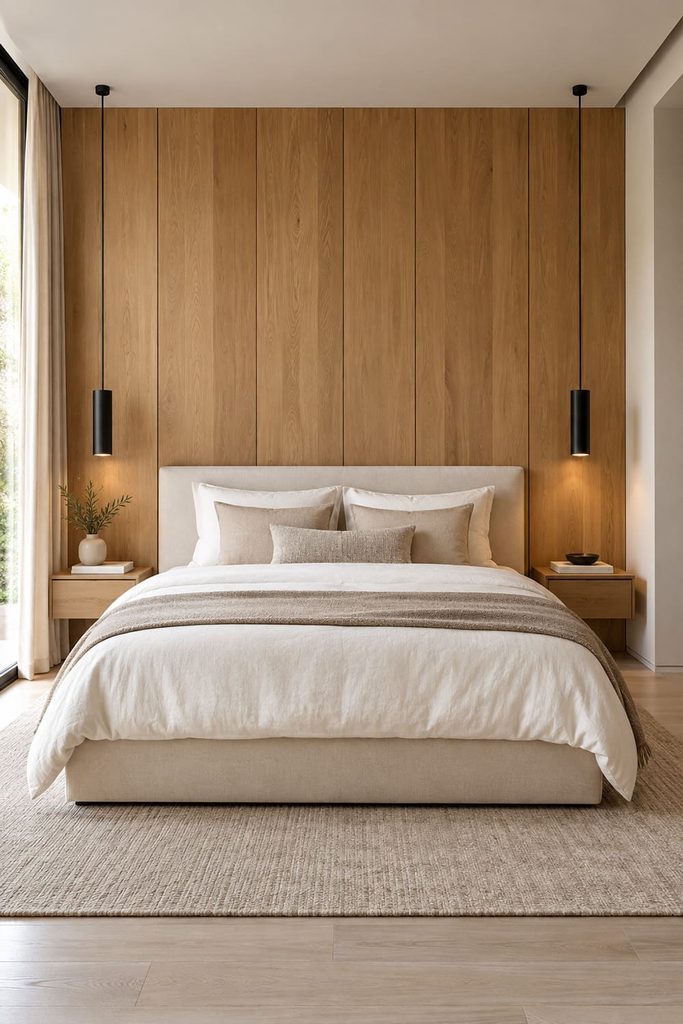
Give the bedroom a modern focal point with a restrained wood feature behind the bed. Vertical wood slats, wide oak panels, or a simple wood-effect treatment can add warmth without requiring lots of artwork or decoration.
Keep the rest of the room quiet so the wall has room to stand out. Cream bedding, simple black lighting, and a neutral rug can complement the wood beautifully.
Natural materials are particularly useful in minimalist interiors because they introduce texture and warmth without creating visual clutter. If a permanent feature is not practical, a large wood-toned headboard can create a similar effect.
4. Choose Floating Nightstands
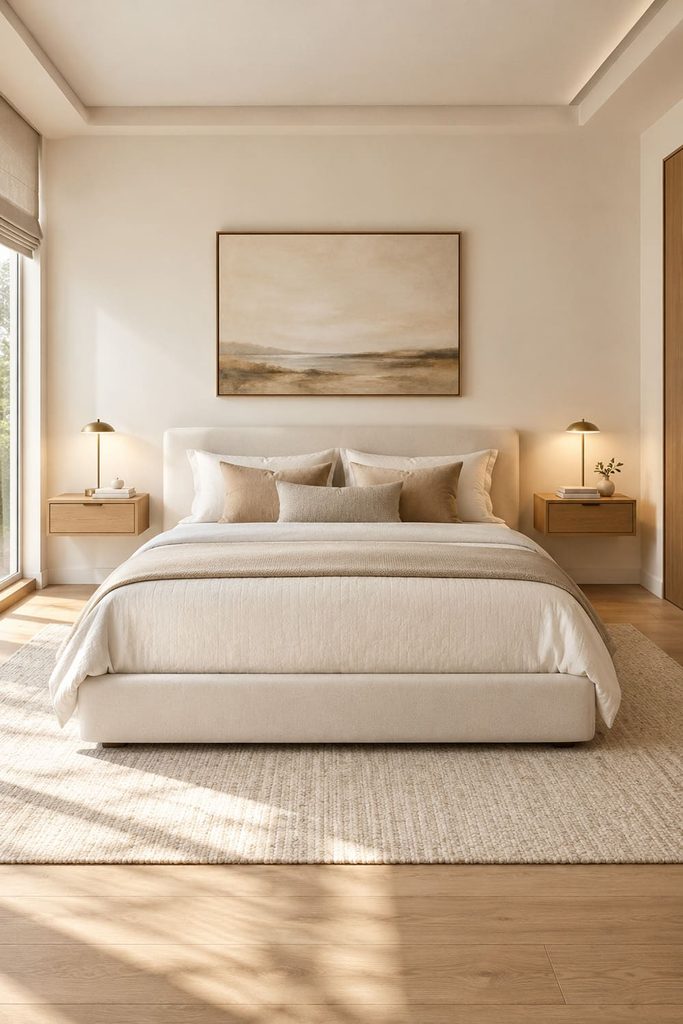
Replace bulky bedside tables with simple floating nightstands. Their wall-mounted design keeps more floor visible, which can make the bedroom feel lighter and less crowded.
Choose a design with one or two drawers so everyday items can remain hidden. A small surface is enough for a lamp, book, phone, and perhaps one decorative object.
Pair both sides of the bed when possible to create visual balance. If the room is small, even a narrow floating shelf can serve as a practical bedside surface. This idea works particularly well with a low-profile bed because both elements contribute to a clean, uninterrupted composition.
5. Layer Different Neutral Textures
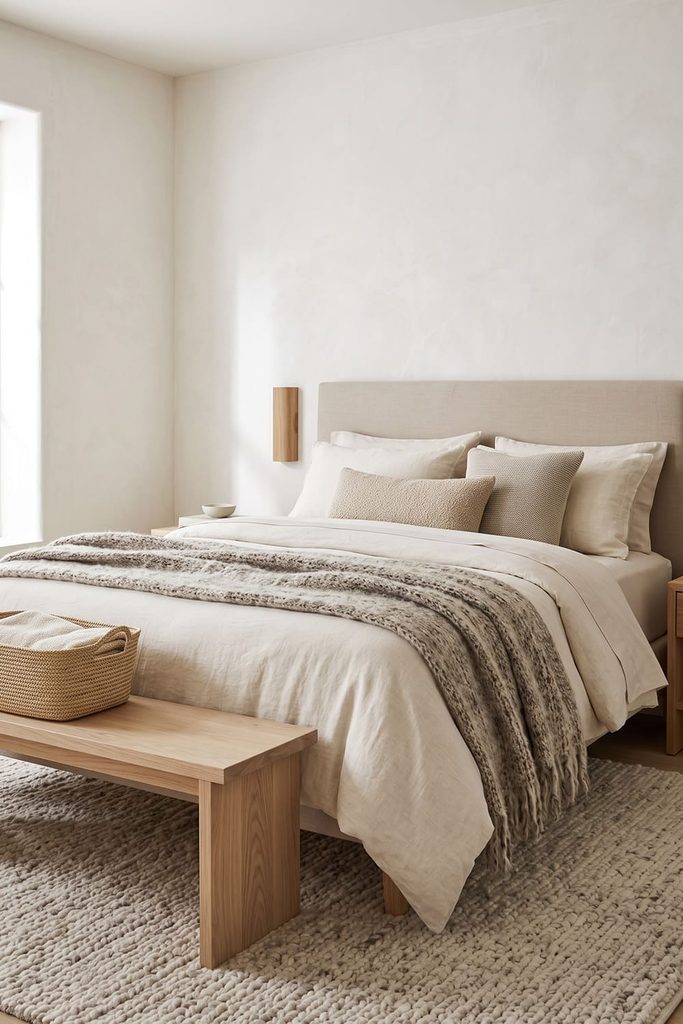
A neutral minimalist bedroom does not have to look flat. Instead of introducing lots of colors, create interest by combining different textures.
Try smooth cotton sheets with a relaxed linen duvet, a woven throw, a soft wool rug, and a simple upholstered headboard. Keep the colors within a narrow palette so the materials become the main source of visual depth.
This is one of the easiest ways to make minimalism feel comfortable. Natural textiles and tactile surfaces provide warmth while allowing the room to remain visually restrained.
6. Hide Everyday Clutter With Smart Storage
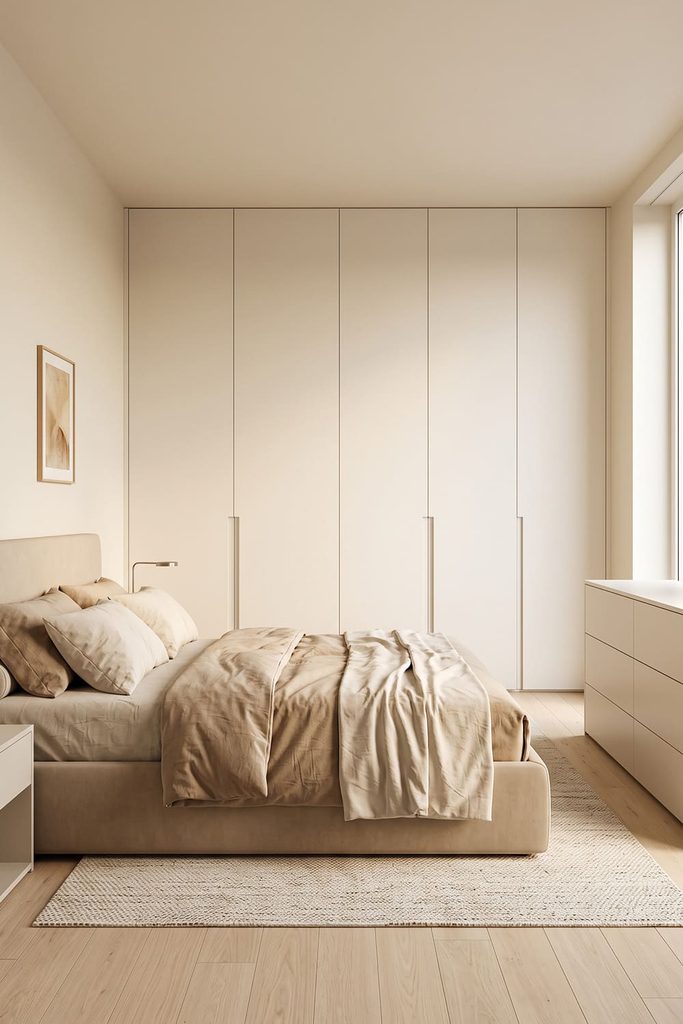
A minimalist bedroom becomes much easier to maintain when everyday belongings have somewhere to disappear. Choose furniture that combines storage with another purpose.
An upholstered storage bed can hold spare bedding, seasonal clothing, or luggage. A streamlined dresser can keep accessories out of sight, while a floor-to-ceiling wardrobe can use vertical space without adding multiple separate pieces of furniture.
Keep open shelving to a minimum unless you are comfortable maintaining a carefully edited display. Current minimalist storage guidance favors concealed compartments, under-bed storage, and streamlined wardrobes because visible clutter can quickly disrupt the calm appearance.
7. Hang Simple Pendant Lights Beside the Bed
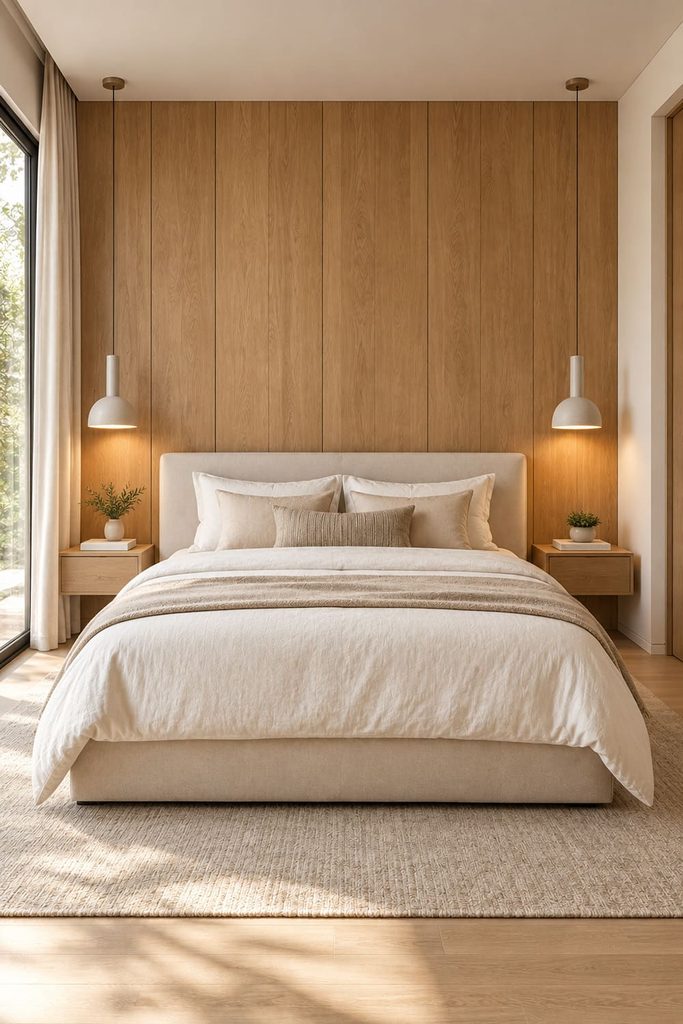
Instead of placing traditional lamps on both nightstands, consider hanging pendant lights on either side of the bed. This creates a cleaner bedside arrangement while adding a strong architectural detail.
Choose simple fixtures in glass, ceramic, metal, wood, or woven material. Keep their shapes relatively uncomplicated. Pendant lighting also frees up valuable nightstand space. You can use that surface for a book, small plant, or personal item instead of having a large lamp occupy most of it.
Use warm bulbs or dimmable lighting so the room feels softer in the evening. Layered and adjustable lighting is widely recommended for making minimalist bedrooms feel more comfortable.
8. Create a Monochromatic Beige Bedroom
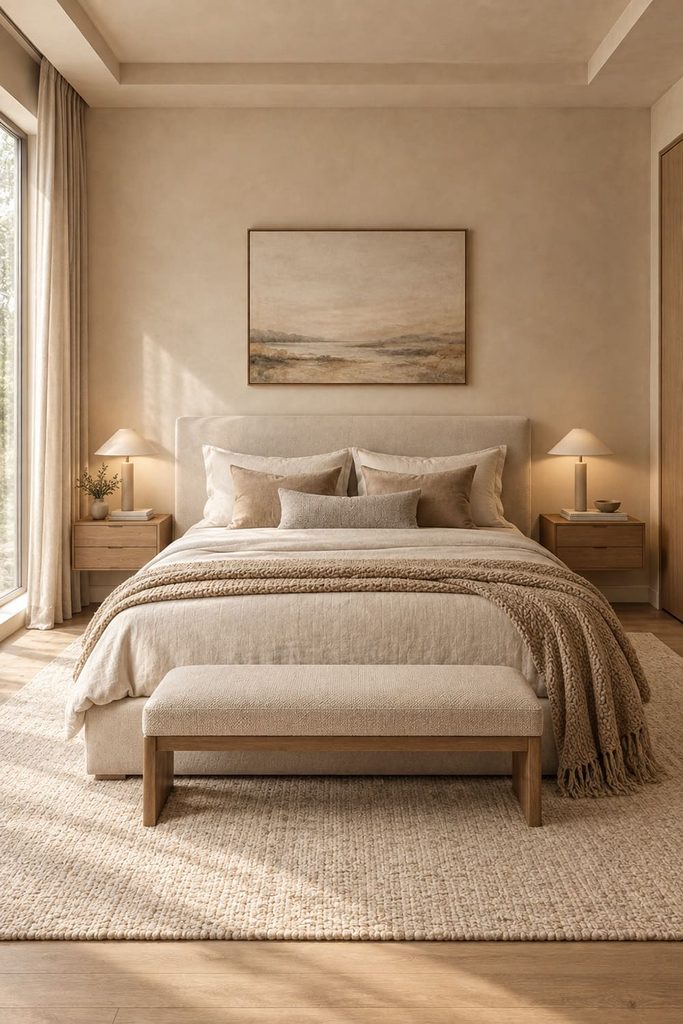
Use several shades of beige to create a sophisticated minimalist bedroom without relying on strong contrast. Combine sand-colored walls with oatmeal bedding, taupe curtains, a cream rug, and slightly darker wooden furniture.
The trick is to vary the tones enough that individual surfaces remain visible. Texture becomes especially important here.
A chunky throw, linen bedding, smooth wood, and a softly woven rug can prevent the monochromatic scheme from becoming boring. Warm neutrals are currently favored in minimalist bedroom design because they create a softer atmosphere than stark white and cool gray combinations.
9. Use One Large Piece of Artwork
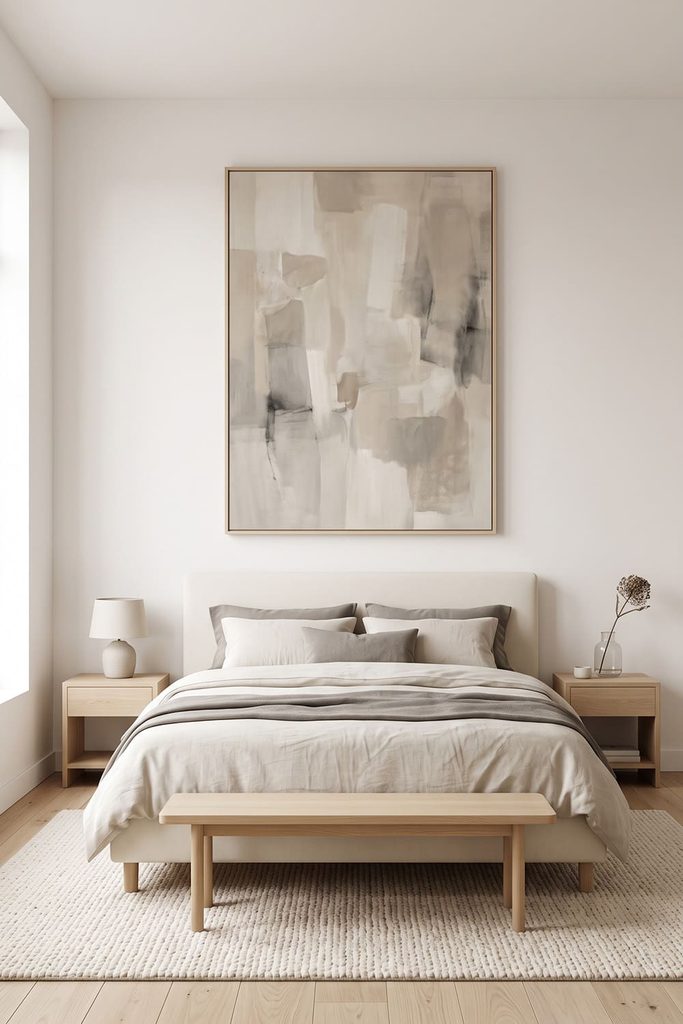
Instead of filling the bedroom walls with several small decorations, choose one large artwork piece as the main focal point.
A simple abstract painting, oversized black-and-white photograph, muted landscape, or understated line drawing can work beautifully. Choose colors that already exist in the room so the artwork feels connected to the overall design.
Place it above the bed or on the largest uninterrupted wall. Keep the surrounding area relatively empty. One substantial piece can provide personality without creating the visual busyness that comes from multiple small frames, shelves, and decorative objects.
10. Add a Soft Area Rug Under the Bed
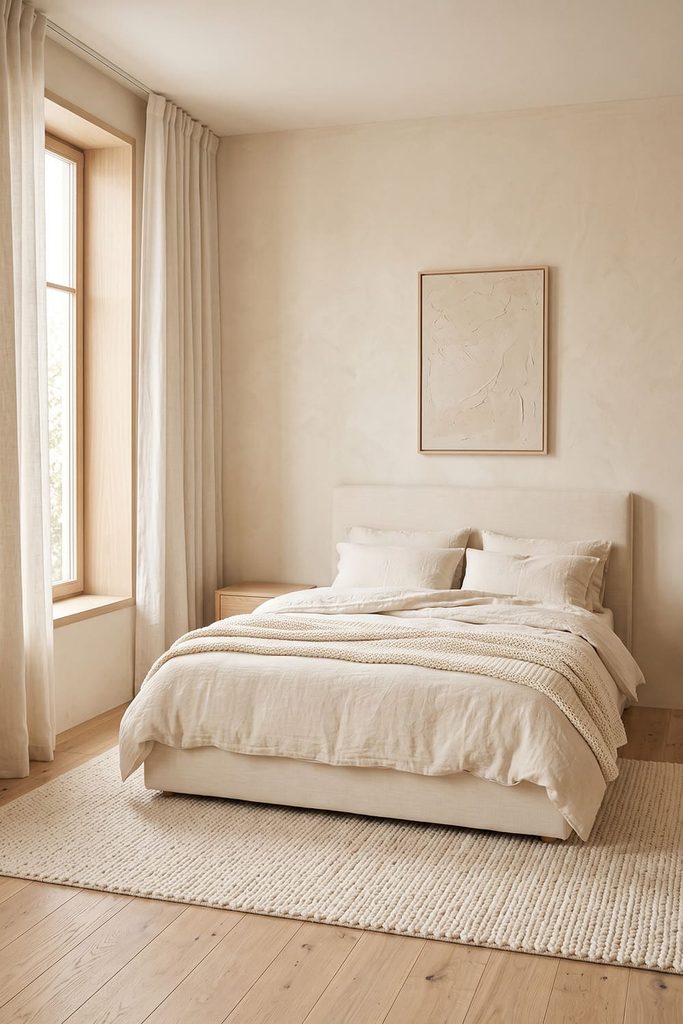
A minimalist bedroom can benefit enormously from a well-chosen rug. Place a large neutral rug beneath the bed so that it extends visibly beyond both sides and the foot.
Choose a low-pattern design in cream, beige, gray, taupe, or muted brown. A subtle texture can be more effective than a complicated print. The rug creates a soft transition between the bed and floor while adding warmth underfoot. It also helps prevent the minimalist room from feeling overly hard or architectural.
If the bedroom is small, make sure the rug is appropriately scaled rather than using a tiny rug that looks disconnected from the bed.
11. Introduce One Muted Accent Color
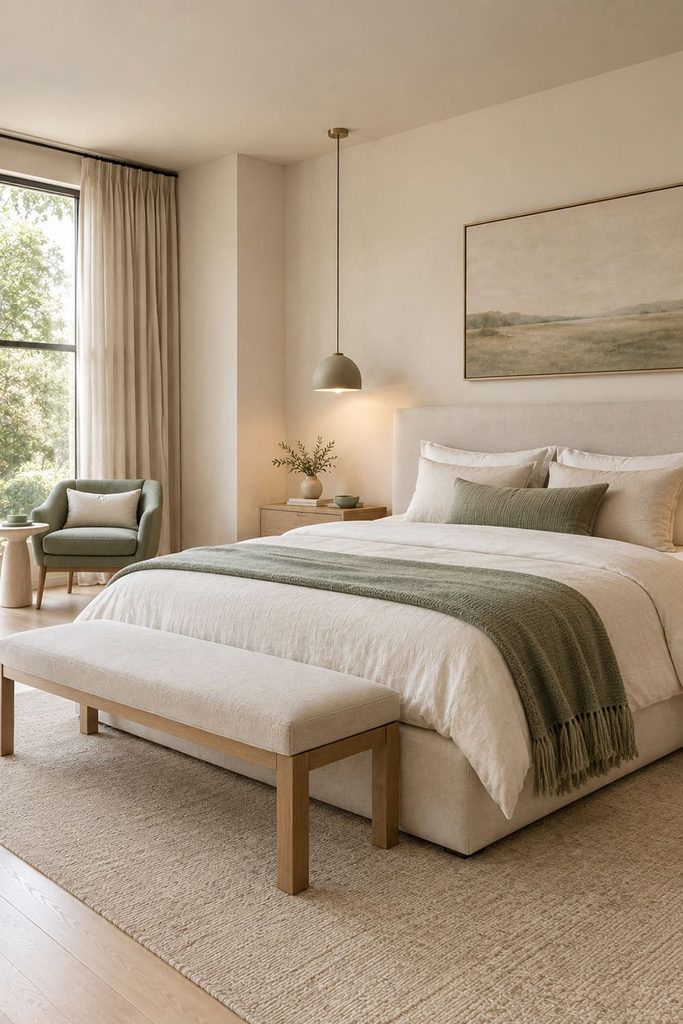
Minimalism does not require a completely neutral room. Add one restrained accent color to give the bedroom personality.
Soft sage green, dusty blue, muted terracotta, warm brown, or charcoal can work beautifully against a neutral foundation. Use the accent sparingly through a throw, artwork, cushion, bedside object, or upholstered chair.
The goal is repetition rather than quantity. Two or three small touches of the same color are usually enough to make the accent feel intentional. Muted accent colors are also useful because they add character without overpowering the clean visual structure of the room.
12. Keep the Windows Light and Uncomplicated
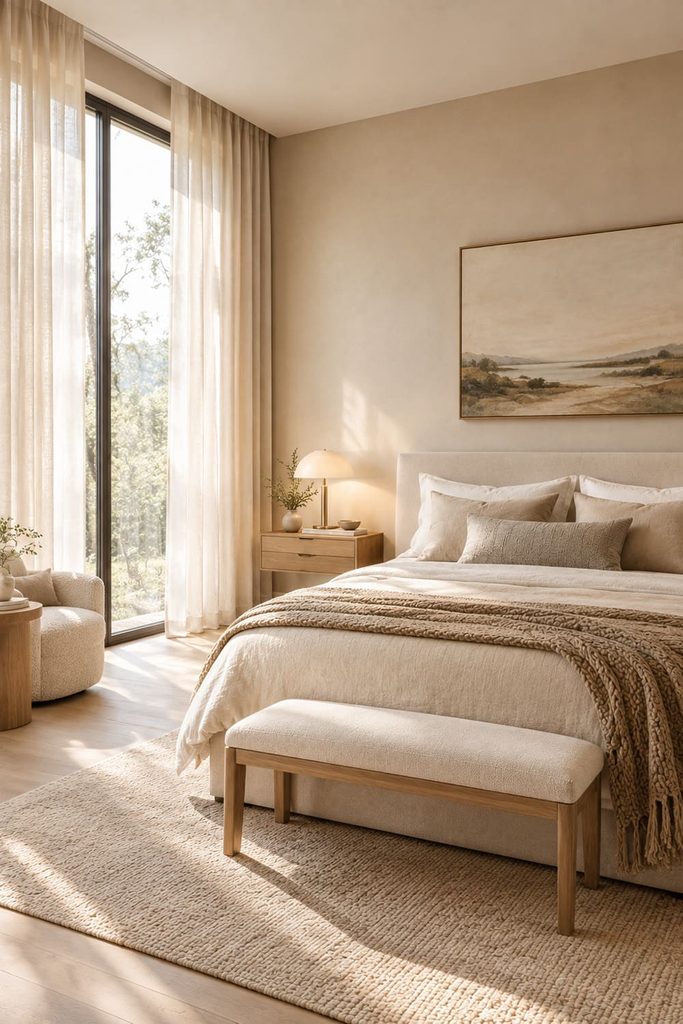
Window treatments can make a major difference in a minimalist bedroom. Choose simple curtains in linen, cotton, or another softly textured fabric.
Sheer curtains can allow natural daylight to filter through while maintaining a sense of privacy. If stronger light control is needed, layer them with simple blackout panels that can be closed at night.
Avoid complicated valances, heavy decorative treatments, or excessive patterns. The goal is to make the window feel like part of the room’s architecture rather than another decorative focal point.
Natural light also works beautifully with warm neutrals and wood, helping the bedroom feel brighter during the day.
13. Add One Comfortable Bedroom Chair
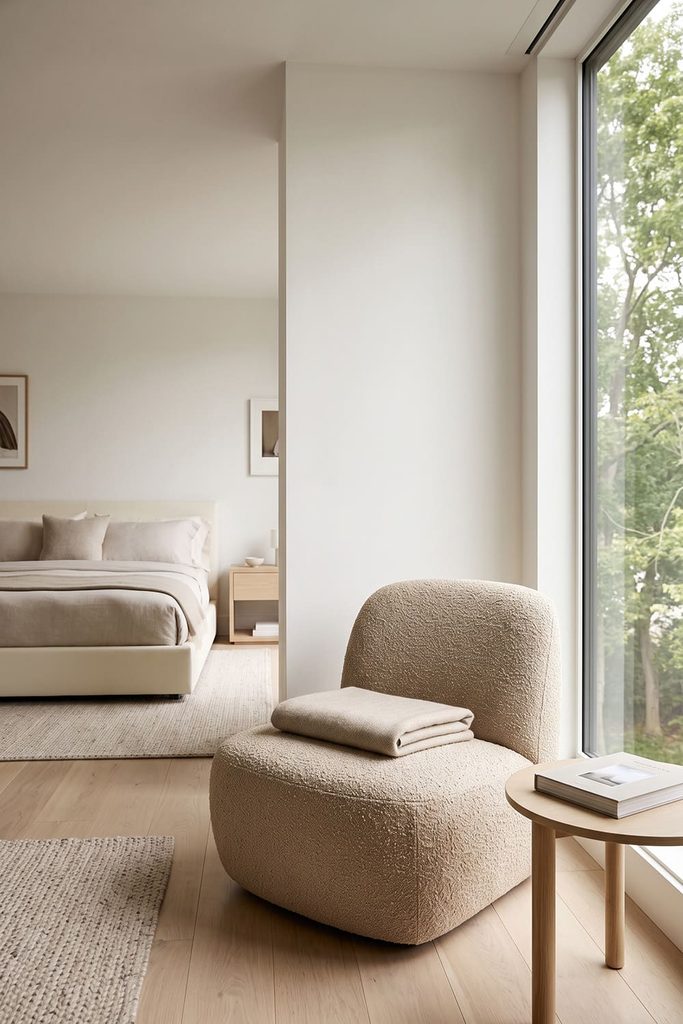
A minimalist bedroom can still have a small seating area. Place one streamlined chair near a window, dresser, or empty corner. Choose a chair with a simple silhouette and upholstery that relates to the room’s existing palette. Add one soft throw if needed, but avoid covering the chair with multiple cushions.
The chair provides a practical place to sit while getting dressed, reading, or simply enjoying a quiet moment. It also prevents the room from feeling like it contains only functional furniture.
If space is limited, choose a compact armless chair or small bench instead of a bulky lounge chair.
14. Bring in a Single Green Plant
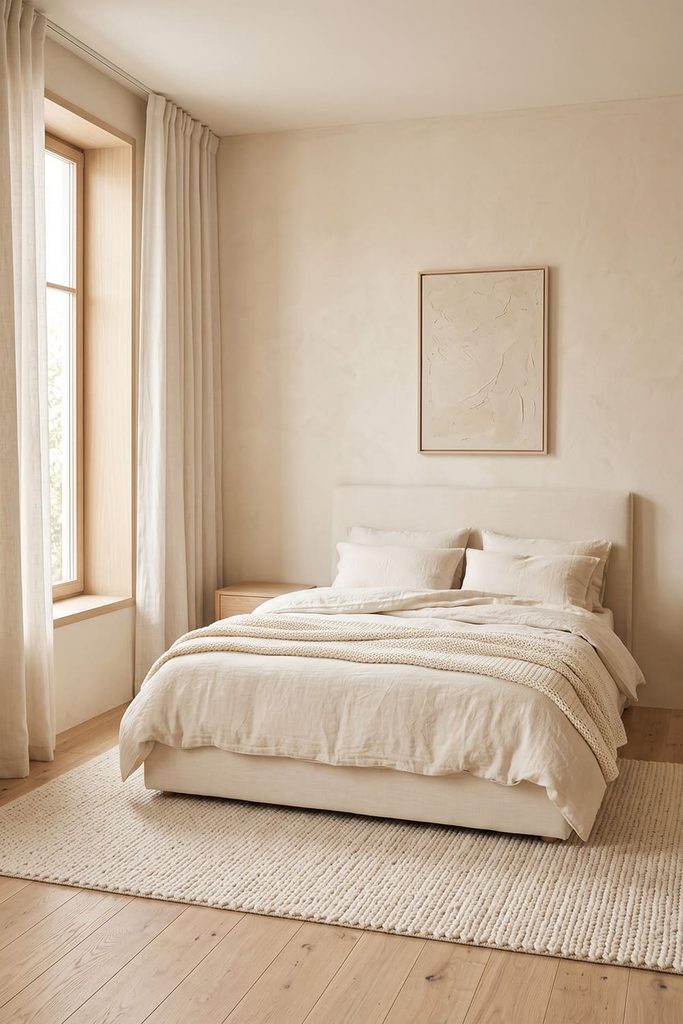
A small amount of greenery can soften a modern minimalist bedroom without compromising its simplicity. Choose one substantial plant rather than filling every corner with greenery.
A tall plant in a simple ceramic planter can occupy an empty corner, while a smaller plant can sit on a dresser or floating shelf. Select a pot that matches the room’s materials. Matte white ceramic works with a light neutral room, while terracotta or natural stone can introduce warmer contrast.
Greenery and natural materials are frequently recommended for adding softness and life to minimalist interiors without creating unnecessary visual noise.
15. Use Layered Lighting for a Calm Evening
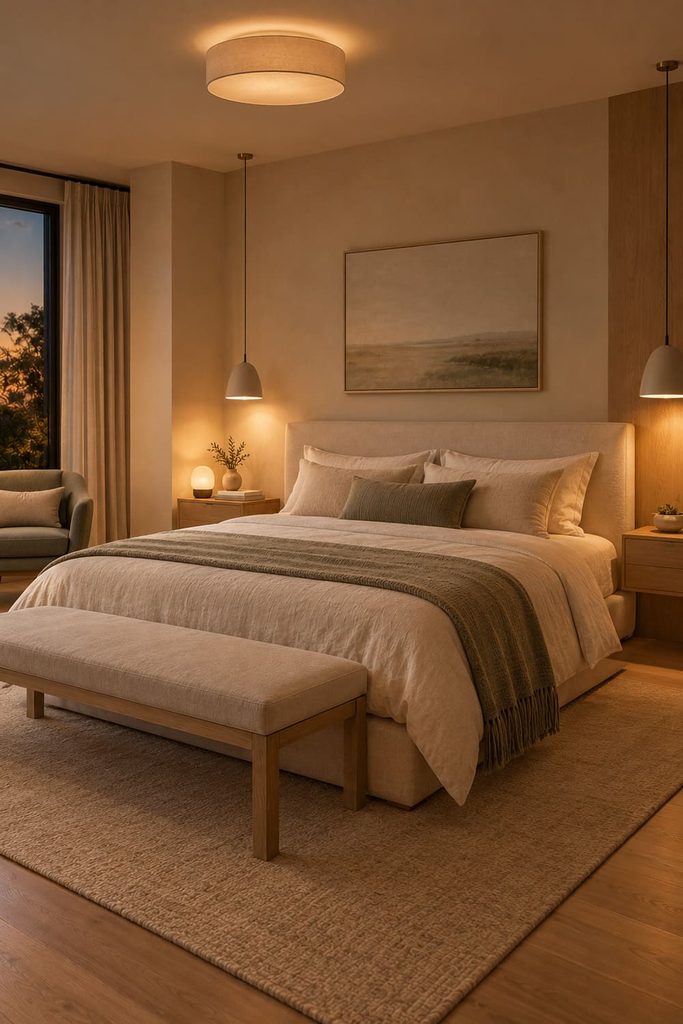
A minimalist bedroom should look good at night as well as during the day. Instead of relying entirely on one bright ceiling fixture, create several softer sources of illumination.
Use bedside sconces or pendant lights for reading, a small lamp for ambient light, and a dimmable ceiling fixture for general illumination. Warm-toned bulbs can make cream, beige, wood, and other natural materials feel especially inviting.
Keep the fixtures visually simple. A sculptural pendant or elegant wall light can become a decorative feature without requiring additional objects around it. Layered lighting is one of the most effective ways to keep a minimalist bedroom from feeling cold once natural daylight disappears.
How to Keep a Modern Minimalist Bedroom Looking Beautiful?
The easiest way to maintain the look is to avoid adding things simply because there is an empty surface. A minimalist bedroom works best when furniture and decoration have a clear purpose.
Start by deciding what the room actually needs. A comfortable bed, useful storage, appropriate lighting, and a small number of carefully chosen decorative pieces may be enough. Then focus on quality, proportion, and texture rather than quantity.
Storage is particularly important. If clothes, electronics, books, and miscellaneous belongings remain visible, even an expensive minimalist bedroom can quickly look cluttered. Closed drawers, wardrobes, baskets, and under-bed storage help keep the visual field calm.
Finally, leave some empty space. Open floor area and uncluttered surfaces are not wasted space in a minimalist bedroom. They are part of the design.
Final Thoughts
A modern minimalist dream bedroom should feel peaceful without feeling empty. The strongest designs combine simple furniture with comfortable bedding, natural materials, warm lighting, practical storage, and just enough decoration to give the room personality.
You do not need to remove every color or decoration to achieve the look. Instead, choose carefully. A beautiful wooden bed, soft neutral bedding, one large artwork piece, a textured rug, concealed storage, and warm bedside lighting can be more effective than a room filled with accessories.
Start with the pieces that have the biggest visual impact, then edit everything around them. When every element has a reason to be there, the bedroom becomes easier to maintain, more comfortable to use, and much more relaxing at the end of the day.


