

15 Home Gym Corner Ideas in a Bedroom for Small Apartments
A bedroom in a small apartment has to do a lot of quiet work. It is where you sleep, get dressed, and switch off, so the thought of adding workout equipment can feel like inviting clutter into the one calm room you have. The good news is that home gym corner ideas in a bedroom work best when they stay small, tidy, and easy to hide, rather than trying to recreate a full gym in miniature.
This guide is about carving out one honest corner, not rearranging your whole life around it. You will find foldable and stowable pieces, simple ways to protect the floor, and storage that disappears at bedtime, so the room still reads as a bedroom first. Pick the ideas that fit your floor plan and your rental rules, and leave the rest.
This post contains affiliate links. If you buy through them, we may earn a small commission at no extra cost to you. See our Affiliate Disclosure.
How to Plan a Bedroom Gym Corner That Doesn’t Wreck the Room
Start by measuring before you buy anything. Mark the corner with painter’s tape on the floor, including space to unroll a mat and step back from the bed. Leave a clear path to the door and wardrobe, and check that drawers and doors still open fully. If the outline already feels tight while empty, try the next wall along before committing.
Next, think in zones rather than objects. Keep the bed, bedside table, and soft lighting as the restful zone, and give the workout corner its own visual edge with a mat, a low shelf, or a change in light. The same zoning thinking helps in other tight rooms too, whether you are studying small bedroom ideas with a desk or planning a shared layout. A clear boundary, even a simple one, stops gear drifting across the room during the week.
Then choose stowable pieces first. A folding mat, a bench that folds flat, and bands or weights that fit inside one closed box will cover most corner setups without dominating the room. In a rental, favour freestanding pieces and removable hooks over anything that needs drilling, and keep heavier items low and on a protective layer so floors and neighbours below are respected. If you share the space, agree the pack-away routine in advance, much as you would with dorm room ideas for students with a roommate, where one corner has to respect someone else’s rest.
Finally, plan where everything lives when not in use, before the first item arrives. One bench, basket, or wardrobe shelf should hold the whole kit. If you cannot point to that home straight away, the setup is too big for the room.
1. Claim the Dead Corner No One Uses
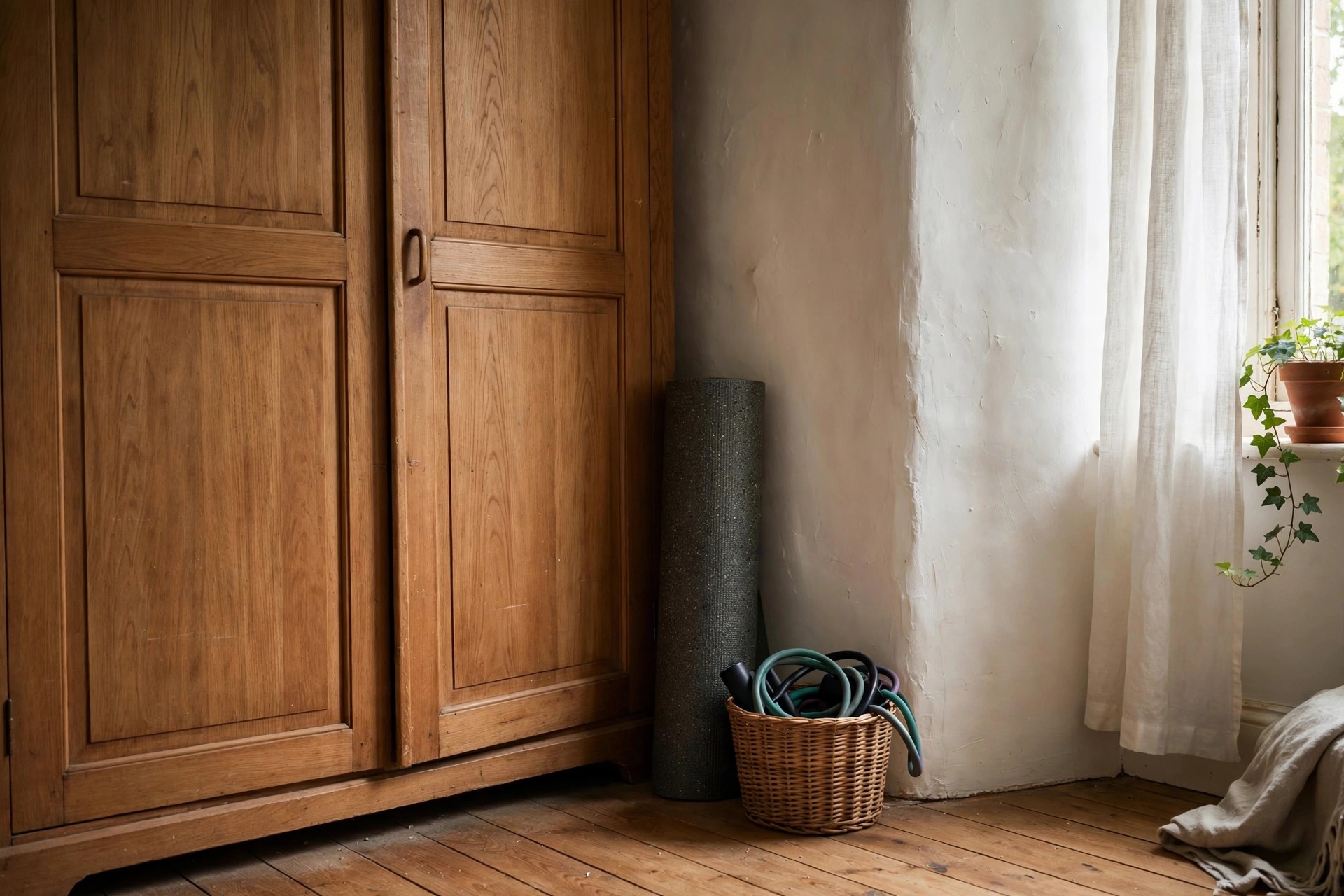
Most bedrooms have one underused corner: beside the wardrobe, behind the door swing, or at the foot of the bed where nothing quite fits. That patch is often the best home for a workout corner because it asks for no sacrifice from the rest of the room. Stand a rolled mat upright, add a low rack or basket, and the corner suddenly has a job.
Test it for a few days with just the mat unrolled before adding anything else. If you keep blocking a drawer, move the tape and try again.
2. Lay a Foldable Mat as Your Floor Plan
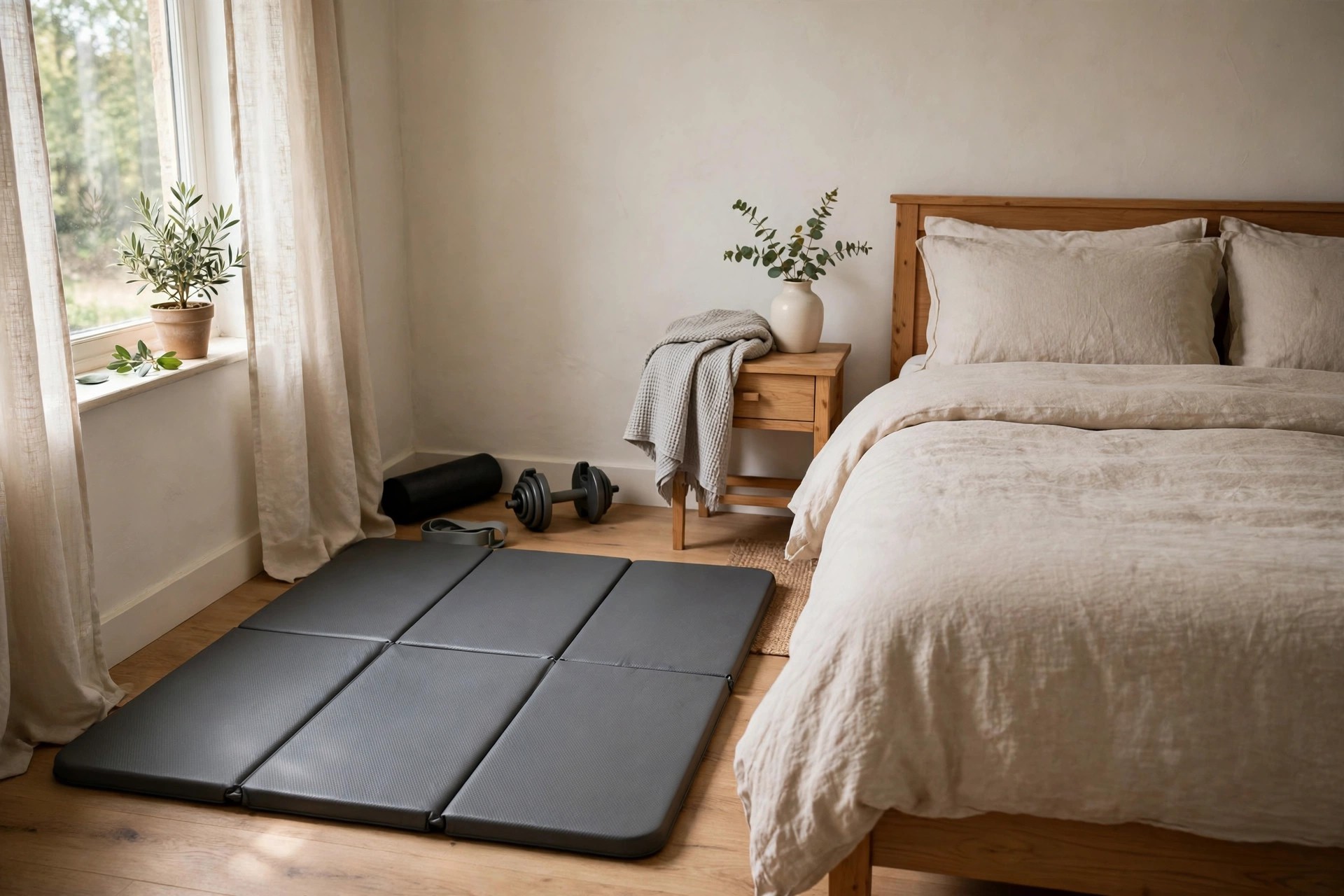
A foldable mat does more than cushion the floor. Unrolled, it draws the exact boundary of your workout area, and folded, it slides under the bed, behind a door, or flat inside a wardrobe. Choose one that folds into neat panels rather than a bulky tube if storage is shallow, and wipe it down before putting it away.
Make the mat the first thing you set out and the last thing you put back. That small ritual marks the session, and the bedroom returns to normal once the panels are stacked away.
3. Lean a Slim Mirror to Open the Corner Up
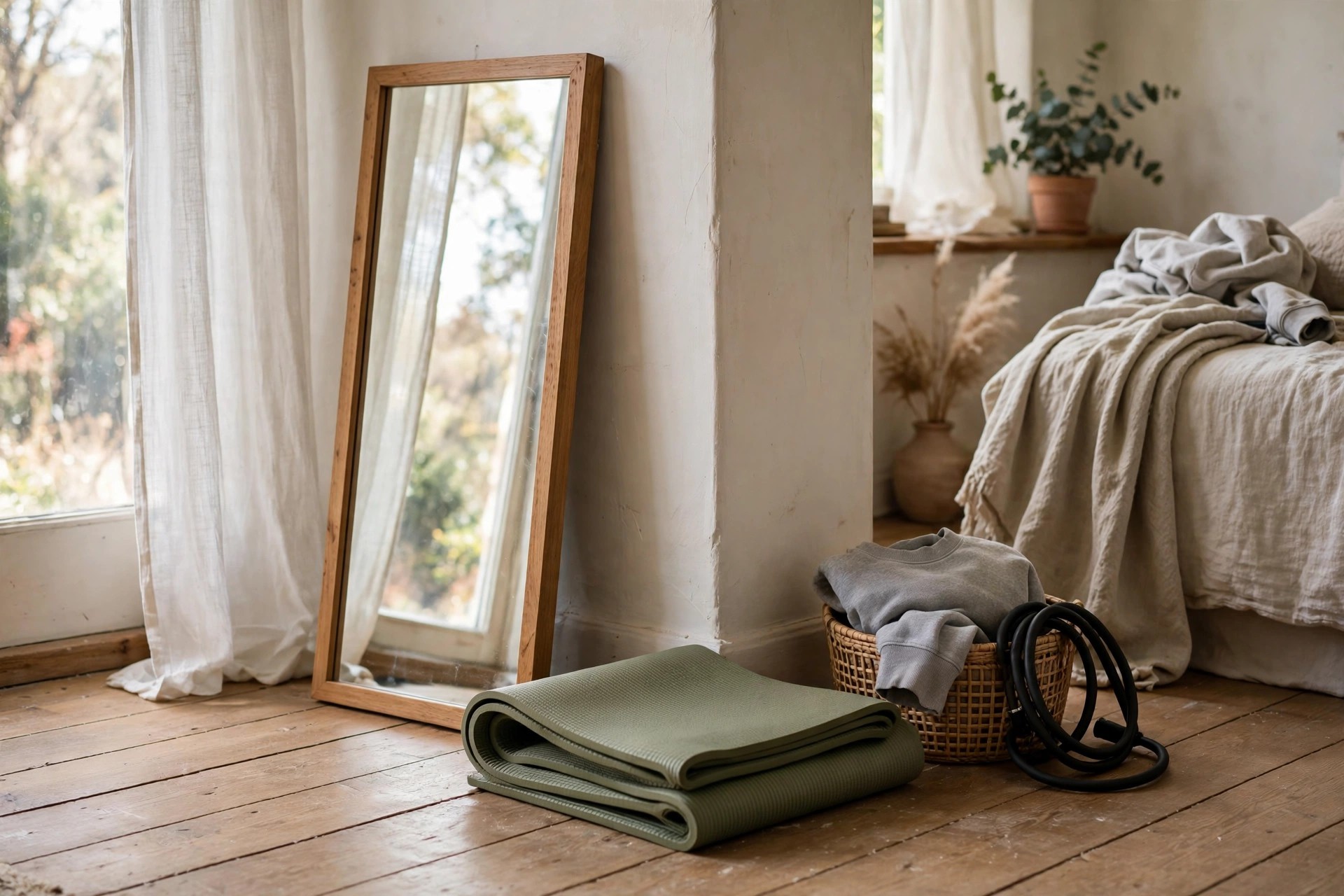
A tall, slim mirror leaned safely against the wall makes a tight corner feel larger and brighter without any fixing into rental walls. It also gives the workout area a defined backdrop, separating it from the bed behind you. Choose a frame that matches your furniture so it reads as bedroom decor first.
Position it to catch daylight rather than face the bed directly, which keeps the sleep side softer at night. Make sure the base sits flat and keep weights away from the glass edge.
4. Fold a Bench Flat Against the Wall
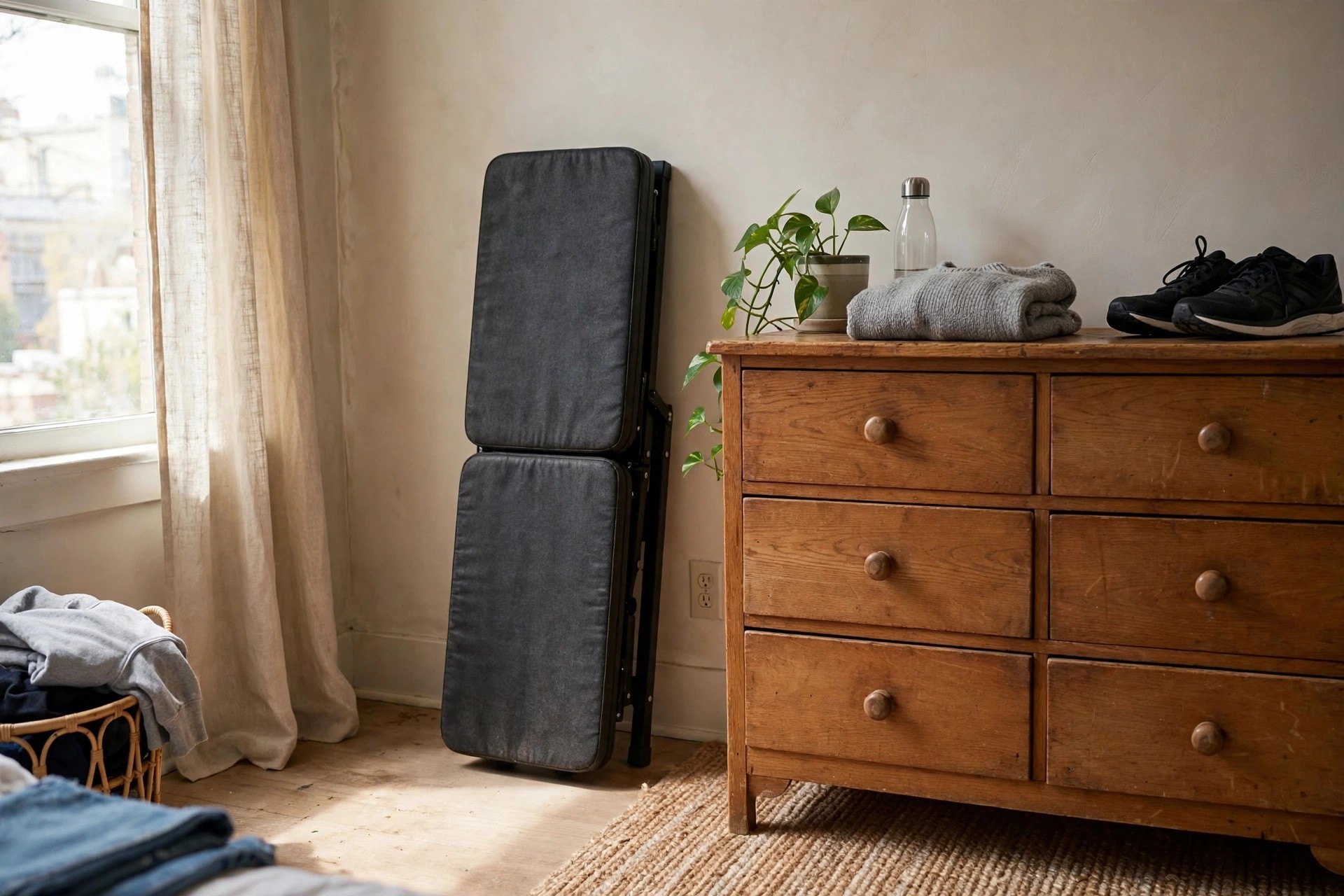
A folding bench is one of the hardest-working pieces for a small corner because it disappears. Used during a session, it can then fold and lean behind the wardrobe or slide under a higher bed frame. When it is away, there is almost no sign the corner is anything other than bedroom.
Before buying, measure the folded depth as carefully as the open length. Rehearse the full set-up and pack-away in your taped outline first, so it never blocks the wardrobe door in use.
5. Roll Everything Into One Storage Bench
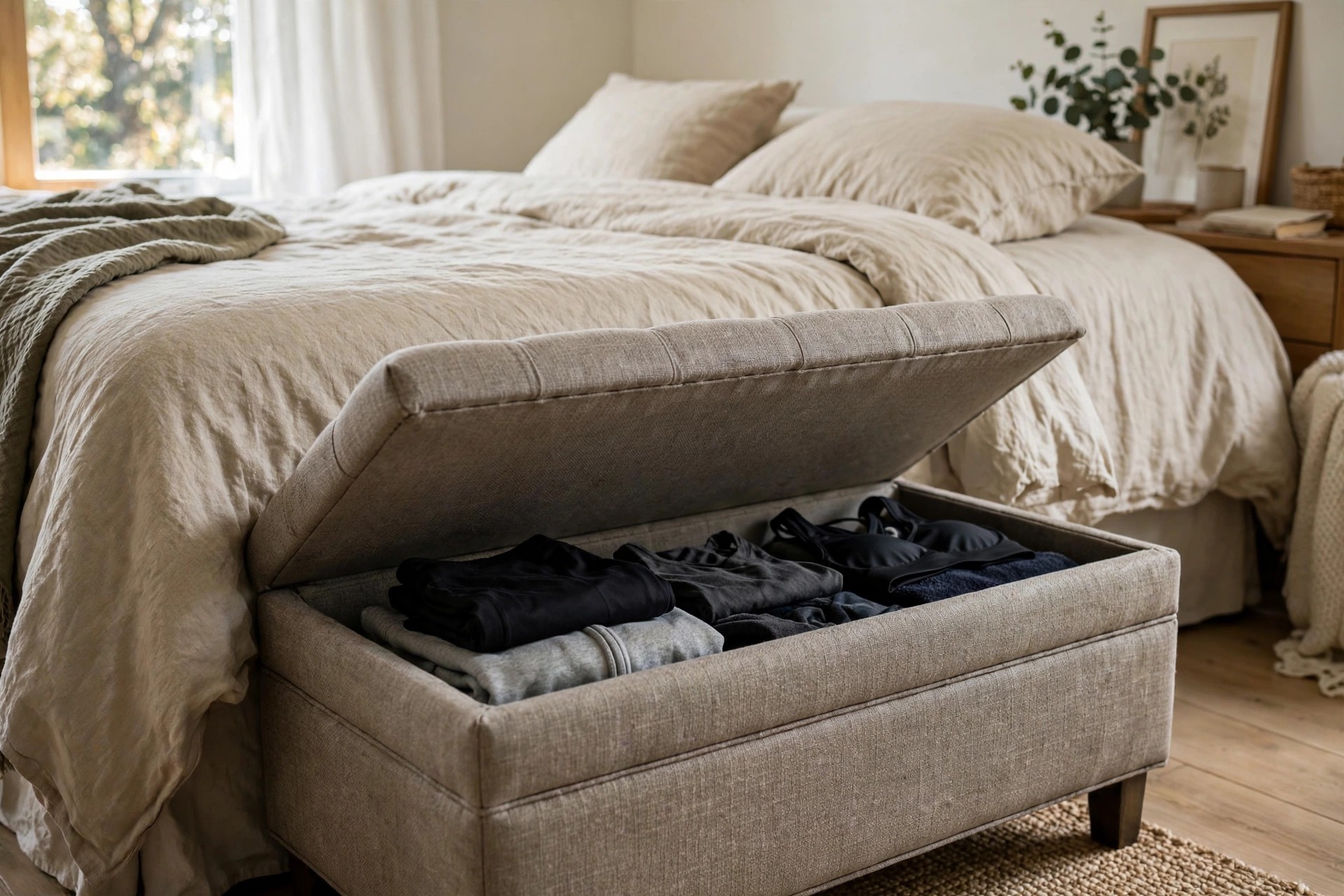
An upholstered storage bench at the foot of the bed or under the window can hold an entire corner kit: bands, small weights wrapped in a towel, and a spare top. Because it looks like ordinary bedroom furniture, nothing about it shouts gym, and it doubles as a useful seat for getting dressed.
This hidden approach suits anyone borrowing tricks from bedroom storage ideas with no closet, where every piece has to earn its place twice. Keep heavier items at the bottom and bands on top for quick access.
6. Keep Small Weights on a Low, Padded Rack
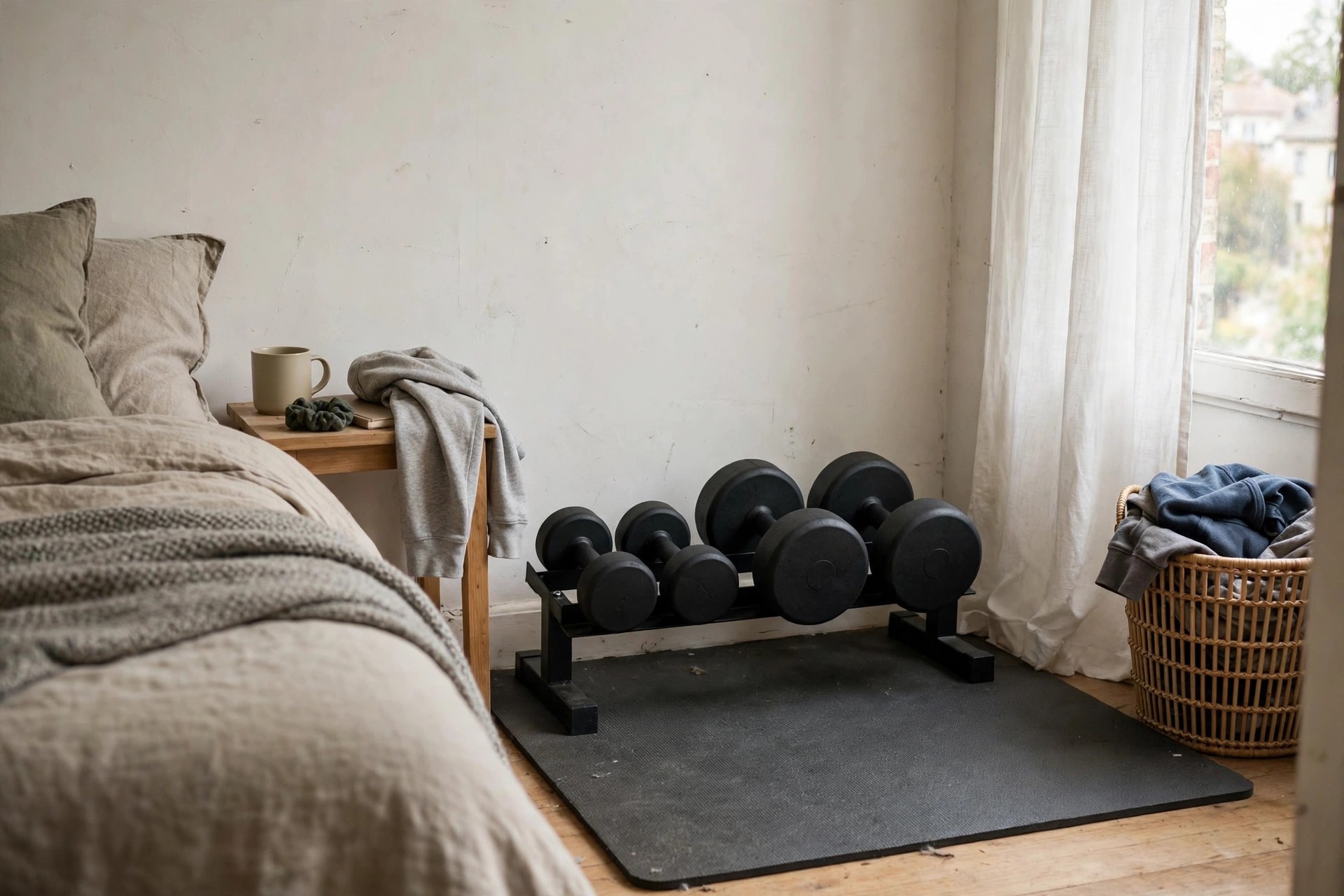
If you keep a small set of weights, a low compact rack keeps them contained instead of scattered along the skirting board. Place it on a protective mat layer, tight into the corner, with a small gap from the wall so nothing scuffs the paint. Low storage also looks calmer than tall gym shelving in a sleeping space.
Only keep the pairs you genuinely reach for in the room; the rest can live in a hallway cupboard. A short, honest rack looks intentional; an overflowing one looks like clutter.
7. Hang Bands and Skipping Ropes on Removable Hooks
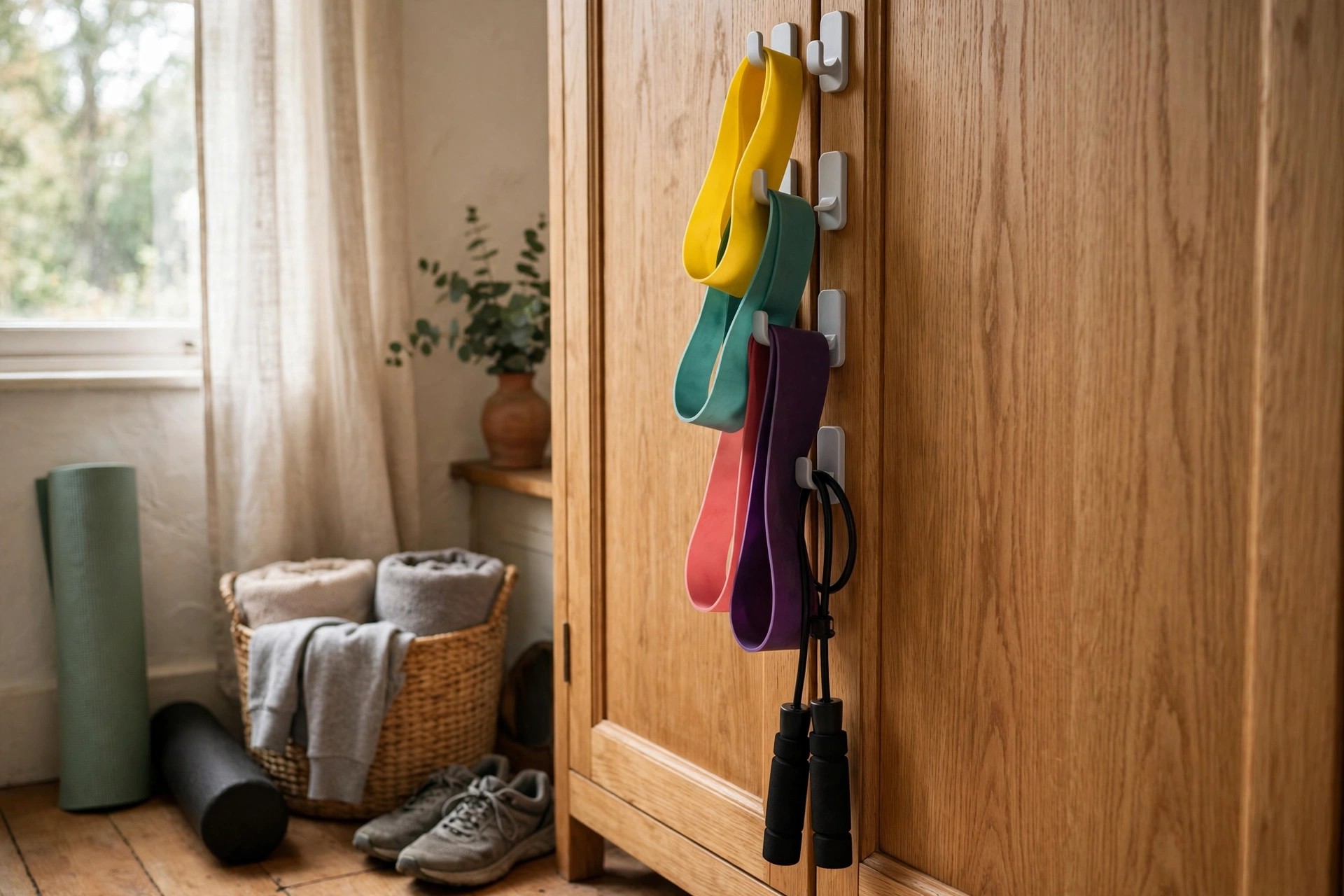
Light, flexible kit is perfect for a rental corner because it stores almost flat. Resistance bands, a skipping rope, and a small towel can hang from removable hooks on the side of a wardrobe or the back of a door, with no drilling at all. Grouped on matching hooks, they look tidy rather than makeshift.
Coil each band neatly and keep the hooks at one height for a deliberate look. When you move out, the hooks come away cleanly and the corner leaves no trace.
8. Protect the Floor With Interlocking Mats

Interlocking foam tiles are a practical base layer for apartment corners. They protect wood or laminate from scuffs, soften sound for neighbours below, and define the workout footprint as clearly as a rug would. Choose a muted, single colour that sits quietly with your bedding rather than bright gym colours that fight the room.
Lay just four to six tiles for a compact corner and add more only if the layout grows. Lift them occasionally to sweep underneath. For guests, they stack flat inside a wardrobe in seconds.
9. Draw the Border With a Low Open Shelf
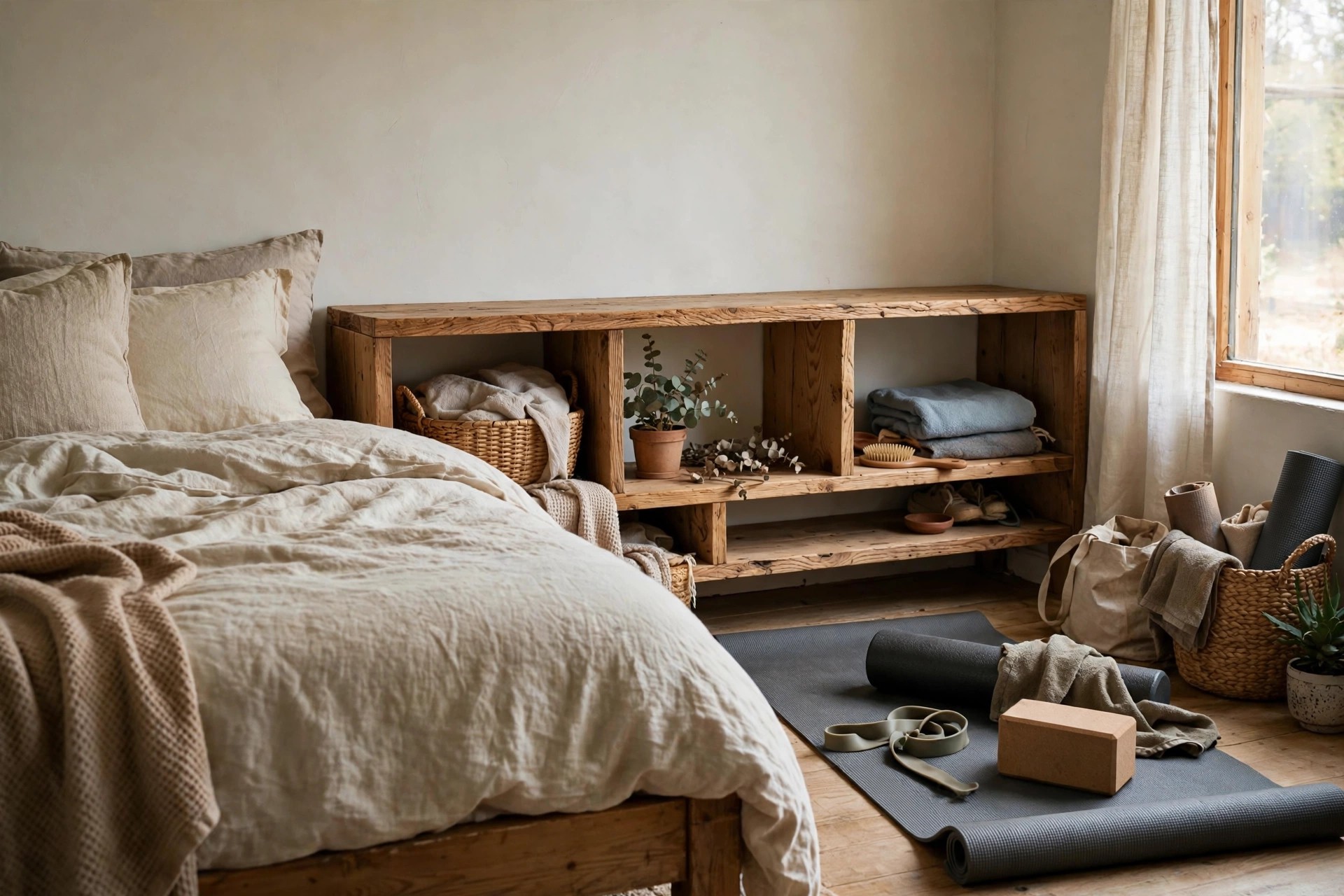
A low open shelf at the edge of the corner works as a gentle room divider. One side faces the bed with books and a small lamp; the other faces the mat with your bottle, towel, and bands. It creates the feeling of two small rooms without any permanent change.
The same logic appears in homeschool corner ideas for small homes, where a single shelf turns an unused patch into a purposeful zone. Keep it low enough that light still flows over it, and never stack it full.
10. Hide Daily Gear in Lidded Baskets and Boxes
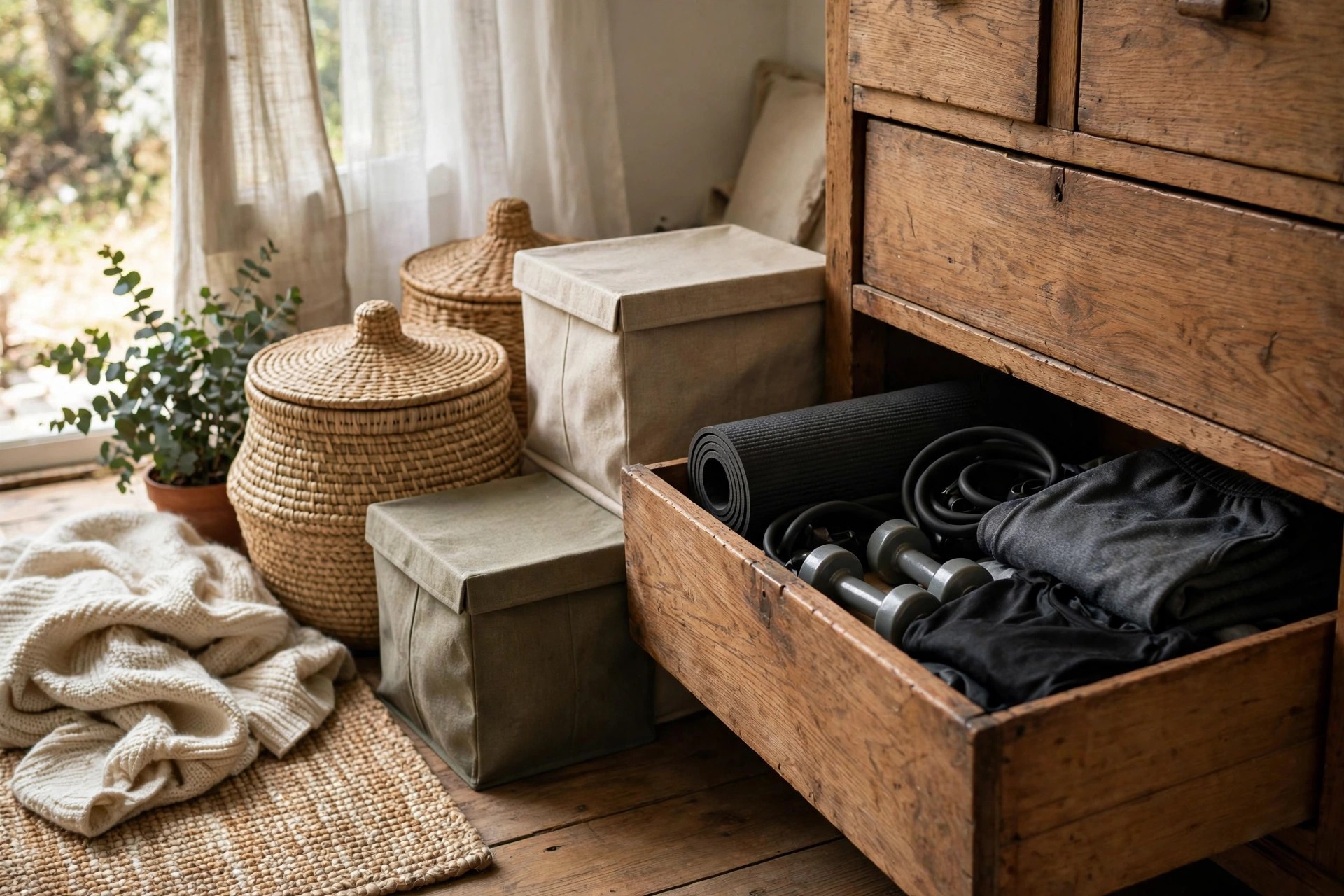
Not every piece needs furniture built around it. A pair of lidded woven baskets or matching fabric boxes can swallow ankle weights, bands, and spare socks, then sit innocently beside a dresser. Lids matter: closed storage reads as decor, while open tubs read as a gym that happens to contain a bed.
Choose natural textures like woven seagrass, linen-look fabric, or pale wood so the boxes blend with bedding and curtains instead of adding visual noise before sleep.
11. Use the Inside of the Wardrobe Door
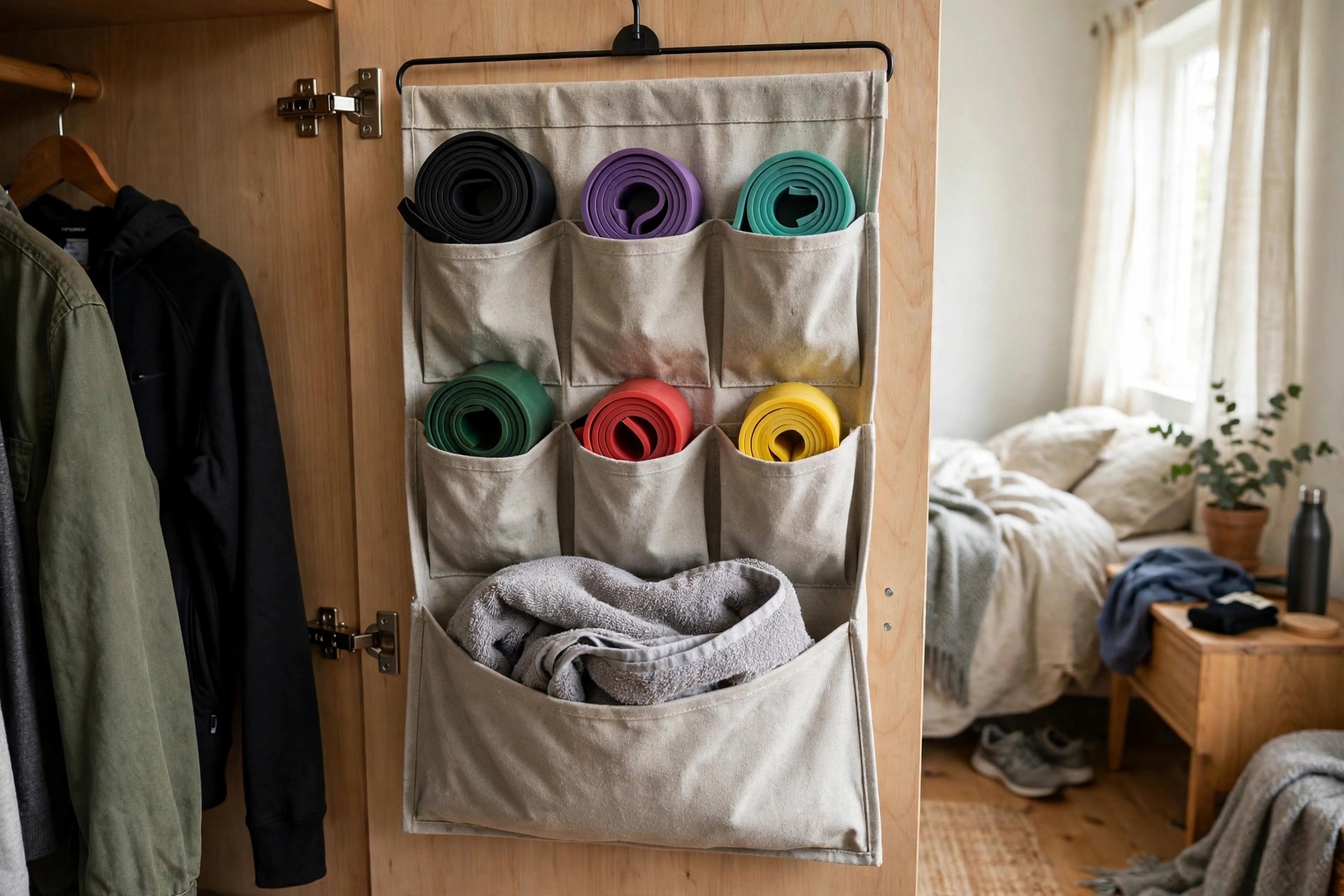
The inside of a wardrobe door is free storage most bedrooms ignore. An over-door organiser with fabric pockets can hold bands, gloves, and a small towel, all hidden the moment the door closes. It keeps light, frequently used items off the floor without taking any extra floor space at all.
Check that it sits flat enough for the door to close properly, and keep heavier items in the lower pockets. If your wardrobe doors slide, use the back of the bedroom door instead.
12. Screen the Sleep Side With a Curtain or Folding Panel
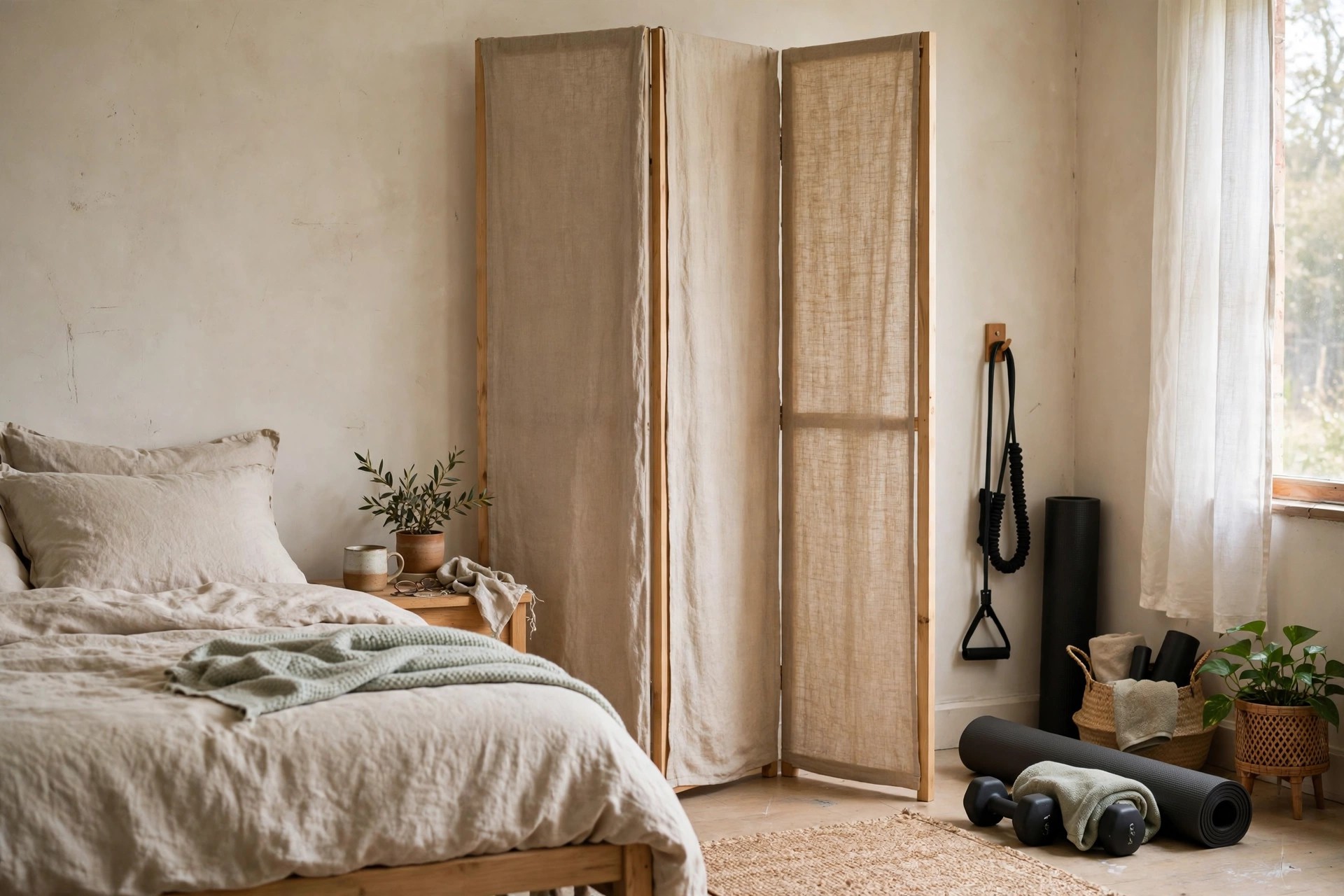
If you wake up and immediately see equipment, the room can feel like it is asking something of you before the day begins. A folding screen or curtain panel between the bed and the corner solves that in one move. Open it to work out, close it at night, and the sleep zone feels separate again.
This trick is especially useful in open layouts like those in studio apartment bedroom ideas, where one room does everything. Choose a light fabric in a tone close to your walls so the screen calms the room.
13. Soften the Corner With a Plant and Warm Light
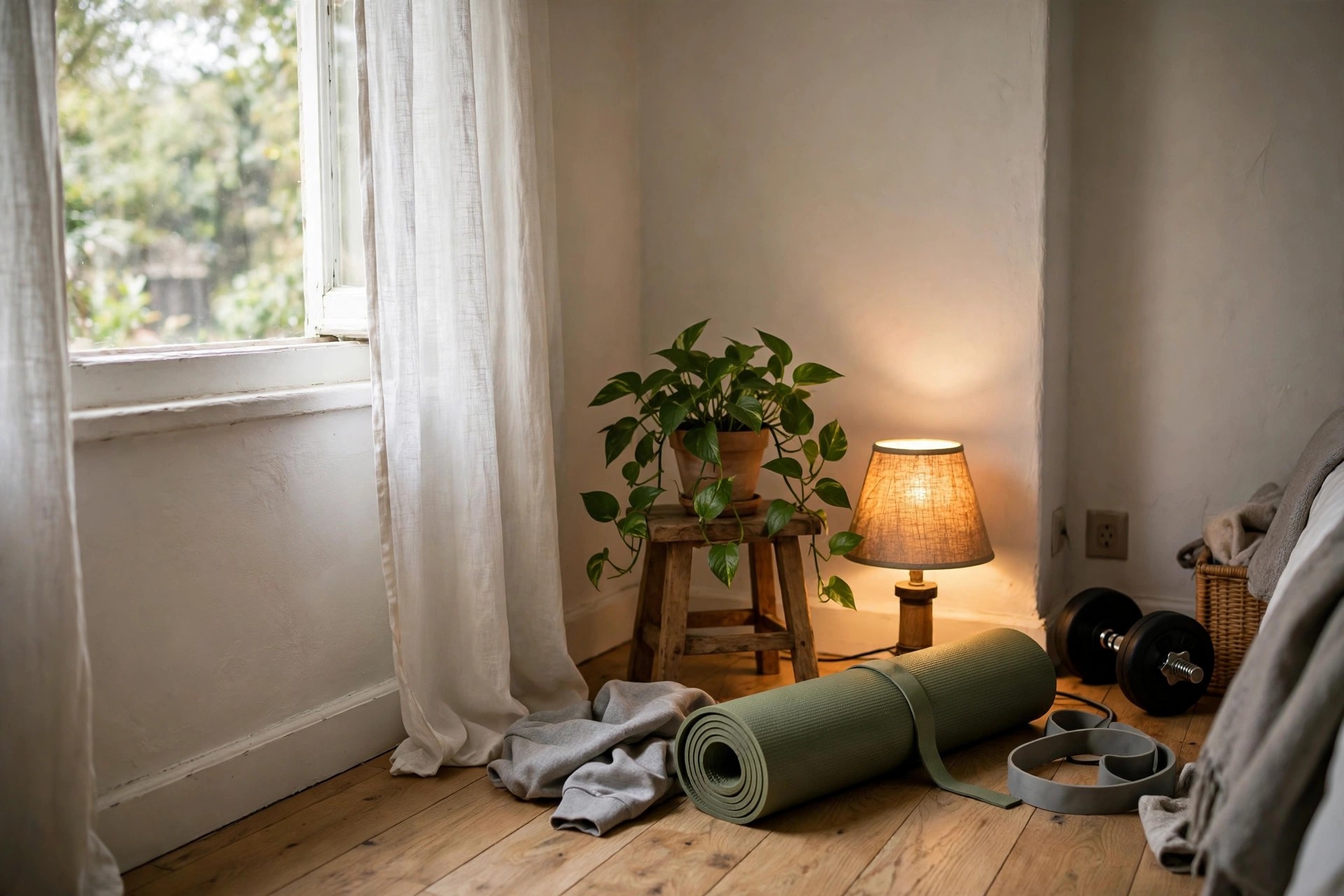
A workout corner does not have to look industrial to be practical. A trailing plant on a small stool, a warm-toned lamp nearby, and a wooden or woven texture or two will pull the corner back into the bedroom’s palette. The overall impression becomes a calm room that happens to have a mat in it.
Keep plants clear of the mat itself so nothing gets knocked, and use a lamp you already own. Softening is mostly about colour and texture repeating across both zones.
14. Choose Quiet, Apartment-Friendly Pieces
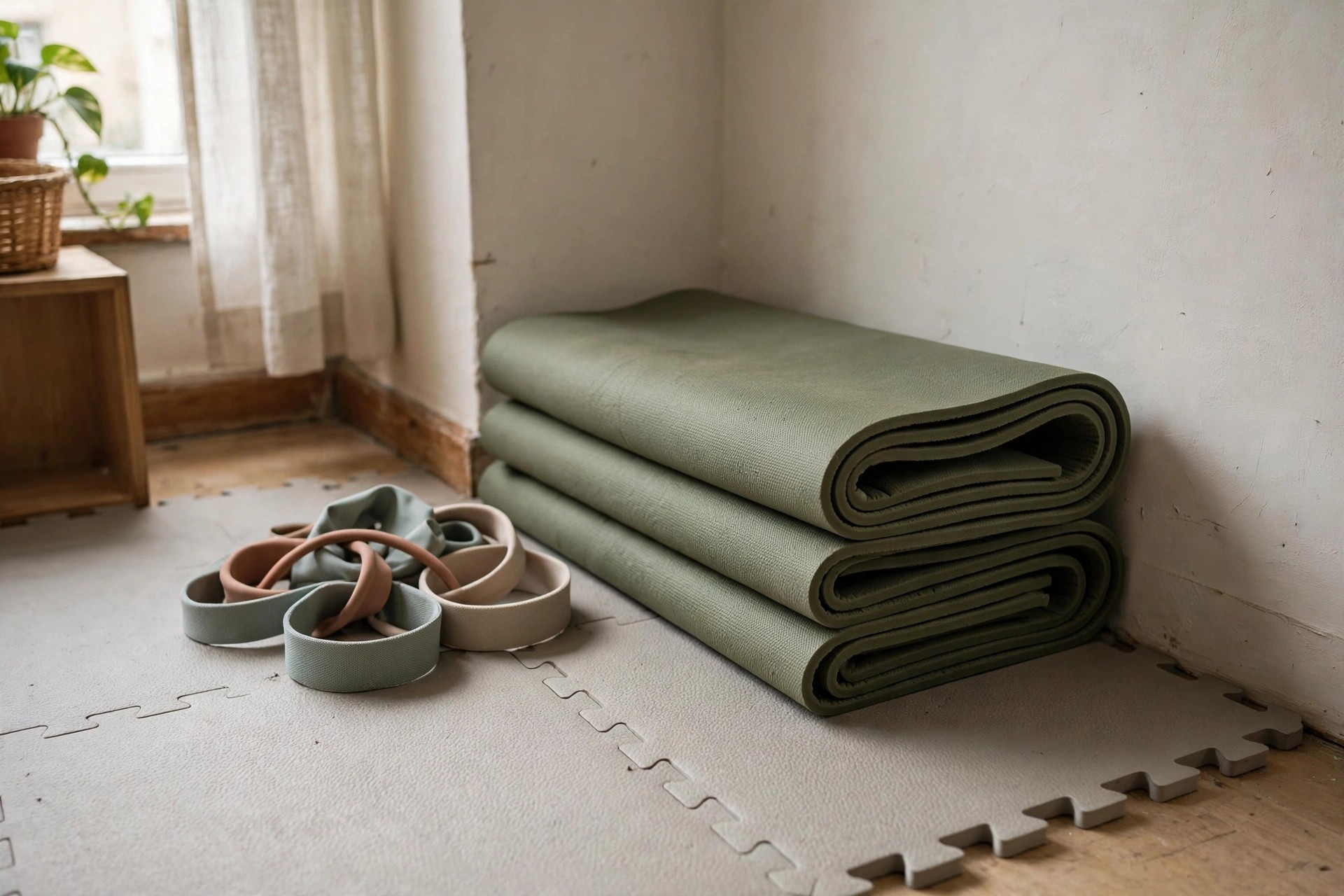
In a small apartment, how equipment sounds and stores matters as much as what it does. Soft-edged pieces, bands, a thick mat, and items that set down gently are kinder to floors and neighbours below than anything that drops or rattles. If a piece needs a lot of clearance, it probably belongs in a bigger space.
Think about pack-away noise too. Gear that clanks every morning will annoy a partner quickly. A quiet kit that appears and disappears without fuss is far more likely to survive in a shared bedroom.
15. Make the Five-Minute Reset Non-Negotiable

The best bedroom gym corners share one habit: a complete reset after every session. Mat folded, weights racked, bands hung, bench stored, floor clear. Five unhurried minutes returns the room to a place for rest, while stopping halfway lets a corner slowly take over the bedroom.
Keep storage within arm’s reach of the mat, never in another room. If putting something away means crossing the apartment, it will end up living on the floor.
Common Mistakes to Avoid
1. Buying full-size equipment for a corner-sized plan. A large rack or bulky machine might fit on paper, but once you add mat space and room to move, it swallows the bedroom and blocks drawers, doors, or the route to the bathroom. Measure the taped outline, buy for the corner you actually have, and favour folding or flat-storing pieces that leave the room usable on rest days too.
2. Leaving gear out because there is no home for it. Equipment without a planned storage spot migrates: weights by the bed, bands over a chair, a mat permanently unrolled. The room stops feeling restful within days. Decide the bench, basket, or wardrobe shelf for every item before it arrives, and if an item has no home, it does not come into the bedroom yet.
3. Ignoring floors, walls, and neighbours in a rental. Skipping a protective mat layer, leaning heavy pieces against thin walls, or fixing hooks and racks without permission can damage the room and strain relations with the people below. Use interlocking tiles or a thick mat under everything, choose freestanding and removable options first, and check your tenancy agreement before anything that marks a wall or floor.
Frequently Asked Questions
How much floor space does a bedroom gym corner actually need?
Enough for your mat laid flat with a little clearance on each side is a sensible starting point. If you can unroll the mat, step off it in every direction without hitting furniture, and still open nearby drawers and doors, the corner is workable. Anything tighter usually means choosing a different corner, not smaller movements.
How do I keep a workout corner from ruining the calm feel of the bedroom?
Keep the bed zone visually separate with a shelf, screen, or simply consistent soft colours, store all gear closed or hidden at night, and stick to the full pack-away reset. When nothing bright, tangled, or half-unpacked is visible from the pillow, the room reads as a bedroom again almost instantly.
What is the most rental-friendly way to store equipment?
Freestanding and removable options cause the least worry: lidded baskets, a storage bench, an over-door organiser, and adhesive hooks used within their stated limits on suitable surfaces. Avoid drilling or fixing anything heavy to walls unless you have clear permission, and protect floors with mats under racks and benches from day one.
Can a gym corner work if I share the bedroom?
Yes, if the boundaries are agreed together. Settle which corner, when it is in use, and how completely it packs away, and keep the shared routes to the door and wardrobe clear at all times. A corner that disappears fully is far easier for a partner or roommate to live with than one that is always half set up.
Final Thoughts
A small bedroom does not need to choose between rest and movement. With a measured corner, stowable pieces, protected floors, and storage that disappears, home gym corner ideas in a bedroom can sit quietly alongside a calm sleep space instead of competing with it. Start with the mat and one closed storage spot, live with it for a week, and add only what the corner proves it can hold.


