

15 Homeschool Corner Ideas for Small Homes
Homeschooling without a spare room does not mean lessons have to take over the whole house. In most small homes, one well-planned corner is enough. The trick is not finding more space. It is choosing storage and furniture that can work twice, close away neatly, and keep school feeling like one small, welcoming part of family life.
The ideas below carve that corner out of rooms you already have. You will find pack-away systems, rolling carts, wall storage and fold-down desks, plus simple ways for two or more children to share one spot without constant muddles. Pick the one corner that suits your routine first, set it up properly, and let the rest of your home stay a home.
How to Set Up a Homeschool Corner That Packs Away at Night
Watch how your home is used for a day. Notice which corner sits empty in the morning, where the light falls, and where an adult can be nearby without hovering. A good homeschool corner needs daylight, a flat surface at a comfortable height, and somewhere within arm’s reach for the day’s books and pencils.
Next, give the corner a clear boundary. A small rug, a low bookshelf turned sideways, or even a change of cushion colour tells children this is the learning spot and tells everyone else where school ends. The calm, divided approach in these shared home office ideas works just as well for a family learning corner in a busy living room.
Then plan storage before you plan decoration. Decide exactly where workbooks, paper, art supplies and finished work will live, and choose containers you can close — lidded boxes, fabric bins, a cart or a cupboard door, so tidying takes minutes. Keep only the current week’s materials in the corner itself and store the rest elsewhere, even if that means a box on top of a wardrobe.
Finally, build an open-and-close ritual. In the morning, roll the cart in, open the box or fold the desk down; at the end of lessons, reverse it together. When children help close up, the room feels like yours again for the evening.
1. Claim the Living Room Corner Behind the Sofa

The space behind a sofa is often wasted, yet it can hold a narrow desk, a chair and a small shelf without changing how the room works. From the front, guests see an ordinary living room. From behind, children get a defined spot that still feels part of the family, close enough for questions but separate enough to concentrate.
Keep the desk shallow: a wall shelf above for books, a lidded basket underneath for paper, and at day’s end push the chair in and the corner almost disappears.
2. Let the Dining Table Double as the School Desk

A dining table is already the right height, already has chairs, and already sits near the heart of the home, which makes it the easiest corner of all. Give each child a lidded tray or shallow box that holds everything for the day. Lessons happen on the table, and when the boxes are carried to a cupboard, the table is clear for lunch or dinner.
A washable mat can mark the school zone and protect the surface, and a caddy hung over one chair keeps pencils and scissors off the table at mealtimes.
3. Fold Down a Desk in the Hallway
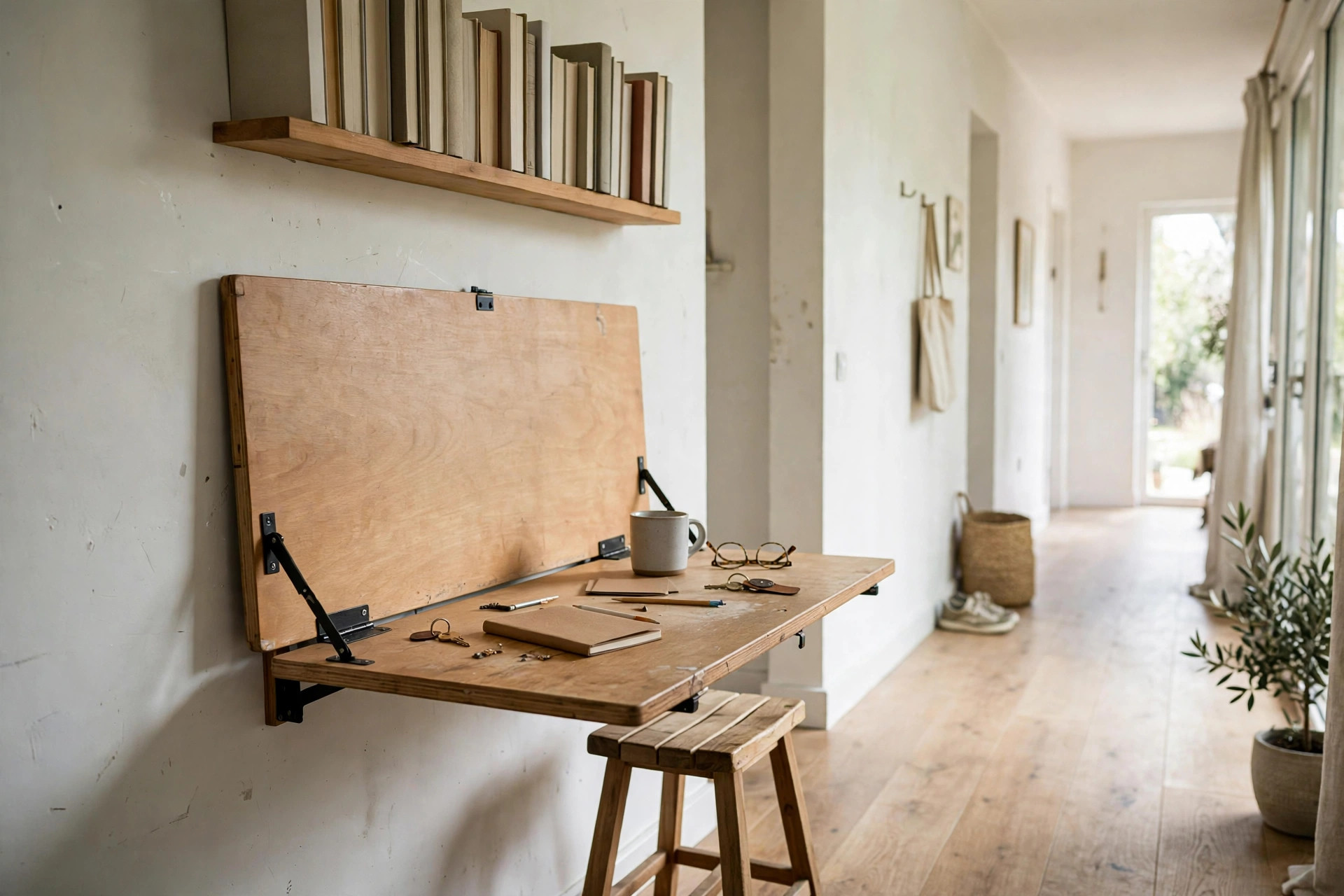
Hallways are passing places, but a wide stretch of hallway wall can hold a fold-down desk that is barely there when closed. The flap lifts for lessons and drops flat afterwards, leaving the walkway completely clear. Add a slim picture ledge above for the day’s books and a small stool that tucks underneath or hangs on a hook nearby.
This suits one child working fairly independently. With no room for piles, it encourages a tidy finish — everything must be put away before the desk can fold shut.
4. Roll a Cart In as a Mobile School Station
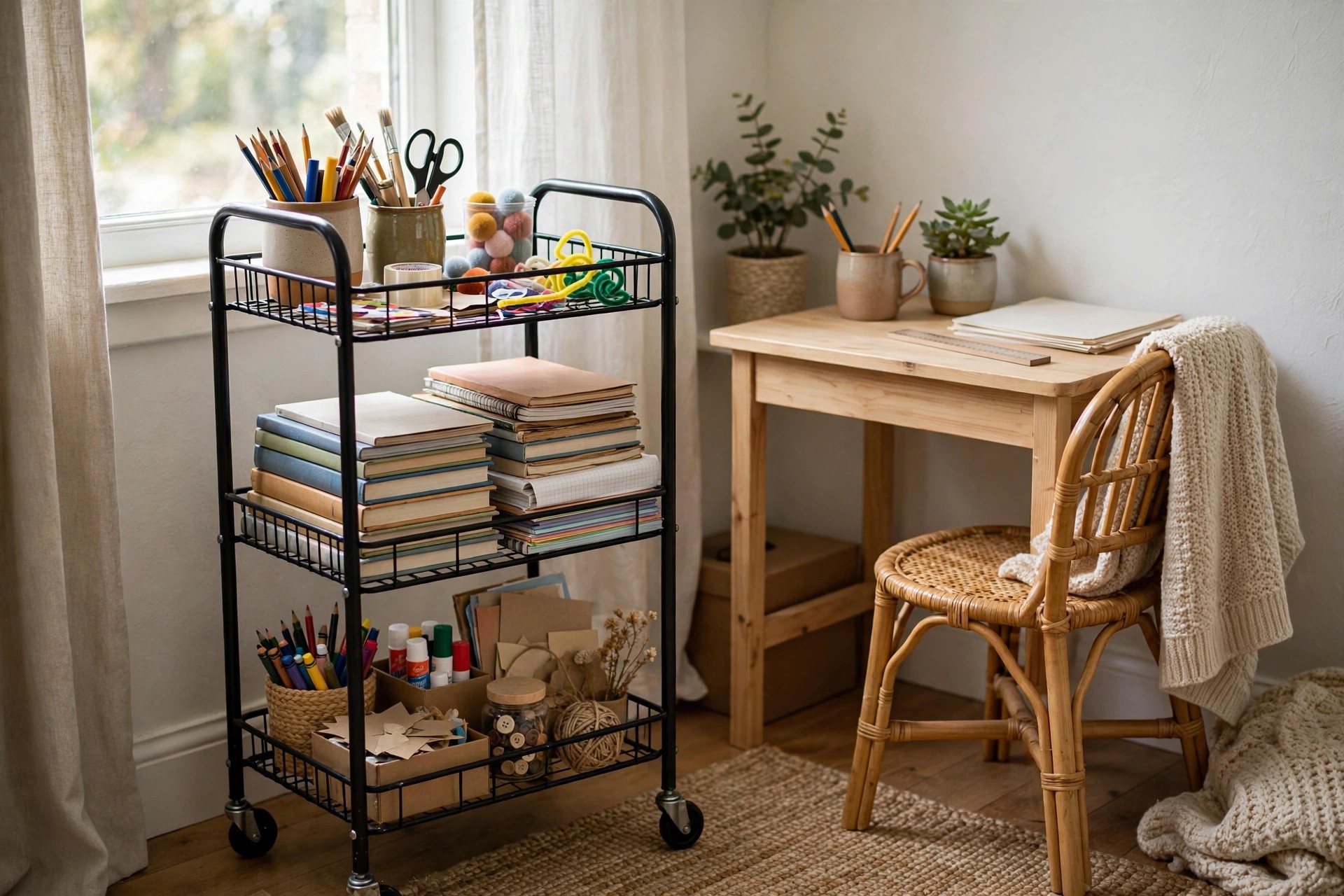
A sturdy rolling cart is the friend of every small-home homeschool. Load the top tier with daily essentials, the middle with workbooks and paper, and the bottom with art supplies or a sibling’s set. Roll it to the table, the sofa corner or a sunny window for lessons, then roll it into a cupboard, beside a bookshelf or behind a door when the day ends.
Give each tier a simple job and let children restock their own during the closing routine. The corner can then move with the light, without moving any furniture.
5. Turn the Under-Stairs Nook Into a Learning Den
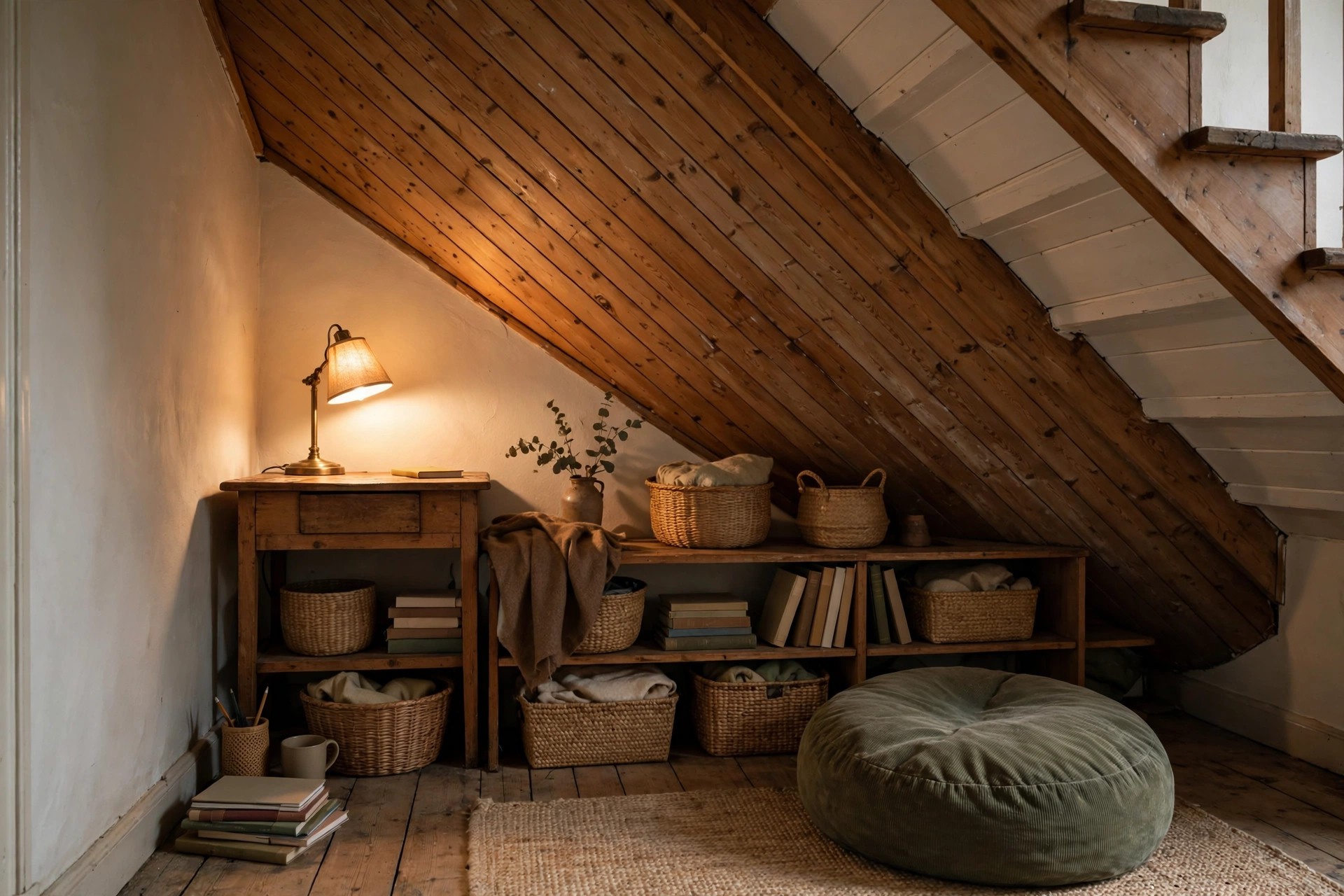
The space under the stairs often becomes a dumping ground, but cleared out it makes a wonderfully den-like learning corner. A small desk or low table, a cushion or child-sized chair, and a battery lamp turn it into a spot children genuinely want to settle into. Shallow shelves fitted to the sloping wall hold books where they are easy to reach.
Keep it open and light-coloured, with baskets for storage. Being naturally separate from the sofa and television, it suits a child who concentrates better away from the busiest part of the room.
6. Share a Bedroom Corner Quietly

A bedroom corner can work beautifully when living spaces are spoken for, especially for an older child who needs a little quiet. A compact desk against one wall, a shelf above, and a lidded box for school things keep the room feeling like a bedroom first. If you are already making a small room do double duty, these small bedroom ideas with a desk show how slim furniture keeps the balance, and the same gentle thinking behind nursery nook ideas in the parents’ bedroom applies here too — one corner, clearly zoned, with everything else left calm and restful.
Protect bedtime by closing school away — books into the box, box under the bed — so the room returns to being a place to rest.
7. Convert a Closet Into a Tiny Study Nook
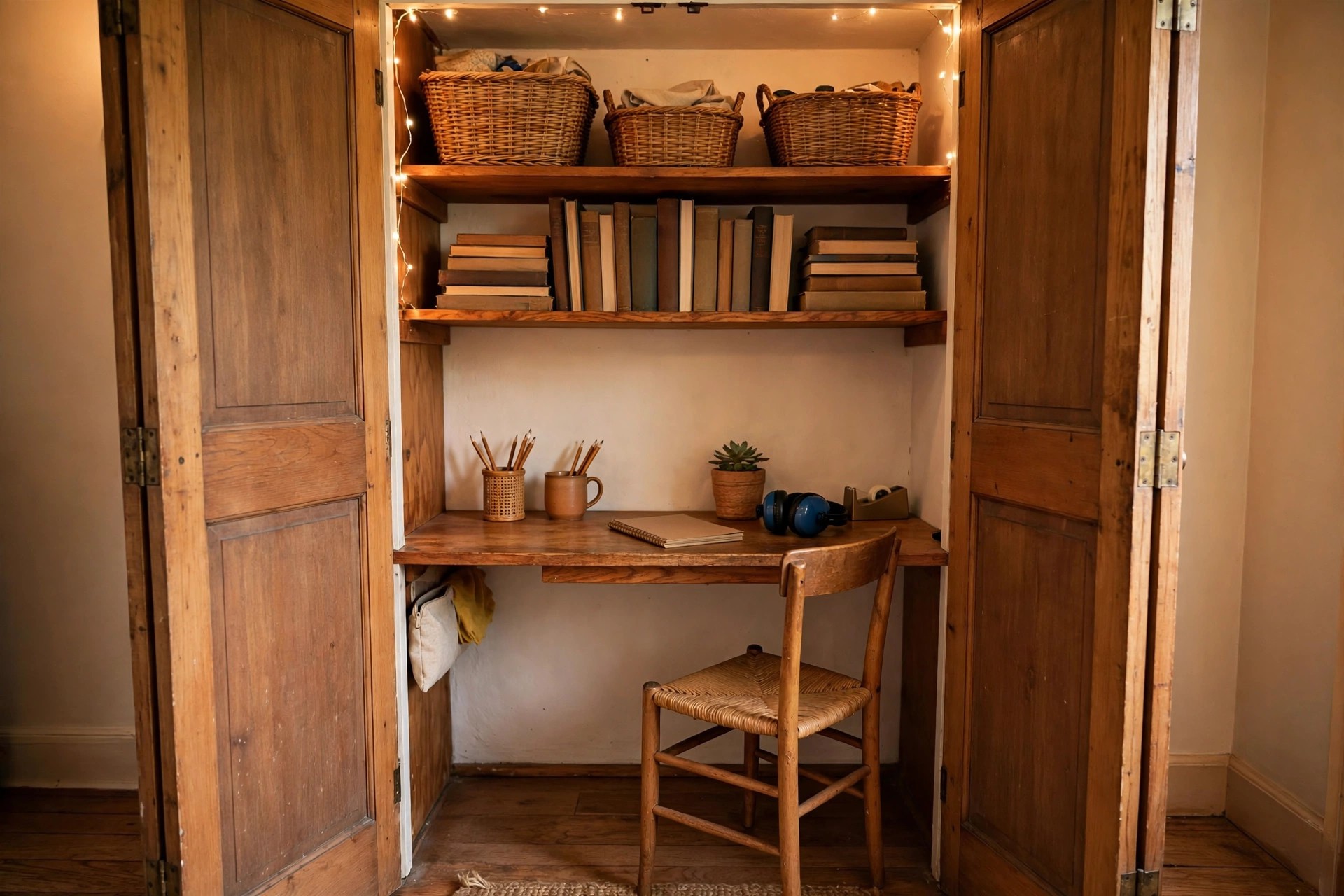
An underused closet or the alcove left by a removed wardrobe door can become a study nook with surprising character. Fit a shelf at desk height across the back, add a second shelf above for books, and hang a small peg rail for headphones, bags and a pencil case. A chair slides in, and curtains or the original doors close over the whole thing afterwards.
Enclosed on three sides, it reduces distractions without a separate room. Paint it a soft, light colour, add a warm lamp, and keep a floor basket for atlases and art pads.
8. Make the Window Bay a Reading and Writing Spot

Natural light makes any corner feel better, and a window bay often has just enough depth for learning. A low bench or a pair of floor cushions, a small side table for a workbook, and a basket of books create a reading and writing spot that children gravitate towards.
For cheerful inspiration on making children’s spaces feel special in ordinary rooms, browse these dream bedroom ideas for kids and borrow the colour and cushion ideas for your bay. Keep curtains tied back during lessons and reserve this light-filled spot for reading, writing and drawing.
9. Add a Pull-Out Tray Table to a Bookshelf Wall
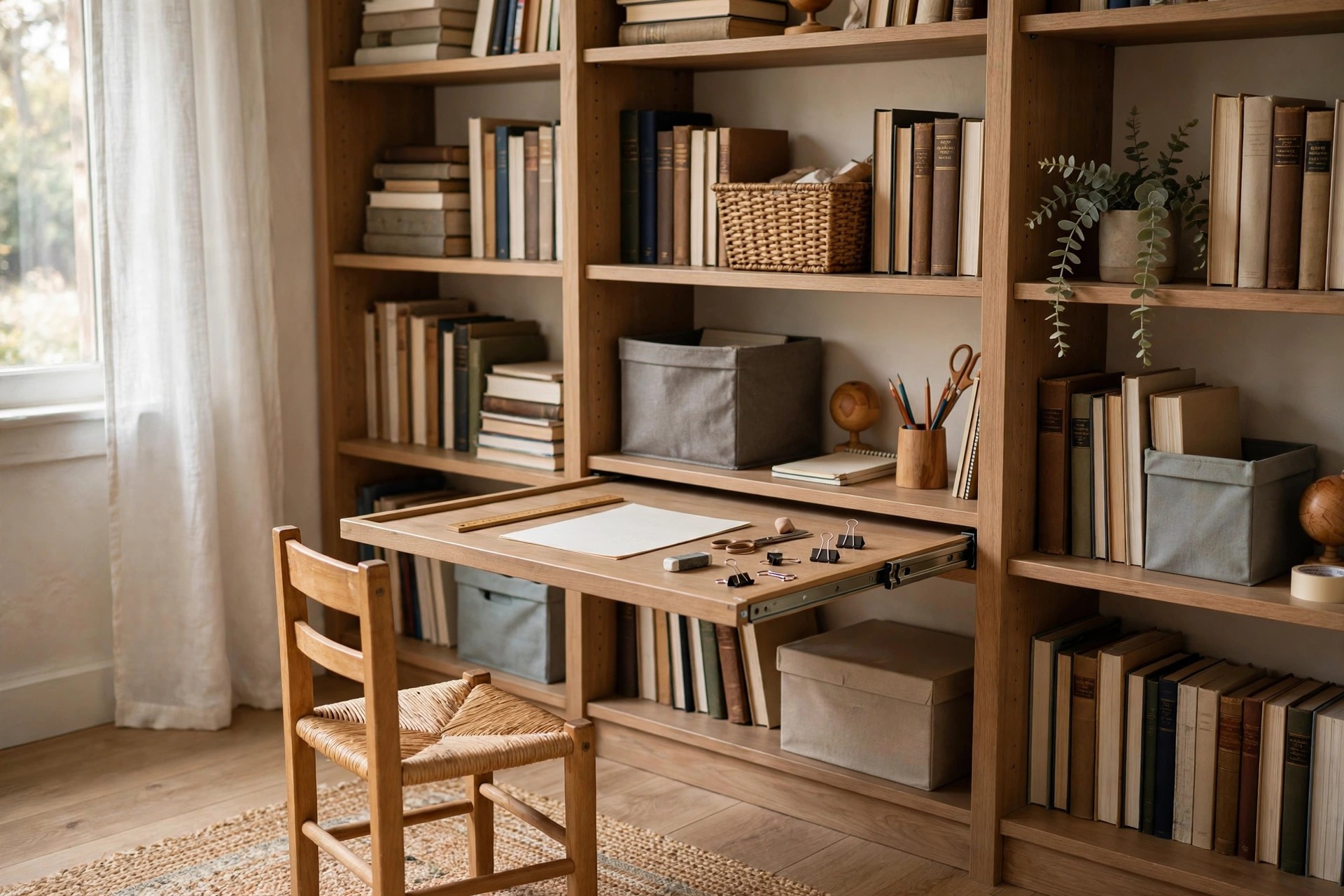
If floor space is too tight for a desk, let a bookshelf do the work. A pull-out tray or a hinged shelf fitted between bookcase uprights gives a writing surface exactly when it is needed and slides away afterwards. Books live on the shelves around it, so the corner is ready in seconds and leaves no footprint at all once tidied.
Pair it with a folding chair stored flat behind a door. It suits handwriting and drawing well, and the rest of the room stays completely untouched by school.
10. Hide It All Away in Fabric Bins and Baskets

Sometimes the corner is not a place but a system. A set of matching fabric bins or woven baskets on an existing shelf can hold an entire homeschool: one bin per child, one for shared supplies, one for library books. Lessons happen wherever there is room that day, and afterwards every bin goes back on the shelf and the house looks like a house again.
Soft containers blend with cushions and throws you already own. Keep the heaviest bin lowest so younger children can lift their own things safely.
11. Use a Pegboard for Wall Storage Above a Narrow Desk
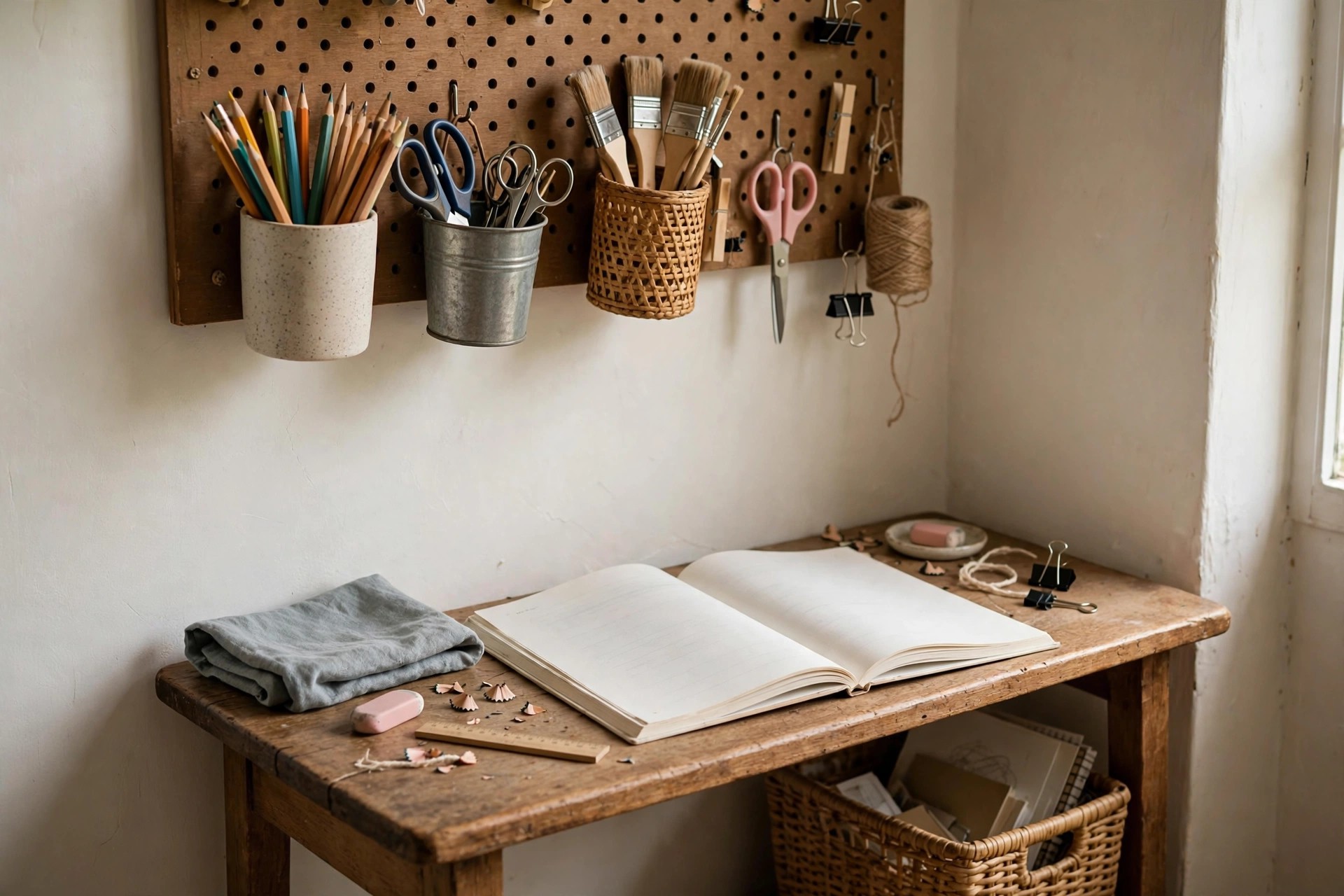
When desk space is tiny, the wall above it has to earn its keep. A pegboard holds cups of pencils, small shelves for books, hooks for scissors and bags, and a clip for the day’s worksheet — all off the surface, all visible at a glance. Nothing stacks, nothing hides, and children can see exactly where each thing belongs at tidy-up time.
Keep the board only as wide as the desk, rearrange hooks as needs change, and paint it to match the room so it looks decorative in the evening.
12. Divide One Corner Fairly for Two or More Children
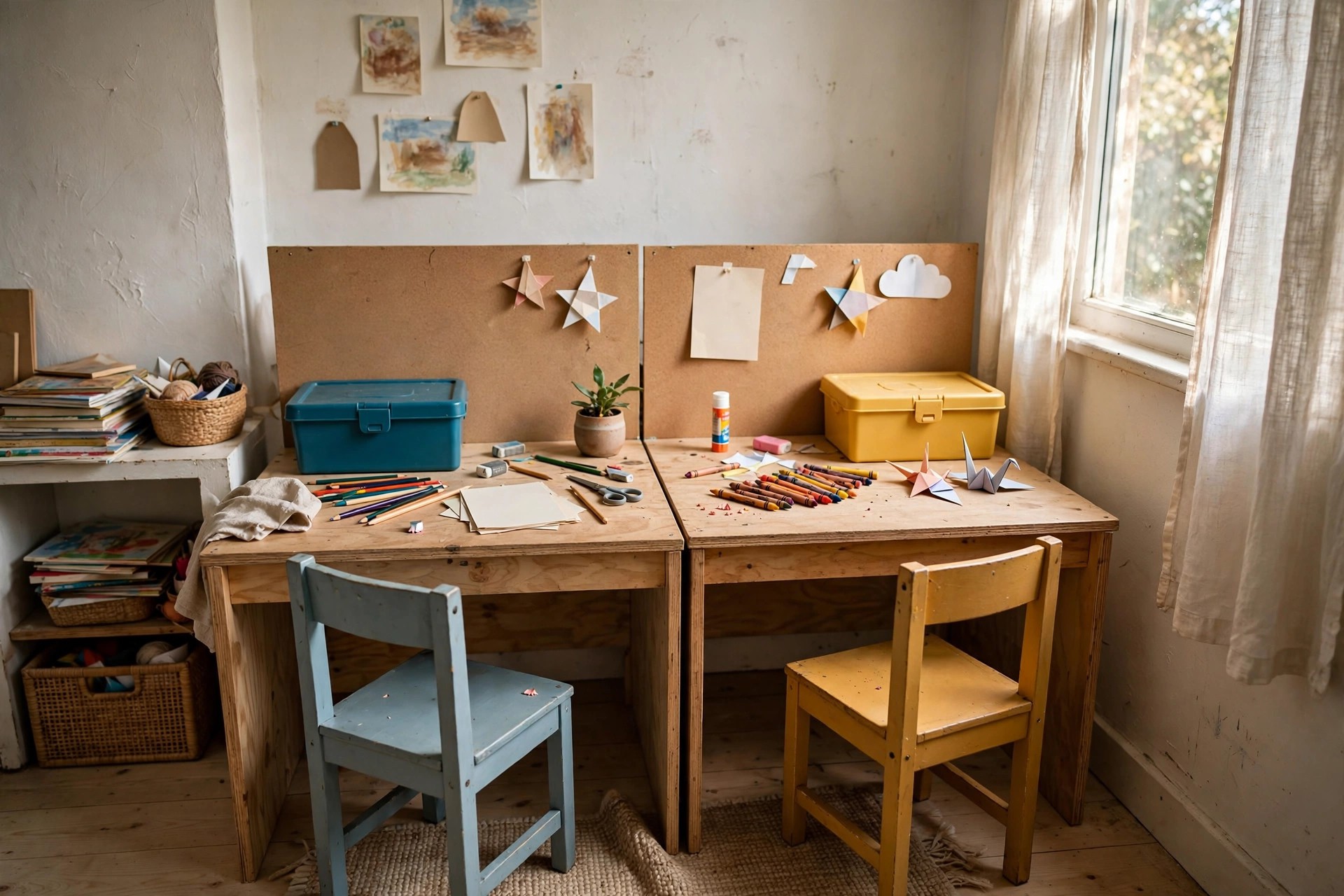
Sharing one corner works when each child owns a clear slice of it. Split the desk or table with a low book stand or a row of upright files in the middle, give each child their own box, colour and pencil pot, and keep shared items in a single central caddy. The same ground rules that make shared rooms peaceful — in these dorm room ideas for students with a roommate, clear personal zones do all the work — apply just as well to siblings sharing a learning corner.
A divider also helps concentration. If ages differ, let the older child take the quieter end and keep the younger one’s supplies in a grab-and-go tray.
13. Borrow the End of the Kitchen Counter

For younger children who work best with a parent close by, the end of a kitchen counter or a small breakfast bar can be an ideal supervised spot. A stool, a placemat to define the workspace, and a caddy of supplies are all it takes. Lessons fit around the natural rhythm of the kitchen, and questions get answered without anyone relocating.
Keep it for tidy work — writing, reading and puzzles, not paint. When lessons end, the caddy goes in a cupboard and the counter returns to cooking without a trace.
14. Define the Corner With a Curtain or Open Shelf

A corner feels more like a place when it has an edge. An open-backed bookshelf placed at right angles to the wall, or a simple curtain on a tension rod, can screen a desk from the television side of the room while still letting light and air through. Children step into their learning spot; adults keep a living room that does not stare at schoolwork all evening.
Use the divider as storage — books facing the desk, prettier objects facing the room. A curtain can open fully after lessons, merging the corner back into the room for weekends.
15. Build a Pack-Away Box System for Evenings and Weekends

The most forgiving system of all is one strong box per child, packed like a tiny classroom. Workbook, pencil case, current reading book and one project fit inside; the box opens on any table or floor cushion and closes just as easily. Stack the boxes in a hallway cupboard, under a bed or beside the sofa, and no permanent corner is needed at all.
Review the boxes weekly, removing finished work and adding fresh paper, so evenings, weekends and visitors always get the home back in full.
Common Mistakes to Avoid
1. Taking over a whole room instead of one corner. Choose one defined corner, keep everything inside its boundary, and let the rest of each room keep its original job. A smaller, well-organised corner beats a sprawling setup every time.
2. Buying storage before knowing what needs storing. Pretty boxes bought first rarely fit the real books and supplies. Gather everything you actually use each week, measure the largest items, and then choose containers and shelves to suit. Storage that fits properly closes properly, and that is what makes a corner survive in a small home.
3. Leaving school out all evening, every evening. When workbooks live permanently on the table, nobody fully relaxes and materials get lost, spilled on or mixed up. Build the five-minute closing routine from day one, even if it is only closing lids and stacking boxes. The daily reset protects both family evenings and the next morning’s fresh start.
Frequently Asked Questions
How much space does a homeschool corner really need?
A surface wide enough for an open workbook and a pencil pot, a chair, and storage for one week’s materials is enough for one child. Corners behind sofas, under stairs and in wide closets all work, provided there is decent light and the spot is used consistently.
How do I stop the corner looking messy in a shared living room?
Choose storage that closes — lidded boxes, fabric bins, a rolling cart or a fold-down desk — and match its colours to the room. Keep only the current week’s materials out, and finish each day with a short tidy-up so nothing accumulates.
Can two children of different ages share one corner?
Yes, with clear personal zones: each child gets their own box, pencil pot and slice of the table, divided by upright files or a low book stand, with shared supplies in one central container. Each child facing their own materials helps both settle.
What is the best option if we have no desk space at all?
Use a system instead of a place: a rolling cart or one pack-away box per child, opened at the dining table, kitchen counter or even on floor cushions, then stored in a cupboard or under a bed. A fold-down wall desk in a hallway is another strong option, since it gives a real writing surface with no permanent footprint.
Final Thoughts
A homeschool corner in a small home succeeds when it is small on purpose — one calm, well-stored spot that opens for lessons and closes for family life. Start with the corner you already have, add storage that shuts, and build the opening and closing routine together. The rest of your home will keep feeling like home, and that balance is what makes the whole arrangement last.


