

20 Grey Bedroom Decor Ideas for a Cozy & Stylish Space
Grey bedroom decor ideas create a calm, modern, and refined atmosphere when used correctly. The beauty of grey lies in its ability to feel soft, structured, cozy, or bold depending on how you style it. A well-designed grey bedroom does not rely on color contrast but instead uses layering, texture, lighting, and arrangement to build visual depth. Every element—from bedding and furniture to walls and accessories—should work together to create a cohesive environment. These ideas focus purely on decor techniques, helping you design a bedroom that feels intentional, balanced, and visually complete without looking repetitive or dull.
1. Tonal Grey Bedding Layering
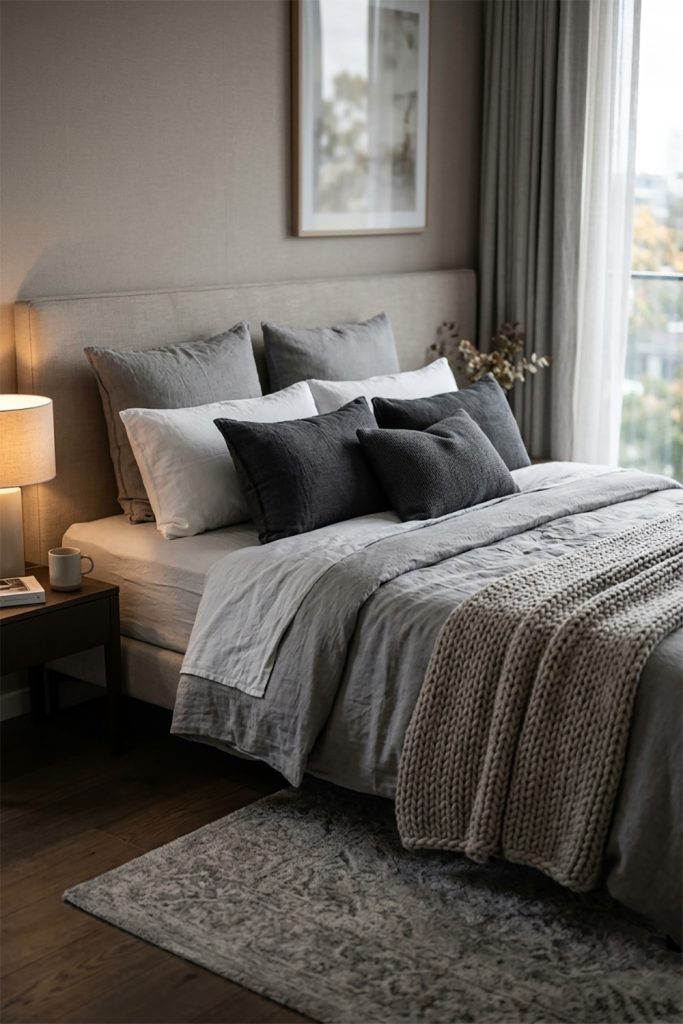
Layering different shades of grey across bedding creates depth and visual richness without introducing distraction. Start with a light grey base sheet, then add a medium-toned duvet, followed by darker pillows and a textured throw. The key is variation in tone and material rather than color contrast. Mixing fabrics such as linen, cotton, and knit adds dimension and prevents the bed from appearing flat. Arrange pillows in a structured way and fold throws neatly for a polished finish. This approach makes the bed the focal point while maintaining a calm and cohesive look that feels both comfortable and well-designed.
2. Floor-to-Ceiling Grey Curtains
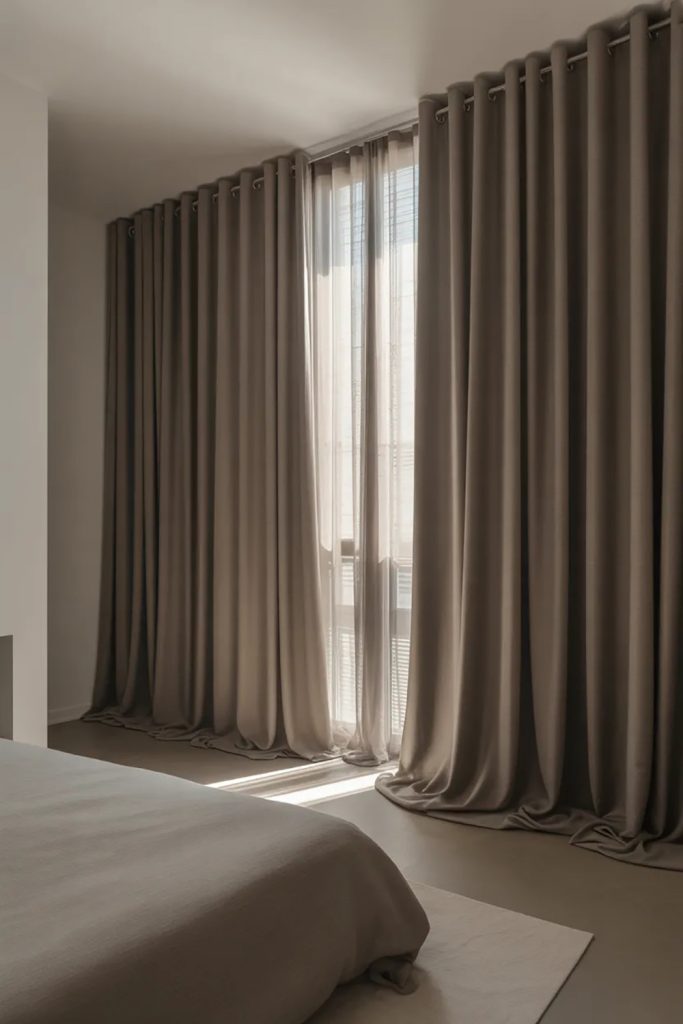
Installing grey curtains from ceiling height to the floor adds vertical emphasis and makes the bedroom feel taller. This design technique enhances proportions and creates a more finished look. Choose a dense fabric for structure or a softer weave for a relaxed effect. Allow the curtains to slightly pool on the floor for a refined appearance. Their presence frames the space and softens architectural edges. Proper placement ensures that natural light interacts with the fabric, creating subtle tonal shifts throughout the day. This idea strengthens the room’s structure while maintaining softness and visual continuity.
3. Textured Grey Feature Wall
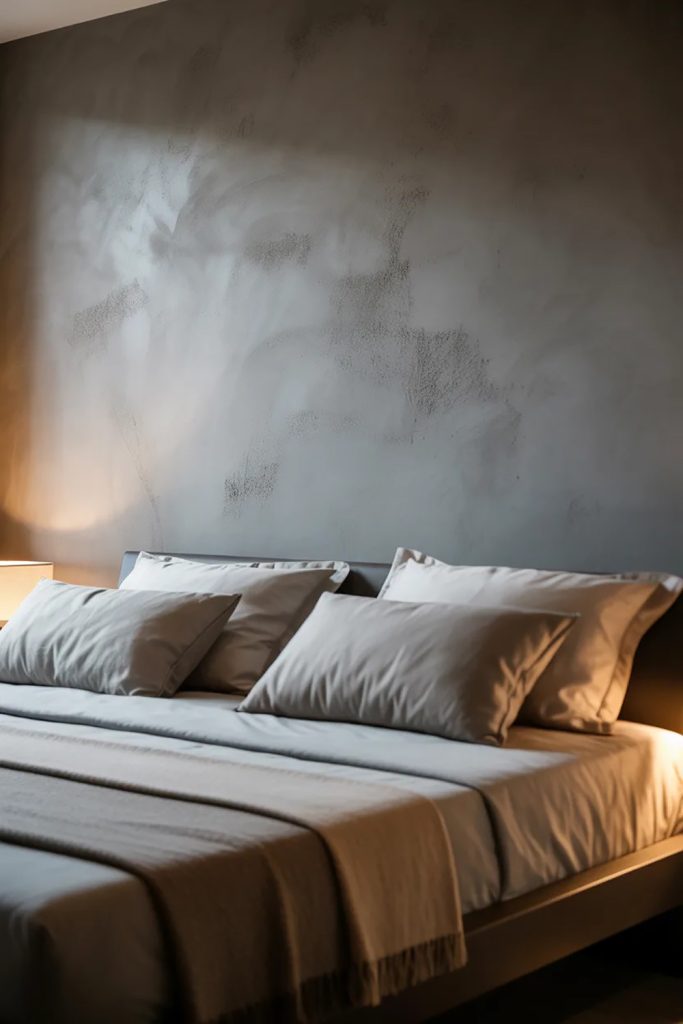
A textured grey wall introduces depth that flat paint cannot achieve. Materials such as plaster, paneling, or subtle wall finishes create surface variation that reacts to light. Placing this feature behind the bed establishes a strong visual anchor without overwhelming the room. The texture adds movement and interest while keeping the color palette controlled. Lighting plays a key role, as shadows emphasize the surface detail. Keep surrounding decor minimal so the wall remains the highlight. This approach adds character and dimension, making the room feel more designed rather than simply decorated.
4. Floating Grey Bedside Shelf

Replacing bulky nightstands with a floating grey shelf creates a cleaner and more modern layout. This approach reduces visual weight and makes the room feel more open. Keep the shelf styling minimal with one lamp, a book, and a small decorative item. The floating design introduces a subtle architectural element that enhances the overall composition. It works especially well in compact bedrooms where space efficiency matters. The grey finish blends seamlessly with the wall while still offering functionality. This idea supports a neat and intentional design without unnecessary clutter.
5. Upholstered Grey Wall Panels

Grey upholstered wall panels create a soft, structured backdrop behind the bed. The padded surface adds comfort while also improving acoustics by reducing sound reflection. Arrange panels in equal sections to create a clean and symmetrical design. The fabric introduces texture that enhances the overall visual depth of the room. This idea works particularly well in bedrooms that aim for a refined and hotel-like atmosphere. The panels replace the need for a traditional headboard while extending the design across the wall, creating a cohesive and calming environment.
6. Layered Grey Lighting Setup
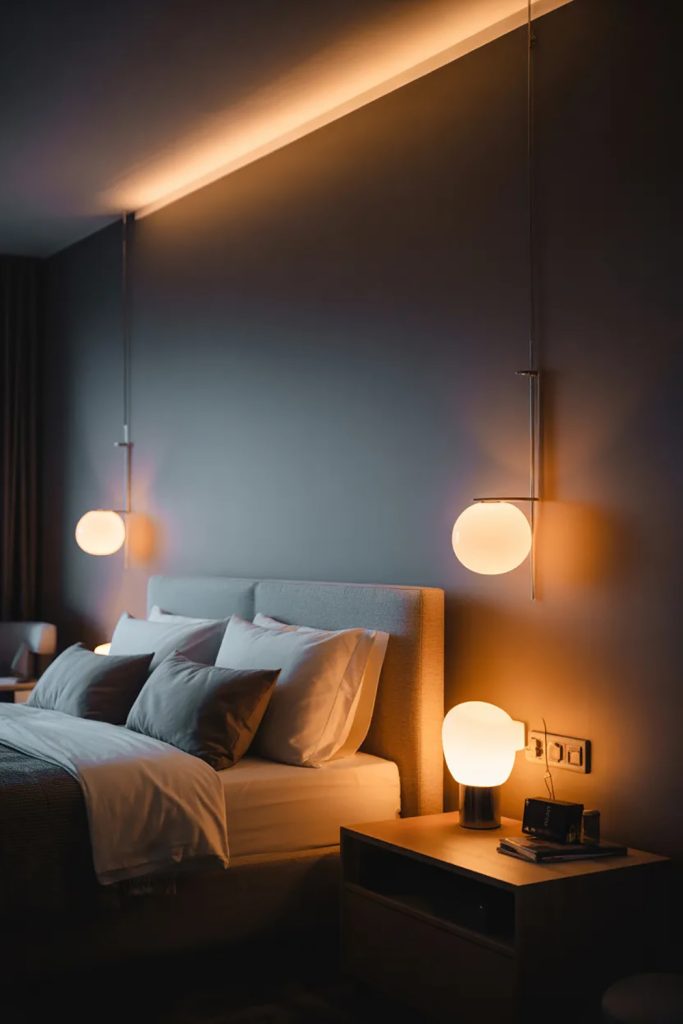
A layered lighting approach using grey-toned fixtures enhances both function and mood. Combine ceiling lighting, bedside lamps, and wall-mounted lights to create multiple light sources. This allows the room to shift from bright and functional to soft and relaxing. Position lights to highlight textures such as bedding and walls. Warm lighting softens the grey tones and adds comfort. Keeping fixture finishes consistent maintains visual harmony. This method prevents harsh lighting and creates depth through shadows and highlights. The result is a balanced environment that feels both practical and inviting.
7. Low Grey Platform Bed Design

A low grey platform bed creates a grounded and modern visual flow. Its minimal height emphasizes horizontal lines, making the room feel wider. Keep the design simple with clean edges and minimal detailing. Style the bed with structured layers rather than excessive decoration. This approach works well in contemporary interiors where proportion and spacing are important. The grey tone integrates naturally into the overall palette, allowing textures to stand out. This idea creates a calm and organized look while maintaining a strong visual presence in the room.
8. Grey Ceiling Treatment

Applying a soft grey tone to the ceiling adds depth and completes the room’s visual envelope. This technique draws attention upward and creates a more enclosed and cohesive atmosphere. It works especially well in rooms with higher ceilings where it reduces emptiness. Keep walls slightly lighter to maintain balance. Lighting enhances the ceiling’s effect by creating subtle tonal variation. This idea transforms an often-overlooked surface into a meaningful design element, contributing to a fully integrated and thoughtfully styled bedroom.
9. Built-In Grey Storage Units

Grey built-in storage units provide both function and visual continuity. Custom wardrobes or shelves blend seamlessly into the wall, reducing clutter and maintaining a clean look. Use flat-panel designs for a smooth finish. Keeping the color consistent ensures that storage does not dominate the space. This idea is especially useful in bedrooms that require efficient organization. The integrated design supports a streamlined appearance while enhancing usability. It creates a calm environment where everything has a place, reinforcing order and simplicity.
10. Grey Rug Zoning Layout

A grey rug can define the sleeping area and anchor the furniture arrangement. Place it under the bed so it extends evenly on all sides. The rug introduces softness and texture while organizing the layout visually. Choose a subtle pattern or texture to maintain interest without distraction. This technique works well in both small and large rooms. The rug acts as a base layer that connects all elements. It enhances comfort while also improving the overall composition of the space.
11. Symmetrical Grey Bedside Styling
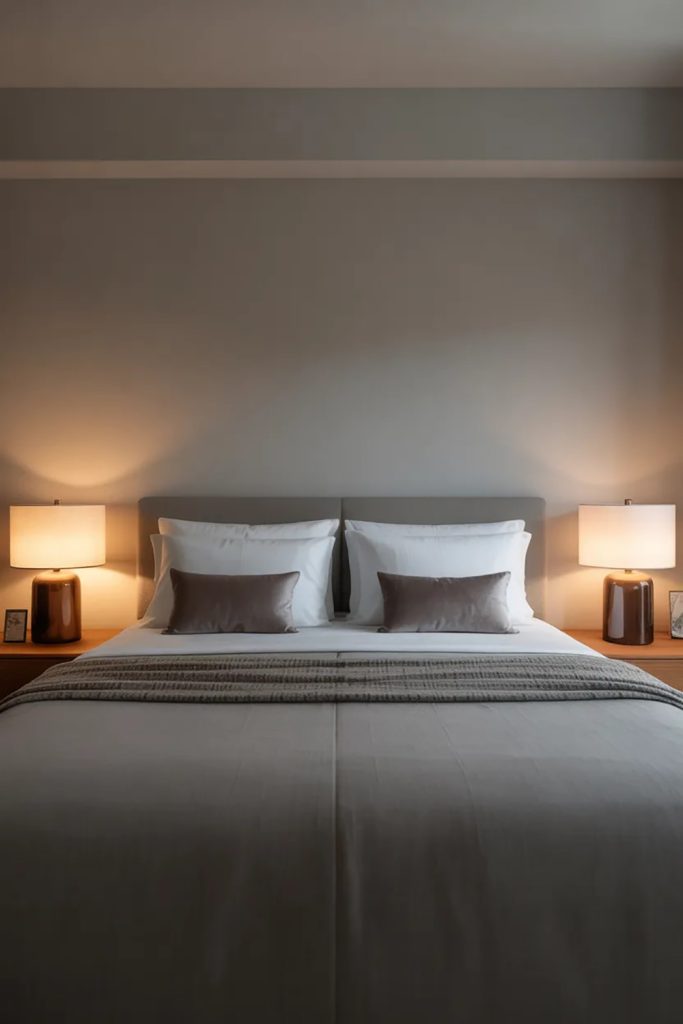
Symmetry in bedside styling creates a sense of balance and calm. Use identical grey elements on both sides of the bed, including lamps, decor, and spacing. This approach reinforces order and makes the room feel structured. Keep the arrangement minimal to avoid visual clutter. Symmetry works particularly well in bedrooms because it promotes relaxation and stability. The repeated grey elements enhance cohesion while maintaining simplicity. This idea creates a visually pleasing and organized environment.
12. Grey Linen Texture Focus
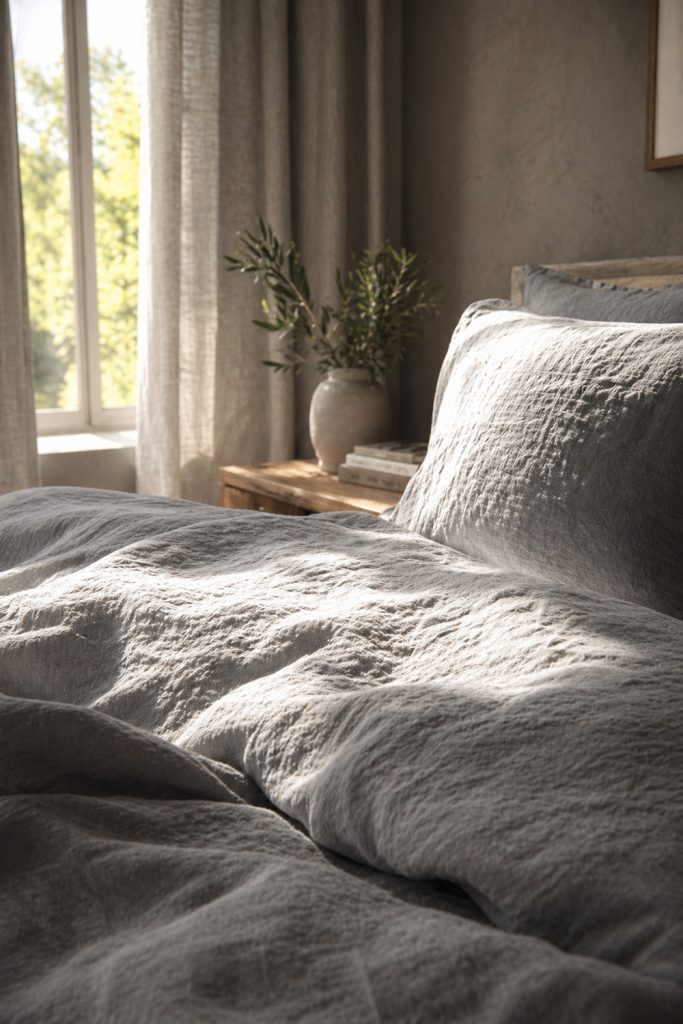
Using grey linen across bedding and curtains creates a consistent texture theme. Linen introduces natural variation in tone, preventing the design from appearing flat. The slightly wrinkled texture adds a relaxed and comfortable feel. Keep the color palette unified to maintain harmony. This idea works well for creating a calm and understated bedroom. The focus remains on material quality rather than decoration, resulting in a soft and inviting space.
13. Grey Accent Bench Placement
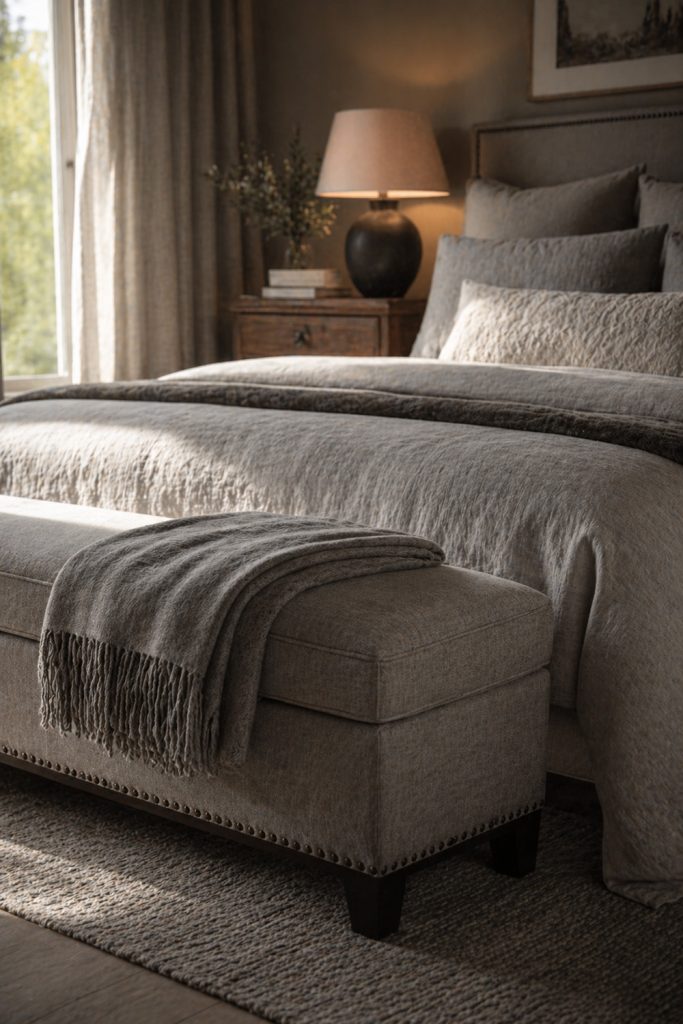
Placing a grey bench at the foot of the bed adds structure and function. It provides a surface for seating or styling folded textiles. Align the bench with the width of the bed for balance. This element completes the bed area and enhances the room’s layout. The grey tone ensures consistency while adding visual weight at the base of the bed. This idea works well in medium to large bedrooms where additional furniture can enhance the design.
14. Grey Mirror Positioning

A large mirror with a grey frame enhances depth and reflects light. Position it strategically to maximize brightness and expand the visual space. The reflection creates the illusion of a larger room. The grey frame blends with the overall palette while maintaining presence. This idea is especially effective in compact bedrooms. It improves both functionality and aesthetics by combining utility with visual enhancement.
15. Grey Wall Panel Molding
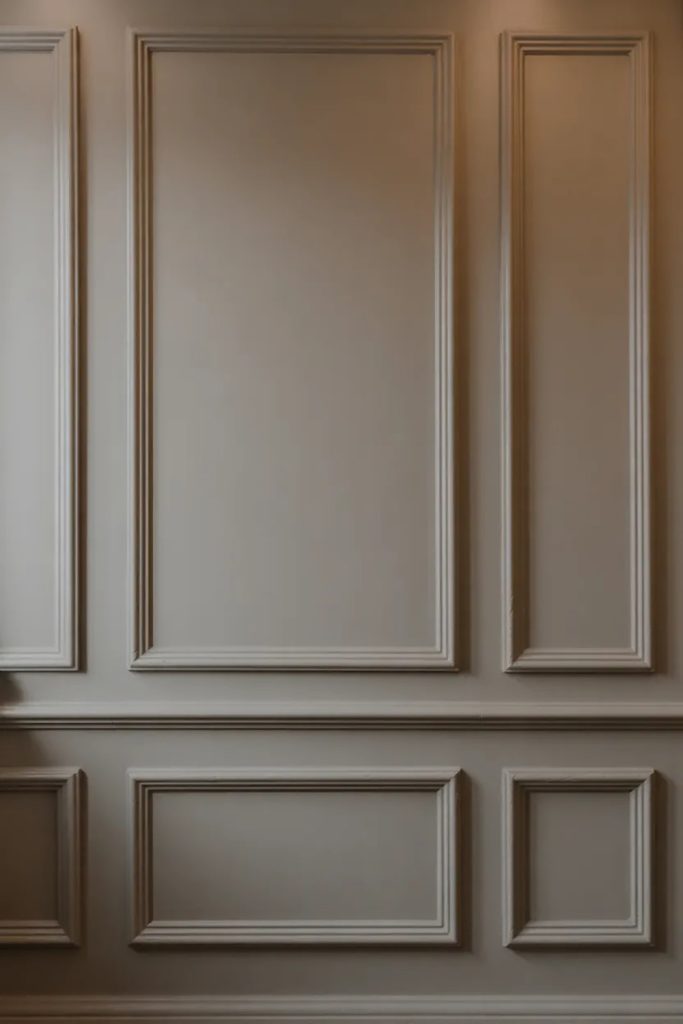
Adding grey wall panel molding introduces architectural detail. The panels create structure and break up flat surfaces. Keep the design clean with consistent spacing. This technique adds sophistication without additional decoration. The grey color maintains subtlety while the structure provides depth. This idea works well in both modern and classic bedrooms, enhancing the wall design without overwhelming the space.
16. Extended Grey Headboard Design
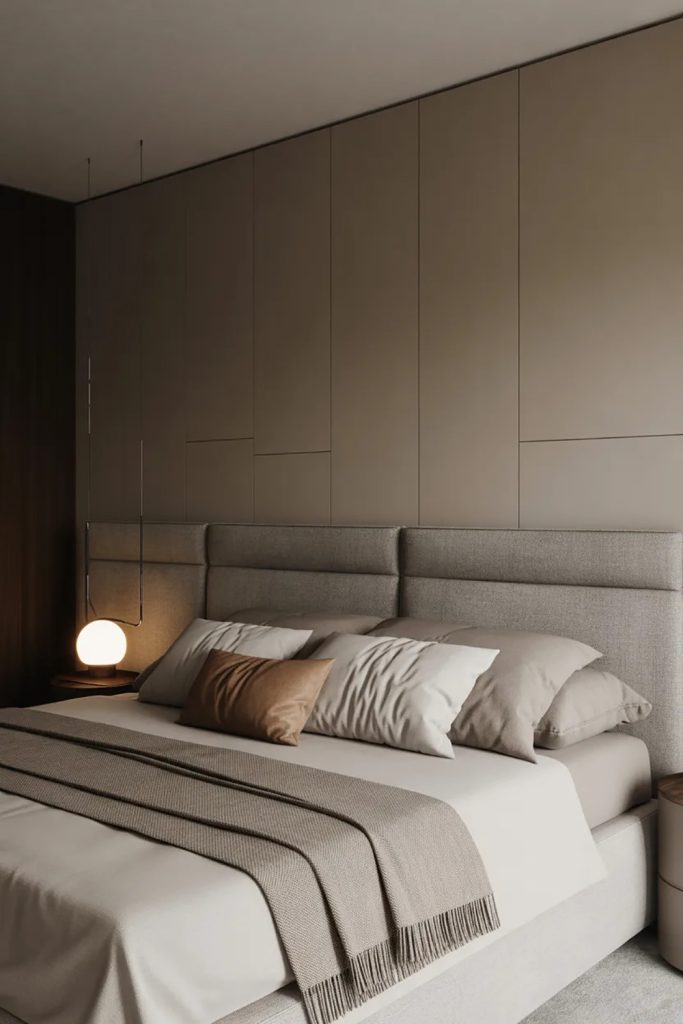
Extending the grey headboard across the wall creates a strong horizontal feature. This design enhances the bed’s presence and improves proportion. Keep edges clean and alignment precise. The extended surface creates a continuous visual line that unifies the space. This idea works well in modern interiors where structure and symmetry are key. It adds impact without requiring additional elements.
17. Minimal Grey Decor Approach

Limiting decor to a few grey elements creates a clean and uncluttered environment. Focus on placement and spacing rather than quantity. Each item should have purpose and presence. This approach emphasizes simplicity and balance. It allows textures and materials to stand out without distraction. This idea is ideal for those who prefer calm and organized spaces.
18. Vertical Grey Wall Panels
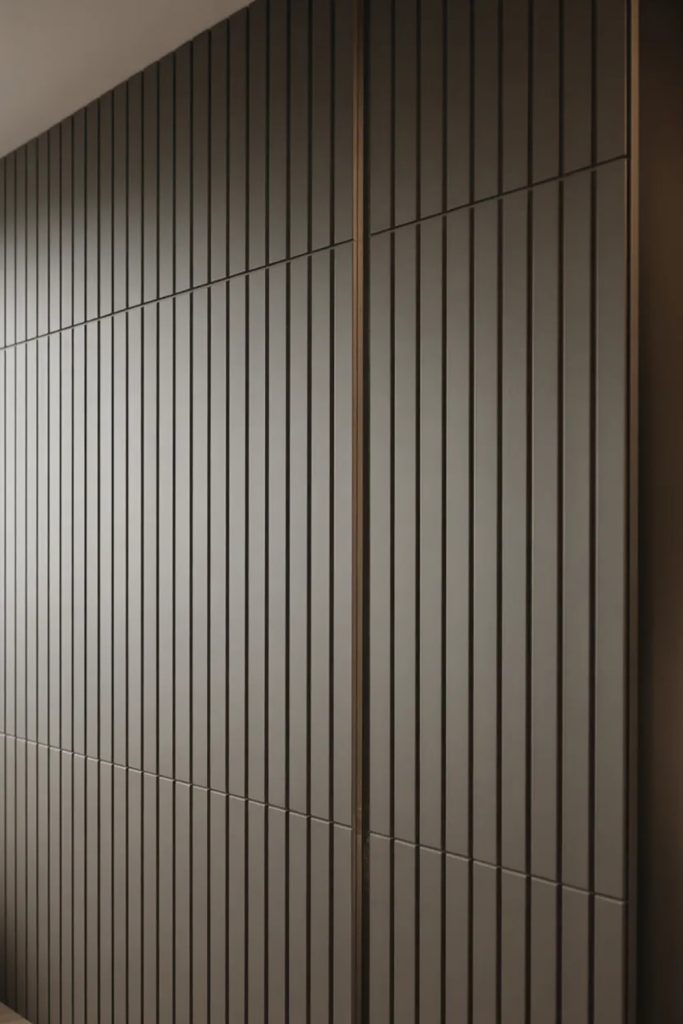
Vertical grey panels create height and rhythm in the room. The upward lines draw the eye and make the space feel taller. Keep spacing even for consistency. This technique adds structure without relying on color variation. It works well in bedrooms that need visual expansion. The grey tone keeps the effect subtle while still impactful.
19. Hanging Grey Pendant Lights

Replacing bedside lamps with hanging grey pendant lights creates a modern look. This frees up surface space and adds a vertical design element. Position lights evenly on both sides of the bed. The hanging design introduces movement and visual interest. This idea combines function with style, enhancing the overall layout.
20. Fully Layered Grey Room Concept

A fully layered grey bedroom combines multiple tones and textures across all elements. Use variation in fabric, surface, and finish to create depth. Avoid uniformity by mixing light, medium, and dark shades. This approach creates a cohesive and immersive environment. The room feels complete and intentional, with each element contributing to the overall design. It is a refined way to use grey without repetition or monotony.
Conclusion
Grey bedroom decor works best when built through layering, structure, and thoughtful placement. By focusing on tone, texture, and balance, you can create a space that feels calm, modern, and visually complete.


