

15 Dream Bedroom Ideas for Kids to Create a Fun, Cozy Space
A child’s bedroom can be a place for sleeping, playing, reading, creating, and discovering new interests. The best kids’ bedrooms balance imagination with practical design, giving children a space that feels exciting while remaining comfortable and easy to keep organized. A thoughtful layout can also make the room useful as children grow and their interests change.
You do not need expensive furniture or a complicated makeover to create a memorable bedroom. A colorful accent wall, cozy reading corner, creative storage solution, or themed bedding can make a noticeable difference. The key is to build the room around the child’s personality while leaving enough flexibility for future changes.
From playful color combinations to clever small-room solutions, these dream bedroom ideas for kids cover different styles and age groups. Each idea can be adapted to suit your child’s favorite colors, hobbies, toys, books, and everyday routines.
This post contains affiliate links. If you buy through them, we may earn a small commission at no extra cost to you. See our Affiliate Disclosure.
1. Colorful Rainbow Bedroom

Bring cheerful energy into a child’s bedroom with a rainbow-inspired color palette. Instead of painting every wall in bright colors, use a soft white or cream backdrop and introduce color through bedding, artwork, cushions, curtains, and rugs.
A rainbow-shaped mural can become the main feature behind the bed. Choose muted shades if you want the room to remain calm rather than overly stimulating. Open shelves can display favorite books, toys, and small decorative objects. Add colorful storage baskets to make cleanup easier.
Keep the larger furniture pieces neutral so they can remain useful as your child’s tastes change. This allows you to refresh the room later simply by replacing textiles and accessories.
2. Cozy Reading Nook Bedroom
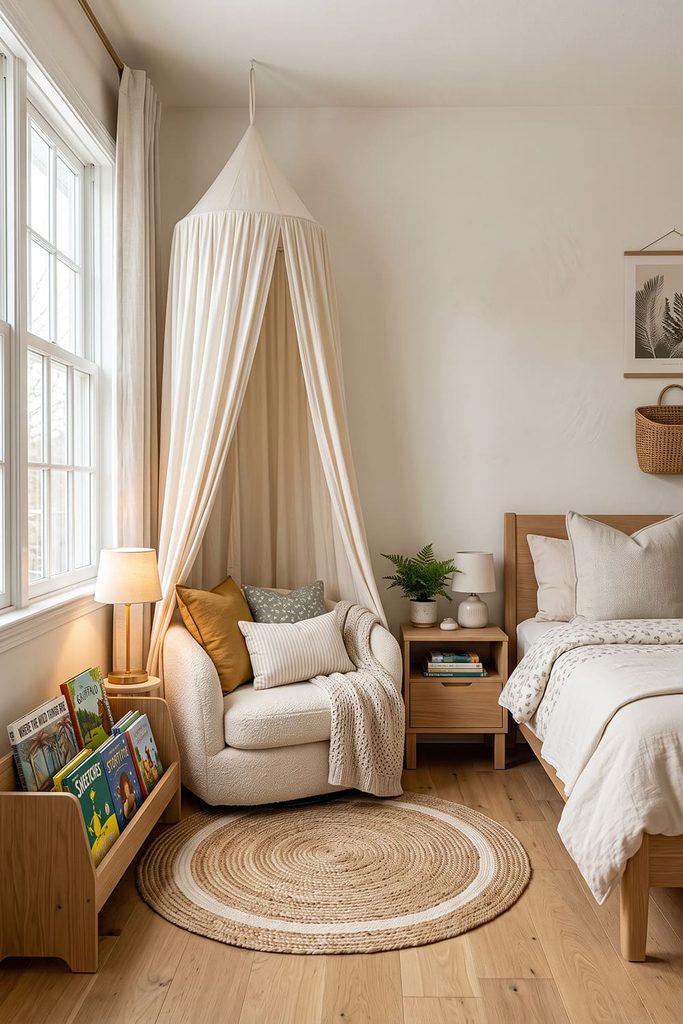
Turn an unused corner into a comfortable reading space where your child can enjoy books throughout the day. Place a small cushioned chair, beanbag, or floor mattress beside a low bookshelf. Add a soft rug underneath the reading area and a small lamp with warm, comfortable lighting.
Keep the sleeping zone simple with a comfortable bed, practical nightstand, and soft bedding. Display books with their covers facing outward on a few lower shelves so younger children can easily choose what they want to read.
A few cushions or a small canopy can make the corner feel special without taking up much space. This setup encourages quiet activities while giving the bedroom another purpose beyond sleeping.
3. Magical Woodland Bedroom
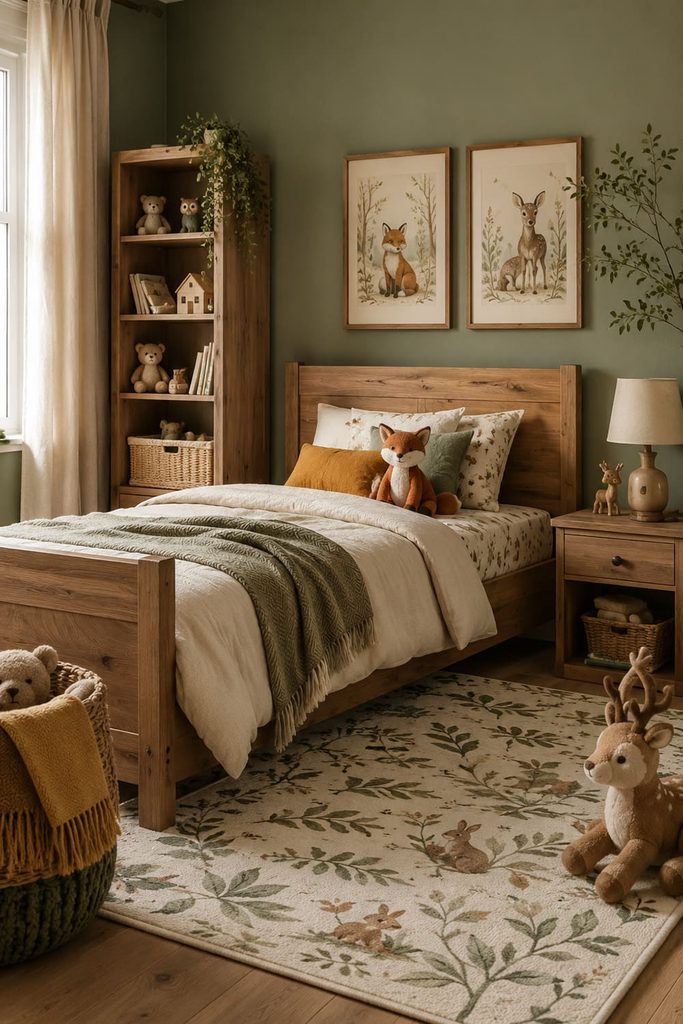
Create a gentle woodland theme using forest-inspired colors such as sage green, warm brown, cream, and muted mustard. Paint the wall behind the bed a soft green or use removable wallpaper featuring trees, leaves, or woodland animals.
Choose natural wood furniture to reinforce the theme. Add animal artwork, woven baskets, and a few plush woodland creatures for personality. A leafy rug can introduce another layer of visual interest without overwhelming the room.
Keep the theme flexible by avoiding overly specific character decorations. As your child gets older, the woodland elements can remain while toys and accessories are gradually replaced with more mature pieces.
4. Space Explorer Bedroom
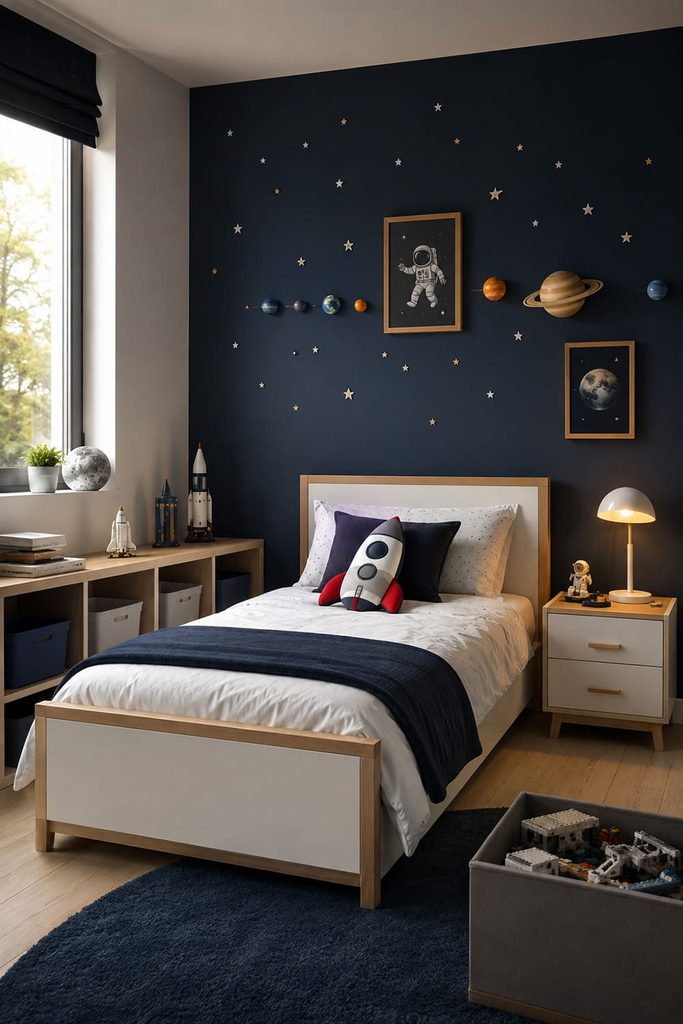
Turn bedtime into an opportunity for imagination with a space-inspired bedroom. Use deep blue, charcoal, or soft navy as an accent color and balance it with white and natural wood.
Add removable stars or planet decals to the wall rather than permanently painting a complicated mural. A rocket-shaped cushion, astronaut artwork, or solar system poster can reinforce the theme. Use simple furniture in white or wood so the room does not feel too themed.
A small reading lamp beside the bed can create a cozy nighttime glow. Keep storage practical with labeled bins for toys, building sets, and books. As your child’s interests evolve, the space theme can easily be adjusted by changing artwork and accessories.
5. Soft Pastel Dream Room
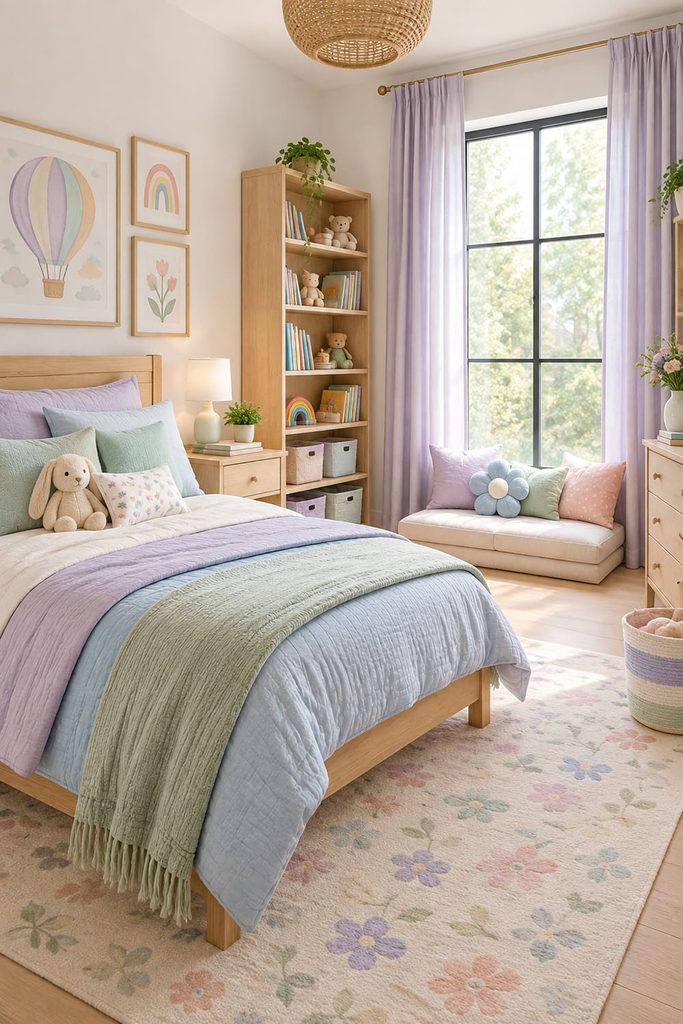
Create a peaceful bedroom using pale pink, lavender, powder blue, mint, peach, and cream. Choose two or three pastel shades rather than trying to use every color at once. Keep the walls soft white or pale beige and introduce color through bedding, curtains, artwork, and a rug.
A simple wooden bed can provide a natural contrast to the softer colors. Use open shelves for favorite toys and books, then keep less attractive everyday items inside baskets or drawers.
A small upholstered bench or floor cushion can create a comfortable spot for quiet activities. This approach feels playful enough for younger children while remaining easy to update as their preferences change.
6. Indoor Camping Bedroom

Bring the fun of camping indoors with a cozy tent-style sleeping area. A simple canopy or play tent beside the bed can create a dedicated space for reading, relaxing, or imaginative play.
Use earthy colors such as beige, green, brown, and cream. Add a soft rug, sleeping bag-style blanket, and cushions to create a comfortable campsite feeling. Decorate with simple mountain, forest, or star artwork rather than filling the room with novelty accessories.
Wooden furniture and woven storage baskets fit naturally with the outdoor-inspired theme. The camping area can eventually become a reading nook or relaxation corner when the child outgrows imaginative play.
7. Creative Art Studio Bedroom
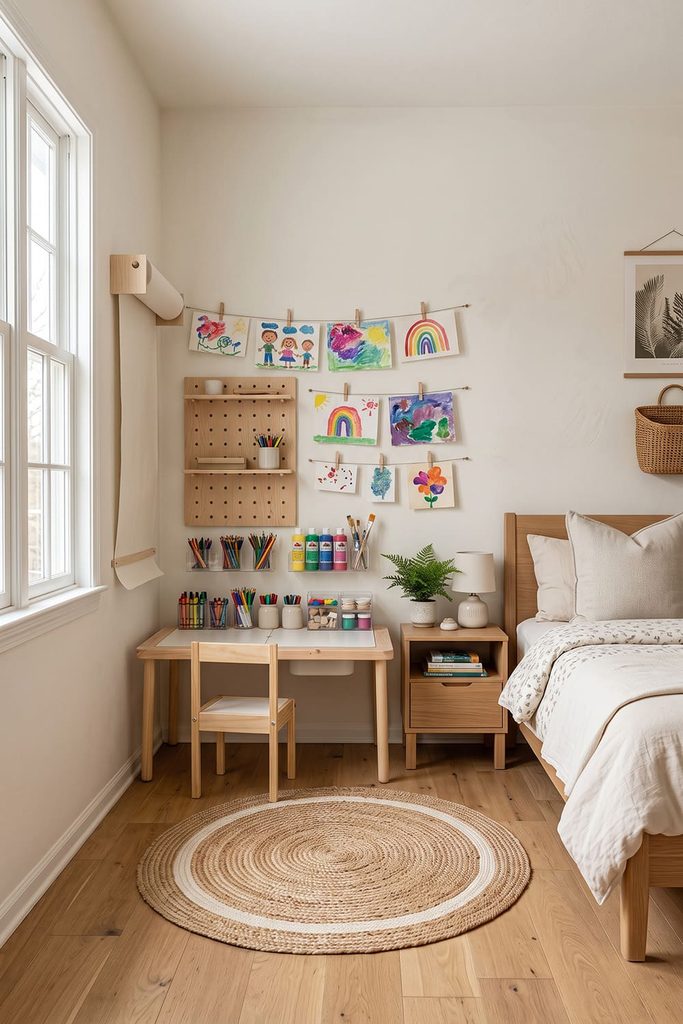
For a child who loves drawing and crafts, dedicate part of the bedroom to creative activities. Place a small desk against a wall with enough room for paper, coloring supplies, and craft materials.
Install a simple pegboard or narrow shelves above the desk for easy organization. Use washable containers to separate crayons, markers, paints, and other supplies. A large roll of paper mounted on the wall can provide an easy surface for drawing.
Keep the sleeping area calmer with neutral bedding and simple furniture. Display finished artwork using clips or a wire picture hanger. This turns the child’s creations into part of the room’s decoration while making it easy to rotate new pieces.
8. Playful Animal-Themed Bedroom
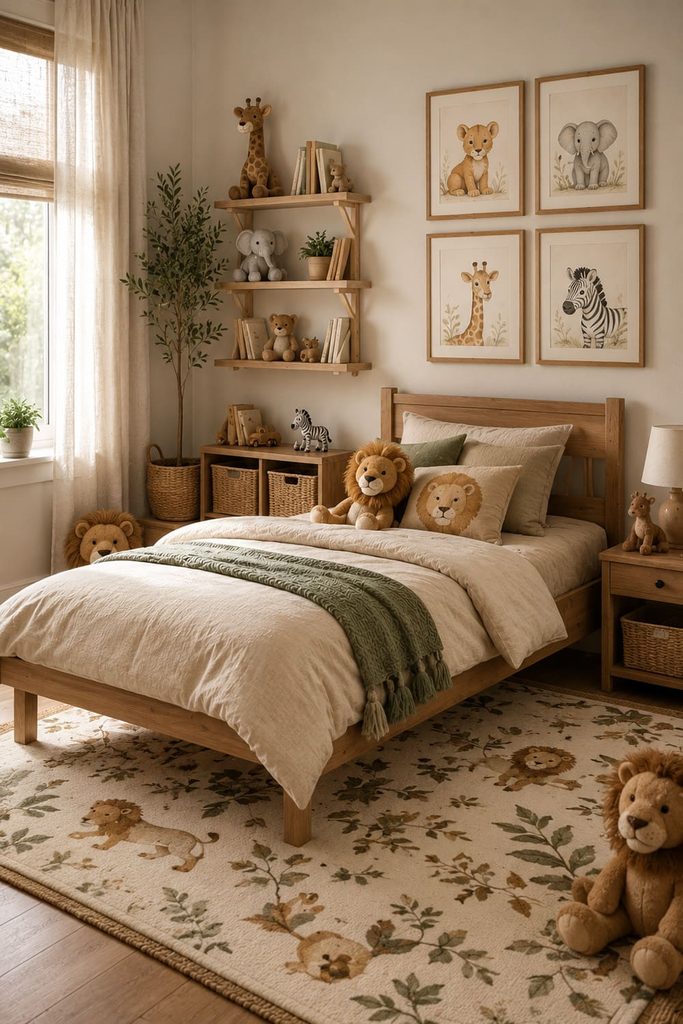
Create a cheerful animal bedroom using removable artwork, bedding, and accessories featuring favorite creatures.
Choose a neutral wall color such as cream, pale gray, or soft beige and allow the animal decorations to provide the personality. A simple wooden bed can work with almost any animal theme.
Add a few plush animals, framed illustrations, and a patterned rug. Keep the number of different animal designs limited so the room does not become visually chaotic. Use storage bins beneath shelves or inside a wardrobe to keep toys organized.
This approach works particularly well because the theme can be changed easily by replacing a few decorative pieces rather than redecorating the entire room.
9. Loft Bed With a Secret Hideaway

Make a small bedroom more exciting with a loft bed that creates usable space underneath. The lower area can become a reading corner, playroom, or small desk area.
Add curtains around the lower section to create a cozy hideaway. Use a soft floor rug and several cushions to make the space comfortable. Keep the upper sleeping area simple with neutral bedding and a small reading light.
Storage drawers built into the loft can hold clothing, books, or toys. For younger children, make sure the loft bed is appropriate for their age and that the design follows relevant safety recommendations. The result combines sleeping, playing, and storage in one compact arrangement.
10. Nature-Inspired Green Bedroom

Create a calm nature-inspired bedroom using sage, olive, cream, and natural wood. A green accent wall behind the bed can provide a gentle focal point. Choose furniture with visible wood grain and add woven baskets for toy storage.
Botanical artwork, leaf-patterned bedding, and a few child-friendly plants can reinforce the natural theme. Keep the bedding soft and comfortable, using cream or white as the main color. A textured rug can make the floor more inviting for playing.
This style works for both younger children and older kids because the nature-inspired palette does not depend on a particular age or character. Simply change the artwork and accessories as your child grows.
11. Colorful Bunk Bed Room

Bunk beds can make a shared bedroom more functional while giving each child a personal sleeping space. Choose a simple wooden or painted bunk bed and use different bedding colors for each child.
Add individual reading lights to each bunk so one child can read without disturbing the other. Use labeled baskets or small storage compartments beside each sleeping area for books and personal belongings.
A large rug in the center of the room can define the shared play area. Keep the walls relatively neutral and let the bedding introduce the strongest colors. This setup makes a shared bedroom feel more personal while maximizing the available floor space.
12. Cozy Beige and Cream Bedroom
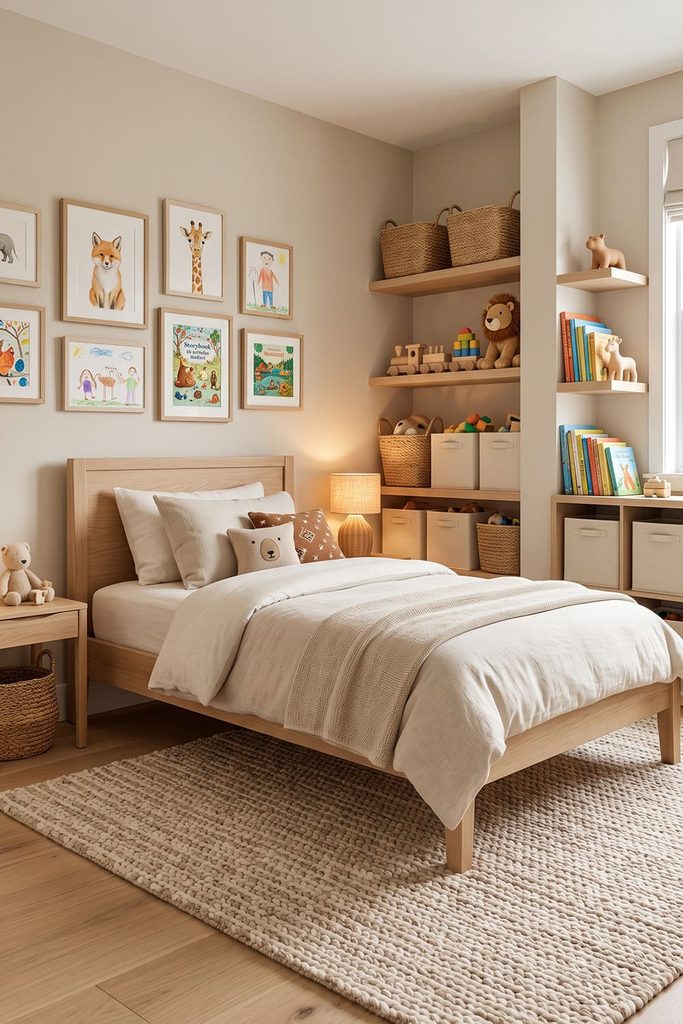
A neutral kids’ bedroom can still feel playful and warm. Use beige, cream, oatmeal, and light wood as the foundation, then add personality through artwork, toys, and colorful books.
Choose a soft upholstered or wooden bed with comfortable bedding. Layer a textured rug over the floor to create a cozy area for playing. Use woven baskets and fabric storage cubes to keep toys accessible while reducing visual clutter.
A gallery wall featuring animals, simple illustrations, or your child’s own artwork can bring color into the space. The neutral foundation also makes future updates simple. As your child grows, you can replace accessories without needing to repaint or replace the major furniture.
13. Fairy-Tale Inspired Bedroom
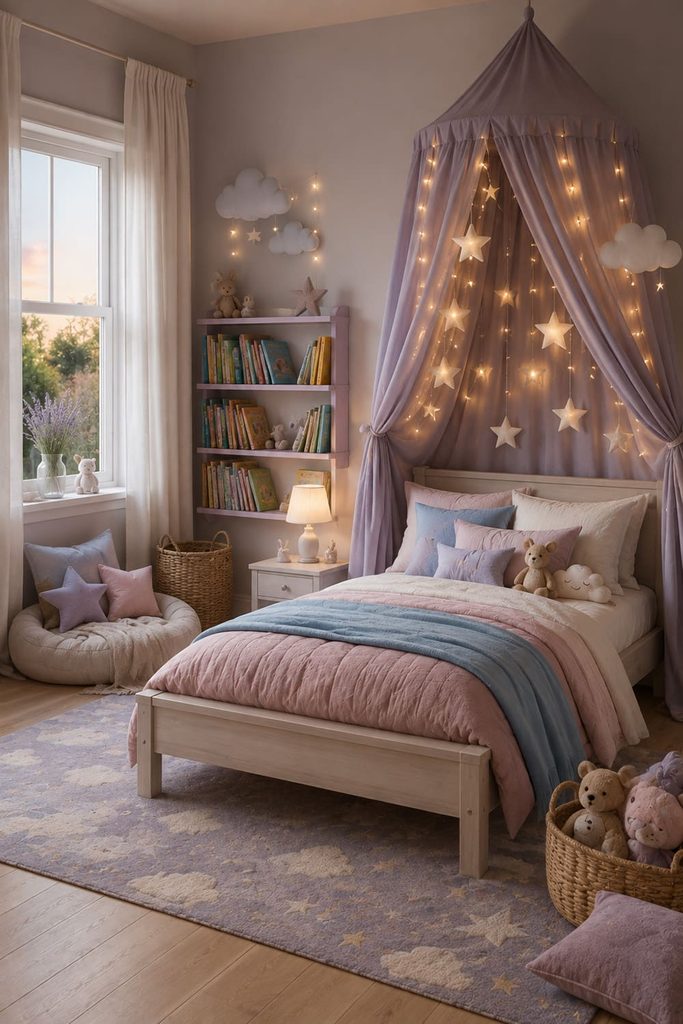
Create a subtle fairy-tale atmosphere without turning the entire room into a theme park. Use soft lavender, cream, pale blue, or dusty pink as the main colors.
A canopy above the bed can create a magical focal point. Add delicate star or cloud decorations around it. Choose simple wooden or white furniture to keep the design balanced.
A small bookshelf can display favorite storybooks, while a cozy floor cushion creates a comfortable reading spot. Use warm lighting around the bed or reading area to create a gentle evening atmosphere.
The idea is to capture the feeling of a storybook bedroom while keeping the furniture and layout practical enough for everyday life.
14. Sports Fan Bedroom

Celebrate a child’s favorite sport through artwork, bedding, and accessories rather than permanent fixtures. Choose a neutral wall color and add a large framed sports print or removable mural.
A small display shelf can hold medals, trophies, balls, or other favorite items. Use storage baskets for sports equipment so everything has a designated place. Keep the bed and larger furniture simple, allowing the sports theme to remain flexible.
A small bench or open shelving unit can provide additional storage. When your child’s favorite sport changes, you can update the artwork and accessories without replacing the entire room. This makes the design practical while still giving the child a space connected to their interests.
15. Small Bedroom With Clever Storage

Make a compact kids’ bedroom feel spacious by choosing furniture that performs more than one job. A bed with built-in drawers can store clothing, toys, or extra bedding.
Use vertical shelves instead of bulky floor furniture to make better use of wall space. A narrow desk can provide a place for homework without taking over the room. Choose light wall colors such as white, cream, pale blue, or soft green to keep the space visually open.
Use matching storage bins to reduce clutter and make cleanup easier. Keep the floor as open as possible for playing. A small, comfortable rug can define the activity area without taking up too much space.
Conclusion
The best dream bedroom ideas for kids combine imagination with everyday practicality. A child may want a colorful space filled with favorite themes and toys, while parents often need enough storage to keep everything manageable. The solution is to create a flexible foundation with comfortable furniture, useful storage, good lighting, and a color palette that can grow with the child.
Then bring in personality through bedding, artwork, rugs, books, and accessories that can be changed over time. Whether the room becomes a woodland retreat, creative studio, cozy reading space, or colorful playroom, the most important feature is that it feels like a place your child enjoys calling their own.


