

15 Blue Living Room Ideas for Beginners to Create a Stylish, Cozy Space
Decorating with blue can feel intimidating when you are starting from scratch. There are so many shades, from pale sky blue and dusty blue to teal, indigo, and navy, and each one can create a completely different atmosphere. The good news is that you do not need professional design experience to create a beautiful blue living room. Starting with one blue feature and building the room around it is often easier than trying to coordinate everything at once.
Blue is also remarkably flexible. Softer shades can make a room feel airy and relaxed, while deeper blues can add depth and drama. Current color guidance shows blue being used with warm neutrals, natural materials, and other blue shades to create different moods.
If you are new to decorating, focus on simple changes that are easy to understand and adjust. These blue living room ideas will help you introduce color gradually, choose complementary pieces, and avoid some of the most common beginner decorating mistakes.
This post contains affiliate links. If you buy through them, we may earn a small commission at no extra cost to you. See our Affiliate Disclosure.
1. Start With a Blue Accent Wall
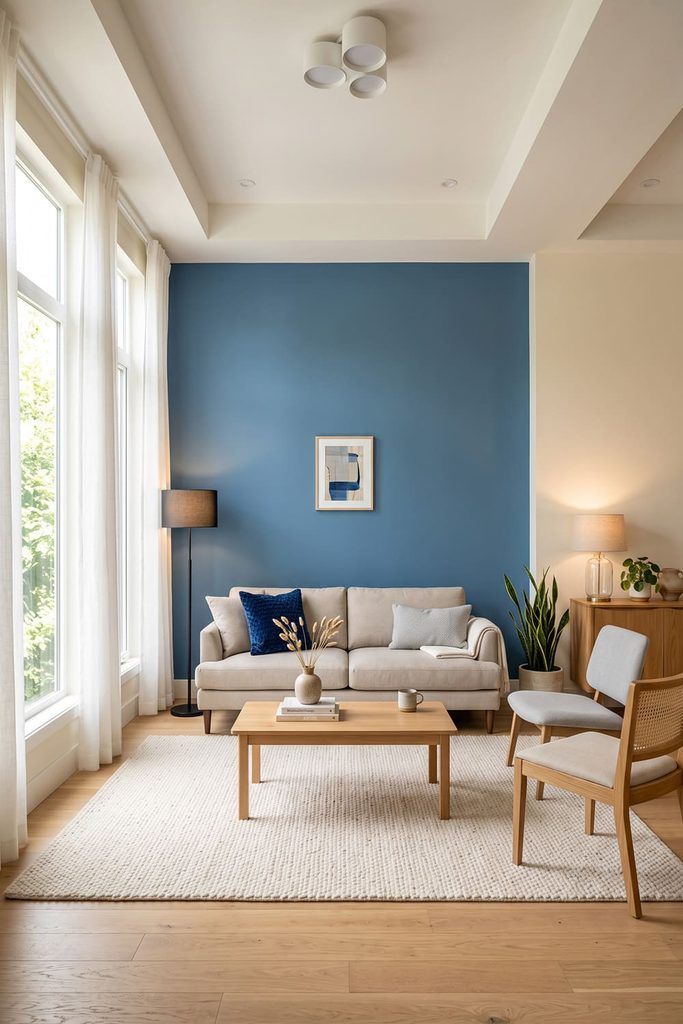
An accent wall is one of the easiest ways to try blue without committing the entire room to the color. Choose the wall behind your sofa, television, or main seating area and paint it a medium or deep blue. Keep the remaining walls warm white, cream, or light gray.
This gives the blue a clear focal point while making the rest of the room easier to coordinate. Dulux specifically recommends feature walls as a way to use deeper blues for impact while keeping surrounding walls neutral.
2. Choose a Blue Sofa as Your Main Piece
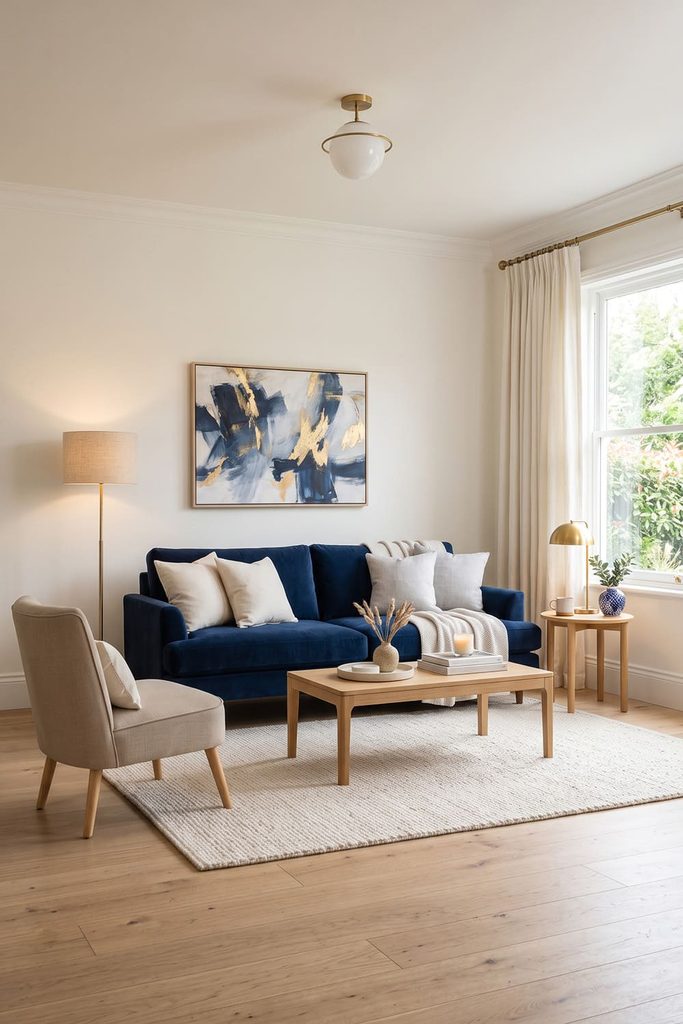
If you already have neutral walls, let the sofa introduce the blue. A navy, denim, slate, or muted blue sofa can become the room’s main visual feature without requiring a complete makeover. Keep the coffee table and larger furniture pieces relatively simple.
Add cream, beige, or light gray cushions to soften the contrast. For beginners, this approach is useful because the sofa gives you a clear color reference. Once you have chosen it, you can pull smaller blue and neutral accents from its shade.
3. Use Blue Cushions on a Neutral Sofa
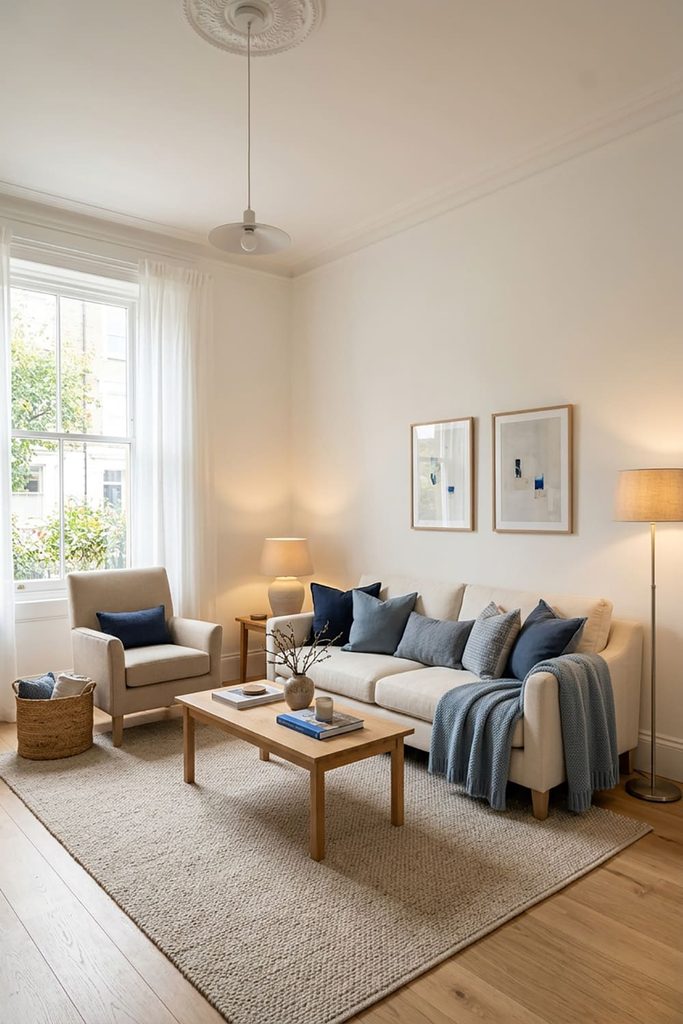
You do not have to buy new furniture to create a blue living room. If your sofa is beige, cream, gray, or white, begin with blue cushions. Choose two or three shades rather than trying to find an exact match. For example, combine navy with dusty blue and blue-gray. Add a blue throw for another layer.
This is one of the safest approaches for beginners because accessories are easy to replace if you decide you prefer a different shade. Recent designer advice similarly recommends using interchangeable accessories to experiment with color rather than making every major feature trend-dependent.
4. Try Soft Blue Walls With a Cream Sofa
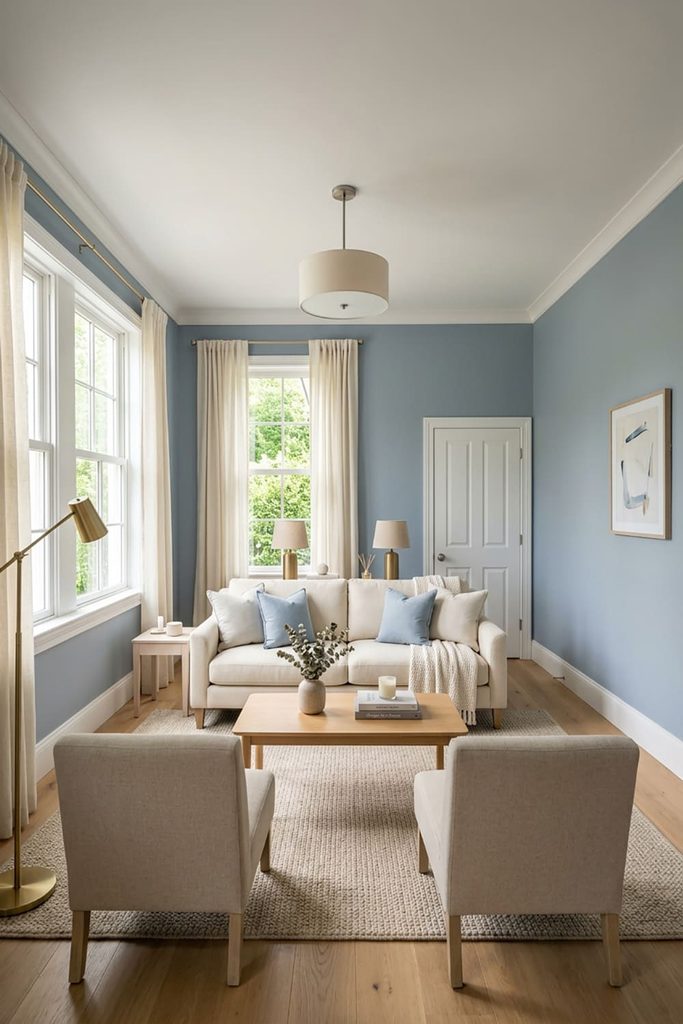
For a beginner-friendly room that feels bright and comfortable, pair soft blue walls with a cream sofa. Choose a blue with a slightly muted or gray undertone if you want a sophisticated appearance rather than a bright primary blue.
Add light wood furniture, a beige rug, and ivory curtains to keep the palette warm. Dulux’s current living room guidance highlights airy blue paired with warm beige as an easy way to create a relaxed atmosphere.
5. Add a Blue Area Rug
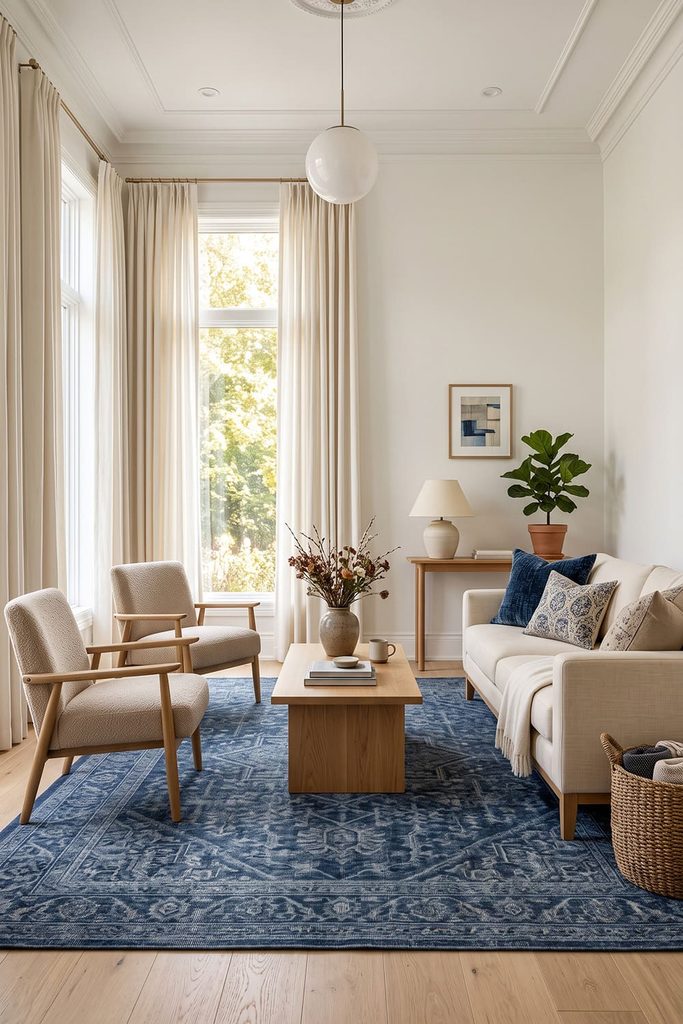
A blue rug can establish the color palette without changing your walls or furniture. Choose a rug large enough to connect the main seating pieces rather than using a very small mat in the center of the room.
Navy, faded blue, blue-gray, or a subtle blue pattern can all work. If the sofa is neutral, repeat one shade from the rug in your cushions or artwork. Getting the rug size right matters because undersized rugs can make furniture arrangements feel disconnected.
6. Pair Navy With Warm Wood
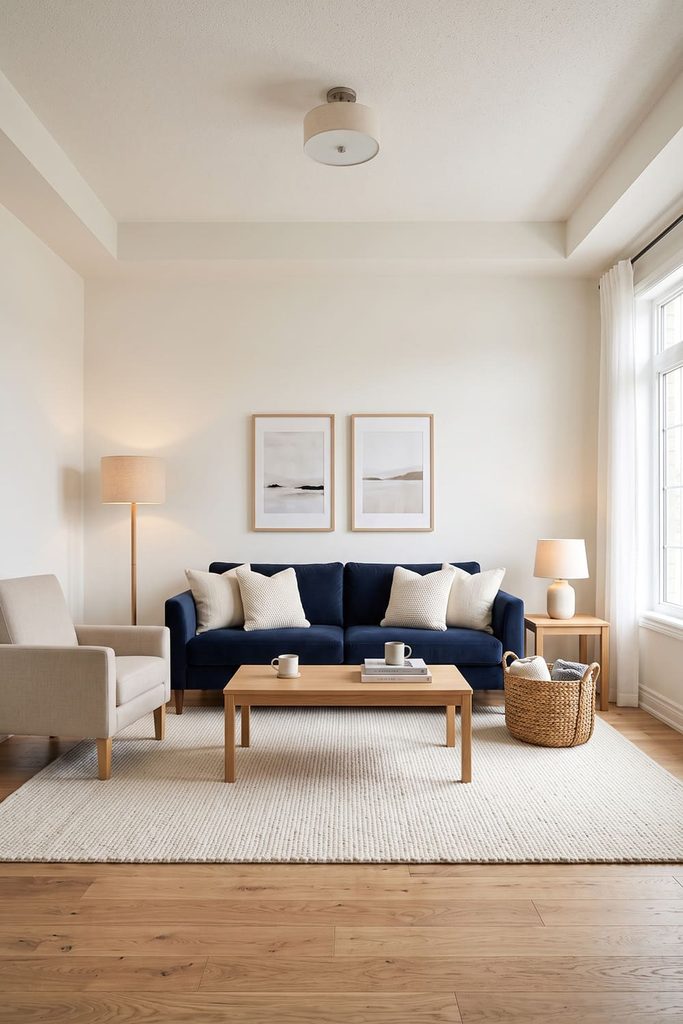
If you are unsure what colors work with navy, start with natural wood. A navy sofa against warm white walls looks particularly comfortable with an oak or walnut coffee table. Add a woven basket, wooden side table, or simple wood-framed artwork to repeat the material.
The warmth of wood balances the cooler character of blue and gives the room a more welcoming appearance. This is a straightforward combination because you only need three basic elements: blue, a light neutral, and natural wood.
7. Create a Blue and White Living Room
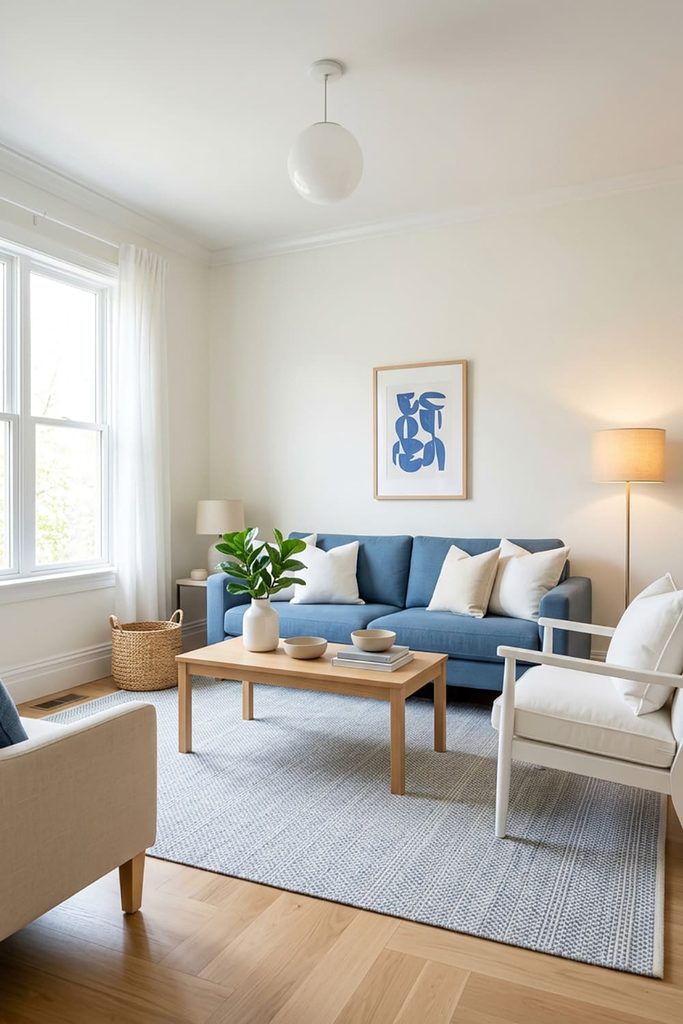
Blue and white is one of the simplest color combinations for beginners. Use blue on the sofa, curtains, rug, or walls, then introduce white through cushions, curtains, artwork, or painted furniture. To keep the room from looking too stark, add natural wood or beige accessories.
Pale blue can create a light and airy result, while navy and white produce stronger contrast. If you are nervous about choosing several colors, this two-color foundation gives you a very clear starting point.
8. Add Blue Through Curtains
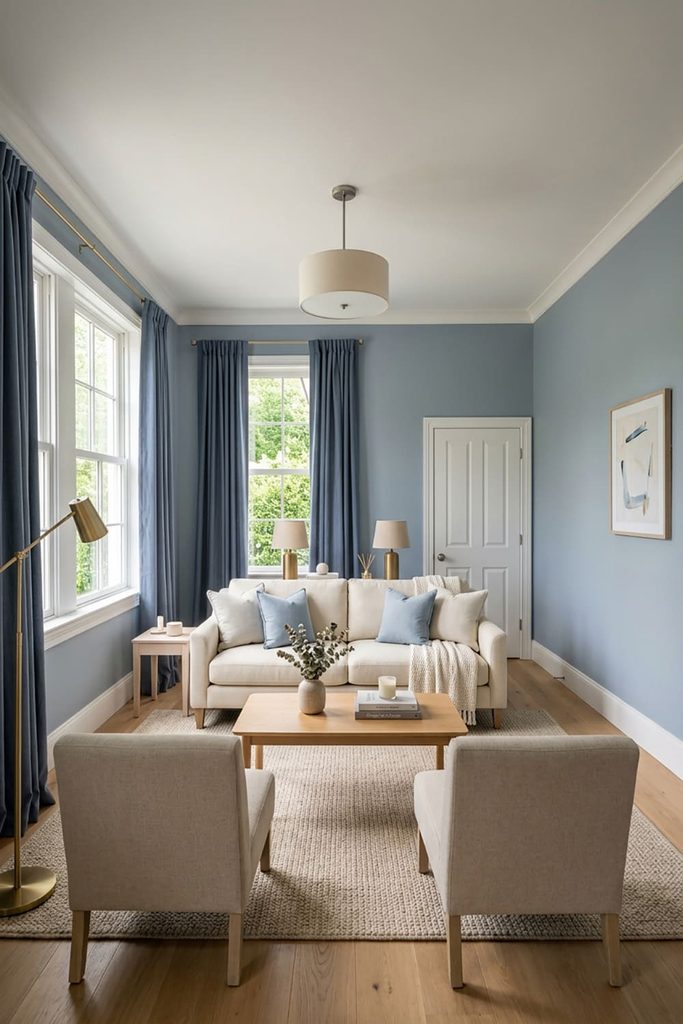
Blue curtains can make a noticeable difference without requiring paint or new furniture. Choose floor-length panels in navy, dusty blue, slate, or another shade that complements the existing room.
Repeat the curtain color in one or two smaller details so it feels connected to the rest of the space. If you want the windows to look more finished, mount the curtain hardware high and allow the fabric to reach the floor. Current designer guidance emphasizes properly scaled, floor-length curtains as an important finishing detail.
9. Use Blue Artwork Instead of Blue Furniture
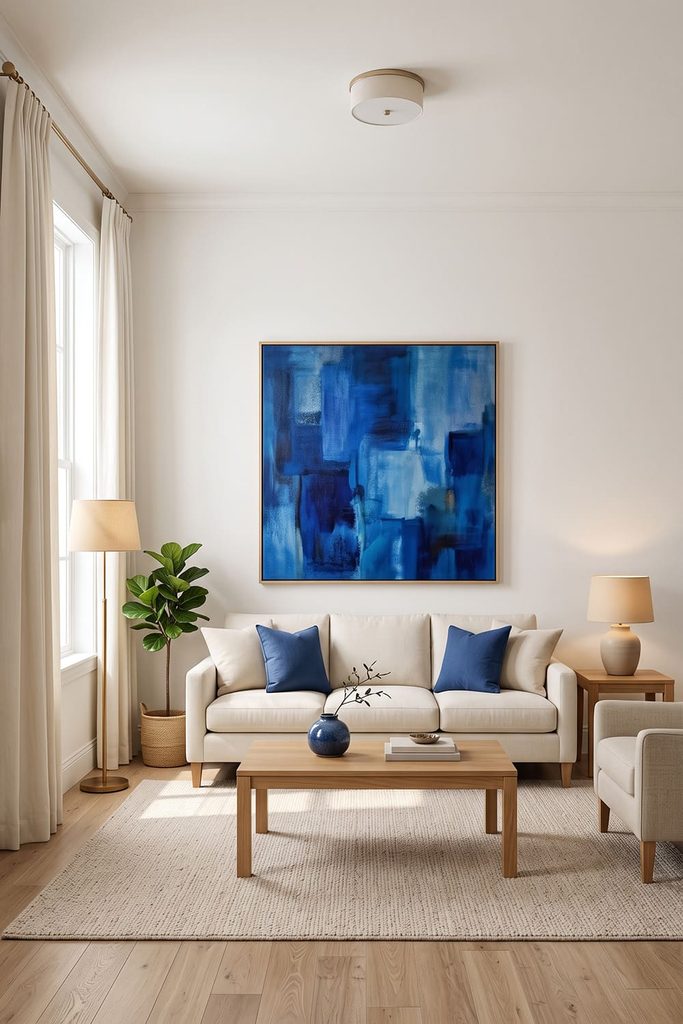
Artwork is another easy starting point. Find one large painting, abstract print, landscape, or photographic piece containing the blue you want to introduce. Hang it above the sofa or on the room’s main empty wall, then repeat one of its blue shades through cushions or a small decorative object.
This lets you experiment with color without buying expensive furniture. Keep the artwork appropriately scaled for the wall rather than using several tiny pieces that disappear visually. Designers also recommend hanging artwork around eye level for a more balanced composition.
10. Combine Blue With Beige
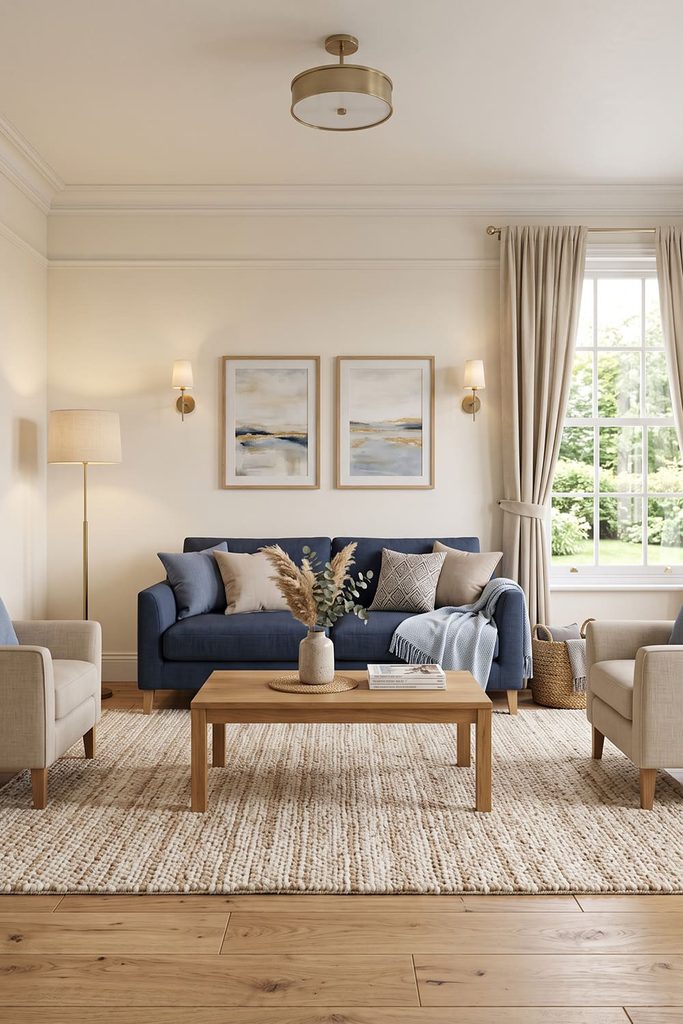
Beige and blue are an easy combination when you want a room that feels warm rather than cool. Try a navy or medium-blue sofa with beige walls and a cream or tan rug. Alternatively, keep the sofa neutral and use blue through curtains and cushions. Add light or medium wood to connect the two colors.
The important thing is to choose a warm beige rather than an extremely gray neutral if you want the room to feel inviting. Current Dulux palettes also demonstrate how soft blues can be balanced with warm beige and earthy tones.
11. Try a Blue Accent Chair
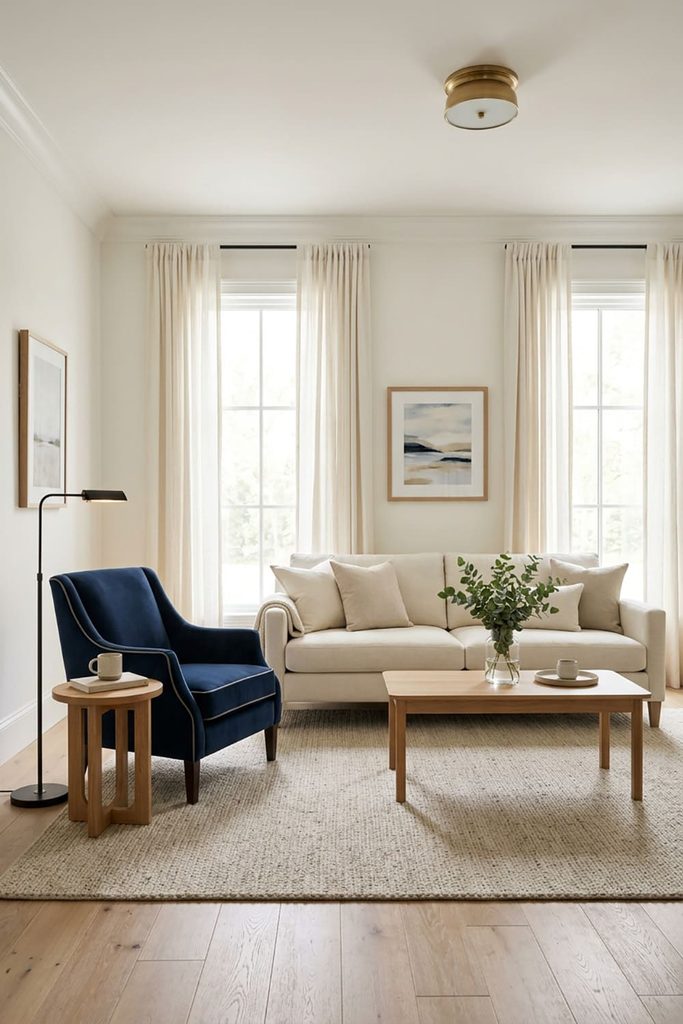
If a blue sofa feels like too big a commitment, start with one blue accent chair. Place it opposite or beside a neutral sofa so it becomes a deliberate secondary focal point. Navy velvet can create a richer look, while denim, linen, or woven upholstery feels more casual.
Add a small side table and floor lamp beside the chair to create a useful reading or relaxing corner. This approach is especially practical for beginners because one chair can introduce a strong color without requiring you to coordinate an entire seating set.
12. Layer Different Shades of Blue
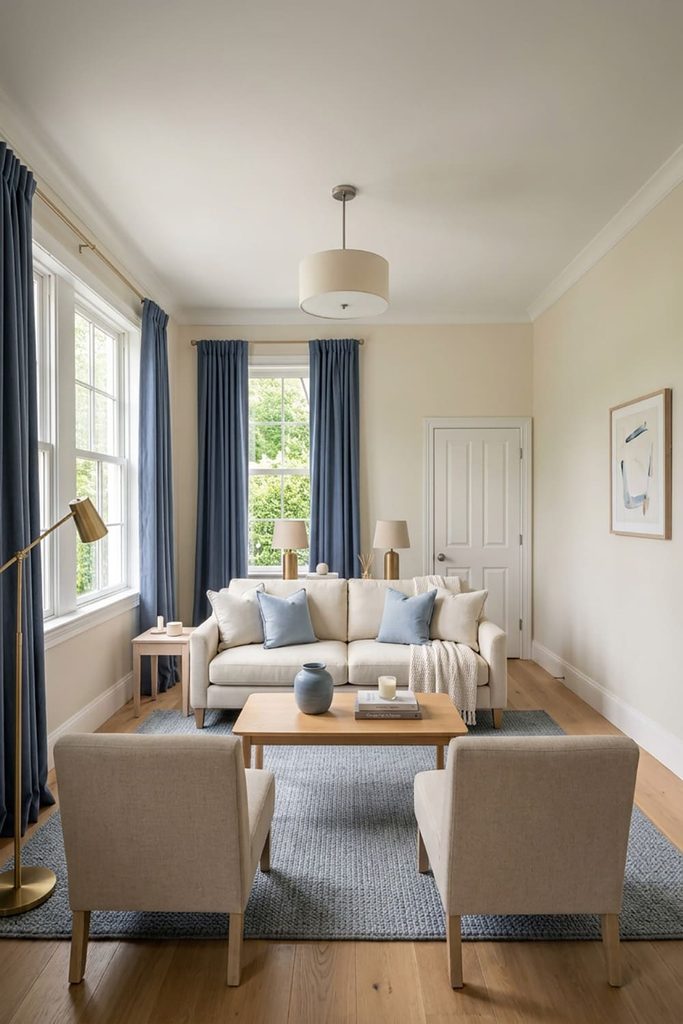
Once you are comfortable with one blue, experiment with two or three related shades. For example, combine navy curtains, medium-blue cushions, and pale blue artwork. Keep the larger background elements neutral so the blues do not compete.
Dulux’s blue guidance specifically explores using several blues together to adjust the mood and create visual depth. The trick is to vary the intensity rather than trying to make every blue identical. Different shades will look more natural and give the room a layered appearance.
13. Add Warm Lighting to a Blue Room
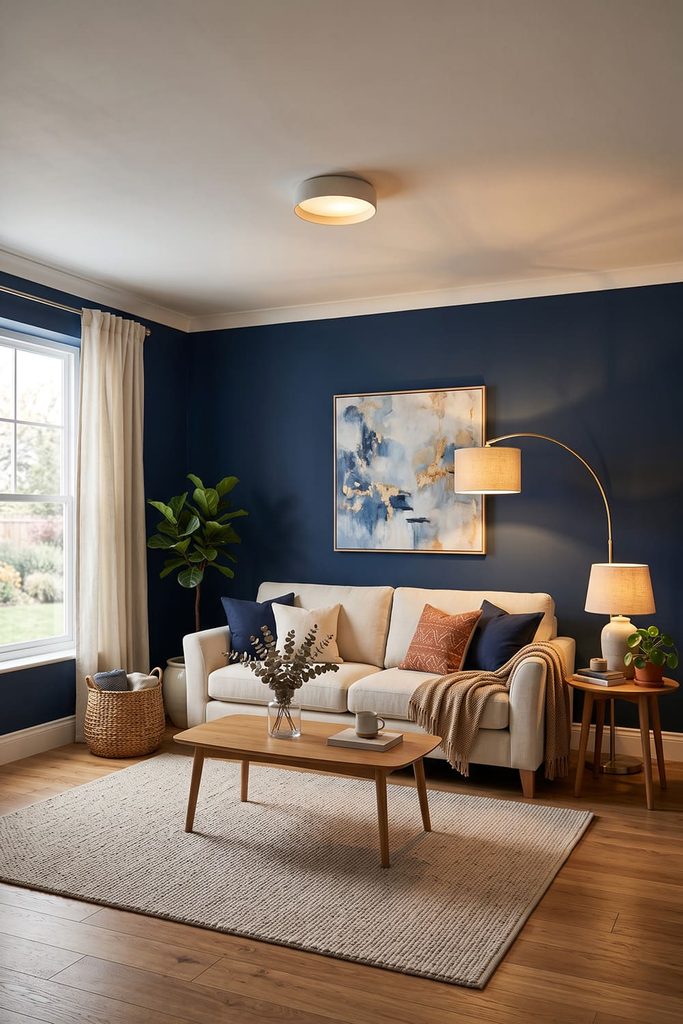
Lighting can change how blue looks throughout the day, so do not rely entirely on one ceiling fixture. Add a table lamp, floor lamp, or wall light near the seating area. Warm bulbs can help deeper or cooler blues feel more comfortable in the evening.
Layered lighting also creates different pools of light instead of illuminating the entire room equally. Current designer guidance recommends combining several lighting sources to improve both atmosphere and function.
14. Use Blue and Natural Textures
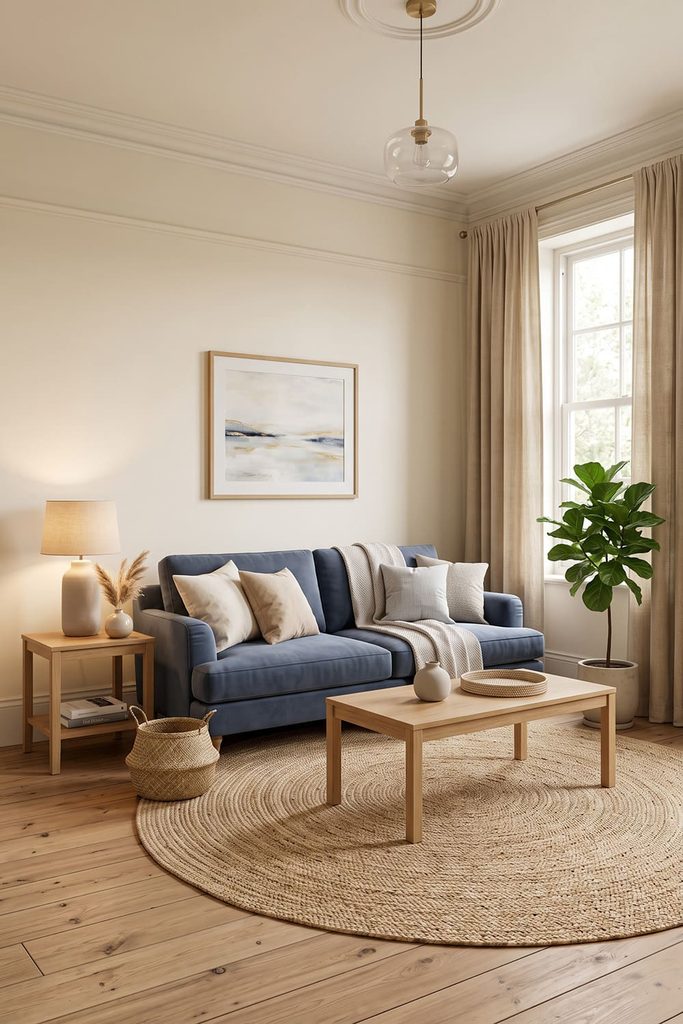
Keep the color scheme simple and create interest through materials. A blue sofa can be combined with a jute or wool rug, wooden coffee table, woven basket, linen curtains, and cotton cushions. You do not need complicated patterns when the textures already provide variation.
This is a particularly useful approach for beginners because the room can look layered without requiring advanced color-matching skills. Natural materials also help prevent blue from feeling too cold, especially when using darker shades.
15. Try Navy With One Warm Accent Color
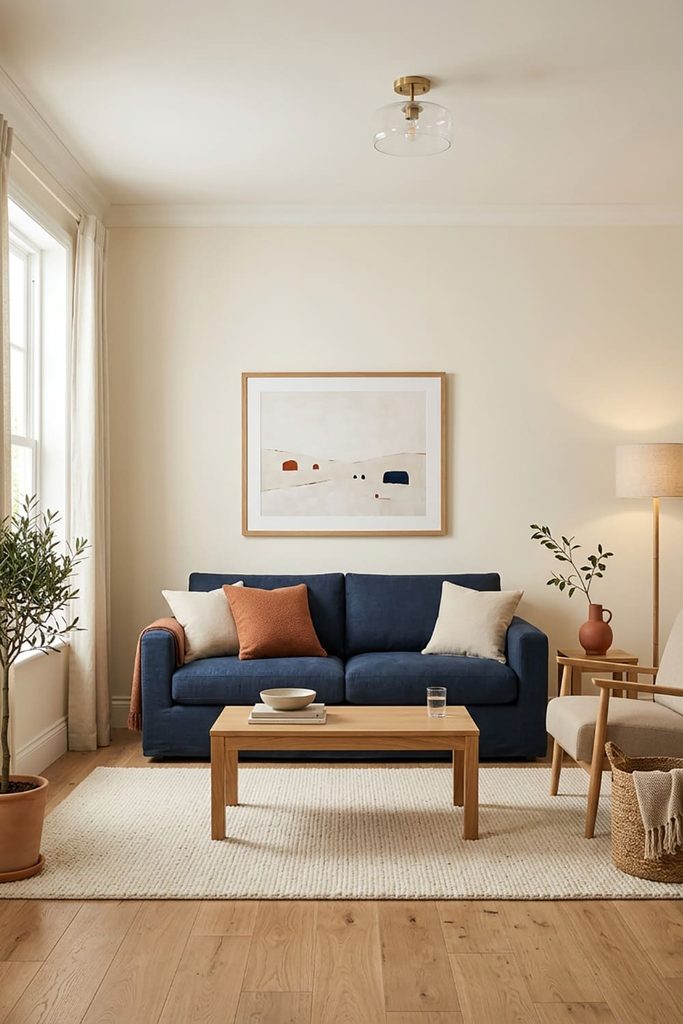
Once you are comfortable with blue, add one warm accent such as terracotta, rust, mustard, caramel, or muted orange. You only need a few touches. A rust-colored cushion, ceramic vase, artwork detail, or throw can be enough to contrast with a navy sofa. Keep the walls and larger furniture neutral so the warm color does not compete with the blue. This technique gives a beginner room more personality while keeping the overall palette manageable.
How to Choose the Right Blue for Your Living Room
Start by looking at the room’s natural light. A bright room can handle deeper or more saturated blues, while a darker room may benefit from a lighter or softer blue. Dulux’s current guidance similarly recommends considering the room’s size, lighting, and desired atmosphere when selecting a blue feature color.
It is also worth testing paint samples before committing to an entire wall. Blue can change considerably between morning, afternoon, and evening light. A color that looks soft in a bright showroom may appear much darker in your home.
If you are completely unsure, start with accessories. A blue cushion, rug, artwork, or chair gives you an opportunity to see how the color interacts with your existing furniture before making a larger investment.
Common Blue Living Room Mistakes Beginners Should Avoid
One common mistake is choosing too many competing blue shades at once. Start with one main blue and add related shades gradually. Another is buying a rug that is too small for the seating arrangement. Measure the room and furniture before purchasing.
It is also easy to make a blue room feel cold by using only cool colors and hard surfaces. Add warm wood, beige, cream, woven materials, or warm lighting to balance the palette.
Finally, avoid buying every piece of furniture from the same collection simply because it matches. Mixing a few different materials and furniture styles can give the room more personality and prevent it from looking overly coordinated.
Get the Proportions Right: Simple Numbers for Beginners
Start with the 60-30-10 rule, a simple split designers use to keep colour balanced. Give roughly 60 per cent of the room to a calm base of walls, large furniture, and flooring in white, cream, or soft grey. Let blue take about 30 per cent through the sofa or rug, and cushions. Save the last 10 per cent for one warm accent, such as wood, brass, or a rust cushion. More on that final slice appears in how to pair accent colors with a blue living room.
For furniture sizes, work from the sofa. A rug should reach at least under the front legs of the sofa and chairs; an 8 by 10 foot rug suits most three-seat sofas, while a 5 by 8 foot rug works in a smaller room. Choose a coffee table about two-thirds the length of the sofa, and leave 14 to 18 inches between the table and the seats so everyone can pass comfortably.
Artwork follows a similar proportion. A single piece or a grouped arrangement looks best at about two-thirds the width of the sofa below it, hung so its centre sits roughly 57 inches from the floor. Tape the outline on the wall first and live with it for a day before drilling. Checks like these make a first room feel deliberate, and the styling order in how to decorate a blue living room shows how to build on them.
Final Thoughts
Creating a blue living room does not require advanced decorating skills. Start with one clear idea, such as a blue accent wall, sofa, rug, curtains, or artwork, and build the rest of the room around it. Neutral colors such as cream, beige, and white make blue easier to work with, while wood and warm lighting help create balance.
If you are decorating for the first time, make changes gradually. Try accessories before committing to major purchases, test paint in your actual room, and pay attention to scale and lighting. With a few simple choices, blue can give your living room a calm, polished, and personal character without making the decorating process complicated.


