

15 Bedroom Wall Art Ideas for a Music Lover’s Bedroom
Music can make a bedroom feel deeply personal, especially when certain songs, instruments, albums, or memories have become part of your everyday life. Your walls can reflect that connection without making the room look like a dedicated recording studio.
The best music-inspired wall art does more than simply show musical symbols. It can represent your favorite sounds, creative interests, memorable performances, instruments you play, or the atmosphere you associate with listening to music.
You can keep the design sophisticated with framed artwork and subtle references, or create something much more expressive with records, instruments, photographs, and bold graphic pieces. The right approach depends on your personality and the style of your bedroom.
These 15 bedroom wall art ideas for a music lover’s bedroom offer different ways to bring your passion for music into the room while keeping the overall design comfortable, organized, and visually interesting.
1. Create a Framed Album Cover Gallery
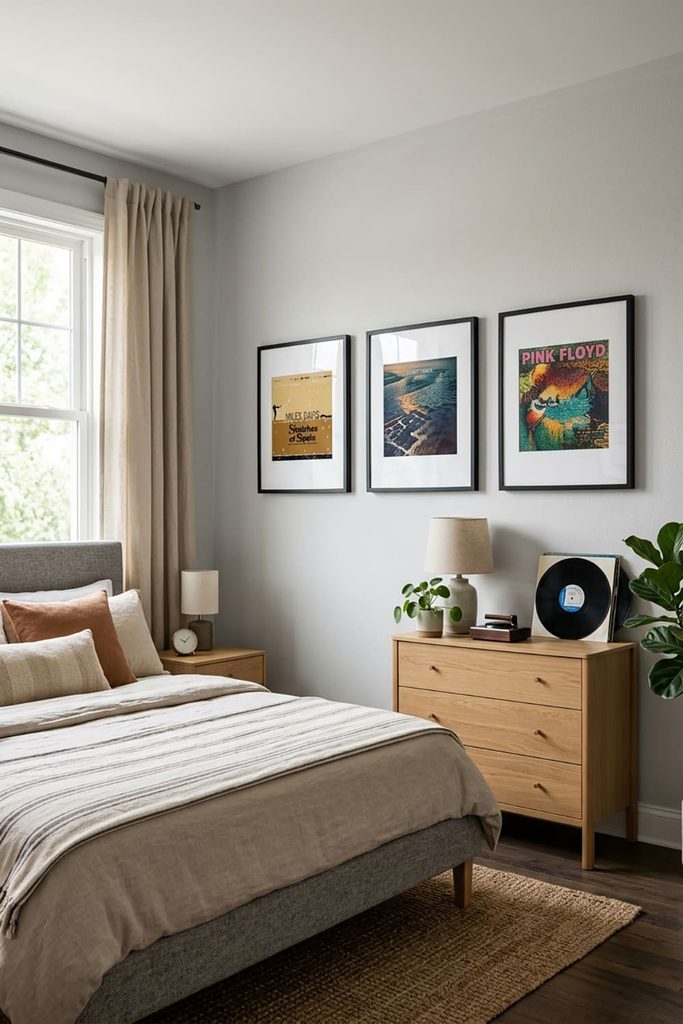
Turn your favorite album artwork into a coordinated wall display. Choose several covers that have personal meaning and arrange them in a clean grid above a dresser, desk, or another open wall.
The covers do not have to use identical colors, but repeating one or two shades throughout the collection can make the arrangement feel more intentional. Matching frames can also give colorful artwork a more polished appearance.
For a smaller bedroom, use three or four covers rather than covering an entire wall. Leave equal spacing between each frame so the display feels organized rather than crowded.
2. Display Your Favorite Vinyl Records
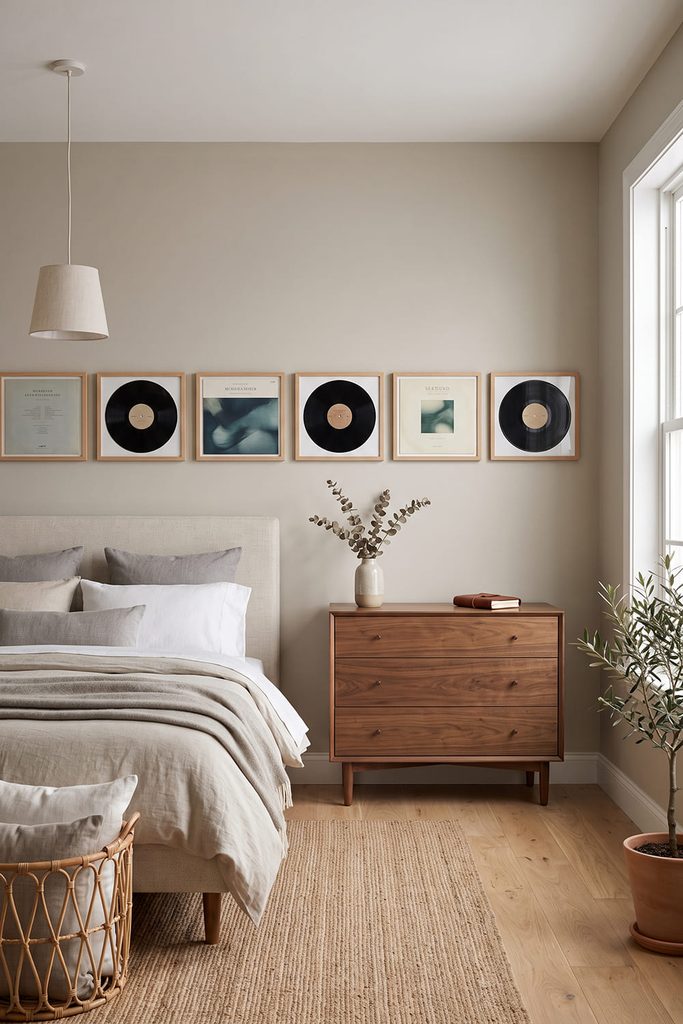
If you appreciate the physical side of music, a collection of vinyl records can become distinctive bedroom wall art. Select records that represent favorite albums, important memories, or different periods of your musical interests.
You can display the records themselves or use protective frames that allow them to remain part of the decoration while reducing handling. Arrange them in a horizontal row, vertical column, or balanced grid.
Keep the surrounding wall relatively simple because the circular shapes already create visual interest. A small record display can make a strong statement without overwhelming the bedroom.
3. Hang a Large Musical Instrument
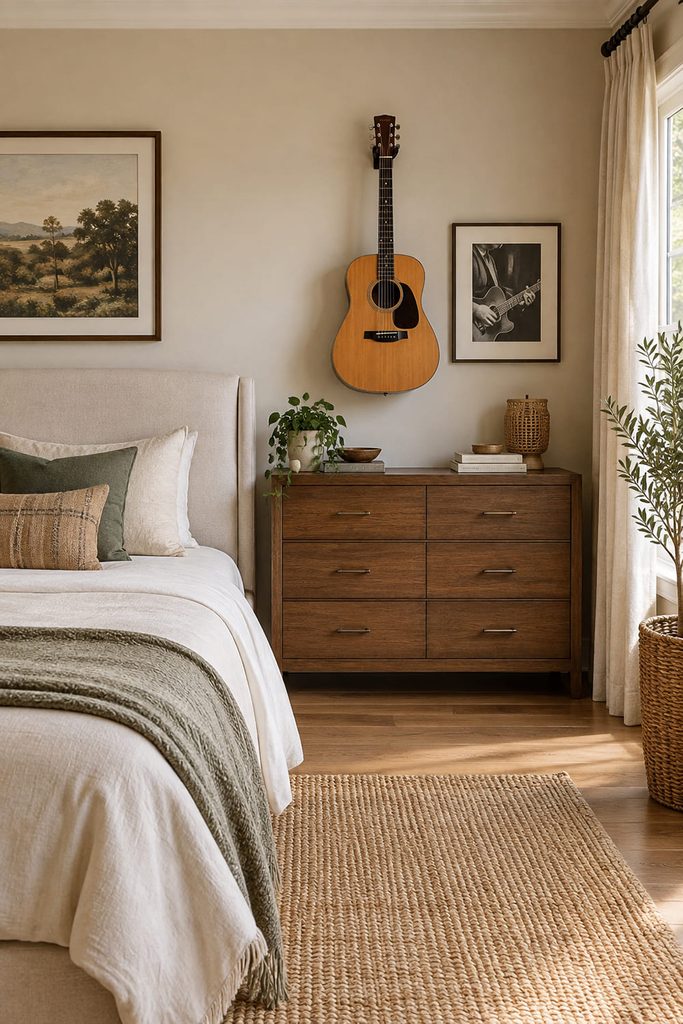
An instrument can become artwork when displayed thoughtfully on the wall. A guitar, violin, ukulele, or another instrument can provide a strong focal point while also reflecting an actual part of your musical life.
Choose a secure mounting system designed for the instrument and position it where it will not interfere with normal bedroom movement. Avoid placing valuable instruments where direct sunlight or unsuitable environmental conditions could damage them.
One instrument can stand alone above a dresser or desk. For a larger display, combine it with one or two simple framed musical prints rather than surrounding it with numerous decorations.
4. Create a Sound Wave Artwork Display
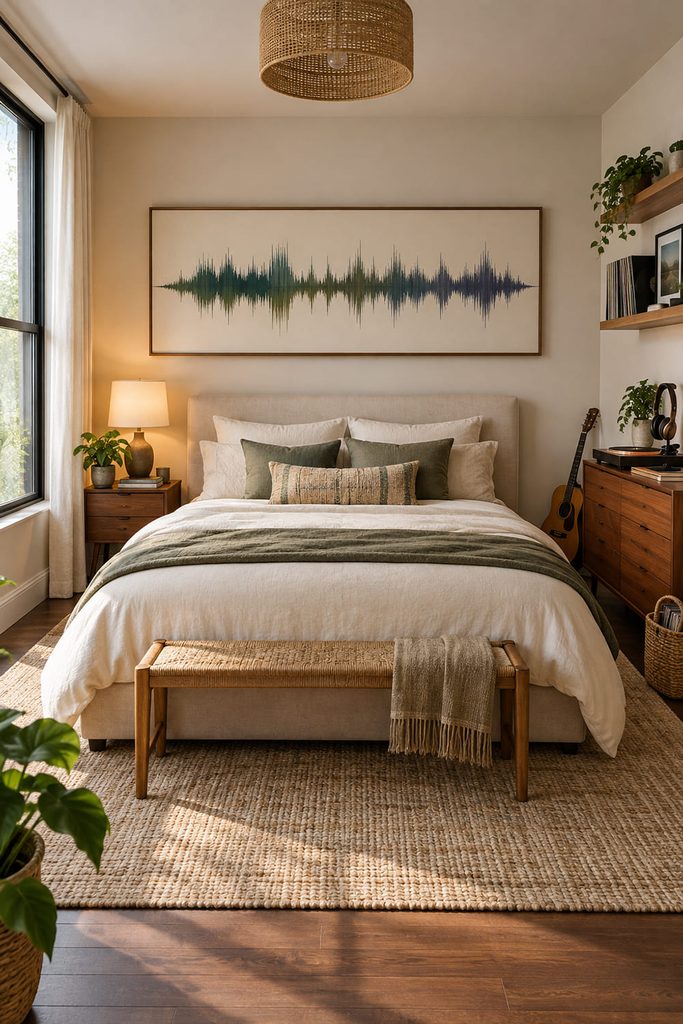
A sound wave can turn something personal and audible into a visual piece of bedroom art. Choose a recording that has special meaning and represent its waveform through a clean graphic design.
You could use a meaningful spoken phrase, a short musical passage, or another personally significant recording as inspiration. Keep the design simple so the waveform remains recognizable.
Black, dark green, navy, charcoal, or muted metallic tones can work well against a light bedroom wall. A large horizontal piece can sit naturally above a bed or desk.
5. Use Minimalist Music Note Artwork
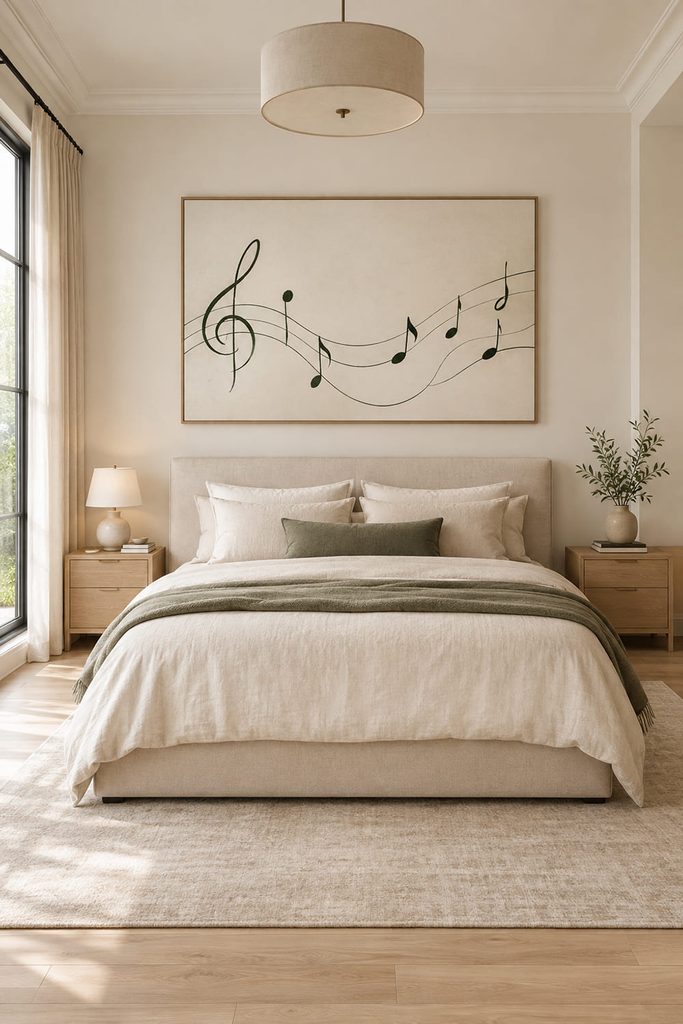
Musical notes can introduce the theme without making the room feel overly decorated. Choose a simple line drawing, abstract arrangement, or artistic interpretation of notes rather than using a busy pattern across the entire wall.
Black artwork on a cream or white background gives a clean appearance. For a softer bedroom, muted green, dusty blue, or warm gray can create a gentler effect.
One large print can become a focal point, while two or three smaller pieces can create a balanced arrangement. Keep enough empty space around them to preserve the minimalist look.
6. Create a Concert Memory Wall
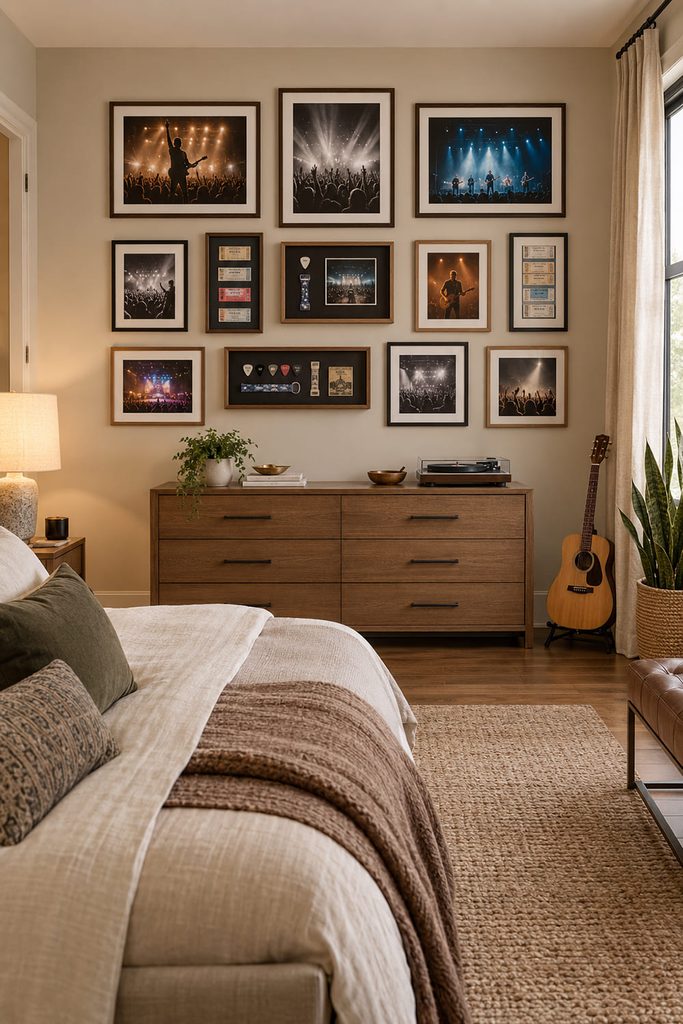
If live performances are an important part of your musical life, turn your memories into a bedroom gallery. Combine photographs, ticket stubs, small printed details, and other flat souvenirs from memorable shows.
Use frames or shallow display cases to protect delicate paper items. Keep the layout organized so the wall feels like a collection of meaningful memories rather than a bulletin board.
You can arrange everything chronologically or group pieces by favorite experiences. Leave some space between displays so individual memories remain easy to appreciate.
7. Hang Black-and-White Music Photography
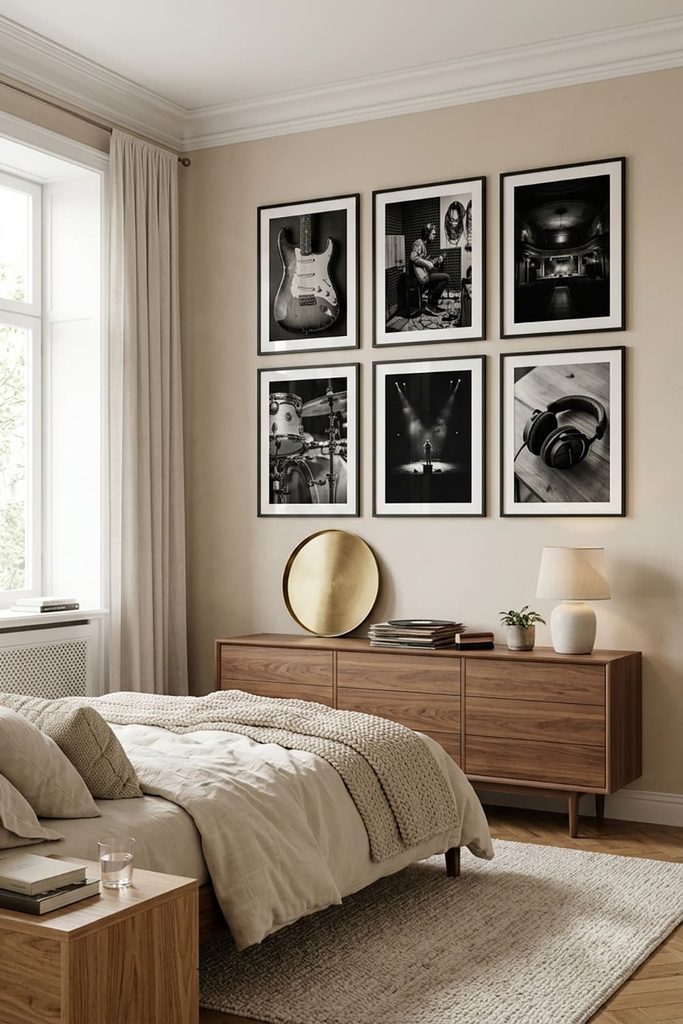
Black-and-white photography can bring a sophisticated musical reference to a bedroom without introducing too many colors. Choose photographs showing instruments, performers from a distance, recording equipment, concert venues, or musical details.
A series of related photographs can work beautifully above a dresser or along a long wall. Similar frames help connect different photographs into one cohesive collection.
This idea is especially useful if the bedroom already has colorful bedding or accessories. The monochrome artwork provides visual contrast without adding another competing color palette.
8. Display Sheet Music as Wall Art
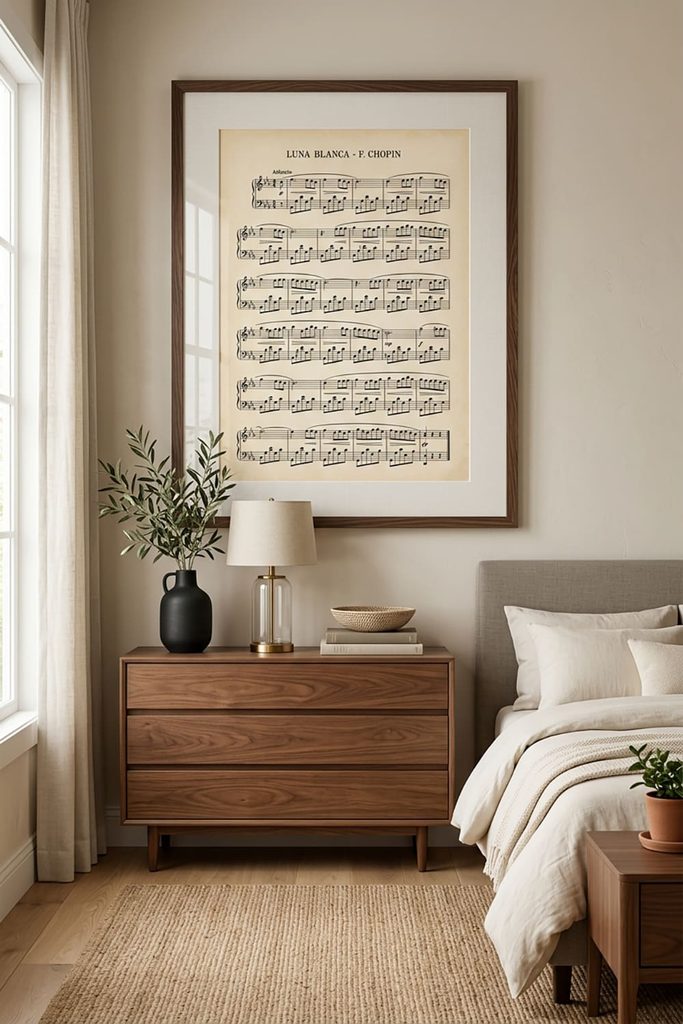
Music notation can have an elegant graphic quality even when viewed primarily as decoration. Frame a page of sheet music that has personal meaning or choose a visually interesting musical composition.
Instead of filling the entire wall with pages, select one large piece or create a small arrangement of two or three related frames. A wide mat around the paper can give the artwork a more finished appearance.
Warm cream paper with a dark frame can create a classic look. For a contemporary bedroom, place the framed notation alongside simple abstract artwork.
9. Create an Instrument Silhouette Gallery
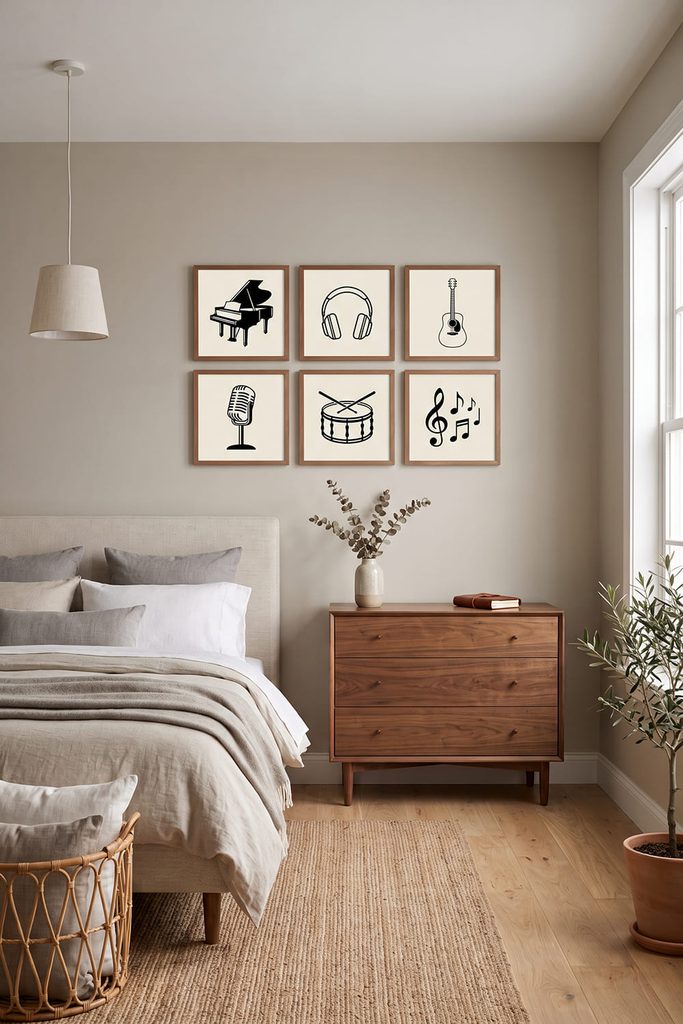
Instrument silhouettes offer a subtle way to introduce music into the bedroom. Choose outlines of guitars, microphones, headphones, pianos, drums, or other instruments that represent your interests.
Use the same background and frame style for each piece so the collection feels connected. You can arrange the silhouettes in a neat row or create a compact grid.
This idea works particularly well for bedrooms where you want the music theme to remain understated. The shapes communicate the subject without requiring large photographs or colorful posters.
10. Make a Music-Inspired Typography Wall
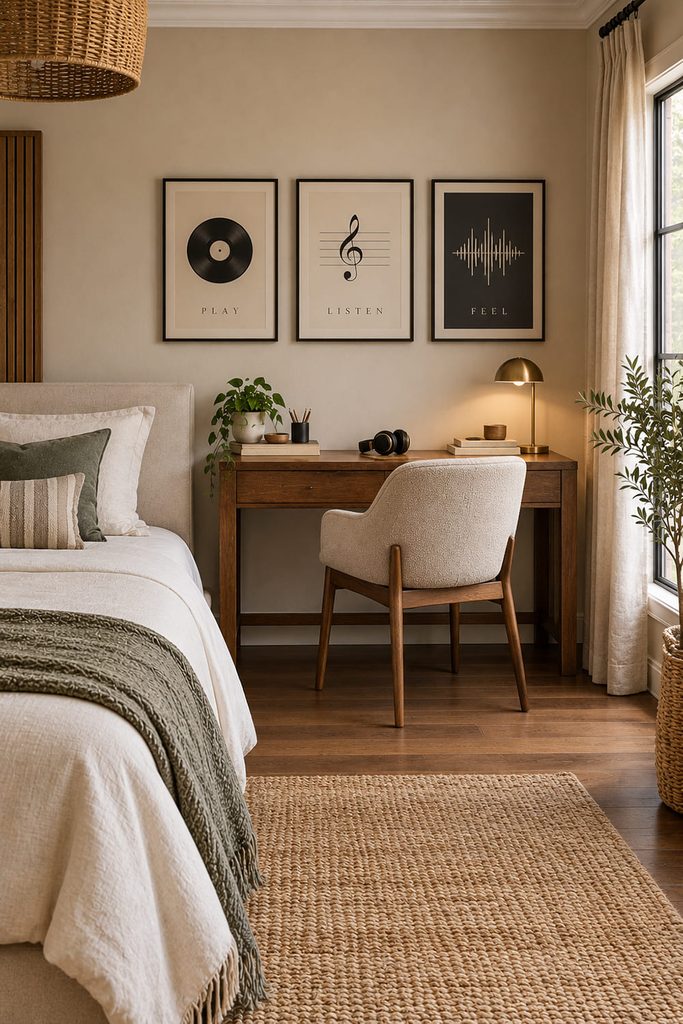
Typography can express your relationship with music without relying on portraits or album artwork. Choose short music-related words, phrases, or concepts that have genuine meaning to you.
Keep the typography visually consistent by using one or two type styles throughout the collection. Black, charcoal, cream, or muted colors can create a mature appearance.
A three-piece arrangement above a desk can work especially well. Keep the wording short so the wall remains visually artistic instead of becoming a collection of large paragraphs.
11. Turn Your Headphones Into Part of the Wall Display
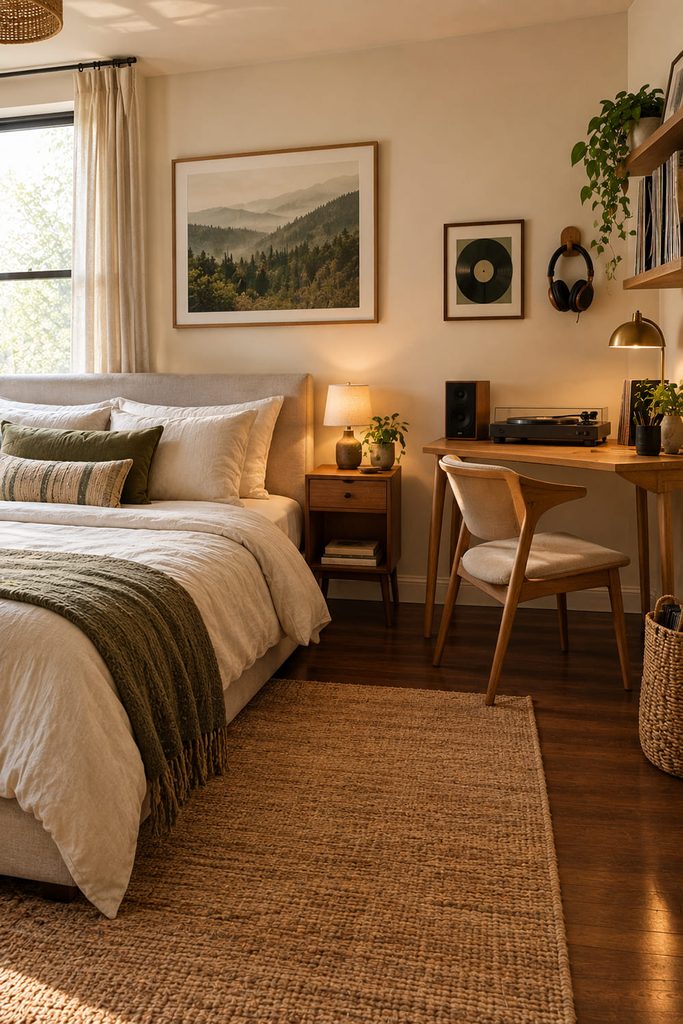
Headphones can become part of a practical and decorative music corner when displayed neatly. Install a dedicated wall hook and position the headphones beside a small piece of music-inspired artwork.
This arrangement works particularly well above a listening desk or compact music station. The headphones remain easy to reach while also becoming part of the room’s visual design.
Add one framed print above or beside them rather than creating a large collection. The combination of useful equipment and artwork can feel natural and personal.
12. Create an Abstract Rhythm Artwork
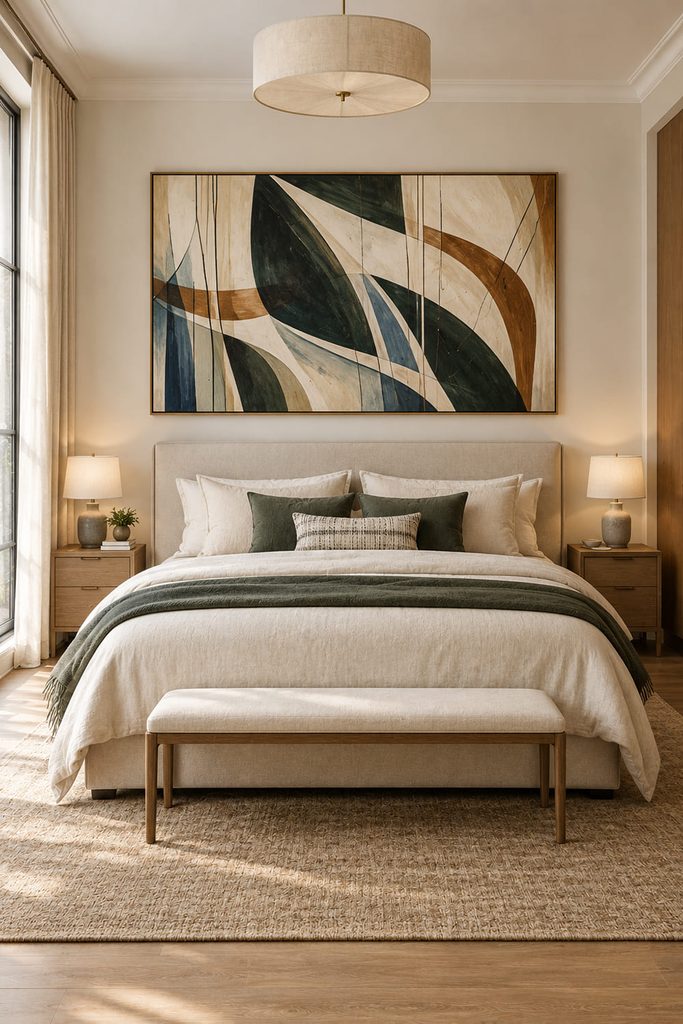
Music can inspire visual art through movement, repetition, shapes, and lines. Choose an abstract piece that suggests rhythm through sweeping strokes, repeated forms, layered patterns, or contrasting shapes.
You do not need obvious musical notes or instruments for the artwork to communicate a connection with music. The idea is to capture the feeling of rhythm visually.
A large abstract piece works well when the rest of the bedroom is relatively simple. Repeat one color from the artwork in a cushion, blanket, or small accessory to connect the wall with the rest of the room.
13. Build a Personal Music Timeline
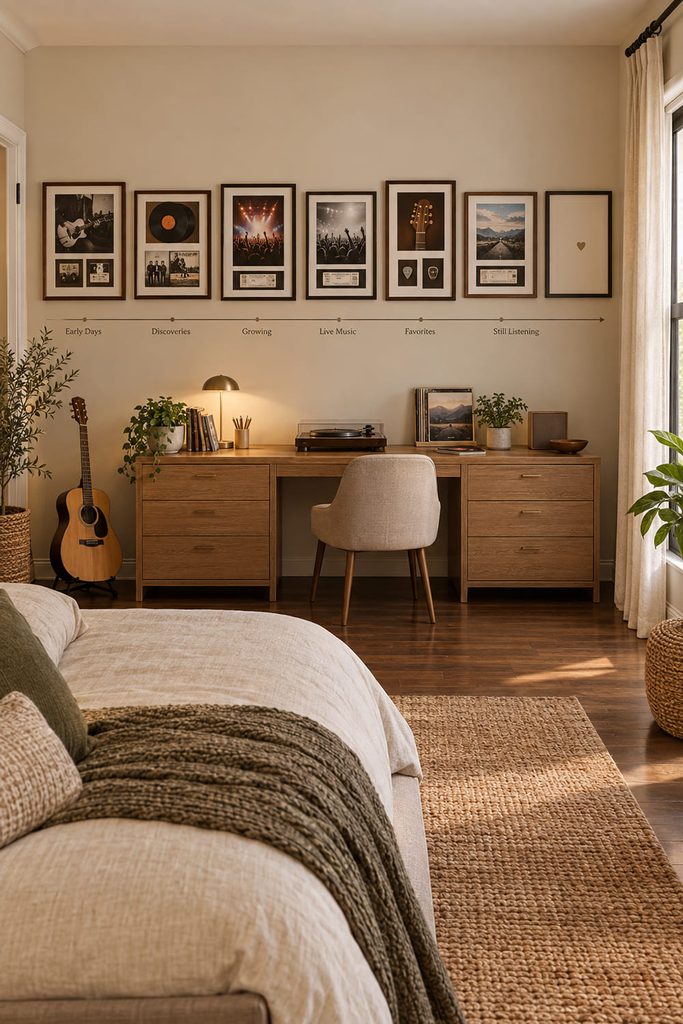
Create a visual timeline showing the different stages of your relationship with music. Start with an early musical memory and gradually move through important albums, instruments, concerts, or creative periods.
Use photographs, small illustrations, framed text, or simple symbols to represent each stage. Keep the design consistent so the wall feels like one story.
A horizontal arrangement above a desk or dresser can work especially well. Leave enough room to add another piece later as your musical interests continue to develop.
14. Create a Cozy Listening Corner With Wall Art
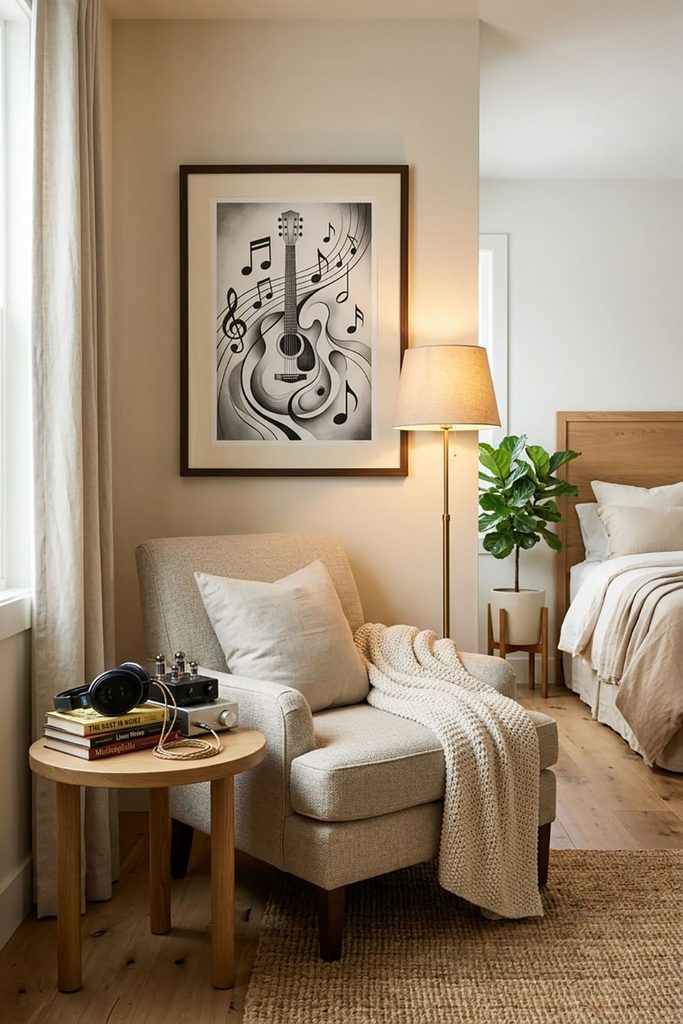
Use the wall behind a comfortable chair or listening area as a small music-focused display. Hang one large piece of artwork above the chair and add a small shelf or table below it for headphones, books, or music equipment.
Choose artwork that reflects the kind of atmosphere you enjoy while listening. Soft photography, abstract artwork, instrument drawings, or muted album-inspired designs can all work.
Keep the arrangement simple because the chair itself becomes part of the composition. A floor lamp and small side table can complete the corner without competing with the wall art.
15. Combine Music Art With Personal Photography
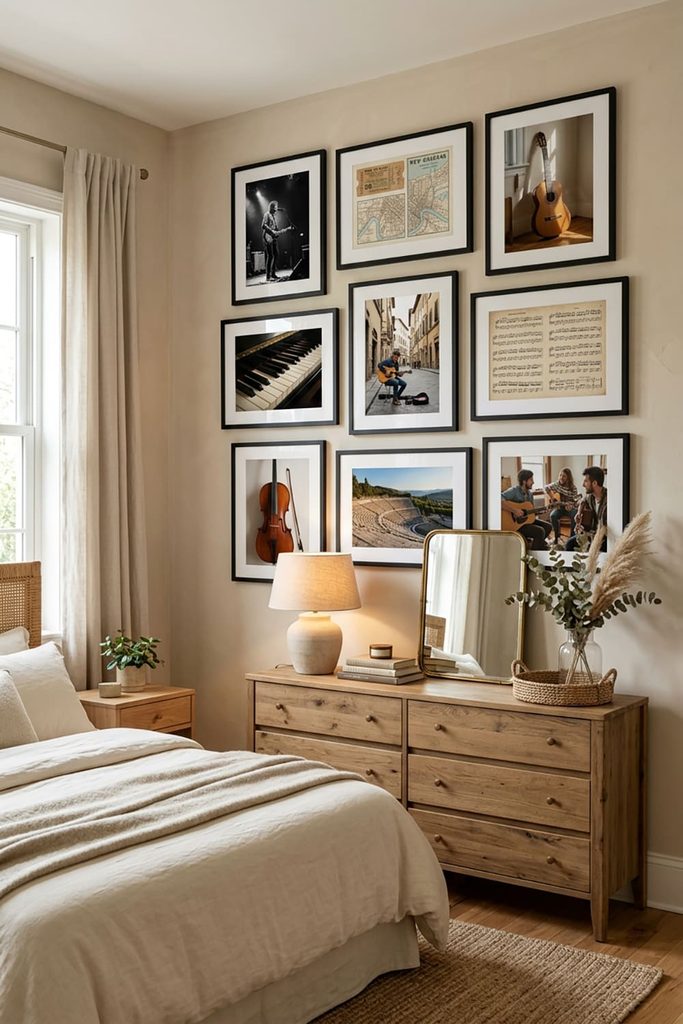
Create a mixed gallery that combines your love of music with your own experiences. Include photographs from concerts, pictures of instruments you have played, travel memories connected with music, and a few music-inspired artworks.
Choose one consistent frame finish to make the different subjects feel connected. You can also repeat a small number of colors throughout the photographs and artwork.
The result becomes much more personal than a generic music-themed wall. Instead of simply showing that you enjoy music, the collection tells part of your own story through images and memories.
How to Choose Music Wall Art for a Bedroom
Start by deciding how visible you want the music theme to be. One oversized artwork can provide a subtle reference, while a gallery of records, photographs, and instruments can make music the central design feature.
Think about the type of music-related objects you already own. Your existing records, instruments, headphones, photographs, or concert memories can provide natural inspiration for the wall.
Try not to use every musical symbol in one room. A few carefully selected pieces usually create a stronger composition than notes, instruments, records, posters, and typography all competing for attention.
How to Keep a Music-Themed Bedroom Sophisticated
Choose a limited color palette when your artwork contains several different subjects. Black, cream, wood tones, gray, deep green, navy, or another restrained combination can help diverse pieces feel connected.
Scale also matters. If one large piece is the main focal point, smaller artwork should support it instead of competing with it.
Leave some blank wall around your collection. Negative space gives the artwork room to stand out and keeps a music-loving bedroom from feeling visually overloaded.
Best Places to Display Music Wall Art
The wall above a dresser is useful for a gallery because the furniture provides a natural visual base. A desk wall can work particularly well for headphones, sound-wave artwork, and smaller musical displays.
The area above the bed can accommodate one large statement piece or a carefully balanced arrangement. Avoid making a complicated gallery too close to the sleeping area if it makes the room feel visually busy.
An empty wall beside a reading chair can become a dedicated listening corner. This allows the artwork to connect naturally with an activity rather than simply decorating an unused surface.
Final Thoughts
A music lover’s bedroom can express a passion for sound without looking like a themed showroom. Records, instruments, photographs, sheet music, abstract artwork, and personal memories can all become meaningful parts of the wall design.
The most interesting displays usually reflect the individual’s actual relationship with music. A favorite instrument, an important concert memory, or artwork inspired by a particular sound can give the room far more personality than generic decoration.
Choose the pieces that genuinely matter to you and give them enough space to stand out. Your bedroom can then feel like a comfortable personal retreat where your love of music is present without overwhelming the rest of the design.


