

15 Bedroom Wall Art Ideas for an Empty Nester
When children leave home, the bedroom can finally become a space that reflects the people who use it every day. After years of choosing furniture, colors, and decorations around a busy family household, this can be a good time to rethink the bedroom and give the walls some attention of their own.
Wall art is one of the easiest ways to make that change. Instead of decorating around childhood themes or leaving old artwork in place simply because it has always been there, you can choose pieces that reflect your current interests, favorite places, memories, and personal style.
The artwork does not need to be expensive or formal. A meaningful photograph, peaceful landscape, oversized abstract piece, or small collection of collected artwork can give the room a much more personal character.
These 15 bedroom wall art ideas for an empty nester focus on creating a bedroom that feels comfortable, mature, and distinctly yours. Some are sentimental, while others are simply beautiful pieces chosen because they make the room feel more peaceful.
1. Oversized Landscape Above the Bed
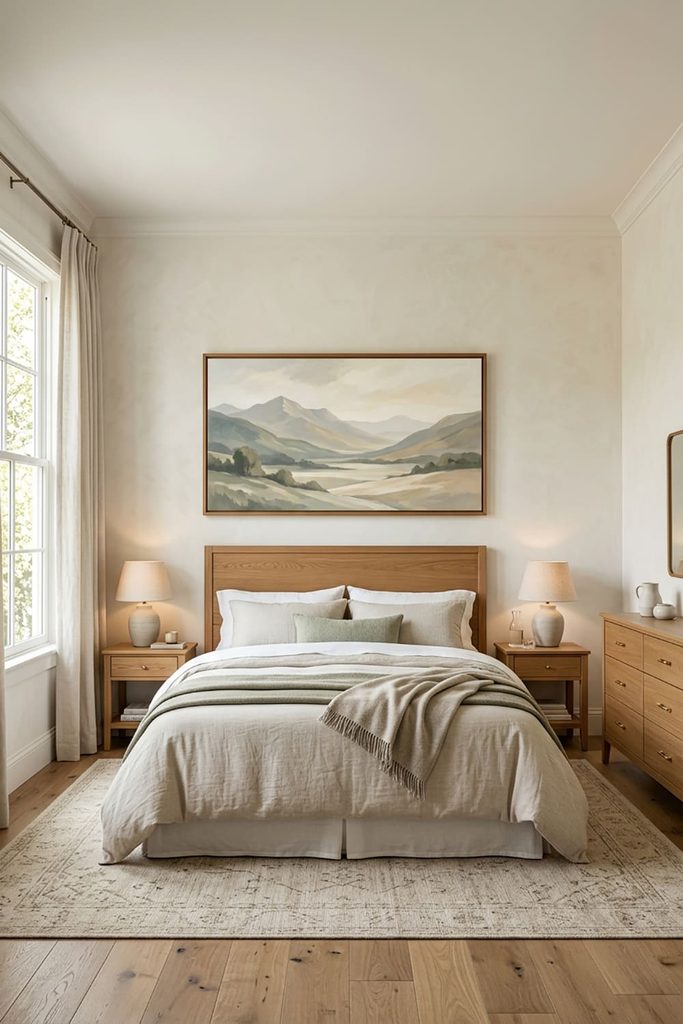
An oversized landscape can completely change the feeling of an empty-nester bedroom without requiring a complicated gallery wall. Choose a scene that genuinely appeals to you, such as mountains, a quiet coastline, rolling countryside, or a forest in soft morning light.
Look for colors that work with your existing bedding and furniture. Muted green, warm beige, dusty blue, cream, and soft gray are easy to coordinate. A large horizontal piece works especially well above the bed because it creates a strong focal point without filling the surrounding wall with numerous small frames.
Choose a simple frame that complements the furniture. The artwork should feel peaceful rather than overly dramatic, particularly if the bedroom is intended to become a relaxing retreat.
2. Travel Memory Gallery Wall
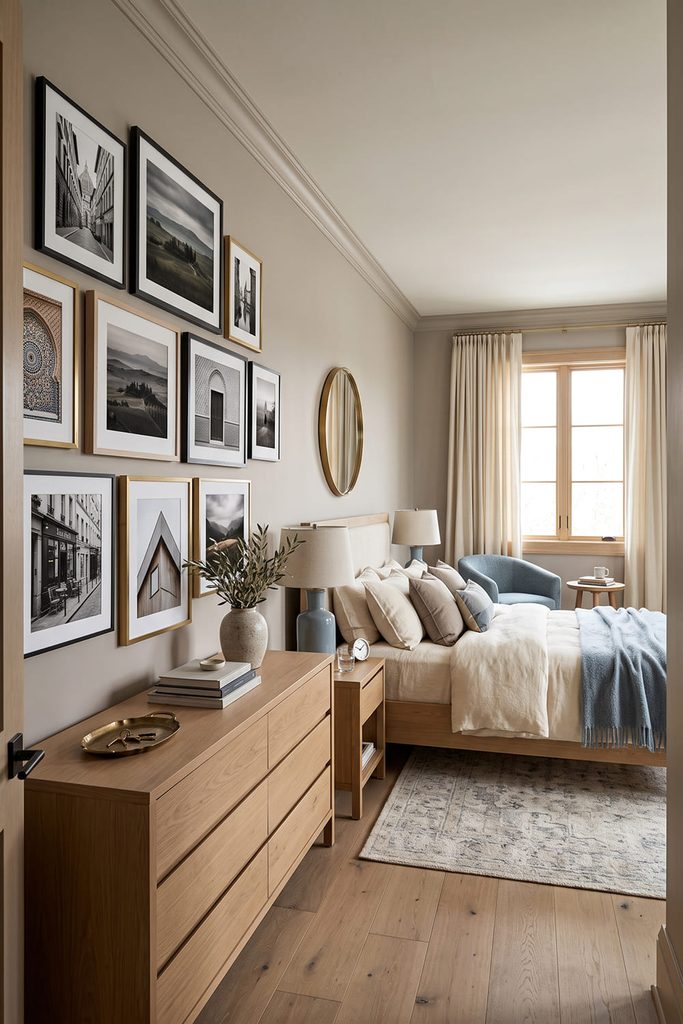
Years of family life often mean that personal travel photographs and memories have been stored away in albums or digital folders. A bedroom gallery wall provides an opportunity to bring some of those experiences back into everyday life.
Select a small group of photographs from places that hold special meaning. You could include landscapes, architecture, memorable streets, or quiet details rather than relying only on photographs of people. Use similar frames to make the collection feel cohesive.
Black, natural wood, or warm metallic frames can all work depending on the bedroom. Keep the arrangement organized rather than covering an entire wall. A carefully edited collection of meaningful images can feel much more sophisticated than dozens of unrelated photographs.
3. Large Botanical Artwork
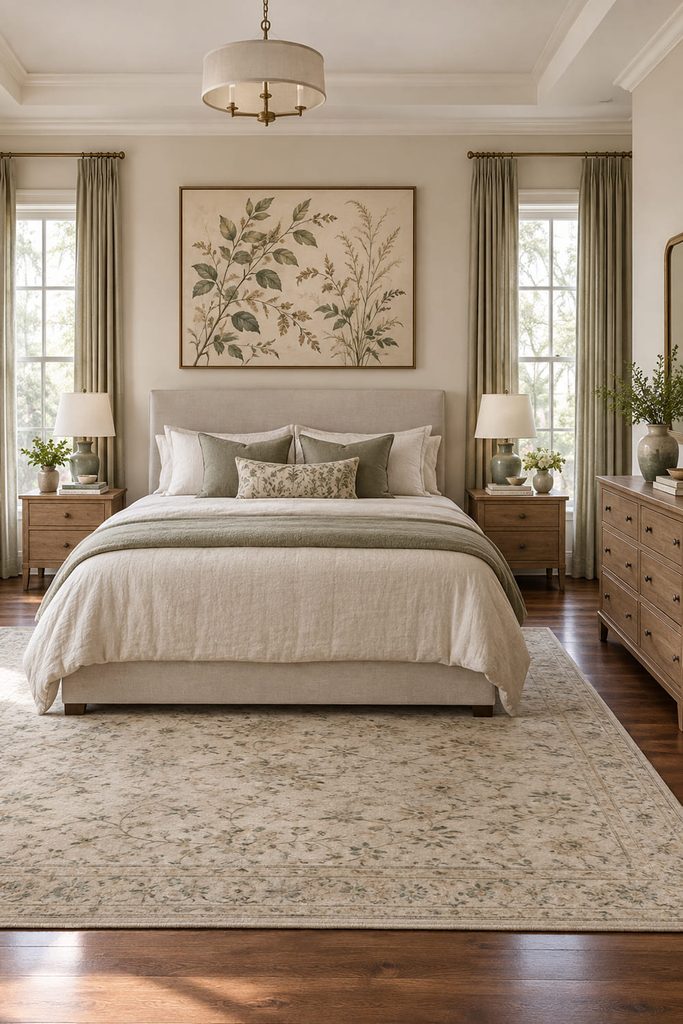
Botanical artwork can introduce natural color and softness while remaining mature and understated. Choose a large illustration or painting featuring branches, leaves, grasses, or subtle flowers.
A large botanical piece above the bed can become the room’s main focal point. For a more traditional bedroom, look for detailed botanical illustrations. For a contemporary room, choose a simplified composition with plenty of open space.
Repeat one or two colors from the artwork in the bedding or curtains. This approach is particularly useful when you want the bedroom to feel connected to nature without filling it with actual plants or excessive decorative accessories.
4. Black-and-White Photography With Personal Meaning
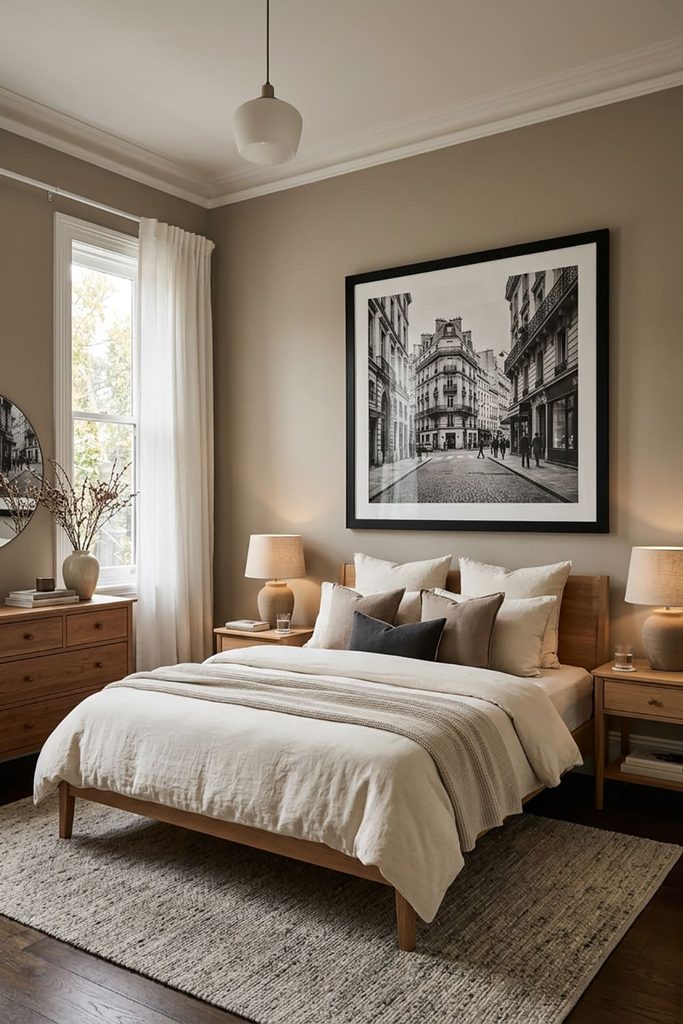
Black-and-white photography offers a simple way to display something meaningful without introducing a strong new color into the bedroom.
Choose a photograph connected to a place, experience, hobby, or moment that matters to you. It could be an architectural photograph from a favorite city, a landscape from a memorable trip, or an artistic photograph that simply evokes a particular feeling.
One large photograph can work beautifully above the bed or dresser. Use a substantial frame so the artwork has enough visual presence. A thin black frame gives a modern appearance, while natural wood can soften the contrast.
The simplicity of black and white also allows the artwork to remain relevant even if the bedroom’s color scheme changes later.
5. Two Complementary Abstract Paintings
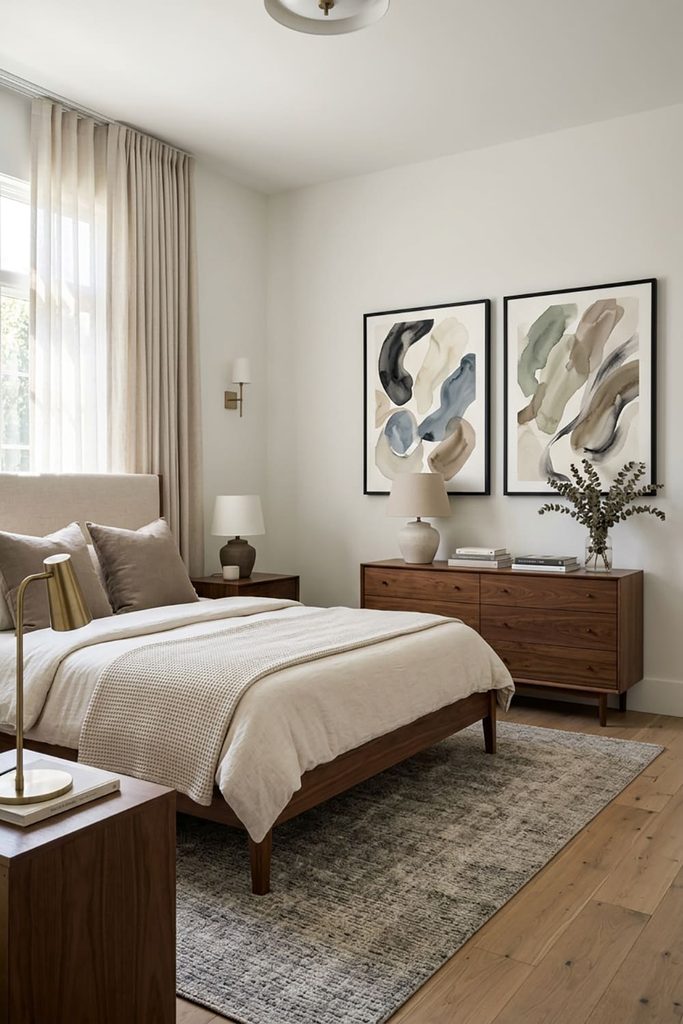
If you prefer contemporary decor, try two abstract paintings that clearly relate to one another. They do not need to be identical. Instead, look for a shared color palette or similar visual movement. One piece might contain broad organic shapes while the other uses softer lines in the same colors.
Hang the artwork side by side above a dresser or along the wall opposite the bed. Keep the spacing consistent and use matching or coordinating frames. This approach provides more visual interest than one small artwork while remaining much calmer than a large gallery wall.
For an empty-nester bedroom, neutral abstract pieces in cream, taupe, brown, charcoal, muted green, or dusty blue can create a sophisticated atmosphere without making the room feel overly decorated.
6. A Meaningful Artwork From a Favorite Place
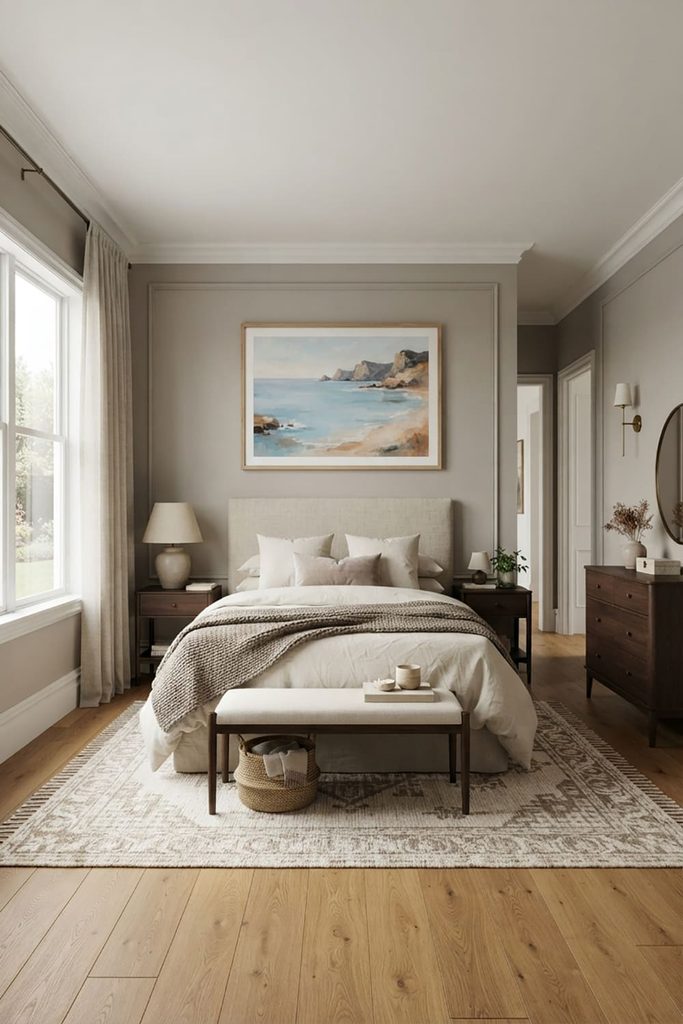
Instead of displaying a generic landscape, choose artwork representing somewhere that genuinely matters to you. It could depict a favorite vacation destination, hometown landscape, mountain region, coastal view, or another place connected to an important chapter of your life.
The artwork does not have to be a photograph. A painting, illustration, print, or abstract interpretation can make the piece feel more artistic. Place it above the bed or on the wall you see when entering the bedroom.
Because the artwork carries personal meaning, you can keep the surrounding decor simple. One meaningful piece often has more impact than a large collection chosen only to fill blank wall space.
7. Elegant Textured Wall Art
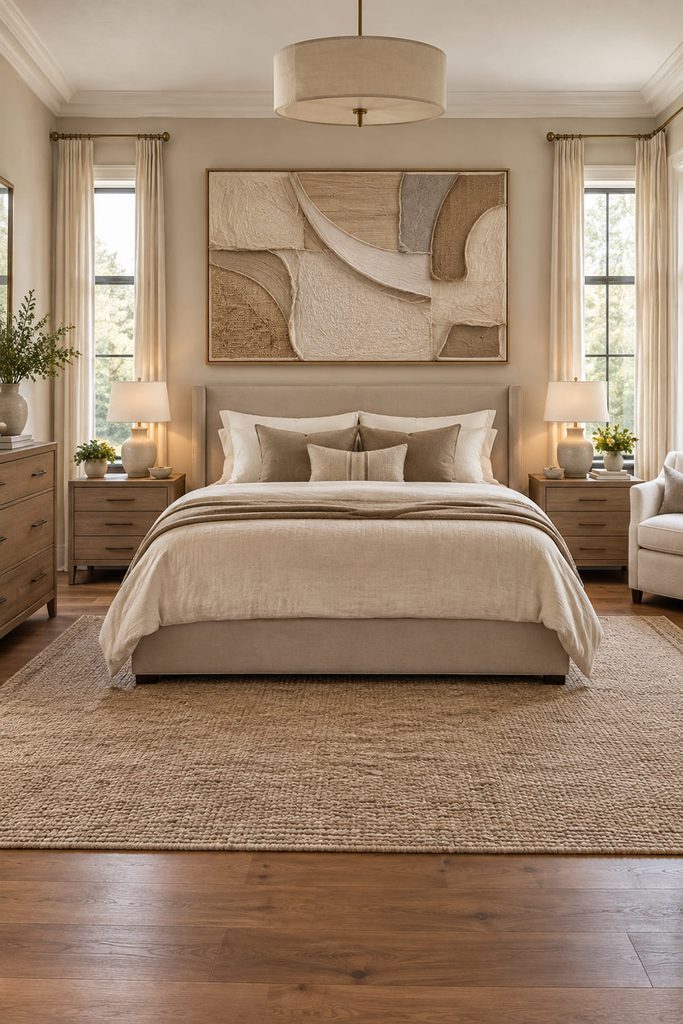
For a bedroom that already has a quiet color palette, texture can be more interesting than additional color. Look for woven artwork, layered fabric pieces, textured canvas, or three-dimensional neutral compositions. Cream, ivory, beige, taupe, and warm gray work especially well with natural wood furniture.
A large textured piece above the bed can create a focal point without becoming visually loud. This style is also useful when you want the room to feel sophisticated but not overly formal. The artwork adds depth that can be noticed from different angles without demanding attention.
Pair it with simple bedding and restrained accessories so the wall remains the main textural feature.
8. Personal Collection of Small Artwork
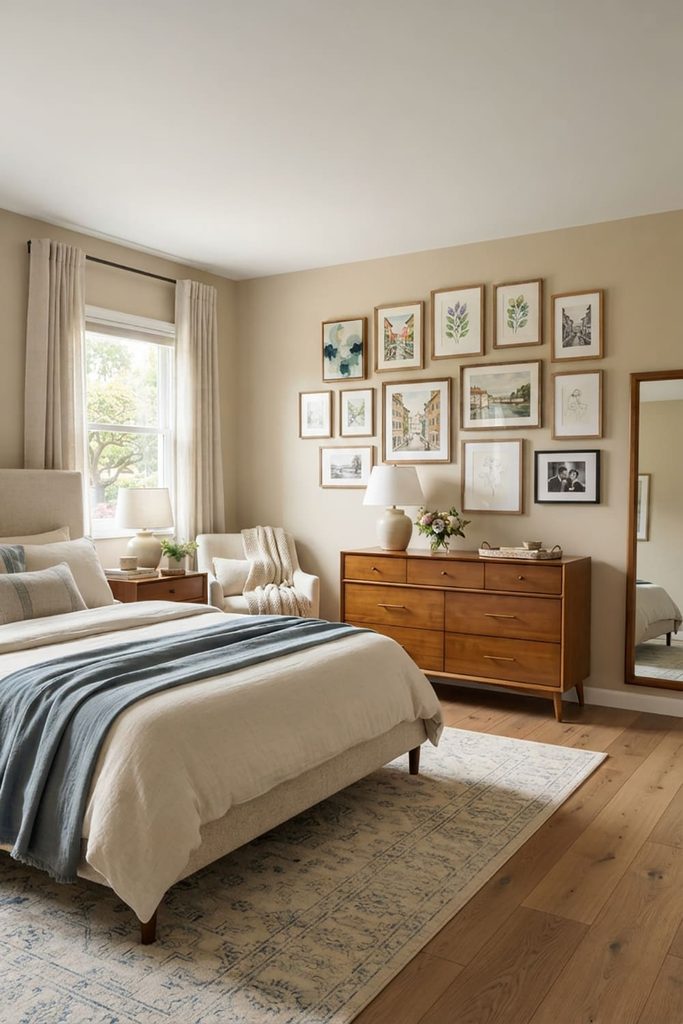
Not every empty-nester bedroom needs one large statement piece. If you have accumulated small artworks over the years, bring several together into one carefully planned display. You might combine small paintings, drawings, photographs, travel prints, or pieces purchased because they simply appealed to you.
The important part is creating a connection between them. Similar frame colors or a repeated palette can make pieces from different periods look intentional. Arrange them above a dresser, beside the bed, or on another wall with enough room for the complete composition.
Leave some breathing room between pieces rather than squeezing them together. The goal is to display a collection, not create a wall filled with visual noise.
9. Oversized Floral Painting
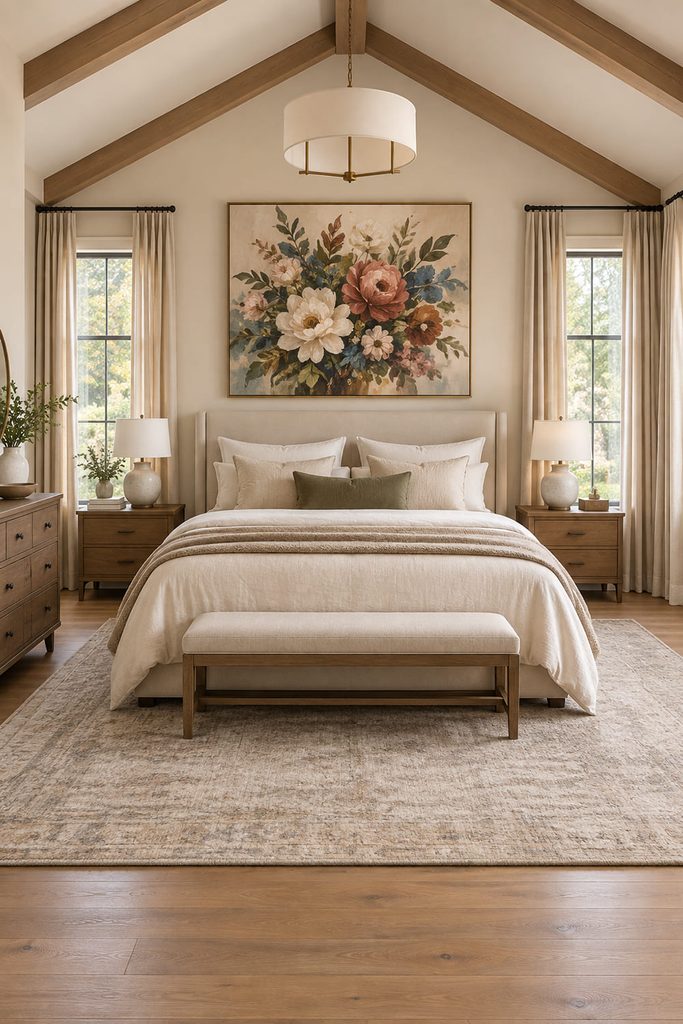
A large floral painting can give a bedroom a warmer, more expressive personality. Choose an artwork with a mature color palette rather than something that feels overly bright or themed. Deep green, dusty rose, muted blue, cream, terracotta, and warm brown can create an attractive combination.
One large floral artwork above the bed can replace the need for several smaller decorations. If the painting is particularly colorful, keep the bedding and curtains relatively simple.
For a softer room, choose flowers painted with loose brushwork and a neutral background. For a more traditional bedroom, a detailed floral composition can work beautifully with wood furniture.
10. Framed Artwork From a Favorite Hobby
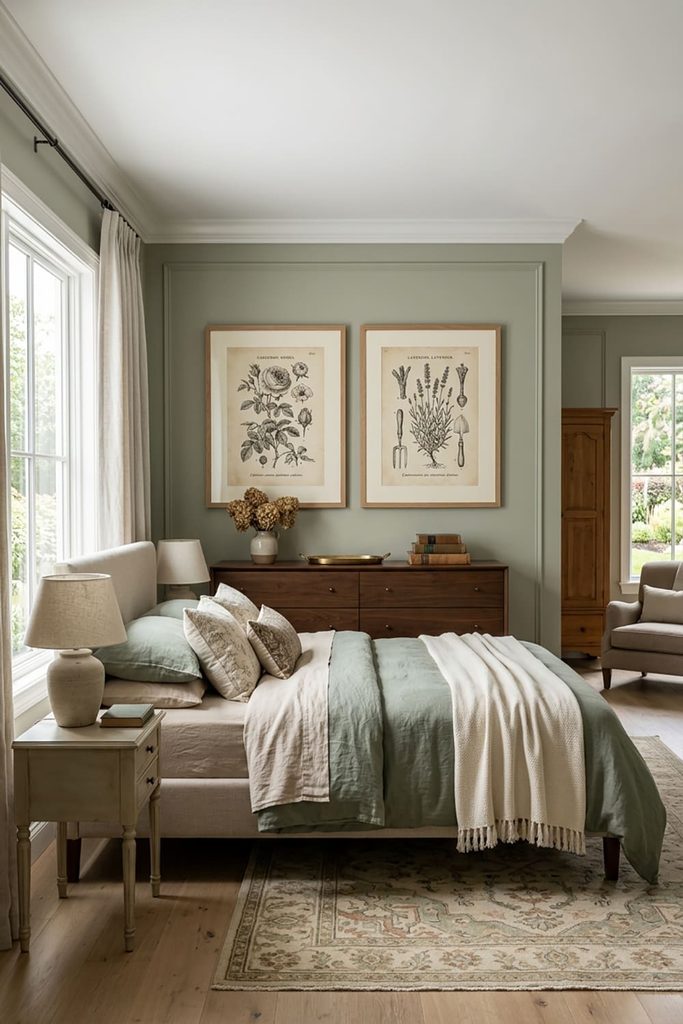
An empty-nester bedroom can reflect the interests that may have had less space during the busiest years of family life.
If you enjoy gardening, consider botanical artwork. If you love architecture, choose an architectural drawing. If you enjoy sailing, mountains, photography, music, or another hobby, look for artwork inspired by that interest.
The key is presentation. Rather than displaying equipment or memorabilia randomly, select one or two pieces that have the appearance of genuine artwork. Frame them carefully and place them where they become part of the room’s design.
This approach makes the bedroom feel more personal without relying entirely on family photographs.
11. Calming Watercolor Art
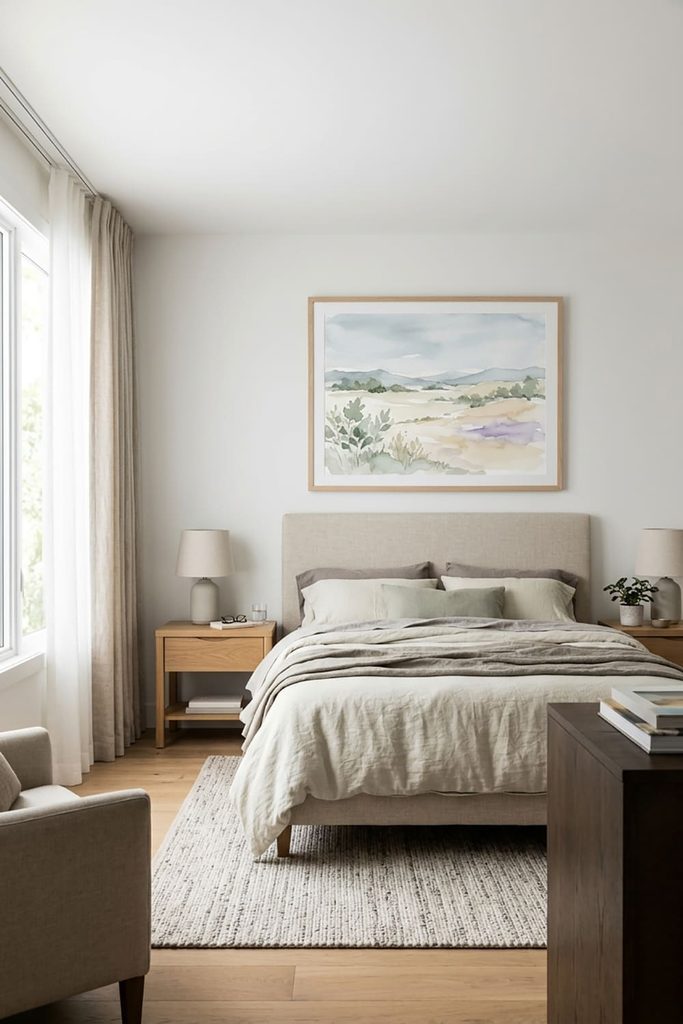
Watercolor artwork can create a soft, quiet atmosphere that works particularly well in a bedroom. Choose a landscape, botanical composition, abstract wash, or architectural scene with gentle colors. The slightly translucent quality of watercolor can keep the wall feeling light.
A single medium or large piece can sit above the bed, while a pair of smaller works can be arranged above a dresser. Soft blue, sage, beige, gray, lavender, and cream can all create a peaceful palette.
If your bedroom already has substantial furniture, watercolor artwork can provide visual softness without adding another heavy-looking element to the room.
12. A Statement Mirror With Artwork Nearby
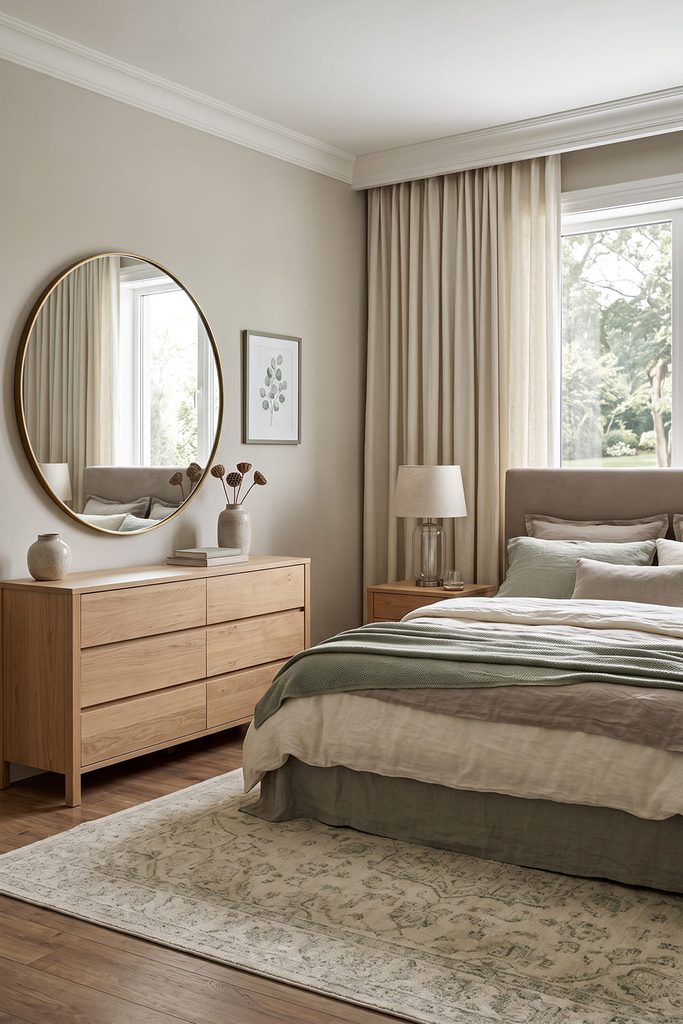
A mirror can function as wall decor while also adding practical value. Choose a large round, arched, or rectangular mirror and position it on a wall where it can reflect natural light or an attractive part of the room.
You can pair it with one small artwork rather than creating a large collection.
For example, place a round mirror above a dresser and lean a small framed landscape or botanical print nearby. Alternatively, hang two complementary pieces on either side of a larger mirror if the wall is wide enough.
The combination creates variety without requiring every inch of the wall to be covered. A mirror can also be useful when you want the bedroom to feel more open without adding more furniture.
13. Family Artwork That Feels Sophisticated
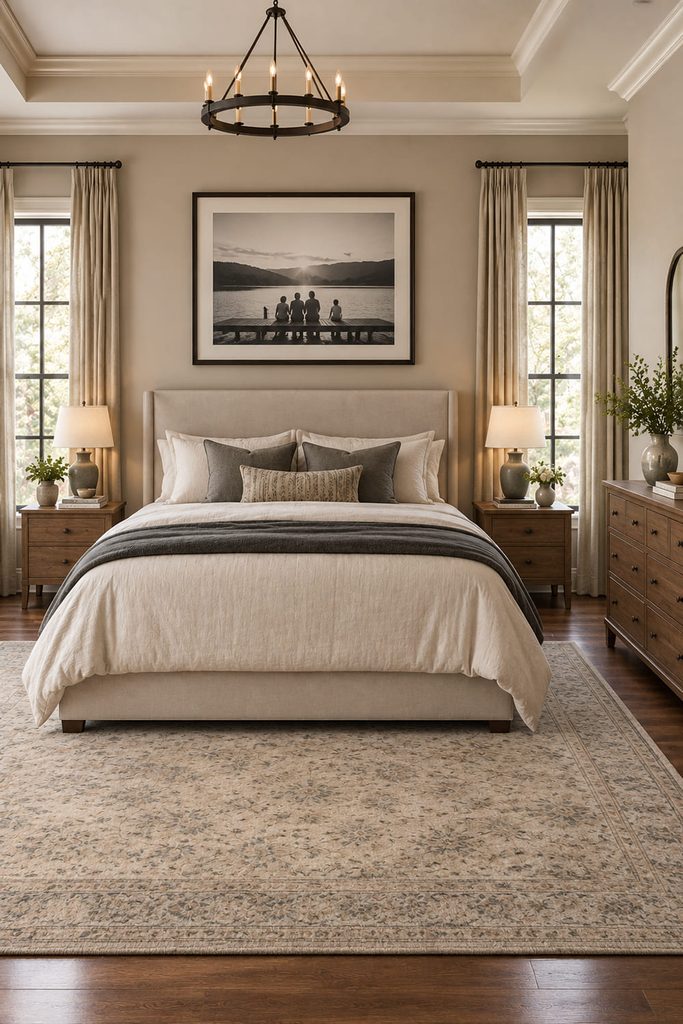
Family photographs can remain part of an empty-nester bedroom without making the room feel like a family hallway. Instead of displaying many individual portraits, choose one meaningful photograph or commission a simple artistic interpretation of a family moment or place.
Black-and-white photography can make family memories feel more timeless. A sepia or softly colored print can create a warmer appearance. Use one substantial frame and give the artwork enough surrounding space.
This allows the family connection to remain present while keeping the bedroom focused on the couple or individual who occupies it now.
14. Minimalist Mountain or Horizon Print
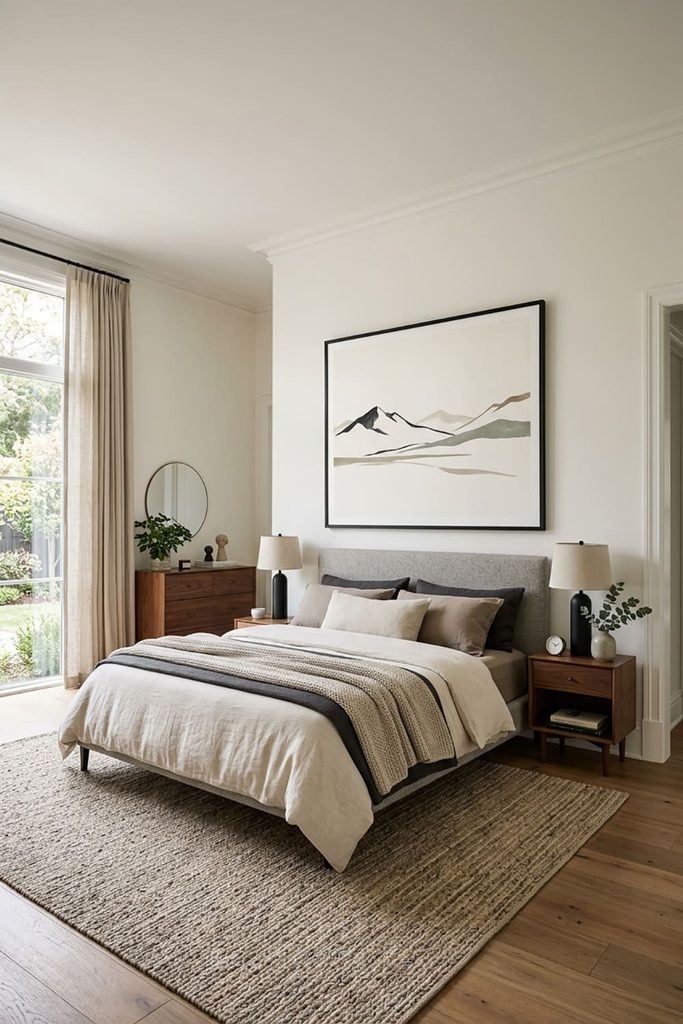
For a bedroom with modern furniture, a minimalist landscape can provide a quiet focal point. Look for artwork showing a distant horizon, simplified mountain shapes, abstract hills, or a restrained natural scene.
The composition should contain plenty of open space rather than being packed with details. Neutral colors such as warm white, charcoal, beige, muted green, and soft brown work well with contemporary bedrooms.
A large minimalist print can sit above the bed or opposite it. Because the artwork is visually simple, it will not compete with textured bedding, upholstered furniture, or decorative lighting. This is a good option when you want the bedroom to feel peaceful without making it completely plain.
15. A Curated Wall of Things You Love
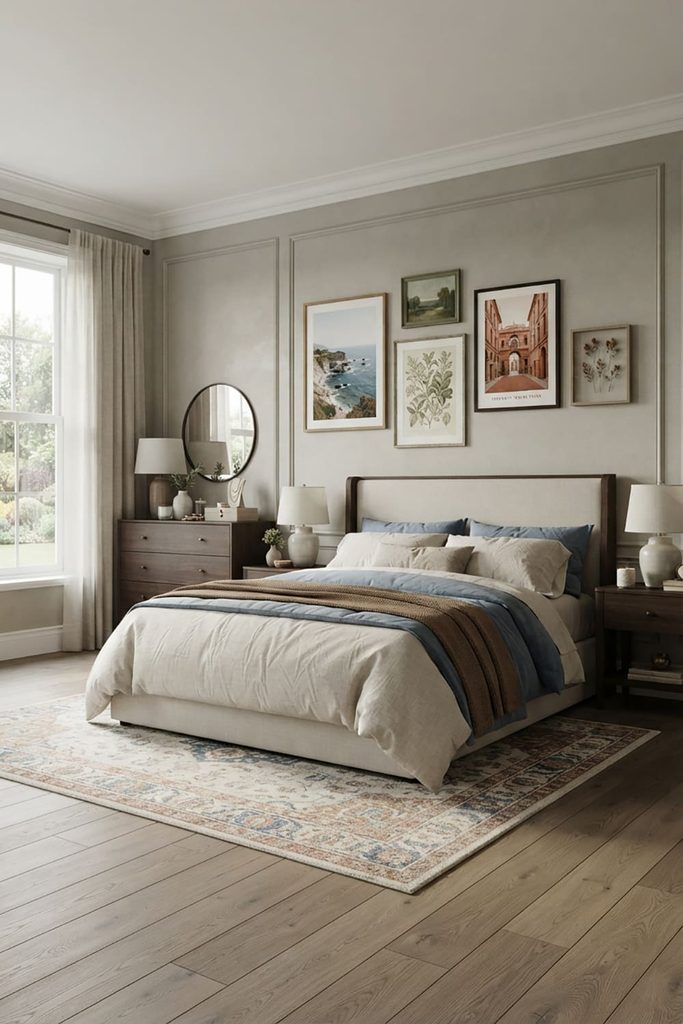
The most personal option is to create a small wall collection based entirely on your current interests. Combine a favorite photograph, a small painting, a travel print, a botanical illustration, and one meaningful object in a coordinated arrangement.
The pieces do not have to come from the same period or have the same style. Create unity through the frames, spacing, or color palette. This type of display can represent who you are now rather than who you were when the children were still at home.
Keep the collection edited. Four or five carefully selected pieces can tell a much stronger story than a wall packed with everything you have collected over the years.
How to Choose Wall Art for an Empty-Nester Bedroom
An empty-nester bedroom can be more personal than a traditional guest room because the artwork does not have to appeal to everyone. Start by thinking about what you genuinely enjoy looking at.
Consider:
- Places that have special meaning
- Hobbies and interests you now have more time to enjoy
- Favorite colors
- Artwork collected over the years
- Photographs that still have emotional significance
- Natural landscapes you find calming
- The furniture style already in the bedroom
- Whether you want one focal piece or a collection
Try not to buy artwork simply because there is an empty wall. The transition into an empty-nester stage can be an opportunity to make the bedroom feel more intentional, not simply more decorated.
Should an Empty-Nester Bedroom Have Family Photos?
It can, but they do not need to dominate the room. A few meaningful photographs can add warmth while still allowing the bedroom to feel like a private retreat.
If you have many family photographs, consider choosing only one or two favorites for the bedroom and displaying the rest elsewhere.
You can also use photographs of places and experiences rather than portraits. This creates a more subtle connection to family memories while keeping the overall design focused on the present.
How to Create a More Mature Gallery Wall
Start by choosing the artwork before deciding on the exact arrangement. Place the frames on the floor and experiment with different combinations.
Try to create a visual connection through one or more of these elements:
- Similar frame finishes
- A consistent color palette
- Repeated subject matter
- Similar artwork sizes
- Consistent spacing
Do not worry about making every frame identical. A little variation can make the collection feel collected over time.
The most important thing is that the complete arrangement looks balanced when viewed from across the room.
Wall Art Colors That Work Well in an Empty-Nester Bedroom
A mature bedroom does not have to be beige, but softer and more natural colors can make it easier to create a restful atmosphere. Warm cream, taupe, brown, muted green, dusty blue, charcoal, terracotta, and soft blush can all work beautifully.
If you love brighter colors, use them in one artwork rather than distributing them across every wall. A colorful painting can become a focal point while the rest of the bedroom remains calm.
Natural wood frames can add warmth, while black frames create stronger definition. Choose whichever works with the existing furniture rather than introducing too many unrelated finishes.
Make the Artwork About Your Life Now
One of the biggest opportunities in an empty-nester bedroom is moving away from a room designed primarily around family logistics. The artwork can reflect current interests, travel, hobbies, favorite places, and the things that make the bedroom feel like your own retreat.
That does not mean removing every reminder of family. It simply means allowing the room to represent the current chapter of your life. A meaningful landscape, a favorite photograph, artwork collected during travels, or a piece connected to a hobby can all say more about the room’s occupants than generic decoration.
Final Thoughts
The best bedroom wall art ideas for an empty nester are not necessarily the most expensive or elaborate. They are the pieces that make the bedroom feel personal, peaceful, and connected to the life you are living now.
An oversized landscape can create a calm focal point, while a travel gallery can bring meaningful memories into view. Botanical artwork, abstract paintings, textured pieces, family photographs, and hobby-inspired art can all work when they are chosen with intention.
After years of a home being shaped around children, schedules, school activities, and family needs, the bedroom can become a quieter personal space again. Let the artwork reflect that change. Choose pieces you genuinely enjoy seeing each morning and evening, give them enough room to stand out, and allow the bedroom to feel like your space rather than a leftover room from an earlier stage of life.


