

15 Work Outfits For Women Over 50 Who Are Lawyers or Work In Law
A lawyer’s wardrobe has to work across very different parts of the profession. One day may involve drafting documents at the office, while the next includes a client meeting, courthouse appearance, deposition, conference, or formal presentation.
For women over 50, a professional wardrobe can combine traditional tailoring with comfortable fabrics, practical shoes, flattering proportions, and personal style. For formal legal settings, suits, professional separates, tailored dresses, and jackets remain useful choices.
Courtroom expectations can vary considerably by jurisdiction and judge, so local rules and established courtroom customs should always be checked before an appearance. Professional legal guidance generally favors conservative, distraction-free business attire for court.
The goal is not to create a wardrobe that feels rigid or old-fashioned. Instead, choose pieces that fit well, coordinate easily, and remain comfortable through long meetings and busy days. These 15 work outfits for women over 50 who are lawyers cover courtroom-ready combinations, law-office outfits, client meetings, business events, and polished everyday looks.
1. Navy Pantsuit With a Soft Blue Blouse
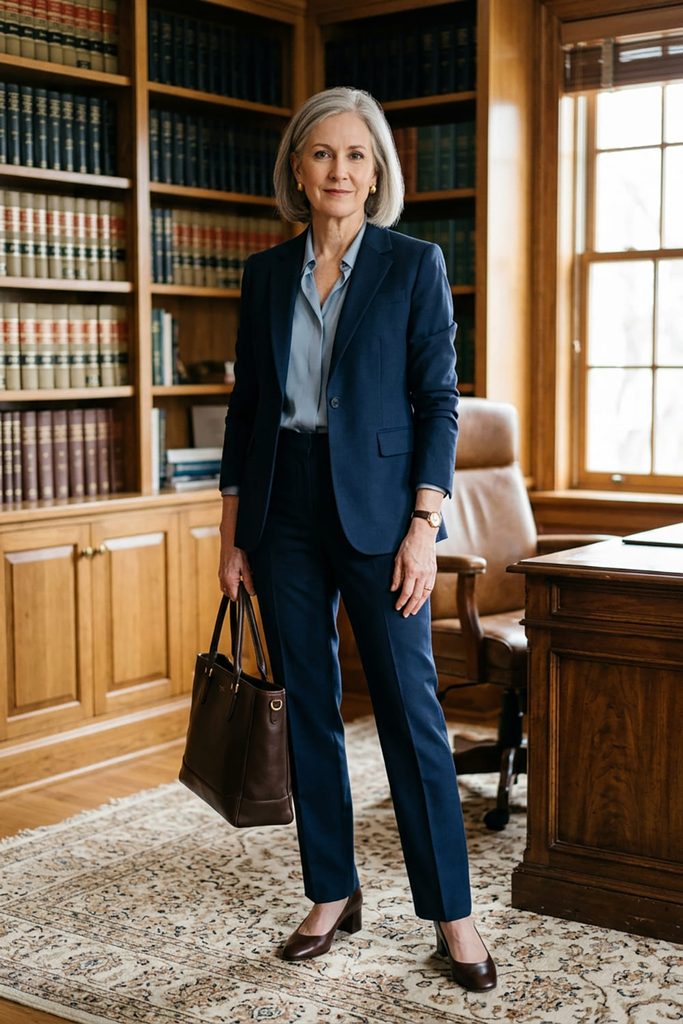
A navy pantsuit is one of the most versatile foundations for a professional legal wardrobe. Choose a jacket with a clean shoulder line and trousers with enough room for comfortable movement.
Instead of always wearing a stark white shirt underneath, try a soft blue blouse. The subtle color adds interest while maintaining a restrained professional appearance.
A simple leather tote, closed-toe shoes, and understated jewelry complete the outfit. For a formal meeting or court appearance, keep accessories particularly simple and make sure the suit is pressed and properly fitted.
The same jacket and trousers can also be worn separately with other pieces, making the outfit useful beyond formal occasions.
2. Charcoal Suit With an Ivory Shell
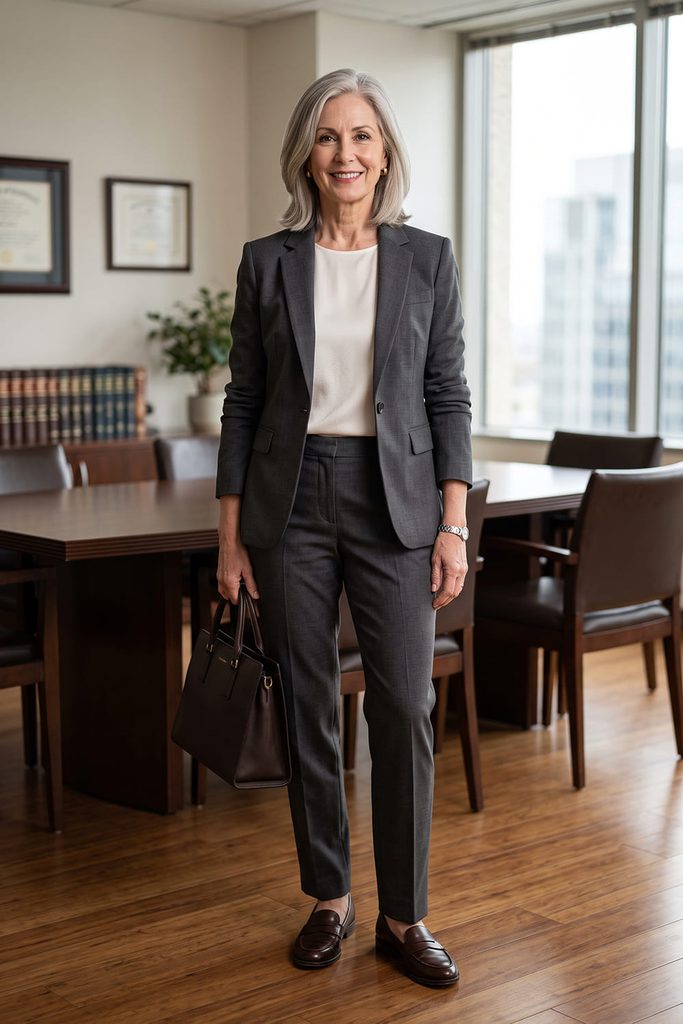
Charcoal provides a slightly softer alternative to black while remaining highly formal. Pair a tailored charcoal jacket and matching trousers with an ivory shell or simple blouse.
This combination works particularly well when you need to move between the law office and a professional meeting. The ivory top creates enough contrast to keep the outfit from appearing too dark.
Choose trousers with a straight or gently tapered leg and a jacket that sits comfortably at the shoulders. Avoid excessive detailing if the outfit may be worn in court. Finish with simple black or dark brown shoes and a structured work bag. The result is polished without relying on flashy accessories.
3. Black Suit With a White Button-Down
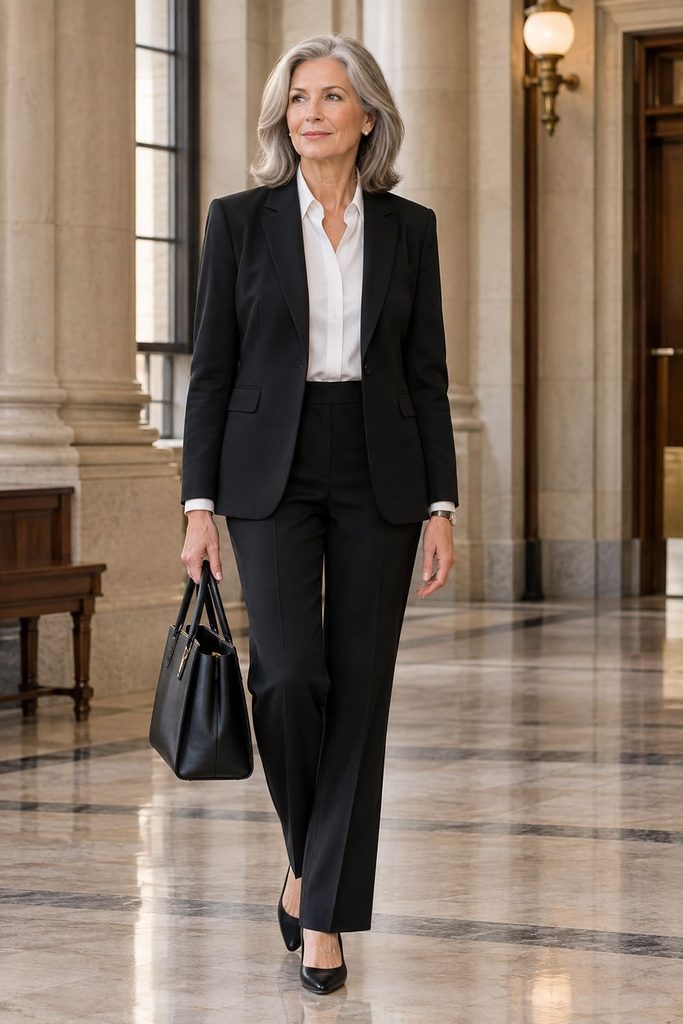
A black suit with a crisp white button-down remains a straightforward choice for formal legal settings. The clean contrast keeps the outfit visually focused and professional.
Look for a white shirt with a comfortable collar and enough room across the shoulders and chest. A slightly relaxed fit can be more comfortable during long days than a very fitted shirt.
The black suit can include either trousers or a knee-length skirt, depending on personal preference and local expectations.
Keep jewelry minimal and choose practical closed-toe shoes. For courtroom appearances, check the relevant court’s expectations before deciding on the final version of the outfit. Professional guidance commonly recommends conservative business attire in court.
4. Camel Blazer With Navy Trousers
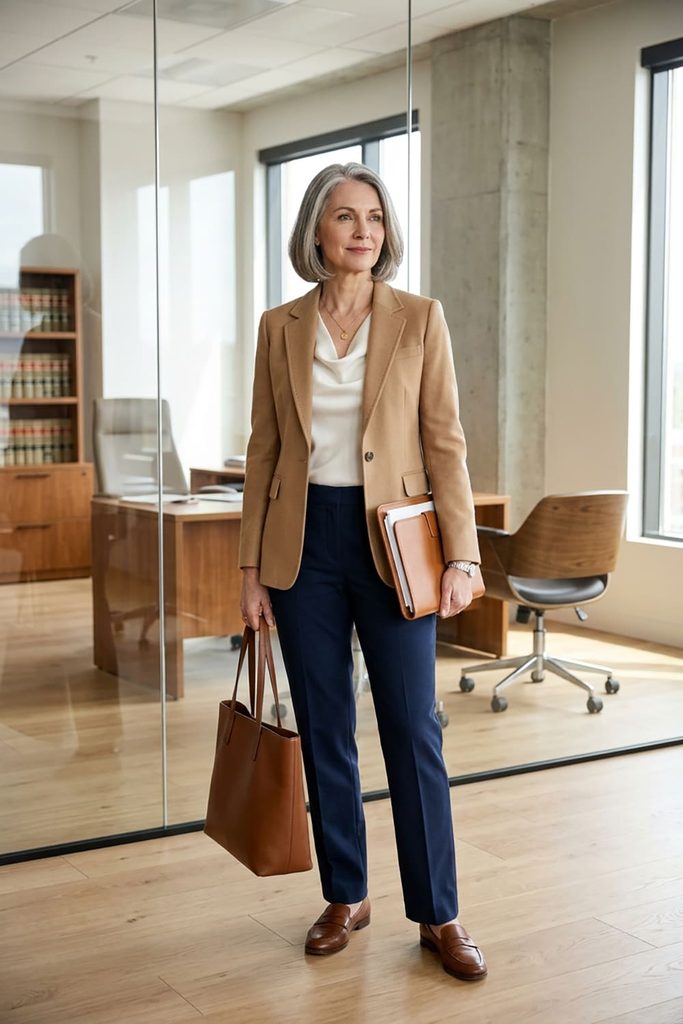
Not every legal workday requires a matching suit. For office days, internal meetings, or settings where business separates are appropriate, a camel blazer with navy trousers creates a polished combination.
Wear the blazer over an ivory, cream, or pale blue blouse. Straight-leg or gently wide-leg trousers can provide a comfortable alternative to very narrow cuts.
Brown or navy leather shoes can connect naturally with the outfit. A structured tote keeps documents and everyday work essentials organized. This combination also works well during transitional seasons because the blazer can be removed when the office becomes warm.
5. Navy Sheath Dress With a Tailored Jacket

A simple navy dress can save time on mornings when coordinating separates feels unnecessary. Choose a knee-length or longer silhouette with a modest neckline and comfortable construction.
Add a matching or coordinating tailored jacket for a more formal appearance. The jacket can be removed for less formal office activities while the dress remains polished. Keep the accessories restrained. Small earrings, a simple watch, closed-toe pumps or flats, and a structured bag are enough.
This outfit is particularly useful for conferences, professional meetings, presentations, and other occasions where you want a complete look without wearing a traditional pantsuit.
6. Gray Trousers With a Burgundy Blazer
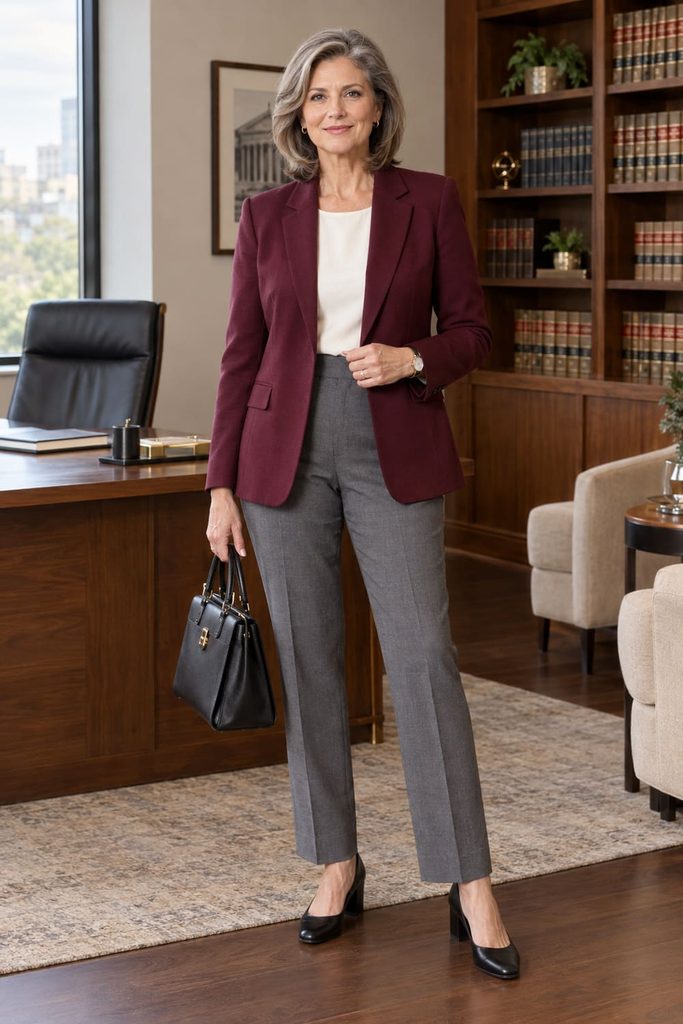
A burgundy blazer can introduce color without becoming overly bright. Pair it with charcoal or medium-gray trousers and an ivory blouse.
The darker color combination keeps the outfit professional while giving it more personality than a completely neutral suit. Choose a blazer with clean tailoring and avoid excessive decorative details. A simple pair of black or burgundy shoes can complete the look.
This outfit is especially useful for office days, client consultations, firm meetings, and professional events where a full matching suit is not necessary. For court, however, consider whether a traditional dark suit would be more appropriate under the local courtroom norms.
7. Wide-Leg Navy Trousers With a Fine-Knit Top

Wide-leg trousers can be comfortable during long office days when the cut is properly balanced. Choose a structured navy pair with a clean waistband and moderate width.
Pair them with a fine-knit top in cream, light gray, soft blue, or another restrained color. Add a tailored blazer when you need a more formal appearance. The combination works particularly well for lawyers who spend substantial time sitting at a desk, attending meetings, and moving around the office.
Choose shoes with enough stability for walking through courthouses and office buildings. A low block heel or polished flat can provide a practical option without sacrificing a professional appearance.
8. Black Trousers With a Jewel-Tone Blouse
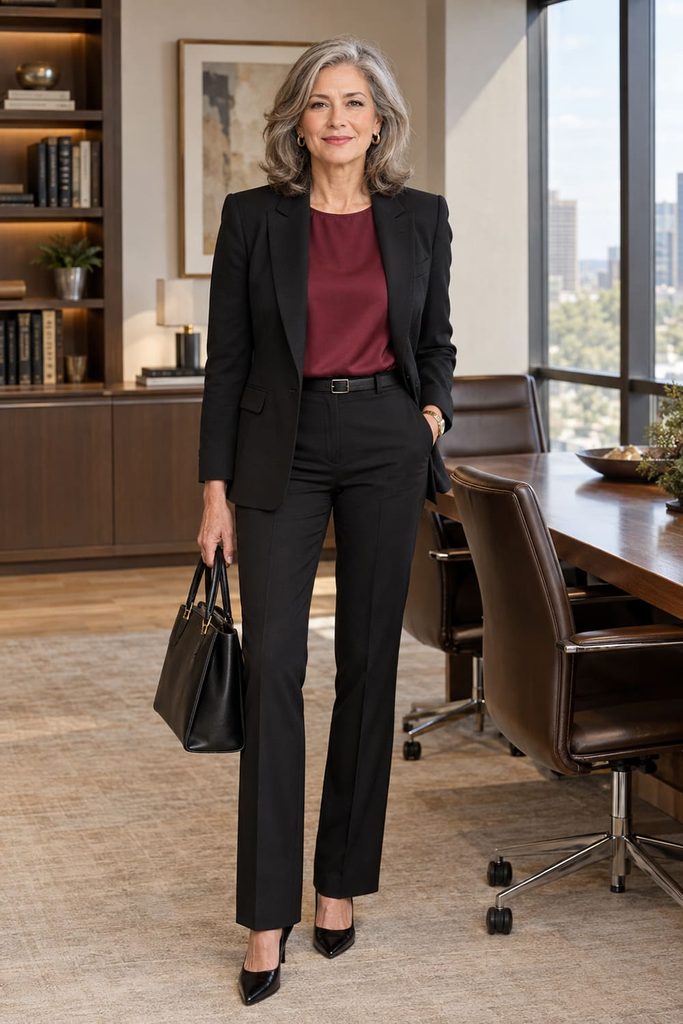
A pair of well-fitted black trousers can support countless professional combinations. For a little color, pair them with a jewel-tone blouse in burgundy, deep teal, emerald, or another rich shade.
Keep the blouse relatively simple if the color is strong. A clean neckline and minimal embellishment will make the outfit easier to wear in professional settings. Add a black blazer if the day includes a formal client meeting.
This outfit is particularly useful for office work because the blouse can provide personality while the black trousers maintain a structured foundation. A simple handbag and understated jewelry finish the look without competing with the blouse.
9. Coordinated Skirt Suit With a Simple Blouse
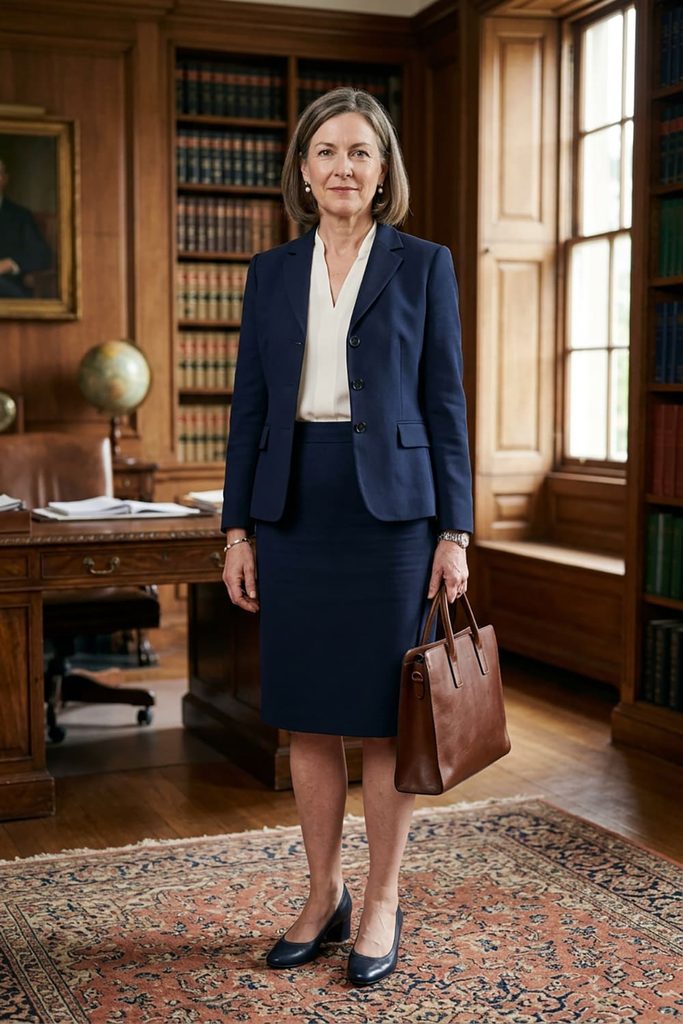
A skirt suit remains a practical option for women who prefer skirts to trousers. Choose a straight or gently shaped skirt that provides comfortable movement and a jacket with a clean, professional cut.
Navy, charcoal, black, or deep gray are useful choices for formal legal environments. Wear the suit with a simple white, cream, or pale blue blouse. Keep the overall silhouette neat rather than overly fitted.
Skirt length and courtroom expectations can differ by jurisdiction and workplace, so follow the applicable local standards. Some legal career guidance notes that skirts and jackets remain part of formal professional attire in certain settings. Comfortable closed-toe shoes and a structured bag complete the outfit.
10. Cream Blazer With Dark Straight-Leg Trousers
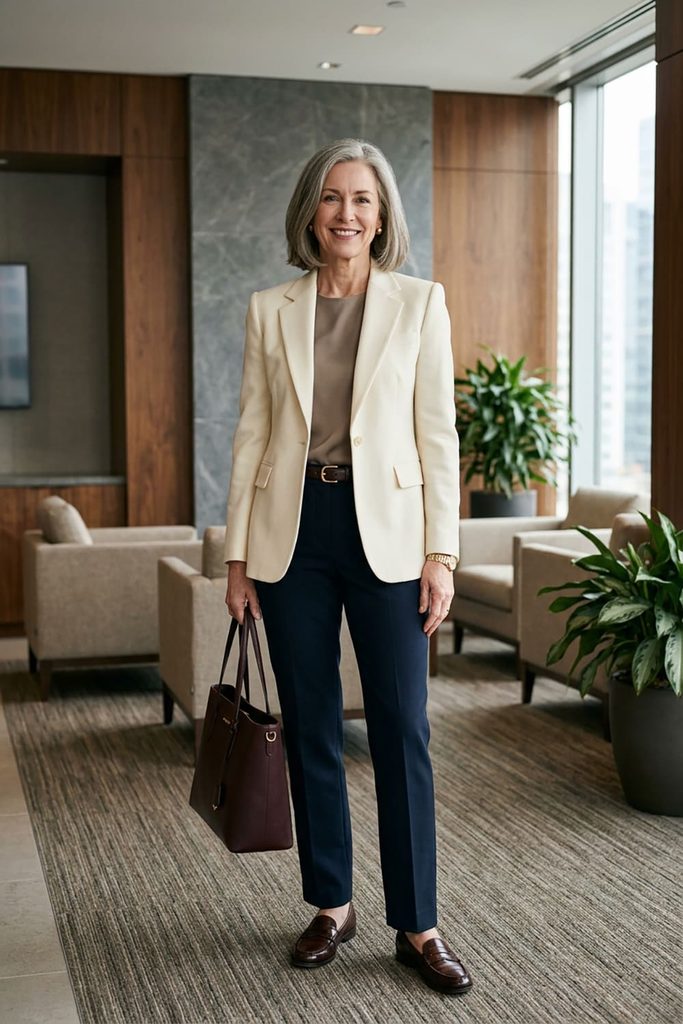
A cream blazer can brighten an office wardrobe while still looking professional when combined with dark trousers. Choose a structured cream or ivory jacket and pair it with black, navy, or charcoal straight-leg trousers. Underneath, wear a simple blouse in white, taupe, or a muted color.
This outfit is particularly appropriate for regular office days, client meetings, lunch meetings, and professional networking events where the environment is less formal than a courtroom.
Because the blazer is lighter, keep the rest of the outfit relatively simple. Dark shoes and a structured handbag provide enough contrast. For formal court appearances, consider switching to a darker, more traditional suit if that better matches the local expectations.
11. Dark Green Suit With an Ivory Blouse
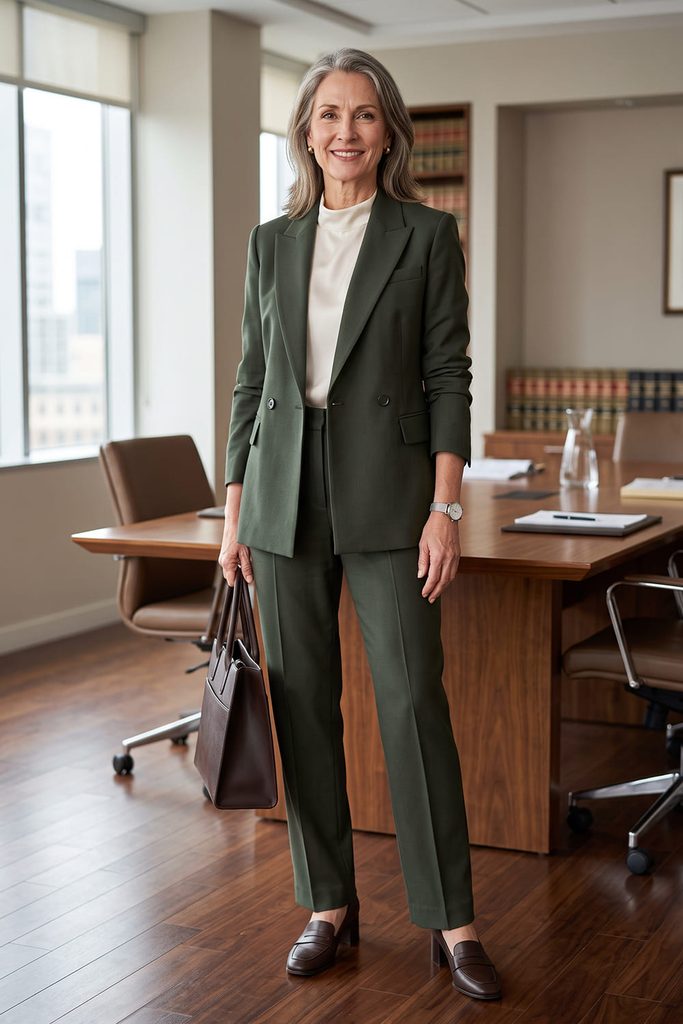
A dark green suit can offer an alternative to the standard navy, black, and gray wardrobe while maintaining a restrained appearance. Choose a deep, muted green rather than a bright shade. Pair it with an ivory blouse and simple dark shoes.
The suit can be worn with trousers for a contemporary appearance or a coordinated skirt if that better suits your preference. Keep jewelry understated so the color of the suit remains the main variation from traditional neutrals.
This combination can work well for office meetings, professional events, and client appointments. For courtroom use, verify the expectations of the particular court before selecting a nontraditional suit color.
12. Tailored Midi Dress With a Structured Blazer
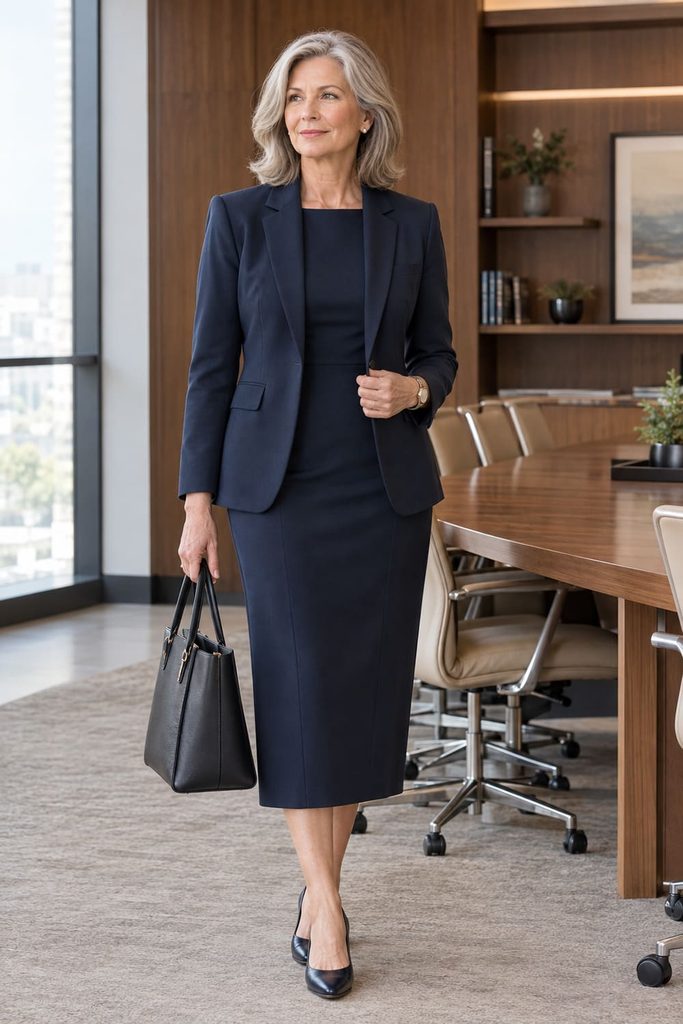
A tailored midi dress provides another way to build a professional outfit without coordinating trousers and a blouse. Choose a relatively simple dress in navy, charcoal, deep green, burgundy, or another subdued color. Add a structured blazer when additional formality is needed.
The dress should allow comfortable sitting, walking, and movement. Avoid overly tight silhouettes or distracting patterns. Simple closed-toe shoes and a medium-sized leather tote complete the outfit.
This combination is particularly useful for lawyers who have a full day of meetings because it provides a polished appearance with relatively few pieces.
13. Monochromatic Gray Outfit

A monochromatic gray outfit can look sophisticated without relying on strong color contrast. Combine medium-gray trousers with a lighter gray blouse and a charcoal or medium-gray blazer.
Different textures can keep the outfit from appearing flat. For example, pair smooth tailored trousers with a fine-knit top and a structured jacket. Silver jewelry can complement the cool palette, while black shoes and a black bag provide definition.
This is a useful office combination because the individual pieces can be mixed with navy, black, cream, or burgundy items elsewhere in the wardrobe. For court, choose the most formal version of the outfit and follow the specific requirements or established expectations of the jurisdiction.
14. Navy Dress With a Longline Jacket
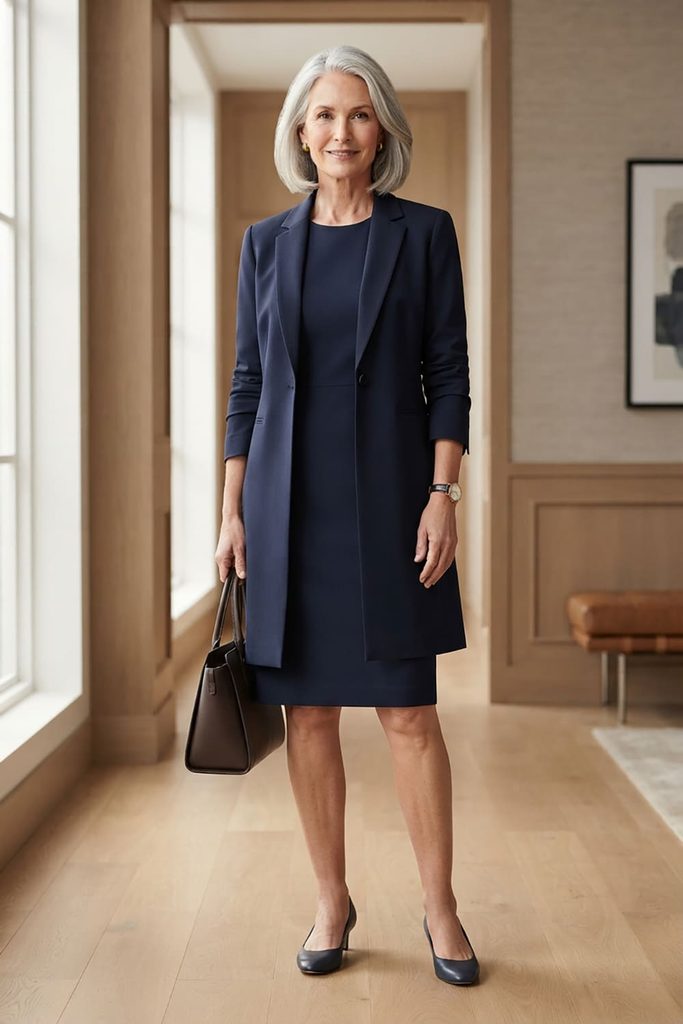
A navy dress paired with a longline jacket can create a streamlined professional silhouette while offering more coverage and structure.
Choose a dress with a modest neckline and a length that is comfortable for sitting and walking. The jacket should fall cleanly without overwhelming the proportions of the dress. This outfit can work for firm meetings, conferences, client appointments, and professional lunches.
Keep accessories simple. A medium-sized structured handbag, small earrings, and practical closed-toe shoes are enough. The jacket can also be worn with trousers on another day, giving you more combinations from the same wardrobe.
15. Neutral Trouser Suit With a Statement Blouse
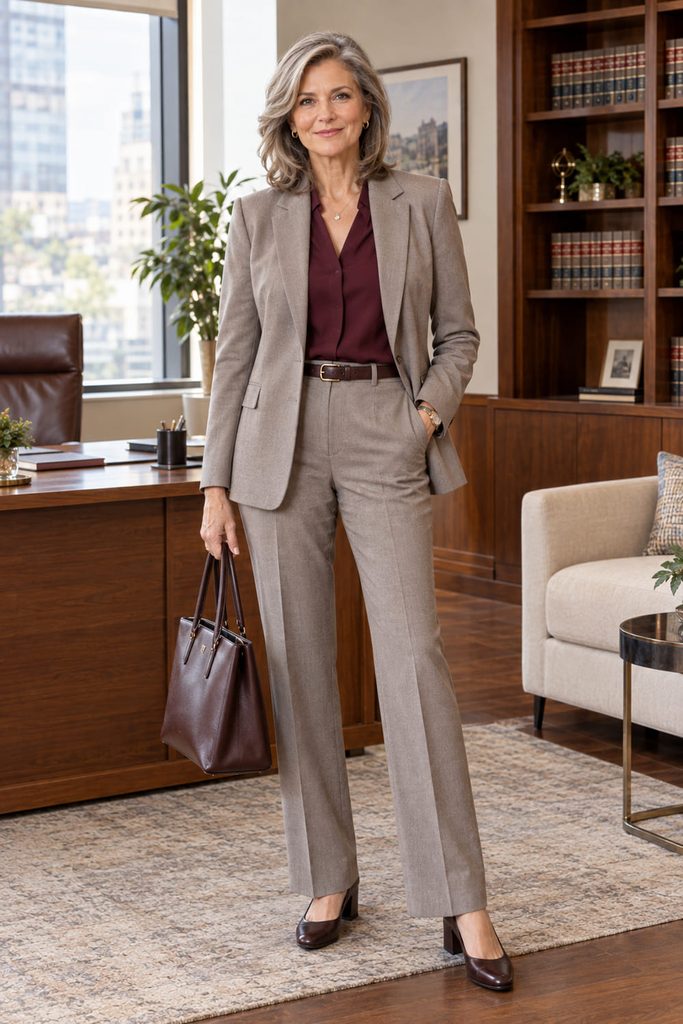
A neutral trouser suit in taupe, warm gray, beige, or another understated shade can become more distinctive when paired with a carefully chosen blouse. Try a blouse in deep blue, burgundy, forest green, or another rich color. Keep the blouse’s shape relatively simple so the outfit remains professional.
The suit can be used for office days and meetings, while the blouse can be swapped for white, ivory, or pale blue when a more conservative combination is appropriate. A practical tote and comfortable low heel or flat complete the outfit.
The benefit of this approach is flexibility. One neutral suit can support several different looks simply by changing the blouse.
Building a Professional Legal Wardrobe After 50
A useful lawyer’s wardrobe does not need dozens of completely different outfits. A smaller group of well-coordinated pieces can create many combinations.
A practical foundation can include:
- One navy suit
- One charcoal or gray suit
- One black suit
- Two or three professional blouses
- One tailored navy or neutral dress
- Two pairs of dark trousers
- One versatile blazer
- One skirt or additional pair of professional trousers
- Comfortable closed-toe shoes
- A structured work tote
- A simple coat for commuting and courthouse days
Legal wardrobe guidance also emphasizes the value of classic, professional basics that can be combined into multiple outfits rather than relying on a large number of specialized pieces.
What to Wear for Court Compared With the Law Office
Courtroom clothing generally requires more formality than an ordinary office day, but the exact standard depends on the jurisdiction, judge, and type of proceeding. The American Bar Association advises lawyers to use conservative professional attire and notes that courtroom expectations can vary.
For a formal court appearance, a dark suit with a simple blouse is a reliable starting point. Keep jewelry, shoes, bags, and other accessories relatively unobtrusive.
For ordinary office work, you may have considerably more flexibility. A blazer with trousers, a professional dress, or coordinated separates can provide a polished appearance without requiring a matching suit.
When unsure, check the local court’s rules or ask experienced colleagues who regularly appear before that judge.
Comfortable Shoes for Lawyers Over 50
Shoes become especially important when a workday includes commuting, courthouse corridors, office meetings, and periods of standing.
A polished low heel, block heel, loafer, or supportive flat can work depending on the workplace and personal preference. Closed-toe shoes are generally associated with more formal business attire in some professional guidance.
Keep a second pair at the office if your commute requires more casual footwear.
The important consideration is that the shoes should allow you to walk comfortably while maintaining a professional appearance. There is little benefit in wearing a beautiful pair of shoes that becomes painful after an hour.
How to Look Professional Without Looking Overly Formal
Professional does not have to mean severe. A well-tailored jacket, flattering trouser shape, attractive blouse, and simple accessories can create a polished appearance without making the outfit feel dated.
Small details can provide personality:
- A muted colored blouse
- A quality leather belt
- A simple watch
- A tasteful scarf
- A subtle piece of jewelry
- A textured blazer
- A refined handbag
Keep the stronger style element away from situations where it could become distracting. Court appearances generally call for a more restrained approach than office social events or professional networking.
Best Colors for a Lawyer’s Wardrobe
Navy, charcoal, black, gray, cream, white, and dark brown provide a dependable foundation. Burgundy, deep green, muted blue, and other restrained colors can then add variety.
A useful strategy is to buy more neutral jackets and trousers than statement pieces. Blouses and accessories can introduce color without requiring a completely new outfit.
This makes the wardrobe easier to coordinate and can reduce the number of individual pieces needed.
Final Thoughts
The best work outfits for women over 50 who are lawyers combine professional structure with comfort and personal style. A well-fitted navy suit, charcoal separates, tailored dresses, practical trousers, and carefully chosen blouses can cover much of the working week without making the wardrobe repetitive.
Court appearances deserve particular attention because expectations vary by jurisdiction and judge. Conservative business attire, minimal distractions, and clothing that allows you to focus on the legal work are sensible starting points.
For ordinary office days, there is more room to use color, texture, and different silhouettes. Build around a small collection of reliable pieces, prioritize fit and comfort, and choose accessories that support rather than dominate the outfit.
At this stage of a legal career, the wardrobe can be polished without being restrictive. The strongest outfits are the ones that allow you to concentrate on your clients, your colleagues, and your work while feeling completely comfortable in what you are wearing.


