

15 Bedroom Wall Art Ideas for a Small Apartment Bedroom With Limited Wall Space
Decorating a small apartment bedroom can become surprisingly difficult when there is barely any open wall left after accounting for the bed, wardrobe, windows, doors, shelves, and lighting. A large collection of artwork may look attractive in a spacious bedroom, but in a compact room it can quickly compete with the furniture and make the walls feel crowded.
The better approach is to treat limited wall space as a design constraint rather than a problem. A single carefully chosen artwork, a narrow vertical arrangement, or a small group of coordinated pieces can give the bedroom personality without covering every available surface.
Measuring the usable wall area first is particularly helpful because the wall beside a wardrobe or above a nightstand may offer much less room than it appears to at first glance.
These 15 bedroom wall art ideas for a small apartment bedroom focus on compact arrangements, practical placement, and artwork that makes good use of the space available. Each idea can be adapted to different bedroom layouts, colors, and personal styles.
1. Hang One Oversized Neutral Artwork Above the Bed

When wall space is extremely limited, one substantial artwork can be more effective than several small pieces. Place a horizontal abstract painting, peaceful landscape, botanical composition, or textured neutral artwork above the bed to create one clear focal point.
Choose an image that works with the existing colors in the bedroom rather than introducing several unrelated shades. Cream, beige, muted green, soft blue, warm brown, and charcoal can all work well depending on the room.
A simple frame keeps the arrangement visually clean. Instead of trying to fill every inch of wall, allow some space around the artwork. The contrast between the artwork and surrounding wall can make the arrangement feel intentional rather than unfinished.
2. Create a Slim Vertical Art Column

A narrow wall beside the bed, wardrobe, or doorway can become useful with a vertical series of two or three small framed artworks. This is particularly effective when there is plenty of height but very little horizontal width.
Use artwork with a consistent theme, such as botanical drawings, small landscapes, abstract shapes, or black-and-white photography. Keeping the frames similar helps the narrow arrangement read as one composition.
Before hanging anything, check that the artwork will not interfere with wardrobe doors, curtains, switches, or other frequently used areas. A vertical arrangement should fit into the usable wall rather than simply occupying the tallest section available.
3. Use a Small Three-Piece Gallery Above the Nightstand
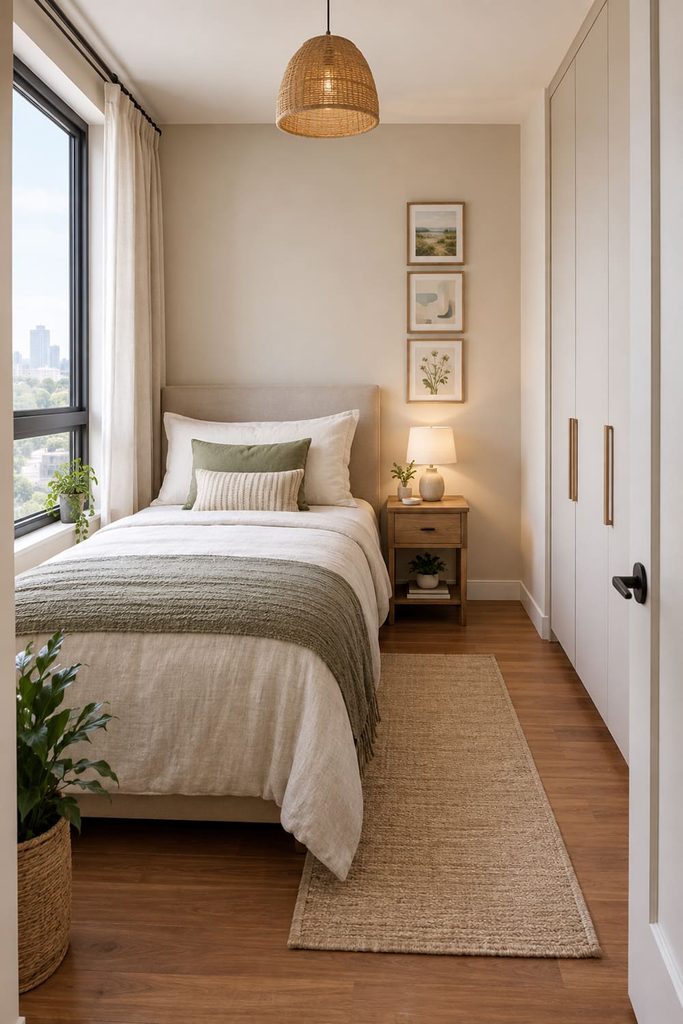
If the wall above your nightstand is empty, you may have enough room for a compact three-piece arrangement. Choose three small prints with related colors but different imagery.
For example, a soft landscape could sit between two abstract or botanical prints. Keep the frames relatively thin so the composition does not feel heavy next to the bed.
This arrangement works particularly well when the main wall above the bed is already occupied by a headboard, mirror, or other feature. The nightstand wall becomes a secondary focal point without requiring a large gallery.
Keep the artwork narrow enough that it does not extend dramatically beyond the furniture beneath it. A close relationship between the art and nightstand usually feels more balanced.
4. Try a Tall Botanical Print
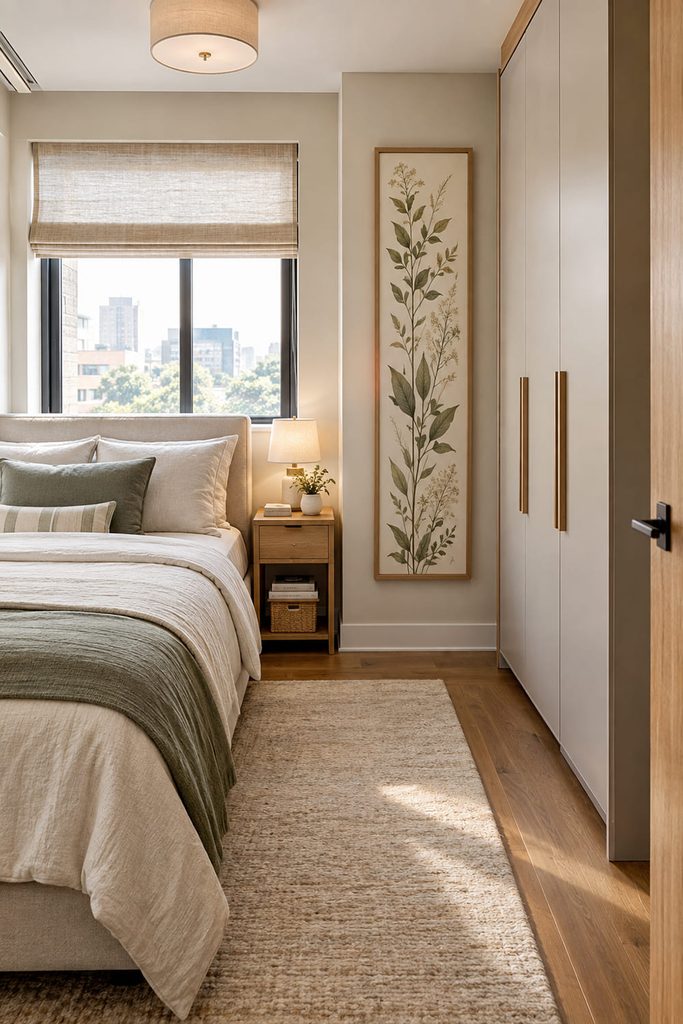
Vertical botanical artwork is an excellent choice for a wall that has height but limited width. A single tall print can introduce greenery-inspired color without requiring several separate decorations.
Choose a simple illustration of leaves, branches, grasses, or delicate flowers. A muted green and cream composition works particularly well in bedrooms with neutral bedding.
Place the print beside a wardrobe, near a doorway, or on a narrow section between two pieces of furniture. A light wooden or natural-colored frame can soften the appearance, while a black frame creates a sharper modern contrast.
Because the artwork is tall and narrow, it uses vertical wall space efficiently while keeping the overall arrangement relatively restrained.
5. Make a Small Photo Grid
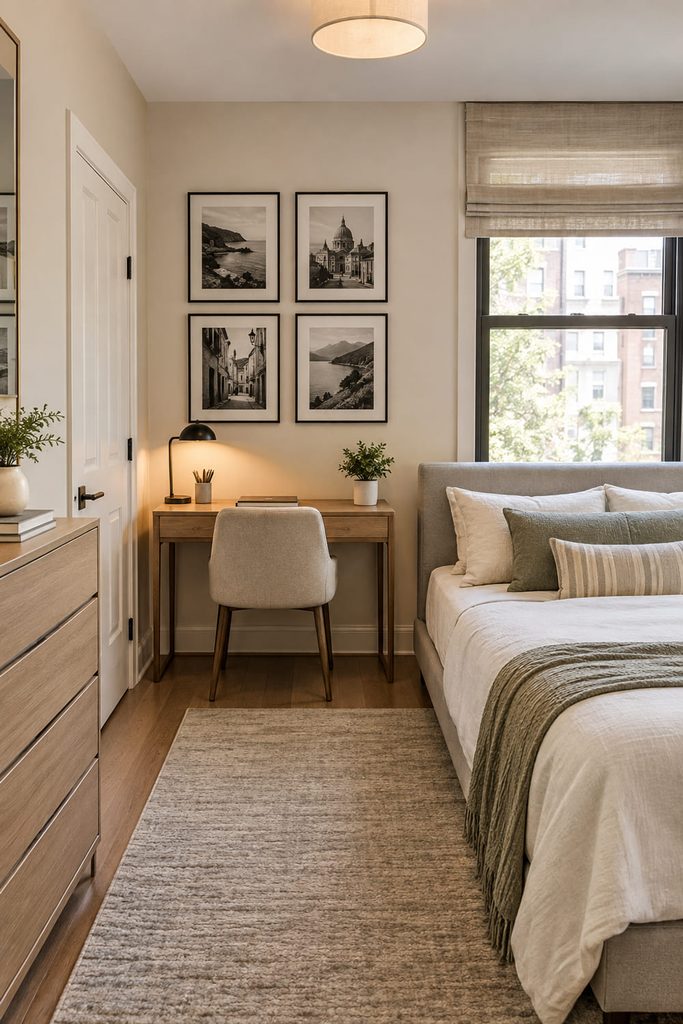
Personal photographs can make a compact bedroom feel more individual without requiring a large display. Instead of covering an entire wall with pictures, select four small photographs and arrange them in a clean two-by-two grid.
Use images that share something visually, such as similar lighting, travel memories, family moments, or simple black-and-white photography. Matching frames will make the small collection look organized.
A grid works particularly well above a small desk, beside the bed, or on a narrow wall section. Leave equal spacing between the frames so the arrangement feels deliberate. The main advantage is flexibility. Four photographs can provide a personal focal point without taking up the amount of wall space required by a large gallery wall.
6. Choose a Large Vertical Abstract Print
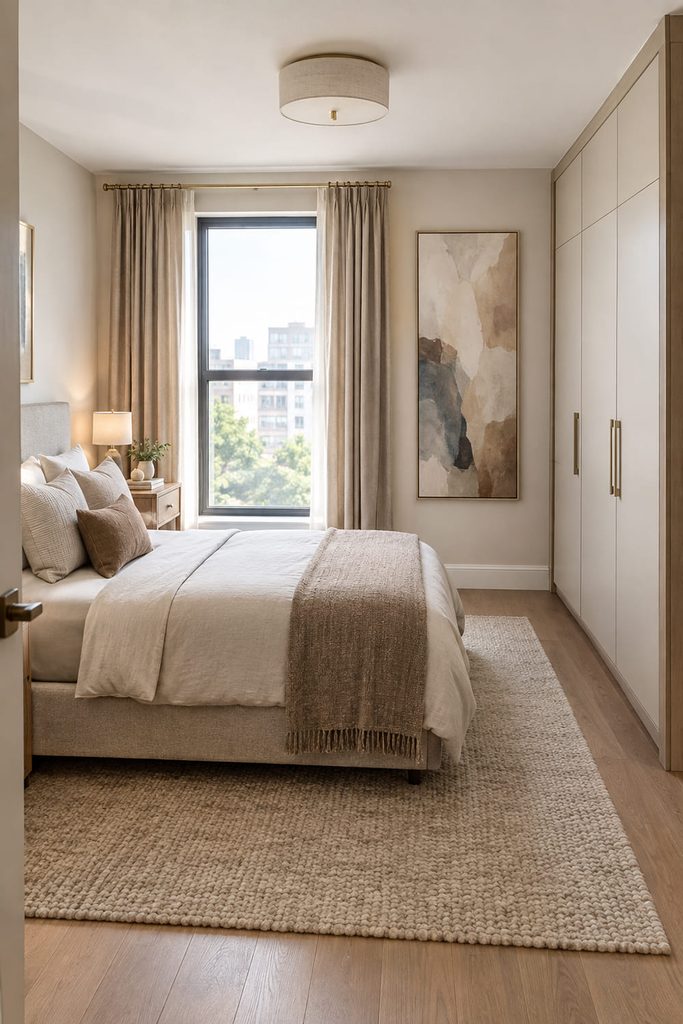
A vertically oriented abstract artwork can help use a narrow wall while giving the bedroom a strong visual feature. Look for a composition with a limited number of colors rather than an extremely detailed image.
For a calm bedroom, consider combinations such as cream and taupe, beige and muted brown, dusty blue and ivory, or soft green and warm white. A vertical print can fit particularly well between a window and wardrobe or beside a tall dresser. Keep the frame simple and let the artwork provide most of the visual interest.
This approach works because it gives the eye one distinct area to focus on rather than scattering several small decorations across already limited wall space.
7. Install a Narrow Picture Ledge
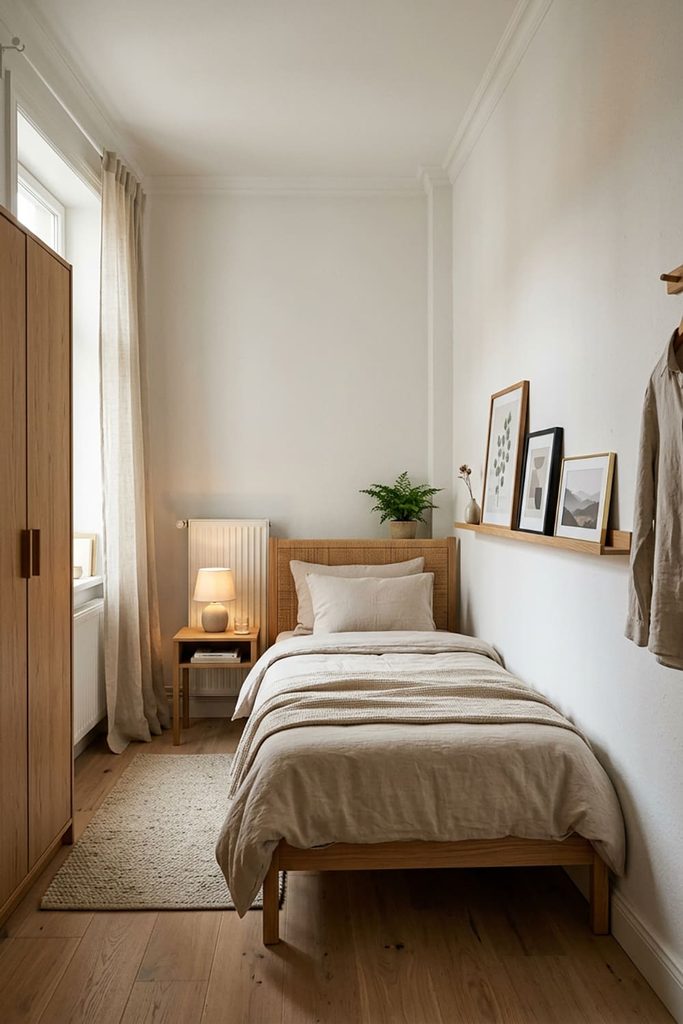
A slim picture ledge provides a different way to display artwork without committing to a permanent arrangement of individual frames. Place two or three small prints on the ledge and lean them against the wall.
The pieces can be changed whenever you want to refresh the bedroom. You might use botanical artwork in one season, photographs another time, and abstract prints later. Keep the ledge shallow and avoid filling it with too many objects. A couple of frames with one small decorative item can be enough.
This idea is especially useful when your apartment bedroom has a small amount of wall space, but you still want some flexibility. It also lets the artwork sit together as one compact visual group.
8. Use One Meaningful Black-and-White Photograph

A single black-and-white photograph can create a sophisticated focal point without introducing additional colors into a small bedroom.
Choose an image with personal meaning or one that complements the atmosphere you want to create. Architecture, nature, a quiet street scene, an artistic portrait, or an abstract photograph can all work. A simple black frame against a pale wall creates a clear outline, while a white or natural frame produces a softer appearance.
Position the photograph where it can be seen easily from the bed. Because there is only one piece, its size and placement become important. Avoid choosing something so small that it disappears against the wall. The goal is a clear focal point, not a tiny decoration that looks accidental.
9. Create a Mini Gallery Around a Wall Light
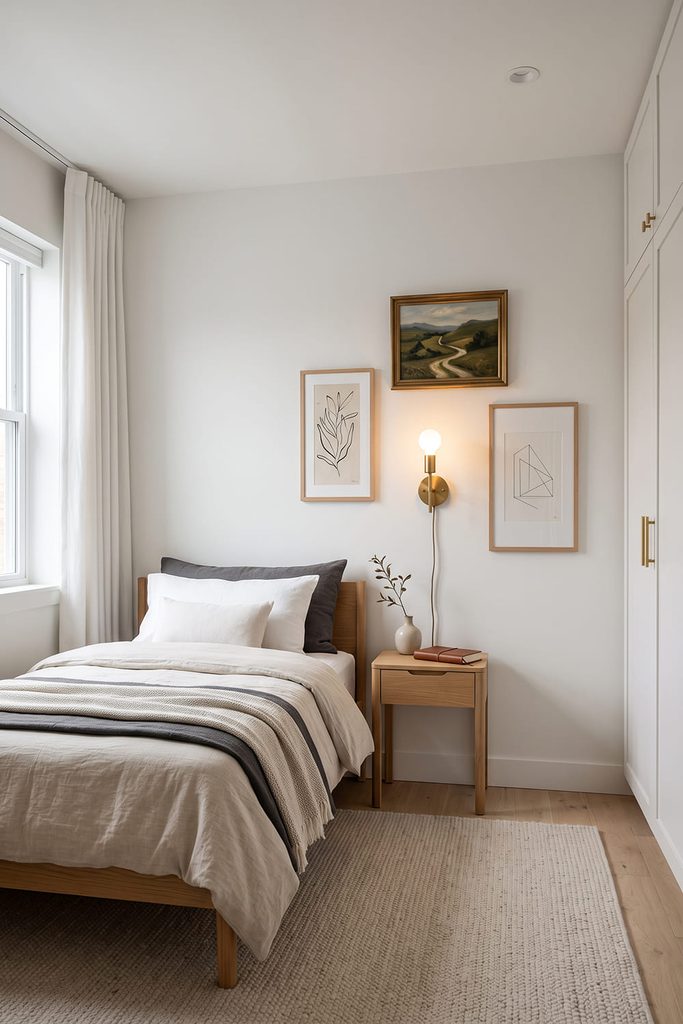
If a wall light occupies one of the few available sections of wall, use it as part of the composition instead of treating it as an obstacle. Place two or three small artworks around the light, leaving enough space for the fixture and ensuring that the artwork does not interfere with its operation.
For example, a small landscape can sit above the light while two narrow prints sit to either side. Another option is to place two matching artworks beside the fixture.
The key is symmetry or intentional asymmetry. Randomly squeezing pictures around a light can make the wall feel crowded, while a planned arrangement can make the fixture appear integrated into the artwork. Always keep artwork and paper materials appropriately separated from heat-producing lighting fixtures.
10. Use a Small Textile Wall Hanging
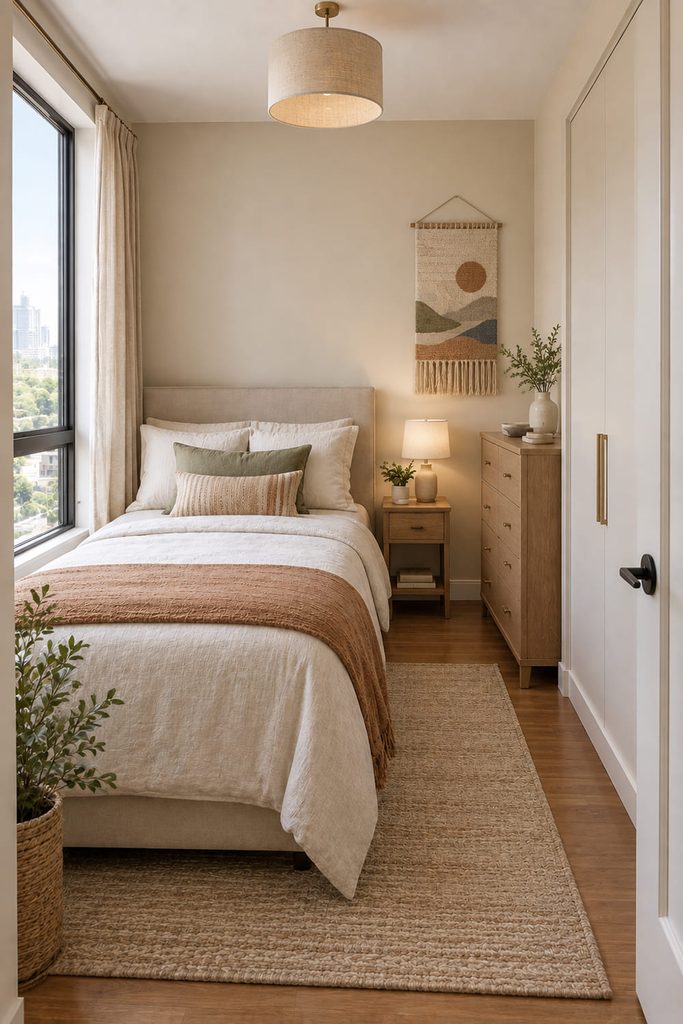
A textile artwork can add softness and texture without requiring a collection of framed prints. Choose a small woven, fabric, or embroidered piece that works with the bedroom’s existing colors.
This is particularly useful in a compact bedroom with plain walls and simple bedding. A textured wall hanging can break up a large blank section without introducing multiple hard-edged frames.
Try placing it above a small dresser, beside the bed, or on a narrow wall where framed artwork might feel too rigid. Neutral textiles work well for minimalist rooms, while muted terracotta, olive, blue, or brown can add a controlled accent.
Keep the size appropriate to the available wall area. A small textile can become a focal point without visually taking over the entire bedroom.
11. Hang Two Tall Prints Side by Side
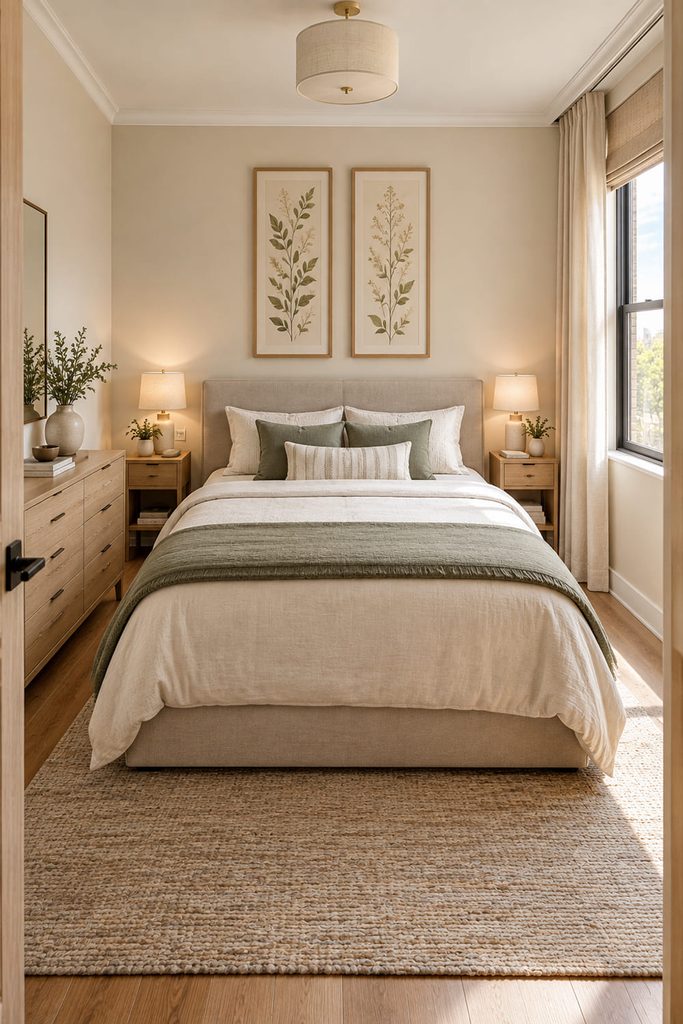
Two narrow vertical prints can create the appearance of a larger artwork while using less horizontal depth than a wide collection. Choose images that belong together. They might show two different botanical drawings, complementary abstract compositions, or related landscape scenes.
Keep their frames identical or closely related. Hang them at the same height and maintain a consistent gap between them.
This arrangement is useful above a narrow dresser or in a limited section of wall above the bed. If the wall is particularly narrow, choose slimmer frames and artwork with generous empty areas inside the composition. The result feels complete without requiring a full gallery wall.
12. Turn a Narrow Wall Into a Memory Strip
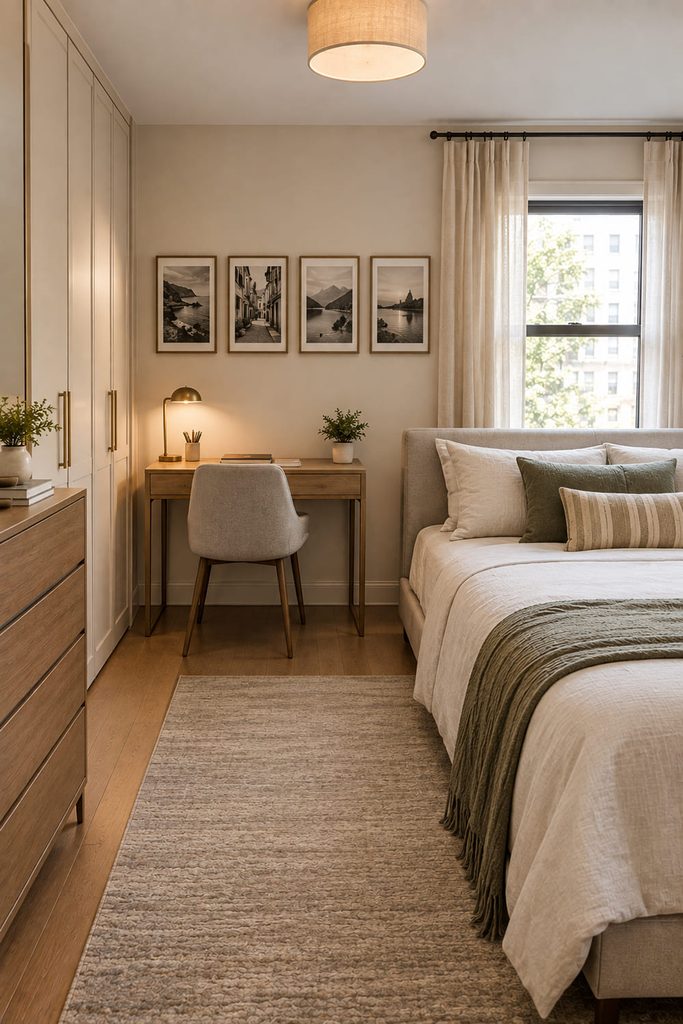
A small horizontal section of wall can hold a carefully edited collection of meaningful memories. Instead of displaying dozens of photographs, choose three or four that tell a simple story.
For example, you might use photographs from a favorite trip, important family moments, or several pictures taken during the same period.
Keep the photographs similar in size and use consistent frames. A clean row works particularly well in a compact apartment because it creates a defined boundary rather than spreading images randomly across the wall.
This approach also makes it easier to edit the display later. When you have limited space, choosing fewer meaningful images usually produces a stronger result than trying to display everything.
13. Use a Small Round Artwork
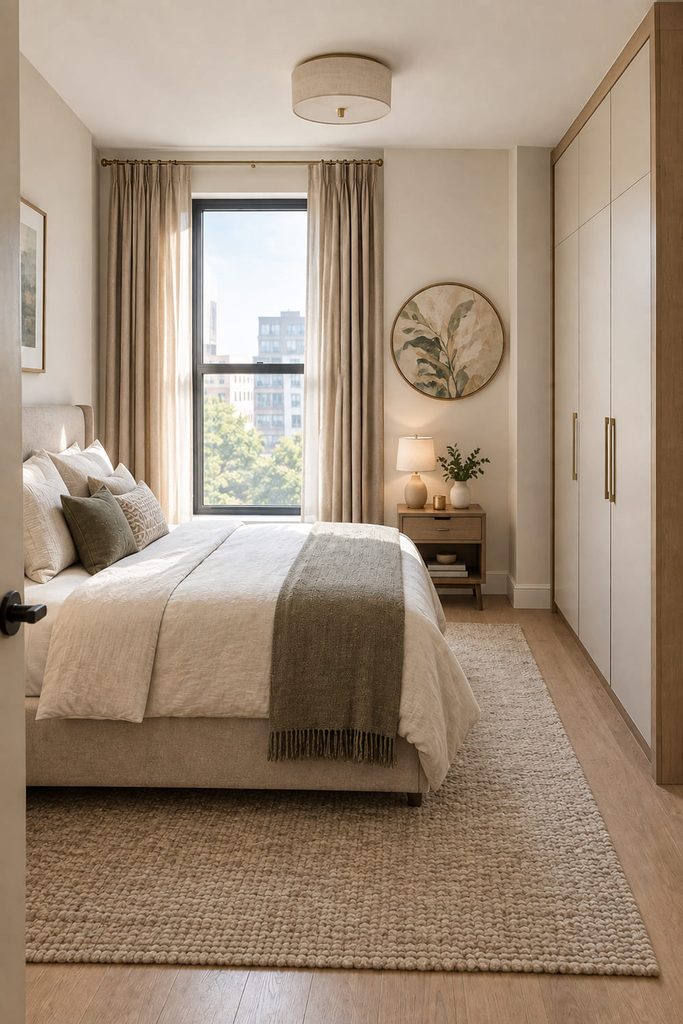
A round artwork can introduce a different shape into a bedroom dominated by rectangular furniture, doors, shelves, and frames.
Choose a circular abstract piece, botanical design, textured artwork, or simple painted composition. Hang it above a small nightstand, beside the bed, or in an awkward wall section where a rectangular print would feel too wide.
The unusual shape gives the wall visual interest without requiring a large arrangement. A natural wood frame can create a warmer appearance, while a thin dark frame gives the piece a more contemporary look.
Because the artwork has a strong silhouette, one piece can be enough. Avoid surrounding it with several tiny decorations unless there is enough breathing room around the entire arrangement.
14. Create a Tiny Corner Gallery
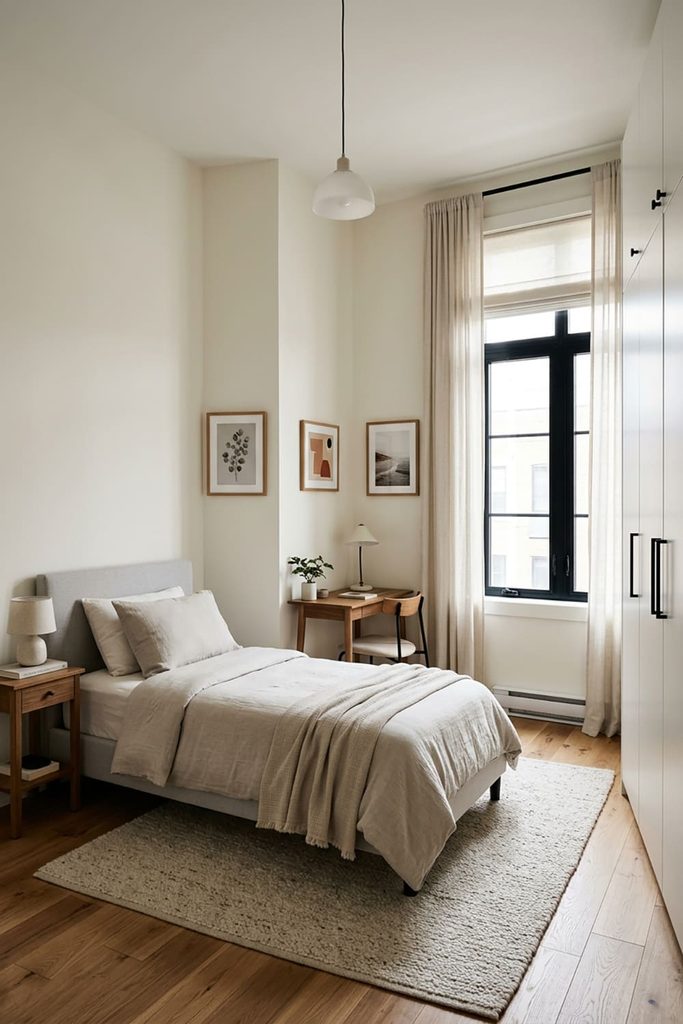
Corners are frequently ignored because they are difficult to decorate with standard furniture. In a small apartment bedroom, however, a corner can provide a useful vertical zone for artwork.
Place two or three small framed pieces so the arrangement visually follows the corner rather than forcing everything onto one wall. Use related artwork and similar frames to keep the composition connected.
This can work beside a wardrobe, near a small desk, or in the corner between the bed and window. Keep the arrangement compact. The purpose is to make use of an overlooked area, not to cover both walls completely.
If the corner contains cables, switches, vents, or curtains, plan around them before installing anything.
15. Choose One Personalized Initial or Letter Artwork
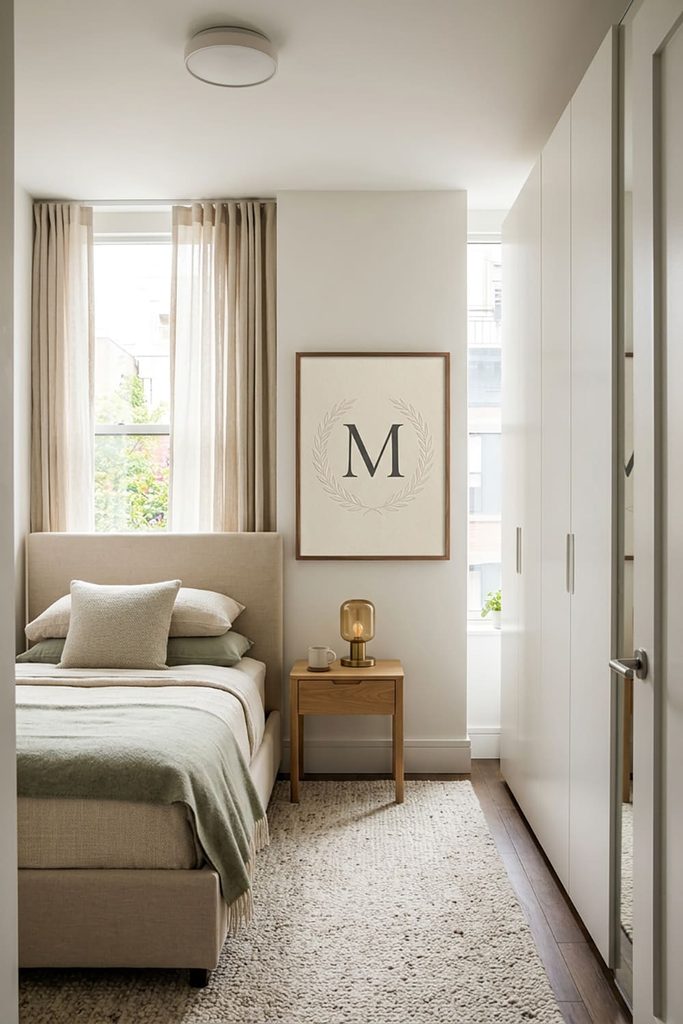
A personalized initial can provide character when there is only room for one small piece of artwork. Choose a large single letter, monogram-inspired design, or simple personalized composition in a style that matches the bedroom.
For a modern room, use clean typography and a restrained frame. For a warmer bedroom, choose a textured or handmade-looking design. The artwork can represent your first initial, a shared initial, or another letter with personal significance.
Place it above a nightstand, beside a wardrobe, or in another small section that would otherwise remain empty. Because the design is simple, it does not demand much visual space. It can also make a compact bedroom feel more personal without requiring a large gallery wall.
How to Choose Wall Art When Space Is Extremely Limited
The first step is to measure the wall before choosing artwork. Look at the actual usable area rather than the total wall. A wardrobe door, window, curtain, switch, wall light, headboard, or shelf can reduce the available decorating space considerably.
Then decide whether the area is wide, tall, or unusually shaped. A wide section may suit one horizontal artwork, while a narrow section can work better with vertical prints.
Consider these simple questions:
- How much clear wall is actually available?
- Does the artwork need to fit above furniture?
- Will a door or wardrobe open into the display?
- Are switches and electrical controls accessible?
- Does the artwork compete with a patterned headboard or bedding?
- Would one large piece look cleaner than several small pieces?
- Does the frame add significant width to the finished arrangement?
- Can the artwork be seen from the main viewing position?
The outer dimensions of the complete arrangement matter more than the dimensions of the individual print. Frames, gaps, ledges, and other elements all contribute to the amount of wall the display occupies.
How to Make Limited Wall Space Look Intentional
Avoid the temptation to decorate every empty patch. A small bedroom generally benefits from having a few areas that remain visually quiet.
Instead, create one main focal point and allow the surrounding wall to breathe. For example, one strong artwork above the bed can be enough if the rest of the room already contains shelves, lighting, mirrors, or decorative furniture.
A limited color palette also helps connect the artwork to the rest of the room. Repeating one or two colors from the bedding, curtains, rug, or furniture can make separate pieces feel related.
If you want a gallery wall, keep the overall footprint compact rather than extending the arrangement simply because more wall is available.
Should You Choose One Large Piece or Several Small Pieces?
Both options can work, but the room’s layout should decide.
One large piece is useful when you have one uninterrupted section of wall and want a simple focal point. Several smaller pieces work better when the available wall is narrow, divided by furniture, or irregularly shaped.
A compact gallery also gives you more flexibility with personal photographs and smaller artwork. However, too many tiny pieces can create visual noise if the bedroom is already full of furniture and accessories.
For a very small apartment bedroom, start with the simplest arrangement that fills the intended wall area appropriately. You can always add another piece later if the wall still feels incomplete.
How to Keep Small Bedroom Wall Art From Looking Crowded
The biggest mistake is treating every empty section as an invitation to add decoration. In a compact bedroom, visual clutter can accumulate quickly.
Use consistent spacing between frames, repeat a few colors, and avoid mixing too many frame finishes. If your bedding already contains a strong pattern, consider calmer artwork. You can also create visual breathing room by leaving part of the wall empty. Space is not wasted space. It gives the artwork somewhere to stand out.
Small bedrooms can also benefit from visually light furniture and carefully planned wall-mounted elements because reducing clutter around the floor and walls helps maintain a more open appearance.
Best Wall Locations for Limited-Space Artwork
The area above the bed is usually the most obvious location, but it is not the only option. Consider the wall above a small nightstand, the narrow space beside a wardrobe, the area above a compact desk, an unused corner, or a small strip beside the bedroom door.
Look at the room from the entrance and from the bed. These are the viewpoints from which your artwork will usually be noticed most.
If one wall already contains a large headboard, shelves, or a window, avoid forcing additional artwork into the same area. A smaller secondary wall can sometimes provide a cleaner solution.
Final Thoughts
A small apartment bedroom does not need a large collection of wall decorations to feel finished. The strongest approach is to work with the wall space you actually have and choose artwork according to the shape, furniture, and function of each available area.
A single oversized neutral print, a narrow vertical gallery, a small photo grid, a textile wall hanging, or even one personalized artwork can provide enough personality without overwhelming the room.
The most successful bedroom wall art ideas for a small apartment bedroom with limited wall space are usually the ones that feel deliberate rather than crowded. Measure first, choose a clear focal point, repeat a few colors, and leave enough empty wall around the artwork for the room to breathe.


