

15 Bedroom Wall Art Ideas for a Parent’s Bedroom
A parent’s bedroom often needs to feel different from the rest of the home. It may be the one room where you can step away from household routines, enjoy a quiet evening, and have a space that reflects your life beyond being a parent. Wall art can help create that feeling without requiring a complete bedroom makeover.
The best artwork for a parent’s bedroom does not have to be overly formal or sentimental. A peaceful landscape, a meaningful family photograph, a botanical composition, or an elegant abstract piece can all make the room feel more personal. The key is choosing artwork that works with the furniture, bedding, lighting, and colors already in the room.
These 15 bedroom wall art ideas for a parent’s bedroom include options for couples, single parents, parents with young children, and parents whose children are older. Some ideas celebrate family memories, while others simply create a peaceful adult retreat.
1. A Peaceful Landscape Above the Bed

A large landscape can give a parent’s bedroom a calm focal point without making the room feel overly decorated. Consider a quiet mountain scene, open countryside, misty forest, peaceful coastline, or distant horizon.
Choose colors that already appear in the bedroom. Soft blue, sage green, cream, beige, dusty gray, and muted brown can work beautifully with neutral bedding and natural wood furniture.
A horizontal piece usually works naturally above the bed because it follows the width of the headboard. Keep the frame relatively simple so the artwork remains the main feature.
This is particularly useful for parents who want their bedroom to feel like a retreat rather than another family-centered space.
2. A Family Photography Gallery
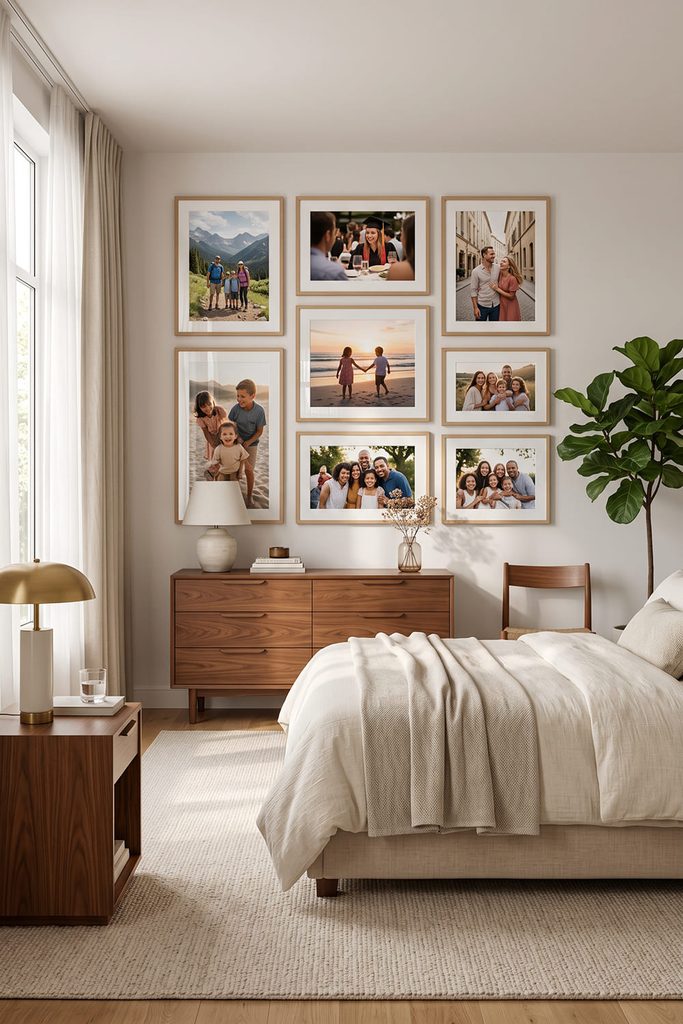
A small collection of meaningful family photographs can turn an empty bedroom wall into something deeply personal. Instead of covering the entire wall with photographs, choose a few images that represent special moments.
You might include a family vacation, an important celebration, a favorite outdoor memory, or a photograph from a particularly meaningful period of family life.
Use matching frames to keep the arrangement sophisticated. Black, white, natural wood, or warm metallic frames can all work depending on the room.
Place the gallery on a side wall or above a dresser if you want the wall above the bed to remain quieter. This keeps the bedroom personal without making it feel like a family photo display.
3. Matching Botanical Prints Above the Nightstands

Create a balanced bedroom wall by placing one botanical print above each nightstand. The two pieces can be identical or simply belong to the same collection. Ferns, branches, grasses, leaves, and understated flowers can all work well.
This arrangement is particularly useful for parents sharing a bedroom because it gives both sides of the bed equal visual attention. It also works beautifully with symmetrical lamps and matching nightstands.
Choose artwork that uses colors already found in the bedding or curtains. The result can feel coordinated without requiring everything in the room to match exactly.
4. A Large Abstract Artwork With Warm Neutral Colors

For parents who prefer a more contemporary bedroom, choose one oversized abstract piece above the bed.
Look for artwork with warm cream, taupe, beige, muted brown, soft gray, dusty blue, or terracotta. Gentle shapes and layered textures can provide interest while maintaining a comfortable atmosphere.
An abstract piece is also useful when you want the bedroom to feel mature without making it formal. It can become the main visual feature while allowing the bedding and furniture to remain relatively simple.
If the room contains patterned bedding, choose a quieter abstract composition. If the furniture is very simple, you can use artwork with more texture or layered shapes.
5. A Meaningful Travel Memory Wall
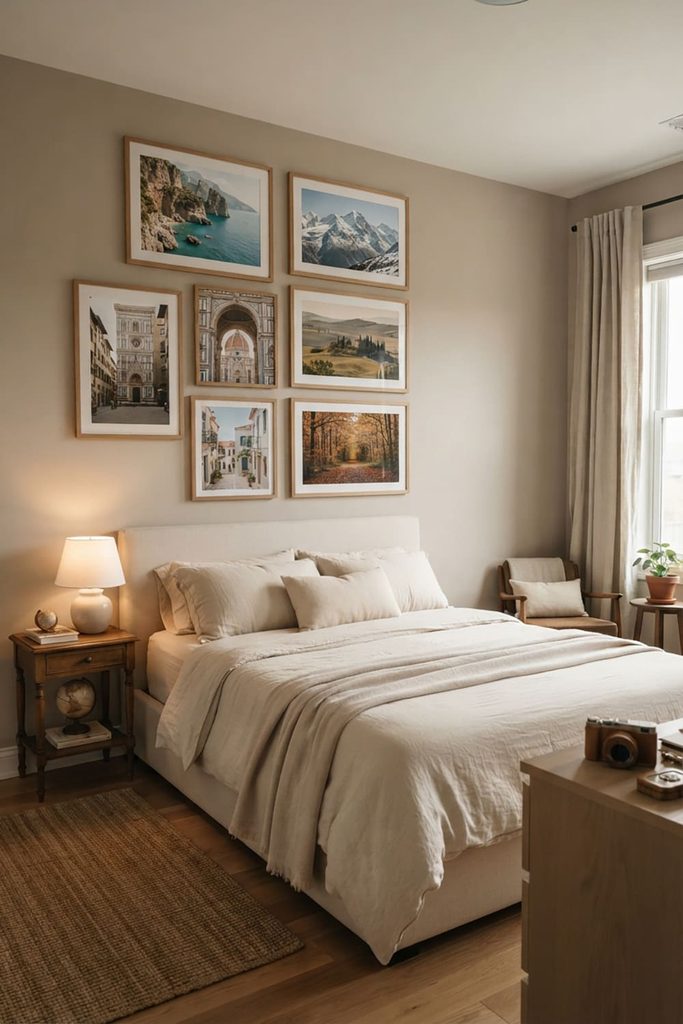
Parents often have years of travel memories that become buried in phone galleries and storage boxes. Bring a few of those memories into the bedroom with a small travel-inspired collection.
Choose photographs of favorite destinations, architectural details, landscapes, maps, or places that have special meaning to you and your partner. Avoid trying to display every trip. A carefully selected group will feel more intentional.
You could arrange the pieces chronologically or simply create a balanced gallery using similar frames. The wall then becomes a reminder of experiences shared rather than another collection of generic decorative prints.
6. A Soft Floral Artwork Above the Headboard
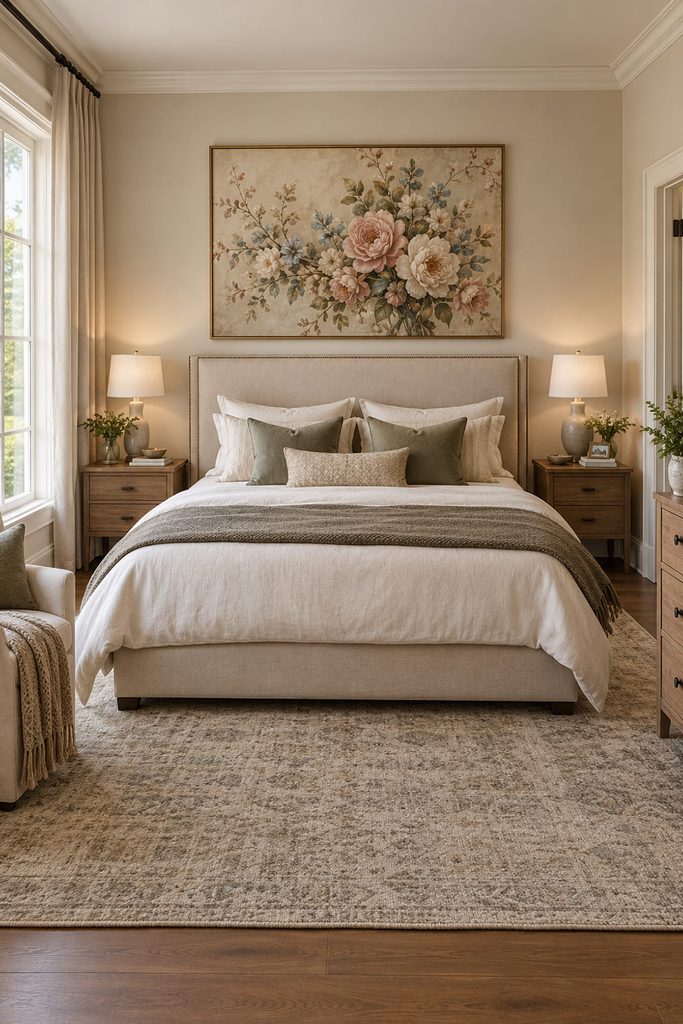
A large floral painting or print can add warmth and personality to a parent’s bedroom without making the room feel overly youthful.
Instead of extremely bright flowers, consider muted roses, soft wildflowers, pale branches, dried floral compositions, or loosely painted blooms. The artwork can introduce color into a neutral bedroom while still maintaining a restful atmosphere.
For a shared bedroom, choose floral artwork based on the overall room palette rather than treating it as a separate feminine accent. Dusty rose with beige, muted blue with cream, or olive green with warm neutrals can create a balanced appearance.
7. A Personalized Initial or Family Monogram
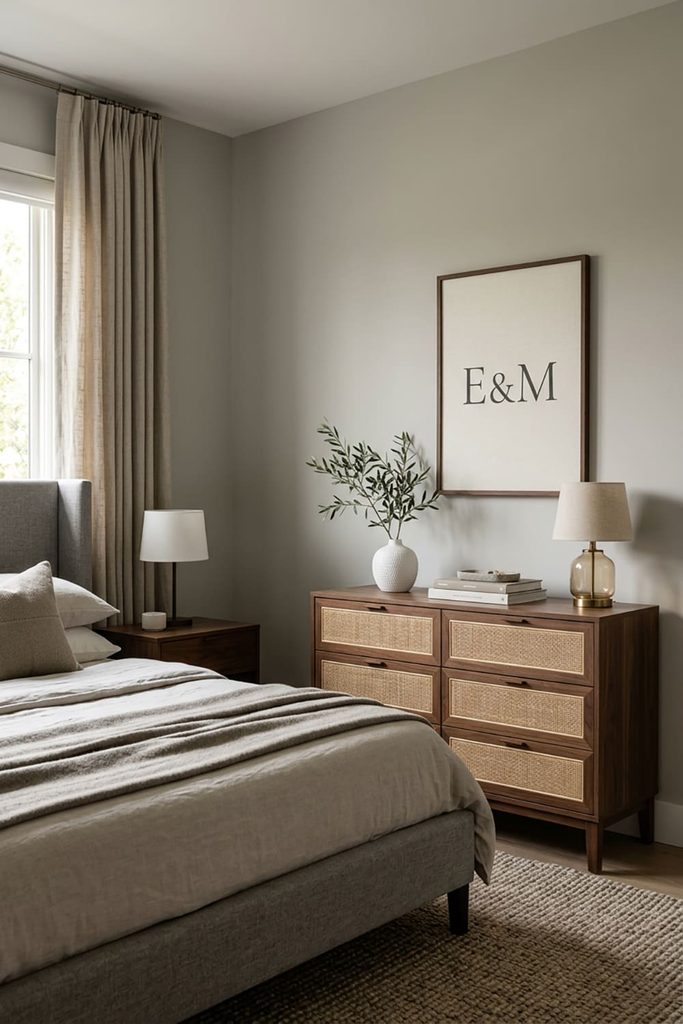
A subtle monogram can make the bedroom feel personal without filling the wall with photographs or family memorabilia.
Use a single initial, a pair of initials, or a simple family monogram. Choose a sophisticated typeface or understated design and place it above a dresser, on a side wall, or within a small gallery arrangement.
Keep the design relatively simple. The goal is to create something connected to the people who share the room rather than turning the wall into a large personalized sign.
This idea can work especially well above a console or dresser where a small piece of artwork might otherwise feel lost.
8. A Serene Water-Inspired Artwork

A quiet ocean, lake, river, or abstract water composition can introduce a peaceful visual element to the bedroom.
Choose artwork with gentle movement rather than dramatic waves or intense storm scenes. Soft blue, gray, cream, and muted green can complement many bedroom color schemes. Water-inspired artwork is particularly attractive in a room with light bedding, pale wood furniture, or natural textures.
Place a larger piece above the bed or use a smaller vertical composition beside a reading chair. If the bedroom already contains several patterns, choose a simple water scene with plenty of open space.
9. A Sophisticated Black-and-White Photography Pair
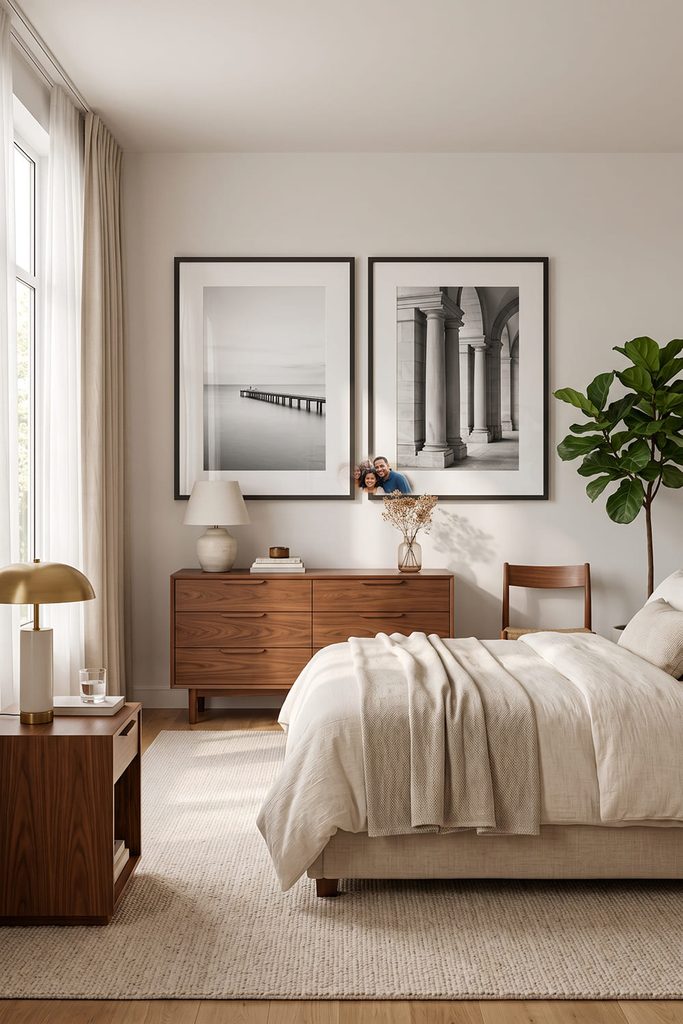
Two large black-and-white photographs can give a parent’s bedroom a timeless appearance. Instead of choosing random images, select photographs connected by a theme. Architecture, landscapes, trees, city scenes, or coastal views can all work.
Use matching frames and mats to create a clean pair. Position them above a dresser, opposite the bed, or above the headboard if the wall is wide enough.
The monochrome palette allows the artwork to coordinate with almost any bedding color. It can also define a bedroom filled with soft beige, cream, or light gray furnishings.
10. A Textured Textile Wall Hanging
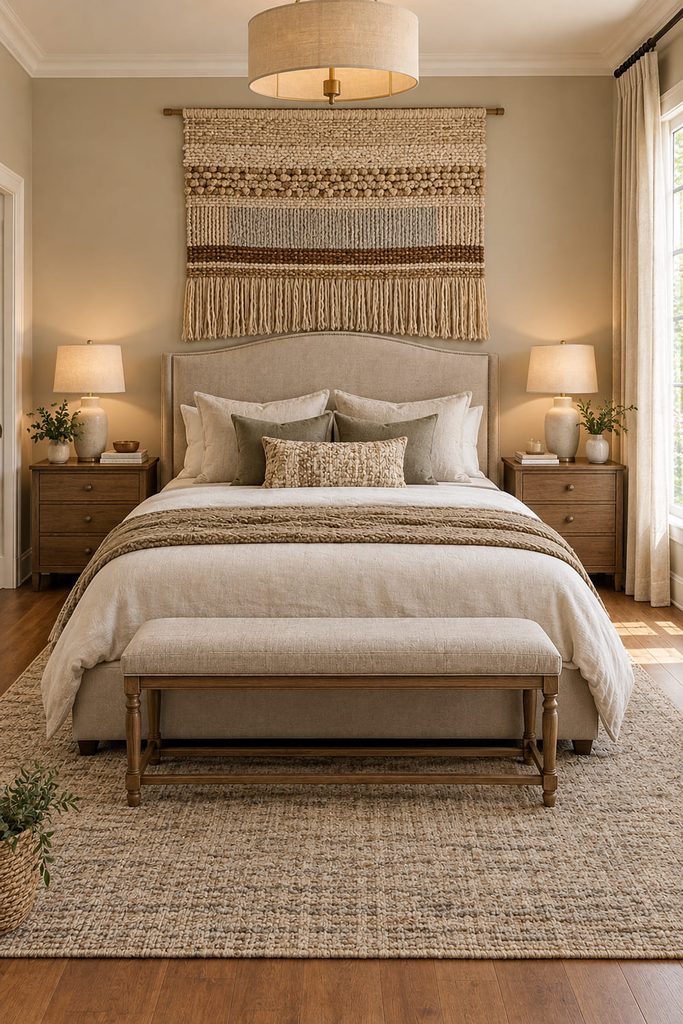
If the bedroom contains a lot of hard furniture surfaces, consider using textile artwork to introduce visual softness. A woven wall hanging, fabric panel, or textured neutral composition can work above the bed or on a large side wall.
Choose natural-looking colors such as cream, oatmeal, tan, muted brown, or soft gray if you want a quiet appearance. For a more colorful bedroom, look for subtle patterns that repeat the colors used in the bedding.
Textile artwork can also make a large blank wall feel warmer without requiring a collection of framed pieces.
11. A Personal Hobby Gallery
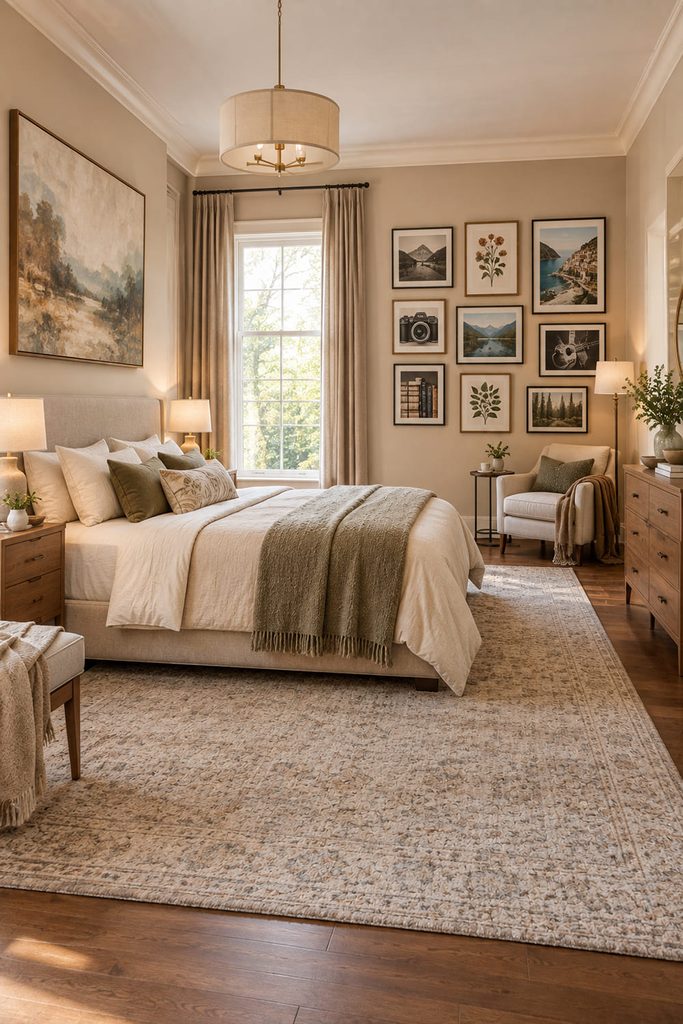
A parent’s bedroom does not have to focus entirely on family life. Use one wall to celebrate a hobby or personal interest. Photography, gardening, painting, travel, music, books, cooking, architecture, or nature can all provide inspiration for a small art collection.
For example, a gardening enthusiast could use botanical illustrations, while a photography lover could display a carefully edited selection of personal photographs.
Keep the collection relatively small and use consistent frames. The result should feel like a reflection of the person who lives there rather than a themed display.
12. A Large Botanical Branch Artwork

Instead of a collection of small botanical prints, use one oversized branch or tree artwork as the bedroom’s main focal point. A delicate tree silhouette, olive branch, flowering branch, or large leafy composition can occupy a substantial wall without making the room feel crowded.
This works particularly well in bedrooms with wood furniture, woven textures, neutral bedding, or natural flooring.
For a softer look, choose artwork with a light background and muted foliage. For a more dramatic room, a darker background with restrained botanical details can create contrast.
The simplicity of one large composition also makes the bedroom easier to keep visually organized.
13. A Meaningful Artwork Representing Home

Choose a piece that represents a place that feels like home to your family.
It could depict the town where you grew up, a favorite vacation destination, a countryside landscape, a familiar coastline, or even a stylized illustration of a meaningful house or building. This is a more subtle alternative to displaying numerous family photographs.
Choose artwork that has meaning to you but still works aesthetically with the bedroom. A muted watercolor, minimalist illustration, or softly colored landscape can preserve the personal connection without overwhelming the room.
14. A Pair of Complementary Abstract Prints

Two complementary abstract prints can create a balanced arrangement above the bed or across a wide bedroom wall. The artwork does not need to be identical. Instead, look for two pieces that share colors, shapes, or textures.
For example, one could contain more beige and cream while the second introduces muted blue or green. Together they create visual variation without looking disconnected.
This approach is especially helpful when two people sharing the bedroom have slightly different preferences. Each person can choose one piece while agreeing on a common palette.
Use similar frames and leave a consistent gap between the pieces to keep the arrangement organized.
15. A Curated Wall of Family and Personal Memories

For the most personal approach, combine several types of artwork that represent the life you have built together. Include one or two family photographs, a favorite travel image, a meaningful landscape, a small piece connected to a hobby, and perhaps a personalized artwork.
The important part is editing the collection. You do not need to display every meaningful memory. Choose pieces that work together visually and leave enough empty wall around the arrangement.
A consistent frame style can make very different images feel connected. Natural wood frames can create a warm appearance, while black frames provide a cleaner modern look.
This type of wall can become something you notice every day without making the bedroom feel like a family scrapbook.
How to Choose Wall Art for a Parent’s Bedroom
Start by deciding what you want the bedroom to feel like. If the room is primarily a place to rest, artwork with soft colors and peaceful subjects may work better than extremely busy compositions.
Think about the existing bedding, curtains, flooring, furniture, and lighting before choosing colors. Artwork does not have to match everything, but repeating one or two existing colors can make the room feel more connected.
Scale is equally important. A small picture can disappear above a large bed, while too many pieces can make a smaller bedroom feel crowded. A single large artwork, a balanced pair, or a compact gallery can often be enough.
Should Parents Use Family Photos in the Bedroom?
Family photographs can work beautifully in a parent’s bedroom, but they do not need to dominate the space.
If you want the room to feel like an adult retreat, consider using only a few particularly meaningful photographs. Place them on a side wall or incorporate them into a sophisticated gallery.
Another option is to use photographs that show places, experiences, or details rather than only portraits. A favorite vacation landscape or photograph from a memorable family trip can carry emotional meaning while still functioning as artwork.
How to Make a Parent’s Bedroom Feel Like a Retreat
A parent’s bedroom can easily become an extension of family life if toys, paperwork, laundry, and household items constantly migrate into the space. Wall art can help establish a different visual identity.
Choose artwork that reflects your own interests and preferences rather than selecting every piece around the needs of the children.
Soft landscapes, personal photography, botanical art, abstract compositions, and meaningful travel artwork can all help establish a more mature atmosphere.
Keep the strongest artwork where you can enjoy it from the bed. A peaceful view at the end of the day can make the room feel much more intentional.
How Much Wall Art Should a Parent’s Bedroom Have?
There is no fixed number of pieces that every bedroom needs. Start with the main focal wall and work outward.
A large piece above the bed may be enough in a small bedroom. A larger room might support a statement piece above the bed, a small gallery above a dresser, and another artwork near a reading chair.
Leave some areas of wall empty. Blank space allows the artwork you do choose to stand out and prevents the bedroom from feeling visually crowded.
Final Thoughts
A parent’s bedroom deserves to feel personal, comfortable, and separate from the busy parts of family life. Wall art provides an easy way to establish that identity without changing every piece of furniture.
Choose artwork that reflects your shared memories, personal interests, favorite places, or simply the colors and subjects that make you feel comfortable. A peaceful landscape can create a quiet focal point, while a small family gallery can keep meaningful memories close.
The best arrangement does not need to tell the entire story of your family. Sometimes a single piece that both parents genuinely enjoy can do more for the room than an entire wall of decorations.
Start with the wall above the bed, choose artwork at an appropriate scale, and then add only the pieces that genuinely belong in the room. The result should feel like a bedroom designed for the parents who live there, not another space organized entirely around family responsibilities.


