

15 Bedroom Wall Art Ideas for a Home Office and Bedroom Combo Space
A bedroom that also serves as a home office has to handle two very different parts of daily life. One side needs to feel calm enough for sleeping, while the other needs to support concentration, video calls, reading, planning, or creative work. Wall art can help connect these functions without making the room look like a bedroom with a desk squeezed into the corner.
The most useful approach is to treat artwork as part of the room’s zoning. A large piece can anchor the bed, a smaller arrangement can define the desk, or a continuous color palette can visually connect both areas. You can also use artwork to make an awkward wall, narrow corner, or space feel intentional.
These 15 bedroom wall art ideas for a home office and bedroom combo space focus on practical arrangements that work in both small and larger rooms. The goal is to create a room where the office feels purposeful during the day, and the bedroom still feels peaceful when work is finished.
1. Large Abstract Artwork Above the Bed
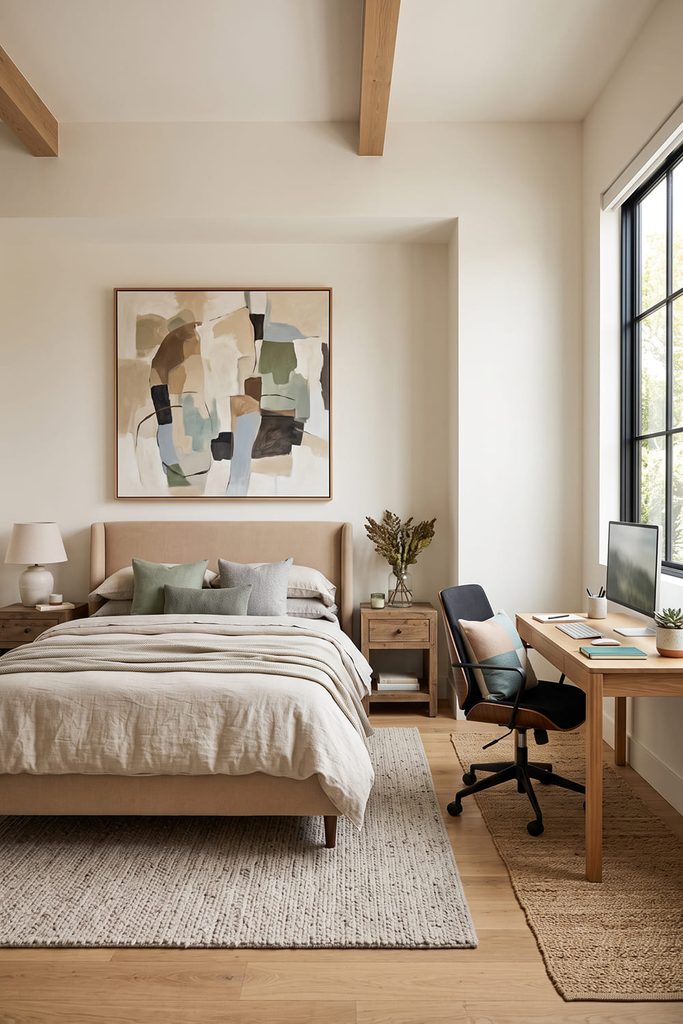
Use one large abstract artwork as the main focal point of the sleeping area. Choose a composition with calm shapes and a limited palette that also appears somewhere around the desk, such as warm beige, muted green, soft blue, brown, or charcoal.
A large piece is particularly useful when the room already contains a desk, office chair, monitor, shelves, and other practical items. Instead of adding many small decorations, one substantial artwork gives the bed wall enough visual weight without creating unnecessary clutter.
Keep the artwork clearly associated with the bedroom rather than placing it directly above the work desk. This creates a subtle distinction between the two zones while the shared colors keep them connected.
2. A Small Gallery Wall Above the Desk
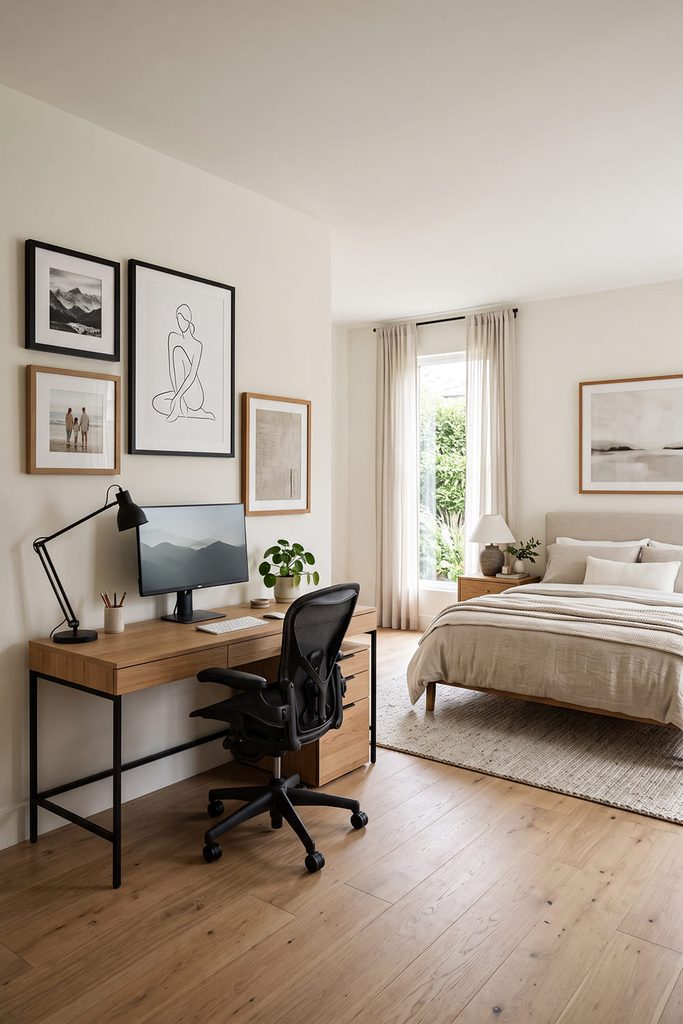
Create a compact gallery wall directly above the desk to establish a visual boundary around the workspace. Three to five pieces are usually enough for a small arrangement.
Mix simple artwork such as line drawings, small landscapes, abstract prints, or personal photographs. Keep the frames coordinated so the collection looks deliberate rather than scattered.
If your desk is narrow, use a vertical arrangement instead of spreading artwork widely across the wall. This preserves valuable wall space and keeps the office area visually compact.
The bedroom can then have a separate focal piece above the bed. Both areas feel individually decorated without requiring a physical room divider.
3. Matching Artwork on Both Sides of the Room

Use two related pieces of artwork to visually connect the bedroom and office portions of the room. The artwork does not need to be identical. Instead, choose pieces that share a color, subject, frame material, or artistic style.
For example, a soft landscape above the bed could be paired with a smaller abstract landscape near the desk. A botanical print near the bed could coordinate with a simple leaf illustration above the workspace.
This technique works especially well when the bed and desk are positioned on different walls. The repeated visual language makes the entire room feel connected instead of divided into unrelated zones.
4. A Vertical Art Column Beside the Desk

If there is very little horizontal wall space above your desk, create a narrow vertical art arrangement beside it. Stack three or four small framed pieces vertically.
This approach is particularly useful when a monitor, shelving, or wall-mounted storage occupies the area directly above the desk. The artwork can fill an otherwise unused strip without competing with your equipment.
Choose pieces with similar proportions and maintain consistent spacing. A vertical column also draws the eye upward, which can make a compact workspace feel taller. Keep the colors related to the bedroom artwork so the office still feels like part of the same room.
5. One Continuous Gallery Wall Across Both Zones

Instead of visually separating the bedroom and office completely, create one long gallery wall that travels across both areas.
The trick is to establish a consistent framework. Use similar frame finishes, repeated colors, or one subject family throughout the collection. You can include landscapes, abstract prints, photography, botanical artwork, and personal pieces without making every item identical.
Let the artwork change slightly as it approaches the desk. For example, the area above the bed can contain calmer imagery while the pieces closer to the desk can have more energetic shapes.
This creates a natural transition between rest and work while making the room feel intentionally designed.
6. A Calm Landscape Behind the Desk

Place a peaceful landscape behind the desk instead of using motivational quotes or busy office graphics. A distant mountain scene, quiet countryside, open water, or soft horizon can provide visual interest without overwhelming the workspace.
This arrangement is also useful for video calls because the artwork becomes part of the background rather than leaving an empty wall behind you.
Choose an image with enough open space and restrained colors. Extremely detailed artwork can become distracting when you spend several hours facing it. A landscape with tones that repeat in your bedding or curtains can quietly connect the office area with the bedroom.
7. Framed Personal Photography Near the Bed

Personal photography can make a combined bedroom-office space feel more like a home and less like a temporary workstation.
Choose a small collection of meaningful photographs from travel, family memories, architecture, nature, or places that have personal significance. Arrange them near the bed rather than directly around the desk.
Keep the frames simple and consistent. Black, natural wood, white, or neutral frames can work depending on the room.
Because the photographs belong primarily to the personal side of the room, they help establish the bedroom as a relaxing space while the desk area can use more neutral artwork.
8. A Large Botanical Print Between the Two Zones
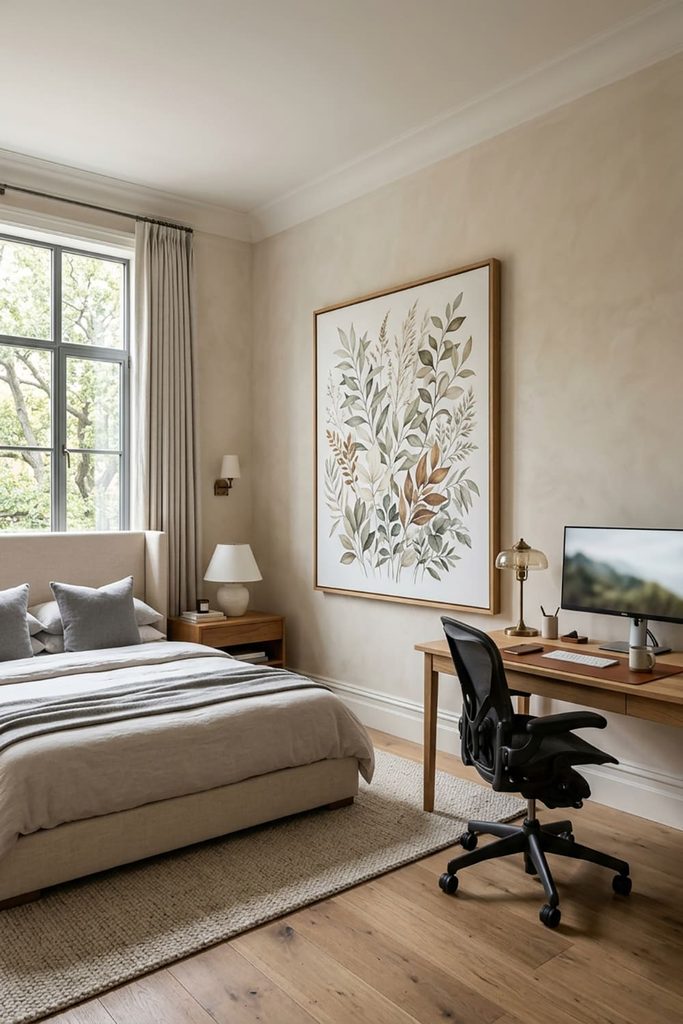
A large botanical artwork can act as a visual bridge between the bed and workspace. Choose one oversized print featuring leaves, branches, grasses, or a simple botanical composition.
Place it on the wall between the two functional areas if the layout allows. The artwork then becomes a transition point rather than belonging entirely to either zone.
Muted green, cream, brown, and soft gray work particularly well because they can coordinate with both bedroom textiles and office furniture.
This approach is especially effective when the room contains natural wood furniture. The organic subject can soften the harder lines of a desk, monitor, shelving, and other office equipment.
9. A Two-Piece Artwork Set Above the Bed and Desk

Create visual symmetry by using two related artworks, with one positioned above the bed and another above the desk. They could be two halves of a landscape, two abstract compositions, two botanical studies, or simply artworks using the same color palette.
The pieces should not necessarily be the same size. A larger artwork can anchor the bed while a smaller version defines the workspace.
This method is useful when you want clear separation between the two functions without making the room feel visually disconnected. The artwork becomes the common design language between both zones.
10. Textured Textile Art for the Bedroom Side
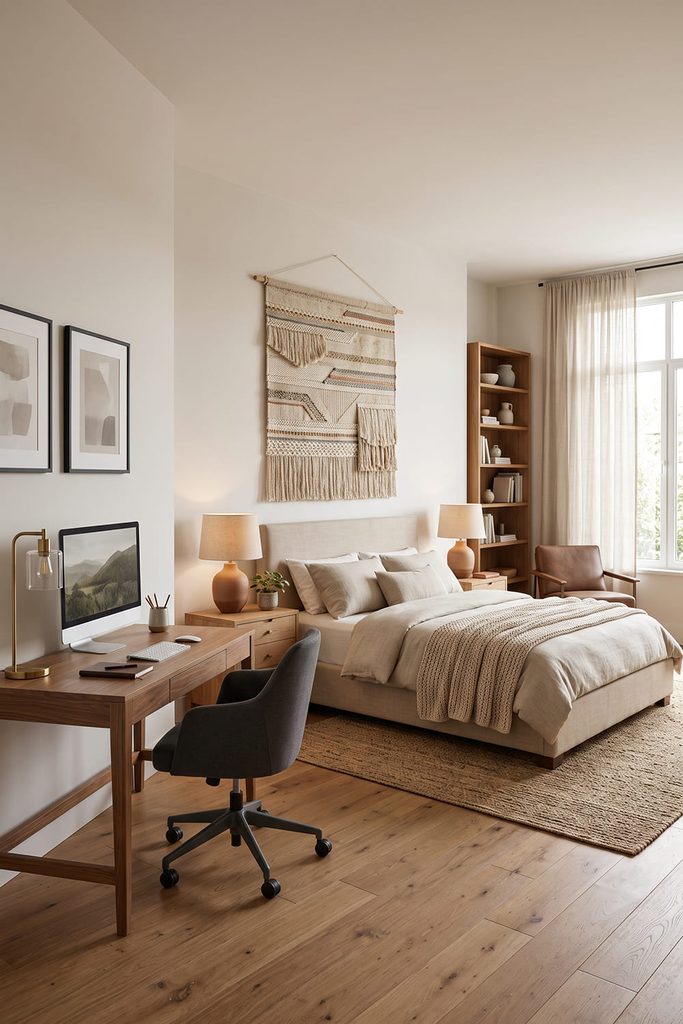
Textile wall art can bring softness to the sleeping portion of a room that contains practical office furniture.
A woven wall hanging, fabric panel, or textured neutral composition can sit above the bed while the desk area uses framed artwork. The difference in material helps distinguish the two zones while keeping the overall room comfortable.
Choose a textile with subtle texture rather than an extremely colorful pattern if your office equipment already creates a lot of visual activity. Natural beige, cream, oatmeal, warm gray, or muted earthy tones can work particularly well with wood desks and neutral bedding.
11. A Minimalist Black-and-White Art Arrangement

For a modern bedroom-office combination, use black-and-white photography or minimalist drawings throughout the room. Keep the arrangement restrained. A few larger pieces often look better than covering every available section of wall.
You could place one large monochrome photograph above the bed and a smaller pair of black-and-white drawings near the desk. The repeated black frames create continuity even when the artwork itself differs.
This approach works particularly well when the room already contains white walls, black office equipment, a wood desk, or neutral bedding. It defines without introducing another strong color.
12. A Creative Inspiration Wall Beside the Desk

If the workspace is used for writing, designing, studying, crafting, or other creative work, dedicate one wall to an inspiration collection.
Instead of filling it with random motivational quotes, combine artwork that genuinely relates to your interests. Include architectural sketches, color studies, photography, illustrations, small paintings, or personal references.
Keep the collection concentrated around the desk rather than extending across the bedroom. This creates a clear working zone.
The rest of the bedroom can remain quieter with one or two larger pieces. That contrast helps the room transition naturally from an active daytime workspace to a calmer sleeping environment.
13. A Wide Horizontal Artwork Above a Long Desk

A long desk can sometimes leave an awkward empty wall above it. Fill that space with one wide horizontal artwork rather than several tiny frames.
A panoramic landscape, abstract composition, architectural artwork, or minimalist photography can mirror the width of the desk and create visual balance. Leave enough breathing room around the artwork so it does not appear crowded by monitors, shelves, lamps, or desk accessories.
If the bed is on another wall, repeat one or two colors from the desk artwork in the bedding or rug. This simple connection can make the two areas feel like parts of one interior.
14. A Personalized Artwork Display Above a Reading Corner

If your bedroom-office combination has a small reading chair or unused corner, turn that area into a third visual zone with personalized artwork.
You could display favorite photography, meaningful illustrations, travel memories, or artwork connected to a hobby. A small floor lamp and comfortable chair can make the area feel separate from both the bed and desk without requiring additional furniture.
Keep the artwork relatively compact so the corner does not become overcrowded. This is especially useful in larger combination rooms where the wall above the desk and bed is already decorated. Instead of adding more art randomly, give the remaining pieces a specific purpose.
15. A Sophisticated Gallery of Personal and Professional Interests
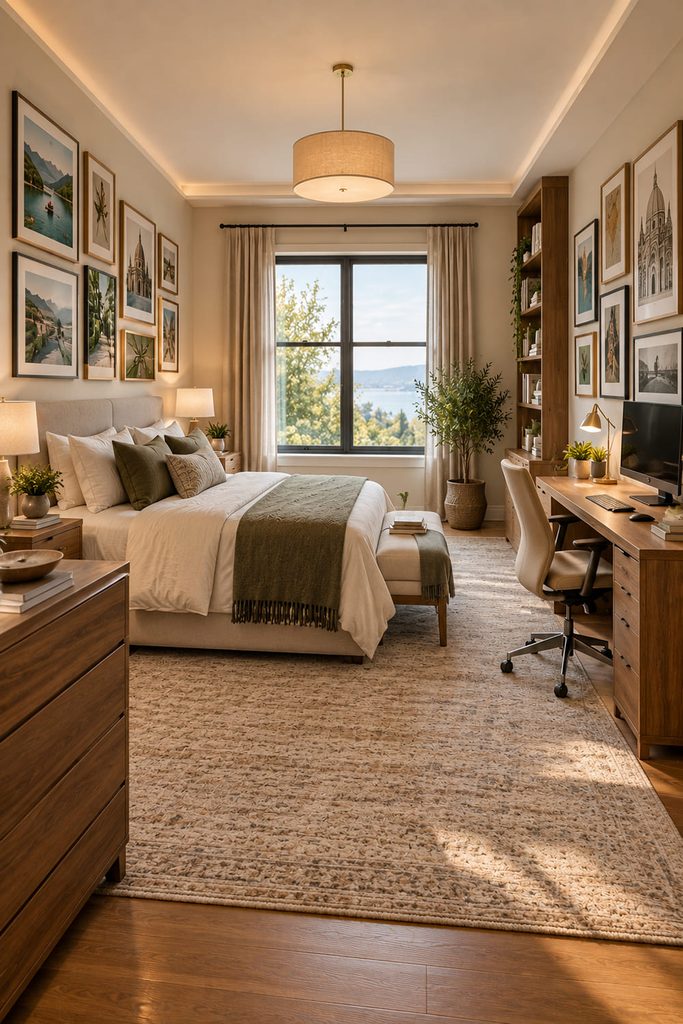
For the most personalized approach, create a gallery that represents both sides of your life.
Combine a few personal pieces with artwork related to your profession, interests, travel, books, photography, architecture, nature, or creative hobbies. Keep the arrangement unified through consistent frames or a restrained color palette.
Place the more personal pieces closer to the bedroom and the work-related or creative pieces closer to the desk. The transition can be gradual rather than obvious.
This arrangement works particularly well for people who spend many hours in the same room because the wall becomes a reflection of their life rather than simply office decoration.
How to Choose Wall Art for a Bedroom and Office Combo
The biggest challenge is avoiding the feeling that the room contains two unrelated interiors. Start with a shared color palette. Pick two or three colors from the bedding, desk, rug, curtains, or furniture and repeat them in the artwork.
Scale also matters. A tiny print above a large bed can disappear, while a huge collection above a small desk can make the workspace feel crowded. Let the size of the artwork respond to the furniture underneath it.
Think about what you see while working. If you spend most of the day facing the desk wall, artwork there should be visually interesting without being excessively busy. Simple landscapes, restrained abstracts, photography, and line drawings can work well.
How to Separate the Bedroom and Office Visually
You do not necessarily need a physical divider. Artwork can create enough visual separation on its own.
Use one large focal point for the bed and a smaller collection for the desk. You can also change the type of artwork between the two areas. For example, use soft landscape artwork near the bed and more structured geometric pieces around the desk.
A change in frame style can also help, but keep at least one element consistent. Repeating the same wood tone, black frame, or accent color prevents the room from looking disconnected.
Where Should Wall Art Go in a Combined Room?
Start with the largest available wall surfaces. The wall above the bed is usually a natural focal point, while the wall above or beside the desk is the obvious location for office artwork.
Avoid placing artwork where it competes with a monitor, shelves, lighting, or frequently used storage. The composition should remain comfortable when the workspace is actually being used.
If wall space is limited, prioritize one strong piece over many small ones. A single oversized artwork can establish a focal point without making a compact room feel crowded.
How to Keep the Room Calm After Work
A bedroom-office combination can easily start feeling like a permanent workspace. Wall art can help soften that impression.
Choose calming artwork for the areas visible from the bed. Keep work-related visual material concentrated around the desk. When possible, store paperwork, equipment, and other office supplies so the artwork and bedroom furnishings remain visually dominant after working hours.
The goal is not to make the office disappear. It is to give each part of the room a clear visual identity while allowing them to share the same overall design.
Final Thoughts
A home office and bedroom can share the same room without looking like two unrelated spaces. The right wall art can establish boundaries, connect colors, create focal points, and give the room a more personal character.
Start with the bed wall, then design the desk area around it. Consider scale before buying artwork, keep the palette consistent, and leave enough open wall space for the room to breathe.
Most importantly, choose artwork that you genuinely enjoy seeing every day. Since the room serves several purposes, the walls should support both sides of your routine: a focused place to work and a comfortable place to switch off.
If you are saving ideas for a future room makeover, keep the strongest combinations together so you can compare them with your existing furniture, bedding, desk, and wall space before making changes.


