
15 Work Outfits for Women Over 50 in Management or Executive Positions
A management or executive wardrobe needs to handle more than an ordinary office day. You may spend the morning reviewing reports, lead a team meeting before lunch, meet with clients in the afternoon, and finish the day at a professional dinner or networking event. Having outfits that can move comfortably between these situations makes getting dressed much easier.
For women over 50, executive style does not need to rely on extremely formal suits every day. A well-cut blazer, tailored trousers, sophisticated dress, fine-knit top, polished shoes, and carefully chosen accessories can create a professional wardrobe with plenty of variety. The appropriate level of formality depends on the organization, industry, and occasion, so the company’s dress code should always take priority.
Neutral shades such as navy, charcoal, black, cream, taupe, and deep brown provide a strong foundation, while burgundy, emerald, muted blue, plum, or another rich shade can add personality. Clean silhouettes and restrained accessories are commonly associated with business-professional dressing.
These 15 work outfits for women over 50 in management or executive positions focus on polished combinations that feel authoritative without becoming unnecessarily formal.
1. Navy Pantsuit With an Ivory Blouse
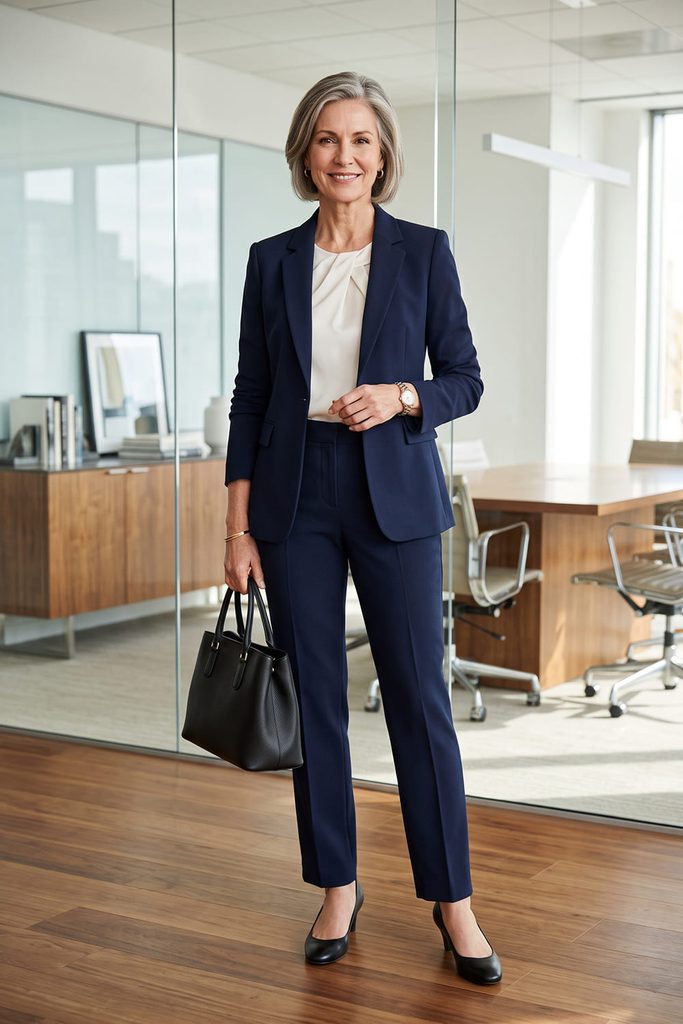
A navy pantsuit is one of the most versatile choices for an executive wardrobe. The matching jacket and trousers create a coordinated appearance, while navy feels slightly softer than an all-black suit.
Wear the suit with a simple ivory blouse or shell top. A blouse with a subtle neckline detail can add interest without distracting from the clean lines of the suit. Complete the outfit with navy, black, or brown closed-toe shoes and a structured handbag.
This combination works particularly well for presentations, leadership meetings, interviews, conferences, and important client appointments. For a less formal office day, separate the pieces. Wear the navy trousers with a fine-knit top or use the jacket over a different pair of tailored trousers.
A single well-fitting suit can therefore become the foundation for several different outfits.
2. Charcoal Trousers With a Burgundy Blazer
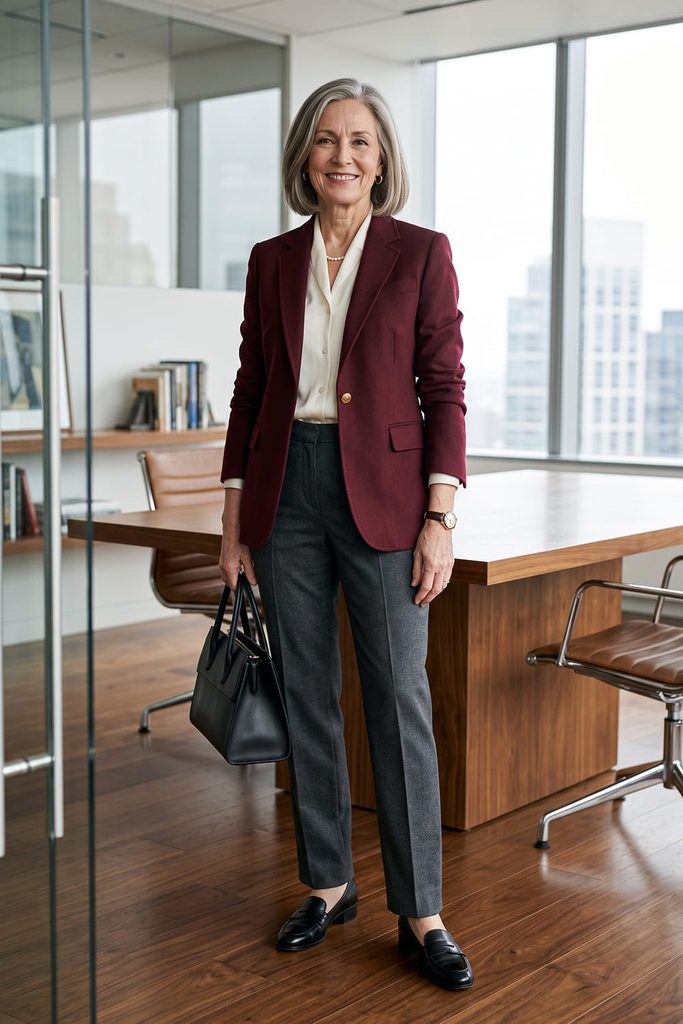
A burgundy blazer can give a neutral executive wardrobe a distinctive focal point without relying on a bright color. Start with charcoal straight-leg trousers and an ivory or soft gray blouse. Add a burgundy blazer with clean tailoring.
Keep the accessories understated. Small earrings, a classic watch, and a structured bag are enough. Black loafers or low pumps can ground the outfit.
This combination is particularly useful when you want to look polished for an internal leadership meeting without appearing as though you are dressed for a formal ceremony.
The burgundy blazer can also be worn with navy, black, or cream trousers on other days, giving you several combinations from one statement piece.
3. Black Trousers With a Fine-Knit Top and Structured Jacket
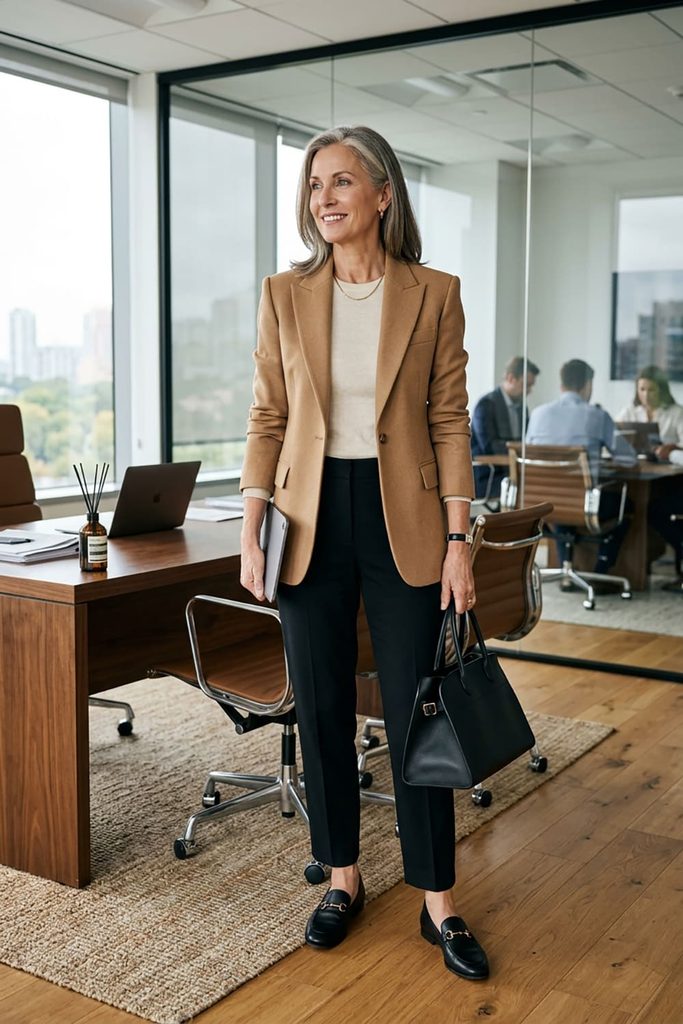
Not every executive outfit needs to begin with a traditional suit. Pair tailored black trousers with a fine-gauge knit top in cream, camel, soft blue, or muted green. Add a structured jacket in a complementary neutral.
The combination creates a polished appearance while the knit top makes the outfit more comfortable for a long day of meetings. Choose a jacket with enough structure around the shoulders to maintain a professional silhouette without being restrictive.
Low pumps, loafers, or refined flats can complete the look. This outfit is especially useful for managers who spend part of the day in meetings and part of the day working at a desk. It feels executive-ready without the rigidity of a complete matching suit.
4. Navy Midi Dress With a Tailored Blazer
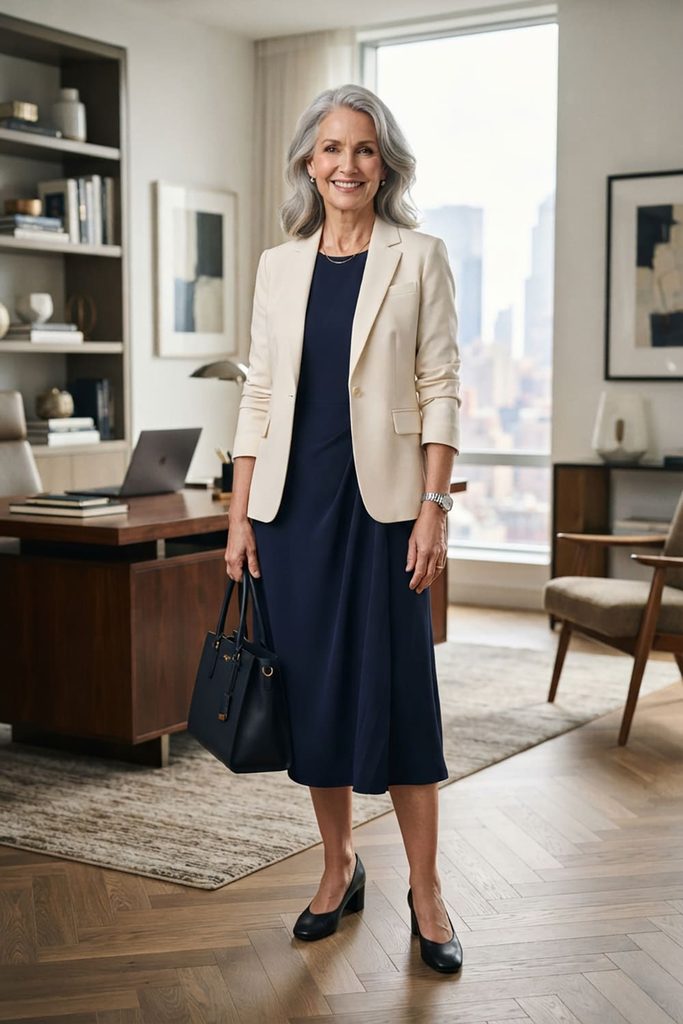
A simple navy midi dress can become a reliable executive outfit when paired with a structured blazer. Choose a dress with clean lines and comfortable movement. Avoid excessive decoration so the blazer and accessories can provide the structure.
A gray, camel, cream, or matching navy blazer can work over the dress. Add closed-toe pumps or polished flats and a structured handbag. This outfit is particularly convenient when you have a busy schedule because there are fewer separate pieces to coordinate.
For a formal presentation, choose a more structured blazer and understated accessories. For an ordinary office day, a softer jacket can make the same dress feel less formal.
5. Cream Blazer With Dark Brown Trousers
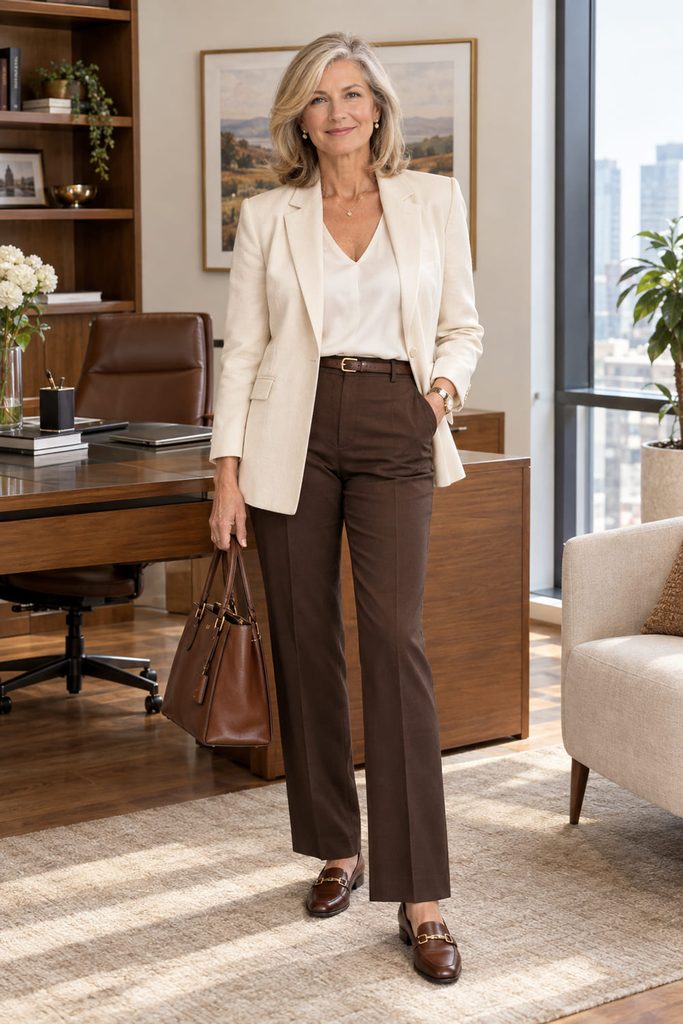
Cream and dark brown create a sophisticated alternative to the standard black-and-white executive palette. Choose dark brown tailored trousers with a simple ivory or beige top. Add a cream blazer with clean, structured lines.
Brown loafers or low heels can connect the darker trousers with the rest of the outfit. Keep jewelry minimal and consider a brown leather handbag for continuity.
This combination works particularly well in offices where traditional black suits feel unnecessarily formal, but a polished appearance is still expected.
The cream blazer can also be paired with navy or charcoal trousers, while the brown trousers can work with a burgundy, ivory, or muted blue top.
6. Charcoal Suit With a Soft Blue Blouse
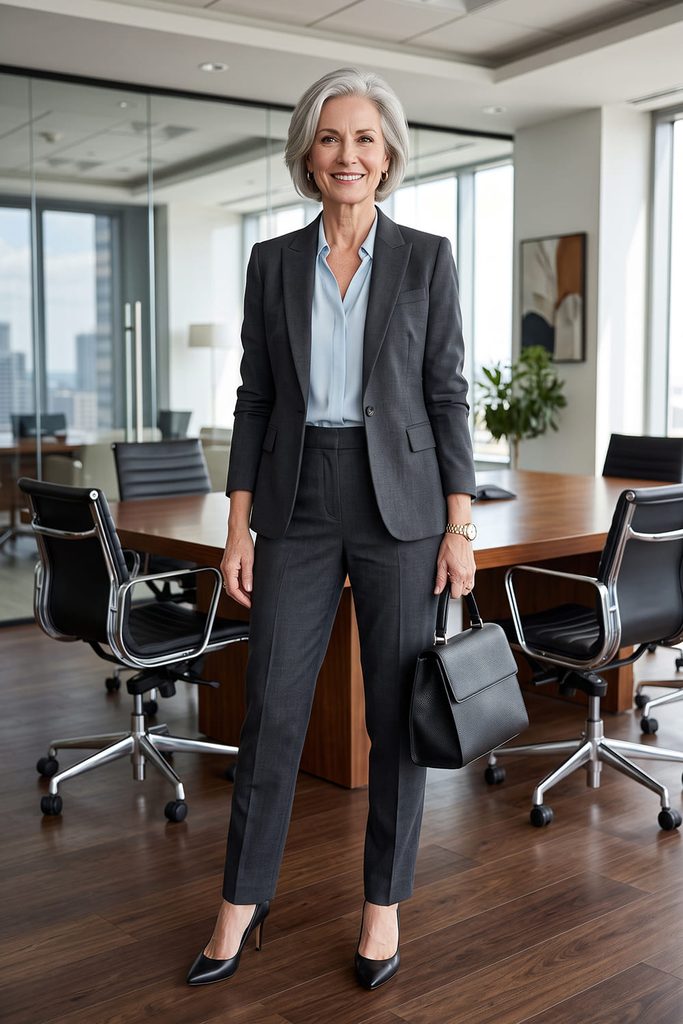
A charcoal suit offers a slightly softer alternative to black while maintaining a formal appearance. Pair it with a pale blue blouse for a subtle contrast. The blouse can be tucked neatly into the trousers, while the jacket remains buttoned for a formal meeting or open for a slightly more relaxed office setting.
Choose simple black or charcoal shoes and a structured handbag. This is a strong option for days involving several meetings because the outfit is coordinated from top to bottom.
If your workplace follows a formal business-professional dress code, a dark suit with a simple blouse is consistent with common professional attire guidance.
7. Wide-Leg Navy Trousers With a Tailored Jacket
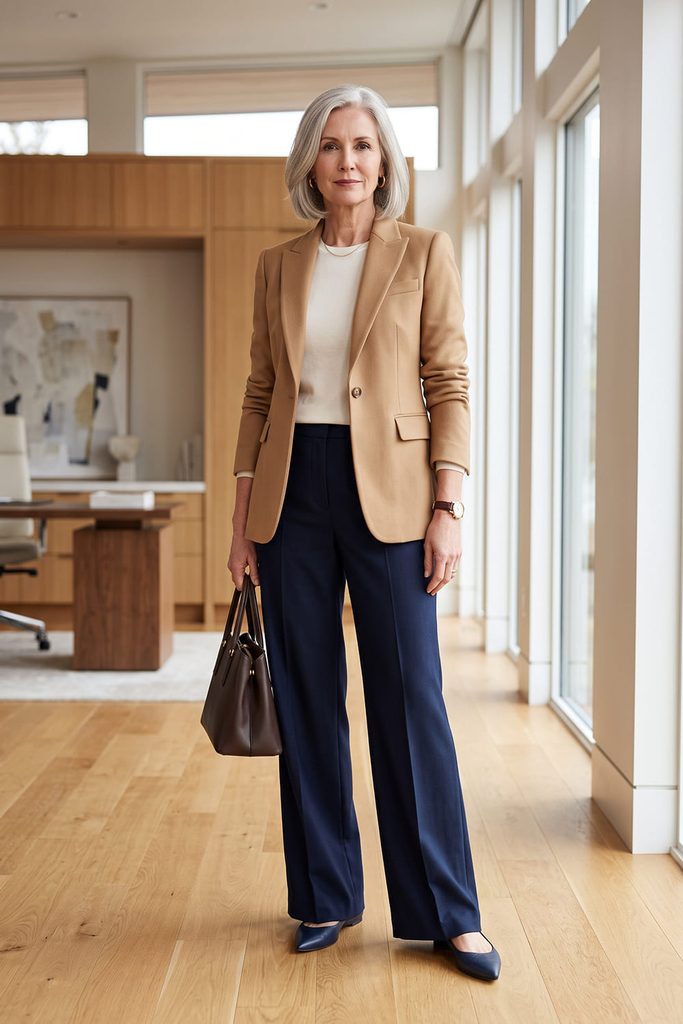
Wide-leg trousers can create a modern executive silhouette while still looking polished. Choose trousers that fall cleanly from the waist and reach close to the top of the shoe. Pair them with a relatively streamlined top and a tailored jacket.
Navy trousers with an ivory knit top and camel jacket create a sophisticated neutral combination. Avoid making both the top and jacket overly loose. The contrast between a relaxed trouser shape and a structured upper half keeps the outfit balanced.
Finish with pointed flats, low pumps, or another polished shoe. This outfit works well for executives who prefer contemporary proportions but still want their clothing to feel appropriate for formal meetings.
8. Monochromatic Gray With a Statement Necklace
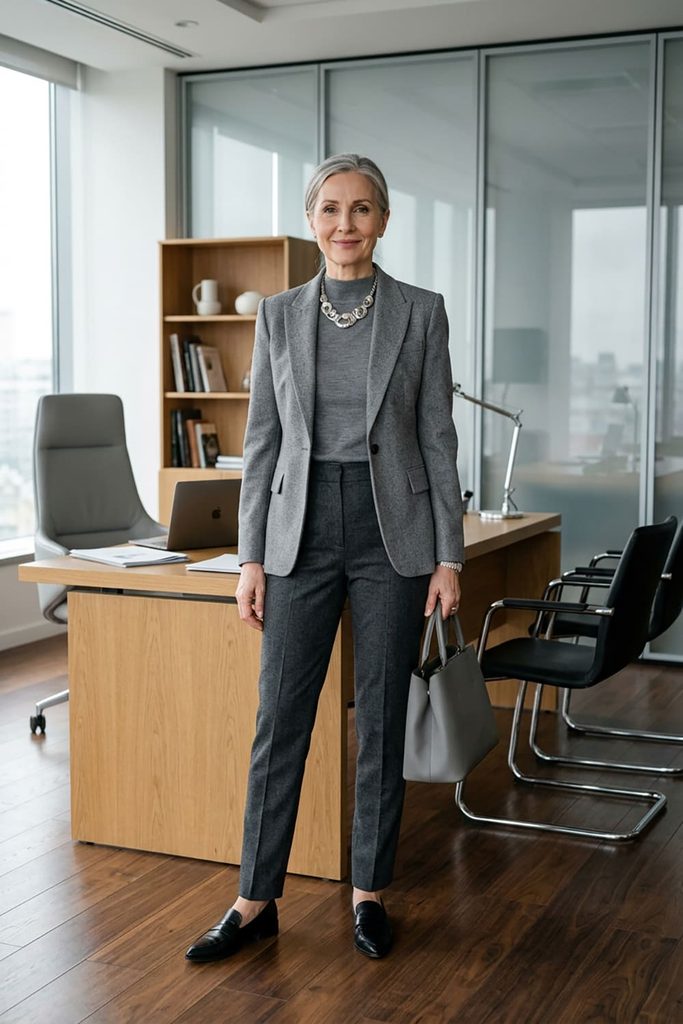
A monochromatic gray outfit can look exceptionally polished without relying on strong color. Combine charcoal trousers with a medium-gray blouse or knit top and a slightly lighter gray jacket.
Then add one distinctive accessory, such as a sculptural necklace. Keep the necklace elegant rather than oversized or noisy. The goal is to introduce personality without overwhelming the clean lines of the clothing.
Black or gray shoes complete the outfit. This combination is useful when you want a refined appearance for an ordinary leadership day. It can also become a practical travel outfit because gray separates are easy to combine with black, navy, cream, and other neutrals.
9. Camel Blazer With Navy Trousers
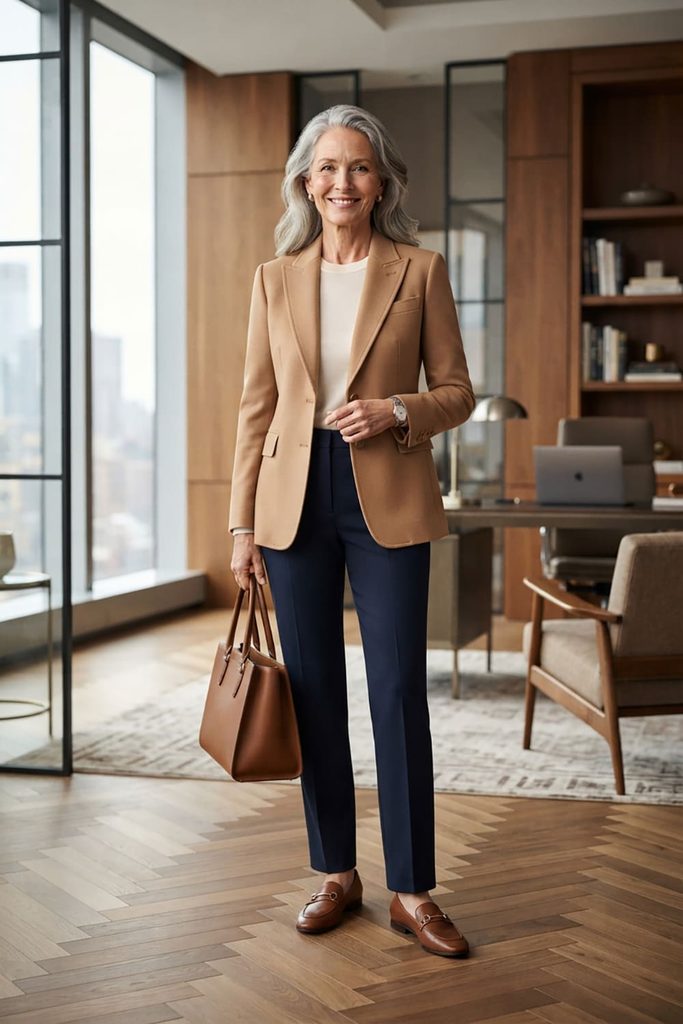
Camel and navy make an excellent executive combination when you want something more distinctive than an all-neutral suit. Wear tailored navy trousers with an ivory blouse or fine-knit top. Add a camel blazer with a structured shoulder and clean lapels.
Brown shoes and a brown handbag connect naturally with the camel blazer. A simple watch and small earrings are enough to finish the outfit. This combination can work for office meetings, business lunches, presentations, and networking events.
The blazer can also be removed when the environment is more relaxed, leaving a simple navy-and-ivory base.
10. Tailored Midi Dress With a Longline Jacket
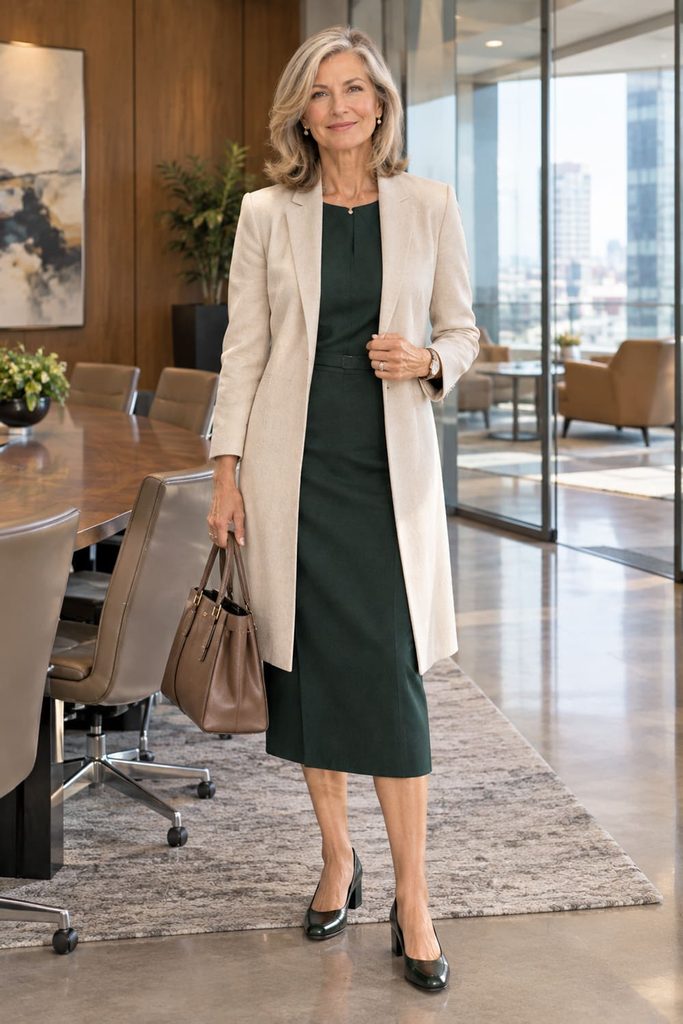
A tailored midi dress can create a sophisticated alternative to trousers. Choose a dress in navy, charcoal, deep green, burgundy, or another restrained color. Look for a clean shape rather than excessive embellishment.
Add a longline jacket in a complementary neutral. The longer jacket creates a streamlined appearance while giving you another layer for offices with strong air conditioning. Low pumps or refined flats are practical choices.
This outfit can be especially useful for presentations or external meetings because it looks coordinated without requiring a traditional two-piece suit. If the dress has a strong color, keep the jacket and accessories neutral.
11. Dark Green Suit With an Ivory Top
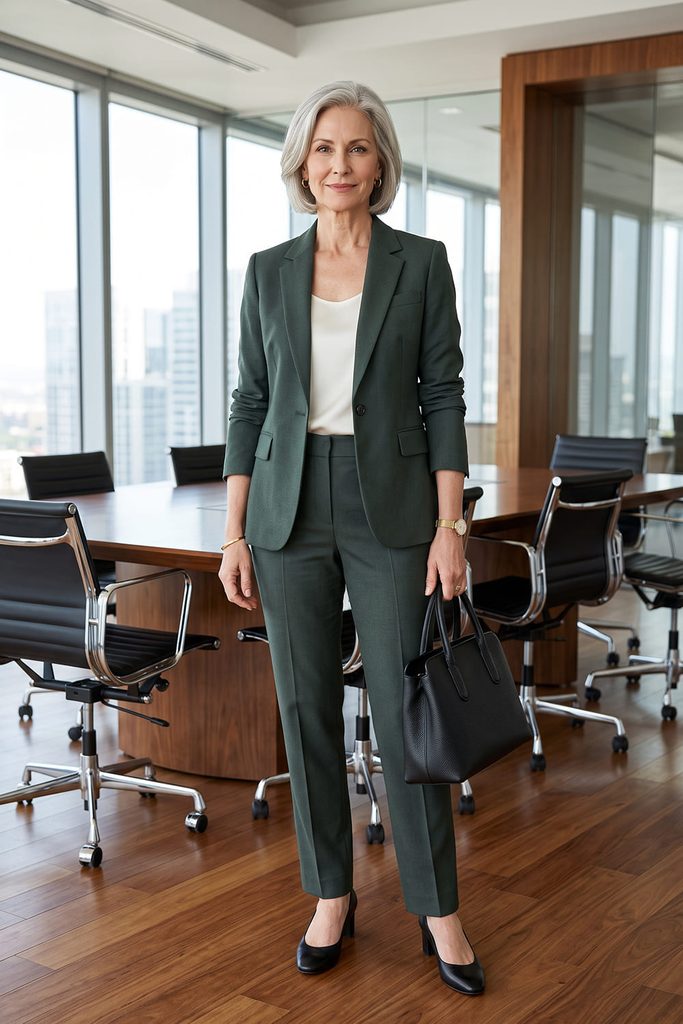
A dark green suit can bring color into an executive wardrobe while maintaining a restrained appearance. Choose a deep, muted green rather than an extremely bright shade.
Wear it with an ivory blouse or simple shell top. Keep the shoes and handbag in black, brown, or another neutral. The matching jacket and trousers provide the structure, while the color gives the outfit individuality.
This is particularly useful when your wardrobe already contains several navy and gray suits, and you want another option for important meetings. Because the suit itself makes a strong statement, avoid combining it with a heavily patterned blouse or multiple bold accessories.
12. Black Trousers With a Jewel-Tone Blouse and Longline Blazer
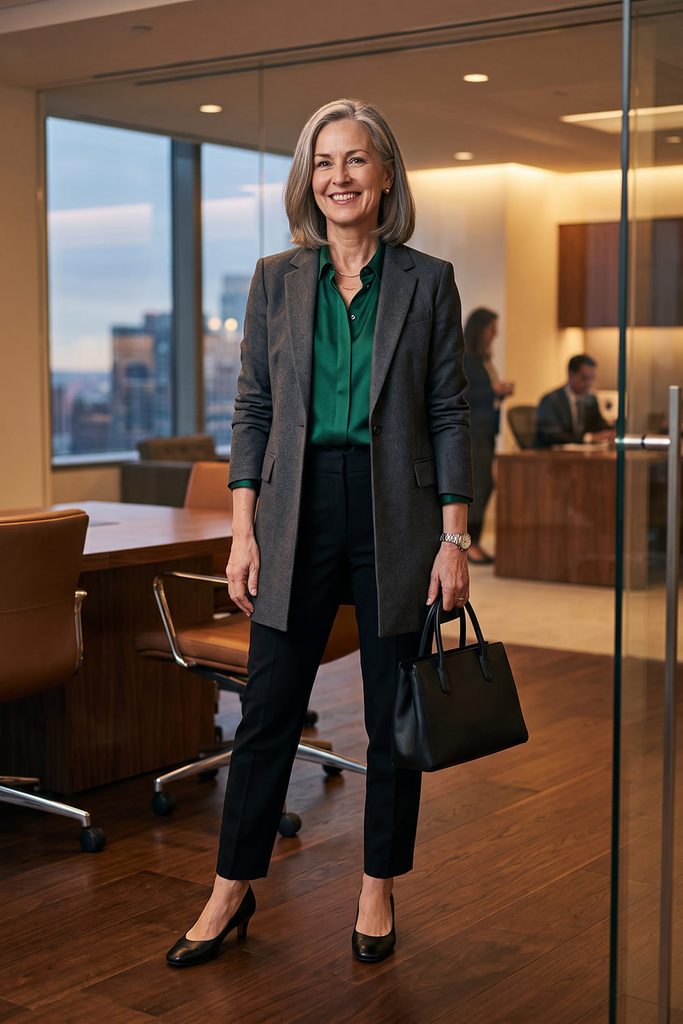
For a polished outfit that is not a traditional suit, combine black trousers with a jewel-tone blouse and longline blazer. The blouse could be emerald, sapphire, burgundy, plum, or deep teal.
Choose a black, charcoal, camel, or navy blazer depending on the blouse color. A longline blazer adds structure while allowing the outfit to remain comfortable during long meetings. Keep the shoes simple so the blouse remains the main source of color.
This combination is especially useful for managers who want to transition between a normal office day and an evening professional event without changing their entire outfit.
13. Coordinated Skirt Suit With a Simple Shell Top
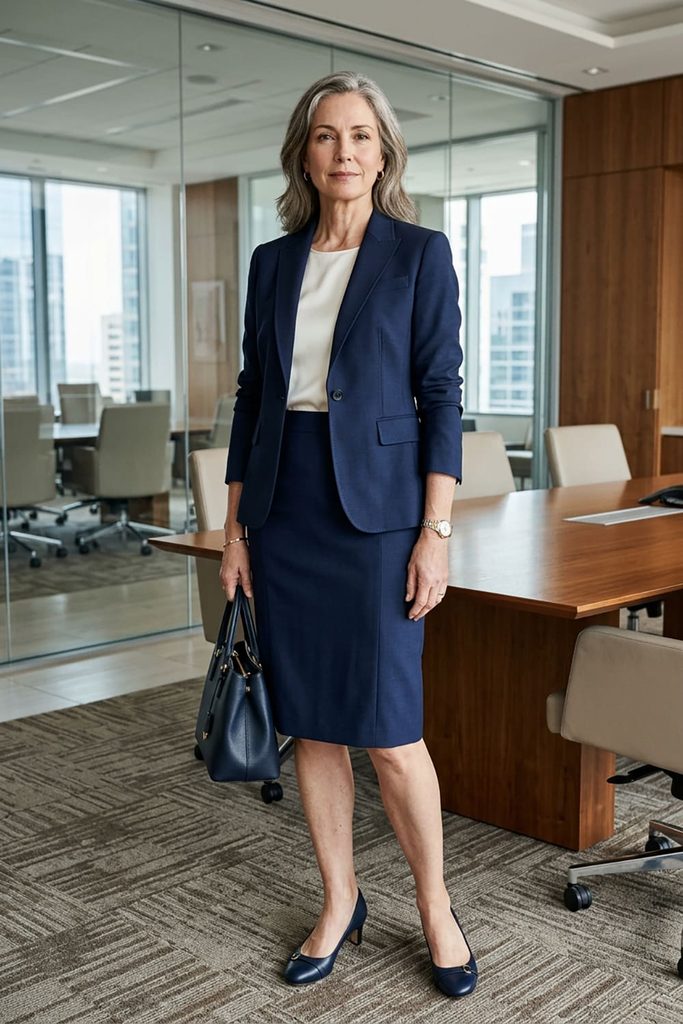
A skirt suit can still be an effective executive wardrobe piece when the cut is modern and comfortable. Choose a knee-length or below-knee skirt with a matching jacket. Navy, charcoal, deep brown, or muted gray are easy starting points.
Wear a simple shell top underneath rather than a heavily detailed blouse. Closed-toe pumps or refined flats can complete the outfit.
The matching pieces create a clear professional structure, making this outfit suitable for formal meetings, presentations, conferences, and conservative business environments.
If you prefer trousers most days, keeping one skirt suit available can provide variety for occasions when a more traditional executive look is appropriate.
14. Taupe Trousers With a Deep Plum Blouse
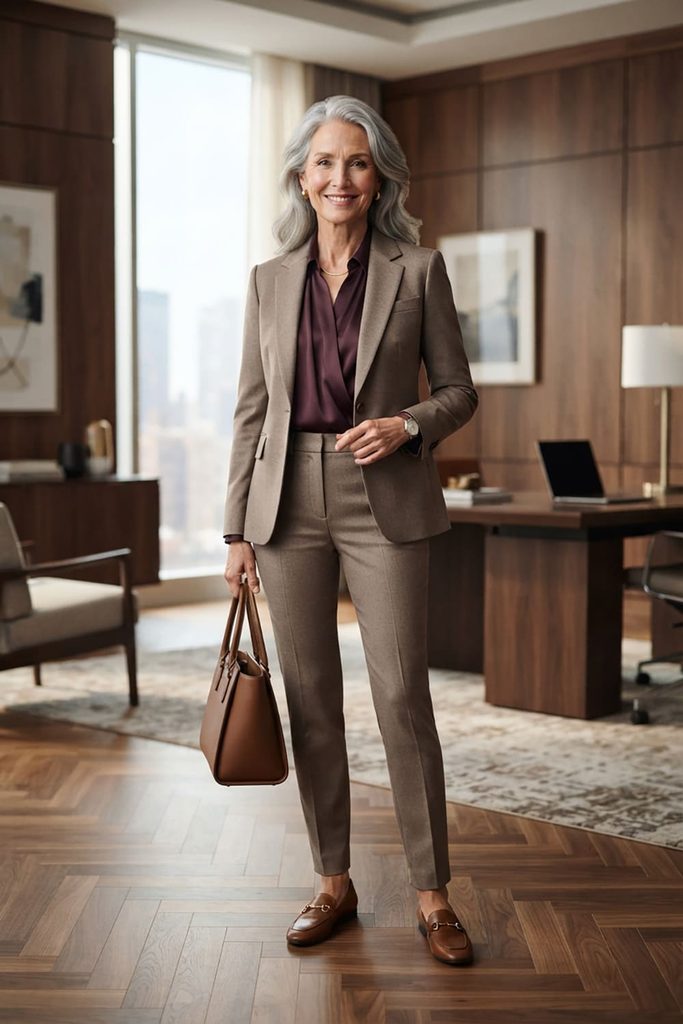
Taupe trousers can soften an executive wardrobe while remaining polished. Pair them with a deep plum blouse and a matching or slightly darker jacket.
Choose a blouse with subtle structure rather than excessive volume. A neat collar, soft draping, or simple cuff detail can provide enough interest. Brown or taupe shoes work particularly well with this combination.
The outfit is less traditional than navy or charcoal but remains sophisticated. It is a useful choice for leadership meetings, team presentations, or office days when you want some color without moving into a highly patterned or casual look.
15. Navy Dress With a Cream Jacket and Statement Scarf
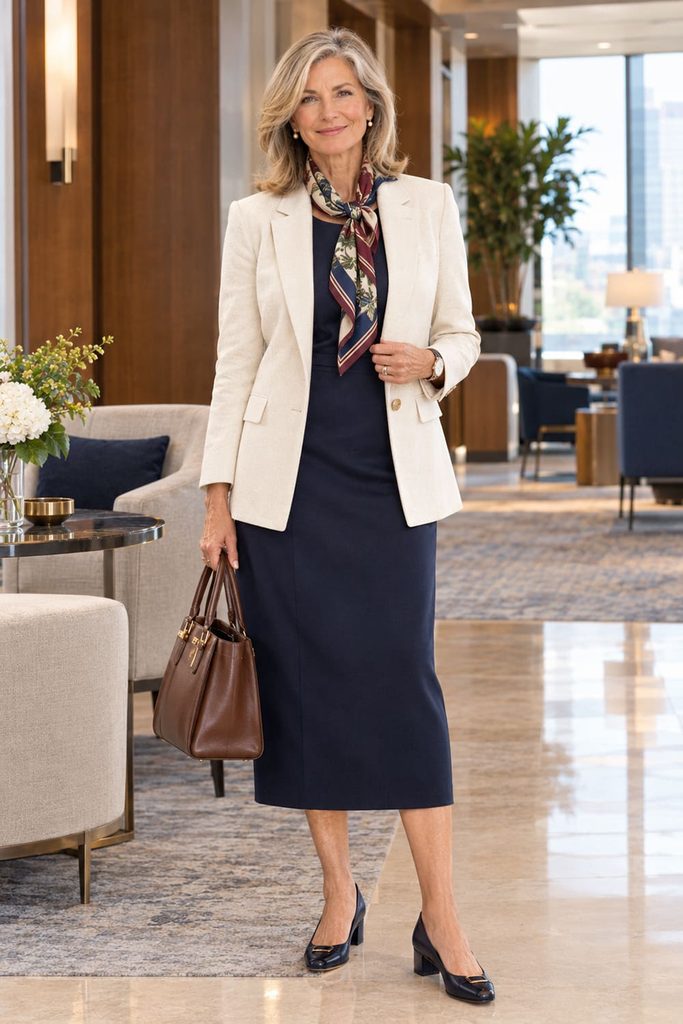
A navy dress and cream jacket create a clean foundation, while a scarf can introduce color and personality. Choose a simple navy dress with a comfortable, structured silhouette. Add a cream jacket and a scarf containing two or three colors that coordinate with the rest of your wardrobe.
For example, a scarf combining burgundy, navy, cream, and muted green can connect several pieces you already own. Keep the rest of the accessories simple.
This outfit is especially useful for conferences, networking events, travel days, and business lunches where you want to look polished but not overly formal. The scarf can also be removed when you want a simpler appearance.
How to Build an Executive Capsule Wardrobe
An executive wardrobe does not need dozens of separate outfits. A carefully selected collection of interchangeable pieces can create considerably more variety.
A practical foundation might include:
- One navy pantsuit
- One charcoal or gray suit
- One neutral blazer
- One cream or camel blazer
- Two pairs of tailored trousers
- One wide-leg trouser
- One professional midi dress
- One additional dress in a deeper color
- Two simple blouses
- Two fine-knit tops
- One skirt suit or tailored skirt
- One statement blouse
- One pair of polished loafers
- One pair of low pumps
- One structured work bag
These pieces can be combined in numerous ways.
For example, the navy suit jacket can work with gray trousers, while the camel blazer can be worn with navy trousers. A single ivory blouse can work underneath almost every jacket.
What to Wear for Executive Meetings
The level of formality should depend on your organization and the meeting itself. Business-professional environments commonly favor coordinated suits, tailored trousers, blazers, dresses, and relatively neutral colors.
For an important external meeting, a matching pantsuit or a tailored dress with a structured jacket is a straightforward option.
For an internal leadership meeting, tailored separates may be enough if that matches the organization’s normal dress culture.
When attending a meeting with clients, investors, senior executives, or external partners, it can be useful to prepare an outfit that is slightly more formal than your everyday office combination if that aligns with your company’s expectations.
Comfortable Shoes for Women in Leadership
Executive clothing does not require uncomfortable footwear.
Loafers, low pumps, polished flats, and other closed-toe professional shoes can work with tailored trousers, dresses, and suits. Current business-professional guidance includes loafers, flats, and low pumps among common professional choices.
If you spend much of the day walking between conference rooms, offices, or different floors, prioritize shoes that allow comfortable movement.
A practical strategy is to keep a second pair of professional shoes at the office. You can travel in comfortable footwear and change when you arrive, provided that fits your workplace expectations.
How to Add Personality to Executive Clothing
Professional clothing does not have to be completely plain.
The easiest way to add personality is through one controlled detail. This might be a jewel-tone blouse, a patterned scarf, a distinctive necklace, an elegant watch, or an interesting but professional handbag.
If the clothing already contains a strong color, keep the accessories quiet.
If the outfit is entirely neutral, one colorful accessory can provide enough visual interest.
In more formal business-professional settings, restrained accessories and neutral colors are generally more consistent with the dress code.
Executive Outfits for Travel Days
Business travel requires clothing that can remain polished after sitting for several hours.
A knit top with tailored trousers and a structured blazer can be easier to travel in than a rigid suit.
Choose fabrics that resist wrinkles and shoes that are comfortable enough for walking through airports or between meetings.
Navy, charcoal, taupe, and cream are particularly useful because they can be mixed throughout a trip.
For example, one navy trouser can be worn with a cream blouse on the first day, a burgundy knit top on the second, and a blazer with a different top on the third.
Pack one complete formal outfit separately for an important presentation or meeting.
Executive Dressing for a More Relaxed Office
Not every management position requires a suit every day. Business-casual clothing can still be polished, and current guidance recognizes that workplace expectations vary significantly by company and industry.
For a relaxed executive office, try tailored trousers with a fine-knit top and blazer, a sophisticated midi dress with a cardigan, or dark trousers with a blouse and structured jacket.
The important distinction is that relaxed does not have to mean careless.
Well-fitting clothing, clean shoes, coordinated colors, and a neat overall appearance can keep a less formal outfit appropriate for leadership settings.
Best Colors for an Executive Wardrobe
A neutral foundation makes an executive wardrobe easier to coordinate.
Consider building around:
- Navy
- Charcoal
- Black
- Cream
- Ivory
- Camel
- Taupe
- Dark brown
Then add a few deeper accent colors:
- Burgundy
- Emerald
- Deep teal
- Plum
- Sapphire blue
- Muted green
These colors provide variety without making every outfit dependent on a bold pattern.
Final Thoughts
The most useful work outfits for women over 50 in management or executive positions combine structure with comfort and personal style.
A navy pantsuit can handle an important presentation, while tailored trousers and a blazer can work for an ordinary leadership day. A sophisticated midi dress provides another option when you want something streamlined, and a jewel-tone blouse can bring personality to a neutral executive wardrobe.
The goal is not to dress identically every day. Instead, build a collection of pieces that can move between internal meetings, client appointments, presentations, conferences, travel, and regular office work.
Start with dependable neutrals, add a few rich colors, choose comfortable professional footwear, and pay attention to fit and fabric. Most importantly, use your organization’s actual dress code as the final guide because management expectations can differ significantly between industries and workplaces.


