15 Work Outfits for Women Over 50 Working in Government or Public Sector Jobs
Working in government or the public sector often means dressing for a professional environment where polished, practical clothing is more appropriate than constantly following fashion trends. Depending on the department and role, a typical day may include desk work, meetings, public-facing responsibilities, presentations, inspections, or appointments with colleagues and community members.
For women over 50, a professional wardrobe can combine comfort, confidence, and timeless style. Tailored trousers, modest blouses, cardigans, structured jackets, midi dresses, skirts, and comfortable professional shoes can create many outfits without requiring an oversized wardrobe.
Government workplaces can vary considerably in their dress expectations. Some offices are relatively formal, while others follow a more relaxed business-casual approach. Your department’s specific dress policy should always take priority.
The 15 work outfits below are built around versatile pieces you can adapt to different public-sector environments. The emphasis is on polished silhouettes, practical fabrics, understated accessories, and colors that are easy to coordinate.
1. Navy Trousers With an Ivory Blouse
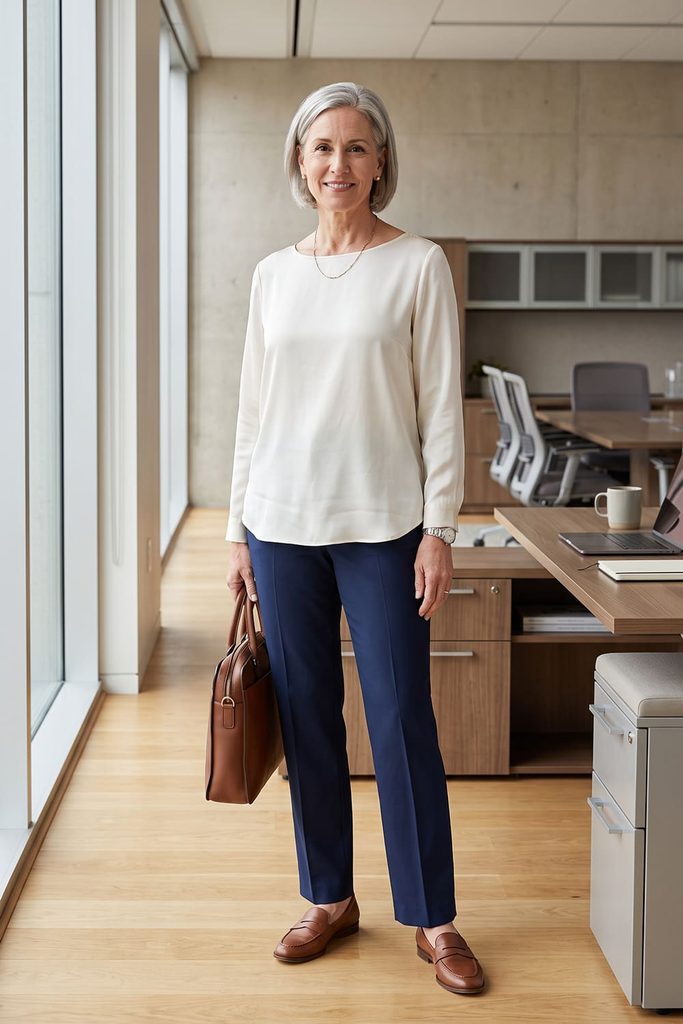
Navy trousers are an excellent foundation for a government or public-sector wardrobe because they look professional without feeling overly formal.
Pair straight-leg or gently tapered navy trousers with an ivory blouse. A simple blouse with a comfortable neckline and modest fit can work for both desk duties and meetings. Add brown or navy loafers and a structured work bag.
If you have an important meeting scheduled, add a navy, gray, or camel blazer. The blazer immediately makes the outfit look more formal. This combination is also easy to repeat with different tops throughout the month, making it useful for a practical work wardrobe.
2. Gray Trousers With a Soft Blue Shirt
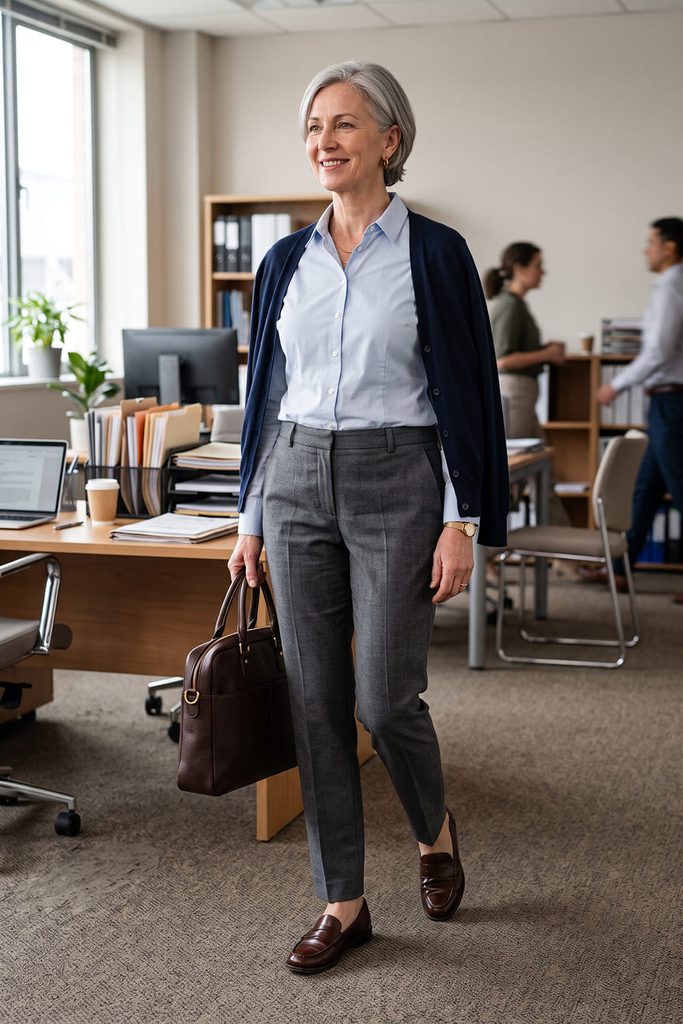
Gray trousers can create a polished appearance while offering a softer alternative to black. Pair them with a pale blue button-up shirt or blouse. The combination feels professional without appearing overly severe.
Choose black, navy, or brown loafers depending on the rest of your accessories. For a colder office, add a fine-knit cardigan in navy, charcoal, or camel.
This outfit works particularly well for ordinary administrative days when you need to look professional but do not necessarily need a full suit. The clean color combination can also be appropriate for meetings with colleagues or members of the public.
3. Navy Midi Dress With a Cardigan
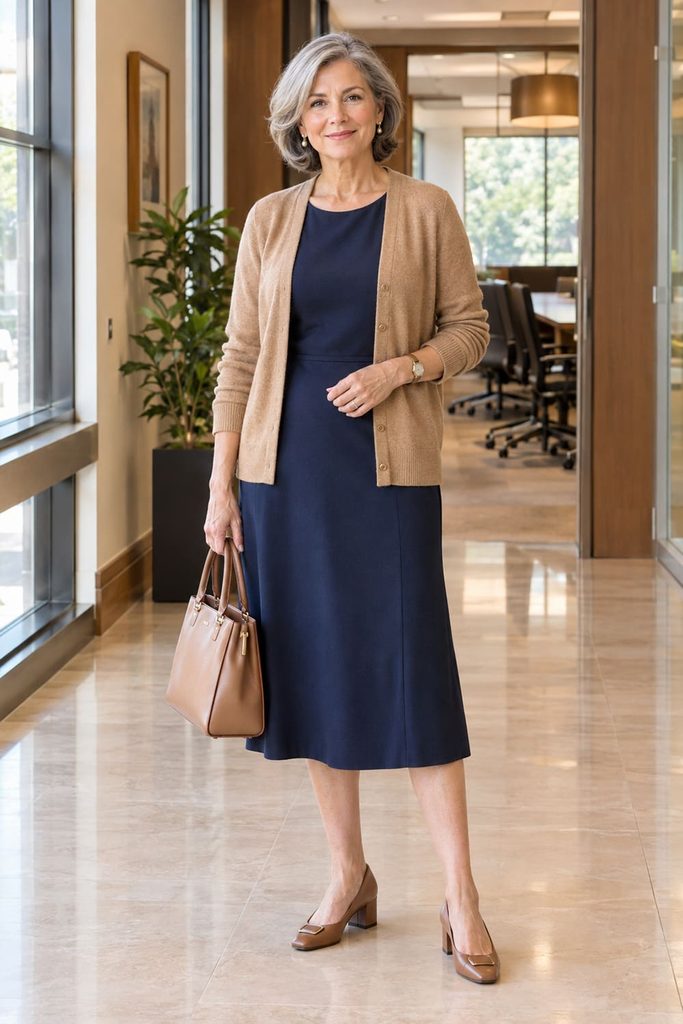
A simple navy midi dress can make getting dressed for work considerably easier. Choose a comfortable silhouette that allows you to sit, stand, and walk without constantly adjusting the garment. A modest neckline and knee-length or below-knee hemline can work well in many professional environments.
Add a lightweight cardigan in gray, beige, cream, or camel. Complete the outfit with polished flats or low block heels.
This is particularly useful for days when you have several responsibilities and do not want to coordinate multiple separate pieces. If a more formal meeting appears on your schedule, replace the cardigan with a structured blazer.
4. Beige Trousers With a Navy Blazer
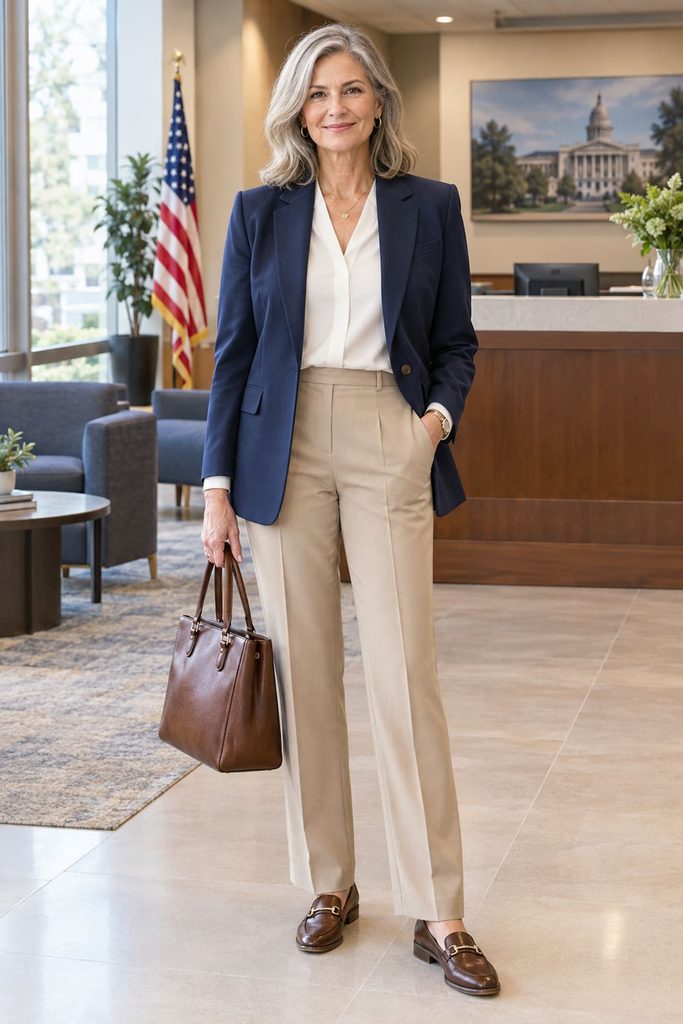
Beige trousers can brighten a professional wardrobe while remaining understated. Pair them with an ivory or pale blue blouse and add a navy blazer. Brown loafers or low heels complement the warmer trouser color naturally.
This outfit can work especially well in public-facing roles because it looks polished without feeling overly formal.
The navy blazer can also be worn with gray or black trousers, while the beige trousers can be combined with burgundy, green, brown, or cream tops. That makes this one of the more useful combinations for building a small work wardrobe.
5. Black Trousers With a Burgundy Blouse
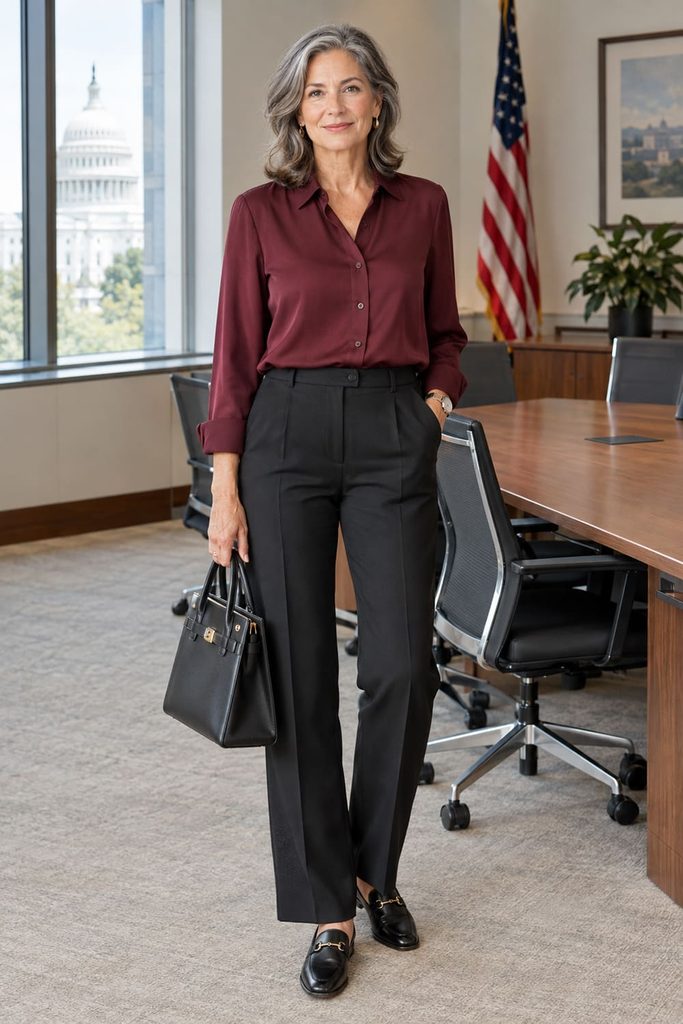
Black trousers provide a reliable foundation for a richer-colored blouse. Choose a burgundy top with a simple shape. The color adds personality while the black trousers keep the outfit professional.
Add black loafers or low pumps and a structured handbag. If your workplace is relatively formal, add a black or charcoal blazer. For a more relaxed department, the blouse and trousers may be enough.
The same approach can be used with deep teal, plum, emerald, or sapphire blue. These deeper colors can be particularly useful when you want to move beyond an entirely neutral wardrobe.
6. Charcoal Trousers With a Camel Cardigan
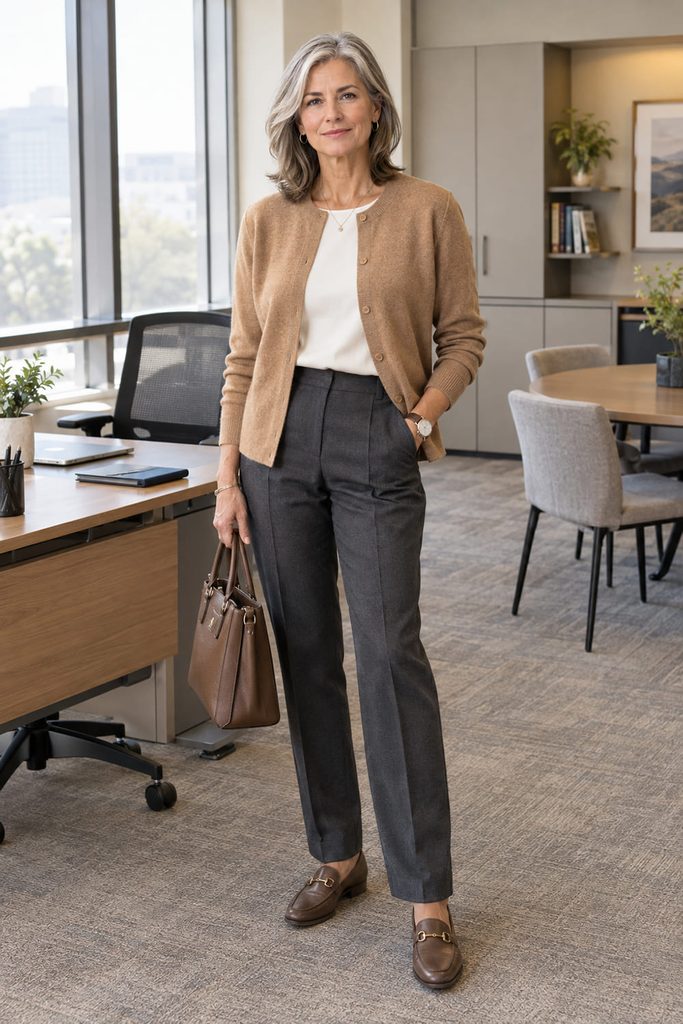
For a softer business-casual outfit, combine charcoal trousers with an ivory top and camel cardigan. Choose a cardigan that has enough structure to maintain a neat appearance. Extremely oversized knitwear can look too casual for some public-sector offices.
Add loafers in brown, black, or taupe. This outfit is comfortable for long desk days and practical for offices where temperatures fluctuate. The neutral palette also makes it easy to add a patterned scarf or simple piece of jewelry without creating too much visual contrast.
7. Tailored Skirt With a Button-Up Blouse
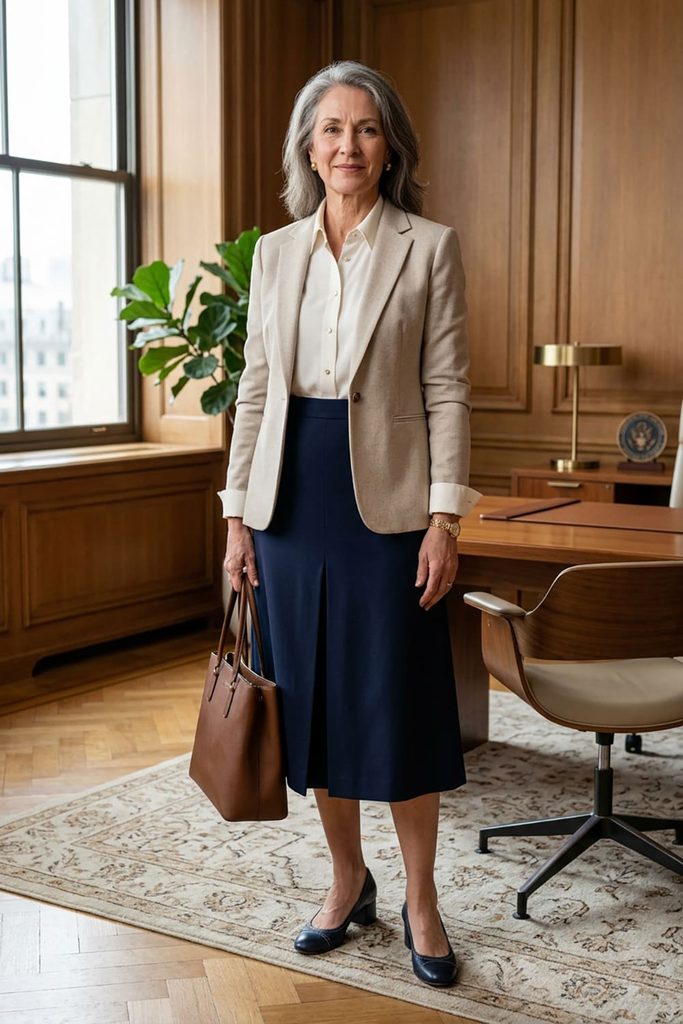
A tailored skirt can provide an alternative to trousers while maintaining a professional appearance. Choose a knee-length or below-knee skirt in navy, charcoal, black, taupe, or another understated shade.
Pair it with a crisp button-up blouse in white, ivory, pale blue, or a subtle pattern. A cardigan or blazer can provide an additional layer. For footwear, choose comfortable flats or low heels if you spend significant time walking around the workplace.
This combination can be particularly suitable for formal offices where a polished appearance is expected, but a full suit is not necessary every day.
8. Brown Trousers With a Cream Blouse
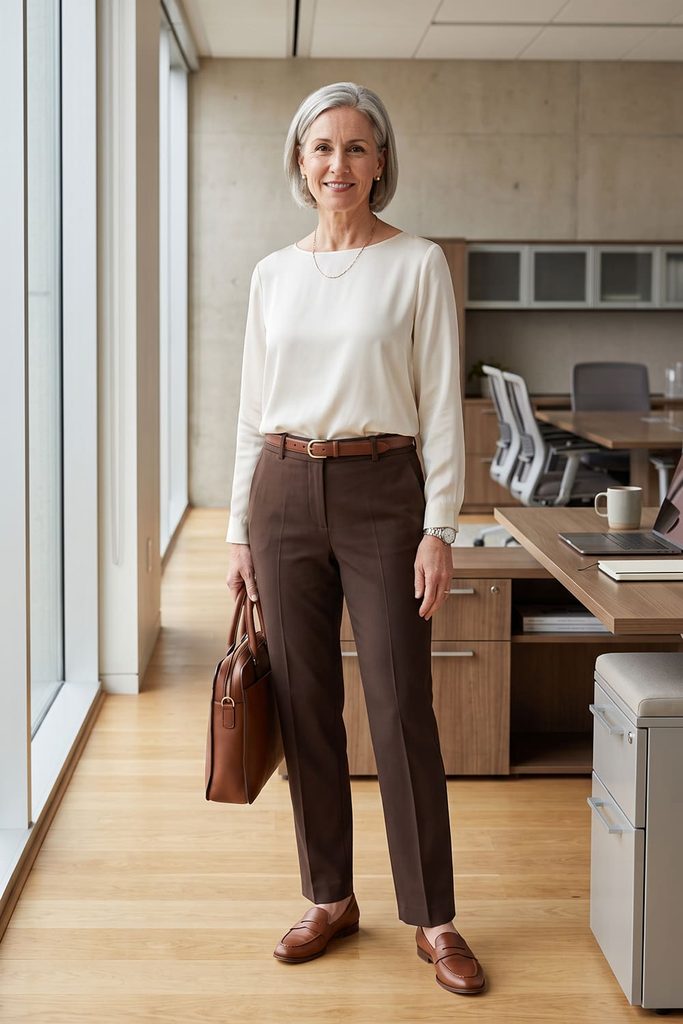
Brown can be an excellent alternative to black for a government office wardrobe. Choose dark chocolate, walnut, or medium brown trousers and combine them with a cream blouse. Add a brown belt and brown loafers to create a cohesive look.
A navy or camel blazer can be layered over the outfit when necessary. This combination has a warm, approachable quality that can work particularly well for public-facing roles.
It also provides useful variety if your wardrobe already contains many navy and gray pieces.
9. Dark Trousers With a Patterned Blouse
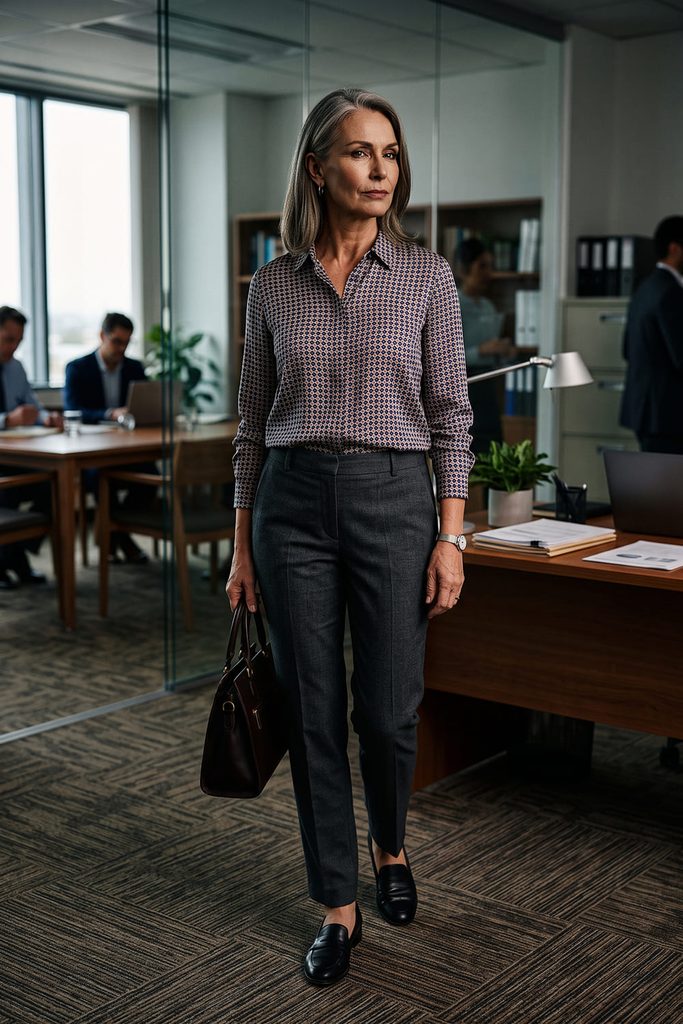
A subtle pattern can make a professional wardrobe feel less repetitive. Choose a blouse featuring a small geometric design, restrained floral pattern, narrow stripe, or understated abstract print.
Pair it with solid navy, charcoal, black, or brown trousers. Because the blouse provides the visual interest, keep your shoes and accessories simple.
This outfit is useful for ordinary office days when you want something more interesting than a plain shirt but still need to maintain a professional appearance.
Choose fabrics that are comfortable and relatively wrinkle-resistant if your job involves frequent movement.
10. Gray Suit With an Ivory Shell Top
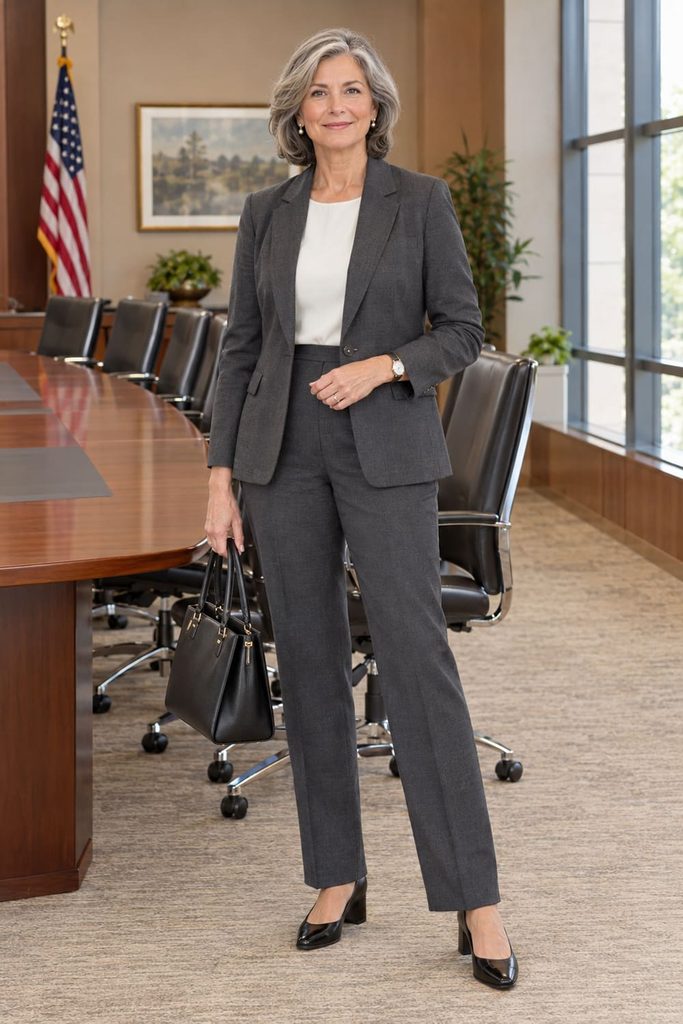
For more formal government environments, a coordinated suit can provide a dependable option. Choose a gray trouser suit with a clean, comfortable cut. Underneath, wear a simple ivory shell top.
The shell creates a smooth appearance under the jacket without adding unnecessary bulk. Complete the outfit with black or gray low pumps and a structured handbag.
This is a strong option for formal meetings, presentations, conferences, interviews, or days when senior officials are visiting. The suit can later be separated into individual pieces for less formal outfits, making it more versatile than it may initially appear.
11. Olive Trousers With a Cream Knit Top
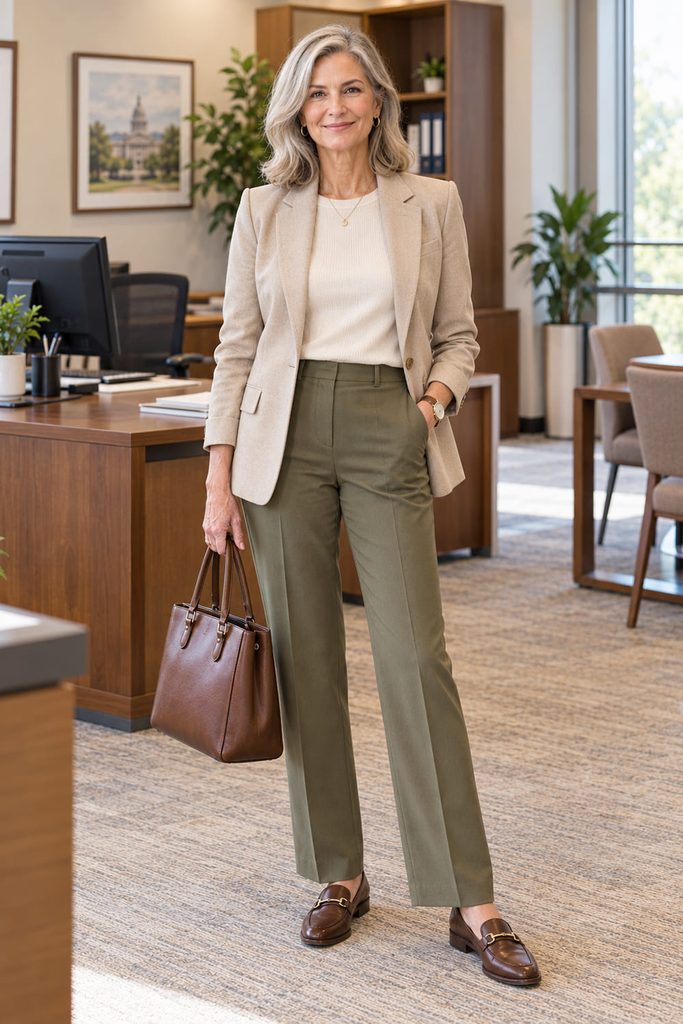
Olive can introduce color while remaining relatively understated. Pair olive trousers with a cream or ivory fine-knit top. Add a neutral blazer if your workplace requires a more formal appearance.
Brown shoes work naturally with olive, although black can also provide a sharper contrast. Keep jewelry simple and choose a practical handbag. This outfit is particularly useful for a public-sector workplace with a relaxed business-casual culture.
The earthy colors also work well during autumn and winter, although lighter olive and cream can easily be adapted for warmer months.
12. Midi Skirt With a Fine-Knit Sweater
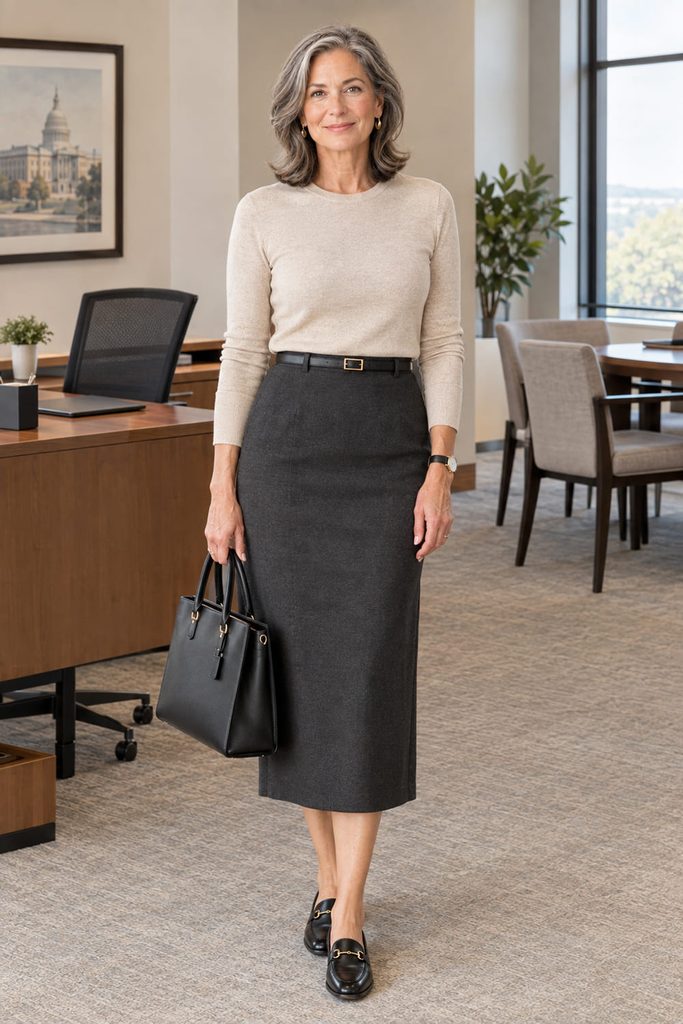
A midi skirt paired with a fine-knit sweater can create a polished outfit without feeling restrictive. Choose a skirt in navy, charcoal, brown, or a subtle pattern. Pair it with a fitted or semi-fitted knit top. A narrow belt can help define the waist if desired.
Add loafers, flats, or low block heels. This combination can be especially practical in offices where you want to look professional but spend much of the day seated. For a more formal meeting, add a tailored blazer.
The same skirt can also be worn with a blouse, giving you another outfit without purchasing additional clothing.
13. Navy Trousers With a Burgundy Cardigan
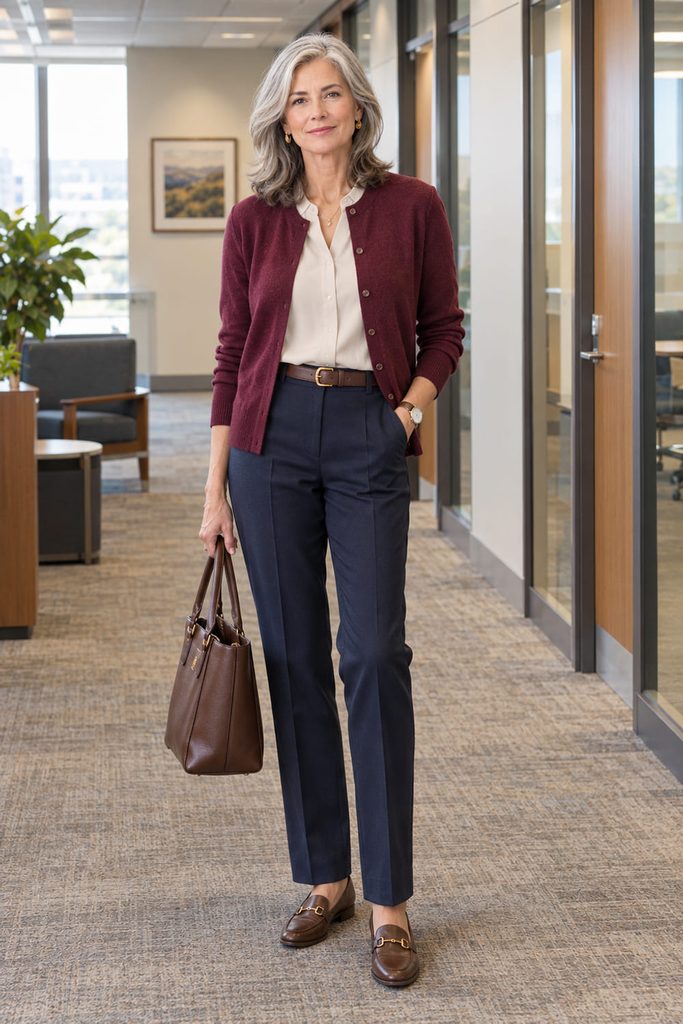
A burgundy cardigan can add warmth and color to a simple pair of navy trousers. Wear the trousers with a cream or light-gray top underneath the cardigan. Choose a cardigan with a relatively clean silhouette and minimal decorative details.
Brown or navy loafers complete the outfit. This is a comfortable option for everyday public-sector work, particularly when your day involves moving between a desk, meeting rooms, and other areas of the office.
The cardigan can also be removed during warmer parts of the day, leaving a simple neutral base underneath.
14. Black Midi Dress With a Structured Jacket
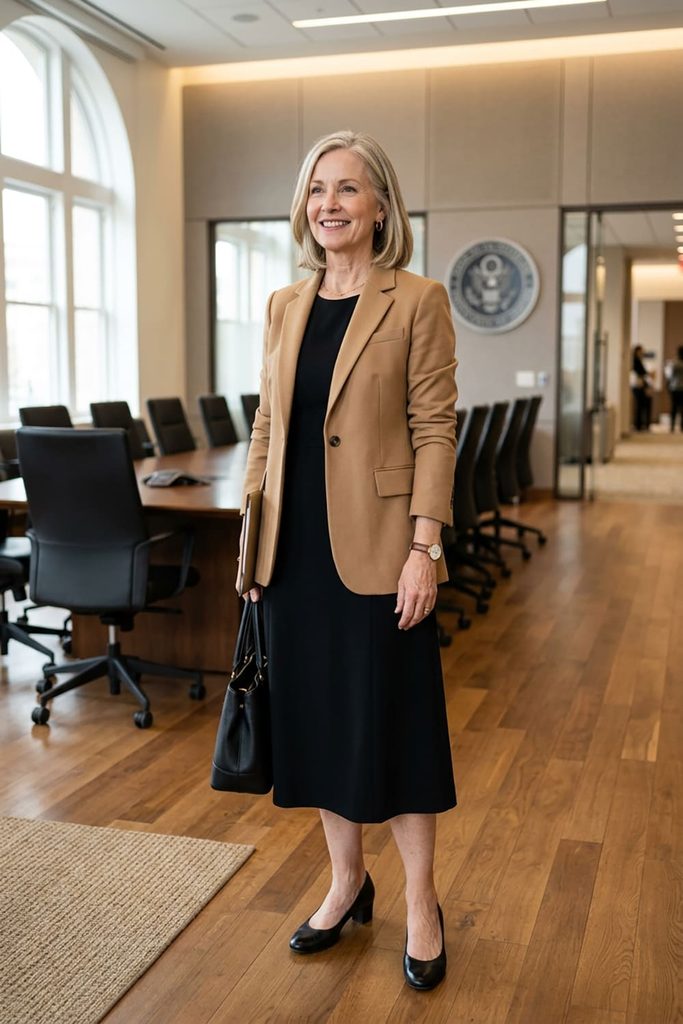
A black midi dress can provide a polished foundation for a more formal workday. Choose a simple design without excessive embellishment. Add a structured jacket in camel, gray, navy, or a subtle pattern.
The jacket makes the dress more appropriate for meetings while also adding a layer for temperature-controlled offices. Pair the outfit with low pumps or refined flats.
This combination is particularly useful for presentations, conferences, public meetings, or occasions where you may be interacting with senior staff. Because the dress is simple, you can change the appearance with different jackets, scarves, or accessories.
15. Navy Blazer With Wide-Leg Trousers
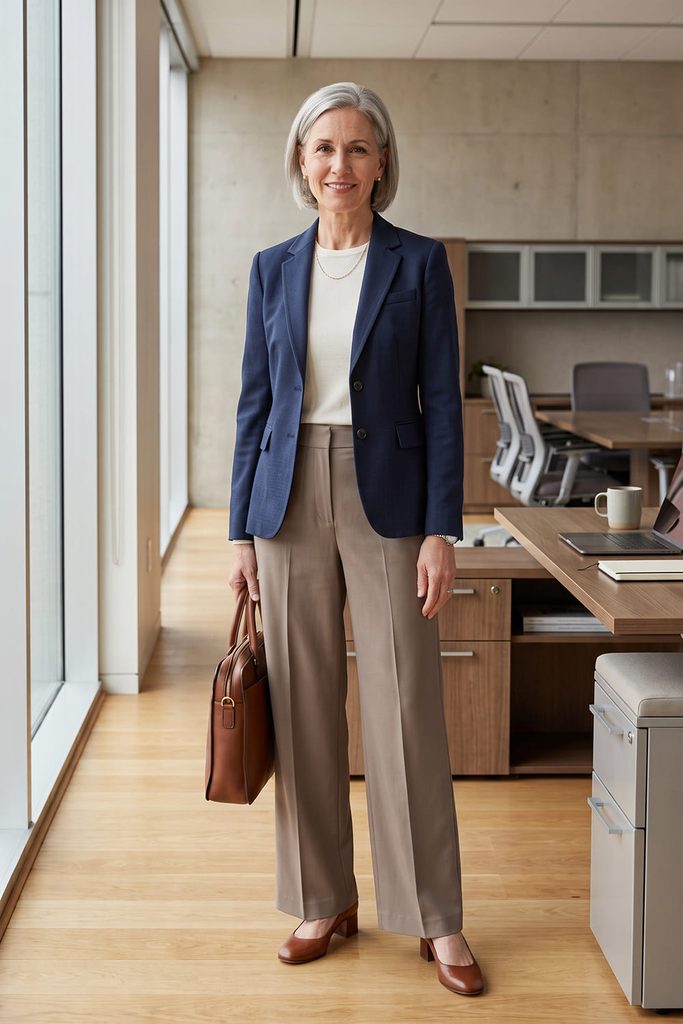
Wide-leg trousers can create a modern professional silhouette while allowing comfortable movement. Choose trousers in beige, gray, taupe, or a dark neutral. Pair them with a simple blouse or fine-knit top and add a navy blazer.
Keep the top relatively streamlined so the outfit maintains balance. Loafers or low block heels can complete the look. This outfit is a good option for women who want a contemporary alternative to traditional straight-leg trousers while maintaining a professional appearance.
The blazer can also be worn with other trousers or skirts, making it an especially useful wardrobe investment.
Building a Practical Public-Sector Work Wardrobe
You do not need a huge number of clothes to create a varied professional wardrobe.
A practical foundation could include:
- Two pairs of navy or dark trousers
- One pair of gray trousers
- One pair of beige or brown trousers
- One navy blazer
- One gray or neutral blazer
- Two simple blouses
- One patterned blouse
- Two fine-knit tops
- One cardigan
- One professional midi dress
- One skirt
- One pair of loafers
- One pair of comfortable flats
- One pair of low heels
- One structured work bag
These pieces can be mixed and matched throughout the week.
For example, one navy blazer can work with beige trousers, gray trousers, a skirt, or a dress. A cream blouse can work with navy, brown, black, or olive bottoms.
Dressing for Public-Facing Government Roles
Some government and public-sector positions involve frequent interaction with members of the public. In these roles, clothing should look polished without becoming distracting.
Solid colors and subtle patterns are generally easy choices. Navy, gray, beige, brown, cream, burgundy, and muted green can create a professional appearance without requiring complicated styling.
Comfort also matters. If your position requires standing or walking, choose footwear that allows you to move comfortably throughout the day.
A blazer can be particularly useful because it instantly gives a simple blouse-and-trouser combination a more structured appearance.
What to Wear for Government Meetings
For an important meeting, start with your workplace’s usual level of formality. A matching suit is appropriate for particularly formal environments or important official meetings. In a more relaxed office, tailored trousers with a blouse and blazer may be sufficient.
Keep accessories understated and make sure the clothing is clean and well maintained. A simple watch, small earrings, modest necklace, or structured handbag can finish the outfit without competing with the professional setting.
If you are unsure about the expected dress level for a particular meeting, it is generally safer to choose a slightly more polished version of your normal office attire.
Comfortable Shoes for Long Government Workdays
Public-sector jobs can involve more walking than people expect. You may need to move between departments, attend meetings, visit other offices, or spend part of the day standing.
Loafers, polished flats, low block heels, and comfortable closed-toe shoes are useful options.
If your role requires significant walking, prioritize fit and support over choosing shoes simply because they look formal.
You can also keep a second pair of professional shoes at the workplace. This gives you flexibility if you need a more formal option for an unexpected meeting.
How to Add Color Without Looking Too Casual
A professional wardrobe does not need to be completely neutral.
The easiest approach is to keep the main pieces neutral and introduce color through one item.
For example:
- Burgundy blouse with black trousers
- Emerald cardigan with navy trousers
- Deep teal blouse with gray trousers
- Muted blue shirt with beige trousers
- Plum cardigan with charcoal trousers
- Olive trousers with a cream top
This approach gives you variety while keeping the overall outfit controlled.
If your blouse is strongly colored or patterned, keep the remaining pieces relatively simple.
Dressing Comfortably While Maintaining a Polished Appearance
Comfort does not require oversized clothing or casual fabrics.
Look for trousers with a comfortable waistband, blouses that allow arm movement, jackets that fit properly through the shoulders, and shoes that you can wear for several hours.
Fabric matters too. Breathable materials can be particularly useful if your workplace is warm, while lightweight layers are practical in offices with strong air conditioning.
A polished outfit should allow you to concentrate on your work rather than constantly adjusting your clothes.
Seasonal Ideas for Public-Sector Workwear
During warmer months, lightweight trousers, breathable blouses, midi dresses, and lighter-colored jackets can make professional dressing more comfortable.
Cream, beige, pale blue, soft gray, and muted green can create a fresh appearance.
For cooler months, add fine-knit sweaters, cardigans, tailored coats, scarves, and darker trousers.
Navy, charcoal, burgundy, brown, and deep green work especially well during colder seasons.
The important thing is to maintain the same professional foundation while changing the weight and layering of your clothing.
How to Keep a Government Work Wardrobe Looking Modern
You do not need to follow every fashion trend to keep professional clothing current.
Instead, pay attention to proportions. Straight-leg trousers, softly wide-leg trousers, clean blazers, midi dresses, and streamlined knitwear can create a contemporary appearance without being trend-dependent.
Avoid buying an entire wardrobe around one short-lived fashion trend.
Classic pieces can remain useful for many years when they fit well and are maintained properly.
Simple updates such as a new scarf, modern handbag, updated loafers, or a fresh blouse can also change the appearance of familiar trousers and jackets.
Final Thoughts
The best work outfits for women over 50 working in government or public-sector jobs should feel professional, comfortable, practical, and appropriate for the environment.
Navy trousers, tailored blazers, midi dresses, cardigans, neutral skirts, polished blouses, and comfortable shoes can form the foundation of a versatile wardrobe. Richer shades such as burgundy, olive, deep blue, and plum can add personality without making an outfit feel too casual.
The most important consideration is your specific workplace. Government departments and public-sector organizations can have very different expectations depending on the role, location, and level of formality.
Build your wardrobe around pieces that can handle ordinary office days as well as meetings, public-facing responsibilities, and unexpected professional occasions. When your clothes are comfortable and coordinated, it becomes much easier to focus on the work itself.


