

Easy Home Alterations for Petite Fit Fixes: 15 Fixes
A dress you love, in a fabric you love, with a hem that pools on the floor. A blouse with sleeves past your fingertips. For petite women, near misses like these fill half the wardrobe.
The good news: easy home alterations for petite fit can fix most of them with basic tools. A needle, thread, pins, fabric scissors, an iron and a free half hour cover almost every fix below.
Each fix here works across garments, not just one piece. Trousers, dresses, skirts, tops and one pair of jeans all get a turn, with simple stitches you can undo if needed.
Work on a clean table in bright light, and practice each new stitch on a scrap or a thrifted piece first. Confidence grows fast after the first neat hem.
Start with the garment that bothers you most, and leave fitted shoulders and complex reshaping to a tailor. The fixes below stay in home territory: straight seams, simple folds, and stitches you can practice first.
This post contains affiliate links. If you buy through them, we may earn a small commission at no extra cost to you. See our Affiliate Disclosure.
1. Hem Cotton Trousers to a Clean Ankle Length

Put the trousers on with the shoes you wear most, and pin the fold where the hem should end, right above the ankle bone. Pin both legs and compare them side by side.
Take the trousers off, measure the fold on each leg, and even up any difference. Press the fold flat with a warm iron so the crease guides your stitching.
Trim spare fabric to leave about an inch and a half, fold the raw edge under, then stitch close to the fold with small, even stitches in matching thread.
Press once more and try them on. A clean ankle length on petite trousers looks bought that way, and the method works for linen and twill pairs too.
2. Shorten a Midi Dress Hem Evenly All Round
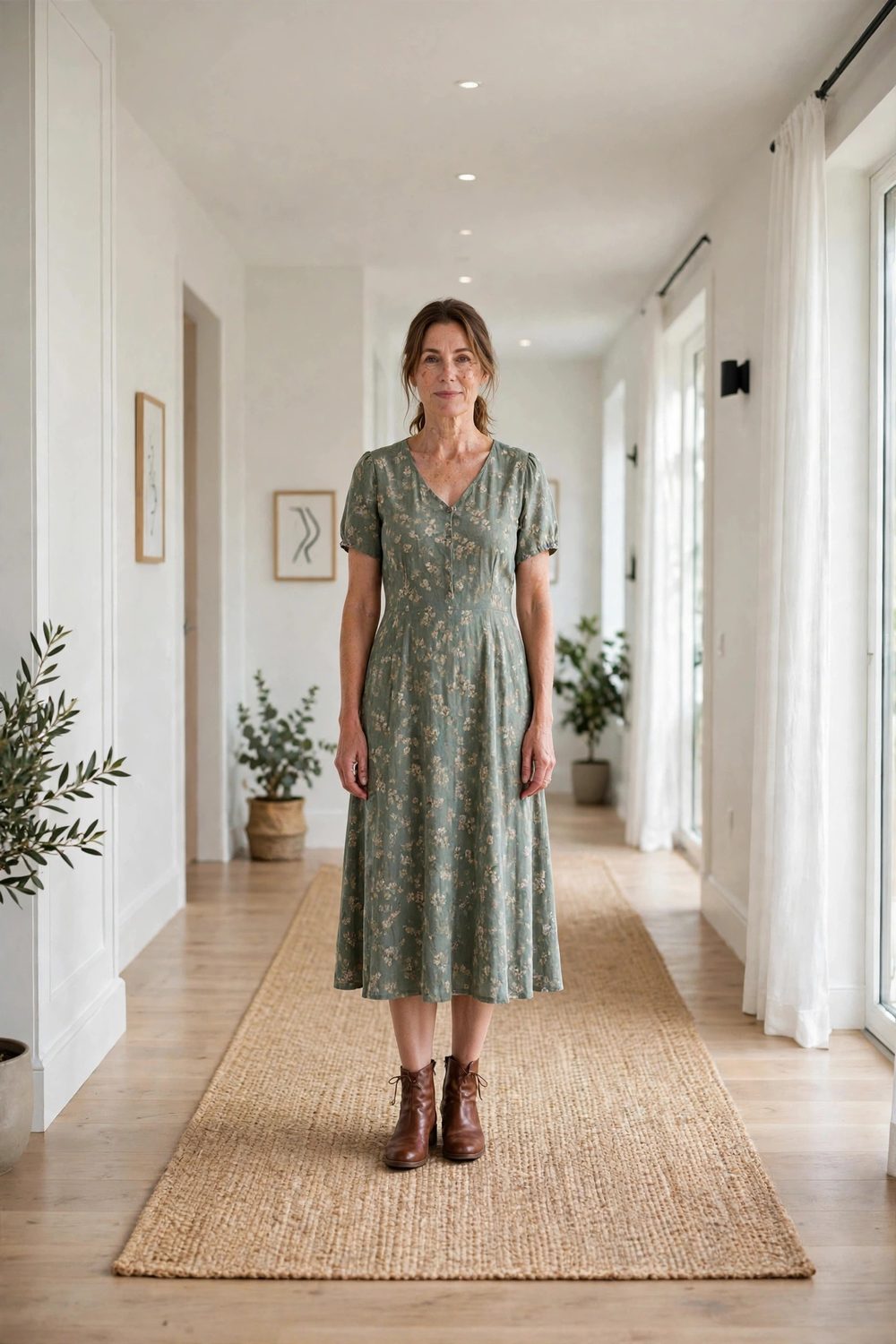
Hang the dress and let it settle for a day, since skirt fabric can drop slightly on the hanger. Then wear it and mark the new length with pins at the front.
Lay the dress flat and measure from the waist seam down to your pin at several points around the skirt. Even marks matter more than speed here.
Fold, press and stitch the new hem in matching thread, working slowly around any curve. Small stitches and a steady pace keep the line smooth.
A dress hem that lands just below the knee or below the calf suits most petite frames. Our winter outfits for petite women show those lengths styled with boots.
3. Take Up Blouse Sleeves at the Cuff
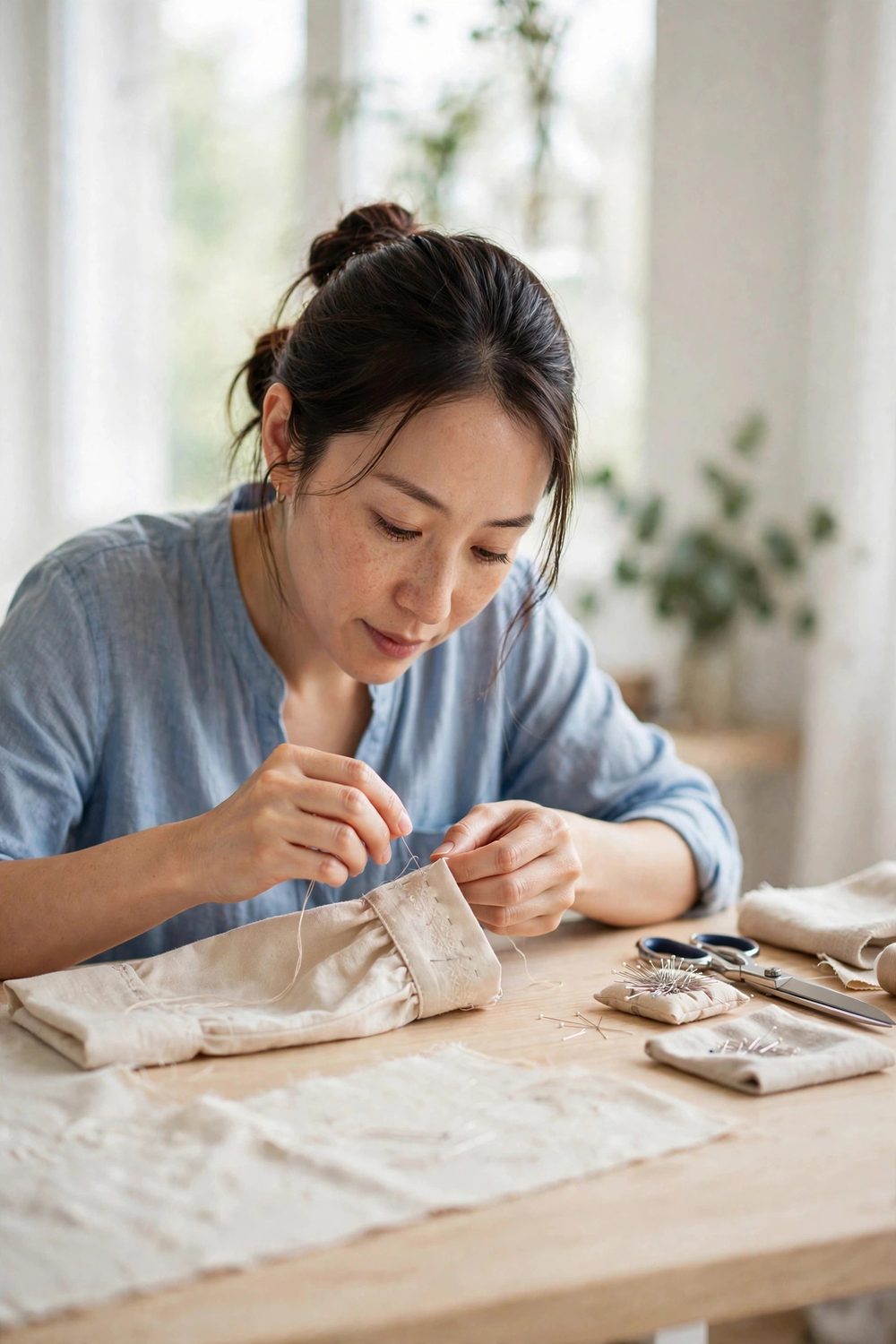
Long sleeves that cover the hand make a petite arm look lost. The cuff is the easiest place to shorten, because the sleeve shape stays untouched above it.
Unpick the cuff stitching with a seam ripper, trim the sleeve to your new length, and leave enough fabric to fold inside the cuff again.
Refold the cuff around the sleeve edge, pin it evenly, and stitch it back in place. Press the cuff flat and check both sleeves match before you finish.
Aim for a sleeve that ends at the wrist bone. That small slice of wrist keeps a blouse looking light and lets bracelets and watches show.
4. Add Two Darts to Take In a Skirt Waist

A skirt that fits the hips but gaps at the waist is a classic petite near miss. Two small darts at the back waist take in the spare fabric neatly.
Put the skirt on inside out and pinch the extra fabric at two even points on the back waistband. Pin each pinch as a slim triangle, widest at the top.
Stitch along each pin line, tapering to nothing at the point. Press the darts toward the center back, then try the skirt on to check the waist sits smooth.
Keep each dart modest, about half an inch of fabric at the top. Two modest darts share the work and keep the skirt shape natural.
5. Move One Button for a Better Wrap Fit
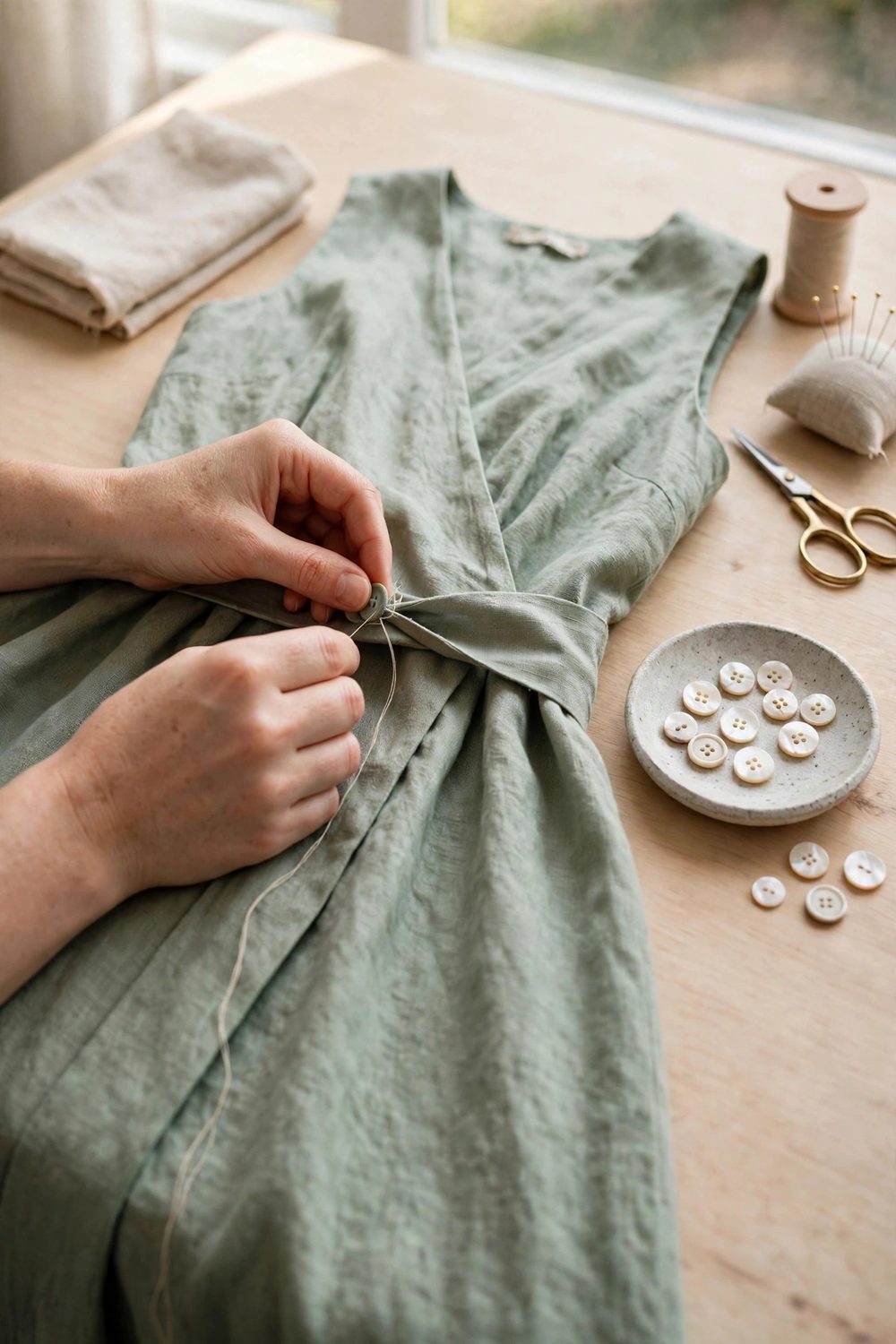
Wrap tops and dresses adjust at the button or tie. If the wrap gaps at the chest or sits loose at the waist, the button point is often the whole problem.
Wear the piece, set the wrap where it sits best, and mark the new button spot with a pin through both layers. Check the neckline and waist together.
Snip the old button off, saving it, and stitch it firmly at the new mark with several passes of thread. Add a tiny snap above it if the front still lifts.
This five minute move rescues many regular cut wrap dresses for petite frames, since the waist can now sit at your true waist, not below it.
6. Shorten Wide Dress Straps by Hand

Straps cut for a regular torso let a petite dress slide low at the front. Shortening each strap by an inch or so lifts the whole bodice into place.
Pin the straps at the back while wearing the dress, taking up the same amount on both sides. Check that the waist seam now sits at your waist.
Fold the extra strap length flat against the inside back, and secure it with a few firm hand stitches. This folded method needs no cutting, so it can be undone.
Press the folds and test the dress with movement. Raise your arms and sit down. The bodice should stay put without tight straps digging in.
7. Hem One Pair of Jeans and Keep the Original Hem

This is the one denim fix in the list, and it keeps the factory hem. Fold the leg up so the original hem sits right above the fold at your new length.
Pin the fold, then stitch just below the original hem stitching, all the way round the leg. Use a heavy needle and denim thread if you have them.
Fold the spare fabric up inside the leg and press it flat. For a thick fold, trim the excess or tack it with two small stitches per leg.
Our step guide on how to cuff and hem jeans to the perfect length covers cuff styles and length checks in more depth.
8. Raise a Top Hem to the Hip Bone

A top that ends well past the hip shortens the leg line on a petite frame. Raising the hem to the hip bone is a simple fold and stitch job.
Wear the top, pin the new hem at the hip bone, and check it with the trousers or skirt you pair it with most. Mark both sides evenly.
Fold the hem up inside, press, and stitch close to the fold. For knit tops, use a slight stretch stitch or a loose hand stitch so the hem can give.
Curved hems need small snips in the fold allowance to lie flat. Take your time on the curve and press in short sections as you go.
9. Take In a Loose Top at the Side Seams

A boxy top with spare fabric at the sides can swamp a petite frame. Taking in the side seams gives the top a gentle shape without changing its style.
Wear the top inside out and pinch the extra fabric evenly at both sides, from under the arm to the hem. Pin along your fingers, then check the fit.
Stitch along the pin lines and try the top on before trimming any fabric. Leave the seam allowance in place for the first wear, in case you want it back.
Take in a little at a time. Half an inch per side changes the read a lot on a small frame, and you can always stitch a second line.
10. Shorten a Blazer Sleeve and Move the Button

Blazer sleeves that reach the fingers make the whole jacket look borrowed. Shortening from the cuff end is the home friendly route when the shoulder fits well.
Unpick the cuff hem, trim the sleeve and lining to the new length, and fold both layers back up inside. Pin so the lining sits slightly shorter than the outer fabric.
Stitch the hem by hand with small stitches that barely show. If the sleeve has buttons near the cuff, move the lowest button up or remove it for a clean line.
Check the sleeve against your wrist bone while your arm hangs relaxed. Both sleeves should end at the same point, with a sliver of shirt cuff able to show.
11. Add Elastic Inside a Gaping Waistband
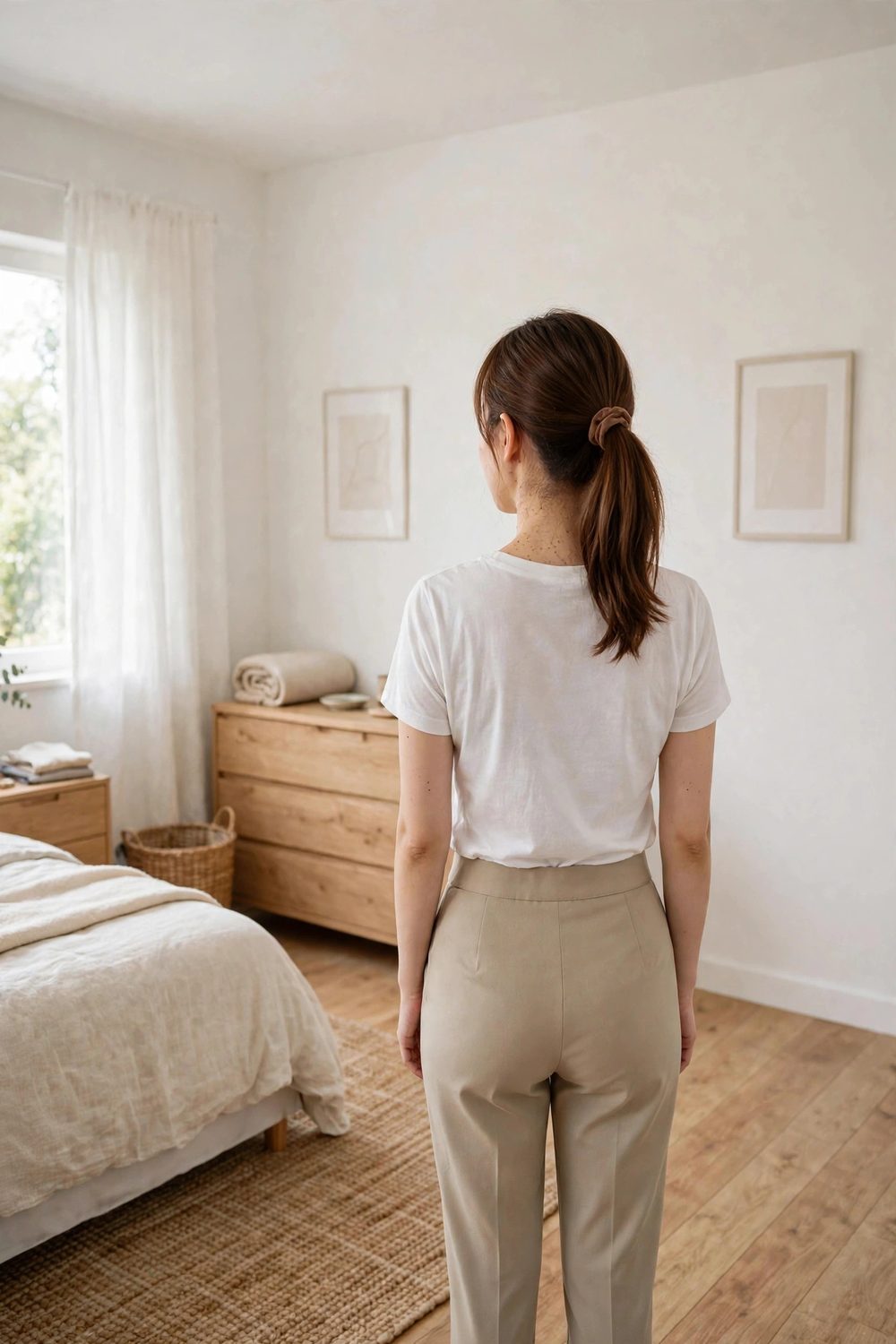
A waistband that gaps at the back can be fixed from inside. A short length of elastic, stitched at two points, draws the back in without touching the front.
Open a small section of the inner waistband at each side of the back. Thread elastic across the back panel and pin it where the pull feels right.
Stitch the elastic ends firmly, close the openings, and try the garment on. The front stays flat, the back sits close, and no belt is needed.
This fix suits skirts and trousers that fit well everywhere else. It also pairs well with the dart fix, for waistbands that need a firmer correction.
12. Hem a Maxi Skirt to a Midi Length

A regular maxi skirt can trail on a petite frame and catch under shoes. Raising it to a midi that ends below the calf keeps the flow and loses the hazard.
Wear the skirt with your usual shoes and pin the new hem below the calf muscle. Measure up from the floor at four points to keep the line level.
Trim, fold and stitch as with a dress hem, leaving a modest allowance. Light fabrics need a narrow hem, while heavier skirts take a deeper fold well.
Our guide to a capsule wardrobe for petite women shows how one well hemmed skirt earns its place across many outfits.
13. Shorten Sleeves on a Knit Top With a Fold Hem

Knit tops often come with sleeves that bunch at the wrist on petite arms. A fold hem shortens them without cutting, so the change stays reversible.
Fold the sleeve end up inside to your new length, ending at the wrist bone. Pin evenly round the arm and check the fold depth matches on both sides.
Stitch with a loose zigzag or a stretch hand stitch, so the sleeve can still stretch over your hand. Press gently with a cool iron and a cloth.
If you later want a three quarter sleeve, fold deeper and stitch again. Sleeve length is one of the fastest ways to make a regular knit read petite.
14. Lift a Dress Waist With a Hidden Inner Tie

Some dresses sit with the waist seam an inch below your true waist. A hidden inner tie at the side seams can lift and hold the waist where it belongs.
Sew a short length of narrow ribbon or tape inside each side seam at your waist point. Tie them snugly at the back inside the dress before you zip or button up.
The outer line stays smooth, while the inner ties carry the weight of the skirt at the right height. Check the front view for a waist seam that now sits level.
For dresses between ranges, our explainer on petite vs regular sizing shows which fit points a tie can help and which need a petite cut.
15. Finish Every Hem With a Press and a Fit Check
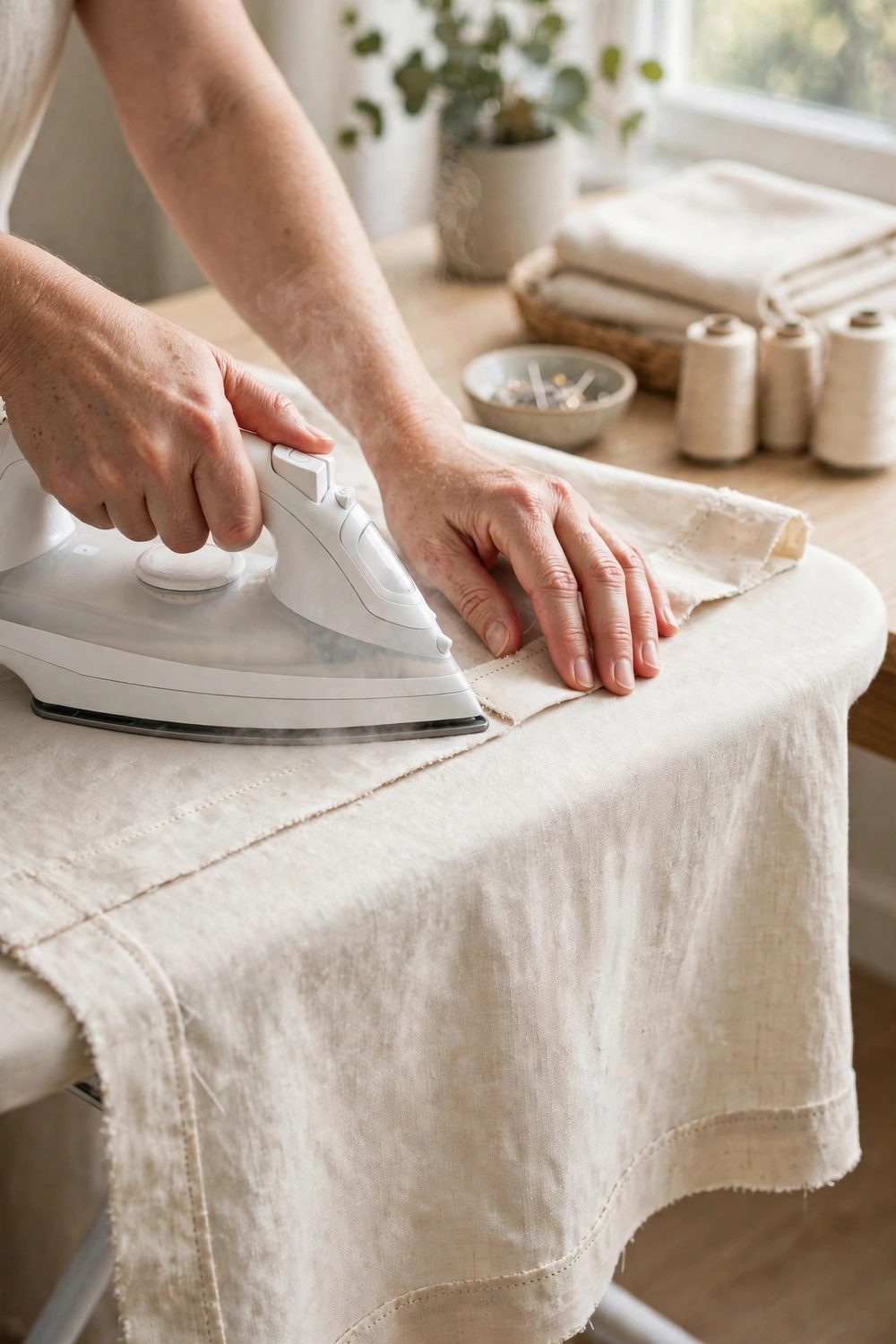
The last fix is a habit, not a stitch. A final press turns a home hem into a shop neat edge, and a fit check catches small errors while they are easy to mend.
Press each new hem from the inside with the right heat for the fabric, using a cloth over delicate cloth. Let the piece cool flat before you move it.
Try the garment on with its usual shoes and partners. Walk, sit and reach. Note any pull or twist, adjust once, and press again.
Keep a small notebook of your best lengths: trouser hem, skirt hem, sleeve and strap take ups. For warm weather pieces, our petite summer outfits for women use these same lengths.
Start with the fix your wardrobe needs most, which for most petite women is a hem. One neat hem builds the skill and the nerve for every fix after it.
Keep your tools simple and your stitches undoable at first. As your hand steadies, the darts, waistbands and sleeves will feel as routine as the hems did.
Save this list to our Petite Outfits for Women board, and keep it near your sewing kit. The next near miss in the fitting room becomes a project, not a pass.


