

How Tall Women Can Find Pants That Actually Fit: 15 Steps
You know the drill by heart. The waist fits, the leg stops three inches above your shoe. Or the length is right and the rise lands somewhere it should not. Standard pants were not cut with your legs in mind.
This guide shows how tall women can find pants that fit, step by step, across trousers, jeans and leggings. It starts with your own numbers, then moves to charts, ranges and fitting room checks.
None of the steps needs special tools. A soft tape, a pair of pants that already fits well, and ten calm minutes will carry you through most of the process.
For outfit ideas once the fit is sorted, our fall outfits for tall women show long layers and lengths that respect a tall frame.
By the end you will have a repeatable method: measure once, compare charts honestly, test in the fitting room, and keep notes so the next pair is easier to find than the last one was.
This post contains affiliate links. If you buy through them, we may earn a small commission at no extra cost to you. See our Affiliate Disclosure.
1. Measure Your True Inseam Before You Shop

Lay your best fitting pants flat on a table or bed. Smooth the leg straight, then measure from the crotch seam down the inside seam to the hem edge.
Write that number down in inches. That is your working inseam, and it is more useful than your height, because leg length varies a lot at the same height.
Measure two pairs if you can, one for flats and one for heeled boots. Many tall women keep two inseam numbers and shop with both in their phone.
If no pair fits well yet, measure your own leg in bare feet, from the top of the inner thigh to the ankle bone, standing straight against a wall.
2. Work Out Your Rise From a Pair That Fits

Rise is the distance from the front waistband, through the legs, to the back waistband seam. It decides where the pants sit and how the waist feels all day.
Measure the front rise on your best pants, from the crotch seam up to the top of the front waistband. Compare that number with size charts as you shop.
On a tall frame, a regular high rise can land like a mid rise. If waistbands keep sitting below your natural waist, look for tall range rises with extra length built in.
Our guide on how to find jeans that fit both your waist and hips adds helpful checks for gaping backs and snug fronts.
3. Learn the Numbers Tall Ranges Actually Offer

Regular ranges often stop at a 32 inch inseam. Tall ranges usually start around 34 inches and run to 36 or 38 inches, depending on the brand and the style.
That range matters more than the tall label itself. A tall pant with a 34 inch inseam may still be short if your working number is 36.
Note which brands publish exact inseams and which only say long. Exact numbers let you order with confidence, while vague labels mean a returns label should stay handy.
Keep a short list of the brands whose longest inseam meets your number. That list becomes your first stop for every trousers, jeans or leggings shop from now on.
4. Read the Size Chart, Not Just the Label

Two brands can cut the same size very differently, and tall lines vary even more. The size chart is the only place where a brand states its real numbers.
Check three figures before you order: inseam, front rise, and the waist measure for your size. If any one is missing, treat the listing with care.
Compare the chart with your own notebook numbers, not with the size you wore last year. Bodies and brands both shift, and the tape does not guess.
Some charts list garment length instead of inseam. Length includes the waistband and rise, so it always reads longer. Do not mix the two numbers when you compare.
5. Check Where the Knee Break Lands
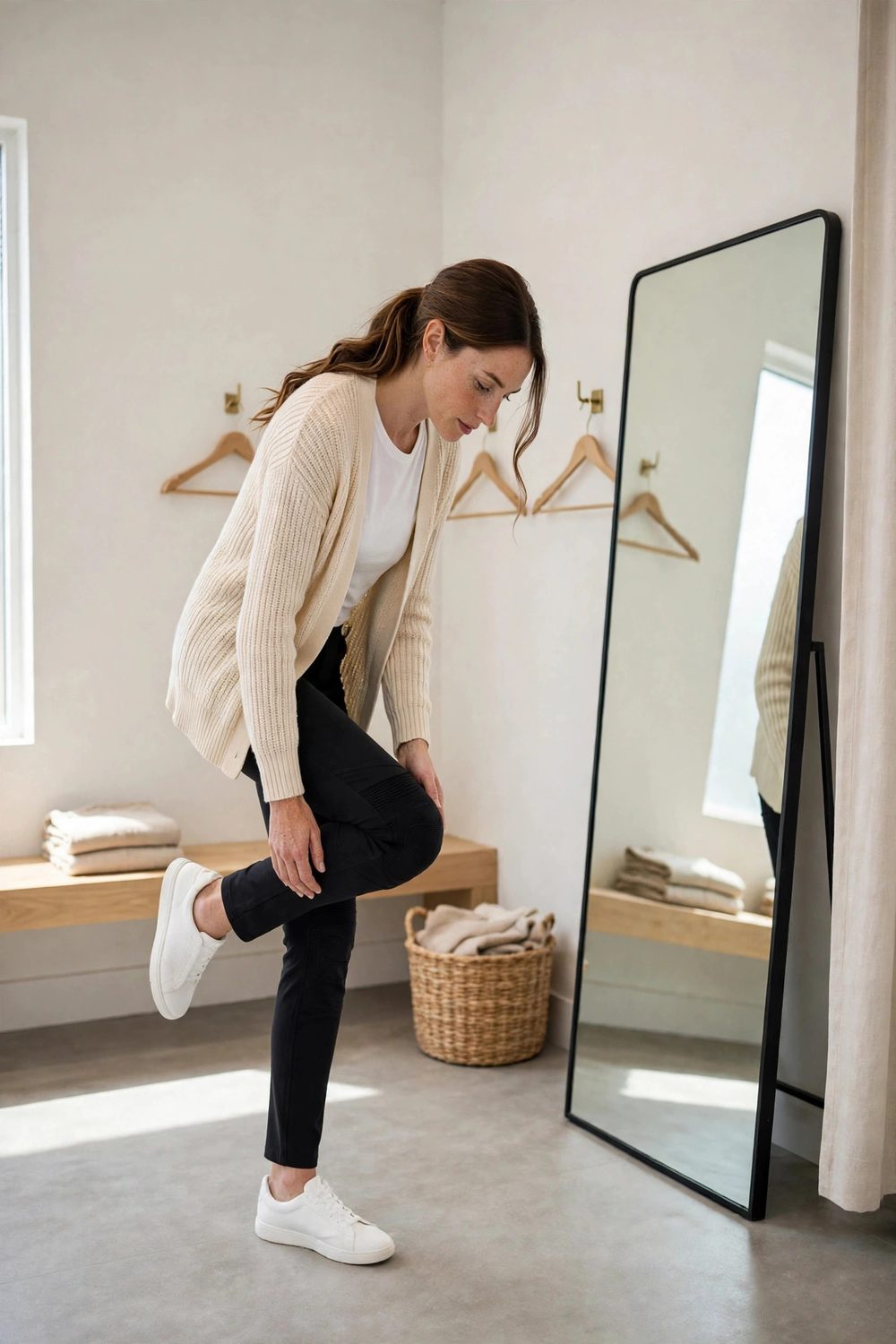
Slim and tapered pants are shaped at the knee. On a tall leg, a regular cut places that shaping too high, so the narrow point sits above your real knee.
In the fitting room, bend your knee and watch the fabric. If the shaping pulls or sits clearly above the knee joint, the cut is a regular pattern in a long hem.
Tall range pants move the knee point down to match a longer leg. That single change makes slim styles look smooth instead of slightly off all day.
Wide and straight legs forgive more here, since they carry less shaping. If slim cuts keep failing, shop tall ranges for those styles and regular longs for wide legs.
6. Try Trousers in Three Cuts, Not One
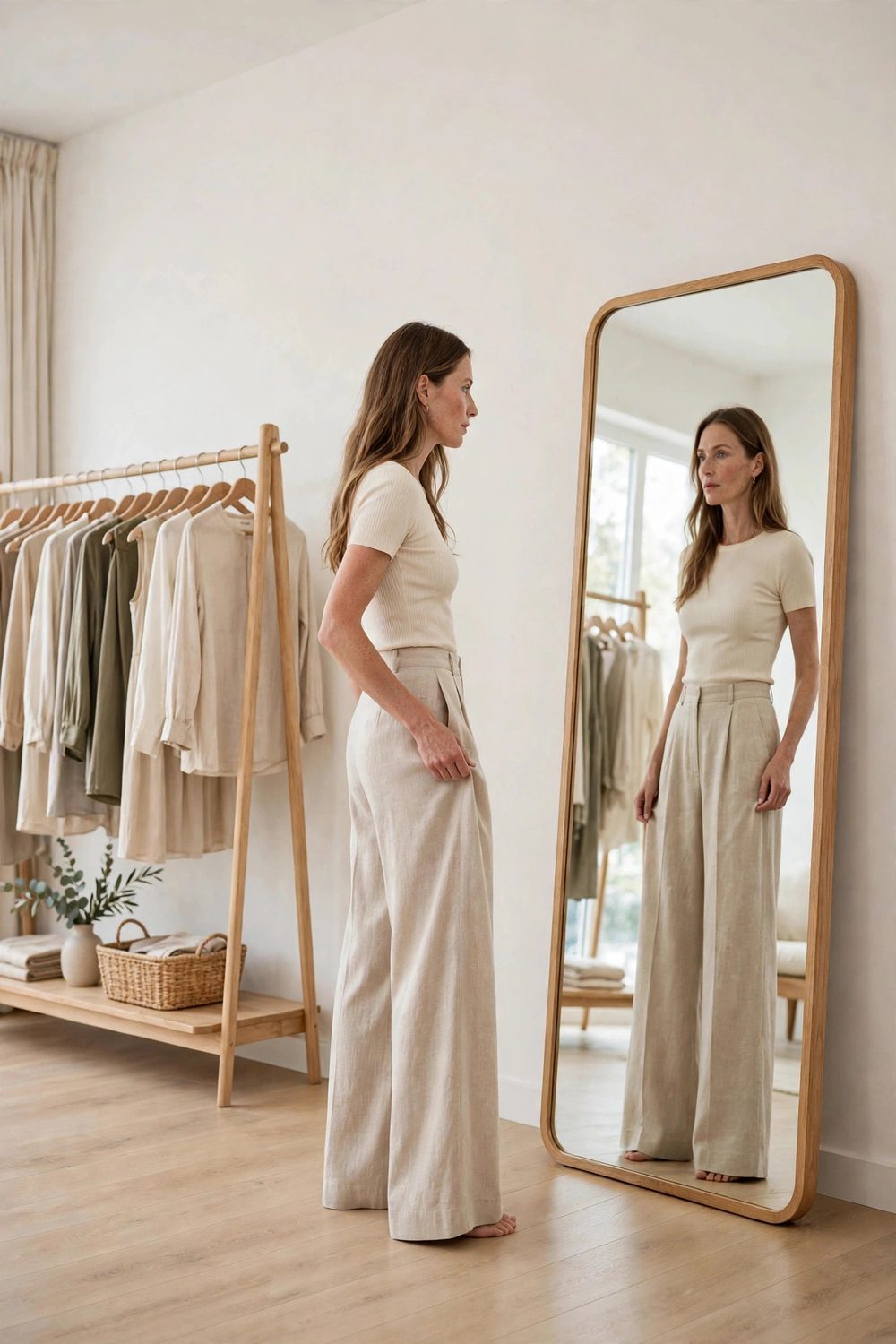
Take three cuts into the fitting room: a straight leg, a wide leg, and a tapered or slim leg. Same size, same brand, so the comparison stays fair.
Trousers show rise and drape more honestly than jeans, because the fabric has less stretch. A cut that works in trousers usually works across your wardrobe.
Check each pair standing, sitting, and walking a few steps. The waistband should stay put, the front should stay smooth, and the hem should stay near your shoe.
Our roundup of jeans outfits for tall women with extra long lengths shows how these cuts look once they pass the fitting room test.
7. Test Jeans With the Sit, Bend and Step Check

Jeans feel fine standing still and fail in motion. Run three moves before you decide: sit on a chair, bend to touch your shoe, and take one high step.
Sitting shows the back waistband. Bending shows whether the rise holds. Stepping shows whether the knee shaping and thigh room let your long legs move freely.
A small amount of stretch helps comfort, but the cut still does the main work. If the jeans only fit because the fabric strains, they will bag out by evening.
Check the hem after the moves, not before. Jeans settle on the body as you move, and the settled length is the length you will live with.
8. Judge Leggings by Length and Waistband Hold
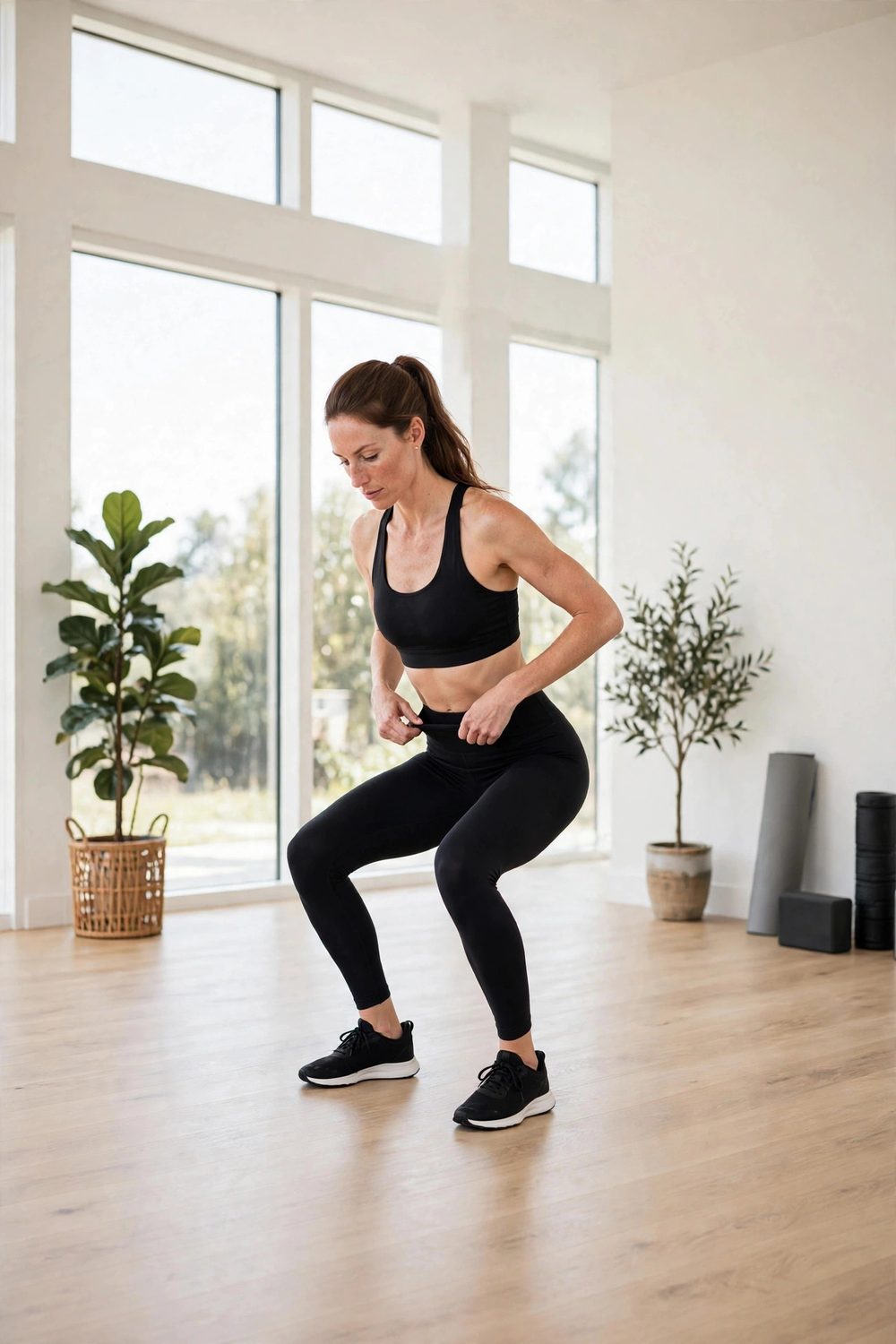
Leggings fail tall women in two places: the hem ends mid calf, and the waistband sits low because the rise is short. Both come from regular patterns stretched longer.
Look for tall range leggings with a stated inseam, just like pants. A full length pair should reach the ankle bone without hard pulling at the knee.
Test the waistband with a few squats and a short walk around the shop. A good high waistband stays in place without constant tugging at the back.
Fabric weight matters too. A firm knit with real recovery keeps its shape on a long leg, while thin fabric goes sheer at the knee and thigh.
9. Shop Tall Ranges First, Long Lines Second

Order matters when you shop. Start with true tall ranges, where rise, knee placement and inseam all grow together. That pattern match saves the most fitting room time.
Use long lines in regular ranges as your second stop. They add hem length only, so check the rise and knee with extra care on those pairs.
Menswear style trousers and some unisex cuts can work as a third option for very long inseams. Try them with your usual shoes and judge the rise honestly.
Keep notes on which route worked for each garment type. Many tall women find tall ranges best for jeans, and long lines fine for loose wide leg trousers.
10. Check the Hem Allowance Before You Buy

Turn the hem inside out in the shop and look at the folded fabric. A deep hem allowance, around two inches, gives a tailor room to let the pants down.
That small check rescues near misses. A pair that sits one inch short can become a full length pair if the allowance is deep enough to release.
Jeans often have slim allowances, while tailored trousers tend to keep deeper ones. Ask the shop assistant if the product details do not state it clearly.
Letting a hem down can leave a faint crease line on some fabrics. On most twills and denims the line steams out or fades after a few washes.
11. Wear the Shoes You Will Pair With Them

Hem length only makes sense with a shoe under it. A pant that brushes the floor in bare feet will swing above the ankle in heeled boots.
Bring or wear the shoes you plan to use most with the style. For wide legs, that is often a heeled boot. For straight legs, a flat or a low trainer.
Many tall women keep two lengths in rotation: a longer pair cut for heels and a standard tall pair for flats. That split ends most daily hem regrets.
If you buy one pair only, hem for the shoe you wear most. The other shoe can still work if the difference is half an inch or less.
12. Photograph the Back View in the Fitting Room
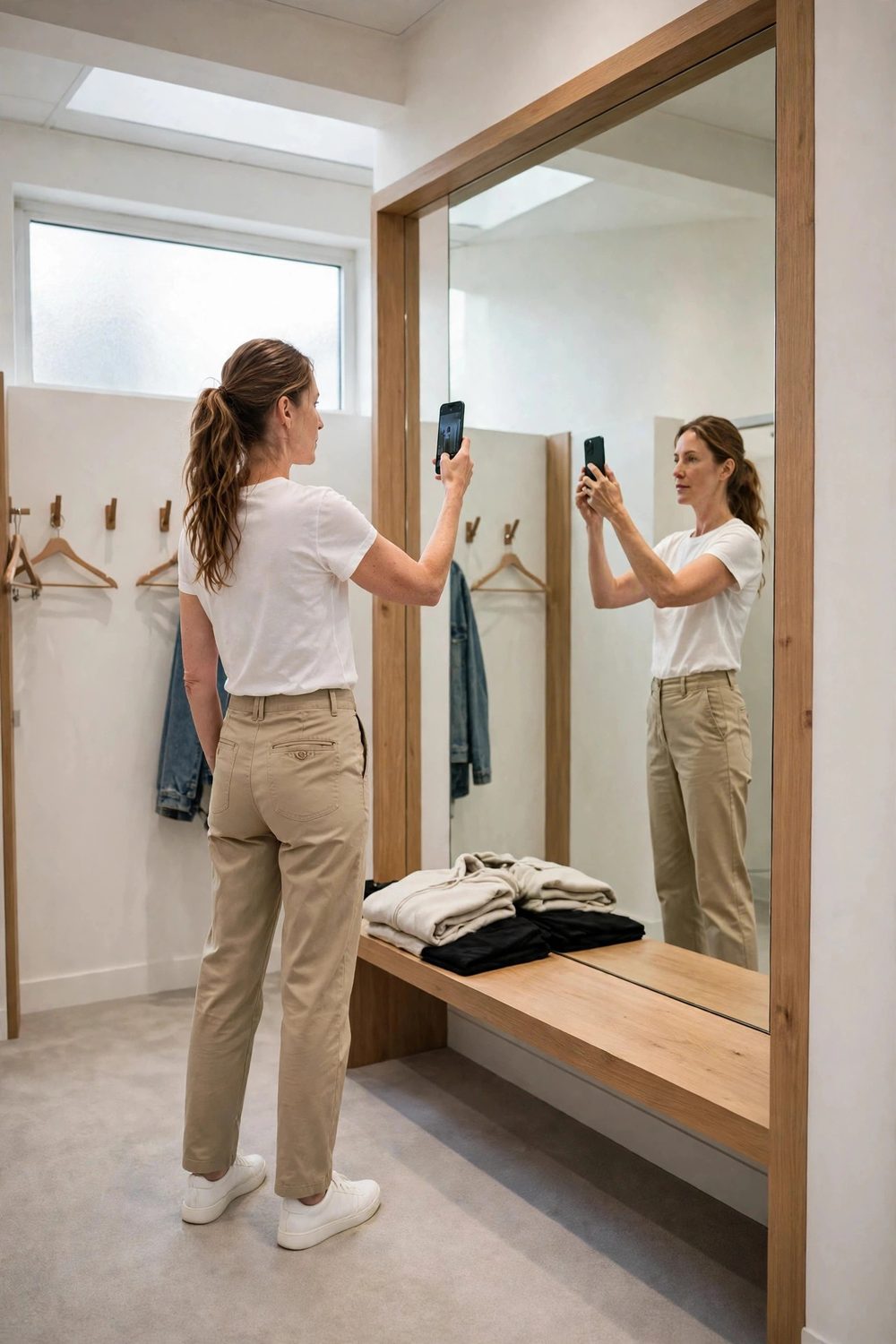
Most fit faults show at the back: a gaping waistband, a yoke that sits too low, pockets placed for a shorter rise. Mirrors make these easy to miss.
Take a quick phone photo of the back view, or ask a friend to take one. The camera shows in seconds what twisting toward the mirror cannot.
Look for a waistband that lies flat against your back with no gap, and pockets that sit on the seat rather than drifting down the thigh.
Sizing logic from other ranges can help your eye here, and our guide to petite vs regular sizing explains how rises and pocket placement shift between patterns.
13. Compare Rise and Inseam Across Brands on Paper

Brand numbers drift over time, and a tall line can change its cut between seasons. A paper record keeps you from relearning the same lesson each year.
Make a simple table: brand, style name, your size, stated inseam, stated rise, and how the pair felt. Two lines per shop trip is plenty.
Patterns appear fast. You may learn that one brand runs long in rise, another runs short in inseam, and a third fits you straight off the rail.
Shop that third brand first, always. A proven pattern match is worth more than a new style in an untested cut, especially for work trousers and jeans.
14. Plan One Hemming Trip for Near-Perfect Pairs

Some pairs fit in rise, waist and knee, and miss only on length. If the hem allowance is deep, a tailor can let them down. If long, they can be taken up.
Budget that trip when you buy, and wear the planned shoes to the fitting. Pin the hem in the shoe, walk a few steps, then agree the length.
Hemming is the one alteration that suits tall shopping well, because length is easy to adjust while rise and knee placement are not. Buy for the hard points first.
Keep the tailor receipt with your fit notebook. Next season you will know the cost, the timing, and which styles were worth the extra step.
15. Keep a Fit Notebook for Every Brand You Try

Your notebook is the last step, and it makes every future shop shorter. One page per brand, with sizes, inseams, rises, and a plain verdict for each style.
Add your own numbers at the front: working inseam for flats, inseam for heels, front rise, and waist measure. Update them once a year or after a size change.
When a sale appears, you can order with confidence in minutes, because the research is already done. No guessing, no fitting room queue, no hopeful returns pile.
For cold weather styling with your best fitting pairs, see our winter outfits for tall women, built around long coats and boots that suit tall frames.
The core habit is simple: shop by numbers, not by hope. Your inseam, your rise and the brand chart will tell you more than any label or mirror can.
Start with one garment type, trousers or jeans, and build your notebook from there. Leggings and new brands get easier once the first proven pairs are in your wardrobe.
Save this guide to our Tall Women Outfits board before your next shop trip. Open the notebook page for your brand, check the chart, and buy once with confidence.


