

15 Brown Living Room Ideas for an Open Concept Living and Dining Room
An open concept living and dining room gives you plenty of room to relax, entertain, and spend time with family, but decorating one large connected space can be tricky. You want the living room to feel comfortable without making the dining area look disconnected.
Brown can help solve that problem because it works beautifully across furniture, wood finishes, textiles, rugs, and decorative accents. The key is to use brown as a connecting color rather than covering every surface in the same dark shade.
A chocolate sofa can relate to a walnut dining table, while caramel cushions can echo warm dining chairs. Cream walls, soft rugs, natural materials, and carefully placed lighting can keep the entire room feeling open.
These brown living room ideas show different ways to create a warm, cohesive space while still giving the living and dining areas their own identity.
1. Brown Sofa With a Matching Walnut Dining Table
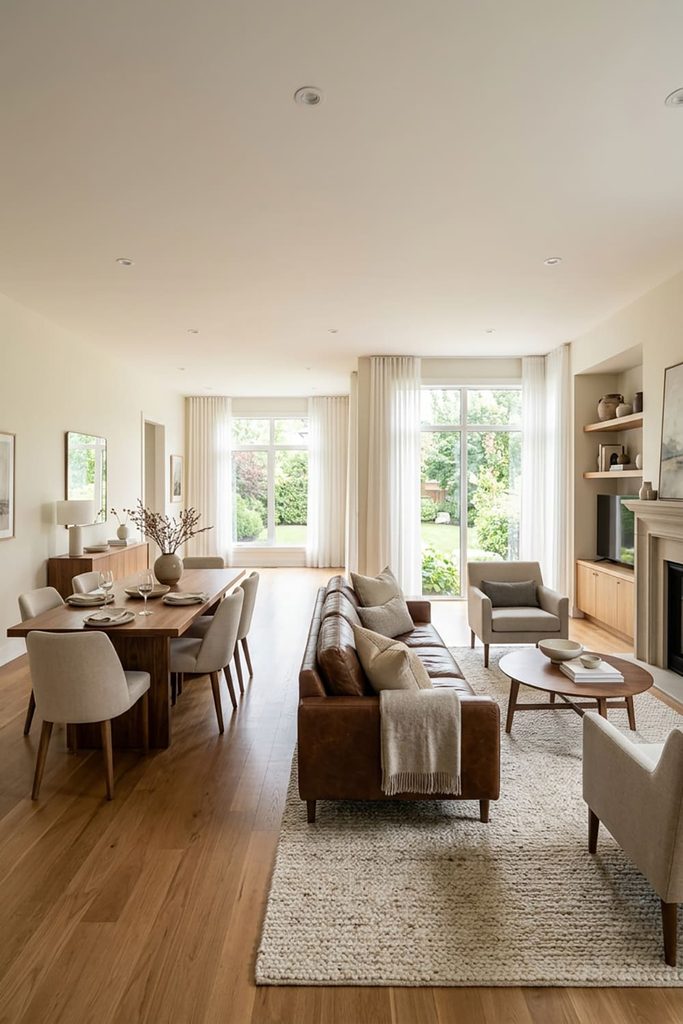
A brown sofa and walnut dining table create an easy visual relationship between the two sides of an open concept room. Choose a medium or deep brown sofa for the living area and place it over a large cream or beige rug. Across the open space, use a walnut dining table with upholstered chairs in a lighter neutral fabric.
The repeated brown tones make the two zones feel connected without requiring matching furniture. Keep the walls light and use simple curtains to preserve the spacious feeling. A few brown cushions on the sofa and a wooden dining console can reinforce the color connection. This arrangement works particularly well when the living and dining areas are visible from multiple angles.
2. Chocolate Brown Sofa With a Light Dining Area
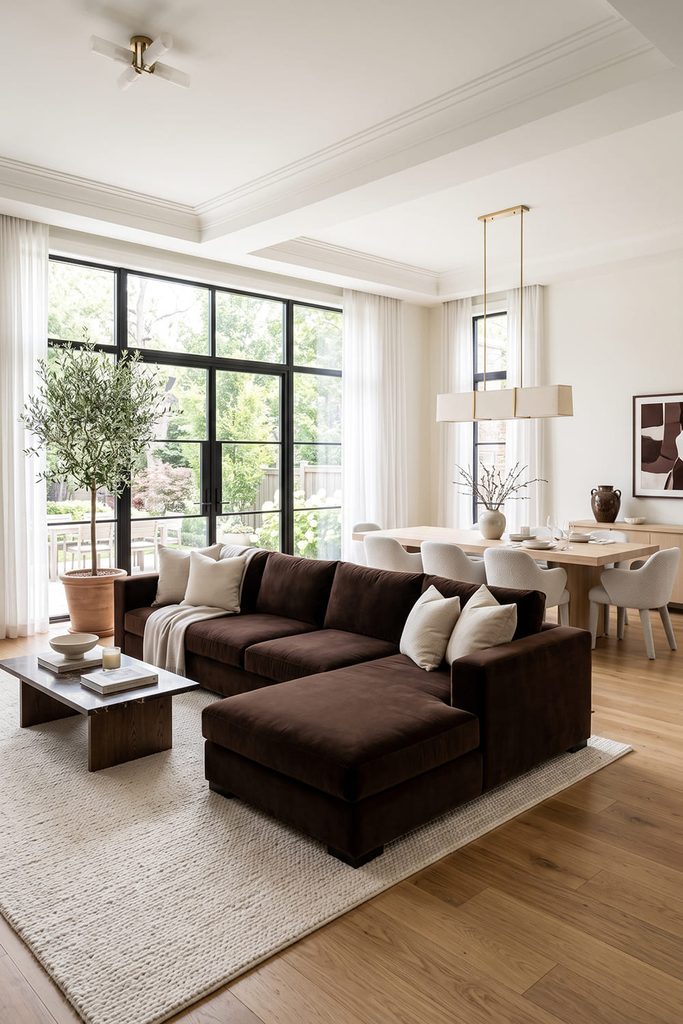
If you love deep brown but worry about making an open room feel heavy, let the sofa become the main dark element. A chocolate brown sectional or large sofa can anchor the living area while the dining zone stays considerably lighter.
Choose a pale oak or natural wood dining table with cream, beige, or light gray chairs. A large ivory rug beneath the sofa creates separation without adding another dark surface. Repeat the chocolate shade through a small vase, artwork frame, or pair of cushions near the dining area.
The contrast gives the living room a stronger focal point while the lighter dining furniture keeps the overall space visually open.
3. Brown and Cream Open Concept Room
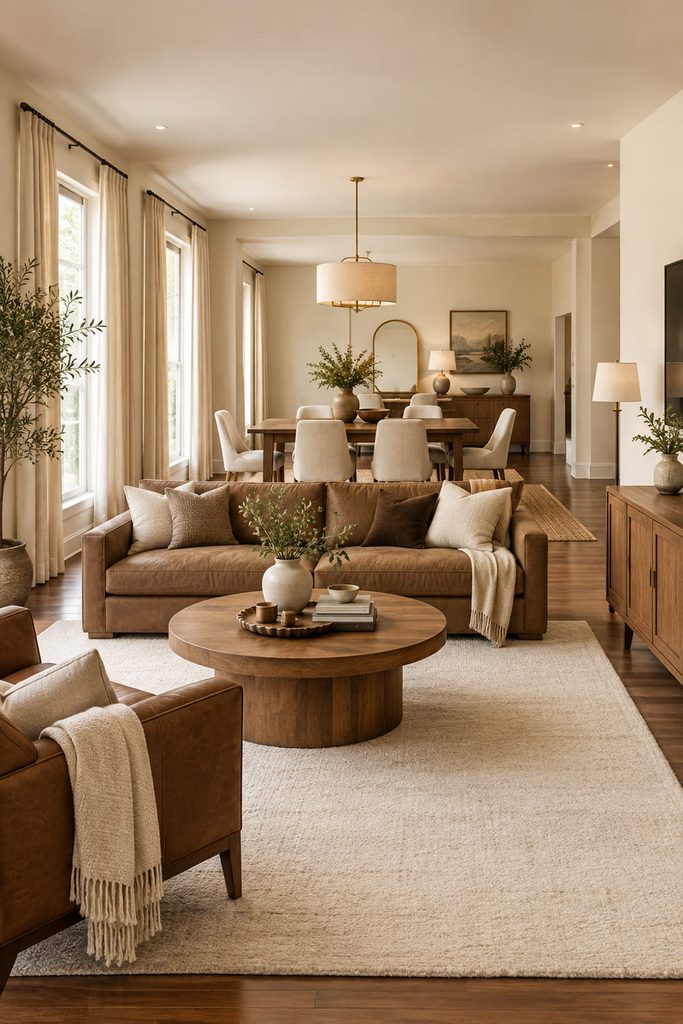
Brown and cream make a particularly comfortable combination for a connected living and dining space. Start with a medium-brown sofa, then introduce cream walls, an ivory rug, and light upholstered dining chairs.
Instead of trying to make every item match, repeat similar tones in different materials. Brown leather might appear on the sofa while warm wood appears around the dining table. Cream can move from the walls to curtains, cushions, and upholstery.
A large rug can define the living area while a pendant light marks the dining zone. The result is a room that feels coordinated without looking like a furniture set was purchased all at once.
4. Brown Leather Sofa With a Rustic Dining Table
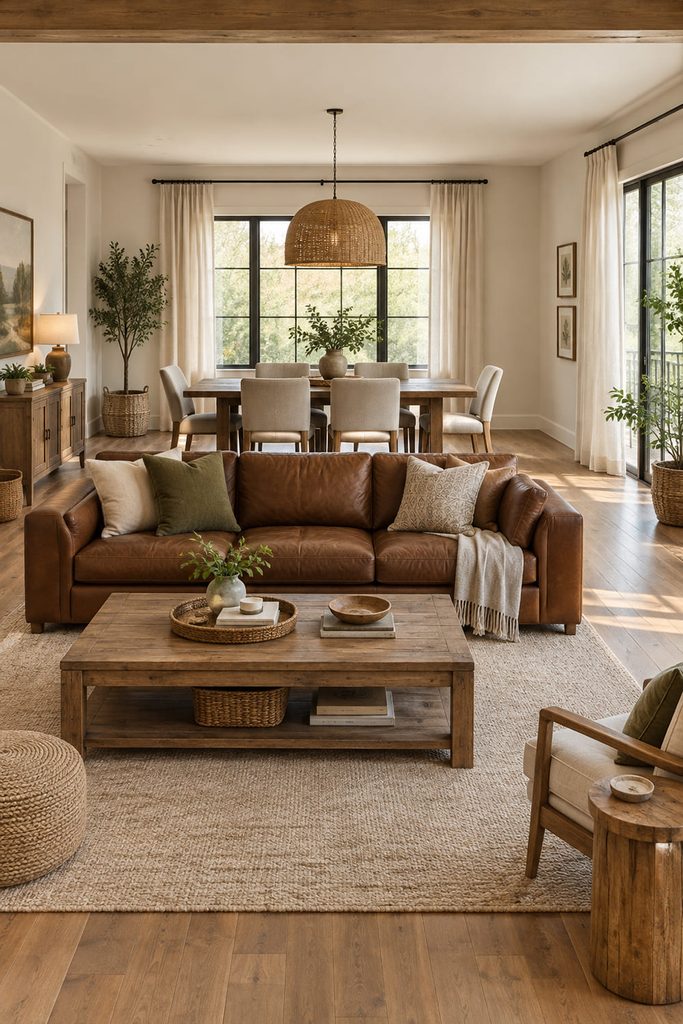
A brown leather sofa can give an open concept room a strong, grounded centerpiece. Pair it with a rustic wood dining table featuring visible grain and a slightly weathered finish.
To prevent the combination from looking too heavy, use pale walls and a soft neutral rug. Dining chairs can be upholstered in oatmeal, beige, or warm gray fabric rather than dark brown.
Add woven baskets, linen curtains, and a few natural wood accessories to bridge the two areas. The leather brings structure to the living room, while the rustic dining table introduces warmth on the other side.
This approach is especially useful when you want the space to feel relaxed rather than overly formal.
5. Brown Sofa With an Olive Green Dining Zone
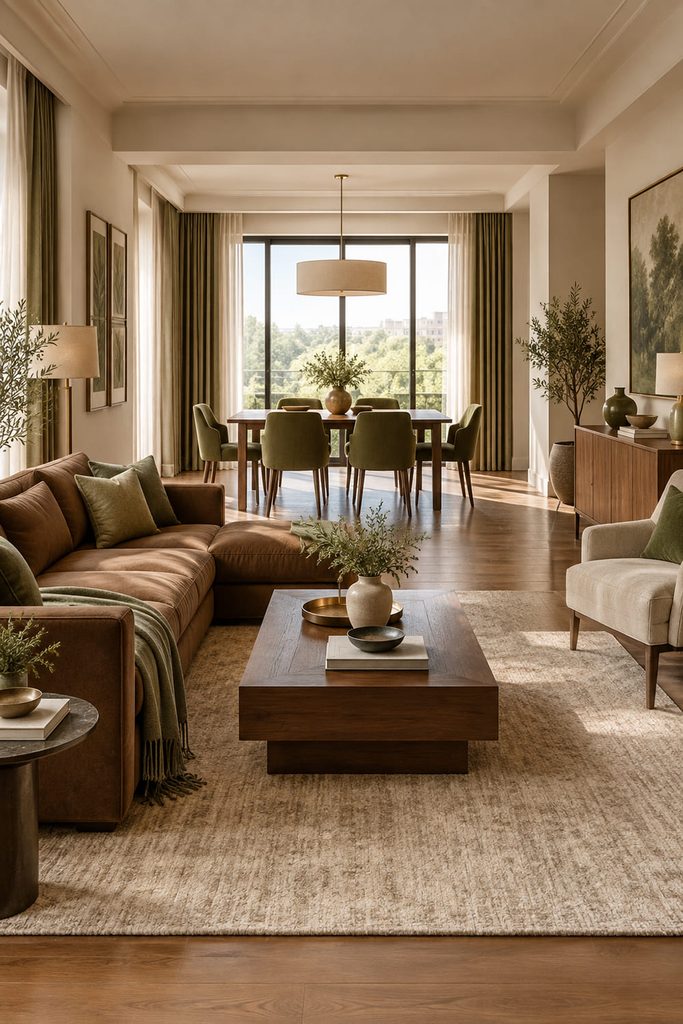
Brown and olive green create a natural color relationship that works beautifully in a large open room. Use a warm brown sofa as the main living room anchor, then bring olive green into the dining zone through upholstered chairs, artwork, curtains, or a small accent wall.
Keep the majority of the room neutral so the combination does not become visually crowded. Cream walls and natural wood provide a calm background.
A few olive cushions on the brown sofa can connect both zones. You can also repeat warm wood through the dining table, sideboard, and living room coffee table. This creates a subtle transition between spaces instead of making the dining area feel like a completely separate room.
6. Caramel Brown Sofa With a Black Dining Table
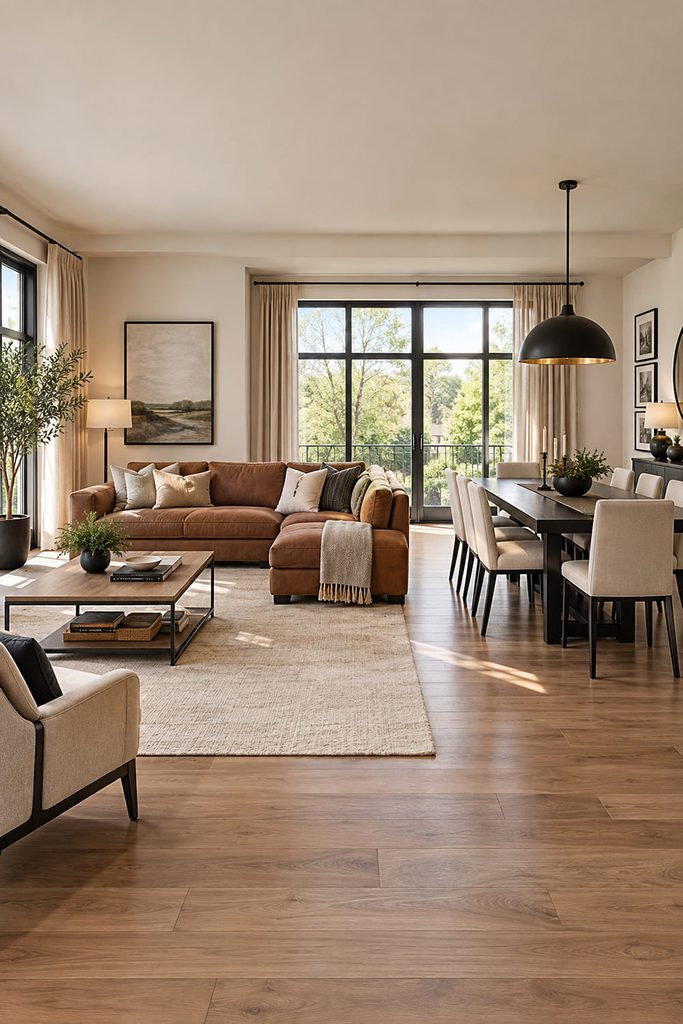
For a more contemporary look, combine a soft caramel brown sofa with a black dining table. The lighter brown keeps the living area warm, while black introduces definition in the dining zone.
Use an ivory or light beige rug under the sofa to separate the seating area from the surrounding floor. Dining chairs can combine black frames with beige or cream upholstery to soften the contrast.
Repeat black sparingly through picture frames, lighting fixtures, and small accessories in the living room. The brown becomes the warmth in the palette while black provides structure.
This combination is particularly effective in rooms with large windows because natural daylight keeps the darker accents from dominating the space.
7. Brown Sectional Facing a Long Dining Table
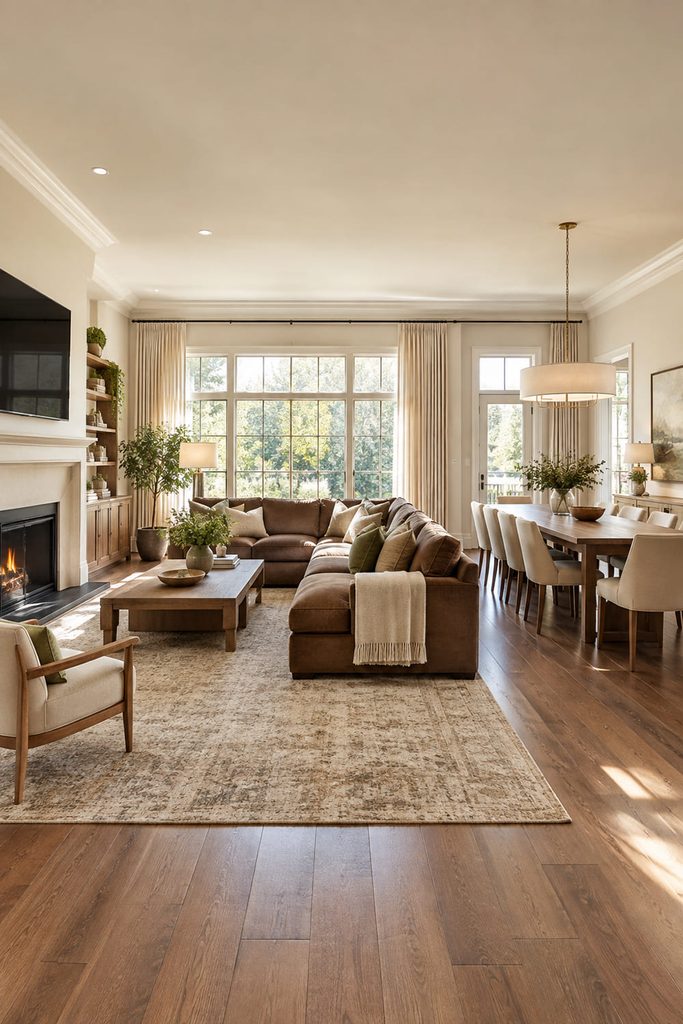
A large open room can sometimes make smaller furniture look lost. If you have plenty of floor space, consider using a substantial brown sectional to establish the living zone.
Position the sectional so it naturally faces the television, fireplace, or main focal point while its back helps create a subtle boundary between living and dining. Behind it, place a long rectangular dining table with comfortable chairs.
Use a large rug beneath the sectional and a separate lighting fixture above the dining table. The furniture arrangement creates two recognizable zones without closing off the room.
Keep a clear walkway between them so people can move easily from one side to the other.
8. Brown Sofa With a Round Dining Table
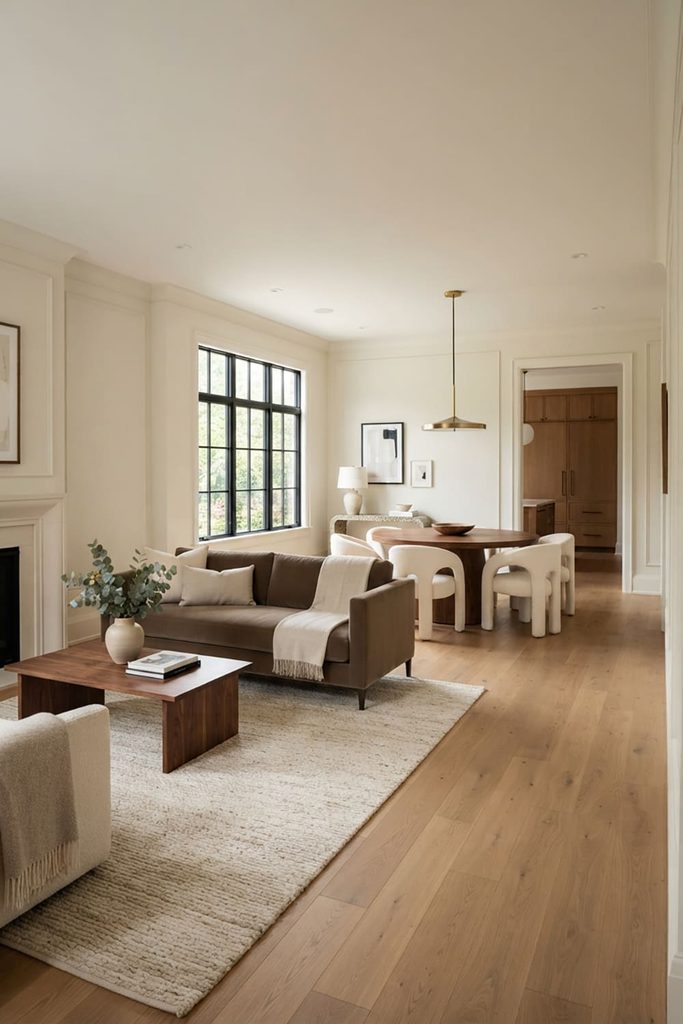
A round dining table can soften an open concept room filled with straight furniture lines. Pair a deep or medium brown sofa with a round wood dining table positioned several feet away.
The curved dining table creates a visual change between the rectangular sofa and coffee table. Choose chairs with rounded backs or softly curved silhouettes to continue the shape.
Use one large rectangular rug in the living area and allow the dining floor to remain visible around the table. A pendant positioned directly over the dining table helps establish its zone without needing a divider.
This arrangement works particularly well when circulation around the dining area is important.
9. Brown Sofa With a Beige Dining Banquette
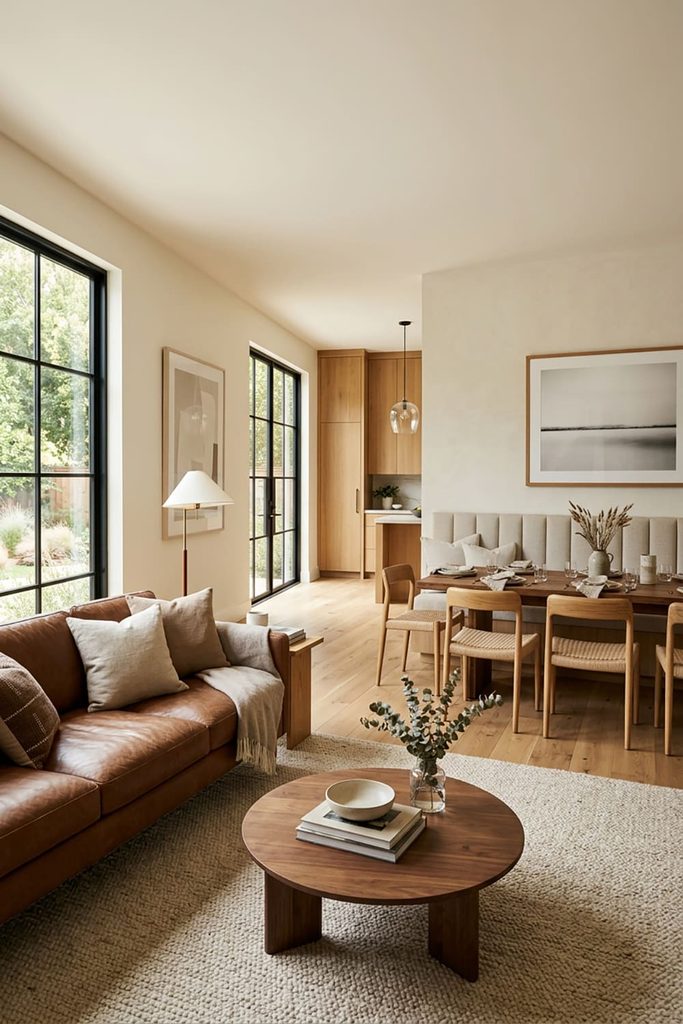
For an open concept room that needs efficient seating, consider a built-in or freestanding dining banquette. Pair a rich brown sofa with a beige or oatmeal banquette positioned along the dining wall.
The different seating styles give each zone its own identity. A wood dining table can sit between the banquette and chairs, while the living area receives a large neutral rug and comfortable coffee table.
Repeat brown through the dining table, decorative bowls, or framed artwork. Beige upholstery keeps the dining zone lighter while still connecting naturally with the brown living room.
This arrangement can also make an open space feel more organized because the dining furniture stays visually anchored to one side.
10. Brown and Warm White With Natural Wood

A brown living room does not need strong accent colors to feel interesting. A palette of brown, warm white, and natural wood can create a calm open concept interior.
Choose a brown sofa, warm-white walls, and a pale natural wood dining table. Add a cream rug beneath the living furniture and use woven or linen textures throughout both zones.
The different wood shades should complement rather than perfectly match one another. A darker coffee table can relate to the sofa while the lighter dining table keeps that side of the room visually fresh.
Plants, woven baskets, ceramic accessories, and simple artwork can provide additional texture without making the open room feel crowded.
11. Dark Brown Sofa With a Statement Dining Pendant
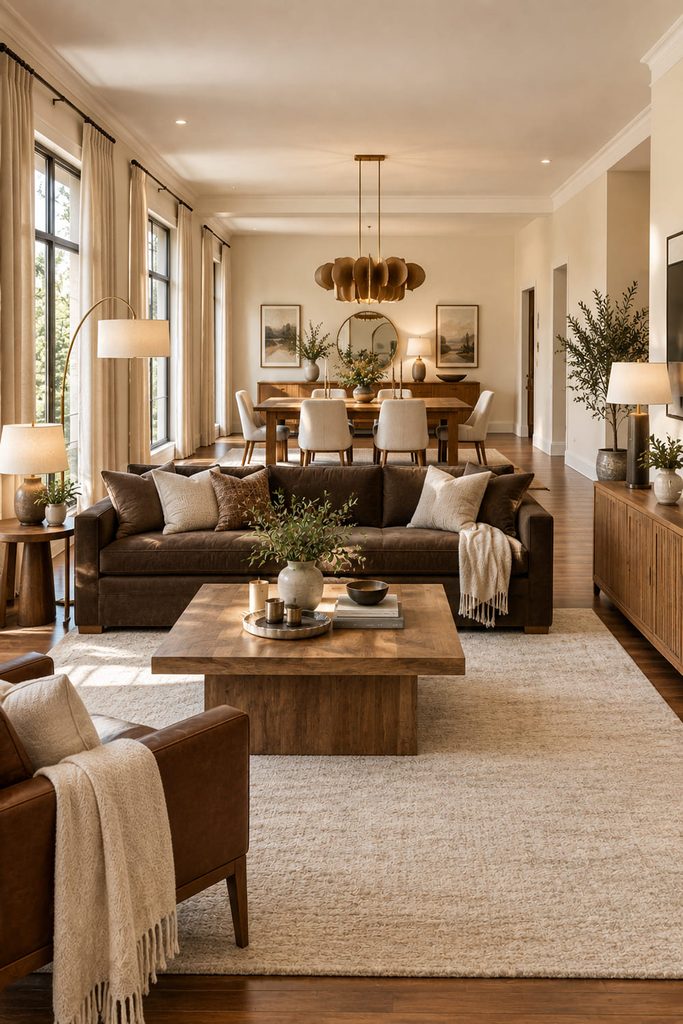
Lighting can help establish the dining area as its own zone while keeping the entire floor plan open. Place a dark brown sofa in the living area and hang a distinctive pendant directly over the dining table.
The pendant creates a visual destination above the dining furniture. In the living area, use floor or table lamps to create a separate layer of light.
Keep the surrounding colors relatively restrained with cream walls, neutral curtains, and warm wood. The dark sofa provides weight on one side while the dining fixture provides attention on the other.
Using different lighting types also helps the room adapt throughout the day. The living area can feel softer in the evening while the dining table remains clearly defined.
12. Brown Living Room With a Blue Dining Accent
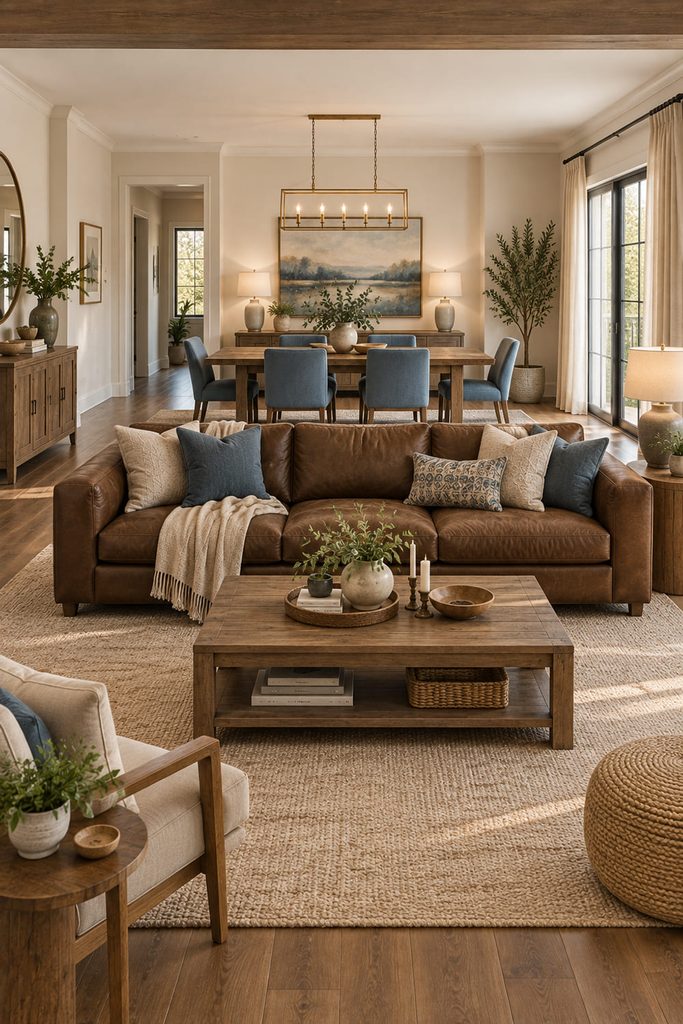
Blue can provide a refreshing contrast against warm brown. Start with a medium or dark brown sofa, then introduce muted blue dining chairs or a blue-toned artwork near the dining table.
Keep the blue controlled rather than scattering it throughout every part of the room. A few blue cushions on the sofa can provide enough repetition to connect the zones.
Use warm white walls, natural wood, and cream textiles as the background. The brown creates warmth, while blue gives the dining side a slightly cooler character. This is a good option when you want an open room that feels colorful without becoming visually busy.
13. Brown Sofa With a Large Shared Area Rug
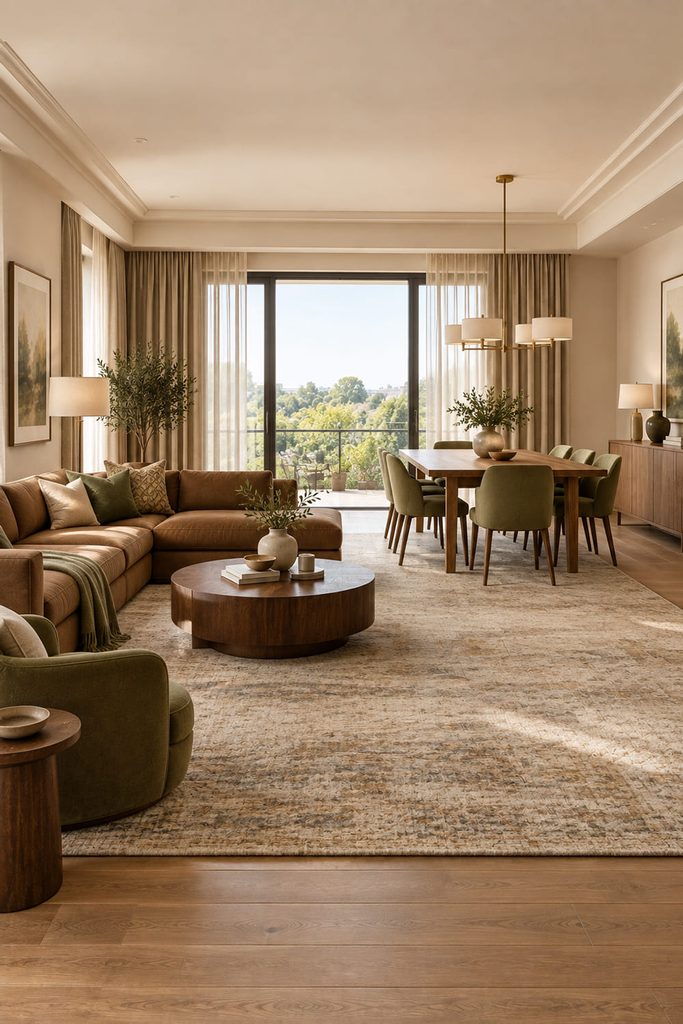
If your living and dining areas are relatively close together, one oversized rug can visually connect the entire composition. Choose a subtle rug containing cream, beige, taupe, and brown tones.
Place the brown sofa and coffee table toward one end of the arrangement, then position the dining furniture so the overall composition feels connected. The rug acts as a common visual thread rather than creating a hard division.
Make sure the rug is large enough for the furniture arrangement you are trying to anchor. If it is too small, the living and dining furniture can appear scattered across the floor. Use lighting and furniture orientation to provide additional definition between the two functions.
14. Brown Velvet Sofa With a Light Wood Dining Set
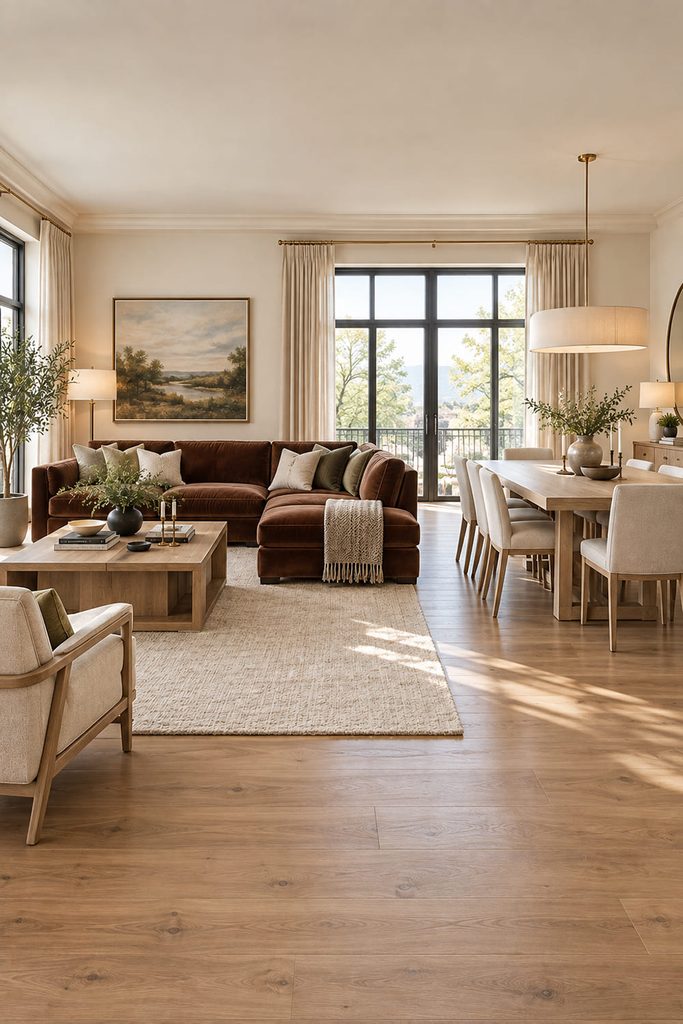
For a slightly more sophisticated look, choose a brown velvet sofa as the focal point and balance it with a light wood dining set.
The velvet provides depth and softness in the living area, while pale wood prevents the dining zone from becoming too dark. Add an ivory or oatmeal rug beneath the sofa and choose simple neutral curtains.
Keep decorative materials varied. Combine velvet with wood, ceramic, glass, linen, and metal instead of using brown fabric everywhere. A large piece of artwork above the sofa can introduce another color, while a smaller artwork or mirror near the dining area can maintain visual balance.
The contrast between plush brown upholstery and lighter wood makes the open room feel layered without requiring excessive decoration.
15. Layered Brown Tones Across Both Zones
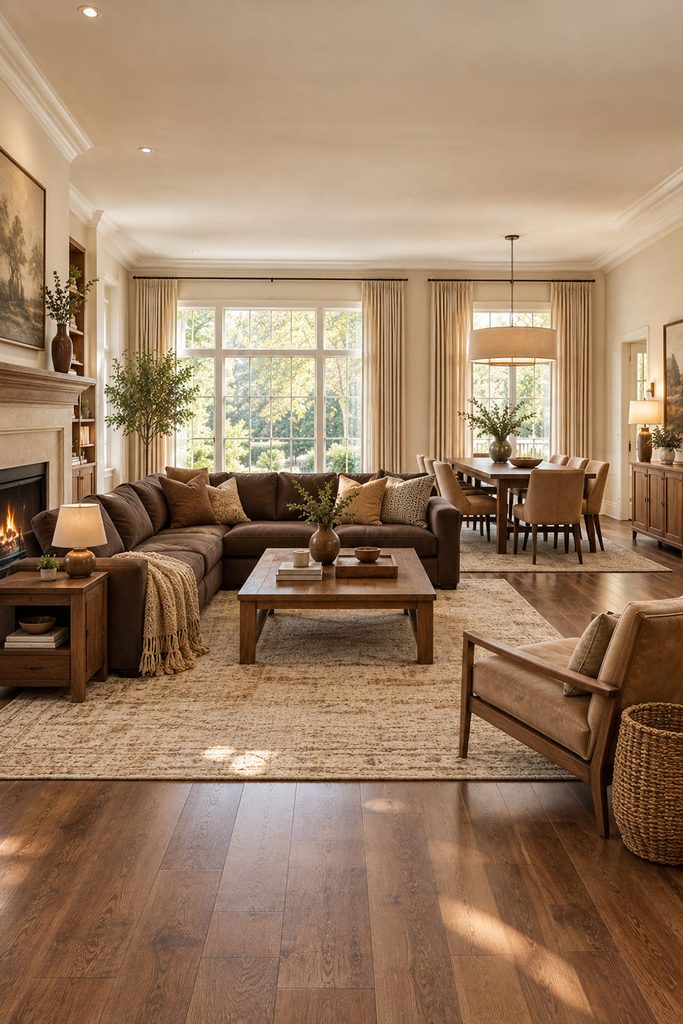
Instead of choosing one brown shade, build the room with several related tones. A dark espresso sofa can anchor the living room, while caramel cushions, medium walnut furniture, and lighter tan dining chairs gradually move the color through the space.
Keep the walls and largest rug elements light so the different brown shades remain easy to distinguish.
The dining table can use medium or dark wood, while the living room coffee table uses a slightly different finish. A woven basket, brown ceramic vase, or textured throw can repeat smaller shades throughout the room.
The result feels connected because brown appears across both zones, but the variation keeps the space from looking overly coordinated.
How to Zone a Brown Living and Dining Room
An open floor plan works best when the living and dining areas feel connected but still have clear purposes. Rugs, furniture placement, lighting, and repeated colors can establish those boundaries without adding walls.
Try these simple approaches:
- Use a large rug to anchor the living furniture.
- Position the sofa to subtly separate the living area from the dining zone.
- Hang a pendant or chandelier directly above the dining table.
- Repeat one or two brown shades across both areas.
- Keep the main wall color consistent for visual continuity.
- Use different textures to give each zone its own character.
- Leave a comfortable walkway between furniture groupings.
- Avoid placing every large piece against the walls.
- Use a console, sideboard, or open shelving unit as a soft boundary when extra storage is needed.
How to Keep Brown From Making an Open Room Feel Dark
Deep brown can add warmth, but too much of it can visually reduce the openness of a large connected room. Balance darker furniture with warm white walls, pale rugs, lighter curtains, reflective surfaces, and natural daylight.
You can also distribute brown rather than concentrating it in one corner. For example, a dark brown sofa can be balanced by medium wood in the dining area and small caramel accessories elsewhere.
Lighting matters as well. Combine overhead dining lighting with floor lamps, table lamps, and other softer sources so the room does not rely on one central light fixture.
How to Connect the Living and Dining Areas Without Matching Everything
The two zones do not need identical furniture. Instead, look for repeated elements.
Brown can appear as leather in the living room and wood in the dining area. Cream can appear in the rug and dining chairs. Black can repeat through a lamp, picture frames, and dining furniture. Similar wood tones can also connect the spaces without creating a matching furniture set.
This approach gives the room variety while maintaining a clear visual relationship.
Final Thoughts
Brown works especially well in an open concept living and dining room because it can move naturally between furniture, wood, textiles, rugs, and accessories. The most successful layouts usually balance connection with definition rather than treating the entire floor plan as one undifferentiated room.
Choose a brown shade that suits the amount of natural light, keep larger surrounding surfaces lighter when needed, and use rugs, furniture orientation, and lighting to establish the living and dining zones. With those elements working together, a brown palette can make an open room feel warm, organized, and comfortable without sacrificing its spacious character.


